Visual abstracts
New randomized trials and meta-analyses from leading journals at a glance: who was studied, what was compared, and what was found. Every paper is free to read in full.
All specialtiesCardiology 4877Oncology 4138Gastroenterology & Hepatology 1942Infectious Disease 3837Neurology 1905Psychiatry & Mental Health 2273Pulmonology 2143Critical Care 1365Endocrinology & Diabetes 2580Pediatrics 2980Surgery 2559Orthopedics & Sports Medicine 931Neurosurgery 537Cardiothoracic & Vascular Surgery 674Plastic & Reconstructive Surgery 591Nephrology 1133Rheumatology 823Hematology 1109Dermatology 621Ophthalmology 543Obstetrics & Gynecology 1686Public & Global Health 1058Radiology & Imaging 648Anesthesiology 986Urology 764ENT (Otolaryngology) 503Emergency Medicine 511Allergy & Immunology 313Geriatrics 981Family Medicine & Primary Care 562Medical Genetics & Genomics 676Pathology & Laboratory Medicine 159Physical Medicine & Rehabilitation 757Palliative Care 444Nutrition 1588Digital Health & AI 2201General Medicine 321
Prognostic implication of CDKN2A/B homozygous deletion on histological grades in isocitrate dehydrogenase-mutant astrocytomas: A systematic review and meta-analysis
Systematic review and meta-analysisBenefit found
Does CDKN2A/B homozygous deletion affect survival in isocitrate dehydrogenase-mutant astrocytomas by histological grade?
Who
3739
Patients with isocitrate dehydrogenase-mutant astrocytomas
Compared
CDKN2A/B-HD in grade 3: hazard ratio 3.61 (95% CI 2.72-4.78)
CDKN2A/B-HD in grade 4: hazard ratio 1.93 (95% CI 1.43-2.61)
Main outcome
overall survival
Result: hazard ratio 3.61 (95% CI 2.72-4.78) for grade 3; hazard ratio 1.93 (95% CI 1.43-2.61) for grade 4
Bottom line: CDKN2A/B homozygous deletion significantly impairs overall survival in grade 3 and grade 4 isocitrate dehydrogenase-mutant astrocytomas.
Limitation: evidence is insufficient for the classification of grade 2 with CDKN2A/B-HD due to paucity of data
Neurooncol Adv · 2025-08-06Download image

Outcomes of Open Versus Closed Rhinoplasty, a Systematic Review and Meta-analysis
Systematic review and meta-analysisNo clear difference
Are open and closed rhinoplasty techniques different in functional and aesthetic outcomes?
Who
1067
Adults undergoing rhinoplasty
Compared
Open rhinoplasty
Closed rhinoplasty
Main outcome
Rhinoplasty Outcome Evaluation score and Nasal Obstruction Symptom Evaluation score
Result: standardized mean difference -0.16 for ROE and 0.21 for NOSE
Bottom line: Open and closed rhinoplasty techniques show similar efficacy for functional and aesthetic outcomes.
Limitation: Absence of sample size calculations and biased endpoint assessments.
Plast Reconstr Surg Glob Open · 2025-08-06Download image

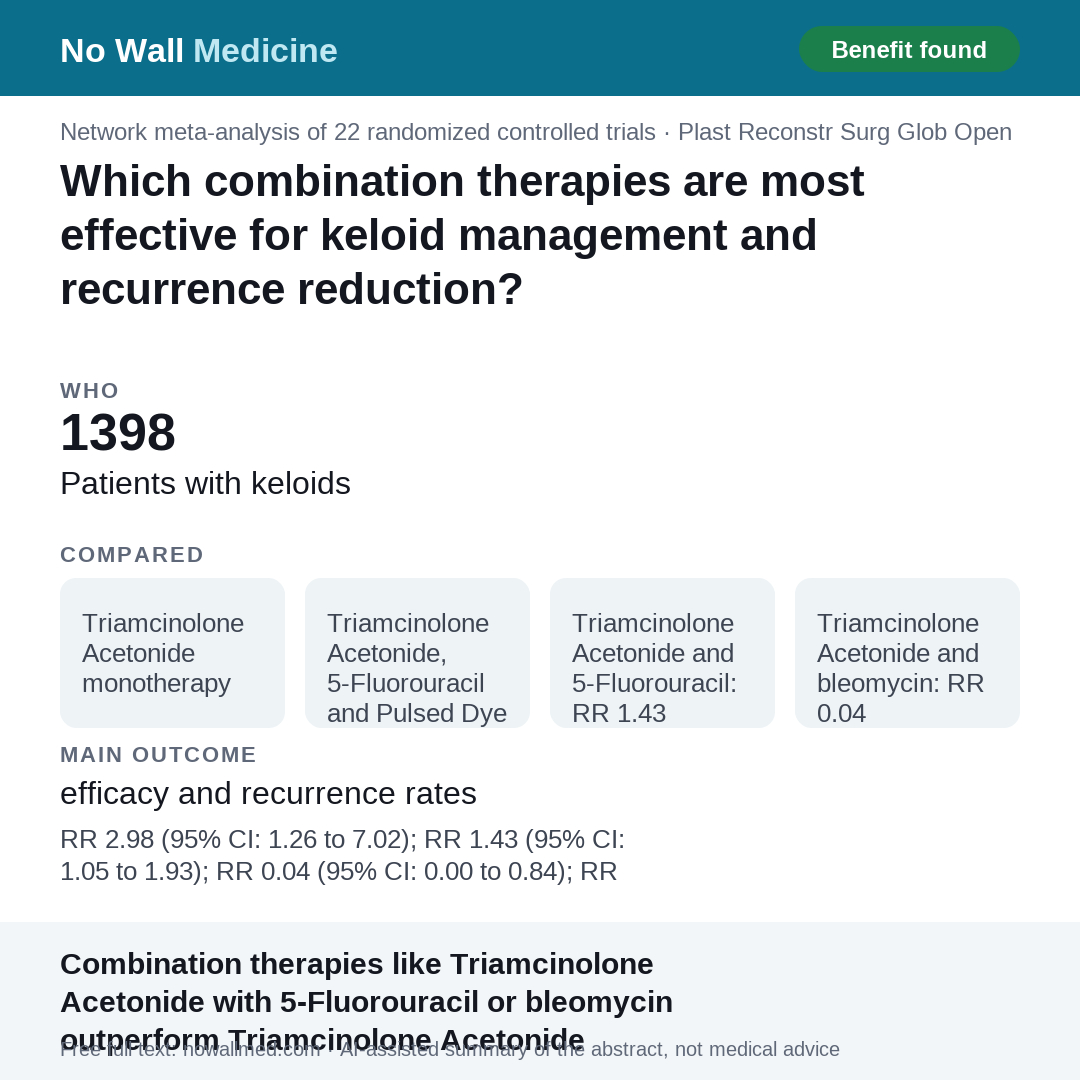
Comparative Efficacy and Recurrence of Combination Therapies in Keloid Management: A Systematic Review and Network Meta-analysis
Network meta-analysis of 22 randomized controlled trialsBenefit found
Which combination therapies are most effective for keloid management and recurrence reduction?
Who
1398
Patients with keloids
Compared
Triamcinolone Acetonide monotherapy
Triamcinolone Acetonide, 5-Fluorouracil and Pulsed Dye Laser: RR 2.98
Triamcinolone Acetonide and 5-Fluorouracil: RR 1.43
Triamcinolone Acetonide and bleomycin: RR 0.04
Main outcome
efficacy and recurrence rates
Result: RR 2.98 (95% CI: 1.26 to 7.02); RR 1.43 (95% CI: 1.05 to 1.93); RR 0.04 (95% CI: 0.00 to 0.84); RR 0.23 (95% CI: 0.07 to 0.73)
Bottom line: Combination therapies like Triamcinolone Acetonide with 5-Fluorouracil or bleomycin outperform Triamcinolone Acetonide monotherapy for keloid management.
Plast Reconstr Surg Glob Open · 2025-08-06Download image
Neurocognitive evaluation in patients with intracranial Meningiomas: A systematic review
Systematic reviewMixed results
Neurocognitive evaluation in meningioma patients
Who
patients with intracranial meningiomas
Compared
Meningioma patients
Postoperative patients
Main outcome
cognitive function
Bottom line: Meningiomas impact cognitive function, improve postoperatively
Brain Spine · 2025-08-06Download image

Does preoperative physical therapy/prehabilitation affect outcome or complications after surgery for lumbar disc herniation? A systematic review
Systematic review of five studiesMixed results
Does preoperative physical therapy affect outcomes or complications after lumbar disc herniation surgery?
Who
736
Adult patients undergoing lumbar spine surgery
Compared
Prehabilitation: short-term improvements in pain, functional outcomes, and psychological readiness
Standard preoperative care
Main outcome
Postoperative outcomes and complications
Bottom line: Prehabilitation enhances short-term recovery, but long-term effectiveness remains uncertain as outcomes converge over time.
Limitation: Clinical heterogeneity and lack of lumbar disc herniation specific trials.
Brain Spine · 2025-08-06Download image

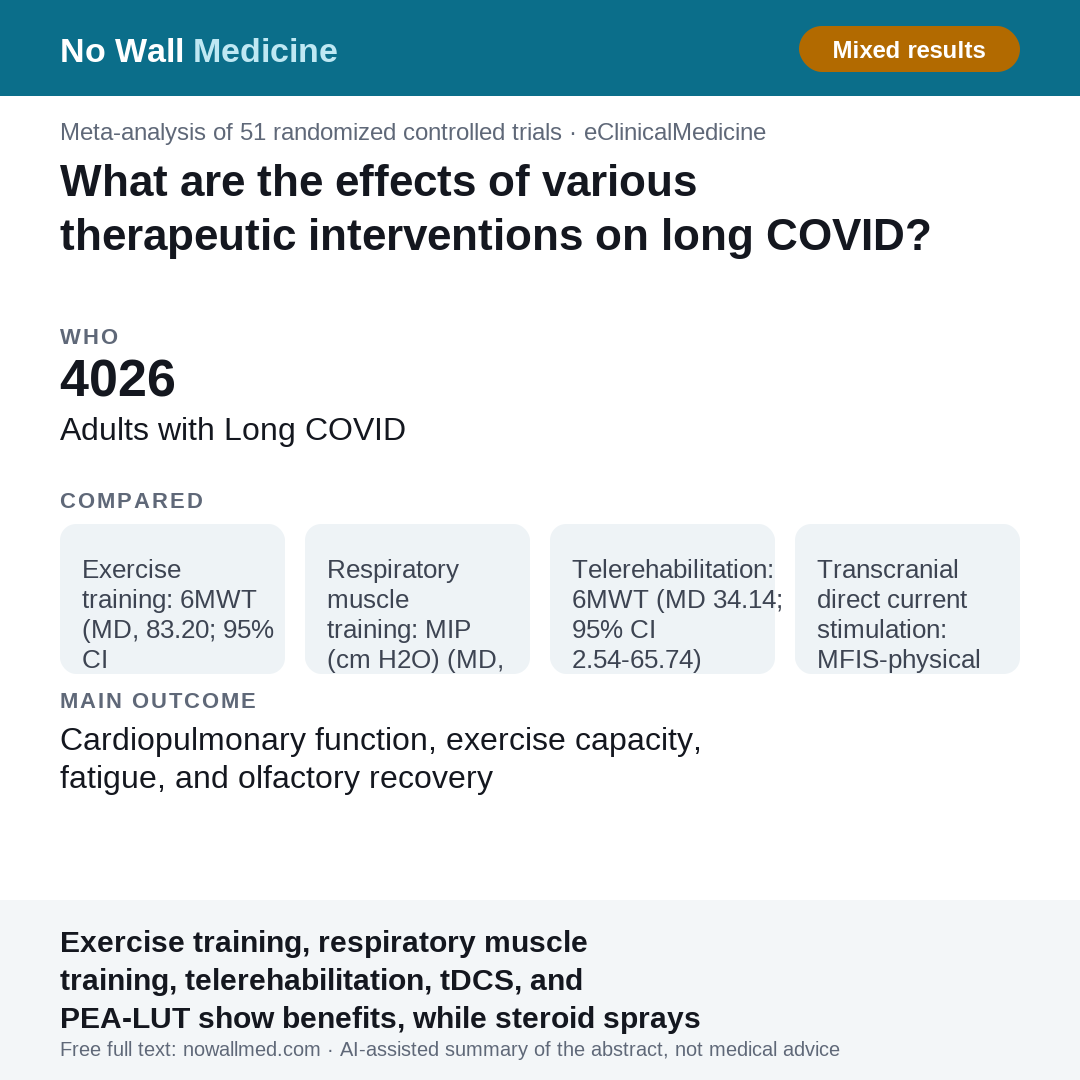
Effects of therapeutic interventions on long COVID: a meta-analysis of randomized controlled trials
Meta-analysis of 51 randomized controlled trialsMixed results
What are the effects of various therapeutic interventions on long COVID?
Who
4026
Adults with Long COVID
Compared
Exercise training: 6MWT (MD, 83.20; 95% CI 52.04-114.37)
Respiratory muscle training: MIP (cm H2O) (MD, 19.69; 95% CI 10.14-29.24)
Telerehabilitation: 6MWT (MD 34.14; 95% CI 2.54-65.74)
Transcranial direct current stimulation: MFIS-physical (MD, -2.29; 95% CI -4.36 to -0.22)
Main outcome
Cardiopulmonary function, exercise capacity, fatigue, and olfactory recovery
Bottom line: Exercise training, respiratory muscle training, telerehabilitation, tDCS, and PEA-LUT show benefits, while steroid sprays and olfactory training lack efficacy.
Limitation: The abstract mentions the need for large-scale trials to optimize dosing and long-term outcomes.
Funded by: Hunan Provincial Natural Foundation of China and others
eClinicalMedicine · 2025-08-05Download image
The Prognostic Accuracy of Frailty and Vulnerability Screening for Older Adults in the Emergency Department: A Systematic Review and Meta-analysis
Systematic review and meta-analysisMixed results
Which frailty or vulnerability screening instrument has the highest prognostic accuracy in the emergency department?
Who
125,412
Older adults aged 60 years or more presenting to the emergency department
Compared
Identification of Seniors at Risk: AUC 0.84 (0.60-0.89)
Clinical Frailty Scale: AUC 0.82 (0.77 to 0.85)
Main outcome
Prognostic accuracy for adverse outcomes
Bottom line: Current screening instruments fail to identify older individuals who will experience adverse outcomes as standalone prognostic tools.
Ann Emerg Med · 2025-08-05Download image

Genetic characterization of preschool wheeze phenotypes
Meta-analysis of genome-wide association studiesMixed results
Genetic basis of preschool wheeze
Who
13000
children with early-onset wheeze · 15 cohorts
Compared
early-onset wheeze
persistent wheeze
early transient wheeze
Main outcome
genetic association with wheeze
Result: odds ratio 1.26 (95% confidence interval 1.17-1.33)
Bottom line: Distinct genetic patterns for wheeze phenotypes found
JACI · 2025-08-05Download image

Prevalence and correlates of anemia following Roux-en-Y gastric bypass: a systematic review and meta-analysis
Systematic review and meta-analysisHarm found
What is the prevalence and associated factors of anemia after Roux-en-Y gastric bypass?
Who
12,262
Patients undergoing Roux-en-Y gastric bypass
Compared
26%Overall postoperative anemia prevalence
15%≤1 year post-surgery
27%>1-5 years post-surgery
35%>5 years post-surgery
Main outcome
Prevalence of anemia following Roux-en-Y gastric bypass
Bottom line: Anemia prevalence increases over time following Roux-en-Y gastric bypass, necessitating long-term hematologic surveillance and optimized nutrient repletion.
Int J Surg · 2025-08-05Download image

Hospital volume matters: a meta-analysis of mortality after colorectal cancer surgery
Meta-analysisBenefit found
Does hospital volume affect postoperative mortality after colorectal cancer surgery?
Who
Patients undergoing colorectal cancer surgery
Compared
Higher-volume hospitals: 27% decrease in colon resection mortality
Lower-volume hospitals: 25% decrease in rectum resection mortality
Main outcome
Postoperative mortality
Bottom line: Higher hospital volume reduces mortality risk, with a potential threshold of 30 rectum resections annually.
Int J Surg · 2025-08-05Download image

Anticoagulants and immunosuppressive therapy for thrombosis in Behçet's syndrome: a systematic review and meta-analysis
Systematic review and meta-analysisBenefit found
Are combined immunosuppressives and anticoagulants effective in preventing thrombosis relapse in Behçet's syndrome?
Who
315
Behçet's syndrome patients with venous or arterial thrombosis
Compared
17.7%Combined immunosuppressives and anticoagulants (95% CI, 9.7%-30.1%)
43.7%Immunosuppressives alone (95% CI, 25.8%-63.4%)
54.9%Anticoagulants alone (95% CI, 0.322%-0.758%)
Main outcome
Relapse rate of thrombosis
Bottom line: Combined immunosuppressives and anticoagulants were associated with lower risks of thrombosis relapse compared with either treatment alone.
Limitation: Most included studies were retrospective
J Thromb Haemost · 2025-08-05Download image

Associations of breastfeeding with maternal and child health outcomes: umbrella review
Umbrella reviewBenefit found
What are the associations between breastfeeding and maternal and child health outcomes?
Who
Mothers and their offspring
Compared
Breastfeeding
Non-breastfeeding
Main outcome
Maternal and child health outcomes
Bottom line: Breastfeeding is associated with benefits for mothers and offspring, including reduced risks of ovarian cancer, hypertension, and sudden infant death syndrome.
Limitation: Only 4 of 192 meta-analyses were classified as moderate-quality evidence.
Am J Clin Nutr · 2025-08-05Download image

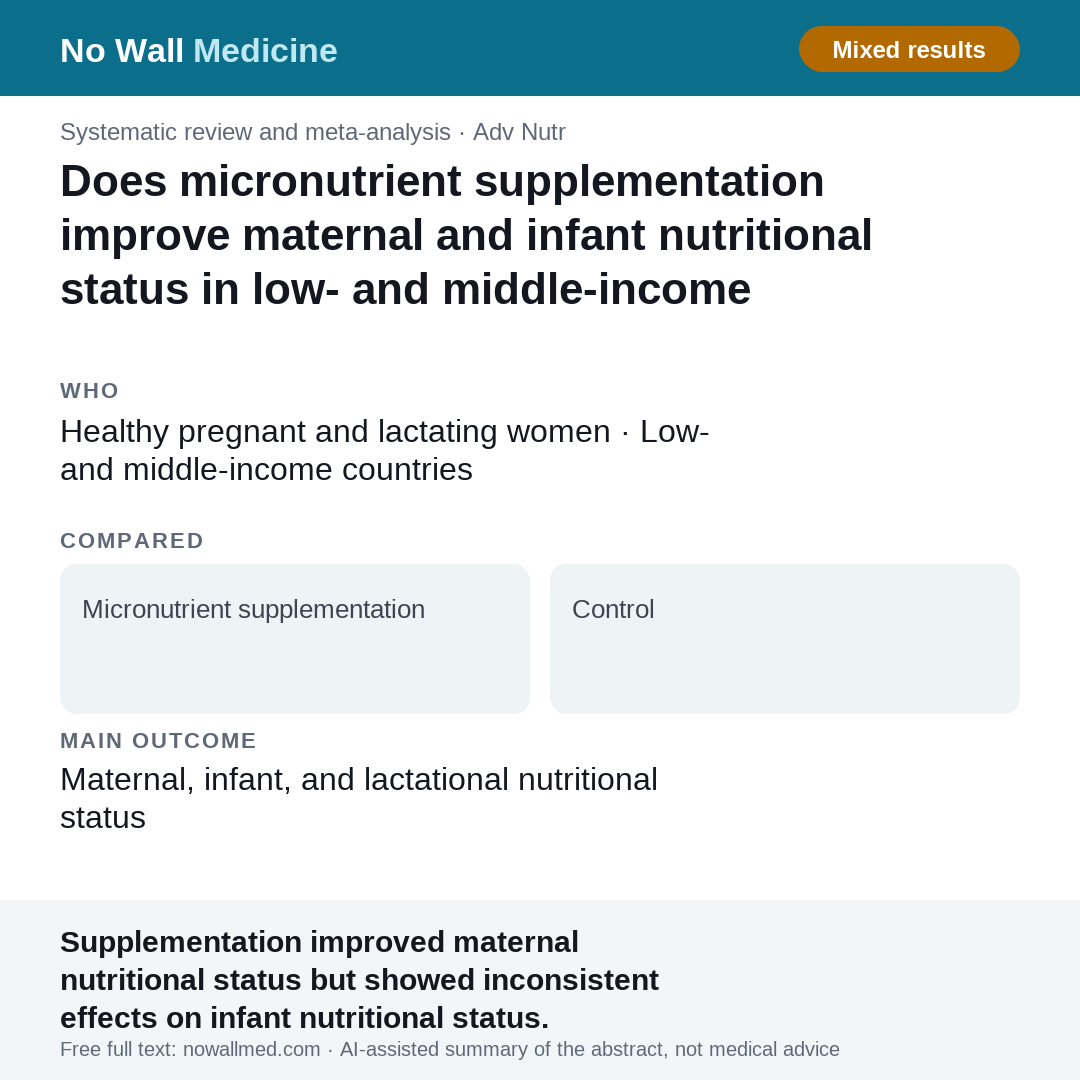
Effects of vitamin and multiple micronutrient supplementation for pregnant and/or lactating women on maternal and infant nutritional status in low- and middle-income countries: a systematic review and meta-analysis
Systematic review and meta-analysisMixed results
Does micronutrient supplementation improve maternal and infant nutritional status in low- and middle-income countries?
Who
Healthy pregnant and lactating women · Low- and middle-income countries
Compared
Micronutrient supplementation
Control
Main outcome
Maternal, infant, and lactational nutritional status
Bottom line: Supplementation improved maternal nutritional status but showed inconsistent effects on infant nutritional status.
Limitation: Inconsistent effects on infant or cord serum cobalamin concentrations.
Adv Nutr · 2025-08-05Download image
Systematic review and meta-analysis of enteric virus shedding in human excretions
Systematic review and meta-analysisUnclear result
What are the shedding profiles of enteric viruses in human excretions?
Who
Humans shedding norovirus, rotavirus, hepatitis A virus, and adenovirus group F
Compared
Human norovirus
Rotavirus
Hepatitis A virus
Adenovirus group F
Main outcome
Concentrations, positivity rates, duration, and peak shedding day in excretions
Bottom line: The study provides aggregated data on enteric virus shedding to help translate wastewater concentrations to disease occurrence rates.
Limitation: Limited data available for excretions other than stool and for adenovirus group F.
Funded by: Sergey Brin Family Foundation
eBioMedicine · 2025-08-05Download image

Management of uterine artery pseudoaneurysm: a case report of noninterventional treatment with systematic review
Case report and systematic reviewMixed results
What are the characteristics and management of uterine artery pseudoaneurysm?
Who
144
144 patients with uterine artery pseudoaneurysm
Compared
Pregnant patients: 20 patients
Nonpregnant patients: 124 patients
Main outcome
risk factors, diagnostic modalities, treatment strategies, and clinical outcomes
Bottom line: Embolization is the standard treatment, but noninterventional management may be considered for stable patients with thrombosed pseudoaneurysms.
Limitation: evidence of noninterventional management effectiveness remains limited
AJOG Glob Rep · 2025-08-05Download image

Patient and Surgeon-Reported Satisfaction With Reconstruction Following Superficial Parotidectomy: A Systematic Review and Meta-Analysis
Systematic review and meta-analysisBenefit found
Which reconstructive method provides the highest degree of patient satisfaction after superficial parotidectomy?
Who
898
Patients undergoing superficial parotidectomy reconstruction
Compared
No reconstruction: 93% satisfaction
Sternocleidomastoid flap: 97% satisfaction
Superficial muscular aponeurotic system flap: 100% satisfaction
Main outcome
Patient satisfaction and symmetry
Bottom line: Reconstruction improved patient satisfaction and symmetry compared to no reconstruction after superficial parotidectomy.
Laryngoscope Investig Otolaryngol · 2025-08-05Download image

Estimating the respiratory syncytial virus-associated hospitalisation burden in older adults in European countries: a systematic analysis
Systematic analysisUnclear result
What is the respiratory syncytial virus hospitalisation burden in older adults in Europe?
Who
Adults aged 60 years or older in Europe · European countries
Compared
Adjusted hospitalisation rates: 2.2 to 6.4 times higher than unadjusted estimates
Netherlands and Finland rates: 193/100,000 and 141-274 person-years
Denmark rate: 414/100,000 person-years
Main outcome
Respiratory syncytial virus associated hospitalisation rates
Bottom line: Adjusted respiratory syncytial virus hospitalisation rates in older Europeans are significantly higher than previously estimated unadjusted rates.
BMC Med · 2025-08-04Download image

Continuous glucose monitoring in noninsulin-treated type 2 diabetes: A critical review of reported trials with an updated systematic review and meta-analysis of randomised controlled trials
Systematic review and meta-analysis of randomized controlled trialsBenefit found
Does continuous glucose monitoring improve outcomes in noninsulin-treated type 2 diabetes?
Who
541
Individuals with noninsulin-treated type 2 diabetes
Compared
Continuous glucose monitoring
Blood glucose monitoring or usual care
Main outcome
Glycaemic outcomes
Result: weighted mean difference -0.37% (95% CI -0.49, -0.24) for HbA1c
Bottom line: Continuous glucose monitoring improves glycaemic outcomes and patient experience in noninsulin-treated type 2 diabetes.
Diabetes Obes Metab · 2025-08-04Download image

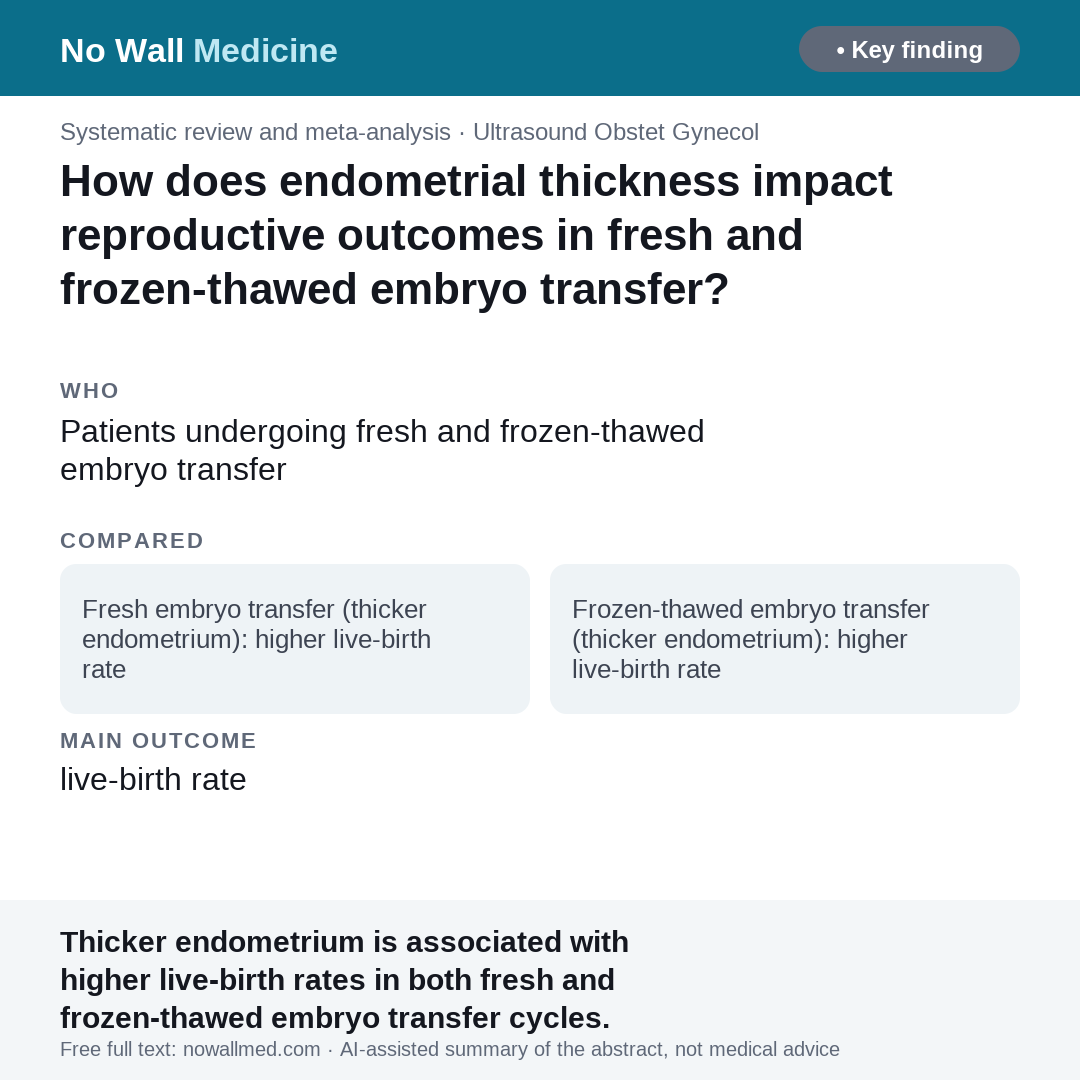
Impact of endometrial thickness on reproductive outcome in fresh and frozen-thawed embryo transfer: systematic review and meta-analysis
Systematic review and meta-analysisBenefit found
How does endometrial thickness impact reproductive outcomes in fresh and frozen-thawed embryo transfer?
Who
67
Patients undergoing fresh and frozen-thawed embryo transfer
Compared
Fresh embryo transfer (thicker endometrium): higher live-birth rate
Frozen-thawed embryo transfer (thicker endometrium): higher live-birth rate
Main outcome
live-birth rate
Bottom line: Thicker endometrium is associated with higher live-birth rates in both fresh and frozen-thawed embryo transfer cycles.
Limitation: Evidence quality was rated as very low in 70% of assessments because of bias and inconsistency.
Ultrasound Obstet Gynecol · 2025-08-04Download image
Characteristics of Hearing Loss in Type 2 Diabetes Mellitus: A Systematic Review and Meta-Analysis
Meta-analysis of 39 studiesHarm found
Hearing loss in Type 2 Diabetes
Who
88395, 20337
patients with Type 2 Diabetes Mellitus and controls
Compared
53.0%Type 2 Diabetes
25.2%controls
Main outcome
prevalence of hearing loss
Result: relative risk 2.3 (95% CI: 1.1-4.8)
Bottom line: Type 2 Diabetes increases hearing loss risk
Otolaryngol Head Neck Surg · 2025-08-04Download image