Visual abstracts
New randomized trials and meta-analyses from leading journals at a glance: who was studied, what was compared, and what was found. Every paper is free to read in full.
All specialtiesCardiology 4763Oncology 4042Gastroenterology & Hepatology 1902Infectious Disease 3756Neurology 1872Psychiatry & Mental Health 2214Pulmonology 2042Critical Care 1319Endocrinology & Diabetes 2544Pediatrics 2889Surgery 2479Orthopedics & Sports Medicine 917Neurosurgery 525Cardiothoracic & Vascular Surgery 656Plastic & Reconstructive Surgery 574Nephrology 1107Rheumatology 810Hematology 1090Dermatology 611Ophthalmology 532Obstetrics & Gynecology 1645Public & Global Health 1037Radiology & Imaging 617Anesthesiology 957Urology 745ENT (Otolaryngology) 494Emergency Medicine 481Allergy & Immunology 309Geriatrics 972Family Medicine & Primary Care 533Medical Genetics & Genomics 659Pathology & Laboratory Medicine 156Physical Medicine & Rehabilitation 734Palliative Care 421Nutrition 1560Digital Health & AI 2133General Medicine 318
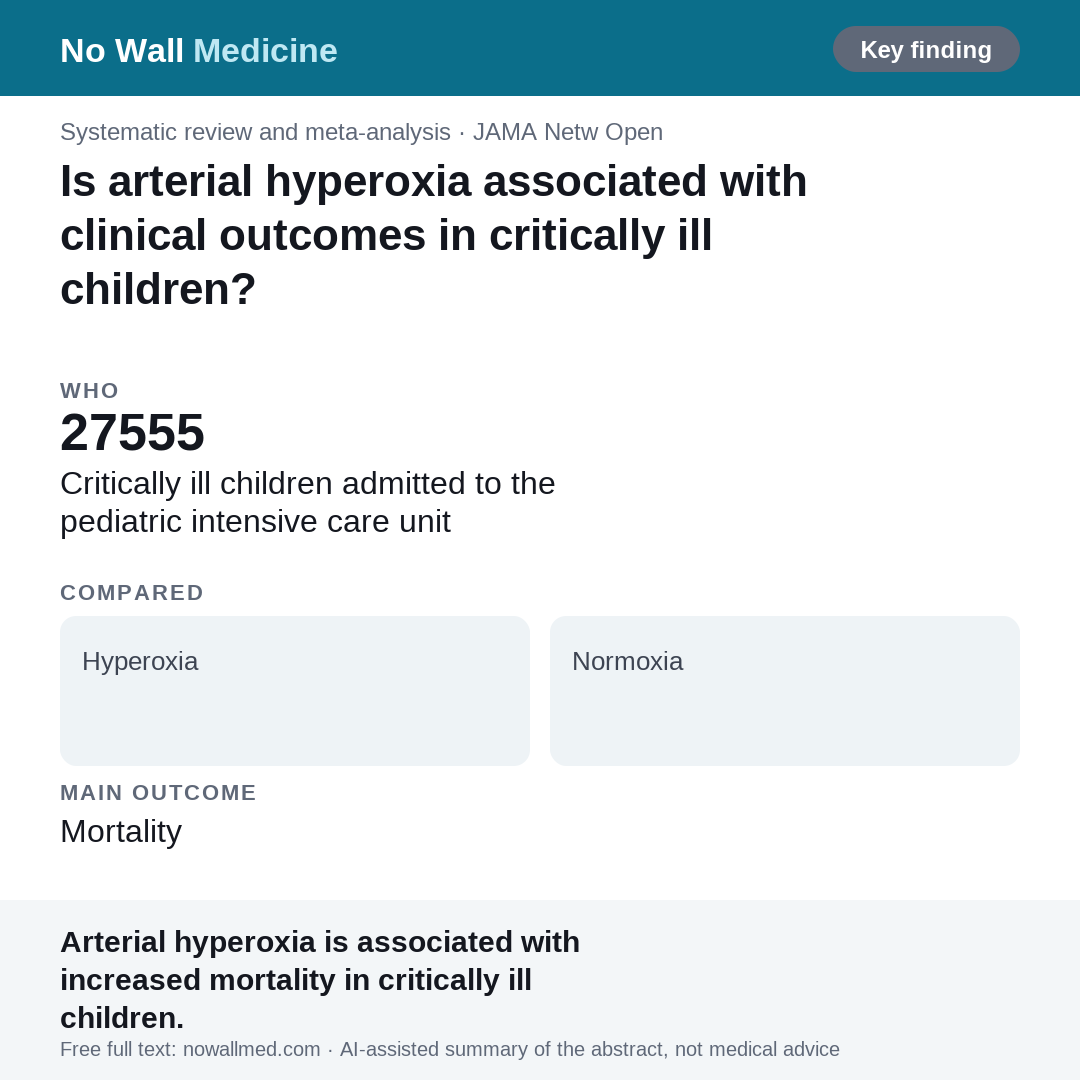
Association of Arterial Hyperoxia With Outcomes in Critically Ill Children: A Systematic Review and Meta-analysis
Systematic review and meta-analysisKey finding
Is arterial hyperoxia associated with clinical outcomes in critically ill children?
Who
27555
Critically ill children admitted to the pediatric intensive care unit
Compared
Hyperoxia
Normoxia
Main outcome
Mortality
Result: odds ratio 1.59 (95% CI, 1.00-2.51; after Hartung-Knapp adjustment, 95% CI, 1.05-2.38)
Bottom line: Arterial hyperoxia is associated with increased mortality in critically ill children.
Limitation: Most included studies were observational cohort studies and definitions of hyperoxia differed.
JAMA Netw Open · 2022-01-04Download image
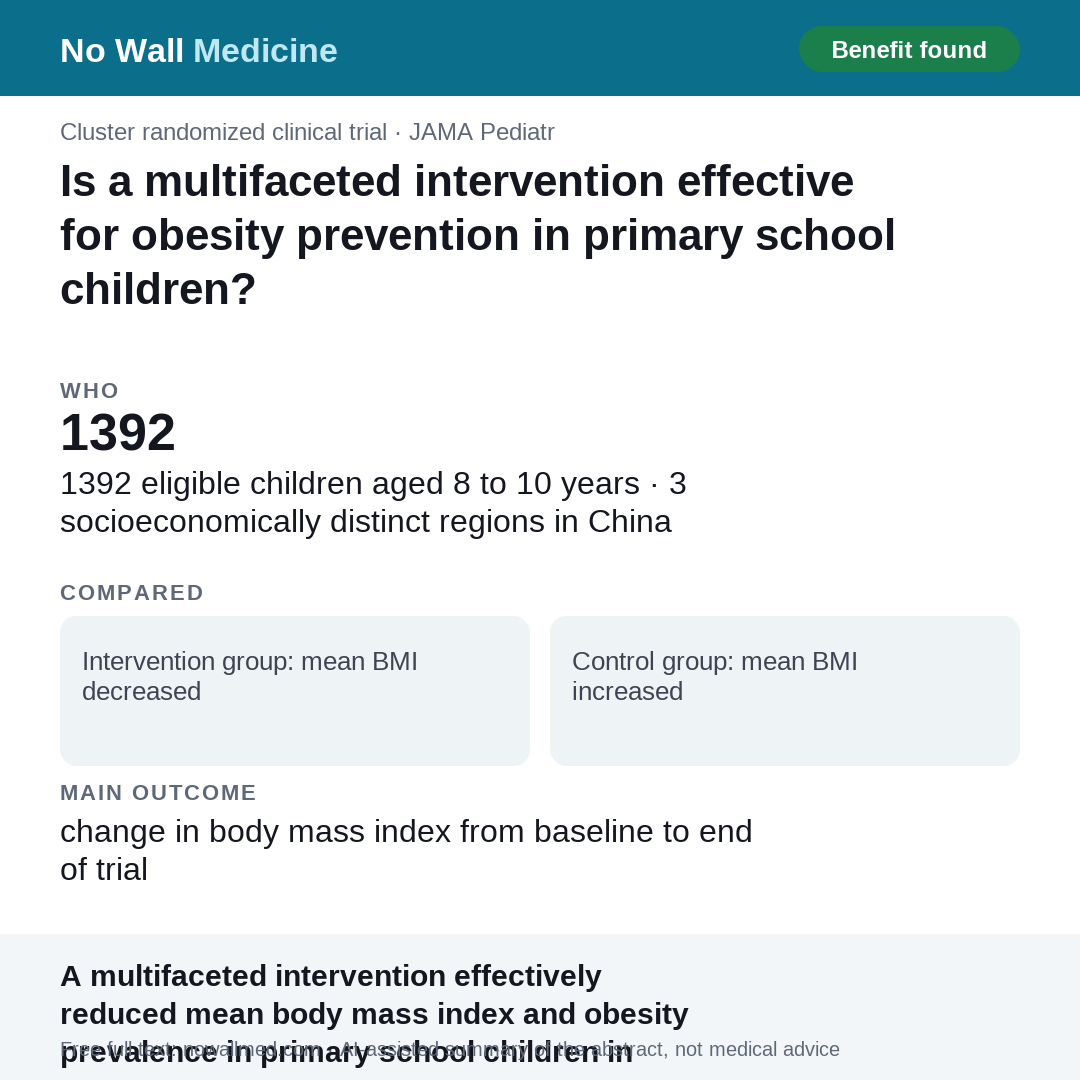
Effectiveness of a Multifaceted Intervention for Prevention of Obesity in Primary School Children in China: A Cluster Randomized Clinical Trial
Cluster randomized clinical trialBenefit found
Is a multifaceted intervention effective for obesity prevention in primary school children?
Who
1392
1392 eligible children aged 8 to 10 years · 3 socioeconomically distinct regions in China
Compared
Intervention group: mean BMI decreased
Control group: mean BMI increased
Main outcome
change in body mass index from baseline to end of trial
Result: -0.46 (95% CI, -0.67 to -0.25)
Bottom line: A multifaceted intervention effectively reduced mean body mass index and obesity prevalence in primary school children in China.
JAMA Pediatr · 2022-01-04Download image
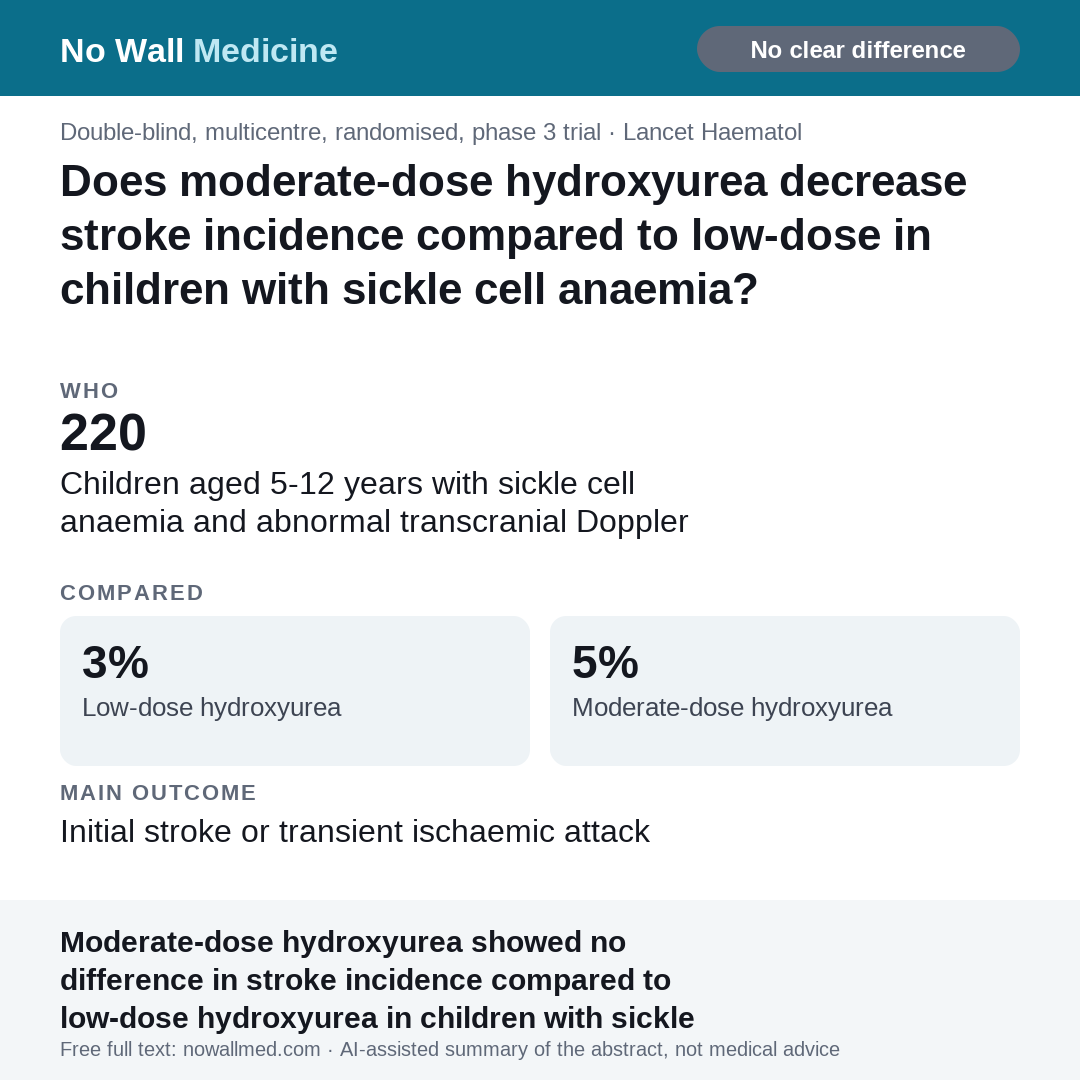
Hydroxyurea for primary stroke prevention in children with sickle cell anaemia in Nigeria (SPRING): a double-blind, multicentre, randomised, phase 3 trial
Double-blind, multicentre, randomised, phase 3 trialNo clear difference
Does moderate-dose hydroxyurea decrease stroke incidence compared to low-dose in children with sickle cell anaemia?
Who
220
Children aged 5-12 years with sickle cell anaemia and abnormal transcranial Doppler velocities · Three teaching hospitals in Nigeria
Compared
3%Low-dose hydroxyurea (3/109)
5%Moderate-dose hydroxyurea (5/111)
Main outcome
Initial stroke or transient ischaemic attack
Result: incidence rate ratio 0.62 (95% CI 0.10 to 3.20)
Bottom line: Moderate-dose hydroxyurea showed no difference in stroke incidence compared to low-dose hydroxyurea in children with sickle cell anaemia.
Limitation: The trial was stopped early for futility.
Funded by: National Institute of Neurological Disorders and Stroke
Lancet Haematol · 2022-01-01Download image
Scoring Systems for Organ Dysfunction and Multiple Organ Dysfunction: The PODIUM Consensus Conference
Meta-analysis of 54 studiesUnclear result
Do scores estimate illness severity
Who
Critically ill children
Compared
PELOD
pSOFA
Main outcome
Mortality and organ dysfunction
Bottom line: Many scores exist, performance varies
Limitation: Wide performance range
Pediatrics · 2021-12-31Download image
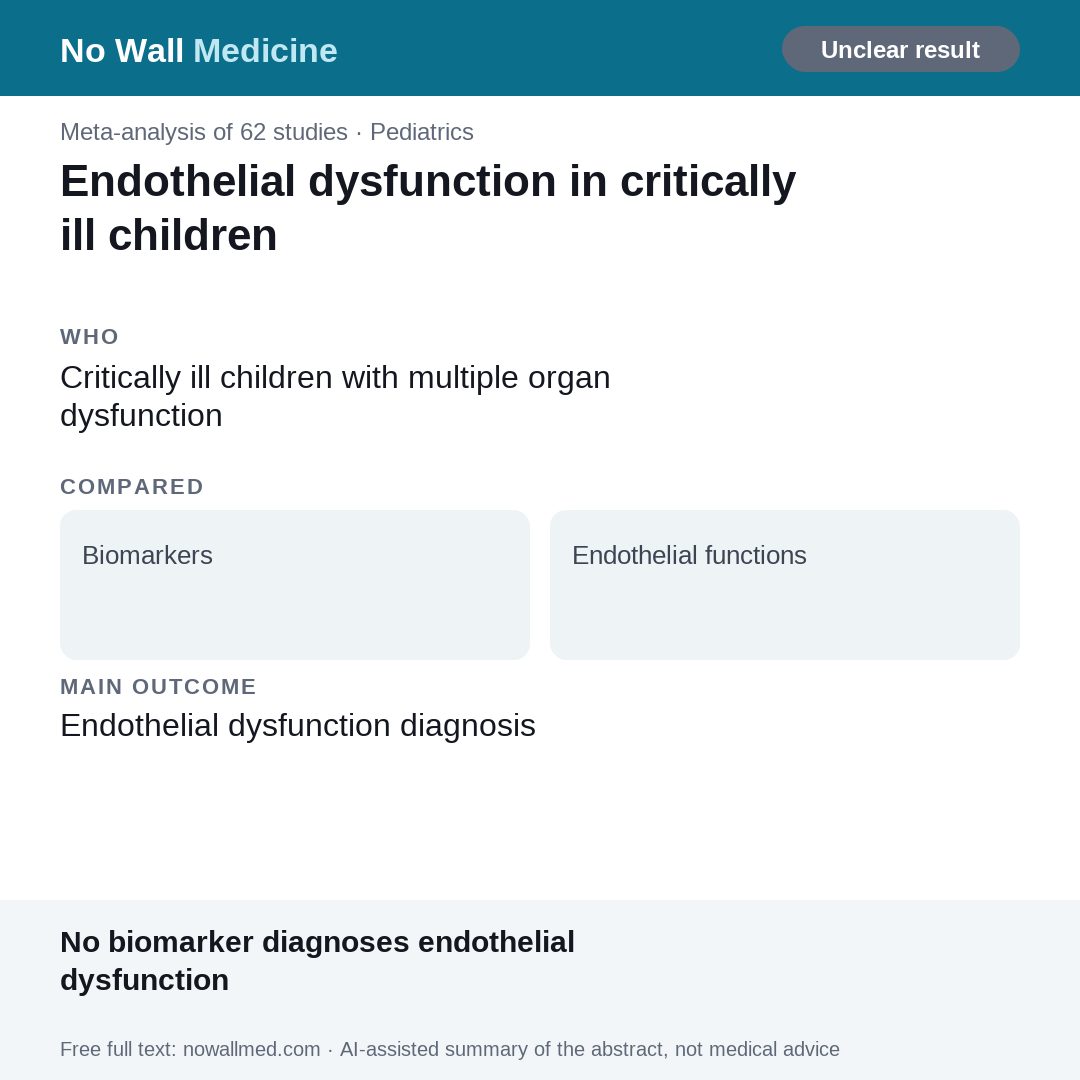
Endothelial Dysfunction Criteria in Critically Ill Children: The PODIUM Consensus Conference
Meta-analysis of 62 studiesUnclear result
Endothelial dysfunction in critically ill children
Who
Critically ill children with multiple organ dysfunction
Compared
Biomarkers
Endothelial functions
Main outcome
Endothelial dysfunction diagnosis
Bottom line: No biomarker diagnoses endothelial dysfunction
Limitation: Low quality assessment scores
Pediatrics · 2021-12-31Download image
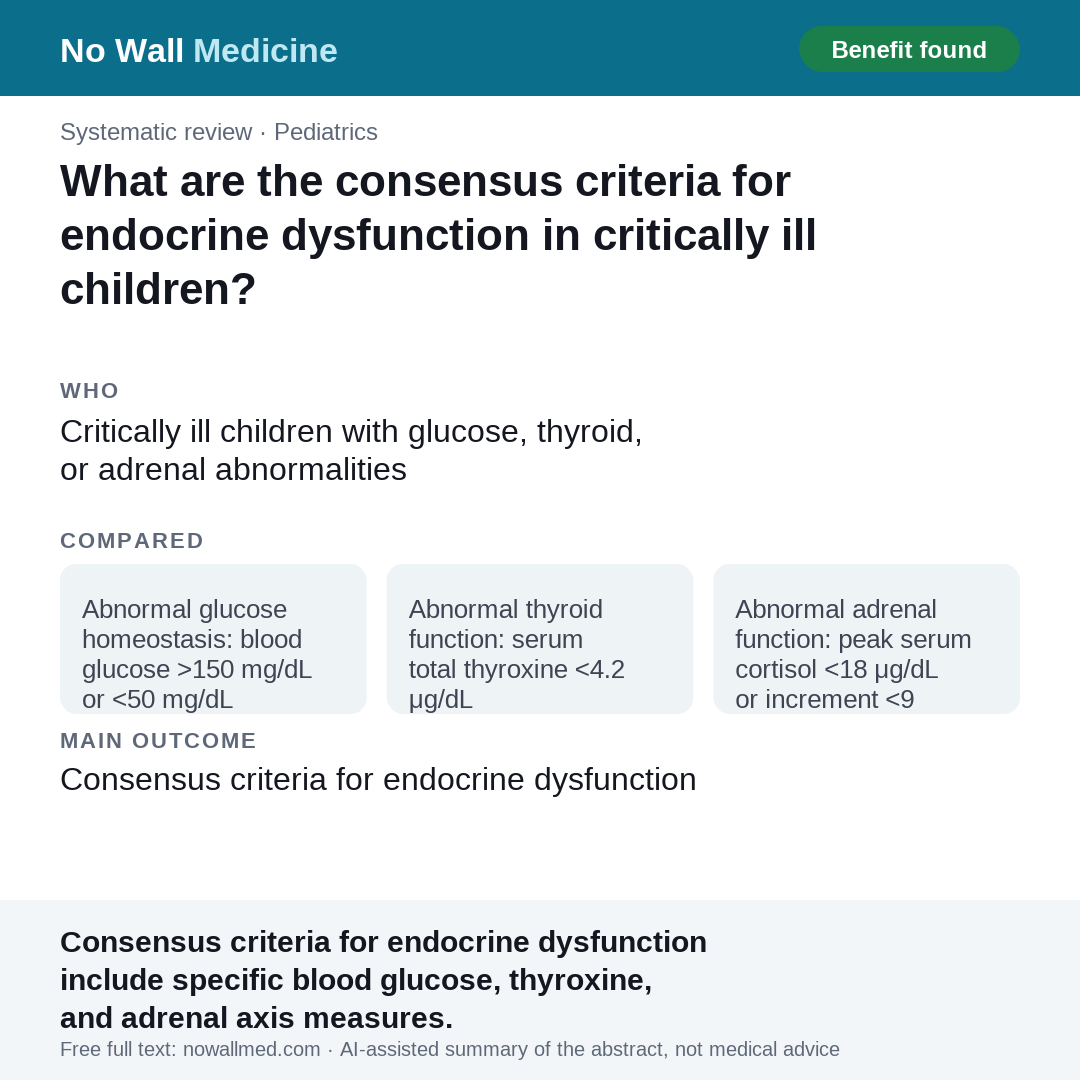
Endocrine Dysfunction Criteria in Critically Ill Children: The PODIUM Consensus Conference
Systematic reviewBenefit found
What are the consensus criteria for endocrine dysfunction in critically ill children?
Who
Critically ill children with glucose, thyroid, or adrenal abnormalities
Compared
Abnormal glucose homeostasis: blood glucose >150 mg/dL or <50 mg/dL
Abnormal thyroid function: serum total thyroxine <4.2 μg/dL
Abnormal adrenal function: peak serum cortisol <18 μg/dL or increment <9 μg/dL
Main outcome
Consensus criteria for endocrine dysfunction
Bottom line: Consensus criteria for endocrine dysfunction include specific blood glucose, thyroxine, and adrenal axis measures.
Limitation: Variable blood glucose sampling, limited free thyroxine reporting, and inconsistent adrenal axis testing interpretation.
Pediatrics · 2021-12-31Download image
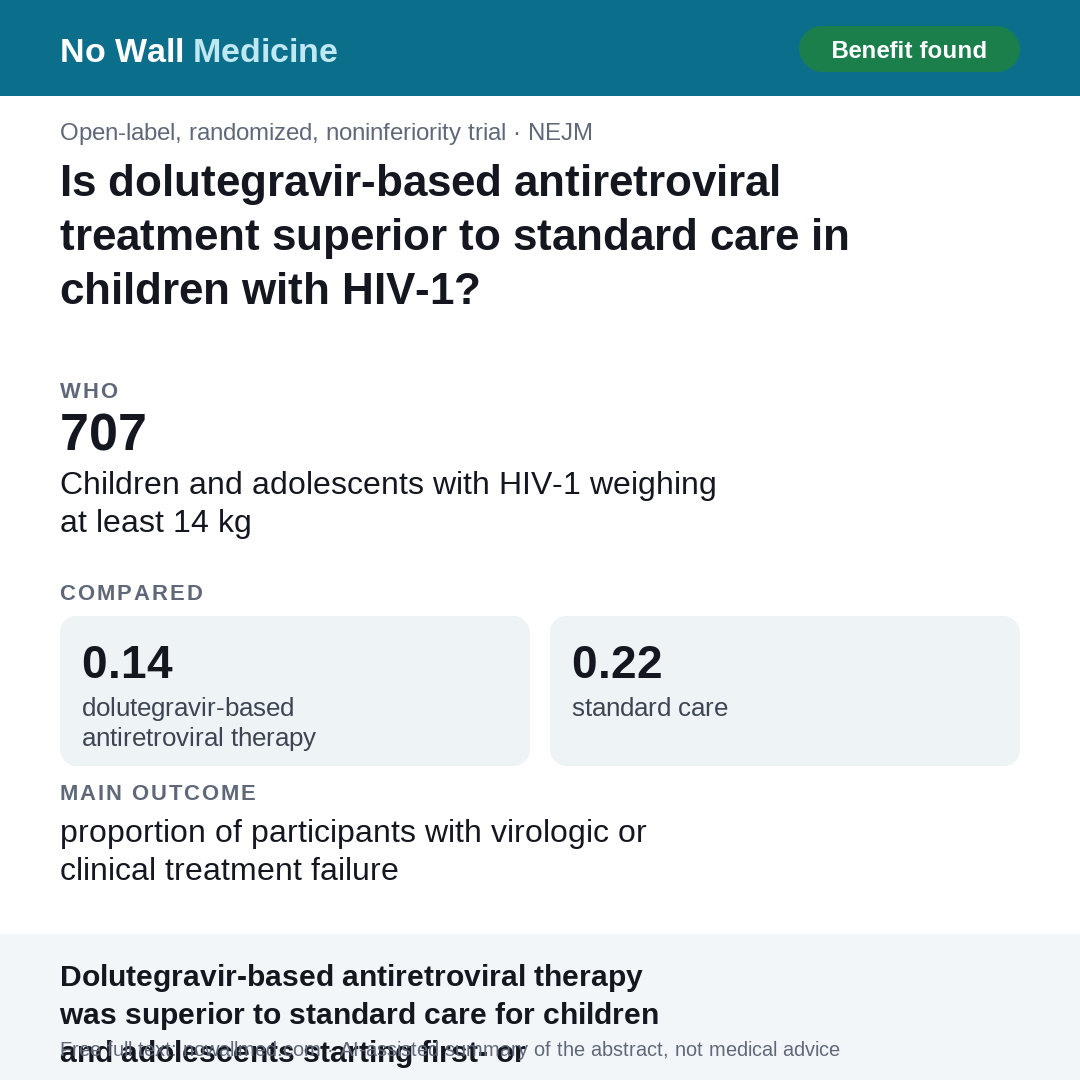
Dolutegravir as First- or Second-Line Treatment for HIV-1 Infection in Children
Open-label, randomized, noninferiority trialBenefit found
Is dolutegravir-based antiretroviral treatment superior to standard care in children with HIV-1?
Who
707
Children and adolescents with HIV-1 weighing at least 14 kg
Compared
0.14dolutegravir-based antiretroviral therapy
0.22standard care
Main outcome
proportion of participants with virologic or clinical treatment failure
Result: difference -0.08 (95% CI -0.14 to -0.03)
Bottom line: Dolutegravir-based antiretroviral therapy was superior to standard care for children and adolescents starting first- or second-line treatment.
Funded by: ViiV Healthcare
NEJM · 2021-12-29Download image
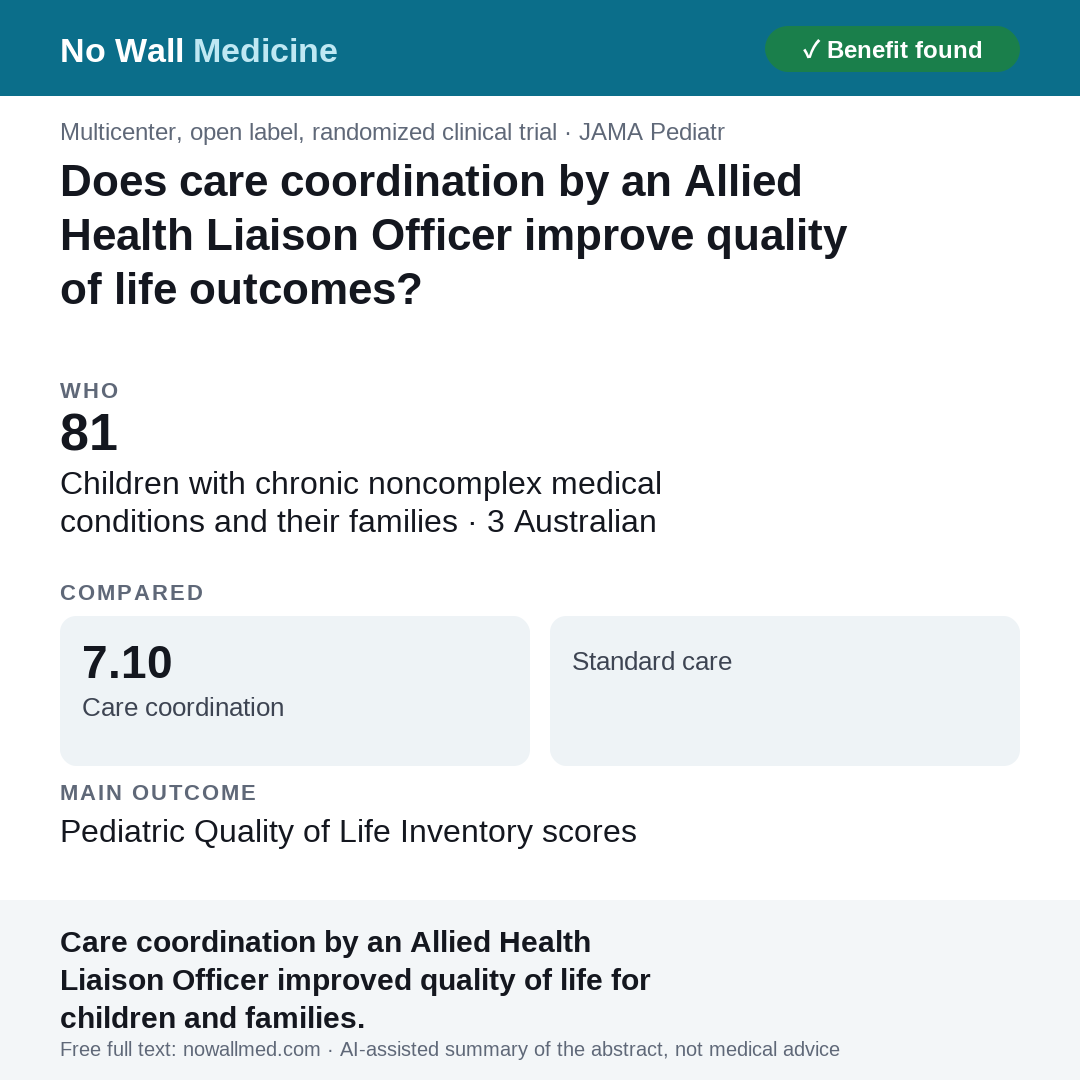
Effect of Care Coordination Using an Allied Health Liaison Officer for Chronic Noncomplex Medical Conditions in Children: A Multicenter Randomized Clinical Trial
Multicenter, open label, randomized clinical trialBenefit found
Does care coordination by an Allied Health Liaison Officer improve quality of life outcomes?
Who
81
Children with chronic noncomplex medical conditions and their families · 3 Australian hospitals
Compared
7.10Care coordination (95% CI, 0.44-13.76)
Standard care
Main outcome
Pediatric Quality of Life Inventory scores
Result: difference in score changes 7.10 (95% CI, 0.44-13.76)
Bottom line: Care coordination by an Allied Health Liaison Officer improved quality of life for children and families.
JAMA Pediatr · 2021-12-29Download image
Pain assessment tools in paediatric palliative care: A systematic review of psychometric properties and recommendations for clinical practice
Systematic literature reviewMixed results
What are the psychometric properties and feasibility of paediatric palliative care pain assessment tools?
Who
Infants, children and young people with life-limiting conditions
Compared
Faces Pain Scale-Revised: high cross-cultural validity, construct validity and responsiveness
FLACC scale and Paediatric Pain Profile: high internal consistency, criterion validity, reliability and responsiveness
Main outcome
Psychometric properties and feasibility of pain assessment tools
Bottom line: The Faces Pain Scale-Revised, FLACC scale, and Paediatric Pain Profile are recommended based on their psychometric properties.
Limitation: The number of studies per psychometric property was limited and methodological quality was low.
Palliat Med · 2021-12-29Download image

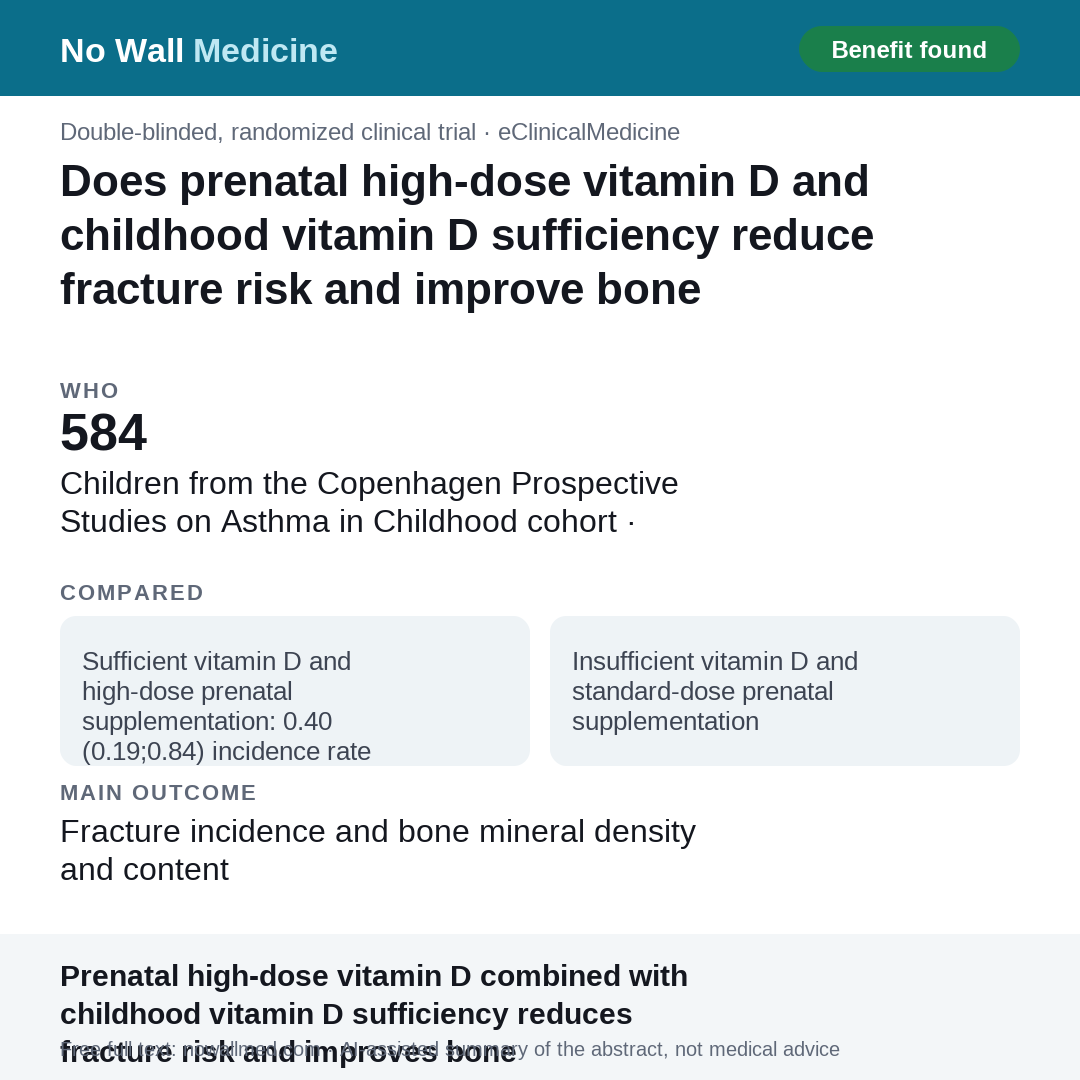
High-dose vitamin D supplementation in pregnancy and 25(OH)D sufficiency in childhood reduce the risk of fractures and improve bone mineralization in childhood: Follow-up of a randomized clinical trial
Double-blinded, randomized clinical trialBenefit found
Does prenatal high-dose vitamin D and childhood vitamin D sufficiency reduce fracture risk and improve bone mineralization?
Who
584
Children from the Copenhagen Prospective Studies on Asthma in Childhood cohort · Copenhagen
Compared
Sufficient vitamin D and high-dose prenatal supplementation: 0.40 (0.19;0.84) incidence rate ratio for fractures
Insufficient vitamin D and standard-dose prenatal supplementation
Main outcome
Fracture incidence and bone mineral density and content
Result: incidence rate ratio 0.40 (95% CI 0.19 to 0.84)
Bottom line: Prenatal high-dose vitamin D combined with childhood vitamin D sufficiency reduces fracture risk and improves bone mineralization.
eClinicalMedicine · 2021-12-24Download image
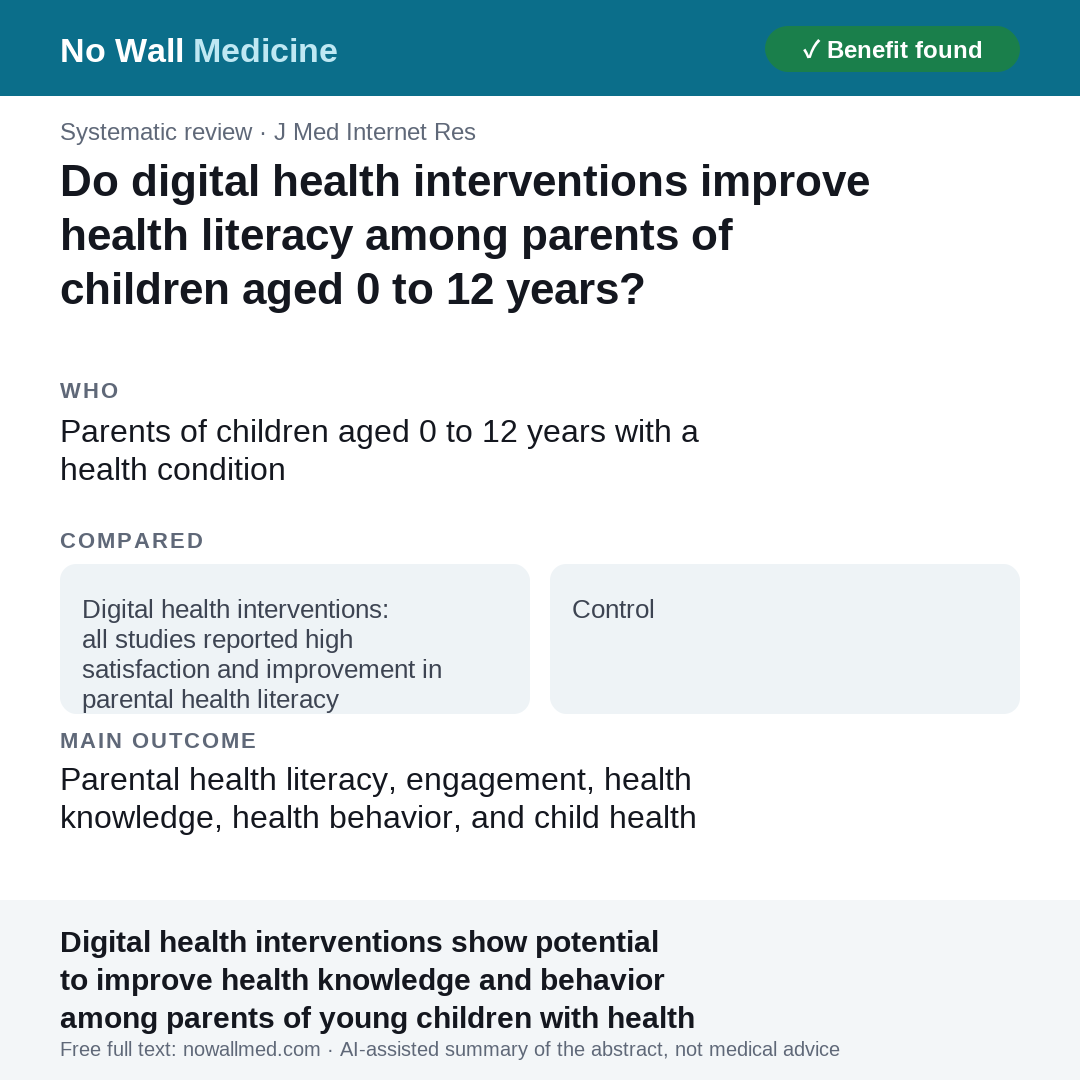
Digital Interventions to Improve Health Literacy Among Parents of Children Aged 0 to 12 Years With a Health Condition: Systematic Review
Systematic reviewBenefit found
Do digital health interventions improve health literacy among parents of children aged 0 to 12 years?
Who
Parents of children aged 0 to 12 years with a health condition
Compared
Digital health interventions: all studies reported high satisfaction and improvement in parental health literacy
Control
Main outcome
Parental health literacy, engagement, health knowledge, health behavior, and child health outcomes
Bottom line: Digital health interventions show potential to improve health knowledge and behavior among parents of young children with health conditions.
Limitation: Few digital health interventions have been developed and evaluated for this population.
J Med Internet Res · 2021-12-22Download image
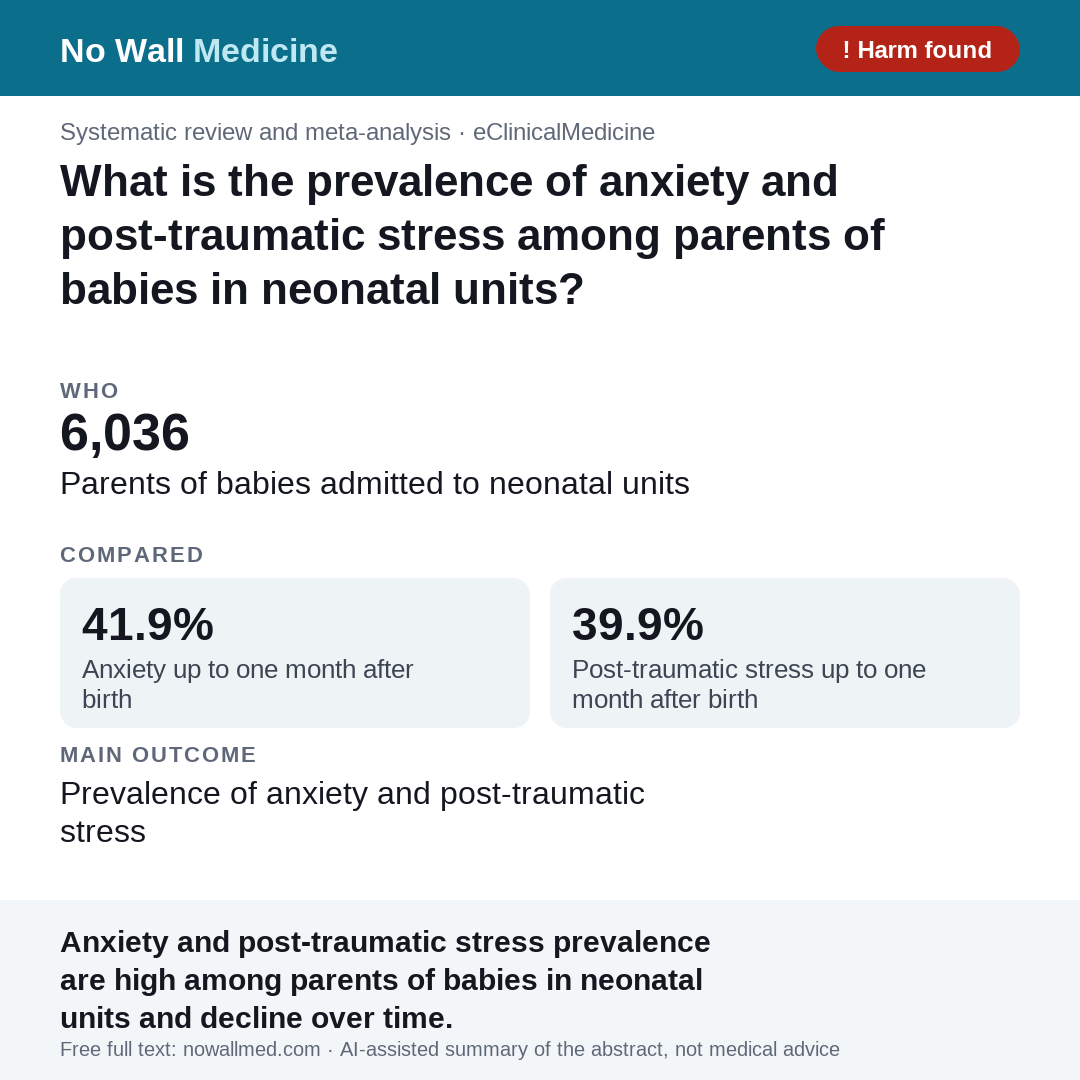
Prevalence of anxiety and post-traumatic stress (PTS) among the parents of babies admitted to neonatal units: A systematic review and meta-analysis
Systematic review and meta-analysisHarm found
What is the prevalence of anxiety and post-traumatic stress among parents of babies in neonatal units?
Who
6,036
Parents of babies admitted to neonatal units
Compared
41.9%Anxiety up to one month after birth (95%CI:30.9, 53.0)
39.9%Post-traumatic stress up to one month after birth (95%CI:30.8, 48.9)
Main outcome
Prevalence of anxiety and post-traumatic stress
Bottom line: Anxiety and post-traumatic stress prevalence are high among parents of babies in neonatal units and decline over time.
Limitation: There was high heterogeneity between studies and limited data on anxiety after one year.
Funded by: National Institute for Health Research Policy Research Programme
eClinicalMedicine · 2021-12-21Download image
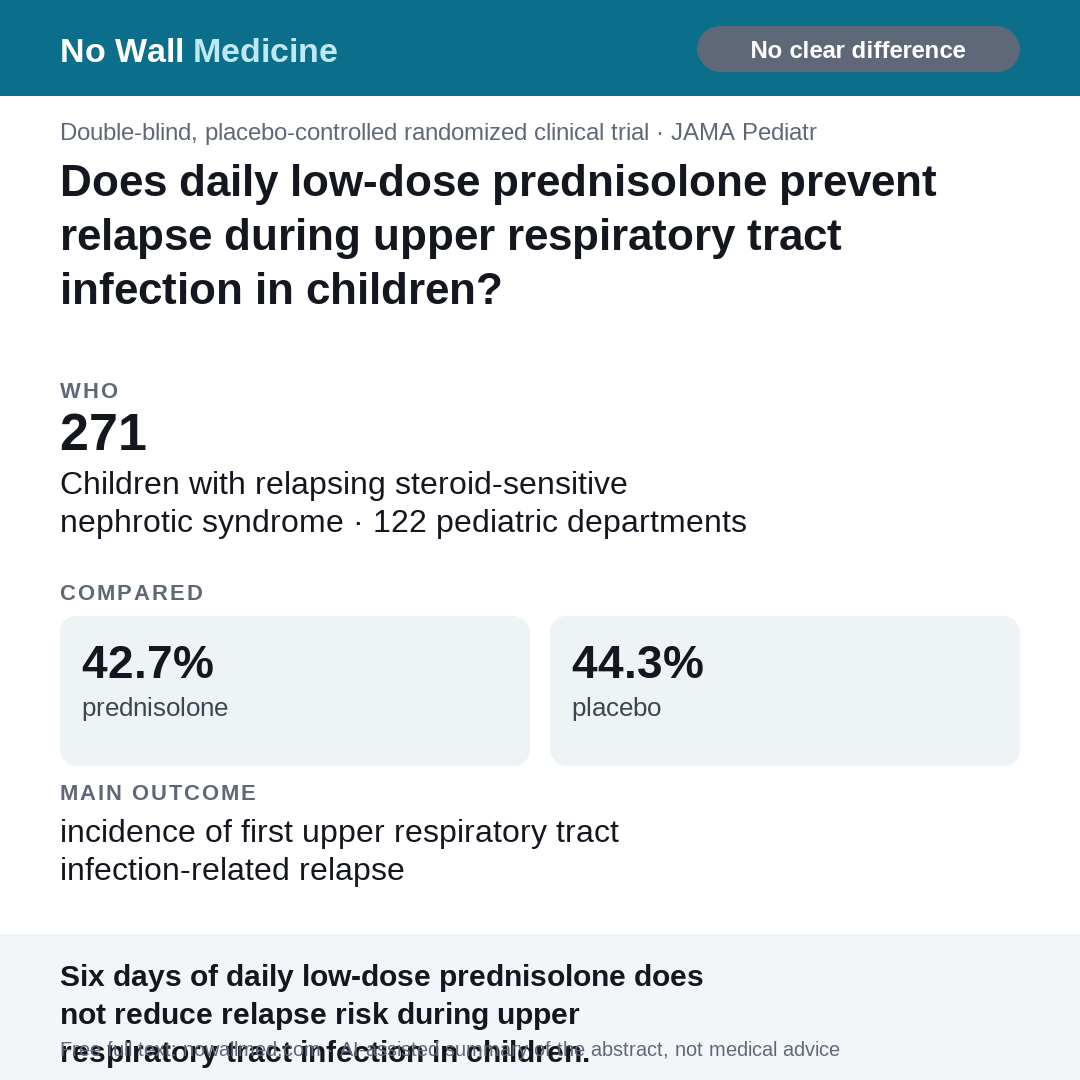
Evaluation of Daily Low-Dose Prednisolone During Upper Respiratory Tract Infection to Prevent Relapse in Children With Relapsing Steroid-Sensitive Nephrotic Syndrome: The PREDNOS 2 Randomized Clinical Trial
Double-blind, placebo-controlled randomized clinical trialNo clear difference
Does daily low-dose prednisolone prevent relapse during upper respiratory tract infection in children?
Who
271
Children with relapsing steroid-sensitive nephrotic syndrome · 122 pediatric departments in the UK
Compared
42.7%prednisolone (56/131)
44.3%placebo (58/131)
Main outcome
incidence of first upper respiratory tract infection-related relapse
Result: adjusted risk difference, -0.02 (95% CI, -0.14 to 0.10)
Bottom line: Six days of daily low-dose prednisolone does not reduce relapse risk during upper respiratory tract infection in children.
Limitation: Further work is needed to investigate interethnic differences in treatment response.
JAMA Pediatr · 2021-12-21Download image
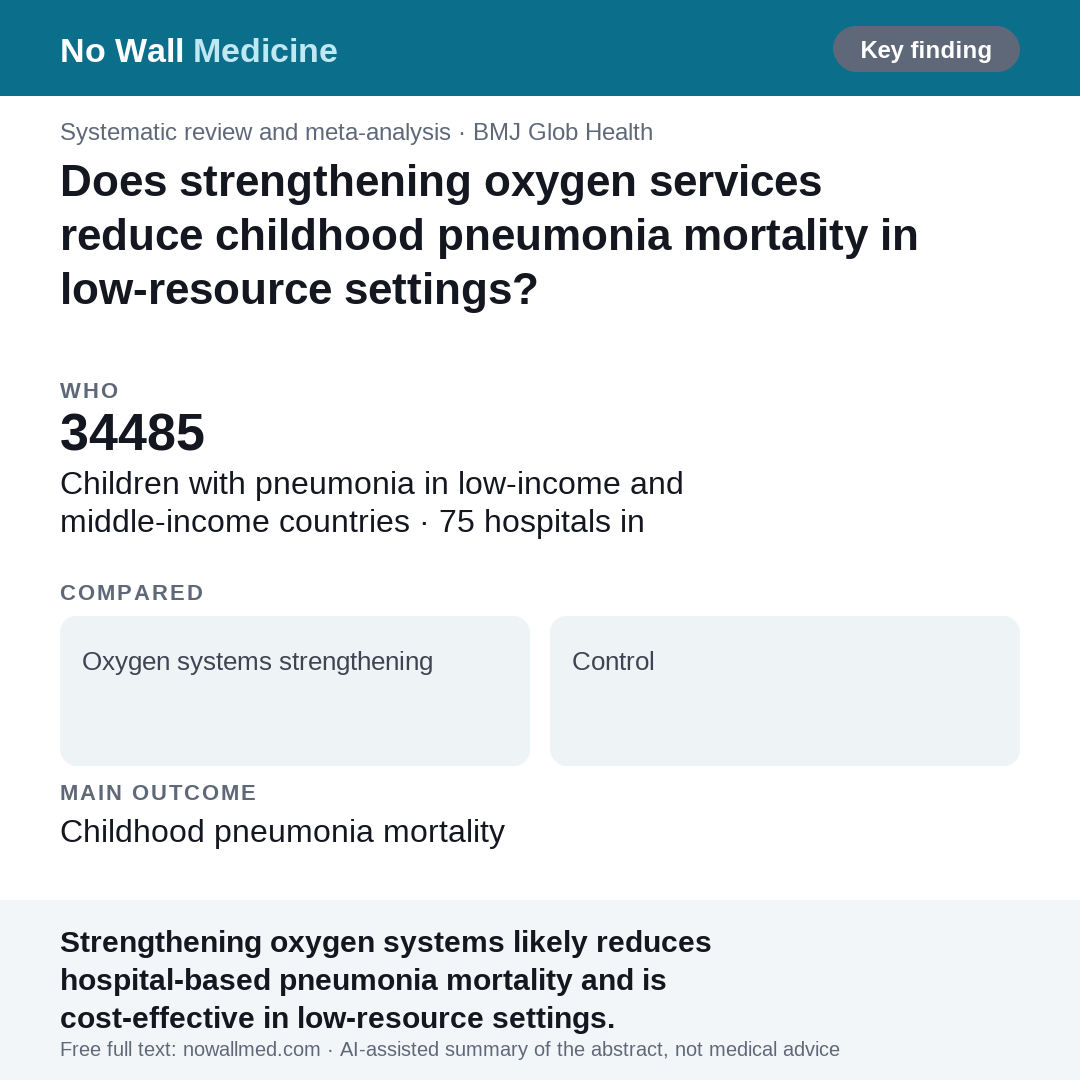
Oxygen systems strengthening as an intervention to prevent childhood deaths due to pneumonia in low-resource settings: systematic review, meta-analysis and cost-effectiveness
Systematic review and meta-analysisKey finding
Does strengthening oxygen services reduce childhood pneumonia mortality in low-resource settings?
Who
34485
Children with pneumonia in low-income and middle-income countries · 75 hospitals in low-income and middle-income countries
Compared
Oxygen systems strengthening
Control
Main outcome
Childhood pneumonia mortality
Result: odds ratio 0.52 (95% CI 0.39 to 0.70)
Bottom line: Strengthening oxygen systems likely reduces hospital-based pneumonia mortality and is cost-effective in low-resource settings.
Limitation: Low certainty of evidence due to the non-randomised design of the included studies.
BMJ Glob Health · 2021-12-21Download image
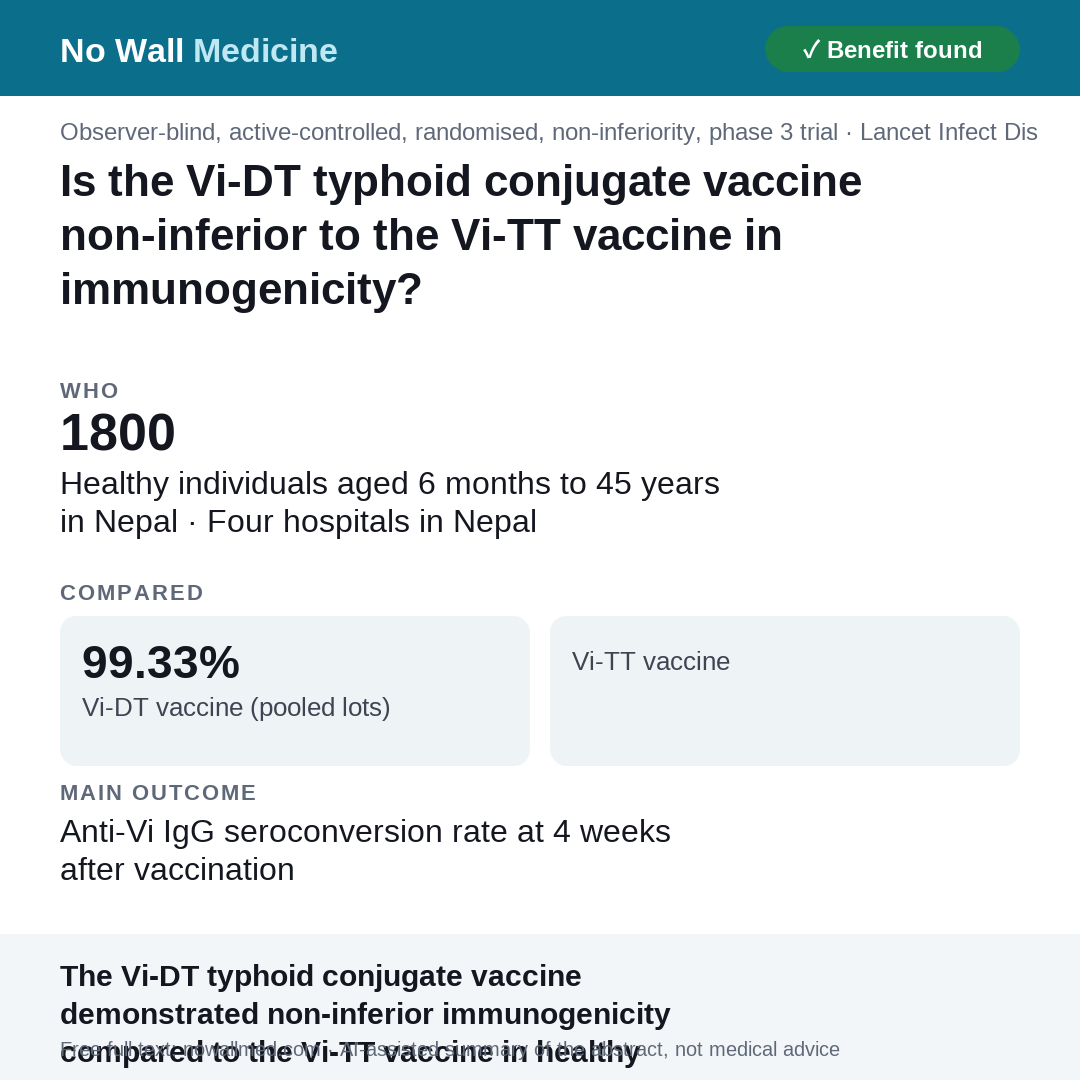
Safety and immunogenicity of the Vi-DT typhoid conjugate vaccine in healthy volunteers in Nepal: an observer-blind, active-controlled, randomised, non-inferiority, phase 3 trial
Observer-blind, active-controlled, randomised, non-inferiority, phase 3 trialBenefit found
Is the Vi-DT typhoid conjugate vaccine non-inferior to the Vi-TT vaccine in immunogenicity?
Who
1800
Healthy individuals aged 6 months to 45 years in Nepal · Four hospitals in Nepal
Compared
99.33%Vi-DT vaccine (pooled lots) (97.5% CI 98.61 to 99.68)
Vi-TT vaccine
Main outcome
Anti-Vi IgG seroconversion rate at 4 weeks after vaccination
Bottom line: The Vi-DT typhoid conjugate vaccine demonstrated non-inferior immunogenicity compared to the Vi-TT vaccine in healthy volunteers.
Lancet Infect Dis · 2021-12-20Download image
Effect of universal HIV testing and treatment on socioeconomic wellbeing in rural Kenya and Uganda: a cluster-randomised controlled trial
Cluster-randomised controlled trialBenefit found
Does universal HIV testing and treatment affect socioeconomic wellbeing in rural Kenya and Uganda?
Who
HIV-positive and HIV-negative adults and school-age children · 32 rural communities in Kenya and Uganda
Compared
Intervention communities
Control communities
Main outcome
Employment, health-care utilisation, and education outcomes
Bottom line: Universal HIV testing and treatment improved employment for HIV-positive adults and school completion for children in their households.
Funded by: National Institutes of Health
Lancet Glob Health · 2021-12-17Download image

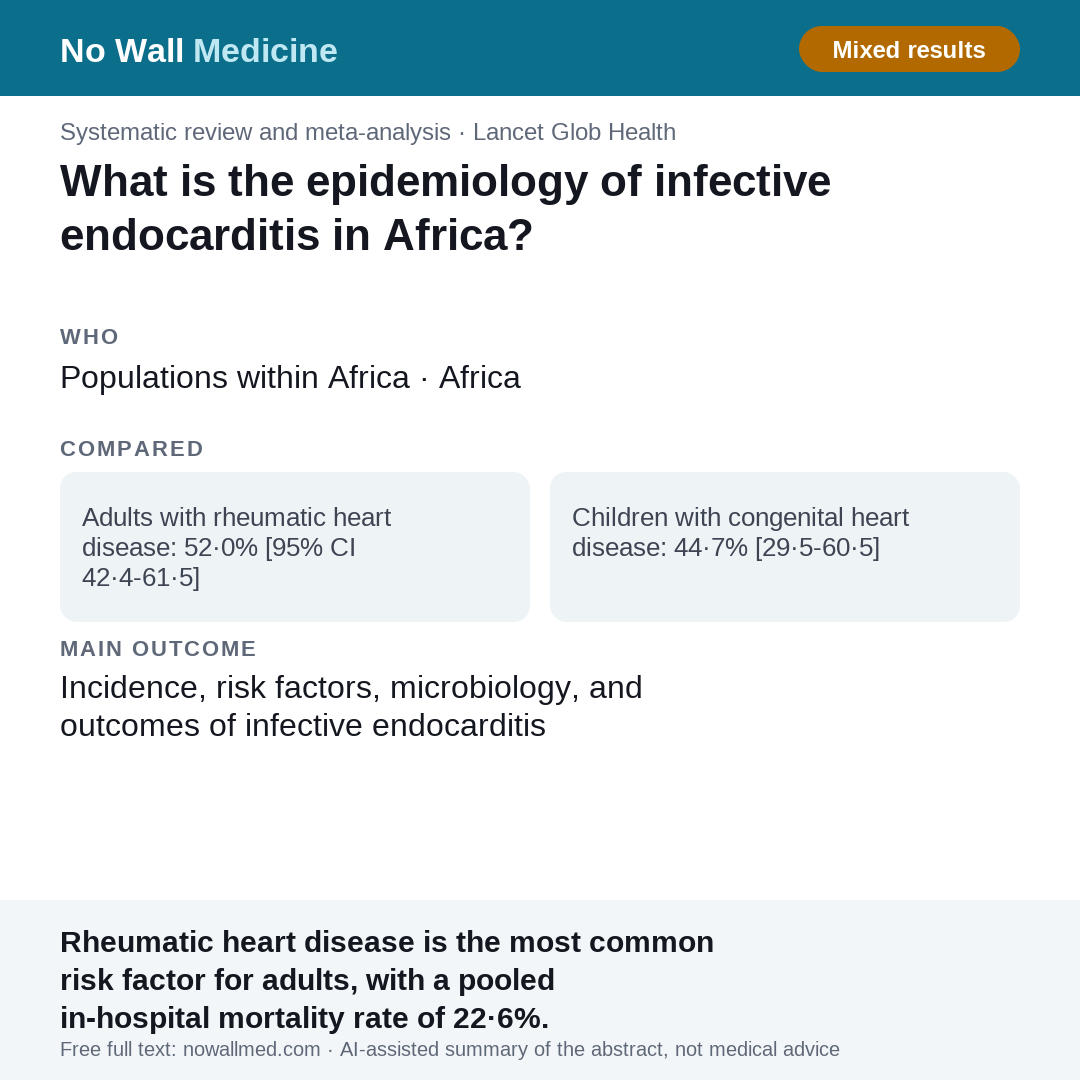
Epidemiology of infective endocarditis in Africa: a systematic review and meta-analysis
Systematic review and meta-analysisMixed results
What is the epidemiology of infective endocarditis in Africa?
Who
Populations within Africa · Africa
Compared
Adults with rheumatic heart disease: 52·0% [95% CI 42·4-61·5]
Children with congenital heart disease: 44·7% [29·5-60·5]
Main outcome
Incidence, risk factors, microbiology, and outcomes of infective endocarditis
Bottom line: Rheumatic heart disease is the most common risk factor for adults, with a pooled in-hospital mortality rate of 22·6%.
Lancet Glob Health · 2021-12-17Download image
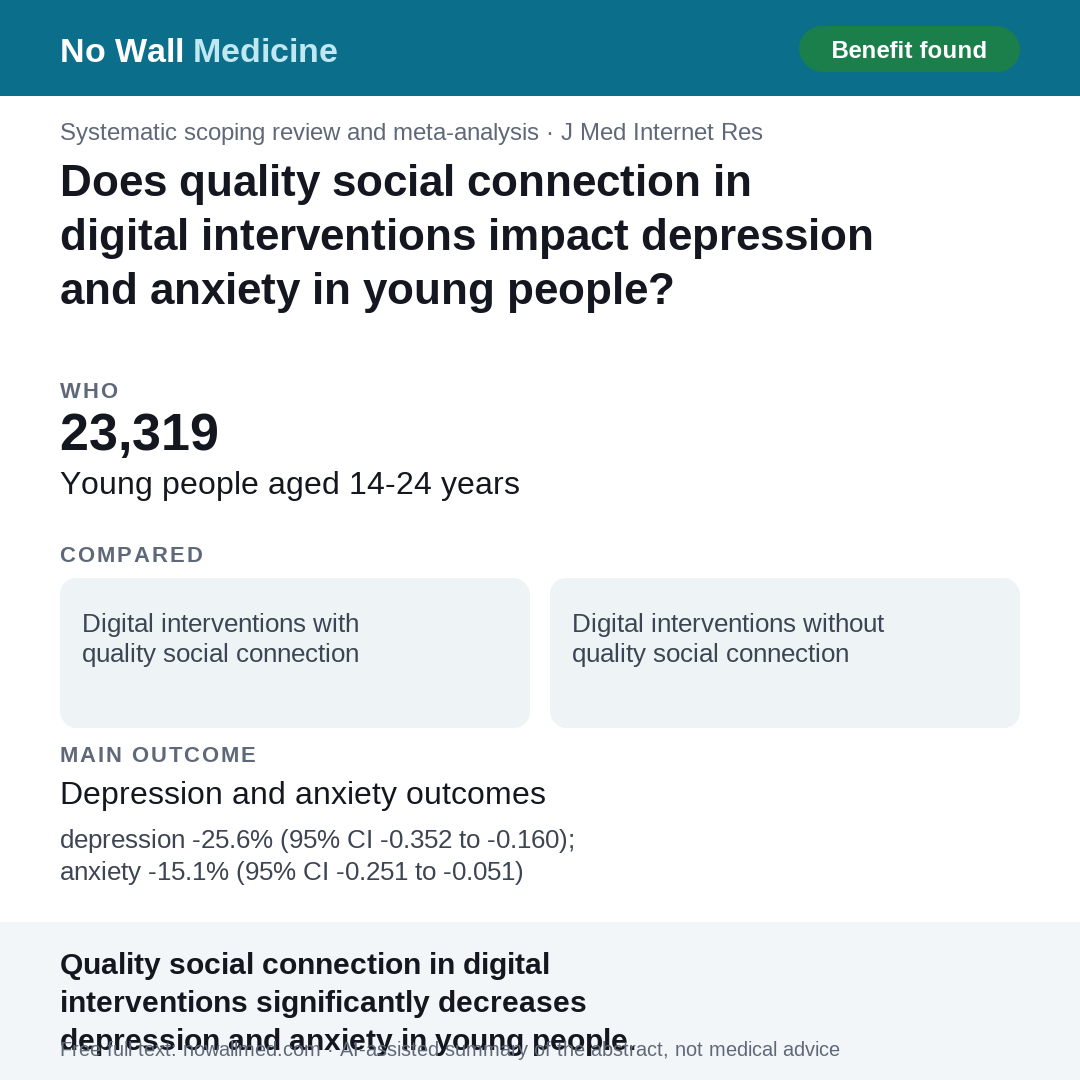
Quality Social Connection as an Active Ingredient in Digital Interventions for Young People With Depression and Anxiety: Systematic Scoping Review and Meta-analysis
Systematic scoping review and meta-analysisBenefit found
Does quality social connection in digital interventions impact depression and anxiety in young people?
Who
23,319
Young people aged 14-24 years
Compared
Digital interventions with quality social connection
Digital interventions without quality social connection
Main outcome
Depression and anxiety outcomes
Result: depression -25.6% (95% CI -0.352 to -0.160); anxiety -15.1% (95% CI -0.251 to -0.051)
Bottom line: Quality social connection in digital interventions significantly decreases depression and anxiety in young people.
J Med Internet Res · 2021-12-17Download image
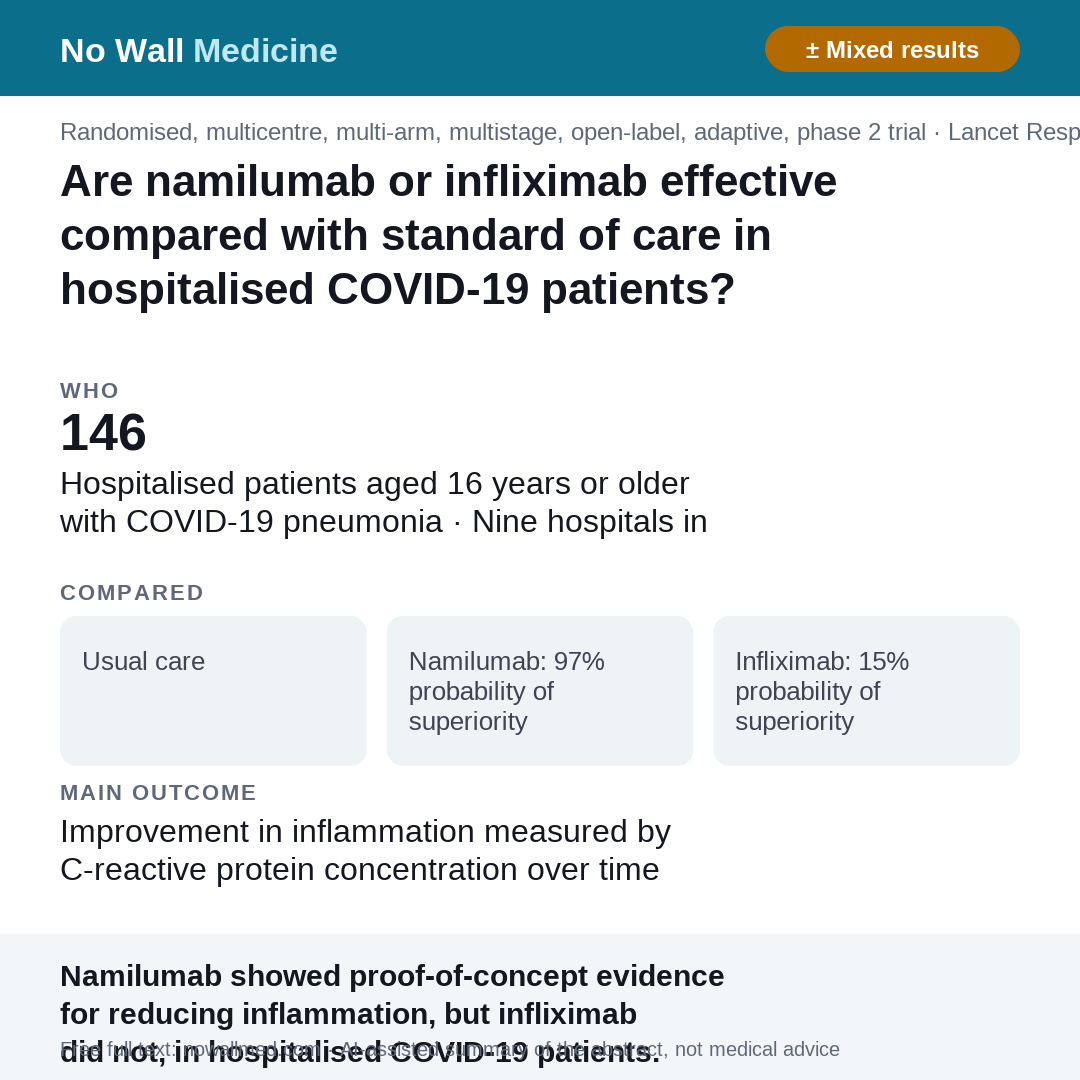
Namilumab or infliximab compared with standard of care in hospitalised patients with COVID-19 (CATALYST): a randomised, multicentre, multi-arm, multistage, open-label, adaptive, phase 2, proof-of-concept trial
Randomised, multicentre, multi-arm, multistage, open-label, adaptive, phase 2 trialMixed results
Are namilumab or infliximab effective compared with standard of care in hospitalised COVID-19 patients?
Who
146
Hospitalised patients aged 16 years or older with COVID-19 pneumonia · Nine hospitals in the United Kingdom
Compared
Usual care
Namilumab: 97% probability of superiority
Infliximab: 15% probability of superiority
Main outcome
Improvement in inflammation measured by C-reactive protein concentration over time
Result: -0·09 (95% CI -0·19 to 0·00) for namilumab; 0·06 (-0·05 to 0·17) for infliximab
Bottom line: Namilumab showed proof-of-concept evidence for reducing inflammation, but infliximab did not, in hospitalised COVID-19 patients.
Funded by: Medical Research Council
Lancet Respir Med · 2021-12-16Download image
Cuffed versus uncuffed tracheal tubes in a rabbit training model for establishing an emergency front-of-neck airway in infants: a prospective trial
Prospective non-inferiority trialMixed results
Is an uncuffed tracheal tube non-inferior to a cuffed tube for emergency front-of-neck airway?
Who
60
Rabbit cadaver surgical tracheotomy model
Compared
Uncuffed 3.5 mm ID tracheal tube
Cuffed 3.0 mm ID tracheal tube: risk ratio 2.5 (95% CI, 0.53-11.9) for severe secondary airway injuries
Main outcome
success rate, performance time, and severe secondary airway injuries
Result: risk ratio 2.5 (95% CI, 0.53-11.9)
Bottom line: Uncuffed tubes are non-inferior in time and preference but cuffed tubes may increase severe secondary airway injuries.
Br J Anaesth · 2021-12-16Download image