Visual abstracts
New randomized trials and meta-analyses from leading journals at a glance: who was studied, what was compared, and what was found. Every paper is free to read in full.
All specialtiesCardiology 4877Oncology 4138Gastroenterology & Hepatology 1942Infectious Disease 3837Neurology 1905Psychiatry & Mental Health 2273Pulmonology 2143Critical Care 1365Endocrinology & Diabetes 2580Pediatrics 2980Surgery 2559Orthopedics & Sports Medicine 931Neurosurgery 537Cardiothoracic & Vascular Surgery 674Plastic & Reconstructive Surgery 591Nephrology 1133Rheumatology 823Hematology 1109Dermatology 621Ophthalmology 543Obstetrics & Gynecology 1686Public & Global Health 1058Radiology & Imaging 648Anesthesiology 986Urology 764ENT (Otolaryngology) 503Emergency Medicine 511Allergy & Immunology 313Geriatrics 981Family Medicine & Primary Care 562Medical Genetics & Genomics 676Pathology & Laboratory Medicine 159Physical Medicine & Rehabilitation 757Palliative Care 444Nutrition 1588Digital Health & AI 2201General Medicine 321
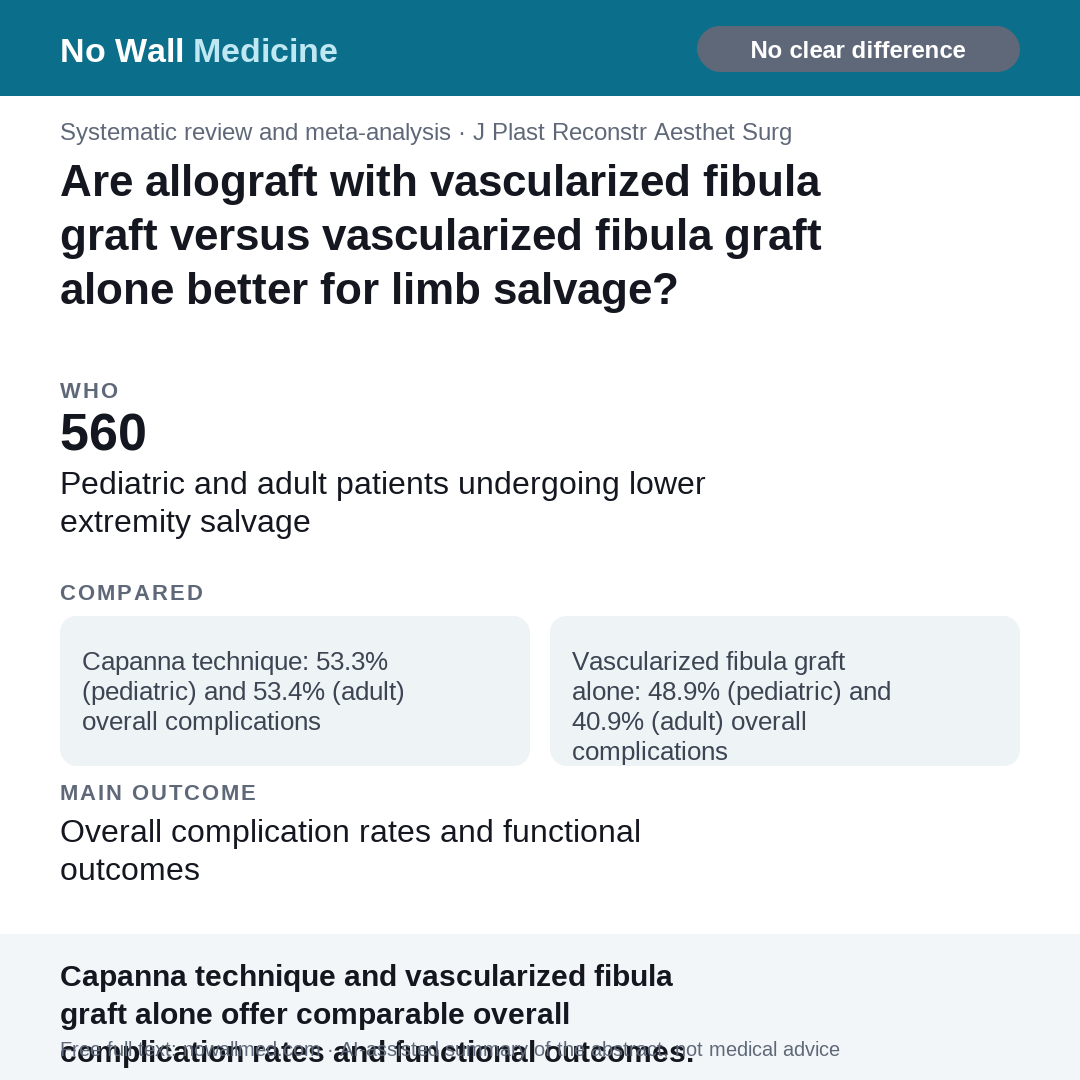
Comparative outcomes of allograft with vascularized fibula graft vs vascularized fibula graft alone for post-oncologic lower extremity salvage - Systematic review and meta-analysis
Systematic review and meta-analysisNo clear difference
Are allograft with vascularized fibula graft versus vascularized fibula graft alone better for limb salvage?
Who
560
Pediatric and adult patients undergoing lower extremity salvage
Compared
Capanna technique: 53.3% (pediatric) and 53.4% (adult) overall complications
Vascularized fibula graft alone: 48.9% (pediatric) and 40.9% (adult) overall complications
Main outcome
Overall complication rates and functional outcomes
Bottom line: Capanna technique and vascularized fibula graft alone offer comparable overall complication rates and functional outcomes.
J Plast Reconstr Aesthet Surg · 2025-07-03Download image
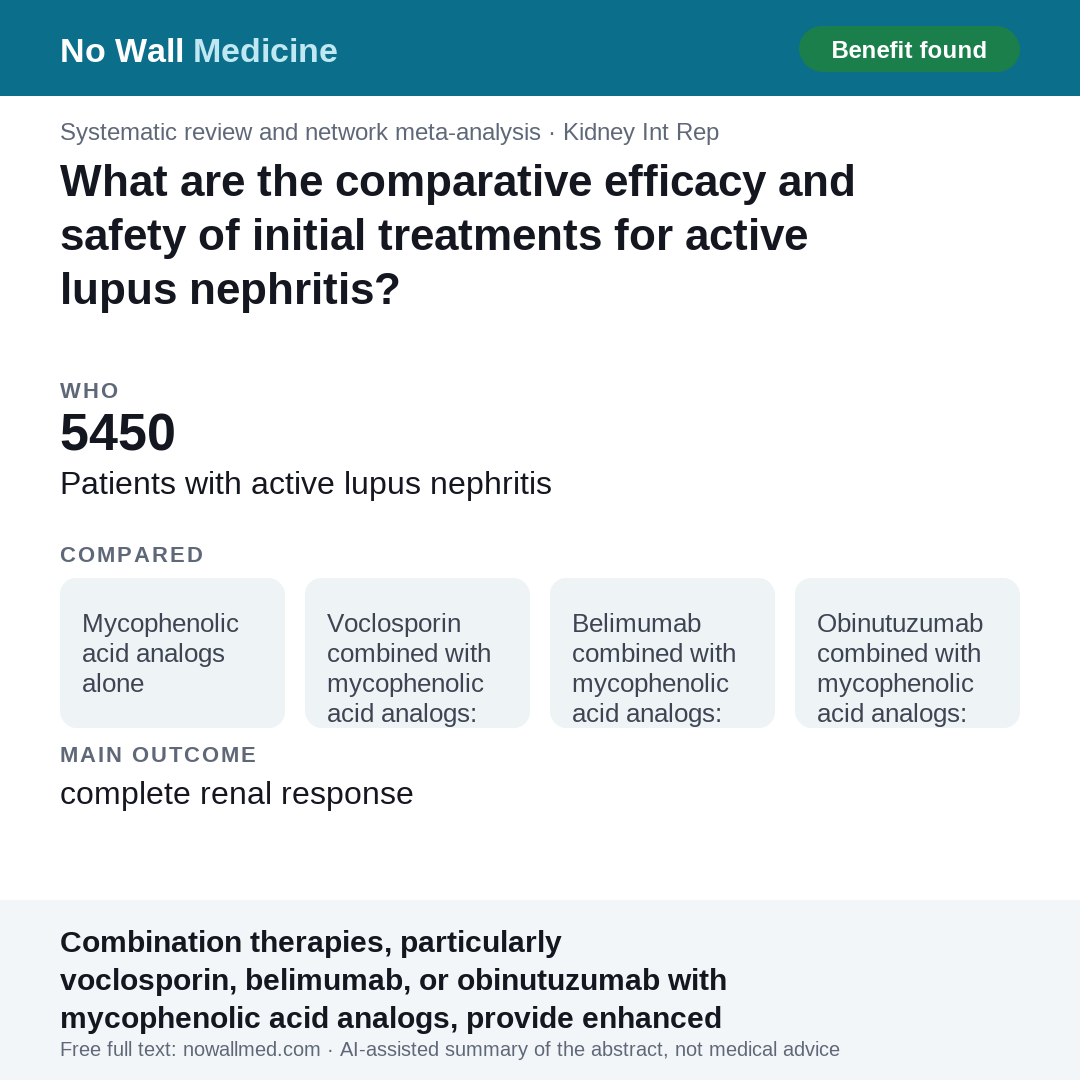
Systematic Review and Network Meta-Analysis of Initial Treatments for Lupus Nephritis
Systematic review and network meta-analysisBenefit found
What are the comparative efficacy and safety of initial treatments for active lupus nephritis?
Who
5450
Patients with active lupus nephritis
Compared
Mycophenolic acid analogs alone
Voclosporin combined with mycophenolic acid analogs: 281.38 more/1000
Belimumab combined with mycophenolic acid analogs: 145.02 more/1000
Obinutuzumab combined with mycophenolic acid analogs: 134.23 more/1000
Main outcome
complete renal response
Bottom line: Combination therapies, particularly voclosporin, belimumab, or obinutuzumab with mycophenolic acid analogs, provide enhanced complete renal response.
Kidney Int Rep · 2025-07-03Download image
Noninvasive neuromodulation for disorders of consciousness: an updated systematic review and meta-analysis
Systematic review and meta-analysis of 24 randomized controlled trialsMixed results
What is the efficacy and safety of noninvasive neuromodulation for disorders of consciousness?
Who
147
Patients with disorders of consciousness
Compared
repetitive transcranial magnetic stimulation: g = 0.49 (95% CI 0.01, 0.98)
trigeminal nerve stimulation: g = 0.59 (95% CI 0.08, 1.10)
transcranial direct current stimulation: not more effective than sham control
sham control
Main outcome
Change in levels of consciousness post intervention
Result: rTMS g = 0.49 (95% CI 0.01, 0.98); TNS g = 0.59 (95% CI 0.08, 1.10)
Bottom line: Repetitive transcranial magnetic stimulation and trigeminal nerve stimulation show positive effects, but robust evidence for neuromodulation is lacking.
Limitation: Small number of patients, few studies, and potential risk of bias in the meta-analysis.
Crit Care · 2025-07-03Download image

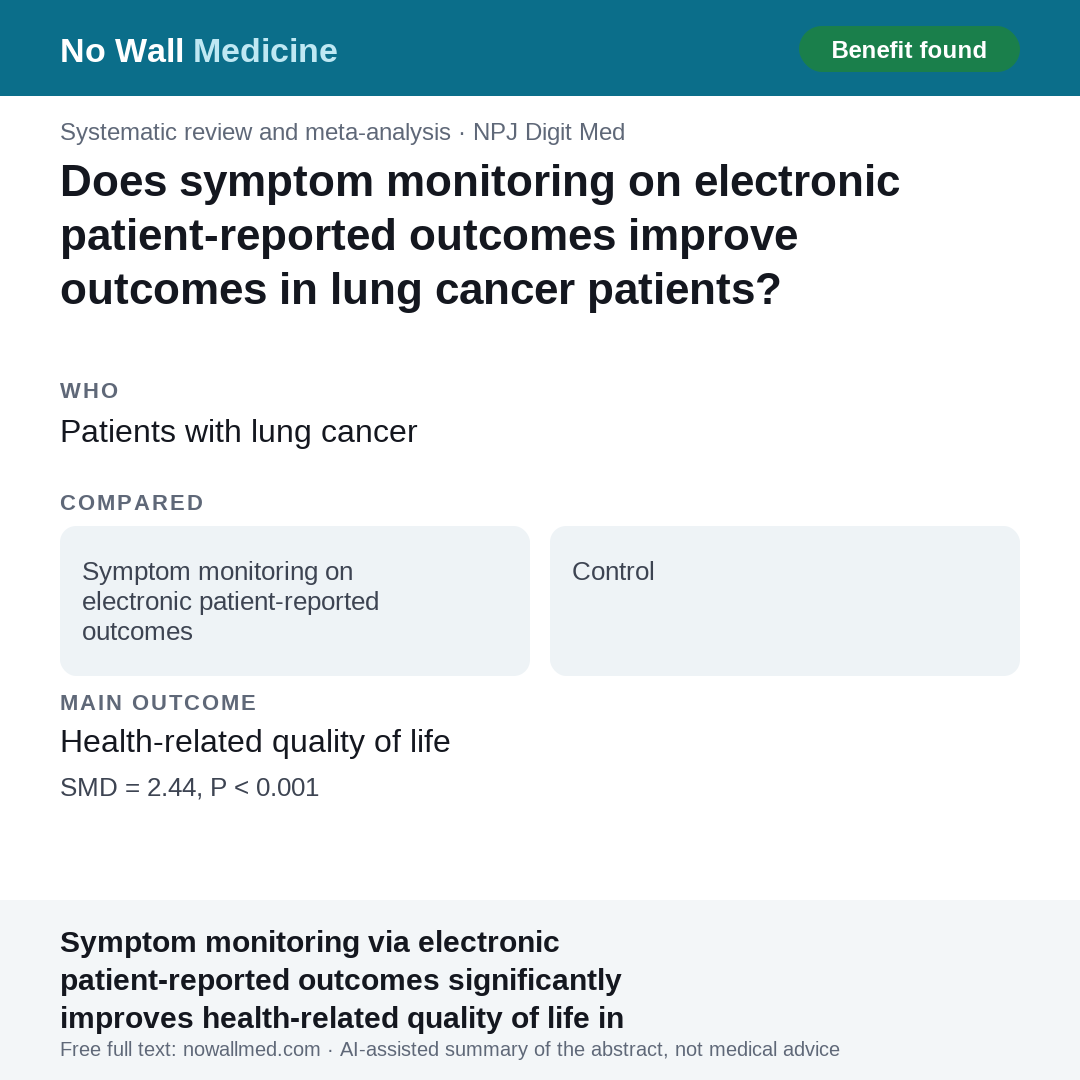
Effectiveness of symptom monitoring on electronic patient-reported outcomes (ePROs) among patients with lung cancer: a systematic review and meta-analysis
Systematic review and meta-analysisBenefit found
Does symptom monitoring on electronic patient-reported outcomes improve outcomes in lung cancer patients?
Who
11
Patients with lung cancer
Compared
Symptom monitoring on electronic patient-reported outcomes
Control
Main outcome
Health-related quality of life
Result: SMD = 2.44, P < 0.001
Bottom line: Symptom monitoring via electronic patient-reported outcomes significantly improves health-related quality of life in lung cancer patients.
NPJ Digit Med · 2025-07-03Download image
Problematic Online Dating: Systematic Review of Definitions, Correlates, and Study Designs
Systematic reviewMixed results
Problematic online dating behaviors
Who
Online dating app users aged 13 to 80 years
Compared
Problematic use
Non-problematic use
Main outcome
Adverse correlates of online dating
Bottom line: Research on online dating addiction is debated
Limitation: Most studies were cross-sectional
J Med Internet Res · 2025-07-03Download image

Recruiting Asian Americans for Online Studies: Methodological Systematic Review
Systematic reviewMixed results
What strategies effectively recruit Asian Americans for online research studies?
Who
18
Asian Americans
Compared
Online recruitment: tended to be younger and more highly educated
Offline recruitment
Main outcome
Recruitment strategies and participant characteristics
Bottom line: Researchers should use mixed online and offline recruitment methods to engage Asian Americans in online studies.
J Med Internet Res · 2025-07-03Download image

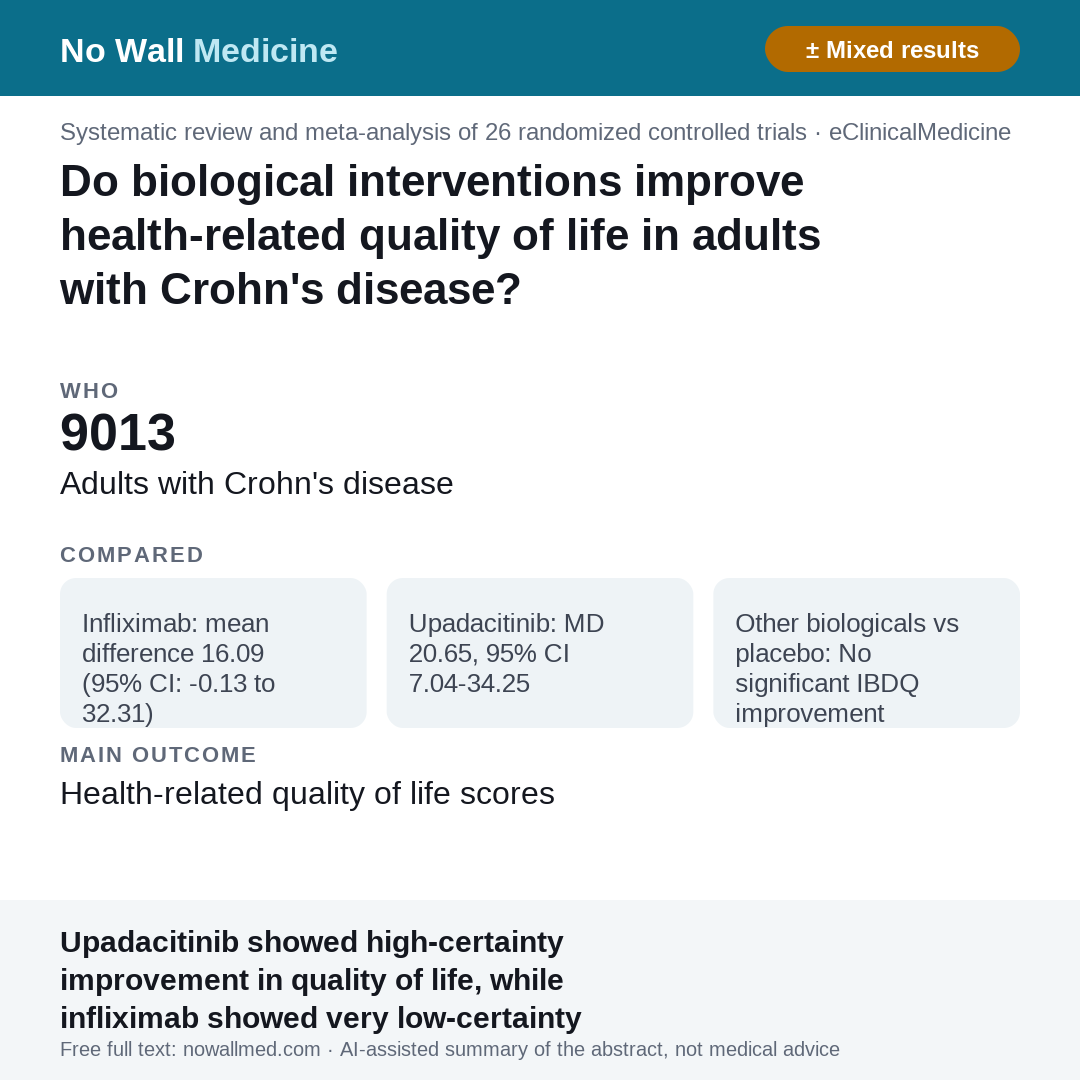
The impact of biological interventions on health-related quality of life in adults with Crohn's disease: a systematic review with meta-analysis
Systematic review and meta-analysis of 26 randomized controlled trialsMixed results
Do biological interventions improve health-related quality of life in adults with Crohn's disease?
Who
9013
Adults with Crohn's disease
Compared
Infliximab: mean difference 16.09 (95% CI: -0.13 to 32.31)
Upadacitinib: MD 20.65, 95% CI 7.04-34.25
Other biologicals vs placebo: No significant IBDQ improvement
Main outcome
Health-related quality of life scores
Bottom line: Upadacitinib showed high-certainty improvement in quality of life, while infliximab showed very low-certainty improvement.
Limitation: Methodological issues, need for larger sample sizes, and standardized reporting contribute to low quality.
eClinicalMedicine · 2025-07-02Download image
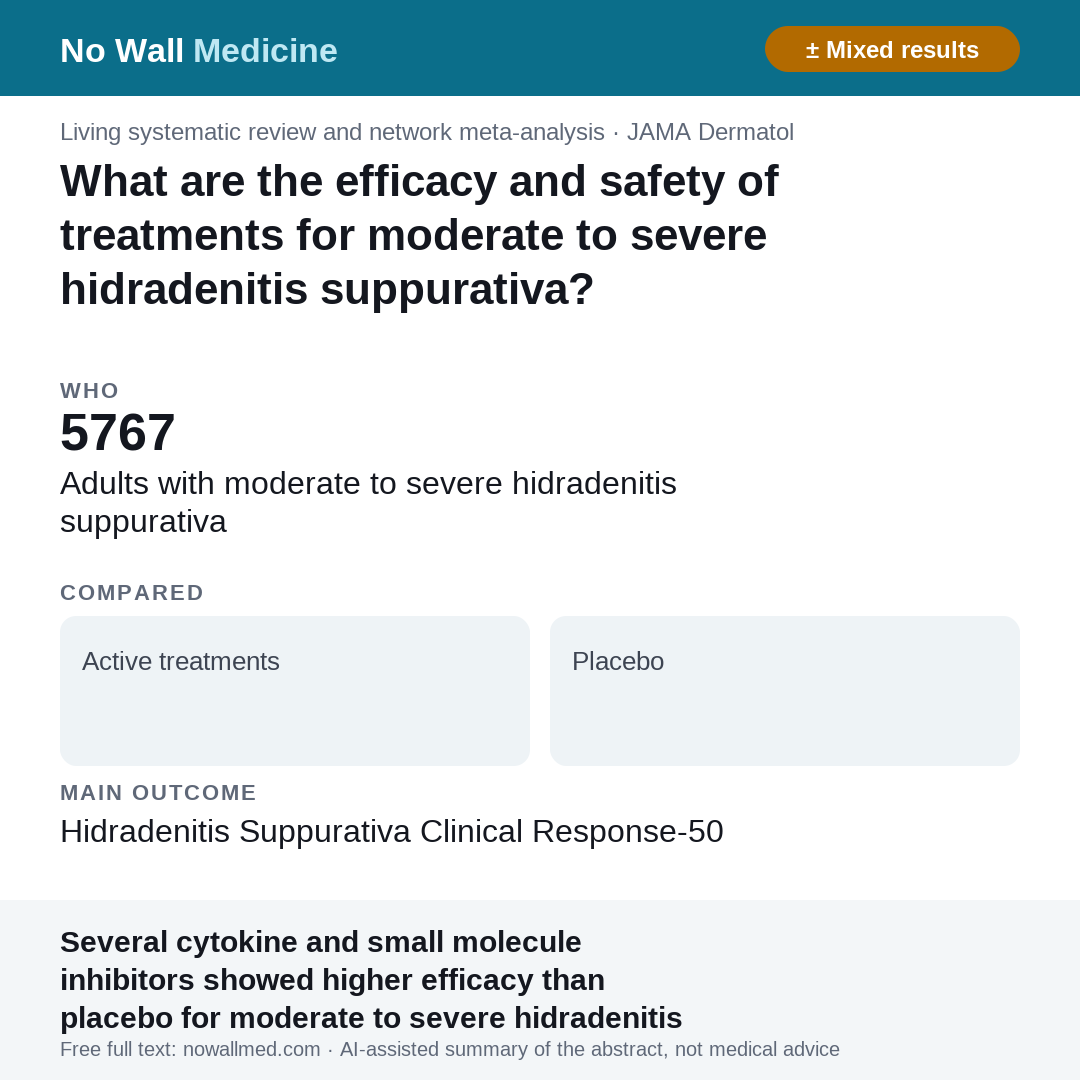
Efficacy and Safety of Medical Interventions for Moderate to Severe Hidradenitis Suppurativa: A Living Systematic Review and Network Meta-Analysis
Living systematic review and network meta-analysisMixed results
What are the efficacy and safety of treatments for moderate to severe hidradenitis suppurativa?
Who
5767
Adults with moderate to severe hidradenitis suppurativa
Compared
Active treatments
Placebo
Main outcome
Hidradenitis Suppurativa Clinical Response-50
Bottom line: Several cytokine and small molecule inhibitors showed higher efficacy than placebo for moderate to severe hidradenitis suppurativa.
Limitation: Absence of head-to-head trials for comparative evidence.
JAMA Dermatol · 2025-07-02Download image
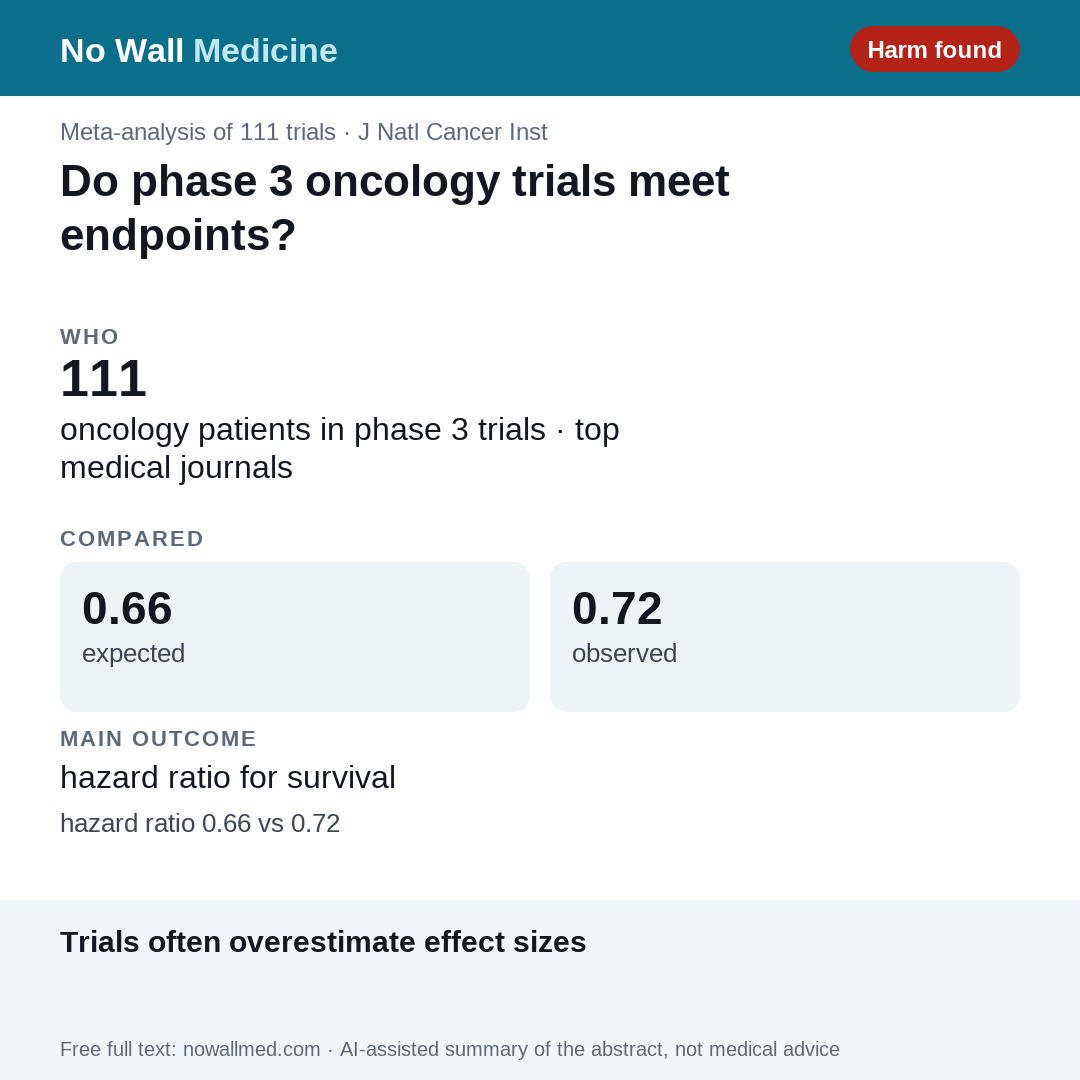
Expected vs observed effect sizes for survival endpoints in phase 3 oncology trials
Meta-analysis of 111 trialsHarm found
Do phase 3 oncology trials meet endpoints?
Who
111
oncology patients in phase 3 trials · top medical journals
Compared
0.66expected
0.72observed
Main outcome
hazard ratio for survival
Result: hazard ratio 0.66 vs 0.72
Bottom line: Trials often overestimate effect sizes
J Natl Cancer Inst · 2025-07-02Download image
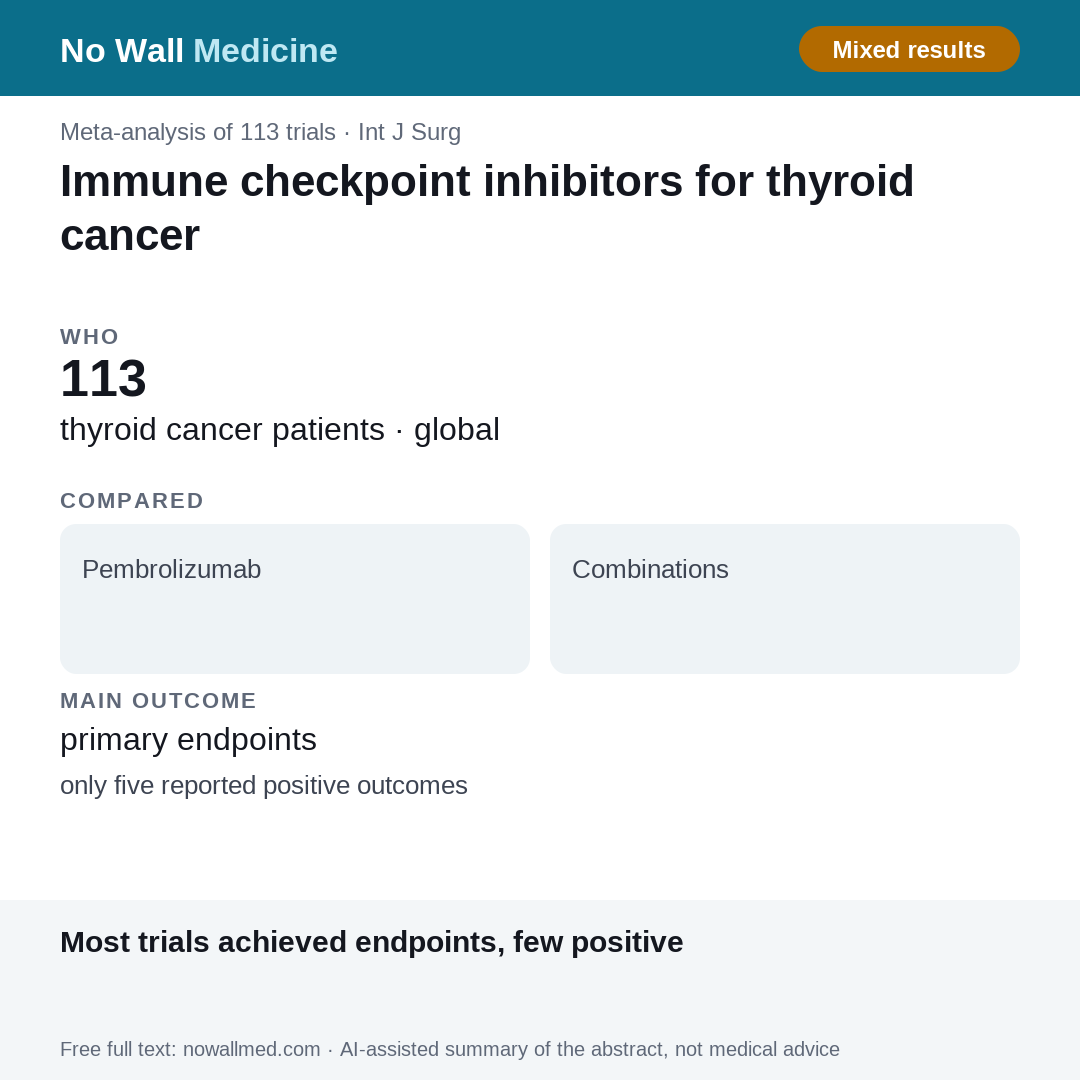
Immune checkpoint inhibitors against thyroid cancer
Meta-analysis of 113 trialsMixed results
Immune checkpoint inhibitors for thyroid cancer
Who
113
thyroid cancer patients · global
Compared
Pembrolizumab
Combinations
Main outcome
primary endpoints
Result: only five reported positive outcomes
Bottom line: Most trials achieved endpoints, few positive
Int J Surg · 2025-07-02Download image
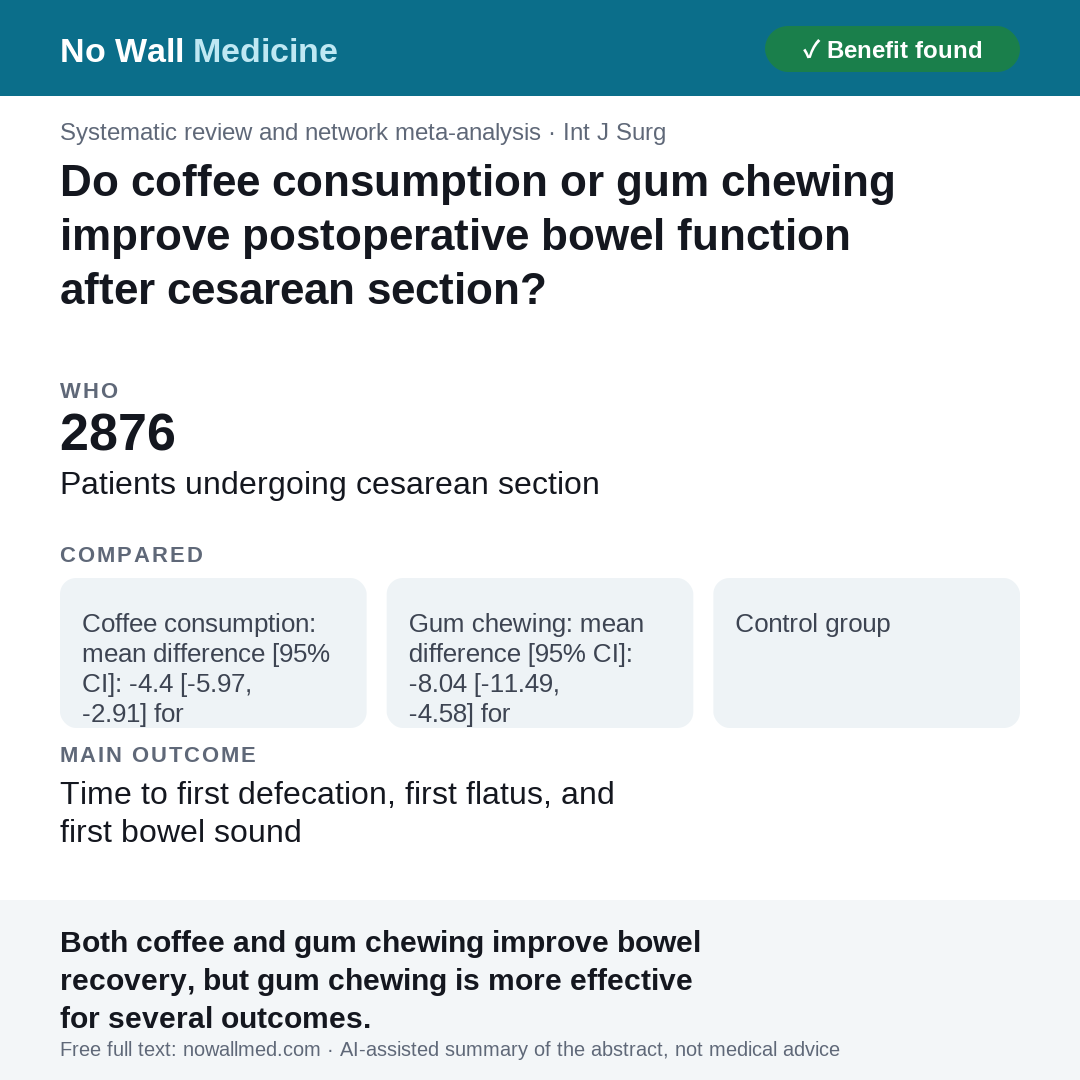
The effects of coffee versus gum chewing after cesarean on bowel functions: a systematic review and network meta-analysis
Systematic review and network meta-analysisBenefit found
Do coffee consumption or gum chewing improve postoperative bowel function after cesarean section?
Who
2876
Patients undergoing cesarean section
Compared
Coffee consumption: mean difference [95% CI]: -4.4 [-5.97, -2.91] for defecation
Gum chewing: mean difference [95% CI]: -8.04 [-11.49, -4.58] for defecation
Control group
Main outcome
Time to first defecation, first flatus, and first bowel sound
Bottom line: Both coffee and gum chewing improve bowel recovery, but gum chewing is more effective for several outcomes.
Int J Surg · 2025-07-02Download image
Comparison of ureteroscopic lithotripsy and laparoscopic ureterolithotomy in the treatment of large proximal ureteral stones in developing countries: a systematic review and meta-analysis
Systematic review and meta-analysis of randomized controlled trialsBenefit found
Is laparoscopic ureterolithotomy better than ureteroscopic lithotripsy for large proximal ureteral stones?
Who
Patients with large proximal ureteral stones larger than 10 mm · Developing countries
Compared
Laparoscopic ureterolithotomy
Ureteroscopic lithotripsy
Main outcome
Stone-free rate and complication incidence
Bottom line: Laparoscopic ureterolithotomy provides higher stone-free rates and fewer complications than ureteroscopic lithotripsy for large proximal ureteral stones.
Int J Surg · 2025-07-02Download image

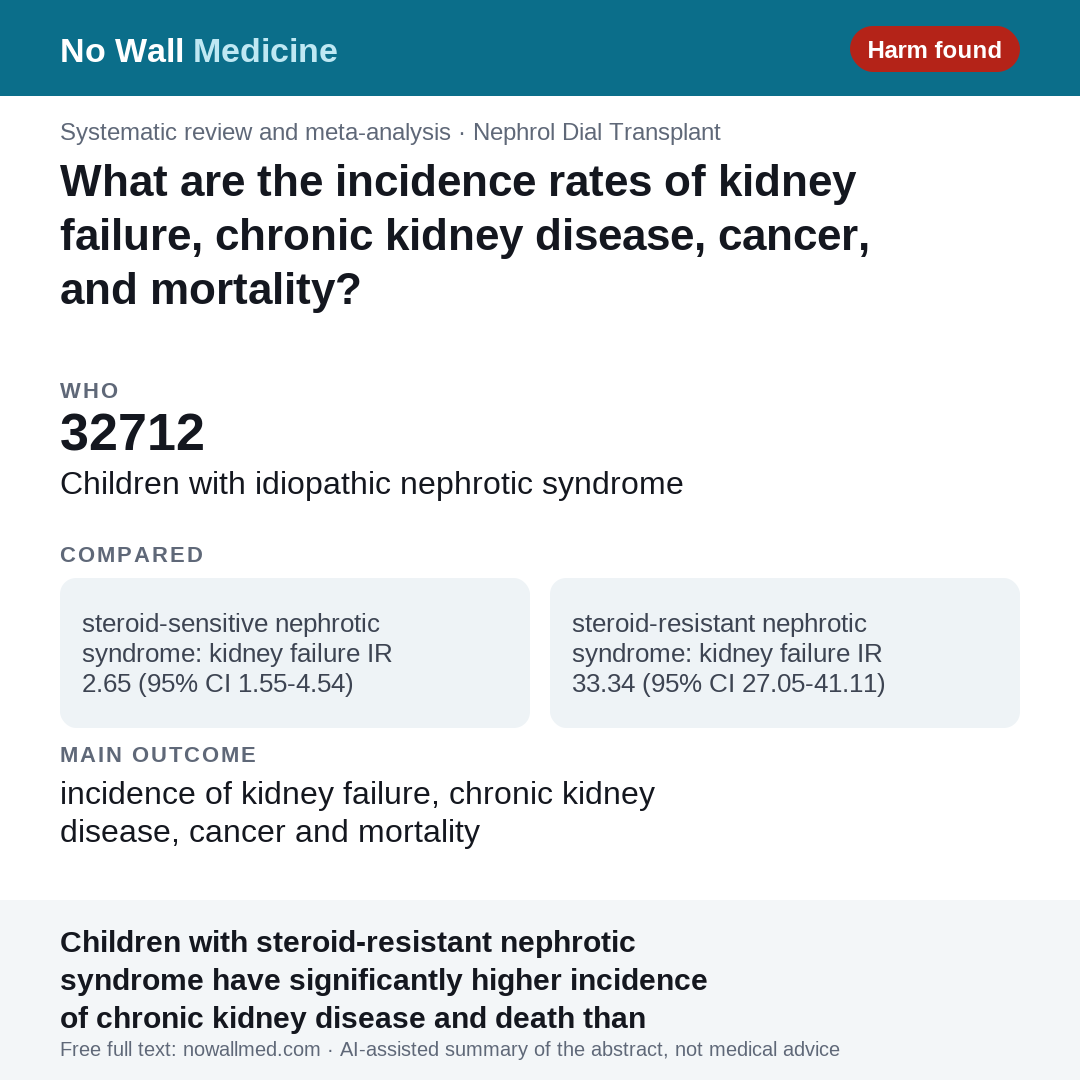
Kidney function and mortality in childhood nephrotic syndrome
Systematic review and meta-analysisHarm found
What are the incidence rates of kidney failure, chronic kidney disease, cancer, and mortality?
Who
32712
Children with idiopathic nephrotic syndrome
Compared
steroid-sensitive nephrotic syndrome: kidney failure IR 2.65 (95% CI 1.55-4.54)
steroid-resistant nephrotic syndrome: kidney failure IR 33.34 (95% CI 27.05-41.11)
Main outcome
incidence of kidney failure, chronic kidney disease, cancer and mortality
Bottom line: Children with steroid-resistant nephrotic syndrome have significantly higher incidence of chronic kidney disease and death than steroid-sensitive children.
Limitation: Many studies were at moderate-to-high risk of bias and used variable surveillance strategies and outcome definitions.
Nephrol Dial Transplant · 2025-07-02Download image
Targeting oral frailty indicators of late-life cognitive disorders and depression: a systematic review
Systematic reviewBenefit found
What is the impact of oral frailty indicators on cognitive disorders and depression?
Who
56520662
56,520,662 subjects across sixty-three studies
Compared
Oral health status deterioration: associated with cognitive impairment, mild cognitive impairment, dementia, and late-life depression
Chewing, swallowing, and saliva disorders: associated with cognitive impairment, mild cognitive impairment, dementia, and late-life depression
Decline in oral motor skills: associated with late-life cognitive impairment/decline
Oral pain: related only to late-life depression
Main outcome
Late-life cognitive disorders and late-life depression
Bottom line: Certain oral frailty indicators may contribute to the development of late-life cognitive disorders and late-life depression.
Age Ageing · 2025-07-02Download image

Influenza vaccination and risk of dementia: a systematic review and meta-analysis
Systematic review and random-effects model meta-analysisMixed results
Does influenza vaccination reduce the risk of dementia?
Who
9,938,696
Overall population and high-risk populations for dementia
Compared
Overall population
High-risk populations
Main outcome
Risk of incident dementia
Result: hazard ratio 0.93 (95% CI: 0.86-1.01) for overall population
Bottom line: Influenza vaccination was associated with a decreasing risk of incident dementia in a dose-response manner in high-risk populations.
Age Ageing · 2025-07-02Download image

A systematic review of consumers' knowledge, attitudes and experiences of primary health professionals' role in genomic medicine
Systematic reviewMixed results
Consumers' views on genomic medicine
Who
3557
consumers of primary health services · primary care
Compared
positive experience
negative experience
Main outcome
consumer experiences
Bottom line: Consumers have mixed views on genomic medicine
Eur J Hum Genet · 2025-07-02Download image

Systematic Review and Expert Consensus on the Use of Long-acting Monoclonal Antibodies for Prevention of Respiratory Syncytial Virus Disease: ARMADA (Advancing RSV Management And Disease Awareness) Taskforce
Systematic review and expert consensusBenefit found
What are the consensus recommendations for using long-acting monoclonal antibodies to prevent respiratory syncytial virus?
Who
Children at risk for respiratory syncytial virus disease
Compared
Infants aged <8 months: recommended in the absence of maternal respiratory syncytial virus vaccination
Preterm infants <12 months: recommended for infants born <37 weeks gestational age
Children <24 months: recommended for those with high-risk conditions
Main outcome
consensus recommendations for respiratory syncytial virus prevention
Bottom line: Long-acting monoclonal antibodies are strongly endorsed for specific high-risk infant and child populations to prevent respiratory syncytial virus.
Open Forum Infect Dis · 2025-07-02Download image

Infection Risk Associated With Colonization by Multidrug-Resistant Gram-Negative Bacteria: An Umbrella Review and Meta-analysis
Umbrella review and meta-analysisBenefit found
What is the infection rate following colonization by multidrug-resistant gram-negative bacteria?
Who
Patients colonized with multidrug-resistant gram-negative bacteria
Compared
22%Extended-spectrum beta-lactamases Enterobacterales colonization
22%Carbapenem-resistant Enterobacterales colonization
Main outcome
Incidence of infection following colonization
Bottom line: Colonization with extended-spectrum beta-lactamases Enterobacterales or carbapenem-resistant Enterobacterales is associated with a 22% infection rate.
Limitation: Heterogeneity of the included populations may limit the generalizability of these findings.
Open Forum Infect Dis · 2025-07-02Download image

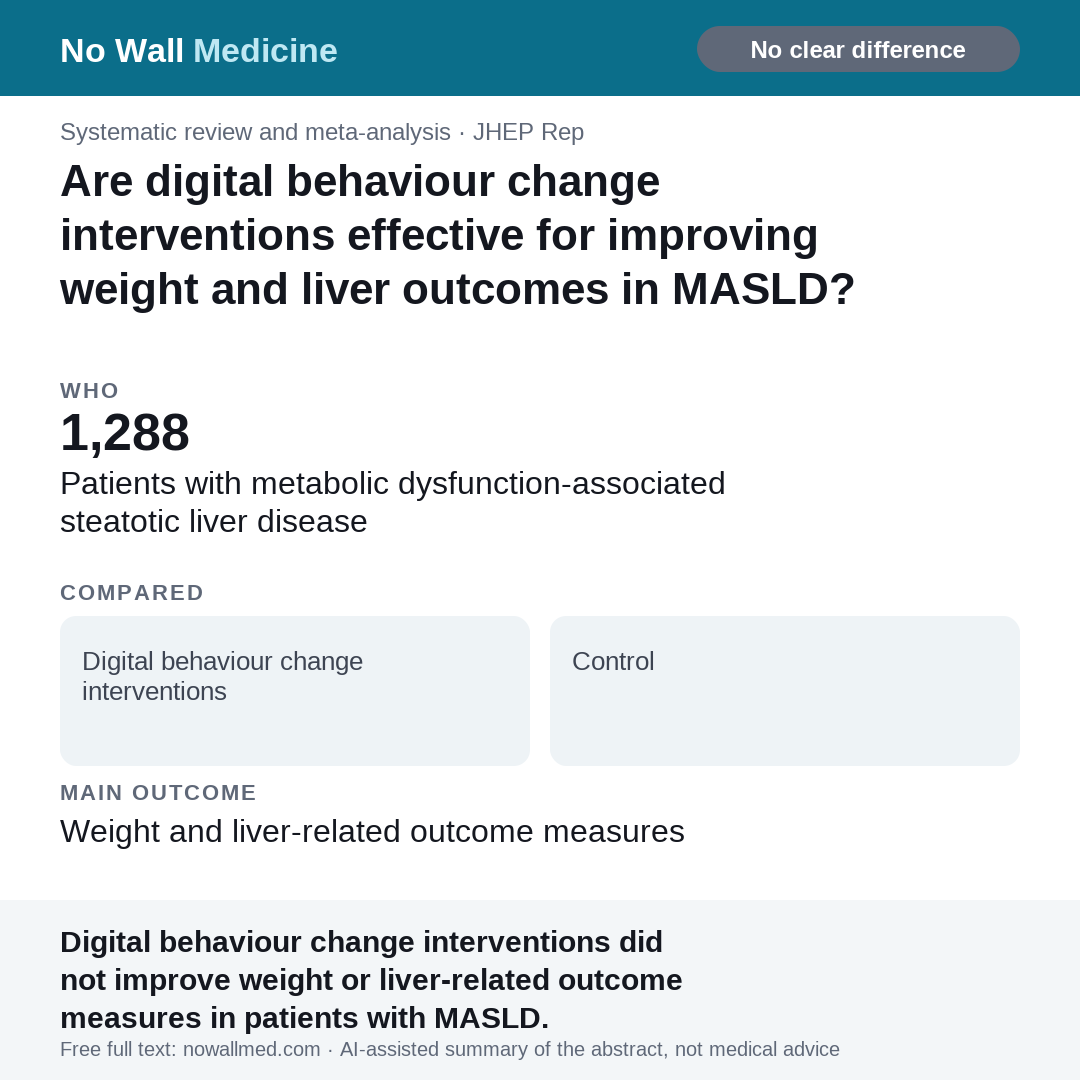
Effectiveness and active ingredients of digital behaviour change interventions for MASLD: A systematic review and meta-analysis
Systematic review and meta-analysisNo clear difference
Are digital behaviour change interventions effective for improving weight and liver outcomes in MASLD?
Who
1,288
Patients with metabolic dysfunction-associated steatotic liver disease
Compared
Digital behaviour change interventions
Control
Main outcome
Weight and liver-related outcome measures
Result: weighted mean difference -2.07 kg [-6.08 to 1.94 kg]
Bottom line: Digital behaviour change interventions did not improve weight or liver-related outcome measures in patients with MASLD.
Limitation: Significant heterogeneity between interventions in delivery, content, duration, and frequency.
JHEP Rep · 2025-07-02Download image
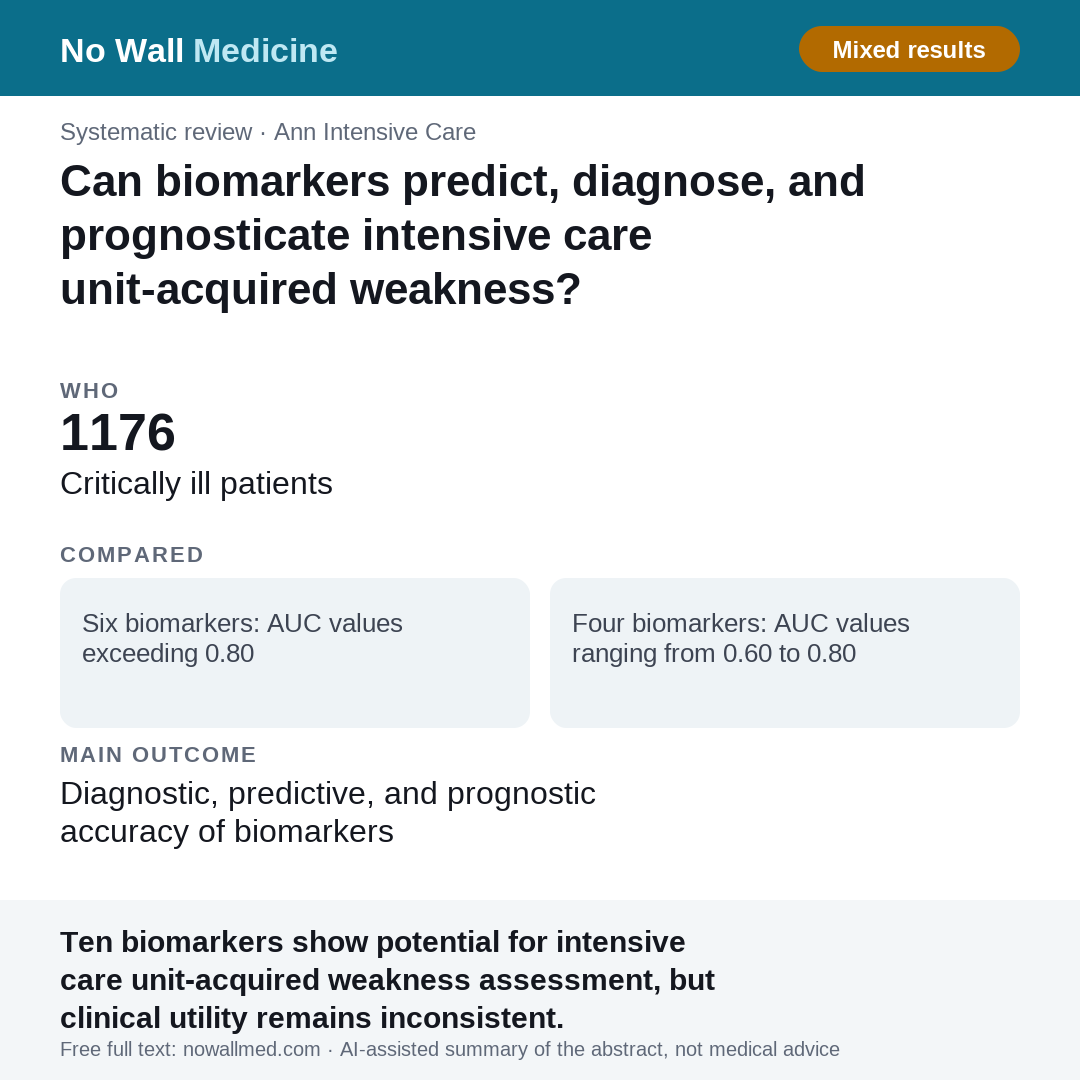
Biomarkers for intensive care unit-acquired weakness: a systematic review for prediction, diagnosis and prognosis
Systematic reviewMixed results
Can biomarkers predict, diagnose, and prognosticate intensive care unit-acquired weakness?
Who
1176
Critically ill patients
Compared
Six biomarkers: AUC values exceeding 0.80
Four biomarkers: AUC values ranging from 0.60 to 0.80
Main outcome
Diagnostic, predictive, and prognostic accuracy of biomarkers
Bottom line: Ten biomarkers show potential for intensive care unit-acquired weakness assessment, but clinical utility remains inconsistent.
Ann Intensive Care · 2025-07-02Download image