Visual abstracts
New randomized trials and meta-analyses from leading journals at a glance: who was studied, what was compared, and what was found. Every paper is free to read in full.
All specialtiesCardiology 949Oncology 846Gastroenterology & Hepatology 348Infectious Disease 663Neurology 389Psychiatry & Mental Health 475Pulmonology 415Critical Care 283Endocrinology & Diabetes 527Pediatrics 594Surgery 392Orthopedics & Sports Medicine 170Neurosurgery 121Cardiothoracic & Vascular Surgery 90Plastic & Reconstructive Surgery 145Nephrology 211Rheumatology 119Hematology 205Dermatology 89Ophthalmology 113Obstetrics & Gynecology 292Public & Global Health 185Radiology & Imaging 117Anesthesiology 152Urology 182ENT (Otolaryngology) 121Emergency Medicine 105Allergy & Immunology 65Geriatrics 176Family Medicine & Primary Care 117Medical Genetics & Genomics 94Pathology & Laboratory Medicine 30Physical Medicine & Rehabilitation 150Palliative Care 83Nutrition 230Digital Health & AI 489General Medicine 105
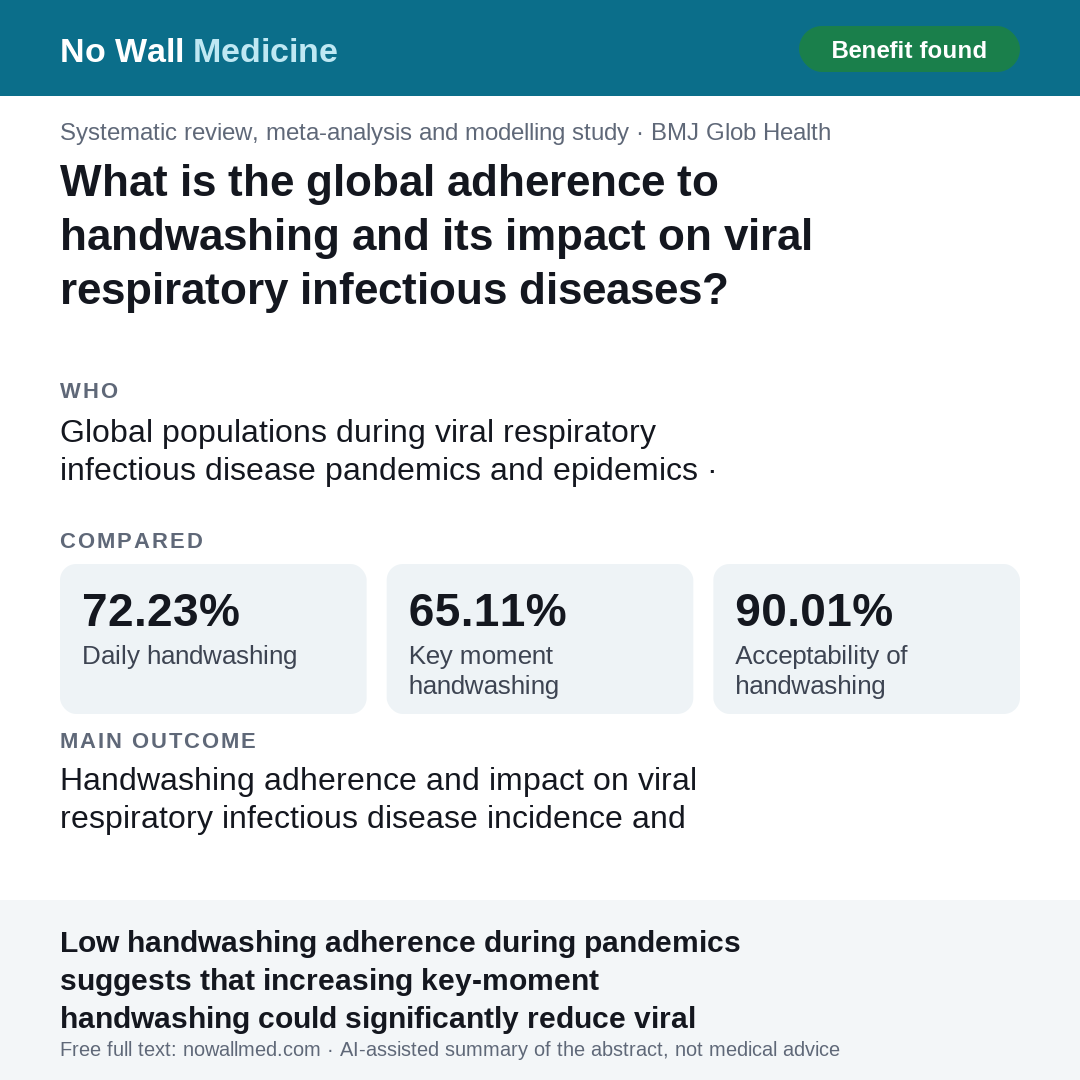
Adherence to handwashing behaviour and its impact on the incidence and death of viral respiratory infectious diseases: a systematic review, meta-analysis and modelling study
Systematic review, meta-analysis and modelling studyBenefit found
What is the global adherence to handwashing and its impact on viral respiratory infectious diseases?
Who
Global populations during viral respiratory infectious disease pandemics and epidemics · Global
Compared
72.23%Daily handwashing (95% CI 66.95% to 76.95%)
65.11%Key moment handwashing (95% CI 59.74% to 70.28%)
90.01%Acceptability of handwashing (95% CI 83.73% to 94.05%)
Main outcome
Handwashing adherence and impact on viral respiratory infectious disease incidence and death
Bottom line: Low handwashing adherence during pandemics suggests that increasing key-moment handwashing could significantly reduce viral respiratory disease incidence and death.
BMJ Glob Health · 2025-12-07Download image
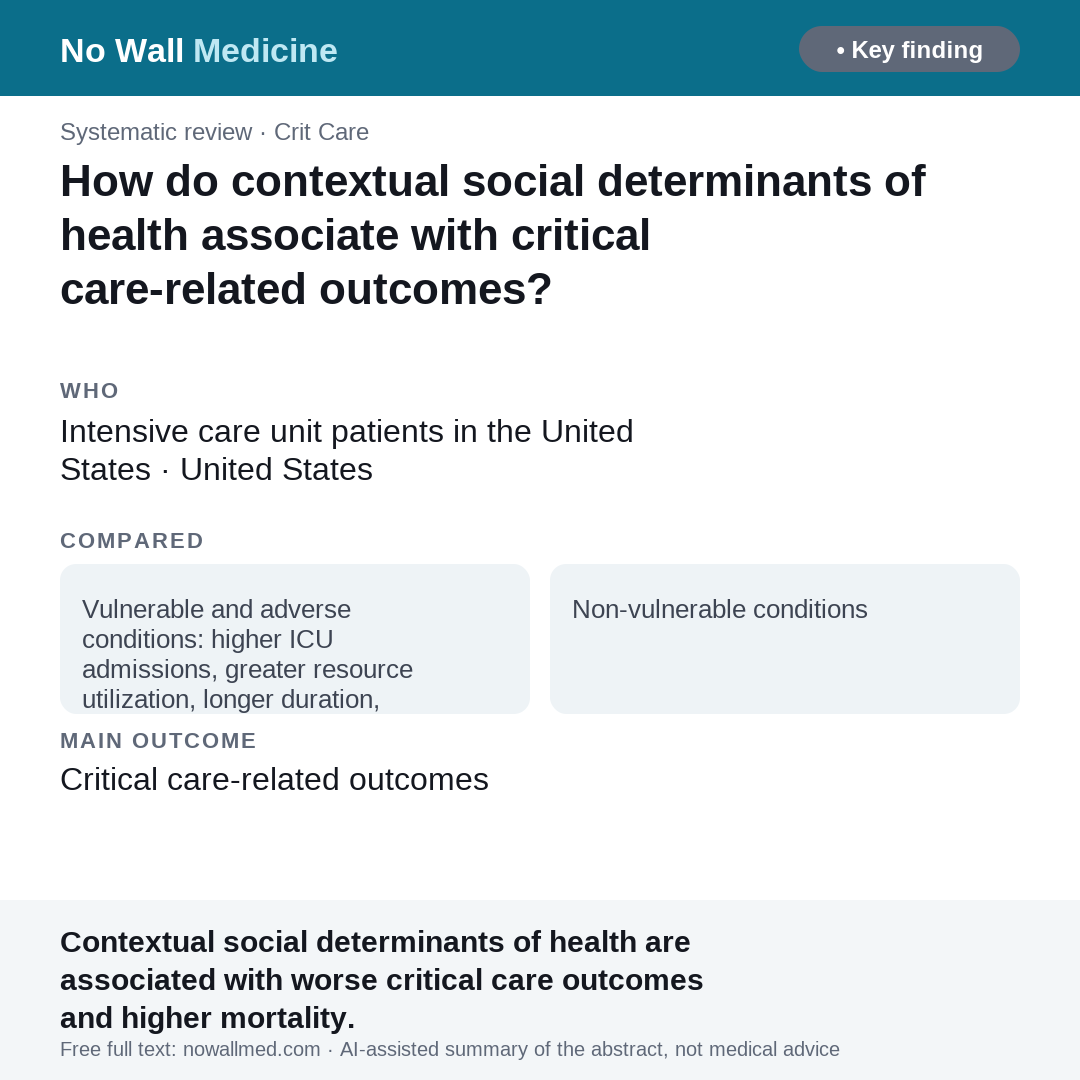
Contextual nonmedical health factors and critical care-related outcomes: a systematic review
Systematic reviewHarm found
How do contextual social determinants of health associate with critical care-related outcomes?
Who
Intensive care unit patients in the United States · United States
Compared
Vulnerable and adverse conditions: higher ICU admissions, greater resource utilization, longer duration, higher mortality
Non-vulnerable conditions
Main outcome
Critical care-related outcomes
Bottom line: Contextual social determinants of health are associated with worse critical care outcomes and higher mortality.
Crit Care · 2025-12-07Download image
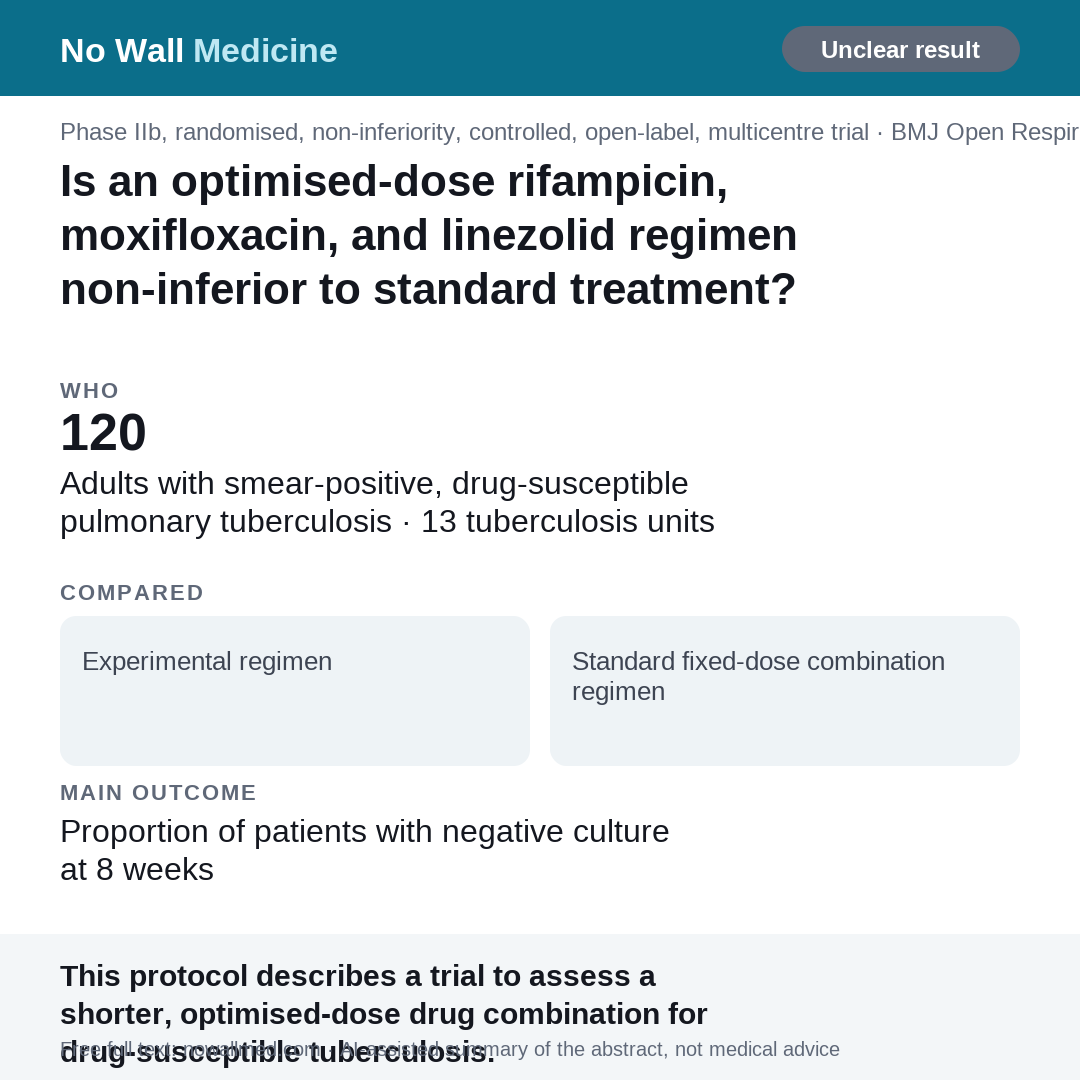
Multicentre controlled open randomised clinical trial to assess efficacy and safety of an anti-tuberculosis drug combination based on optimised-dose rifampicin, optimised-dose moxifloxacin and optimised-dose linezolid for TB: the RML-TB trial protocol
Phase IIb, randomised, non-inferiority, controlled, open-label, multicentre trialUnclear result
Is an optimised-dose rifampicin, moxifloxacin, and linezolid regimen non-inferior to standard treatment?
Who
120
Adults with smear-positive, drug-susceptible pulmonary tuberculosis · 13 tuberculosis units in Spain
Compared
Experimental regimen
Standard fixed-dose combination regimen
Main outcome
Proportion of patients with negative culture at 8 weeks
Bottom line: This protocol describes a trial to assess a shorter, optimised-dose drug combination for drug-susceptible tuberculosis.
BMJ Open Respir Res · 2025-12-07Download image
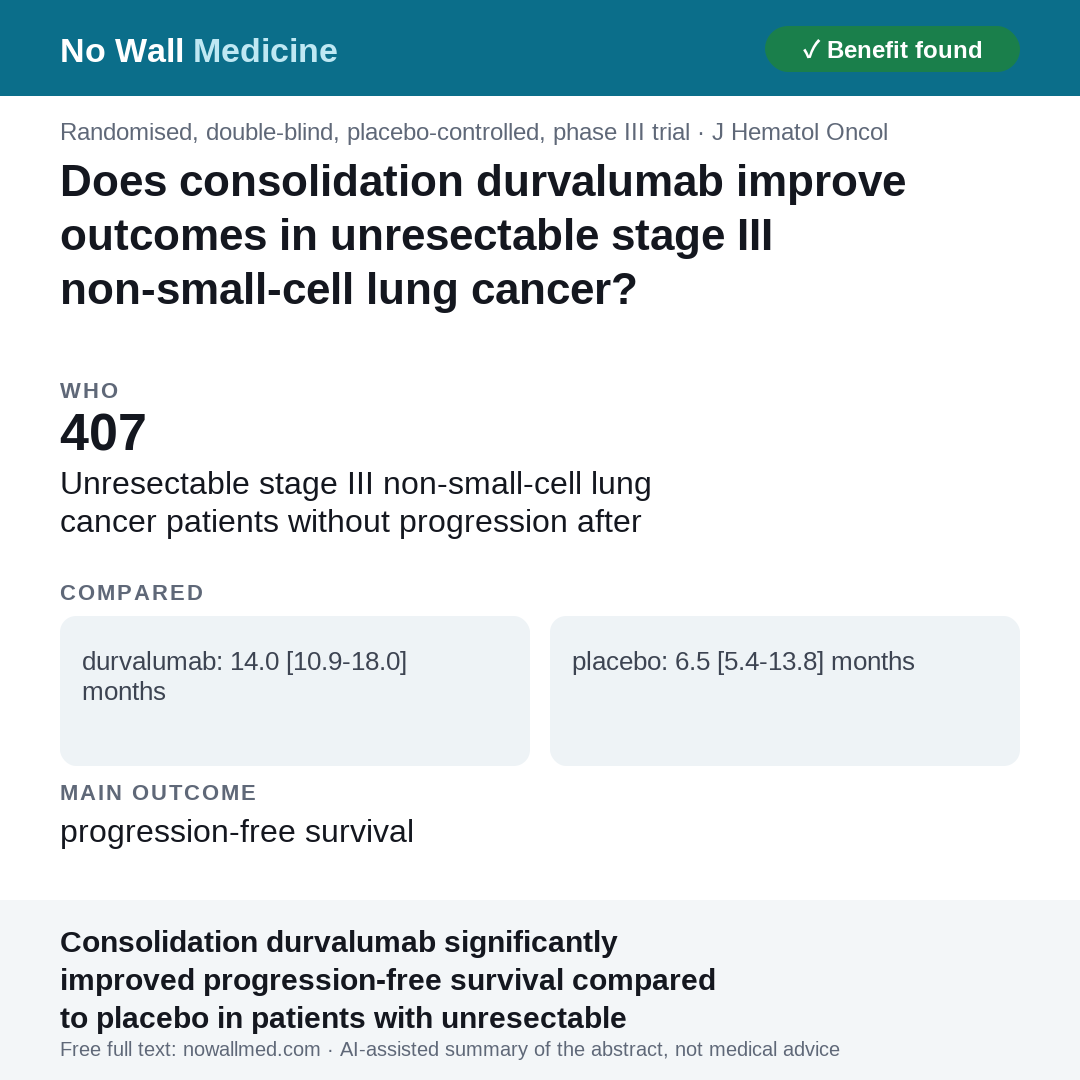
PACIFIC-5: a phase III clinical trial of consolidation durvalumab in patients with unresectable stage III NSCLC and no progression after concurrent or sequential chemoradiotherapy
Randomised, double-blind, placebo-controlled, phase III trialBenefit found
Does consolidation durvalumab improve outcomes in unresectable stage III non-small-cell lung cancer?
Who
407
Unresectable stage III non-small-cell lung cancer patients without progression after chemoradiotherapy
Compared
durvalumab: 14.0 [10.9-18.0] months
placebo: 6.5 [5.4-13.8] months
Main outcome
progression-free survival
Result: hazard ratio 0.75 (95% CI 0.58 to 0.99)
Bottom line: Consolidation durvalumab significantly improved progression-free survival compared to placebo in patients with unresectable stage III non-small-cell lung cancer.
Limitation: Follow-up for overall survival is ongoing.
J Hematol Oncol · 2025-12-07Download image
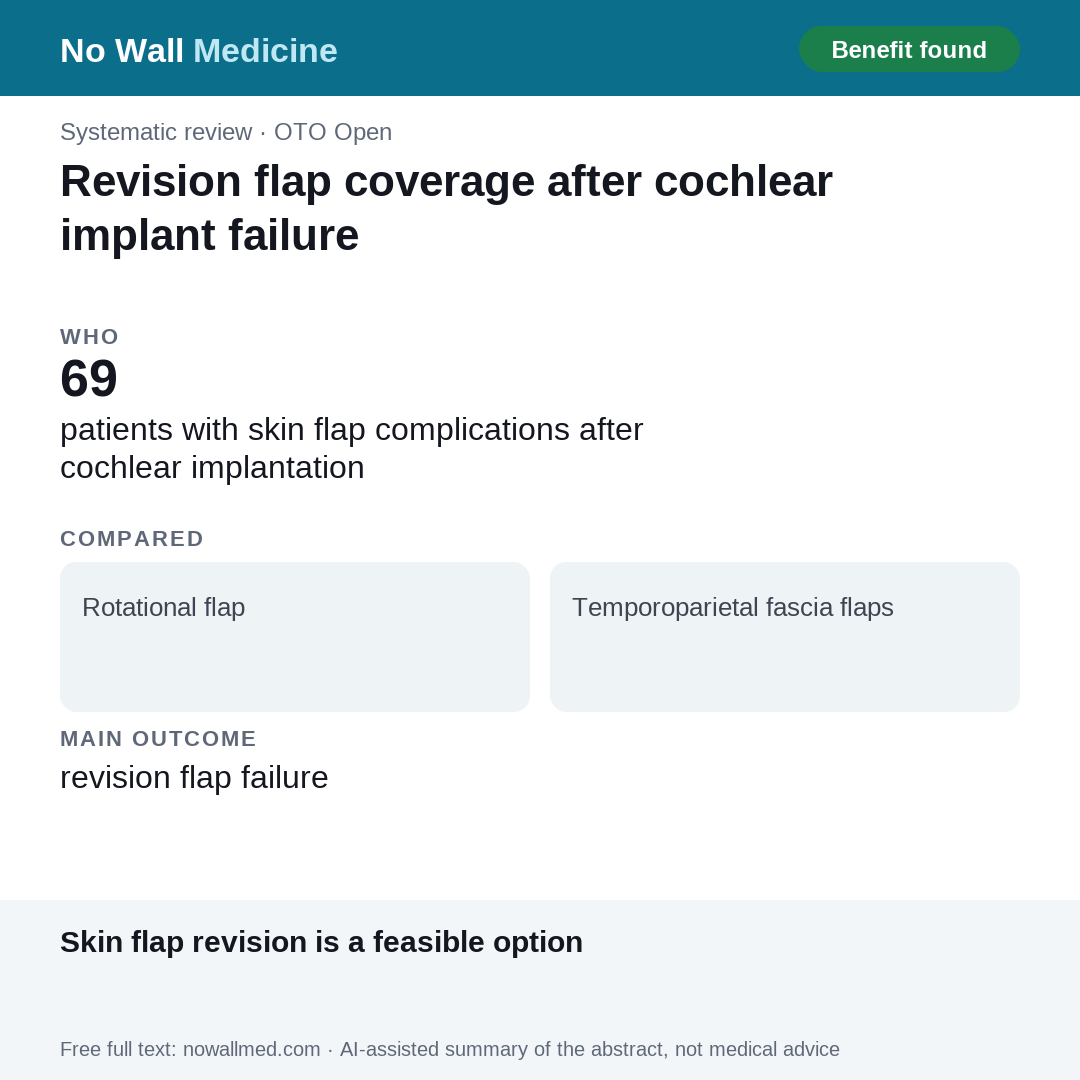
Revision Flap Coverage Following Primary Cochlear Implant Flap Failure: A Systematic Review
Systematic reviewBenefit found
Revision flap coverage after cochlear implant failure
Who
69
patients with skin flap complications after cochlear implantation
Compared
Rotational flap
Temporoparietal fascia flaps
Main outcome
revision flap failure
Bottom line: Skin flap revision is a feasible option
OTO Open · 2025-12-07Download image
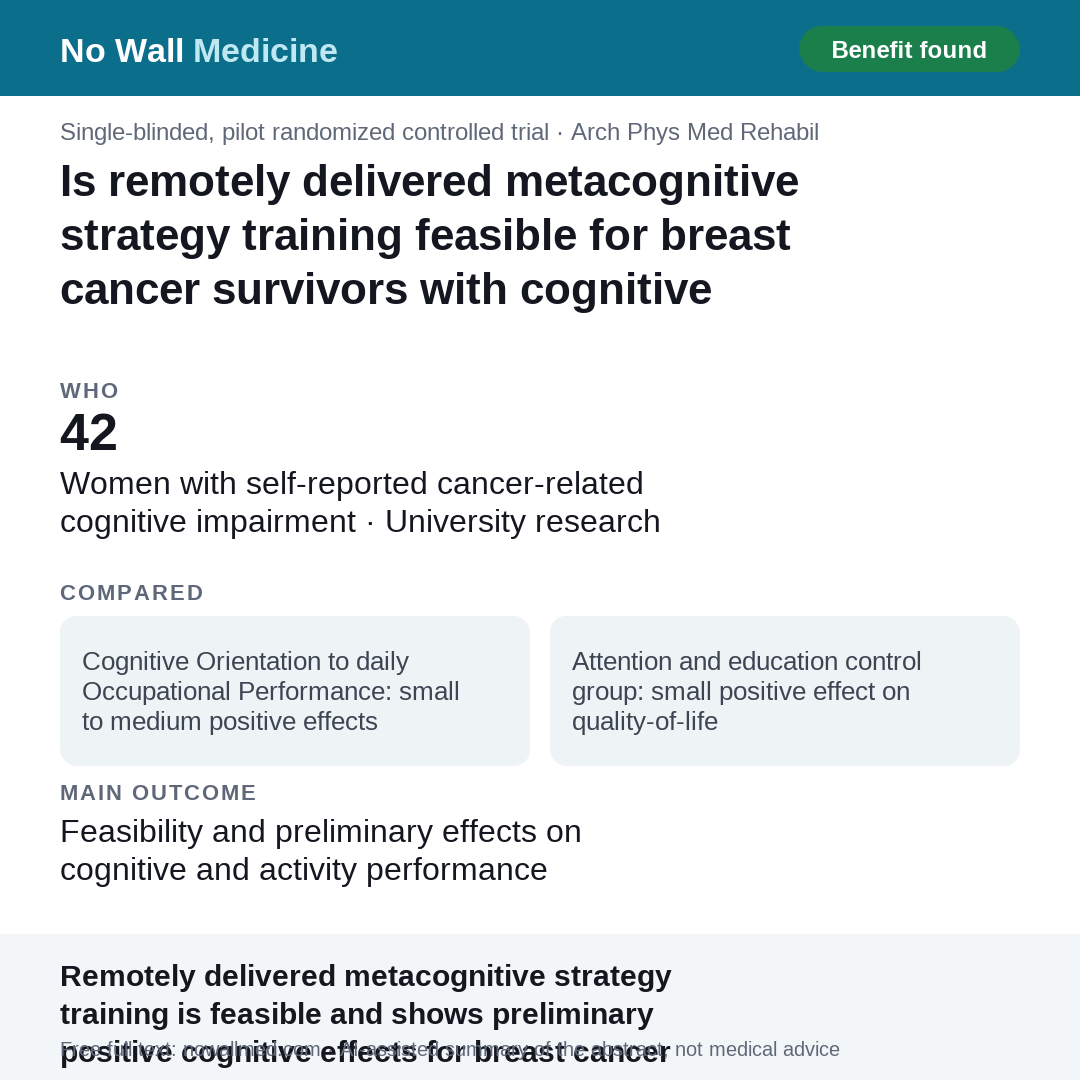
Feasibility Testing of Remotely Delivered Metacognitive Strategy Training in Cancer-Related Cognitive Impairment
Single-blinded, pilot randomized controlled trialBenefit found
Is remotely delivered metacognitive strategy training feasible for breast cancer survivors with cognitive impairment?
Who
42
Women with self-reported cancer-related cognitive impairment · University research laboratory and community
Compared
Cognitive Orientation to daily Occupational Performance: small to medium positive effects
Attention and education control group: small positive effect on quality-of-life
Main outcome
Feasibility and preliminary effects on cognitive and activity performance
Bottom line: Remotely delivered metacognitive strategy training is feasible and shows preliminary positive cognitive effects for breast cancer survivors.
Arch Phys Med Rehabil · 2025-12-06Download image
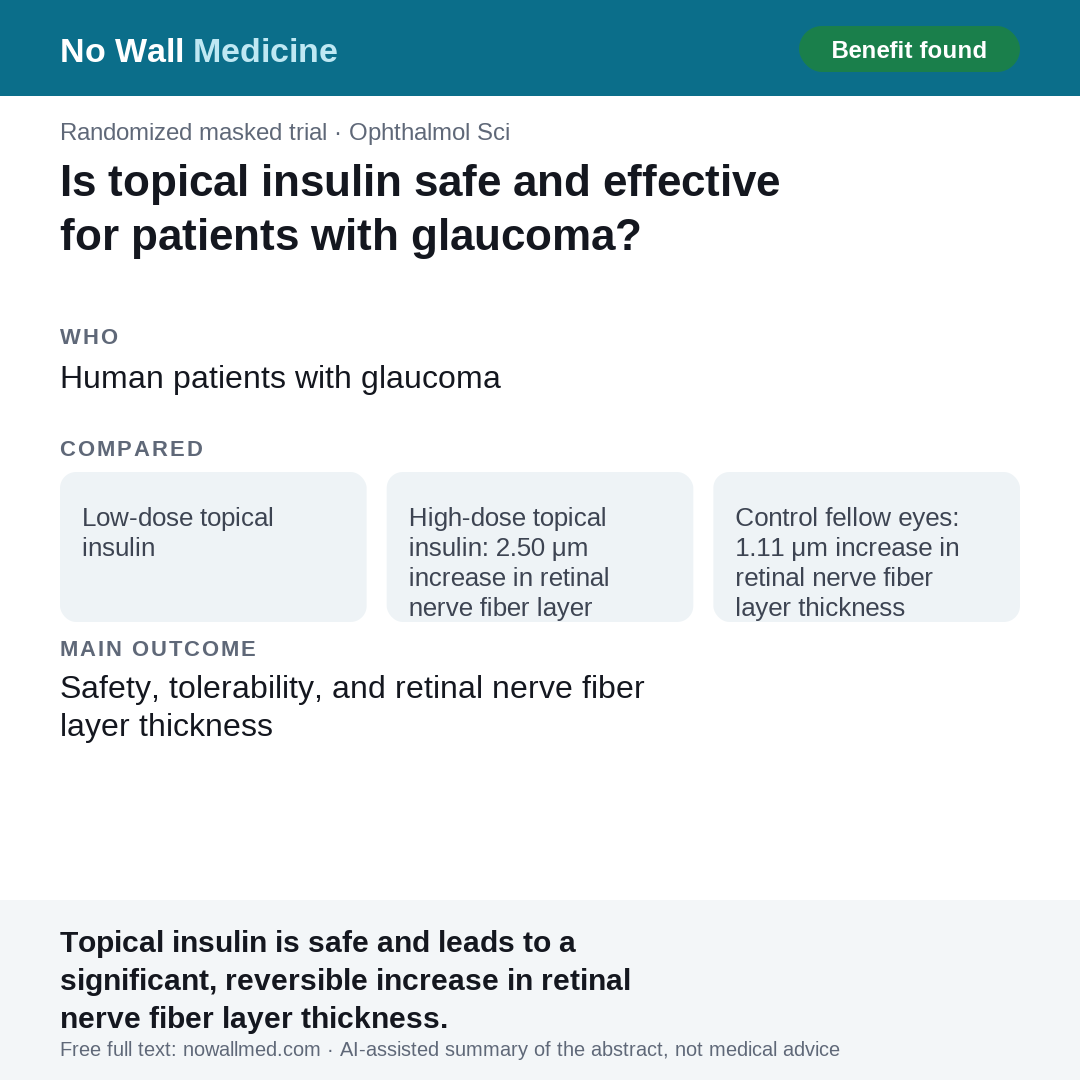
A Phase I Randomized Trial of Topical Insulin for Glaucoma: Safety and Efficacy Outcomes
Randomized masked trialBenefit found
Is topical insulin safe and effective for patients with glaucoma?
Who
Human patients with glaucoma
Compared
Low-dose topical insulin
High-dose topical insulin: 2.50 μm increase in retinal nerve fiber layer thickness
Control fellow eyes: 1.11 μm increase in retinal nerve fiber layer thickness
Main outcome
Safety, tolerability, and retinal nerve fiber layer thickness
Bottom line: Topical insulin is safe and leads to a significant, reversible increase in retinal nerve fiber layer thickness.
Ophthalmol Sci · 2025-12-06Download image
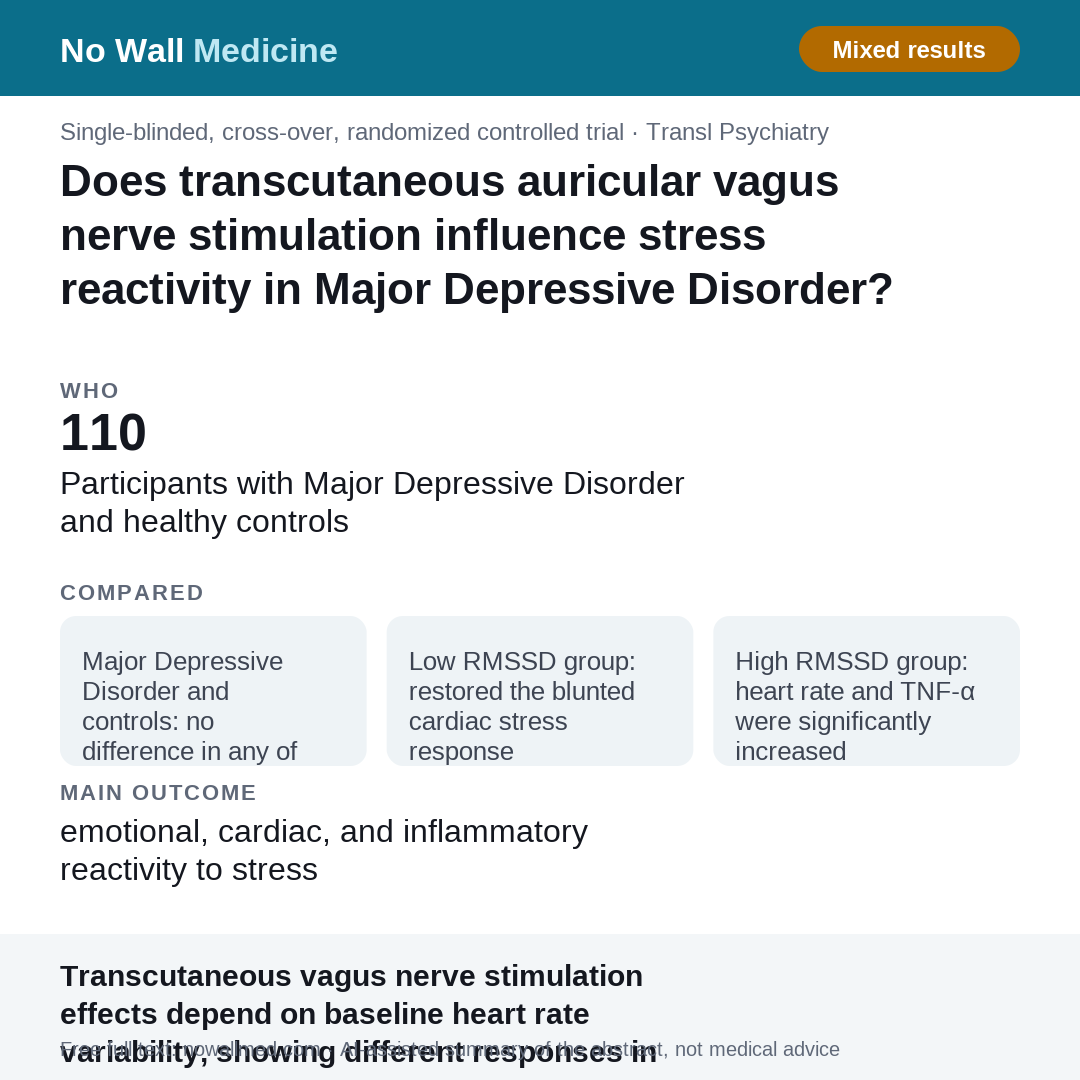
The heart knows best: baseline heart rate variability as guide to transcutaneous auricular vagus nerve stimulation in depression
Single-blinded, cross-over, randomized controlled trialMixed results
Does transcutaneous auricular vagus nerve stimulation influence stress reactivity in Major Depressive Disorder?
Who
110
Participants with Major Depressive Disorder and healthy controls
Compared
Major Depressive Disorder and controls: no difference in any of the outcomes
Low RMSSD group: restored the blunted cardiac stress response
High RMSSD group: heart rate and TNF-α were significantly increased
Main outcome
emotional, cardiac, and inflammatory reactivity to stress
Bottom line: Transcutaneous vagus nerve stimulation effects depend on baseline heart rate variability, showing different responses in low versus high RMSSD groups.
Transl Psychiatry · 2025-12-06Download image
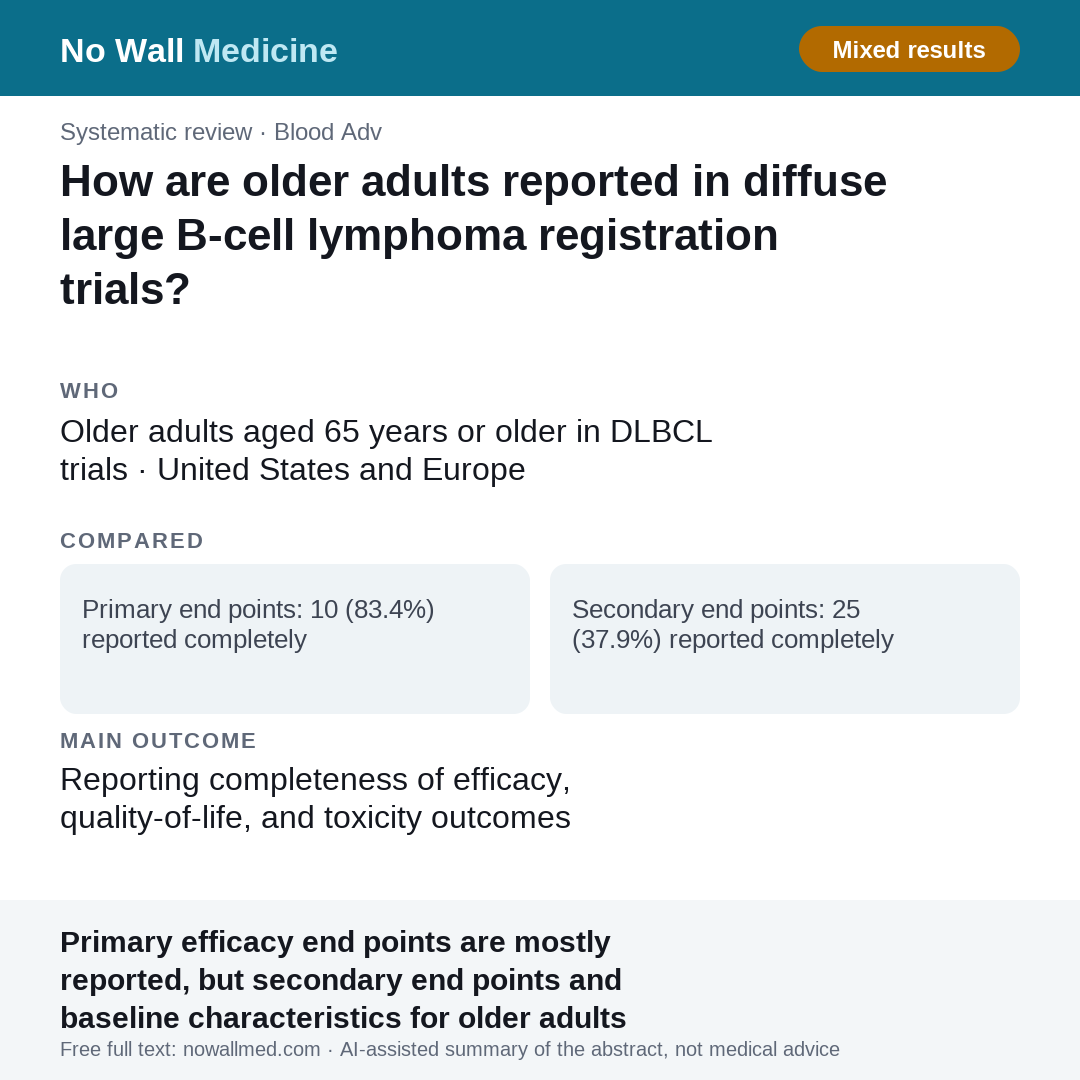
Inclusion, characteristics, and reporting of older patients in recent registration trials for DLBCL
Systematic reviewMixed results
How are older adults reported in diffuse large B-cell lymphoma registration trials?
Who
Older adults aged 65 years or older in DLBCL trials · United States and Europe
Compared
Primary end points: 10 (83.4%) reported completely
Secondary end points: 25 (37.9%) reported completely
Main outcome
Reporting completeness of efficacy, quality-of-life, and toxicity outcomes
Bottom line: Primary efficacy end points are mostly reported, but secondary end points and baseline characteristics for older adults are often unreported.
Blood Adv · 2025-12-06Download image
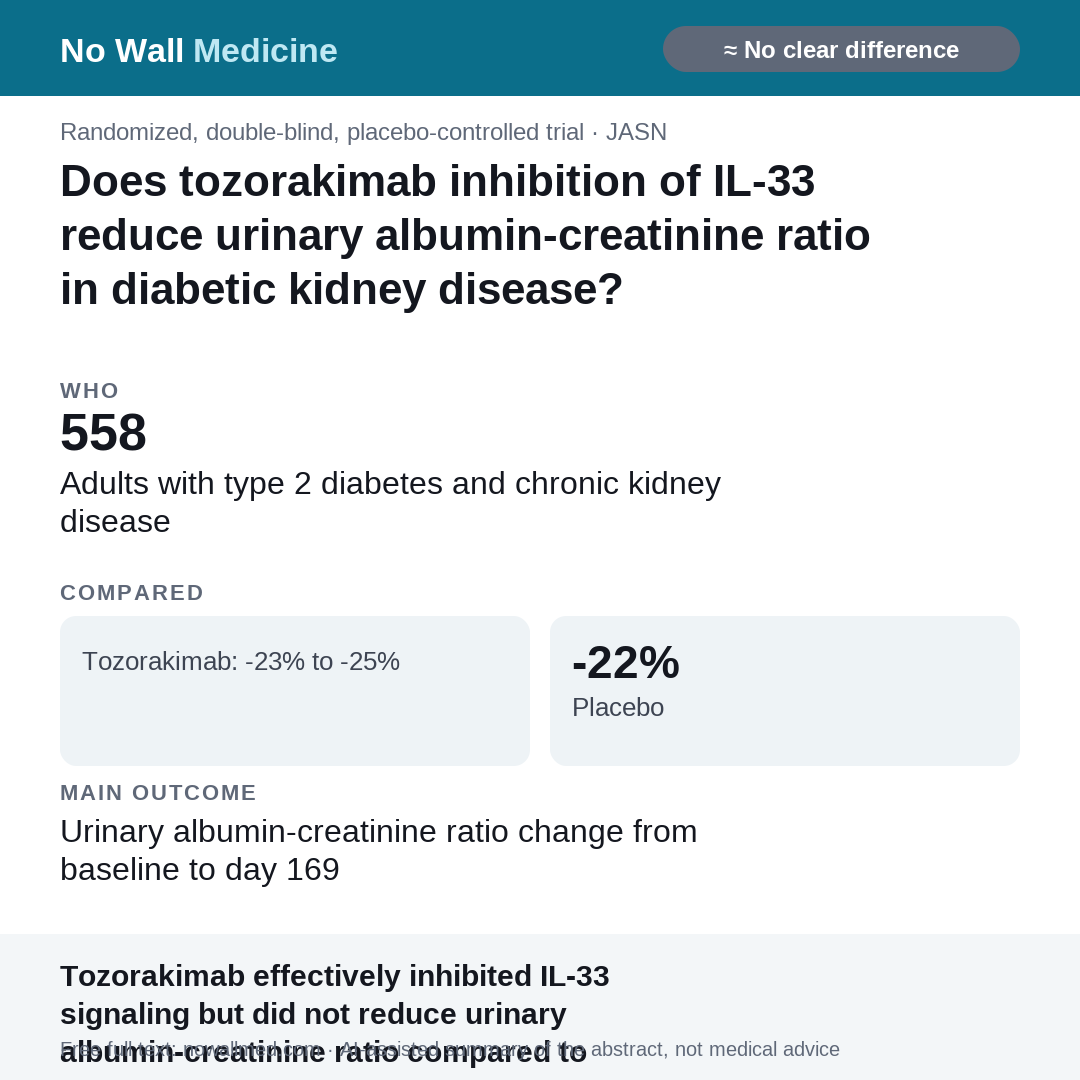
Inhibition of IL-33 in Diabetic Kidney Disease: A Randomized, Placebo-Controlled Phase 2b Trial
Randomized, double-blind, placebo-controlled trialNo clear difference
Does tozorakimab inhibition of IL-33 reduce urinary albumin-creatinine ratio in diabetic kidney disease?
Who
558
Adults with type 2 diabetes and chronic kidney disease
Compared
Tozorakimab: -23% to -25%
-22%Placebo
Main outcome
Urinary albumin-creatinine ratio change from baseline to day 169
Bottom line: Tozorakimab effectively inhibited IL-33 signaling but did not reduce urinary albumin-creatinine ratio compared to placebo.
JASN · 2025-12-05Download image
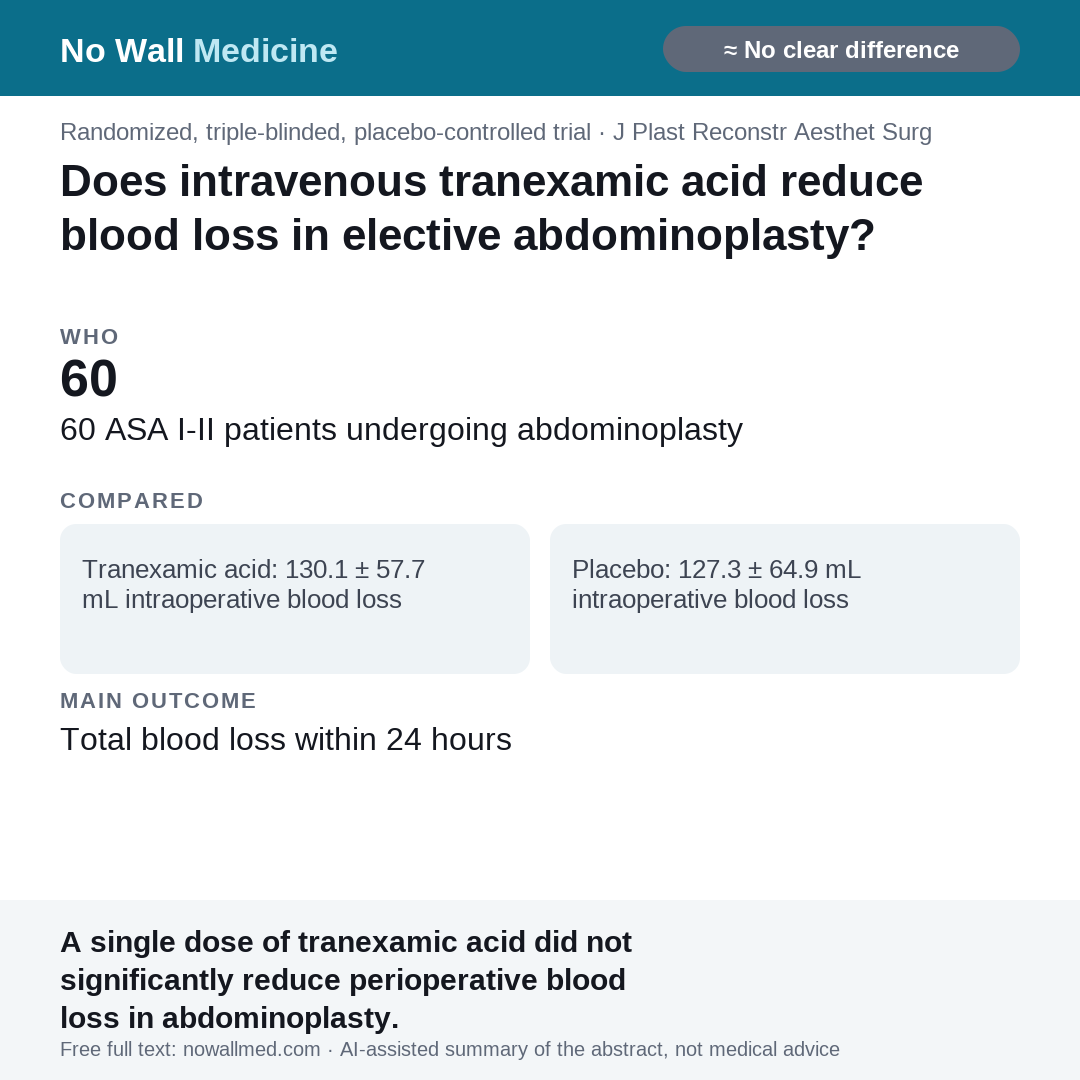
Efficacy and safety of intravenous tranexamic acid in elective abdominoplasty: A randomized, triple-blinded, placebo-controlled clinical trial
Randomized, triple-blinded, placebo-controlled trialNo clear difference
Does intravenous tranexamic acid reduce blood loss in elective abdominoplasty?
Who
60
60 ASA I-II patients undergoing abdominoplasty
Compared
Tranexamic acid: 130.1 ± 57.7 mL intraoperative blood loss
Placebo: 127.3 ± 64.9 mL intraoperative blood loss
Main outcome
Total blood loss within 24 hours
Bottom line: A single dose of tranexamic acid did not significantly reduce perioperative blood loss in abdominoplasty.
J Plast Reconstr Aesthet Surg · 2025-12-05Download image
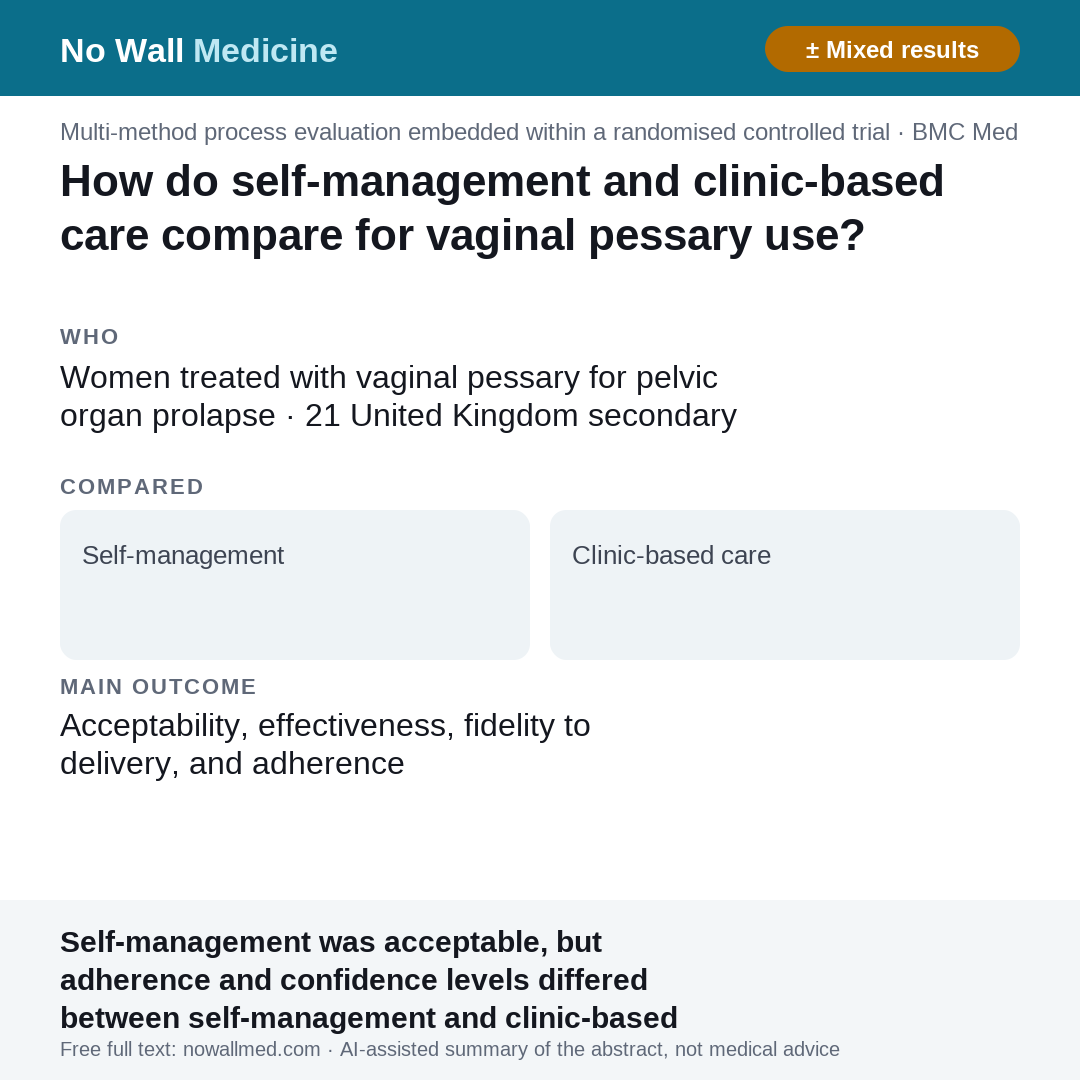
Self-management of vaginal pessaries for pelvic organ prolapse: multi-method process evaluation, linked to the TOPSY randomised controlled trial
Multi-method process evaluation embedded within a randomised controlled trialMixed results
How do self-management and clinic-based care compare for vaginal pessary use?
Who
Women treated with vaginal pessary for pelvic organ prolapse · 21 United Kingdom secondary care centres
Compared
Self-management
Clinic-based care
Main outcome
Acceptability, effectiveness, fidelity to delivery, and adherence
Bottom line: Self-management was acceptable, but adherence and confidence levels differed between self-management and clinic-based care groups.
BMC Med · 2025-12-05Download image
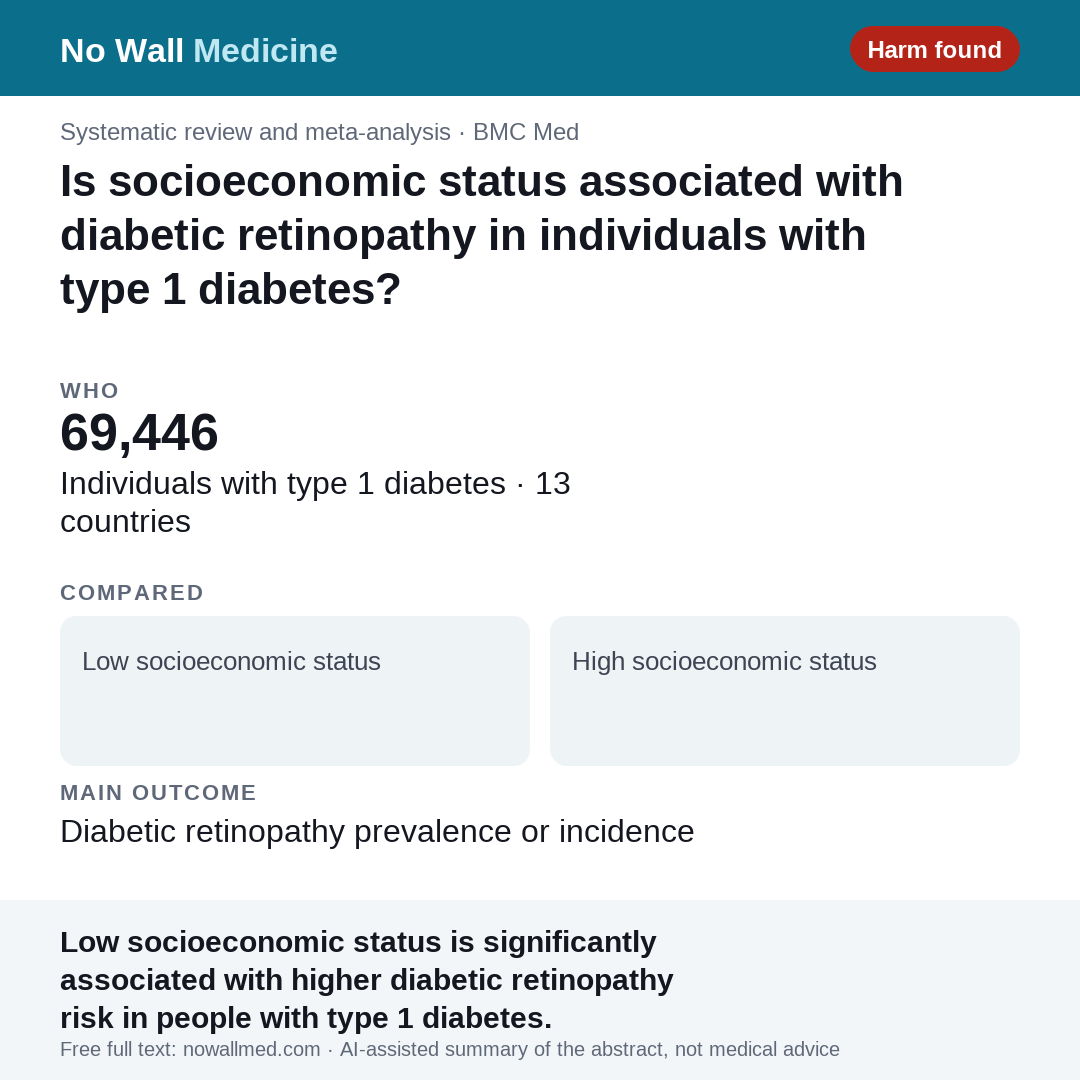
Association between socioeconomic status and diabetic retinopathy in individuals with type 1 diabetes: a systematic review and meta-analysis
Systematic review and meta-analysisHarm found
Is socioeconomic status associated with diabetic retinopathy in individuals with type 1 diabetes?
Who
69,446
Individuals with type 1 diabetes · 13 countries
Compared
Low socioeconomic status
High socioeconomic status
Main outcome
Diabetic retinopathy prevalence or incidence
Result: odds ratio 1.44 (95% CI 1.21-1.71)
Bottom line: Low socioeconomic status is significantly associated with higher diabetic retinopathy risk in people with type 1 diabetes.
BMC Med · 2025-12-05Download image
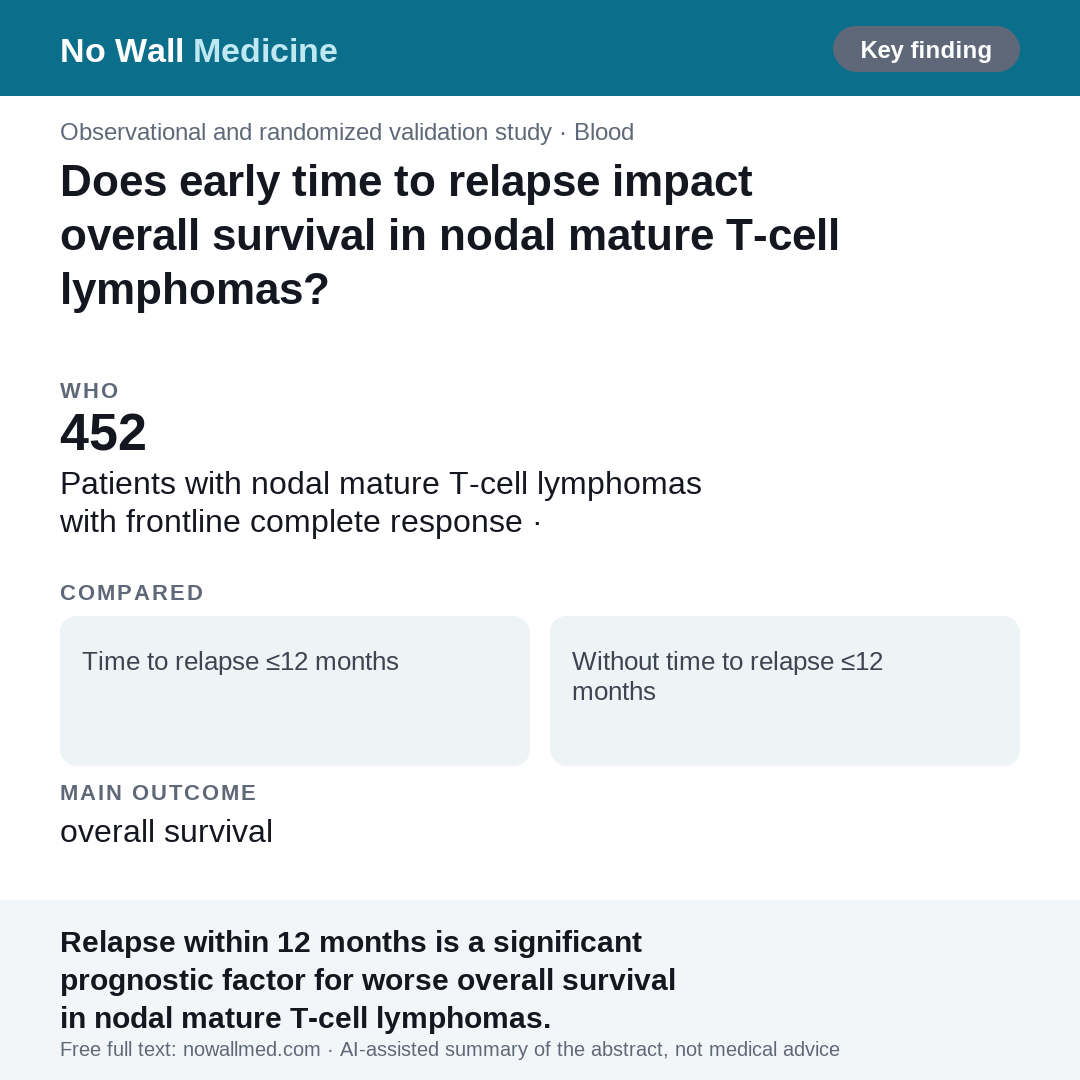
Early time to relapse as a survival prognosticator in nodal mature T-cell lymphomas: results from the PETAL consortium
Observational and randomized validation studyHarm found
Does early time to relapse impact overall survival in nodal mature T-cell lymphomas?
Who
452
Patients with nodal mature T-cell lymphomas with frontline complete response · multinational cohorts
Compared
Time to relapse ≤12 months
Without time to relapse ≤12 months
Main outcome
overall survival
Result: hazard ratio 2.14 (95% CI 1.58-2.90)
Bottom line: Relapse within 12 months is a significant prognostic factor for worse overall survival in nodal mature T-cell lymphomas.
Blood · 2025-12-05Download image
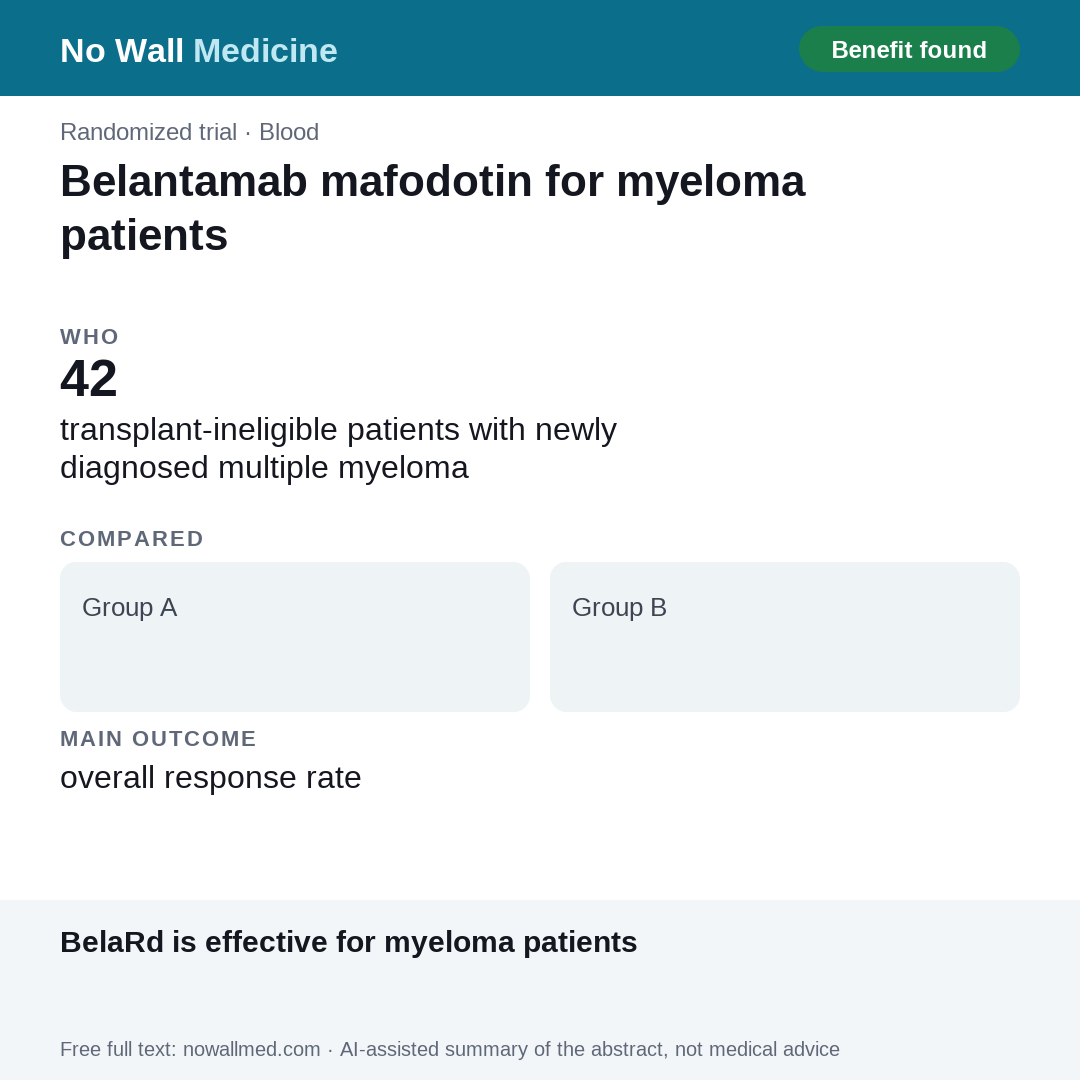
Belantamab mafodotin, lenalidomide, and dexamethasone for intermediate-fit and frail patients with newly diagnosed myeloma
Randomized trialBenefit found
Belantamab mafodotin for myeloma patients
Who
42
transplant-ineligible patients with newly diagnosed multiple myeloma
Compared
Group A
Group B
Main outcome
overall response rate
Bottom line: BelaRd is effective for myeloma patients
Blood · 2025-12-05Download image
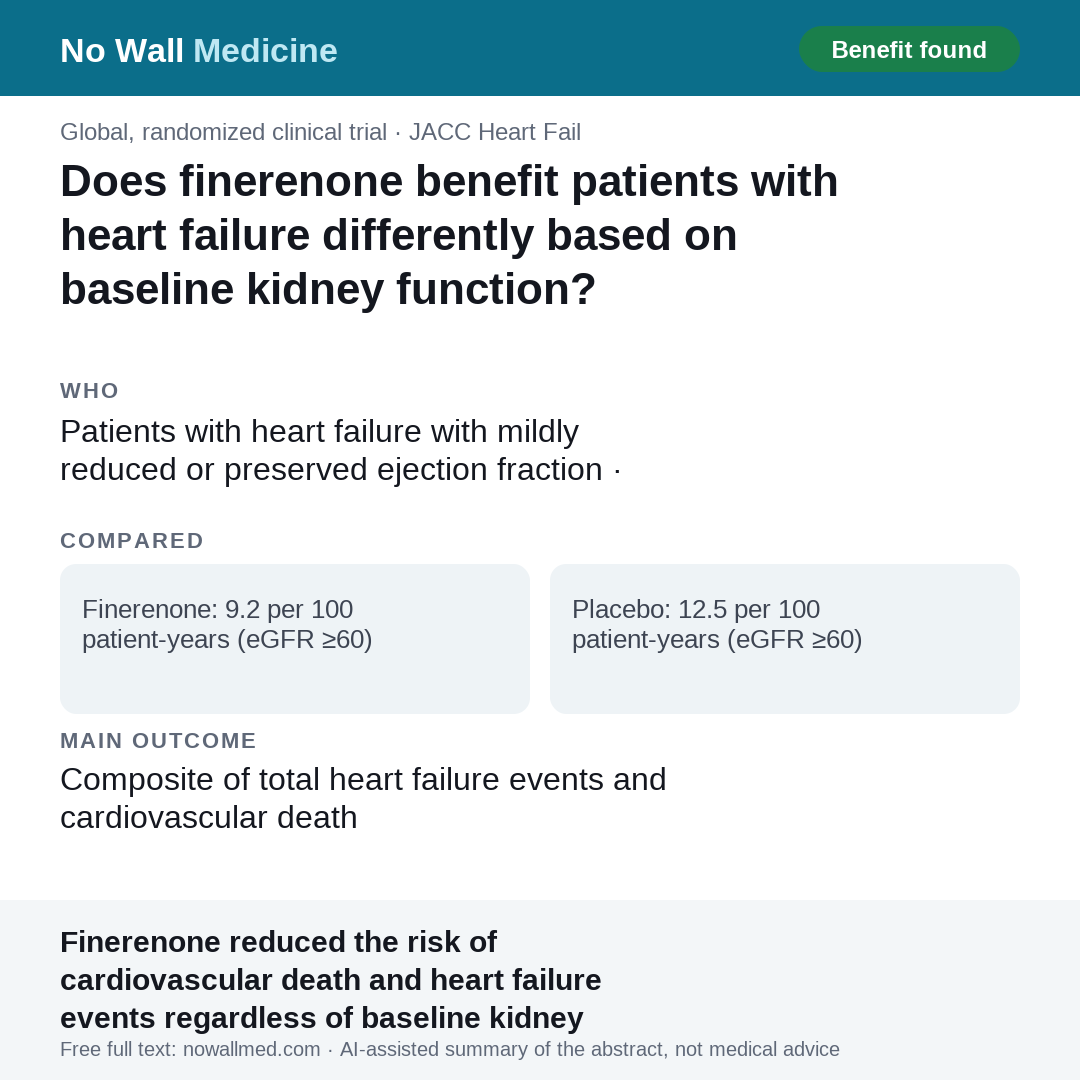
Finerenone and Cardiovascular Outcomes According to Baseline Kidney Function in Patients With Heart Failure: The FINEARTS-HF Trial
Global, randomized clinical trialBenefit found
Does finerenone benefit patients with heart failure differently based on baseline kidney function?
Who
Patients with heart failure with mildly reduced or preserved ejection fraction · Global
Compared
Finerenone: 9.2 per 100 patient-years (eGFR ≥60)
Placebo: 12.5 per 100 patient-years (eGFR ≥60)
Main outcome
Composite of total heart failure events and cardiovascular death
Result: rate ratio 0.72 (95% CI: 0.59-0.88) for eGFR ≥60 mL/min/1.73 m2
Bottom line: Finerenone reduced the risk of cardiovascular death and heart failure events regardless of baseline kidney function.
JACC Heart Fail · 2025-12-05Download image
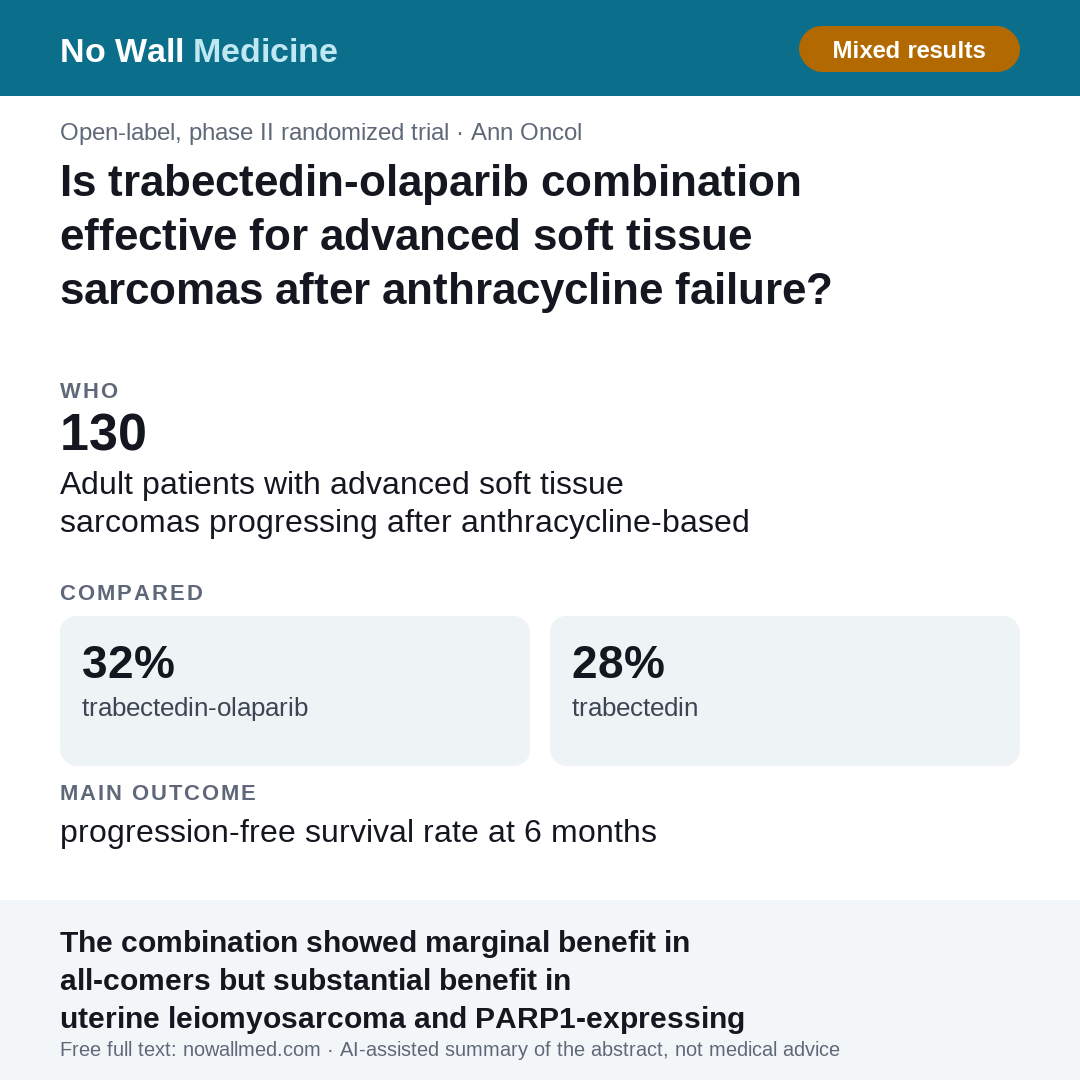
Trabectedin-olaparib combination or trabectedin in advanced soft tissue sarcomas after failure of anthracycline-based treatment (TOMAS2): a randomized phase II study from the Italian Sarcoma Group
Open-label, phase II randomized trialMixed results
Is trabectedin-olaparib combination effective for advanced soft tissue sarcomas after anthracycline failure?
Who
130
Adult patients with advanced soft tissue sarcomas progressing after anthracycline-based regimens · 13 Italian Sarcoma Group centers
Compared
32%trabectedin-olaparib (95% CI 22% to 46%)
28%trabectedin (95% CI 19% to 42%)
Main outcome
progression-free survival rate at 6 months
Result: hazard ratio 0.722, 95% CI 0.501-1.041
Bottom line: The combination showed marginal benefit in all-comers but substantial benefit in uterine leiomyosarcoma and PARP1-expressing patients.
Ann Oncol · 2025-12-05Download image
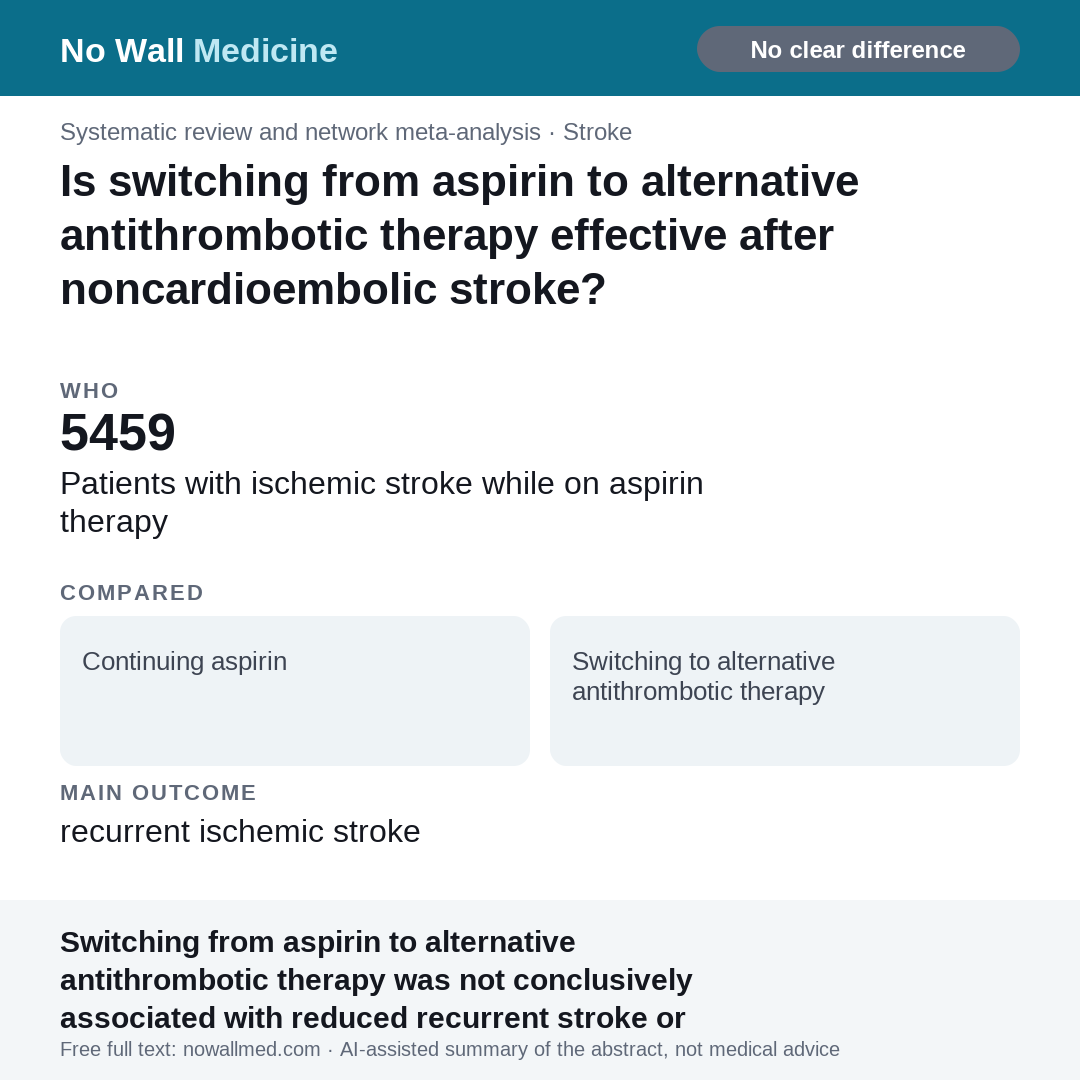
Switching From Aspirin Monotherapy After Noncardioembolic Stroke: A Systematic Review and Network Meta-Analysis
Systematic review and network meta-analysisNo clear difference
Is switching from aspirin to alternative antithrombotic therapy effective after noncardioembolic stroke?
Who
5459
Patients with ischemic stroke while on aspirin therapy
Compared
Continuing aspirin
Switching to alternative antithrombotic therapy
Main outcome
recurrent ischemic stroke
Result: relative risk 0.88 (95% CI, 0.76-1.03)
Bottom line: Switching from aspirin to alternative antithrombotic therapy was not conclusively associated with reduced recurrent stroke or composite cardiovascular events.
Stroke · 2025-12-05Download image
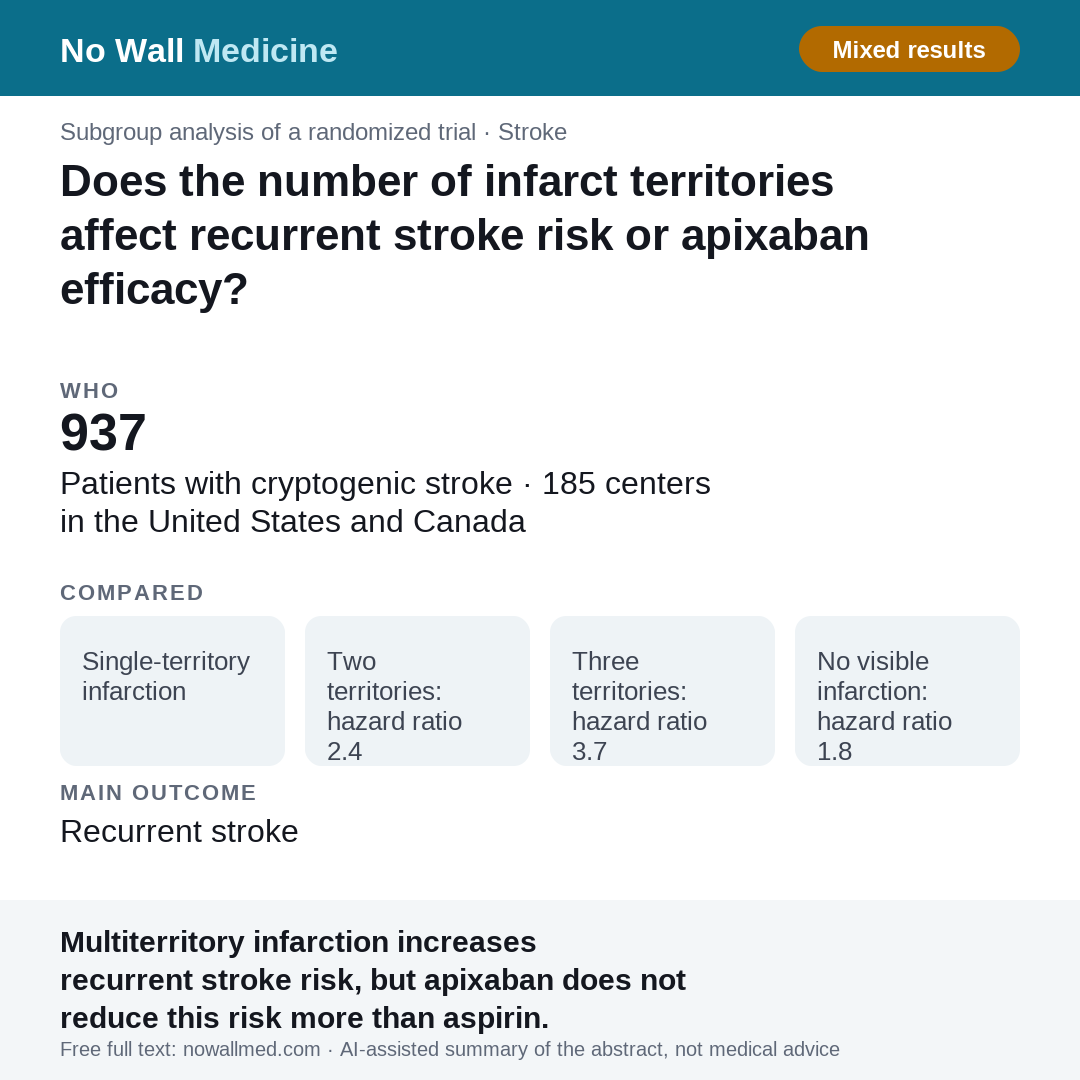
Multiterritory Brain Infarcts, Anticoagulation, and Recurrence After Cryptogenic Stroke: A Subgroup Analysis of the ARCADIA Trial
Subgroup analysis of a randomized trialMixed results
Does the number of infarct territories affect recurrent stroke risk or apixaban efficacy?
Who
937
Patients with cryptogenic stroke · 185 centers in the United States and Canada
Compared
Single-territory infarction
Two territories: hazard ratio 2.4
Three territories: hazard ratio 3.7
No visible infarction: hazard ratio 1.8
Main outcome
Recurrent stroke
Result: hazard ratio 2.4 (95% CI 1.3-4.2) for 2 territories; hazard ratio 3.7 (95% CI 1.5-9.3) for 3 territories
Bottom line: Multiterritory infarction increases recurrent stroke risk, but apixaban does not reduce this risk more than aspirin.
Stroke · 2025-12-05Download image
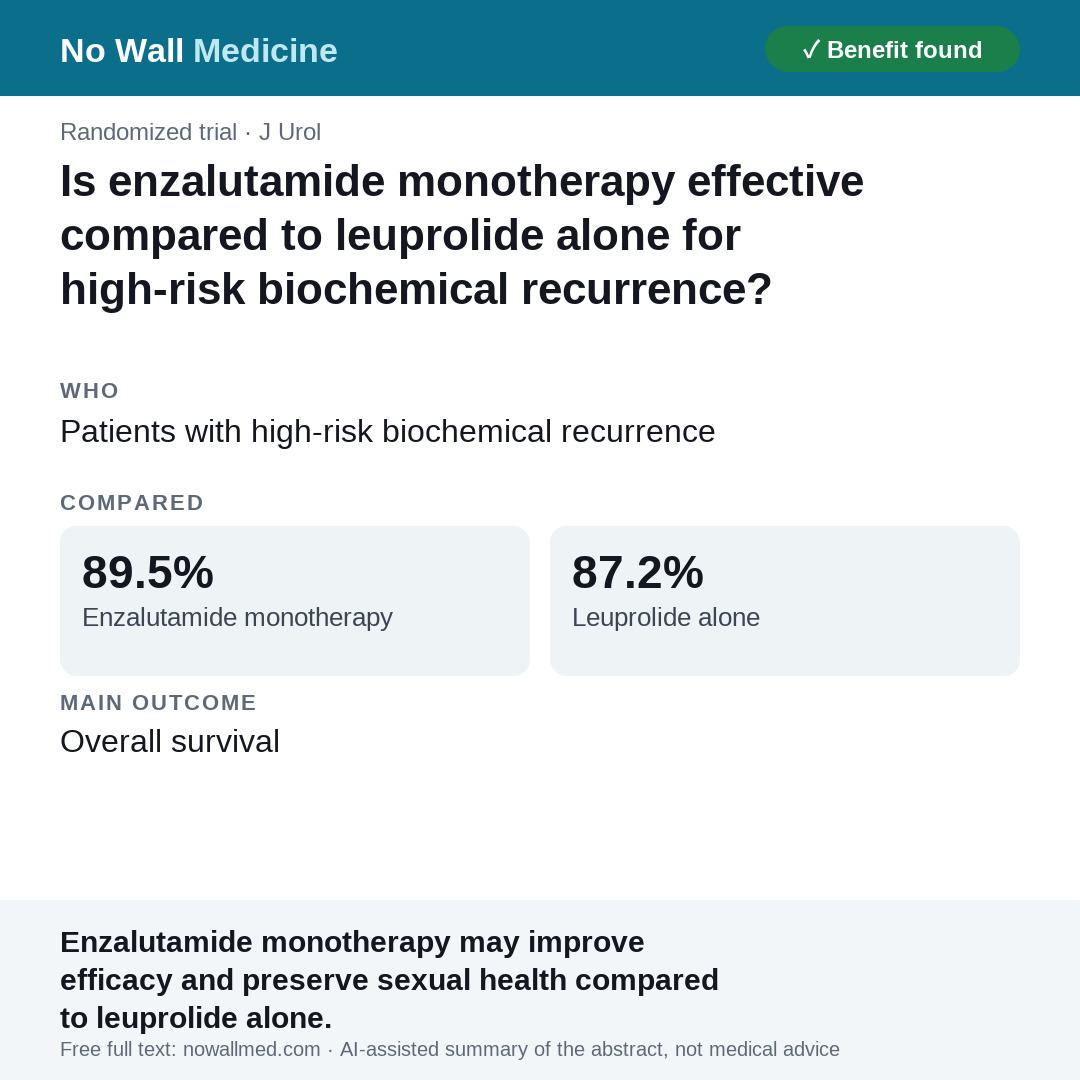
Enzalutamide Monotherapy for the Treatment of Prostate Cancer With High-Risk Biochemical Recurrence: EMBARK Secondary End Points
Randomized trialBenefit found
Is enzalutamide monotherapy effective compared to leuprolide alone for high-risk biochemical recurrence?
Who
Patients with high-risk biochemical recurrence
Compared
89.5%Enzalutamide monotherapy (85.6-92.4)
87.2%Leuprolide alone (83.0-90.4)
Main outcome
Overall survival
Bottom line: Enzalutamide monotherapy may improve efficacy and preserve sexual health compared to leuprolide alone.
J Urol · 2025-12-05Download image