Visual abstracts
New randomized trials and meta-analyses from leading journals at a glance: who was studied, what was compared, and what was found. Every paper is free to read in full.
All specialtiesCardiology 4763Oncology 4043Gastroenterology & Hepatology 1903Infectious Disease 3756Neurology 1872Psychiatry & Mental Health 2216Pulmonology 2044Critical Care 1319Endocrinology & Diabetes 2544Pediatrics 2889Surgery 2480Orthopedics & Sports Medicine 917Neurosurgery 525Cardiothoracic & Vascular Surgery 656Plastic & Reconstructive Surgery 574Nephrology 1107Rheumatology 810Hematology 1090Dermatology 611Ophthalmology 532Obstetrics & Gynecology 1645Public & Global Health 1037Radiology & Imaging 619Anesthesiology 958Urology 745ENT (Otolaryngology) 494Emergency Medicine 481Allergy & Immunology 309Geriatrics 972Family Medicine & Primary Care 534Medical Genetics & Genomics 659Pathology & Laboratory Medicine 156Physical Medicine & Rehabilitation 734Palliative Care 421Nutrition 1560Digital Health & AI 2137General Medicine 318
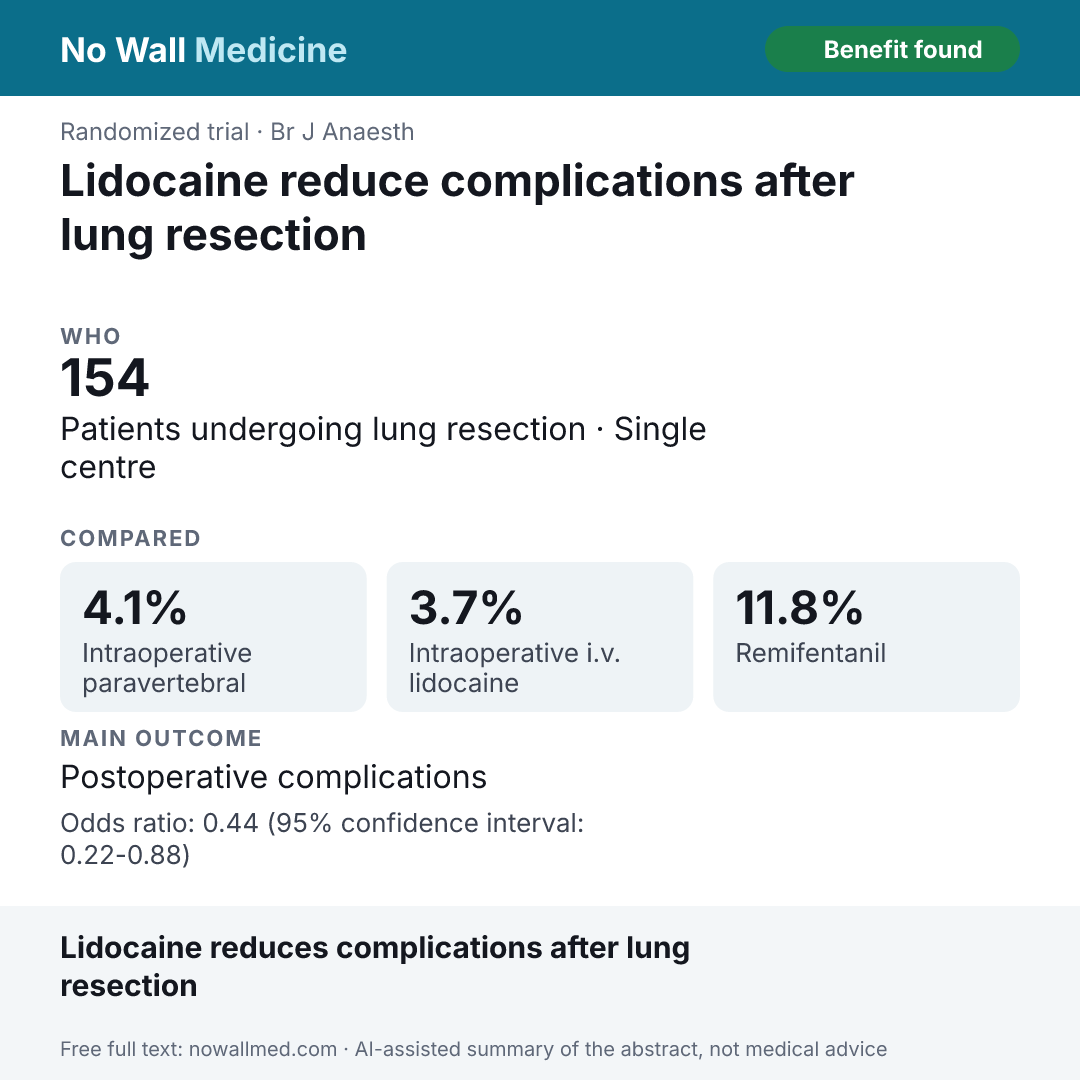
Effect of intraoperative paravertebral or intravenous lidocaine infusion on postoperative complications and inflammation after lung resection surgery: a randomised controlled trial
Randomized trialBenefit found
Lidocaine reduce complications after lung resection
Who
154
Patients undergoing lung resection · Single centre
Compared
4.1%Intraoperative paravertebral lidocaine
3.7%Intraoperative i.v. lidocaine
11.8%Remifentanil
Main outcome
Postoperative complications
Result: Odds ratio: 0.44 (95% confidence interval: 0.22-0.88)
Bottom line: Lidocaine reduces complications after lung resection
Br J Anaesth · 2025-09-01 · Save PNG
Palbociclib and trastuzumab for HER2-positive metastatic breast cancer: final overall survival results of cohort A and B of SOLTI-1303-PATRICIA trial
Phase II randomized trialMixed results
What are the overall survival results for palbociclib and trastuzumab in HER2-positive metastatic breast cancer?
Who
71
Hormone receptor-positive/human epidermal growth factor receptor 2-positive metastatic breast cancer patients
Compared
Cohort A (estrogen receptor-negative): 13.3% 4-year overall survival rate
Cohort B1 (estrogen receptor-positive, no additional therapy): 35.7% 4-year overall survival rate
Cohort B2 (estrogen receptor-positive, letrozole): 32.3% 4-year overall survival rate
Main outcome
overall survival
Result: median overall survival 29.8 months [95% confidence interval 20.9-38.0 months]
Bottom line: Overall survival varied by hormone receptor status and gene expression profiling in HER2-positive metastatic breast cancer.
ESMO Open · 2025-09-01 · Save PNG

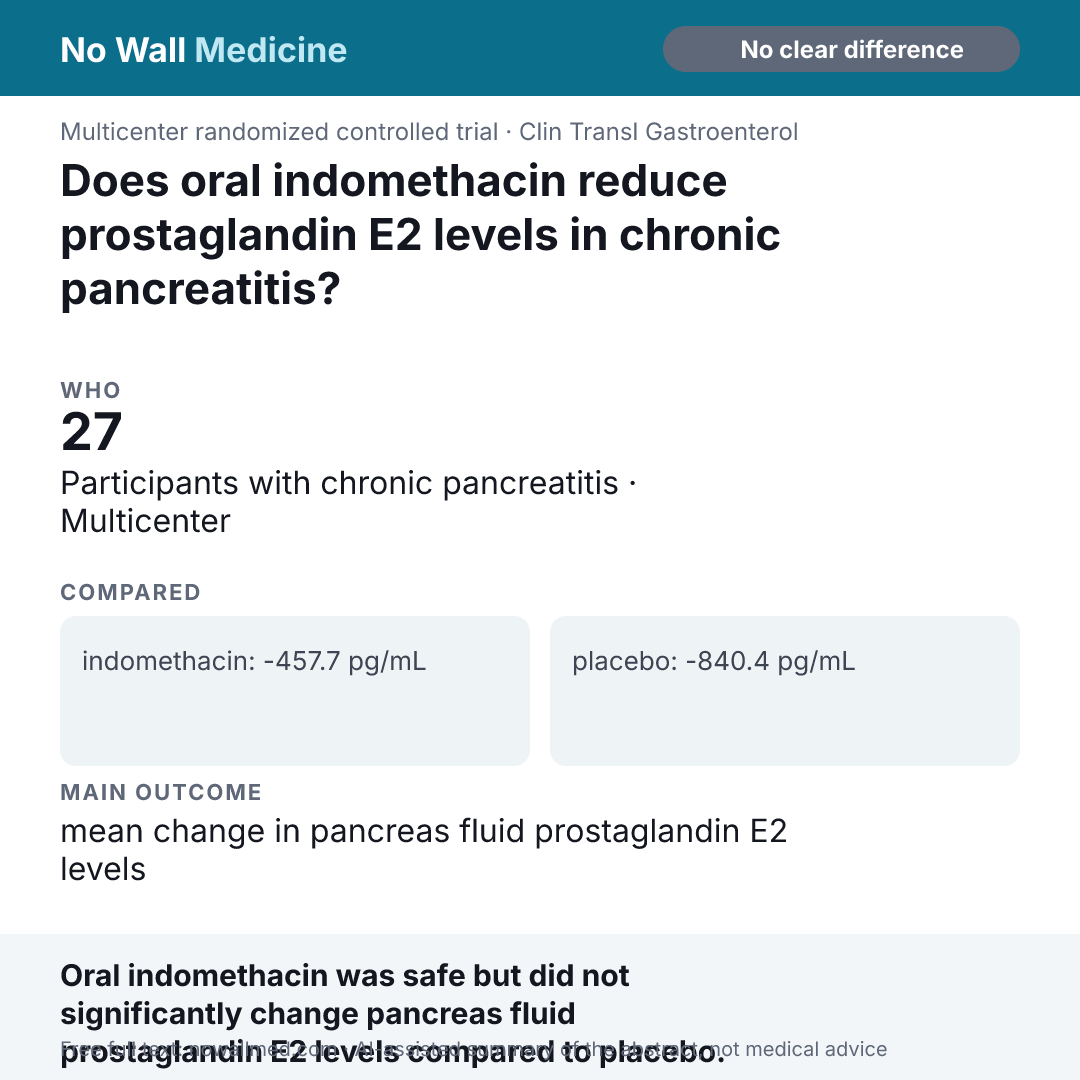
Oral Indomethacin for Chronic Pancreatitis: Results From the PAIR Randomized Placebo-Controlled Trial
Multicenter randomized controlled trialNo clear difference
Does oral indomethacin reduce prostaglandin E2 levels in chronic pancreatitis?
Who
27
Participants with chronic pancreatitis · Multicenter
Compared
indomethacin: -457.7 pg/mL
placebo: -840.4 pg/mL
Main outcome
mean change in pancreas fluid prostaglandin E2 levels
Bottom line: Oral indomethacin was safe but did not significantly change pancreas fluid prostaglandin E2 levels compared to placebo.
Clin Transl Gastroenterol · 2025-09-01 · Save PNG
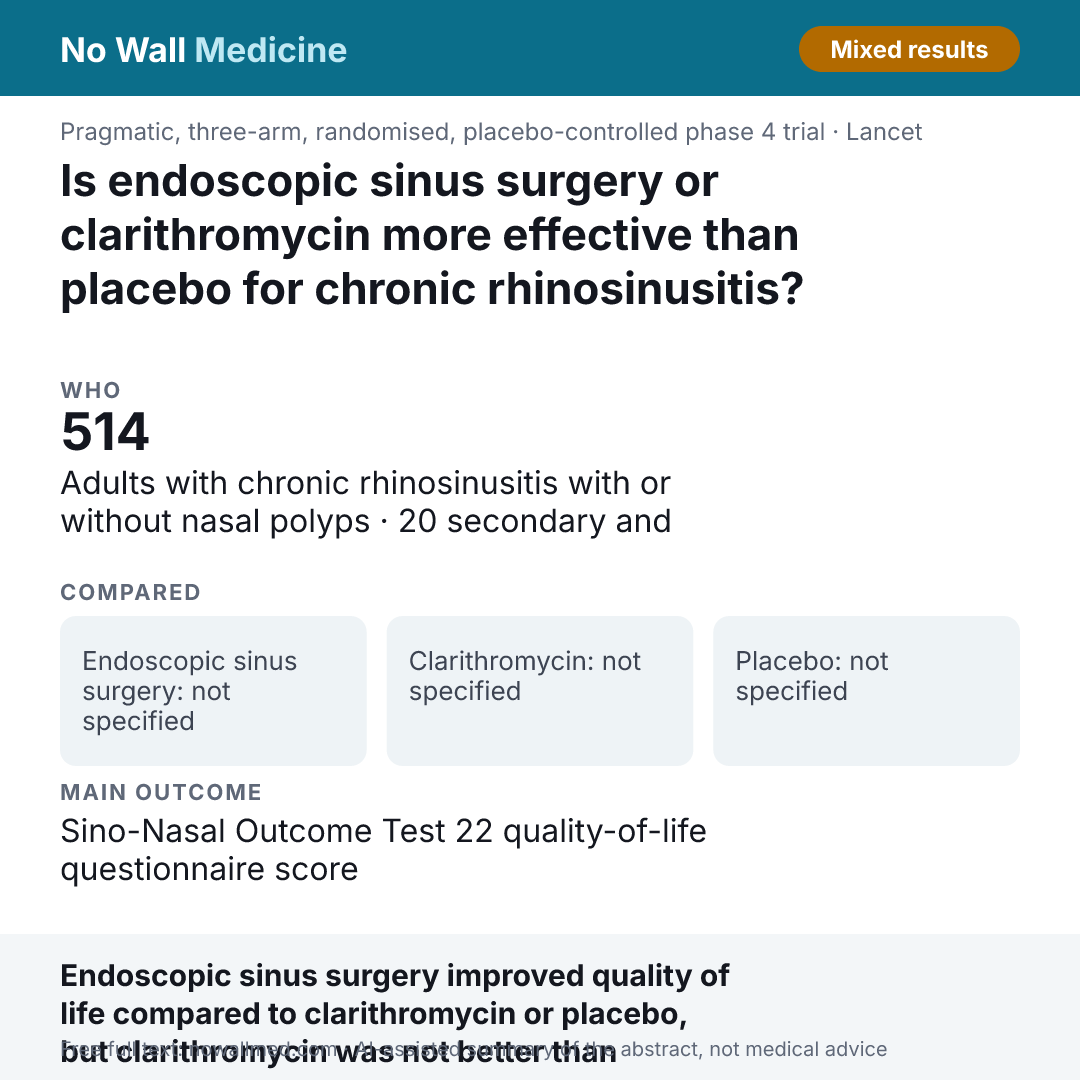
The clinical effectiveness of clarithromycin versus endoscopic sinus surgery for adults with chronic rhinosinusitis with and without nasal polyps (MACRO): a pragmatic, multicentre, three-arm, randomised, placebo-controlled phase 4 trial
Pragmatic, three-arm, randomised, placebo-controlled phase 4 trialMixed results
Is endoscopic sinus surgery or clarithromycin more effective than placebo for chronic rhinosinusitis?
Who
514
Adults with chronic rhinosinusitis with or without nasal polyps · 20 secondary and tertiary care sites in the UK
Compared
Endoscopic sinus surgery: not specified
Clarithromycin: not specified
Placebo: not specified
Main outcome
Sino-Nasal Outcome Test 22 quality-of-life questionnaire score
Result: adjusted mean difference -18·13 (98·33% CI -24·26 to -11·99) vs clarithromycin
Bottom line: Endoscopic sinus surgery improved quality of life compared to clarithromycin or placebo, but clarithromycin was not better than placebo.
Funded by: National Institute for Health and Care Research
Lancet · 2025-08-31 · Save PNG
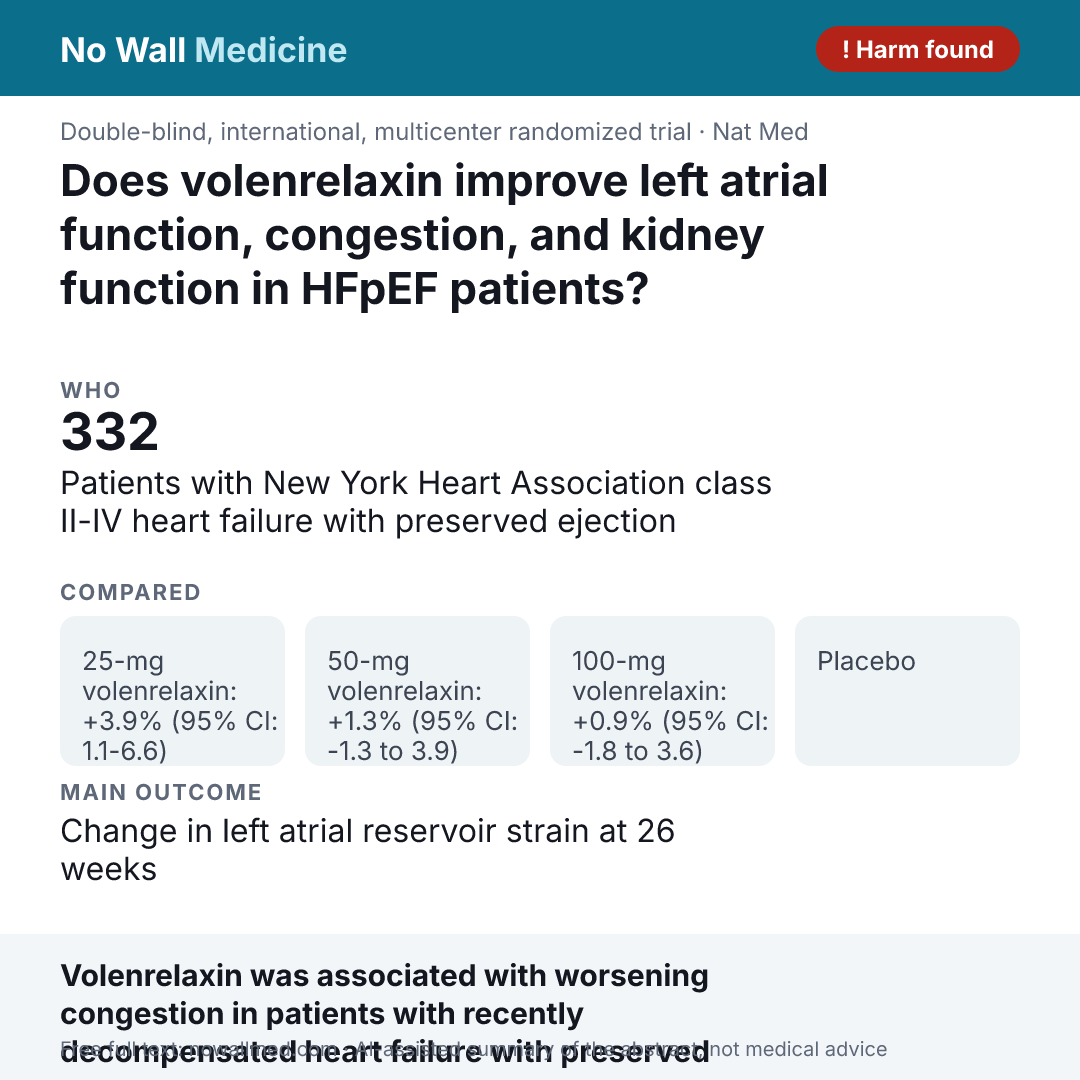
Effects of volenrelaxin in worsening heart failure with preserved ejection fraction: a phase 2 randomized trial
Double-blind, international, multicenter randomized trialHarm found
Does volenrelaxin improve left atrial function, congestion, and kidney function in HFpEF patients?
Who
332
Patients with New York Heart Association class II-IV heart failure with preserved ejection fraction · International, multicenter
Compared
25-mg volenrelaxin: +3.9% (95% CI: 1.1-6.6)
50-mg volenrelaxin: +1.3% (95% CI: -1.3 to 3.9)
100-mg volenrelaxin: +0.9% (95% CI: -1.8 to 3.6)
Placebo
Main outcome
Change in left atrial reservoir strain at 26 weeks
Result: hazard ratio 2.64 (95% CI 0.93-7.56)
Bottom line: Volenrelaxin was associated with worsening congestion in patients with recently decompensated heart failure with preserved ejection fraction.
Nat Med · 2025-08-31 · Save PNG
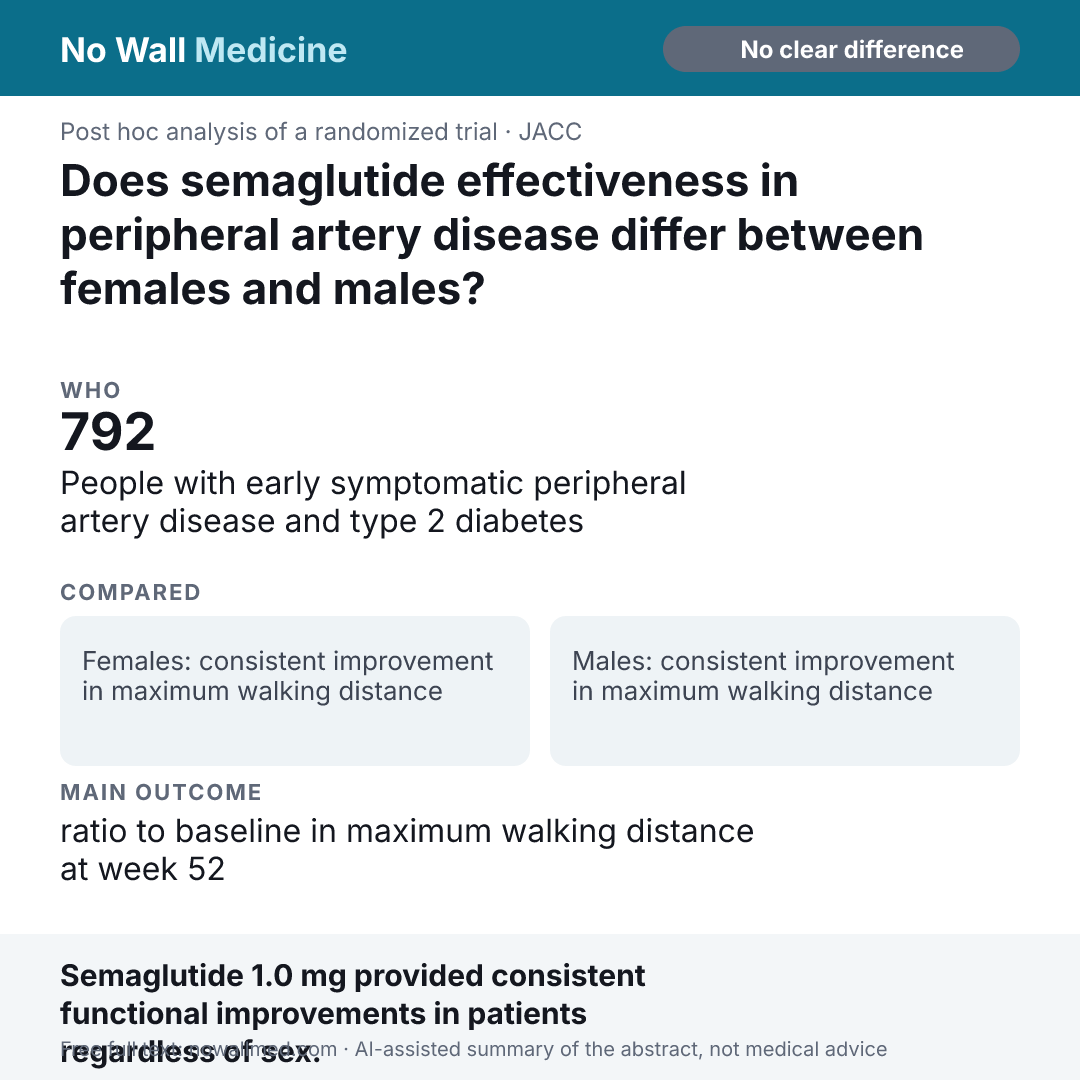
Sex Differences in Effectiveness of Semaglutide in Patients With Peripheral Artery Disease: The STRIDE Trial
Post hoc analysis of a randomized trialNo clear difference
Does semaglutide effectiveness in peripheral artery disease differ between females and males?
Who
792
People with early symptomatic peripheral artery disease and type 2 diabetes
Compared
Females: consistent improvement in maximum walking distance
Males: consistent improvement in maximum walking distance
Main outcome
ratio to baseline in maximum walking distance at week 52
Result: P-interaction value = 0.65
Bottom line: Semaglutide 1.0 mg provided consistent functional improvements in patients regardless of sex.
JACC · 2025-08-31 · Save PNG
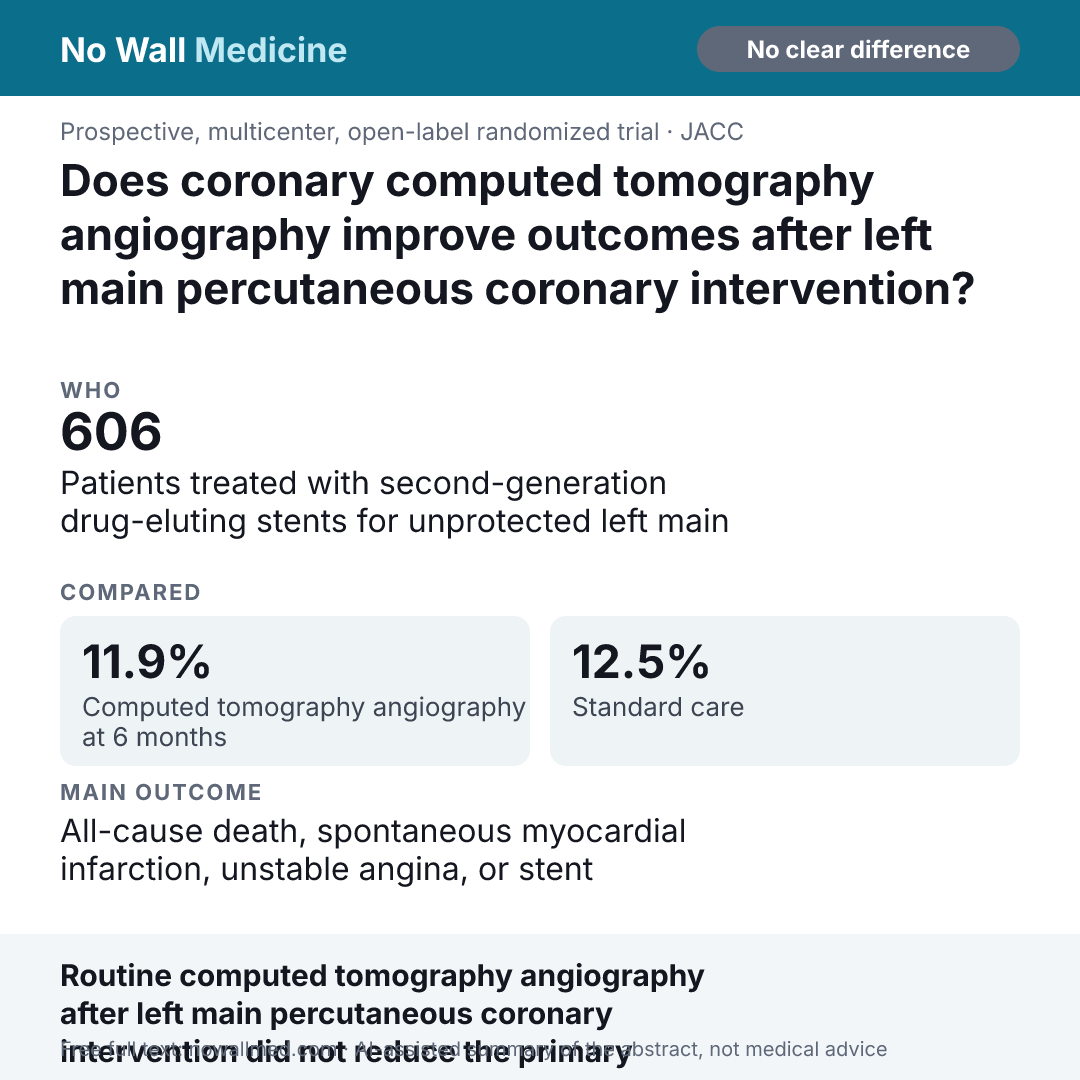
Computed Tomography Angiography or Standard Care After Left Main PCI?
Prospective, multicenter, open-label randomized trialNo clear difference
Does coronary computed tomography angiography improve outcomes after left main percutaneous coronary intervention?
Who
606
Patients treated with second-generation drug-eluting stents for unprotected left main disease · Multicenter
Compared
11.9%Computed tomography angiography at 6 months
12.5%Standard care
Main outcome
All-cause death, spontaneous myocardial infarction, unstable angina, or stent thrombosis
Result: hazard ratio 0.97 (95% CI 0.76-1.23)
Bottom line: Routine computed tomography angiography after left main percutaneous coronary intervention did not reduce the primary composite clinical endpoint.
JACC · 2025-08-31 · Save PNG
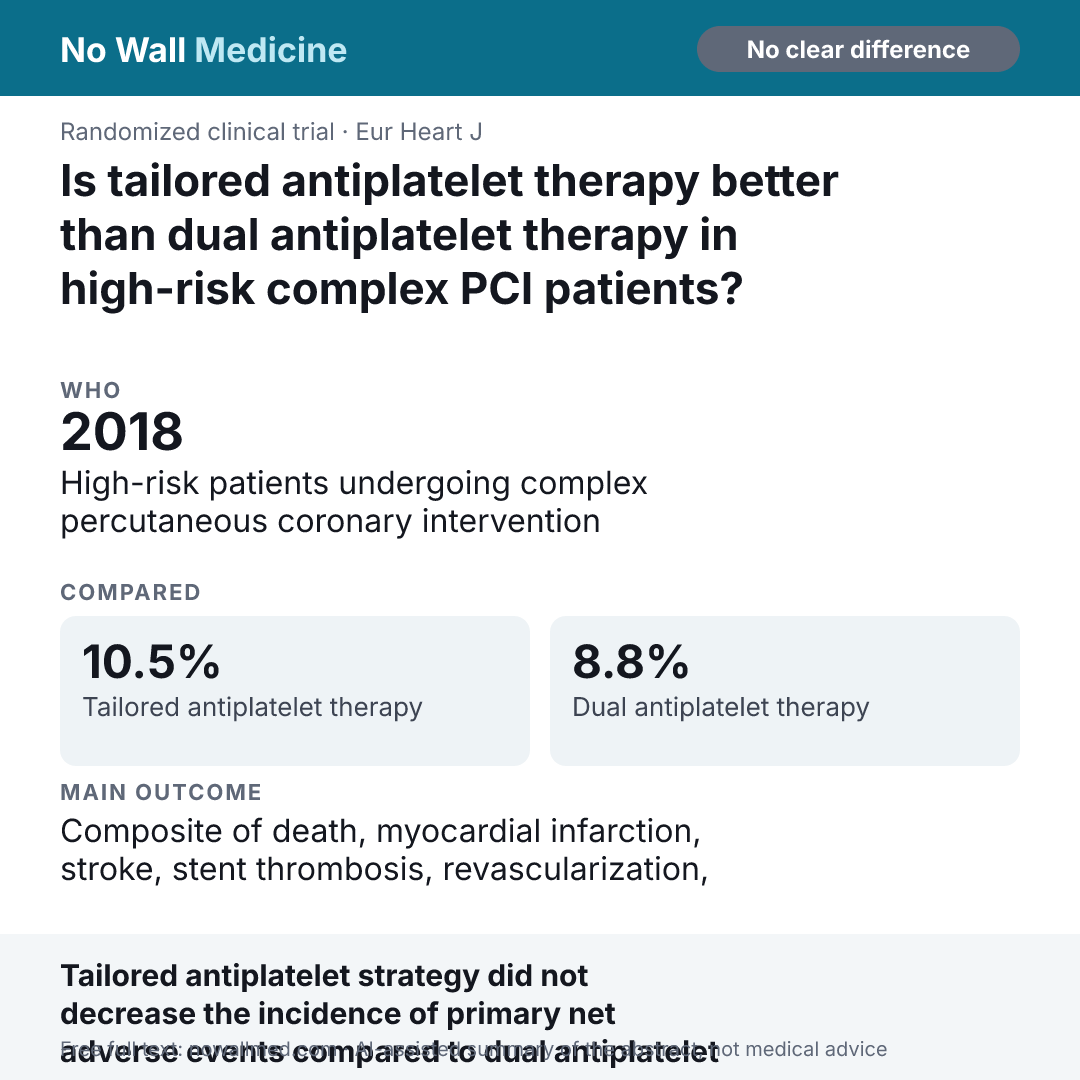
Temporal modulation of antiplatelet therapy in high-risk patients undergoing complex percutaneous coronary intervention: the TAILORED-CHIP randomized clinical trial
Randomized clinical trialNo clear difference
Is tailored antiplatelet therapy better than dual antiplatelet therapy in high-risk complex PCI patients?
Who
2018
High-risk patients undergoing complex percutaneous coronary intervention
Compared
10.5%Tailored antiplatelet therapy
8.8%Dual antiplatelet therapy
Main outcome
Composite of death, myocardial infarction, stroke, stent thrombosis, revascularization, and bleeding
Result: hazard ratio 1.19 (95% CI 0.90-1.58)
Bottom line: Tailored antiplatelet strategy did not decrease the incidence of primary net adverse events compared to dual antiplatelet therapy.
Eur Heart J · 2025-08-31 · Save PNG
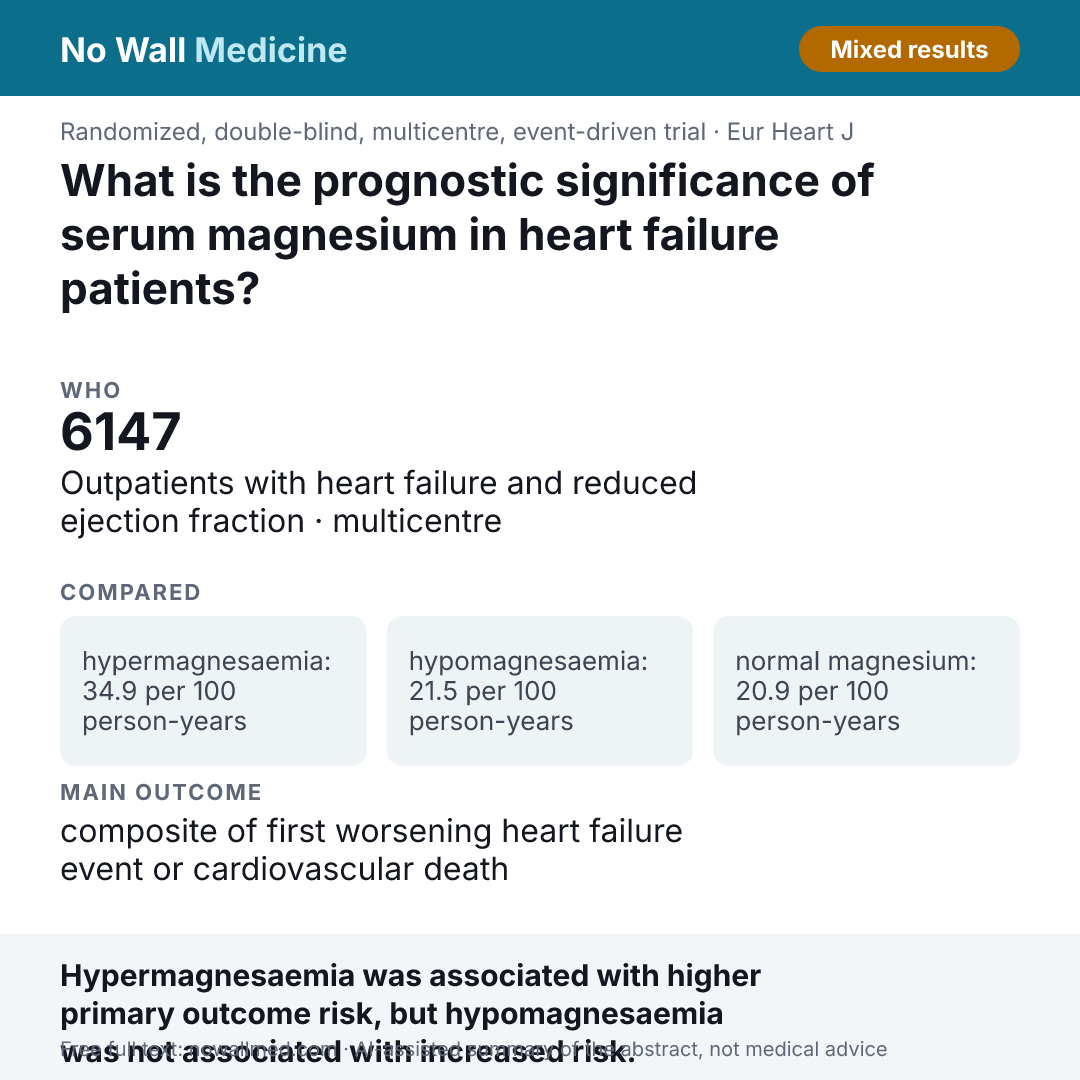
Serum magnesium and outcomes in heart failure with reduced ejection fraction: the GALACTIC-HF trial
Randomized, double-blind, multicentre, event-driven trialMixed results
What is the prognostic significance of serum magnesium in heart failure patients?
Who
6147
Outpatients with heart failure and reduced ejection fraction · multicentre
Compared
hypermagnesaemia: 34.9 per 100 person-years
hypomagnesaemia: 21.5 per 100 person-years
normal magnesium: 20.9 per 100 person-years
Main outcome
composite of first worsening heart failure event or cardiovascular death
Bottom line: Hypermagnesaemia was associated with higher primary outcome risk, but hypomagnesaemia was not associated with increased risk.
Eur Heart J · 2025-08-31 · Save PNG
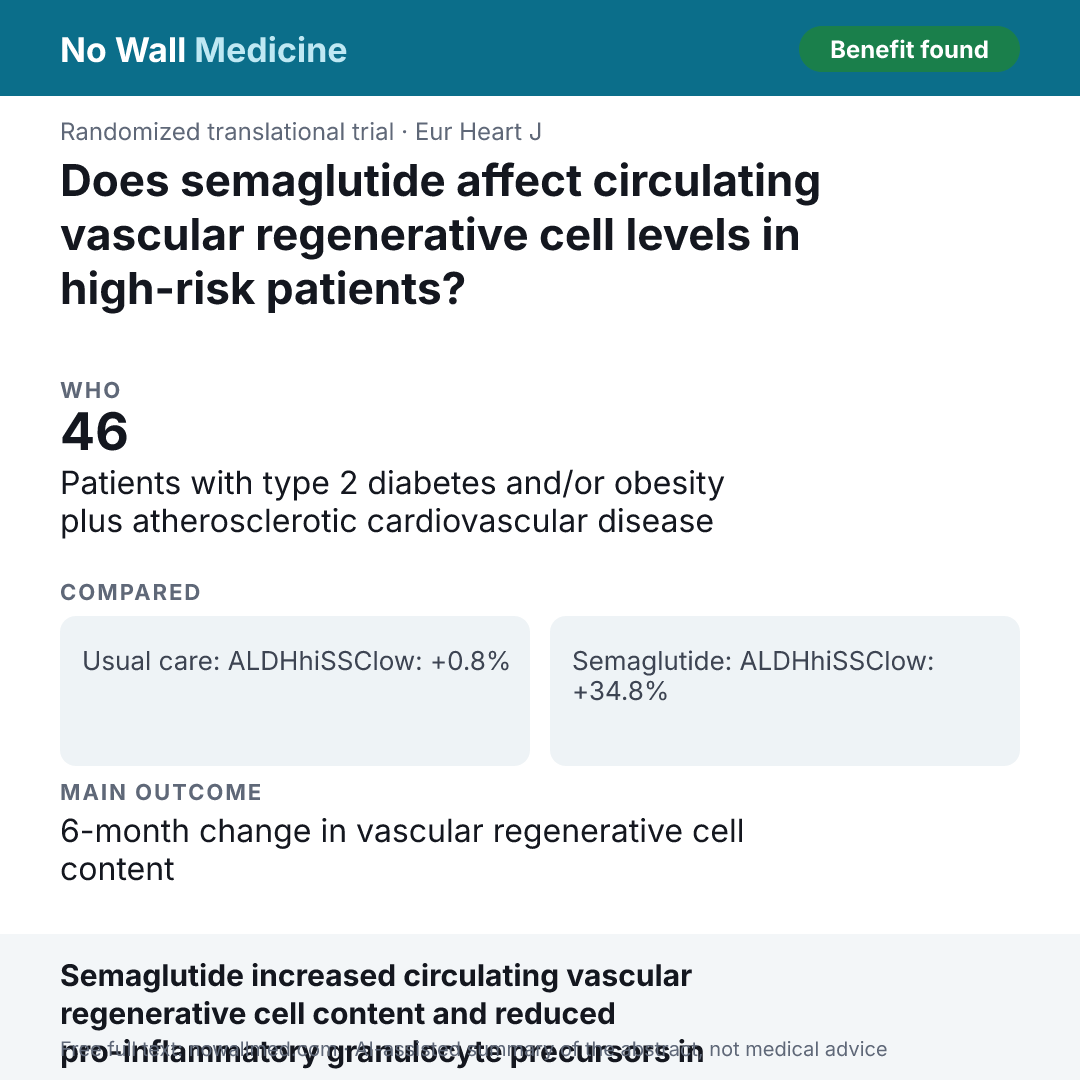
Semaglutide promotes bone marrow-derived progenitor cell flux towards an anti-inflammatory and pro-regenerative profile in high-risk patients: the SEMA-VR CardioLink-15 trial
Randomized translational trialBenefit found
Does semaglutide affect circulating vascular regenerative cell levels in high-risk patients?
Who
46
Patients with type 2 diabetes and/or obesity plus atherosclerotic cardiovascular disease
Compared
Usual care: ALDHhiSSClow: +0.8%
Semaglutide: ALDHhiSSClow: +34.8%
Main outcome
6-month change in vascular regenerative cell content
Bottom line: Semaglutide increased circulating vascular regenerative cell content and reduced pro-inflammatory granulocyte precursors in high-risk patients.
Eur Heart J · 2025-08-31 · Save PNG
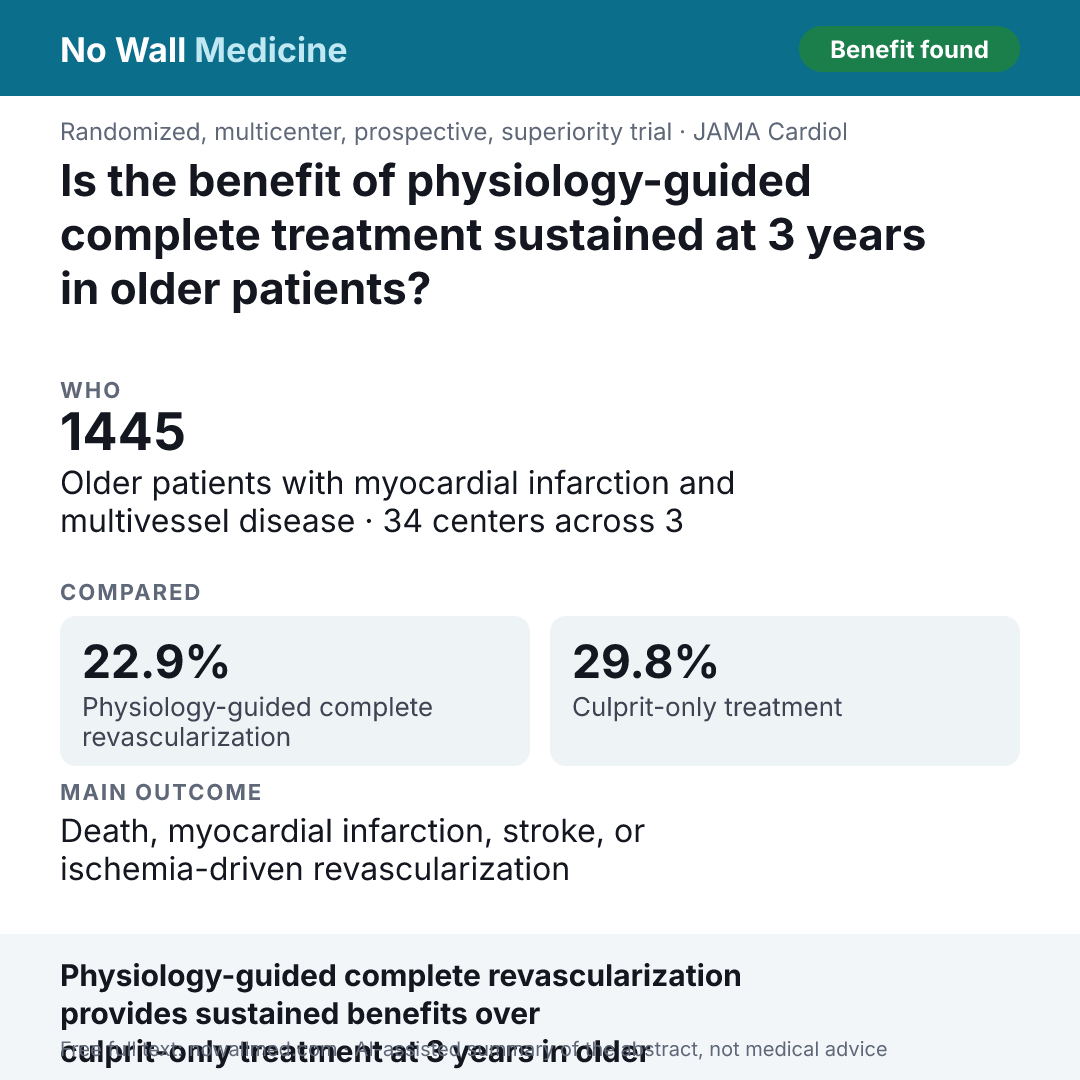
Physiology-Guided Complete Revascularization in Older Patients With Myocardial Infarction: Three-Year Outcomes of a Randomized Clinical Trial
Randomized, multicenter, prospective, superiority trialBenefit found
Is the benefit of physiology-guided complete treatment sustained at 3 years in older patients?
Who
1445
Older patients with myocardial infarction and multivessel disease · 34 centers across 3 countries
Compared
22.9%Physiology-guided complete revascularization
29.8%Culprit-only treatment
Main outcome
Death, myocardial infarction, stroke, or ischemia-driven revascularization
Result: hazard ratio 0.72 (95% CI 0.58-0.88)
Bottom line: Physiology-guided complete revascularization provides sustained benefits over culprit-only treatment at 3 years in older patients.
JAMA Cardiol · 2025-08-31 · Save PNG
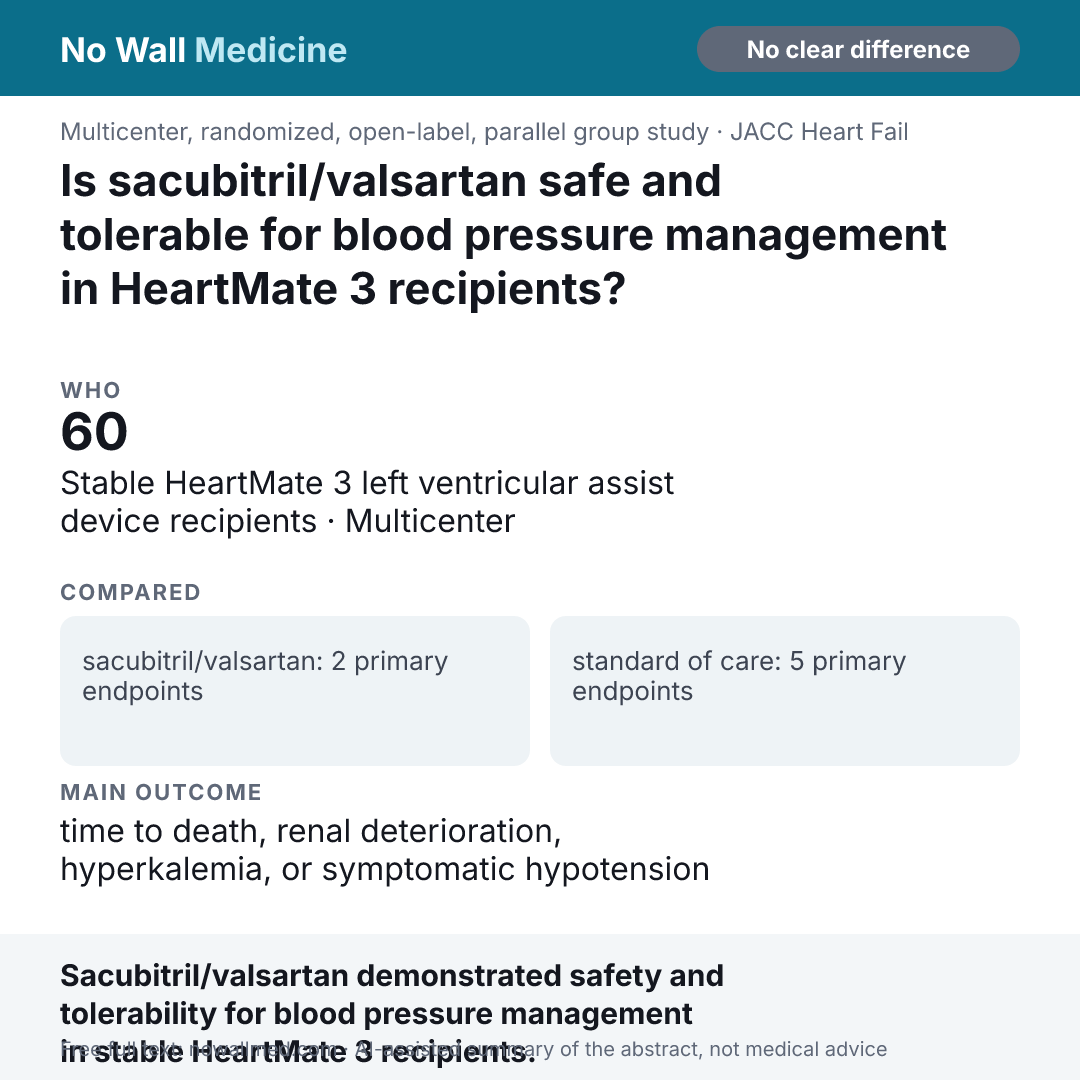
Angiotensin-Neprilysin Inhibition and Left Ventricular Assist Device Therapy: Primary Results of the ENVAD-HF Trial
Multicenter, randomized, open-label, parallel group studyNo clear difference
Is sacubitril/valsartan safe and tolerable for blood pressure management in HeartMate 3 recipients?
Who
60
Stable HeartMate 3 left ventricular assist device recipients · Multicenter
Compared
sacubitril/valsartan: 2 primary endpoints
standard of care: 5 primary endpoints
Main outcome
time to death, renal deterioration, hyperkalemia, or symptomatic hypotension
Result: hazard ratio 0.42 (95% CI: 0.08-2.18)
Bottom line: Sacubitril/valsartan demonstrated safety and tolerability for blood pressure management in stable HeartMate 3 recipients.
JACC Heart Fail · 2025-08-31 · Save PNG
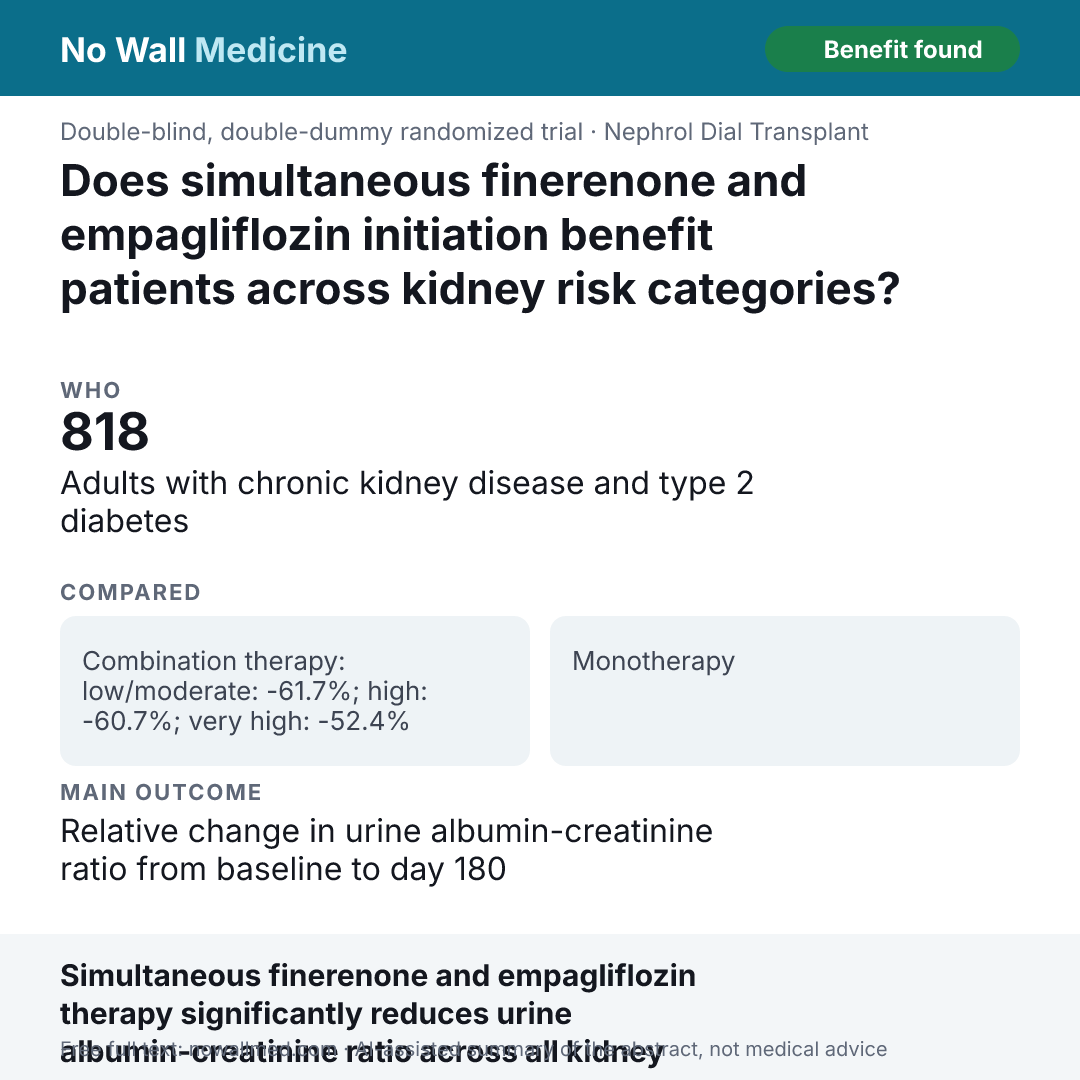
Simultaneous initiation of finerenone and empagliflozin across the spectrum of kidney risk in the CONFIDENCE trial
Double-blind, double-dummy randomized trialBenefit found
Does simultaneous finerenone and empagliflozin initiation benefit patients across kidney risk categories?
Who
818
Adults with chronic kidney disease and type 2 diabetes
Compared
Combination therapy: low/moderate: -61.7%; high: -60.7%; very high: -52.4%
Monotherapy
Main outcome
Relative change in urine albumin-creatinine ratio from baseline to day 180
Bottom line: Simultaneous finerenone and empagliflozin therapy significantly reduces urine albumin-creatinine ratio across all kidney disease risk categories.
Nephrol Dial Transplant · 2025-08-31 · Save PNG
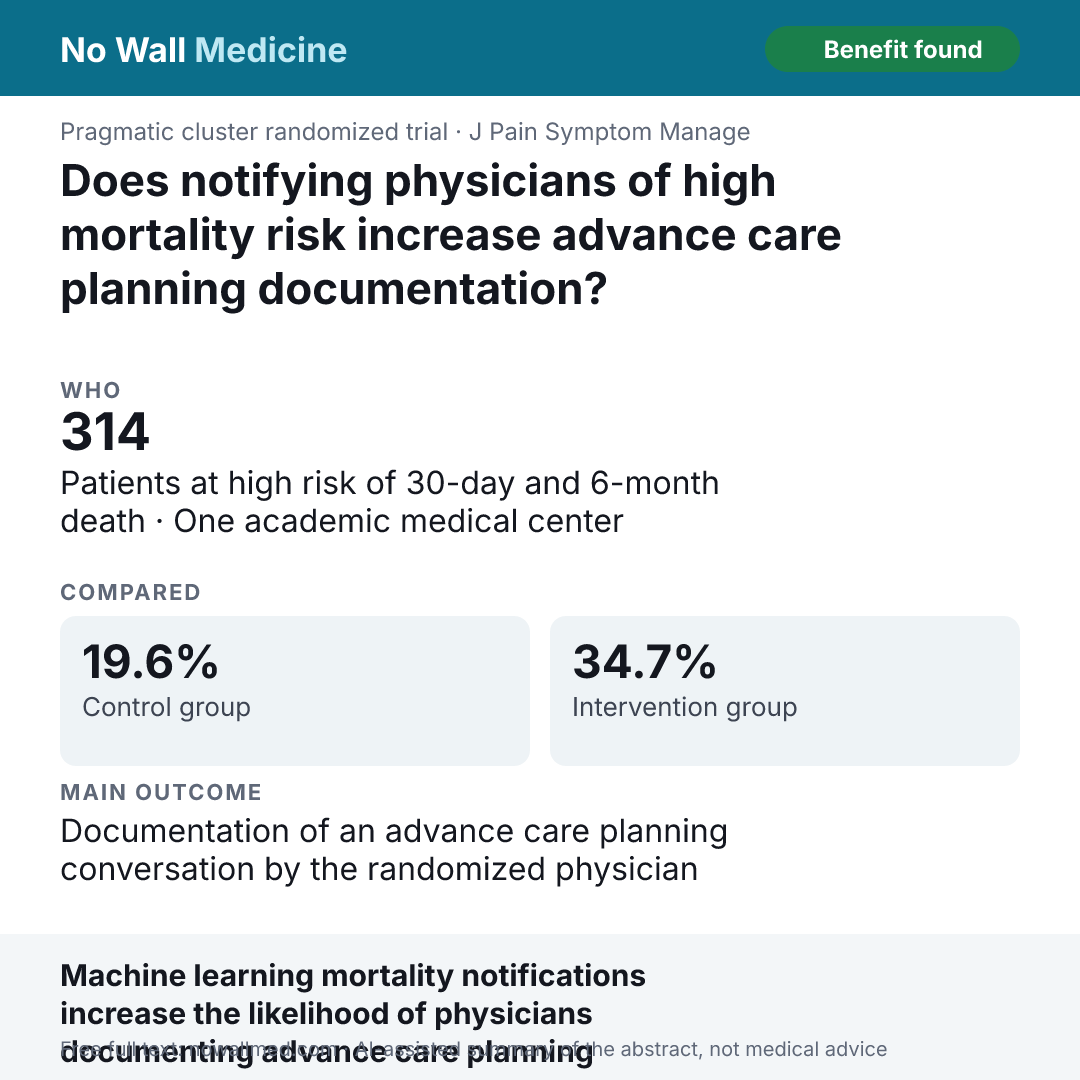
Impact of Prognostic Notifications on Inpatient Advance Care Planning: A Cluster Randomized Trial
Pragmatic cluster randomized trialBenefit found
Does notifying physicians of high mortality risk increase advance care planning documentation?
Who
314
Patients at high risk of 30-day and 6-month death · One academic medical center
Compared
19.6%Control group
34.7%Intervention group
Main outcome
Documentation of an advance care planning conversation by the randomized physician
Result: odds ratio 2.04 (95% CI 1.16-3.59)
Bottom line: Machine learning mortality notifications increase the likelihood of physicians documenting advance care planning conversations during hospitalization.
J Pain Symptom Manage · 2025-08-31 · Save PNG
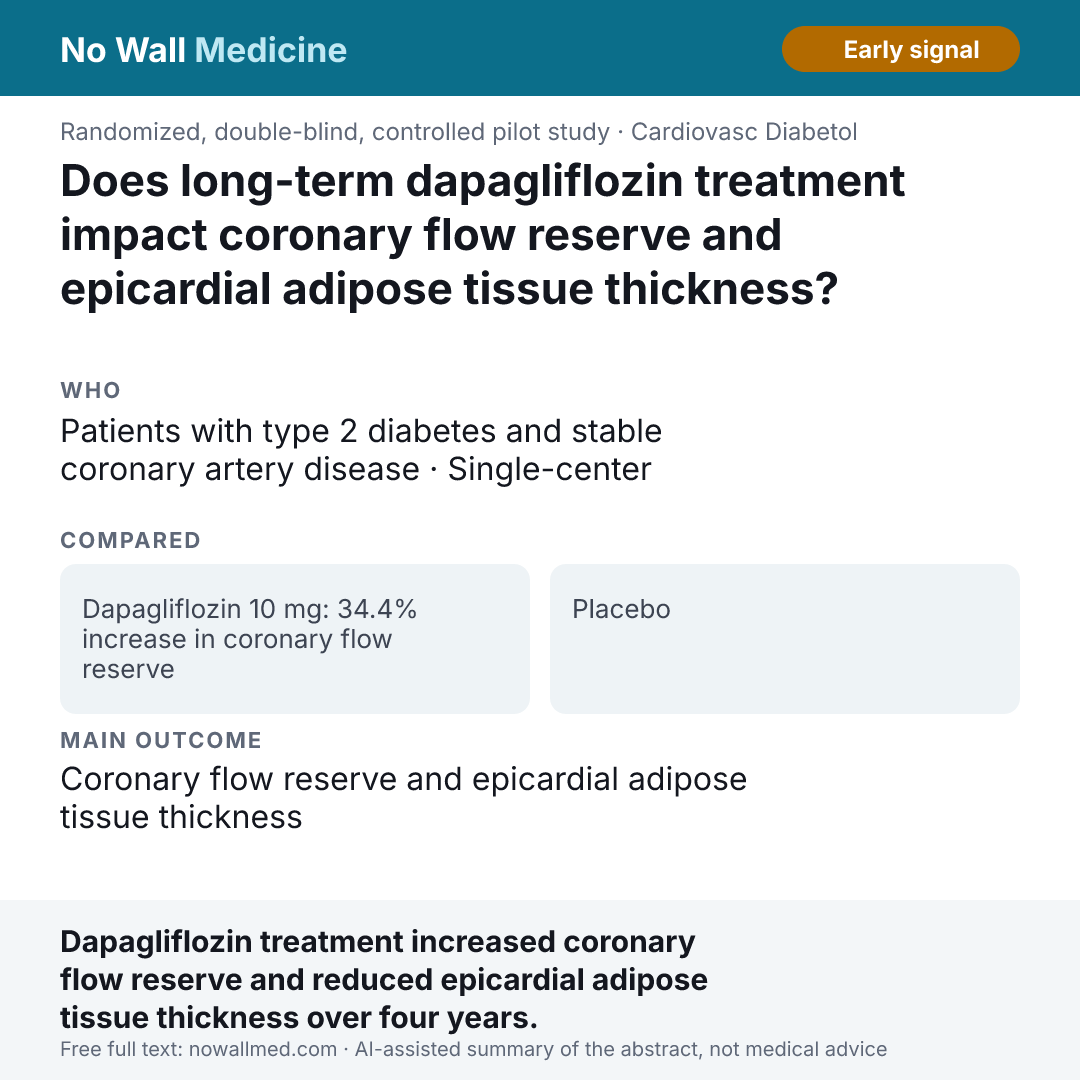
Coronary flow reserve increase after 4-year dapagliflozin treatment in patients with type 2 diabetes: the DAPAHEART follow-up study
Randomized, double-blind, controlled pilot studyEarly signal
Does long-term dapagliflozin treatment impact coronary flow reserve and epicardial adipose tissue thickness?
Who
Patients with type 2 diabetes and stable coronary artery disease · Single-center
Compared
Dapagliflozin 10 mg: 34.4% increase in coronary flow reserve
Placebo
Main outcome
Coronary flow reserve and epicardial adipose tissue thickness
Bottom line: Dapagliflozin treatment increased coronary flow reserve and reduced epicardial adipose tissue thickness over four years.
Limitation: This was a pilot study.
Cardiovasc Diabetol · 2025-08-31 · Save PNG
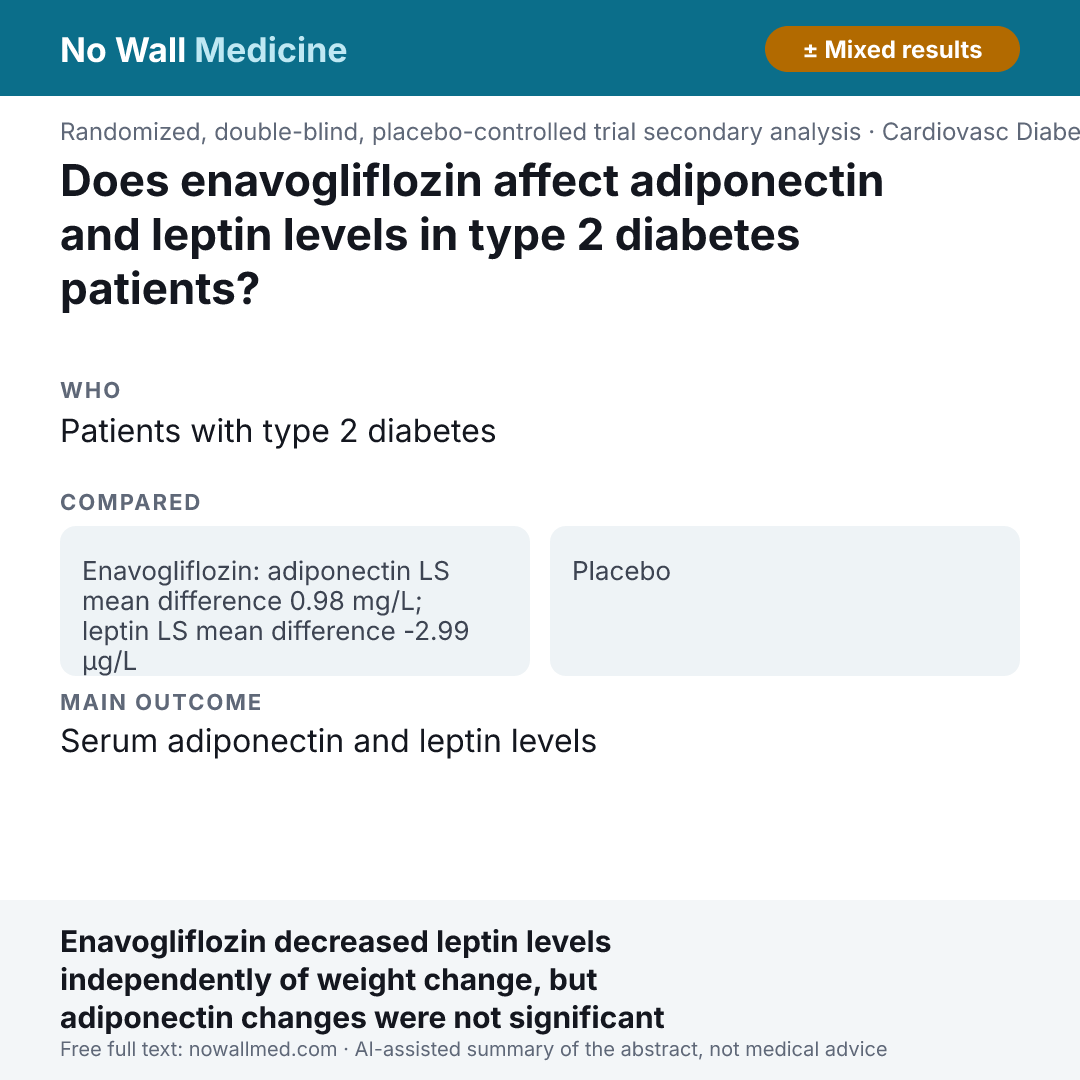
Weight-independent amelioration of adipokine profile by enavogliflozin, a selective SGLT2 inhibitor, in patients with type 2 diabetes
Randomized, double-blind, placebo-controlled trial secondary analysisMixed results
Does enavogliflozin affect adiponectin and leptin levels in type 2 diabetes patients?
Who
Patients with type 2 diabetes
Compared
Enavogliflozin: adiponectin LS mean difference 0.98 mg/L; leptin LS mean difference -2.99 µg/L
Placebo
Main outcome
Serum adiponectin and leptin levels
Bottom line: Enavogliflozin decreased leptin levels independently of weight change, but adiponectin changes were not significant after adjusting for weight.
Limitation: This was a secondary analysis of a phase III trial.
Cardiovasc Diabetol · 2025-08-31 · Save PNG
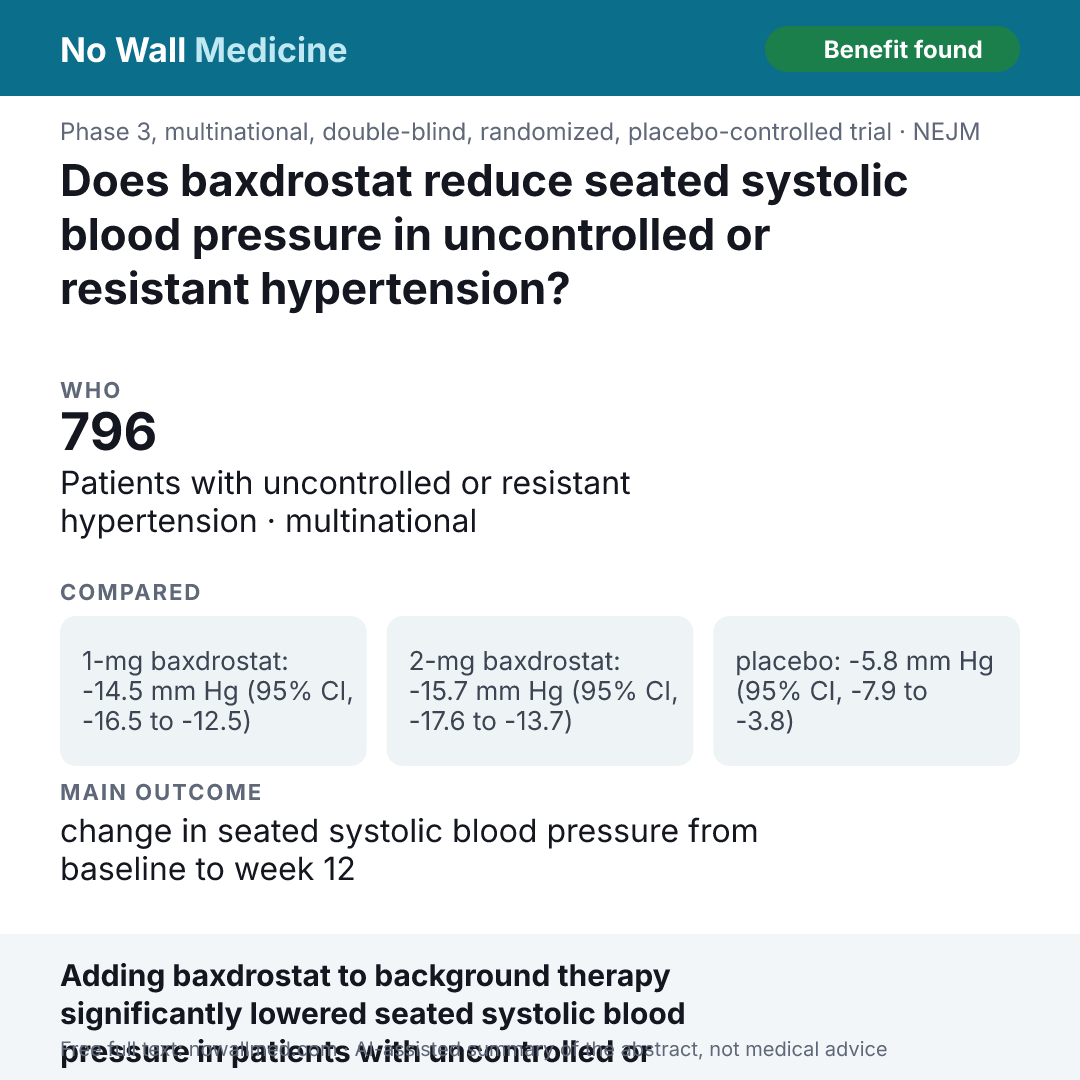
Efficacy and Safety of Baxdrostat in Uncontrolled and Resistant Hypertension
Phase 3, multinational, double-blind, randomized, placebo-controlled trialBenefit found
Does baxdrostat reduce seated systolic blood pressure in uncontrolled or resistant hypertension?
Who
796
Patients with uncontrolled or resistant hypertension · multinational
Compared
1-mg baxdrostat: -14.5 mm Hg (95% CI, -16.5 to -12.5)
2-mg baxdrostat: -15.7 mm Hg (95% CI, -17.6 to -13.7)
placebo: -5.8 mm Hg (95% CI, -7.9 to -3.8)
Main outcome
change in seated systolic blood pressure from baseline to week 12
Result: -8.7 mm Hg (95% CI, -11.5 to -5.8) with 1-mg and -9.8 mm Hg (95% CI, -12.6 to -7.0) with 2-mg
Bottom line: Adding baxdrostat to background therapy significantly lowered seated systolic blood pressure in patients with uncontrolled or resistant hypertension.
Funded by: AstraZeneca and others
NEJM · 2025-08-30 · Save PNG
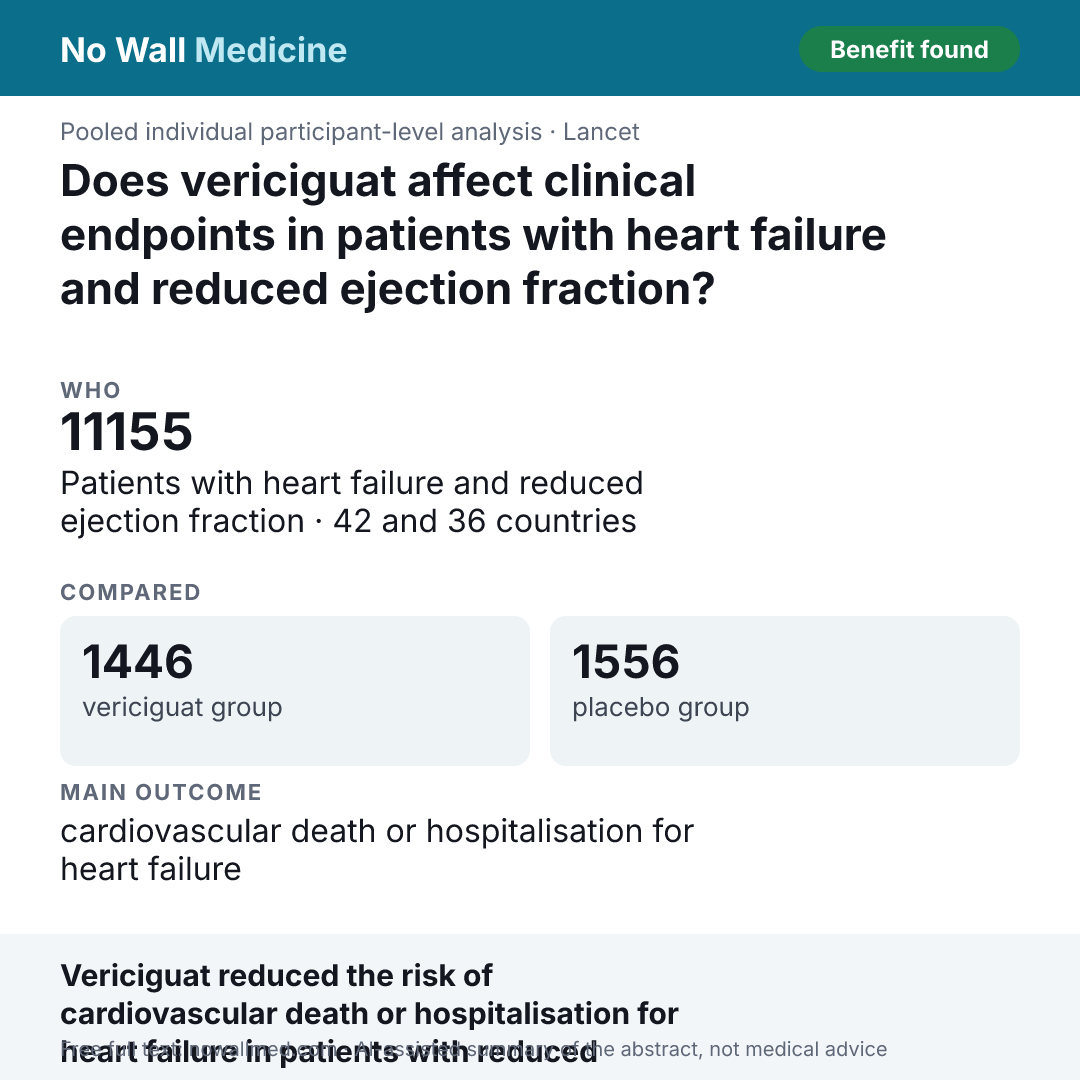
Vericiguat for patients with heart failure and reduced ejection fraction across the risk spectrum: an individual participant data analysis of the VICTORIA and VICTOR trials
Pooled individual participant-level analysisBenefit found
Does vericiguat affect clinical endpoints in patients with heart failure and reduced ejection fraction?
Who
11155
Patients with heart failure and reduced ejection fraction · 42 and 36 countries
Compared
1446vericiguat group (25·9%)
1556placebo group (27·9%)
Main outcome
cardiovascular death or hospitalisation for heart failure
Result: hazard ratio 0·91 (95% CI 0·85-0·98)
Bottom line: Vericiguat reduced the risk of cardiovascular death or hospitalisation for heart failure in patients with reduced ejection fraction.
Funded by: Merck Sharp & Dohme and Bayer
Lancet · 2025-08-30 · Save PNG
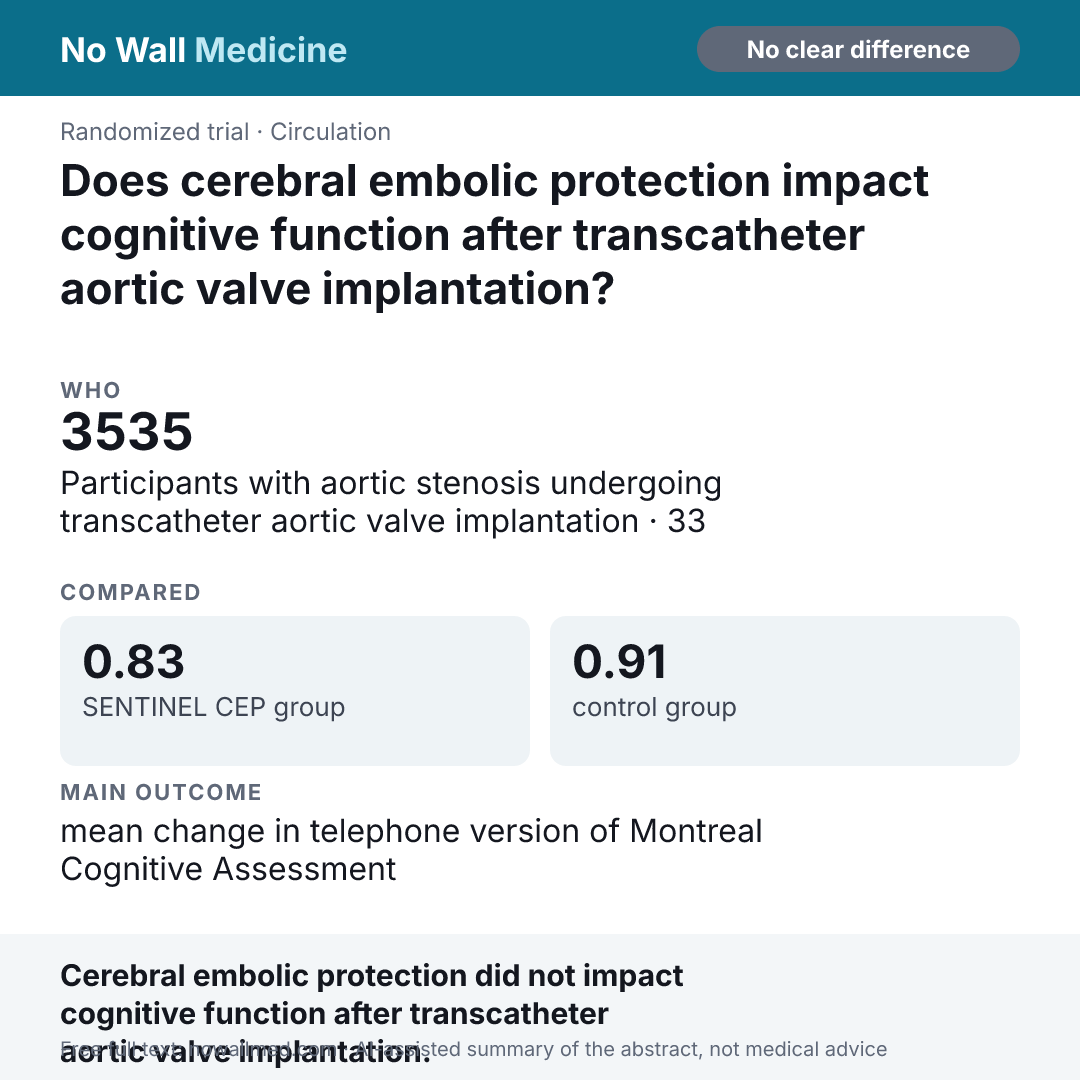
Impact of Cerebral Embolic Protection on Cognitive Function After Transcatheter Aortic Valve Implantation: Data From the BHF PROTECT-TAVI Randomized Trial
Randomized trialNo clear difference
Does cerebral embolic protection impact cognitive function after transcatheter aortic valve implantation?
Who
3535
Participants with aortic stenosis undergoing transcatheter aortic valve implantation · 33 centers in the United Kingdom
Compared
0.83SENTINEL CEP group (95% CI, 0.70-0.96)
0.91control group (95% CI, 0.79-1.04)
Main outcome
mean change in telephone version of Montreal Cognitive Assessment
Result: -0.07 (95% CI, -0.22 to 0.09)
Bottom line: Cerebral embolic protection did not impact cognitive function after transcatheter aortic valve implantation.
Circulation · 2025-08-30 · Save PNG
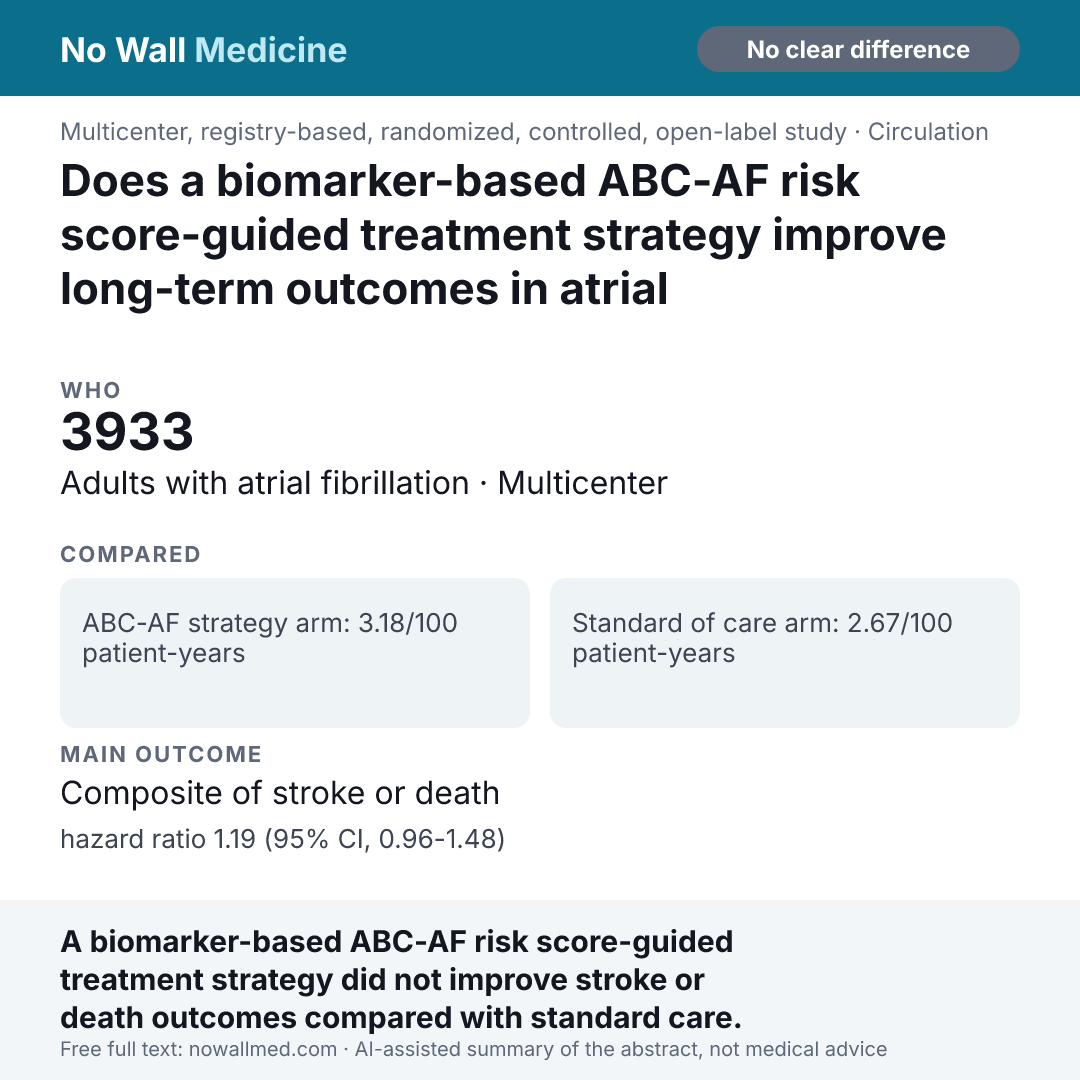
Biomarker-Based ABC-AF Risk Scores for Personalized Treatment to Reduce Stroke or Death in Atrial Fibrillation: A Registry-Based, Multicenter, Randomized, Controlled Study
Multicenter, registry-based, randomized, controlled, open-label studyNo clear difference
Does a biomarker-based ABC-AF risk score-guided treatment strategy improve long-term outcomes in atrial fibrillation?
Who
3933
Adults with atrial fibrillation · Multicenter
Compared
ABC-AF strategy arm: 3.18/100 patient-years
Standard of care arm: 2.67/100 patient-years
Main outcome
Composite of stroke or death
Result: hazard ratio 1.19 (95% CI, 0.96-1.48)
Bottom line: A biomarker-based ABC-AF risk score-guided treatment strategy did not improve stroke or death outcomes compared with standard care.
Circulation · 2025-08-30 · Save PNG