Visual abstracts
New randomized trials and meta-analyses from leading journals at a glance: who was studied, what was compared, and what was found. Every paper is free to read in full.
All specialtiesCardiology 4877Oncology 4138Gastroenterology & Hepatology 1942Infectious Disease 3837Neurology 1905Psychiatry & Mental Health 2273Pulmonology 2143Critical Care 1365Endocrinology & Diabetes 2580Pediatrics 2980Surgery 2559Orthopedics & Sports Medicine 931Neurosurgery 537Cardiothoracic & Vascular Surgery 674Plastic & Reconstructive Surgery 591Nephrology 1133Rheumatology 823Hematology 1109Dermatology 621Ophthalmology 543Obstetrics & Gynecology 1686Public & Global Health 1058Radiology & Imaging 648Anesthesiology 986Urology 764ENT (Otolaryngology) 503Emergency Medicine 511Allergy & Immunology 313Geriatrics 981Family Medicine & Primary Care 562Medical Genetics & Genomics 676Pathology & Laboratory Medicine 159Physical Medicine & Rehabilitation 757Palliative Care 444Nutrition 1588Digital Health & AI 2201General Medicine 321
Global age-stratified seroprevalence of enterovirus D68: a systematic literature review
Systematic literature reviewMixed results
What is the global age-stratified seroprevalence of enterovirus D68?
Who
Global populations across different age groups · Six countries
Compared
Age under 20 years: roughly 100%
Adulthood: no sign of decline
Main outcome
Age-stratified seroprevalence of enterovirus D68
Bottom line: Enterovirus D68 seroprevalence increases with age, reaching approximately 100% by age 20 with increasing global transmission.
Lancet Microbe · 2024-09-24Download image

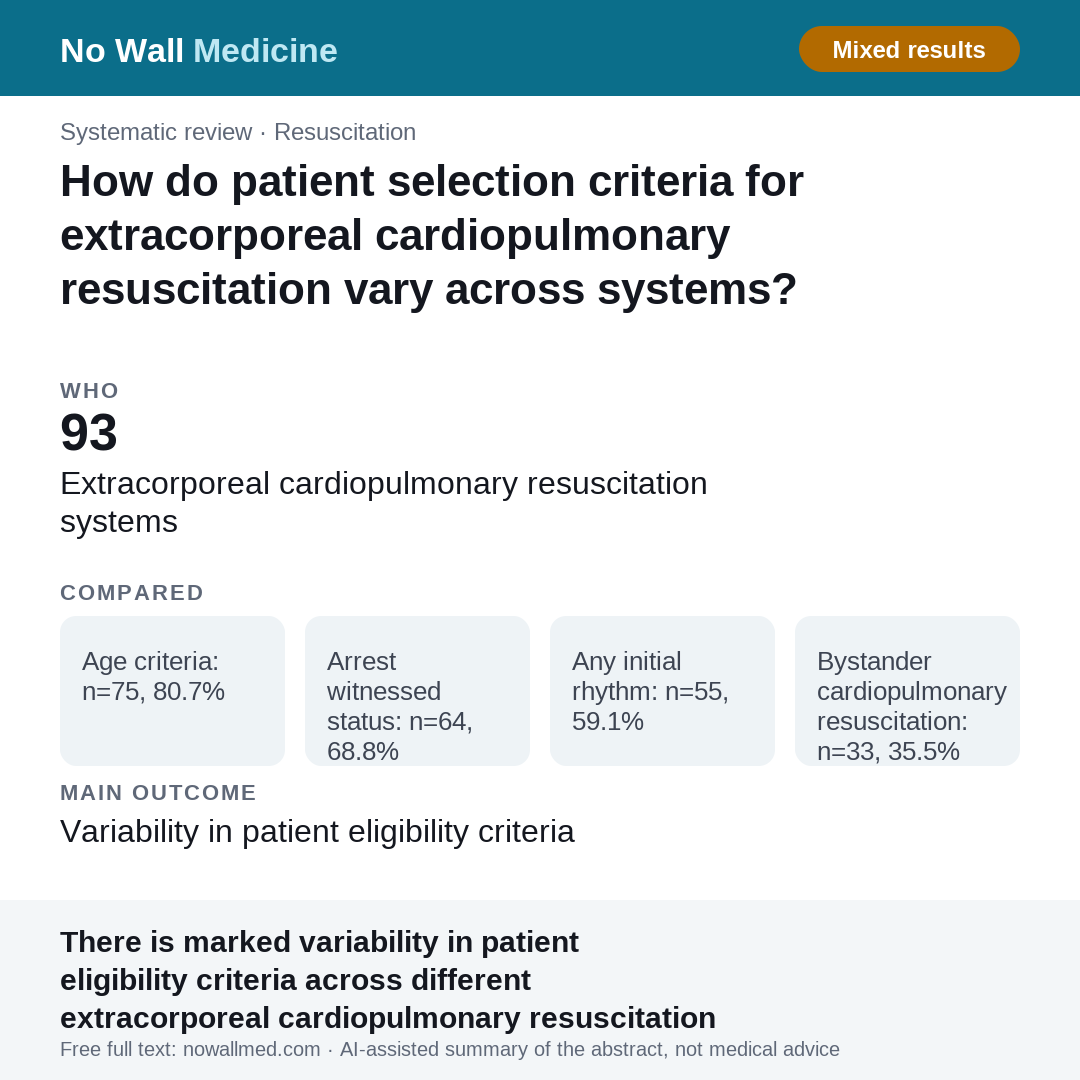
Variability in patient selection criteria across extracorporeal cardiopulmonary resuscitation (ECPR) systems: A systematic review
Systematic reviewMixed results
How do patient selection criteria for extracorporeal cardiopulmonary resuscitation vary across systems?
Who
93
Extracorporeal cardiopulmonary resuscitation systems
Compared
Age criteria: n=75, 80.7%
Arrest witnessed status: n=64, 68.8%
Any initial rhythm: n=55, 59.1%
Bystander cardiopulmonary resuscitation: n=33, 35.5%
Main outcome
Variability in patient eligibility criteria
Bottom line: There is marked variability in patient eligibility criteria across different extracorporeal cardiopulmonary resuscitation systems.
Resuscitation · 2024-09-24Download image
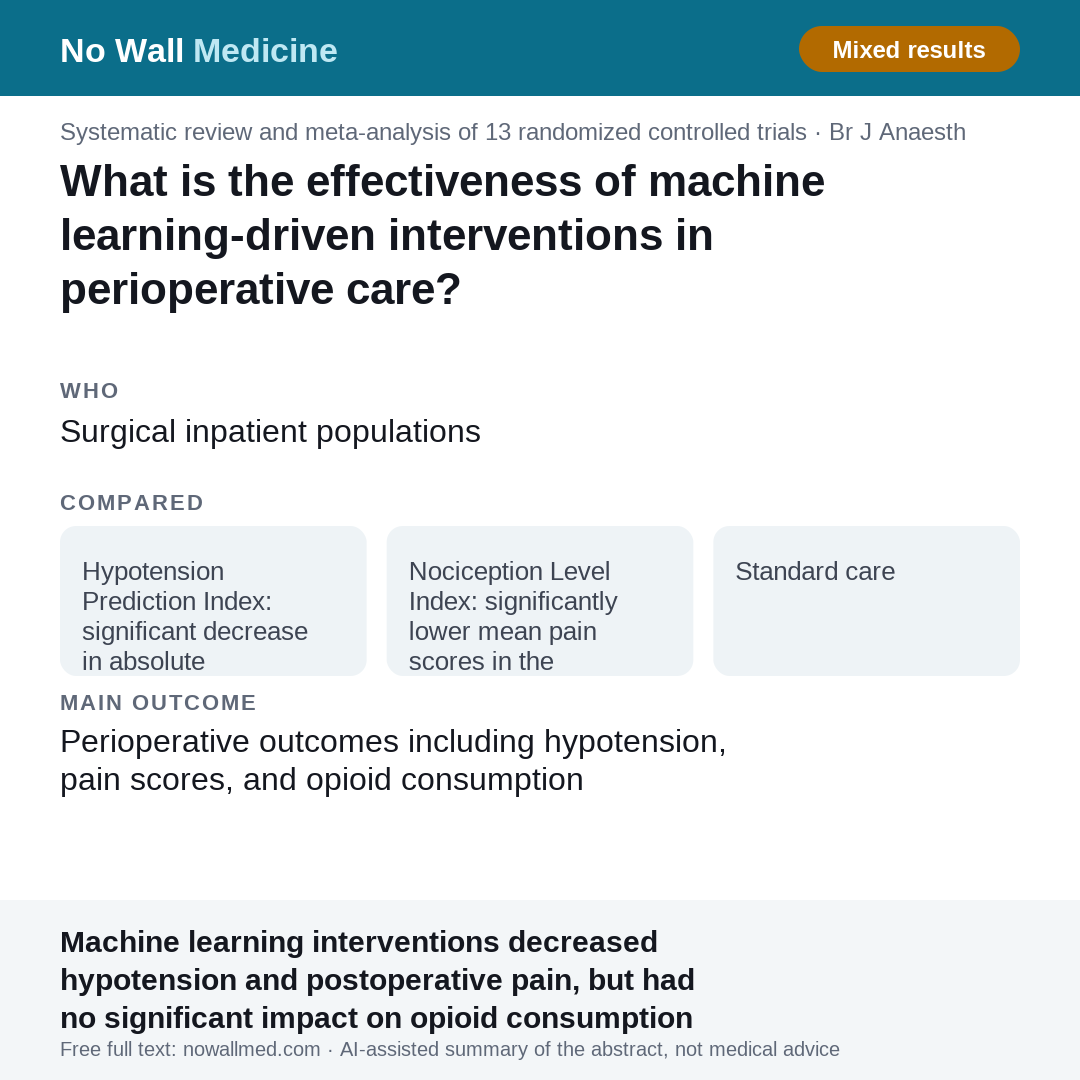
Machine learning-augmented interventions in perioperative care: a systematic review and meta-analysis
Systematic review and meta-analysis of 13 randomized controlled trialsMixed results
What is the effectiveness of machine learning-driven interventions in perioperative care?
Who
Surgical inpatient populations
Compared
Hypotension Prediction Index: significant decrease in absolute hypotension (n=421, P=0.003, I2=75%) and relative hypotension (n=208, P<0.0001, I2=0%)
Nociception Level Index: significantly lower mean pain scores in the post-anaesthesia care unit (n=191, P=0.004, I2=19%)
Standard care
Main outcome
Perioperative outcomes including hypotension, pain scores, and opioid consumption
Bottom line: Machine learning interventions decreased hypotension and postoperative pain, but had no significant impact on opioid consumption or hospital stay.
Br J Anaesth · 2024-09-24Download image
Dupilumab Versus Mepolizumab for Chronic Rhinosinusitis With Nasal Polyposis: An Indirect Treatment Comparison
Indirect treatment comparisonBenefit found
Is dupilumab more effective than mepolizumab for chronic rhinosinusitis with nasal polyposis?
Who
Patients with chronic rhinosinusitis with nasal polyposis
Compared
Dupilumab: significantly greater improvements in NPS, NC, LOS, UPSIT, and VAS
Mepolizumab
Main outcome
Chronic rhinosinusitis with nasal polyposis related outcomes
Bottom line: Dupilumab was associated with greater improvements in chronic rhinosinusitis with nasal polyposis outcomes versus mepolizumab.
J Allergy Clin Immunol Pract · 2024-09-24Download image

Chest Pain in Primary Care: A Systematic Review of Risk Stratification Tools to Rule Out Acute Coronary Syndrome
Systematic reviewMixed results
How effective are risk stratification tools for ruling out acute coronary syndrome in primary care?
Who
Adult patients with acute chest pain in primary care settings · Primary care settings
Compared
Clinical decision rules without troponin: sensitivity 75.0% to 97.0% and negative predictive value 82.4% to 99.7%
High-sensitivity troponin strategies: sensitivity 83.3% to 100% and negative predictive value 98.8% to 100%
Main outcome
Performance of tools for ruling out acute coronary syndrome
Bottom line: High-sensitivity troponin strategies are promising, but clinical decision rules without troponin are insufficient to rule out acute coronary syndrome.
Limitation: Studies on high-sensitivity troponin strategies are limited and need further prospective validation.
Ann Fam Med · 2024-09-24Download image

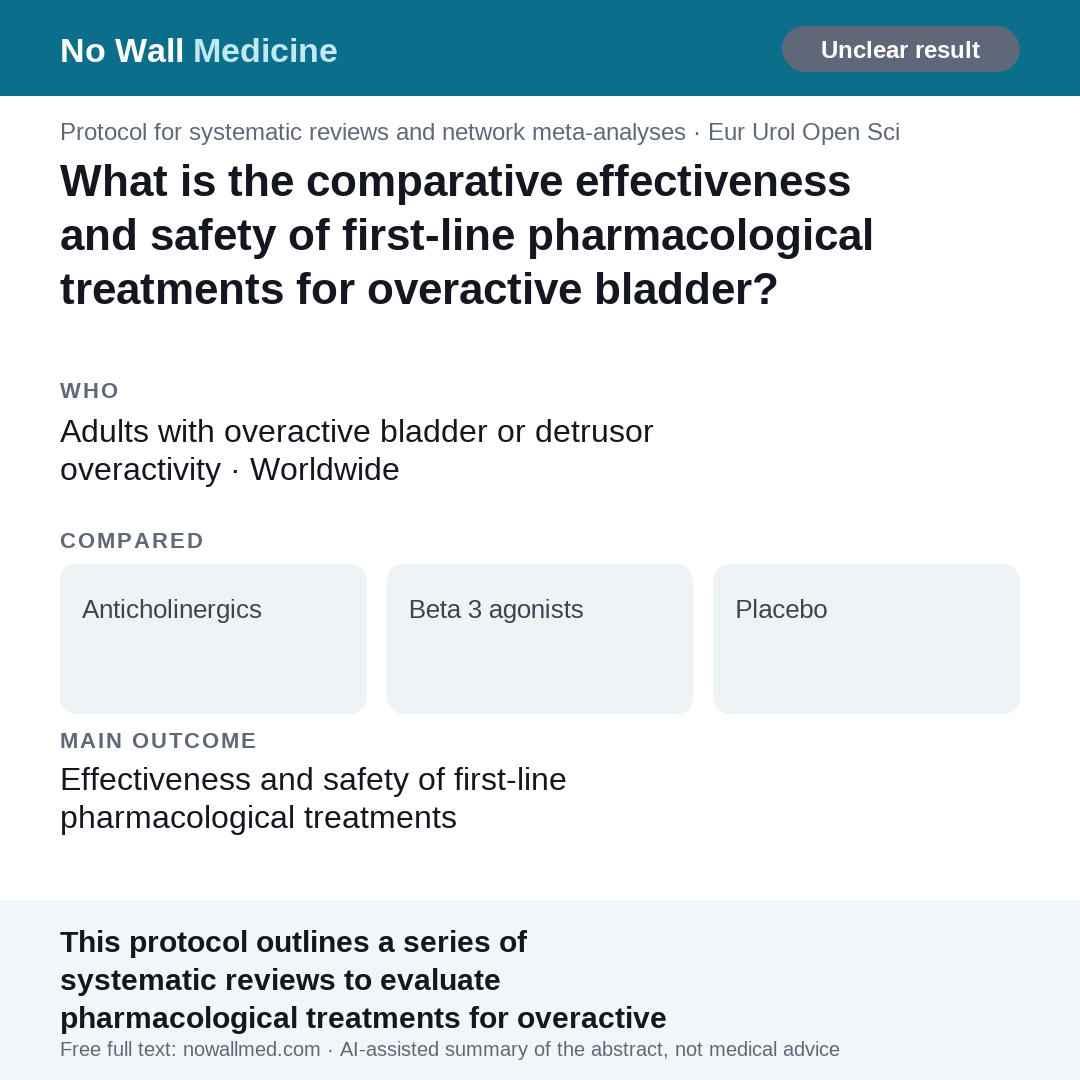
Protocol for a Series of Systematic Reviews and Network Meta-analyses of Randomized Controlled Trials of Medications for Patients with Overactive Bladder Symptoms
Protocol for systematic reviews and network meta-analysesUnclear result
What is the comparative effectiveness and safety of first-line pharmacological treatments for overactive bladder?
Who
Adults with overactive bladder or detrusor overactivity · Worldwide
Compared
Anticholinergics
Beta 3 agonists
Placebo
Main outcome
Effectiveness and safety of first-line pharmacological treatments
Bottom line: This protocol outlines a series of systematic reviews to evaluate pharmacological treatments for overactive bladder.
Eur Urol Open Sci · 2024-09-24Download image
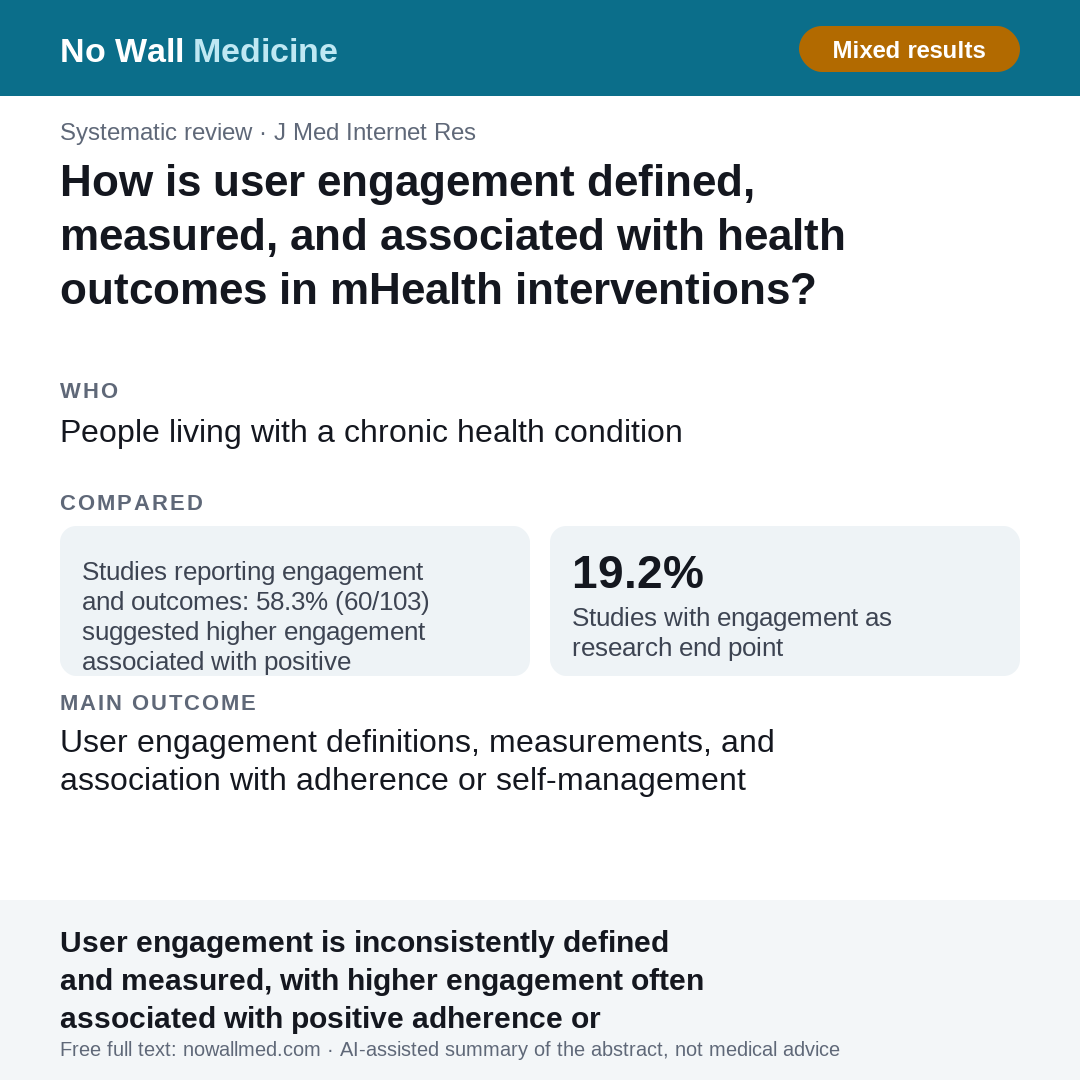
User Engagement With mHealth Interventions to Promote Treatment Adherence and Self-Management in People With Chronic Health Conditions: Systematic Review
Systematic reviewMixed results
How is user engagement defined, measured, and associated with health outcomes in mHealth interventions?
Who
292
People living with a chronic health condition
Compared
Studies reporting engagement and outcomes: 58.3% (60/103) suggested higher engagement associated with positive outcomes
19.2%Studies with engagement as research end point (56/292)
Main outcome
User engagement definitions, measurements, and association with adherence or self-management
Bottom line: User engagement is inconsistently defined and measured, with higher engagement often associated with positive adherence or self-management outcomes.
Limitation: Significant variability in definitions, reliance on log-in data, and infrequent evaluation of engagement over time.
J Med Internet Res · 2024-09-24Download image
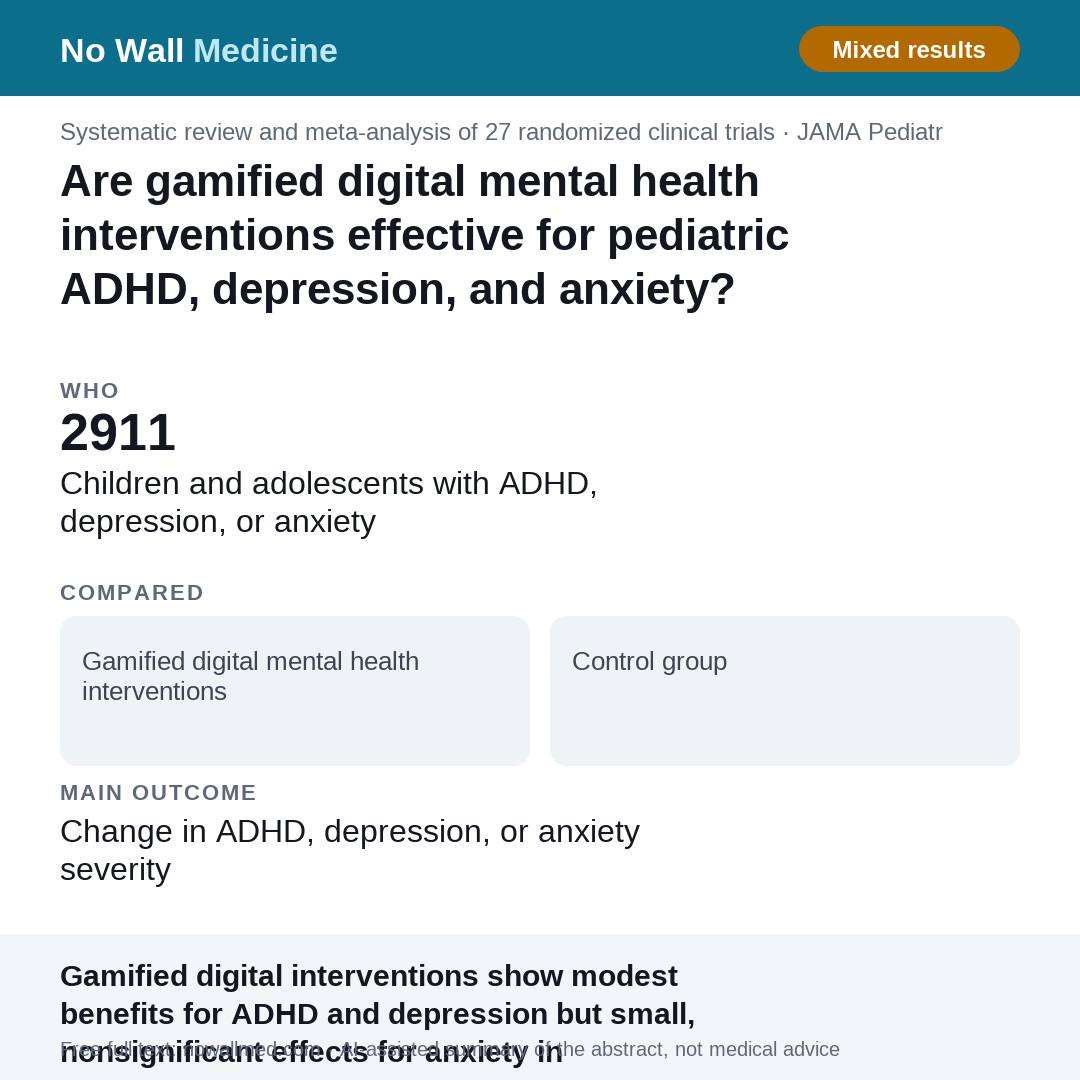
Efficacy of Gamified Digital Mental Health Interventions for Pediatric Mental Health Conditions: A Systematic Review and Meta-Analysis
Systematic review and meta-analysis of 27 randomized clinical trialsMixed results
Are gamified digital mental health interventions effective for pediatric ADHD, depression, and anxiety?
Who
2911
Children and adolescents with ADHD, depression, or anxiety
Compared
Gamified digital mental health interventions
Control group
Main outcome
Change in ADHD, depression, or anxiety severity
Result: ADHD g 0.28 (95% CI 0.09 to 0.48), depression g 0.28 (95% CI 0.08 to 0.47), anxiety g 0.07 (95% CI -0.02 to 0.17)
Bottom line: Gamified digital interventions show modest benefits for ADHD and depression but small, nonsignificant effects for anxiety in children.
JAMA Pediatr · 2024-09-23Download image
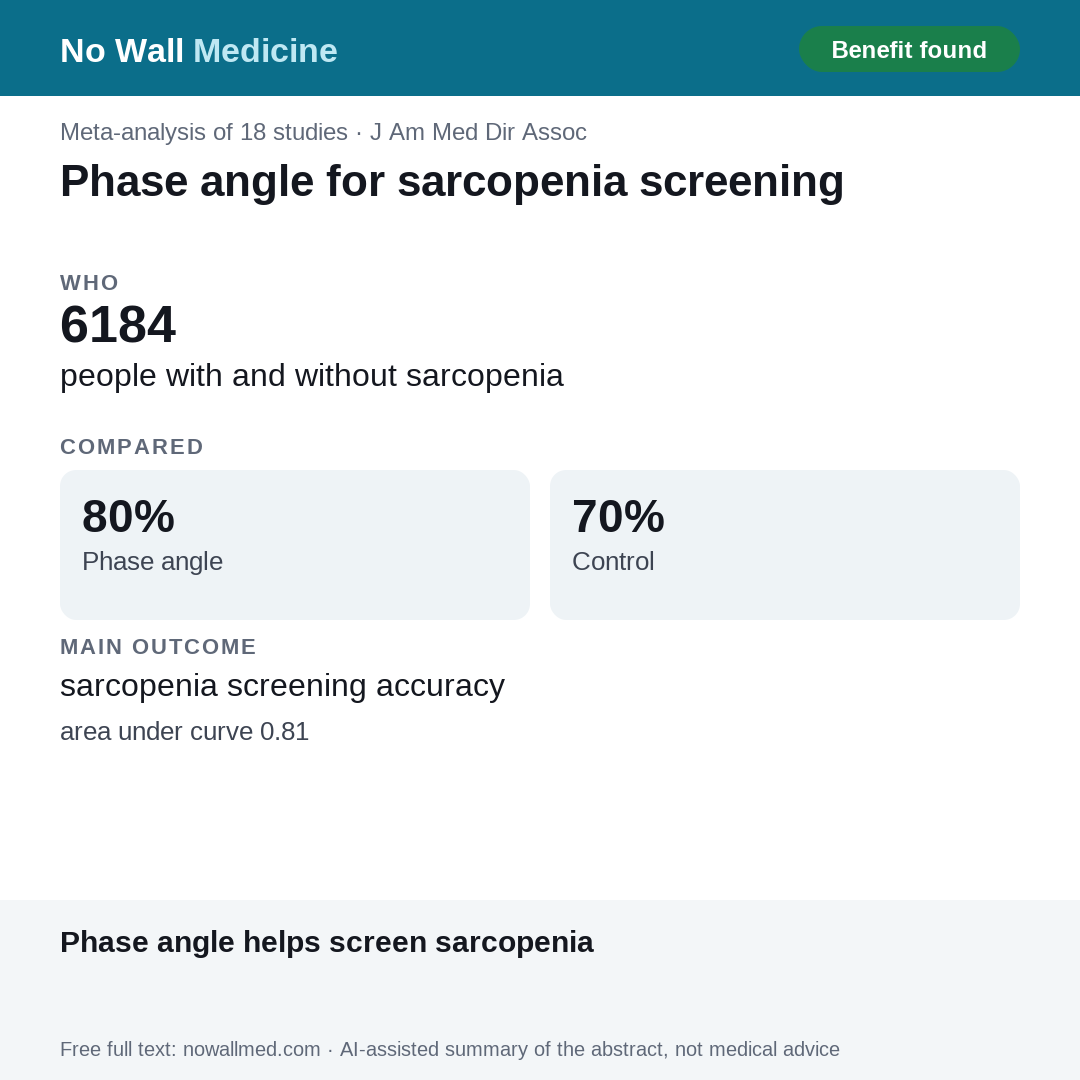
The Diagnostic Accuracy and Cutoff Value of Phase Angle for Screening Sarcopenia: A Systematic Review and Meta-Analysis
Meta-analysis of 18 studiesBenefit found
Phase angle for sarcopenia screening
Who
6184
people with and without sarcopenia
Compared
80%Phase angle (sensitivity)
70%Control (specificity)
Main outcome
sarcopenia screening accuracy
Result: area under curve 0.81
Bottom line: Phase angle helps screen sarcopenia
J Am Med Dir Assoc · 2024-09-23Download image
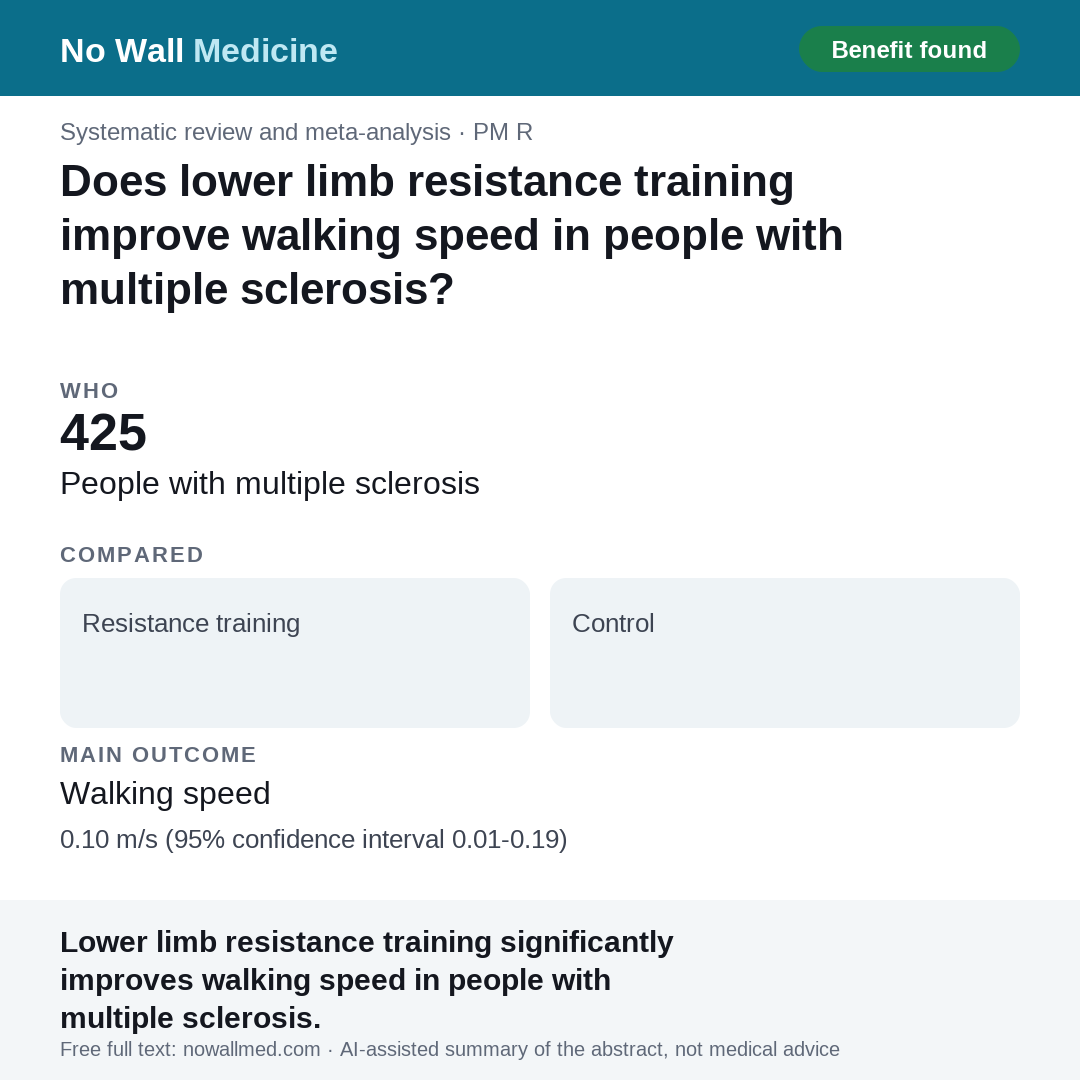
Changes in walking speed following resistance training in people with multiple sclerosis: A systematic review and meta-analysis
Systematic review and meta-analysisBenefit found
Does lower limb resistance training improve walking speed in people with multiple sclerosis?
Who
425
People with multiple sclerosis
Compared
Resistance training
Control
Main outcome
Walking speed
Result: 0.10 m/s (95% confidence interval 0.01-0.19)
Bottom line: Lower limb resistance training significantly improves walking speed in people with multiple sclerosis.
Limitation: Results were variable across studies and sensitivity analysis showed distance-dependent improvements.
PM R · 2024-09-23Download image
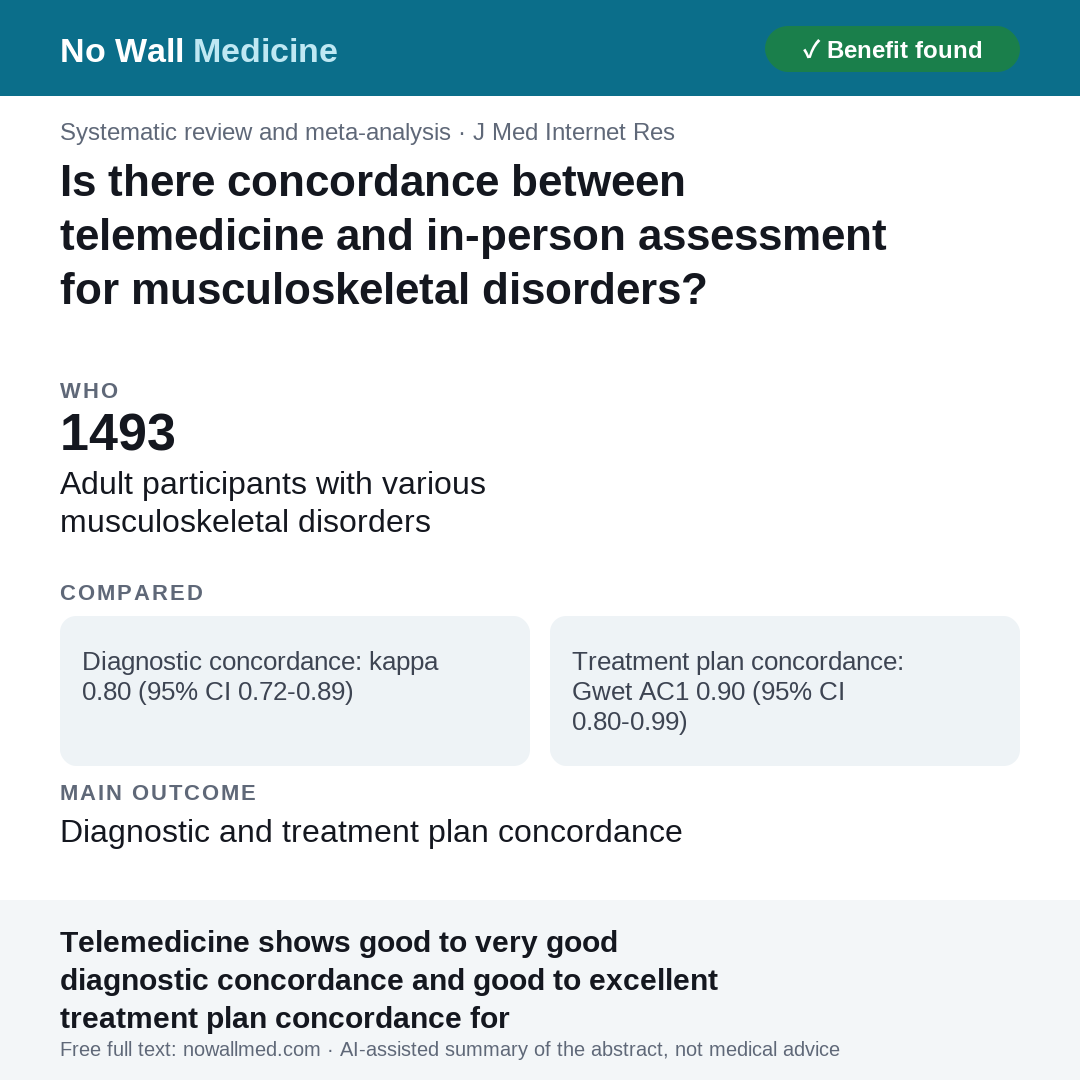
Investigating the Use of Telemedicine by Health Care Providers to Diagnose and Manage Patients With Musculoskeletal Disorders: Systematic Review and Meta-Analysis
Systematic review and meta-analysisBenefit found
Is there concordance between telemedicine and in-person assessment for musculoskeletal disorders?
Who
1493
Adult participants with various musculoskeletal disorders
Compared
Diagnostic concordance: kappa 0.80 (95% CI 0.72-0.89)
Treatment plan concordance: Gwet AC1 0.90 (95% CI 0.80-0.99)
Main outcome
Diagnostic and treatment plan concordance
Result: kappa 0.80 (95% CI 0.72-0.89)
Bottom line: Telemedicine shows good to very good diagnostic concordance and good to excellent treatment plan concordance for musculoskeletal disorders.
Limitation: Studies evaluating red and yellow flag detection and healthcare resource use are needed.
J Med Internet Res · 2024-09-23Download image
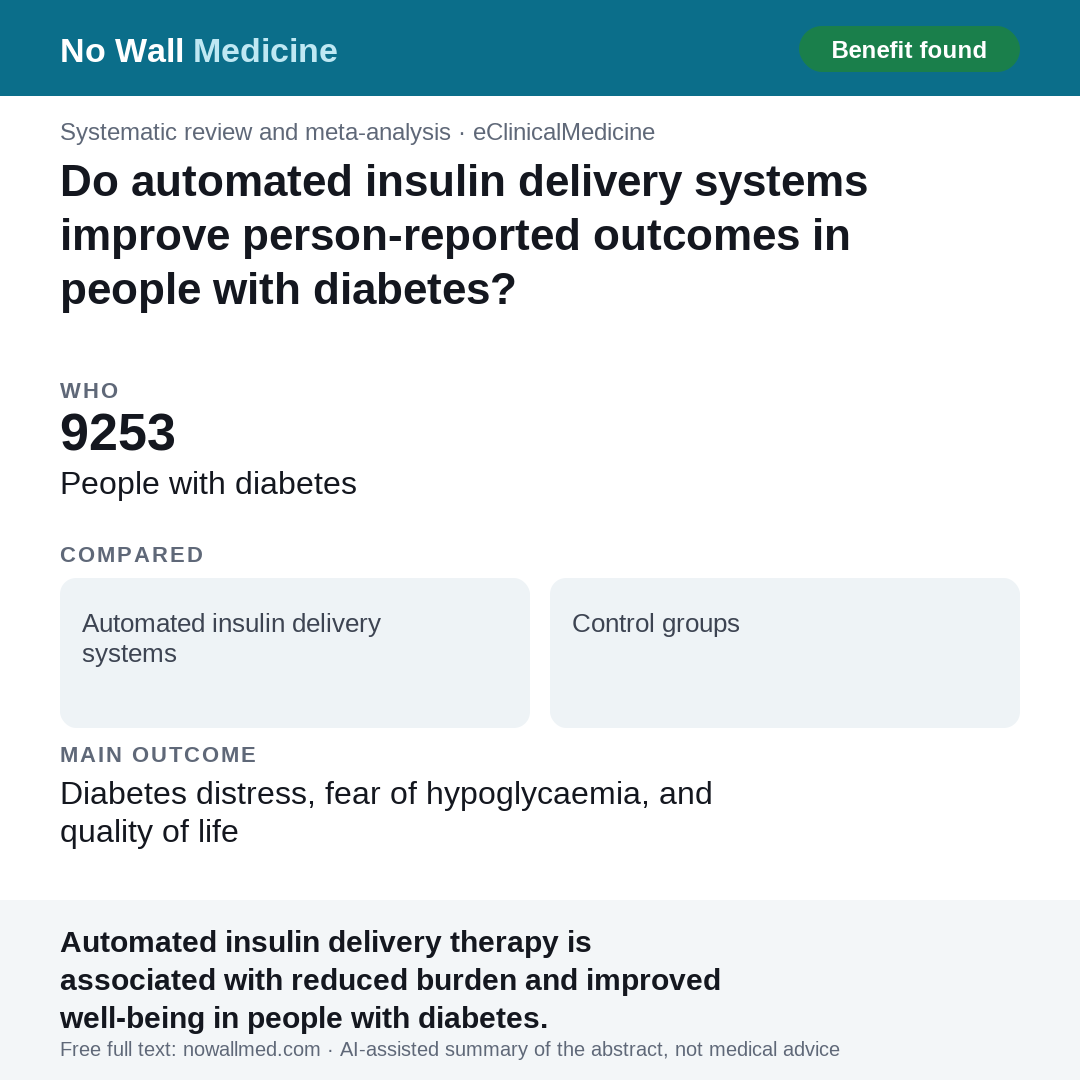
Effect of automated insulin delivery systems on person-reported outcomes in people with diabetes: a systematic review and meta-analysis
Systematic review and meta-analysisBenefit found
Do automated insulin delivery systems improve person-reported outcomes in people with diabetes?
Who
9253
People with diabetes
Compared
Automated insulin delivery systems
Control groups
Main outcome
Diabetes distress, fear of hypoglycaemia, and quality of life
Result: standardised mean difference [-0.159 (-0.309, -0.010) to 0.347 (0.134, 0.560)]
Bottom line: Automated insulin delivery therapy is associated with reduced burden and improved well-being in people with diabetes.
Limitation: Limited number of studies pooled for some outcomes and large heterogeneity in questionnaires used.
eClinicalMedicine · 2024-09-21Download image
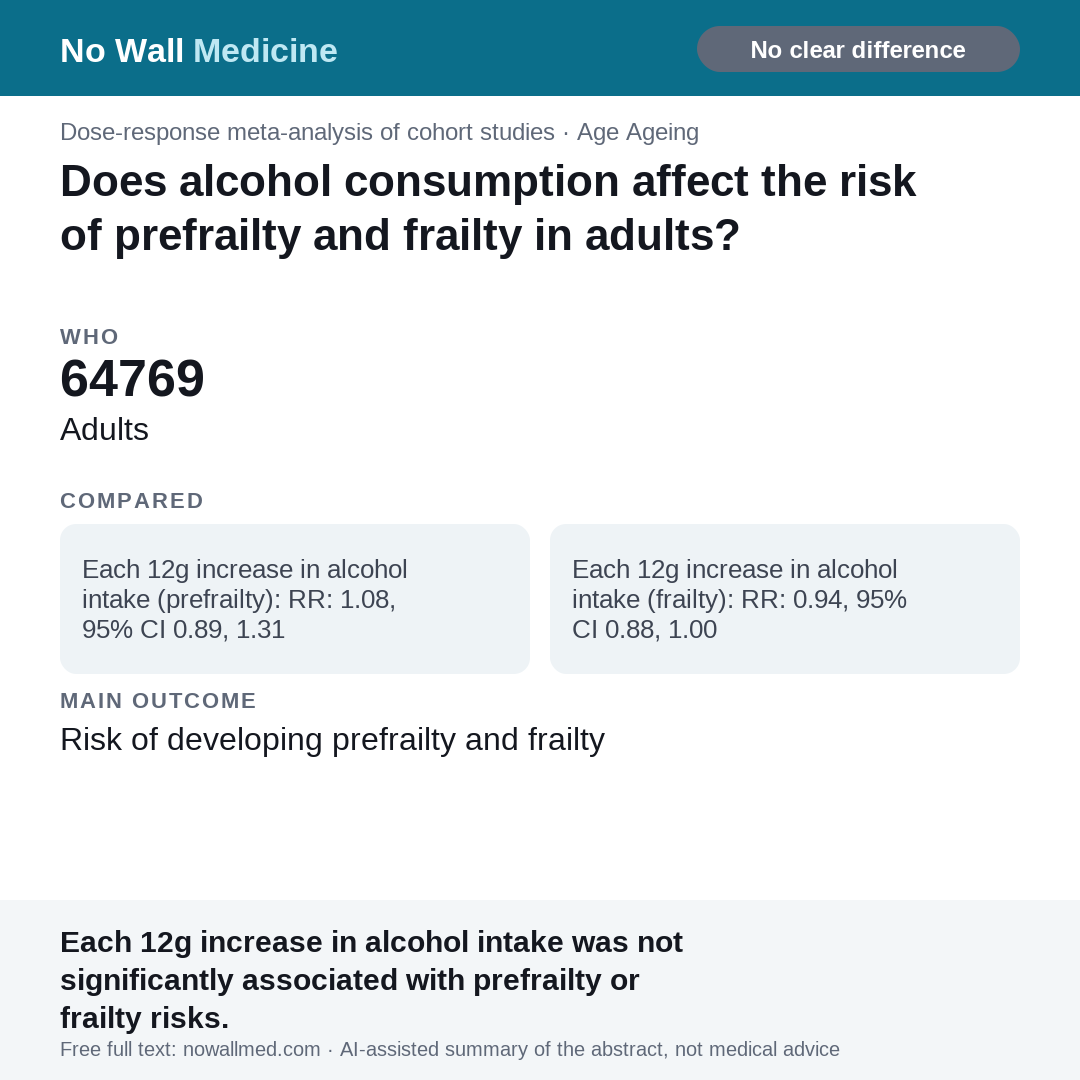
Alcohol consumption and frailty risk: a dose-response meta-analysis of cohort studies
Dose-response meta-analysis of cohort studiesNo clear difference
Does alcohol consumption affect the risk of prefrailty and frailty in adults?
Who
64769
Adults
Compared
Each 12g increase in alcohol intake (prefrailty): RR: 1.08, 95% CI 0.89, 1.31
Each 12g increase in alcohol intake (frailty): RR: 0.94, 95% CI 0.88, 1.00
Main outcome
Risk of developing prefrailty and frailty
Bottom line: Each 12g increase in alcohol intake was not significantly associated with prefrailty or frailty risks.
Limitation: Eight studies were rated to have a serious risk of bias and evidence quality was low.
Age Ageing · 2024-09-21Download image
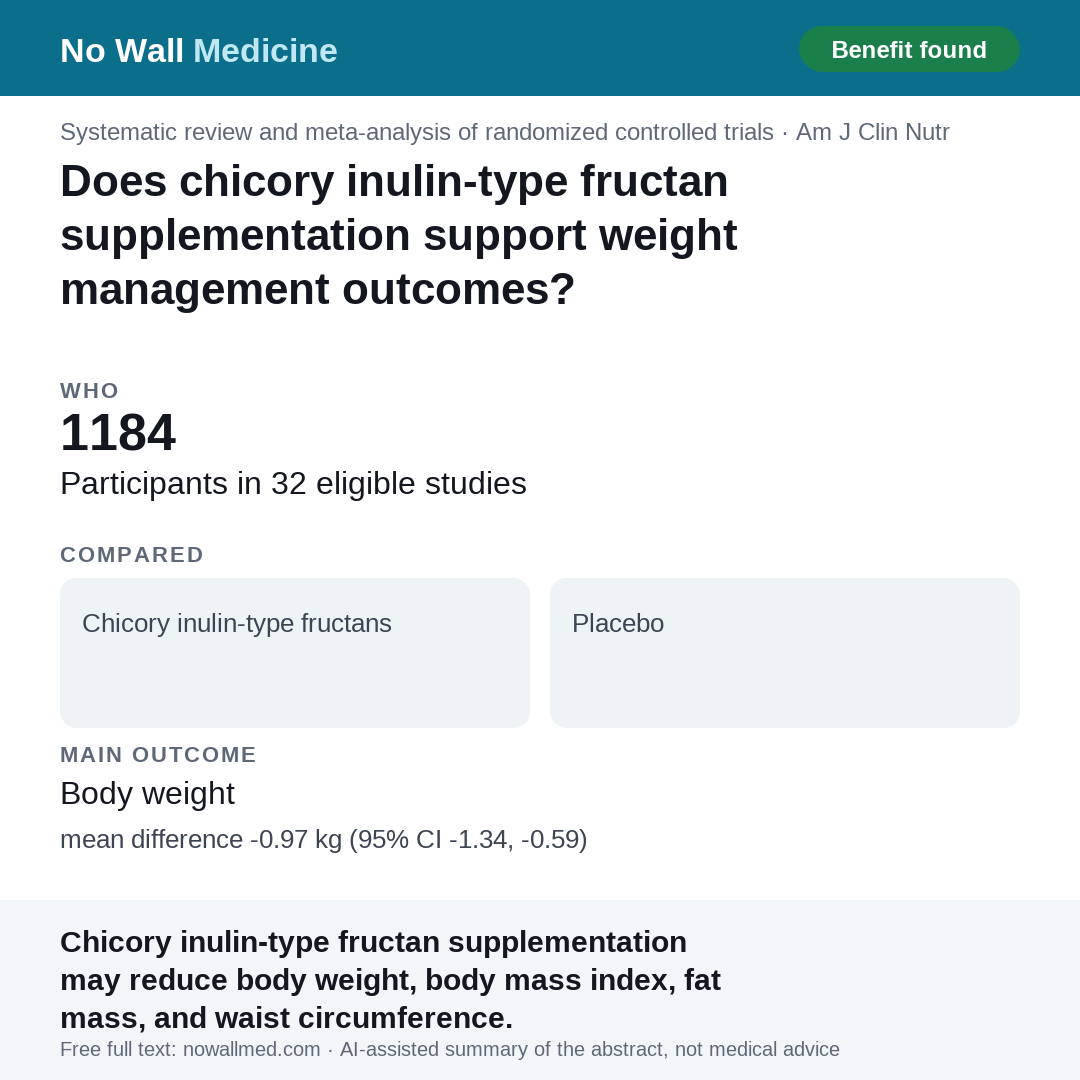
The effects of chicory inulin-type fructans supplementation on weight management outcomes: systematic review, meta-analysis, and meta-regression of randomized controlled trials
Systematic review and meta-analysis of randomized controlled trialsBenefit found
Does chicory inulin-type fructan supplementation support weight management outcomes?
Who
1184
Participants in 32 eligible studies
Compared
Chicory inulin-type fructans
Placebo
Main outcome
Body weight
Result: mean difference -0.97 kg (95% CI -1.34, -0.59)
Bottom line: Chicory inulin-type fructan supplementation may reduce body weight, body mass index, fat mass, and waist circumference.
Am J Clin Nutr · 2024-09-21Download image
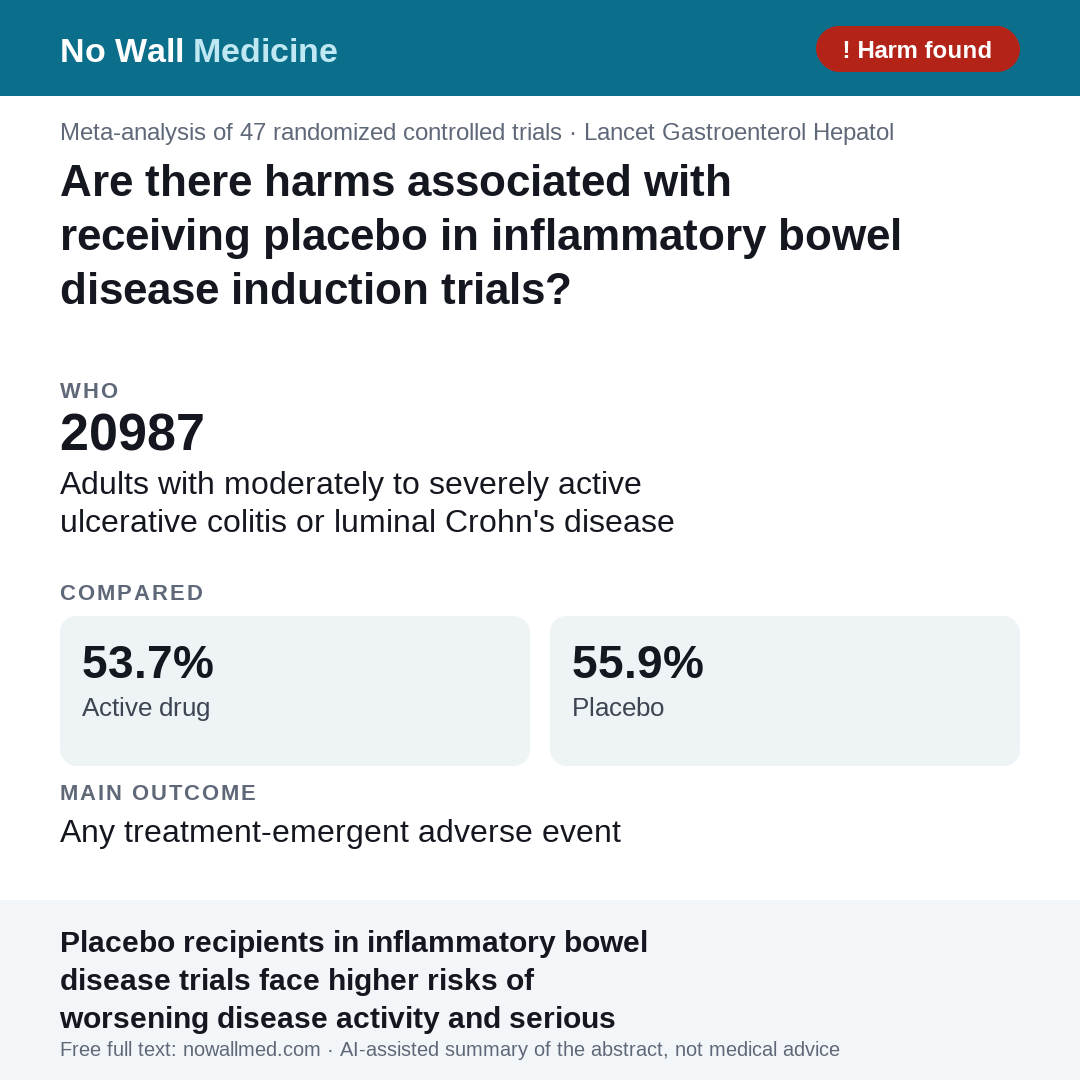
The effect of active vitamin D supplementation on body weight and composition: A meta-analysis of individual participant data
Individual participant data meta-analysisNo clear difference
Does active vitamin D supplementation affect body weight and composition?
Who
411
Postmenopausal women, type 1 diabetes, obesity, type 2 diabetes, and chronic kidney disease
Compared
calcitriol
placebo
Main outcome
body weight, BMI, waist circumference, fat mass, or lean body mass
Bottom line: Calcitriol does not alter body weight or weight-related parameters compared to placebo.
Limitation: Whether calcitriol lowers body weight in vitamin D-sufficient people with obesity remains to be elucidated.
Clin Nutr · 2024-09-21Download image
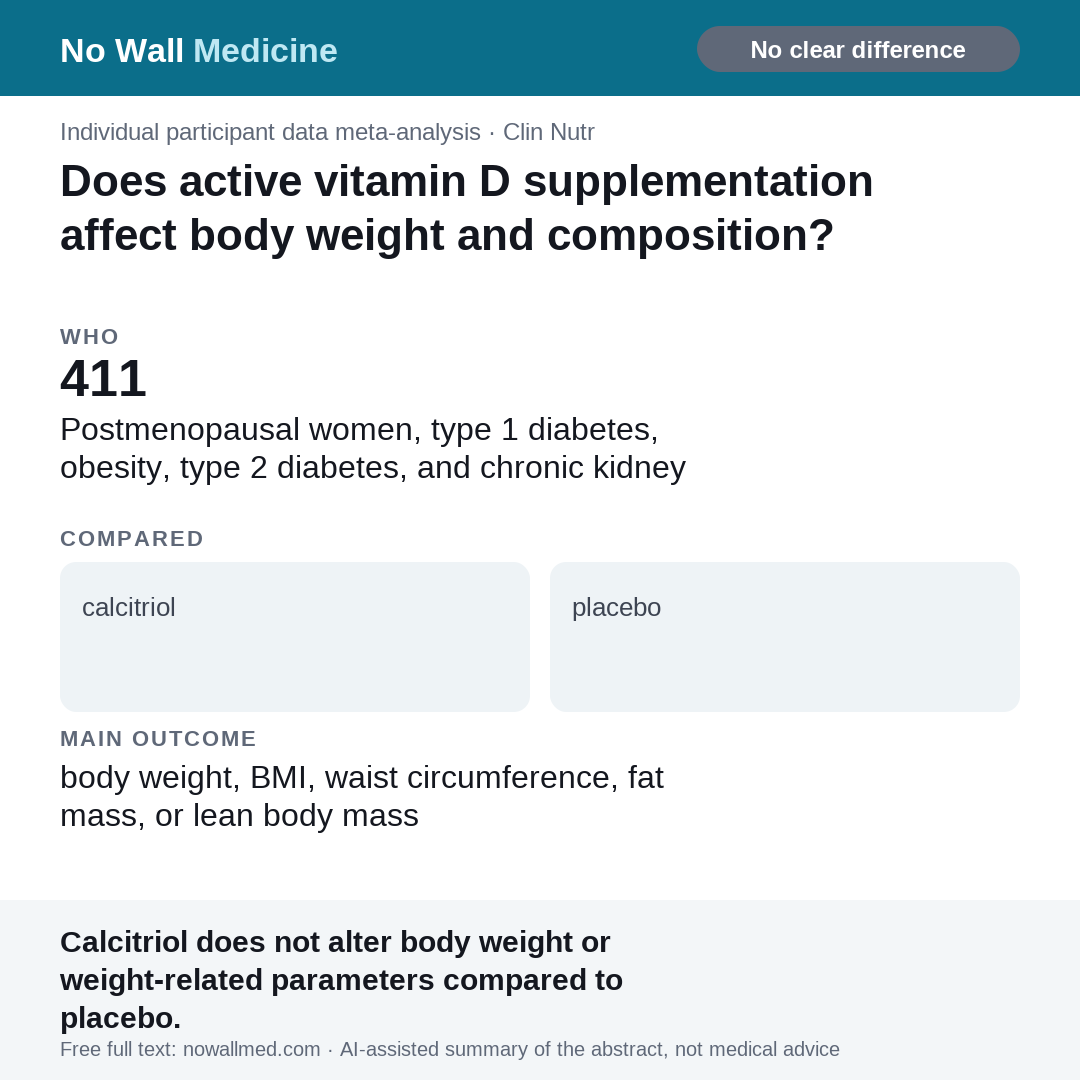
Effect of electronic alerts on the care and outcomes in patients with acute kidney injury: a meta-analysis and trial sequential analysis
Meta-analysis and trial sequential analysisNo clear difference
Do electronic alerts impact care and outcomes in patients with acute kidney injury?
Who
40,146
Patients with acute kidney injury
Compared
Electronic alerts
Usual care
Main outcome
Mortality, creatinine levels, AKI progression, dialysis, and AKI documentation
Result: relative risk 1.02 (95% CI 0.97-1.08)
Bottom line: Electronic alerts increased dialysis and AKI documentation but did not improve mortality or kidney function.
Limitation: Trial sequential analysis could not confirm increased odds of dialysis and AKI documentation.
BMC Med · 2024-09-20Download image
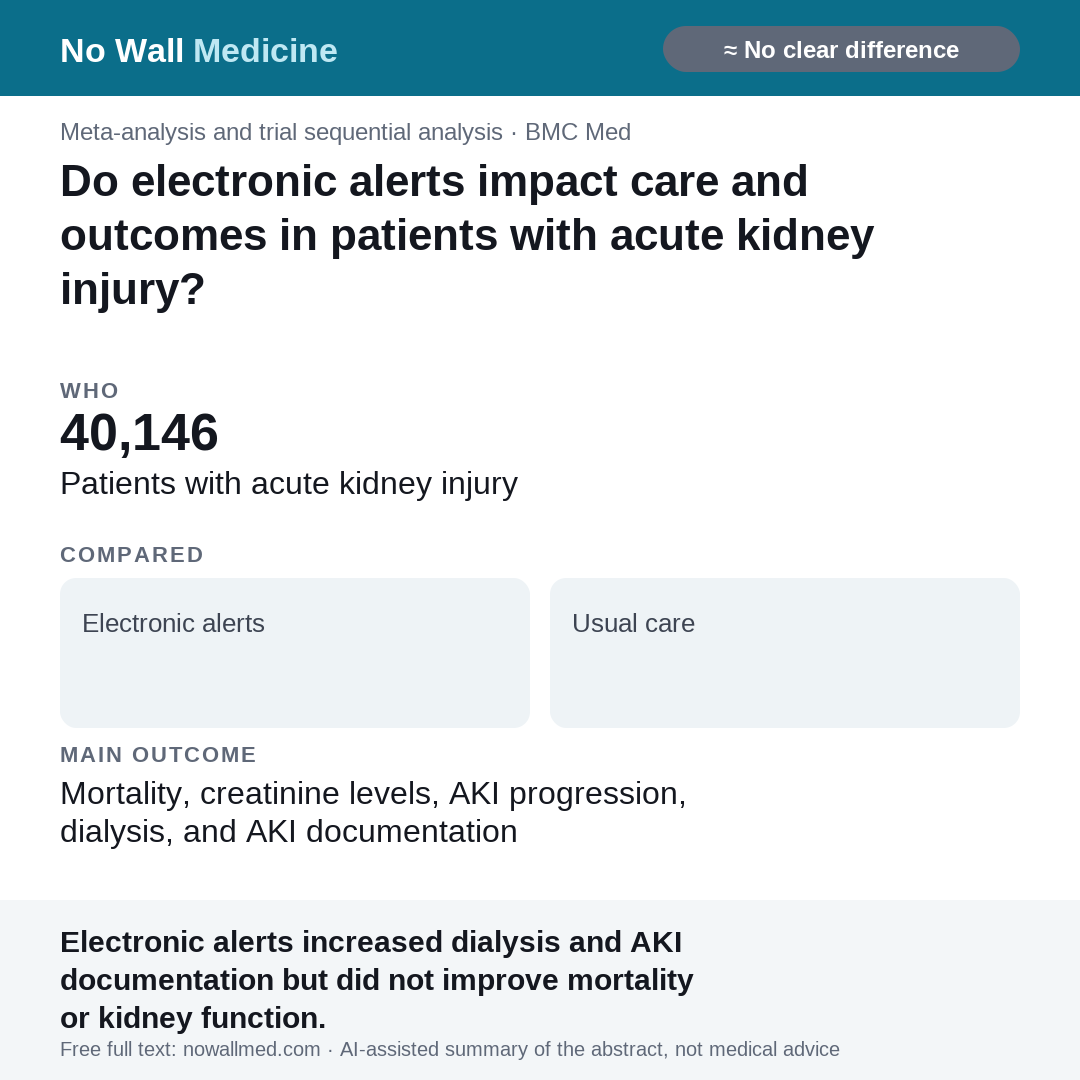
Harms with placebo in trials of biological therapies and small molecules as maintenance therapy in inflammatory bowel disease: a systematic review and meta-analysis
Meta-analysis of 45 randomized controlled trialsHarm found
Are there harms associated with receiving placebo during maintenance of remission trials in inflammatory bowel disease?
Who
16562
Adults with ulcerative colitis and luminal Crohn's disease
Compared
76.4%Active drug
75.5%Placebo
Main outcome
Any treatment-emergent adverse event
Result: RR 1.01, 95% CI 0.99-1.04
Bottom line: Placebo was associated with some clinically significant potential harms during maintenance of remission trials in inflammatory bowel disease.
Lancet Gastroenterol Hepatol · 2024-09-20Download image
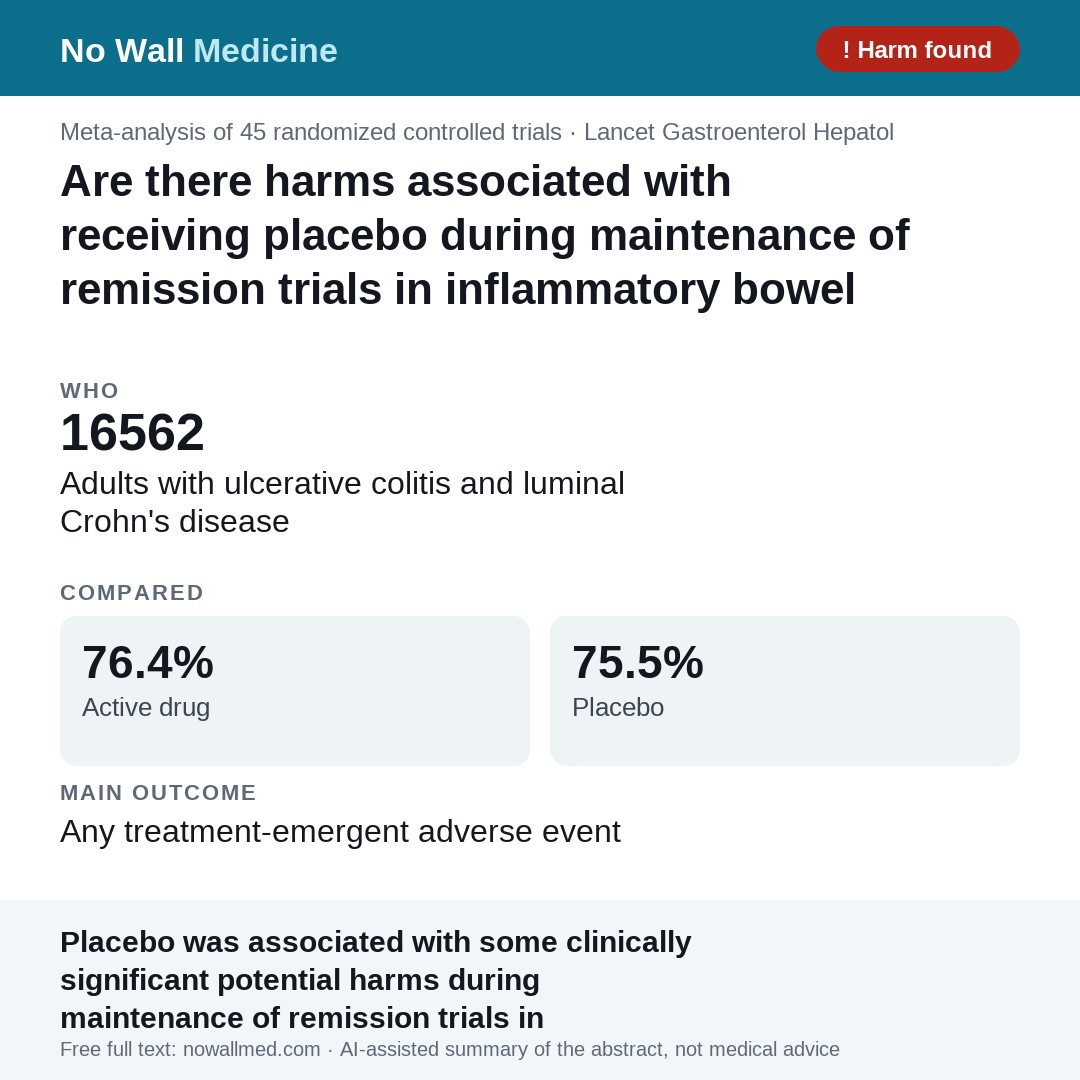
Harms with placebo in trials of biological therapies and small molecules as induction therapy in inflammatory bowel disease: a systematic review and meta-analysis
Meta-analysis of 47 randomized controlled trialsHarm found
Are there harms associated with receiving placebo in inflammatory bowel disease induction trials?
Who
20987
Adults with moderately to severely active ulcerative colitis or luminal Crohn's disease
Compared
53.7%Active drug
55.9%Placebo
Main outcome
Any treatment-emergent adverse event
Result: relative risk 0.97 (95% CI 0.94-1.00)
Bottom line: Placebo recipients in inflammatory bowel disease trials face higher risks of worsening disease activity and serious adverse events.
Lancet Gastroenterol Hepatol · 2024-09-20Download image
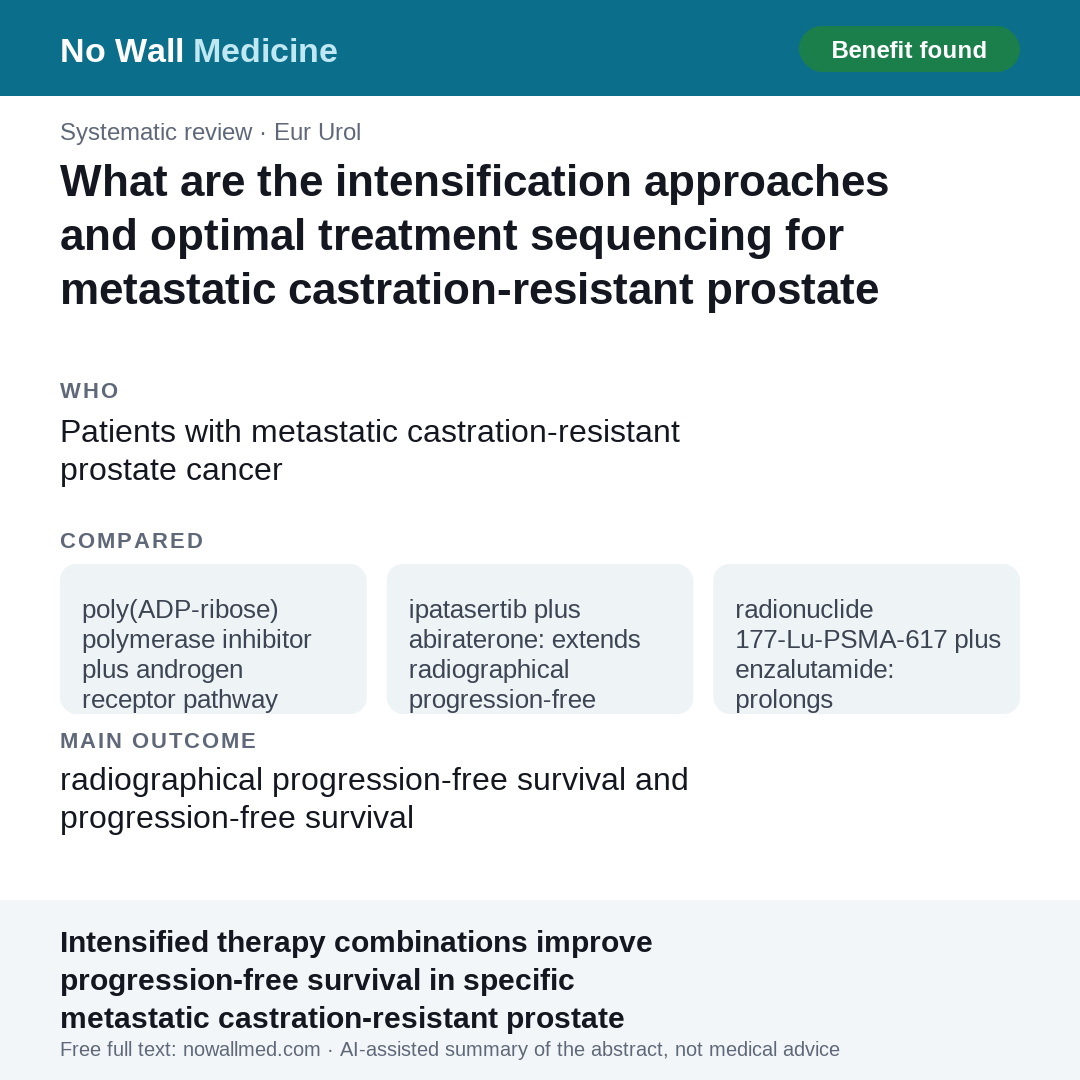
Intensification Approaches and Treatment Sequencing in Metastatic Castration-resistant Prostate Cancer: A Systematic Review
Systematic reviewBenefit found
What are the intensification approaches and optimal treatment sequencing for metastatic castration-resistant prostate cancer?
Who
Patients with metastatic castration-resistant prostate cancer
Compared
poly(ADP-ribose) polymerase inhibitor plus androgen receptor pathway inhibitor: improves radiographical progression-free survival
ipatasertib plus abiraterone: extends radiographical progression-free survival
radionuclide 177-Lu-PSMA-617 plus enzalutamide: prolongs progression-free survival
Main outcome
radiographical progression-free survival and progression-free survival
Bottom line: Intensified therapy combinations improve progression-free survival in specific metastatic castration-resistant prostate cancer subgroups.
Eur Urol · 2024-09-20Download image
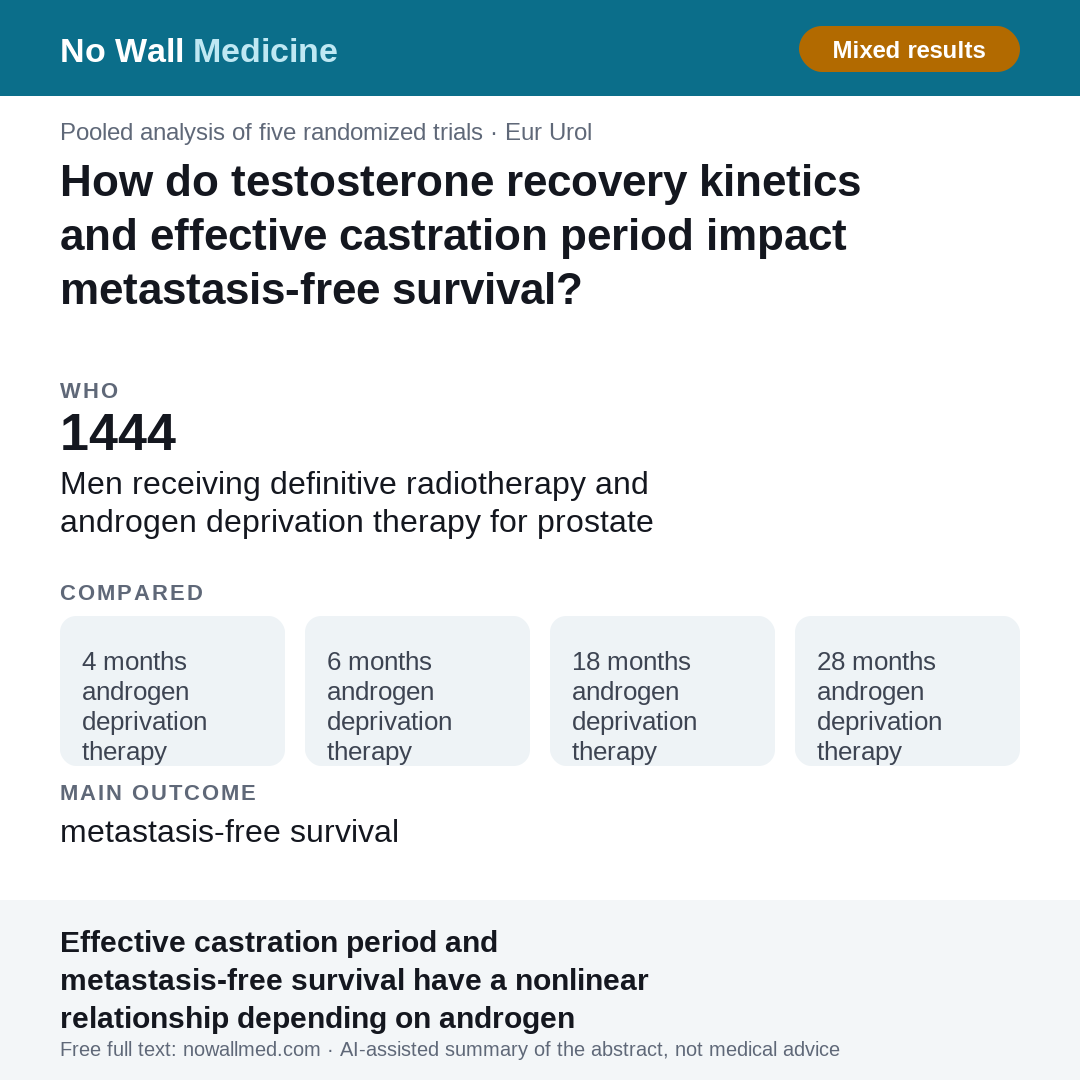
Testosterone Recovery Following Androgen Suppression and Prostate Radiotherapy (TRANSPORT): A Pooled Analysis of Five Randomized Trials from the Meta-Analysis of Randomized Trials in Cancer of the Prostate (MARCAP) Consortium
Pooled analysis of five randomized trialsMixed results
How do testosterone recovery kinetics and effective castration period impact metastasis-free survival?
Who
1444
Men receiving definitive radiotherapy and androgen deprivation therapy for prostate cancer
Compared
4 months androgen deprivation therapy
6 months androgen deprivation therapy
18 months androgen deprivation therapy
28 months androgen deprivation therapy
Main outcome
metastasis-free survival
Bottom line: Effective castration period and metastasis-free survival have a nonlinear relationship depending on androgen deprivation therapy duration.
Eur Urol · 2024-09-20Download image