Visual abstracts
New randomized trials and meta-analyses from leading journals at a glance: who was studied, what was compared, and what was found. Every paper is free to read in full.
All specialtiesCardiology 4763Oncology 4042Gastroenterology & Hepatology 1902Infectious Disease 3756Neurology 1872Psychiatry & Mental Health 2214Pulmonology 2042Critical Care 1319Endocrinology & Diabetes 2544Pediatrics 2889Surgery 2479Orthopedics & Sports Medicine 917Neurosurgery 525Cardiothoracic & Vascular Surgery 656Plastic & Reconstructive Surgery 574Nephrology 1107Rheumatology 810Hematology 1090Dermatology 611Ophthalmology 532Obstetrics & Gynecology 1645Public & Global Health 1037Radiology & Imaging 617Anesthesiology 957Urology 745ENT (Otolaryngology) 494Emergency Medicine 481Allergy & Immunology 309Geriatrics 972Family Medicine & Primary Care 533Medical Genetics & Genomics 659Pathology & Laboratory Medicine 156Physical Medicine & Rehabilitation 734Palliative Care 421Nutrition 1560Digital Health & AI 2133General Medicine 318
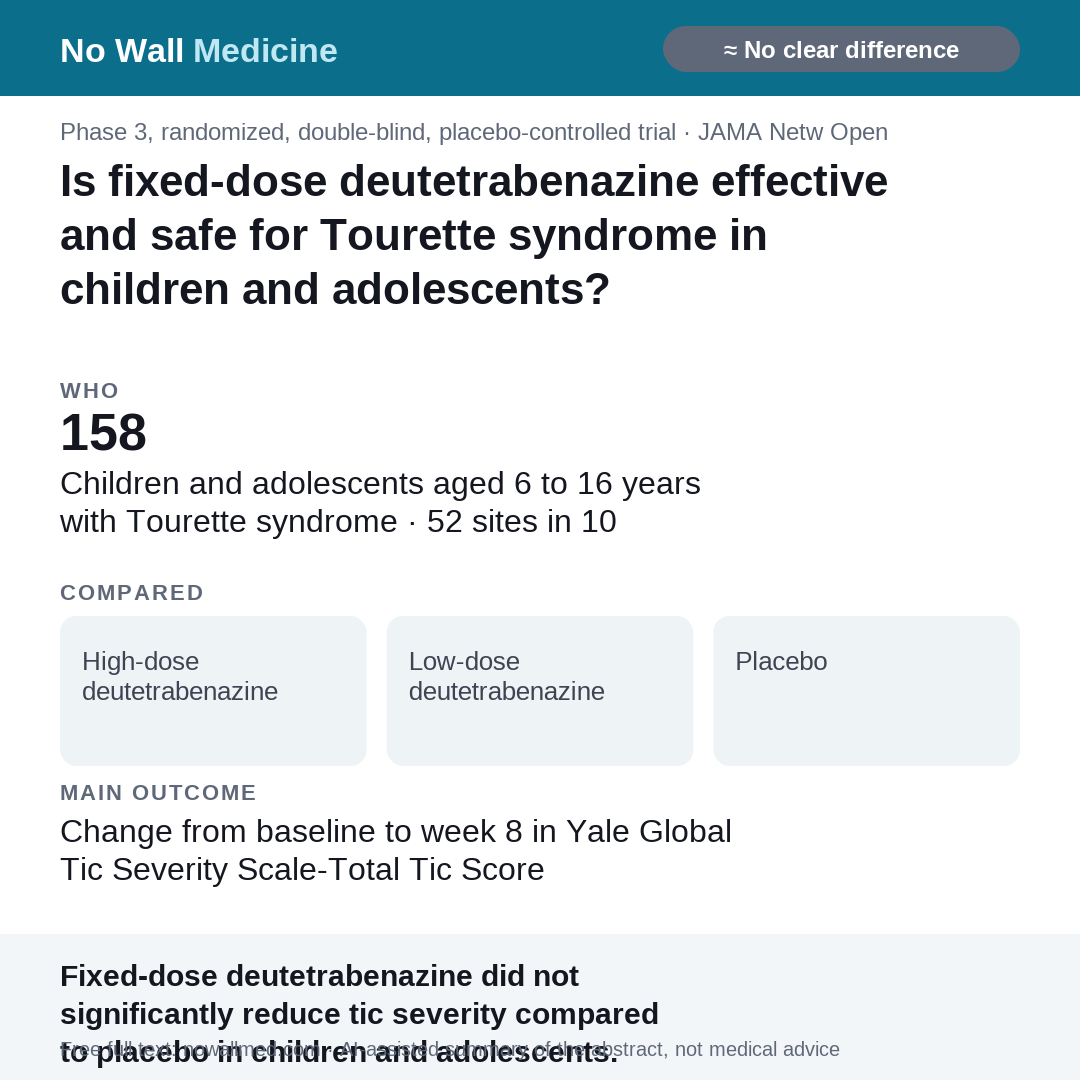
Efficacy and Safety of Fixed-Dose Deutetrabenazine in Children and Adolescents for Tics Associated With Tourette Syndrome: A Randomized Clinical Trial
Phase 3, randomized, double-blind, placebo-controlled trialNo clear difference
Is fixed-dose deutetrabenazine effective and safe for Tourette syndrome in children and adolescents?
Who
158
Children and adolescents aged 6 to 16 years with Tourette syndrome · 52 sites in 10 countries
Compared
High-dose deutetrabenazine
Low-dose deutetrabenazine
Placebo
Main outcome
Change from baseline to week 8 in Yale Global Tic Severity Scale-Total Tic Score
Result: least-squares mean difference -0.8 points (95% CI -3.9 to 2.3 points)
Bottom line: Fixed-dose deutetrabenazine did not significantly reduce tic severity compared to placebo in children and adolescents.
JAMA Netw Open · 2021-10-01Download image
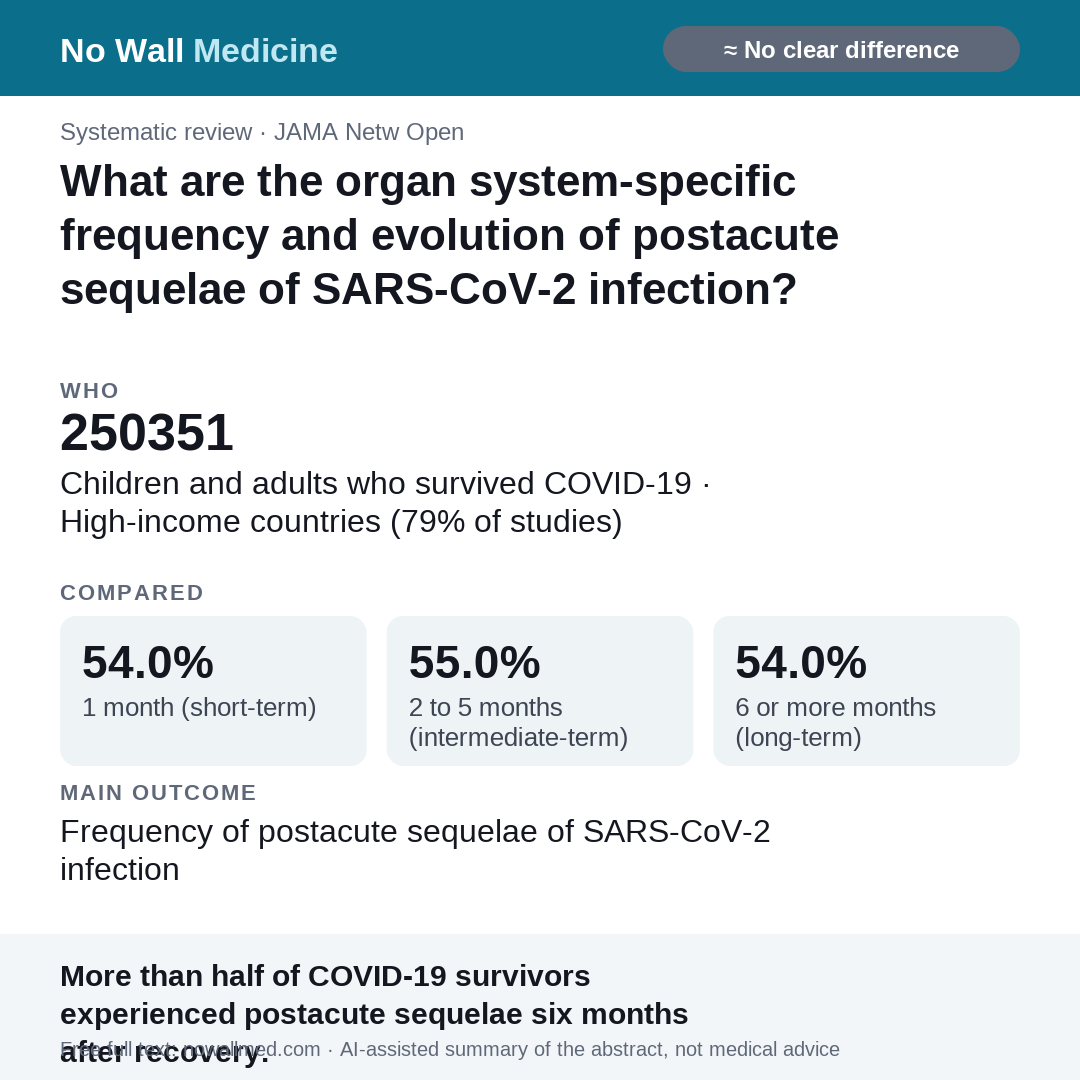
Short-term and Long-term Rates of Postacute Sequelae of SARS-CoV-2 Infection: A Systematic Review
Systematic reviewNo clear difference
What are the organ system-specific frequency and evolution of postacute sequelae of SARS-CoV-2 infection?
Who
250351
Children and adults who survived COVID-19 · High-income countries (79% of studies)
Compared
54.0%1 month (short-term) (45.0%-69.0%)
55.0%2 to 5 months (intermediate-term) (34.8%-65.5%)
54.0%6 or more months (long-term) (31.0%-67.0%)
Main outcome
Frequency of postacute sequelae of SARS-CoV-2 infection
Bottom line: More than half of COVID-19 survivors experienced postacute sequelae six months after recovery.
JAMA Netw Open · 2021-10-01Download image
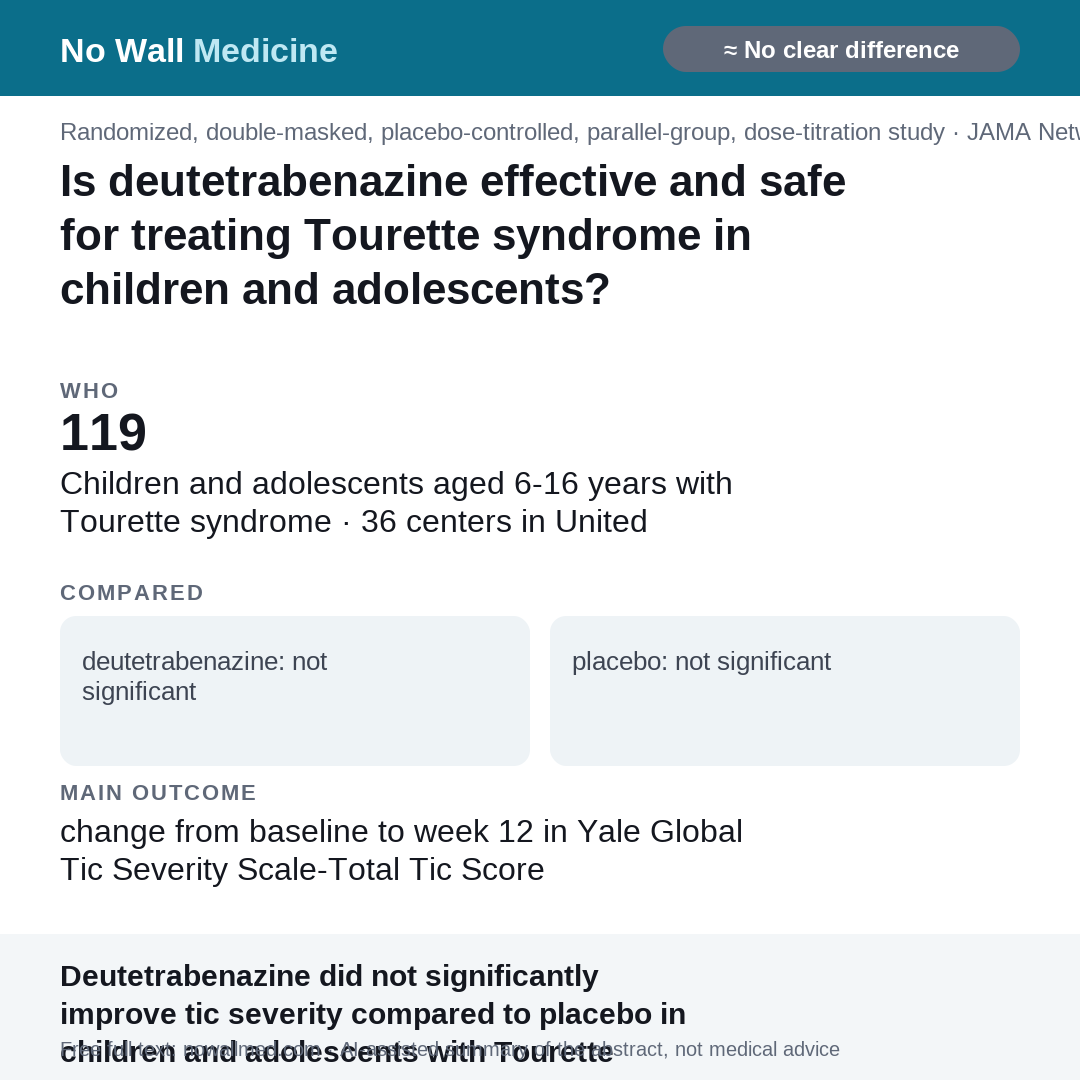
Safety and Efficacy of Flexible-Dose Deutetrabenazine in Children and Adolescents With Tourette Syndrome: A Randomized Clinical Trial
Randomized, double-masked, placebo-controlled, parallel-group, dose-titration studyNo clear difference
Is deutetrabenazine effective and safe for treating Tourette syndrome in children and adolescents?
Who
119
Children and adolescents aged 6-16 years with Tourette syndrome · 36 centers in United States, Canada, Denmark, Russia, Serbia, and Spain
Compared
deutetrabenazine: not significant
placebo: not significant
Main outcome
change from baseline to week 12 in Yale Global Tic Severity Scale-Total Tic Score
Result: least squares mean difference, -0.7 (95% CI, -4.1 to 2.8)
Bottom line: Deutetrabenazine did not significantly improve tic severity compared to placebo in children and adolescents with Tourette syndrome.
JAMA Netw Open · 2021-10-01Download image
Efficacy of Motivational Interviewing to Improve Utilization of Mental Health Services Among Youths With Chronic Medical Conditions: A Cluster Randomized Clinical Trial
Single-center cluster randomized clinical trialNo clear difference
Does motivational interviewing training for pediatricians increase mental health care use among youths with chronic medical conditions?
Who
164
Youths aged 12 to 20 years with chronic medical conditions and anxiety or depression · University Children's Hospital outpatient clinics, Germany
Compared
Motivational interviewing training: not statistically significant
Treatment as usual: not statistically significant
Main outcome
Uptake of mental health care services within 6-month follow-up
Result: odds ratio 1.96 (95% CI 0.98-3.92)
Bottom line: Motivational interviewing training for pediatricians did not increase mental health care service use among youths with chronic medical conditions.
JAMA Netw Open · 2021-10-01Download image
Small-quantity lipid-based nutrient supplements for the prevention of child malnutrition and promotion of healthy development: overview of individual participant data meta-analysis and programmatic implications
Individual participant data meta-analysis of 14 randomized controlled trialsBenefit found
Do small-quantity lipid-based nutrient supplements prevent child malnutrition and promote healthy development?
Who
37,000
Children 6-24 months of age
Compared
Small-quantity lipid-based nutrient supplements
Control group
Main outcome
Growth, development, anemia, and micronutrient status
Bottom line: Small-quantity lipid-based nutrient supplements reduce stunting, wasting, underweight, anemia, and developmental delays in children.
Am J Clin Nutr · 2021-10-01Download image

Characteristics that modify the effect of small-quantity lipid-based nutrient supplementation on child growth: an individual participant data meta-analysis of randomized controlled trials
Individual participant data meta-analysis of 14 randomized controlled trialsBenefit found
What characteristics modify the effect of small-quantity lipid-based nutrient supplementation on child growth?
Who
37,066
Children 6 to 24 months of age
Compared
Small-quantity lipid-based nutrient supplements
Control
Main outcome
Child growth outcomes including stunting, wasting, and underweight
Bottom line: Small-quantity lipid-based nutrient supplements reduce stunting, wasting, and underweight across various study-level contexts.
Am J Clin Nutr · 2021-10-01Download image
Small-quantity lipid-based nutrient supplements for children age 6-24 months: a systematic review and individual participant data meta-analysis of effects on developmental outcomes and effect modifiers
Systematic review and individual participant data meta-analysisBenefit found
Do small-quantity lipid-based nutrient supplements improve developmental outcomes in children?
Who
30,024
Children aged 6 to 24 months
Compared
Small-quantity lipid-based nutrient supplements
Control
Main outcome
Developmental outcomes including language, social-emotional, motor, and executive function
Result: mean difference: 0.07 SD (95% CI: 0.04, 0.10 SD) for language
Bottom line: Small-quantity lipid-based nutrient supplements result in modest developmental gains, particularly in populations with high stunting burden.
Am J Clin Nutr · 2021-10-01Download image
Characteristics that modify the effect of small-quantity lipid-based nutrient supplementation on child anemia and micronutrient status: an individual participant data meta-analysis of randomized controlled trials
Individual participant data meta-analysisBenefit found
What modifies the effect of small-quantity lipid-based nutrient supplementation on child anemia and micronutrient status?
Who
15,946
Children 6 to 24 months of age
Compared
Small-quantity lipid-based nutrient supplements: 16% relative reduction in anemia prevalence
Control
Main outcome
Anemia, iron deficiency, and inflammation-adjusted micronutrient status
Bottom line: Small-quantity lipid-based nutrient supplements substantially reduce anemia, iron deficiency, and iron deficiency anemia in children.
Am J Clin Nutr · 2021-10-01Download image
Spotlight influenza: Laboratory-confirmed seasonal influenza in people with acute respiratory illness: a literature review and meta-analysis, WHO European Region, 2004 to 2017
Meta-analysis and literature reviewNo clear difference
What proportion of people seeking medical care for acute respiratory infections have laboratory-confirmed influenza?
Who
People seeking medical care for influenza-like illness or acute respiratory infections · World Health Organization European Region
Compared
36%Outpatient setting (95% CI: 33-40)
24%Inpatient setting (95% CI: 20-29)
Main outcome
Proportion of people tested with laboratory-confirmed seasonal influenza
Result: 33% (95% CI: 30-36)
Bottom line: Laboratory-confirmed influenza accounted for approximately one third of all acute respiratory infections requiring medical care.
Euro Surveill · 2021-10-01Download image

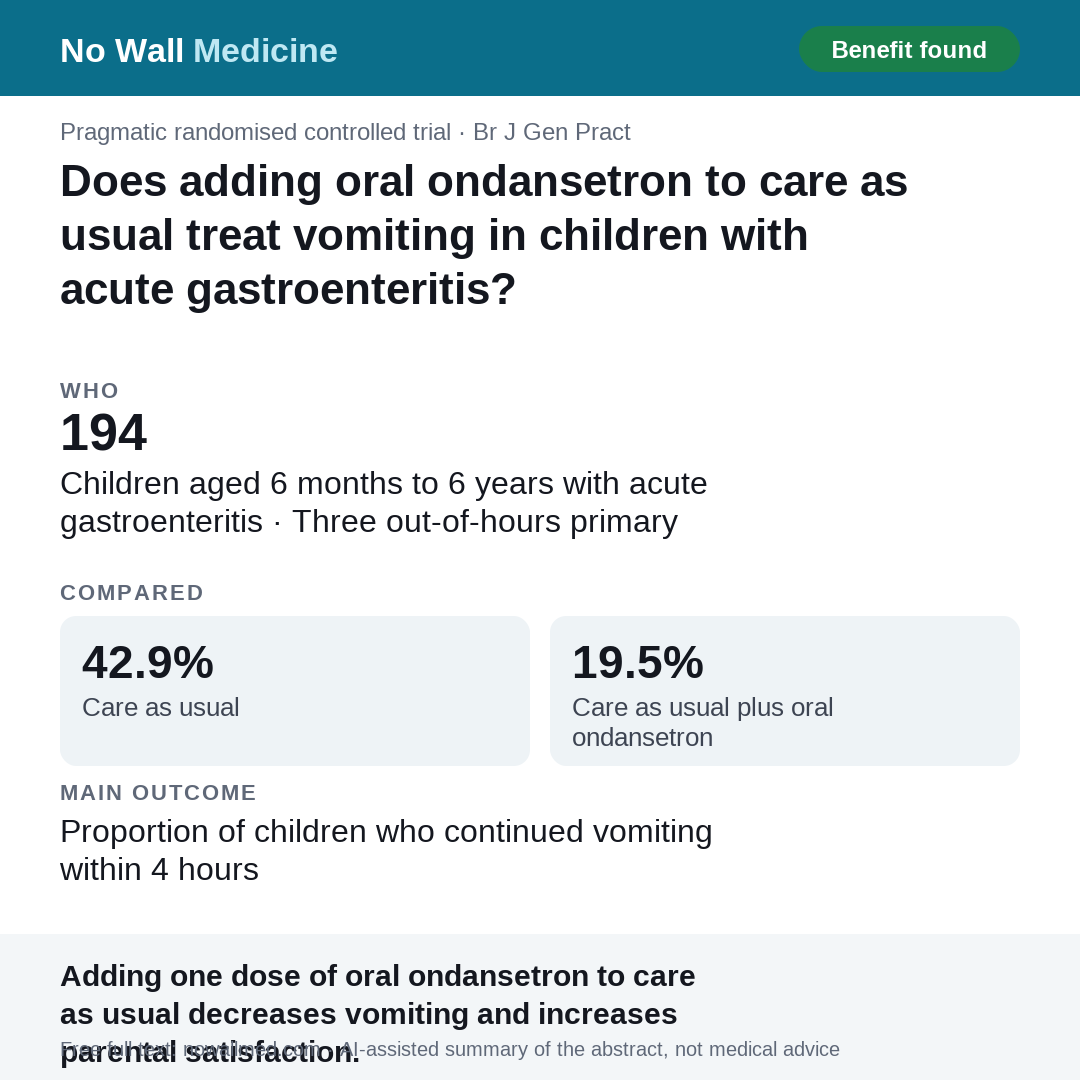
Oral ondansetron for paediatric gastroenteritis in primary care: a randomised controlled trial
Pragmatic randomised controlled trialBenefit found
Does adding oral ondansetron to care as usual treat vomiting in children with acute gastroenteritis?
Who
194
Children aged 6 months to 6 years with acute gastroenteritis · Three out-of-hours primary care centres in the Netherlands
Compared
42.9%Care as usual
19.5%Care as usual plus oral ondansetron
Main outcome
Proportion of children who continued vomiting within 4 hours
Result: odds ratio 0.37 (95% CI 0.20 to 0.72)
Bottom line: Adding one dose of oral ondansetron to care as usual decreases vomiting and increases parental satisfaction.
Br J Gen Pract · 2021-09-30Download image
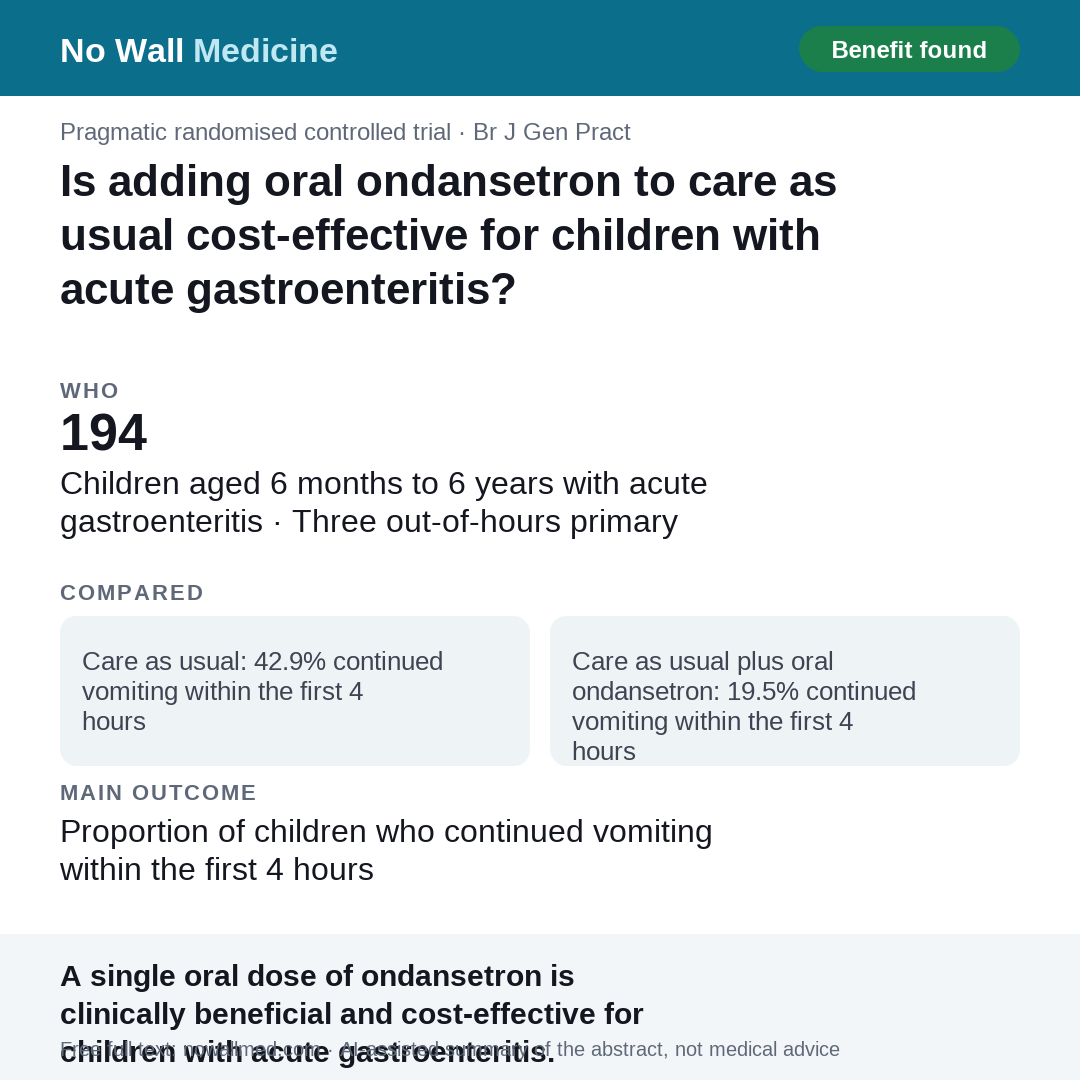
Cost-effectiveness of oral ondansetron for children with acute gastroenteritis in primary care: a randomised controlled trial
Pragmatic randomised controlled trialBenefit found
Is adding oral ondansetron to care as usual cost-effective for children with acute gastroenteritis?
Who
194
Children aged 6 months to 6 years with acute gastroenteritis · Three out-of-hours primary care centres in the Netherlands
Compared
Care as usual: 42.9% continued vomiting within the first 4 hours
Care as usual plus oral ondansetron: 19.5% continued vomiting within the first 4 hours
Main outcome
Proportion of children who continued vomiting within the first 4 hours
Result: odds ratio 0.4 (95% confidence interval 0.2 to 0.7)
Bottom line: A single oral dose of ondansetron is clinically beneficial and cost-effective for children with acute gastroenteritis.
Br J Gen Pract · 2021-09-30Download image
Psychoeducational Messaging to Reduce Alcohol Use for College Students With Type 1 Diabetes: Internet-Delivered Pilot Trial
Randomized pilot trialBenefit found
Does an internet-delivered psychoeducational intervention reduce alcohol use in college students with type 1 diabetes?
Who
138
College students aged 17-25 years with type 1 diabetes · Web-based channels
Compared
Peer narrator
Clinician narrator
Main outcome
Self-reported binge drinking
Result: odds ratio 0.48 (95% CI 0.31-0.75)
Bottom line: An internet-delivered psychoeducational intervention significantly reduced self-reported binge drinking among college students with type 1 diabetes.
J Med Internet Res · 2021-09-30Download image

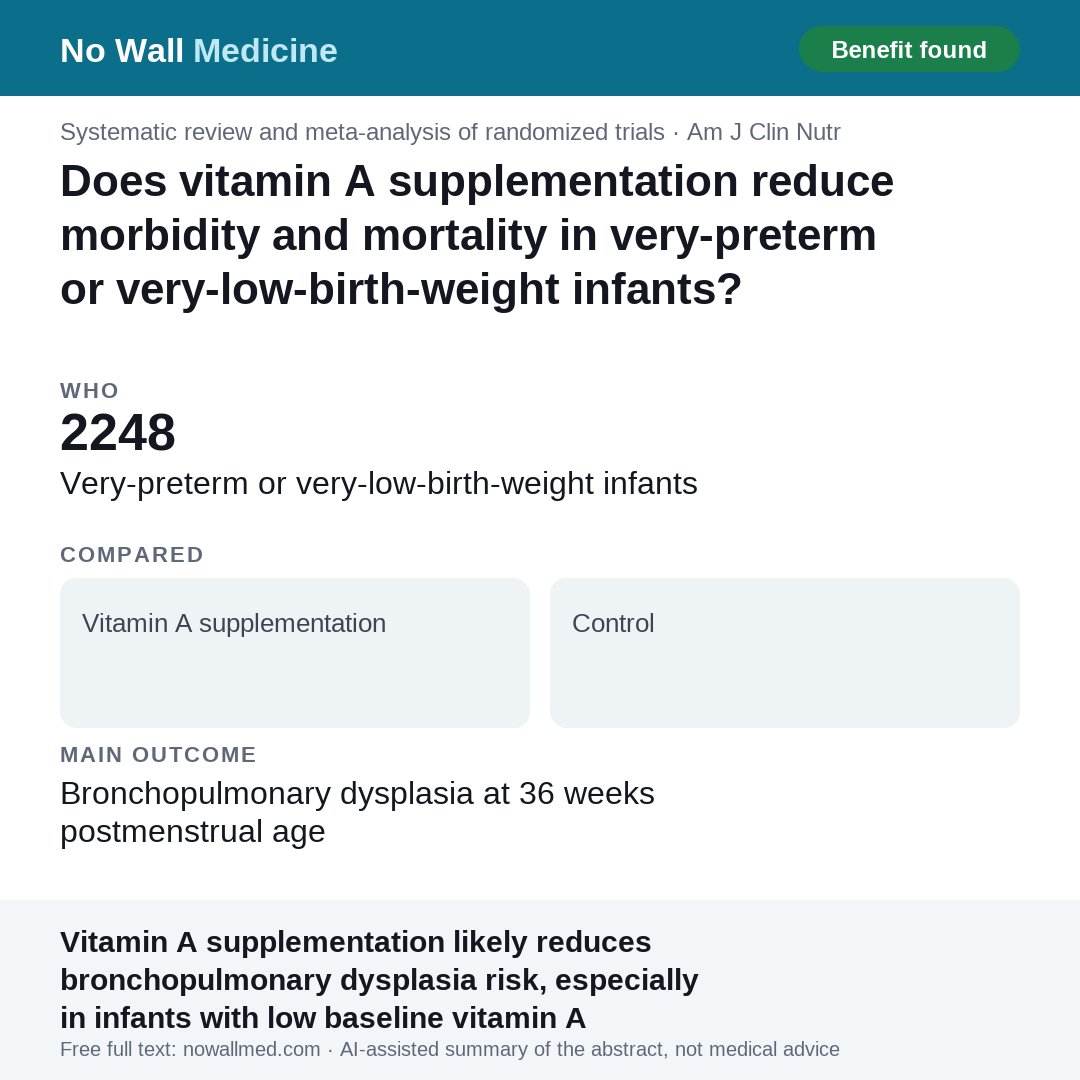
Vitamin A supplementation in very-preterm or very-low-birth-weight infants to prevent morbidity and mortality: a systematic review and meta-analysis of randomized trials
Systematic review and meta-analysis of randomized trialsBenefit found
Does vitamin A supplementation reduce morbidity and mortality in very-preterm or very-low-birth-weight infants?
Who
2248
Very-preterm or very-low-birth-weight infants
Compared
Vitamin A supplementation
Control
Main outcome
Bronchopulmonary dysplasia at 36 weeks postmenstrual age
Result: relative risk 0.83 (95% CI 0.74 to 0.93)
Bottom line: Vitamin A supplementation likely reduces bronchopulmonary dysplasia risk, especially in infants with low baseline vitamin A intake.
Am J Clin Nutr · 2021-09-29Download image
Effects of vitamin D and high dairy protein intake on bone mineralization and linear growth in 6- to 8-year-old children: the D-pro randomized trial
2 x 2-factorial randomized trialMixed results
Do vitamin D and high dairy protein intake affect bone mineralization and linear growth?
Who
184
healthy, 6- to 8-year-old, Danish, children with light skin · Denmark
Compared
Vitamin D and high protein
Vitamin D and normal protein
Placebo and high protein
Placebo and normal protein
Main outcome
total body less head bone mineral density
Bottom line: Vitamin D increased spinal bone density, but high protein yogurt showed smaller incremental effects compared to normal protein yogurt.
Am J Clin Nutr · 2021-09-29Download image

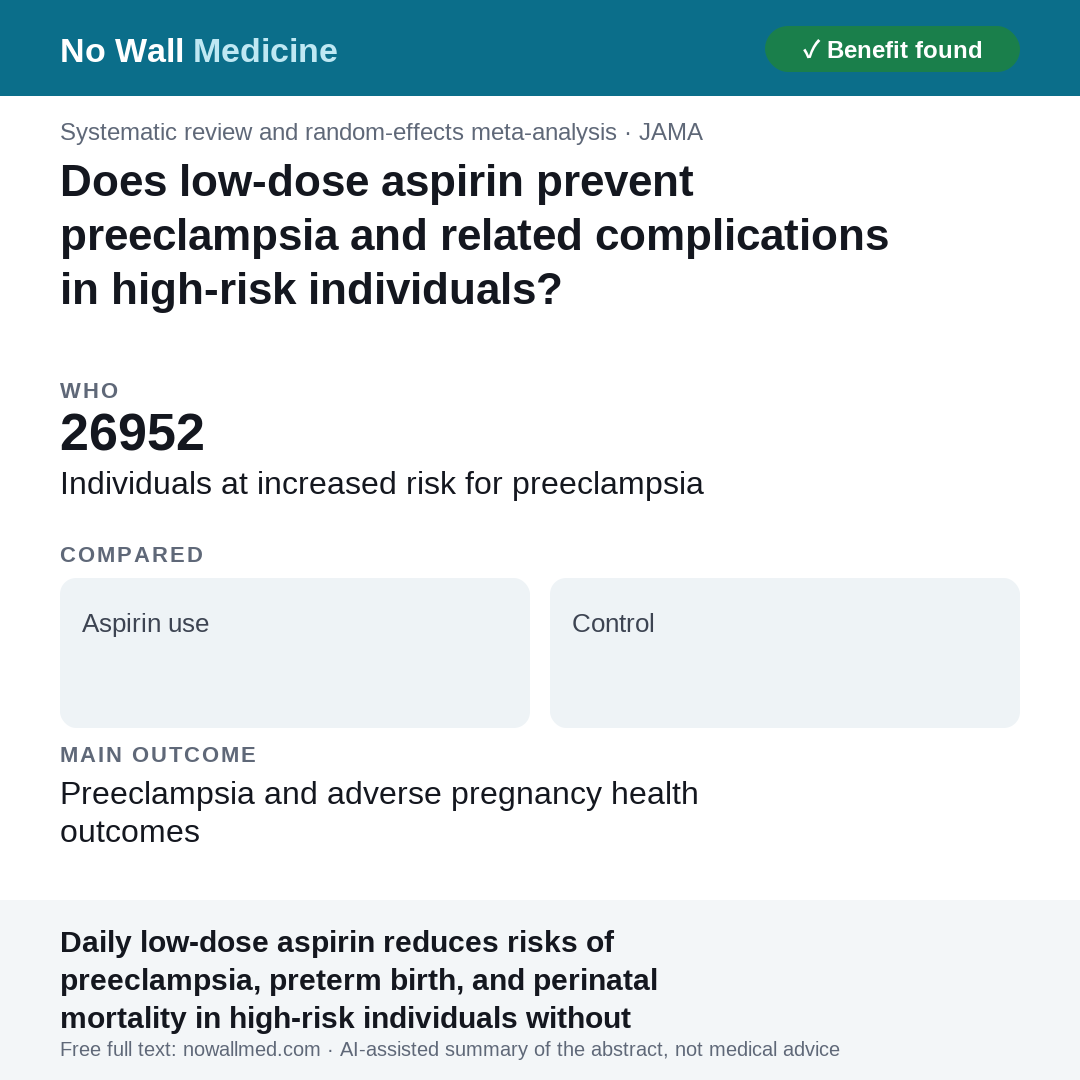
Aspirin Use to Prevent Preeclampsia and Related Morbidity and Mortality: Updated Evidence Report and Systematic Review for the US Preventive Services Task Force
Systematic review and random-effects meta-analysisBenefit found
Does low-dose aspirin prevent preeclampsia and related complications in high-risk individuals?
Who
26952
Individuals at increased risk for preeclampsia
Compared
Aspirin use
Control
Main outcome
Preeclampsia and adverse pregnancy health outcomes
Result: relative risk 0.85 (95% CI 0.75-0.95)
Bottom line: Daily low-dose aspirin reduces risks of preeclampsia, preterm birth, and perinatal mortality in high-risk individuals without evident harms.
Limitation: Absolute risk reductions were greater in smaller trials.
JAMA · 2021-09-28Download image
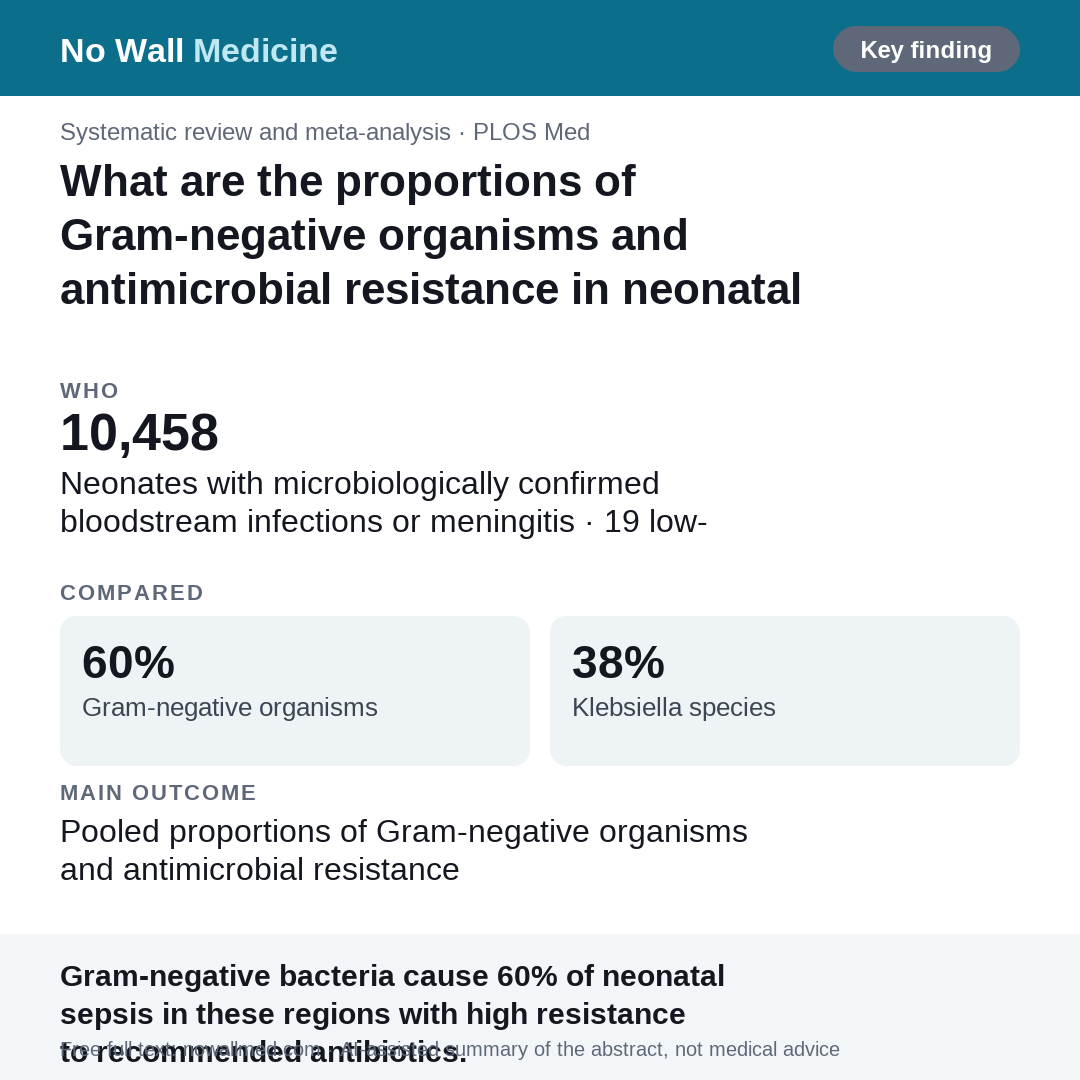
Gram-negative neonatal sepsis in low- and lower-middle-income countries and WHO empirical antibiotic recommendations: A systematic review and meta-analysis
Systematic review and meta-analysisKey finding
What are the proportions of Gram-negative organisms and antimicrobial resistance in neonatal sepsis?
Who
10,458
Neonates with microbiologically confirmed bloodstream infections or meningitis · 19 low- and lower-middle-income countries in Africa and Asia
Compared
60%Gram-negative organisms (95% CI 55% to 65%)
38%Klebsiella species (95% CI 33% to 43%)
Main outcome
Pooled proportions of Gram-negative organisms and antimicrobial resistance
Bottom line: Gram-negative bacteria cause 60% of neonatal sepsis in these regions with high resistance to recommended antibiotics.
Limitation: Significant heterogeneity, exclusion of upper-middle-income countries, and potential sampling bias from tertiary hospital settings.
PLOS Med · 2021-09-28Download image
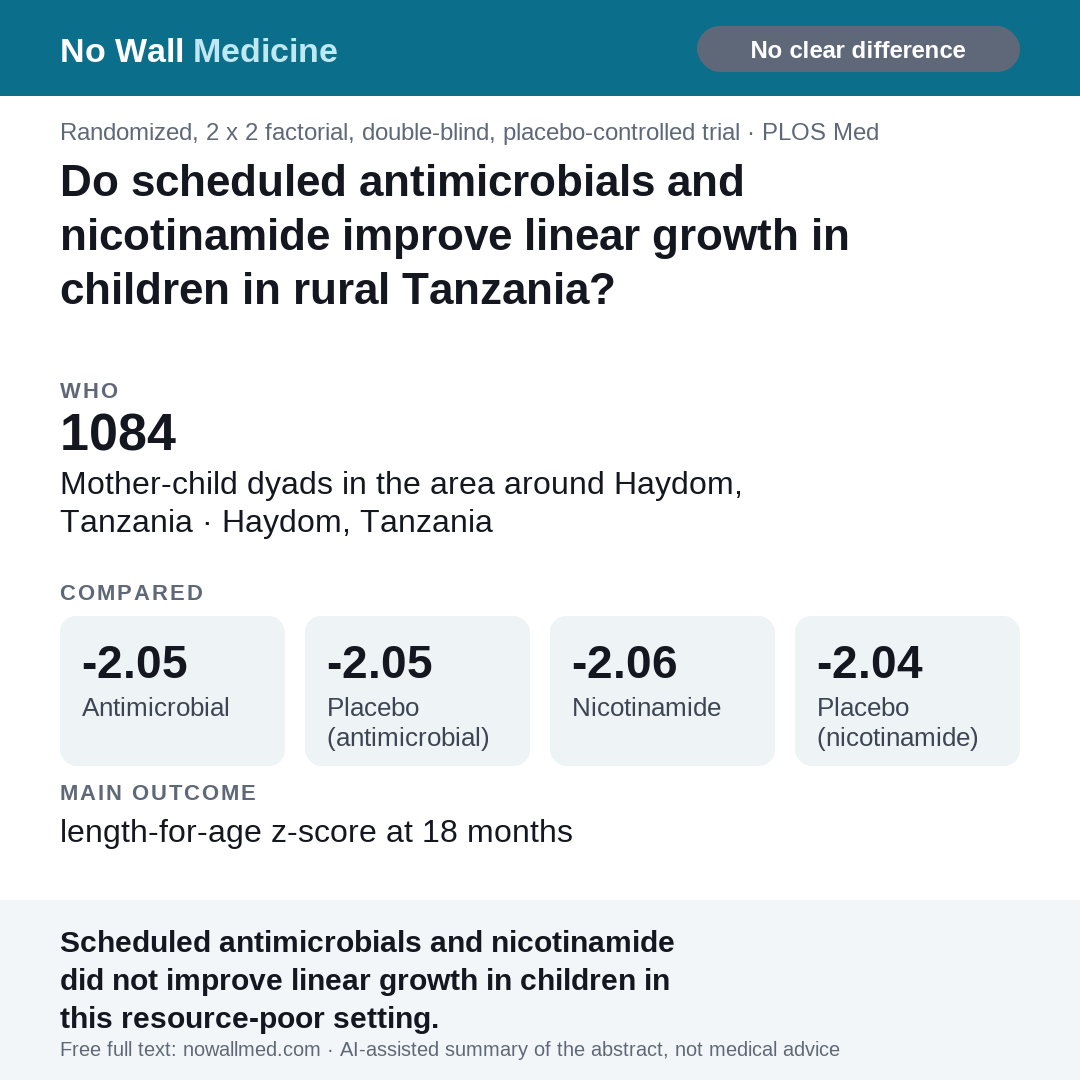
Effect of scheduled antimicrobial and nicotinamide treatment on linear growth in children in rural Tanzania: A factorial randomized, double-blind, placebo-controlled trial
Randomized, 2 x 2 factorial, double-blind, placebo-controlled trialNo clear difference
Do scheduled antimicrobials and nicotinamide improve linear growth in children in rural Tanzania?
Who
1084
Mother-child dyads in the area around Haydom, Tanzania · Haydom, Tanzania
Compared
-2.05Antimicrobial (95% CI -2.13, -1.96)
-2.05Placebo (antimicrobial) (95% CI -2.14, -1.97)
-2.06Nicotinamide (95% CI -2.13, -1.95)
-2.04Placebo (nicotinamide) (95% CI -2.14, -1.98)
Main outcome
length-for-age z-score at 18 months
Result: mean difference 0.01 (95% CI -0.13, 0.11) for antimicrobial; 0.03 (95% CI -0.15, 0.09) for nicotinamide
Bottom line: Scheduled antimicrobials and nicotinamide did not improve linear growth in children in this resource-poor setting.
Limitation: Absence of laboratory measures of pathogen carriage and nicotinamide metabolism to provide context.
PLOS Med · 2021-09-28Download image
Effectiveness and costs associated with a lay counselor-delivered, brief problem-solving mental health intervention for adolescents in urban, low-income schools in India: 12-month outcomes of a randomized controlled trial
Randomized controlled trialBenefit found
Is a lay counselor-delivered problem-solving intervention effective for adolescents in low-income schools?
Who
250
250 school-going adolescents with elevated mental health symptoms · 6 government schools in New Delhi, India
Compared
Lay counselor intervention
Printed booklets alone
Main outcome
Psychosocial problems and mental health symptoms
Result: YTP: adjusted mean difference -0.75 (95% CI -1.47, -0.03); SDQ Total Difficulties: adjusted mean difference -1.73 (95% CI -3.47, 0.02)
Bottom line: A brief lay counselor-delivered problem-solving intervention provides sustained mental health benefits for adolescents over 12 months.
Limitation: Lack of sample size calculations for 12-month follow-up and absence of cost-effectiveness analyses.
PLOS Med · 2021-09-28Download image

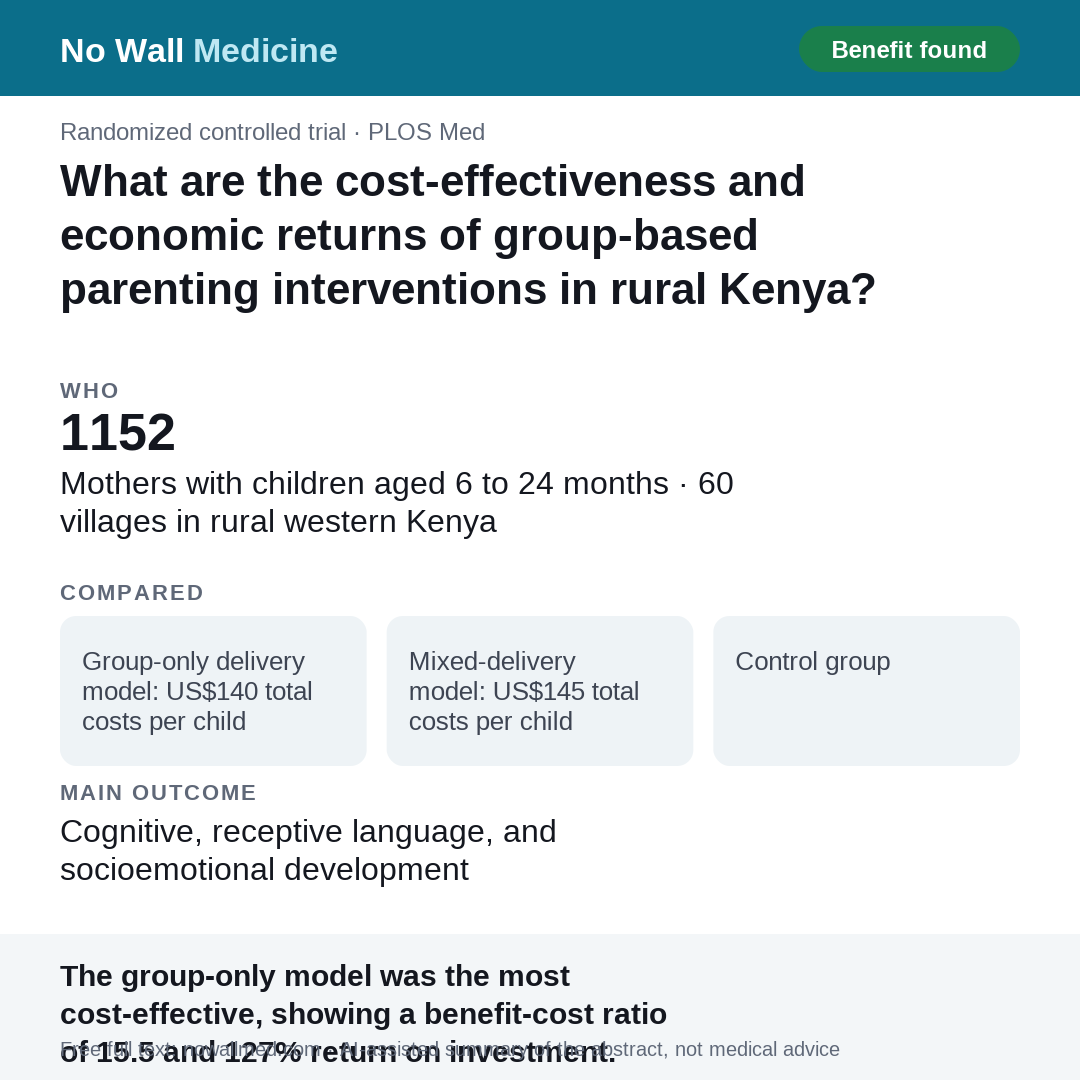
Cost-effectiveness and economic returns of group-based parenting interventions to promote early childhood development: Results from a randomized controlled trial in rural Kenya
Randomized controlled trialBenefit found
What are the cost-effectiveness and economic returns of group-based parenting interventions in rural Kenya?
Who
1152
Mothers with children aged 6 to 24 months · 60 villages in rural western Kenya
Compared
Group-only delivery model: US$140 total costs per child
Mixed-delivery model: US$145 total costs per child
Control group
Main outcome
Cognitive, receptive language, and socioemotional development
Bottom line: The group-only model was the most cost-effective, showing a benefit-cost ratio of 15.5 and 127% return on investment.
Limitation: Estimates make assumptions about discount rates, income tax rates, and future wages and schooling.
PLOS Med · 2021-09-28Download image
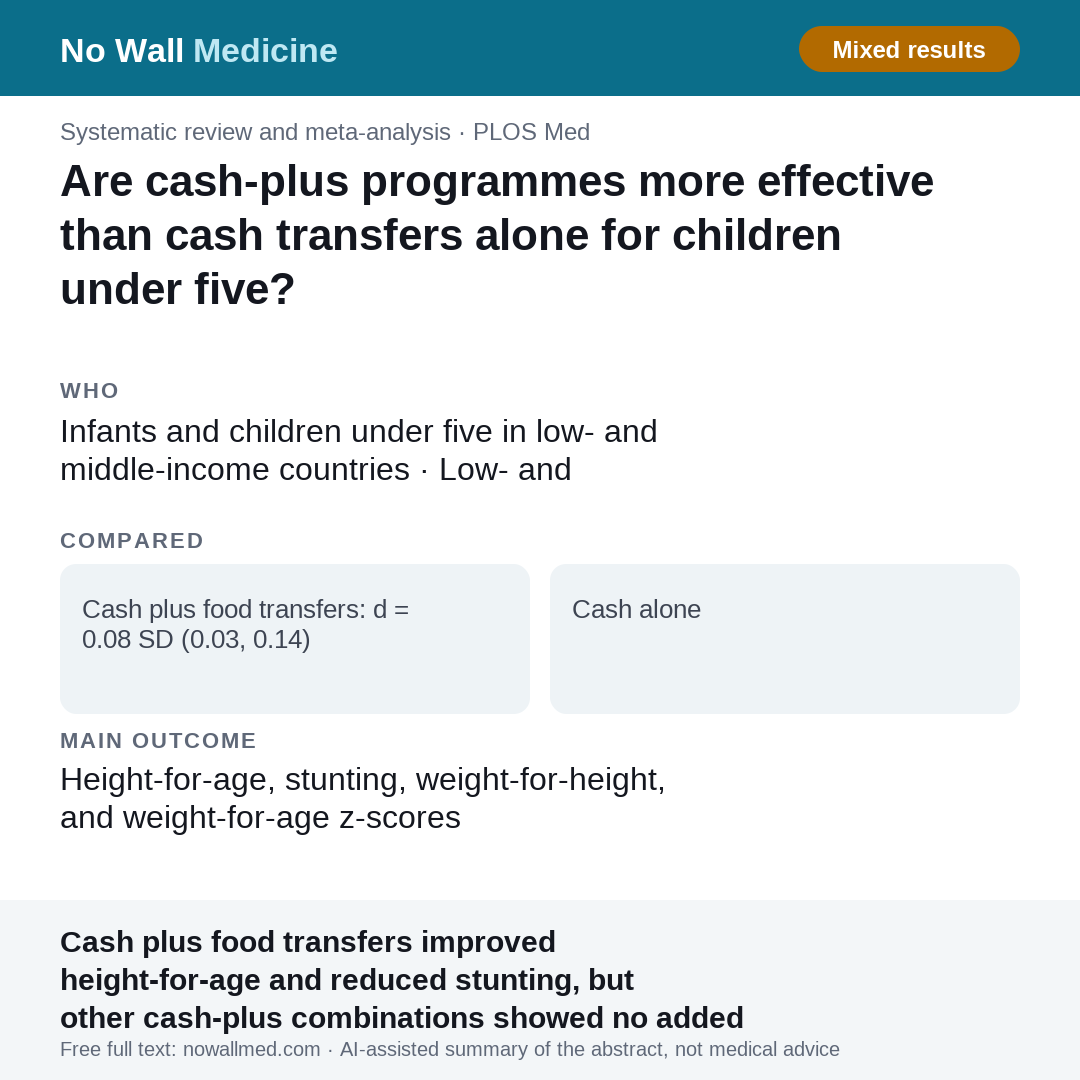
Effectiveness of cash-plus programmes on early childhood outcomes compared to cash transfers alone: A systematic review and meta-analysis in low- and middle-income countries
Systematic review and meta-analysisMixed results
Are cash-plus programmes more effective than cash transfers alone for children under five?
Who
Infants and children under five in low- and middle-income countries · Low- and middle-income countries
Compared
Cash plus food transfers: d = 0.08 SD (0.03, 0.14)
Cash alone
Main outcome
Height-for-age, stunting, weight-for-height, and weight-for-age z-scores
Result: OR = 0.82 (0.74, 0.92)
Bottom line: Cash plus food transfers improved height-for-age and reduced stunting, but other cash-plus combinations showed no added impact.
Limitation: Few studies compared cash-plus against cash alone and potentially high heterogeneity between findings.
PLOS Med · 2021-09-28Download image