Visual abstracts
New randomized trials and meta-analyses from leading journals at a glance: who was studied, what was compared, and what was found. Every paper is free to read in full.
All specialtiesCardiology 4832Oncology 4114Gastroenterology & Hepatology 1934Infectious Disease 3824Neurology 1899Psychiatry & Mental Health 2256Pulmonology 2082Critical Care 1345Endocrinology & Diabetes 2572Pediatrics 2940Surgery 2525Orthopedics & Sports Medicine 926Neurosurgery 534Cardiothoracic & Vascular Surgery 671Plastic & Reconstructive Surgery 591Nephrology 1124Rheumatology 823Hematology 1104Dermatology 620Ophthalmology 543Obstetrics & Gynecology 1684Public & Global Health 1056Radiology & Imaging 641Anesthesiology 962Urology 754ENT (Otolaryngology) 503Emergency Medicine 489Allergy & Immunology 313Geriatrics 981Family Medicine & Primary Care 541Medical Genetics & Genomics 675Pathology & Laboratory Medicine 157Physical Medicine & Rehabilitation 751Palliative Care 424Nutrition 1580Digital Health & AI 2195General Medicine 321
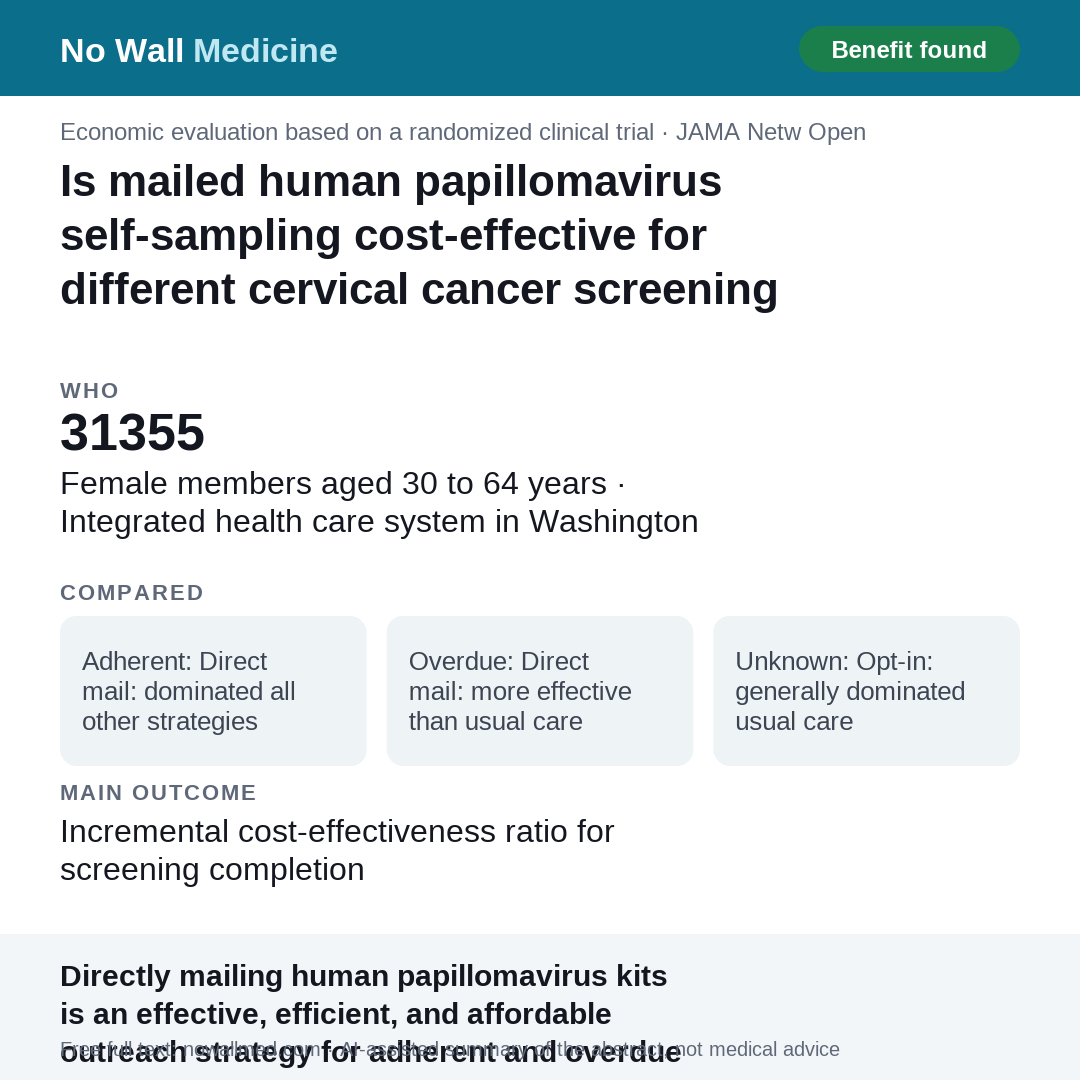
Cost-Effectiveness of HPV Self-Testing Options for Cervical Cancer Screening
Economic evaluation based on a randomized clinical trialBenefit found
Is mailed human papillomavirus self-sampling cost-effective for different cervical cancer screening histories?
Who
31355
Female members aged 30 to 64 years · Integrated health care system in Washington State
Compared
Adherent: Direct mail: dominated all other strategies
Overdue: Direct mail: more effective than usual care
Unknown: Opt-in: generally dominated usual care
Main outcome
Incremental cost-effectiveness ratio for screening completion
Bottom line: Directly mailing human papillomavirus kits is an effective, efficient, and affordable outreach strategy for adherent and overdue individuals.
JAMA Netw Open · 2025-10-01Download image
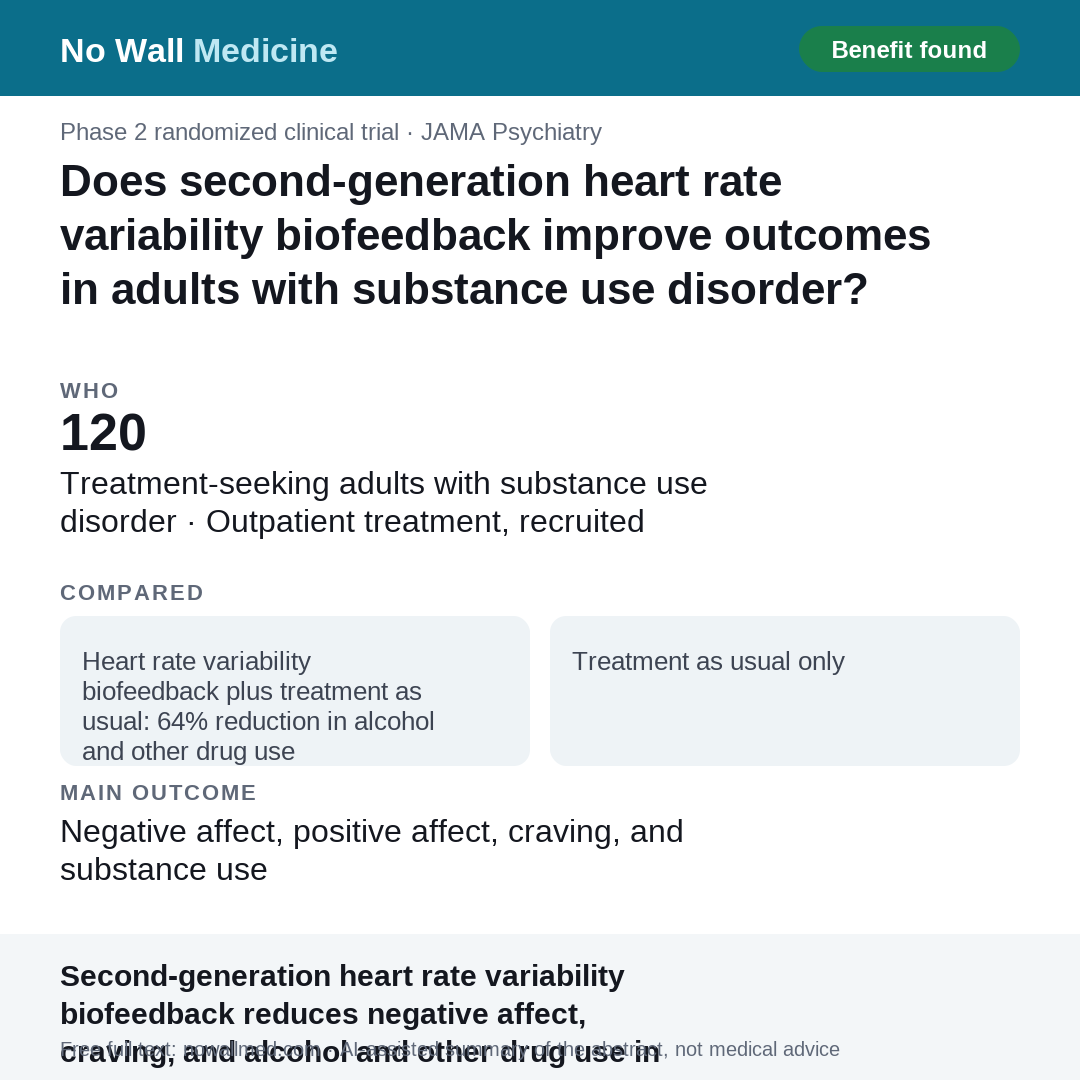
Heart Rate Variability Biofeedback for Substance Use Disorder: A Randomized Clinical Trial
Phase 2 randomized clinical trialBenefit found
Does second-generation heart rate variability biofeedback improve outcomes in adults with substance use disorder?
Who
120
Treatment-seeking adults with substance use disorder · Outpatient treatment, recruited virtually across the United States
Compared
Heart rate variability biofeedback plus treatment as usual: 64% reduction in alcohol and other drug use
Treatment as usual only
Main outcome
Negative affect, positive affect, craving, and substance use
Result: odds ratio 0.36 (95% credible interval 0.25-0.54)
Bottom line: Second-generation heart rate variability biofeedback reduces negative affect, craving, and alcohol and other drug use in adults with substance use disorder.
JAMA Psychiatry · 2025-10-01Download image
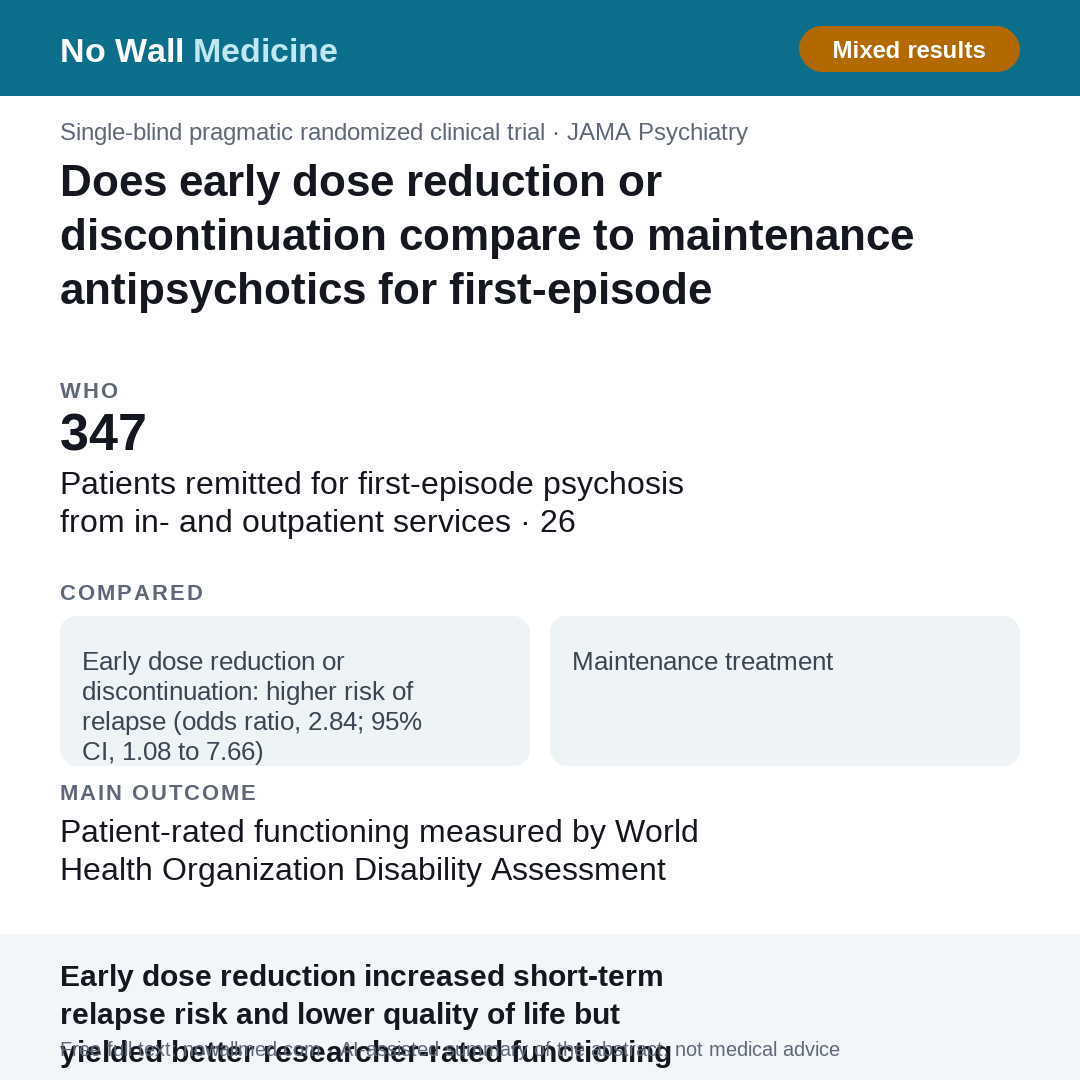
Early Dose Reduction or Discontinuation vs Maintenance Antipsychotics After First Psychotic Episode Remission: A Randomized Clinical Trial
Single-blind pragmatic randomized clinical trialMixed results
Does early dose reduction or discontinuation compare to maintenance antipsychotics for first-episode psychosis?
Who
347
Patients remitted for first-episode psychosis from in- and outpatient services · 26 specialized psychosis units in the Netherlands
Compared
Early dose reduction or discontinuation: higher risk of relapse (odds ratio, 2.84; 95% CI, 1.08 to 7.66)
Maintenance treatment
Main outcome
Patient-rated functioning measured by World Health Organization Disability Assessment Schedule 2.0
Bottom line: Early dose reduction increased short-term relapse risk and lower quality of life but yielded better researcher-rated functioning at years three and four.
JAMA Psychiatry · 2025-10-01Download image
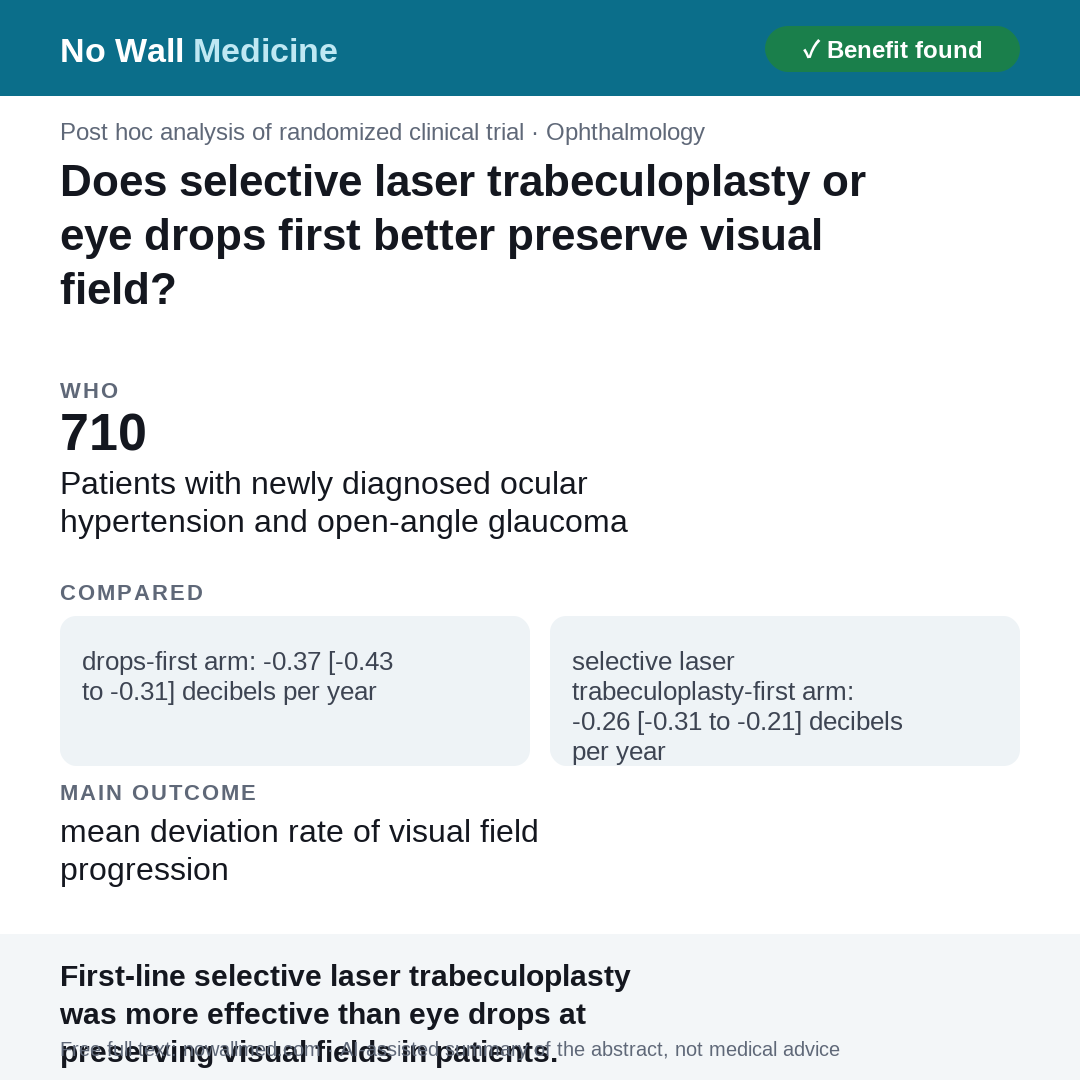
Six-Year Rate of Visual Field Progression in the Laser in Glaucoma and Ocular Hypertension Trial
Post hoc analysis of randomized clinical trialBenefit found
Does selective laser trabeculoplasty or eye drops first better preserve visual field?
Who
710
Patients with newly diagnosed ocular hypertension and open-angle glaucoma
Compared
drops-first arm: -0.37 [-0.43 to -0.31] decibels per year
selective laser trabeculoplasty-first arm: -0.26 [-0.31 to -0.21] decibels per year
Main outcome
mean deviation rate of visual field progression
Bottom line: First-line selective laser trabeculoplasty was more effective than eye drops at preserving visual fields in patients.
Ophthalmology · 2025-10-01Download image
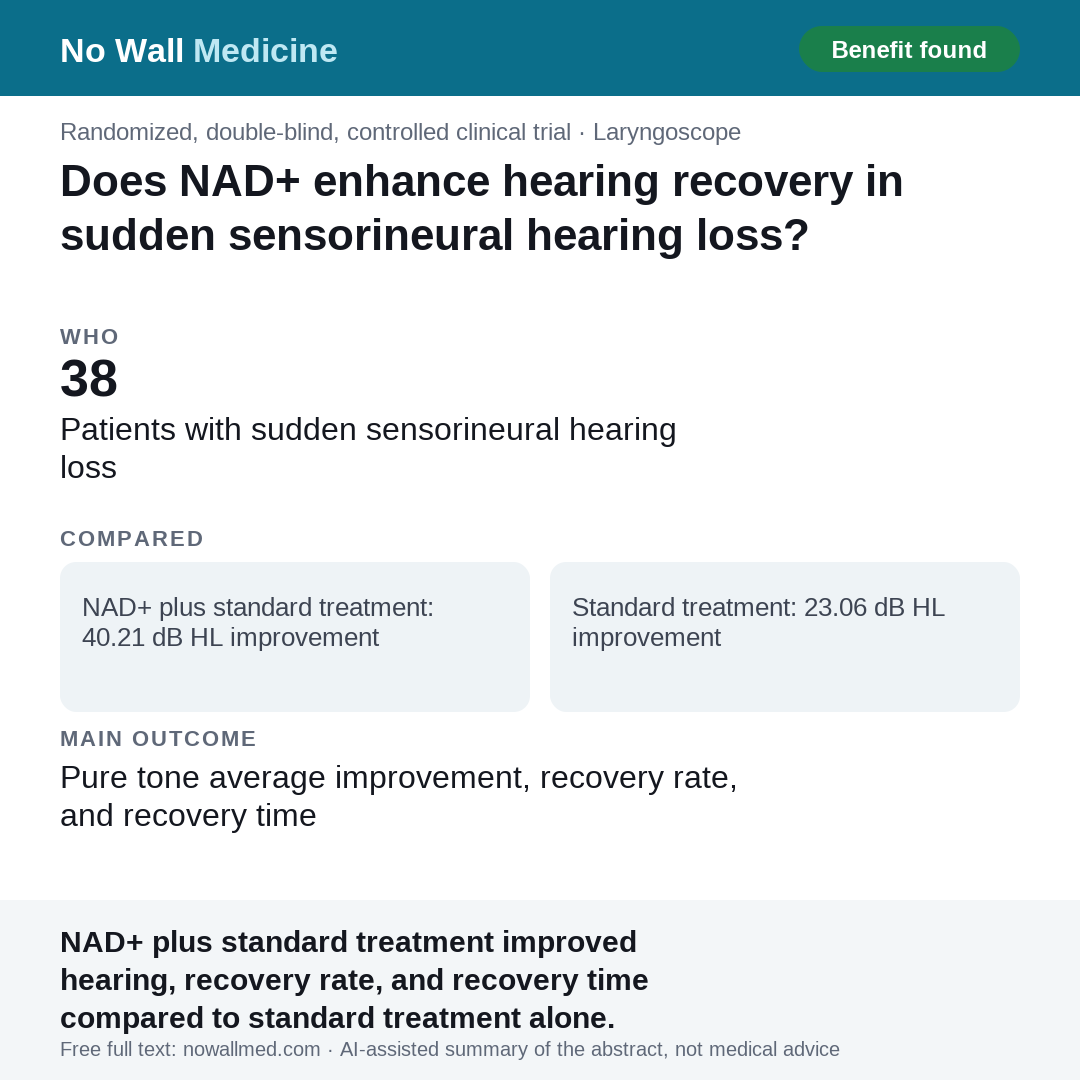
NAD+ Enhanced on Hearing Recovery in Sudden Sensorineural Hearing Loss: Randomized Controlled Trial
Randomized, double-blind, controlled clinical trialBenefit found
Does NAD+ enhance hearing recovery in sudden sensorineural hearing loss?
Who
38
Patients with sudden sensorineural hearing loss
Compared
NAD+ plus standard treatment: 40.21 dB HL improvement
Standard treatment: 23.06 dB HL improvement
Main outcome
Pure tone average improvement, recovery rate, and recovery time
Bottom line: NAD+ plus standard treatment improved hearing, recovery rate, and recovery time compared to standard treatment alone.
Laryngoscope · 2025-10-01Download image
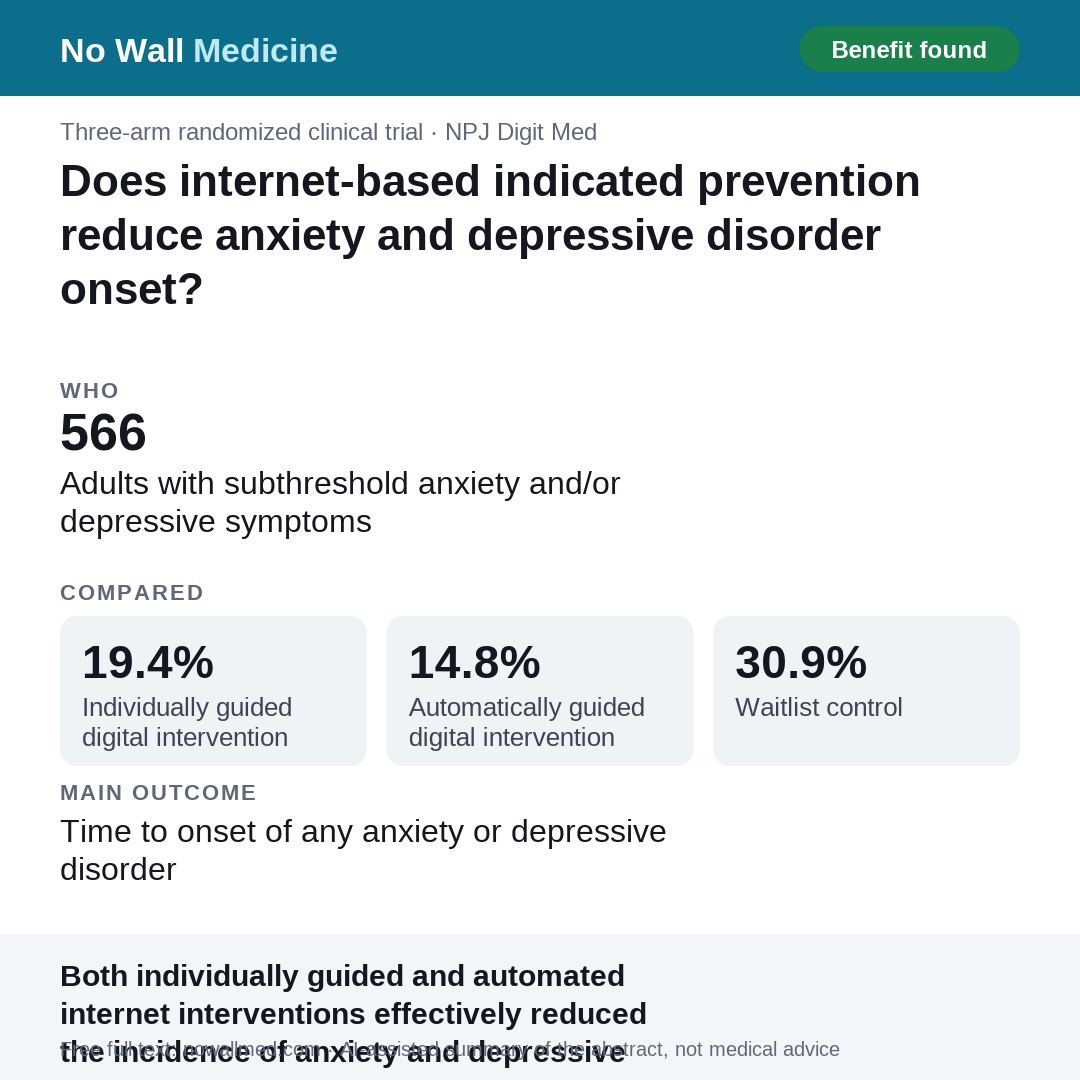
Internet-based indicated prevention of anxiety and depression disorder onset three-arm randomized clinical trial
Three-arm randomized clinical trialBenefit found
Does internet-based indicated prevention reduce anxiety and depressive disorder onset?
Who
566
Adults with subthreshold anxiety and/or depressive symptoms
Compared
19.4%Individually guided digital intervention
14.8%Automatically guided digital intervention
30.9%Waitlist control
Main outcome
Time to onset of any anxiety or depressive disorder
Result: hazard ratios 0.59 and 0.47
Bottom line: Both individually guided and automated internet interventions effectively reduced the incidence of anxiety and depressive disorders.
NPJ Digit Med · 2025-10-01Download image
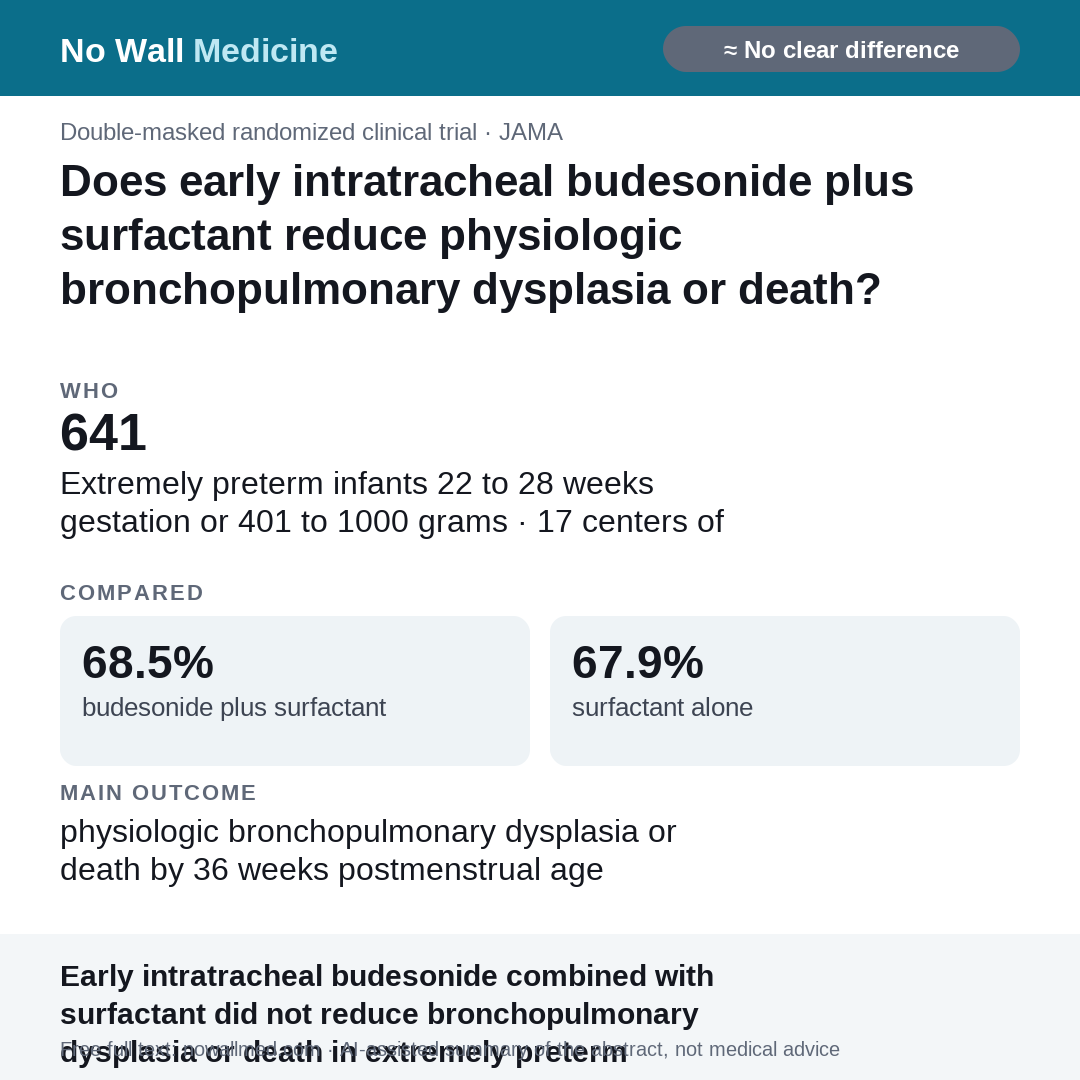
Early Intratracheal Budesonide to Reduce Bronchopulmonary Dysplasia in Extremely Preterm Infants: The Budesonide in Babies (BiB) Randomized Clinical Trial
Double-masked randomized clinical trialNo clear difference
Does early intratracheal budesonide plus surfactant reduce physiologic bronchopulmonary dysplasia or death?
Who
641
Extremely preterm infants 22 to 28 weeks gestation or 401 to 1000 grams · 17 centers of the United States Neonatal Research Network
Compared
68.5%budesonide plus surfactant
67.9%surfactant alone
Main outcome
physiologic bronchopulmonary dysplasia or death by 36 weeks postmenstrual age
Result: adjusted relative risk 1.00 (95% CI 0.90-1.11)
Bottom line: Early intratracheal budesonide combined with surfactant did not reduce bronchopulmonary dysplasia or death in extremely preterm infants.
JAMA · 2025-09-30Download image
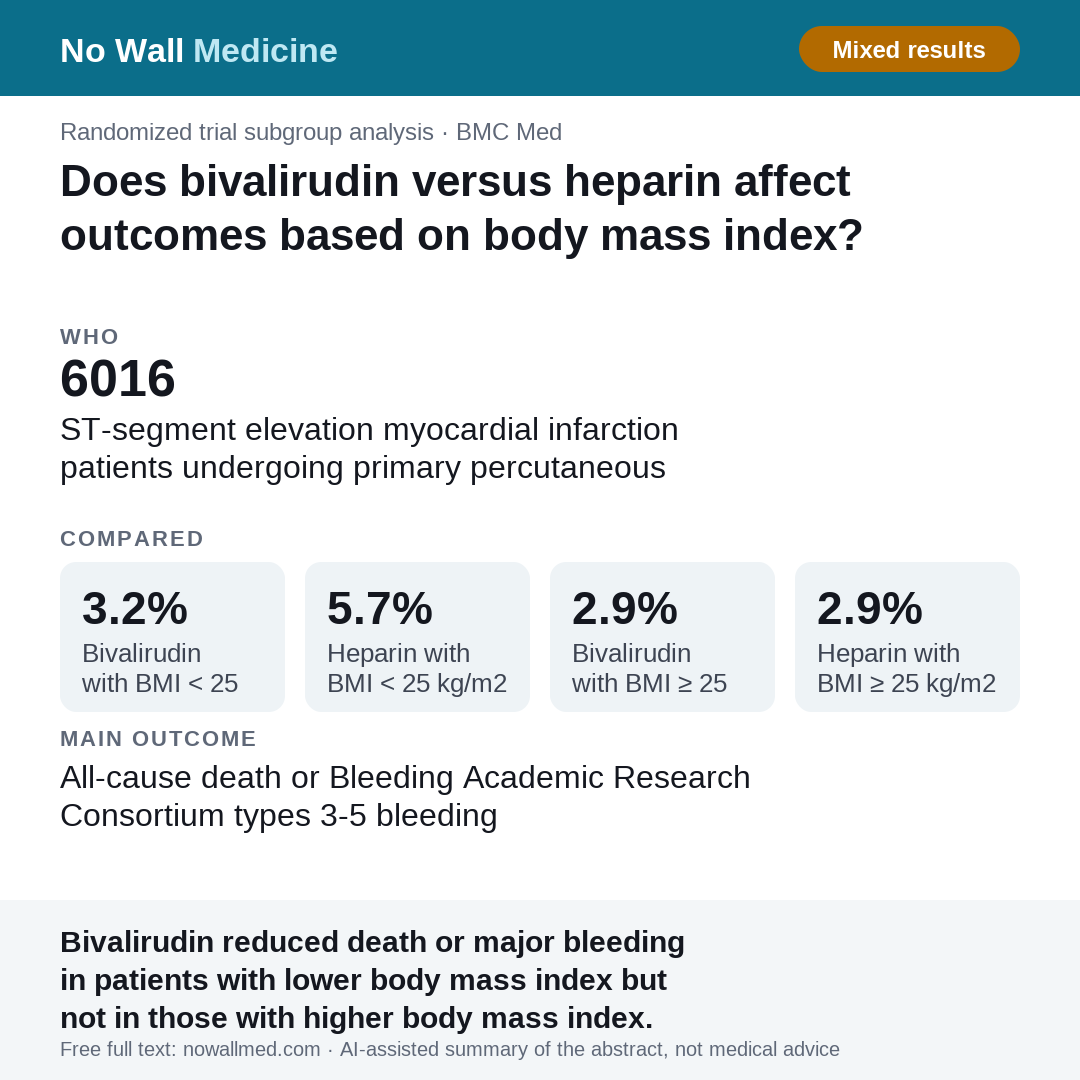
BMI differences on anticoagulation with bivalirudin vs. heparin during primary PCI: a BRIGHT-4 subanalysis
Randomized trial subgroup analysisMixed results
Does bivalirudin versus heparin affect outcomes based on body mass index?
Who
6016
ST-segment elevation myocardial infarction patients undergoing primary percutaneous coronary intervention
Compared
3.2%Bivalirudin with BMI < 25 kg/m2
5.7%Heparin with BMI < 25 kg/m2
2.9%Bivalirudin with BMI ≥ 25 kg/m2
2.9%Heparin with BMI ≥ 25 kg/m2
Main outcome
All-cause death or Bleeding Academic Research Consortium types 3-5 bleeding
Result: adjusted HR 0.56 (95% CI 0.40-0.79) for BMI < 25
Bottom line: Bivalirudin reduced death or major bleeding in patients with lower body mass index but not in those with higher body mass index.
Limitation: The difference in outcomes between BMI groups was no longer significant after adjusting for confounders.
BMC Med · 2025-09-30Download image
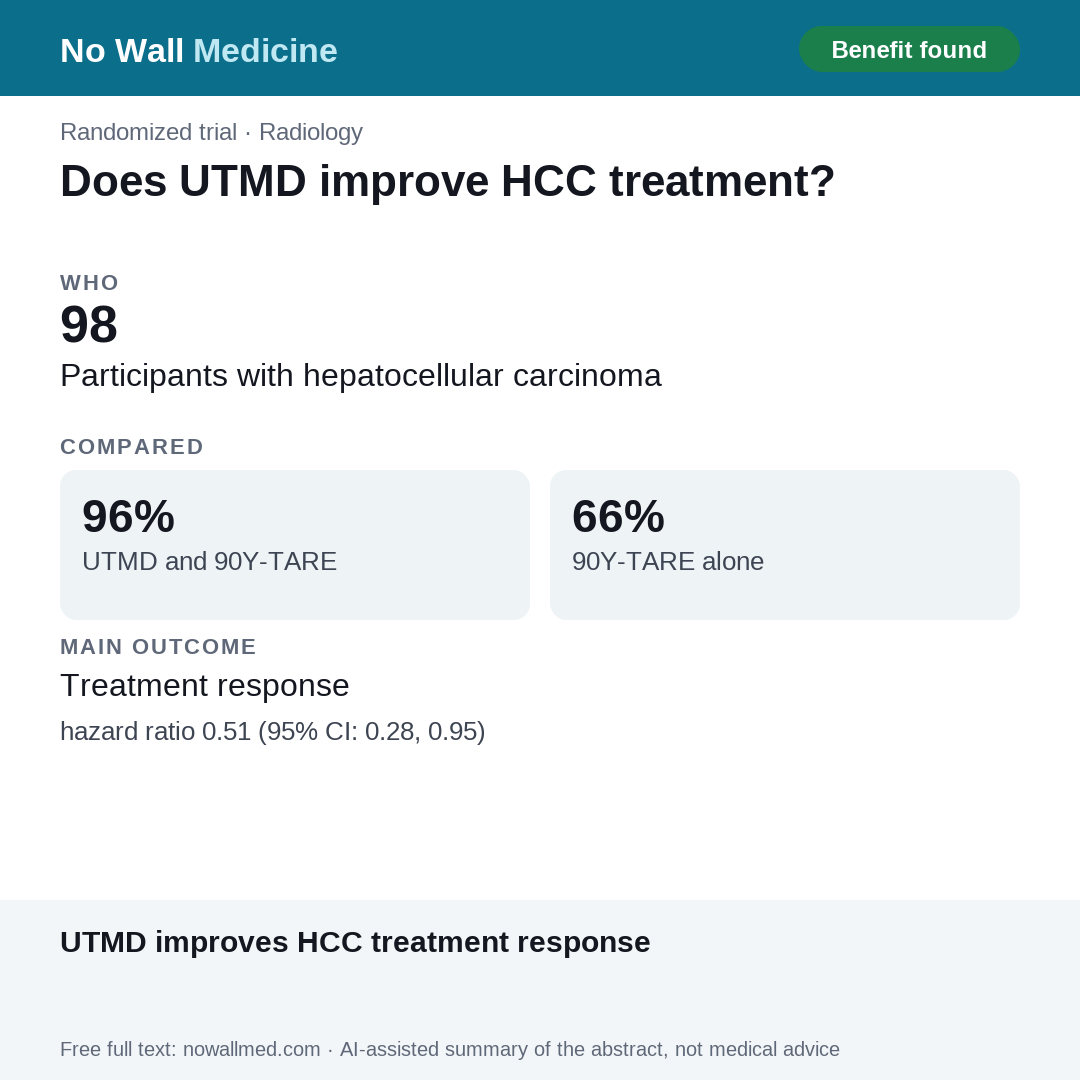
Microbubble-based Radiosensitization of Hepatocellular Carcinoma: Evaluation of Safety and Efficacy in a Phase II Randomized Trial
Randomized trialEarly signal
Does UTMD improve HCC treatment?
Who
98
Participants with hepatocellular carcinoma
Compared
96%UTMD and 90Y-TARE (46/48)
66%90Y-TARE alone (33/50)
Main outcome
Treatment response
Result: hazard ratio 0.51 (95% CI: 0.28, 0.95)
Bottom line: UTMD improves HCC treatment response
Radiology · 2025-09-30Download image
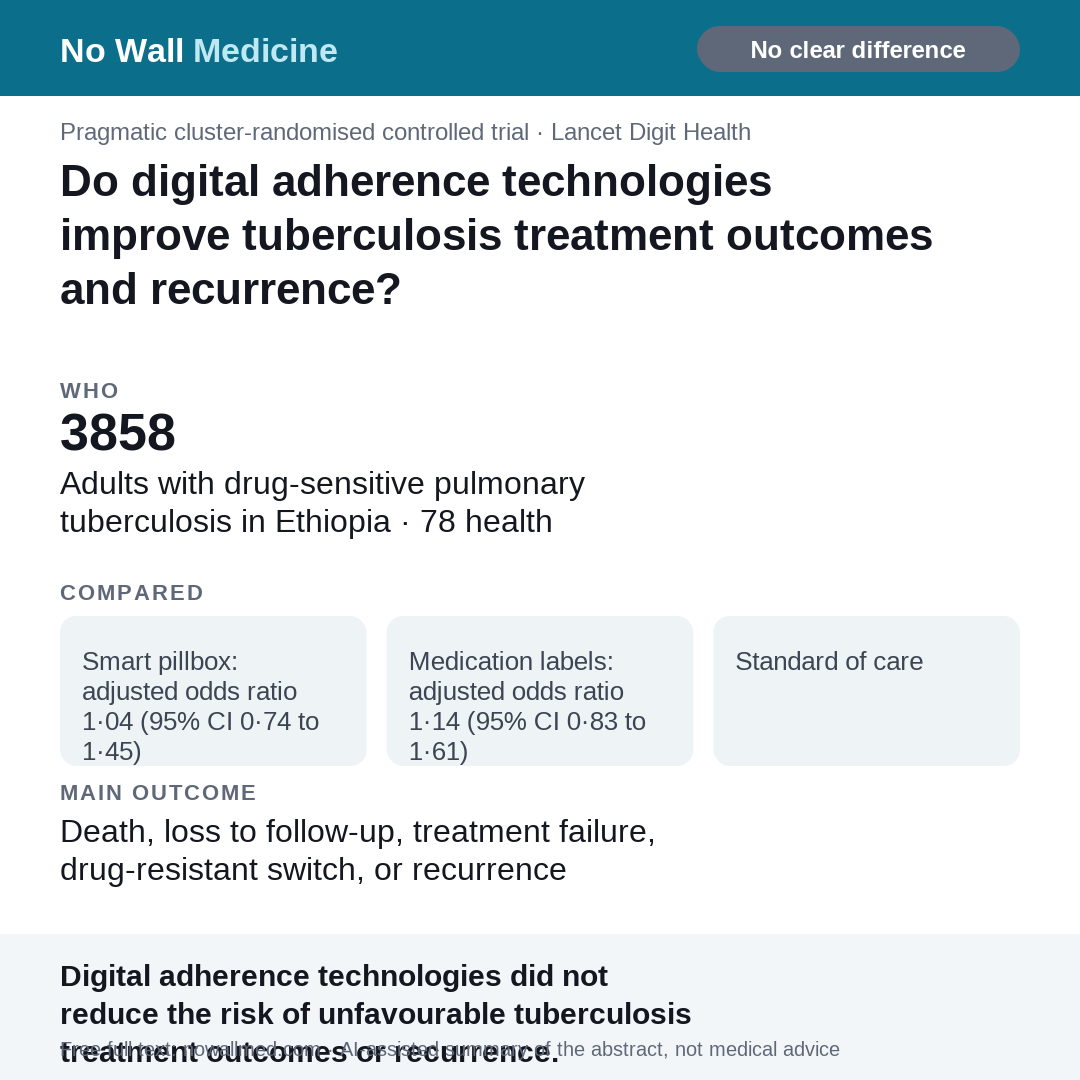
Digital adherence technology interventions to reduce poor end-of-treatment outcomes and recurrence among adults with drug-sensitive tuberculosis in Ethiopia: a three-arm, pragmatic, cluster-randomised, controlled trial
Pragmatic cluster-randomised controlled trialNo clear difference
Do digital adherence technologies improve tuberculosis treatment outcomes and recurrence?
Who
3858
Adults with drug-sensitive pulmonary tuberculosis in Ethiopia · 78 health facilities in Ethiopia
Compared
Smart pillbox: adjusted odds ratio 1·04 (95% CI 0·74 to 1·45)
Medication labels: adjusted odds ratio 1·14 (95% CI 0·83 to 1·61)
Standard of care
Main outcome
Death, loss to follow-up, treatment failure, drug-resistant switch, or recurrence
Result: adjusted odds ratio 1·04 (95% CI 0·74 to 1·45)
Bottom line: Digital adherence technologies did not reduce the risk of unfavourable tuberculosis treatment outcomes or recurrence.
Funded by: Unitaid
Lancet Digit Health · 2025-09-30Download image
Effects of a virtual iSupport Program on carers and people with dementia
Pragmatic randomized controlled trialBenefit found
Does a virtual iSupport Program benefit carers and people living with dementia?
Who
149
Carers of people living with dementia · Four organizations
Compared
Intervention group: 60% lower hospital admission rate
Usual care group
Main outcome
Quality of life and secondary clinical outcomes
Bottom line: The virtual iSupport Program improved carer quality of life and reduced hospital admissions for people living with dementia.
Alzheimers Dement · 2025-09-30Download image

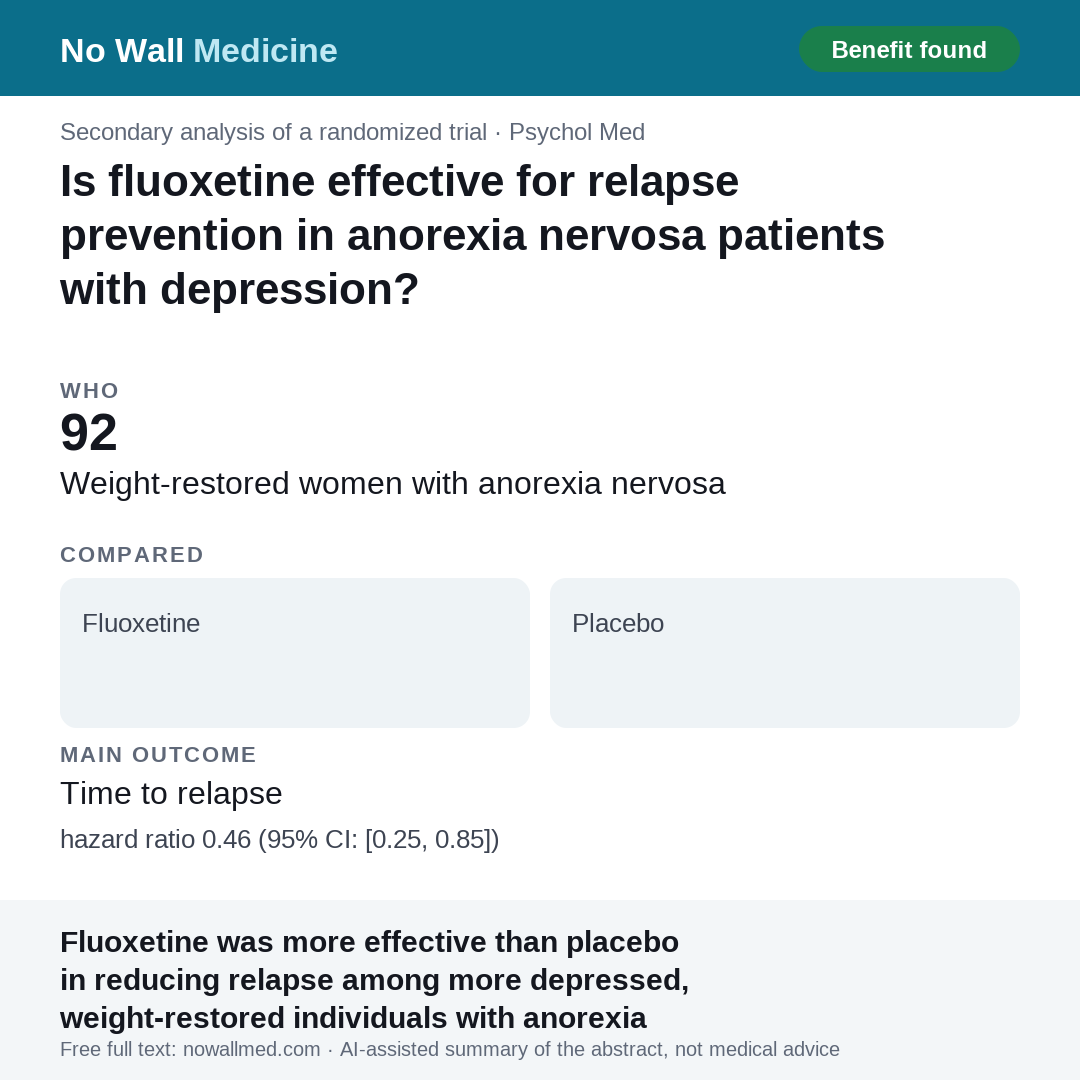
Fluoxetine for anorexia nervosa after weight restoration: moderation of effect by depression
Secondary analysis of a randomized trialBenefit found
Is fluoxetine effective for relapse prevention in anorexia nervosa patients with depression?
Who
92
Weight-restored women with anorexia nervosa
Compared
Fluoxetine
Placebo
Main outcome
Time to relapse
Result: hazard ratio 0.46 (95% CI: [0.25, 0.85])
Bottom line: Fluoxetine was more effective than placebo in reducing relapse among more depressed, weight-restored individuals with anorexia nervosa.
Limitation: These results require replication
Psychol Med · 2025-09-30Download image
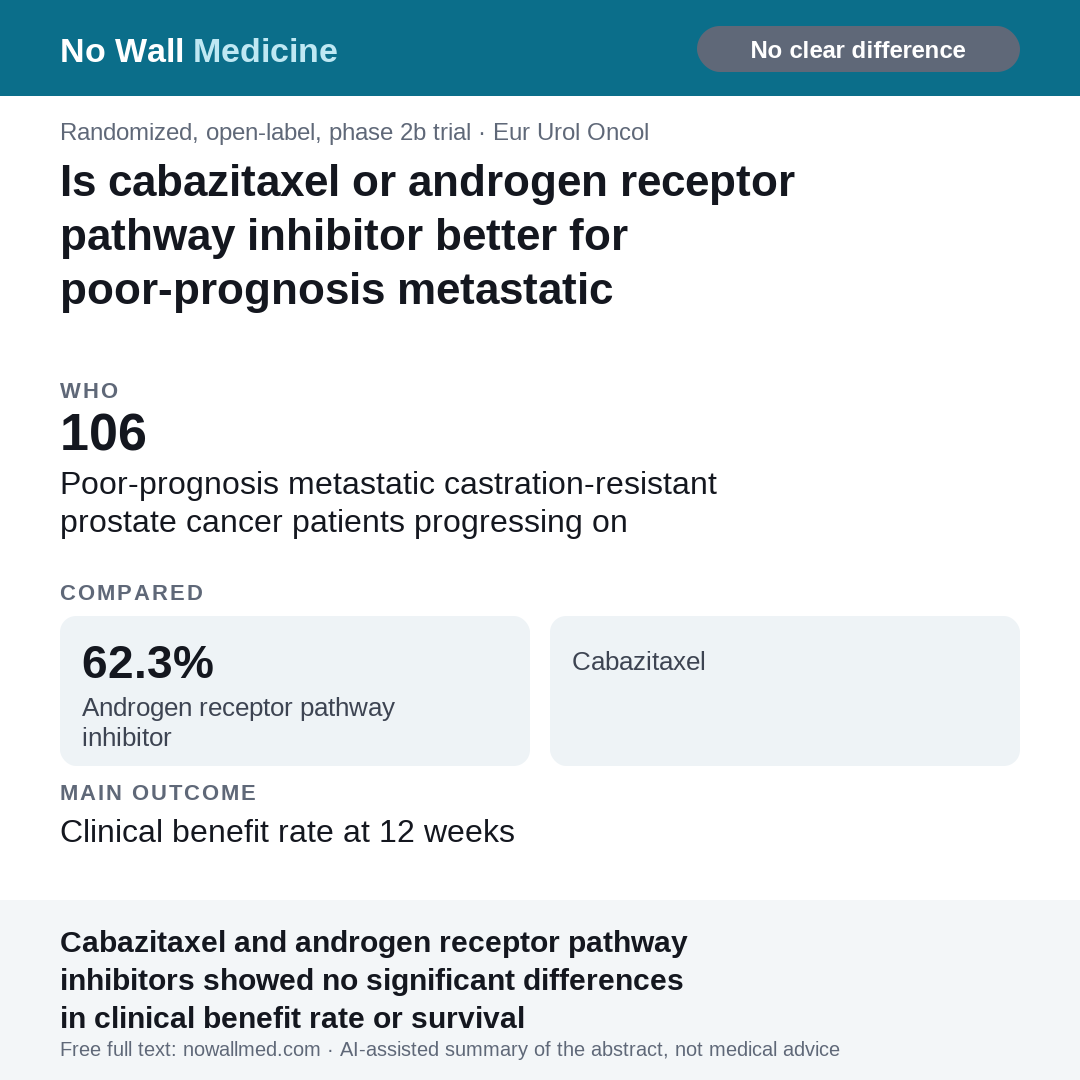
Cabazitaxel Versus Abiraterone or Enzalutamide for Poor-prognosis Metastatic Castration-resistant Prostate Cancer After Docetaxel: A Phase 2 Trial with a Circulating Tumor DNA Analysis
Randomized, open-label, phase 2b trialNo clear difference
Is cabazitaxel or androgen receptor pathway inhibitor better for poor-prognosis metastatic castration-resistant prostate cancer?
Who
106
Poor-prognosis metastatic castration-resistant prostate cancer patients progressing on docetaxel · Multicenter
Compared
62.3%Androgen receptor pathway inhibitor (66/106)
Cabazitaxel
Main outcome
Clinical benefit rate at 12 weeks
Bottom line: Cabazitaxel and androgen receptor pathway inhibitors showed no significant differences in clinical benefit rate or survival endpoints.
Eur Urol Oncol · 2025-09-30Download image
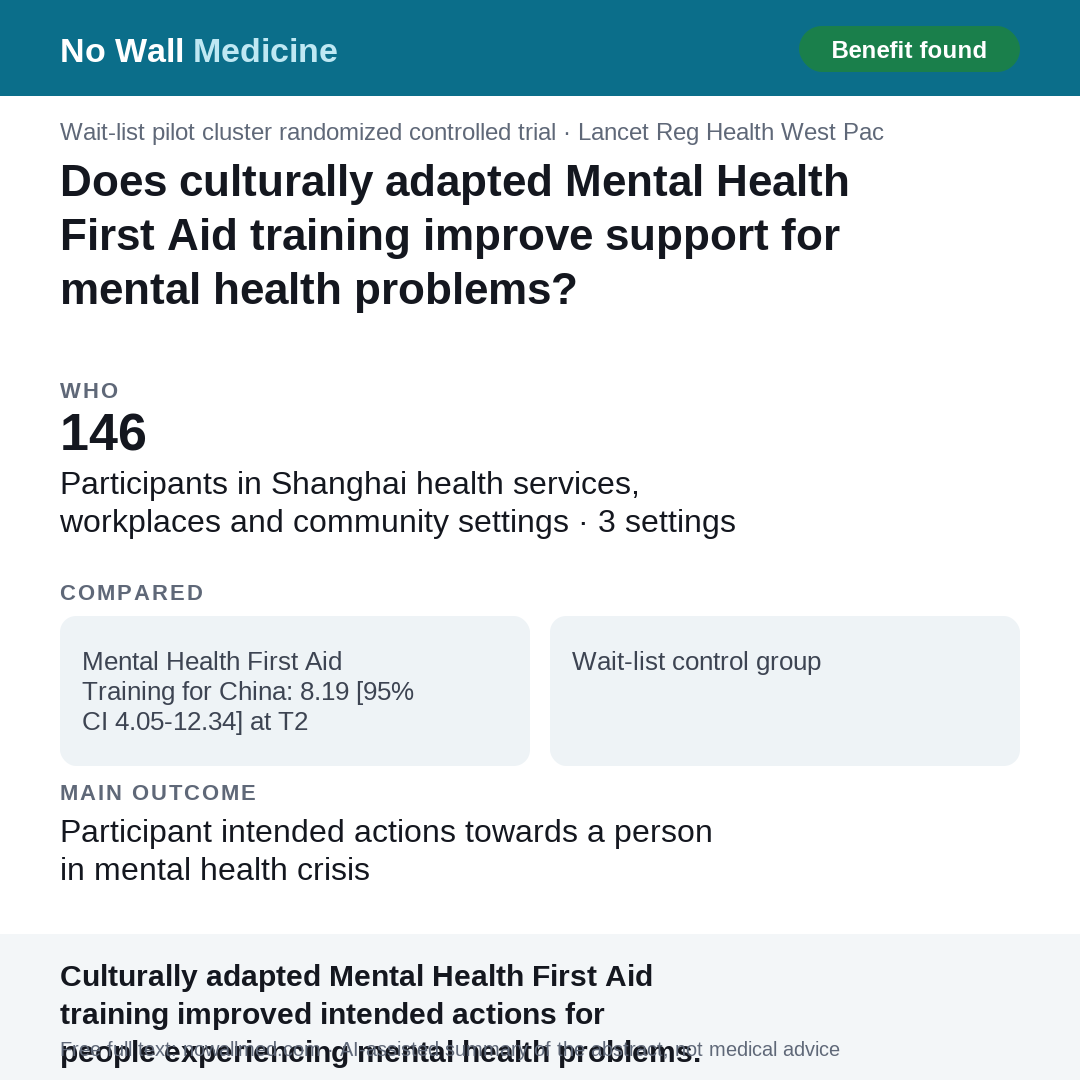
Improving support for people with mental health problems in China: a cluster randomised controlled trial of culturally adapted Mental Health First Aid training
Wait-list pilot cluster randomized controlled trialBenefit found
Does culturally adapted Mental Health First Aid training improve support for mental health problems?
Who
146
Participants in Shanghai health services, workplaces and community settings · 3 settings in Shanghai
Compared
Mental Health First Aid Training for China: 8.19 [95% CI 4.05-12.34] at T2
Wait-list control group
Main outcome
Participant intended actions towards a person in mental health crisis
Result: 8.19 [95% CI 4.05-12.34]; p < 0.001
Bottom line: Culturally adapted Mental Health First Aid training improved intended actions for people experiencing mental health problems.
Funded by: National Health and Medical Research Council
Lancet Reg Health West Pac · 2025-09-30Download image
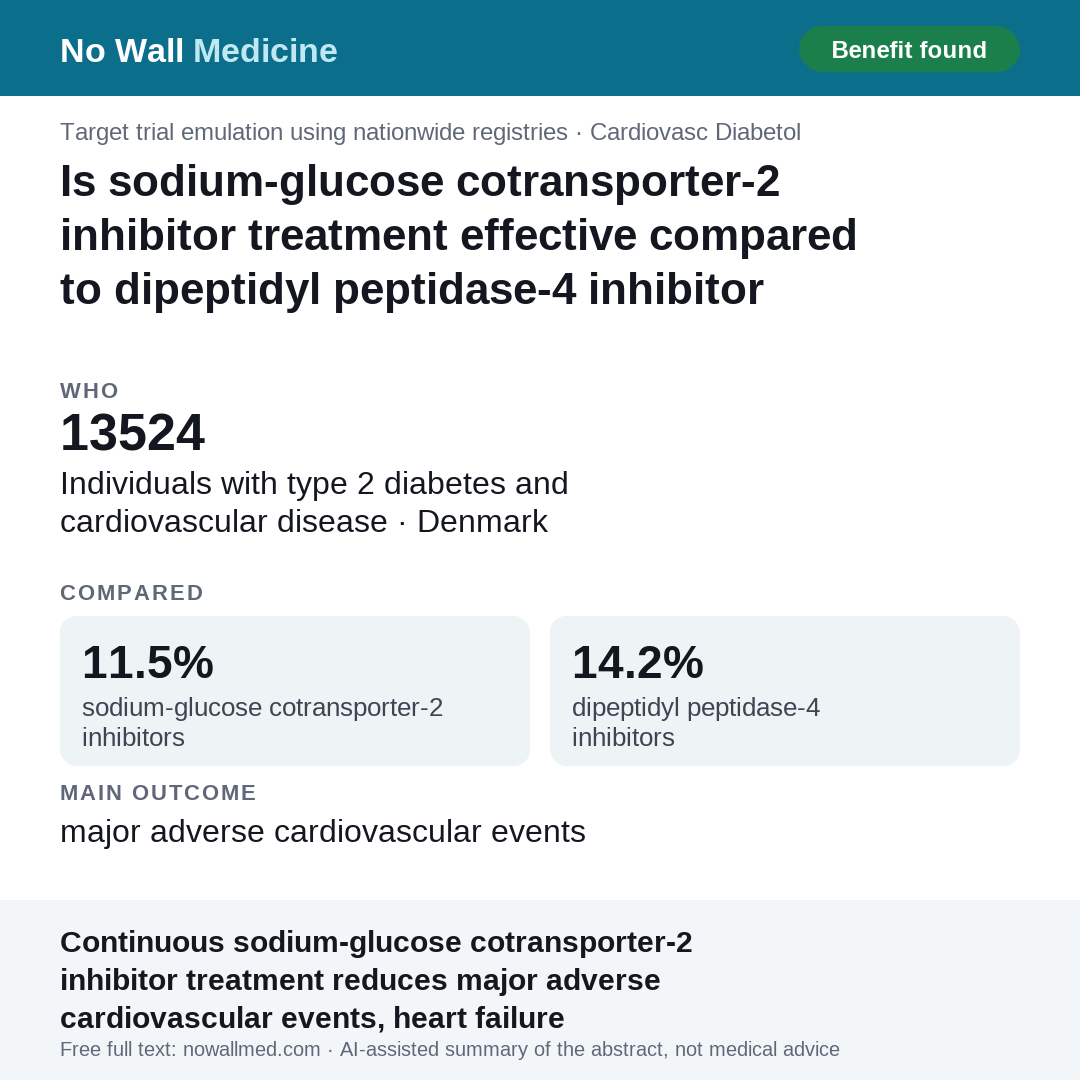
Type 2 diabetes, sodium-glucose cotransporter-2 inhibitors and cardiovascular outcomes: real world evidence versus a randomised clinical trial
Target trial emulation using nationwide registriesBenefit found
Is sodium-glucose cotransporter-2 inhibitor treatment effective compared to dipeptidyl peptidase-4 inhibitor treatment?
Who
13524
Individuals with type 2 diabetes and cardiovascular disease · Denmark
Compared
11.5%sodium-glucose cotransporter-2 inhibitors
14.2%dipeptidyl peptidase-4 inhibitors
Main outcome
major adverse cardiovascular events
Result: risk-difference: 2.8 percentage-points, 95% CI: 1.1-4.4%
Bottom line: Continuous sodium-glucose cotransporter-2 inhibitor treatment reduces major adverse cardiovascular events, heart failure hospitalizations, and mortality in real-world practice.
Cardiovasc Diabetol · 2025-09-30Download image
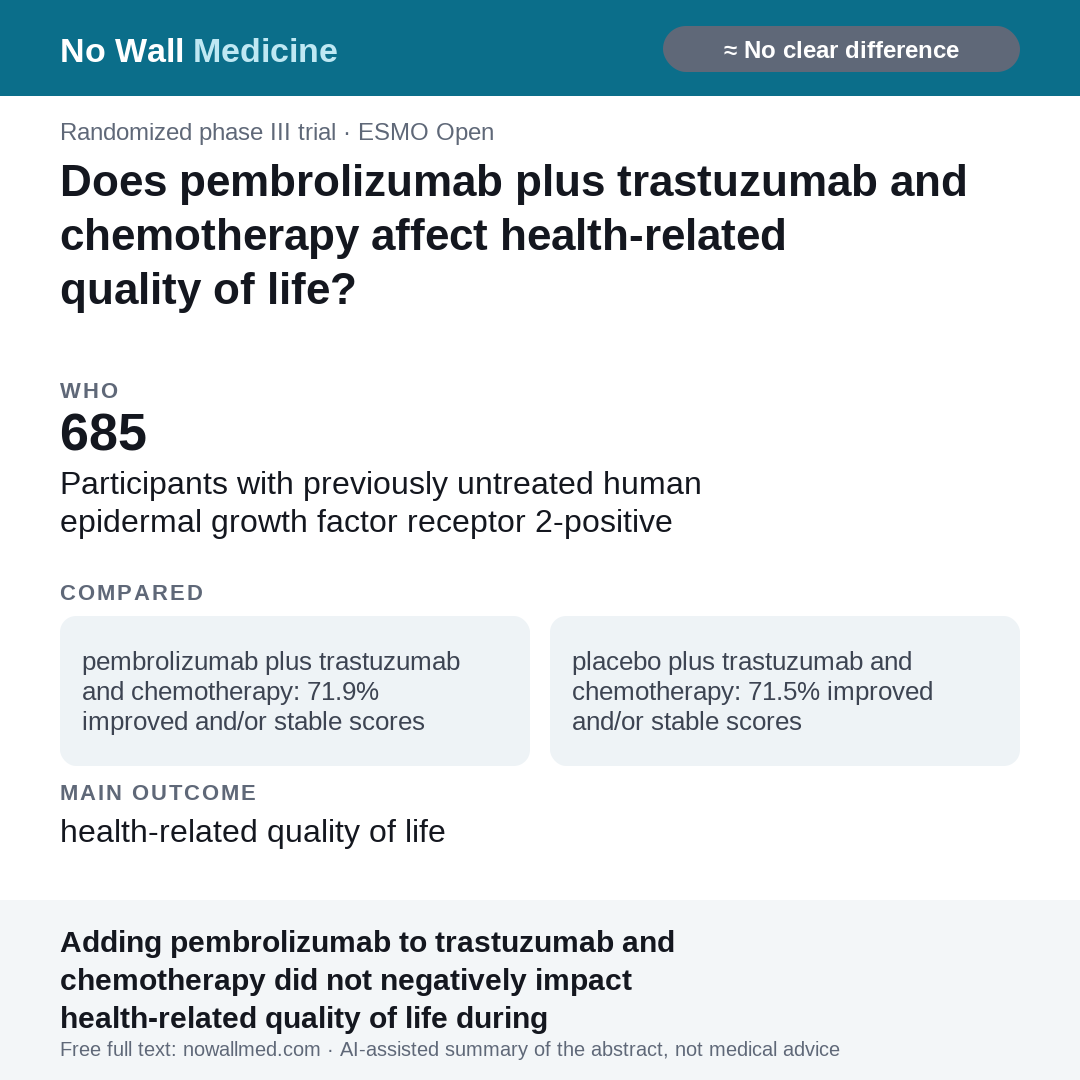
Pembrolizumab with trastuzumab and chemotherapy for HER2-positive advanced gastric cancer: health-related quality-of-life analysis from the randomized KEYNOTE-811 trial
Randomized phase III trialNo clear difference
Does pembrolizumab plus trastuzumab and chemotherapy affect health-related quality of life?
Who
685
Participants with previously untreated human epidermal growth factor receptor 2-positive advanced gastric cancer
Compared
pembrolizumab plus trastuzumab and chemotherapy: 71.9% improved and/or stable scores
placebo plus trastuzumab and chemotherapy: 71.5% improved and/or stable scores
Main outcome
health-related quality of life
Result: least squares mean difference -1.16 (95% CI -4.23 to 1.91)
Bottom line: Adding pembrolizumab to trastuzumab and chemotherapy did not negatively impact health-related quality of life during treatment.
ESMO Open · 2025-09-30Download image
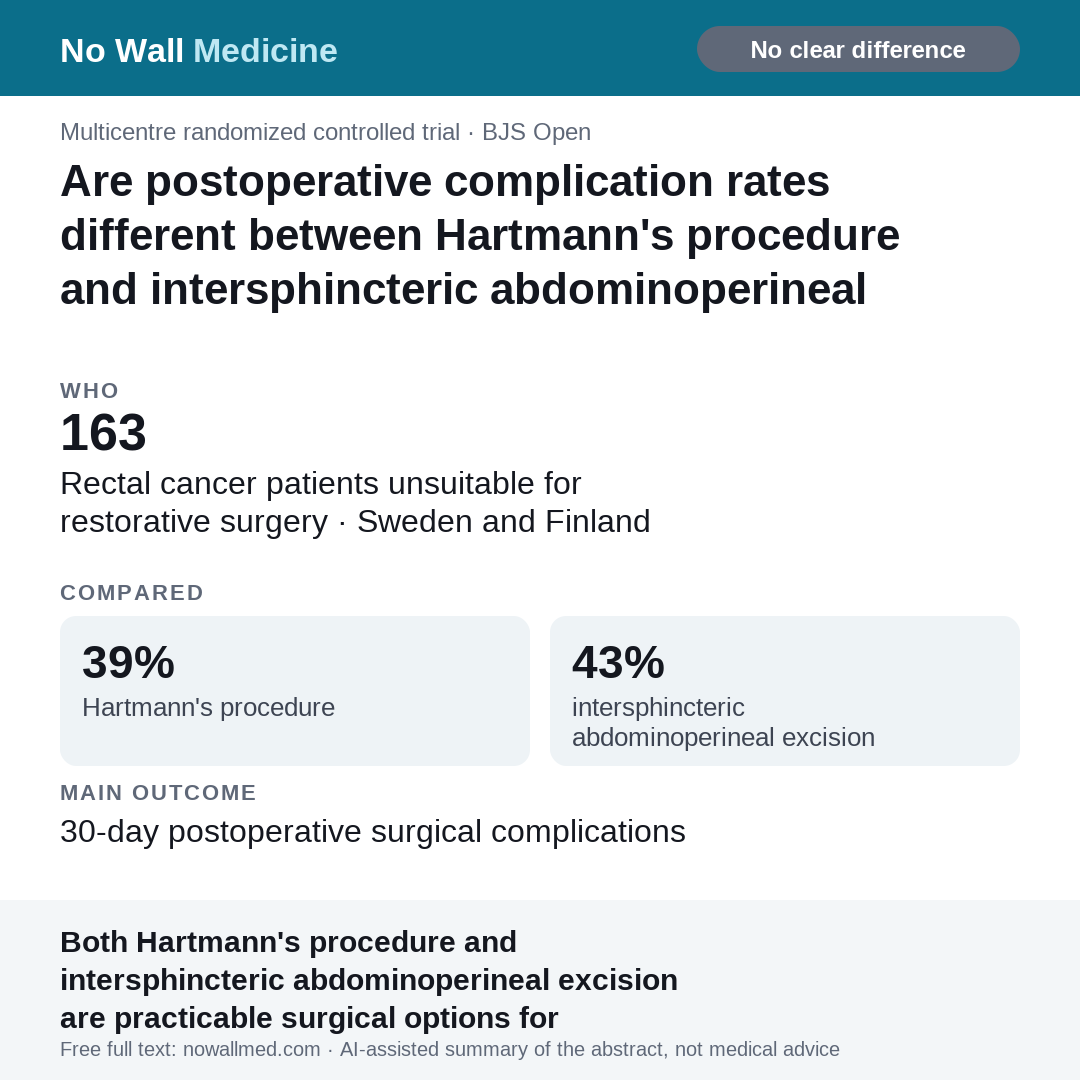
Postoperative complications in Hartmann's procedure versus intersphincteric abdominoperineal excision in rectal cancer: randomized clinical trial (HAPIrect)
Multicentre randomized controlled trialNo clear difference
Are postoperative complication rates different between Hartmann's procedure and intersphincteric abdominoperineal excision?
Who
163
Rectal cancer patients unsuitable for restorative surgery · Sweden and Finland
Compared
39%Hartmann's procedure
43%intersphincteric abdominoperineal excision
Main outcome
30-day postoperative surgical complications
Result: odds ratio 0.83 (95% confidence interval 0.44 to 1.54)
Bottom line: Both Hartmann's procedure and intersphincteric abdominoperineal excision are practicable surgical options for patients unsuitable for anastomosis.
BJS Open · 2025-09-30Download image
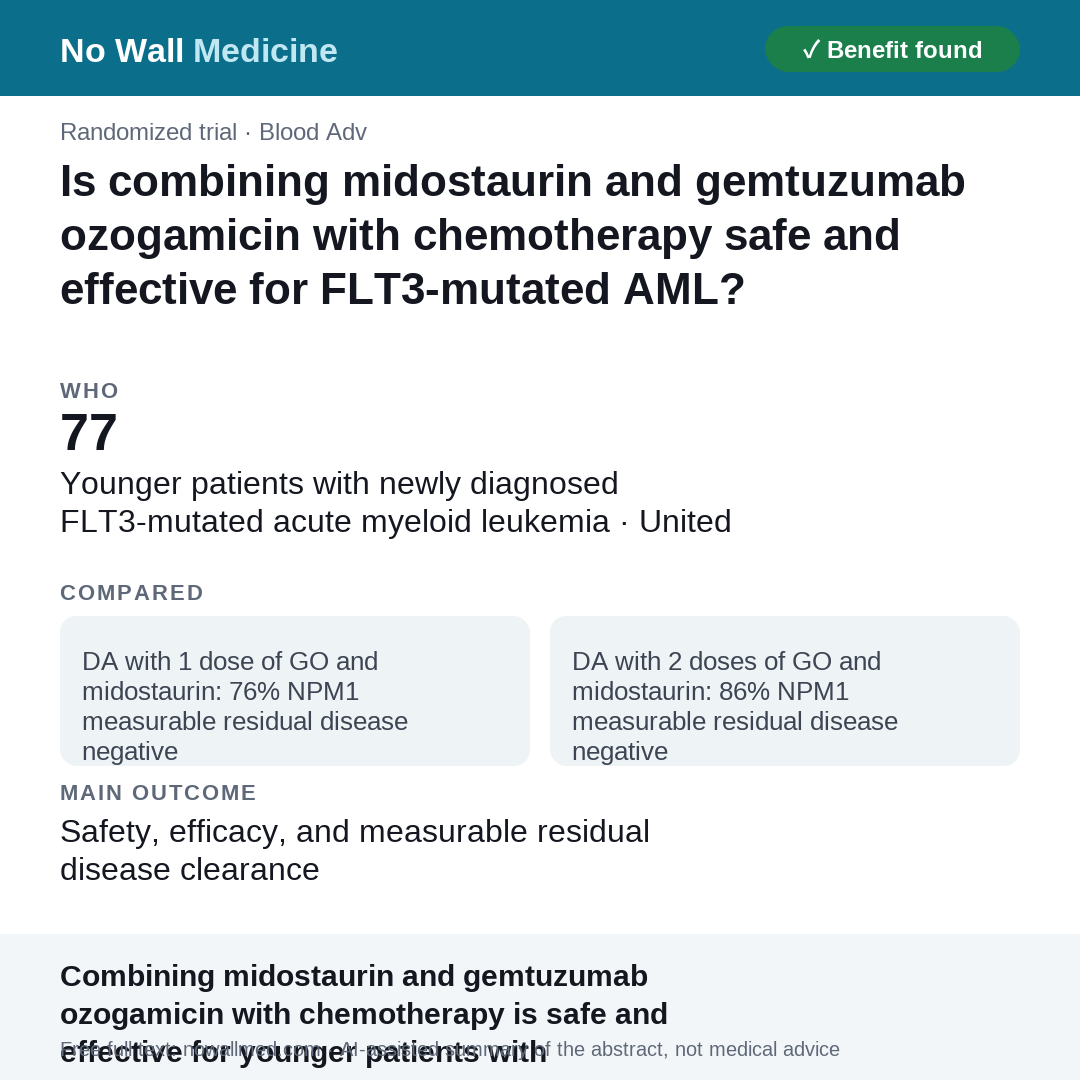
Safety and efficacy of combining midostaurin and gemtuzumab ozogamicin with induction chemotherapy in FLT3-mutated AML
Randomized trialBenefit found
Is combining midostaurin and gemtuzumab ozogamicin with chemotherapy safe and effective for FLT3-mutated AML?
Who
77
Younger patients with newly diagnosed FLT3-mutated acute myeloid leukemia · United Kingdom
Compared
DA with 1 dose of GO and midostaurin: 76% NPM1 measurable residual disease negative
DA with 2 doses of GO and midostaurin: 86% NPM1 measurable residual disease negative
Main outcome
Safety, efficacy, and measurable residual disease clearance
Bottom line: Combining midostaurin and gemtuzumab ozogamicin with chemotherapy is safe and effective for younger patients with FLT3-mutated acute myeloid leukemia.
Blood Adv · 2025-09-30Download image
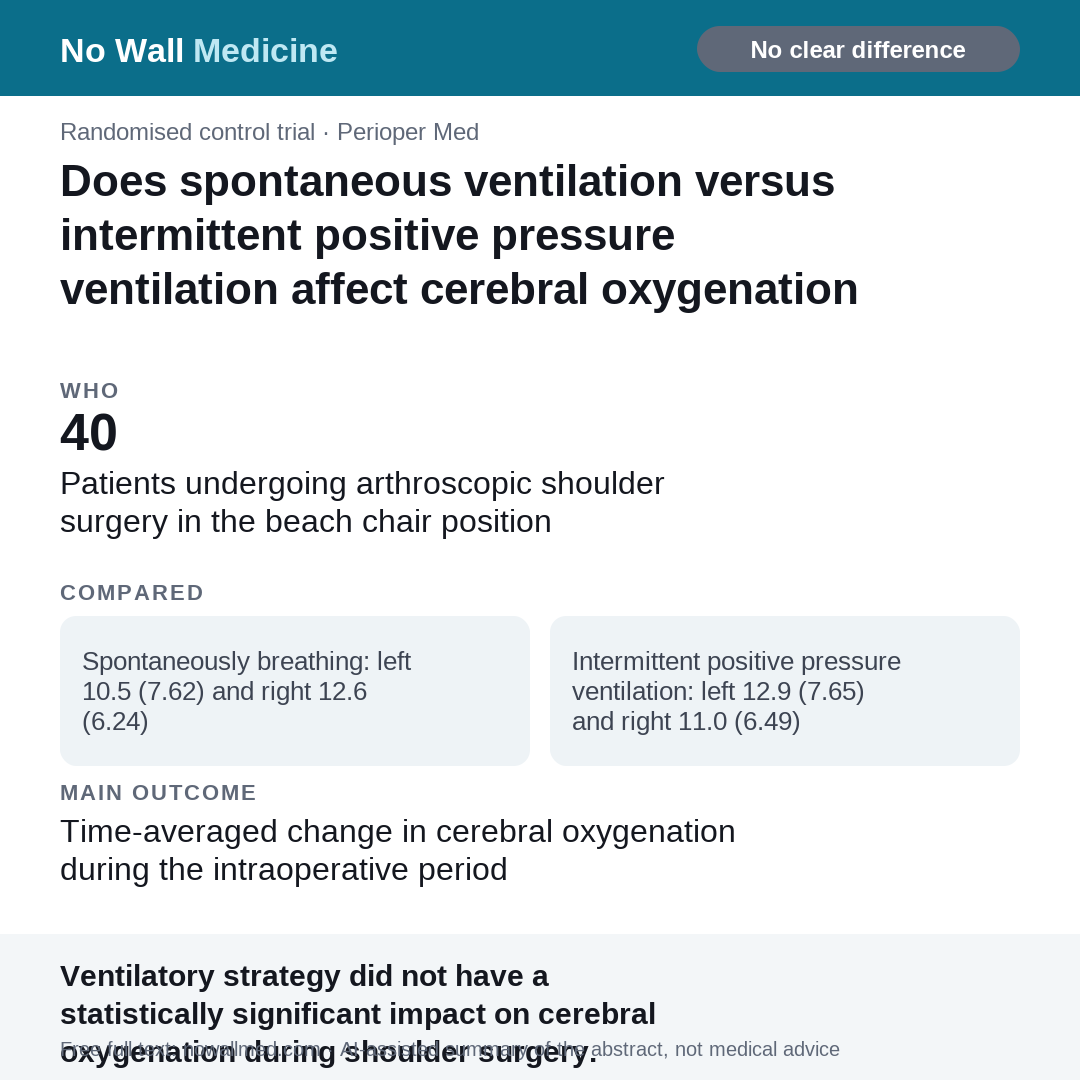
Cerebral oxygenation when ventilated or spontaneously breathing: a randomised control trial
Randomised control trialNo clear difference
Does spontaneous ventilation versus intermittent positive pressure ventilation affect cerebral oxygenation during shoulder surgery?
Who
40
Patients undergoing arthroscopic shoulder surgery in the beach chair position
Compared
Spontaneously breathing: left 10.5 (7.62) and right 12.6 (6.24)
Intermittent positive pressure ventilation: left 12.9 (7.65) and right 11.0 (6.49)
Main outcome
Time-averaged change in cerebral oxygenation during the intraoperative period
Bottom line: Ventilatory strategy did not have a statistically significant impact on cerebral oxygenation during shoulder surgery.
Perioper Med · 2025-09-30Download image
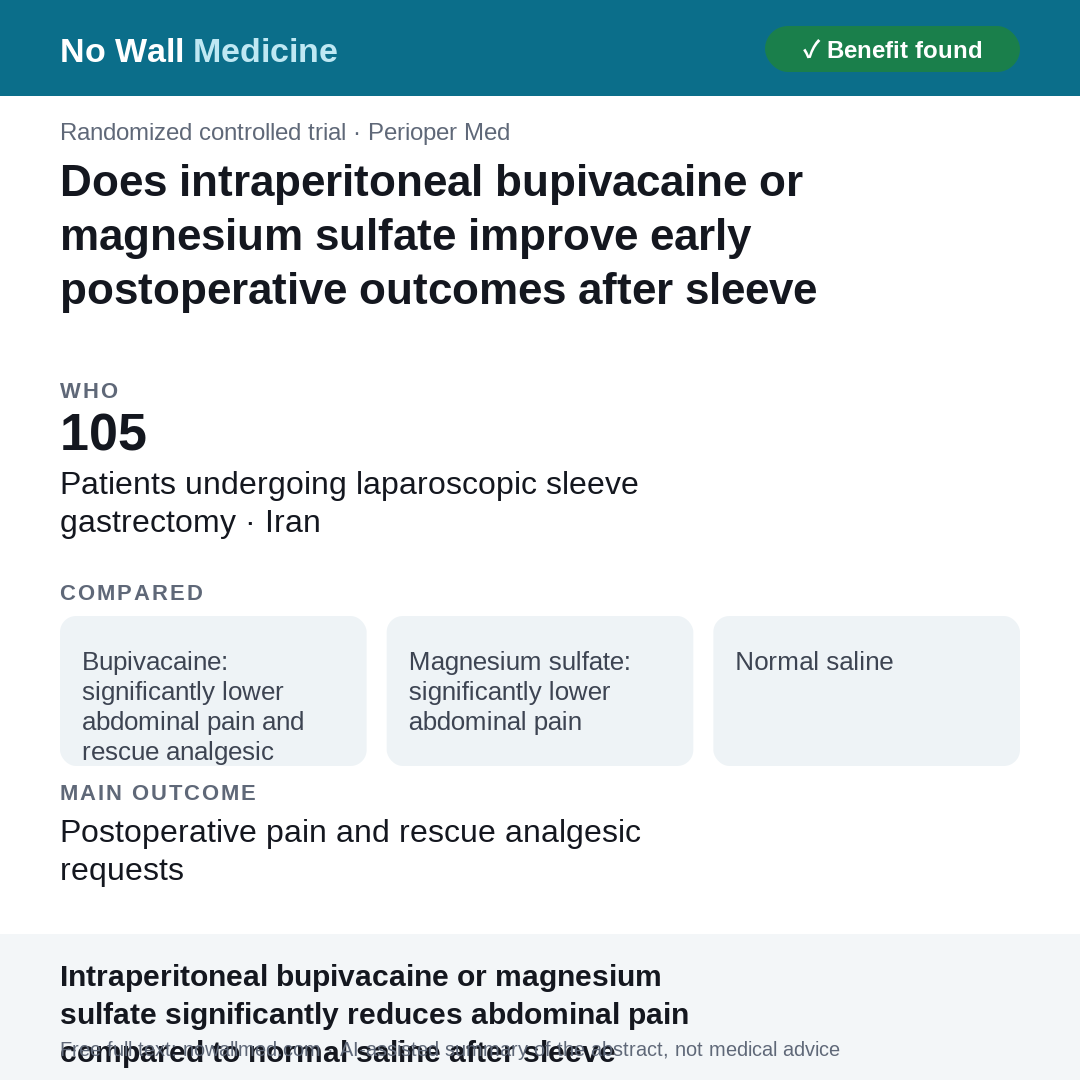
Effect of intraperitoneal bupivacaine vs magnesium sulfate on early postoperative outcomes after laparoscopic sleeve gastrectomy: a randomized clinical trial
Randomized controlled trialBenefit found
Does intraperitoneal bupivacaine or magnesium sulfate improve early postoperative outcomes after sleeve gastrectomy?
Who
105
Patients undergoing laparoscopic sleeve gastrectomy · Iran
Compared
Bupivacaine: significantly lower abdominal pain and rescue analgesic requests
Magnesium sulfate: significantly lower abdominal pain
Normal saline
Main outcome
Postoperative pain and rescue analgesic requests
Bottom line: Intraperitoneal bupivacaine or magnesium sulfate significantly reduces abdominal pain compared to normal saline after sleeve gastrectomy.
Limitation: Neither drug significantly reduced postoperative shoulder pain levels.
Perioper Med · 2025-09-30Download image