Visual abstracts
New randomized trials and meta-analyses from leading journals at a glance: who was studied, what was compared, and what was found. Every paper is free to read in full.
All specialtiesCardiology 4832Oncology 4114Gastroenterology & Hepatology 1934Infectious Disease 3824Neurology 1899Psychiatry & Mental Health 2256Pulmonology 2082Critical Care 1345Endocrinology & Diabetes 2572Pediatrics 2940Surgery 2525Orthopedics & Sports Medicine 926Neurosurgery 534Cardiothoracic & Vascular Surgery 671Plastic & Reconstructive Surgery 591Nephrology 1124Rheumatology 823Hematology 1104Dermatology 620Ophthalmology 543Obstetrics & Gynecology 1684Public & Global Health 1056Radiology & Imaging 641Anesthesiology 962Urology 754ENT (Otolaryngology) 503Emergency Medicine 489Allergy & Immunology 313Geriatrics 981Family Medicine & Primary Care 541Medical Genetics & Genomics 675Pathology & Laboratory Medicine 157Physical Medicine & Rehabilitation 751Palliative Care 424Nutrition 1580Digital Health & AI 2195General Medicine 321
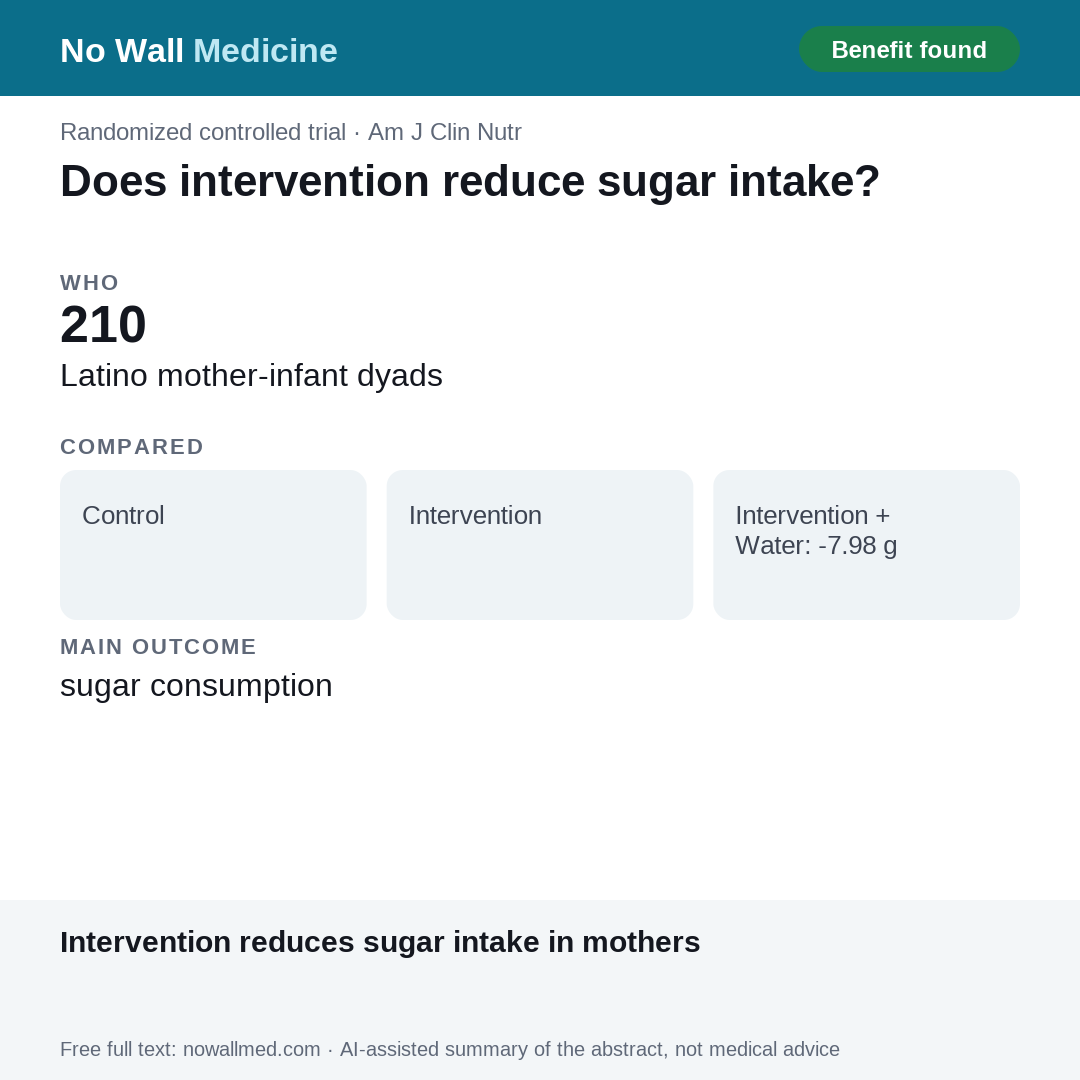
Efficacy of a 24-month behavioral intervention focused on sugary beverage reduction for Latino mother-infant dyads: evidence from a randomized controlled trial
Randomized controlled trialBenefit found
Does intervention reduce sugar intake?
Who
210
Latino mother-infant dyads
Compared
Control
Intervention
Intervention + Water: -7.98 g
Main outcome
sugar consumption
Bottom line: Intervention reduces sugar intake in mothers
Limitation: effect not maintained
Am J Clin Nutr · 2025-01-09Download image
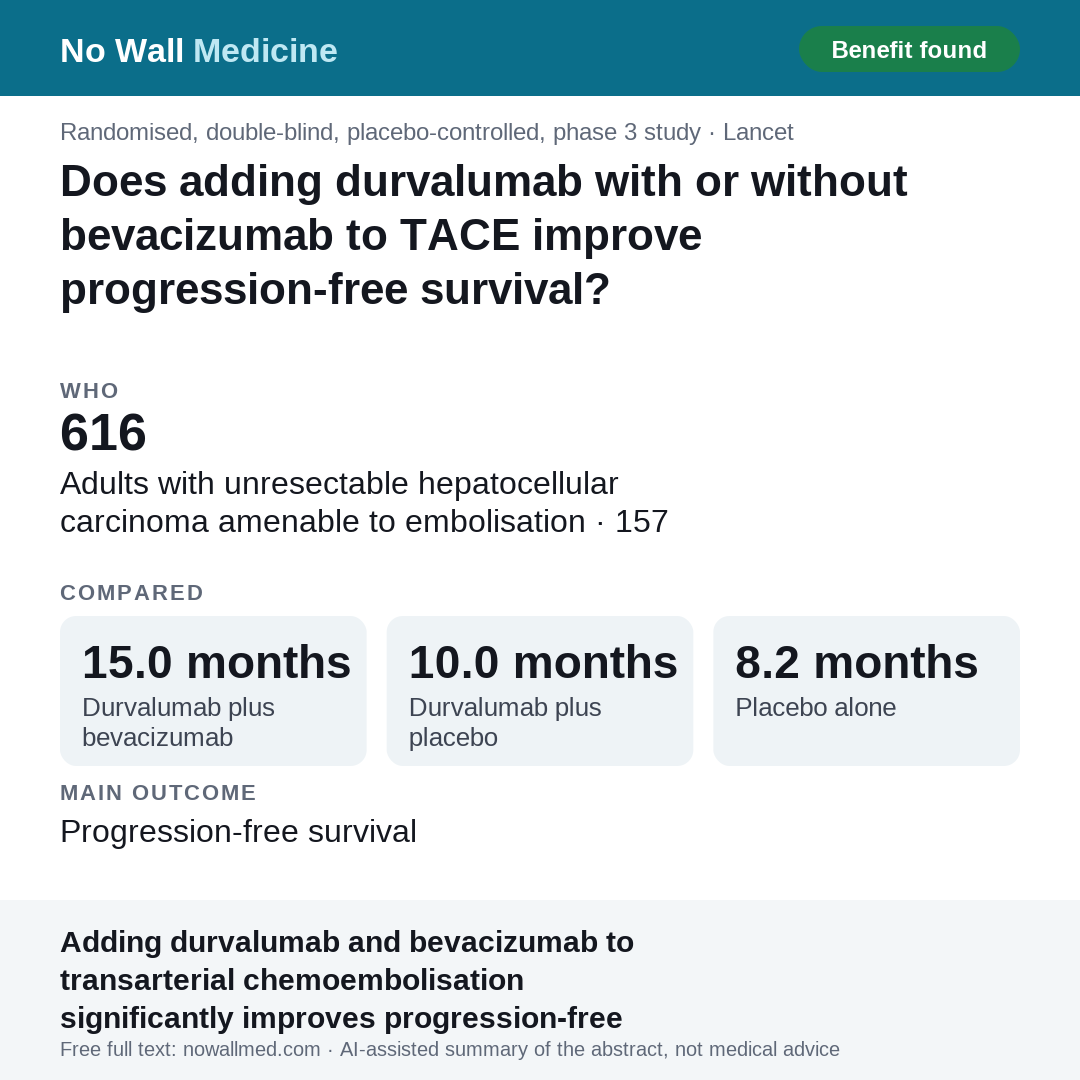
Durvalumab with or without bevacizumab with transarterial chemoembolisation in hepatocellular carcinoma (EMERALD-1): a multiregional, randomised, double-blind, placebo-controlled, phase 3 study
Randomised, double-blind, placebo-controlled, phase 3 studyBenefit found
Does adding durvalumab with or without bevacizumab to TACE improve progression-free survival?
Who
616
Adults with unresectable hepatocellular carcinoma amenable to embolisation · 157 medical sites in 18 countries
Compared
15.0 monthsDurvalumab plus bevacizumab (95% CI 11.1-18.9)
10.0 monthsDurvalumab plus placebo (9.0-12.7)
8.2 monthsPlacebo alone (6.9-11.1)
Main outcome
Progression-free survival
Result: hazard ratio 0.77 (95% CI 0.61-0.98)
Bottom line: Adding durvalumab and bevacizumab to transarterial chemoembolisation significantly improves progression-free survival in patients with unresectable hepatocellular carcinoma.
Lancet · 2025-01-08Download image
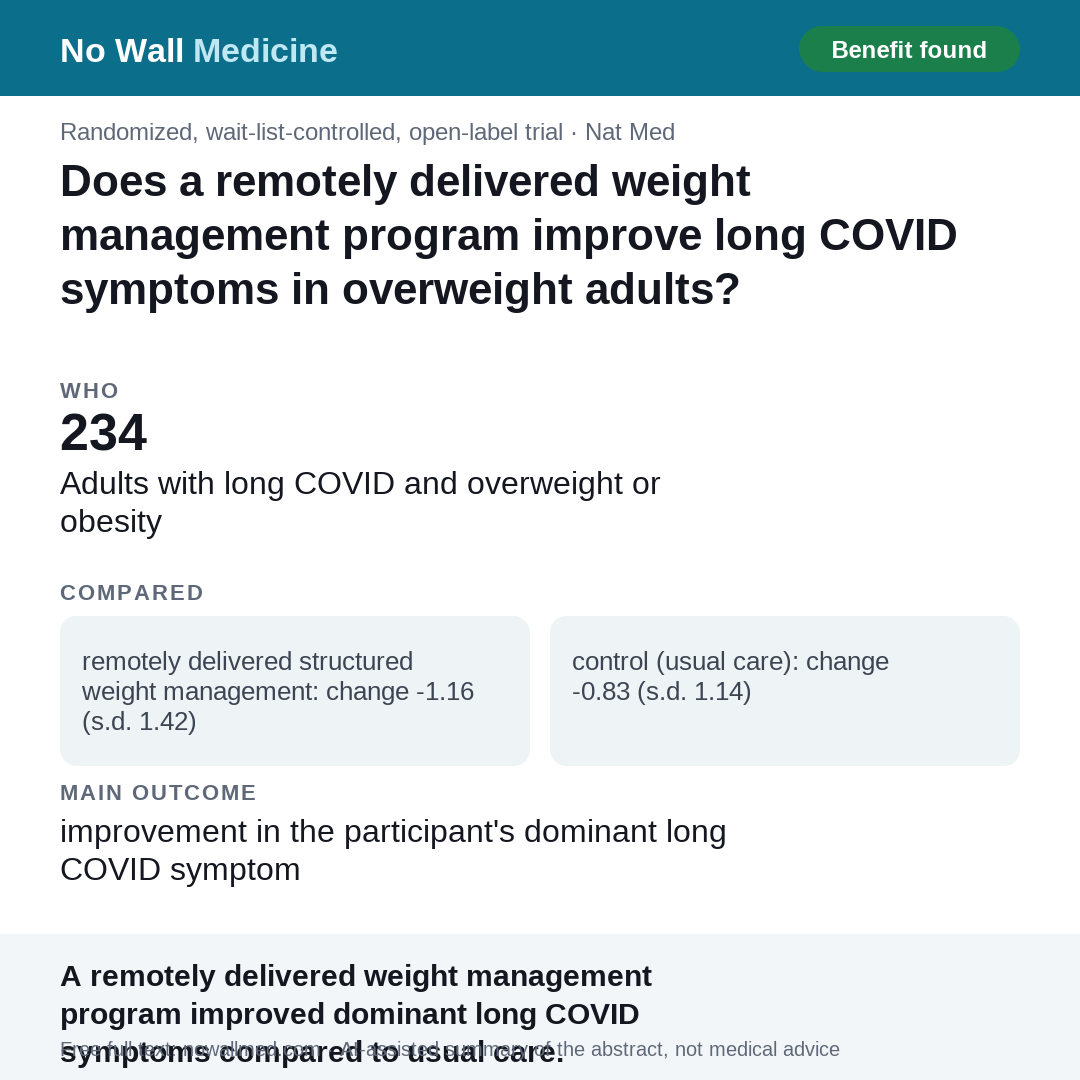
Remotely delivered weight management for people with long COVID and overweight: the randomized wait-list-controlled ReDIRECT trial
Randomized, wait-list-controlled, open-label trialBenefit found
Does a remotely delivered weight management program improve long COVID symptoms in overweight adults?
Who
234
Adults with long COVID and overweight or obesity
Compared
remotely delivered structured weight management: change -1.16 (s.d. 1.42)
control (usual care): change -0.83 (s.d. 1.14)
Main outcome
improvement in the participant's dominant long COVID symptom
Result: -0.34 (95% confidence interval -0.67 to -0.01)
Bottom line: A remotely delivered weight management program improved dominant long COVID symptoms compared to usual care.
Nat Med · 2025-01-08Download image
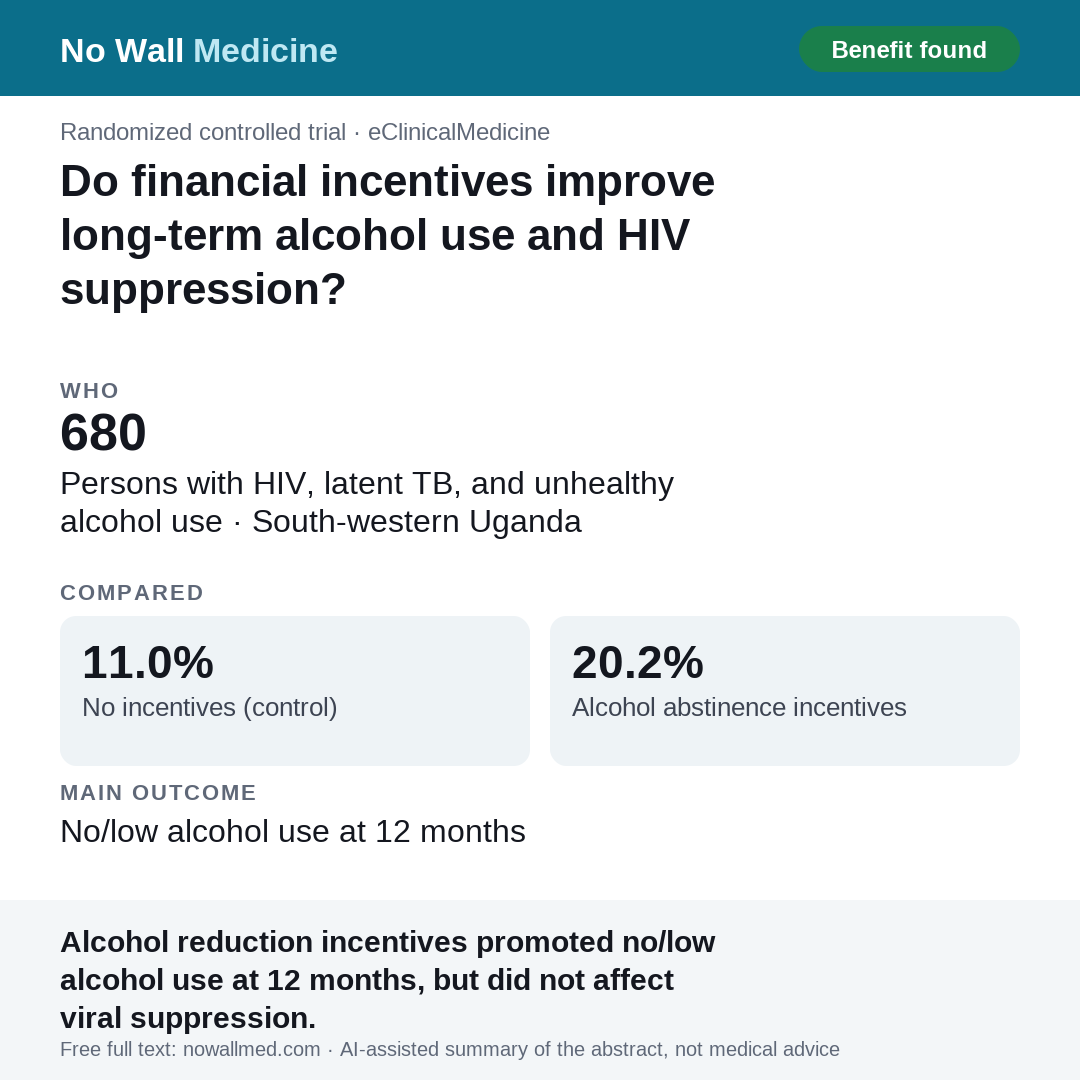
Alcohol use and HIV suppression after completion of financial incentives for alcohol abstinence and isoniazid adherence: a randomized controlled trial
Randomized controlled trialMixed results
Do short-term financial incentives influence long-term alcohol use and HIV viral suppression?
Who
680
People with HIV, latent tuberculosis, and unhealthy alcohol use · South-western Uganda
Compared
No incentives
Alcohol abstinence incentives: 20.2% [64/317]
Isoniazid adherence incentives
Alcohol and isoniazid incentives
Main outcome
Twelve-month HIV viral suppression and alcohol use
Result: aRD 8.4% (95% CI 3.3-13.4) for alcohol reduction
Bottom line: Alcohol abstinence incentives promoted long-term alcohol reduction, but neither incentive type improved long-term HIV viral suppression.
Funded by: National Institutes of Health and Providence/Boston Center for AIDS Research
eClinicalMedicine · 2025-01-08Download image
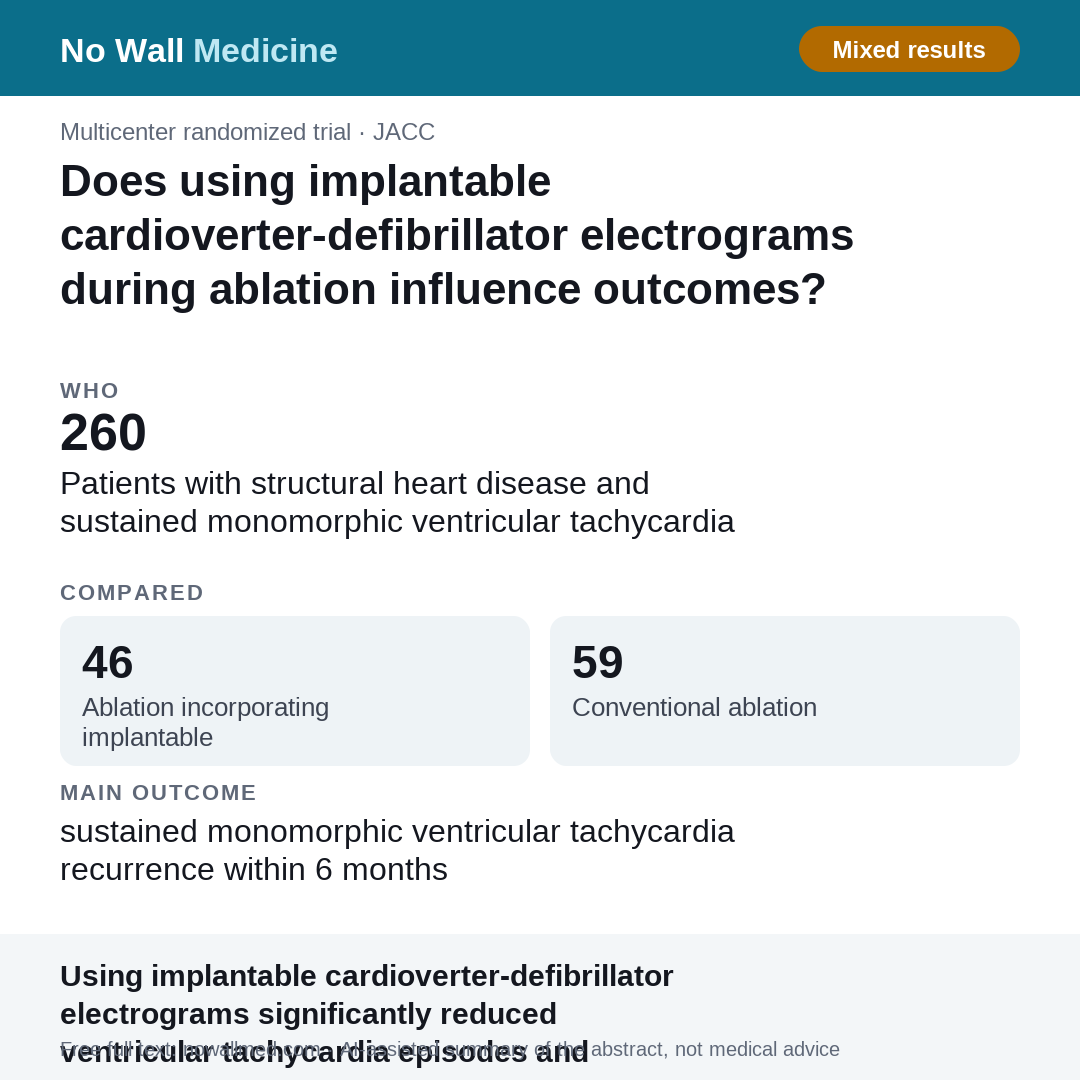
Can ICD Electrograms Help Ventricular Tachycardia Ablation?: Results From the Multicenter Randomized AIDEG-VTA Trial
Multicenter randomized trialMixed results
Does using implantable cardioverter-defibrillator electrograms during ablation influence outcomes?
Who
260
Patients with structural heart disease and sustained monomorphic ventricular tachycardia · 15 centers
Compared
46Ablation incorporating implantable cardioverter-defibrillator electrogram data (36%)
59Conventional ablation (46%)
Main outcome
sustained monomorphic ventricular tachycardia recurrence within 6 months
Result: hazard ratio 0.73 (95% CI 0.49-1.07)
Bottom line: Using implantable cardioverter-defibrillator electrograms significantly reduced ventricular tachycardia episodes and electrical storm but did not significantly decrease recurrence.
JACC · 2025-01-08Download image
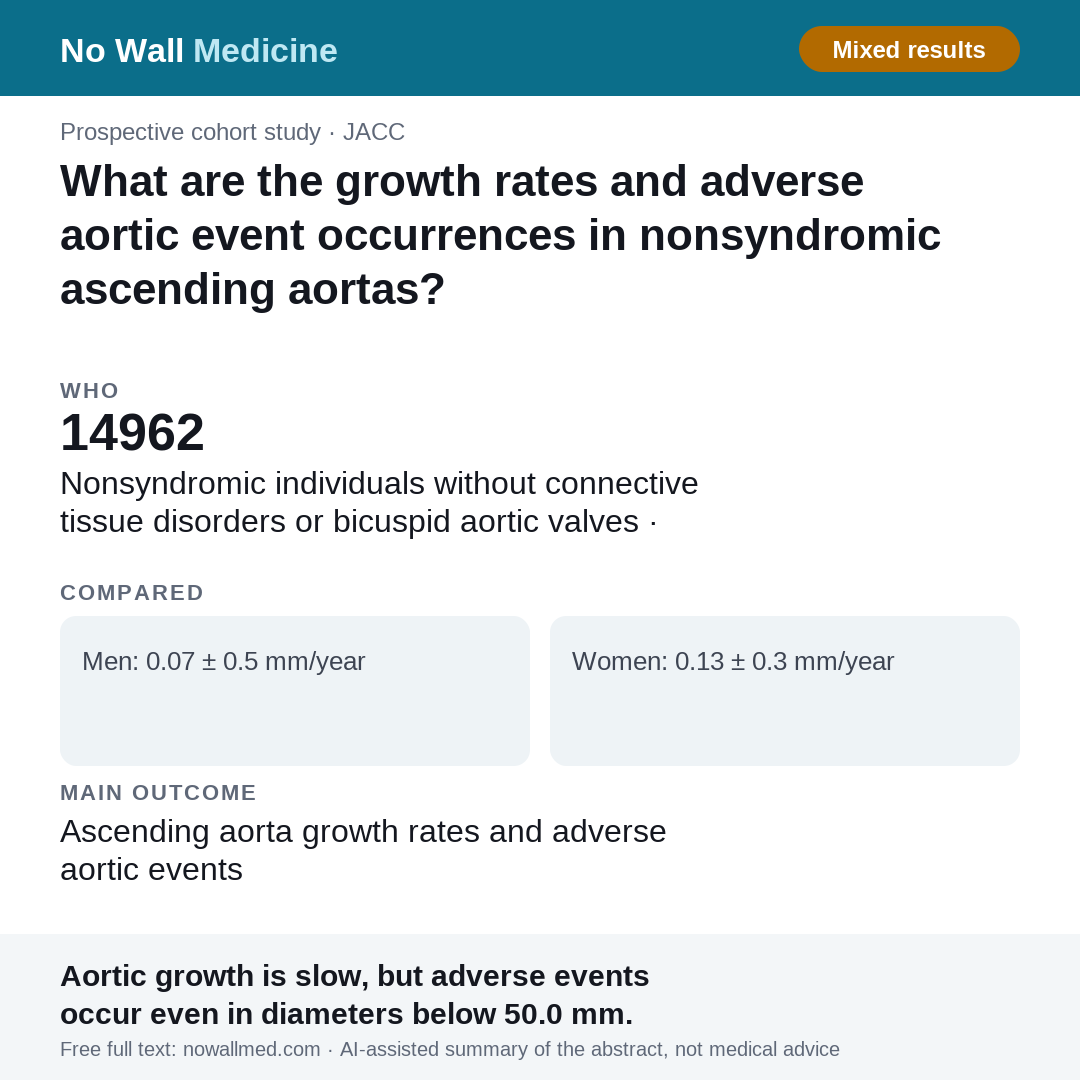
The Nonsyndromic Ascending Thoracic Aorta in a Population-Based Setting: A 5-Year Prospective Cohort Study
Prospective cohort studyMixed results
What are the growth rates and adverse aortic event occurrences in nonsyndromic ascending aortas?
Who
14962
Nonsyndromic individuals without connective tissue disorders or bicuspid aortic valves · Denmark, multicenter
Compared
Men: 0.07 ± 0.5 mm/year
Women: 0.13 ± 0.3 mm/year
Main outcome
Ascending aorta growth rates and adverse aortic events
Result: hazard ratio 1.24 (95% CI 1.16-1.33) per 1-mm increase
Bottom line: Aortic growth is slow, but adverse events occur even in diameters below 50.0 mm.
JACC · 2025-01-08Download image
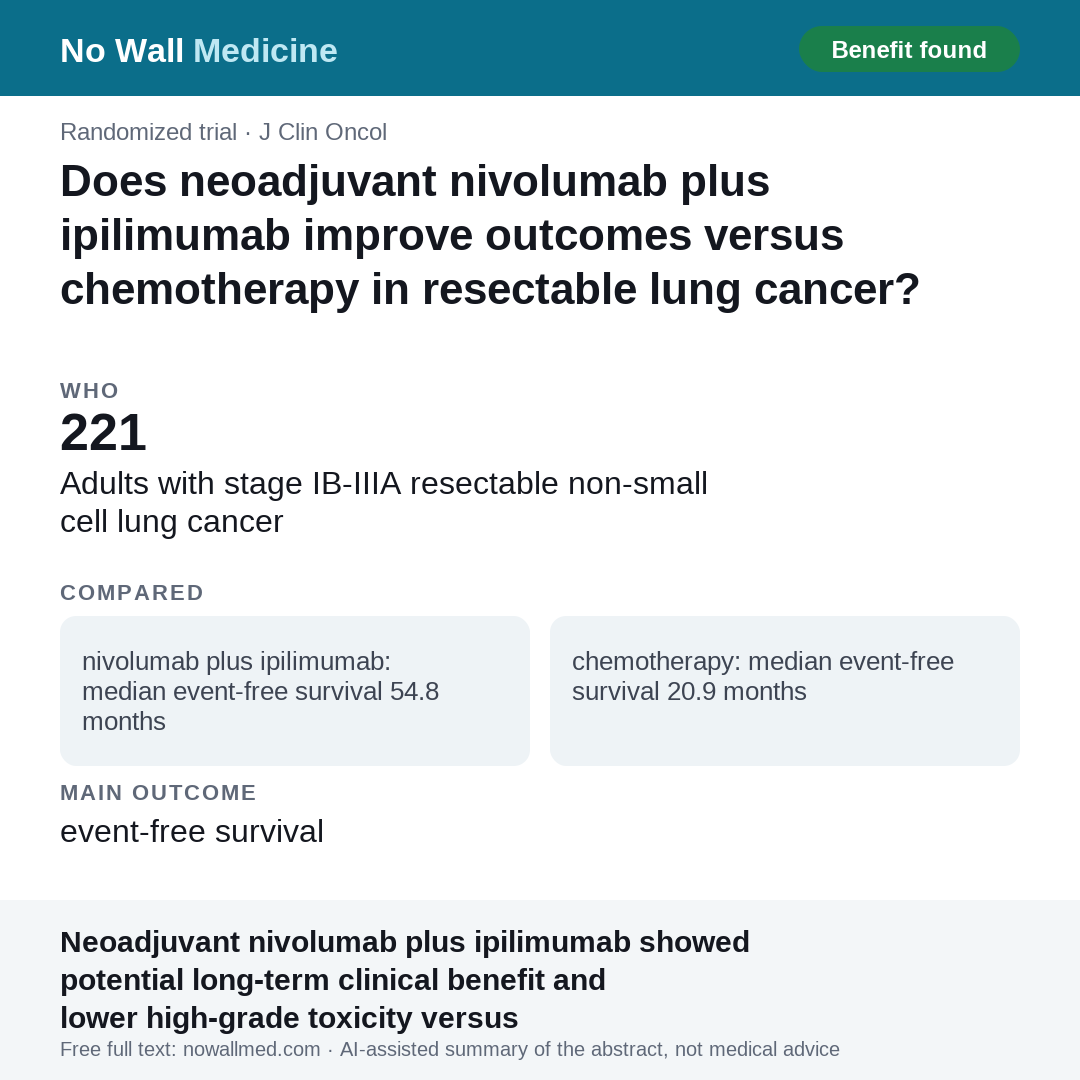
Neoadjuvant Nivolumab Plus Ipilimumab Versus Chemotherapy in Resectable Lung Cancer
Randomized trialBenefit found
Does neoadjuvant nivolumab plus ipilimumab improve outcomes versus chemotherapy in resectable lung cancer?
Who
221
Adults with stage IB-IIIA resectable non-small cell lung cancer
Compared
nivolumab plus ipilimumab: median event-free survival 54.8 months
chemotherapy: median event-free survival 20.9 months
Main outcome
event-free survival
Result: hazard ratio 0.77 (95% CI 0.51 to 1.15)
Bottom line: Neoadjuvant nivolumab plus ipilimumab showed potential long-term clinical benefit and lower high-grade toxicity versus chemotherapy.
Limitation: early crossing of event-free survival curves in the preoperative phase
J Clin Oncol · 2025-01-08Download image
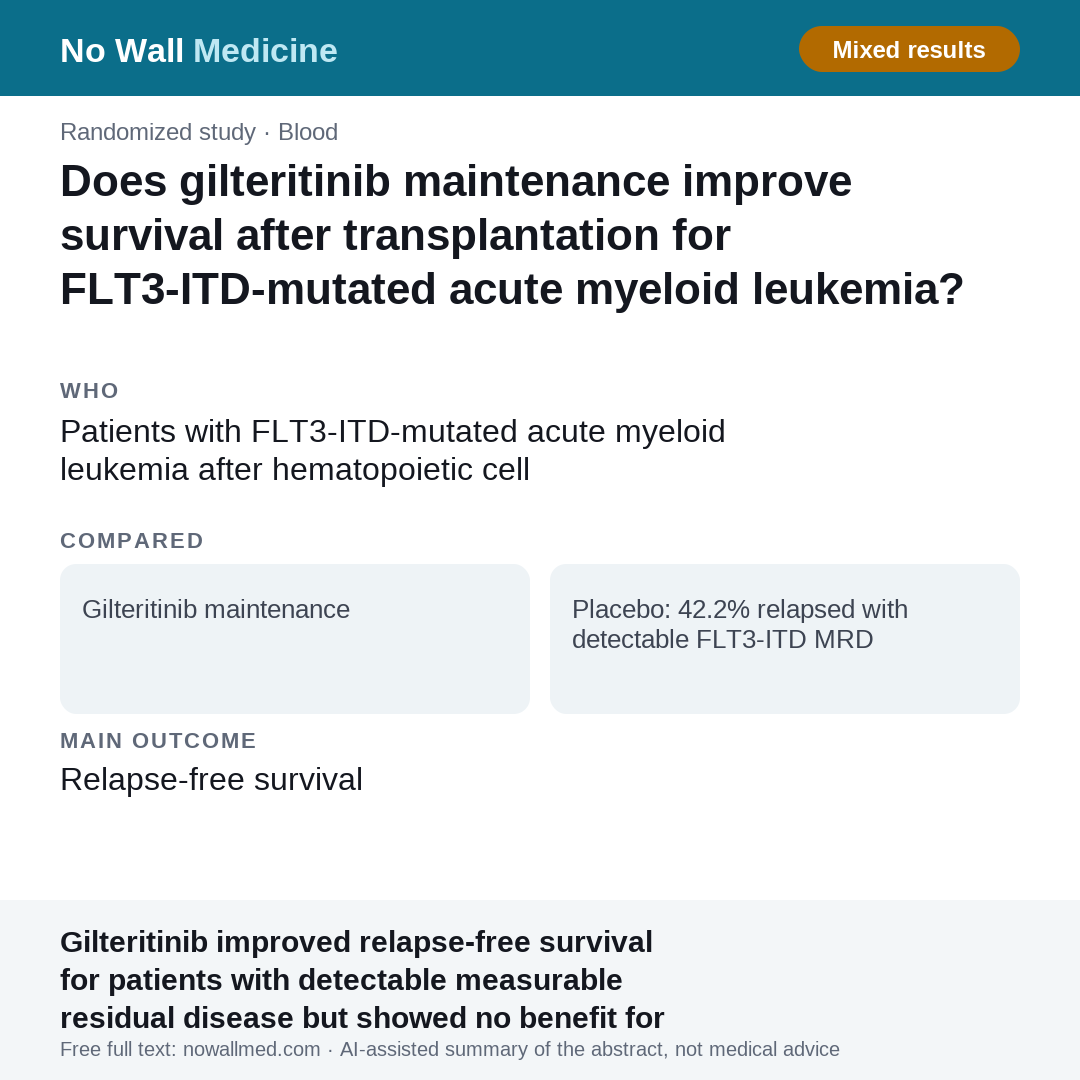
Measurable residual disease and posttransplantation gilteritinib maintenance for patients with FLT3-ITD-mutated AML
Randomized studyMixed results
Does gilteritinib maintenance improve survival after transplantation for FLT3-ITD-mutated acute myeloid leukemia?
Who
Patients with FLT3-ITD-mutated acute myeloid leukemia after hematopoietic cell transplantation · Blood and Marrow Transplant Clinical Trials Network
Compared
Gilteritinib maintenance
Placebo: 42.2% relapsed with detectable FLT3-ITD MRD
Main outcome
Relapse-free survival
Bottom line: Gilteritinib improved relapse-free survival for patients with detectable measurable residual disease but showed no benefit for those without.
Blood · 2025-01-08Download image
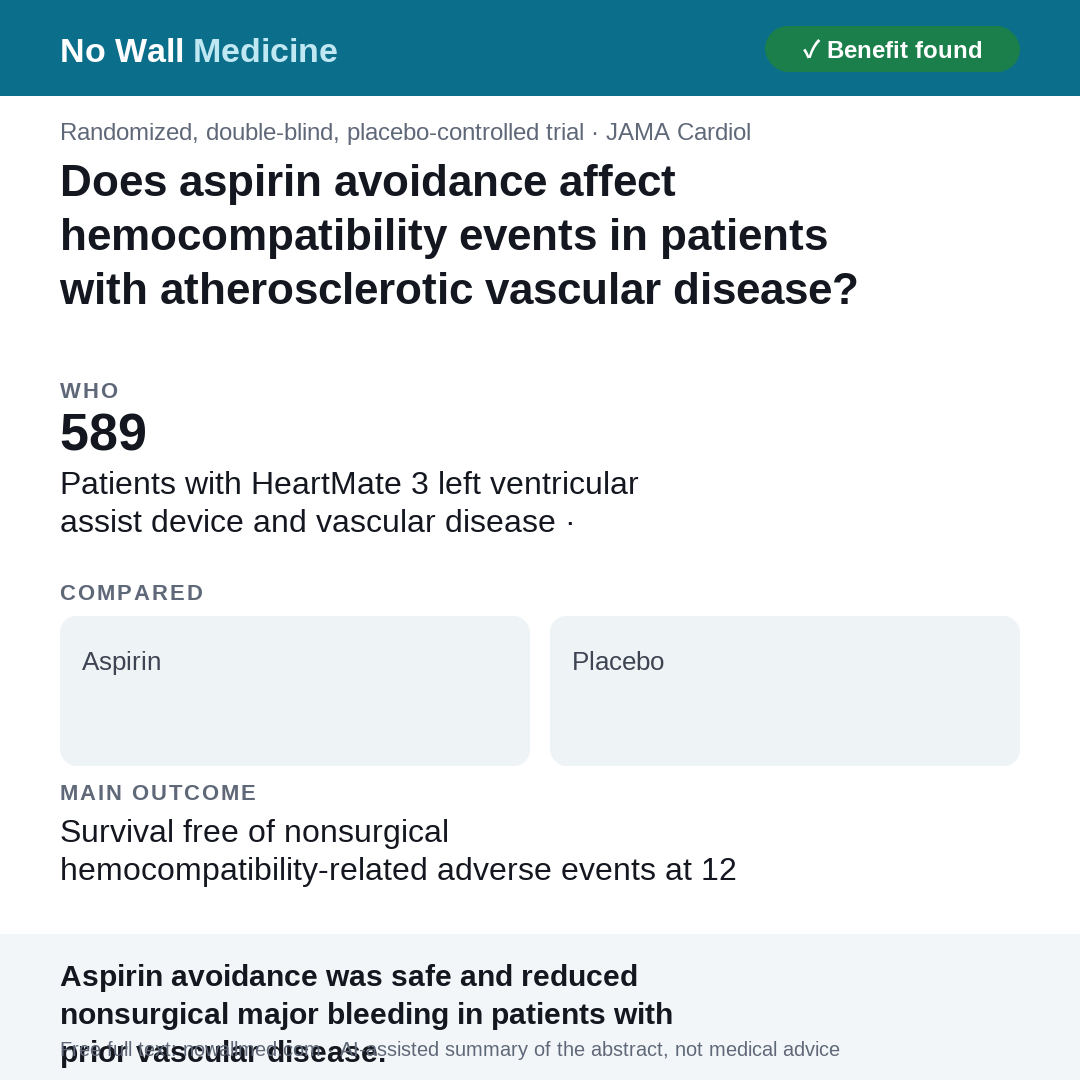
Aspirin and Hemocompatibility After LVAD Implantation in Patients With Atherosclerotic Vascular Disease: A Secondary Analysis From the ARIES-HM3 Randomized Clinical Trial
Randomized, double-blind, placebo-controlled trialBenefit found
Does aspirin avoidance affect hemocompatibility events in patients with atherosclerotic vascular disease?
Who
589
Patients with HeartMate 3 left ventricular assist device and vascular disease · International, multicenter, 51 centers
Compared
Aspirin
Placebo
Main outcome
Survival free of nonsurgical hemocompatibility-related adverse events at 12 months
Bottom line: Aspirin avoidance was safe and reduced nonsurgical major bleeding in patients with prior vascular disease.
JAMA Cardiol · 2025-01-08Download image
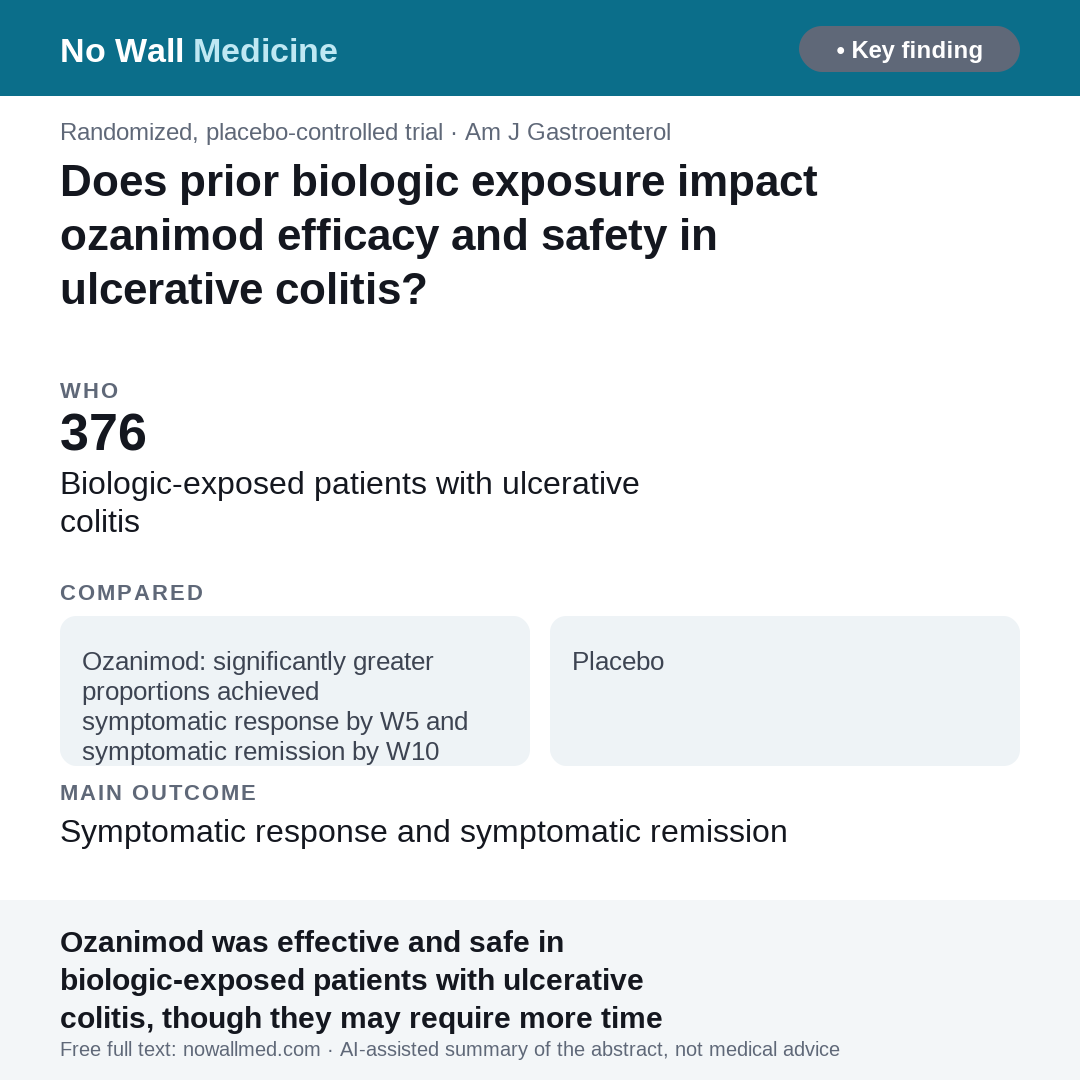
Impact of Prior Biologic Exposure on Ozanimod Efficacy and Safety in the Phase 3 True North Clinical Trial
Randomized, placebo-controlled trialBenefit found
Does prior biologic exposure impact ozanimod efficacy and safety in ulcerative colitis?
Who
376
Biologic-exposed patients with ulcerative colitis
Compared
Ozanimod: significantly greater proportions achieved symptomatic response by W5 and symptomatic remission by W10
Placebo
Main outcome
Symptomatic response and symptomatic remission
Bottom line: Ozanimod was effective and safe in biologic-exposed patients with ulcerative colitis, though they may require more time to respond.
Am J Gastroenterol · 2025-01-08Download image
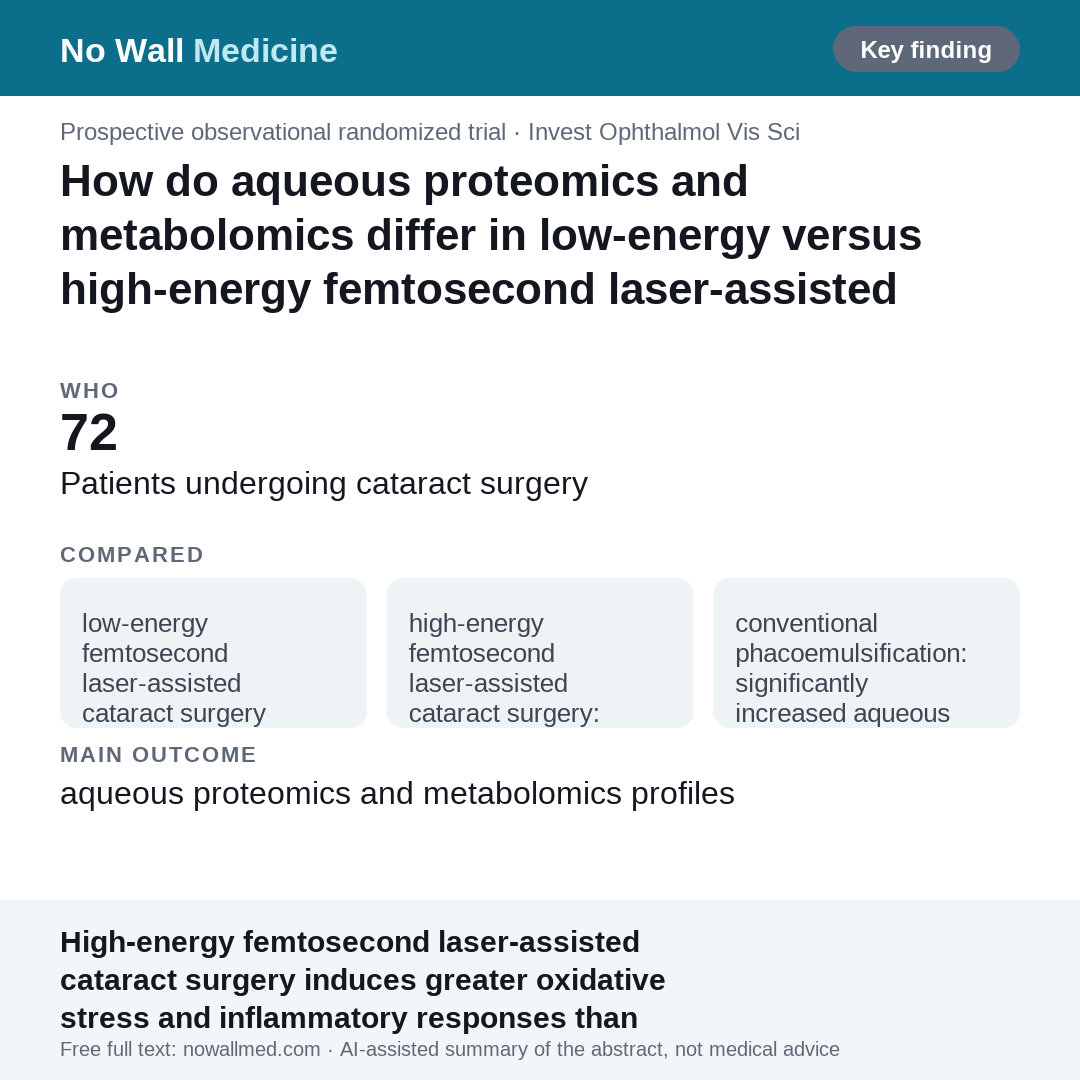
Aqueous Proteomic and Metabolomic Profiles in Low-Energy vs High-Energy Femtosecond Laser-Assisted Cataract Surgery
Prospective observational randomized trialHarm found
How do aqueous proteomics and metabolomics differ in low-energy versus high-energy femtosecond laser-assisted cataract surgery?
Who
72
Patients undergoing cataract surgery
Compared
low-energy femtosecond laser-assisted cataract surgery
high-energy femtosecond laser-assisted cataract surgery: significantly elevated aqueous hemoglobin subunit beta, G protein subunit beta, carbonic anhydrase 1, and asymmetric dimethylarginine
conventional phacoemulsification: significantly increased aqueous proteins and metabolites related to immune and inflammation and oxidative stress
Main outcome
aqueous proteomics and metabolomics profiles
Bottom line: High-energy femtosecond laser-assisted cataract surgery induces greater oxidative stress and inflammatory responses than low-energy laser or conventional surgery.
Invest Ophthalmol Vis Sci · 2025-01-08Download image
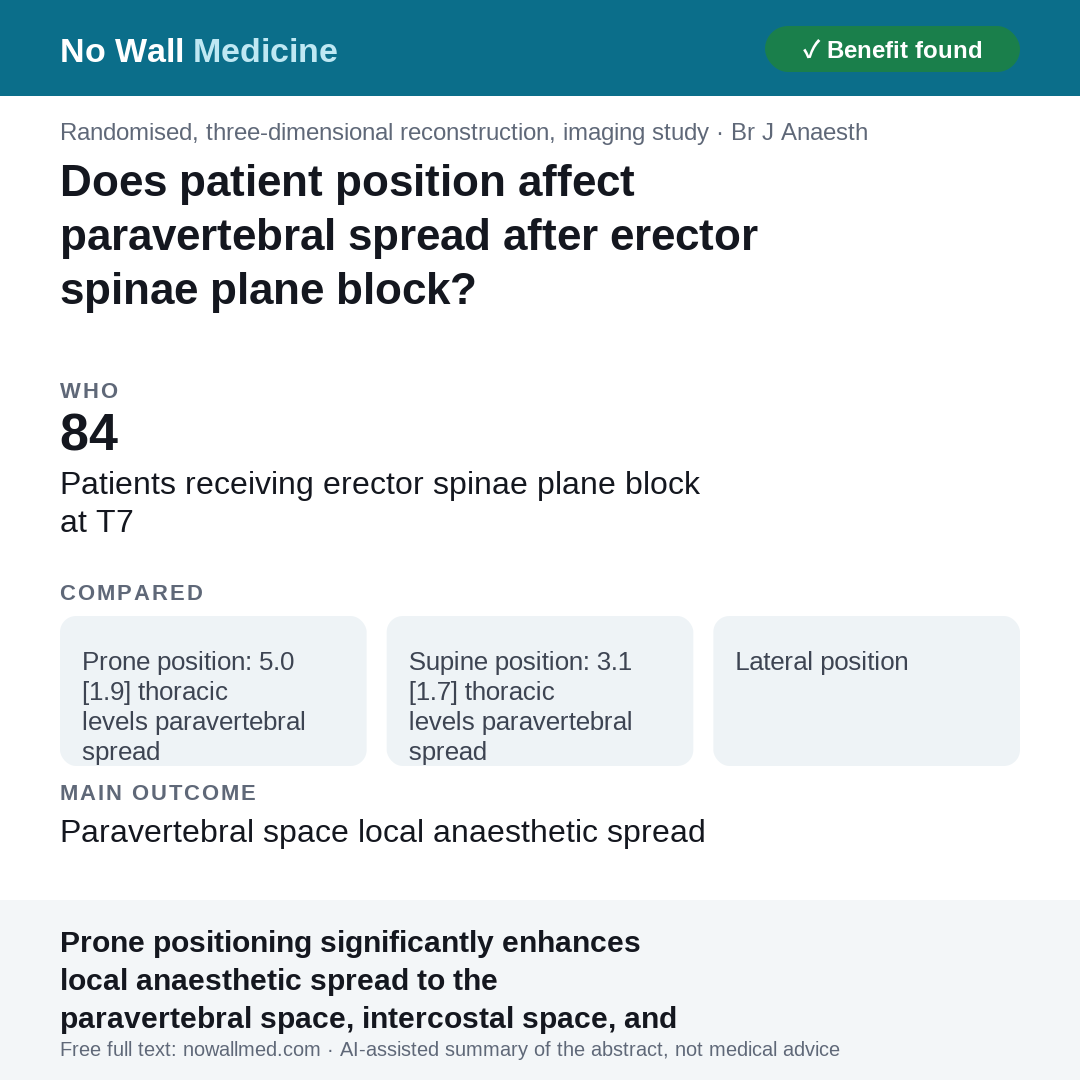
Spread of local anaesthetic after erector spinae plane block: a randomised, three-dimensional reconstruction, imaging study
Randomised, three-dimensional reconstruction, imaging studyBenefit found
Does patient position affect paravertebral spread after erector spinae plane block?
Who
84
Patients receiving erector spinae plane block at T7
Compared
Prone position: 5.0 [1.9] thoracic levels paravertebral spread
Supine position: 3.1 [1.7] thoracic levels paravertebral spread
Lateral position
Main outcome
Paravertebral space local anaesthetic spread
Result: difference [95% confidence interval, CI]: 1.9 [0.8-3.0] levels
Bottom line: Prone positioning significantly enhances local anaesthetic spread to the paravertebral space, intercostal space, and neural foramina.
Br J Anaesth · 2025-01-08Download image
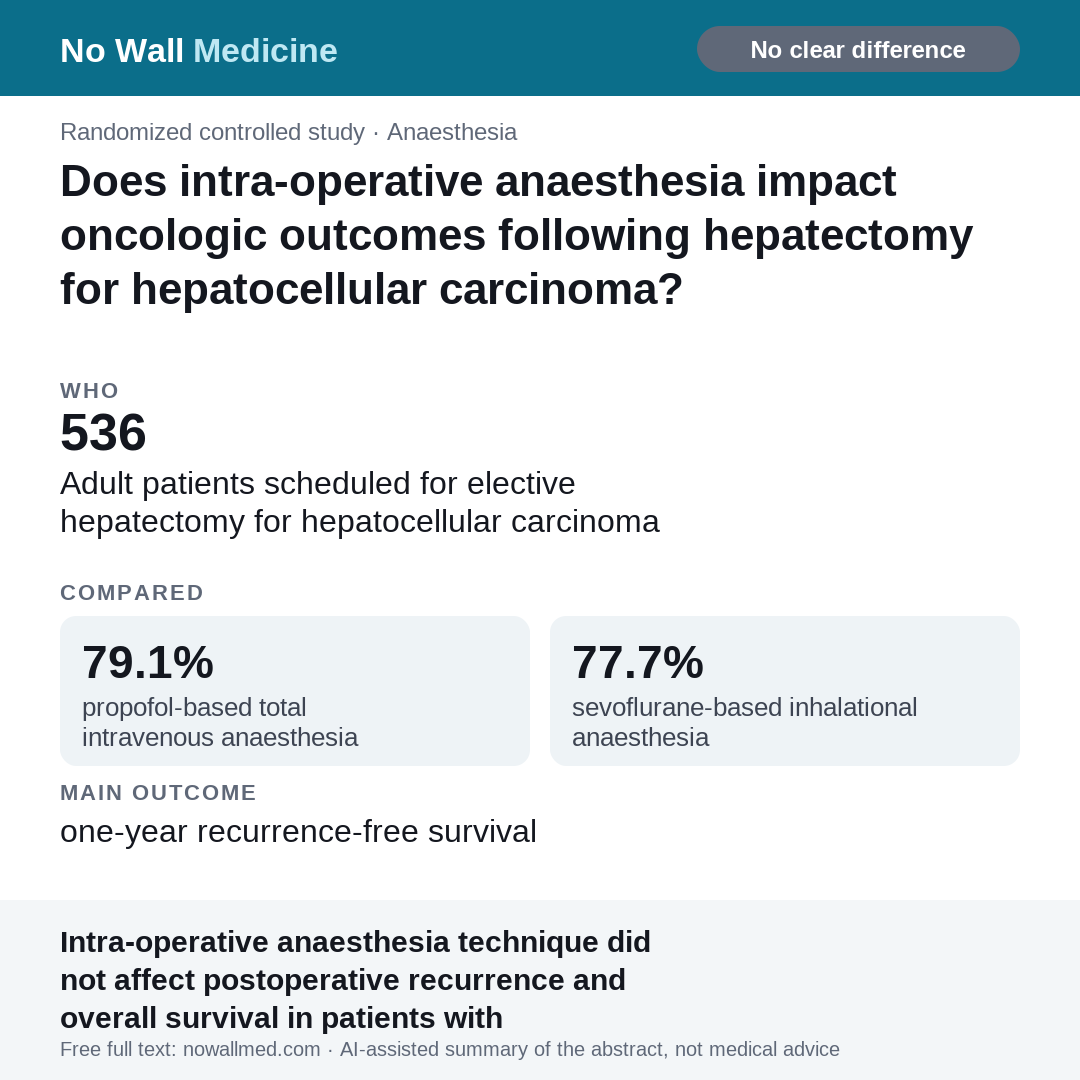
Recurrence-free survival after hepatectomy using propofol-based total intravenous anaesthesia and sevoflurane-based inhalational anaesthesia: a randomised controlled study
Randomized controlled studyNo clear difference
Does intra-operative anaesthesia impact oncologic outcomes following hepatectomy for hepatocellular carcinoma?
Who
536
Adult patients scheduled for elective hepatectomy for hepatocellular carcinoma
Compared
79.1%propofol-based total intravenous anaesthesia (47 events)
77.7%sevoflurane-based inhalational anaesthesia (50 events)
Main outcome
one-year recurrence-free survival
Result: adjusted hazard ratio 1.04, 95%CI 0.72-1.52
Bottom line: Intra-operative anaesthesia technique did not affect postoperative recurrence and overall survival in patients with hepatocellular carcinoma undergoing hepatectomy.
Anaesthesia · 2025-01-08Download image
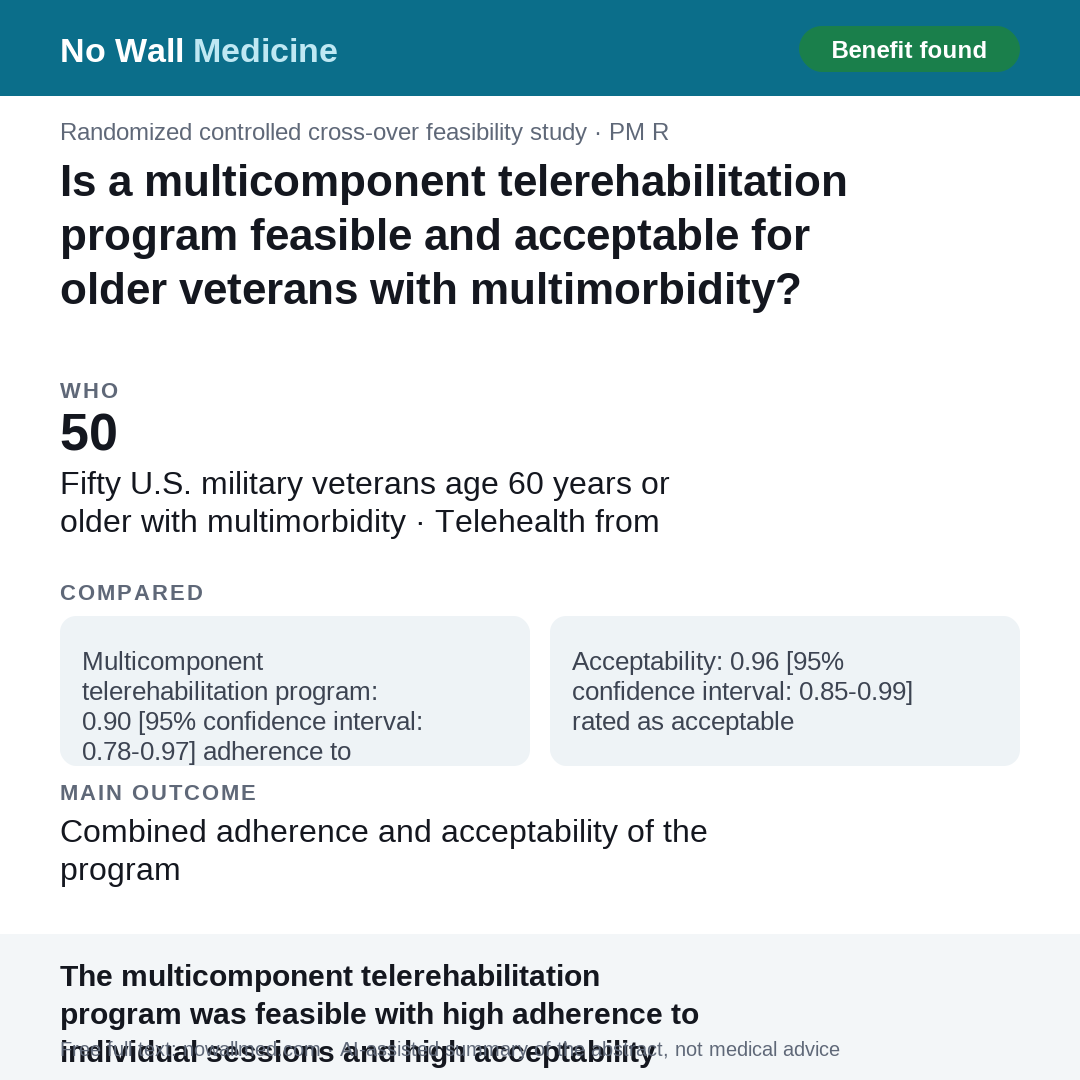
Multicomponent telerehabilitation program for veterans with multimorbidity: A randomized controlled feasibility study
Randomized controlled cross-over feasibility studyEarly signal
Is a multicomponent telerehabilitation program feasible and acceptable for older veterans with multimorbidity?
Who
50
Fifty U.S. military veterans age 60 years or older with multimorbidity · Telehealth from Veterans Affairs Medical Center to homes
Compared
Multicomponent telerehabilitation program: 0.90 [95% confidence interval: 0.78-0.97] adherence to individual sessions
Acceptability: 0.96 [95% confidence interval: 0.85-0.99] rated as acceptable
Main outcome
Combined adherence and acceptability of the program
Bottom line: The multicomponent telerehabilitation program was feasible with high adherence to individual sessions and high acceptability among older veterans.
PM R · 2025-01-08Download image
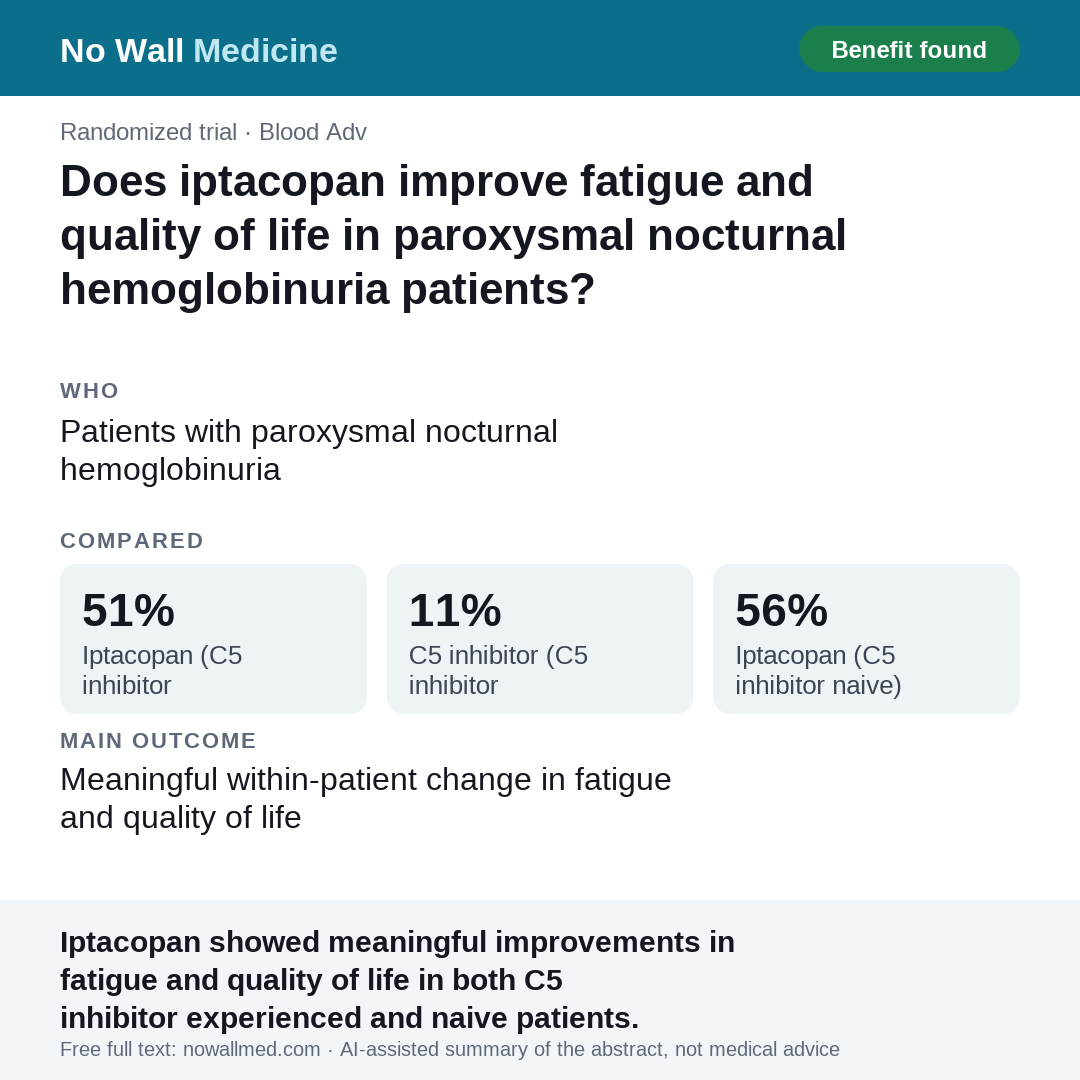
Patient-reported improvements in paroxysmal nocturnal hemoglobinuria treated with iptacopan from 2 phase 3 studies
Randomized trialBenefit found
Does iptacopan improve fatigue and quality of life in paroxysmal nocturnal hemoglobinuria patients?
Who
Patients with paroxysmal nocturnal hemoglobinuria
Compared
51%Iptacopan (C5 inhibitor experienced) (FACIT-Fatigue MWPC)
11%C5 inhibitor (C5 inhibitor experienced) (FACIT-Fatigue MWPC)
56%Iptacopan (C5 inhibitor naive) (FACIT-Fatigue MWPC)
Main outcome
Meaningful within-patient change in fatigue and quality of life
Bottom line: Iptacopan showed meaningful improvements in fatigue and quality of life in both C5 inhibitor experienced and naive patients.
Blood Adv · 2025-01-08Download image
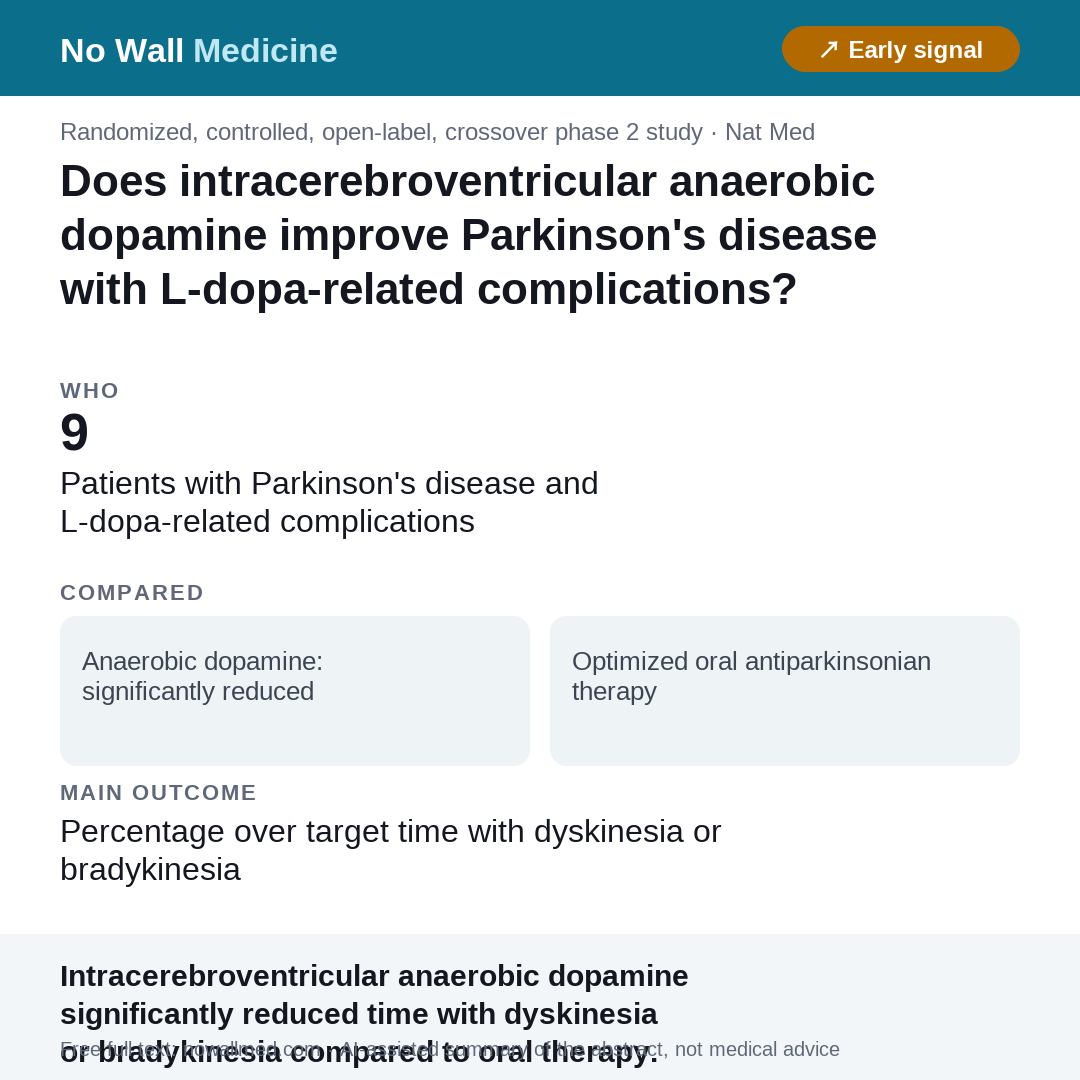
Intracerebroventricular anaerobic dopamine in Parkinson's disease with L-dopa-related complications: a phase 1/2 randomized-controlled trial
Randomized, controlled, open-label, crossover phase 2 studyEarly signal
Does intracerebroventricular anaerobic dopamine improve Parkinson's disease with L-dopa-related complications?
Who
9
Patients with Parkinson's disease and L-dopa-related complications
Compared
Anaerobic dopamine: significantly reduced
Optimized oral antiparkinsonian therapy
Main outcome
Percentage over target time with dyskinesia or bradykinesia
Result: Hedge g -0.62 (95% confidence interval: -1.43, -0.08)
Bottom line: Intracerebroventricular anaerobic dopamine significantly reduced time with dyskinesia or bradykinesia compared to oral therapy.
Nat Med · 2025-01-07Download image
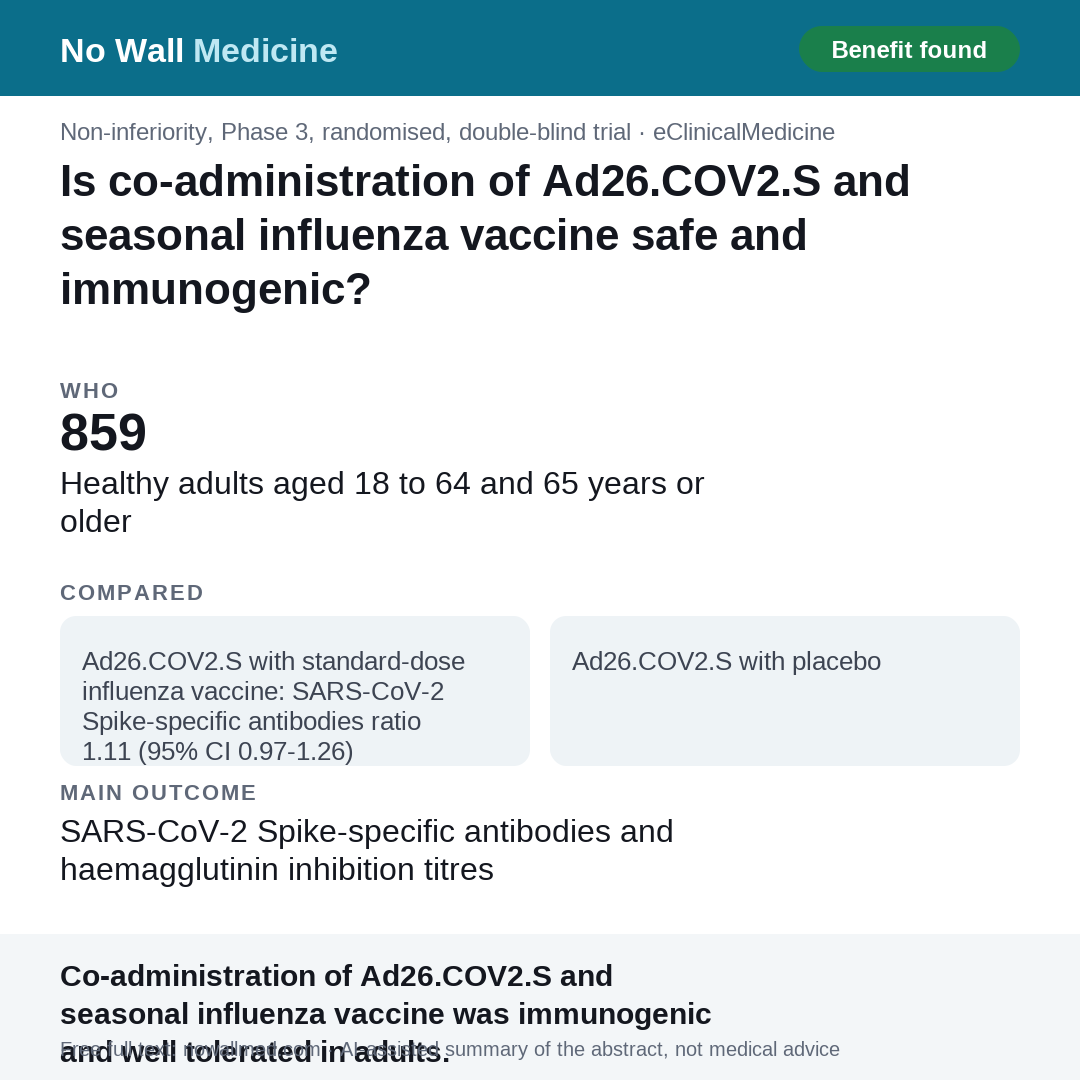
Safety, reactogenicity, and immunogenicity of Ad26.COV2.S co-administered with a quadrivalent standard-dose or high-dose seasonal influenza vaccine: a non-inferiority randomised controlled trial
Non-inferiority, Phase 3, randomised, double-blind trialBenefit found
Is co-administration of Ad26.COV2.S and seasonal influenza vaccine safe and immunogenic?
Who
859
Healthy adults aged 18 to 64 and 65 years or older
Compared
Ad26.COV2.S with standard-dose influenza vaccine: SARS-CoV-2 Spike-specific antibodies ratio 1.11 (95% CI 0.97-1.26)
Ad26.COV2.S with placebo
Main outcome
SARS-CoV-2 Spike-specific antibodies and haemagglutinin inhibition titres
Result: ratio 1.11 (95% CI 0.97-1.26)
Bottom line: Co-administration of Ad26.COV2.S and seasonal influenza vaccine was immunogenic and well tolerated in adults.
Funded by: Janssen Vaccines & Prevention BV and Biomedical Advanced Research and Development Authority
eClinicalMedicine · 2025-01-07Download image
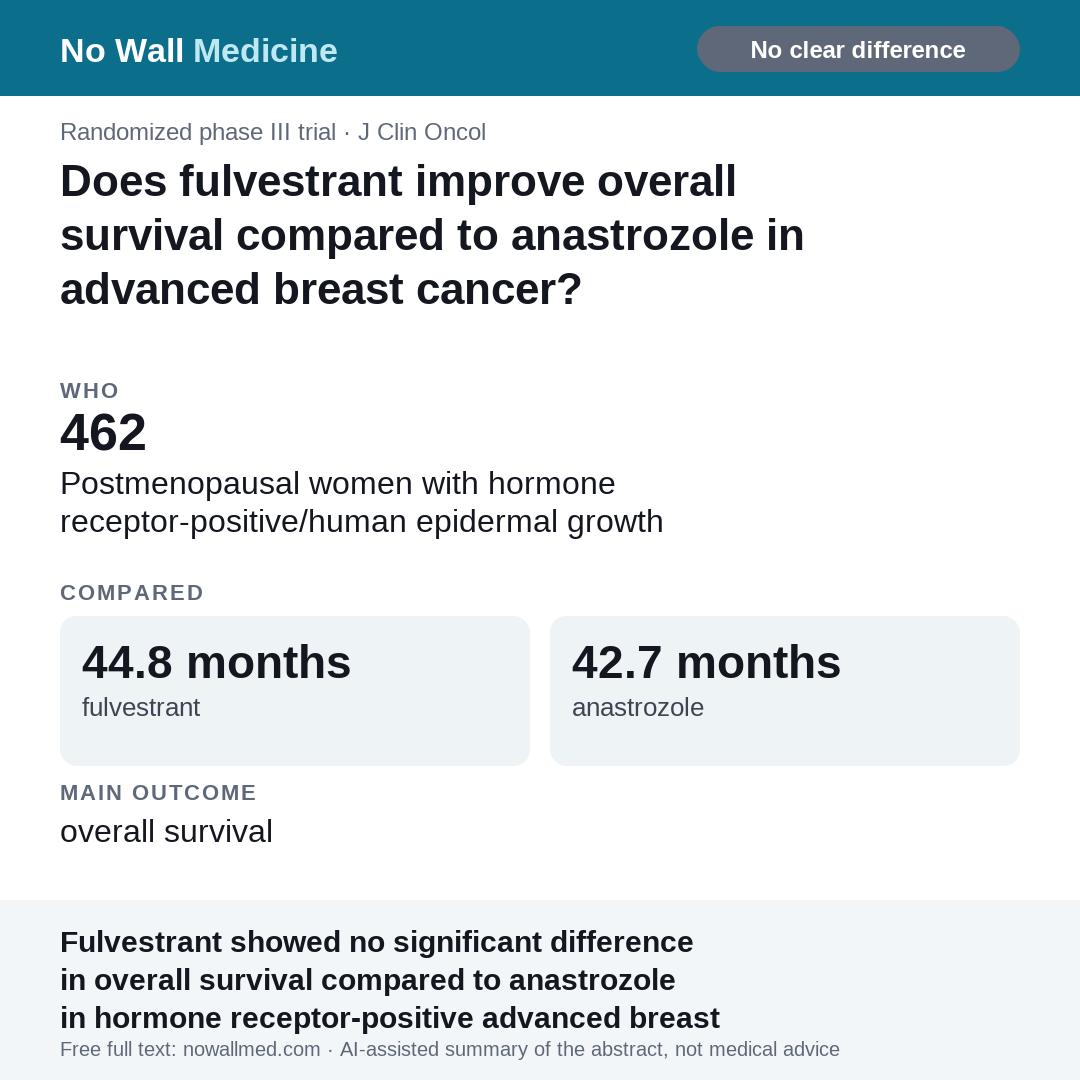
Fulvestrant Versus Anastrozole in Endocrine Therapy-Naïve Women With Hormone Receptor-Positive Advanced Breast Cancer: Final Overall Survival in the Phase III FALCON Trial
Randomized phase III trialNo clear difference
Does fulvestrant improve overall survival compared to anastrozole in advanced breast cancer?
Who
462
Postmenopausal women with hormone receptor-positive/human epidermal growth factor receptor 2-negative advanced breast cancer
Compared
44.8 monthsfulvestrant
42.7 monthsanastrozole
Main outcome
overall survival
Result: hazard ratio 0.97 (95% CI 0.77 to 1.21)
Bottom line: Fulvestrant showed no significant difference in overall survival compared to anastrozole in hormone receptor-positive advanced breast cancer.
J Clin Oncol · 2025-01-07Download image
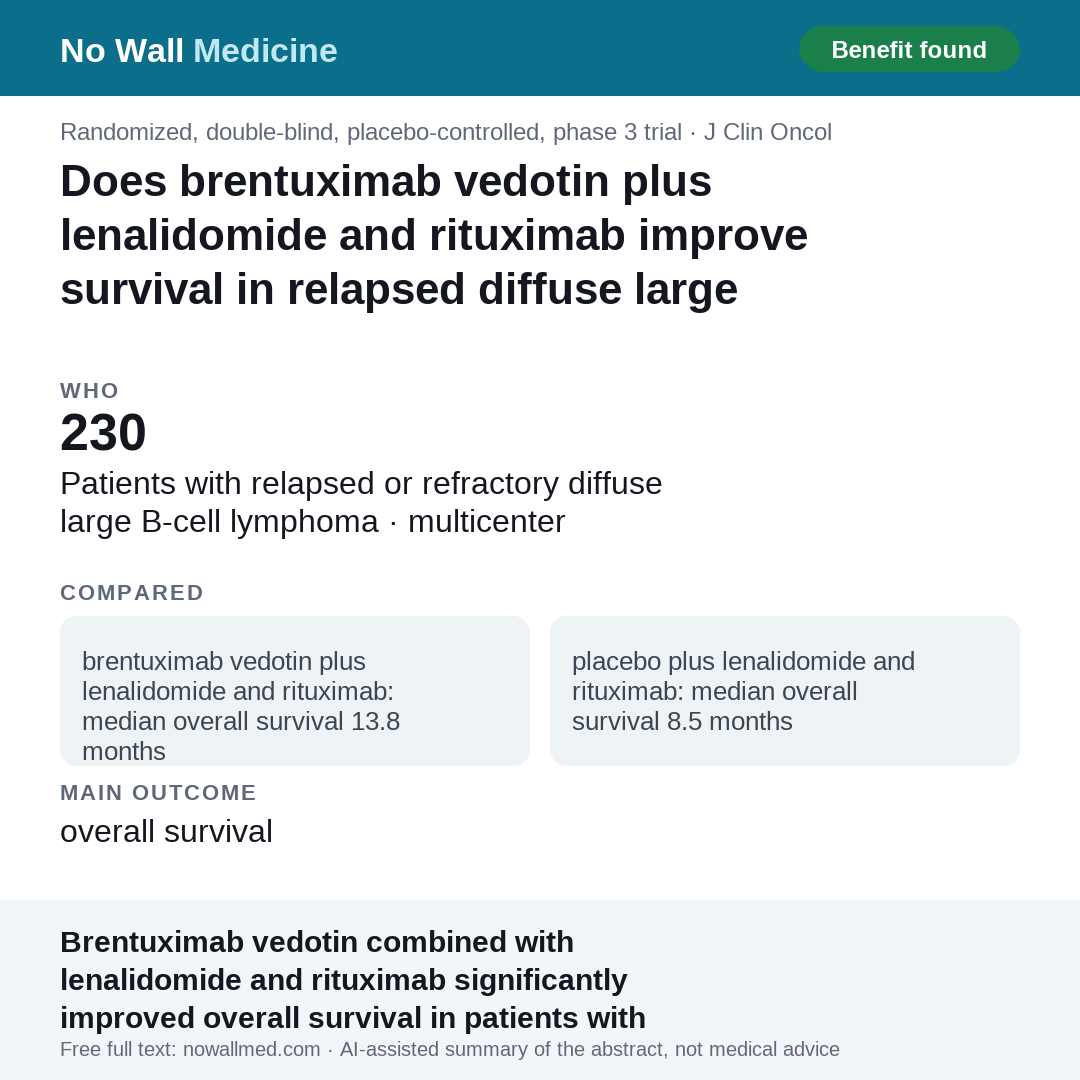
Brentuximab Vedotin Combination for Relapsed Diffuse Large B-Cell Lymphoma
Randomized, double-blind, placebo-controlled, phase 3 trialBenefit found
Does brentuximab vedotin plus lenalidomide and rituximab improve survival in relapsed diffuse large B-cell lymphoma?
Who
230
Patients with relapsed or refractory diffuse large B-cell lymphoma · multicenter
Compared
brentuximab vedotin plus lenalidomide and rituximab: median overall survival 13.8 months
placebo plus lenalidomide and rituximab: median overall survival 8.5 months
Main outcome
overall survival
Result: hazard ratio 0.63 (95% CI 0.45 to 0.89)
Bottom line: Brentuximab vedotin combined with lenalidomide and rituximab significantly improved overall survival in patients with relapsed or refractory diffuse large B-cell lymphoma.
J Clin Oncol · 2025-01-07Download image
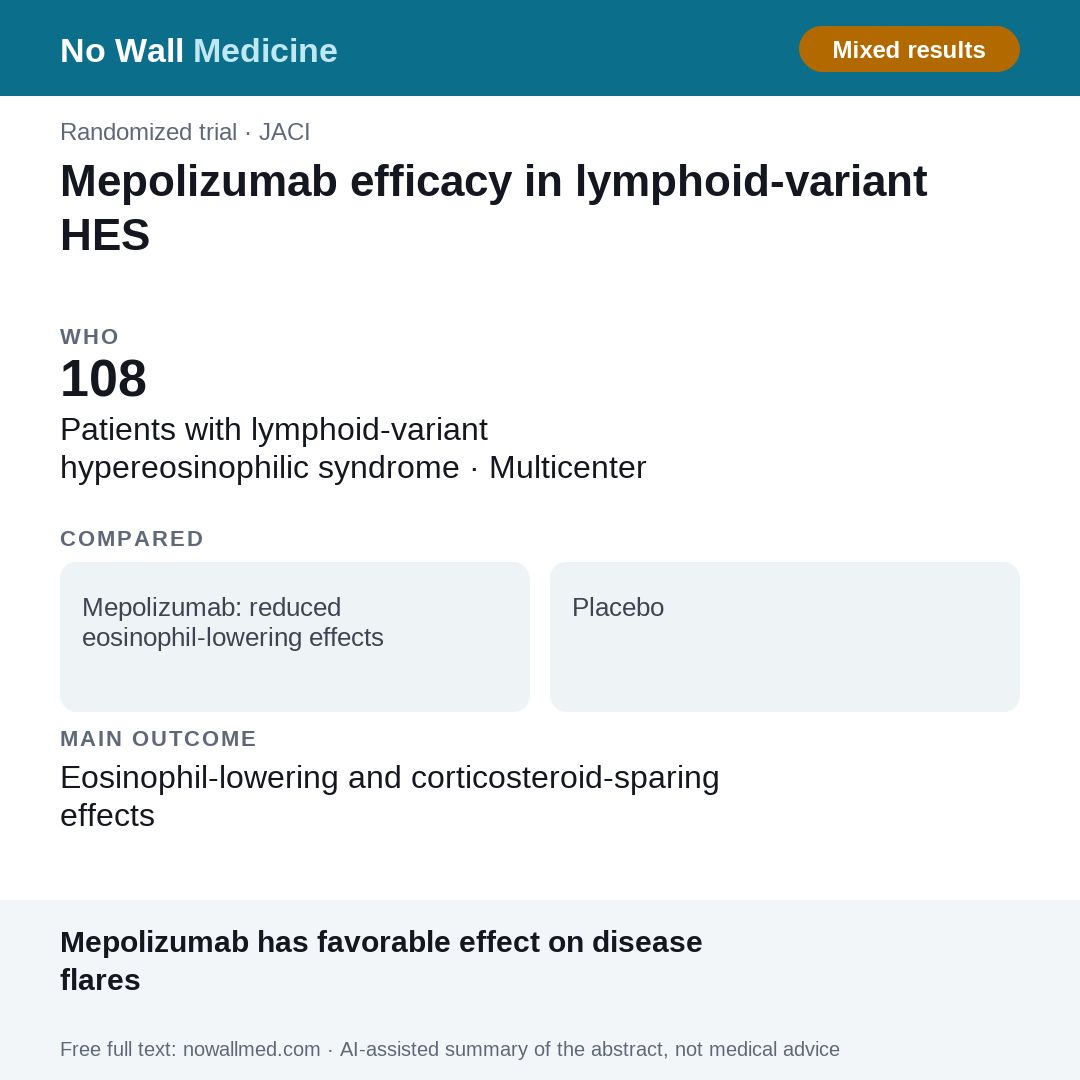
Mepolizumab in patients with lymphoid-variant hypereosinophilic syndrome: A multicenter prospective study
Randomized trialMixed results
Mepolizumab efficacy in lymphoid-variant HES
Who
108
Patients with lymphoid-variant hypereosinophilic syndrome · Multicenter
Compared
Mepolizumab: reduced eosinophil-lowering effects
Placebo
Main outcome
Eosinophil-lowering and corticosteroid-sparing effects
Bottom line: Mepolizumab has favorable effect on disease flares
JACI · 2025-01-07Download image