Visual abstracts
New randomized trials and meta-analyses from leading journals at a glance: who was studied, what was compared, and what was found. Every paper is free to read in full.
All specialtiesCardiology 975Oncology 867Gastroenterology & Hepatology 354Infectious Disease 670Neurology 408Psychiatry & Mental Health 495Pulmonology 429Critical Care 292Endocrinology & Diabetes 546Pediatrics 610Surgery 414Orthopedics & Sports Medicine 187Neurosurgery 142Cardiothoracic & Vascular Surgery 101Plastic & Reconstructive Surgery 159Nephrology 219Rheumatology 127Hematology 208Dermatology 91Ophthalmology 117Obstetrics & Gynecology 298Public & Global Health 187Radiology & Imaging 120Anesthesiology 164Urology 186ENT (Otolaryngology) 133Emergency Medicine 110Allergy & Immunology 67Geriatrics 189Family Medicine & Primary Care 131Medical Genetics & Genomics 99Pathology & Laboratory Medicine 30Physical Medicine & Rehabilitation 171Palliative Care 91Nutrition 247Digital Health & AI 509General Medicine 105
Prognostic factors for treatment success of conservative management and role for physiotherapy in radicular pain caused by a lumbar disc herniation: a systematic review
Systematic reviewBenefit found
What are prognostic factors for conservative management success and the effect of physiotherapy?
Who
Patients with radicular pain caused by lumbar disc herniation
Compared
Physiotherapy: beneficial effect on radicular leg pain in 5 out of 7 studies
Conservative management
Main outcome
Treatment success and radicular leg pain
Bottom line: Physiotherapy may relieve radicular symptoms, while severe baseline symptoms are a risk factor for poor outcomes.
Limitation: Fifteen papers had moderate to high risk of bias.
Brain Spine · 2025-11-10Download image

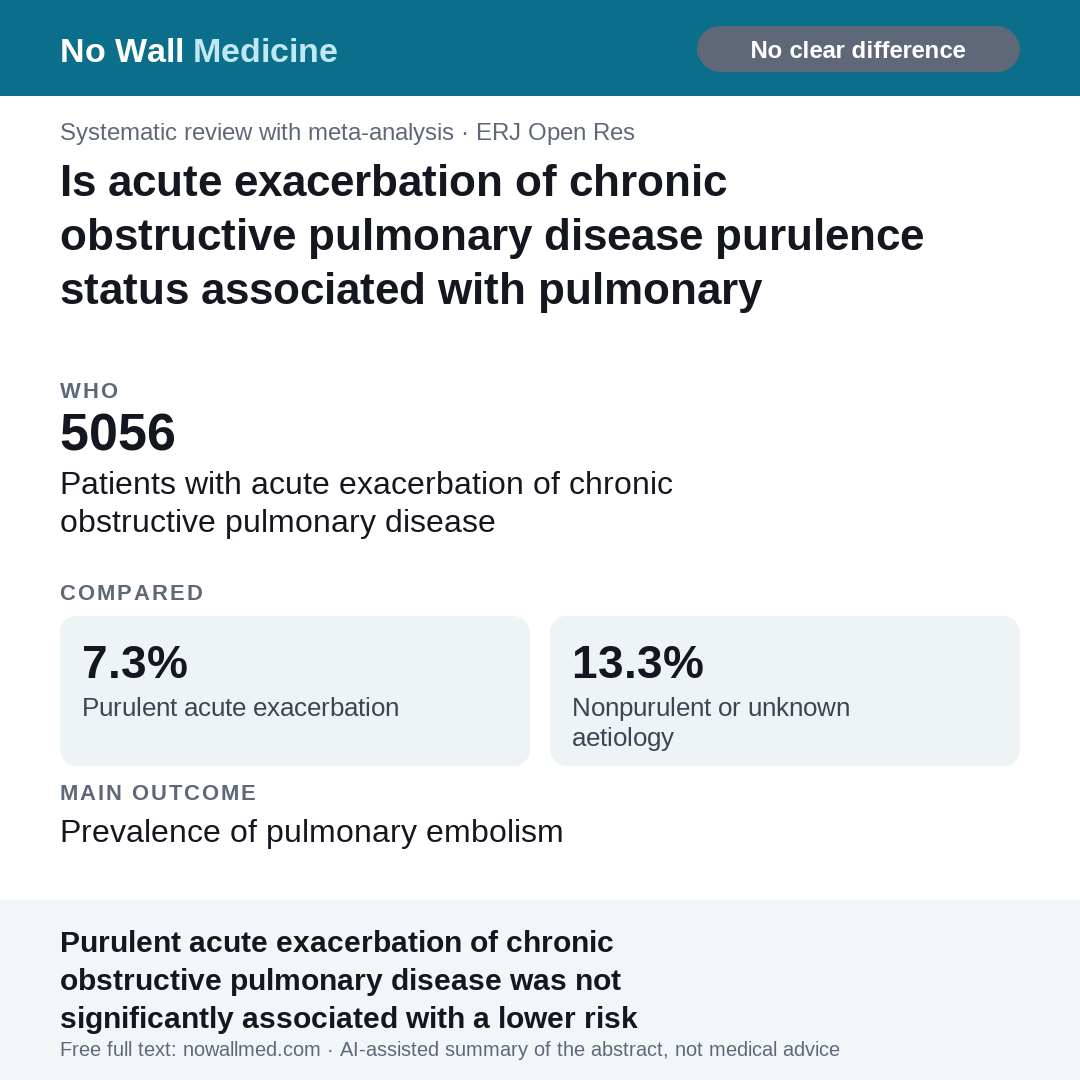
COPD exacerbation purulence status and its association with pulmonary embolism: a systematic review with meta-analysis
Systematic review with meta-analysisNo clear difference
Is acute exacerbation of chronic obstructive pulmonary disease purulence status associated with pulmonary embolism?
Who
5056
Patients with acute exacerbation of chronic obstructive pulmonary disease
Compared
7.3%Purulent acute exacerbation (95% CI 2.4-14.7%)
13.3%Nonpurulent or unknown aetiology (95% CI 8.0-19.7%)
Main outcome
Prevalence of pulmonary embolism
Result: relative risk 0.64 (95% CI 0.26-1.55)
Bottom line: Purulent acute exacerbation of chronic obstructive pulmonary disease was not significantly associated with a lower risk of pulmonary embolism.
ERJ Open Res · 2025-11-10Download image
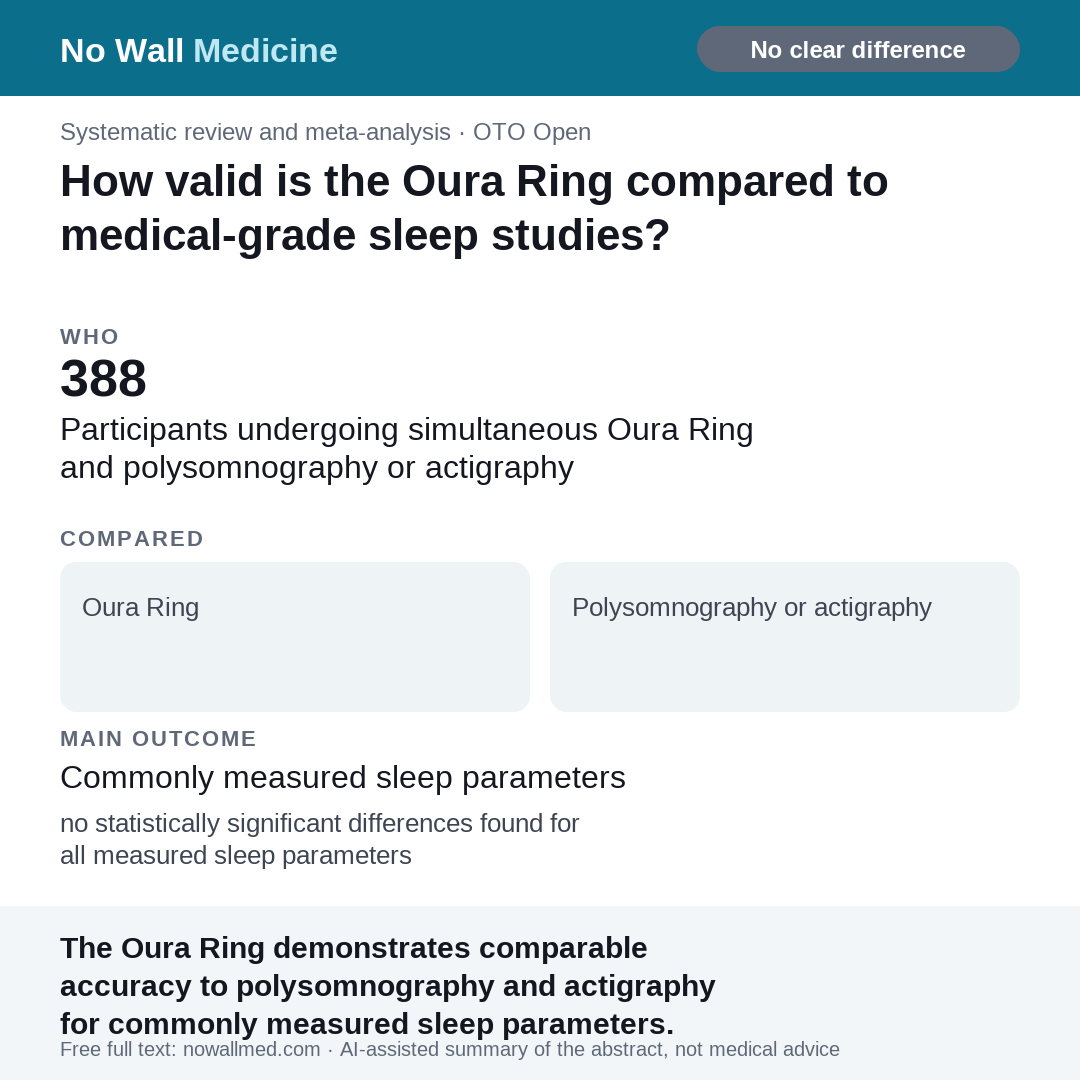
The Oura Ring Versus Medical-Grade Sleep Studies: A Systematic Review and Meta-Analysis
Systematic review and meta-analysisNo clear difference
How valid is the Oura Ring compared to medical-grade sleep studies?
Who
388
Participants undergoing simultaneous Oura Ring and polysomnography or actigraphy
Compared
Oura Ring
Polysomnography or actigraphy
Main outcome
Commonly measured sleep parameters
Result: no statistically significant differences found for all measured sleep parameters
Bottom line: The Oura Ring demonstrates comparable accuracy to polysomnography and actigraphy for commonly measured sleep parameters.
OTO Open · 2025-11-10Download image
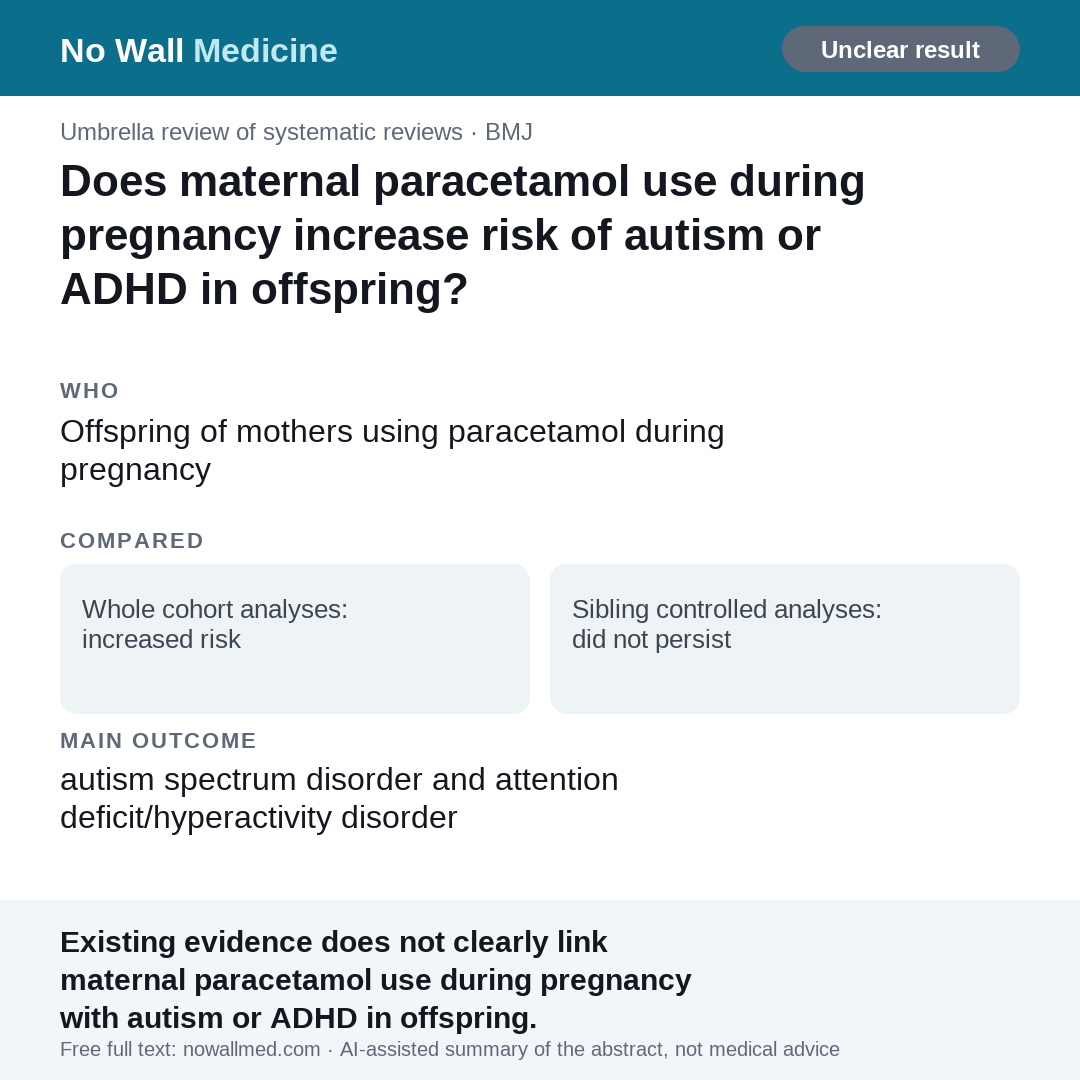
Maternal paracetamol (acetaminophen) use during pregnancy and risk of autism spectrum disorder and attention deficit/hyperactivity disorder in offspring: umbrella review of systematic reviews
Umbrella review of systematic reviewsUnclear result
Does maternal paracetamol use during pregnancy increase risk of autism or ADHD in offspring?
Who
Offspring of mothers using paracetamol during pregnancy
Compared
Whole cohort analyses: increased risk
Sibling controlled analyses: did not persist
Main outcome
autism spectrum disorder and attention deficit/hyperactivity disorder
Bottom line: Existing evidence does not clearly link maternal paracetamol use during pregnancy with autism or ADHD in offspring.
Limitation: Low to critically low confidence due to potential risk of bias and confounding in included studies.
BMJ · 2025-11-09Download image
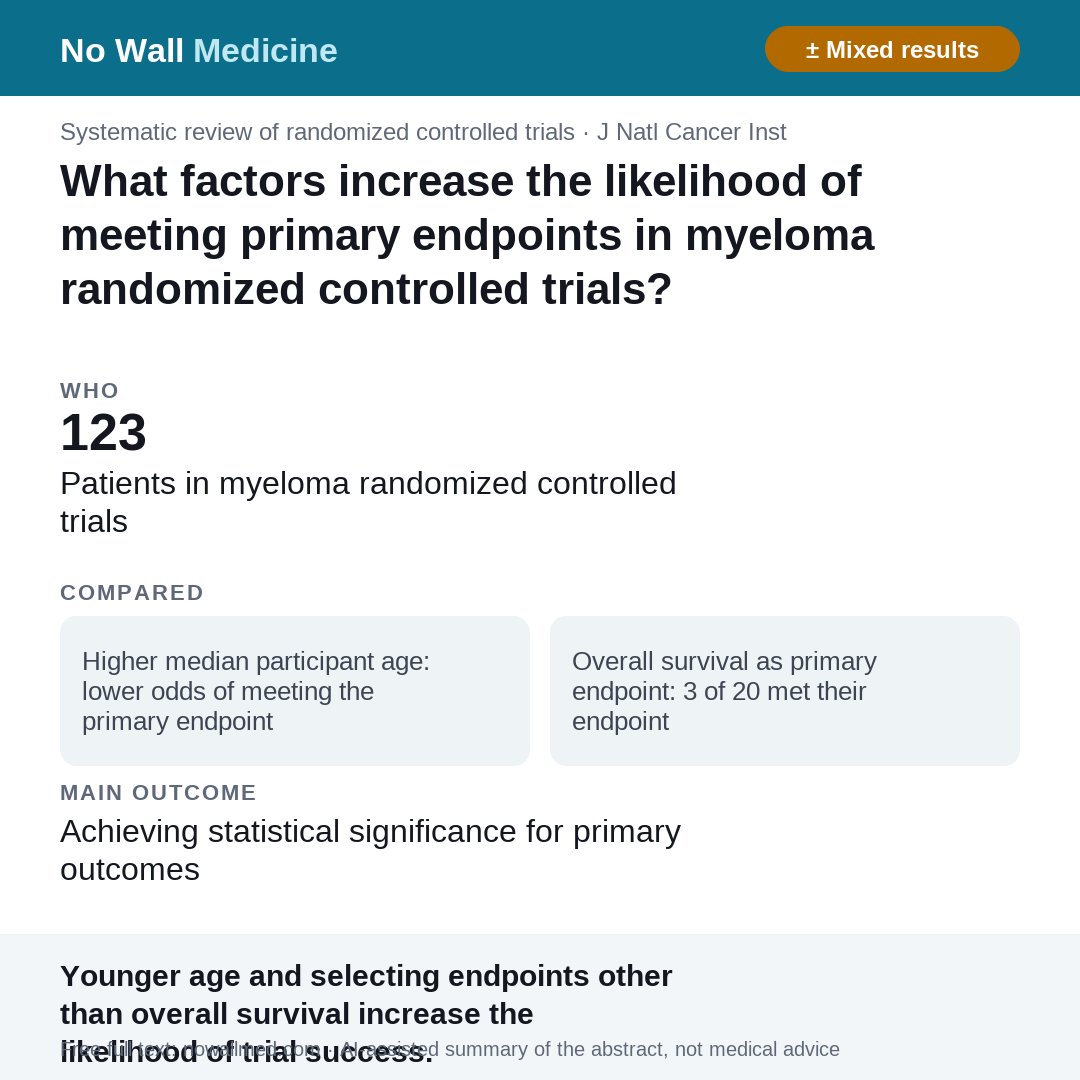
Optimizing oncology drug development: systematic review of 22 years of myeloma randomized controlled trials
Systematic review of randomized controlled trialsMixed results
What factors increase the likelihood of meeting primary endpoints in myeloma randomized controlled trials?
Who
123
Patients in myeloma randomized controlled trials
Compared
Higher median participant age: lower odds of meeting the primary endpoint
Overall survival as primary endpoint: 3 of 20 met their endpoint
Main outcome
Achieving statistical significance for primary outcomes
Result: OR 0.06 (95% CI 0.01 to 0.23) for overall survival vs progression-free survival
Bottom line: Younger age and selecting endpoints other than overall survival increase the likelihood of trial success.
J Natl Cancer Inst · 2025-11-09Download image
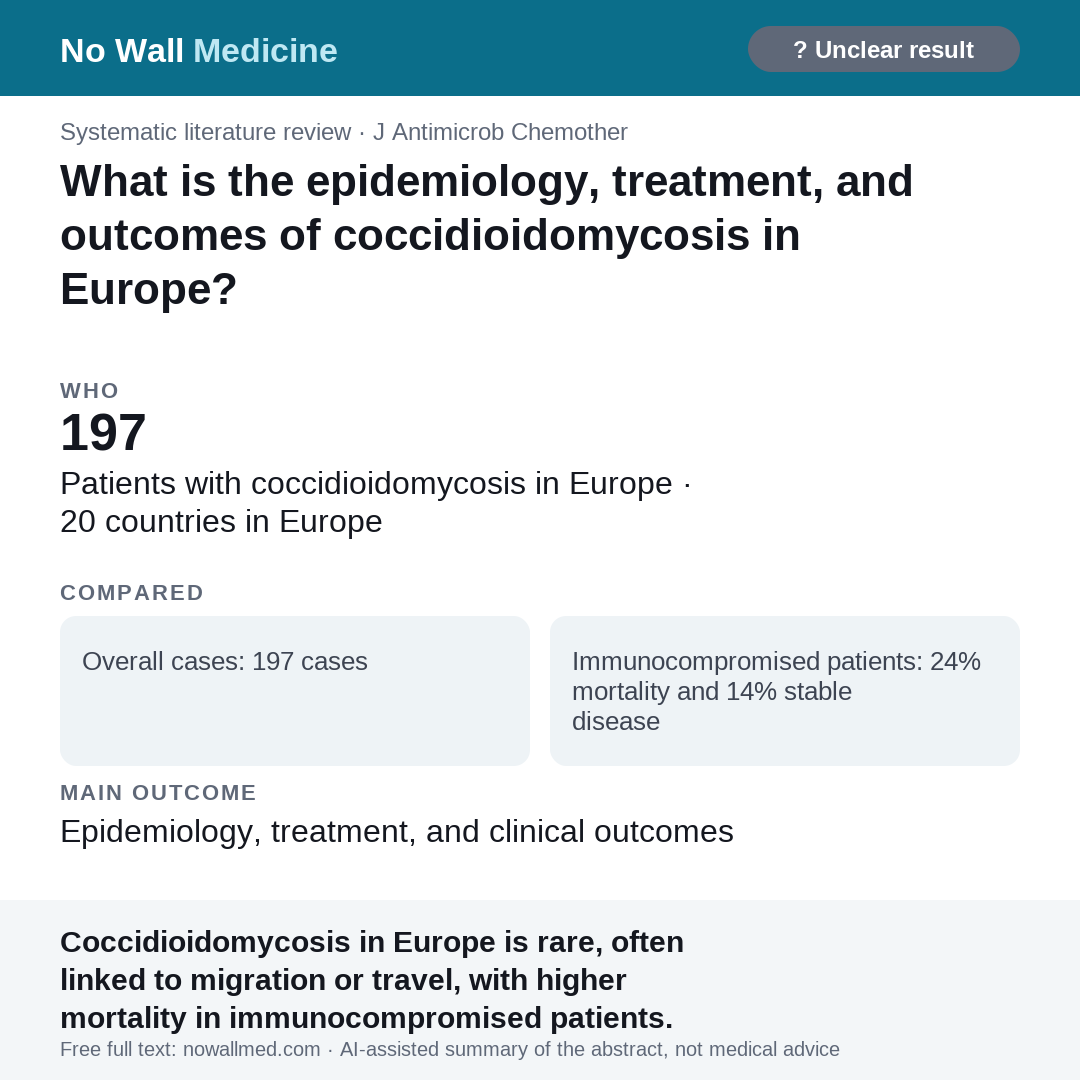
Coccidioidomycosis in Europe: a systematic literature review of epidemiology, treatment and outcomes
Systematic literature reviewUnclear result
What is the epidemiology, treatment, and outcomes of coccidioidomycosis in Europe?
Who
197
Patients with coccidioidomycosis in Europe · 20 countries in Europe
Compared
Overall cases: 197 cases
Immunocompromised patients: 24% mortality and 14% stable disease
Main outcome
Epidemiology, treatment, and clinical outcomes
Bottom line: Coccidioidomycosis in Europe is rare, often linked to migration or travel, with higher mortality in immunocompromised patients.
J Antimicrob Chemother · 2025-11-09Download image
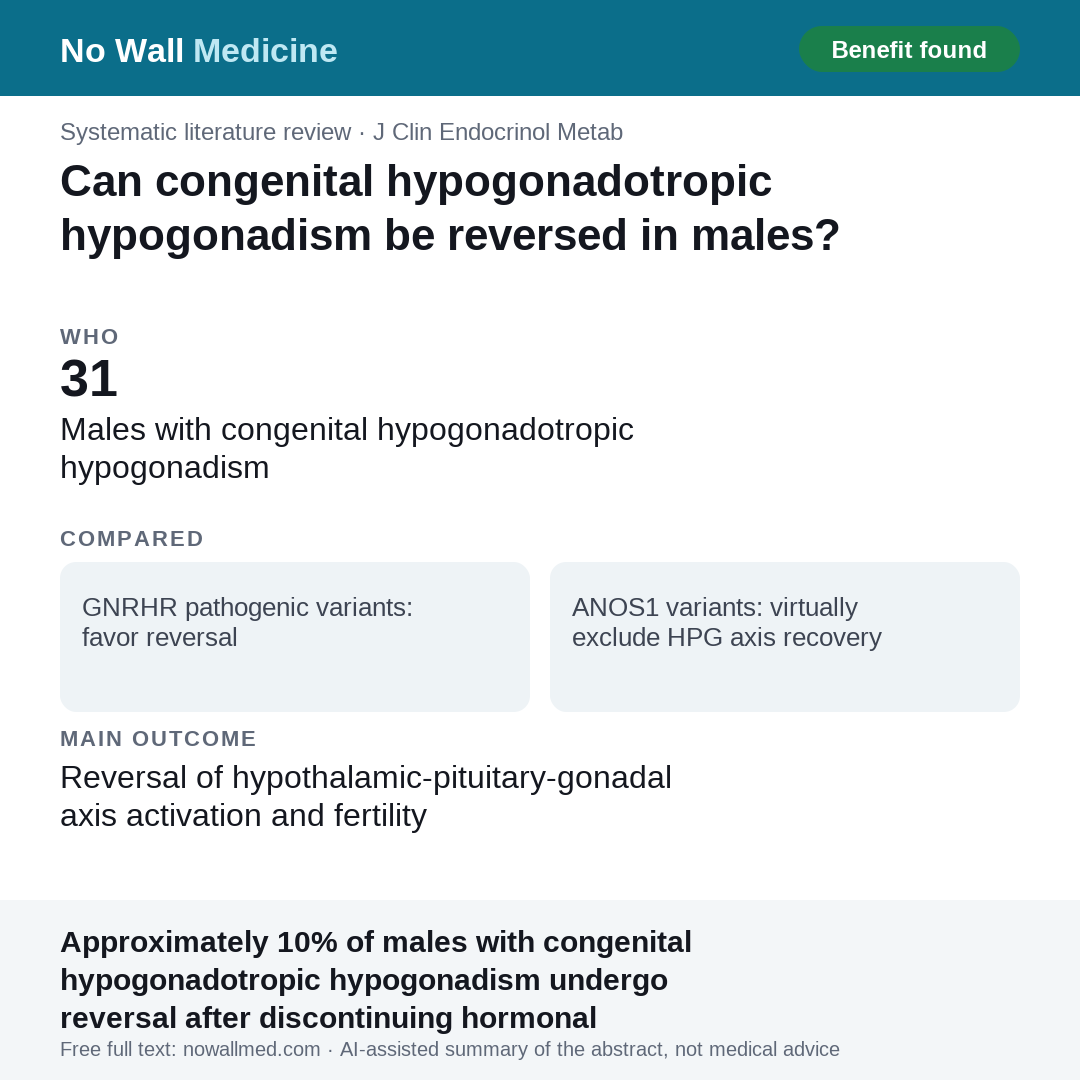
Reversal of Congenital Hypogonadotropic Hypogonadism
Systematic literature reviewBenefit found
Can congenital hypogonadotropic hypogonadism be reversed in males?
Who
31
Males with congenital hypogonadotropic hypogonadism
Compared
GNRHR pathogenic variants: favor reversal
ANOS1 variants: virtually exclude HPG axis recovery
Main outcome
Reversal of hypothalamic-pituitary-gonadal axis activation and fertility
Bottom line: Approximately 10% of males with congenital hypogonadotropic hypogonadism undergo reversal after discontinuing hormonal treatment.
J Clin Endocrinol Metab · 2025-11-09Download image
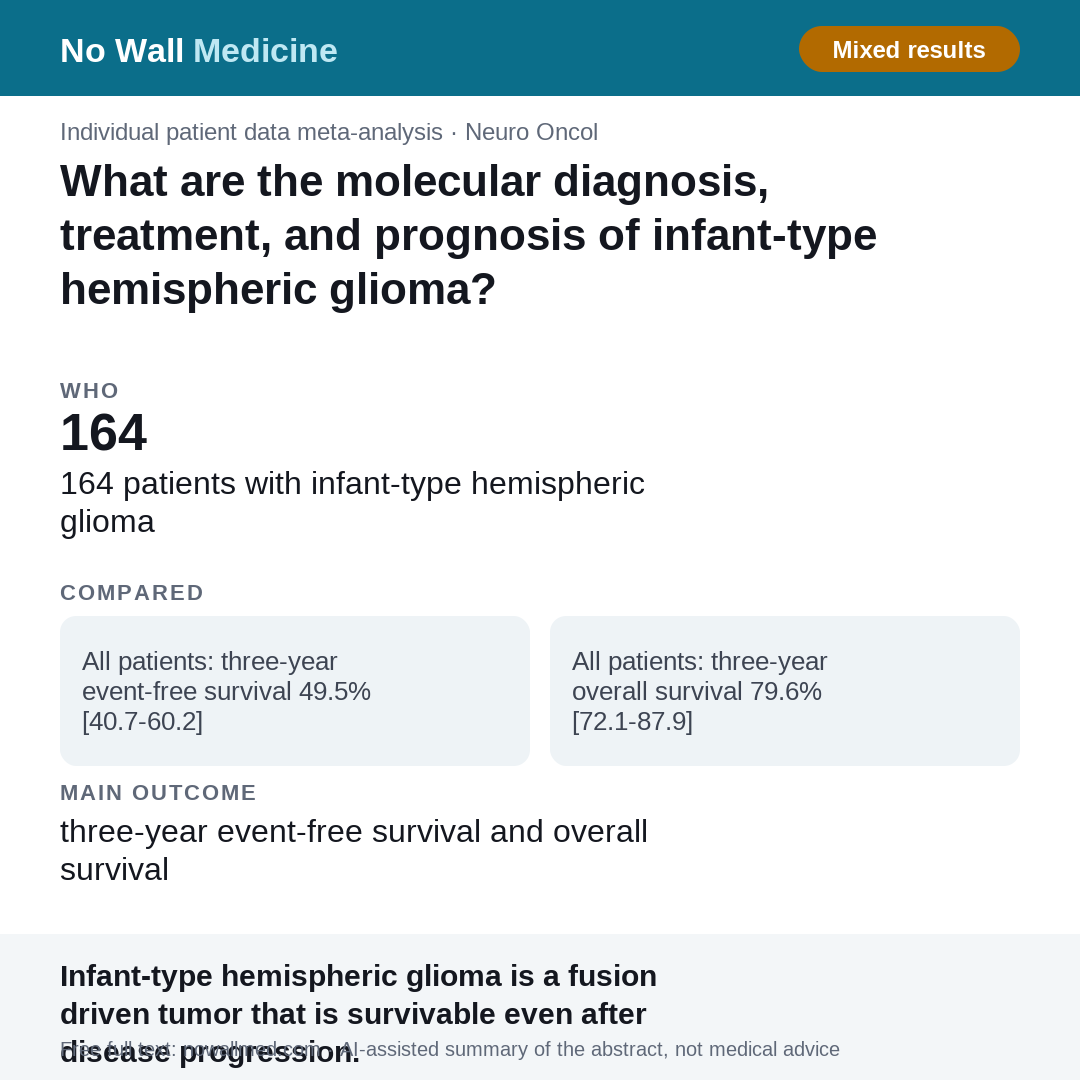
A systematic study of molecular diagnosis, treatment, and prognosis in infant-type hemispheric glioma: An individual patient data meta-analysis of 164 patients
Individual patient data meta-analysisMixed results
What are the molecular diagnosis, treatment, and prognosis of infant-type hemispheric glioma?
Who
164
164 patients with infant-type hemispheric glioma
Compared
All patients: three-year event-free survival 49.5% [40.7-60.2]
All patients: three-year overall survival 79.6% [72.1-87.9]
Main outcome
three-year event-free survival and overall survival
Bottom line: Infant-type hemispheric glioma is a fusion driven tumor that is survivable even after disease progression.
Neuro Oncol · 2025-11-09Download image
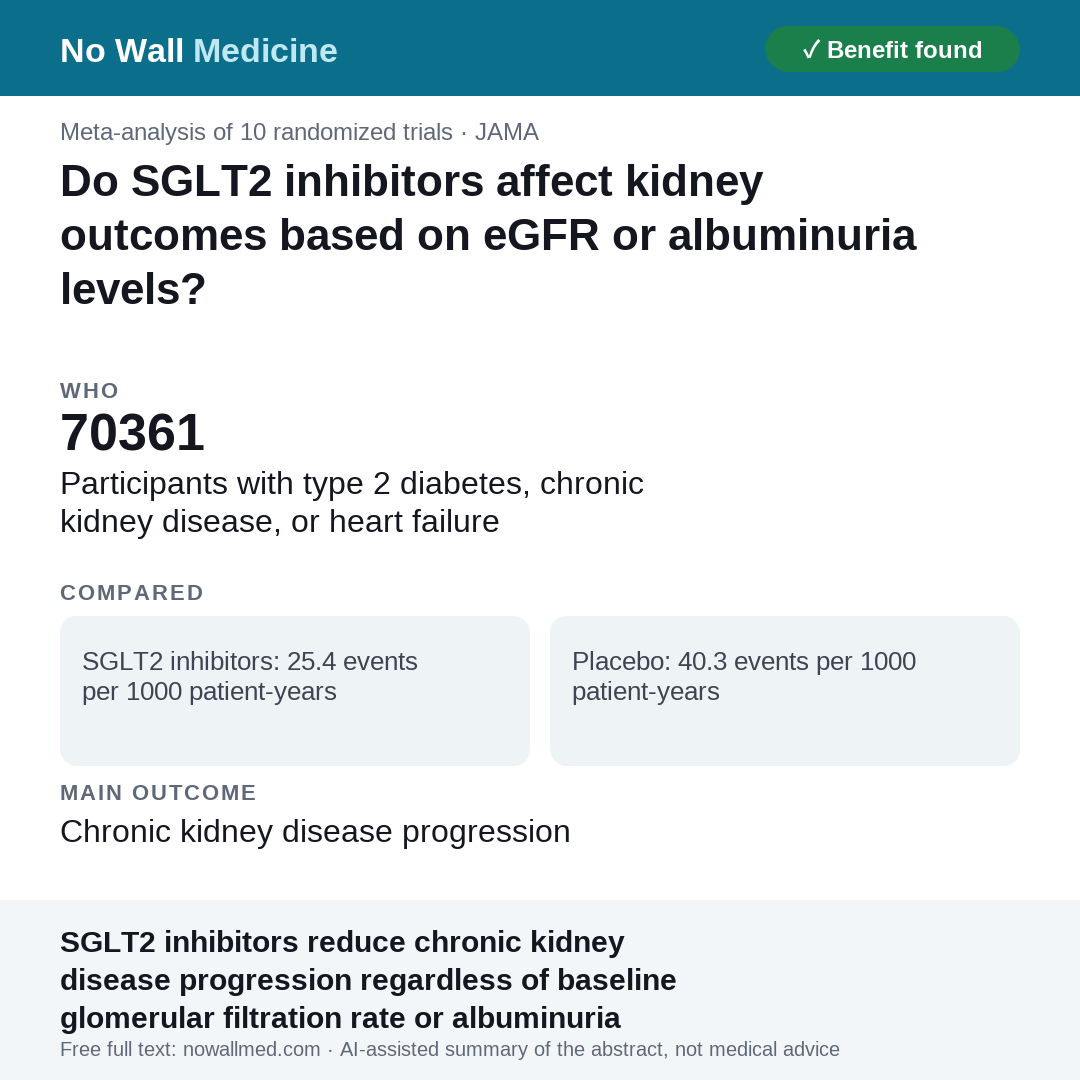
SGLT2 Inhibitors and Kidney Outcomes by Glomerular Filtration Rate and Albuminuria: A Meta-Analysis
Meta-analysis of 10 randomized trialsBenefit found
Do SGLT2 inhibitors affect kidney outcomes based on eGFR or albuminuria levels?
Who
70361
Participants with type 2 diabetes, chronic kidney disease, or heart failure
Compared
SGLT2 inhibitors: 25.4 events per 1000 patient-years
Placebo: 40.3 events per 1000 patient-years
Main outcome
Chronic kidney disease progression
Result: hazard ratio 0.62 (95% CI 0.57-0.68)
Bottom line: SGLT2 inhibitors reduce chronic kidney disease progression regardless of baseline glomerular filtration rate or albuminuria levels.
JAMA · 2025-11-08Download image
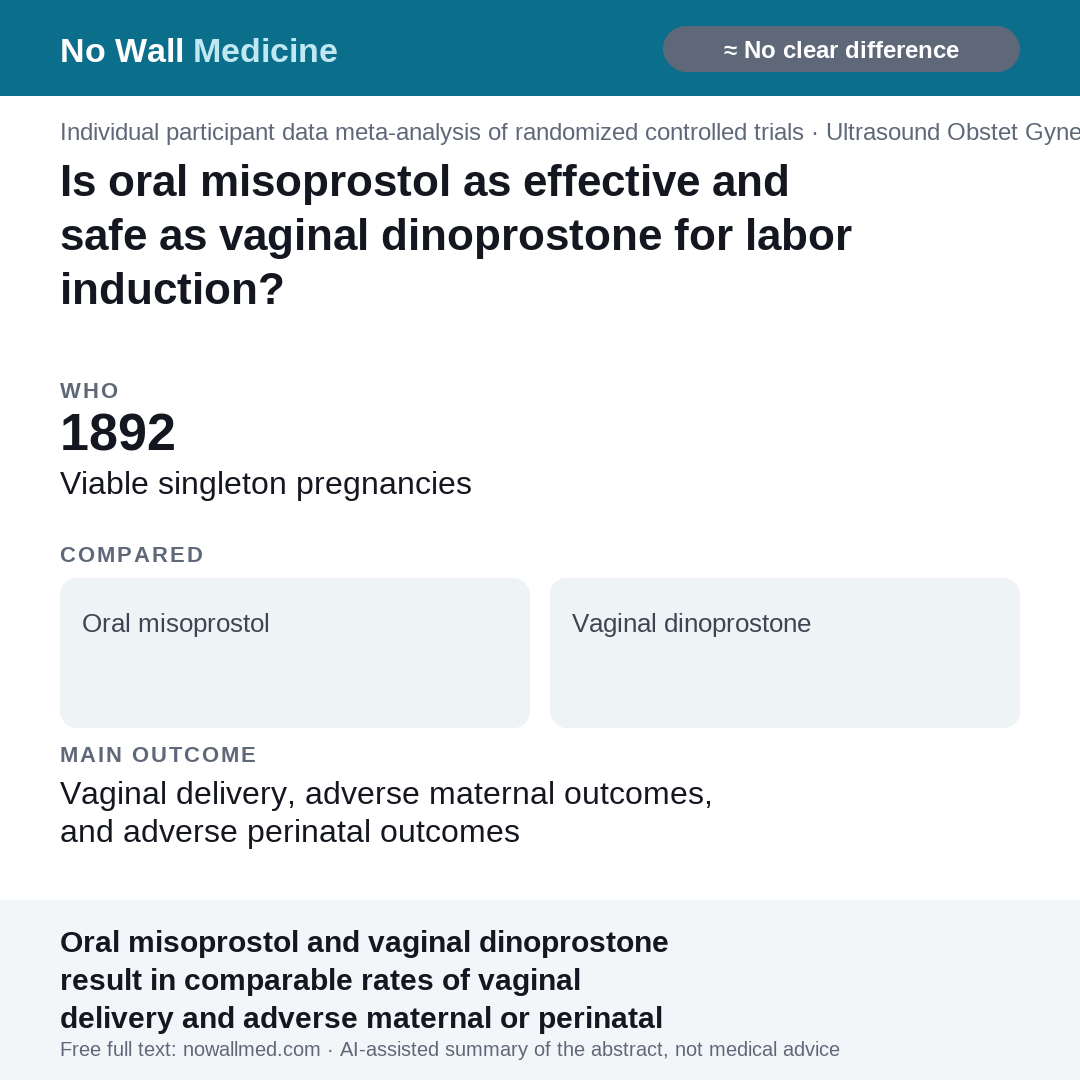
Oral misoprostol (PGE1) vs vaginal dinoprostone (PGE2) for labor induction: individual participant data meta-analysis of randomized controlled trials
Individual participant data meta-analysis of randomized controlled trialsNo clear difference
Is oral misoprostol as effective and safe as vaginal dinoprostone for labor induction?
Who
1892
Viable singleton pregnancies
Compared
Oral misoprostol
Vaginal dinoprostone
Main outcome
Vaginal delivery, adverse maternal outcomes, and adverse perinatal outcomes
Result: odds ratio 0.99 (95% CI 0.80-1.22)
Bottom line: Oral misoprostol and vaginal dinoprostone result in comparable rates of vaginal delivery and adverse maternal or perinatal outcomes.
Ultrasound Obstet Gynecol · 2025-11-08Download image
Estimating the economic burden of invasive non-typhoidal Salmonella infections in low- and middle-income countries
Econometric modeling using systematic literature review dataHarm found
What is the economic burden of invasive non-typhoidal Salmonella infections in 123 countries?
Who
Invasive non-typhoidal Salmonella disease cases in 123 countries · 123 countries, including sub-Saharan Africa and Europe
Compared
Africa: US$341 average economic burden per episode
Europe: US$2194 average economic burden per episode
Main outcome
Average and total economic burden of invasive non-typhoidal Salmonella
Bottom line: The economic burden of invasive non-typhoidal Salmonella is substantial, with the highest total burden in Africa.
Limitation: Scarcity of field-based invasive non-typhoidal Salmonella disease economic burden estimates
BMJ Glob Health · 2025-11-08Download image

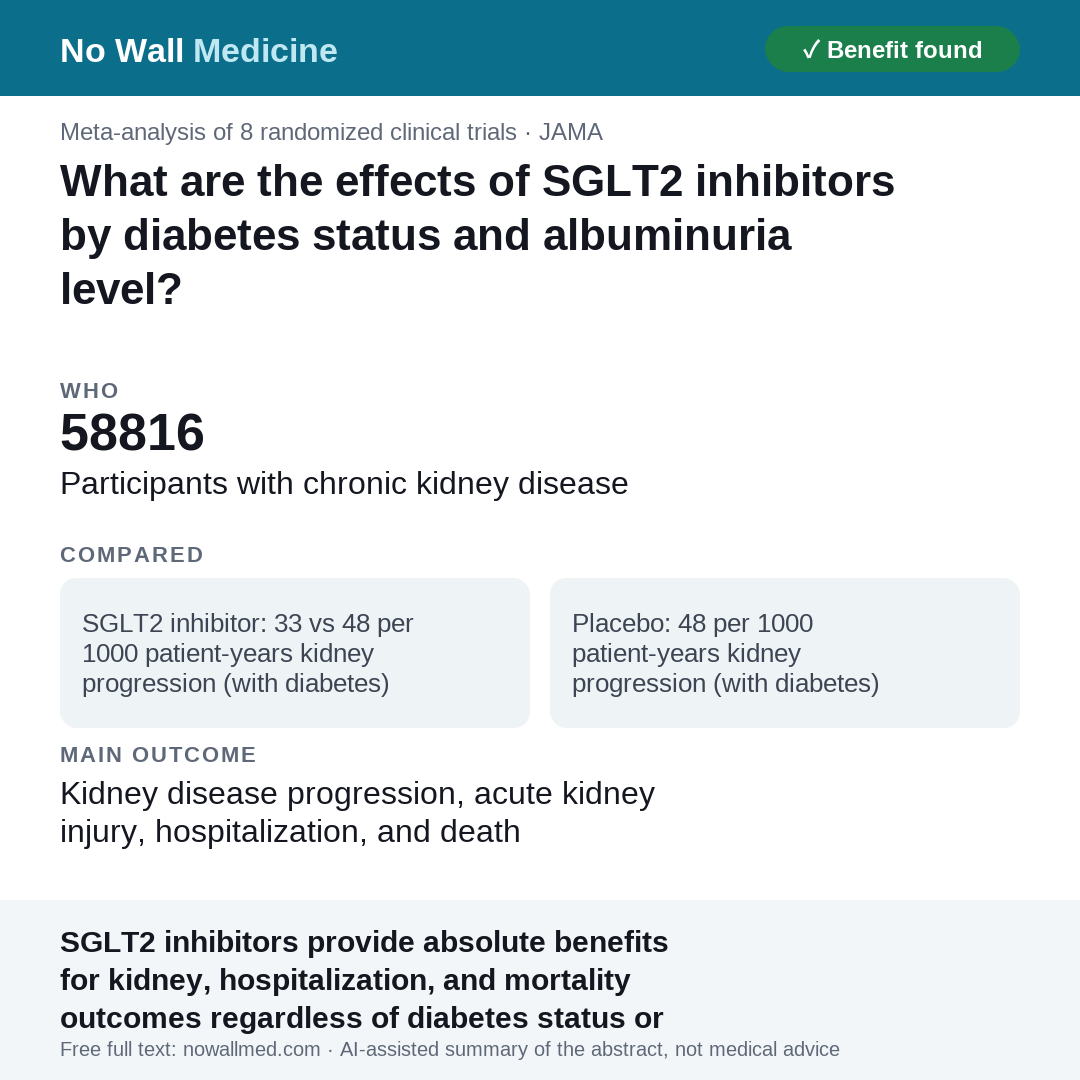
Effects of Sodium Glucose Cotransporter 2 Inhibitors by Diabetes Status and Level of Albuminuria: A Meta-Analysis
Meta-analysis of 8 randomized clinical trialsBenefit found
What are the effects of SGLT2 inhibitors by diabetes status and albuminuria level?
Who
58816
Participants with chronic kidney disease
Compared
SGLT2 inhibitor: 33 vs 48 per 1000 patient-years kidney progression (with diabetes)
Placebo: 48 per 1000 patient-years kidney progression (with diabetes)
Main outcome
Kidney disease progression, acute kidney injury, hospitalization, and death
Result: hazard ratio 0.65 (95% CI, 0.60-0.70) in those with diabetes
Bottom line: SGLT2 inhibitors provide absolute benefits for kidney, hospitalization, and mortality outcomes regardless of diabetes status or albuminuria levels.
JAMA · 2025-11-07Download image
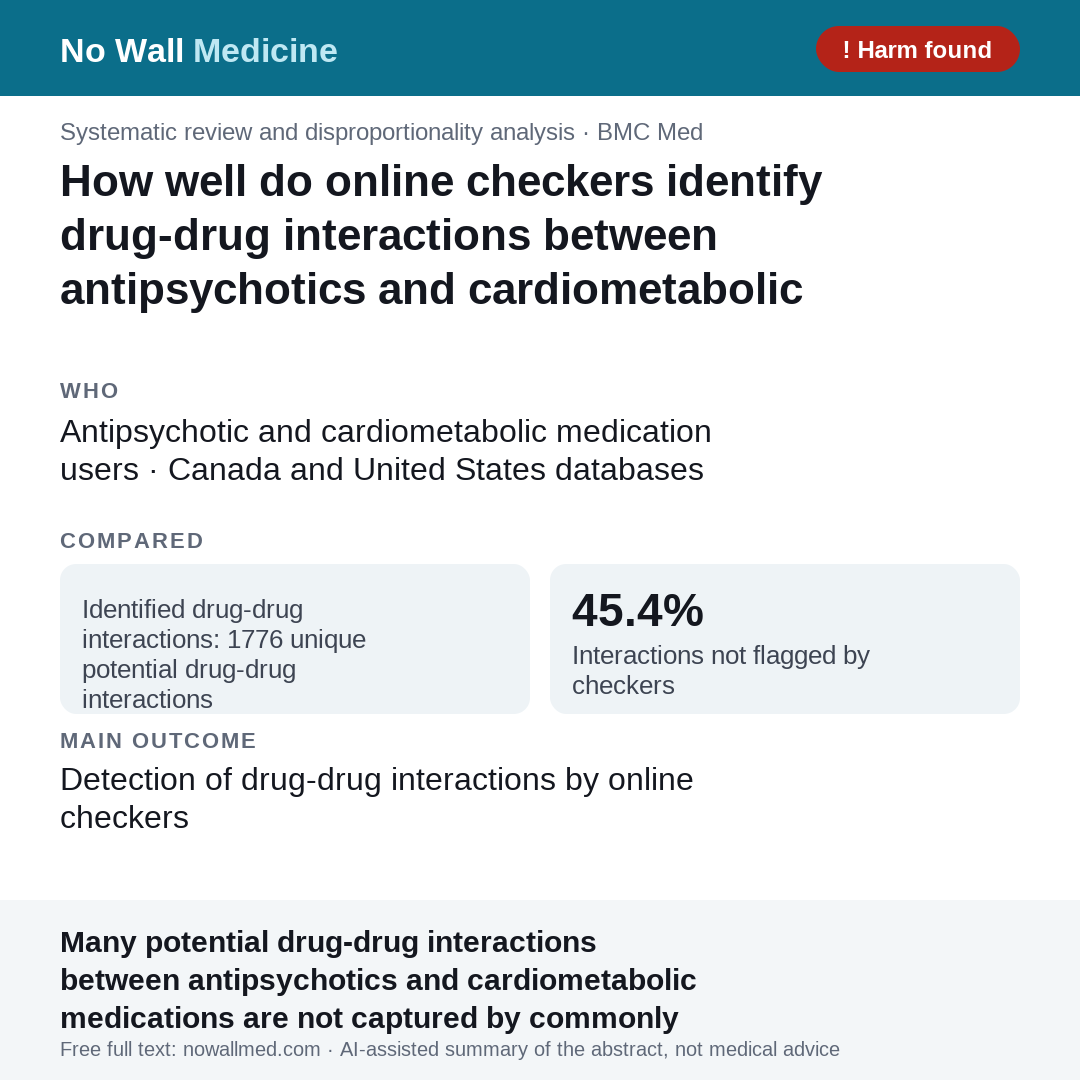
Gaps in the detection of drug-drug interactions between antipsychotic and cardiometabolic medications: a multisource analysis
Systematic review and disproportionality analysisHarm found
How well do online checkers identify drug-drug interactions between antipsychotics and cardiometabolic medications?
Who
Antipsychotic and cardiometabolic medication users · Canada and United States databases
Compared
Identified drug-drug interactions: 1776 unique potential drug-drug interactions
45.4%Interactions not flagged by checkers
Main outcome
Detection of drug-drug interactions by online checkers
Bottom line: Many potential drug-drug interactions between antipsychotics and cardiometabolic medications are not captured by commonly used online checkers.
BMC Med · 2025-11-07Download image
Therapeutic strategies in vascular cognitive impairment: A systematic review and meta-analysis
Systematic review and meta-analysisMixed results
Do therapeutic strategies improve outcomes in vascular cognitive impairment?
Who
22347
Participants with vascular cognitive impairment
Compared
Ginkgo biloba extracts: Cohen's d: 0.83 (95% CI: 0.00 to 1.67) for cognition
Other interventions: Small to moderate improvements in cognition
Main outcome
Cognition and functional outcomes
Bottom line: Ginkgo biloba extracts showed the greatest benefits, but overall evidence certainty is low due to trial heterogeneity.
Alzheimers Dement · 2025-11-07Download image

Values and Preferences of Patients and Caregivers Regarding the Management of Moderate-to-Severe Asthma: A Systematic Review and Qualitative Evidence Synthesis
Systematic reviewUnclear result
Patient values in asthma management
Who
9593
patients with moderate-to-severe asthma and caregivers
Compared
Patients
Caregivers
Main outcome
values and preferences
Bottom line: Patients value avoiding adverse effects and exacerbations
J Allergy Clin Immunol Pract · 2025-11-07Download image

Federal Investment in Primary Care Transformation: A Systematic Review and Qualitative Analysis
Systematic reviewMixed results
Impact of federal investment in primary care
Who
142
primary care practices
Compared
federal investment
no investment
Main outcome
patient experience and costs
Bottom line: Investing in primary care improves practice experience
Limitation: access to practice-level data
JAMA Health Forum · 2025-11-07Download image

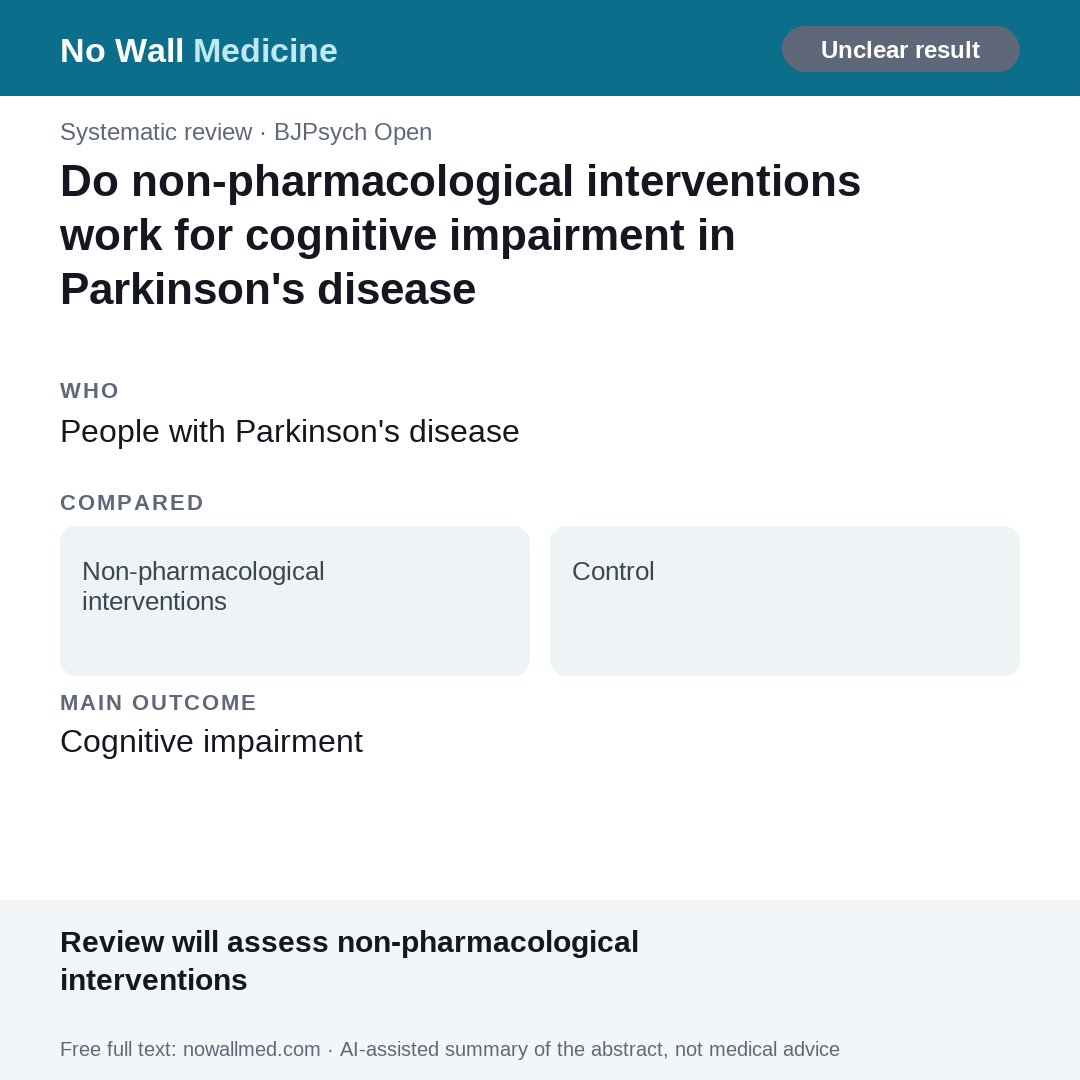
Effectiveness of non-pharmacological interventions for cognitive impairment in Parkinson's disease: systematic review protocol
Systematic reviewUnclear result
Do non-pharmacological interventions work for cognitive impairment in Parkinson's disease
Who
People with Parkinson's disease
Compared
Non-pharmacological interventions
Control
Main outcome
Cognitive impairment
Bottom line: Review will assess non-pharmacological interventions
BJPsych Open · 2025-11-07Download image
Acquisition of respiratory surface EMG: a systematic literature review of electrode configurations and methodological reporting
Systematic literature reviewMixed results
What are the electrode configurations and reporting quality of respiratory surface electromyography studies?
Who
240
Adults during spontaneous breathing · MEDLINE ALL, Embase, and Web of Science databases
Compared
61%Diaphragm muscle studies
Reporting quality: median of 5 out of 10 recommended items
Main outcome
Electrode configurations and methodological reporting quality
Bottom line: Respiratory surface electromyography shows substantial setup diversity and low reporting quality, necessitating muscle-specific guidelines.
Crit Care · 2025-11-07Download image

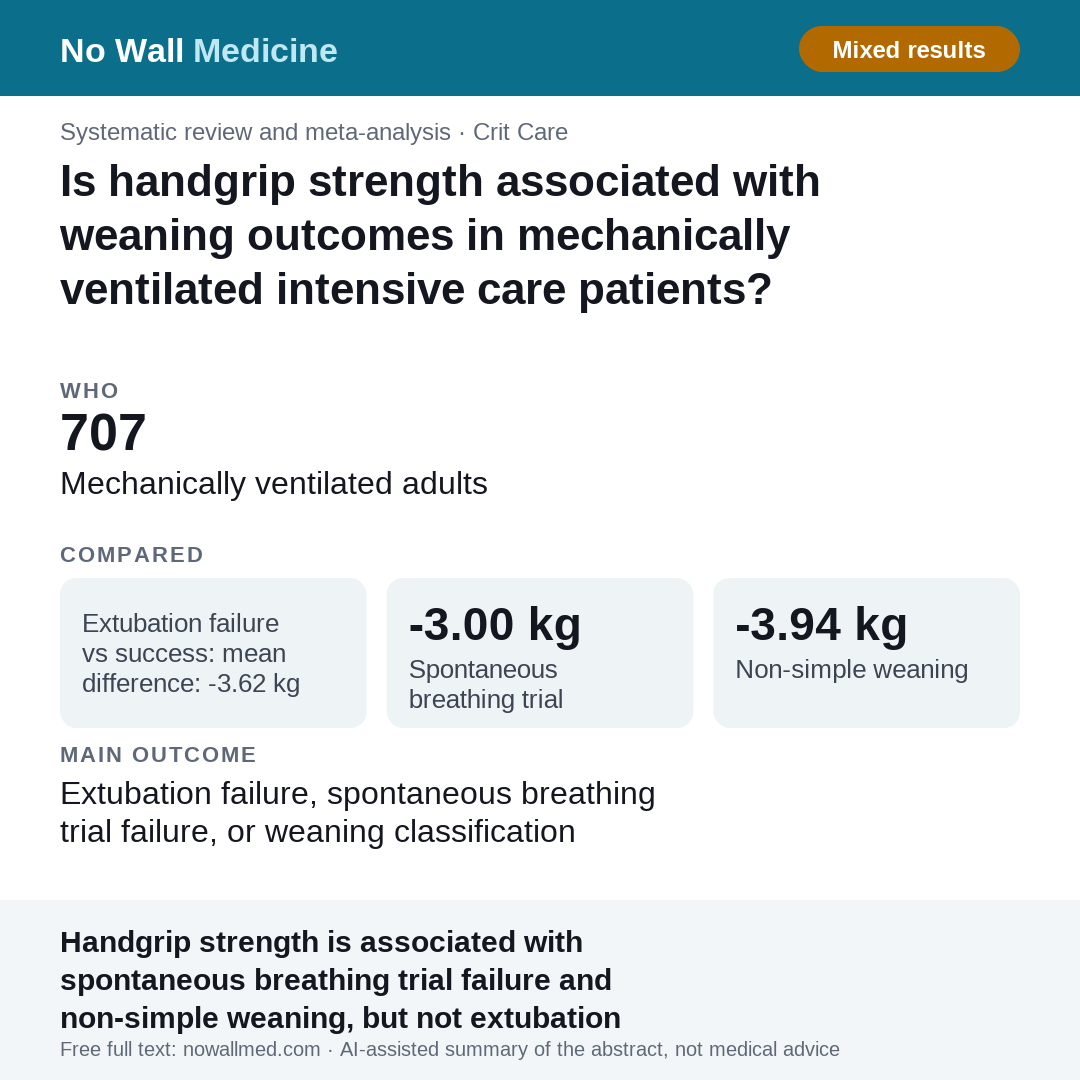
Handgrip strength association with weaning outcome in mechanically ventilated ICU patients: a systematic review and meta-analysis
Systematic review and meta-analysisMixed results
Is handgrip strength associated with weaning outcomes in mechanically ventilated intensive care patients?
Who
707
Mechanically ventilated adults
Compared
Extubation failure vs success: mean difference: -3.62 kg
-3.00 kgSpontaneous breathing trial failure
-3.94 kgNon-simple weaning
Main outcome
Extubation failure, spontaneous breathing trial failure, or weaning classification
Result: mean difference: -3.62 kg (95% CI: -7.92 to 0.62)
Bottom line: Handgrip strength is associated with spontaneous breathing trial failure and non-simple weaning, but not extubation failure.
Limitation: Limited number of studies and heterogeneity.
Crit Care · 2025-11-07Download image
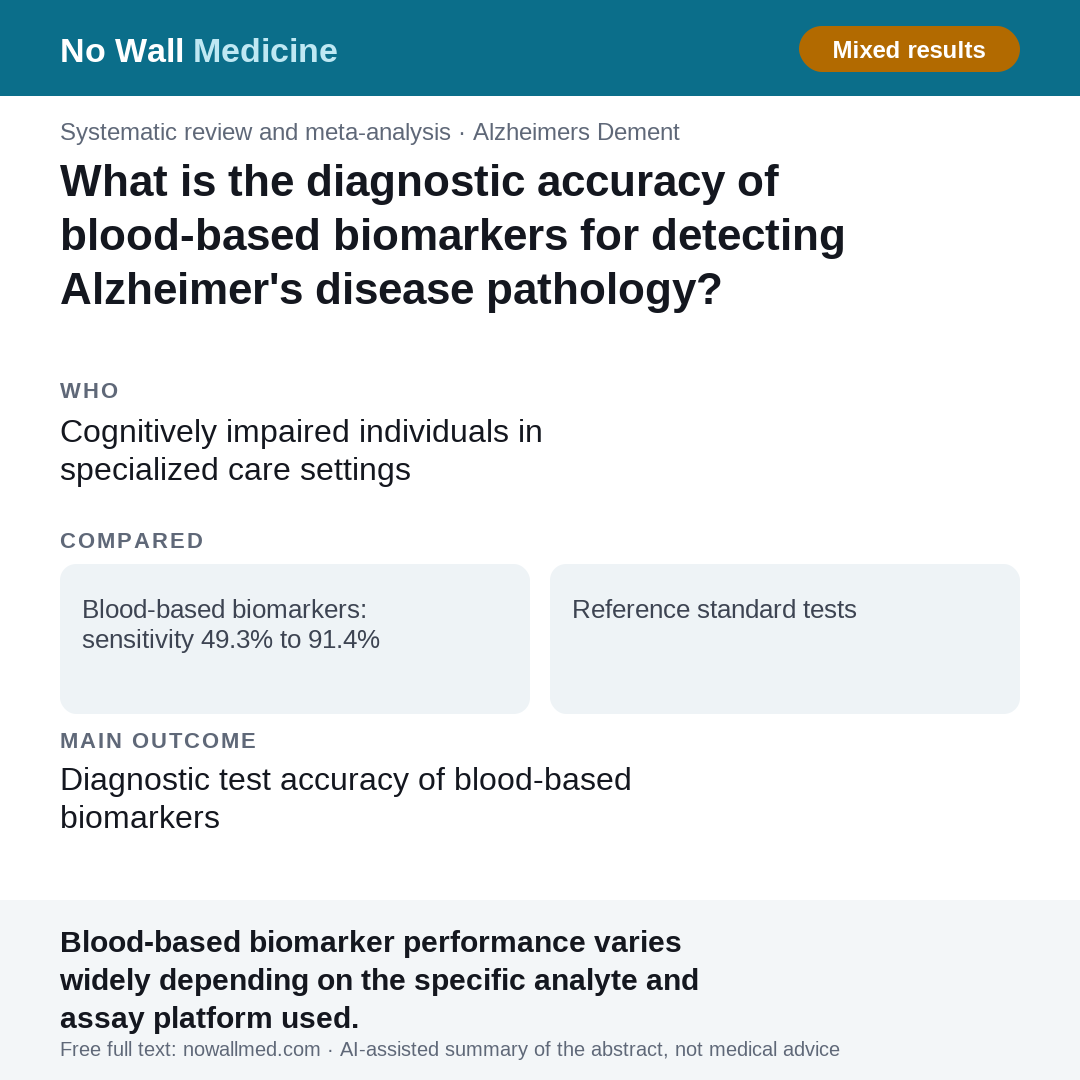
Blood-based biomarkers for detecting Alzheimer's disease pathology in cognitively impaired individuals within specialized care settings: A systematic review and meta-analysis
Systematic review and meta-analysisMixed results
What is the diagnostic accuracy of blood-based biomarkers for detecting Alzheimer's disease pathology?
Who
49
Cognitively impaired individuals in specialized care settings
Compared
Blood-based biomarkers: sensitivity 49.3% to 91.4%
Reference standard tests
Main outcome
Diagnostic test accuracy of blood-based biomarkers
Result: sensitivity 49.3% (95% CI: 41.2-57.4) to 91.4% (95% CI: 86.6-94.6)
Bottom line: Blood-based biomarker performance varies widely depending on the specific analyte and assay platform used.
Limitation: Most studies were at high risk of bias regarding patient selection, index test conduct, and reference standard.
Alzheimers Dement · 2025-11-06Download image