Visual abstracts
New randomized trials and meta-analyses from leading journals at a glance: who was studied, what was compared, and what was found. Every paper is free to read in full.
All specialtiesCardiology 4832Oncology 4114Gastroenterology & Hepatology 1934Infectious Disease 3824Neurology 1899Psychiatry & Mental Health 2256Pulmonology 2082Critical Care 1345Endocrinology & Diabetes 2572Pediatrics 2940Surgery 2525Orthopedics & Sports Medicine 926Neurosurgery 534Cardiothoracic & Vascular Surgery 671Plastic & Reconstructive Surgery 591Nephrology 1124Rheumatology 823Hematology 1104Dermatology 620Ophthalmology 543Obstetrics & Gynecology 1684Public & Global Health 1056Radiology & Imaging 641Anesthesiology 962Urology 754ENT (Otolaryngology) 503Emergency Medicine 489Allergy & Immunology 313Geriatrics 981Family Medicine & Primary Care 541Medical Genetics & Genomics 675Pathology & Laboratory Medicine 157Physical Medicine & Rehabilitation 751Palliative Care 424Nutrition 1580Digital Health & AI 2195General Medicine 321
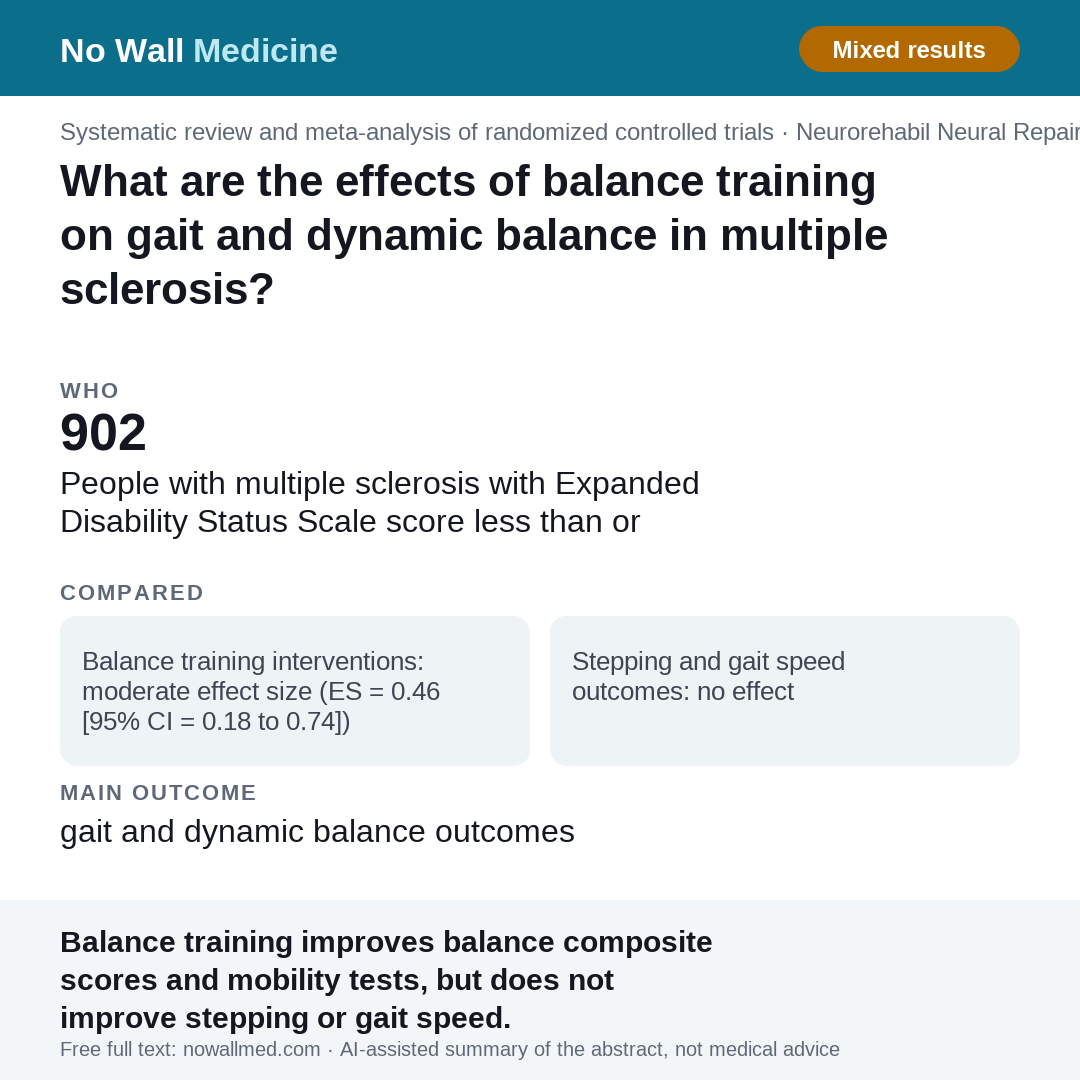
Effects of Balance Exercise Interventions on Balance-Related Performance in People With Multiple Sclerosis: A Systematic Review and a Meta-Analysis of Randomized Controlled Trials
Systematic review and meta-analysis of randomized controlled trialsMixed results
What are the effects of balance training on gait and dynamic balance in multiple sclerosis?
Who
902
People with multiple sclerosis with Expanded Disability Status Scale score less than or equal to 7.5
Compared
Balance training interventions: moderate effect size (ES = 0.46 [95% CI = 0.18 to 0.74])
Stepping and gait speed outcomes: no effect
Main outcome
gait and dynamic balance outcomes
Result: ES = 0.19 [95% CI = 0.01-0.36]
Bottom line: Balance training improves balance composite scores and mobility tests, but does not improve stepping or gait speed.
Limitation: A definition of intensity in balance training is needed for evaluation.
Neurorehabil Neural Repair · 2024-08-20Download image
Percutaneous coronary intervention with drug-eluting stents versus coronary bypass surgery for coronary artery disease: A Bayesian perspective
Bayesian hierarchical meta-analysisHarm found
Is drug-eluting stent percutaneous coronary intervention better than coronary artery bypass grafting?
Who
8269
Patients with coronary artery disease
Compared
drug-eluting stents percutaneous coronary intervention: median relative risk 1.23 (95% CrI 1.01-1.45)
coronary artery bypass grafting
Main outcome
all-cause mortality at 5 years
Result: median relative risk 1.23 (95% CrI 1.01-1.45)
Bottom line: Coronary artery bypass grafting shows benefit over drug-eluting stents for mortality, myocardial infarction, and repeat revascularization at 5 years.
J Thorac Cardiovasc Surg · 2024-08-20Download image

Meta-analysis of genome-wide association studies of stable warfarin dose in patients of African ancestry
Meta-analysis of genome-wide studiesMixed results
Genetic variants for warfarin dose in Africans
Who
1504
African and African American warfarin patients · Africa, United States
Compared
African cohorts
African American cohorts
Main outcome
Stable warfarin dose
Result: 242 significant SNPs identified
Bottom line: New genetic locus found for warfarin dose
Blood Adv · 2024-08-20Download image

Screening instruments for early identification of unmet palliative care needs: a systematic review and meta-analysis
Systematic review and meta-analysisMixed results
What are the psychometric properties and clinical performance of palliative care screening instruments?
Who
Patients requiring early identification of unmet palliative care needs · Not specified
Compared
Pooled sensitivity: 60.0% to 73.8%
Pooled specificity: 70.4% to 90.2%
Main outcome
Clinical performance of screening instruments
Bottom line: Existing screening instruments show poor to reasonable clinical performance for identifying palliative care needs.
Limitation: Content validity was doubtful or inadequate due to very low to moderate quality evidence.
BMJ Support Palliat Care · 2024-08-19Download image

The Effect of Whole-Diet Interventions on Memory and Cognitive Function in Healthy Older Adults - A Systematic Review
Systematic reviewUnclear result
Diet impact on memory and cognition
Who
healthy older adults sixty years and older
Compared
diet interventions
control
Main outcome
memory and cognitive function
Bottom line: Diet impact on memory and cognition is modest
Limitation: need for well-designed studies
Adv Nutr · 2024-08-19Download image

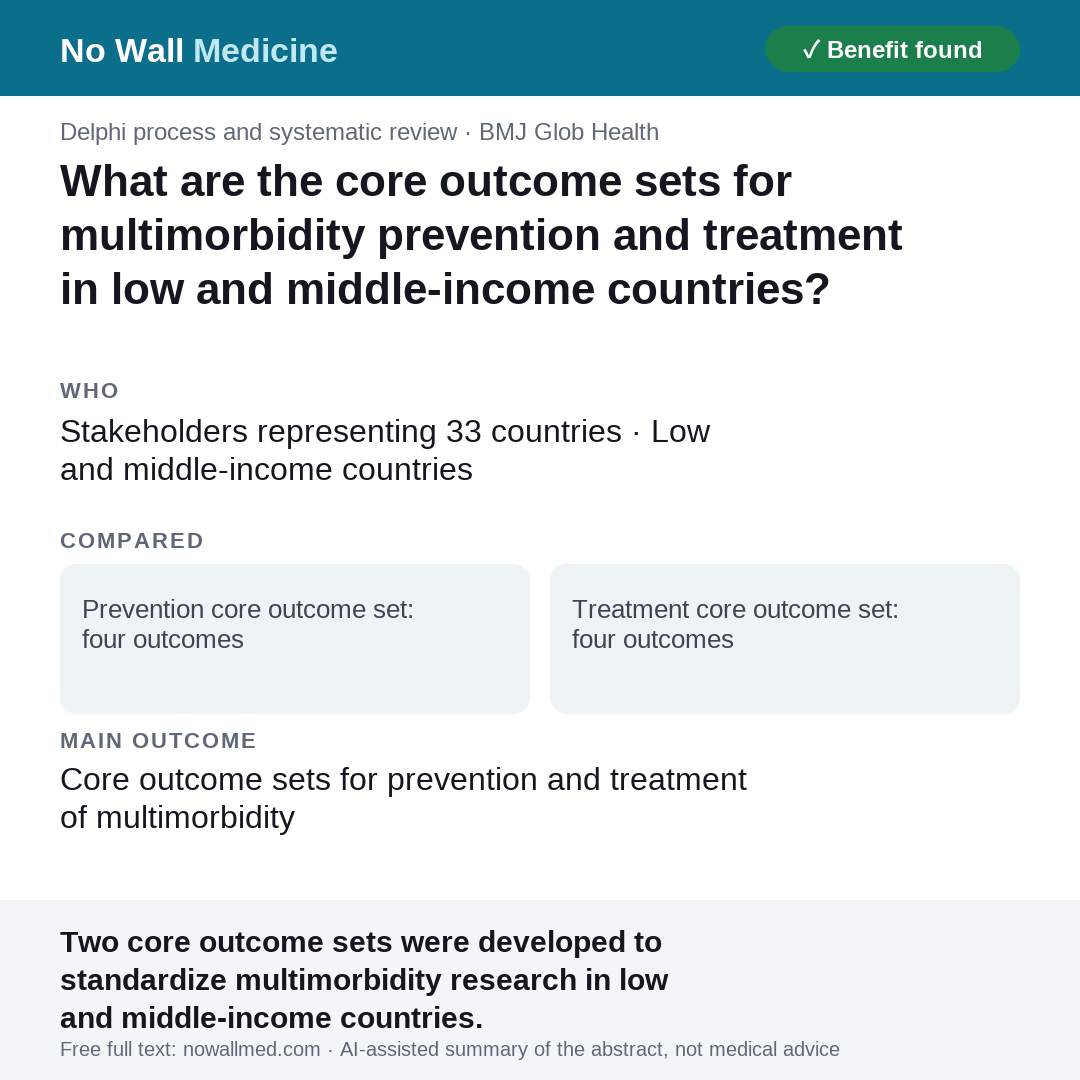
Core outcome sets for trials of interventions to prevent and to treat multimorbidity in adults in low and middle-income countries: the COSMOS study
Delphi process and systematic reviewBenefit found
What are the core outcome sets for multimorbidity prevention and treatment in low and middle-income countries?
Who
Stakeholders representing 33 countries · Low and middle-income countries
Compared
Prevention core outcome set: four outcomes
Treatment core outcome set: four outcomes
Main outcome
Core outcome sets for prevention and treatment of multimorbidity
Bottom line: Two core outcome sets were developed to standardize multimorbidity research in low and middle-income countries.
BMJ Glob Health · 2024-08-19Download image
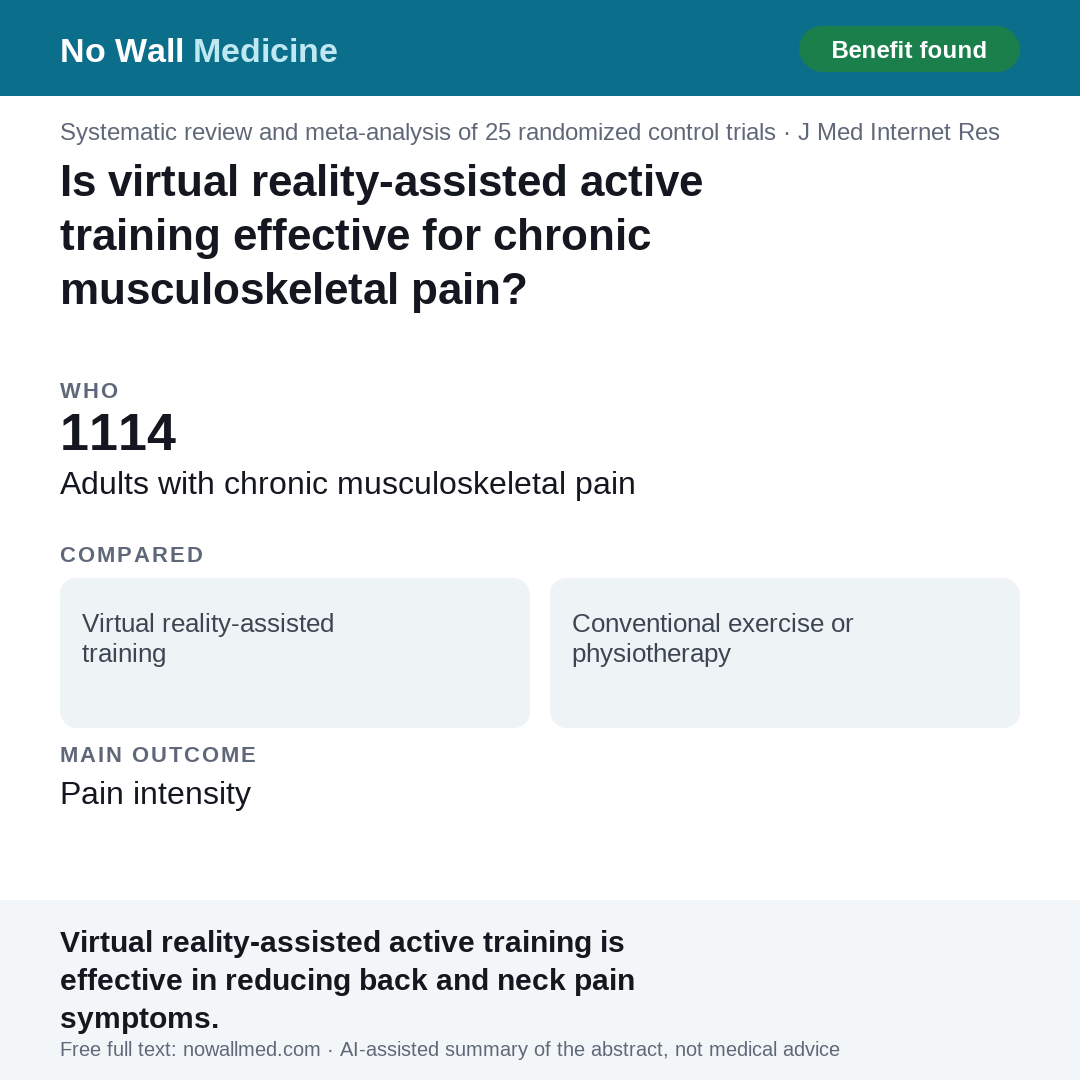
Immersive and Nonimmersive Virtual Reality-Assisted Active Training in Chronic Musculoskeletal Pain: Systematic Review and Meta-Analysis
Systematic review and meta-analysis of 25 randomized control trialsBenefit found
Is virtual reality-assisted active training effective for chronic musculoskeletal pain?
Who
1114
Adults with chronic musculoskeletal pain
Compared
Virtual reality-assisted training
Conventional exercise or physiotherapy
Main outcome
Pain intensity
Bottom line: Virtual reality-assisted active training is effective in reducing back and neck pain symptoms.
Limitation: Some studies had concerns for a high risk of bias.
J Med Internet Res · 2024-08-19Download image
Community-based strategies to increase coverage of intermittent preventive treatment of malaria in pregnancy with sulfadoxine-pyrimethamine in sub-Saharan Africa: a systematic review, meta-analysis, meta-ethnography, and economic assessment
Systematic review, meta-analysis, meta-ethnography, and economic assessmentBenefit found
Do community-based approaches increase intermittent preventive treatment of malaria in pregnancy coverage?
Who
Pregnant women in sub-Saharan Africa · sub-Saharan Africa
Compared
Community health worker involvement: pooled risk ratio 1·48 (95% CI 1·24-1·75) for two or more doses
Control
Main outcome
intermittent preventive treatment of malaria in pregnancy coverage
Result: pooled risk ratio 1·48 (95% CI 1·24-1·75)
Bottom line: Community health worker involvement increases intermittent preventive treatment of malaria in pregnancy coverage and is cost-effective.
Funded by: EDCTP-2 supported by the European Union
Lancet Glob Health · 2024-08-17Download image

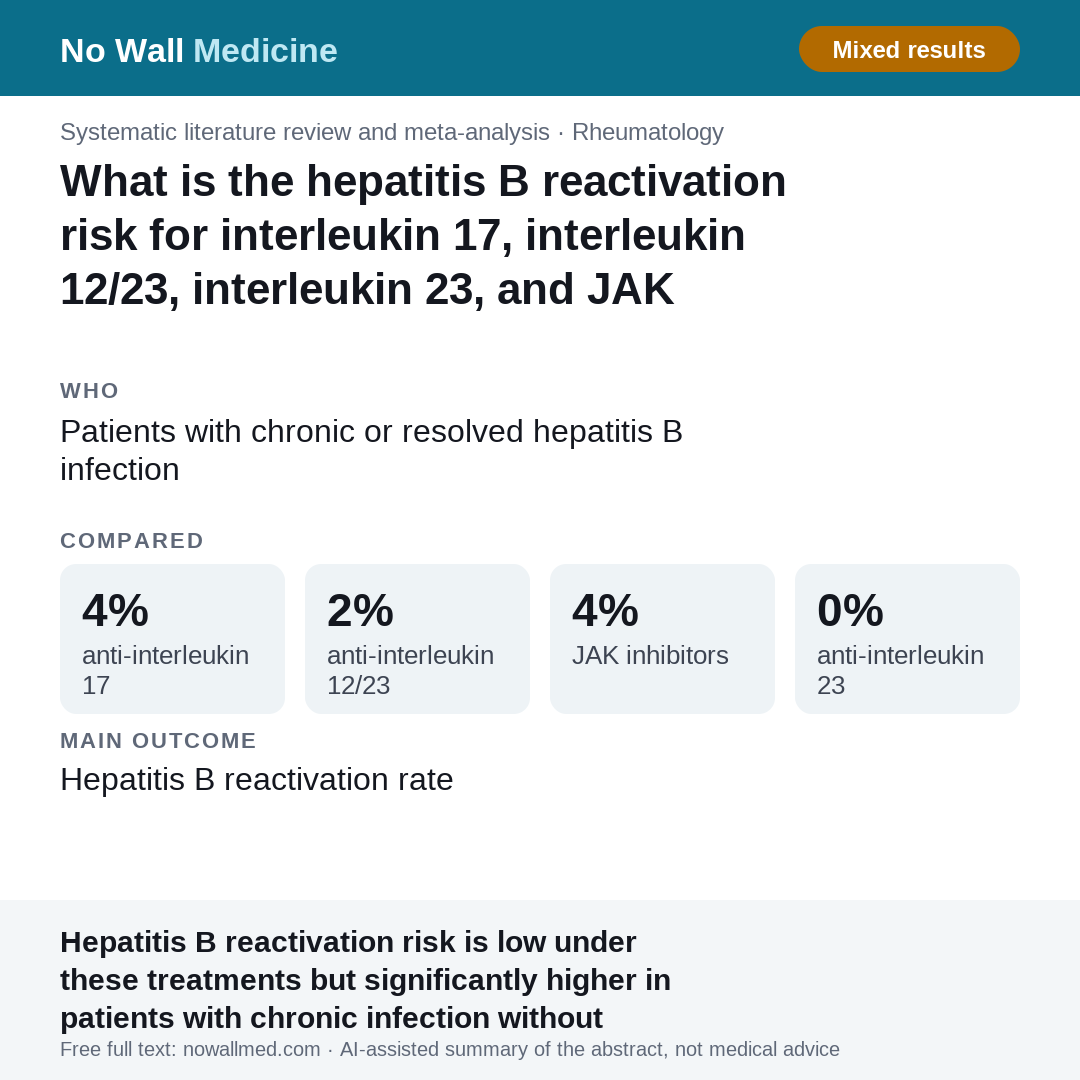
Hepatitis B reactivation in PsA patients: an SLR and meta-analysis for IL-17, IL-23 and JAK inhibitors
Systematic literature review and meta-analysisMixed results
What is the hepatitis B reactivation risk for interleukin 17, interleukin 12/23, interleukin 23, and JAK inhibitors?
Who
Patients with chronic or resolved hepatitis B infection
Compared
4%anti-interleukin 17 (95% CI: 1-9%)
2%anti-interleukin 12/23 (95% CI: 0-5%)
4%JAK inhibitors (95% CI: 1-8%)
0%anti-interleukin 23
Main outcome
Hepatitis B reactivation rate
Bottom line: Hepatitis B reactivation risk is low under these treatments but significantly higher in patients with chronic infection without antiviral treatment.
Rheumatology · 2024-08-17Download image
A systematic review and network meta-analysis of psychological, psychosocial, pharmacological, physical and combined treatments for adults with a new episode of depression
Systematic review and network meta-analysisBenefit found
Best treatments for new depression episodes
Who
105477
Adults with new episode of depression
Compared
Group cognitive therapy
Combined individual therapy with antidepressants
Main outcome
Depressive symptom change
Bottom line: Various treatments effective for depression
Funded by: National Institute for Health and Care Excellence
eClinicalMedicine · 2024-08-16Download image

The Ethical Obligation to Treat Infectious Patients: A Systematic Review of Reasons
Systematic reviewMixed results
What are the ethical reasons regarding the obligation to treat infectious patients?
Who
156
Articles discussing infectious diseases like HIV/AIDS, SARS, COVID-19, Ebola, and influenza
Compared
81.9%Articles indicating obligation to treat (n = 128)
60%COVID-19 papers indicating ethical acceptability of refusal
13.3%HIV papers indicating ethical acceptability of refusal
Main outcome
Ethical position and reasons for treatment refusal
Bottom line: Literature shows a surge in advocating for the permissibility of treatment refusal during the COVID-19 pandemic.
Clin Infect Dis · 2024-08-16Download image

Pain and functional neurological disorder: a systematic review and meta-analysis
Meta-analysis of 64 studiesMixed results
Pain in functional neurological disorder
Who
4272
adults with functional neurological disorder
Compared
55%patients with FND (4272 patients)
controls
Main outcome
pain reported
Result: odds ratio not given, but 55% (95% CI 46% to 64%)
Bottom line: Pain is common in functional neurological disorder
J Neurol Neurosurg Psychiatry · 2024-08-16Download image

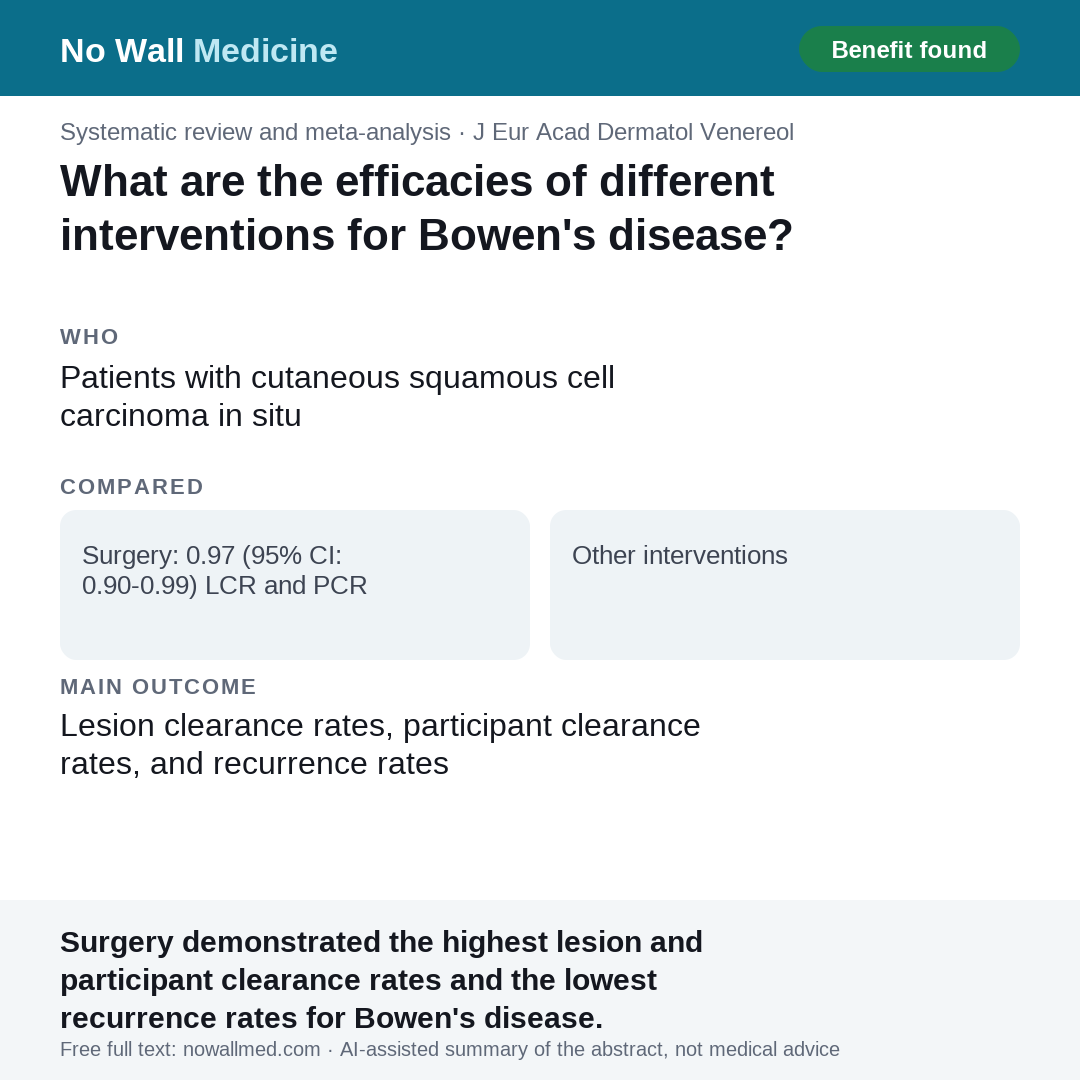
Efficacy of interventions for cutaneous squamous cell carcinoma in situ (Bowen's disease): A systematic review and meta-analysis of proportions
Systematic review and meta-analysisBenefit found
What are the efficacies of different interventions for Bowen's disease?
Who
Patients with cutaneous squamous cell carcinoma in situ
Compared
Surgery: 0.97 (95% CI: 0.90-0.99) LCR and PCR
Other interventions
Main outcome
Lesion clearance rates, participant clearance rates, and recurrence rates
Bottom line: Surgery demonstrated the highest lesion and participant clearance rates and the lowest recurrence rates for Bowen's disease.
Limitation: Comparability was restricted by different numbers of studies, methodical and clinical heterogeneity.
J Eur Acad Dermatol Venereol · 2024-08-16Download image
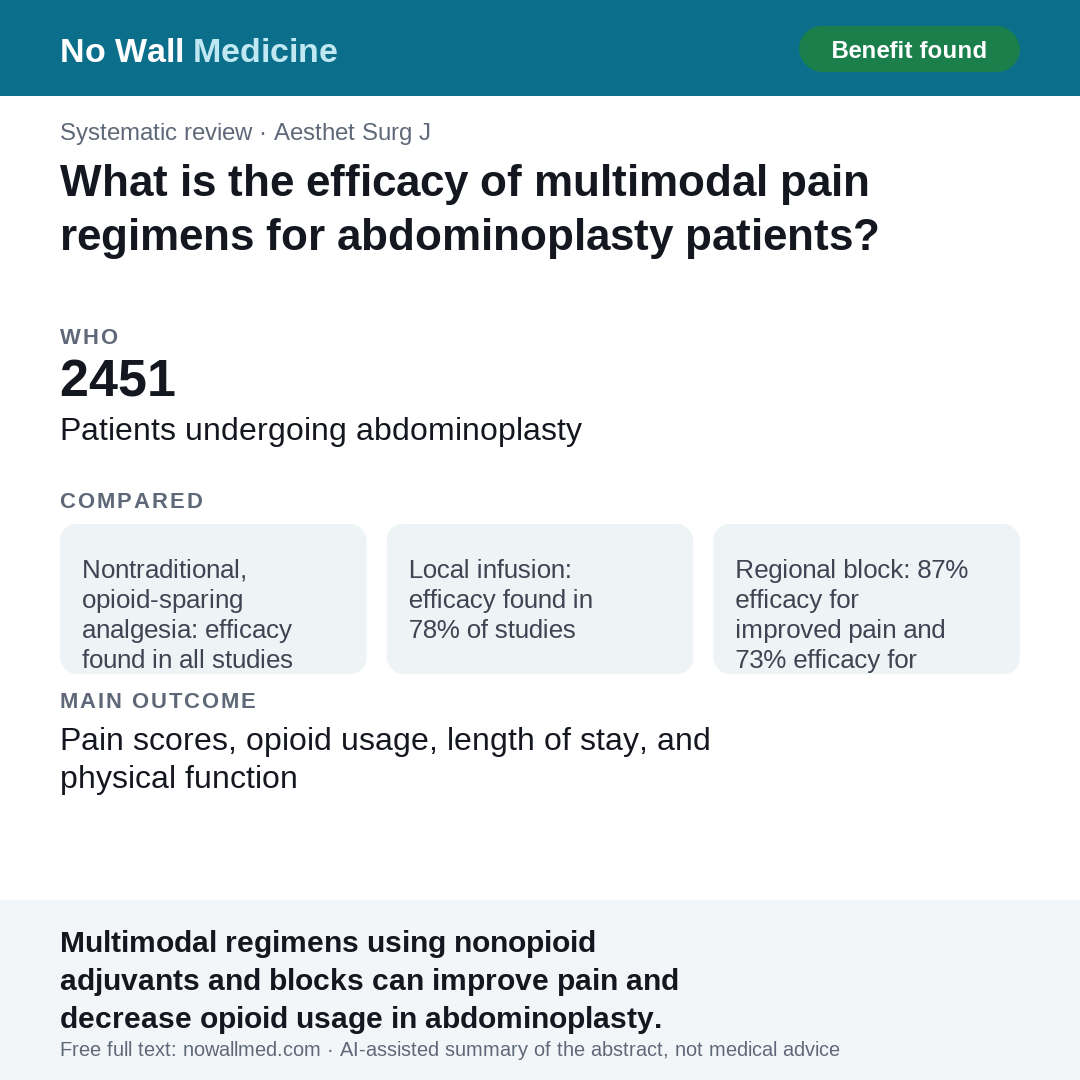
Multimodal Pain Control in Abdominoplasty: A Systematic Review and Algorithm of Optimal Pain Management
Systematic reviewBenefit found
What is the efficacy of multimodal pain regimens for abdominoplasty patients?
Who
2451
Patients undergoing abdominoplasty
Compared
Nontraditional, opioid-sparing analgesia: efficacy found in all studies
Local infusion: efficacy found in 78% of studies
Regional block: 87% efficacy for improved pain and 73% efficacy for decreased opioid usage
Main outcome
Pain scores, opioid usage, length of stay, and physical function
Bottom line: Multimodal regimens using nonopioid adjuvants and blocks can improve pain and decrease opioid usage in abdominoplasty.
Aesthet Surg J · 2024-08-16Download image
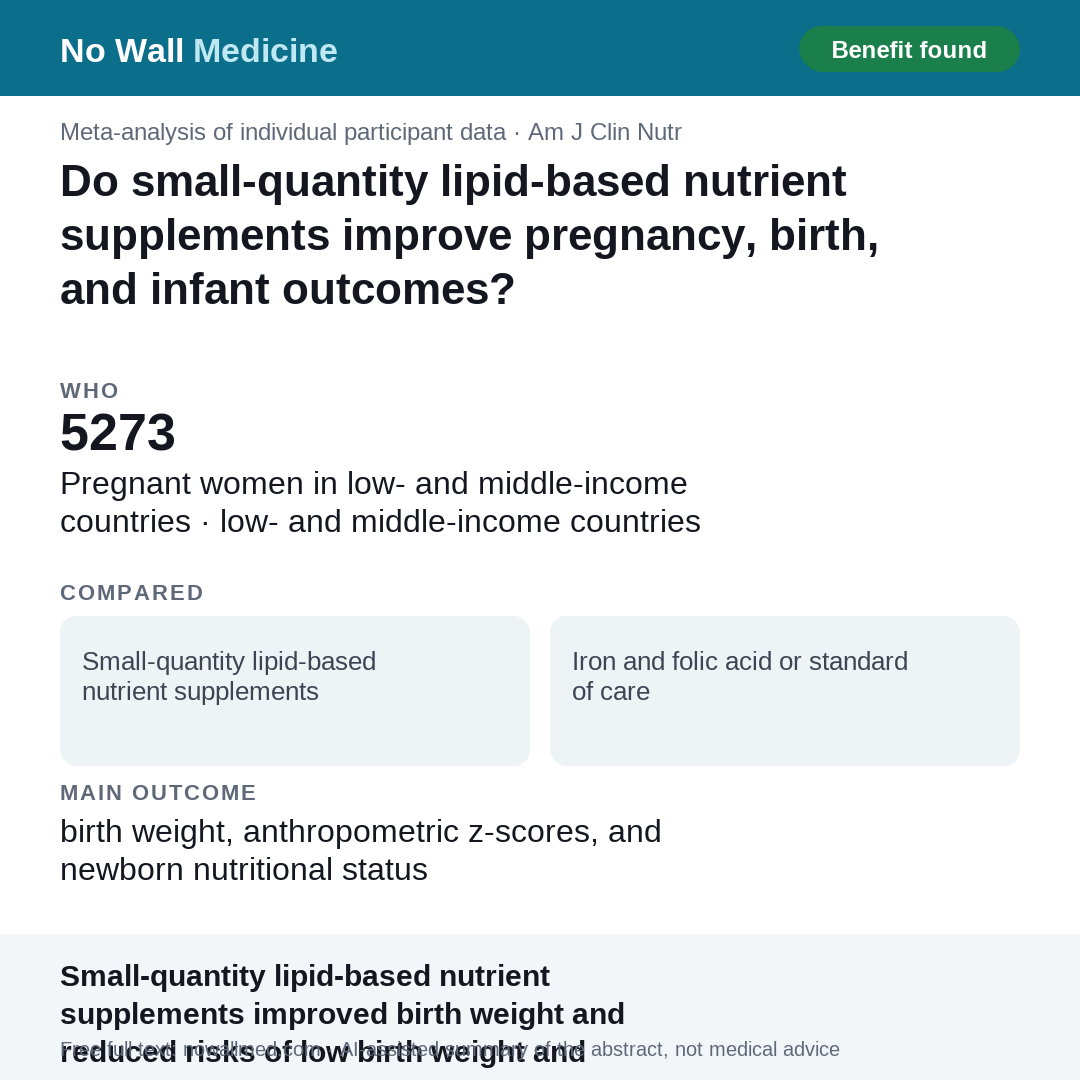
Effects of prenatal small-quantity lipid-based nutrient supplements on pregnancy, birth, and infant outcomes: a systematic review and meta-analysis of individual participant data from randomized controlled trials in low- and middle-income countries
Meta-analysis of individual participant dataBenefit found
Do small-quantity lipid-based nutrient supplements improve pregnancy, birth, and infant outcomes?
Who
5273
Pregnant women in low- and middle-income countries · low- and middle-income countries
Compared
Small-quantity lipid-based nutrient supplements
Iron and folic acid or standard of care
Main outcome
birth weight, anthropometric z-scores, and newborn nutritional status
Result: mean difference: +49 g; 95% confidence interval (CI): 26, 71 g
Bottom line: Small-quantity lipid-based nutrient supplements improved birth weight and reduced risks of low birth weight and newborn stunting.
Am J Clin Nutr · 2024-08-16Download image
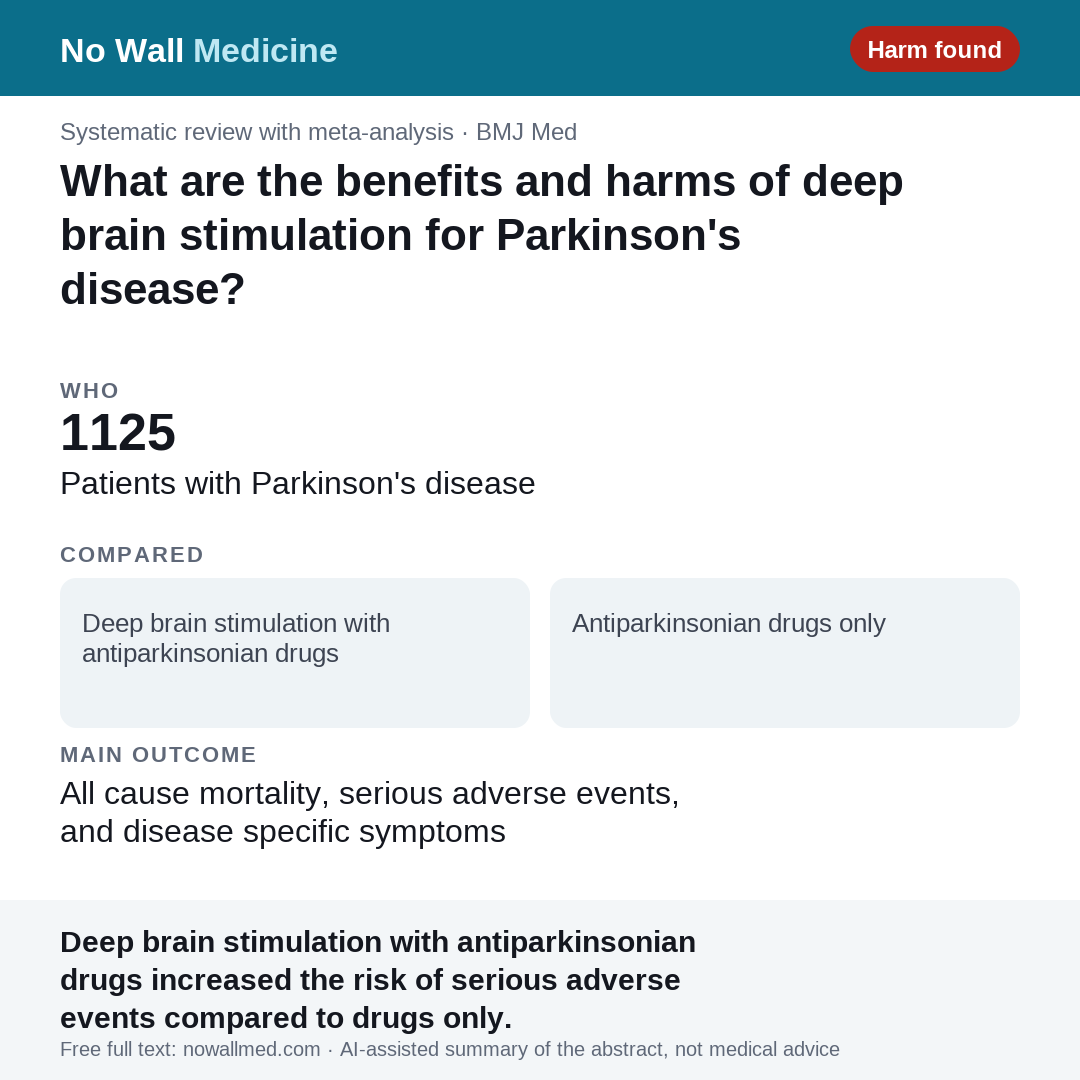
Deep brain stimulation for Parkinson's disease: systematic review with meta-analysis and trial sequential analysis
Systematic review with meta-analysisHarm found
What are the benefits and harms of deep brain stimulation for Parkinson's disease?
Who
1125
Patients with Parkinson's disease
Compared
Deep brain stimulation with antiparkinsonian drugs
Antiparkinsonian drugs only
Main outcome
All cause mortality, serious adverse events, and disease specific symptoms
Result: risk ratio 2.36 (95% CI 1.37 to 4.09) for serious adverse events
Bottom line: Deep brain stimulation with antiparkinsonian drugs increased the risk of serious adverse events compared to drugs only.
Limitation: High risk of bias and very low certainty of evidence for all primary outcomes.
BMJ Med · 2024-08-16Download image
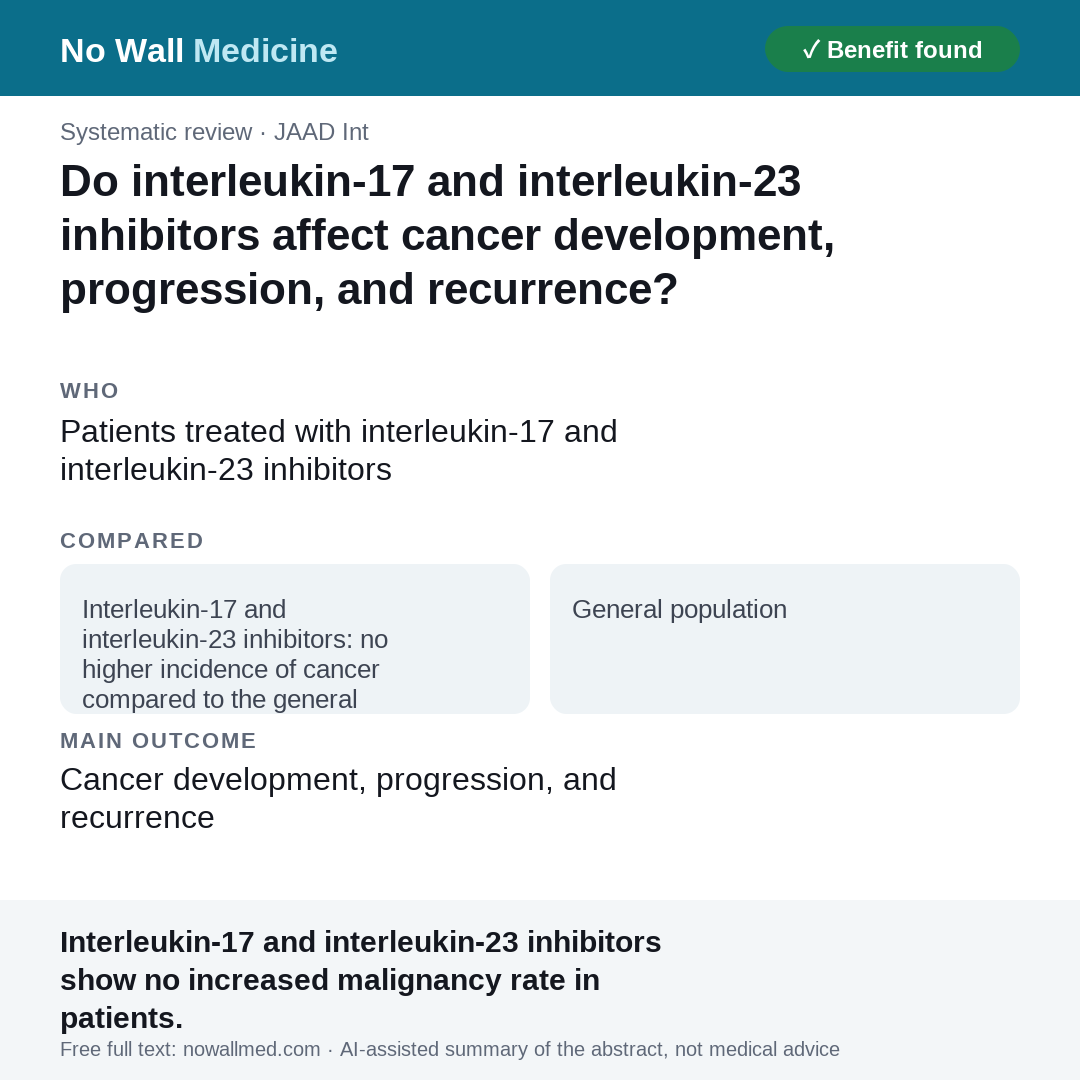
The role of interleukin-17 and interleukin-23 inhibitors in the development, progression, and recurrence of cancer: A systematic review
Systematic reviewBenefit found
Do interleukin-17 and interleukin-23 inhibitors affect cancer development, progression, and recurrence?
Who
Patients treated with interleukin-17 and interleukin-23 inhibitors
Compared
Interleukin-17 and interleukin-23 inhibitors: no higher incidence of cancer compared to the general population
General population
Main outcome
Cancer development, progression, and recurrence
Bottom line: Interleukin-17 and interleukin-23 inhibitors show no increased malignancy rate in patients.
Limitation: Variations in study designs, outcomes, and small sample sizes.
JAAD Int · 2024-08-16Download image
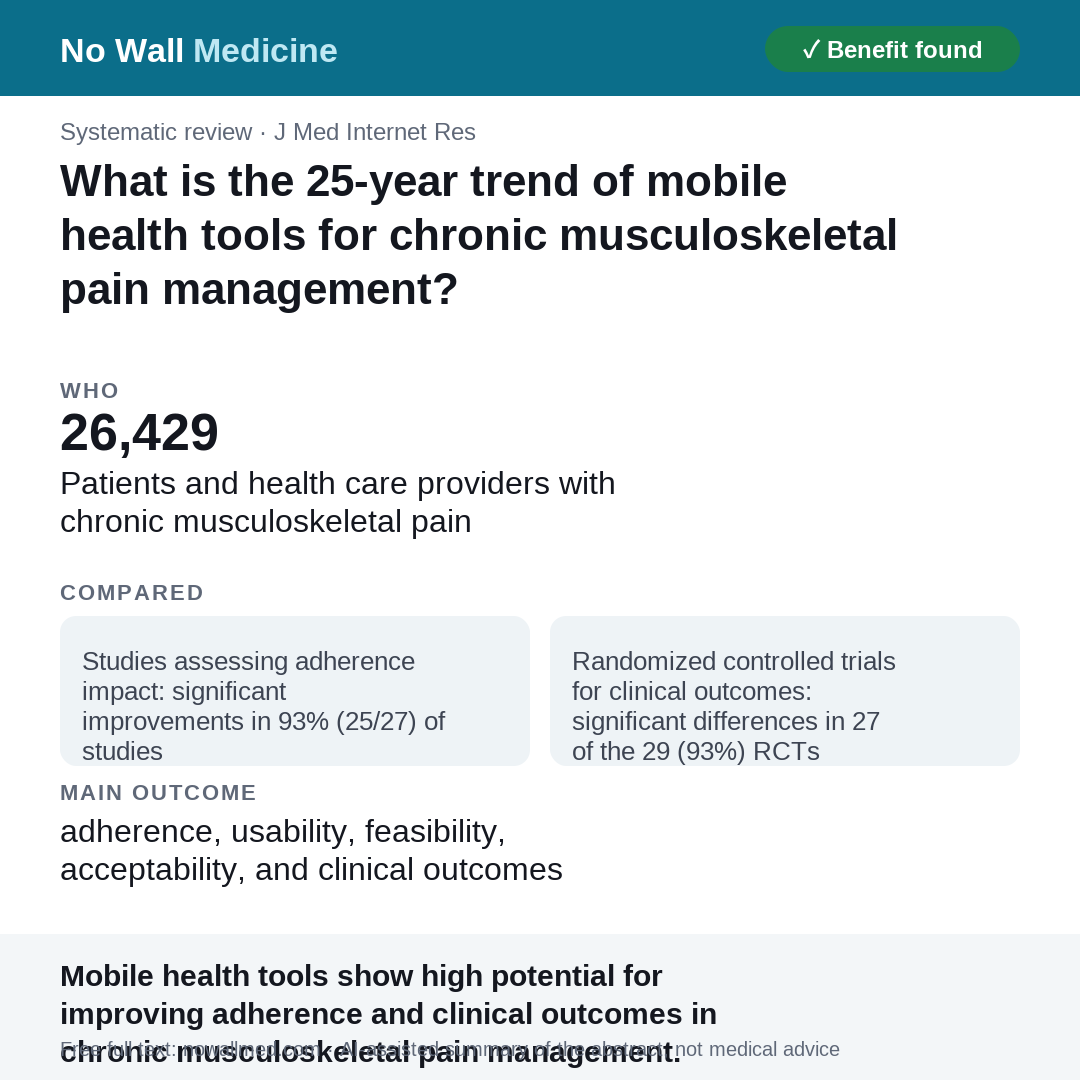
Impact of 25 Years of Mobile Health Tools for Pain Management in Patients With Chronic Musculoskeletal Pain: Systematic Review
Systematic reviewBenefit found
What is the 25-year trend of mobile health tools for chronic musculoskeletal pain management?
Who
26,429
Patients and health care providers with chronic musculoskeletal pain
Compared
Studies assessing adherence impact: significant improvements in 93% (25/27) of studies
Randomized controlled trials for clinical outcomes: significant differences in 27 of the 29 (93%) RCTs
Main outcome
adherence, usability, feasibility, acceptability, and clinical outcomes
Bottom line: Mobile health tools show high potential for improving adherence and clinical outcomes in chronic musculoskeletal pain management.
J Med Internet Res · 2024-08-16Download image
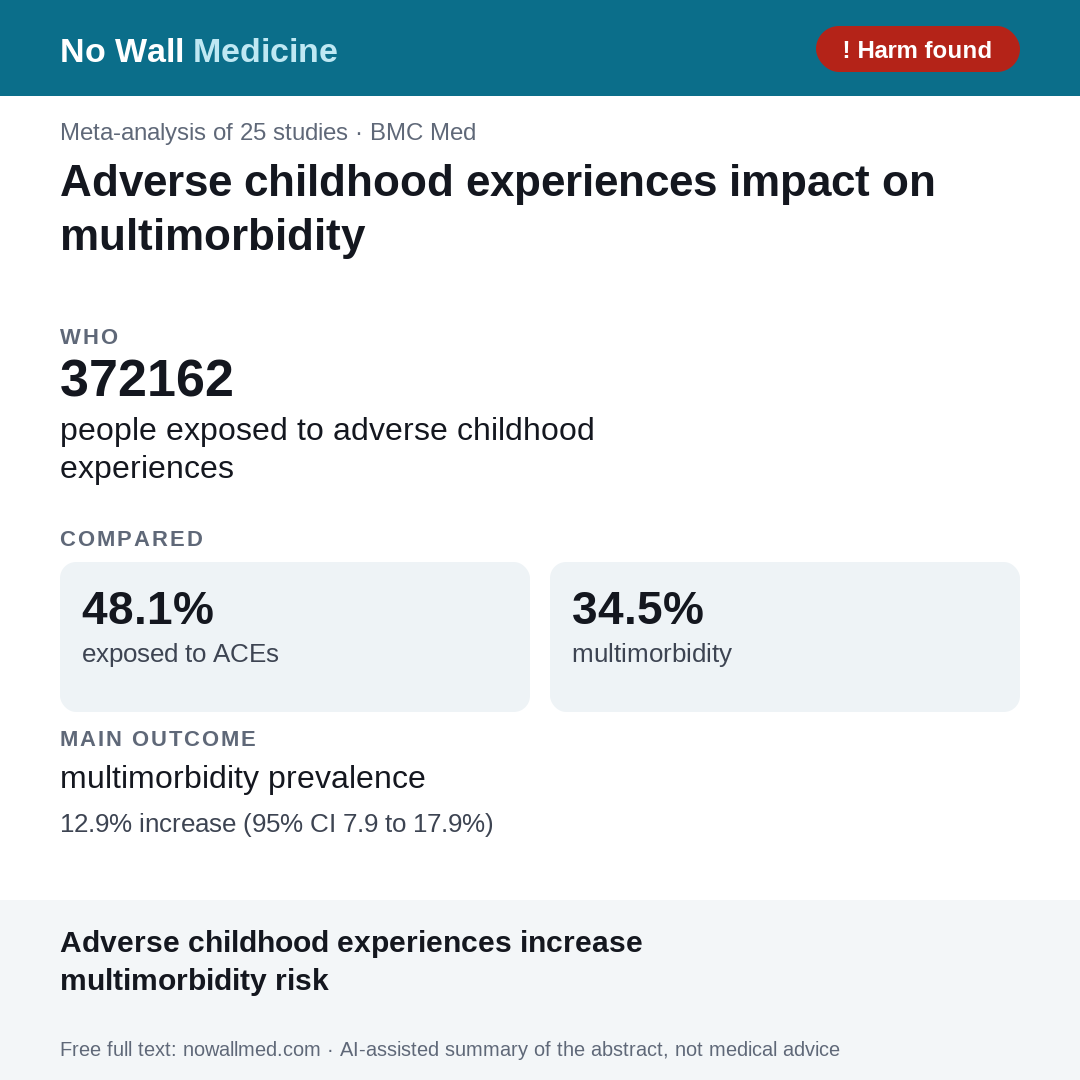
The impact of adverse childhood experiences on multimorbidity: a systematic review and meta-analysis
Meta-analysis of 25 studiesHarm found
Adverse childhood experiences impact on multimorbidity
Who
372162
people exposed to adverse childhood experiences
Compared
48.1%exposed to ACEs (95% CI 33.4 to 63.1%)
34.5%multimorbidity (95% CI 23.4 to 47.5%)
Main outcome
multimorbidity prevalence
Result: 12.9% increase (95% CI 7.9 to 17.9%)
Bottom line: Adverse childhood experiences increase multimorbidity risk
Limitation: heterogeneity among studies
BMC Med · 2024-08-15Download image
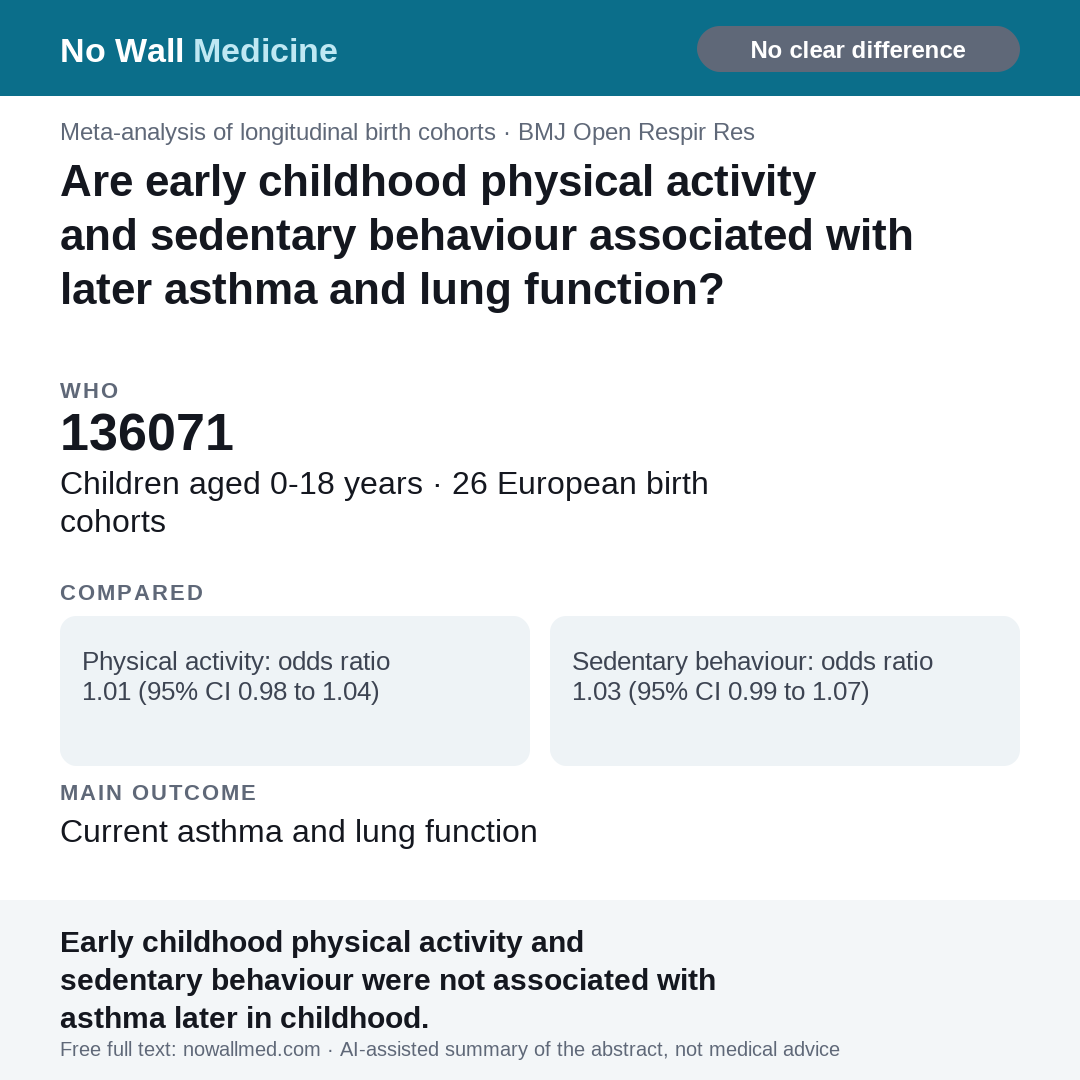
Physical activity, sedentary behaviour, and childhood asthma: a European collaborative analysis
Meta-analysis of longitudinal birth cohortsNo clear difference
Are early childhood physical activity and sedentary behaviour associated with later asthma and lung function?
Who
136071
Children aged 0-18 years · 26 European birth cohorts
Compared
Physical activity: odds ratio 1.01 (95% CI 0.98 to 1.04)
Sedentary behaviour: odds ratio 1.03 (95% CI 0.99 to 1.07)
Main outcome
Current asthma and lung function
Bottom line: Early childhood physical activity and sedentary behaviour were not associated with asthma later in childhood.
BMJ Open Respir Res · 2024-08-15Download image