Visual abstracts
New randomized trials and meta-analyses from leading journals at a glance: who was studied, what was compared, and what was found. Every paper is free to read in full.
All specialtiesCardiology 4763Oncology 4042Gastroenterology & Hepatology 1902Infectious Disease 3756Neurology 1872Psychiatry & Mental Health 2214Pulmonology 2042Critical Care 1319Endocrinology & Diabetes 2544Pediatrics 2889Surgery 2479Orthopedics & Sports Medicine 917Neurosurgery 525Cardiothoracic & Vascular Surgery 656Plastic & Reconstructive Surgery 574Nephrology 1107Rheumatology 810Hematology 1090Dermatology 611Ophthalmology 532Obstetrics & Gynecology 1645Public & Global Health 1037Radiology & Imaging 617Anesthesiology 957Urology 745ENT (Otolaryngology) 494Emergency Medicine 481Allergy & Immunology 309Geriatrics 972Family Medicine & Primary Care 533Medical Genetics & Genomics 659Pathology & Laboratory Medicine 156Physical Medicine & Rehabilitation 734Palliative Care 421Nutrition 1560Digital Health & AI 2133General Medicine 318
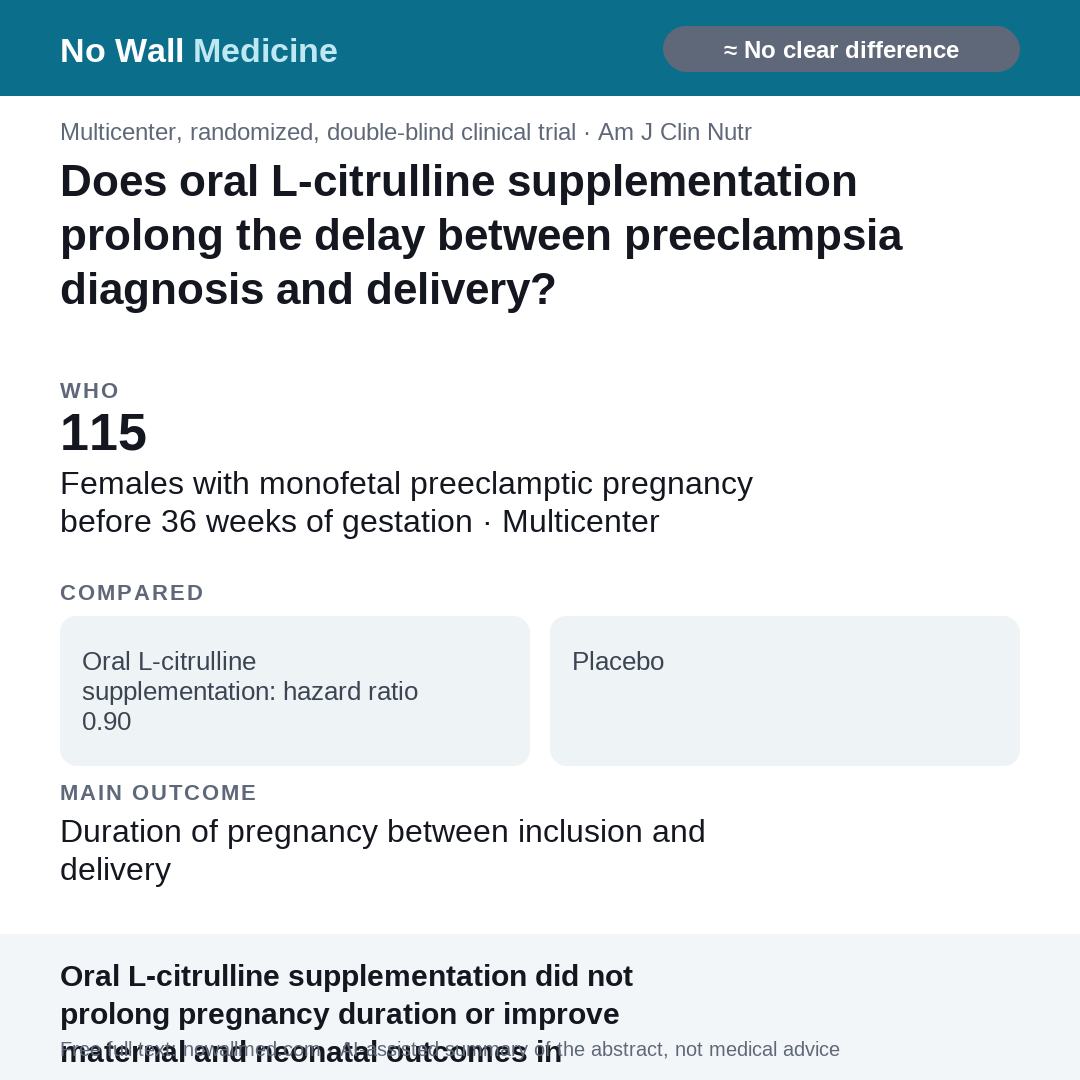
Oral citrulline supplementation in pregnancies with preeclampsia: a multicenter, randomized, double-blind clinical trial
Multicenter, randomized, double-blind clinical trialNo clear difference
Does oral L-citrulline supplementation prolong the delay between preeclampsia diagnosis and delivery?
Who
115
Females with monofetal preeclamptic pregnancy before 36 weeks of gestation · Multicenter
Compared
Oral L-citrulline supplementation: hazard ratio 0.90
Placebo
Main outcome
Duration of pregnancy between inclusion and delivery
Result: hazard ratio 0.90 (95% confidence interval 0.62, 1.31)
Bottom line: Oral L-citrulline supplementation did not prolong pregnancy duration or improve maternal and neonatal outcomes in preeclampsia.
Am J Clin Nutr · 2024-12-09Download image
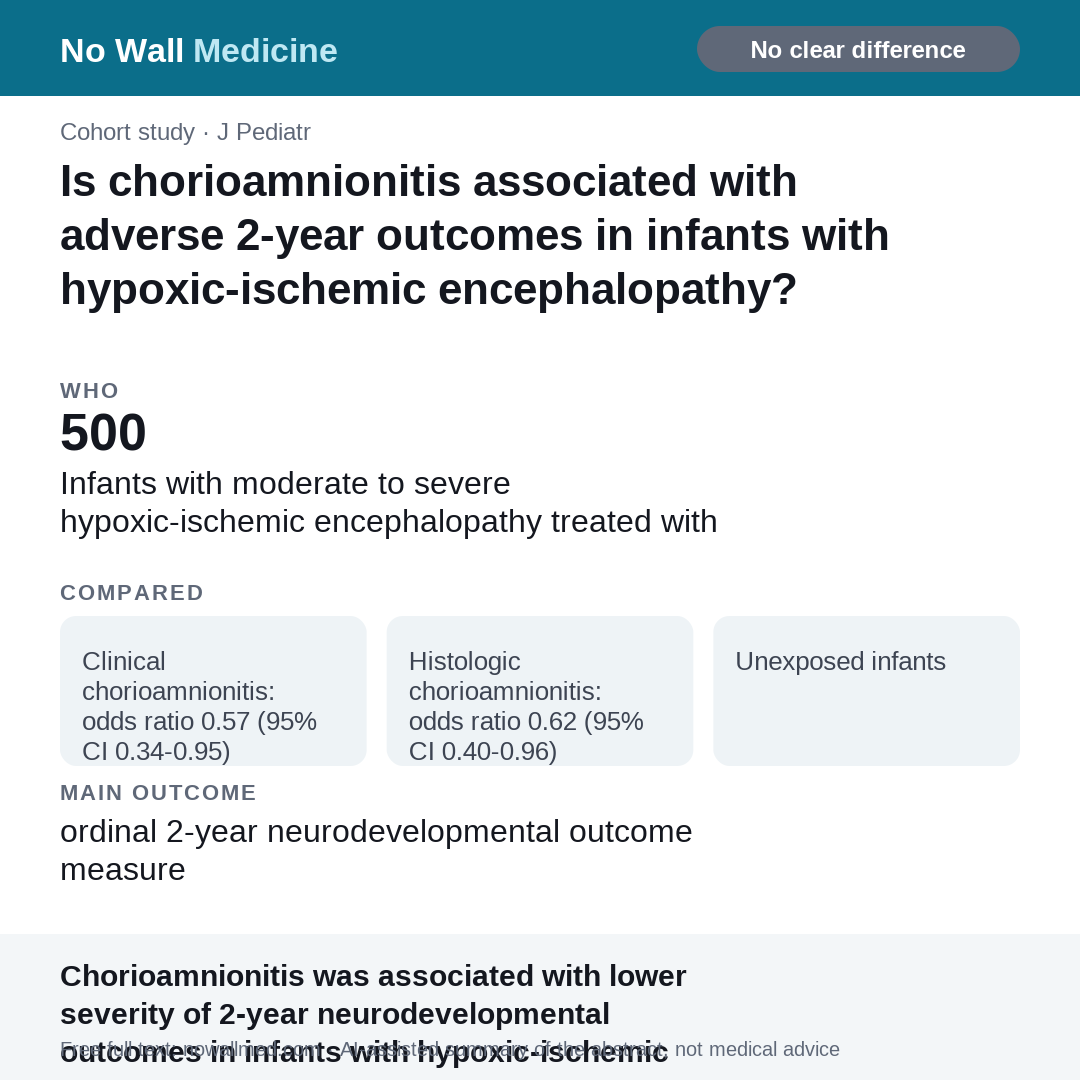
Chorioamnionitis and Two-Year Outcomes in Infants with Hypoxic-Ischemic Encephalopathy
Cohort studyNo clear difference
Is chorioamnionitis associated with adverse 2-year outcomes in infants with hypoxic-ischemic encephalopathy?
Who
500
Infants with moderate to severe hypoxic-ischemic encephalopathy treated with therapeutic hypothermia
Compared
Clinical chorioamnionitis: odds ratio 0.57 (95% CI 0.34-0.95)
Histologic chorioamnionitis: odds ratio 0.62 (95% CI 0.40-0.96)
Unexposed infants
Main outcome
ordinal 2-year neurodevelopmental outcome measure
Result: odds ratio 0.57 (95% CI 0.34-0.95) for clinical chorioamnionitis
Bottom line: Chorioamnionitis was associated with lower severity of 2-year neurodevelopmental outcomes in infants with hypoxic-ischemic encephalopathy.
J Pediatr · 2024-12-09Download image
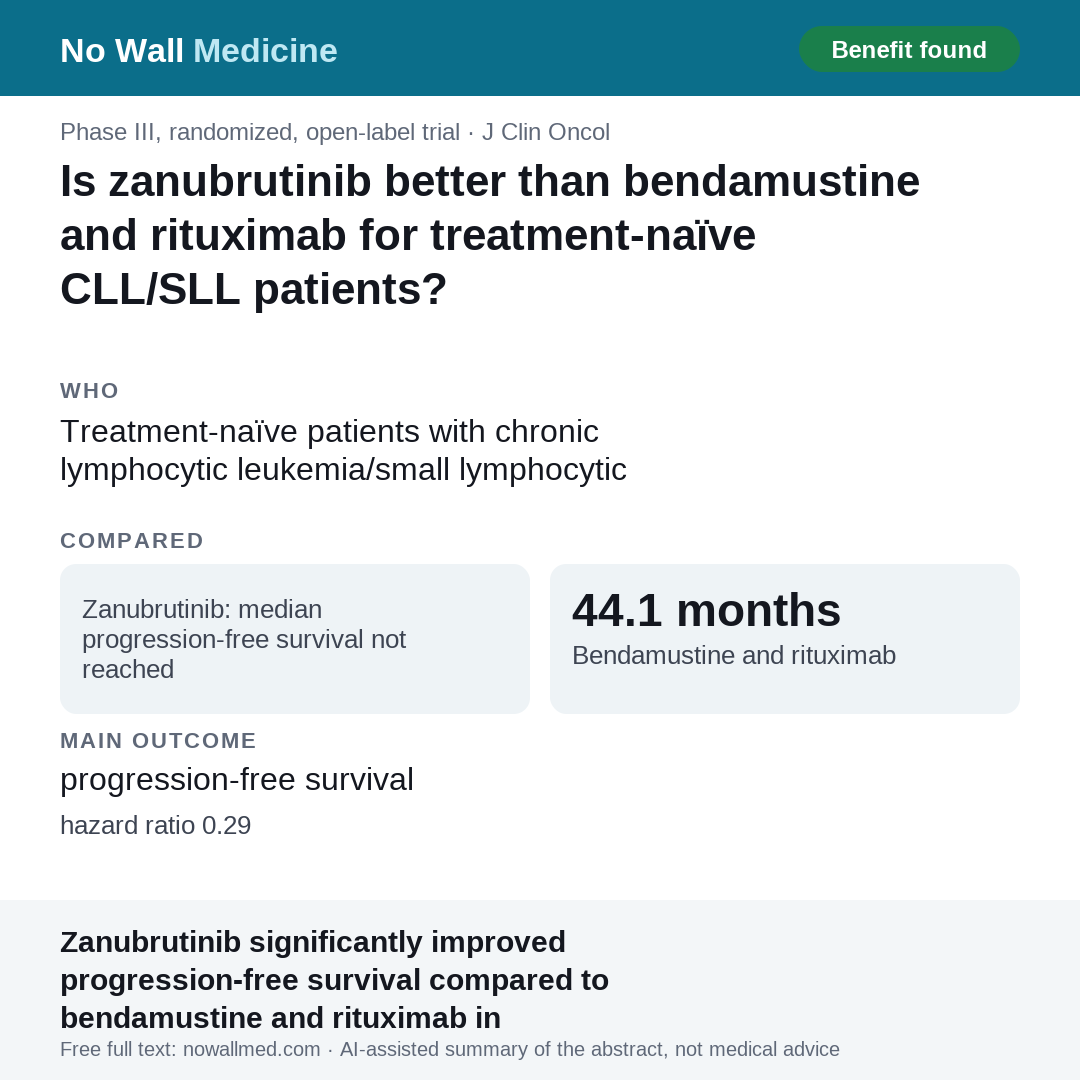
Zanubrutinib Versus Bendamustine and Rituximab in Patients With Treatment-Naïve Chronic Lymphocytic Leukemia/Small Lymphocytic Lymphoma: Median 5-Year Follow-Up of SEQUOIA
Phase III, randomized, open-label trialBenefit found
Is zanubrutinib better than bendamustine and rituximab for treatment-naïve CLL/SLL patients?
Who
Treatment-naïve patients with chronic lymphocytic leukemia/small lymphocytic lymphoma
Compared
Zanubrutinib: median progression-free survival not reached
44.1 monthsBendamustine and rituximab
Main outcome
progression-free survival
Result: hazard ratio 0.29
Bottom line: Zanubrutinib significantly improved progression-free survival compared to bendamustine and rituximab in treatment-naïve CLL/SLL patients.
J Clin Oncol · 2024-12-08Download image
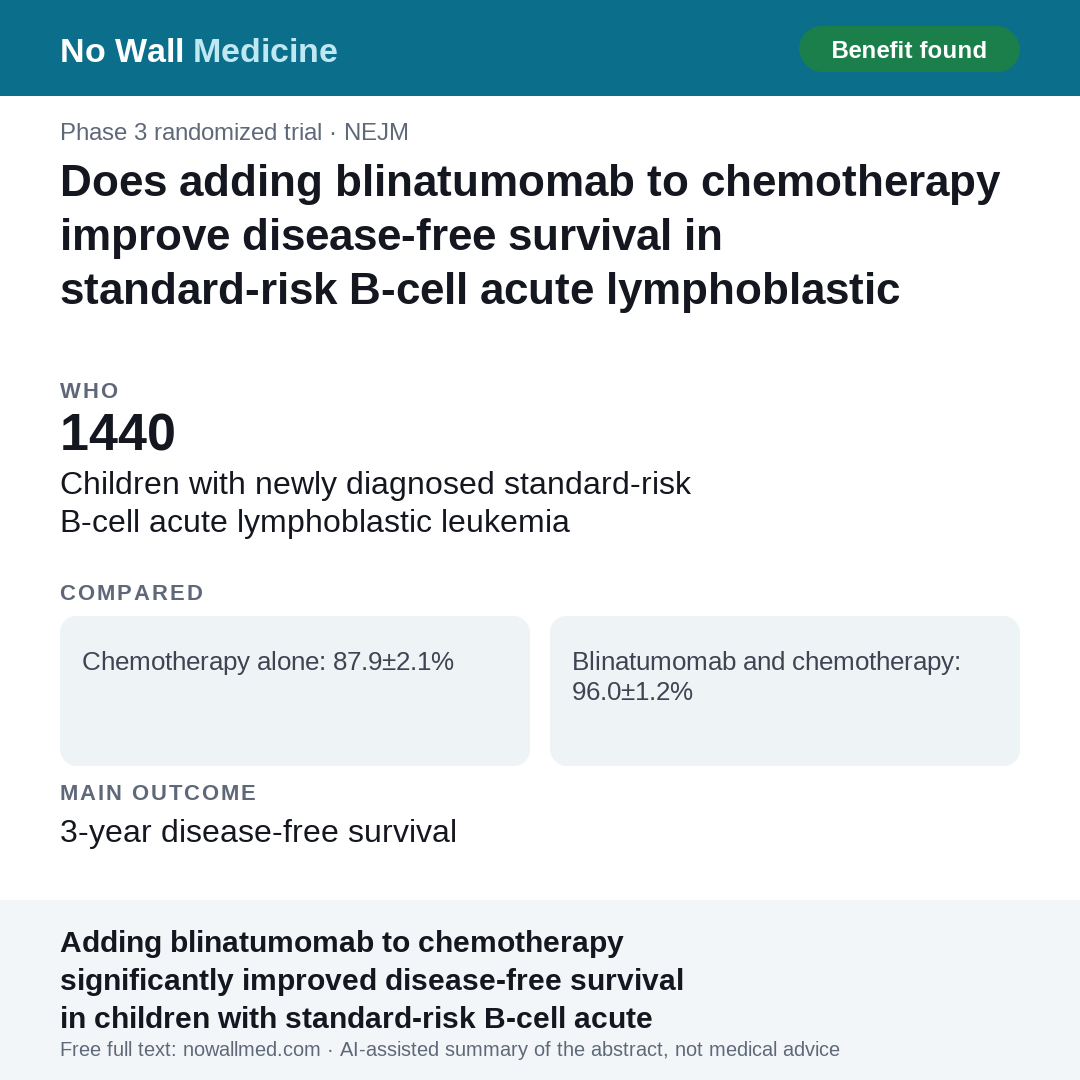
Blinatumomab in Standard-Risk B-Cell Acute Lymphoblastic Leukemia in Children
Phase 3 randomized trialBenefit found
Does adding blinatumomab to chemotherapy improve disease-free survival in standard-risk B-cell acute lymphoblastic leukemia?
Who
1440
Children with newly diagnosed standard-risk B-cell acute lymphoblastic leukemia
Compared
Chemotherapy alone: 87.9±2.1%
Blinatumomab and chemotherapy: 96.0±1.2%
Main outcome
3-year disease-free survival
Result: difference in restricted mean survival time, 72 days (95% CI 36 to 108)
Bottom line: Adding blinatumomab to chemotherapy significantly improved disease-free survival in children with standard-risk B-cell acute lymphoblastic leukemia.
Funded by: National Institutes of Health and others
NEJM · 2024-12-07Download image
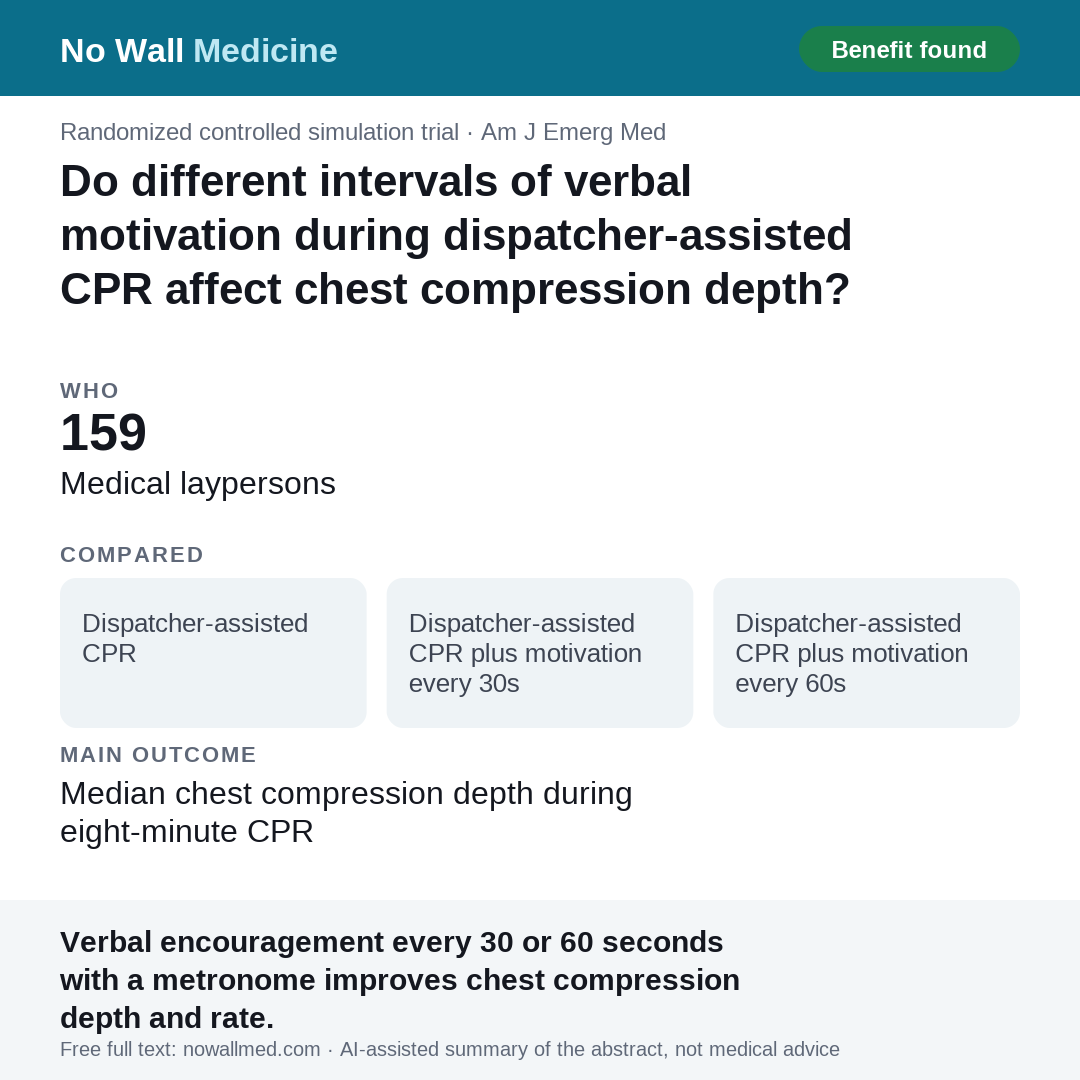
Effect of different intervals of verbal motivation during dispatcher-assisted CPR: A randomized controlled simulation trial
Randomized controlled simulation trialBenefit found
Do different intervals of verbal motivation during dispatcher-assisted CPR affect chest compression depth?
Who
159
Medical laypersons
Compared
Dispatcher-assisted CPR
Dispatcher-assisted CPR plus motivation every 30s
Dispatcher-assisted CPR plus motivation every 60s
Main outcome
Median chest compression depth during eight-minute CPR
Bottom line: Verbal encouragement every 30 or 60 seconds with a metronome improves chest compression depth and rate.
Am J Emerg Med · 2024-12-07Download image
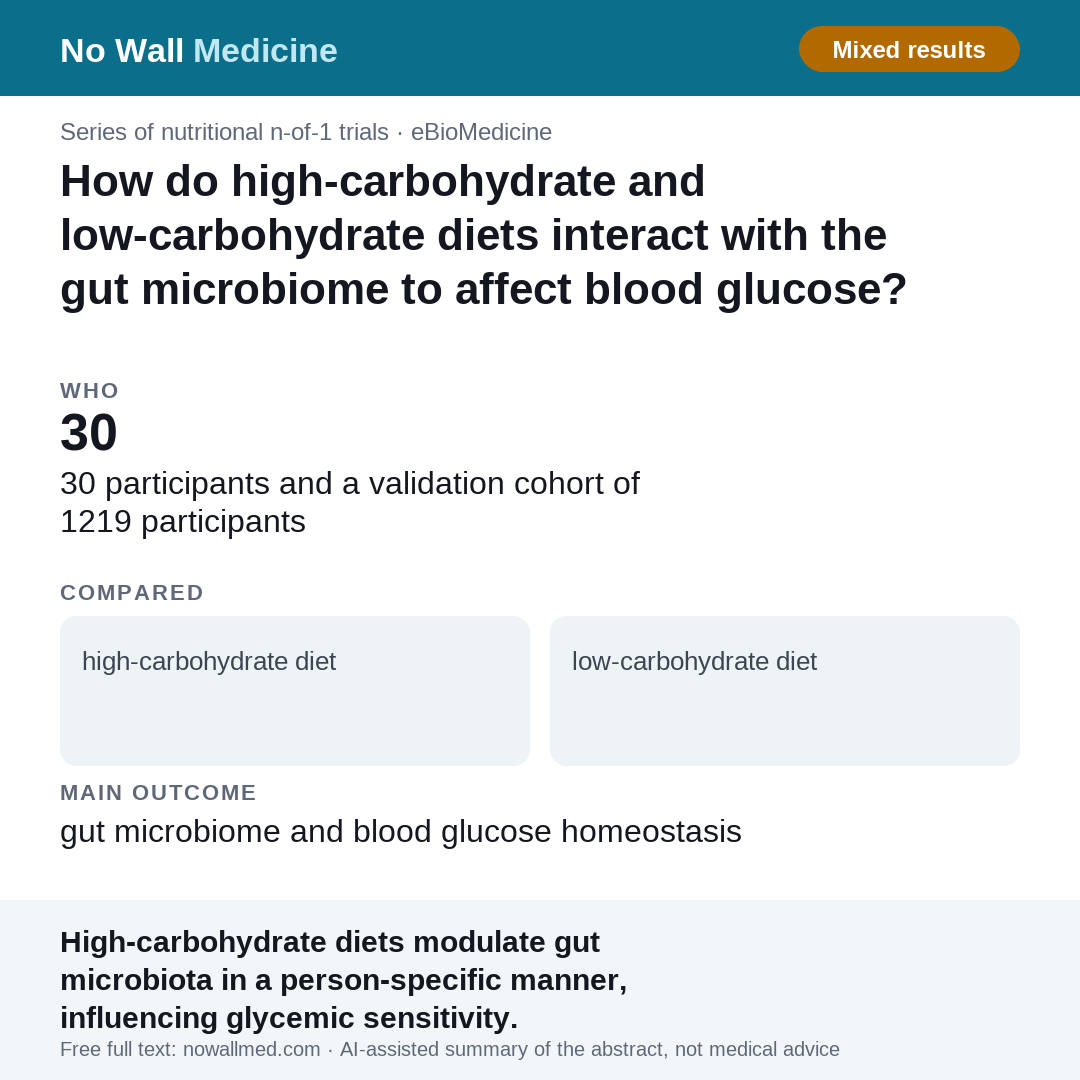
Diet-gut microbiome interaction and its impact on host blood glucose homeostasis: a series of nutritional n-of-1 trials
Series of nutritional n-of-1 trialsMixed results
How do high-carbohydrate and low-carbohydrate diets interact with the gut microbiome to affect blood glucose?
Who
30
30 participants and a validation cohort of 1219 participants
Compared
high-carbohydrate diet
low-carbohydrate diet
Main outcome
gut microbiome and blood glucose homeostasis
Bottom line: High-carbohydrate diets modulate gut microbiota in a person-specific manner, influencing glycemic sensitivity.
Funded by: National Key R&D Program of China, National Natural Science Foundation of China
eBioMedicine · 2024-12-07Download image
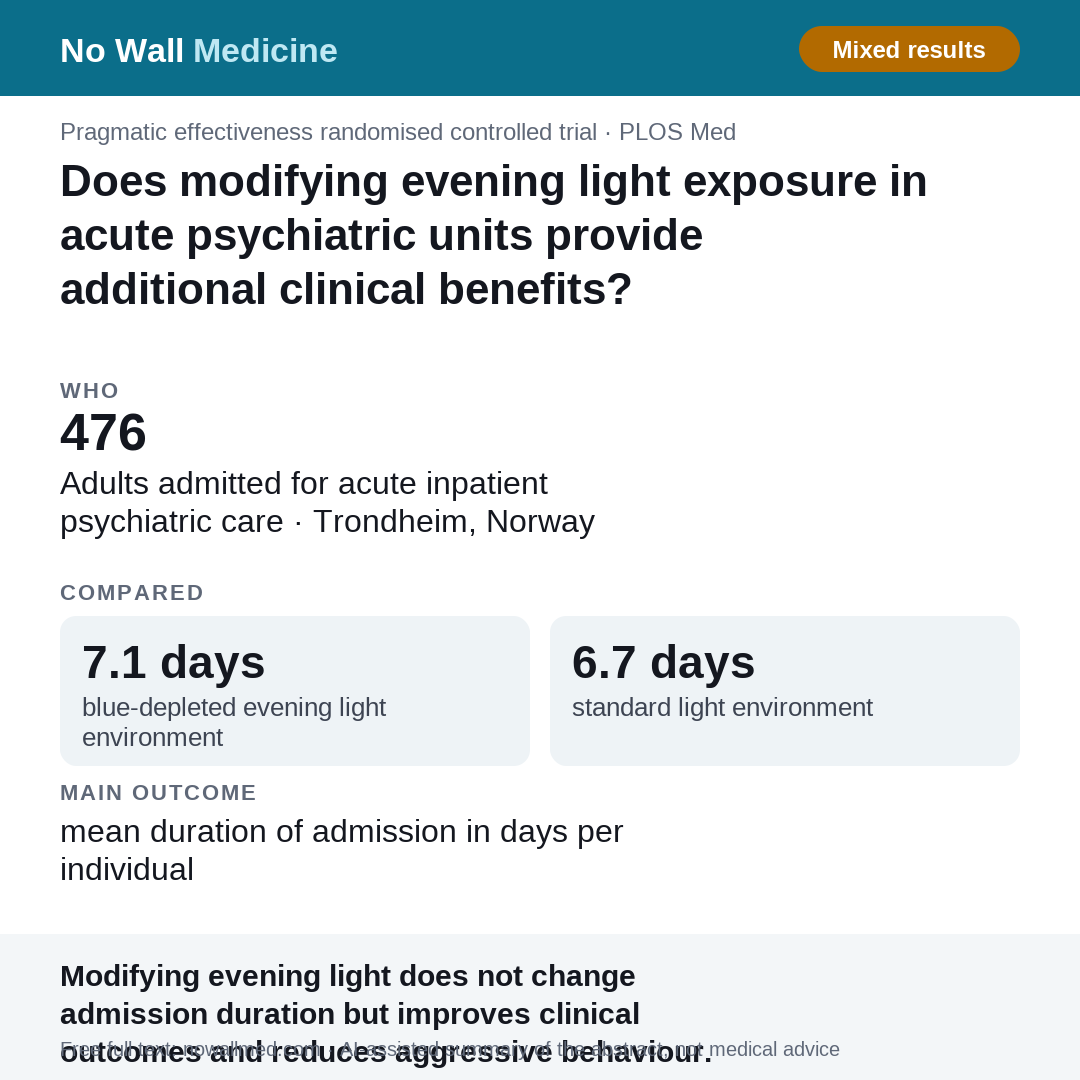
Clinical benefits of modifying the evening light environment in an acute psychiatric unit: A single-centre, two-arm, parallel-group, pragmatic effectiveness randomised controlled trial
Pragmatic effectiveness randomised controlled trialMixed results
Does modifying evening light exposure in acute psychiatric units provide additional clinical benefits?
Who
476
Adults admitted for acute inpatient psychiatric care · Trondheim, Norway
Compared
7.1 daysblue-depleted evening light environment
6.7 daysstandard light environment
Main outcome
mean duration of admission in days per individual
Result: estimated mean difference: 0.4 days (95% confidence interval [-0.9, 1.9])
Bottom line: Modifying evening light does not change admission duration but improves clinical outcomes and reduces aggressive behaviour.
PLOS Med · 2024-12-06Download image
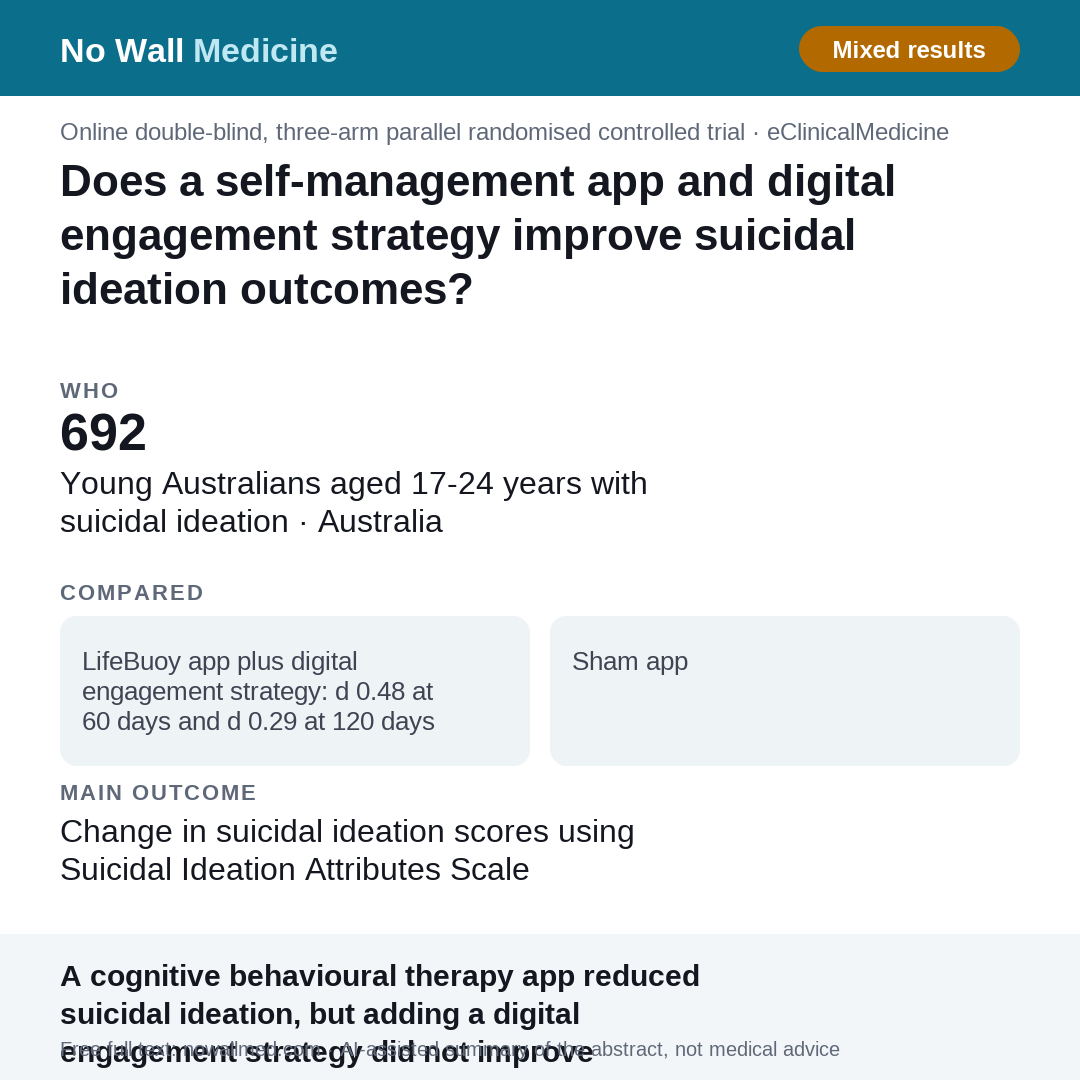
Adherence and efficacy outcomes in young Australians with suicidal ideation using a self-management app and digital engagement strategy compared with a sham app: a three-arm randomised controlled trial
Online double-blind, three-arm parallel randomised controlled trialMixed results
Does a self-management app and digital engagement strategy improve suicidal ideation outcomes?
Who
692
Young Australians aged 17-24 years with suicidal ideation · Australia
Compared
LifeBuoy app plus digital engagement strategy: d 0.48 at 60 days and d 0.29 at 120 days
Sham app
Main outcome
Change in suicidal ideation scores using Suicidal Ideation Attributes Scale
Bottom line: A cognitive behavioural therapy app reduced suicidal ideation, but adding a digital engagement strategy did not improve outcomes.
Funded by: National Health & Medical Research Council, Matana Foundation, Alex Roth Foundation
eClinicalMedicine · 2024-12-06Download image
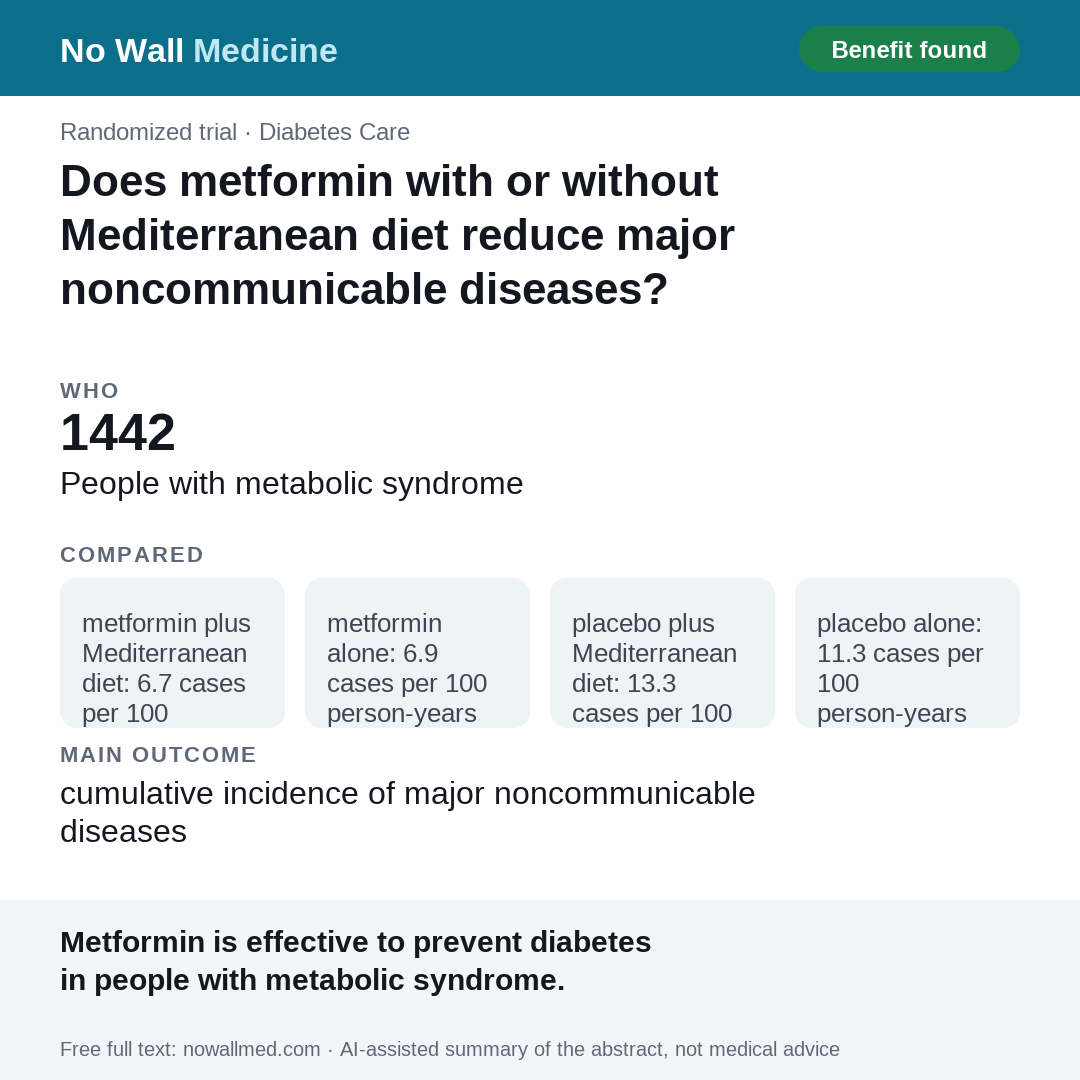
Metformin Treatment With or Without Mediterranean Diet for the Prevention of Age-Related Diseases in People With Metabolic Syndrome: The MeMeMe Randomized Trial
Randomized trialBenefit found
Does metformin with or without Mediterranean diet reduce major noncommunicable diseases?
Who
1442
People with metabolic syndrome
Compared
metformin plus Mediterranean diet: 6.7 cases per 100 person-years
metformin alone: 6.9 cases per 100 person-years
placebo plus Mediterranean diet: 13.3 cases per 100 person-years
placebo alone: 11.3 cases per 100 person-years
Main outcome
cumulative incidence of major noncommunicable diseases
Bottom line: Metformin is effective to prevent diabetes in people with metabolic syndrome.
Diabetes Care · 2024-12-06Download image
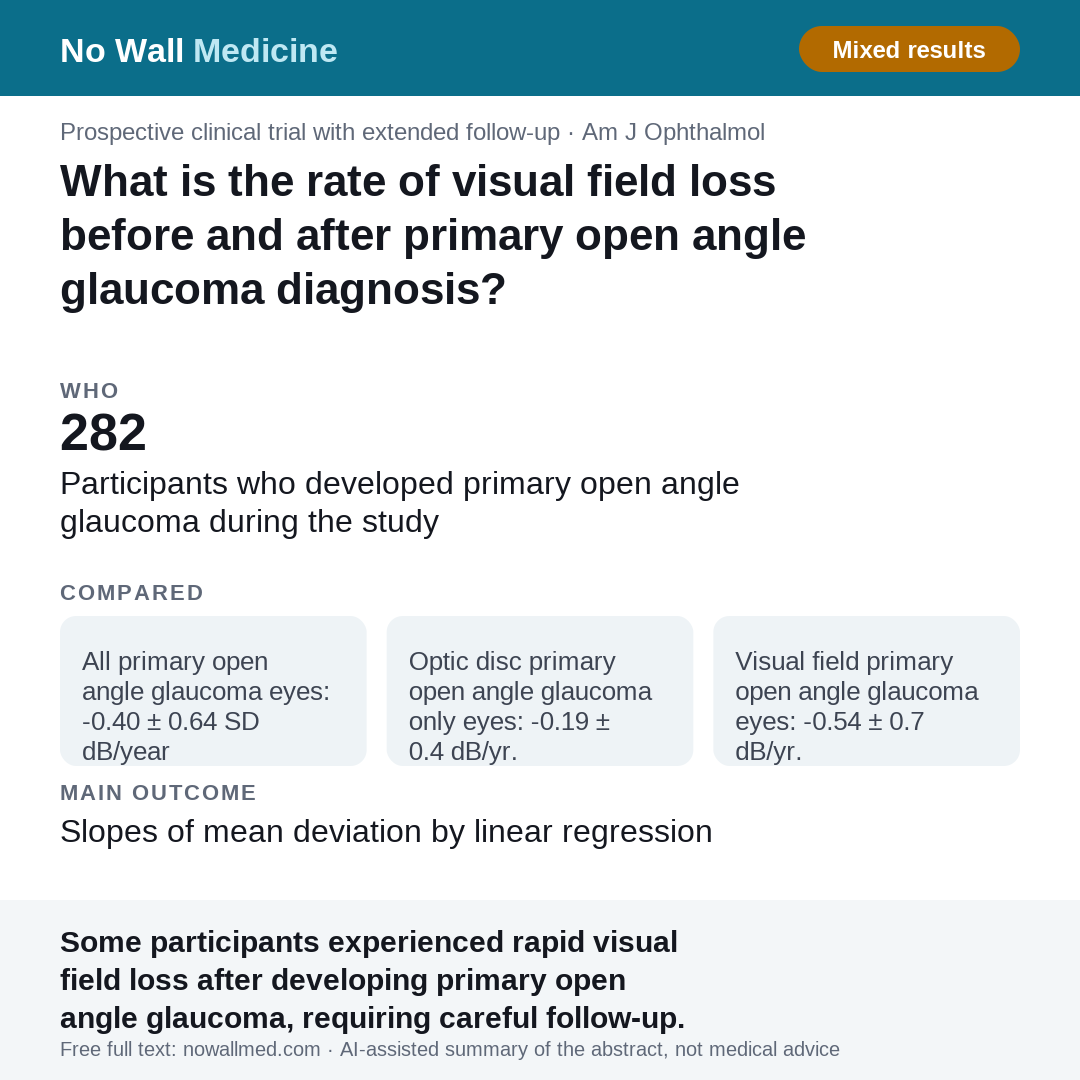
Visual Field Progression in the Ocular Hypertension Treatment Study
Prospective clinical trial with extended follow-upMixed results
What is the rate of visual field loss before and after primary open angle glaucoma diagnosis?
Who
282
Participants who developed primary open angle glaucoma during the study
Compared
All primary open angle glaucoma eyes: -0.40 ± 0.64 SD dB/year
Optic disc primary open angle glaucoma only eyes: -0.19 ± 0.4 dB/yr.
Visual field primary open angle glaucoma eyes: -0.54 ± 0.7 dB/yr.
Main outcome
Slopes of mean deviation by linear regression
Bottom line: Some participants experienced rapid visual field loss after developing primary open angle glaucoma, requiring careful follow-up.
Am J Ophthalmol · 2024-12-06Download image
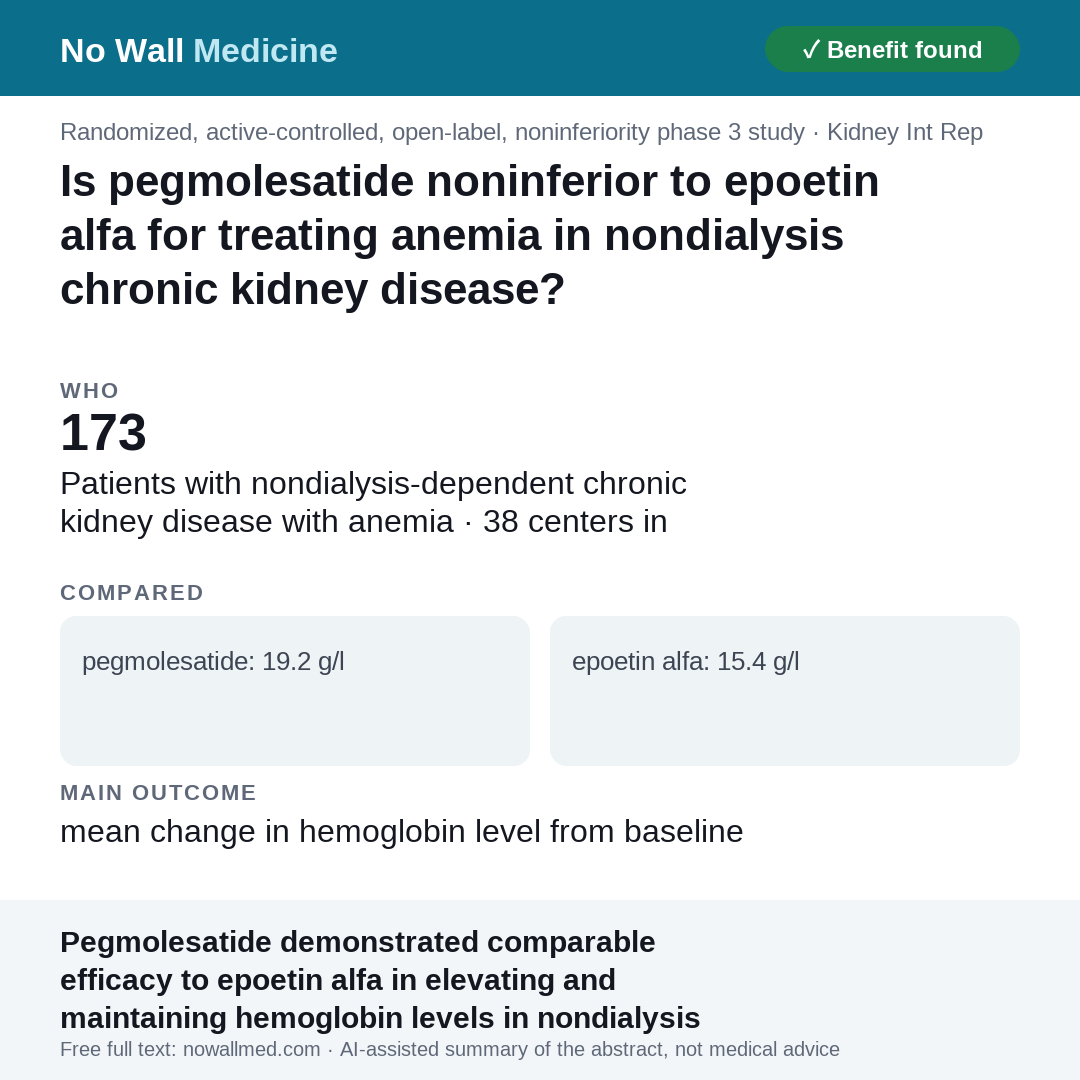
Randomized Trial of Pegmolesatide for the Treatment of Anemia in Patients With Nondialysis CKD
Randomized, active-controlled, open-label, noninferiority phase 3 studyBenefit found
Is pegmolesatide noninferior to epoetin alfa for treating anemia in nondialysis chronic kidney disease?
Who
173
Patients with nondialysis-dependent chronic kidney disease with anemia · 38 centers in China
Compared
pegmolesatide: 19.2 g/l
epoetin alfa: 15.4 g/l
Main outcome
mean change in hemoglobin level from baseline
Result: between-group difference of 3.8 g/l (95% CI: 0.7-6.9)
Bottom line: Pegmolesatide demonstrated comparable efficacy to epoetin alfa in elevating and maintaining hemoglobin levels in nondialysis chronic kidney disease patients.
Kidney Int Rep · 2024-12-06Download image
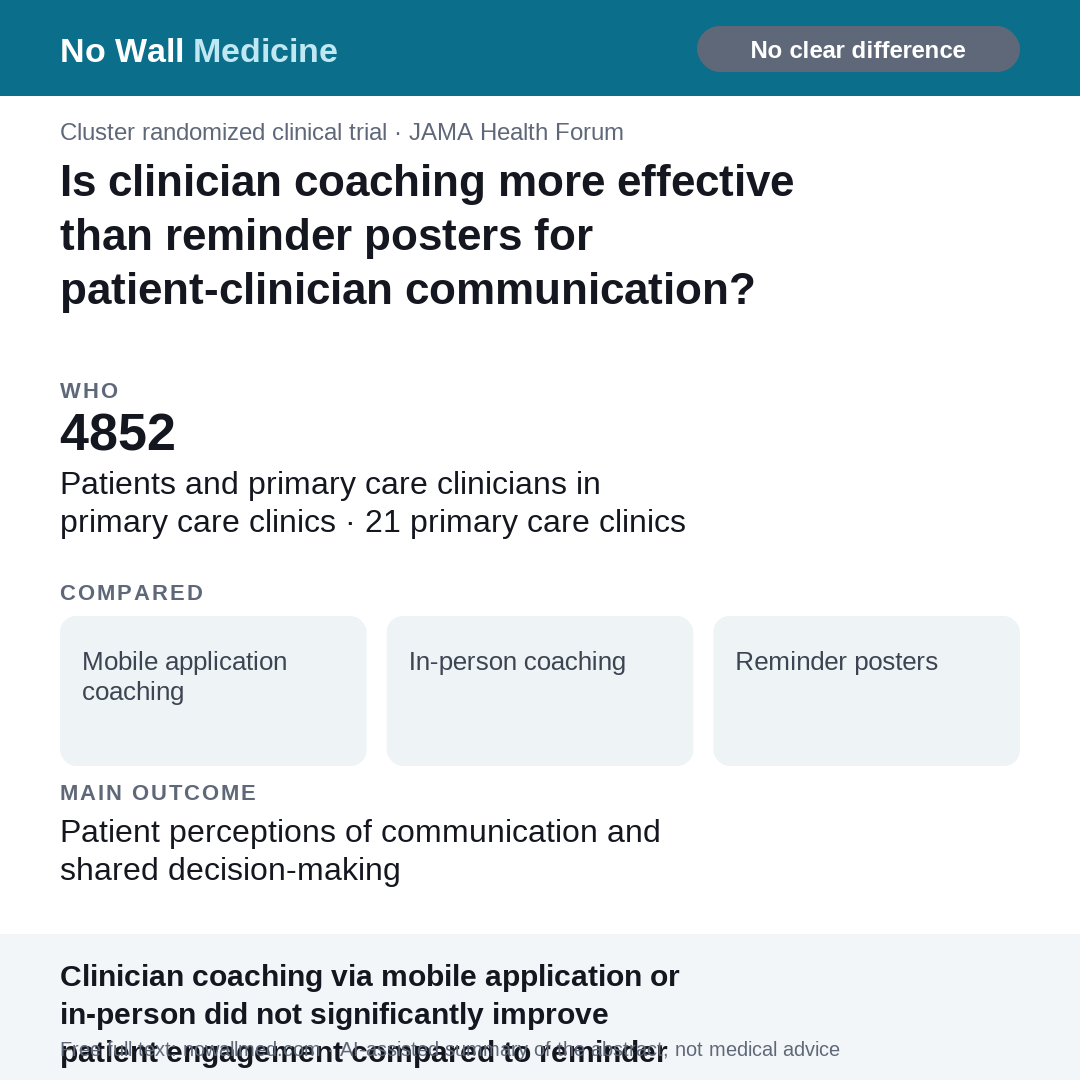
Patient-Clinician Communication Interventions Across Multiple Primary Care Sites: A Cluster Randomized Clinical Trial
Cluster randomized clinical trialNo clear difference
Is clinician coaching more effective than reminder posters for patient-clinician communication?
Who
4852
Patients and primary care clinicians in primary care clinics · 21 primary care clinics in 3 US health systems
Compared
Mobile application coaching
In-person coaching
Reminder posters
Main outcome
Patient perceptions of communication and shared decision-making
Result: marginal difference, high-tech vs ASK, -0.021 (95% CI, -0.073 to 0.030)
Bottom line: Clinician coaching via mobile application or in-person did not significantly improve patient engagement compared to reminder posters.
Limitation: There were differences across systems and alternative outcome measures may be needed.
JAMA Health Forum · 2024-12-06Download image
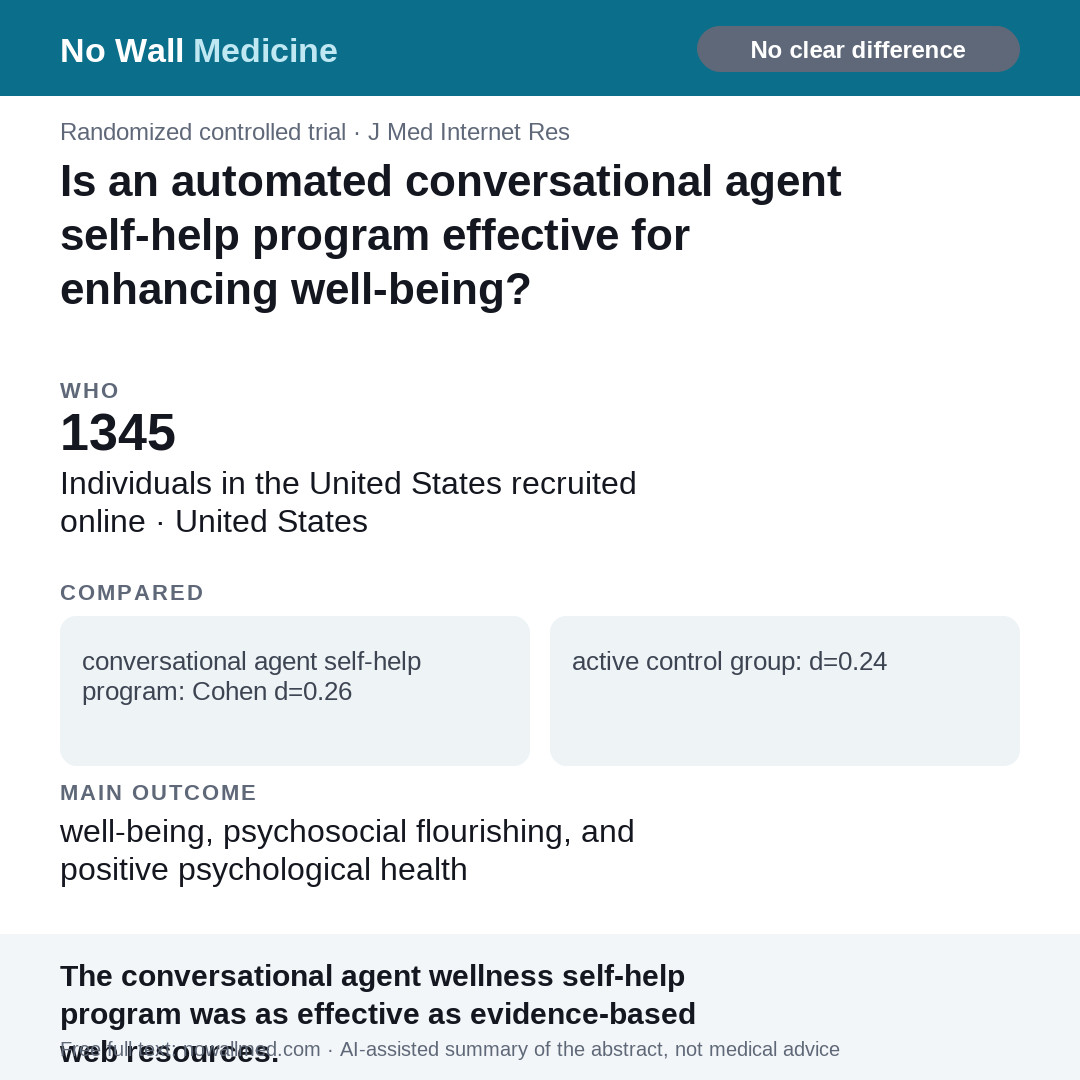
An Automated Conversational Agent Self-Help Program: Randomized Controlled Trial
Randomized controlled trialNo clear difference
Is an automated conversational agent self-help program effective for enhancing well-being?
Who
1345
Individuals in the United States recruited online · United States
Compared
conversational agent self-help program: Cohen d=0.26
active control group: d=0.24
Main outcome
well-being, psychosocial flourishing, and positive psychological health
Bottom line: The conversational agent wellness self-help program was as effective as evidence-based web resources.
Limitation: Only a portion of participants were actively involved and long-term stability is unknown.
J Med Internet Res · 2024-12-06Download image
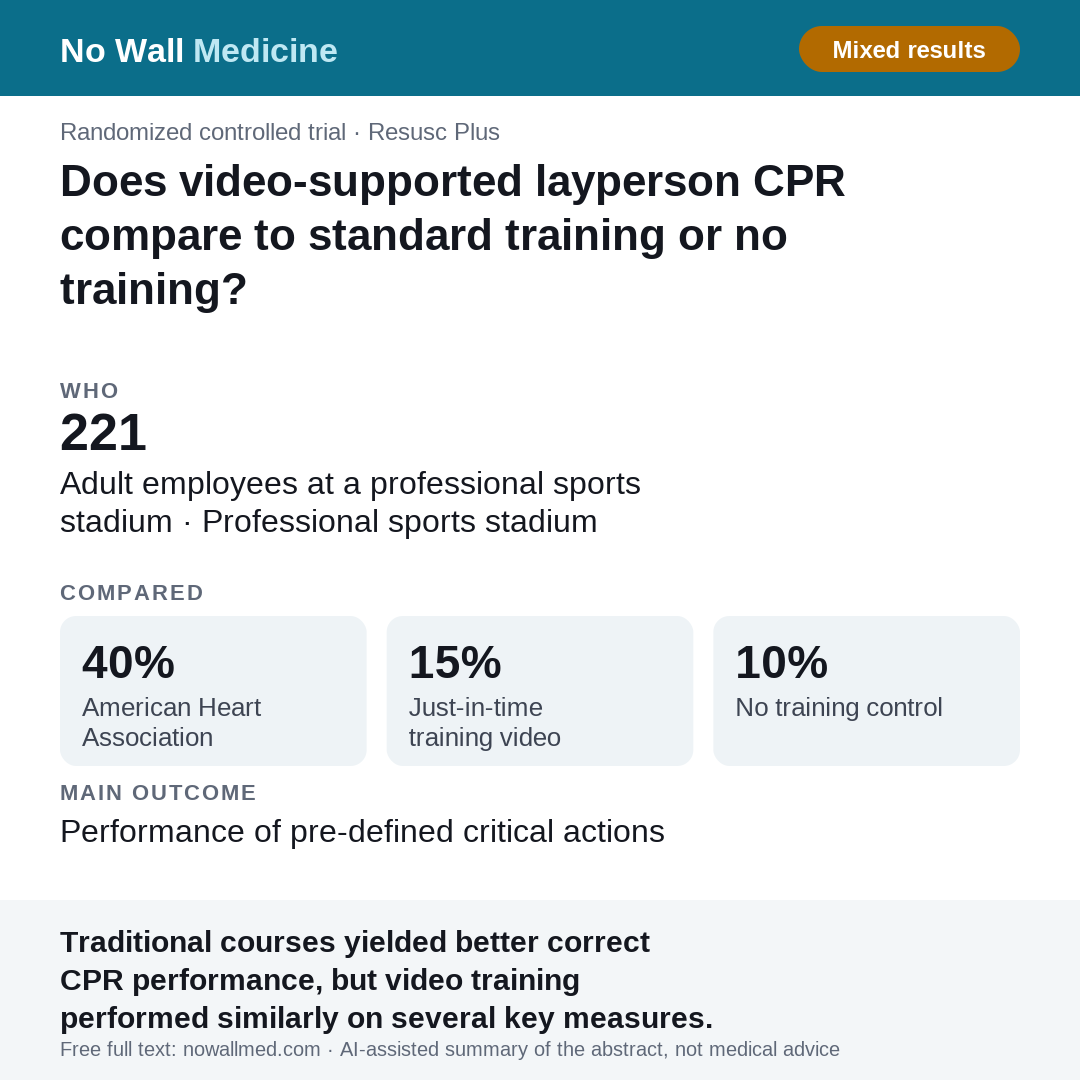
Evaluating video-supported layperson CPR compared to a standard training course: A randomized controlled trial
Randomized controlled trialMixed results
Does video-supported layperson CPR compare to standard training or no training?
Who
221
Adult employees at a professional sports stadium · Professional sports stadium
Compared
40%American Heart Association HeartSaver course (95%CI 28-51)
15%Just-in-time training video (95%CI 8-26)
10%No training control (95%CI 4-19)
Main outcome
Performance of pre-defined critical actions
Bottom line: Traditional courses yielded better correct CPR performance, but video training performed similarly on several key measures.
Resusc Plus · 2024-12-06Download image
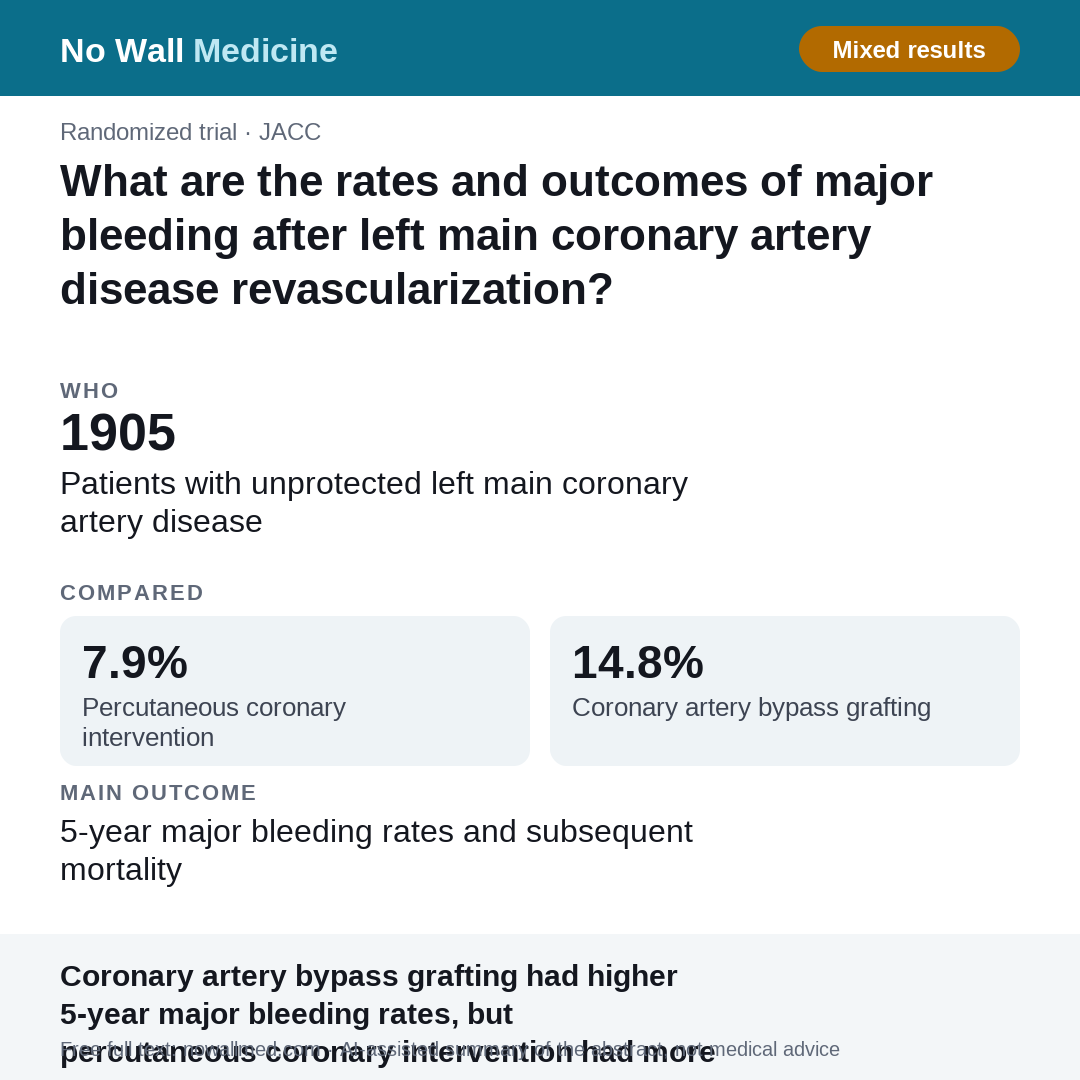
Major Bleeding and Mortality After Revascularization of Left Main Disease
Randomized trialMixed results
What are the rates and outcomes of major bleeding after left main coronary artery disease revascularization?
Who
1905
Patients with unprotected left main coronary artery disease
Compared
7.9%Percutaneous coronary intervention
14.8%Coronary artery bypass grafting
Main outcome
5-year major bleeding rates and subsequent mortality
Result: adjusted hazard ratio 2.71 (95% CI 1.95-3.77)
Bottom line: Coronary artery bypass grafting had higher 5-year major bleeding rates, but percutaneous coronary intervention had more postdischarge bleeding events.
JACC · 2024-12-05Download image
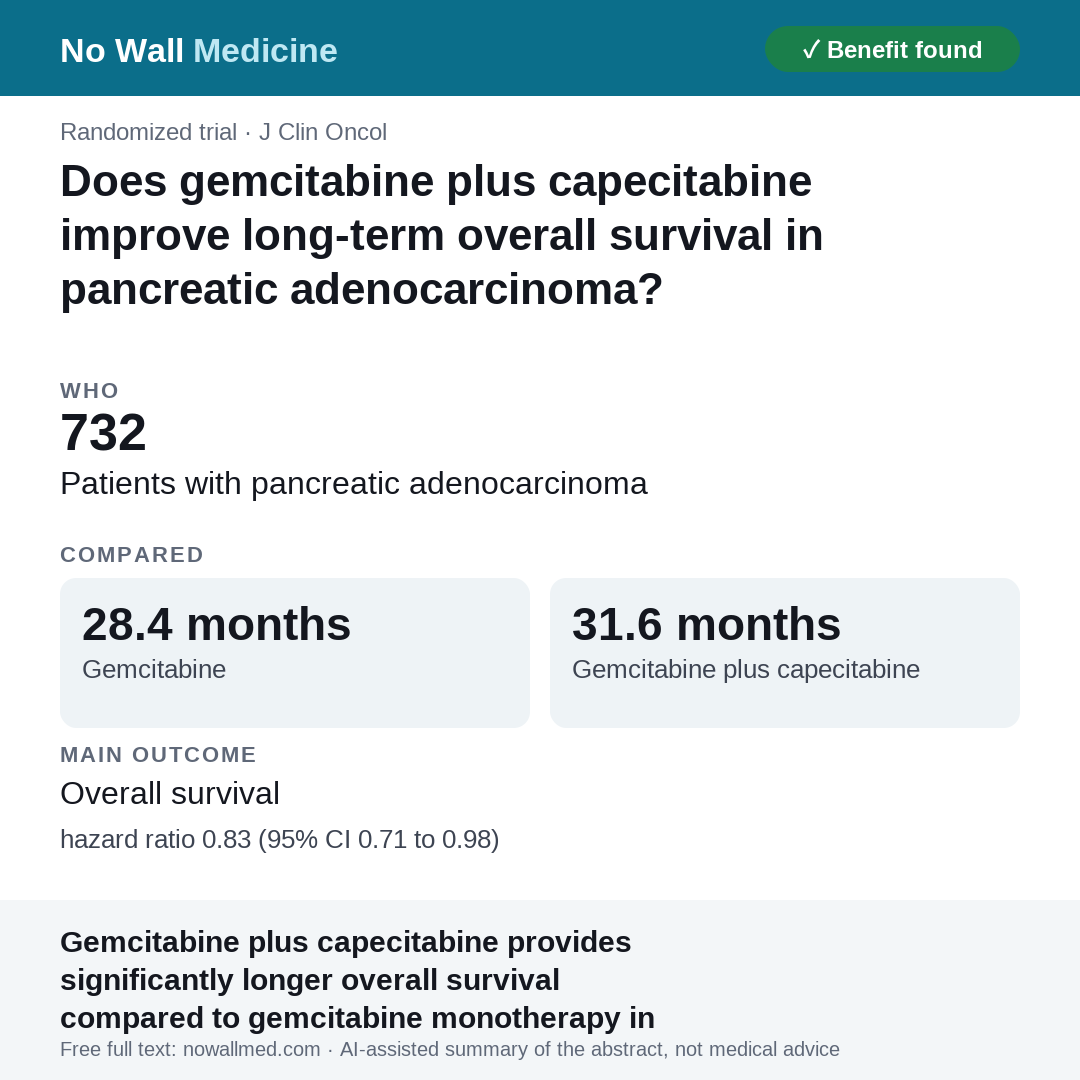
Pancreatic Adenocarcinoma: Long-Term Outcomes of Adjuvant Therapy in the ESPAC4 Phase III Trial
Randomized trialBenefit found
Does gemcitabine plus capecitabine improve long-term overall survival in pancreatic adenocarcinoma?
Who
732
Patients with pancreatic adenocarcinoma
Compared
28.4 monthsGemcitabine (25.2-32.0)
31.6 monthsGemcitabine plus capecitabine (26.5-38.0)
Main outcome
Overall survival
Result: hazard ratio 0.83 (95% CI 0.71 to 0.98)
Bottom line: Gemcitabine plus capecitabine provides significantly longer overall survival compared to gemcitabine monotherapy in pancreatic adenocarcinoma.
J Clin Oncol · 2024-12-05Download image
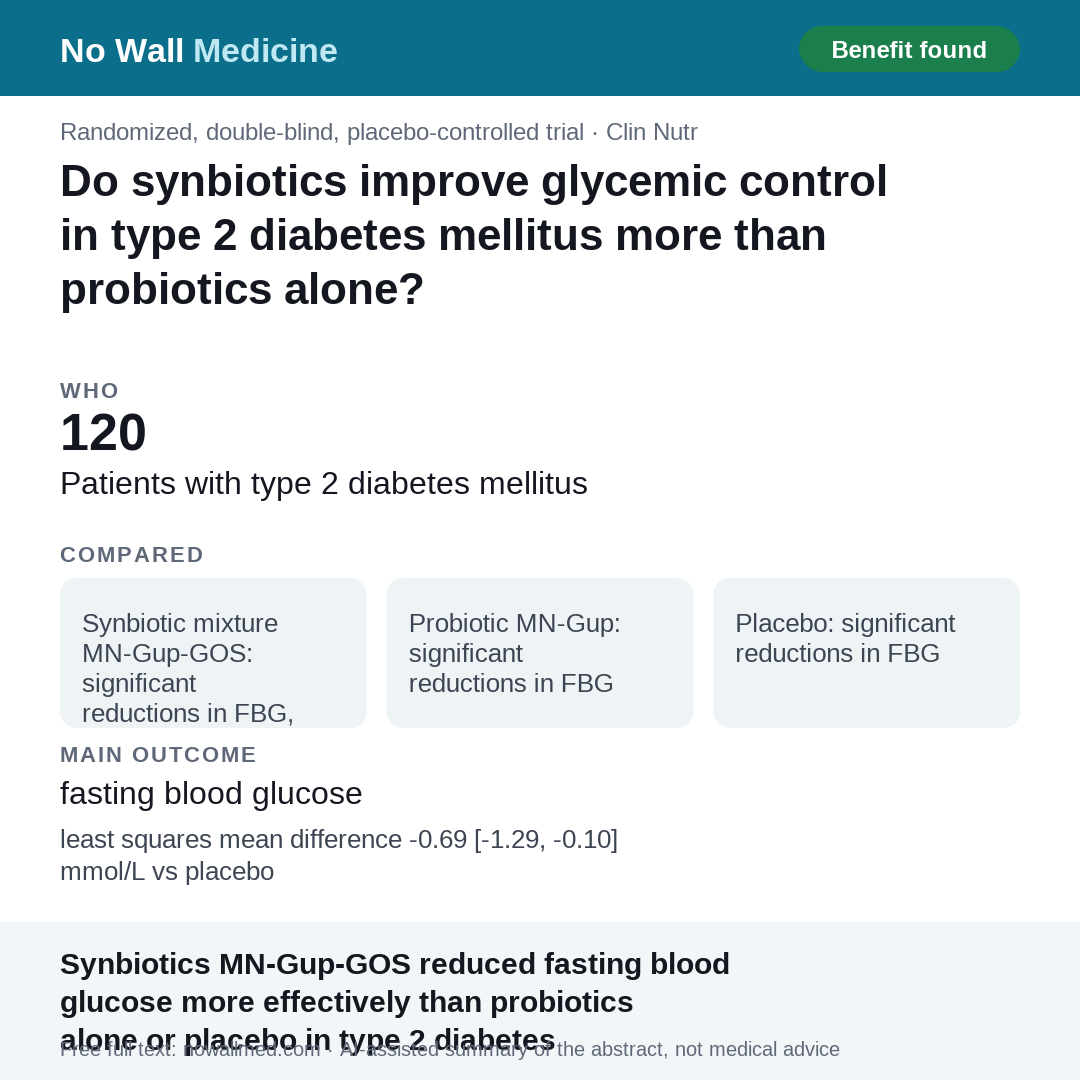
Effects of synbiotics surpass probiotics alone in improving type 2 diabetes mellitus: A randomized, double-blind, placebo-controlled trial
Randomized, double-blind, placebo-controlled trialBenefit found
Do synbiotics improve glycemic control in type 2 diabetes mellitus more than probiotics alone?
Who
120
Patients with type 2 diabetes mellitus
Compared
Synbiotic mixture MN-Gup-GOS: significant reductions in FBG, HbA1c, serum insulin, and HOMA-IR
Probiotic MN-Gup: significant reductions in FBG
Placebo: significant reductions in FBG
Main outcome
fasting blood glucose
Result: least squares mean difference -0.69 [-1.29, -0.10] mmol/L vs placebo
Bottom line: Synbiotics MN-Gup-GOS reduced fasting blood glucose more effectively than probiotics alone or placebo in type 2 diabetes patients.
Clin Nutr · 2024-12-05Download image
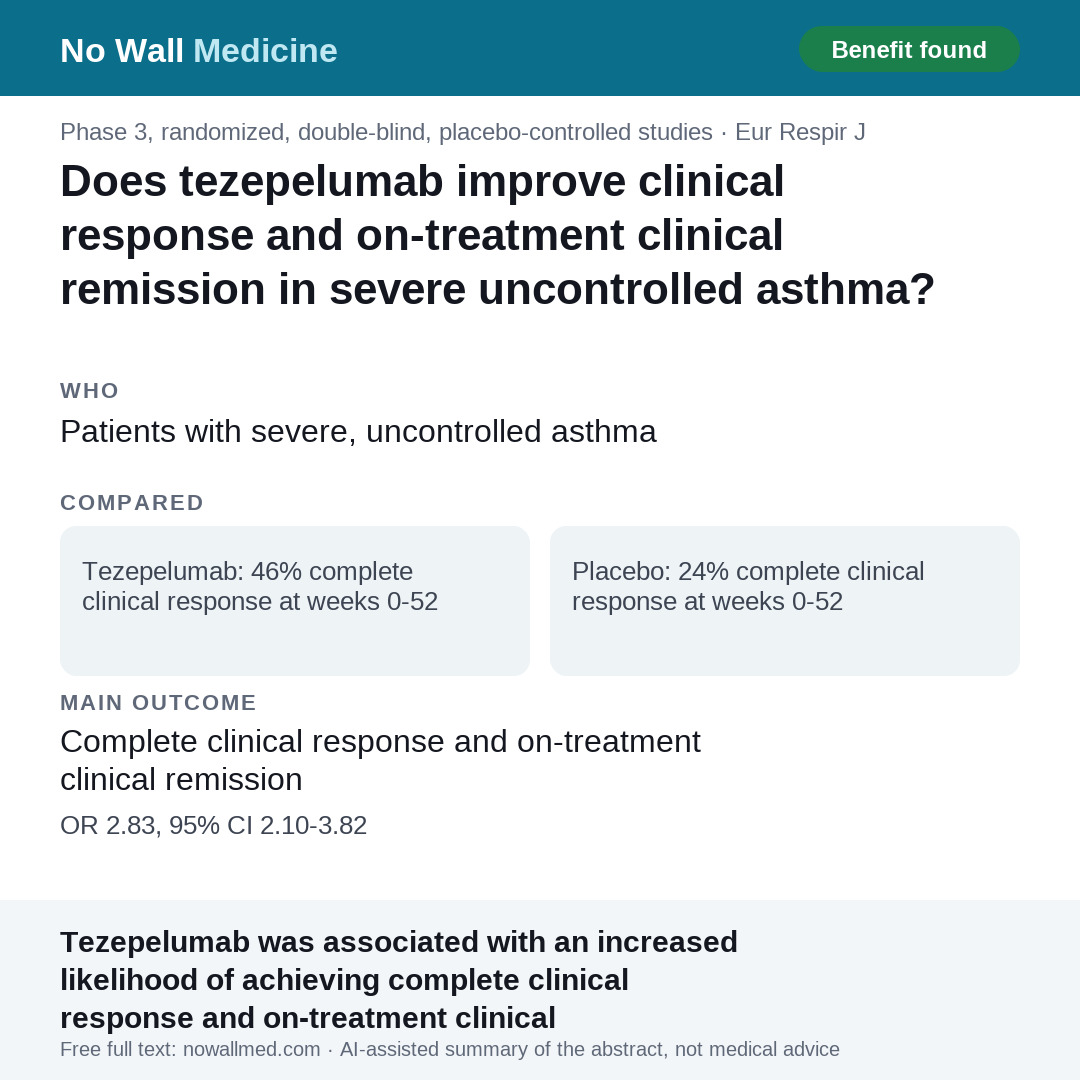
Clinical response and on-treatment clinical remission with tezepelumab in a broad population of patients with severe, uncontrolled asthma: results over 2 years from the NAVIGATOR and DESTINATION studies
Phase 3, randomized, double-blind, placebo-controlled studiesBenefit found
Does tezepelumab improve clinical response and on-treatment clinical remission in severe uncontrolled asthma?
Who
Patients with severe, uncontrolled asthma
Compared
Tezepelumab: 46% complete clinical response at weeks 0-52
Placebo: 24% complete clinical response at weeks 0-52
Main outcome
Complete clinical response and on-treatment clinical remission
Result: OR 2.83, 95% CI 2.10-3.82
Bottom line: Tezepelumab was associated with an increased likelihood of achieving complete clinical response and on-treatment clinical remission.
Eur Respir J · 2024-12-05Download image
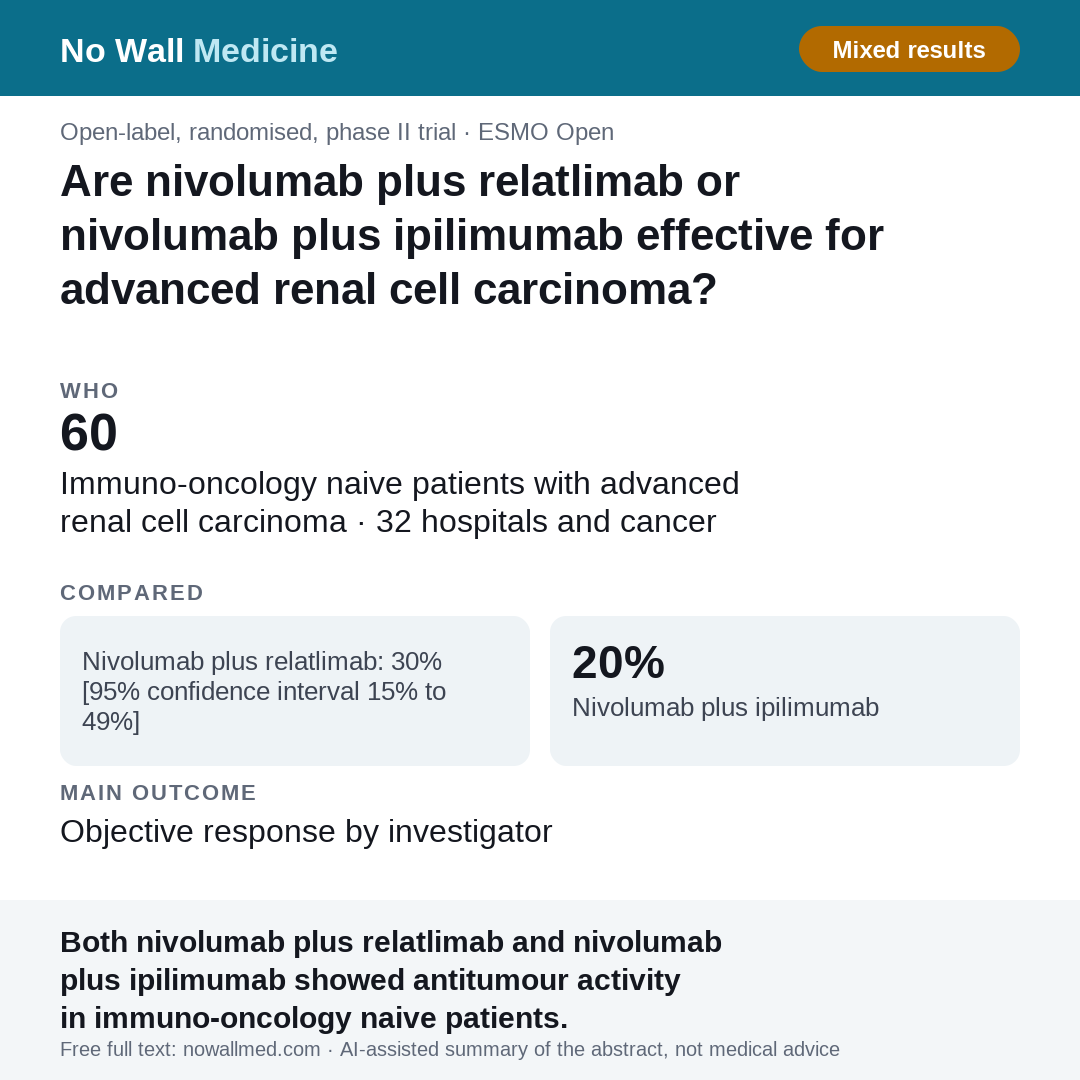
Nivolumab plus relatlimab and nivolumab plus ipilimumab for patients with advanced renal cell carcinoma: results from the open-label, randomised, phase II FRACTION-RCC trial
Open-label, randomised, phase II trialMixed results
Are nivolumab plus relatlimab or nivolumab plus ipilimumab effective for advanced renal cell carcinoma?
Who
60
Immuno-oncology naive patients with advanced renal cell carcinoma · 32 hospitals and cancer centres across six countries
Compared
Nivolumab plus relatlimab: 30% [95% confidence interval 15% to 49%]
20%Nivolumab plus ipilimumab (95% CI 8% to 39%)
Main outcome
Objective response by investigator
Bottom line: Both nivolumab plus relatlimab and nivolumab plus ipilimumab showed antitumour activity in immuno-oncology naive patients.
ESMO Open · 2024-12-05Download image
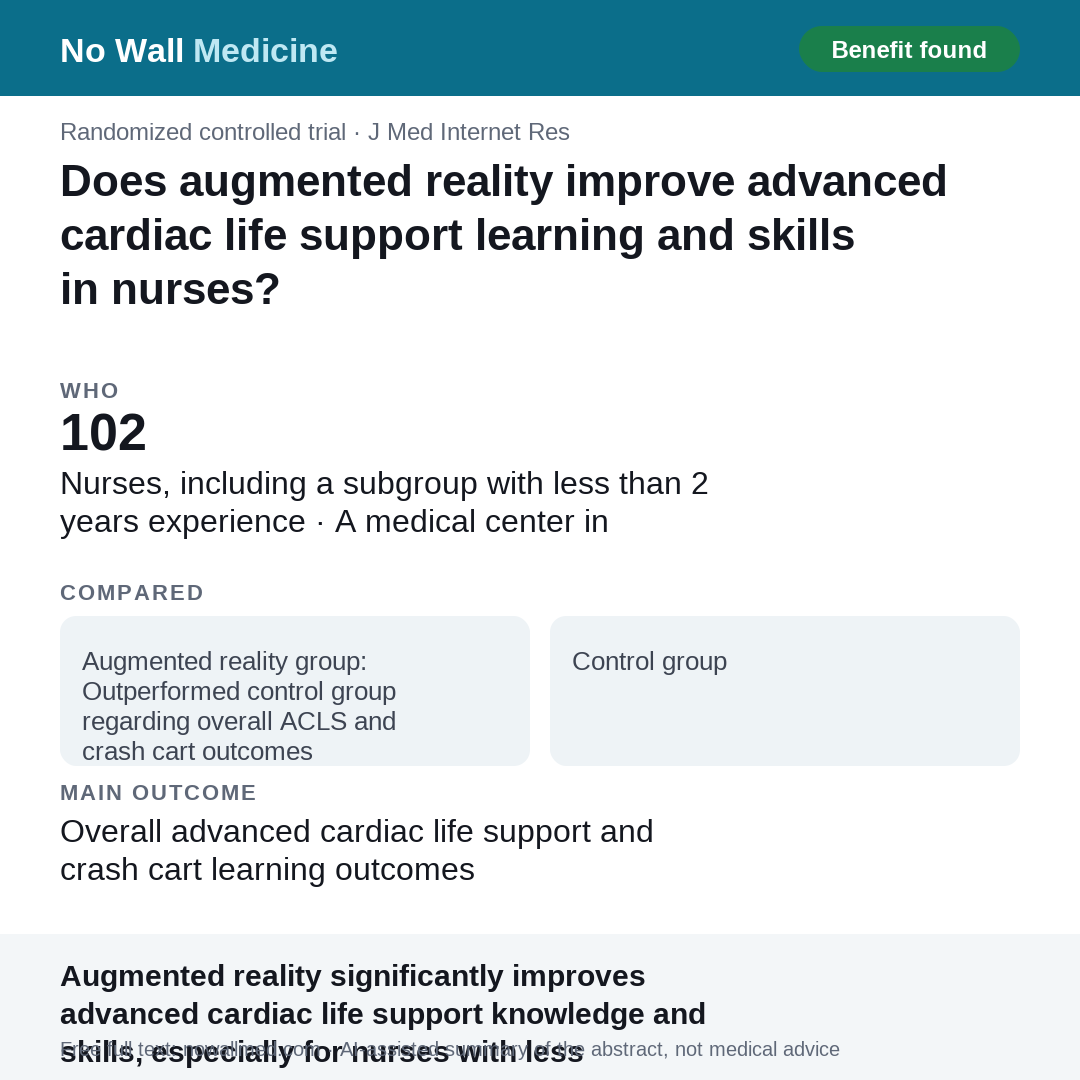
Nurses' Knowledge and Skills After Use of an Augmented Reality App for Advanced Cardiac Life Support Training: Randomized Controlled Trial
Randomized controlled trialBenefit found
Does augmented reality improve advanced cardiac life support learning and skills in nurses?
Who
102
Nurses, including a subgroup with less than 2 years experience · A medical center in southern Taiwan
Compared
Augmented reality group: Outperformed control group regarding overall ACLS and crash cart outcomes
Control group
Main outcome
Overall advanced cardiac life support and crash cart learning outcomes
Bottom line: Augmented reality significantly improves advanced cardiac life support knowledge and skills, especially for nurses with less experience.
J Med Internet Res · 2024-12-05Download image