Visual abstracts
New randomized trials and meta-analyses from leading journals at a glance: who was studied, what was compared, and what was found. Every paper is free to read in full.
All specialtiesCardiology 4763Oncology 4042Gastroenterology & Hepatology 1902Infectious Disease 3756Neurology 1872Psychiatry & Mental Health 2214Pulmonology 2042Critical Care 1319Endocrinology & Diabetes 2544Pediatrics 2889Surgery 2479Orthopedics & Sports Medicine 917Neurosurgery 525Cardiothoracic & Vascular Surgery 656Plastic & Reconstructive Surgery 574Nephrology 1107Rheumatology 810Hematology 1090Dermatology 611Ophthalmology 532Obstetrics & Gynecology 1645Public & Global Health 1037Radiology & Imaging 617Anesthesiology 957Urology 745ENT (Otolaryngology) 494Emergency Medicine 481Allergy & Immunology 309Geriatrics 972Family Medicine & Primary Care 533Medical Genetics & Genomics 659Pathology & Laboratory Medicine 156Physical Medicine & Rehabilitation 734Palliative Care 421Nutrition 1560Digital Health & AI 2133General Medicine 318
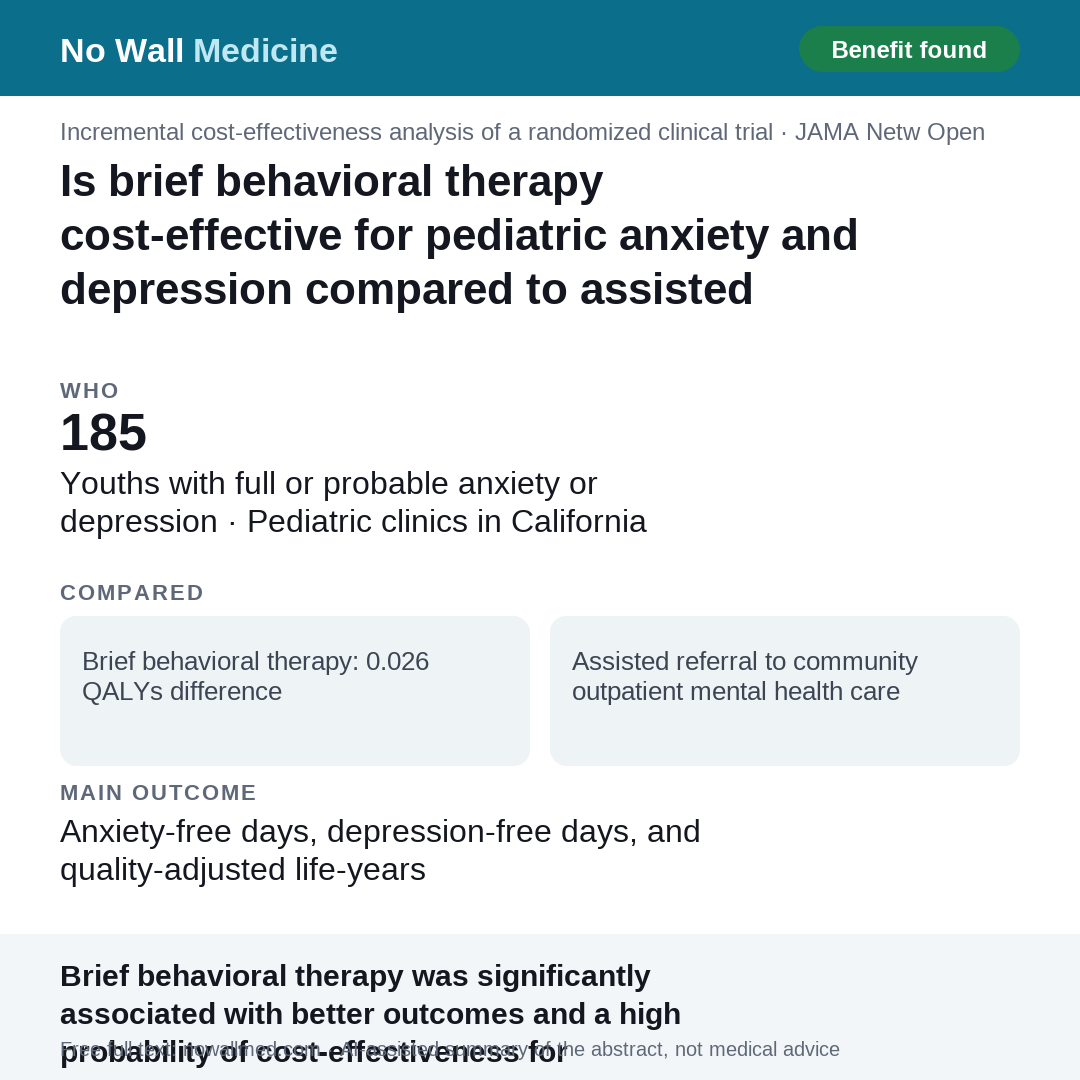
Cost-effectiveness of Brief Behavioral Therapy for Pediatric Anxiety and Depression in Primary Care
Incremental cost-effectiveness analysis of a randomized clinical trialBenefit found
Is brief behavioral therapy cost-effective for pediatric anxiety and depression compared to assisted referral?
Who
185
Youths with full or probable anxiety or depression · Pediatric clinics in California and Pennsylvania
Compared
Brief behavioral therapy: 0.026 QALYs difference
Assisted referral to community outpatient mental health care
Main outcome
Anxiety-free days, depression-free days, and quality-adjusted life-years
Result: incremental cost-effectiveness ratio -$41 414 per QALY (95% CI -$220 601 to $11 468)
Bottom line: Brief behavioral therapy was significantly associated with better outcomes and a high probability of cost-effectiveness for pediatric anxiety and depression.
JAMA Netw Open · 2021-03-01Download image
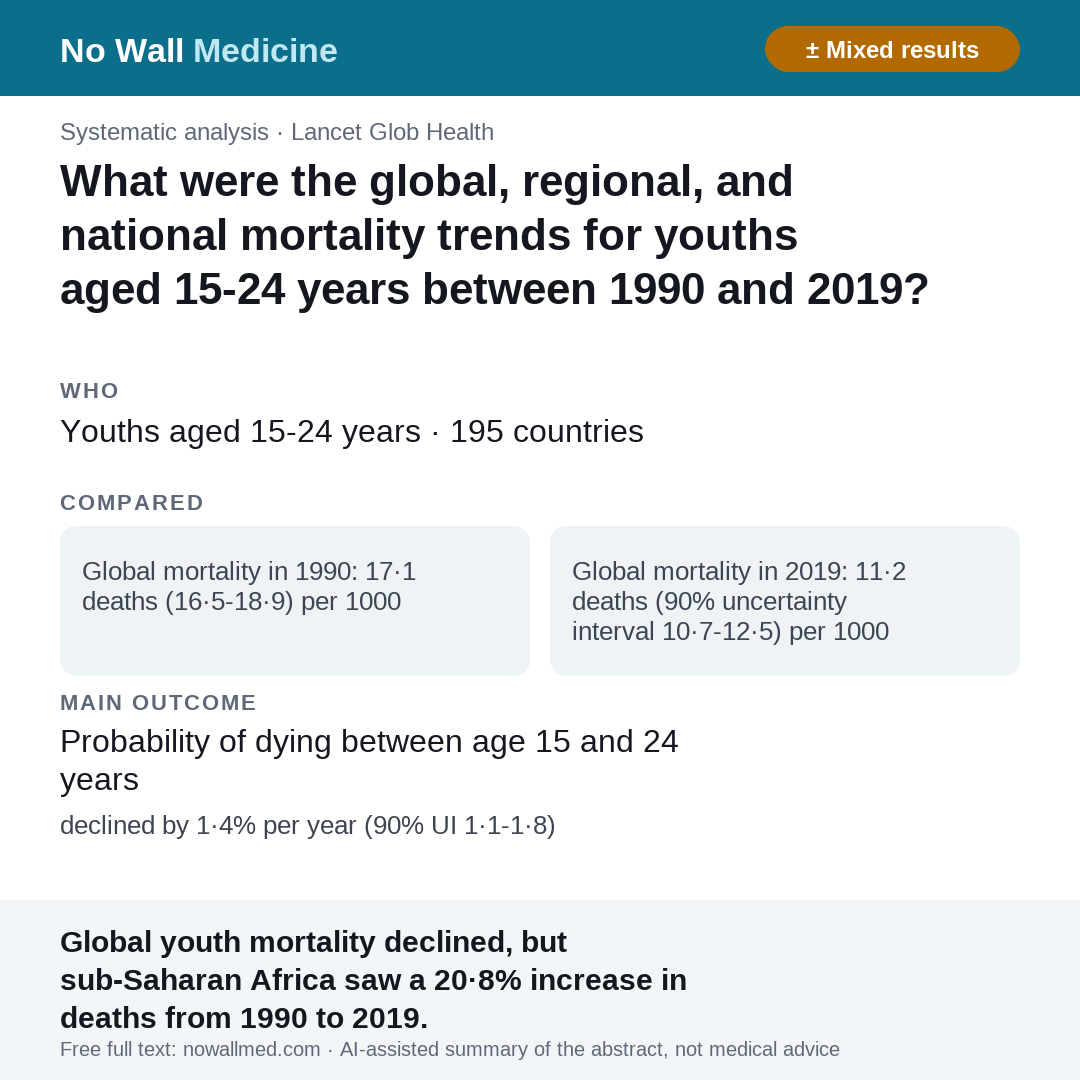
Global, regional, and national mortality trends in youth aged 15-24 years between 1990 and 2019: a systematic analysis
Systematic analysisMixed results
What were the global, regional, and national mortality trends for youths aged 15-24 years between 1990 and 2019?
Who
Youths aged 15-24 years · 195 countries
Compared
Global mortality in 1990: 17·1 deaths (16·5-18·9) per 1000
Global mortality in 2019: 11·2 deaths (90% uncertainty interval 10·7-12·5) per 1000
Main outcome
Probability of dying between age 15 and 24 years
Result: declined by 1·4% per year (90% UI 1·1-1·8)
Bottom line: Global youth mortality declined, but sub-Saharan Africa saw a 20·8% increase in deaths from 1990 to 2019.
Funded by: UN Children's Fund, Bill & Melinda Gates Foundation, USAID
Lancet Glob Health · 2021-03-01Download image
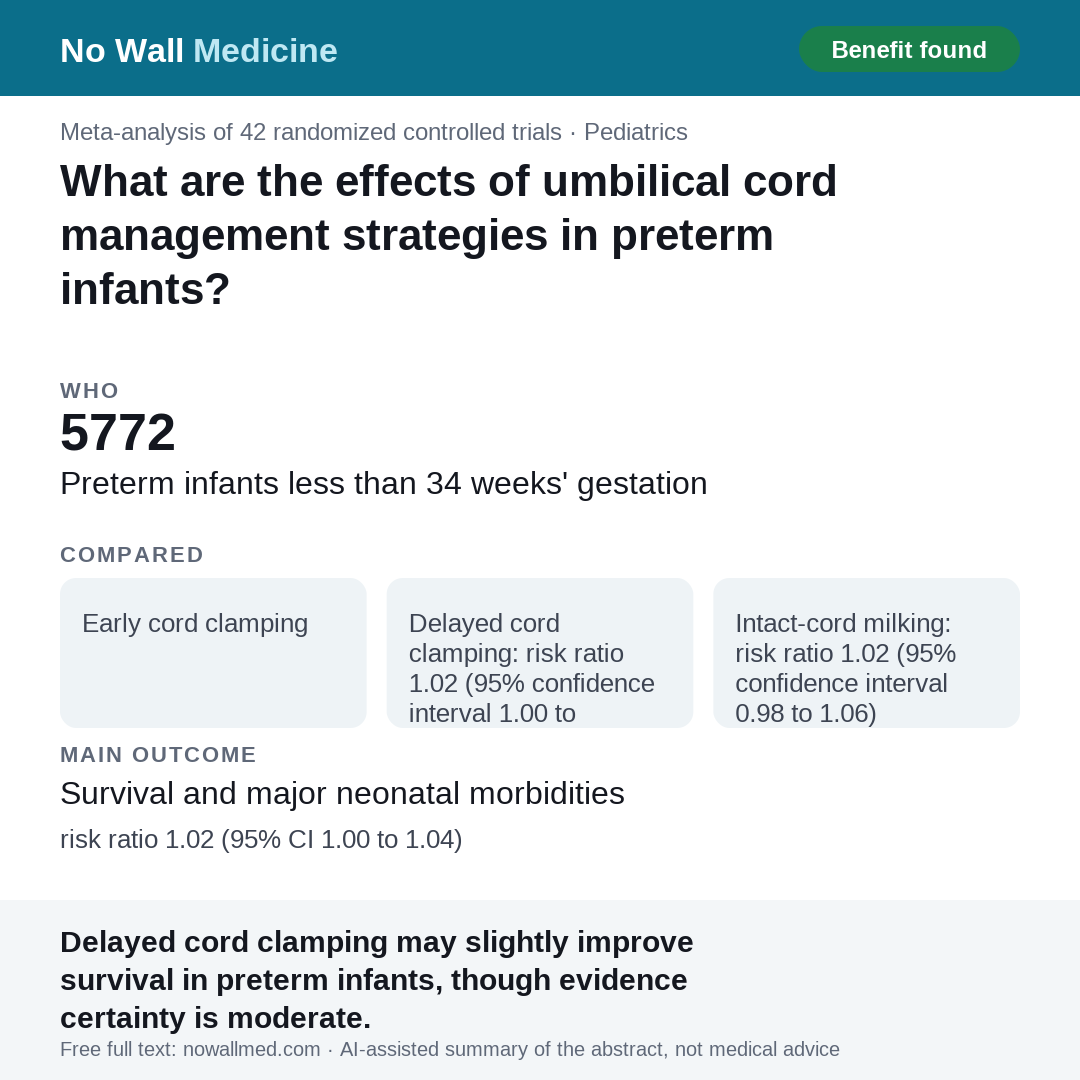
Umbilical Cord Management for Newborns <34 Weeks' Gestation: A Meta-analysis
Meta-analysis of 42 randomized controlled trialsBenefit, low certainty
What are the effects of umbilical cord management strategies in preterm infants?
Who
5772
Preterm infants less than 34 weeks' gestation
Compared
Early cord clamping
Delayed cord clamping: risk ratio 1.02 (95% confidence interval 1.00 to 1.04)
Intact-cord milking: risk ratio 1.02 (95% confidence interval 0.98 to 1.06)
Main outcome
Survival and major neonatal morbidities
Result: risk ratio 1.02 (95% CI 1.00 to 1.04)
Bottom line: Delayed cord clamping may slightly improve survival in preterm infants, though evidence certainty is moderate.
Limitation: Certainty of evidence was low for many comparisons and outcomes.
Pediatrics · 2021-02-27Download image
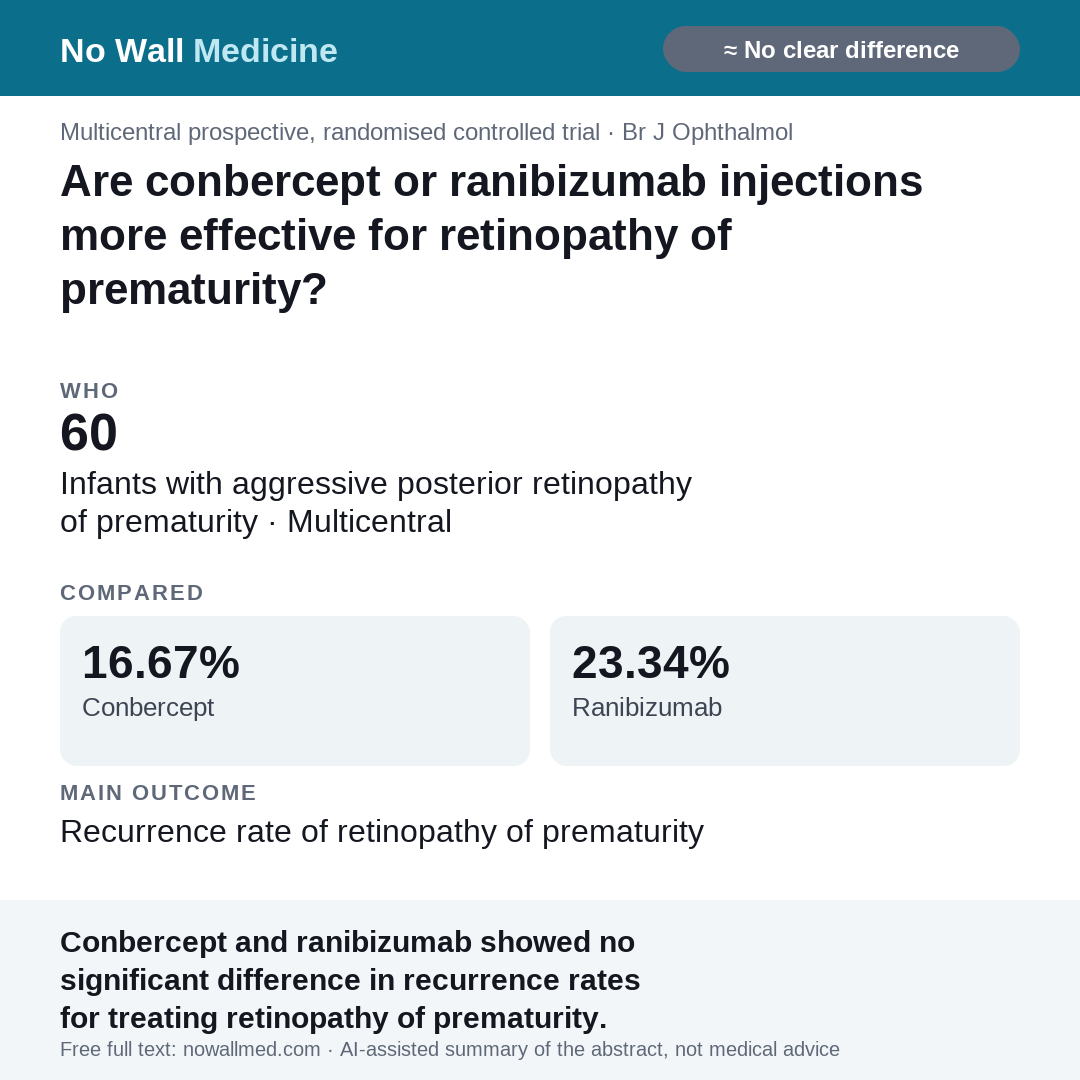
Comparison of clinical outcomes of conbercept versus ranibizumab treatment for retinopathy of prematurity: a multicentral prospective randomised controlled trial
Multicentral prospective, randomised controlled trialNo clear difference
Are conbercept or ranibizumab injections more effective for retinopathy of prematurity?
Who
60
Infants with aggressive posterior retinopathy of prematurity · Multicentral
Compared
16.67%Conbercept
23.34%Ranibizumab
Main outcome
Recurrence rate of retinopathy of prematurity
Bottom line: Conbercept and ranibizumab showed no significant difference in recurrence rates for treating retinopathy of prematurity.
Br J Ophthalmol · 2021-02-26Download image
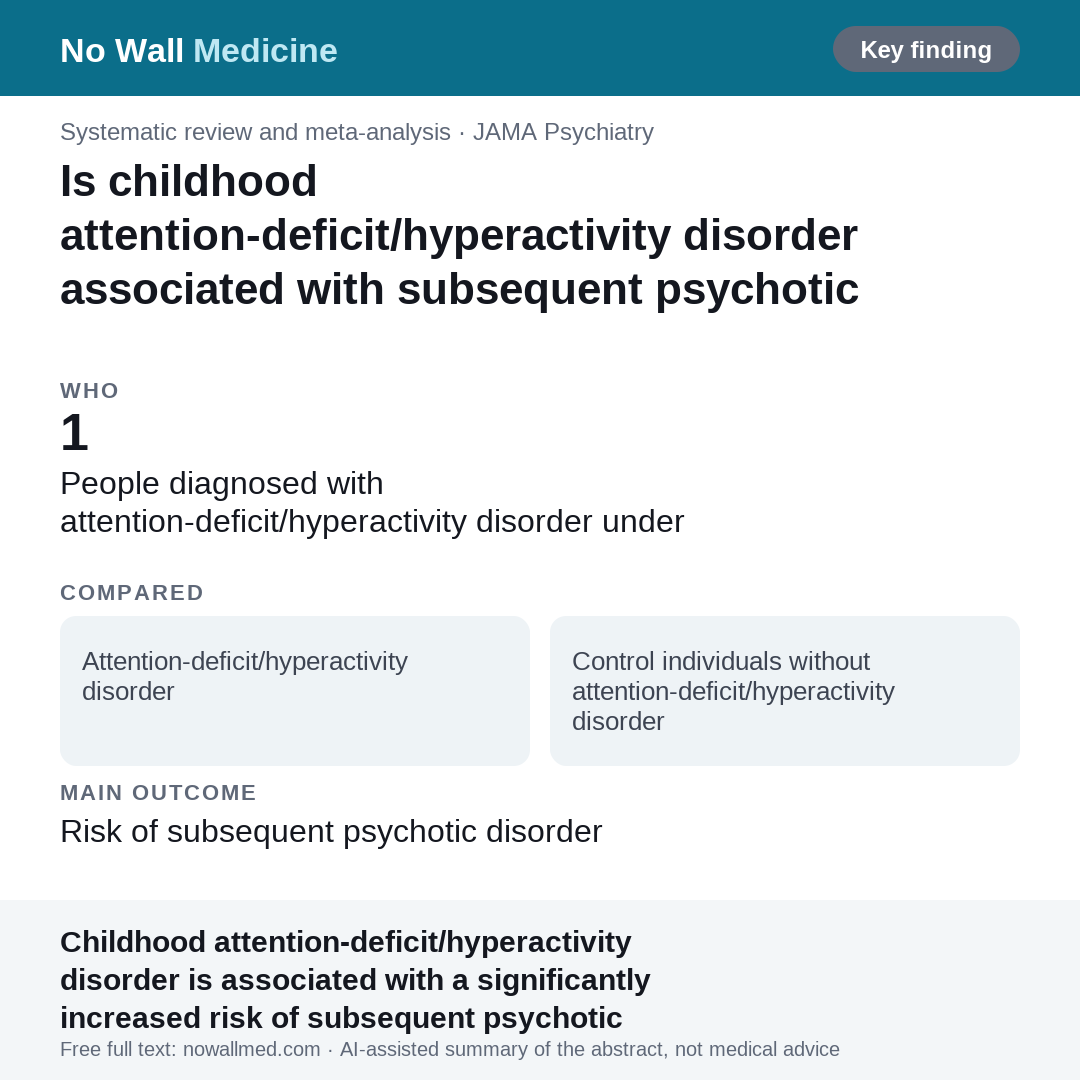
Association of Attention-Deficit/Hyperactivity Disorder in Childhood and Adolescence With the Risk of Subsequent Psychotic Disorder: A Systematic Review and Meta-analysis
Systematic review and meta-analysisKey finding
Is childhood attention-deficit/hyperactivity disorder associated with subsequent psychotic disorder risk?
Who
1
People diagnosed with attention-deficit/hyperactivity disorder under 18 years
Compared
Attention-deficit/hyperactivity disorder
Control individuals without attention-deficit/hyperactivity disorder
Main outcome
Risk of subsequent psychotic disorder
Result: 4.74 (95% CI, 4.11-5.46)
Bottom line: Childhood attention-deficit/hyperactivity disorder is associated with a significantly increased risk of subsequent psychotic disorder.
Limitation: Further studies are required to determine the mechanisms linking these conditions.
JAMA Psychiatry · 2021-02-25Download image
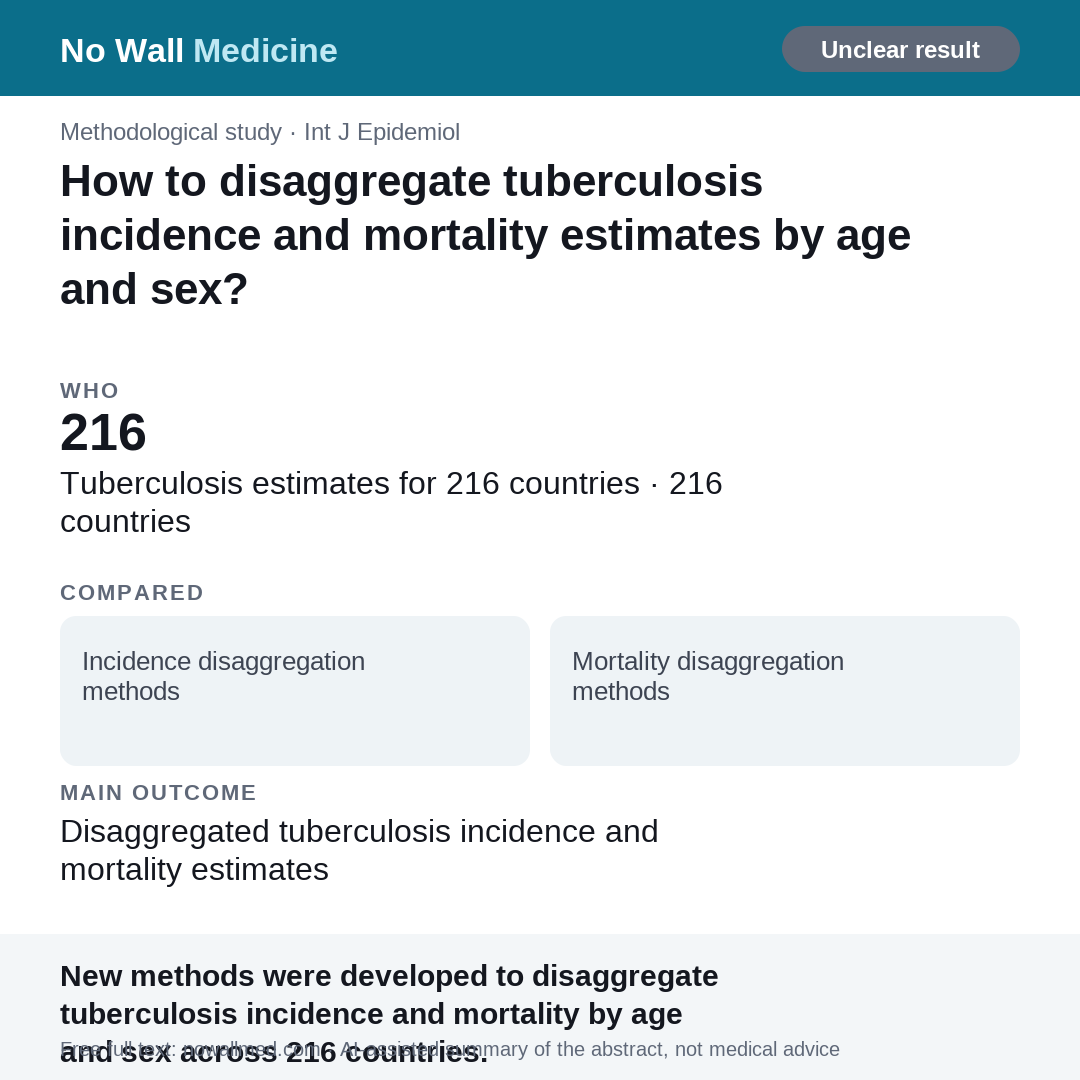
Methods for estimating tuberculosis incidence and mortality by age and sex
Methodological studyUnclear result
How to disaggregate tuberculosis incidence and mortality estimates by age and sex?
Who
216
Tuberculosis estimates for 216 countries · 216 countries
Compared
Incidence disaggregation methods
Mortality disaggregation methods
Main outcome
Disaggregated tuberculosis incidence and mortality estimates
Bottom line: New methods were developed to disaggregate tuberculosis incidence and mortality by age and sex across 216 countries.
Limitation: Disaggregated estimates have relatively larger uncertainty and should be used with caution.
Int J Epidemiol · 2021-02-25Download image
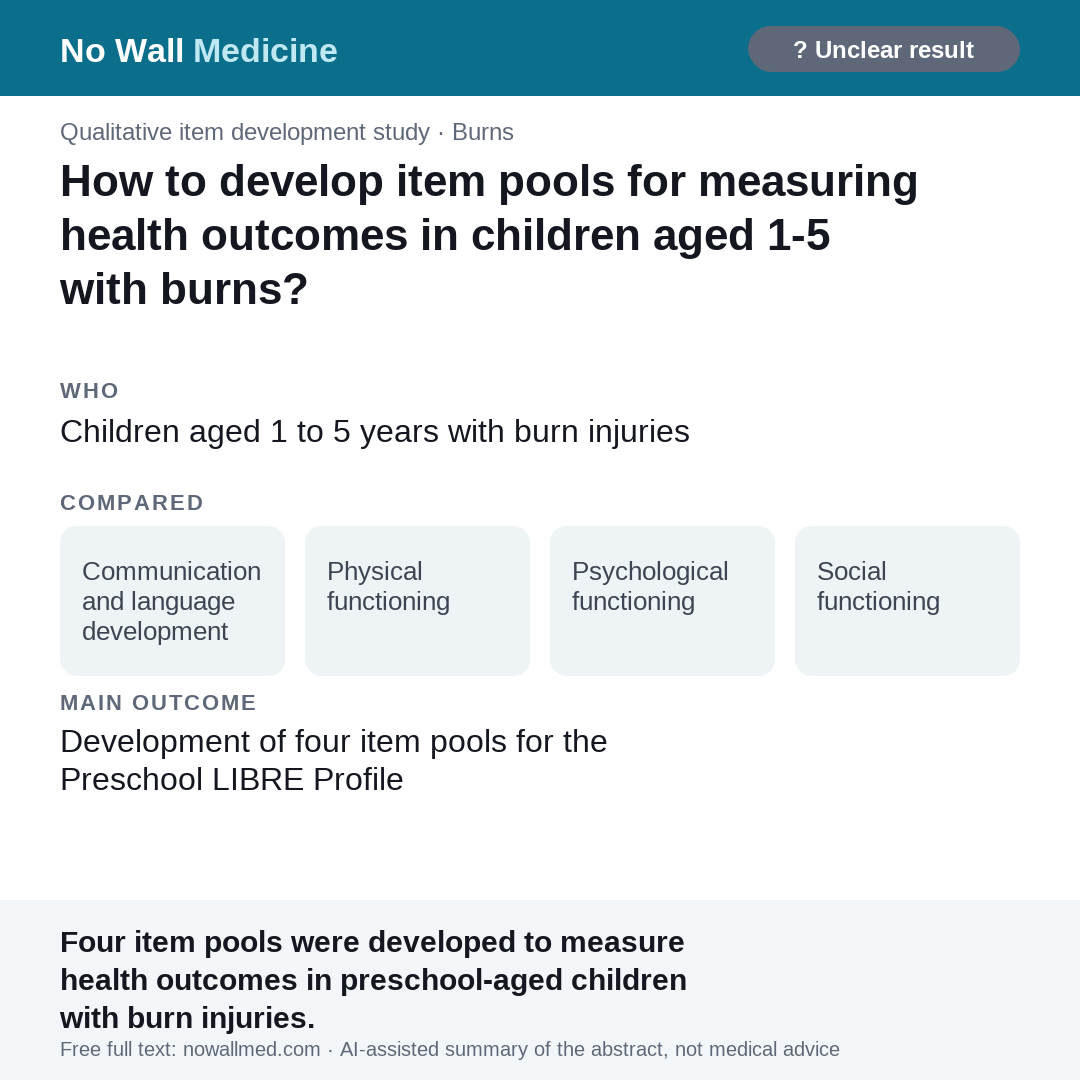
Measuring the impact of burn injury on the parent-reported health outcomes of children 1-to-5 years: Item pool development for the Preschool1-5 Life Impact Burn Recovery Evaluation (LIBRE) Profile
Qualitative item development studyUnclear result
How to develop item pools for measuring health outcomes in children aged 1-5 with burns?
Who
Children aged 1 to 5 years with burn injuries
Compared
Communication and language development
Physical functioning
Psychological functioning
Social functioning
Main outcome
Development of four item pools for the Preschool LIBRE Profile
Bottom line: Four item pools were developed to measure health outcomes in preschool-aged children with burn injuries.
Limitation: Item pools are currently being field-tested for calibration and validation.
Burns · 2021-02-25Download image
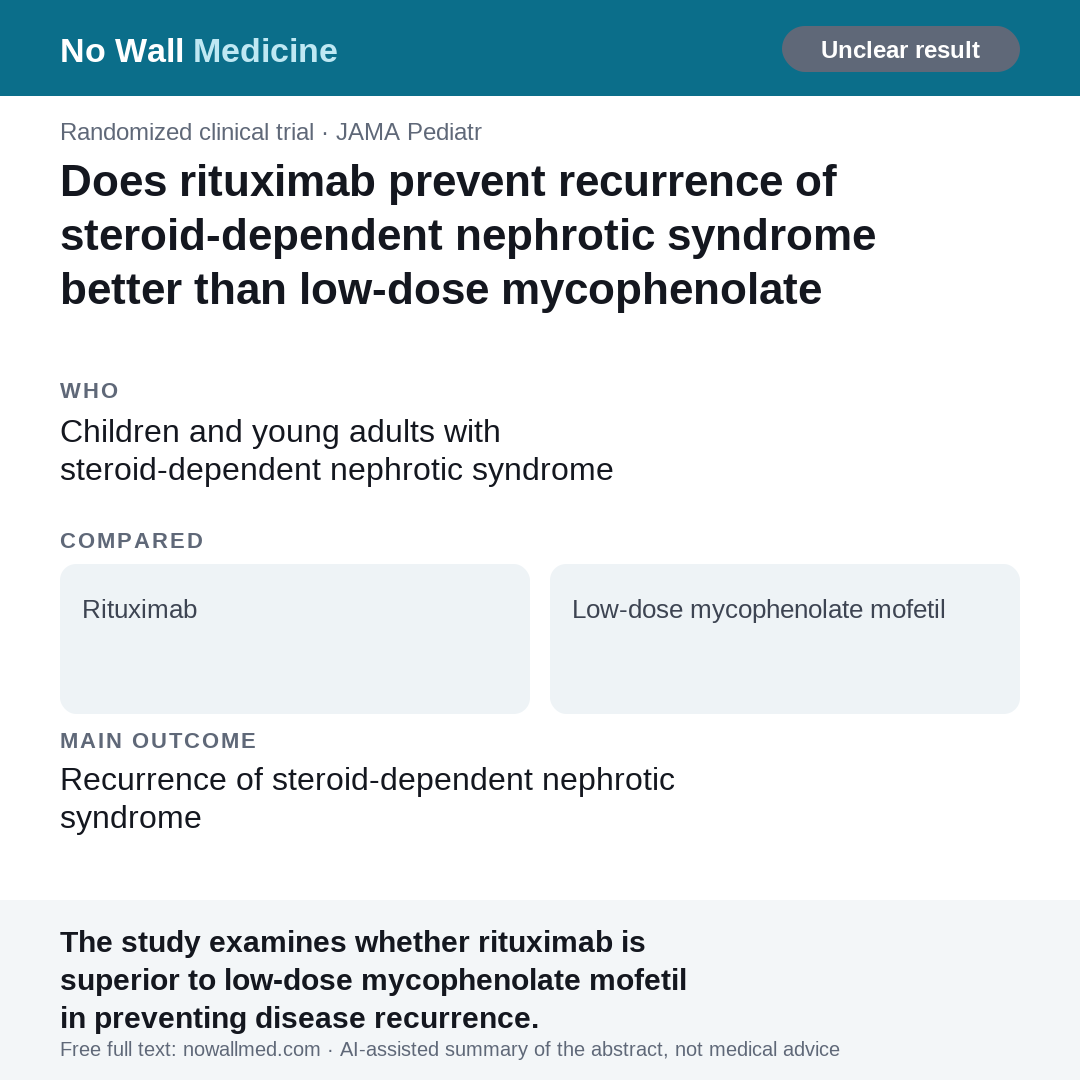
Rituximab vs Low-Dose Mycophenolate Mofetil in Recurrence of Steroid-Dependent Nephrotic Syndrome in Children and Young Adults: A Randomized Clinical Trial
Randomized clinical trialUnclear result
Does rituximab prevent recurrence of steroid-dependent nephrotic syndrome better than low-dose mycophenolate mofetil?
Who
Children and young adults with steroid-dependent nephrotic syndrome
Compared
Rituximab
Low-dose mycophenolate mofetil
Main outcome
Recurrence of steroid-dependent nephrotic syndrome
Bottom line: The study examines whether rituximab is superior to low-dose mycophenolate mofetil in preventing disease recurrence.
JAMA Pediatr · 2021-02-23Download image
The Irie Classroom Toolbox, a universal violence-prevention teacher-training programme, in Jamaican preschools: a single-blind, cluster-randomised controlled trial
Cluster-randomised controlled trialBenefit found
Does teacher training reduce violence
Who
76
Children aged 3-6 years in Jamaican preschools · Kingston and St Andrew
Compared
3Toolbox intervention (0-11)
15Waiting-list control (3-35)
Main outcome
Violence against children by teachers
Result: effect size -67·12% (95% CI -80·71 to -53·52)
Bottom line: Teacher training reduces violence against children
Funded by: Medical Research Council, Wellcome Trust
Lancet Glob Health · 2021-02-22Download image

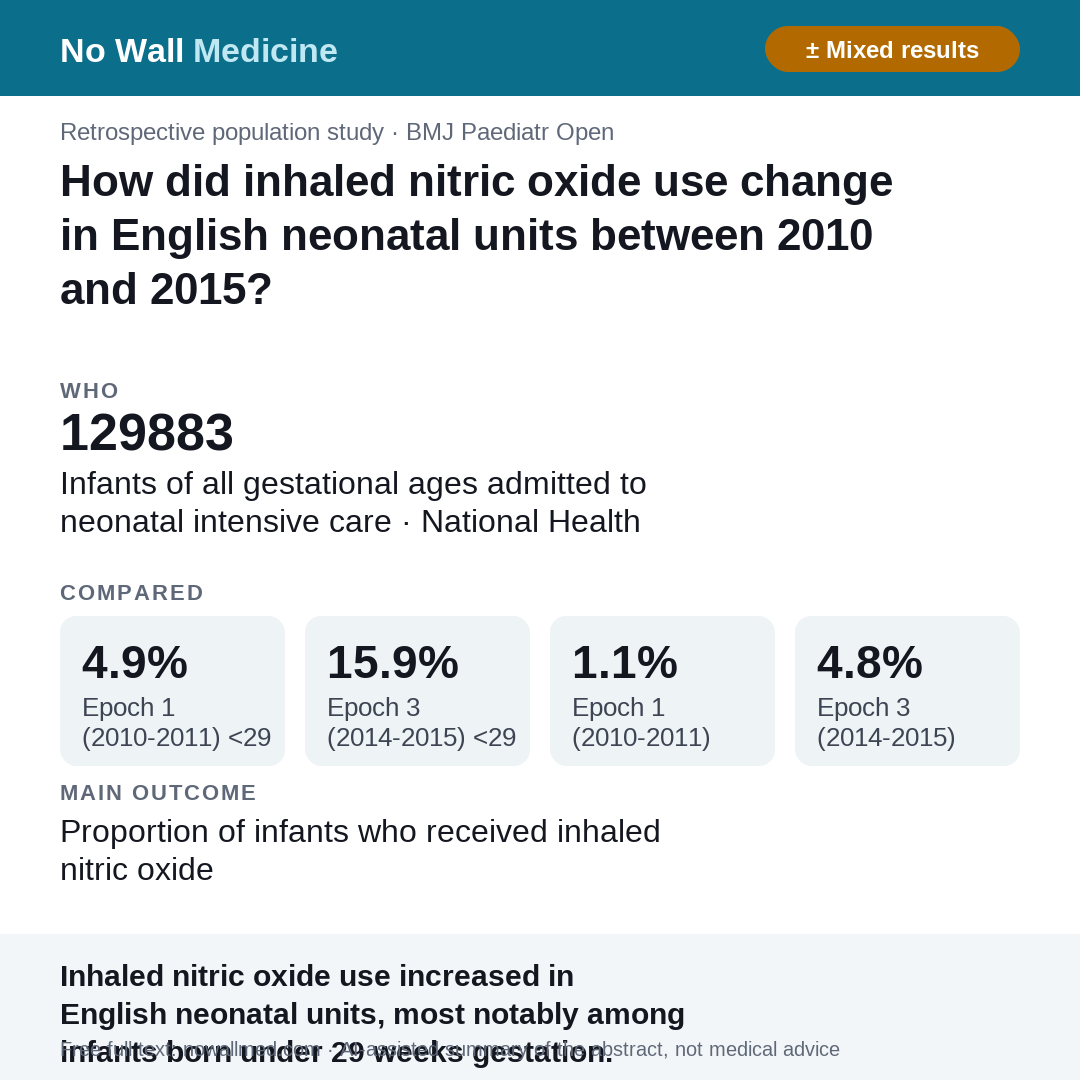
Increase in the use of inhaled nitric oxide in neonatal intensive care units in England: a retrospective population study
Retrospective population studyMixed results
How did inhaled nitric oxide use change in English neonatal units between 2010 and 2015?
Who
129883
Infants of all gestational ages admitted to neonatal intensive care · National Health Service neonatal units in England
Compared
4.9%Epoch 1 (2010-2011) <29 weeks
15.9%Epoch 3 (2014-2015) <29 weeks
1.1%Epoch 1 (2010-2011) 29-33 weeks
4.8%Epoch 3 (2014-2015) 29-33 weeks
Main outcome
Proportion of infants who received inhaled nitric oxide
Bottom line: Inhaled nitric oxide use increased in English neonatal units, most notably among infants born under 29 weeks gestation.
Limitation: Retrospective analysis using extracted database data
BMJ Paediatr Open · 2021-02-22Download image
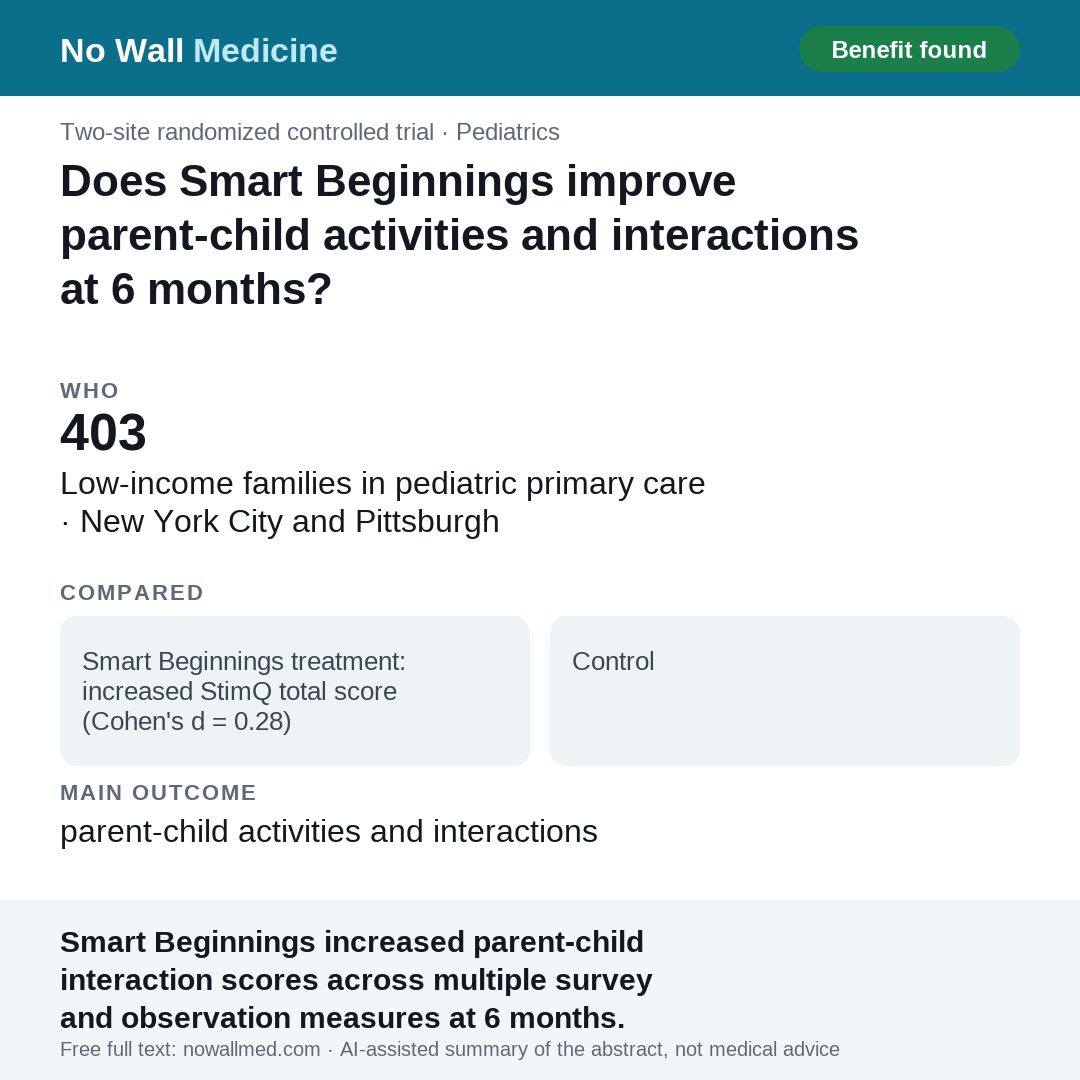
Improving Parent-Child Interactions in Pediatric Health Care: A Two-Site Randomized Controlled Trial
Two-site randomized controlled trialBenefit found
Does Smart Beginnings improve parent-child activities and interactions at 6 months?
Who
403
Low-income families in pediatric primary care · New York City and Pittsburgh
Compared
Smart Beginnings treatment: increased StimQ total score (Cohen's d = 0.28)
Control
Main outcome
parent-child activities and interactions
Bottom line: Smart Beginnings increased parent-child interaction scores across multiple survey and observation measures at 6 months.
Pediatrics · 2021-02-21Download image
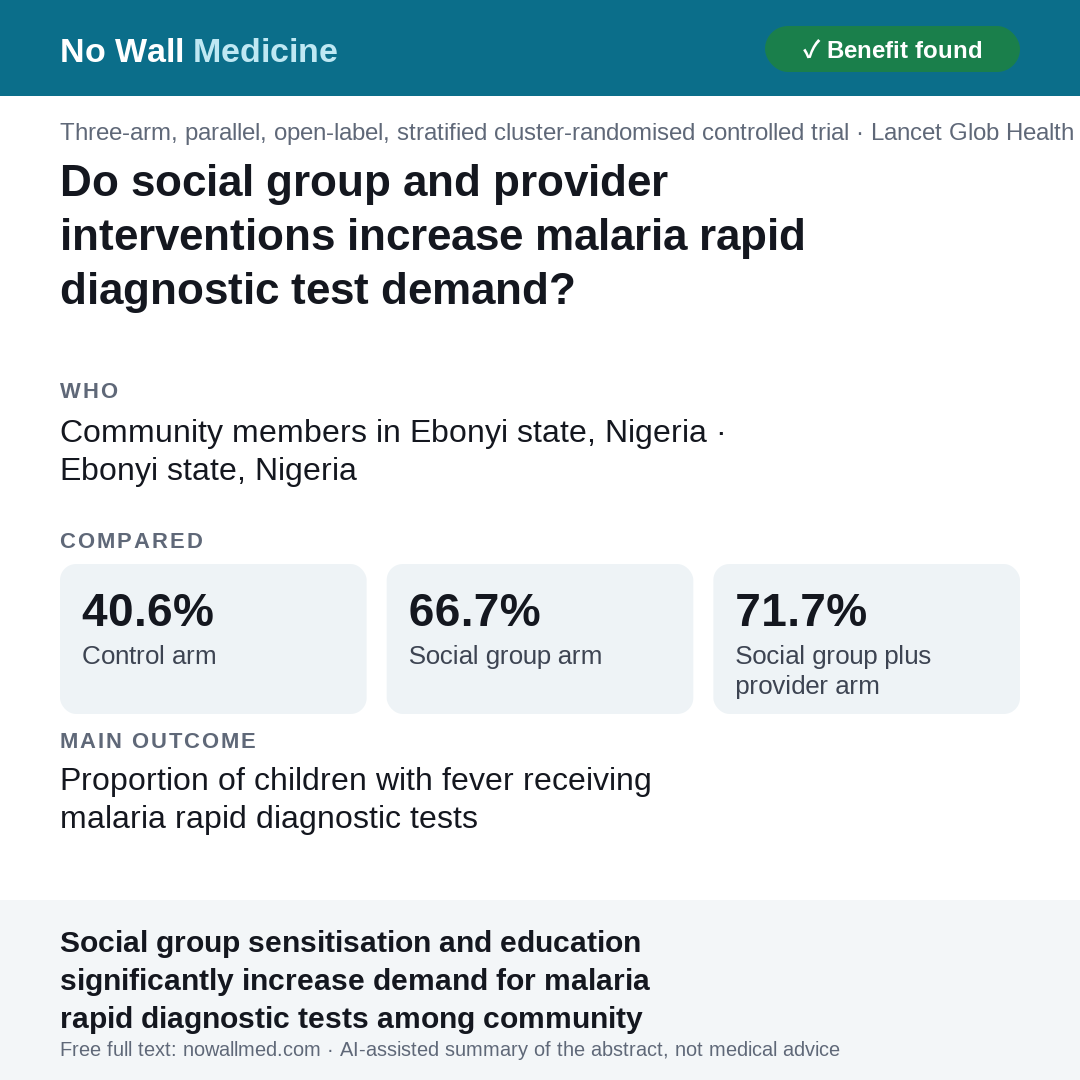
Social group and health-care provider interventions to increase the demand for malaria rapid diagnostic tests among community members in Ebonyi state, Nigeria: a cluster-randomised controlled trial
Three-arm, parallel, open-label, stratified cluster-randomised controlled trialBenefit found
Do social group and provider interventions increase malaria rapid diagnostic test demand?
Who
Community members in Ebonyi state, Nigeria · Ebonyi state, Nigeria
Compared
40.6%Control arm (SD 14.5)
66.7%Social group arm (11.7)
71.7%Social group plus provider arm (19.8)
Main outcome
Proportion of children with fever receiving malaria rapid diagnostic tests
Result: adjusted risk difference 32.7%, 95% CI 24.9-40.5
Bottom line: Social group sensitisation and education significantly increase demand for malaria rapid diagnostic tests among community members.
Lancet Glob Health · 2021-02-20Download image
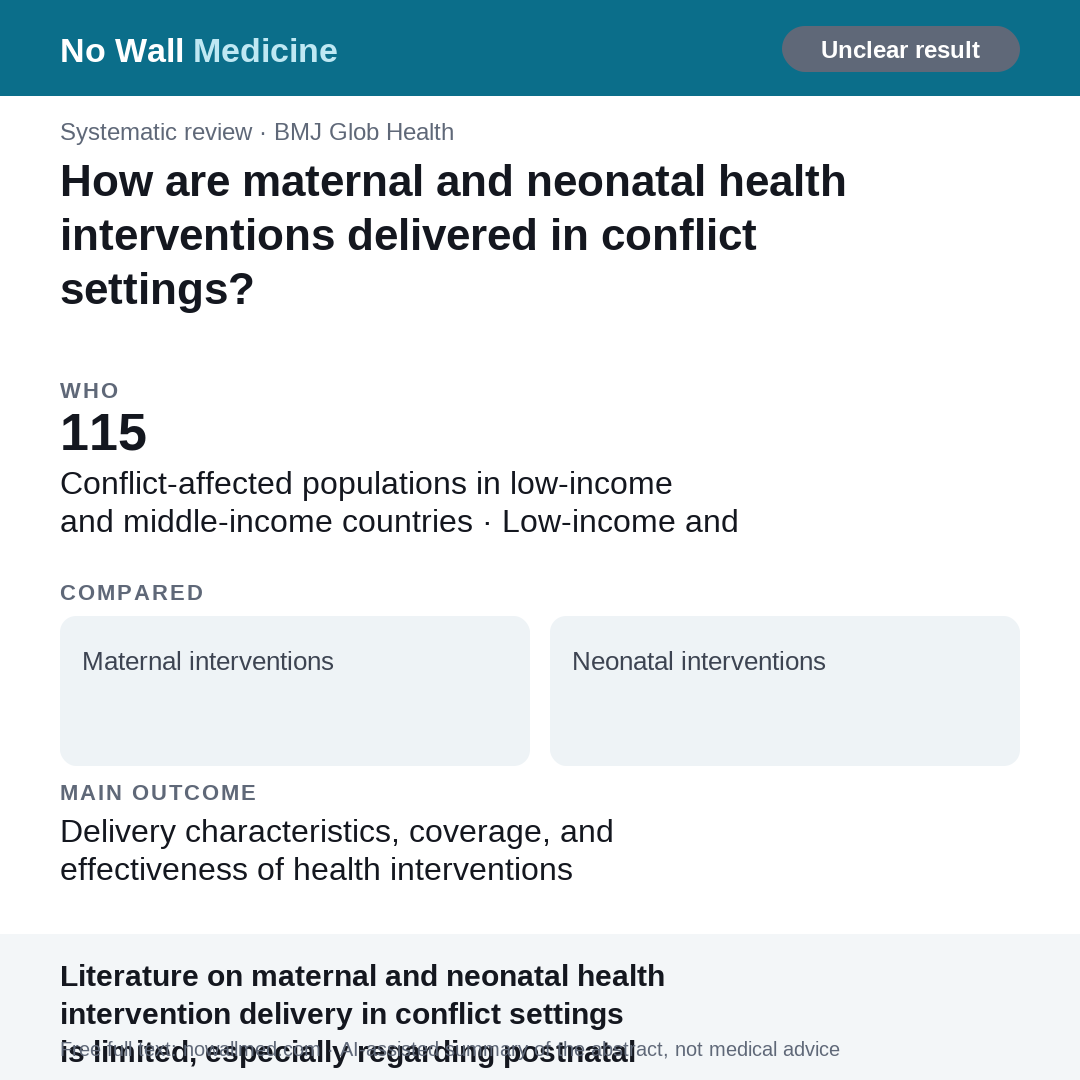
Delivering maternal and neonatal health interventions in conflict settings: a systematic review
Systematic reviewUnclear result
How are maternal and neonatal health interventions delivered in conflict settings?
Who
Conflict-affected populations in low-income and middle-income countries · Low-income and middle-income countries, mostly sub-Saharan Africa
Compared
Maternal interventions
Neonatal interventions
Main outcome
Delivery characteristics, coverage, and effectiveness of health interventions
Bottom line: Literature on maternal and neonatal health intervention delivery in conflict settings is limited, especially regarding postnatal and newborn care.
Limitation: Reporting of intervention coverage or effectiveness data was limited.
BMJ Glob Health · 2021-02-20Download image
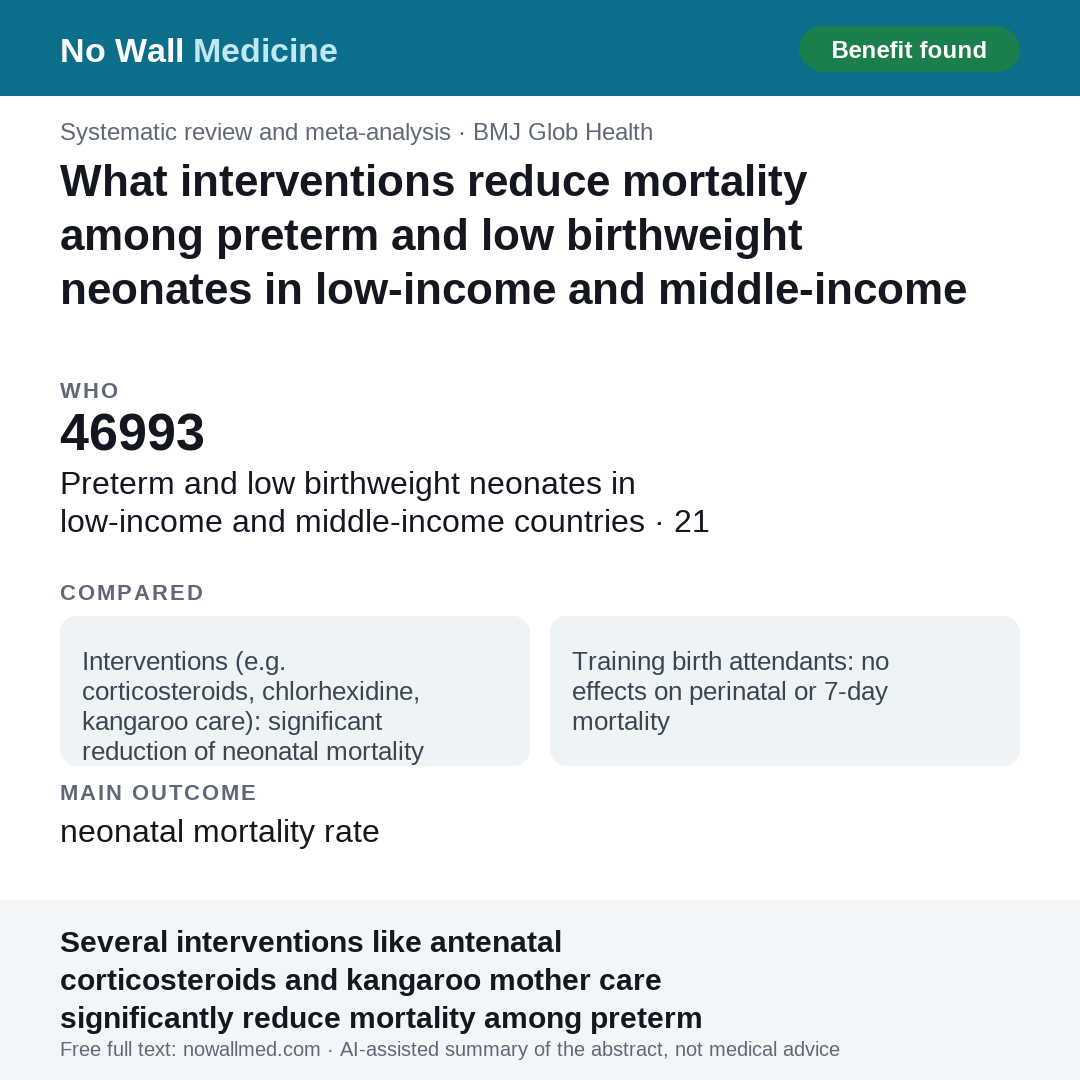
Evidence-based interventions to reduce mortality among preterm and low-birthweight neonates in low-income and middle-income countries: a systematic review and meta-analysis
Systematic review and meta-analysisBenefit found
What interventions reduce mortality among preterm and low birthweight neonates in low-income and middle-income countries?
Who
46993
Preterm and low birthweight neonates in low-income and middle-income countries · 21 countries
Compared
Interventions (e.g. corticosteroids, chlorhexidine, kangaroo care): significant reduction of neonatal mortality rate
Training birth attendants: no effects on perinatal or 7-day mortality
Main outcome
neonatal mortality rate
Bottom line: Several interventions like antenatal corticosteroids and kangaroo mother care significantly reduce mortality among preterm and low birthweight neonates.
BMJ Glob Health · 2021-02-19Download image
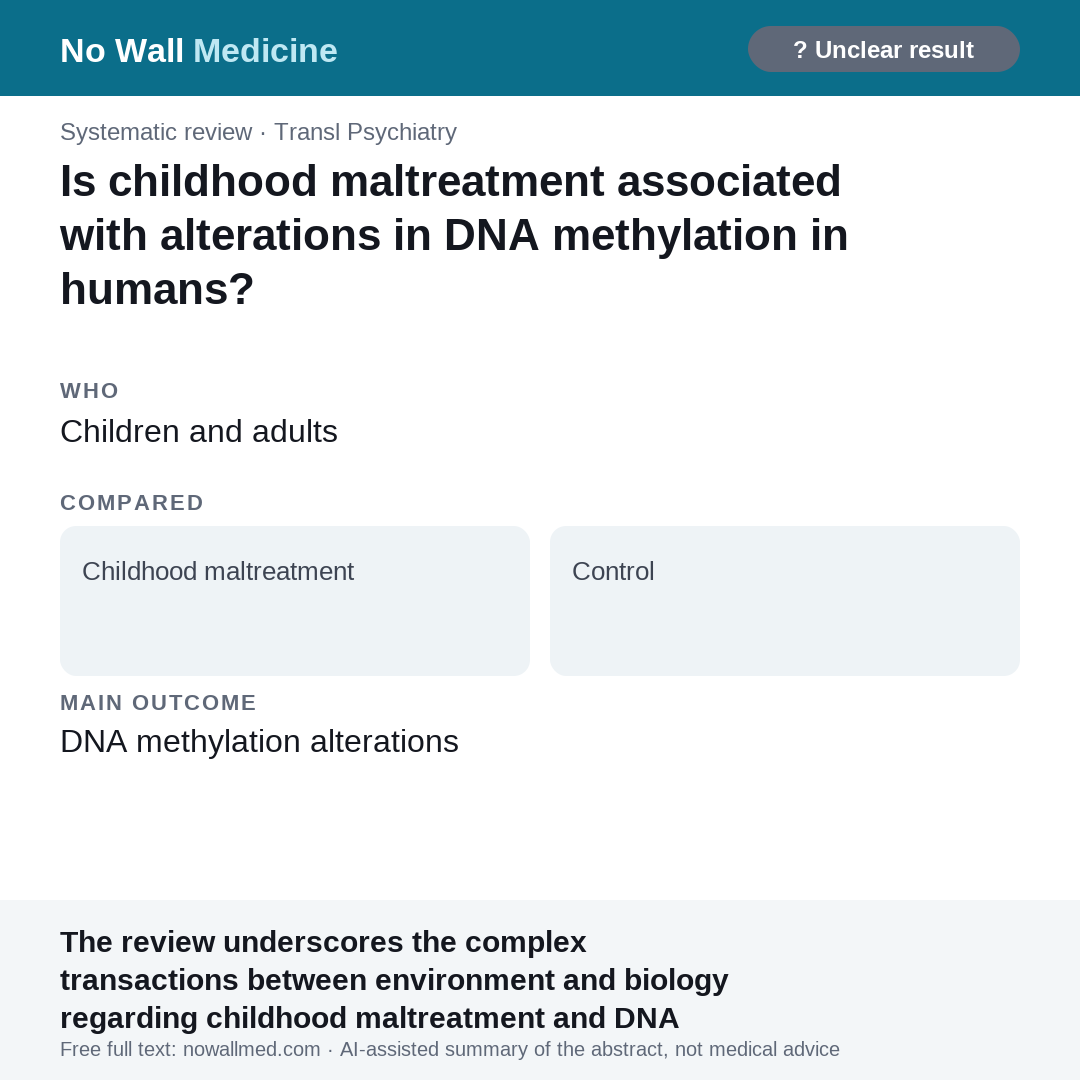
A systematic review of childhood maltreatment and DNA methylation: candidate gene and epigenome-wide approaches
Systematic reviewUnclear result
Is childhood maltreatment associated with alterations in DNA methylation in humans?
Who
Children and adults
Compared
Childhood maltreatment
Control
Main outcome
DNA methylation alterations
Bottom line: The review underscores the complex transactions between environment and biology regarding childhood maltreatment and DNA methylation.
Transl Psychiatry · 2021-02-19Download image
Improving Suicide Prevention Through Evidence-Based Strategies: A Systematic Review
Systematic review of 97 randomized controlled trialsMixed results
What are the scalable evidence-based suicide prevention strategies?
Who
General population and psychiatric patients · PubMed and Google Scholar
Compared
Training primary care physicians: prevents suicide
Educating youths: prevents suicidal behavior
Active outreach after discharge: prevents suicidal behavior
Means restriction: prevents suicide
Main outcome
Suicidal behavior, ideation, or suicide rates
Bottom line: Effective strategies include physician training, youth education, active patient outreach, and restricting access to lethal means.
Am J Psychiatry · 2021-02-18Download image

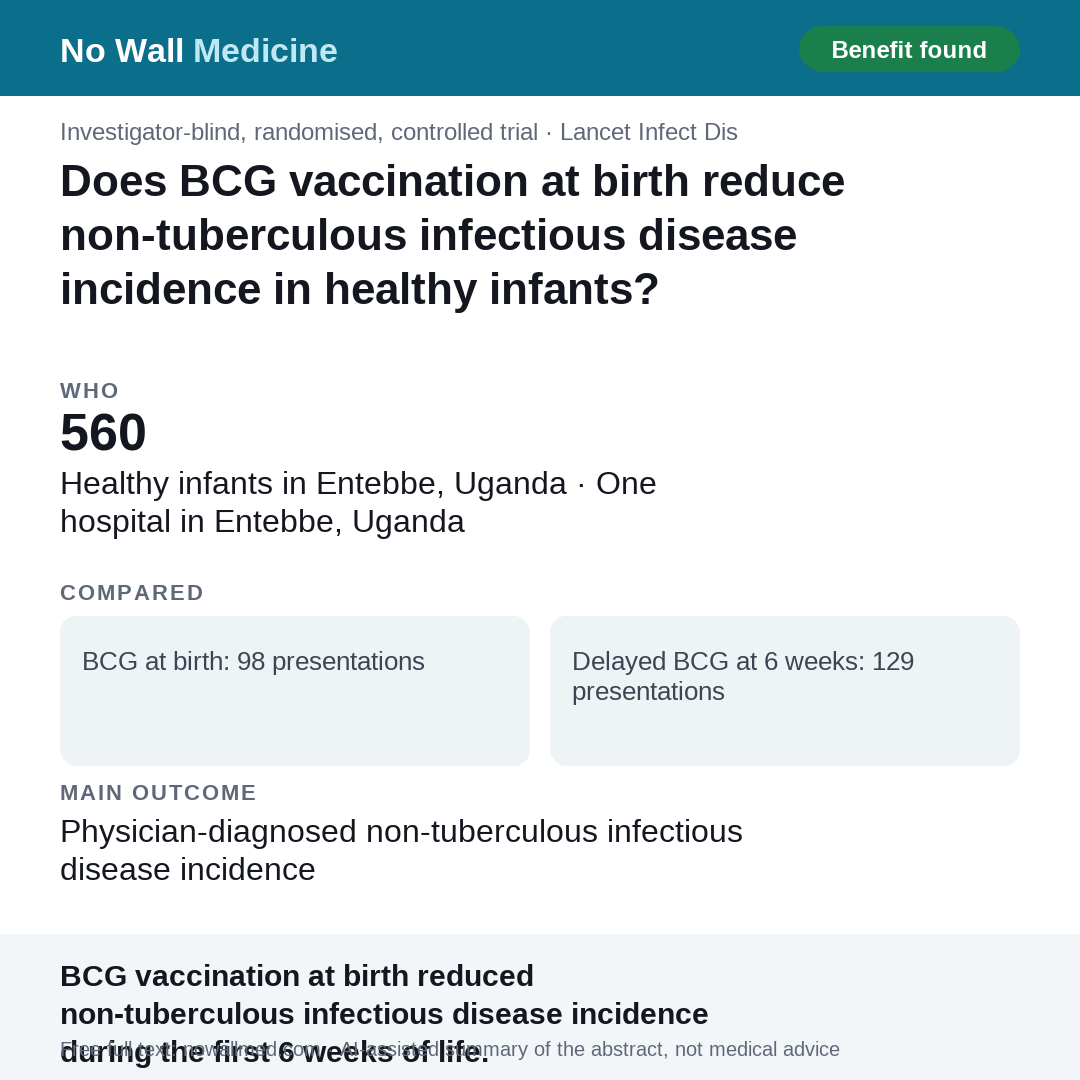
BCG-induced non-specific effects on heterologous infectious disease in Ugandan neonates: an investigator-blind randomised controlled trial
Investigator-blind, randomised, controlled trialBenefit found
Does BCG vaccination at birth reduce non-tuberculous infectious disease incidence in healthy infants?
Who
560
Healthy infants in Entebbe, Uganda · One hospital in Entebbe, Uganda
Compared
BCG at birth: 98 presentations
Delayed BCG at 6 weeks: 129 presentations
Main outcome
Physician-diagnosed non-tuberculous infectious disease incidence
Result: hazard ratio 0·71 (95% CI 0·53-0·95)
Bottom line: BCG vaccination at birth reduced non-tuberculous infectious disease incidence during the first 6 weeks of life.
Limitation: Parents were not masked to group assignment.
Lancet Infect Dis · 2021-02-17Download image
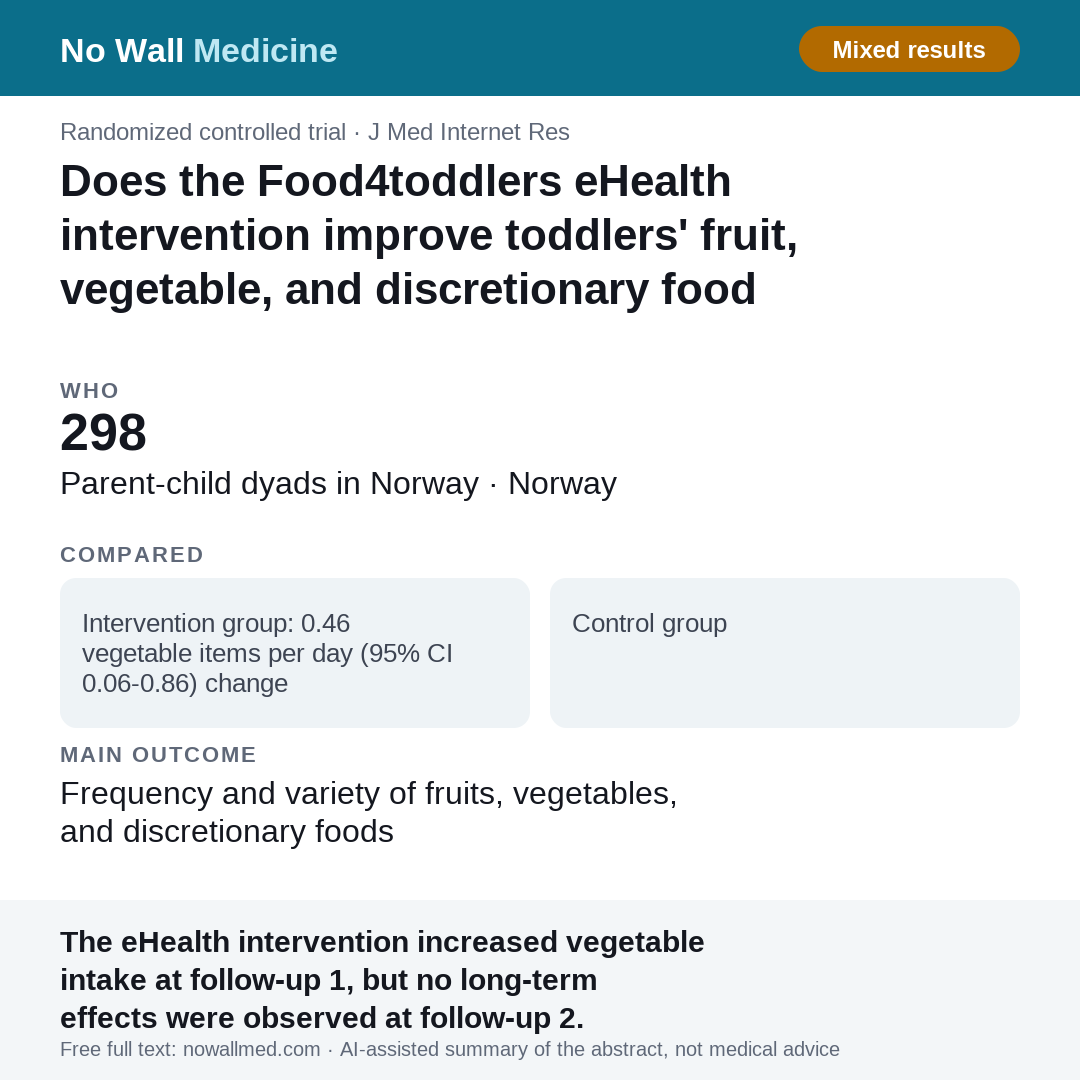
Effect of a Parent-Focused eHealth Intervention on Children's Fruit, Vegetable, and Discretionary Food Intake (Food4toddlers): Randomized Controlled Trial
Randomized controlled trialMixed results
Does the Food4toddlers eHealth intervention improve toddlers' fruit, vegetable, and discretionary food intake?
Who
298
Parent-child dyads in Norway · Norway
Compared
Intervention group: 0.46 vegetable items per day (95% CI 0.06-0.86) change
Control group
Main outcome
Frequency and variety of fruits, vegetables, and discretionary foods
Result: 0.46 vegetable items per day (95% CI 0.06-0.86)
Bottom line: The eHealth intervention increased vegetable intake at follow-up 1, but no long-term effects were observed at follow-up 2.
Limitation: No long-term effects were observed at follow-up 2.
J Med Internet Res · 2021-02-16Download image
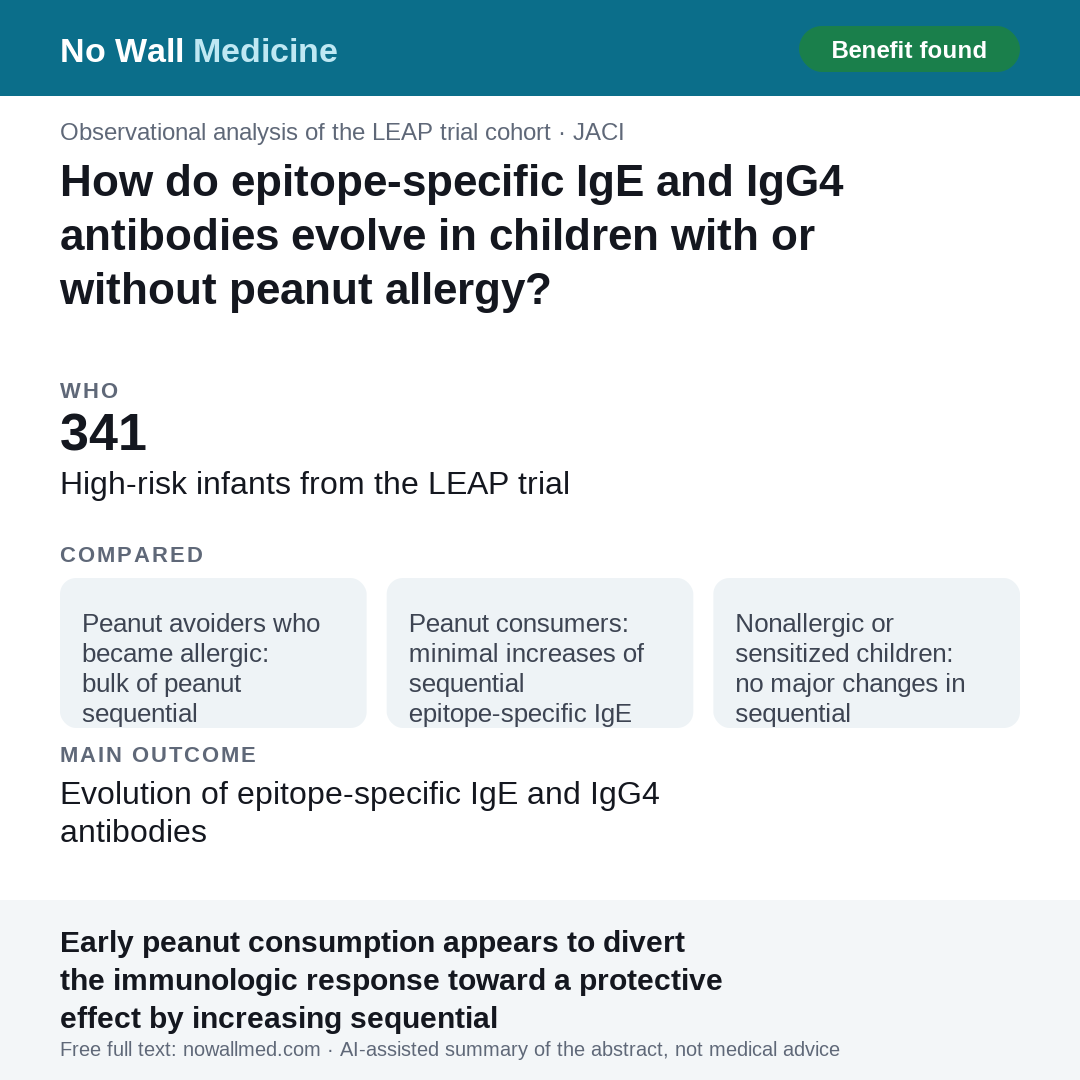
Evolution of epitope-specific IgE and IgG4 antibodies in children enrolled in the LEAP trial
Observational analysis of the LEAP trial cohortKey finding
How do epitope-specific IgE and IgG4 antibodies evolve in children with or without peanut allergy?
Who
341
High-risk infants from the LEAP trial
Compared
Peanut avoiders who became allergic: bulk of peanut sequential epitope-specific IgE did not develop until after 2.5 years
Peanut consumers: minimal increases of sequential epitope-specific IgE occurred after 1 year
Nonallergic or sensitized children: no major changes in sequential epitope-specific IgE
Main outcome
Evolution of epitope-specific IgE and IgG4 antibodies
Bottom line: Early peanut consumption appears to divert the immunologic response toward a protective effect by increasing sequential epitope-specific IgG4.
JACI · 2021-02-13Download image
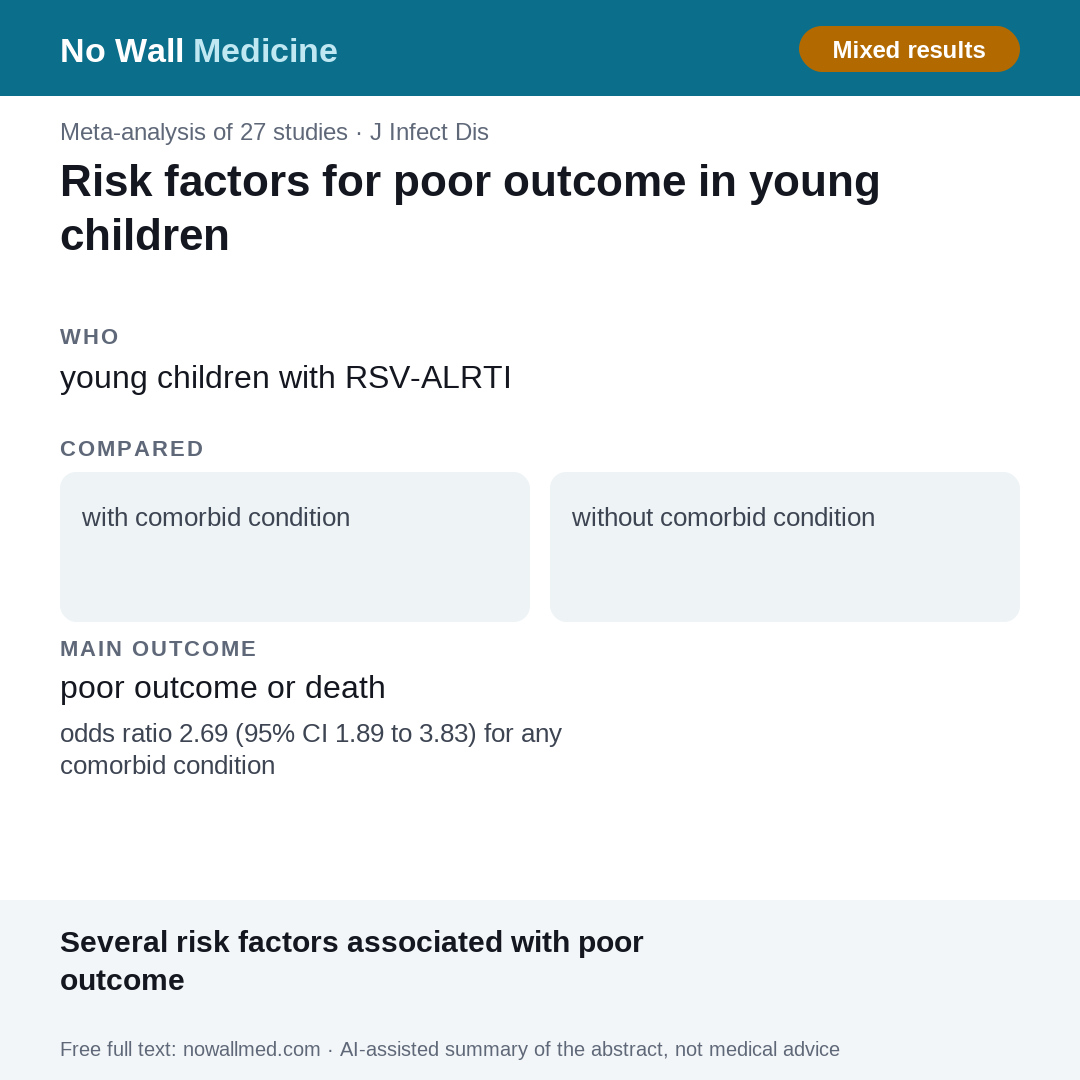
Risk Factors for Poor Outcome or Death in Young Children With Respiratory Syncytial Virus-Associated Acute Lower Respiratory Tract Infection: A Systematic Review and Meta-Analysis
Meta-analysis of 27 studiesMixed results
Risk factors for poor outcome in young children
Who
young children with RSV-ALRTI
Compared
with comorbid condition
without comorbid condition
Main outcome
poor outcome or death
Result: odds ratio 2.69 (95% CI 1.89 to 3.83) for any comorbid condition
Bottom line: Several risk factors associated with poor outcome
J Infect Dis · 2021-02-13Download image