Visual abstracts
New randomized trials and meta-analyses from leading journals at a glance: who was studied, what was compared, and what was found. Every paper is free to read in full.
All specialtiesCardiology 4763Oncology 4043Gastroenterology & Hepatology 1903Infectious Disease 3756Neurology 1872Psychiatry & Mental Health 2216Pulmonology 2044Critical Care 1319Endocrinology & Diabetes 2544Pediatrics 2889Surgery 2480Orthopedics & Sports Medicine 917Neurosurgery 525Cardiothoracic & Vascular Surgery 656Plastic & Reconstructive Surgery 574Nephrology 1107Rheumatology 810Hematology 1090Dermatology 611Ophthalmology 532Obstetrics & Gynecology 1645Public & Global Health 1037Radiology & Imaging 619Anesthesiology 958Urology 745ENT (Otolaryngology) 494Emergency Medicine 481Allergy & Immunology 309Geriatrics 972Family Medicine & Primary Care 534Medical Genetics & Genomics 659Pathology & Laboratory Medicine 156Physical Medicine & Rehabilitation 734Palliative Care 421Nutrition 1560Digital Health & AI 2137General Medicine 318
Comparative analysis of characteristics, management, and clinical outcome of blood blister-like aneurysms treated with flow diverter devices: a systematic review and meta-analysis of 30 studies
Systematic review and meta-analysis of 30 studiesBenefit found
What are the characteristics, management, and clinical outcomes of blood blister-like aneurysms treated with flow diverter devices?
Who
783
783 patients with blood blister-like aneurysms
Compared
50%Immediate angiographic occlusion (95% CI: 31-69%)
80%Short-term angiographic occlusion (95% CI: 67-92%)
84%Long-term angiographic occlusion (95% CI: 77-91%)
89%Favorable clinical outcome (mRS 0-2) (95% CI: 85-94%)
Main outcome
Management, characteristics, and clinical and angiographic outcomes
Bottom line: Most blood blister-like aneurysm patients treated with flow diverters achieve favorable clinical outcomes and high long-term occlusion rates.
Int J Surg · 2025-01-01 · Save PNG

Comparison of postoperative inflammatory response between natural orifice specimen extraction surgery and conventional laparoscopy in the treatment of colorectal cancer: a meta-analysis and systematic review
Meta-analysis of 22 studiesBenefit found
Does natural orifice specimen extraction surgery compare to conventional laparoscopy for colorectal cancer?
Who
Colorectal cancer patients
Compared
Natural orifice specimen extraction surgery: lower inflammatory response levels
Conventional laparoscopy
Main outcome
Inflammatory response profiles and infectious complications
Result: SMD=-1.34,95% CI [-2.43, -0.25] for tumor necrosis factor-alpha
Bottom line: Natural orifice specimen extraction surgery shows a superior inflammatory profile without increasing infectious complications compared to conventional laparoscopy.
Int J Surg · 2025-01-01 · Save PNG

Comparison of different tracers in sentinel lymph node detection for endometrial cancer: a systematic review and network meta-analysis
Systematic review and network meta-analysisBenefit found
Which tracer combination is most effective for sentinel lymph node detection in endometrial cancer?
Who
2699
Patients with endometrial cancer undergoing sentinel lymph node biopsy
Compared
Radioactive isotopes and indocyanine green: 80.00% SUCRA for total detection and 86.36% for bilateral
Carbon nanoparticles: 97.77% SUCRA for para-aortic lymph node detection
Main outcome
Total and bilateral sentinel lymph node detection rates
Bottom line: Combining radioactive isotopes and indocyanine green is the optimal tracer combination for sentinel lymph node detection.
Int J Surg · 2025-01-01 · Save PNG

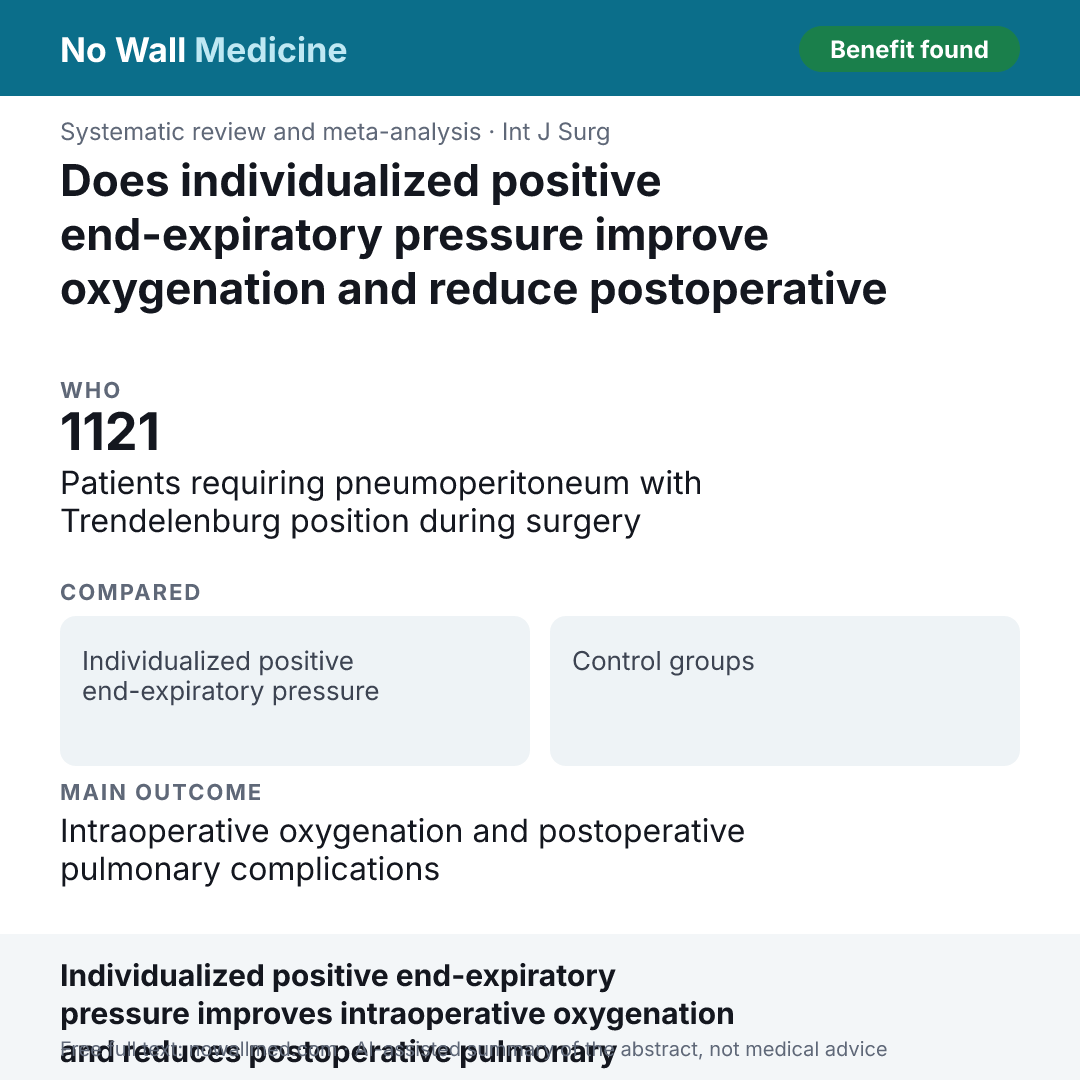
Effects of individualized positive end-expiratory pressure on intraoperative oxygenation and postoperative pulmonary complications in patients requiring pneumoperitoneum with Trendelenburg position: a systematic review and meta-analysis
Systematic review and meta-analysisBenefit found
Does individualized positive end-expiratory pressure improve oxygenation and reduce postoperative pulmonary complications?
Who
1121
Patients requiring pneumoperitoneum with Trendelenburg position during surgery
Compared
Individualized positive end-expiratory pressure
Control groups
Main outcome
Intraoperative oxygenation and postoperative pulmonary complications
Result: PaO2/FiO2 mean difference 56.52 mmHg (95% CI 33.98 to 79.06); PPC log risk ratio -0.50 (95% CI -0.84 to -0.16)
Bottom line: Individualized positive end-expiratory pressure improves intraoperative oxygenation and reduces postoperative pulmonary complications in these patients.
Int J Surg · 2025-01-01 · Save PNG
The safety and efficacy of neoadjuvant PD-1 inhibitor plus chemotherapy for patients with locally advanced gastric cancer: a systematic review and meta-analysis
Meta-analysis of randomized controlled trials and retrospective studiesMixed results
Is neoadjuvant PD-1 inhibitor plus chemotherapy effective and safe for locally advanced gastric cancer?
Who
2953
Patients with locally advanced gastric cancer
Compared
Neoadjuvant immunochemotherapy: higher rate of pathological complete response, R0 resection, and lower 2-year recurrence rate
Neoadjuvant chemotherapy: higher incidence of severe treatment-related adverse events
Main outcome
Pathological complete response, R0 resection, and 2-year recurrence rate
Bottom line: Neoadjuvant immunochemotherapy improves pathological response and prognosis but increases the risk of severe treatment-related adverse events.
Int J Surg · 2025-01-01 · Save PNG

Immune checkpoint inhibitors for patients with mismatch repair deficient or microsatellite instability-high advanced cancers: a meta-analysis of phase I-III clinical trials
Meta-analysis of 19 trialsBenefit found
Immune checkpoint inhibitors for dMMR/MSI-H cancers effective
Who
2052
Patients with mismatch repair deficient or microsatellite instability-high advanced cancers
Compared
41.7%Treatment (95% CI, 35.7-47.7%)
Control
Main outcome
Objective response rate
Result: pooled ORR 41.7% (95% CI, 35.7-47.7%)
Bottom line: Immune checkpoint inhibitors are effective
Limitation: need head-to-head comparisons
Int J Surg · 2025-01-01 · Save PNG

Optimal candidates and surrogate endpoints for HAIC versus Sorafenib in hepatocellular carcinoma: an updated systematic review and meta-analysis
Systematic review and meta-analysis of 26 studiesMixed results
Is hepatic artery infusion chemotherapy better than sorafenib for hepatocellular carcinoma?
Who
6456
6456 patients with hepatocellular carcinoma
Compared
Hepatic artery infusion chemotherapy
Sorafenib
Main outcome
overall survival
Bottom line: Hepatic artery infusion chemotherapy is noninferior to sorafenib, though sorafenib performs better in patients refractory to trans-arterial chemoembolization.
Int J Surg · 2025-01-01 · Save PNG

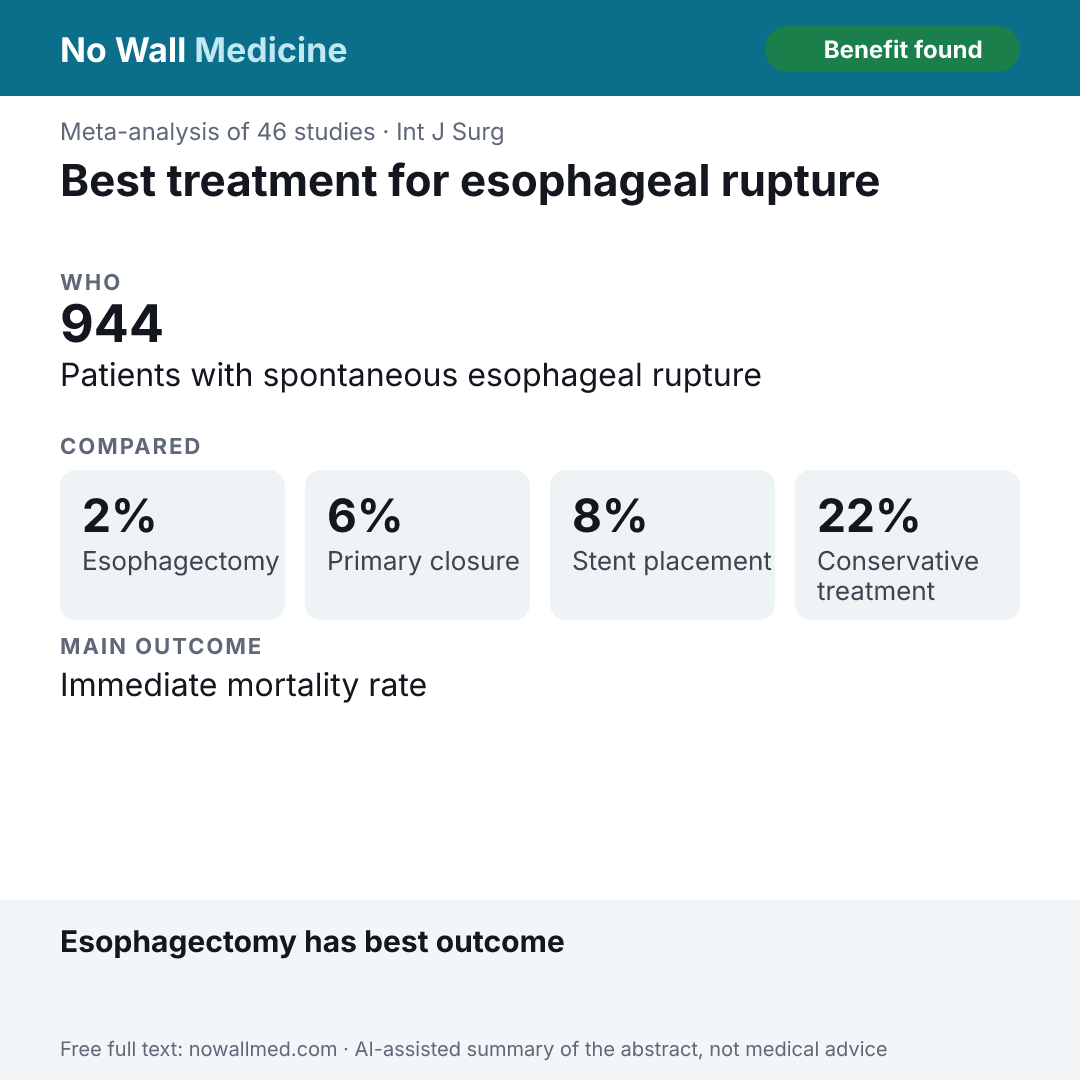
Outcome of treatment modalities for spontaneous esophageal rupture: a meta-analysis and case series
Meta-analysis of 46 studiesBenefit found
Best treatment for esophageal rupture
Who
944
Patients with spontaneous esophageal rupture
Compared
2%Esophagectomy (95% CI: 0.00-0.15)
6%Primary closure (95% CI: 0.04-0.09)
8%Stent placement (95% CI: 0.03-0.15)
22%Conservative treatment (95% CI: 0.03-0.47)
Main outcome
Immediate mortality rate
Bottom line: Esophagectomy has best outcome
Int J Surg · 2025-01-01 · Save PNG
Efficacy and safety of robotic surgery versus open surgery for hilar cholangiocarcinoma: a systematic review and meta-analysis
Systematic review and meta-analysisNo clear difference
Is robotic surgery more effective and safer than open surgery for hilar cholangiocarcinoma?
Who
267
Patients diagnosed with hilar cholangiocarcinoma
Compared
Robotic surgery
Open surgery
Main outcome
Operation time, blood transfusion, R0 resection, lymph node metastasis, complications, and hospital stay
Result: no significant differences observed across all primary outcomes
Bottom line: Robotic surgery demonstrates comparable safety and feasibility to traditional open surgery for hilar cholangiocarcinoma treatment.
Limitation: Limited quantity and quality of the included studies.
Int J Surg · 2025-01-01 · Save PNG

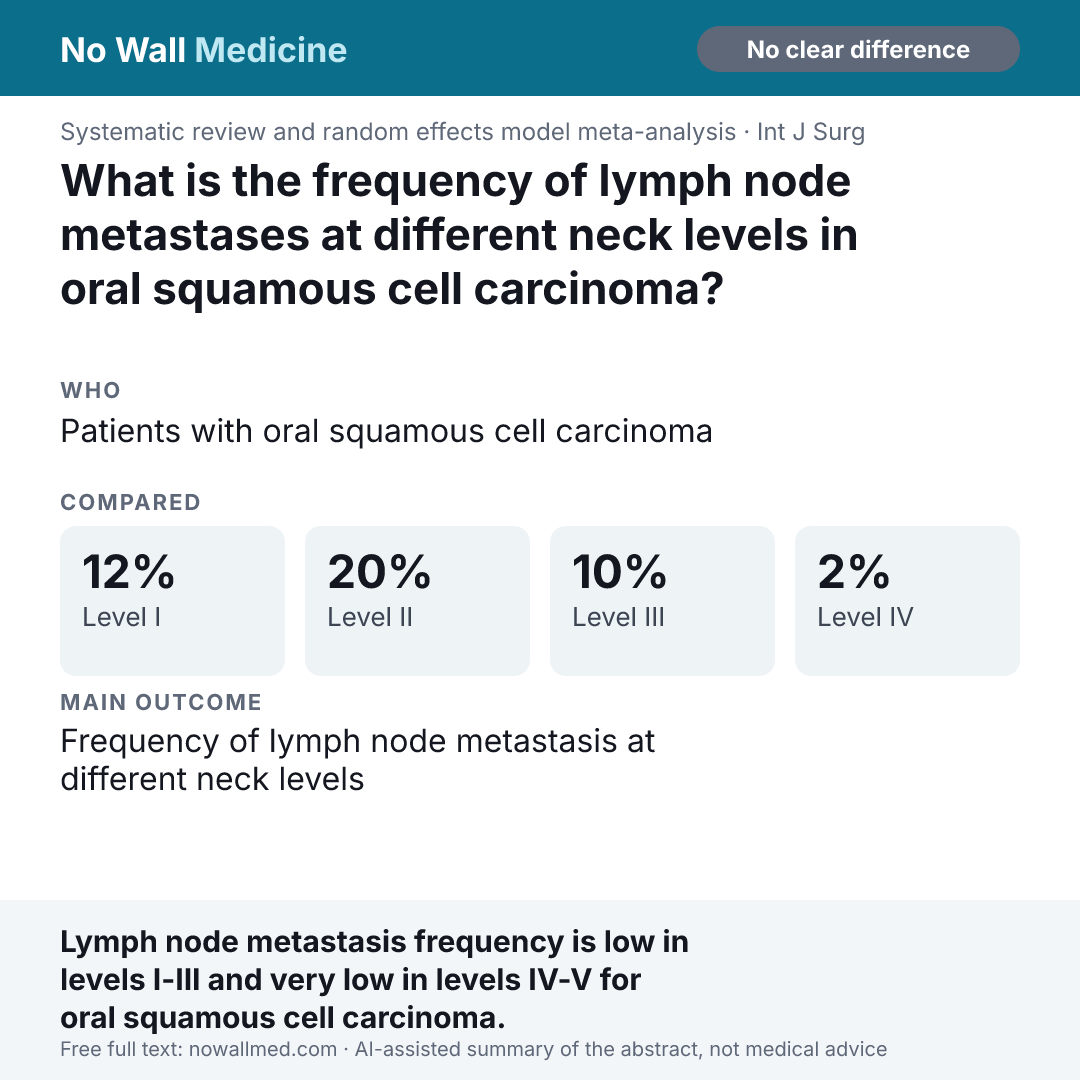
Frequency of lymph node metastases at different neck levels in patients with oral squamous cell carcinoma: a systematic review and meta-analysis
Systematic review and random effects model meta-analysisNo clear difference
What is the frequency of lymph node metastases at different neck levels in oral squamous cell carcinoma?
Who
Patients with oral squamous cell carcinoma
Compared
12%Level I (95% CI: 0.11-0.15)
20%Level II (95% CI: 0.17-0.22)
10%Level III (95% CI: 0.08-0.12)
2%Level IV (95% CI: 0.01-0.03)
Main outcome
Frequency of lymph node metastasis at different neck levels
Bottom line: Lymph node metastasis frequency is low in levels I-III and very low in levels IV-V for oral squamous cell carcinoma.
Int J Surg · 2025-01-01 · Save PNG
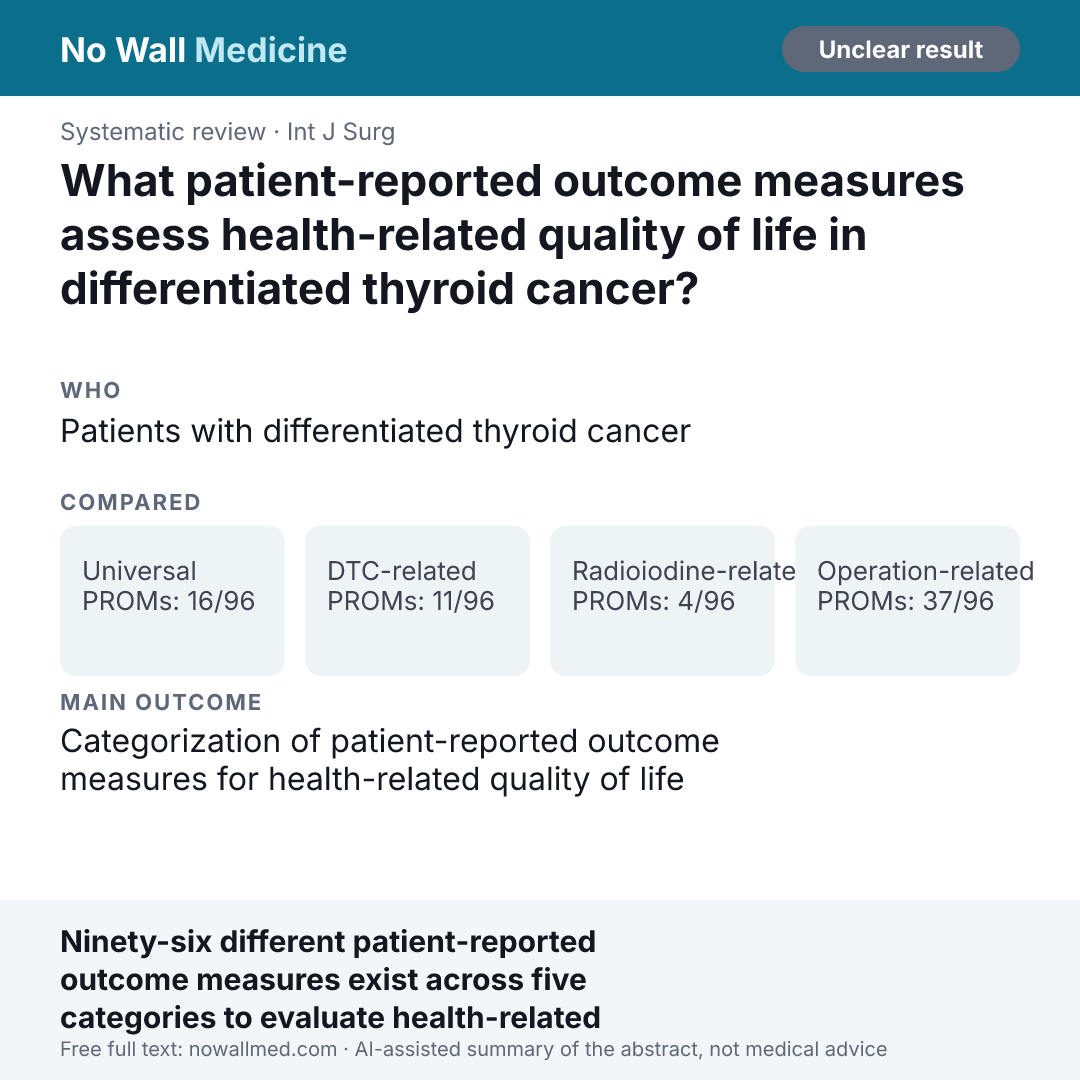
Patient‑reported outcome measures for assessing health‑related quality of life in patients with differentiated thyroid cancer: a systematic review
Systematic reviewUnclear result
What patient-reported outcome measures assess health-related quality of life in differentiated thyroid cancer?
Who
Patients with differentiated thyroid cancer
Compared
Universal PROMs: 16/96
DTC-related PROMs: 11/96
Radioiodine-related PROMs: 4/96
Operation-related PROMs: 37/96
Main outcome
Categorization of patient-reported outcome measures for health-related quality of life
Bottom line: Ninety-six different patient-reported outcome measures exist across five categories to evaluate health-related quality of life in differentiated thyroid cancer.
Limitation: A more detailed critical appraisal of the measures used in various clinical scenarios is required.
Int J Surg · 2025-01-01 · Save PNG
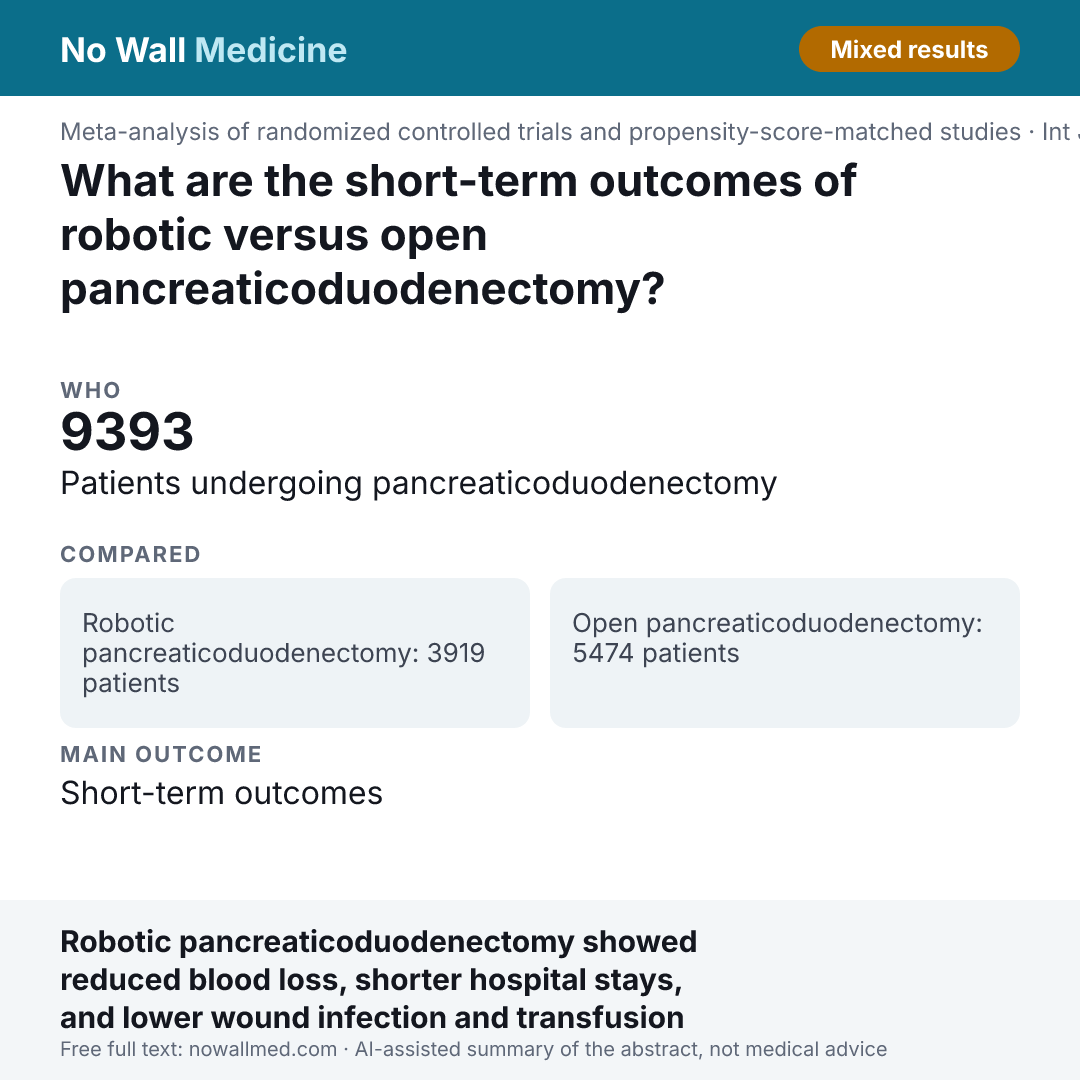
Comparison of short-term outcomes of robotic versus open pancreaticoduodenectomy: a meta-analysis of randomized controlled trials and propensity-score-matched studies
Meta-analysis of randomized controlled trials and propensity-score-matched studiesMixed results
What are the short-term outcomes of robotic versus open pancreaticoduodenectomy?
Who
9393
Patients undergoing pancreaticoduodenectomy
Compared
Robotic pancreaticoduodenectomy: 3919 patients
Open pancreaticoduodenectomy: 5474 patients
Main outcome
Short-term outcomes
Bottom line: Robotic pancreaticoduodenectomy showed reduced blood loss, shorter hospital stays, and lower wound infection and transfusion rates.
Int J Surg · 2025-01-01 · Save PNG
The association between immune cells and breast cancer: insights from Mendelian randomization and meta-analysis
Mendelian randomization and meta-analysisBenefit found
What is the causal association between immune cell phenotypes and breast cancer?
Who
731 immune cell phenotypes and breast cancer data · BCAC and Finngen R10 databases
Compared
CD3 on CD28+ CD4-CD8- T cells: OR=0.945 (95% CI: 0.922-0.970)
HLA DR on CD33- HLA DR+: OR=0.977 (95% CI: 0.964-0.990)
Main outcome
breast cancer risk
Result: OR=0.945 (95% CI: 0.922-0.970) for CD3 on CD28+ CD4-CD8- T cells
Bottom line: Two immune cell phenotypes were identified as protective factors against breast cancer risk.
Int J Surg · 2025-01-01 · Save PNG

Negative predictive value of fecal immunochemical testing in significant bowel disease screening: a systematic review and meta-analysis
Meta-analysis of studiesKey finding
FIT value in bowel disease screening
Who
8615
patients with lower bowel symptoms
Compared
FIT
SBD
Main outcome
negative predictive value
Result: negative predictive value 0.90 (95% CI: 0.87-0.94)
Bottom line: FIT provides favorable negative predictive value
Int J Surg · 2025-01-01 · Save PNG

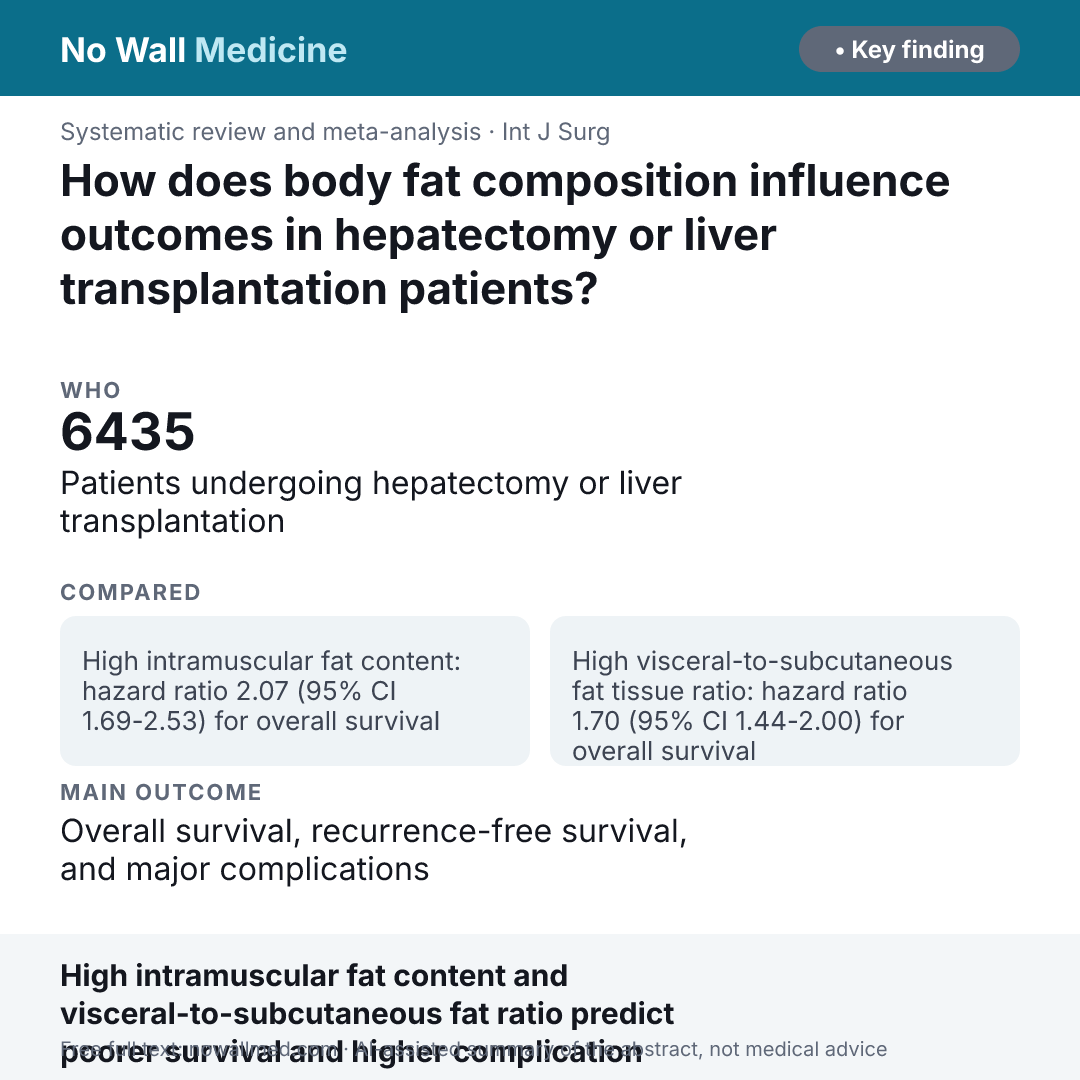
Influence of body fat tissue on outcomes in patients undergoing hepatectomy or liver transplantation: a systematic review and meta-analysis
Systematic review and meta-analysisKey finding
How does body fat composition influence outcomes in hepatectomy or liver transplantation patients?
Who
6435
Patients undergoing hepatectomy or liver transplantation
Compared
High intramuscular fat content: hazard ratio 2.07 (95% CI 1.69-2.53) for overall survival
High visceral-to-subcutaneous fat tissue ratio: hazard ratio 1.70 (95% CI 1.44-2.00) for overall survival
Main outcome
Overall survival, recurrence-free survival, and major complications
Result: hazard ratio 2.07 (95% CI 1.69-2.53) for overall survival
Bottom line: High intramuscular fat content and visceral-to-subcutaneous fat ratio predict poorer survival and higher complication risks after liver surgery.
Int J Surg · 2025-01-01 · Save PNG
Comparison of efficacy and safety between robotic-assisted versus laparoscopic surgery for locally advanced mid-low rectal cancer following neoadjuvant chemoradiotherapy: a systematic review and meta-analysis
Systematic review and meta-analysisMixed results
Is robotic-assisted surgery better than laparoscopic surgery for locally advanced mid-low rectal cancer?
Who
1079
Patients with locally advanced mid-low rectal cancer following neoadjuvant chemoradiotherapy
Compared
Robotic-assisted surgery: 0.4 cm shorter distance from anal verge
Laparoscopic surgery
Main outcome
Efficacy and safety of robotic versus laparoscopic surgery
Bottom line: Robotic surgery improves resection completeness and hospital stay but results in longer operative times compared to laparoscopic surgery.
Int J Surg · 2025-01-01 · Save PNG

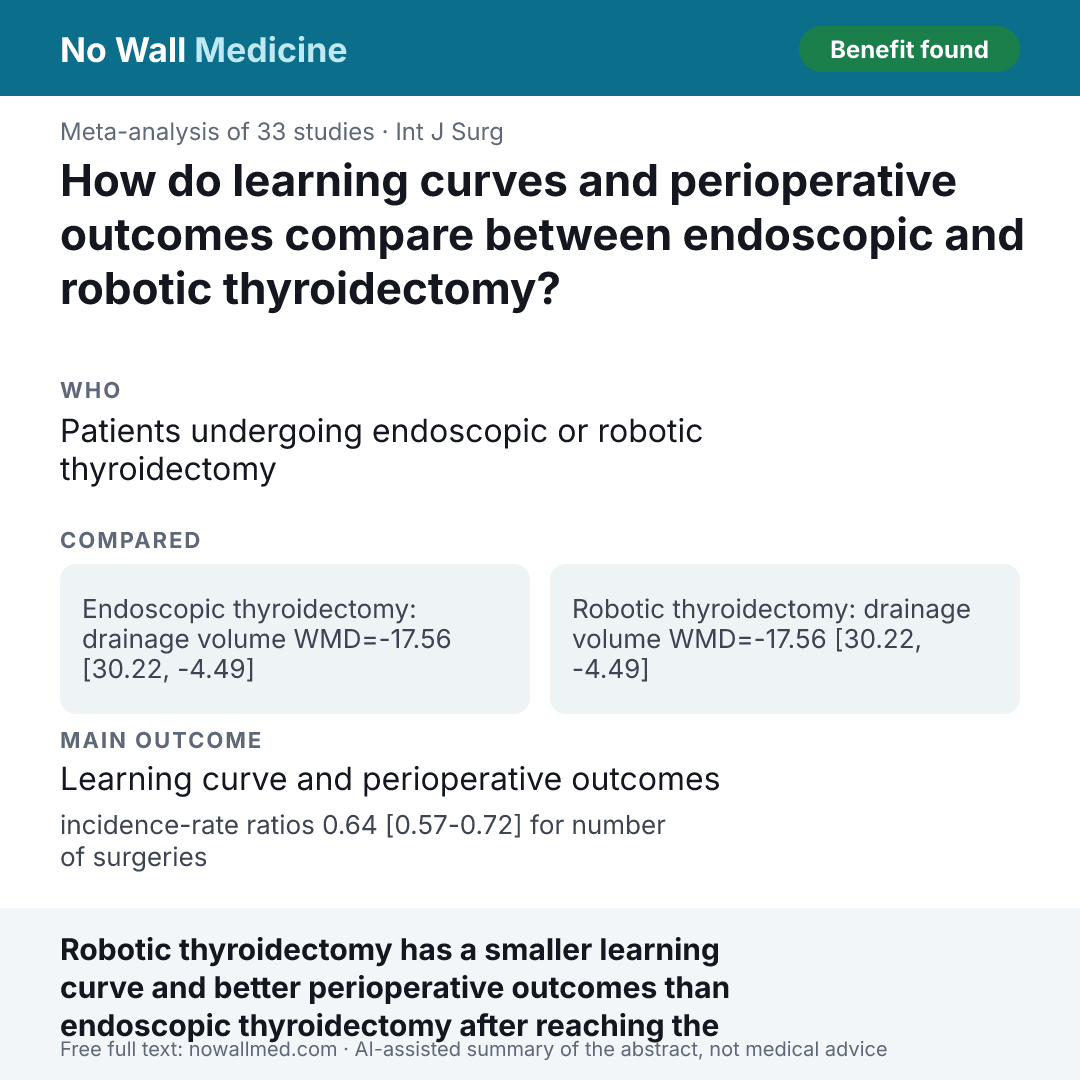
Comparison of learning curves and related postoperative indicators between endoscopic and robotic thyroidectomy: a systematic review and meta-analysis
Meta-analysis of 33 studiesBenefit found
How do learning curves and perioperative outcomes compare between endoscopic and robotic thyroidectomy?
Who
Patients undergoing endoscopic or robotic thyroidectomy
Compared
Endoscopic thyroidectomy: drainage volume WMD=-17.56 [30.22, -4.49]
Robotic thyroidectomy: drainage volume WMD=-17.56 [30.22, -4.49]
Main outcome
Learning curve and perioperative outcomes
Result: incidence-rate ratios 0.64 [0.57-0.72] for number of surgeries
Bottom line: Robotic thyroidectomy has a smaller learning curve and better perioperative outcomes than endoscopic thyroidectomy after reaching the stable stage.
Int J Surg · 2025-01-01 · Save PNG
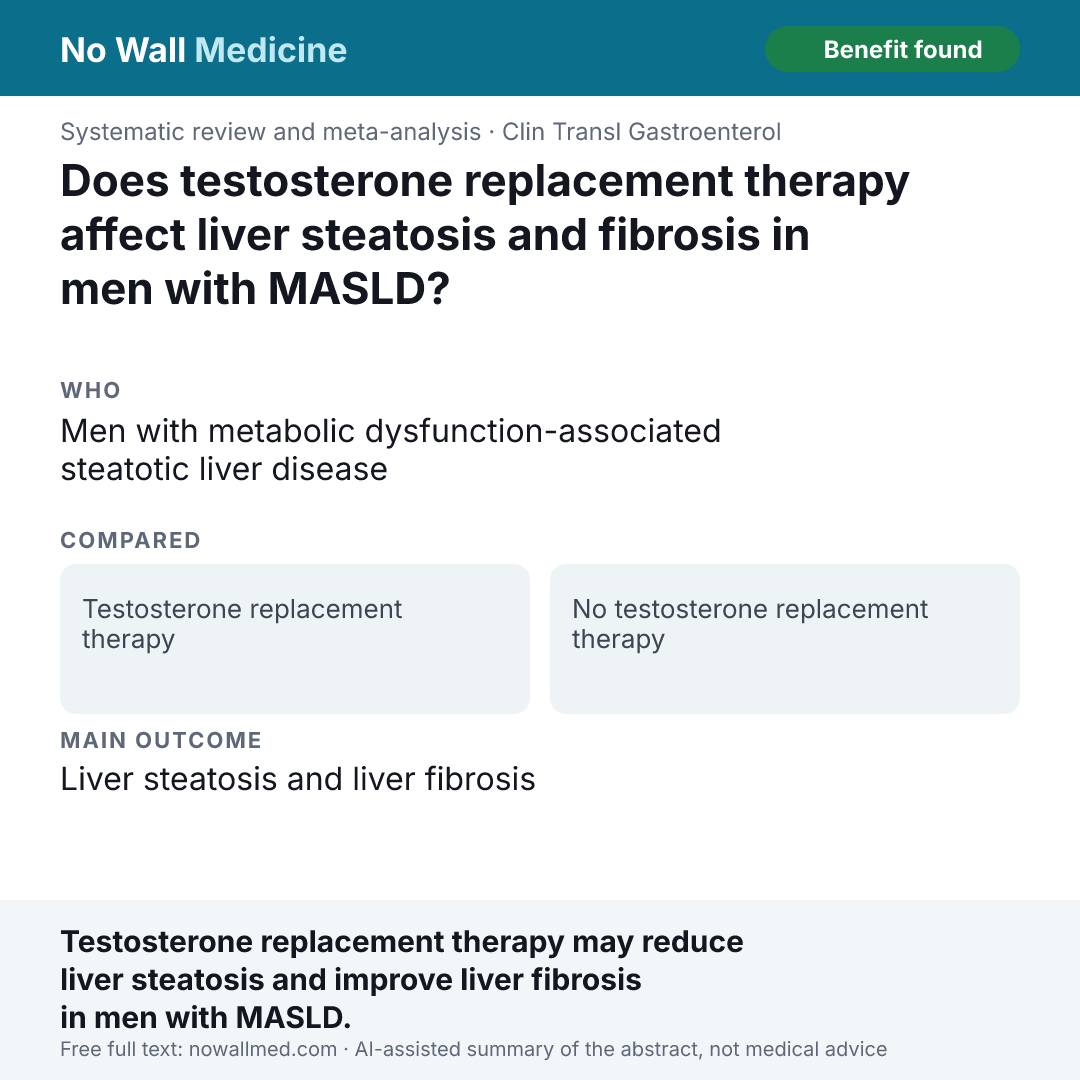
The Effects of Testosterone Replacement Therapy in Adult Men With Metabolic Dysfunction-Associated Steatotic Liver Disease: A Systematic Review and Meta-analysis
Systematic review and meta-analysisBenefit found
Does testosterone replacement therapy affect liver steatosis and fibrosis in men with MASLD?
Who
Men with metabolic dysfunction-associated steatotic liver disease
Compared
Testosterone replacement therapy
No testosterone replacement therapy
Main outcome
Liver steatosis and liver fibrosis
Bottom line: Testosterone replacement therapy may reduce liver steatosis and improve liver fibrosis in men with MASLD.
Limitation: Studies were heterogeneous in population characteristics, treatment modalities, endpoints, and follow-up.
Clin Transl Gastroenterol · 2025-01-01 · Save PNG
Effect of long and short half-life PDE5 inhibitors on HbA1c levels: a systematic review and meta-analysis
Systematic review and meta-analysisMixed results
Do long and short half-life PDE5 inhibitors affect HbA1c levels?
Who
1083
People with elevated haemoglobin A1c greater than 6%
Compared
-0.40%Long half-life PDE5 inhibitors ([-0.66, -0.14], p = 0.002, I2 = 82%, 7.70% baseline HbA1c)
Short half-life PDE5 inhibitors: +0.08% ([-0.16, 0.33], p = 0.51, I2 = 40%, 7.73% baseline HbA1c)
Main outcome
Haemoglobin A1c levels
Bottom line: Long half-life PDE5 inhibitors decreased HbA1c, while short half-life inhibitors showed no significant change in the overall analysis.
Limitation: Variable risk of biases, homogeneity, and sample sizes in the included studies.
eClinicalMedicine · 2024-12-31 · Save PNG

Comparison of models to predict incident chronic liver disease: a systematic review and external validation in Chinese adults
Systematic review, meta-analysis, and external validationKey finding
How well do models predict incident chronic liver disease in Chinese adults?
Who
0.5
Chinese adults in the China Kadoorie Biobank · China
Compared
Models validated in China Kadoorie Biobank: C-index ≥ 0.70 for CLD
All models in China Kadoorie Biobank: O:E ratio 0.55-0.94
Main outcome
10-year risk of chronic liver disease discrimination and calibration
Bottom line: Several models showed good discrimination for risk stratification in Chinese adults for chronic liver disease.
Limitation: All models tended to overestimate the risk in the validation cohort.
BMC Med · 2024-12-31 · Save PNG