Visual abstracts
New randomized trials and meta-analyses from leading journals at a glance: who was studied, what was compared, and what was found. Every paper is free to read in full.
All specialtiesCardiology 4763Oncology 4042Gastroenterology & Hepatology 1902Infectious Disease 3756Neurology 1872Psychiatry & Mental Health 2214Pulmonology 2042Critical Care 1319Endocrinology & Diabetes 2544Pediatrics 2889Surgery 2479Orthopedics & Sports Medicine 917Neurosurgery 525Cardiothoracic & Vascular Surgery 656Plastic & Reconstructive Surgery 574Nephrology 1107Rheumatology 810Hematology 1090Dermatology 611Ophthalmology 532Obstetrics & Gynecology 1645Public & Global Health 1037Radiology & Imaging 617Anesthesiology 957Urology 745ENT (Otolaryngology) 494Emergency Medicine 481Allergy & Immunology 309Geriatrics 972Family Medicine & Primary Care 533Medical Genetics & Genomics 659Pathology & Laboratory Medicine 156Physical Medicine & Rehabilitation 734Palliative Care 421Nutrition 1560Digital Health & AI 2133General Medicine 318
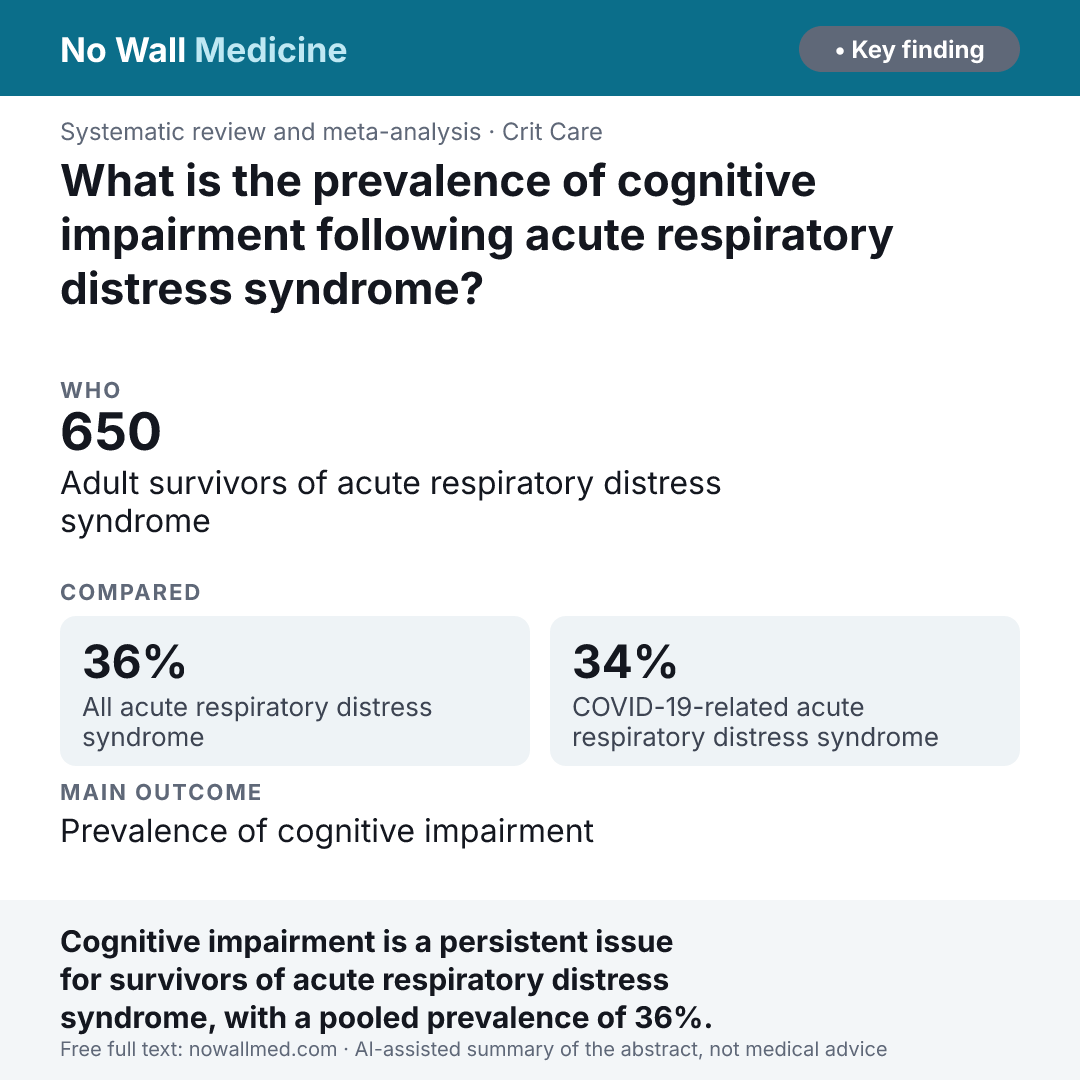
Prevalence and incidence of cognitive impairment following acute respiratory distress syndrome of any cause: a systematic review and meta-analysis
Systematic review and meta-analysisKey finding
What is the prevalence of cognitive impairment following acute respiratory distress syndrome?
Who
650
Adult survivors of acute respiratory distress syndrome
Compared
36%All acute respiratory distress syndrome (95% CI 26-46%)
34%COVID-19-related acute respiratory distress syndrome (95% CI 22-45%)
Main outcome
Prevalence of cognitive impairment
Result: 36% (95% CI 26-46%)
Bottom line: Cognitive impairment is a persistent issue for survivors of acute respiratory distress syndrome, with a pooled prevalence of 36%.
Limitation: High heterogeneity between studies (I2 = 92%)
Crit Care · 2025-04-23 · Save PNG
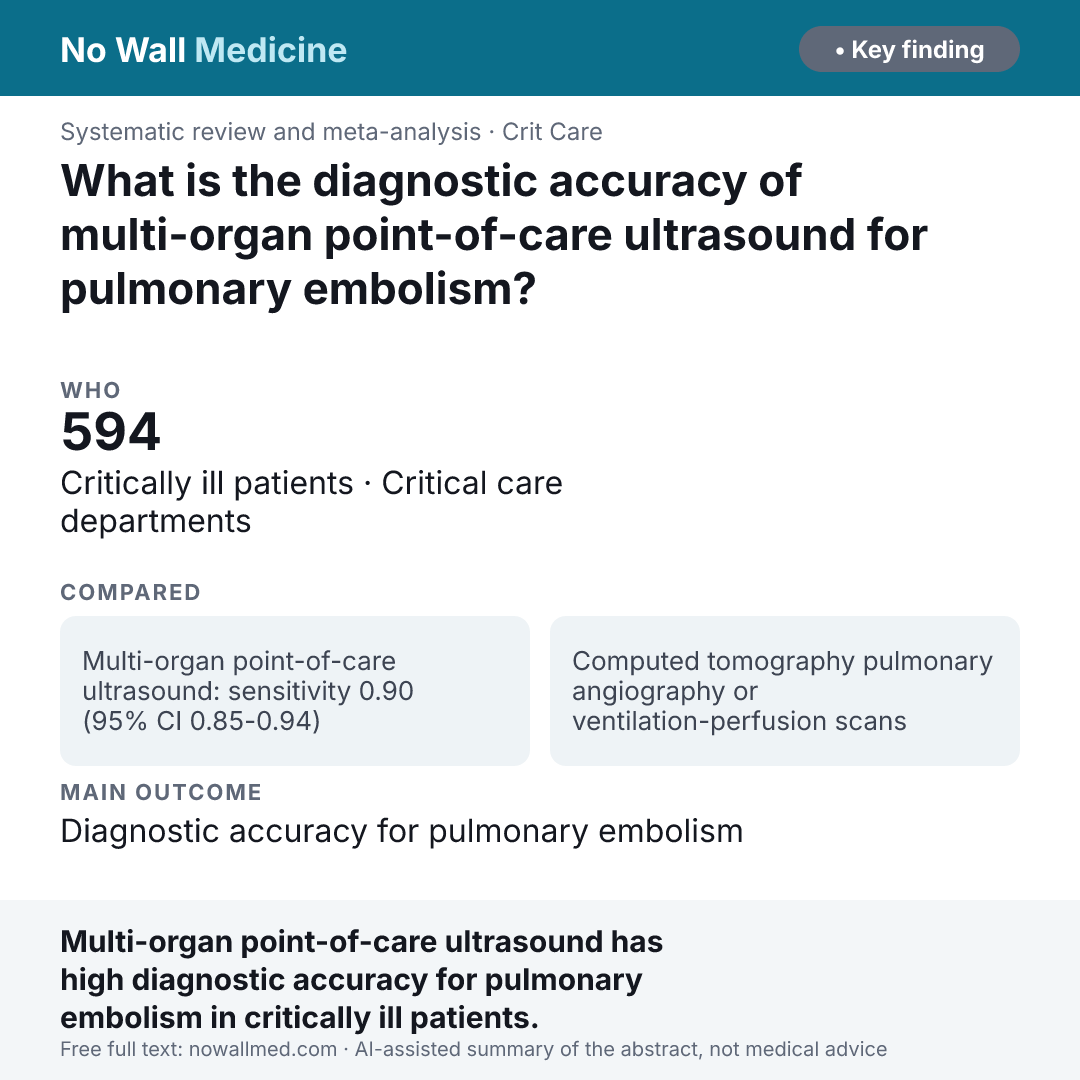
Diagnostic accuracy of multi-organ point-of-care ultrasound for pulmonary embolism in critically ill patients: a systematic review and meta-analysis
Systematic review and meta-analysisKey finding
What is the diagnostic accuracy of multi-organ point-of-care ultrasound for pulmonary embolism?
Who
594
Critically ill patients · Critical care departments
Compared
Multi-organ point-of-care ultrasound: sensitivity 0.90 (95% CI 0.85-0.94)
Computed tomography pulmonary angiography or ventilation-perfusion scans
Main outcome
Diagnostic accuracy for pulmonary embolism
Result: sensitivity 0.90 (95% CI 0.85-0.94); specificity 0.69 (95% CI 0.42-0.87)
Bottom line: Multi-organ point-of-care ultrasound has high diagnostic accuracy for pulmonary embolism in critically ill patients.
Limitation: Further research is needed to validated these findings across different patient populations.
Crit Care · 2025-04-23 · Save PNG
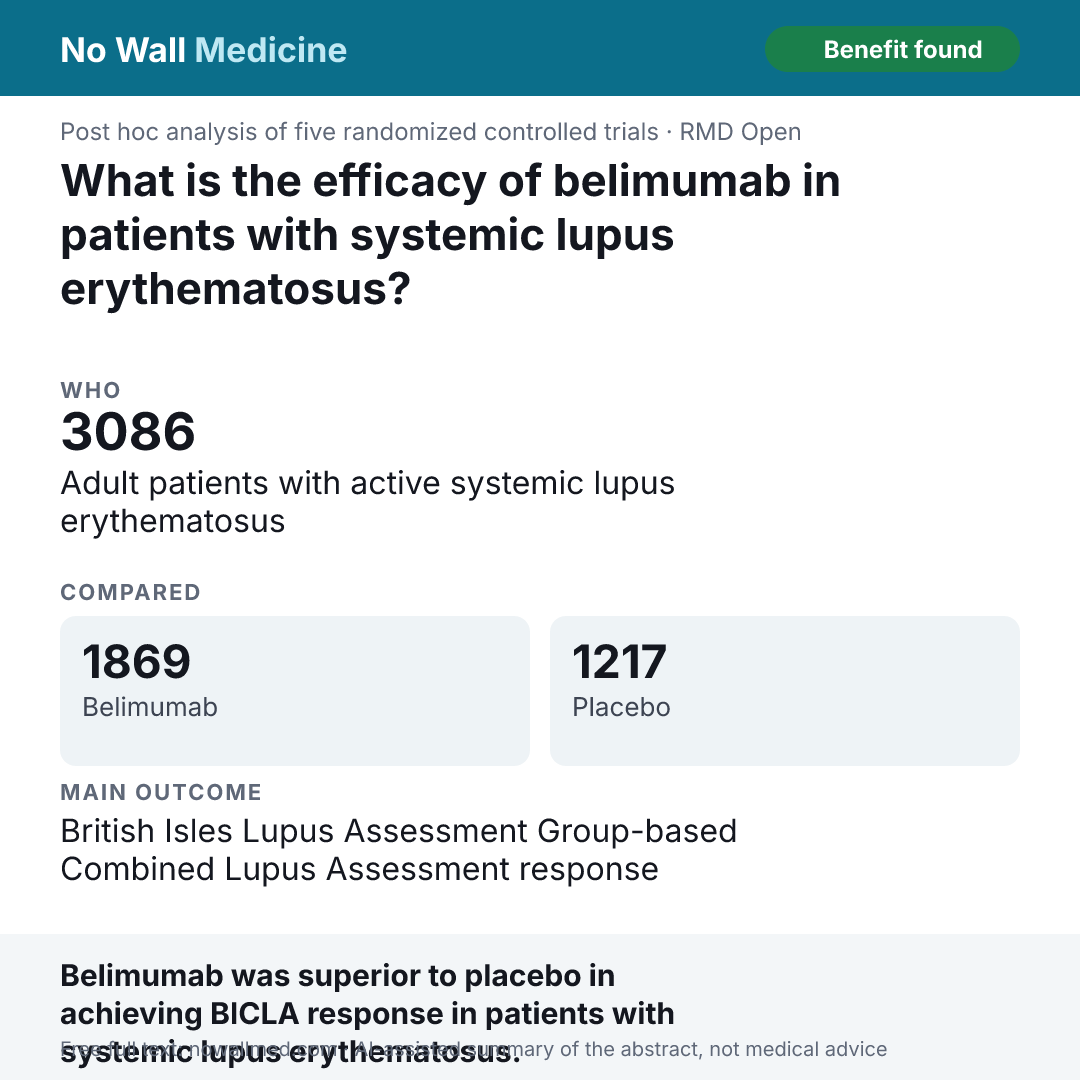
Outcomes of patients with systemic lupus erythematosus treated with belimumab: a post hoc efficacy analysis of five phase III clinical trials by British Isles Lupus Assessment Group-based Combined Lupus Assessment criteria
Post hoc analysis of five randomized controlled trialsBenefit found
What is the efficacy of belimumab in patients with systemic lupus erythematosus?
Who
3086
Adult patients with active systemic lupus erythematosus
Compared
1869Belimumab
1217Placebo
Main outcome
British Isles Lupus Assessment Group-based Combined Lupus Assessment response
Result: 1.47 (95% CI 1.25 to 1.72)
Bottom line: Belimumab was superior to placebo in achieving BICLA response in patients with systemic lupus erythematosus.
RMD Open · 2025-04-23 · Save PNG
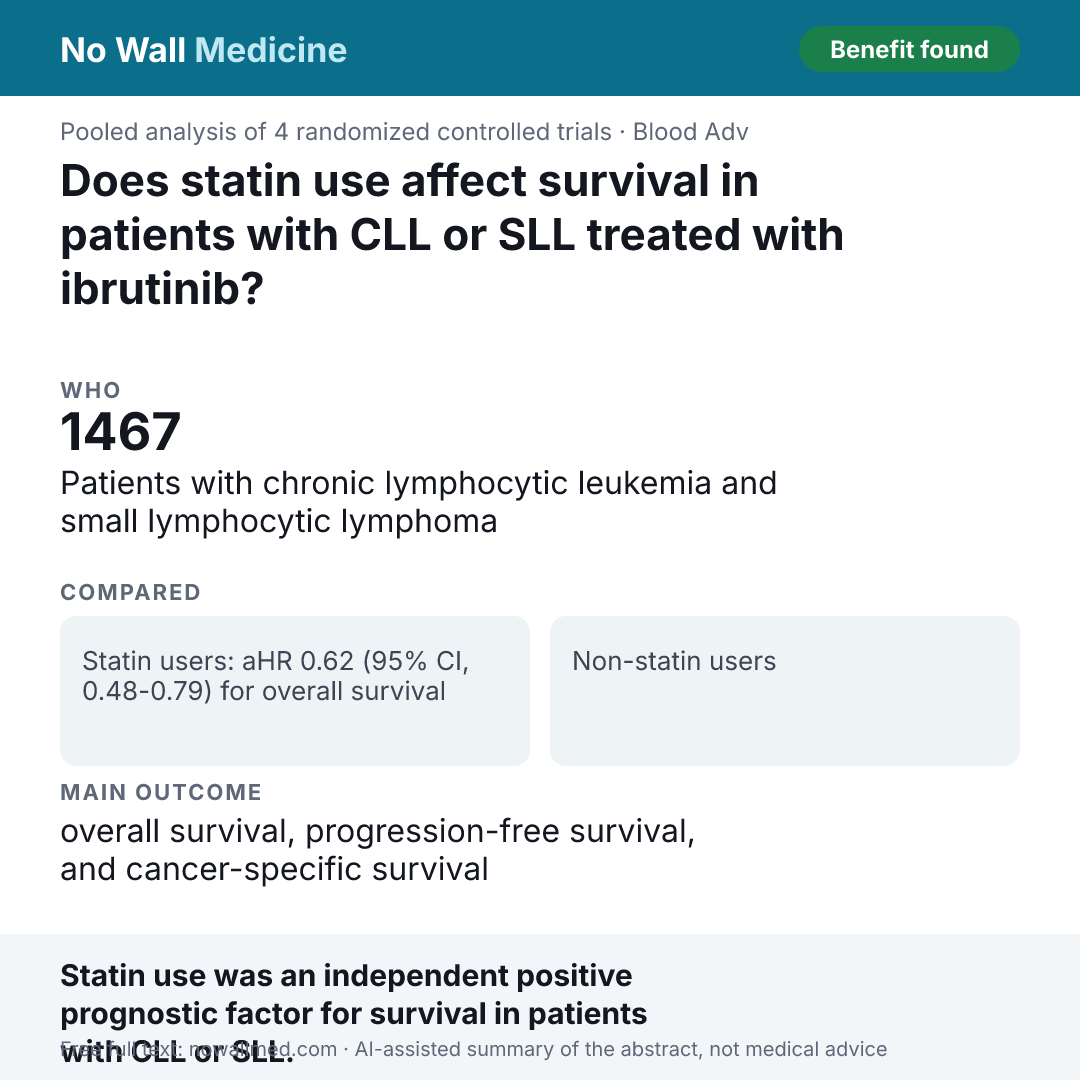
Statin use and survival in CLL/SLL treated with ibrutinib: pooled analysis of 4 randomized controlled trials
Pooled analysis of 4 randomized controlled trialsBenefit found
Does statin use affect survival in patients with CLL or SLL treated with ibrutinib?
Who
1467
Patients with chronic lymphocytic leukemia and small lymphocytic lymphoma
Compared
Statin users: aHR 0.62 (95% CI, 0.48-0.79) for overall survival
Non-statin users
Main outcome
overall survival, progression-free survival, and cancer-specific survival
Result: adjusted hazard ratio 0.62 (95% CI, 0.48-0.79) for overall survival
Bottom line: Statin use was an independent positive prognostic factor for survival in patients with CLL or SLL.
Limitation: Further research is needed to validate these results and explore underlying impacts.
Blood Adv · 2025-04-23 · Save PNG
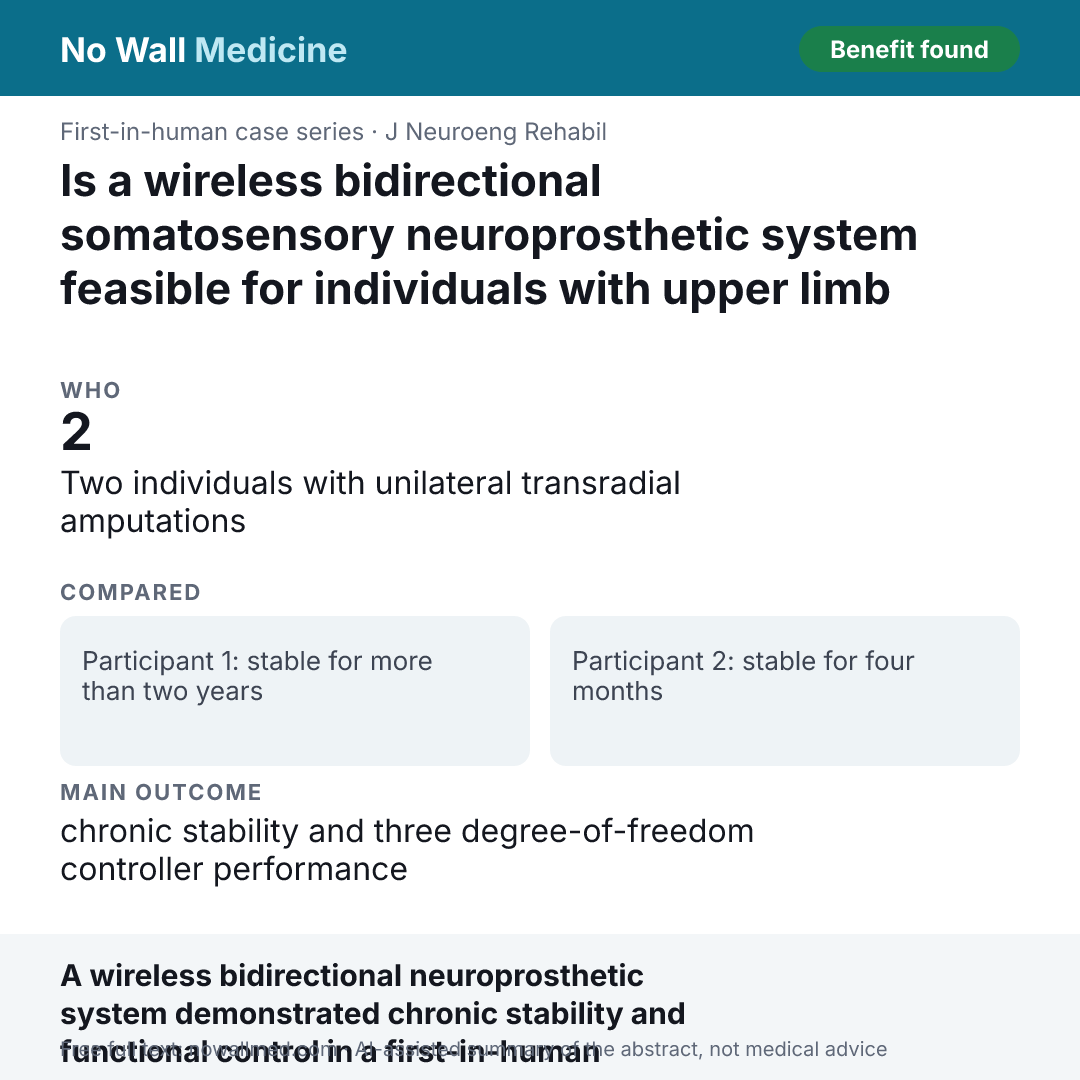
First-in-human implementation of a bidirectional somatosensory neuroprosthetic system with wireless communication
First-in-human case seriesBenefit found
Is a wireless bidirectional somatosensory neuroprosthetic system feasible for individuals with upper limb loss?
Who
2
Two individuals with unilateral transradial amputations
Compared
Participant 1: stable for more than two years
Participant 2: stable for four months
Main outcome
chronic stability and three degree-of-freedom controller performance
Bottom line: A wireless bidirectional neuroprosthetic system demonstrated chronic stability and functional control in a first-in-human study.
Limitation: one participant's system was explanted due to an infection of unknown origin
J Neuroeng Rehabil · 2025-04-23 · Save PNG
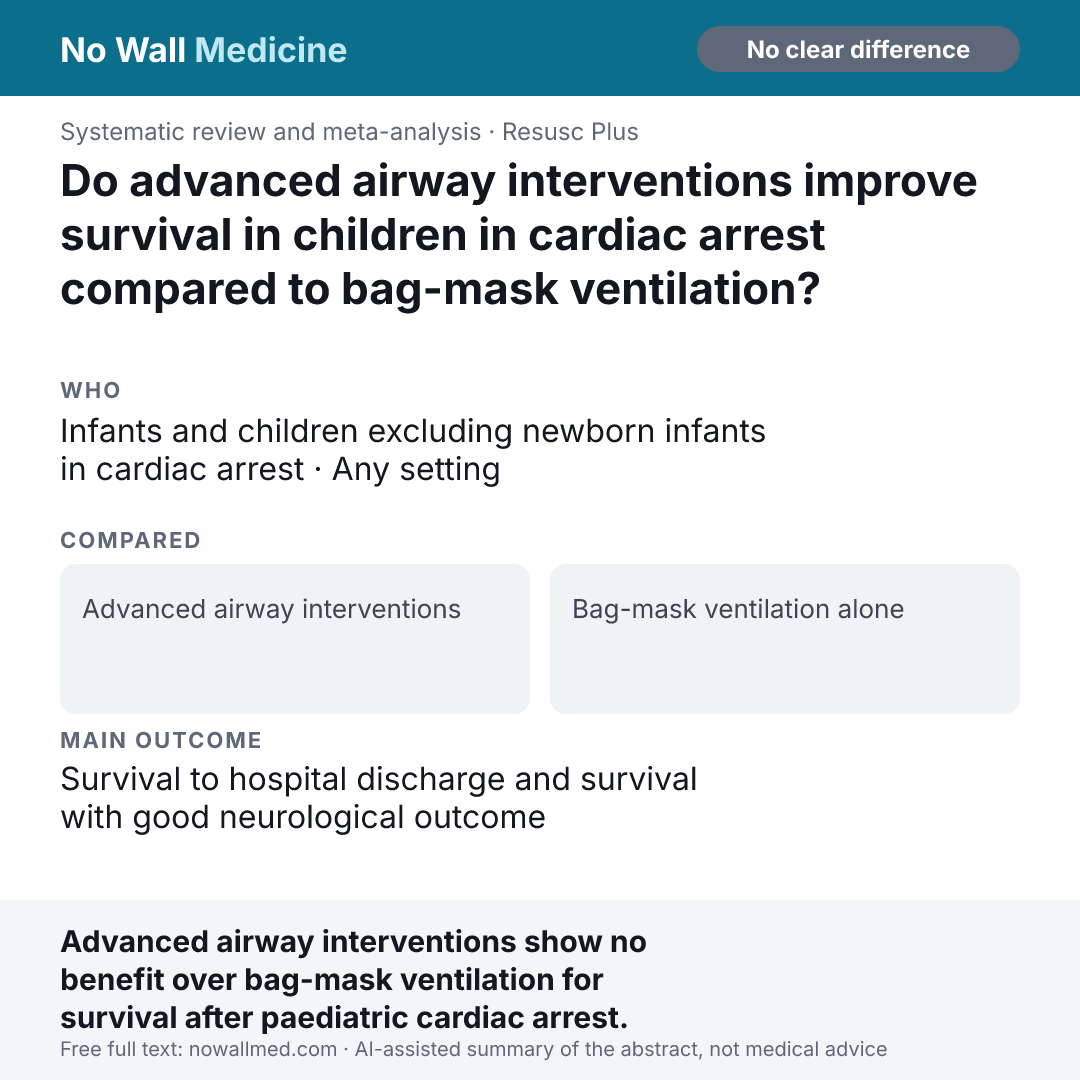
Advanced airway interventions for paediatric cardiac arrest: updated systematic review and meta-analysis
Systematic review and meta-analysisNo clear difference
Do advanced airway interventions improve survival in children in cardiac arrest compared to bag-mask ventilation?
Who
Infants and children excluding newborn infants in cardiac arrest · Any setting
Compared
Advanced airway interventions
Bag-mask ventilation alone
Main outcome
Survival to hospital discharge and survival with good neurological outcome
Bottom line: Advanced airway interventions show no benefit over bag-mask ventilation for survival after paediatric cardiac arrest.
Limitation: The overall certainty of evidence was low to very low.
Resusc Plus · 2025-04-23 · Save PNG
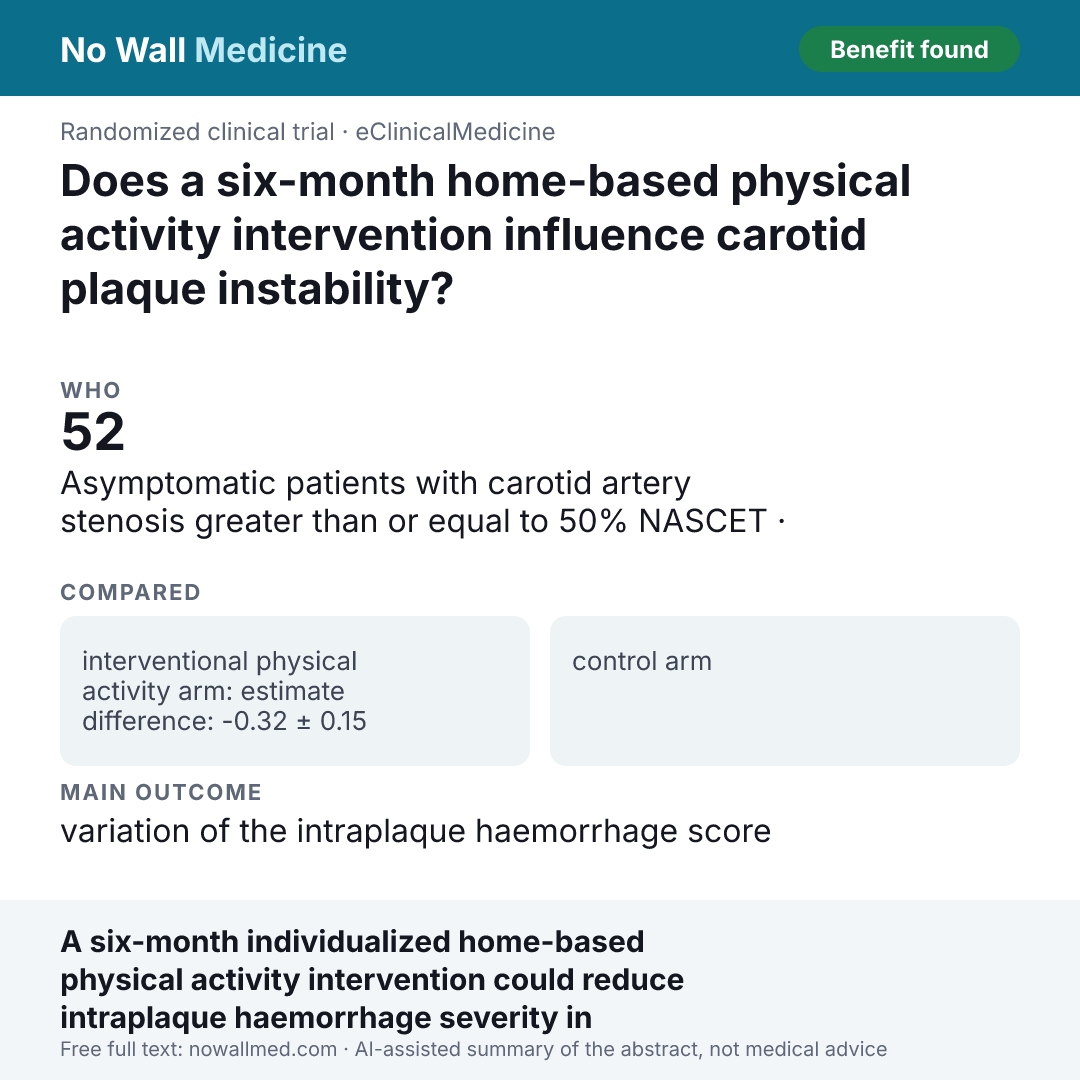
Influence of a six-month home-based individualized physical activity intervention on carotid plaque instability measured by magnetic resonance imaging: a randomized controlled clinical trial
Randomized clinical trialBenefit found
Does a six-month home-based physical activity intervention influence carotid plaque instability?
Who
52
Asymptomatic patients with carotid artery stenosis greater than or equal to 50% NASCET · University Hospital of Lyon, France
Compared
interventional physical activity arm: estimate difference: -0.32 ± 0.15
control arm
Main outcome
variation of the intraplaque haemorrhage score
Result: estimate difference: -0.32 ± 0.15, [95% CI -0.63 to -0.01]
Bottom line: A six-month individualized home-based physical activity intervention could reduce intraplaque haemorrhage severity in asymptomatic patients.
Funded by: Fédération Française de Cardiologie and Nouvelle Société Francophone d'Athérosclérose
eClinicalMedicine · 2025-04-22 · Save PNG
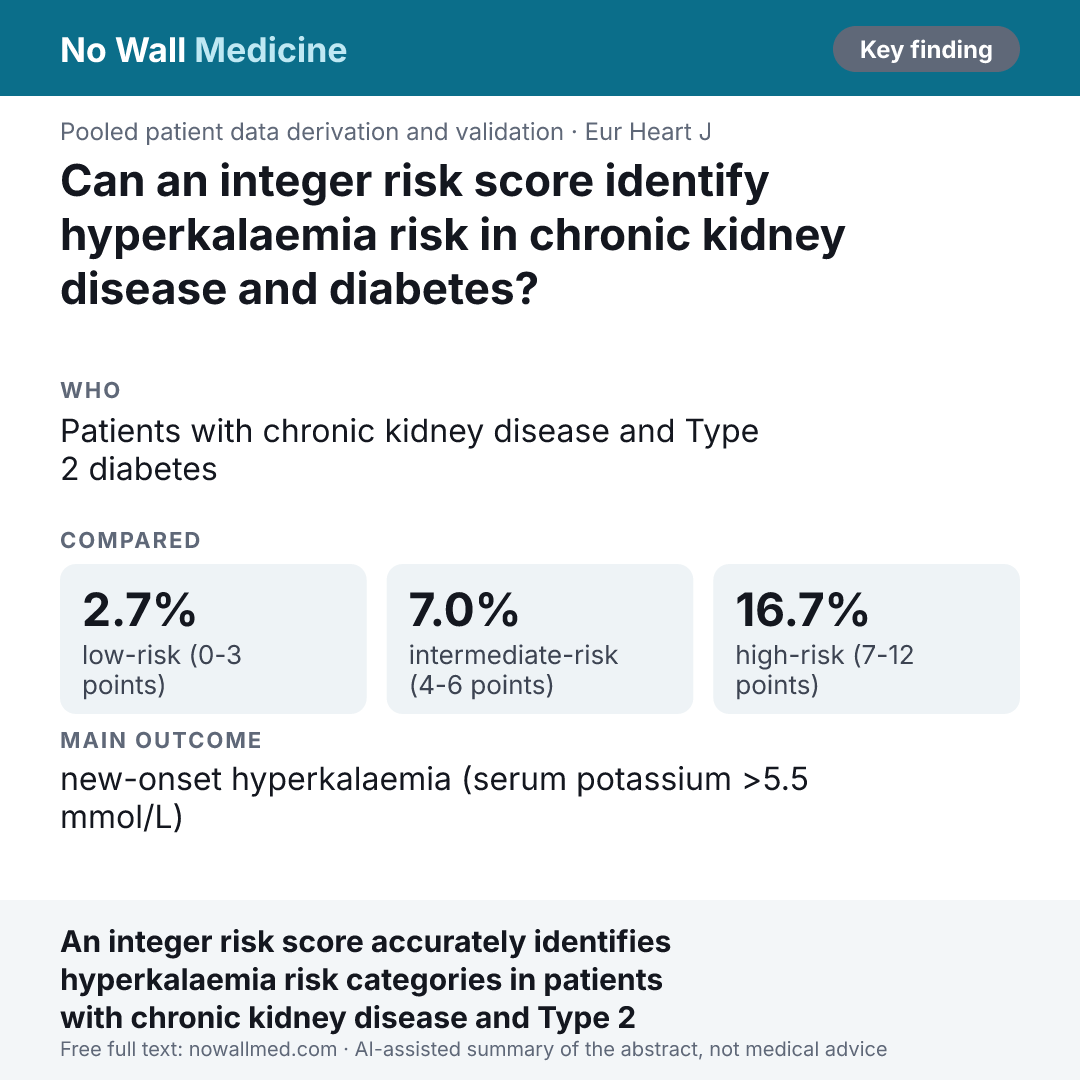
Incident hyperkalaemia risk model in chronic kidney disease and diabetes: the FIDELITY programme
Pooled patient data derivation and validationKey finding
Can an integer risk score identify hyperkalaemia risk in chronic kidney disease and diabetes?
Who
Patients with chronic kidney disease and Type 2 diabetes
Compared
2.7%low-risk (0-3 points)
7.0%intermediate-risk (4-6 points)
16.7%high-risk (7-12 points)
Main outcome
new-onset hyperkalaemia (serum potassium >5.5 mmol/L)
Bottom line: An integer risk score accurately identifies hyperkalaemia risk categories in patients with chronic kidney disease and Type 2 diabetes.
Eur Heart J · 2025-04-22 · Save PNG
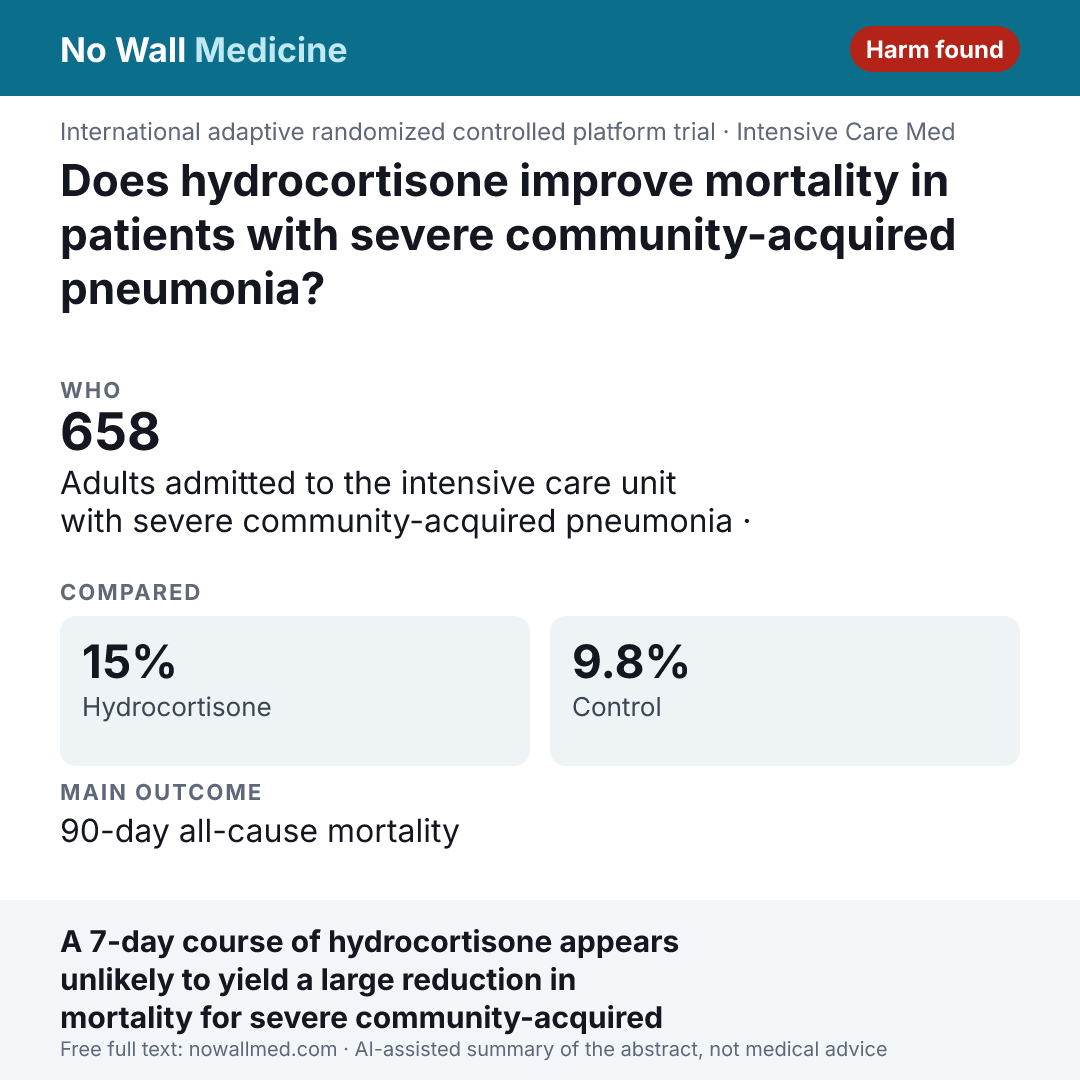
Effect of hydrocortisone on mortality in patients with severe community-acquired pneumonia : The REMAP-CAP Corticosteroid Domain Randomized Clinical Trial
International adaptive randomized controlled platform trialHarm found
Does hydrocortisone improve mortality in patients with severe community-acquired pneumonia?
Who
658
Adults admitted to the intensive care unit with severe community-acquired pneumonia · International
Compared
15%Hydrocortisone (78/521)
9.8%Control (12/122)
Main outcome
90-day all-cause mortality
Result: adjusted odds ratio 1.52 to 1.63 (95% CrI crossing 1)
Bottom line: A 7-day course of hydrocortisone appears unlikely to yield a large reduction in mortality for severe community-acquired pneumonia.
Intensive Care Med · 2025-04-22 · Save PNG
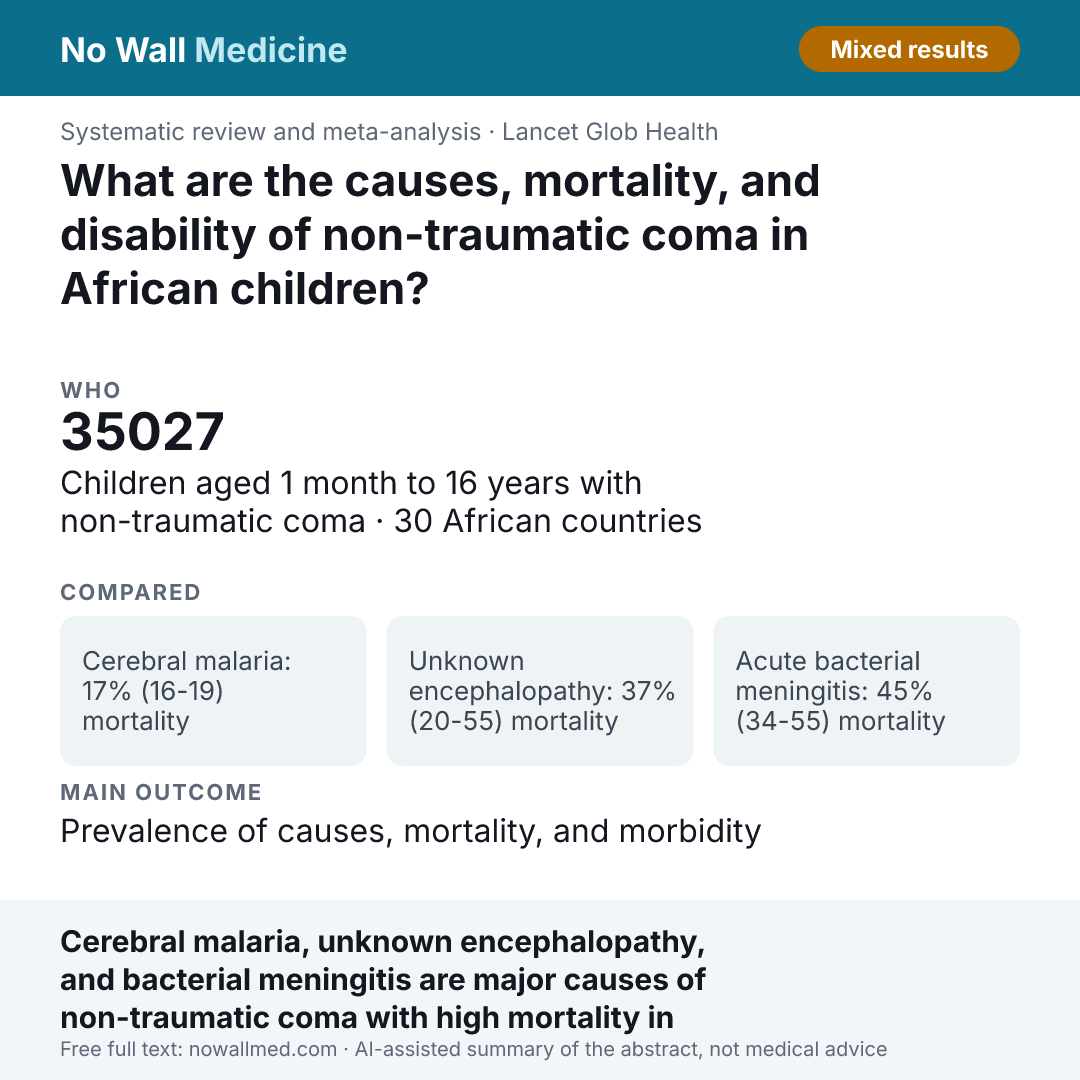
The aetiologies, mortality, and disability of non-traumatic coma in African children: a systematic review and meta-analysis
Systematic review and meta-analysisMixed results
What are the causes, mortality, and disability of non-traumatic coma in African children?
Who
35027
Children aged 1 month to 16 years with non-traumatic coma · 30 African countries
Compared
Cerebral malaria: 17% (16-19) mortality
Unknown encephalopathy: 37% (20-55) mortality
Acute bacterial meningitis: 45% (34-55) mortality
Main outcome
Prevalence of causes, mortality, and morbidity
Bottom line: Cerebral malaria, unknown encephalopathy, and bacterial meningitis are major causes of non-traumatic coma with high mortality in African children.
Funded by: Wellcome Trust
Lancet Glob Health · 2025-04-22 · Save PNG
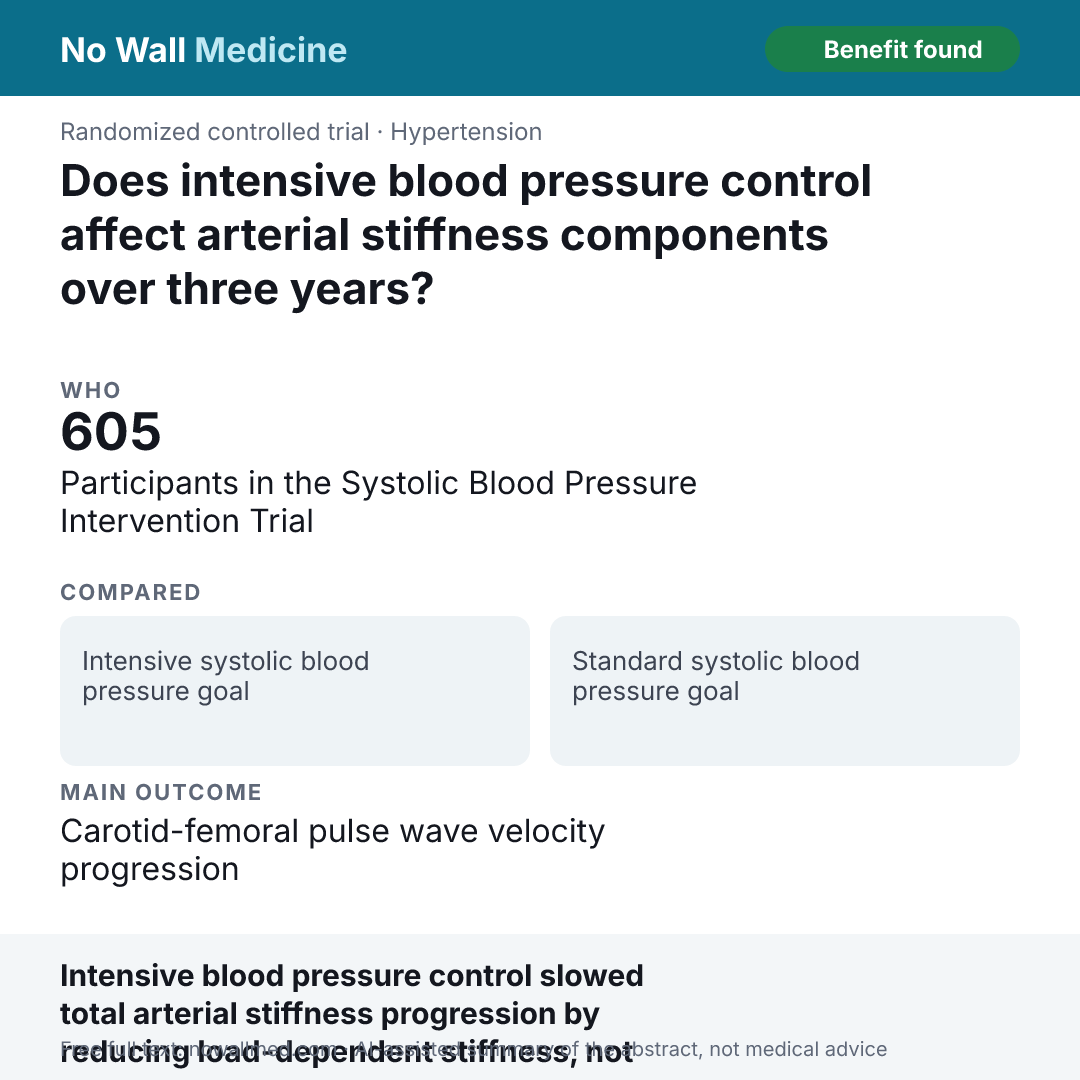
Effects of Blood Pressure Control on Arterial Stiffness Mechanisms in SPRINT: A Randomized Controlled Trial
Randomized controlled trialBenefit found
Does intensive blood pressure control affect arterial stiffness components over three years?
Who
605
Participants in the Systolic Blood Pressure Intervention Trial
Compared
Intensive systolic blood pressure goal
Standard systolic blood pressure goal
Main outcome
Carotid-femoral pulse wave velocity progression
Result: -0.49 [-0.02 to -0.96] m/s
Bottom line: Intensive blood pressure control slowed total arterial stiffness progression by reducing load-dependent stiffness, not structural stiffness.
Hypertension · 2025-04-22 · Save PNG
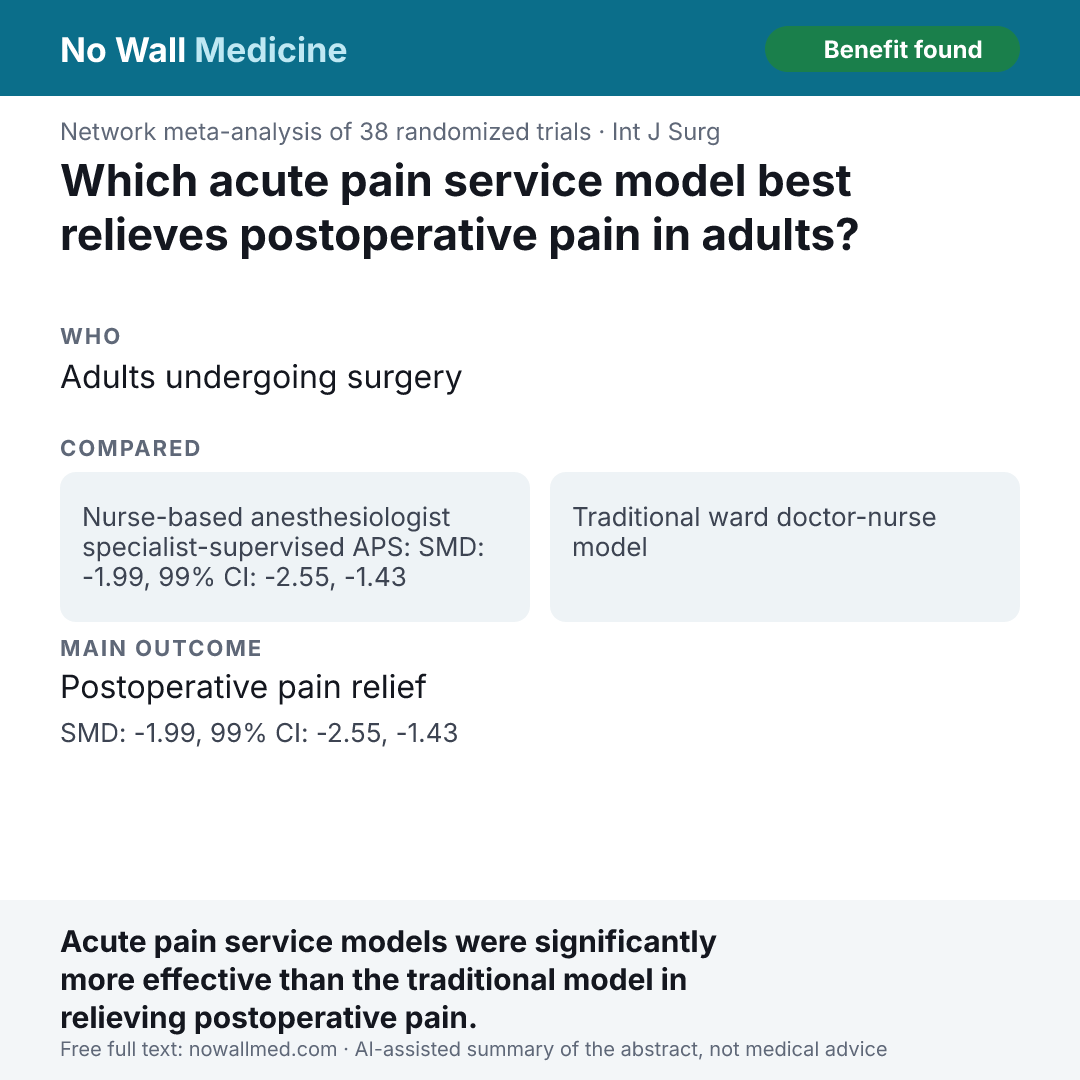
Acute pain service for postoperative pain in adults: a network meta-analysis
Network meta-analysis of 38 randomized trialsBenefit found
Which acute pain service model best relieves postoperative pain in adults?
Who
Adults undergoing surgery
Compared
Nurse-based anesthesiologist specialist-supervised APS: SMD: -1.99, 99% CI: -2.55, -1.43
Traditional ward doctor-nurse model
Main outcome
Postoperative pain relief
Result: SMD: -1.99, 99% CI: -2.55, -1.43
Bottom line: Acute pain service models were significantly more effective than the traditional model in relieving postoperative pain.
Int J Surg · 2025-04-22 · Save PNG
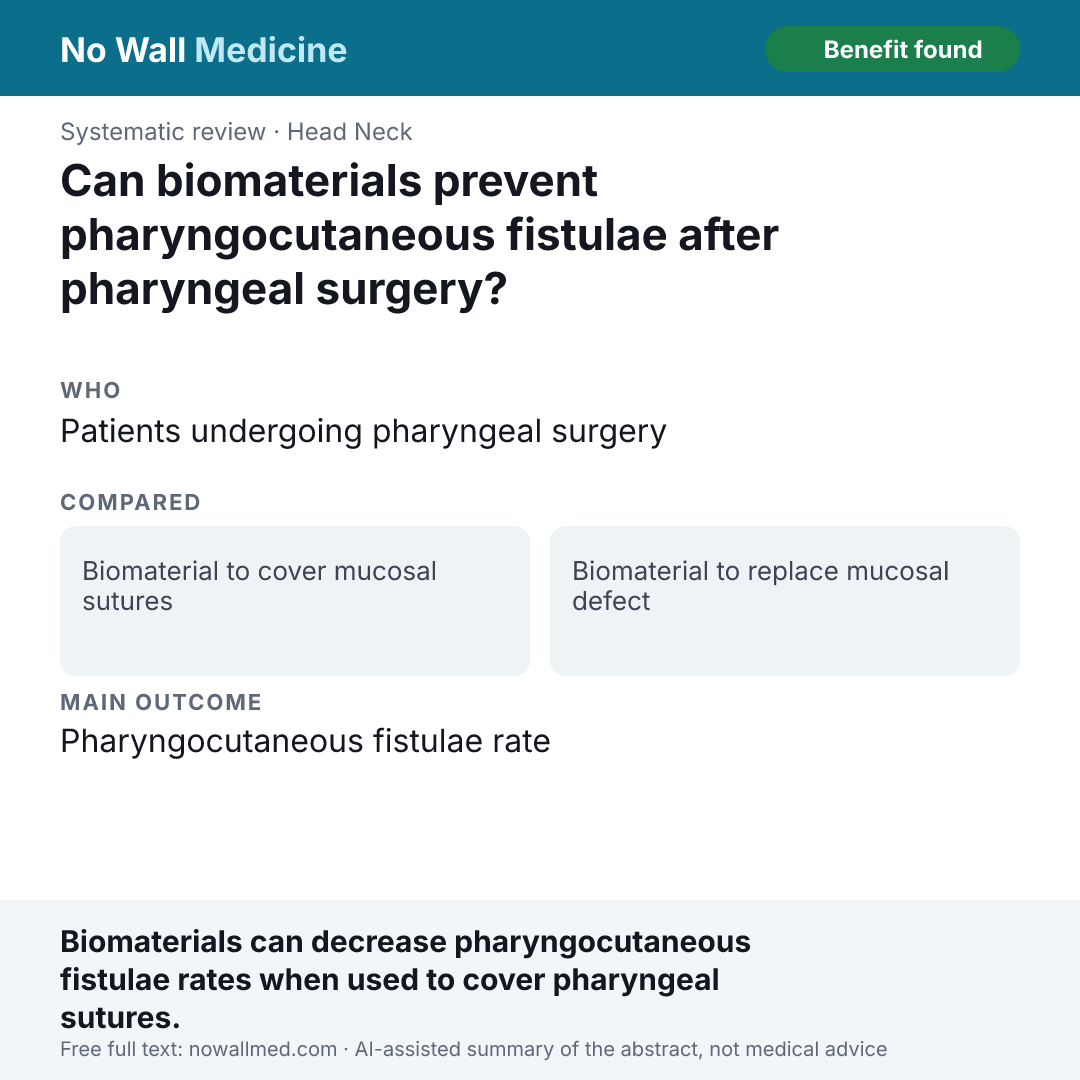
Application of Biomaterials for the Prevention of Pharyngeal Fistulae: A Systematic Review
Systematic reviewBenefit found
Can biomaterials prevent pharyngocutaneous fistulae after pharyngeal surgery?
Who
Patients undergoing pharyngeal surgery
Compared
Biomaterial to cover mucosal sutures
Biomaterial to replace mucosal defect
Main outcome
Pharyngocutaneous fistulae rate
Bottom line: Biomaterials can decrease pharyngocutaneous fistulae rates when used to cover pharyngeal sutures.
Head Neck · 2025-04-22 · Save PNG
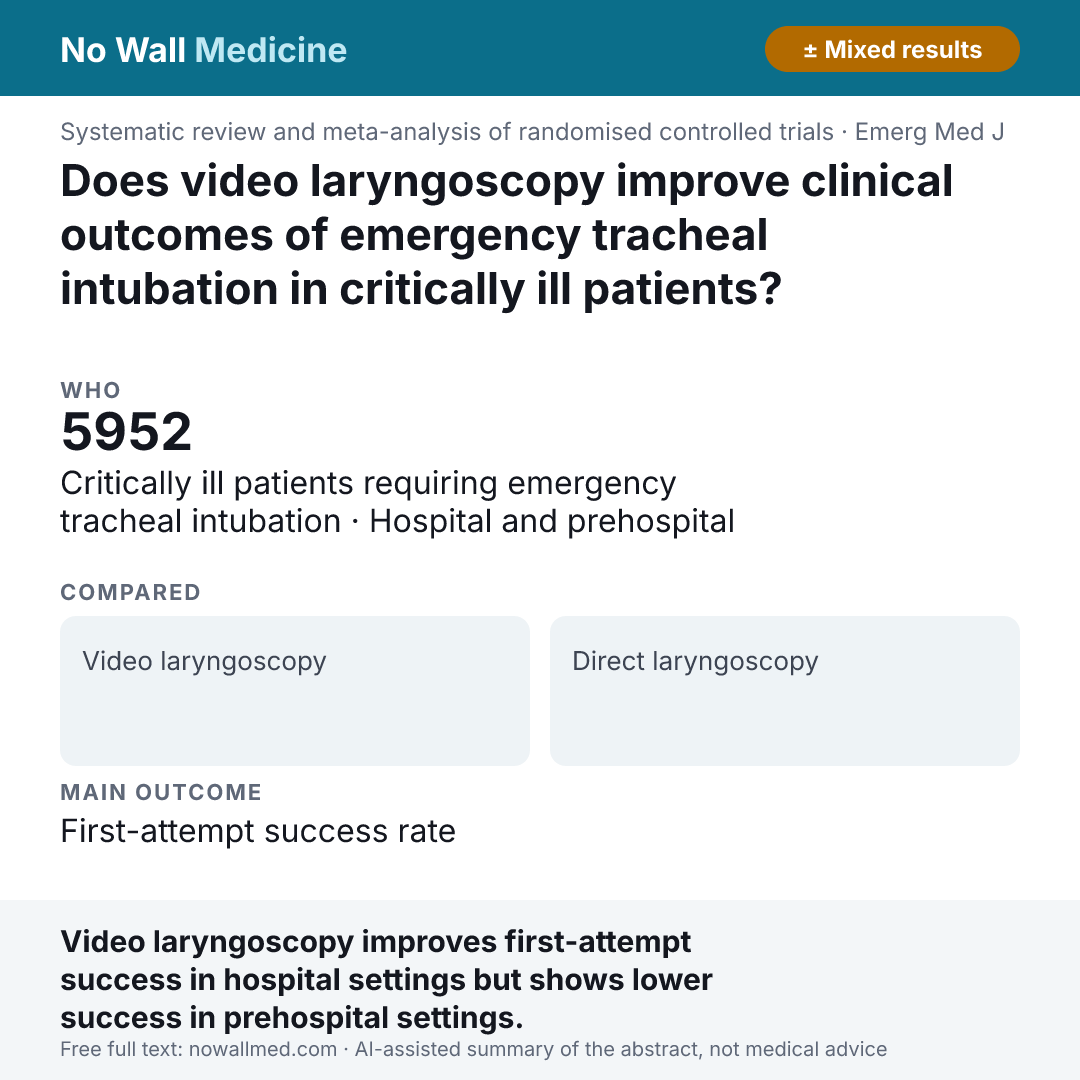
Video laryngoscopy may improve the intubation outcomes in critically ill patients: a systematic review and meta-analysis of randomised controlled trials
Systematic review and meta-analysis of randomised controlled trialsMixed results
Does video laryngoscopy improve clinical outcomes of emergency tracheal intubation in critically ill patients?
Who
5952
Critically ill patients requiring emergency tracheal intubation · Hospital and prehospital settings
Compared
Video laryngoscopy
Direct laryngoscopy
Main outcome
First-attempt success rate
Result: RR 1.05, 95% CI 0.97 to 1.13
Bottom line: Video laryngoscopy improves first-attempt success in hospital settings but shows lower success in prehospital settings.
Limitation: High heterogeneity was observed in several outcomes (I2 up to 95%).
Emerg Med J · 2025-04-22 · Save PNG
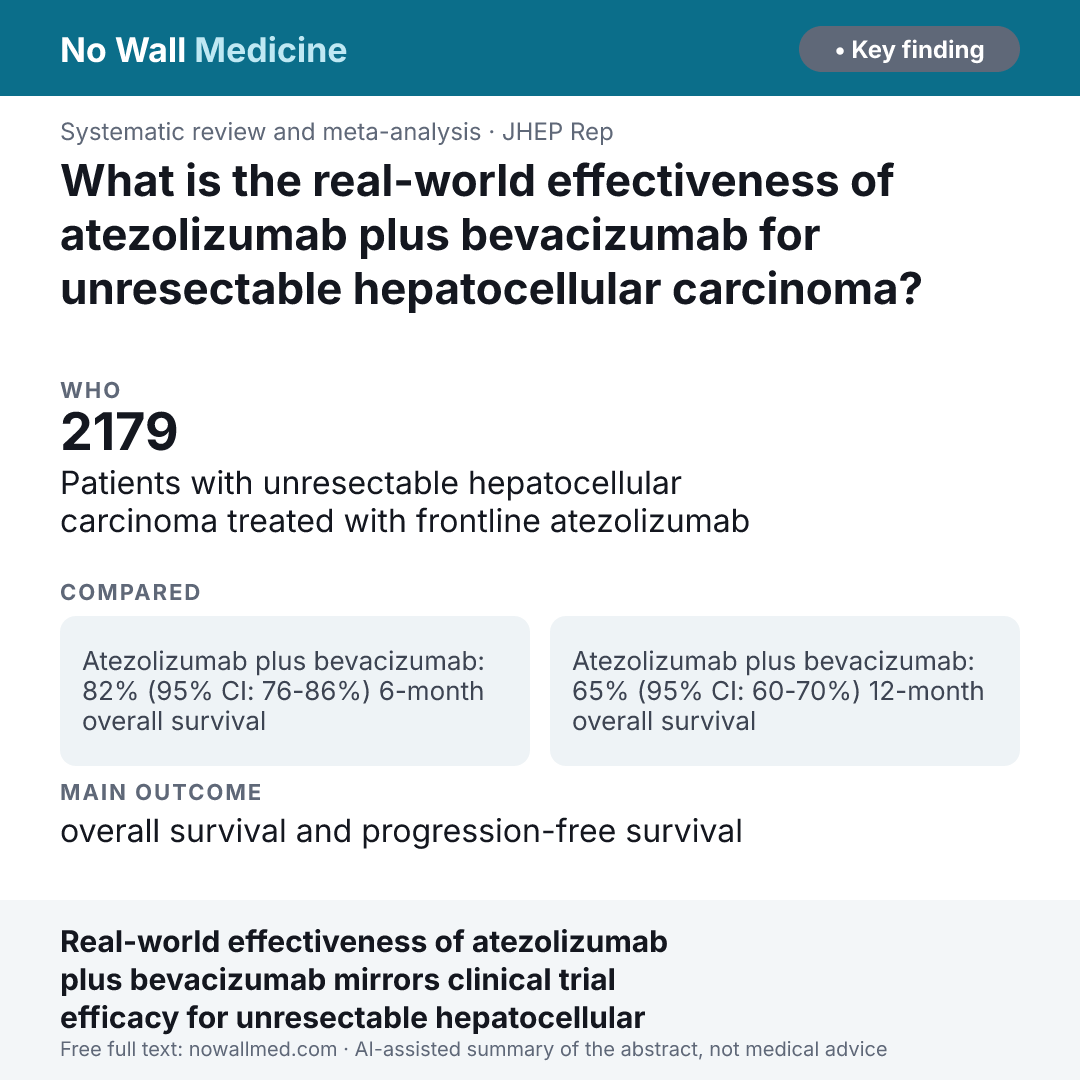
Efficacy of atezolizumab plus bevacizumab for unresectable HCC: Systematic review and meta-analysis of real-world evidence
Systematic review and meta-analysisKey finding
What is the real-world effectiveness of atezolizumab plus bevacizumab for unresectable hepatocellular carcinoma?
Who
2179
Patients with unresectable hepatocellular carcinoma treated with frontline atezolizumab plus bevacizumab
Compared
Atezolizumab plus bevacizumab: 82% (95% CI: 76-86%) 6-month overall survival
Atezolizumab plus bevacizumab: 65% (95% CI: 60-70%) 12-month overall survival
Main outcome
overall survival and progression-free survival
Bottom line: Real-world effectiveness of atezolizumab plus bevacizumab mirrors clinical trial efficacy for unresectable hepatocellular carcinoma.
Limitation: results should be interpreted with caution because of potential variability in patient populations.
JHEP Rep · 2025-04-22 · Save PNG
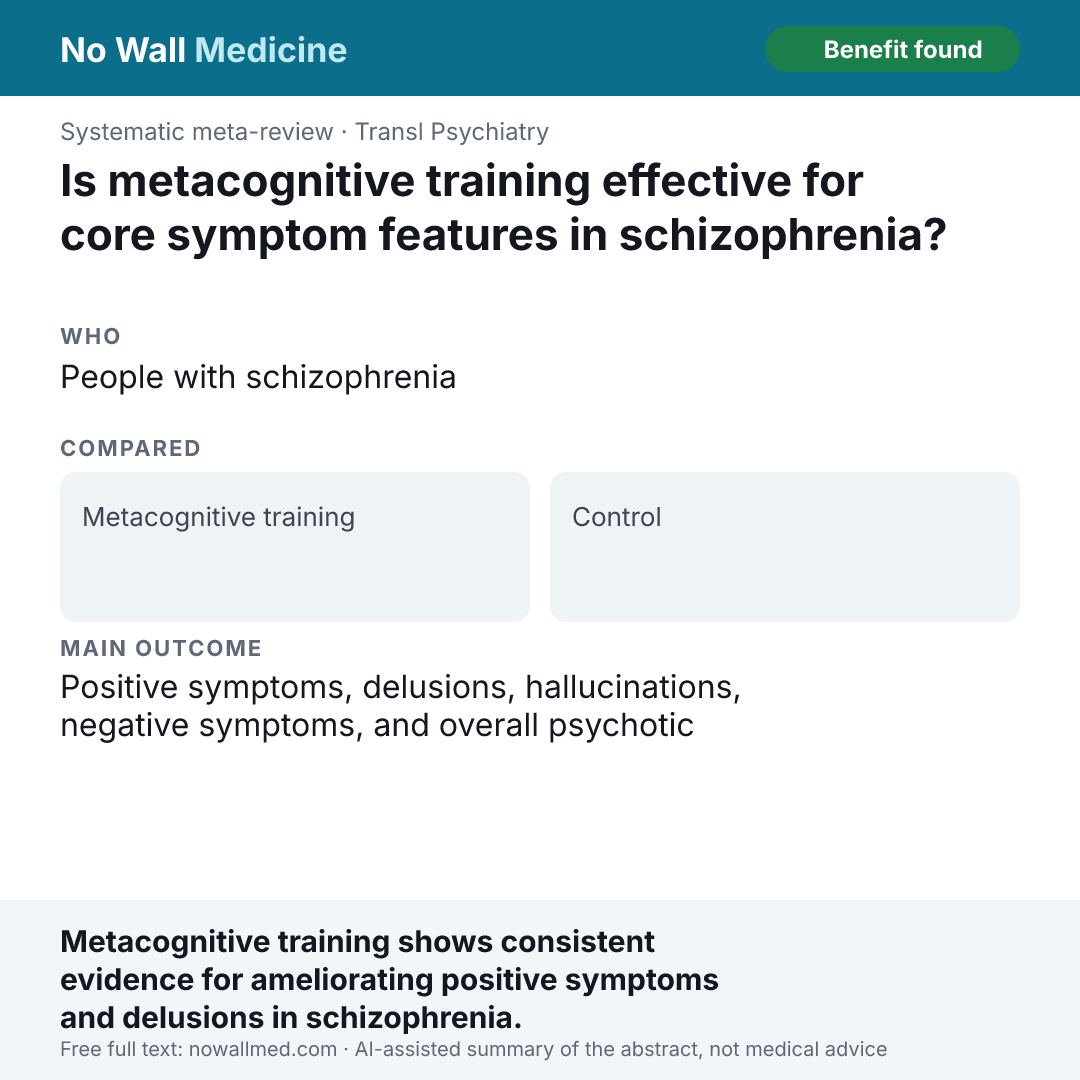
Metacognitive training for psychosis (MCT): a systematic meta-review of its effectiveness
Systematic meta-reviewBenefit found
Is metacognitive training effective for core symptom features in schizophrenia?
Who
People with schizophrenia
Compared
Metacognitive training
Control
Main outcome
Positive symptoms, delusions, hallucinations, negative symptoms, and overall psychotic symptoms
Bottom line: Metacognitive training shows consistent evidence for ameliorating positive symptoms and delusions in schizophrenia.
Limitation: None of the meta-analyses met criteria for suggestive or convincing evidence or moderate to high methodological quality.
Transl Psychiatry · 2025-04-22 · Save PNG
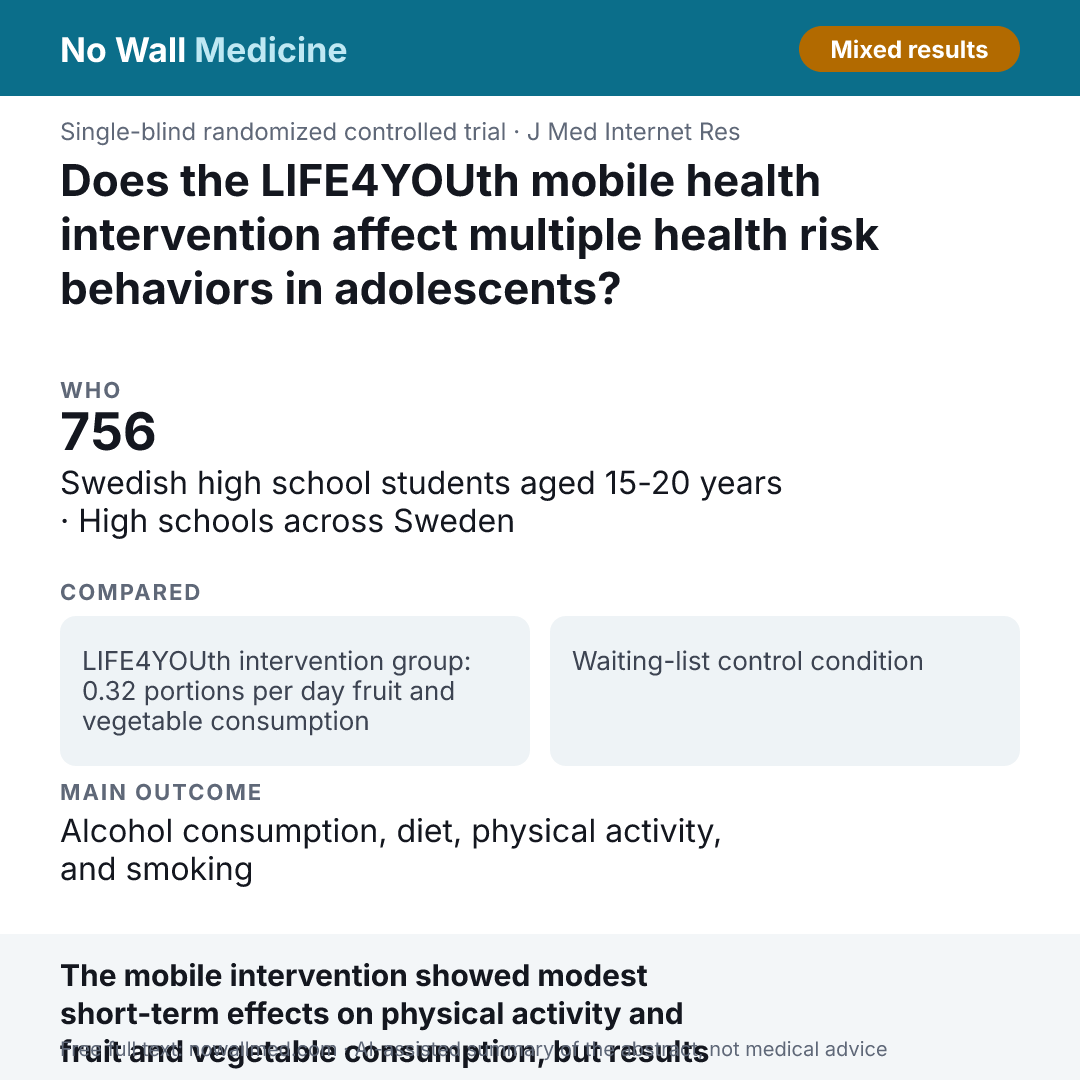
Effectiveness of a Mobile Phone-Delivered Multiple Health Behavior Change Intervention (LIFE4YOUth) in Adolescents: Randomized Controlled Trial
Single-blind randomized controlled trialMixed results
Does the LIFE4YOUth mobile health intervention affect multiple health risk behaviors in adolescents?
Who
756
Swedish high school students aged 15-20 years · High schools across Sweden
Compared
LIFE4YOUth intervention group: 0.32 portions per day fruit and vegetable consumption
Waiting-list control condition
Main outcome
Alcohol consumption, diet, physical activity, and smoking
Bottom line: The mobile intervention showed modest short-term effects on physical activity and fruit and vegetable consumption, but results for other behaviors were inconclusive.
J Med Internet Res · 2025-04-22 · Save PNG
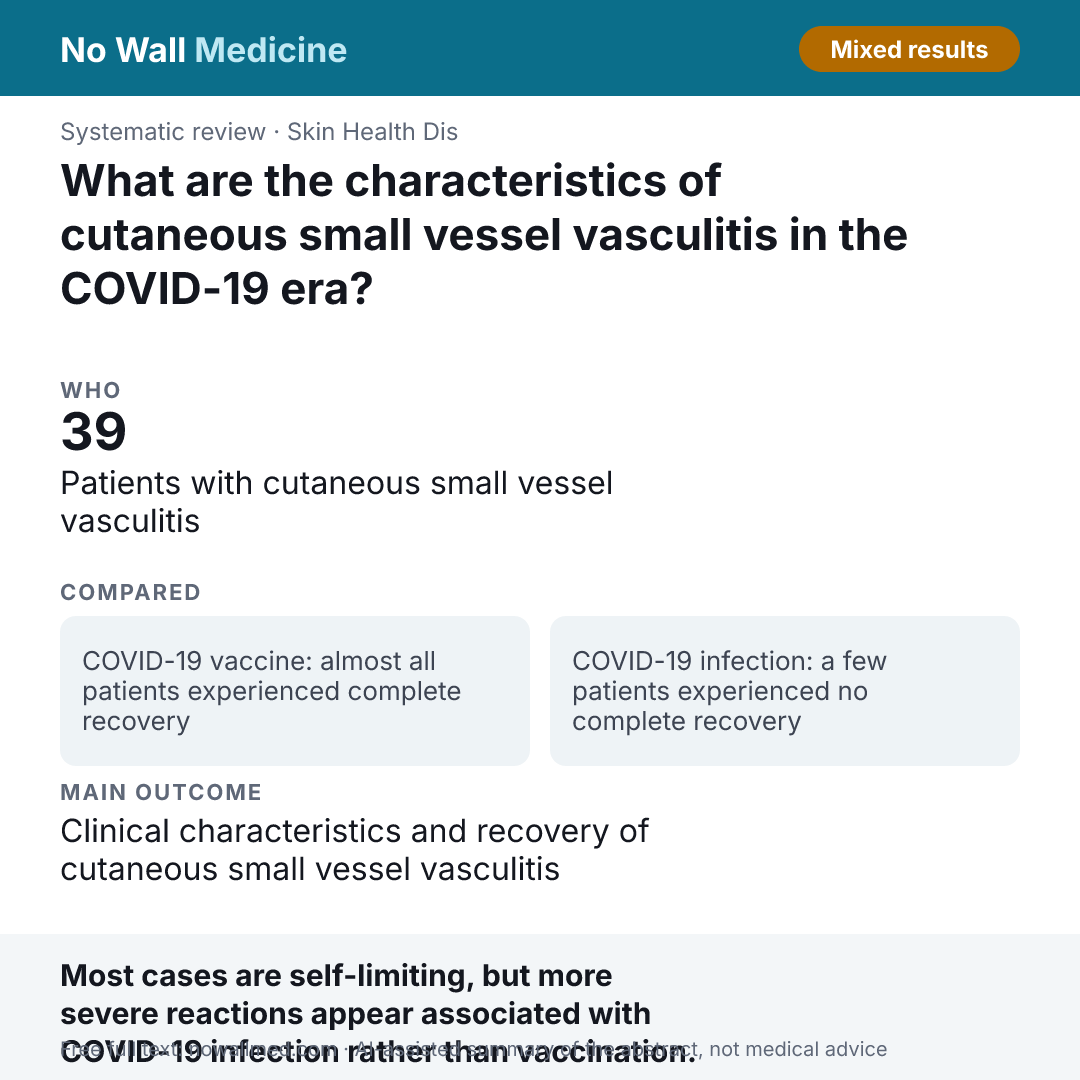
Cutaneous small vessel vasculitis in the COVID-19 era: a systematic review
Systematic reviewMixed results
What are the characteristics of cutaneous small vessel vasculitis in the COVID-19 era?
Who
39
Patients with cutaneous small vessel vasculitis
Compared
COVID-19 vaccine: almost all patients experienced complete recovery
COVID-19 infection: a few patients experienced no complete recovery
Main outcome
Clinical characteristics and recovery of cutaneous small vessel vasculitis
Bottom line: Most cases are self-limiting, but more severe reactions appear associated with COVID-19 infection rather than vaccination.
Limitation: Included only case reports, case series, correspondence articles, and letters to the editor.
Skin Health Dis · 2025-04-22 · Save PNG
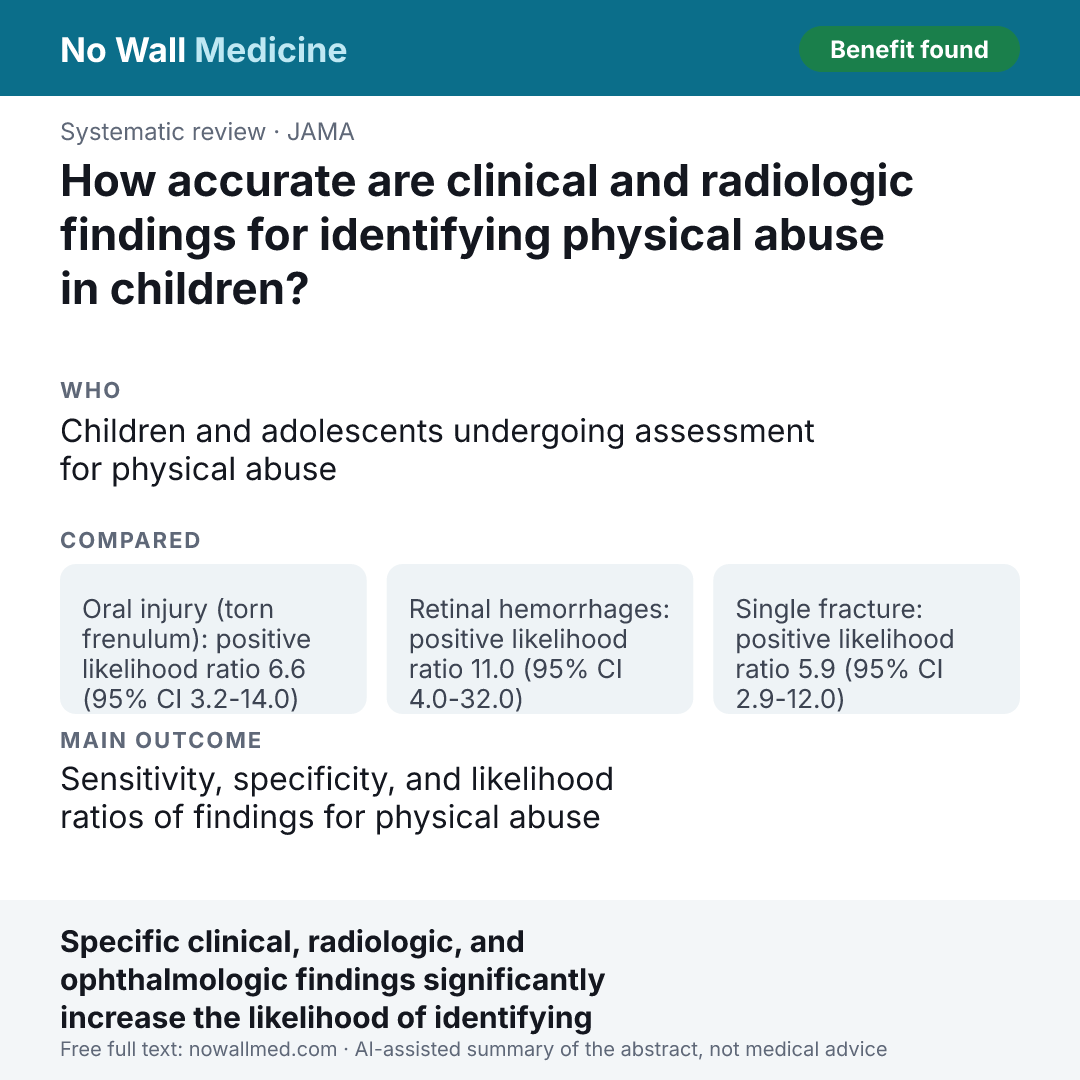
Has This Child Experienced Physical Abuse?: The Rational Clinical Examination Systematic Review
Systematic reviewBenefit found
How accurate are clinical and radiologic findings for identifying physical abuse in children?
Who
Children and adolescents undergoing assessment for physical abuse
Compared
Oral injury (torn frenulum): positive likelihood ratio 6.6 (95% CI 3.2-14.0)
Retinal hemorrhages: positive likelihood ratio 11.0 (95% CI 4.0-32.0)
Single fracture: positive likelihood ratio 5.9 (95% CI 2.9-12.0)
Main outcome
Sensitivity, specificity, and likelihood ratios of findings for physical abuse
Bottom line: Specific clinical, radiologic, and ophthalmologic findings significantly increase the likelihood of identifying physical abuse in children.
JAMA · 2025-04-21 · Save PNG
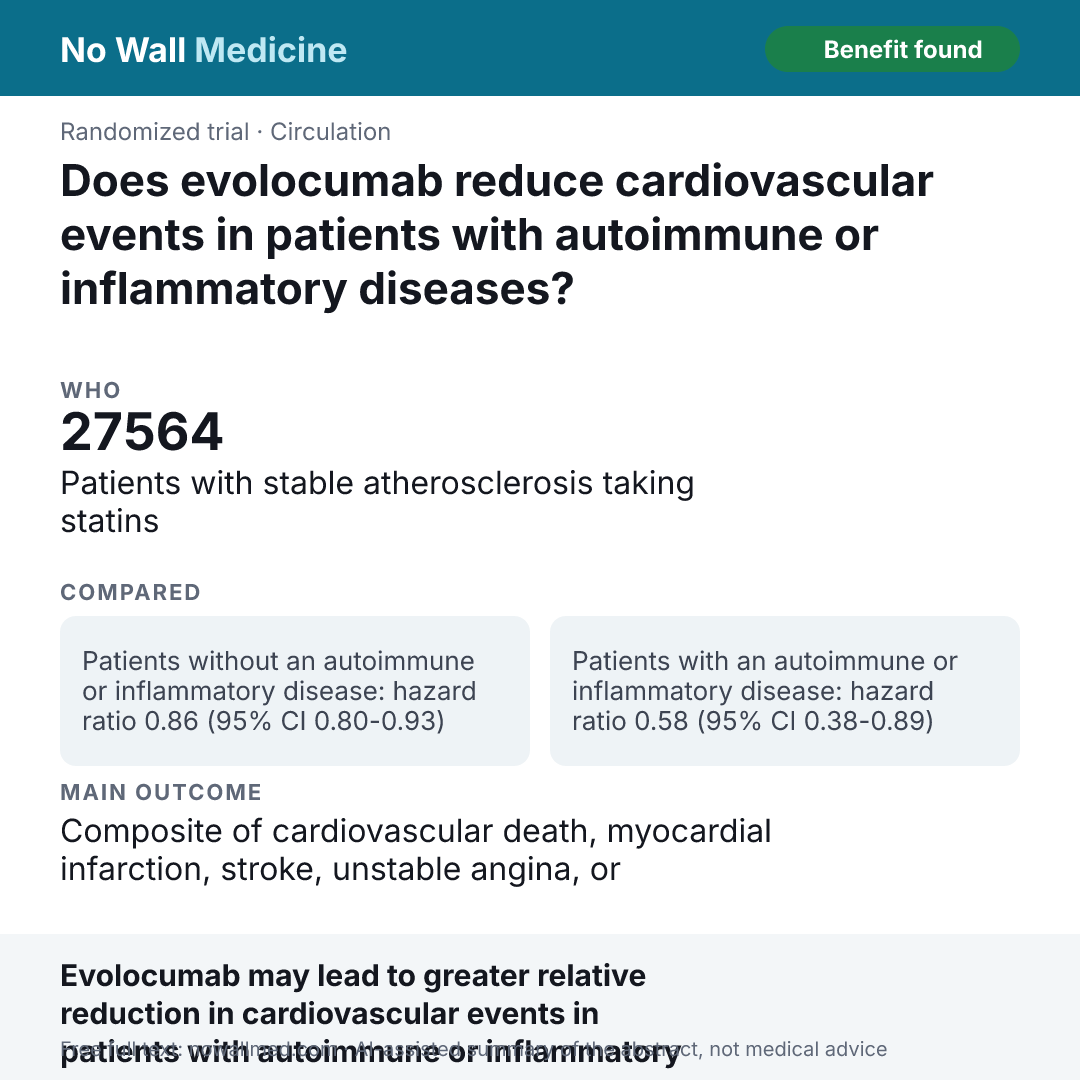
Intensive Lowering of LDL Cholesterol Levels With Evolocumab in Autoimmune or Inflammatory Diseases: An Analysis of the FOURIER Trial
Randomized trialBenefit found
Does evolocumab reduce cardiovascular events in patients with autoimmune or inflammatory diseases?
Who
27564
Patients with stable atherosclerosis taking statins
Compared
Patients without an autoimmune or inflammatory disease: hazard ratio 0.86 (95% CI 0.80-0.93)
Patients with an autoimmune or inflammatory disease: hazard ratio 0.58 (95% CI 0.38-0.89)
Main outcome
Composite of cardiovascular death, myocardial infarction, stroke, unstable angina, or coronary revascularization
Result: hazard ratio 0.58 (95% CI 0.38-0.89) in patients with AIID
Bottom line: Evolocumab may lead to greater relative reduction in cardiovascular events in patients with autoimmune or inflammatory diseases.
Circulation · 2025-04-21 · Save PNG