Visual abstracts
New randomized trials and meta-analyses from leading journals at a glance: who was studied, what was compared, and what was found. Every paper is free to read in full.
All specialtiesCardiology 4763Oncology 4043Gastroenterology & Hepatology 1903Infectious Disease 3756Neurology 1872Psychiatry & Mental Health 2216Pulmonology 2044Critical Care 1319Endocrinology & Diabetes 2544Pediatrics 2889Surgery 2480Orthopedics & Sports Medicine 917Neurosurgery 525Cardiothoracic & Vascular Surgery 656Plastic & Reconstructive Surgery 574Nephrology 1107Rheumatology 810Hematology 1090Dermatology 611Ophthalmology 532Obstetrics & Gynecology 1645Public & Global Health 1037Radiology & Imaging 619Anesthesiology 958Urology 745ENT (Otolaryngology) 494Emergency Medicine 481Allergy & Immunology 309Geriatrics 972Family Medicine & Primary Care 534Medical Genetics & Genomics 659Pathology & Laboratory Medicine 156Physical Medicine & Rehabilitation 734Palliative Care 421Nutrition 1560Digital Health & AI 2137General Medicine 318
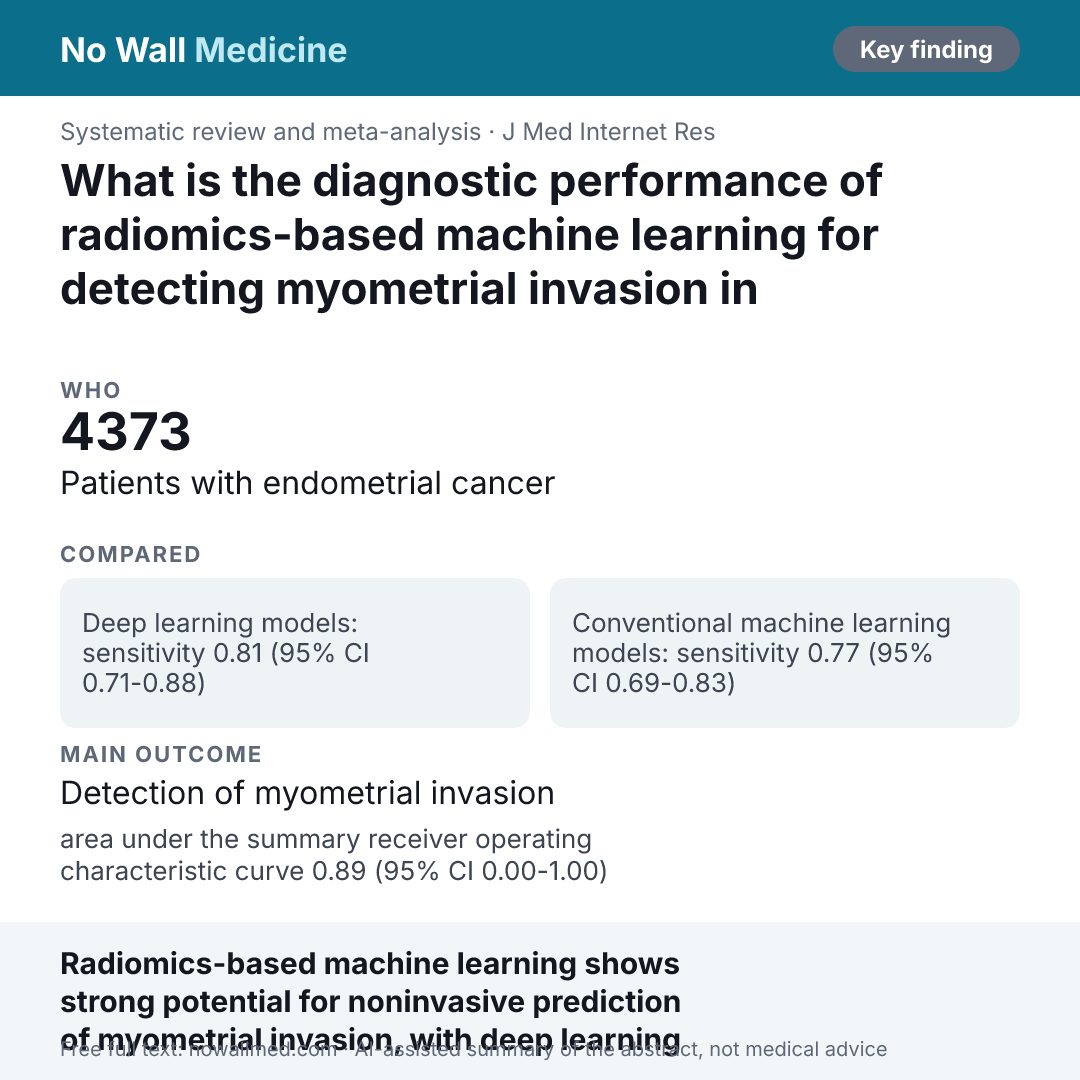
Radiomics-Based Machine Learning for the Detection of Myometrial Invasion in Endometrial Cancer: Systematic Review and Meta-Analysis
Systematic review and meta-analysisKey finding
What is the diagnostic performance of radiomics-based machine learning for detecting myometrial invasion in endometrial cancer?
Who
4373
Patients with endometrial cancer
Compared
Deep learning models: sensitivity 0.81 (95% CI 0.71-0.88)
Conventional machine learning models: sensitivity 0.77 (95% CI 0.69-0.83)
Main outcome
Detection of myometrial invasion
Result: area under the summary receiver operating characteristic curve 0.89 (95% CI 0.00-1.00)
Bottom line: Radiomics-based machine learning shows strong potential for noninvasive prediction of myometrial invasion, with deep learning outperforming conventional machine learning.
Limitation: Current evidence is limited and relies mainly on internal validation.
J Med Internet Res · 2025-11-27 · Save PNG
Influence of age, cognitive function, attention, and mental state on the effectiveness of EEG-based brain-computer interface device use: a systematic review
Systematic reviewMixed results
How do age, cognitive function, attention, and mental state influence EEG-based brain-computer interface effectiveness?
Who
Humans in twenty-five studies
Compared
Visual paradigms: stable performance across age groups
Motor imagery systems: higher sensitivity to cognitive and developmental differences
Main outcome
electroencephalography-based brain-computer interface performance metrics
Bottom line: Age and cognitive traits impact brain-computer interface performance and system adaptability across different paradigms.
J Neuroeng Rehabil · 2025-11-27 · Save PNG

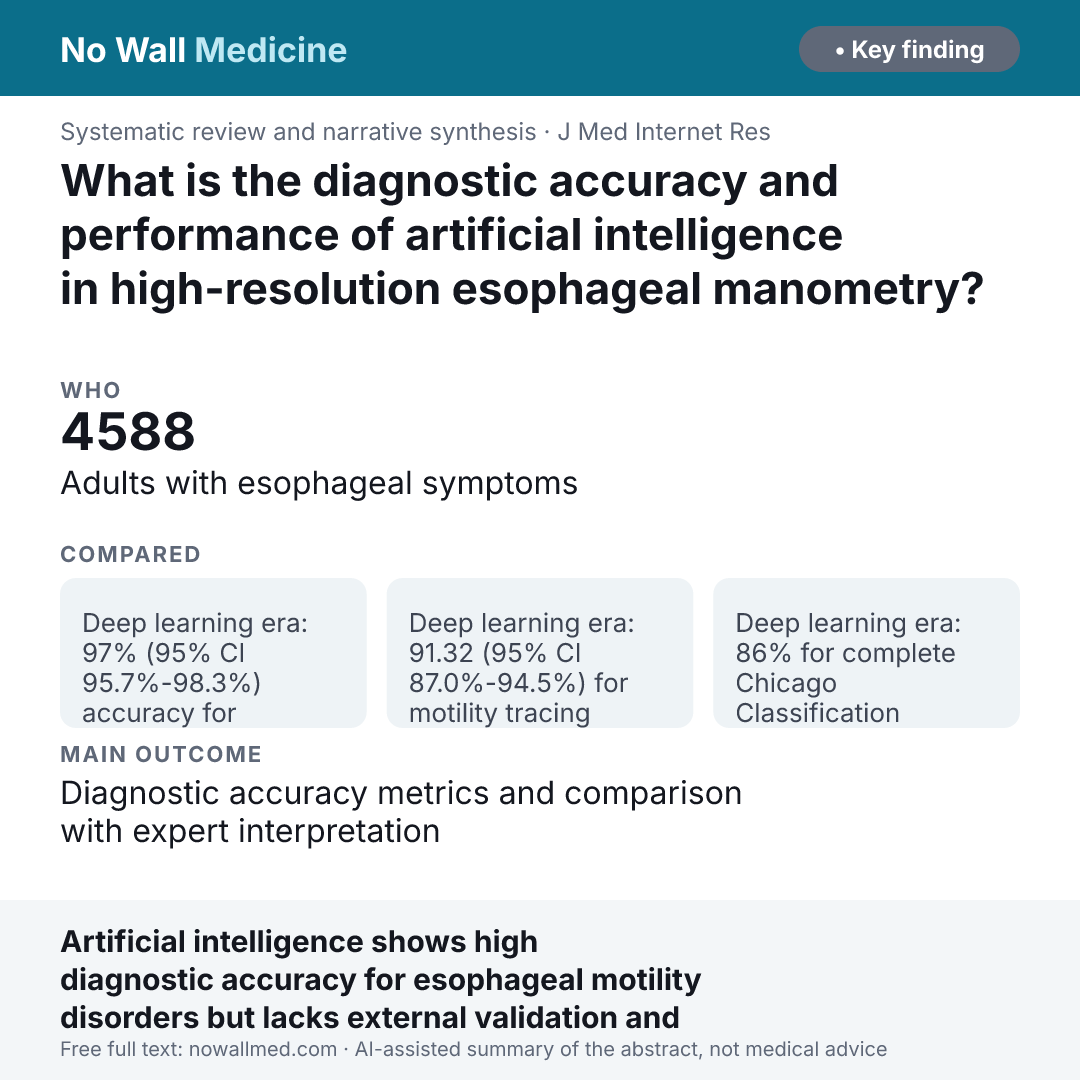
AI in Esophageal Motility Disorders: Systematic Review of High-Resolution Manometry Studies
Systematic review and narrative synthesisKey finding
What is the diagnostic accuracy and performance of artificial intelligence in high-resolution esophageal manometry?
Who
4588
Adults with esophageal symptoms
Compared
Deep learning era: 97% (95% CI 95.7%-98.3%) accuracy for integrated relaxation pressure classification
Deep learning era: 91.32 (95% CI 87.0%-94.5%) for motility tracing
Deep learning era: 86% for complete Chicago Classification automation
Main outcome
Diagnostic accuracy metrics and comparison with expert interpretation
Bottom line: Artificial intelligence shows high diagnostic accuracy for esophageal motility disorders but lacks external validation and regulatory approval.
Limitation: Zero percent of studies performed external validation and all had high concern for applicability due to lack of real-world testing.
J Med Internet Res · 2025-11-27 · Save PNG
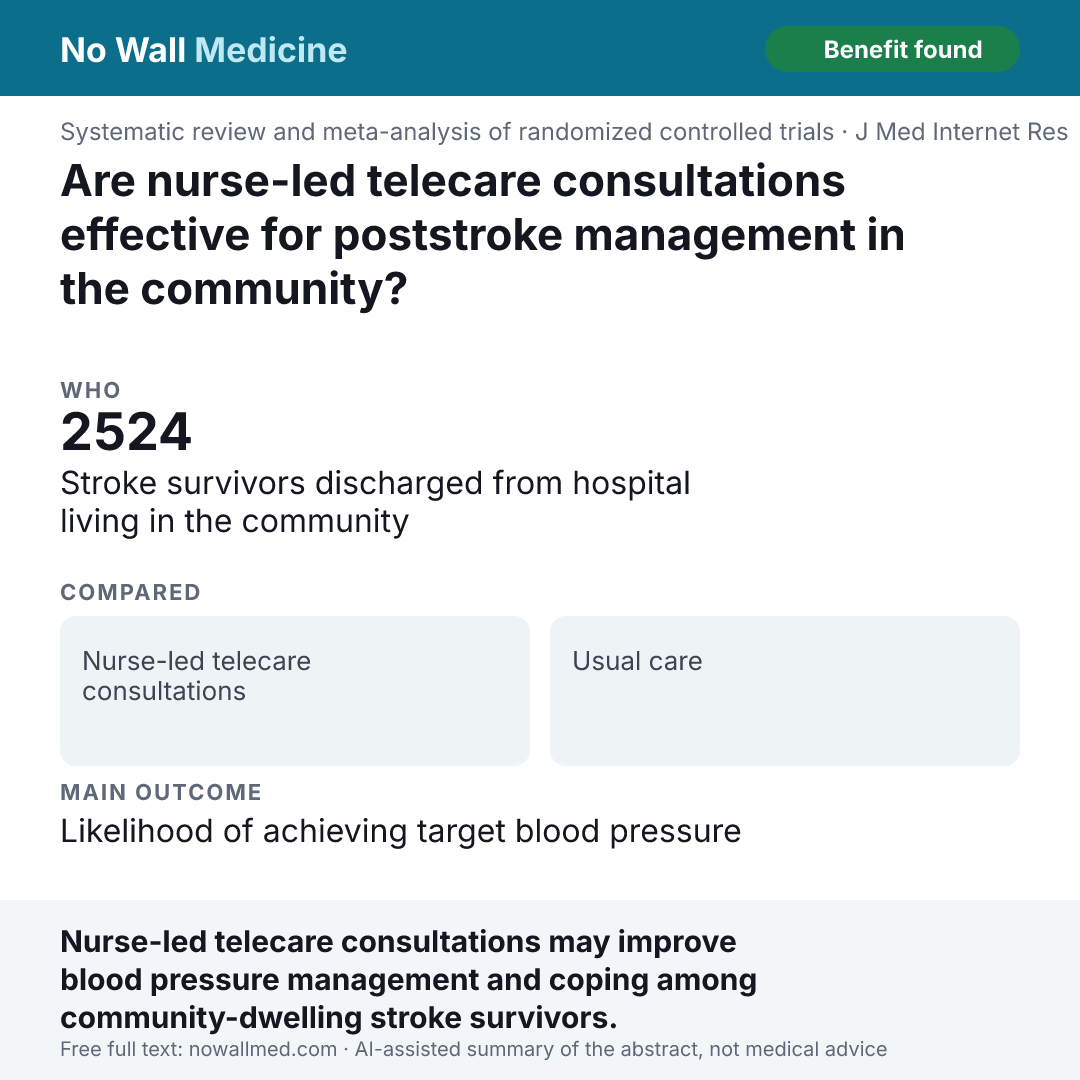
The Effectiveness of Nurse-Led Telecare Consultations Among Patients Who Have Experienced a Stroke: Systematic Review and Meta-Analysis
Systematic review and meta-analysis of randomized controlled trialsBenefit found
Are nurse-led telecare consultations effective for poststroke management in the community?
Who
2524
Stroke survivors discharged from hospital living in the community
Compared
Nurse-led telecare consultations
Usual care
Main outcome
Likelihood of achieving target blood pressure
Result: odds ratio 2.33 (95% CI 1.83-2.98)
Bottom line: Nurse-led telecare consultations may improve blood pressure management and coping among community-dwelling stroke survivors.
Limitation: Substantial heterogeneity for several key outcomes and inconclusive pooled effects for continuous outcomes.
J Med Internet Res · 2025-11-27 · Save PNG
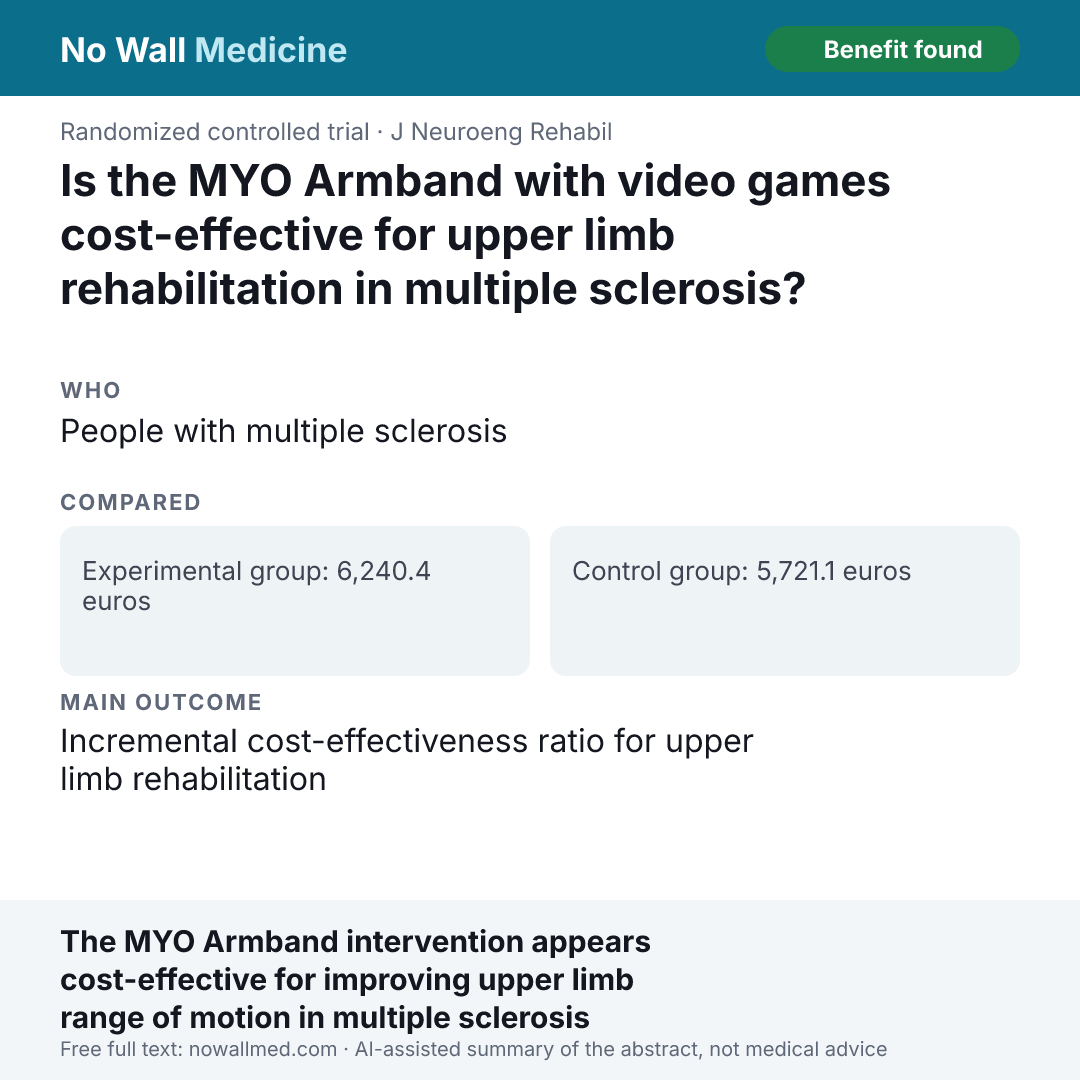
Cost-effectiveness analysis of the MYO Armband® device in combination with specifically designed video games for upper limb rehabilitation in people with multiple sclerosis
Randomized controlled trialBenefit found
Is the MYO Armband with video games cost-effective for upper limb rehabilitation in multiple sclerosis?
Who
People with multiple sclerosis
Compared
Experimental group: 6,240.4 euros
Control group: 5,721.1 euros
Main outcome
Incremental cost-effectiveness ratio for upper limb rehabilitation
Bottom line: The MYO Armband intervention appears cost-effective for improving upper limb range of motion in multiple sclerosis patients.
J Neuroeng Rehabil · 2025-11-27 · Save PNG
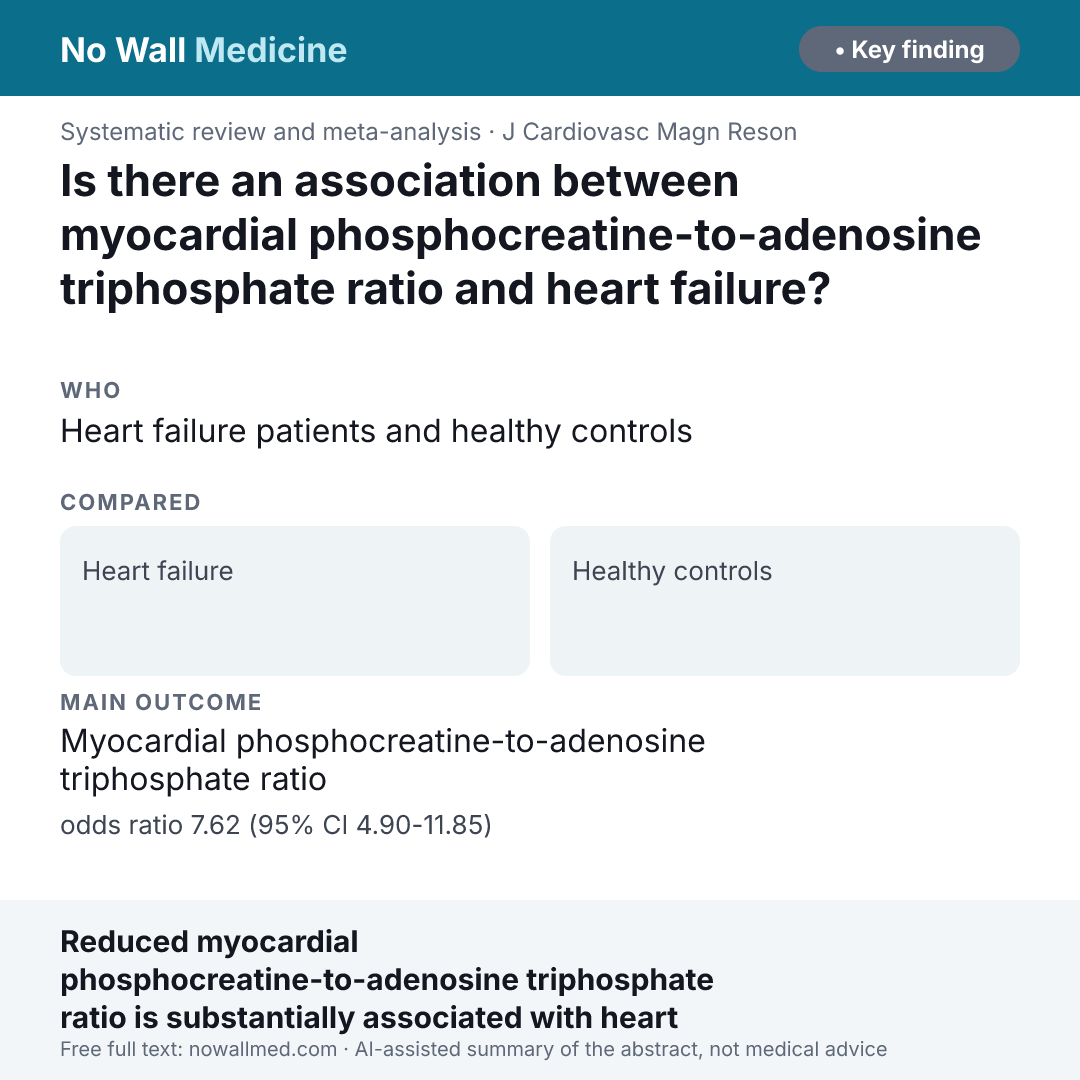
Myocardial energy metabolism in heart failure: Systematic review and meta-analysis of Phosphorus-31 magnetic resonance spectroscopy phosphocreatine/adenosine triphosphate ratio
Systematic review and meta-analysisKey finding
Is there an association between myocardial phosphocreatine-to-adenosine triphosphate ratio and heart failure?
Who
Heart failure patients and healthy controls
Compared
Heart failure
Healthy controls
Main outcome
Myocardial phosphocreatine-to-adenosine triphosphate ratio
Result: odds ratio 7.62 (95% CI 4.90-11.85)
Bottom line: Reduced myocardial phosphocreatine-to-adenosine triphosphate ratio is substantially associated with heart failure.
Limitation: Moderate between-study heterogeneity was observed.
J Cardiovasc Magn Reson · 2025-11-27 · Save PNG
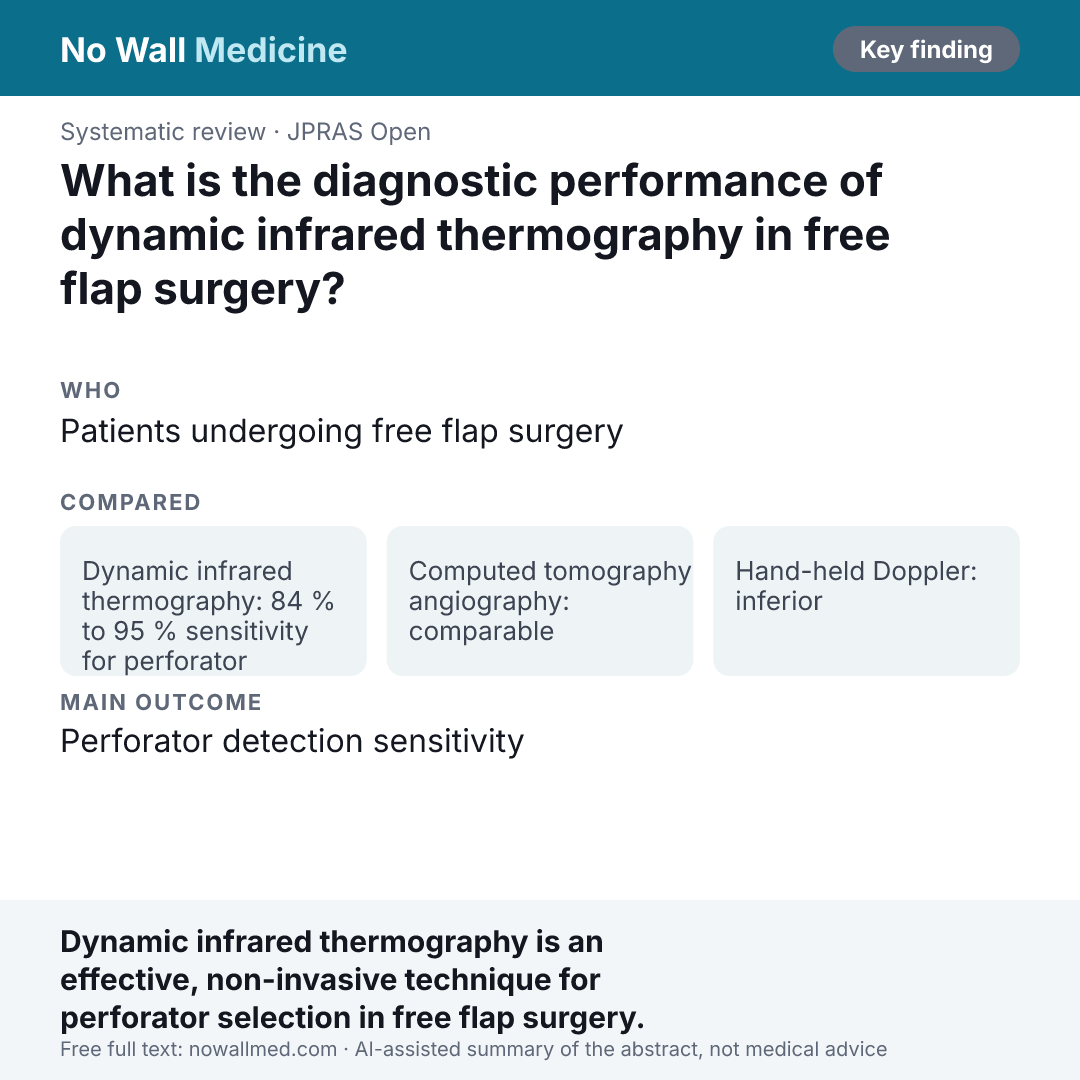
Dynamic infrared thermography in free flap surgery: A systematic review
Systematic reviewKey finding
What is the diagnostic performance of dynamic infrared thermography in free flap surgery?
Who
Patients undergoing free flap surgery
Compared
Dynamic infrared thermography: 84 % to 95 % sensitivity for perforator detection
Computed tomography angiography: comparable
Hand-held Doppler: inferior
Main outcome
Perforator detection sensitivity
Bottom line: Dynamic infrared thermography is an effective, non-invasive technique for perforator selection in free flap surgery.
Limitation: Lower resolution and shallow detection depth
JPRAS Open · 2025-11-27 · Save PNG
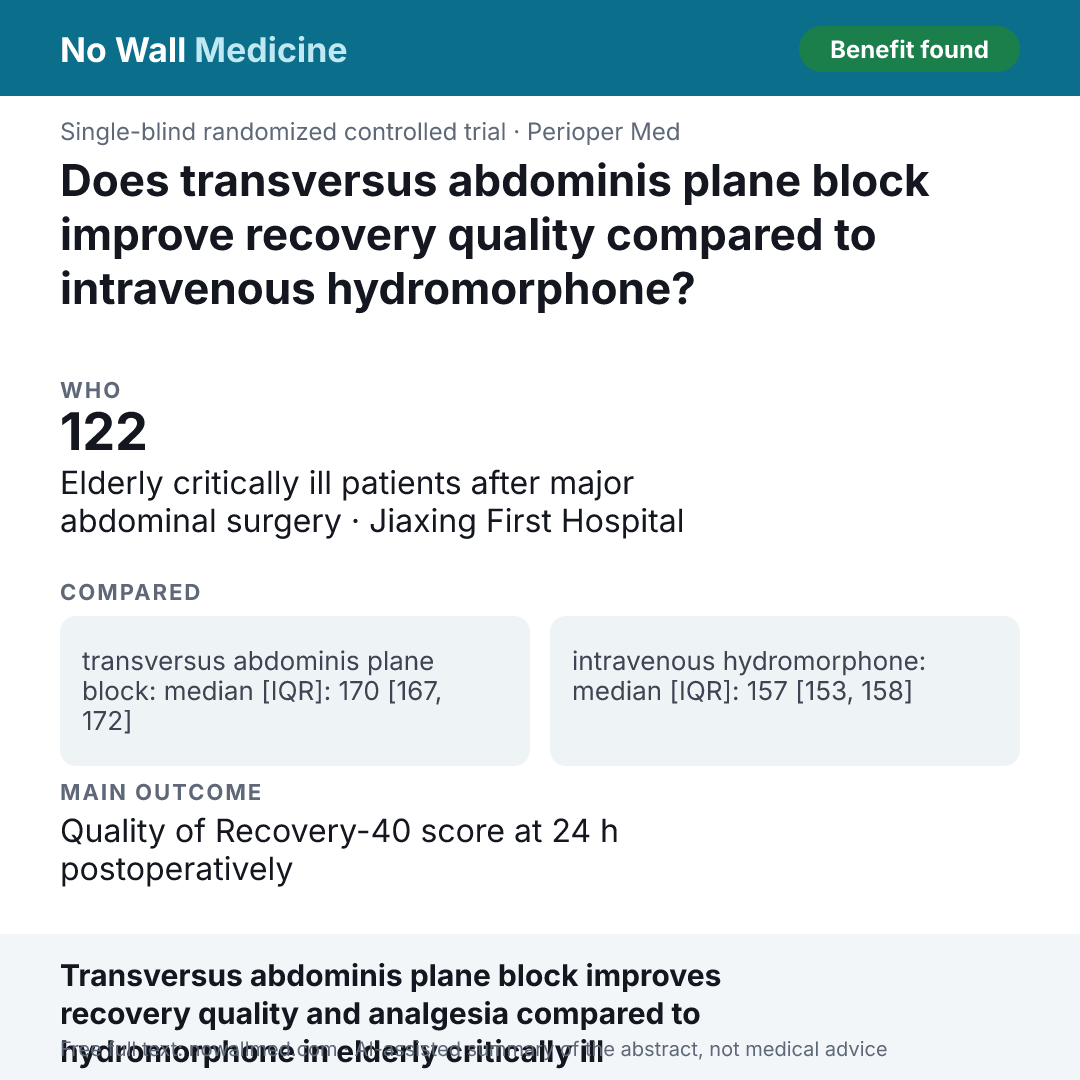
Effect of transversus abdominis plane block versus intravenous hydromorphone on the quality of postoperative recovery in elderly critically Ill patients in the SICU: a single-center, single-blind, randomised controlled trial
Single-blind randomized controlled trialBenefit found
Does transversus abdominis plane block improve recovery quality compared to intravenous hydromorphone?
Who
122
Elderly critically ill patients after major abdominal surgery · Jiaxing First Hospital
Compared
transversus abdominis plane block: median [IQR]: 170 [167, 172]
intravenous hydromorphone: median [IQR]: 157 [153, 158]
Main outcome
Quality of Recovery-40 score at 24 h postoperatively
Bottom line: Transversus abdominis plane block improves recovery quality and analgesia compared to hydromorphone in elderly critically ill patients.
Perioper Med · 2025-11-27 · Save PNG
Daily Mosnodenvir as Dengue Prophylaxis in a Controlled Human Infection Model
Phase 2a, double-blind, randomized trialEarly signal
Does daily mosnodenvir prevent dengue infection in a controlled human infection model?
Who
29
Healthy adults
Compared
0%Low dose mosnodenvir (0 of 6)
17%Medium dose mosnodenvir (1 of 6)
60%High dose mosnodenvir (6 of 10)
0%Placebo (0 of 7)
Main outcome
Dengue virus 3 RNA load
Result: two-sided P<0.001
Bottom line: High-dose oral mosnodenvir significantly lowered dengue virus 3 RNA load compared to placebo in this model.
Funded by: National Institute of Allergy and Infectious Diseases and Johnson & Johnson
NEJM · 2025-11-26 · Save PNG

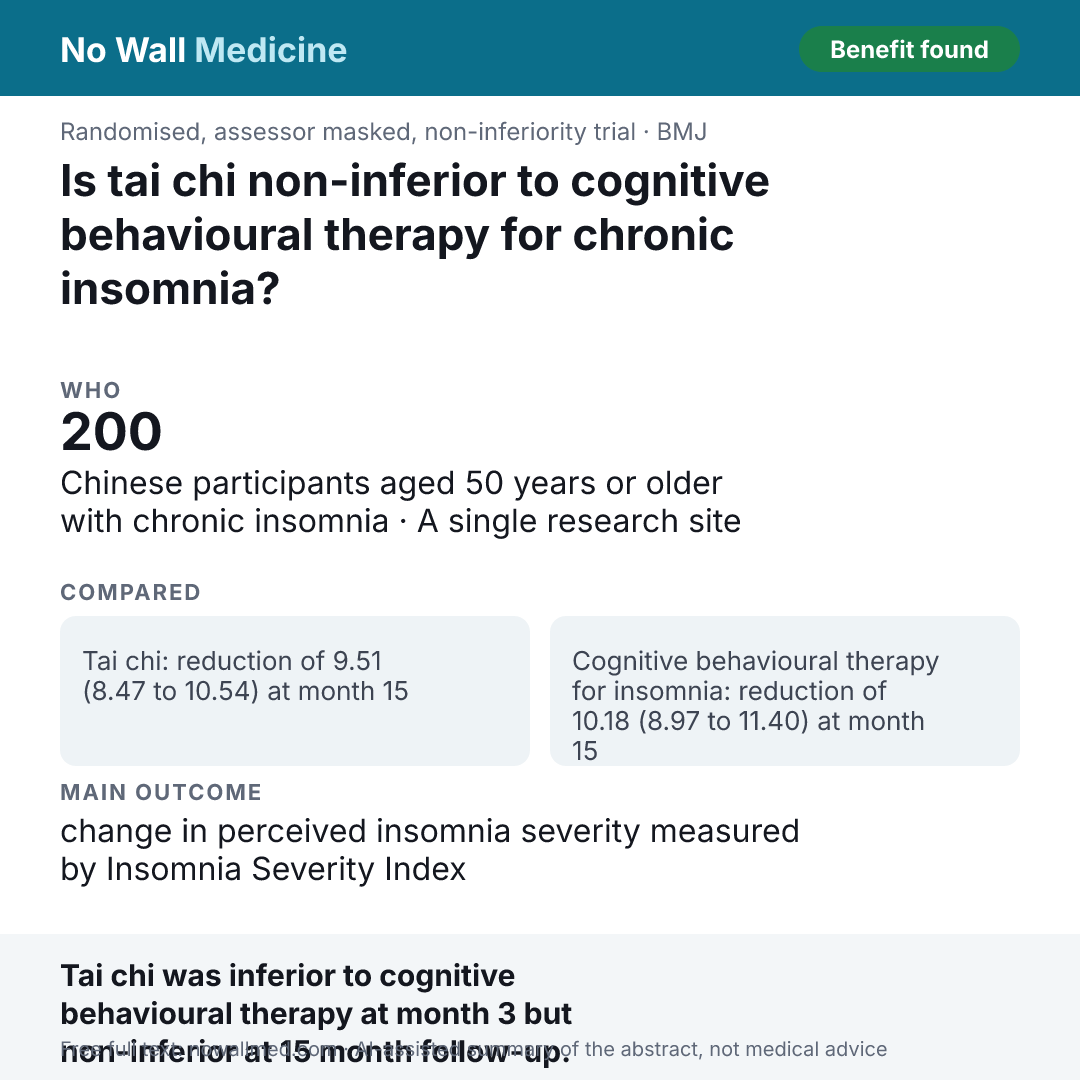
Tai chi or cognitive behavioural therapy for treating insomnia in middle aged and older adults: randomised non-inferiority trial
Randomised, assessor masked, non-inferiority trialBenefit found
Is tai chi non-inferior to cognitive behavioural therapy for chronic insomnia?
Who
200
Chinese participants aged 50 years or older with chronic insomnia · A single research site in Hong Kong
Compared
Tai chi: reduction of 9.51 (8.47 to 10.54) at month 15
Cognitive behavioural therapy for insomnia: reduction of 10.18 (8.97 to 11.40) at month 15
Main outcome
change in perceived insomnia severity measured by Insomnia Severity Index
Result: between group difference of 0.68 (-∞ to 2.00) at month 15
Bottom line: Tai chi was inferior to cognitive behavioural therapy at month 3 but non-inferior at 15 month follow-up.
BMJ · 2025-11-26 · Save PNG
Ambient AI Scribes in Clinical Practice: A Randomized Trial
Parallel three-group pragmatic randomized clinical trialMixed results
How do ambient artificial intelligence scribes impact documentation time and physician burnout?
Who
238
238 outpatient physicians representing 14 specialties
Compared
-1.7%Microsoft Dragon Ambient eXperience Copilot (95% CI, -9.4% to +5.9%)
9.5%Nabla (95% CI, -17.2% to -1.8%)
Usual-care control
Main outcome
change from baseline log writing time-in-note
Result: 9.5% (95% CI, -17.2% to -1.8%) decrease in time-in-note for Nabla
Bottom line: Nabla reduced time-in-note, while Microsoft Dragon Ambient eXperience Copilot showed no significant change versus control.
Limitation: secondary end point findings need confirmation in larger, multicenter trials
Funded by: University of California, Los Angeles, Department of Medicine and others
NEJM AI · 2025-11-26 · Save PNG

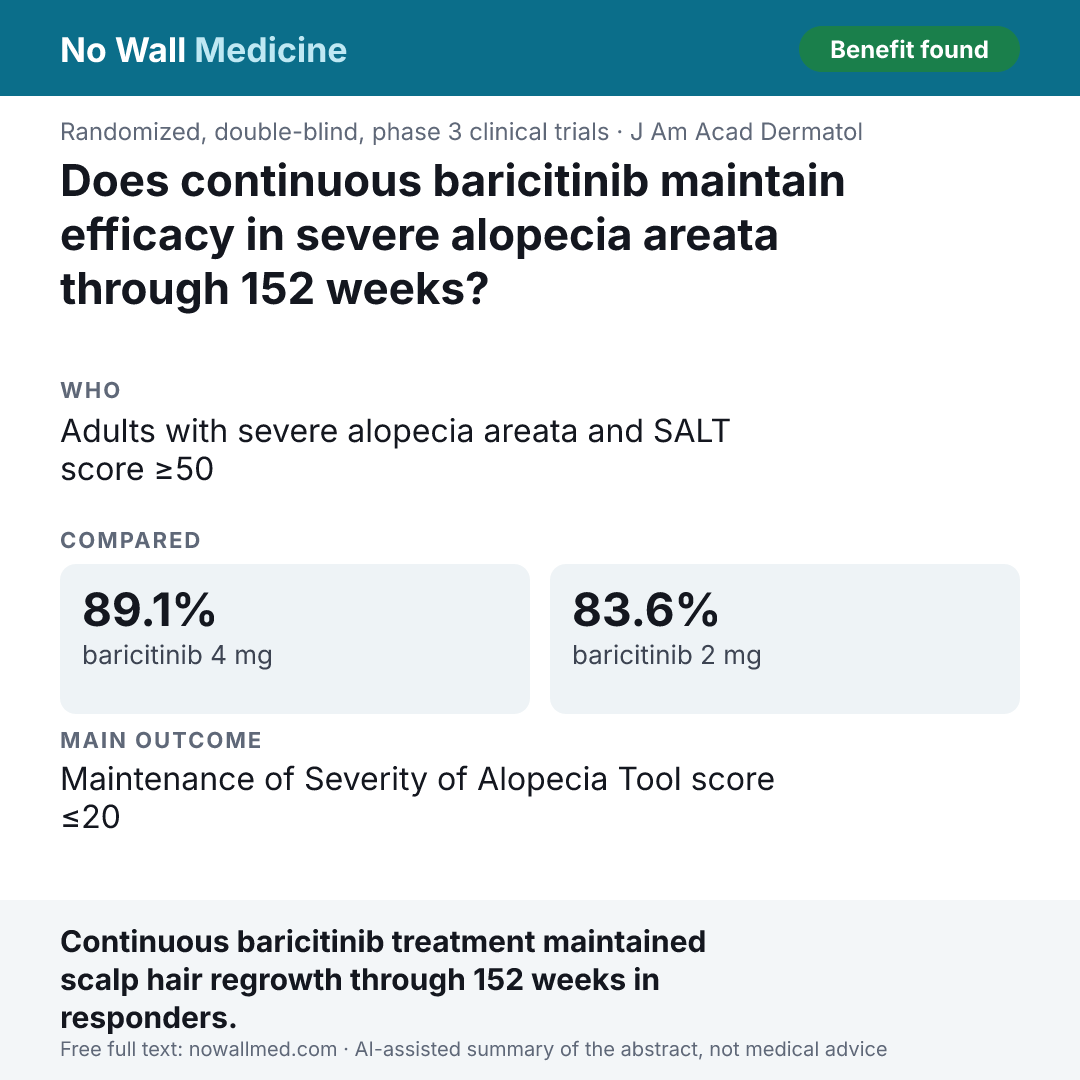
Maintenance of long-term efficacy with continuous baricitinib treatment in patients with severe alopecia areata: 3-year results from BRAVE-AA1 and BRAVE-AA2
Randomized, double-blind, phase 3 clinical trialsBenefit found
Does continuous baricitinib maintain efficacy in severe alopecia areata through 152 weeks?
Who
Adults with severe alopecia areata and SALT score ≥50
Compared
89.1%baricitinib 4 mg (115/129)
83.6%baricitinib 2 mg (56/67)
Main outcome
Maintenance of Severity of Alopecia Tool score ≤20
Bottom line: Continuous baricitinib treatment maintained scalp hair regrowth through 152 weeks in responders.
Limitation: Does not include outcomes of patients without SALT score ≤20 response at week 52.
J Am Acad Dermatol · 2025-11-26 · Save PNG
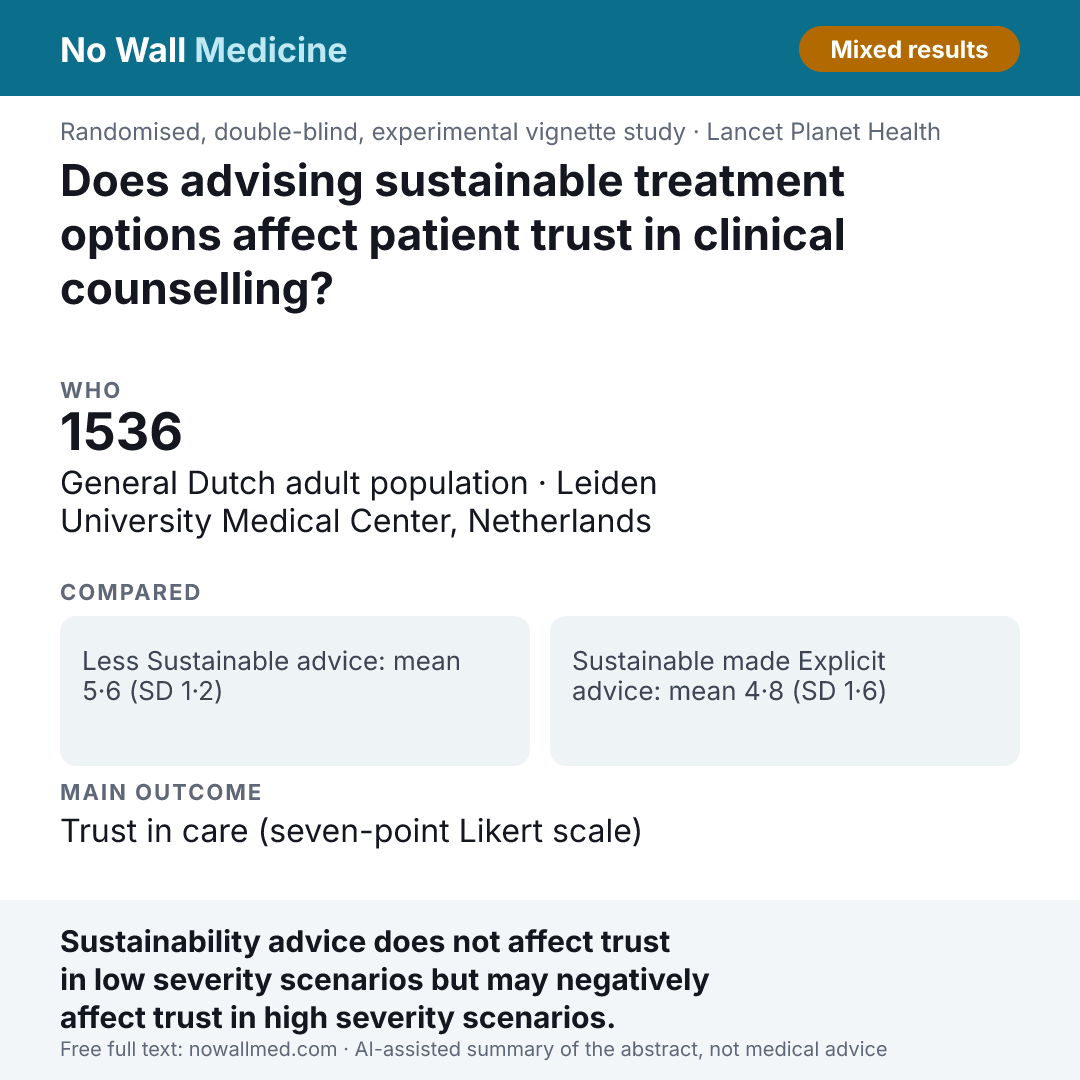
Integrating environmental sustainability in clinical counselling: a randomised, double-blind, experimental vignette study in the Netherlands
Randomised, double-blind, experimental vignette studyMixed results
Does advising sustainable treatment options affect patient trust in clinical counselling?
Who
1536
General Dutch adult population · Leiden University Medical Center, Netherlands
Compared
Less Sustainable advice: mean 5·6 (SD 1·2)
Sustainable made Explicit advice: mean 4·8 (SD 1·6)
Main outcome
Trust in care (seven-point Likert scale)
Bottom line: Sustainability advice does not affect trust in low severity scenarios but may negatively affect trust in high severity scenarios.
Limitation: Differences in trust scores varied across medical problems.
Funded by: Leiden University
Lancet Planet Health · 2025-11-26 · Save PNG
Sex Differences in Dilated Cardiomyopathy: Evidence Gaps and Future Directions
Systematic review and meta-analysisMixed results
How do sex and genotype influence clinical outcomes in dilated cardiomyopathy?
Who
Patients with dilated cardiomyopathy
Compared
Male patients with specific variants: higher arrhythmic event rates with PLN, DSP, and LMNA
Female patients with specific variants: highest arrhythmic risk with RBM20, DSP, and PLN
Main outcome
arrhythmic event rates and heart failure risk
Bottom line: Clinical outcomes in dilated cardiomyopathy are significantly influenced by both sex and specific genetic variants.
JACC · 2025-11-26 · Save PNG

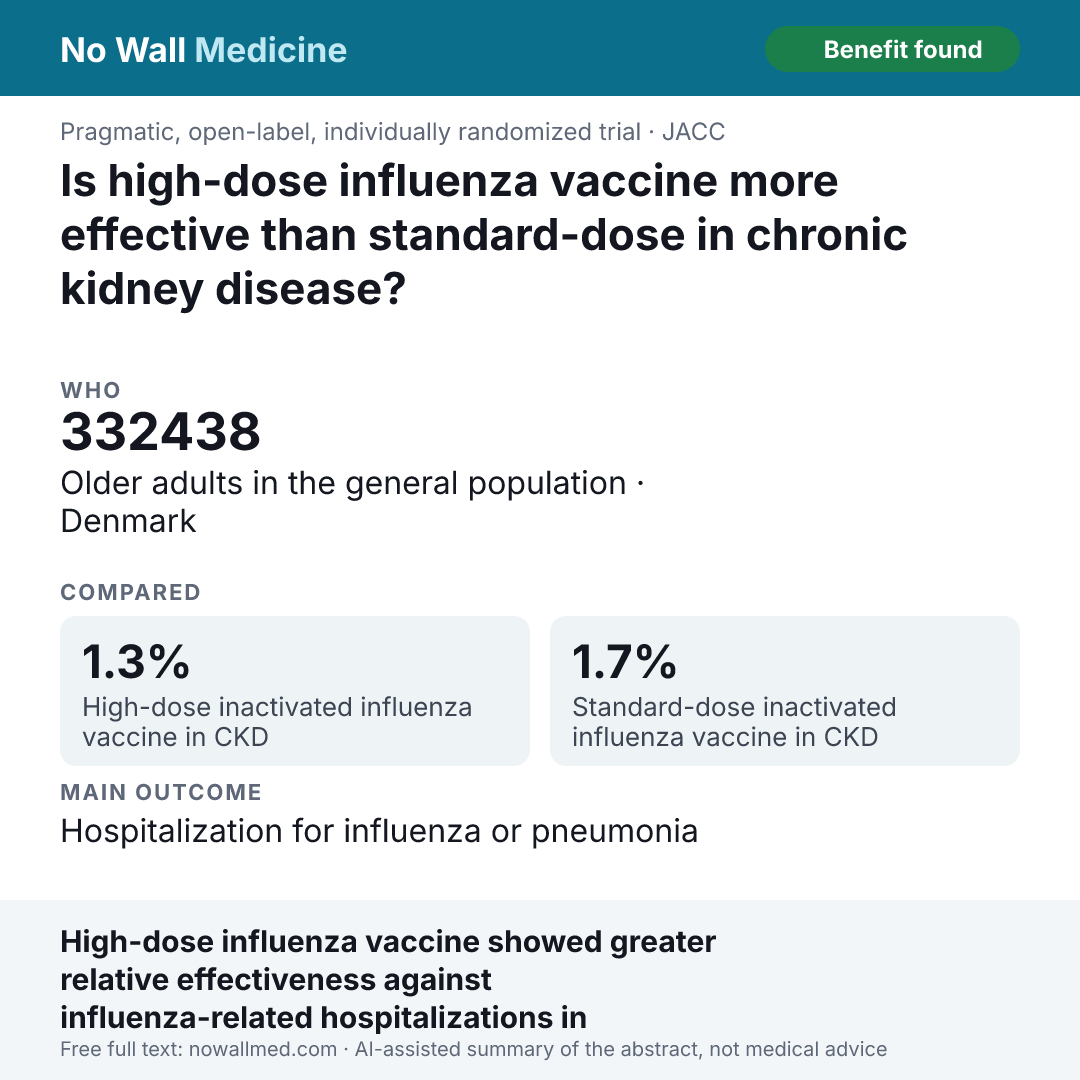
High-Dose vs Standard-Dose Influenza Vaccine in Chronic Kidney Disease: The DANFLU-2 Trial Subgroup Analysis
Pragmatic, open-label, individually randomized trialBenefit found
Is high-dose influenza vaccine more effective than standard-dose in chronic kidney disease?
Who
332438
Older adults in the general population · Denmark
Compared
1.3%High-dose inactivated influenza vaccine in CKD
1.7%Standard-dose inactivated influenza vaccine in CKD
Main outcome
Hospitalization for influenza or pneumonia
Result: relative vaccine effectiveness 16.9% (95% CI: 3.4%-28.5%)
Bottom line: High-dose influenza vaccine showed greater relative effectiveness against influenza-related hospitalizations in patients with chronic kidney disease.
JACC · 2025-11-26 · Save PNG
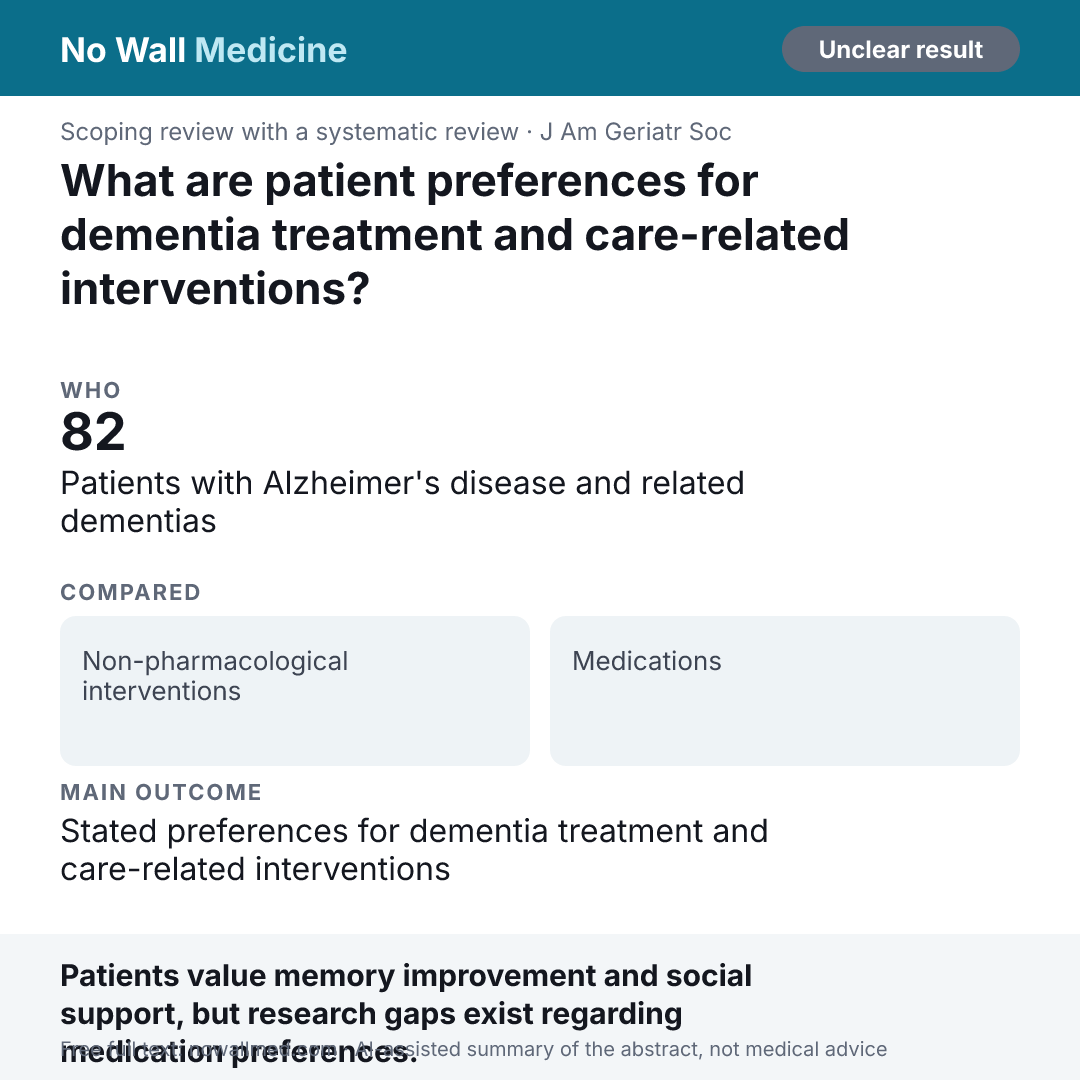
Patient Preferences for Dementia Interventions: A Scoping Review With a Systematic Review of Medications and Choice-Based Methods
Scoping review with a systematic reviewUnclear result
What are patient preferences for dementia treatment and care-related interventions?
Who
82
Patients with Alzheimer's disease and related dementias
Compared
Non-pharmacological interventions
Medications
Main outcome
Stated preferences for dementia treatment and care-related interventions
Bottom line: Patients value memory improvement and social support, but research gaps exist regarding medication preferences.
J Am Geriatr Soc · 2025-11-26 · Save PNG
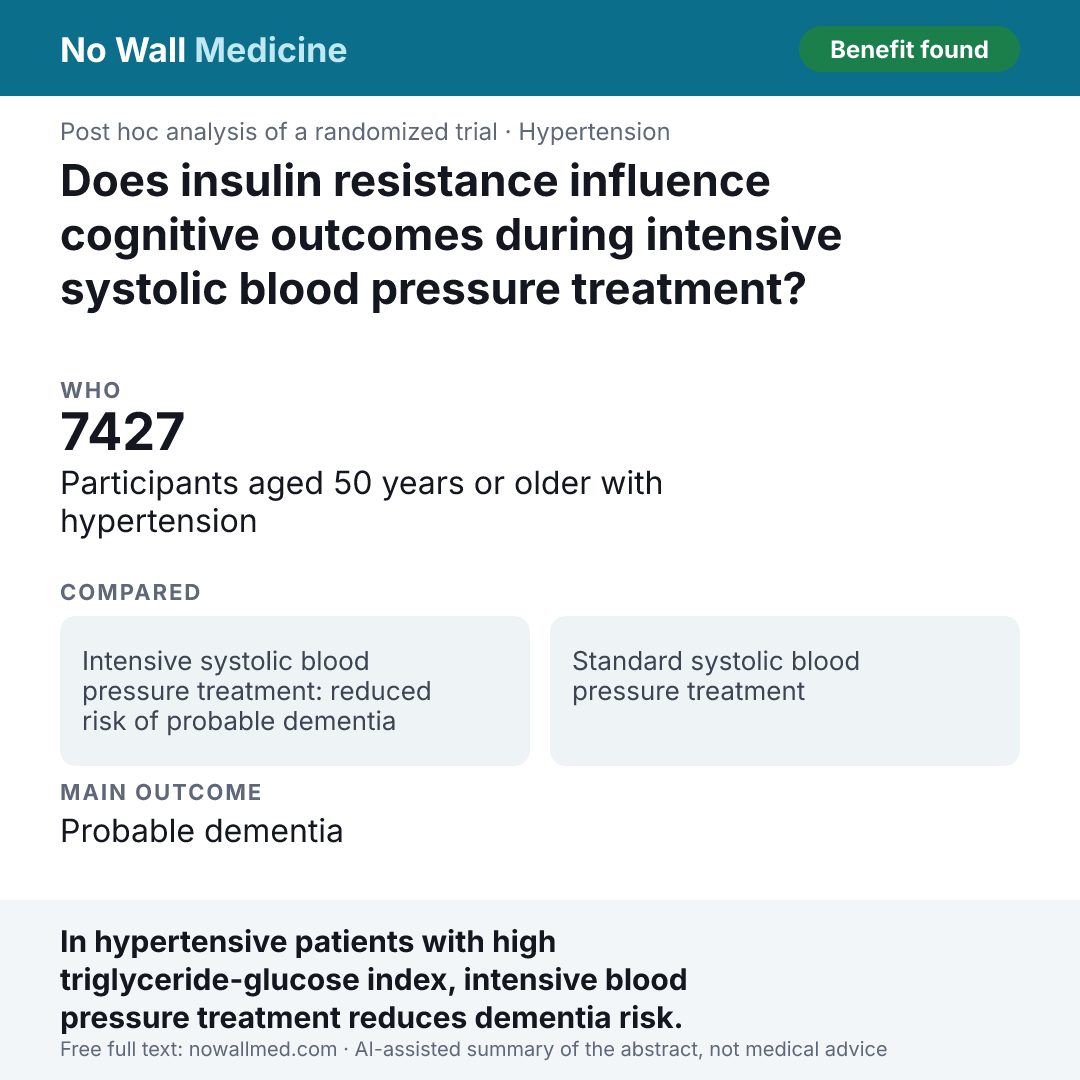
Insulin Resistance and Blood Pressure Control on Cognitive Outcomes
Post hoc analysis of a randomized trialBenefit found
Does insulin resistance influence cognitive outcomes during intensive systolic blood pressure treatment?
Who
7427
Participants aged 50 years or older with hypertension
Compared
Intensive systolic blood pressure treatment: reduced risk of probable dementia
Standard systolic blood pressure treatment
Main outcome
Probable dementia
Bottom line: In hypertensive patients with high triglyceride-glucose index, intensive blood pressure treatment reduces dementia risk.
Hypertension · 2025-11-26 · Save PNG
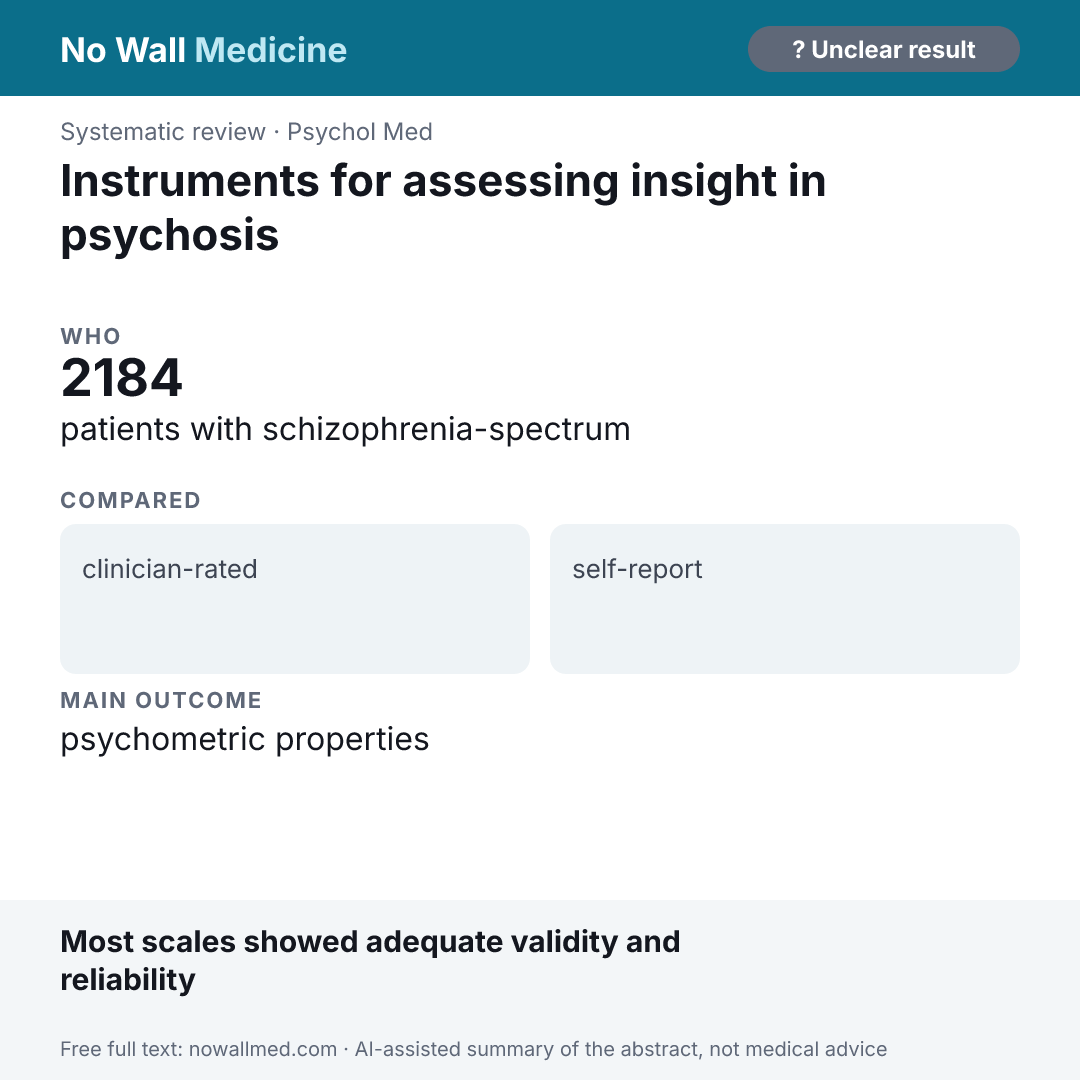
Instruments for assessing insight in psychosis: A systematic review of psychometric properties
Systematic reviewUnclear result
Instruments for assessing insight in psychosis
Who
2184
patients with schizophrenia-spectrum
Compared
clinician-rated
self-report
Main outcome
psychometric properties
Bottom line: Most scales showed adequate validity and reliability
Limitation: responsiveness to clinical change rarely tested
Psychol Med · 2025-11-26 · Save PNG
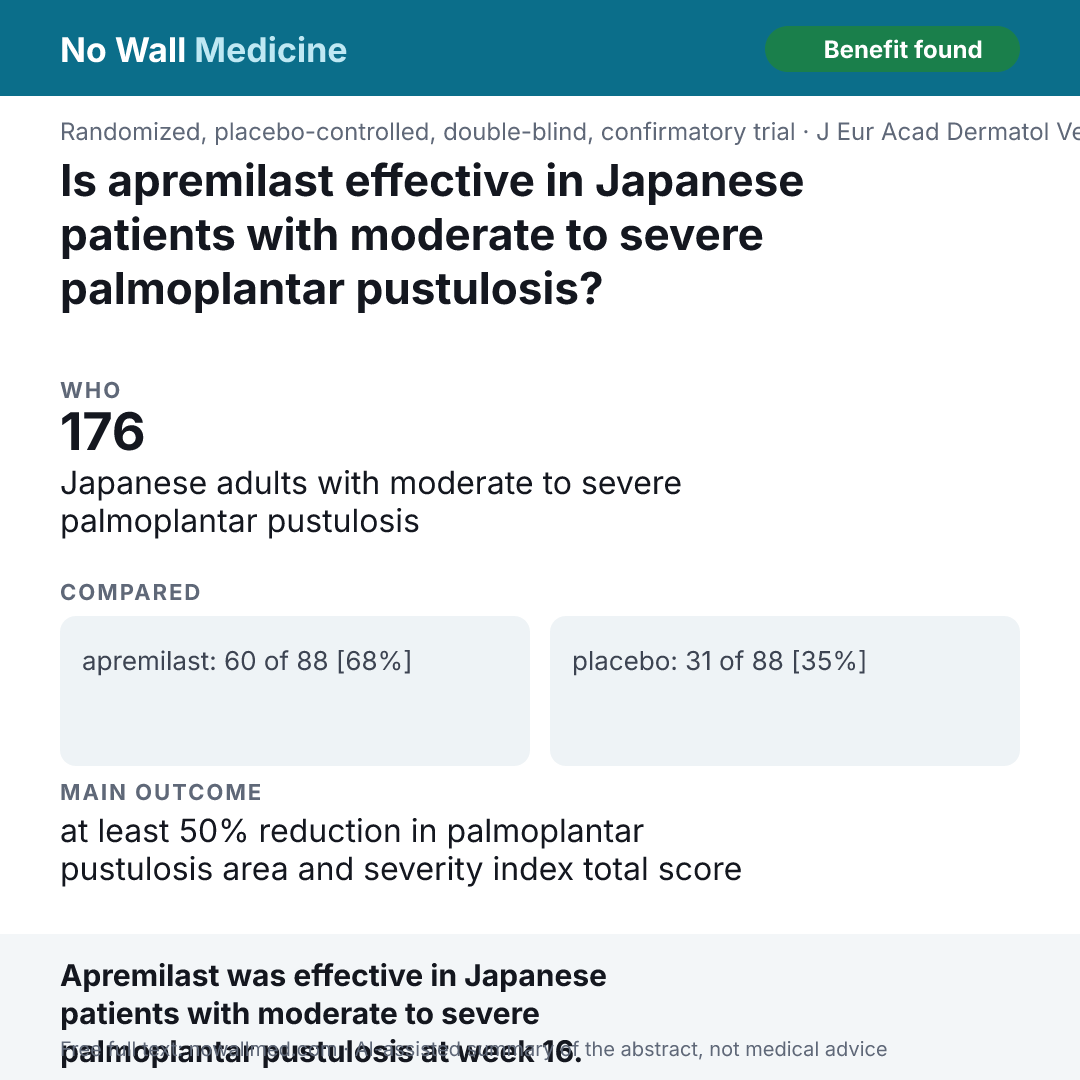
Apremilast in Japanese patients with palmoplantar pustulosis: A randomized, Phase 3 trial
Randomized, placebo-controlled, double-blind, confirmatory trialBenefit found
Is apremilast effective in Japanese patients with moderate to severe palmoplantar pustulosis?
Who
176
Japanese adults with moderate to severe palmoplantar pustulosis
Compared
apremilast: 60 of 88 [68%]
placebo: 31 of 88 [35%]
Main outcome
at least 50% reduction in palmoplantar pustulosis area and severity index total score
Result: treatment difference: 32.6% [95% CI: 18.7, 46.5]
Bottom line: Apremilast was effective in Japanese patients with moderate to severe palmoplantar pustulosis at week 16.
J Eur Acad Dermatol Venereol · 2025-11-26 · Save PNG
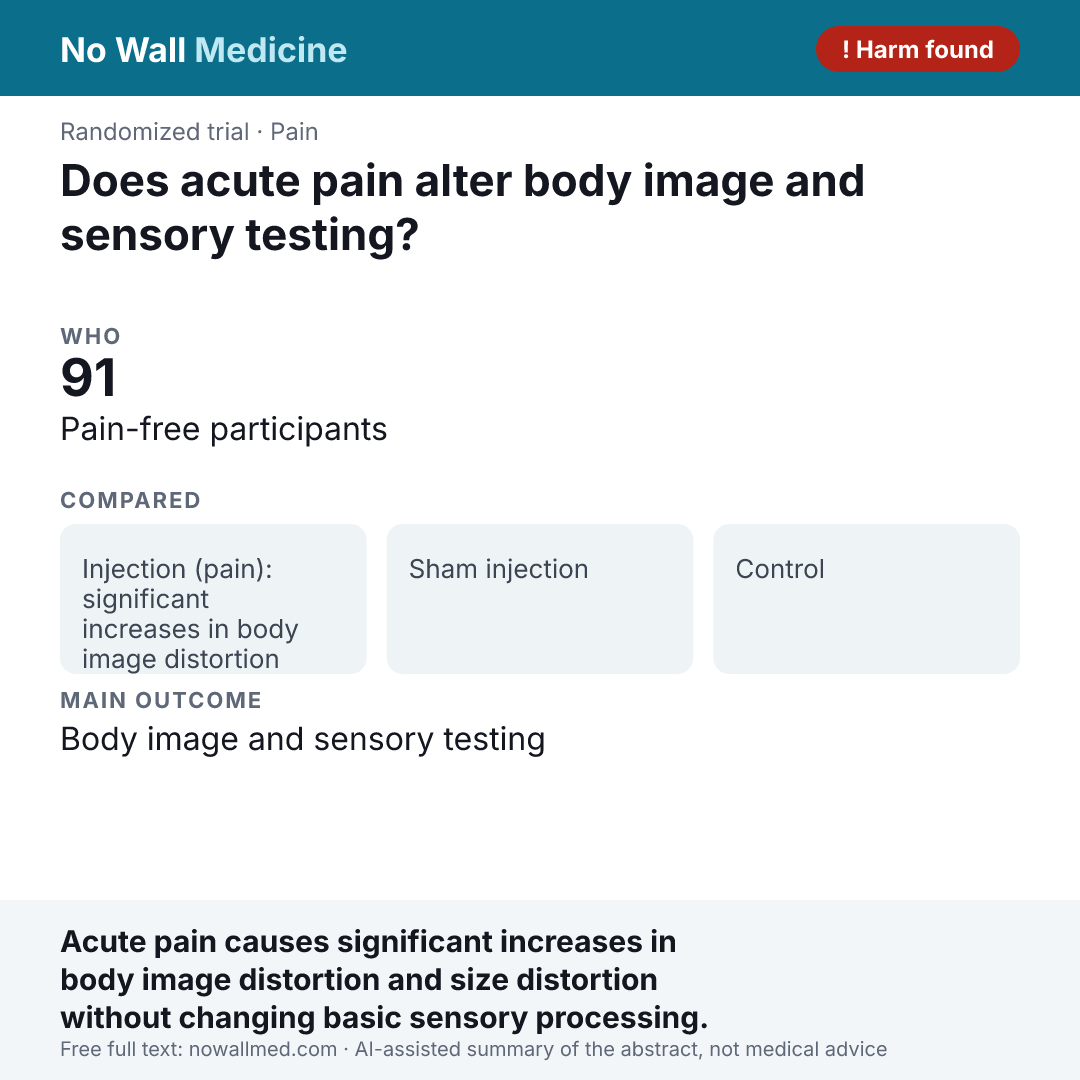
Perceiving pain alters body perception: the effects of acute pain on body image and sensory testing
Randomized trialHarm found
Does acute pain alter body image and sensory testing?
Who
91
Pain-free participants
Compared
Injection (pain): significant increases in body image distortion
Sham injection
Control
Main outcome
Body image and sensory testing
Bottom line: Acute pain causes significant increases in body image distortion and size distortion without changing basic sensory processing.
Pain · 2025-11-26 · Save PNG