Visual abstracts
New randomized trials and meta-analyses from leading journals at a glance: who was studied, what was compared, and what was found. Every paper is free to read in full.
All specialtiesCardiology 4763Oncology 4043Gastroenterology & Hepatology 1903Infectious Disease 3756Neurology 1872Psychiatry & Mental Health 2216Pulmonology 2044Critical Care 1319Endocrinology & Diabetes 2544Pediatrics 2889Surgery 2480Orthopedics & Sports Medicine 917Neurosurgery 525Cardiothoracic & Vascular Surgery 656Plastic & Reconstructive Surgery 574Nephrology 1107Rheumatology 810Hematology 1090Dermatology 611Ophthalmology 532Obstetrics & Gynecology 1645Public & Global Health 1037Radiology & Imaging 619Anesthesiology 958Urology 745ENT (Otolaryngology) 494Emergency Medicine 481Allergy & Immunology 309Geriatrics 972Family Medicine & Primary Care 534Medical Genetics & Genomics 659Pathology & Laboratory Medicine 156Physical Medicine & Rehabilitation 734Palliative Care 421Nutrition 1560Digital Health & AI 2137General Medicine 318
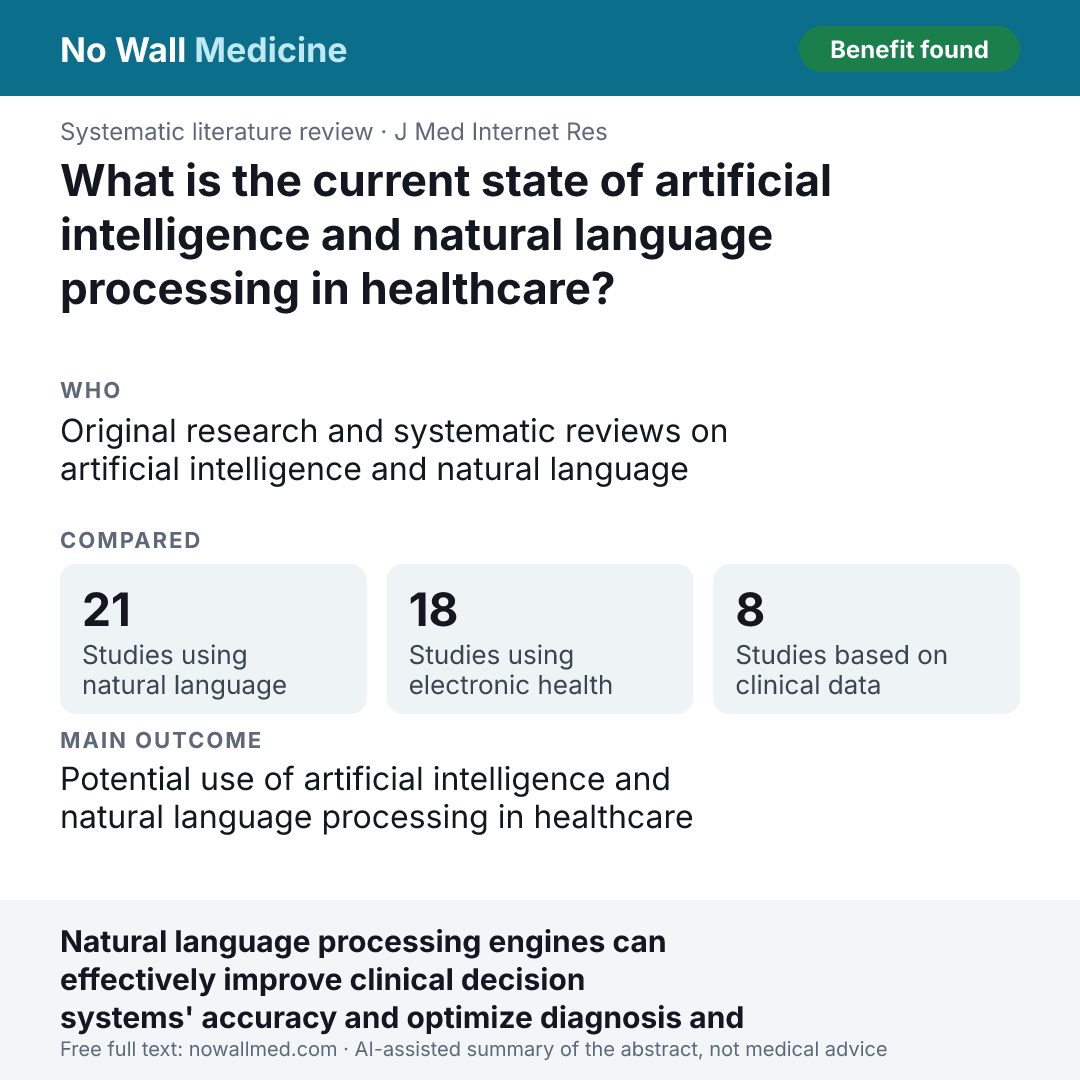
Clinical Decision Support and Natural Language Processing in Medicine: Systematic Literature Review
Systematic literature reviewBenefit found
What is the current state of artificial intelligence and natural language processing in healthcare?
Who
Original research and systematic reviews on artificial intelligence and natural language processing · PubMed, Embase, ScienceDirect, Scopus, and Web of Science databases
Compared
21Studies using natural language processing for data collection (81%)
18Studies using electronic health records as data source (69%)
8Studies based on clinical data (31%)
Main outcome
Potential use of artificial intelligence and natural language processing in healthcare
Bottom line: Natural language processing engines can effectively improve clinical decision systems' accuracy and optimize diagnosis and treatment flows.
J Med Internet Res · 2024-09-30 · Save PNG
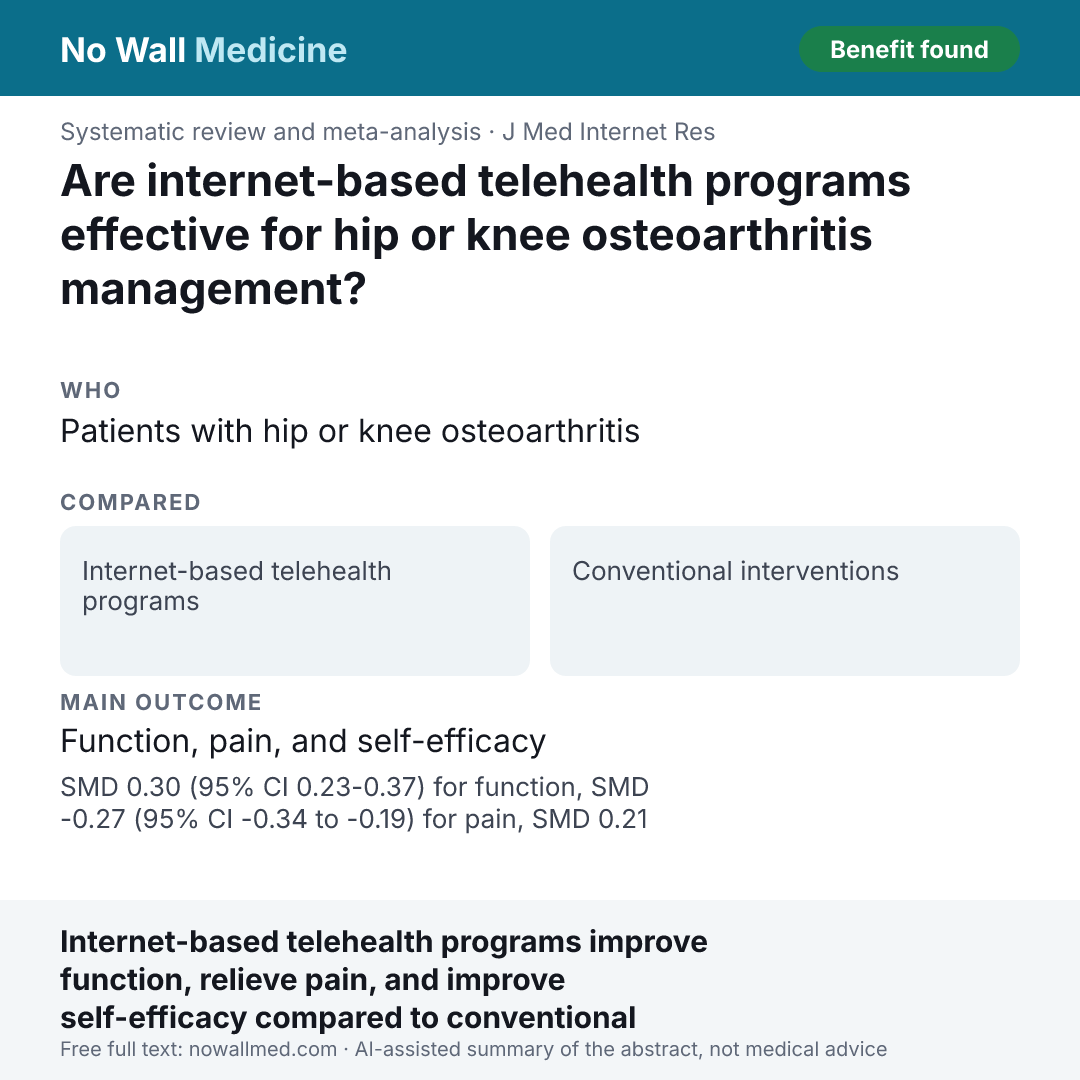
Effectiveness of Internet-Based Telehealth Programs in Patients With Hip or Knee Osteoarthritis: Systematic Review and Meta-Analysis
Systematic review and meta-analysisBenefit found
Are internet-based telehealth programs effective for hip or knee osteoarthritis management?
Who
Patients with hip or knee osteoarthritis
Compared
Internet-based telehealth programs
Conventional interventions
Main outcome
Function, pain, and self-efficacy
Result: SMD 0.30 (95% CI 0.23-0.37) for function, SMD -0.27 (95% CI -0.34 to -0.19) for pain, SMD 0.21 (95% CI 0.08-0.34) for self-efficacy
Bottom line: Internet-based telehealth programs improve function, relieve pain, and improve self-efficacy compared to conventional interventions for osteoarthritis.
Limitation: Limited evidence suggests the inclusion of exercise regimens in internet-based telehealth programs is recommended.
J Med Internet Res · 2024-09-30 · Save PNG
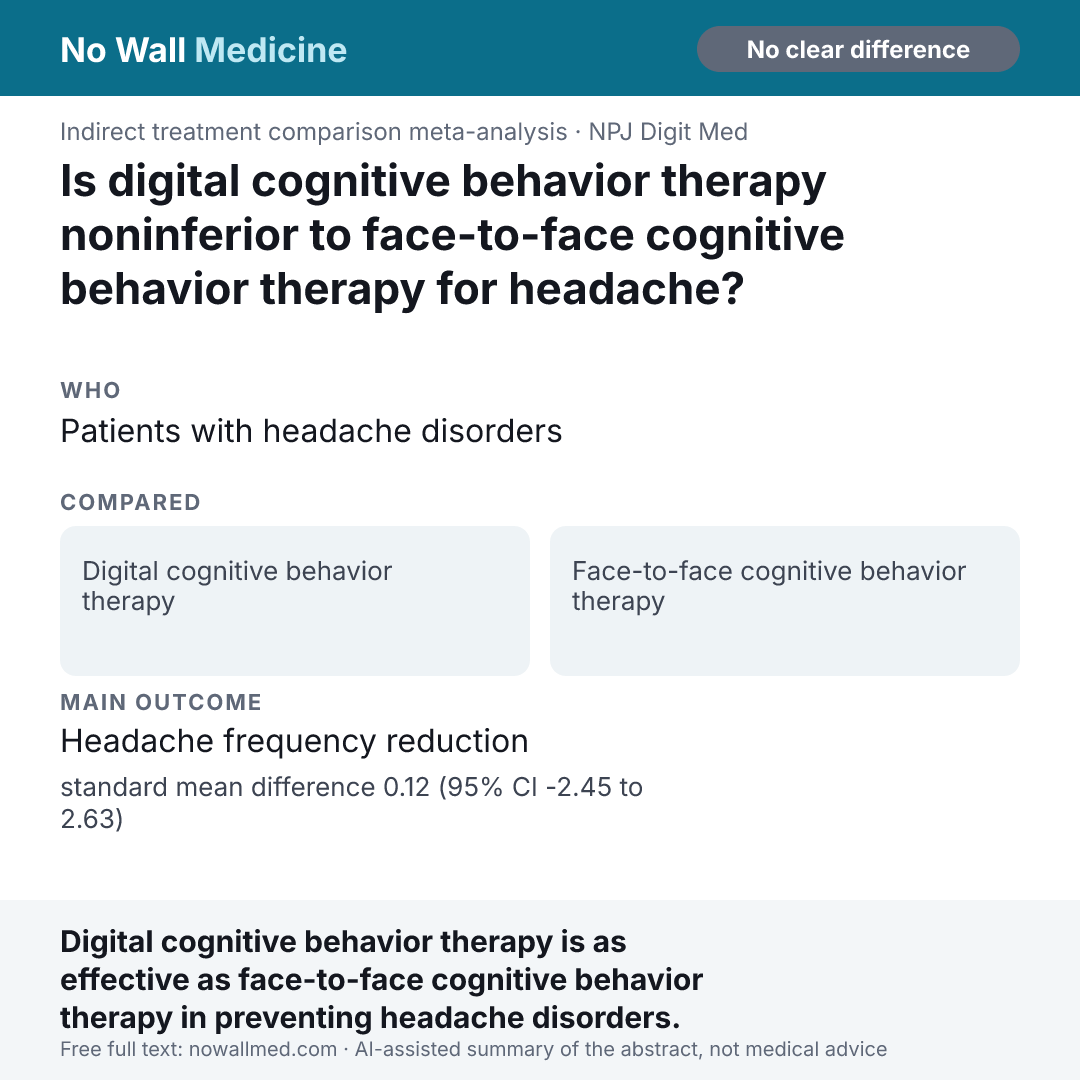
An indirect treatment comparison meta-analysis of digital versus face-to-face cognitive behavior therapy for headache
Indirect treatment comparison meta-analysisNo clear difference
Is digital cognitive behavior therapy noninferior to face-to-face cognitive behavior therapy for headache?
Who
Patients with headache disorders
Compared
Digital cognitive behavior therapy
Face-to-face cognitive behavior therapy
Main outcome
Headache frequency reduction
Result: standard mean difference 0.12 (95% CI -2.45 to 2.63)
Bottom line: Digital cognitive behavior therapy is as effective as face-to-face cognitive behavior therapy in preventing headache disorders.
Limitation: High heterogeneity and most included studies focused on migraine prevention.
NPJ Digit Med · 2024-09-29 · Save PNG
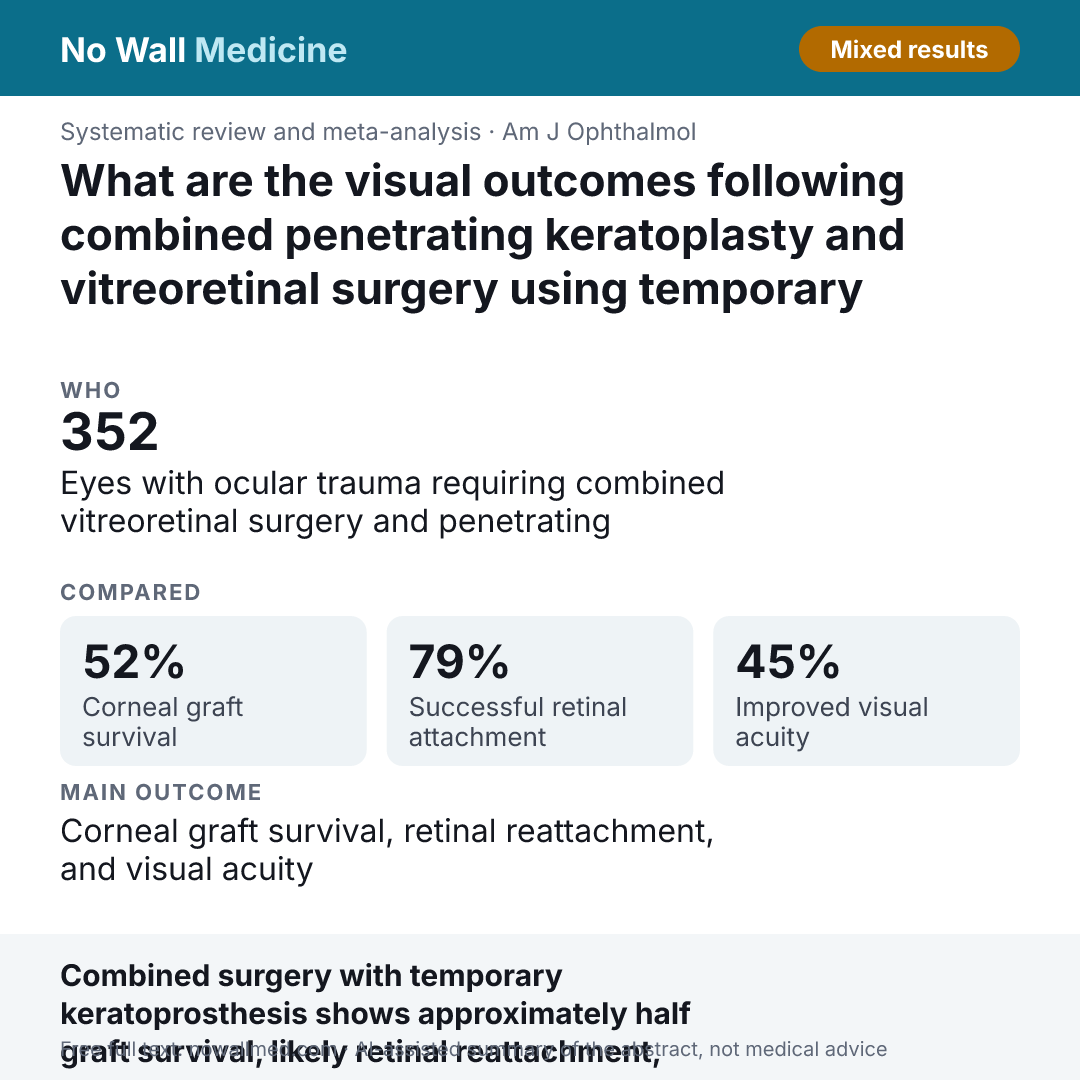
Temporary Keratoprosthesis and Primary Corneal Graft for Ocular Trauma: A Systematic Review and Meta-Analysis
Systematic review and meta-analysisMixed results
What are the visual outcomes following combined penetrating keratoplasty and vitreoretinal surgery using temporary keratoprosthesis?
Who
352
Eyes with ocular trauma requiring combined vitreoretinal surgery and penetrating keratoplasty
Compared
52%Corneal graft survival (95% CI 0.41-0.62)
79%Successful retinal attachment (95% CI 0.73-0.84)
45%Improved visual acuity (95% CI 0.32-0.59)
Main outcome
Corneal graft survival, retinal reattachment, and visual acuity
Bottom line: Combined surgery with temporary keratoprosthesis shows approximately half graft survival, likely retinal reattachment, and improved visual acuity in some patients.
Limitation: All included studies were retrospective and nonrandomized.
Am J Ophthalmol · 2024-09-28 · Save PNG
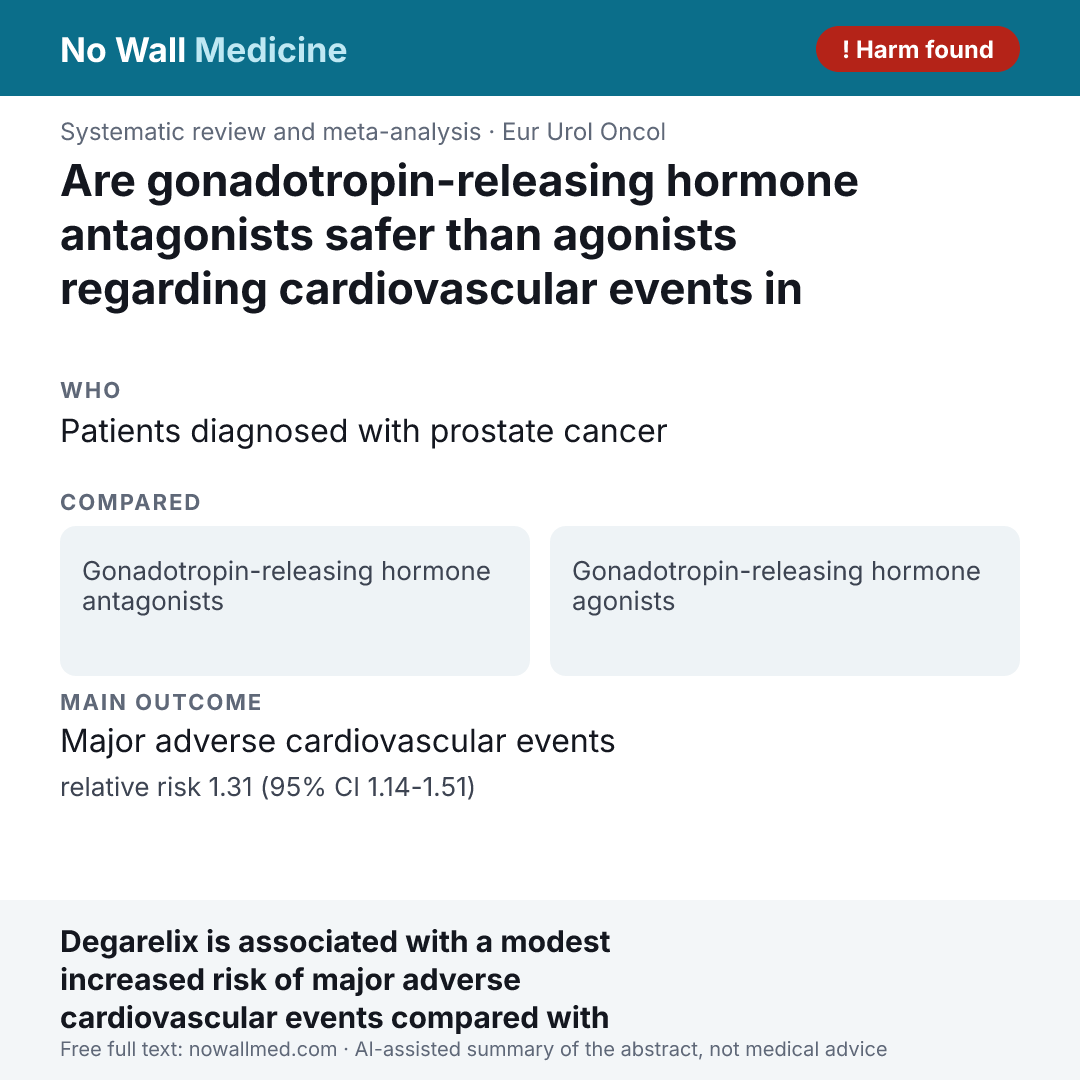
Comparative Cardiovascular Safety of Gonadotropin-releasing Hormone Antagonists and Agonists Among Patients Diagnosed with Prostate Cancer: A Systematic Review and Meta-analysis of Real-world Evidence Studies
Systematic review and meta-analysisHarm found
Are gonadotropin-releasing hormone antagonists safer than agonists regarding cardiovascular events in prostate cancer?
Who
Patients diagnosed with prostate cancer
Compared
Gonadotropin-releasing hormone antagonists
Gonadotropin-releasing hormone agonists
Main outcome
Major adverse cardiovascular events
Result: relative risk 1.31 (95% CI 1.14-1.51)
Bottom line: Degarelix is associated with a modest increased risk of major adverse cardiovascular events compared with agonists.
Limitation: Residual confounding due to the treatment of high-risk patients with degarelix may account for these findings.
Eur Urol Oncol · 2024-09-28 · Save PNG
Liberal versus restrictive transfusion strategies in acute myocardial infarction: a systematic review and comparative frequentist and Bayesian meta-analysis of randomized controlled trials
Systematic review and meta-analysis of randomized controlled trialsNo clear difference
Does liberal versus restrictive transfusion strategy impact mortality during acute myocardial infarction?
Who
4324
Participants with acute myocardial infarction
Compared
Liberal transfusion
Restrictive transfusion
Main outcome
90-day mortality following myocardial infarction
Result: risk ratio 1.13 (95% CI 0.67 to 1.91)
Bottom line: Liberal transfusion strategy showed no significant benefit in reducing 90-day mortality compared to restrictive strategy.
Limitation: Low certainty of evidence and results for composite outcomes were driven by a single study.
Ann Intensive Care · 2024-09-28 · Save PNG

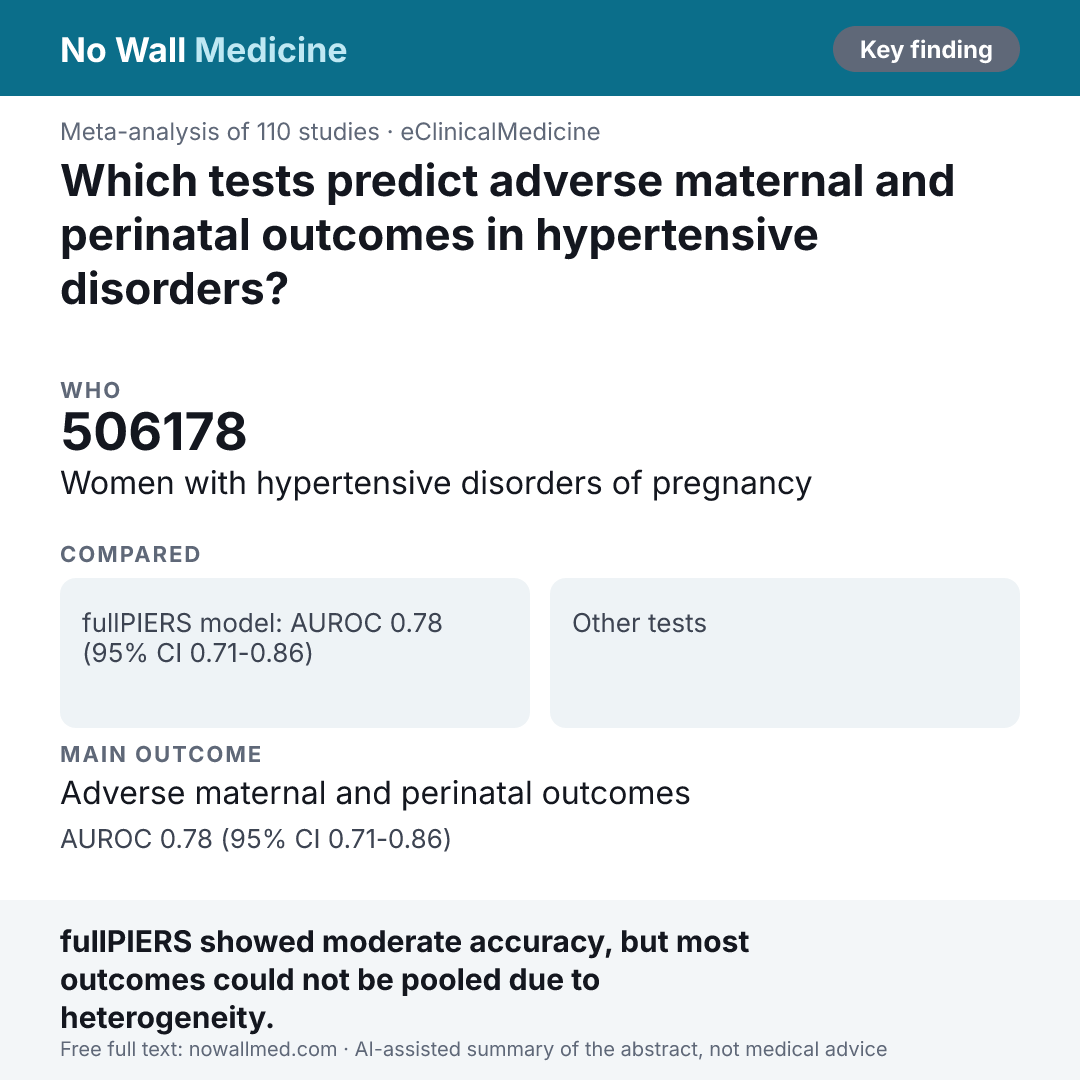
Prediction of adverse maternal and perinatal outcomes associated with pre-eclampsia and hypertensive disorders of pregnancy: a systematic review and meta-analysis
Meta-analysis of 110 studiesKey finding
Which tests predict adverse maternal and perinatal outcomes in hypertensive disorders?
Who
506178
Women with hypertensive disorders of pregnancy
Compared
fullPIERS model: AUROC 0.78 (95% CI 0.71-0.86)
Other tests
Main outcome
Adverse maternal and perinatal outcomes
Result: AUROC 0.78 (95% CI 0.71-0.86)
Bottom line: fullPIERS showed moderate accuracy, but most outcomes could not be pooled due to heterogeneity.
Limitation: Heterogeneity in populations, tests, and outcome definitions prevented pooling most outcomes.
Funded by: Swedish Research Council, University of Gothenburg
eClinicalMedicine · 2024-09-27 · Save PNG
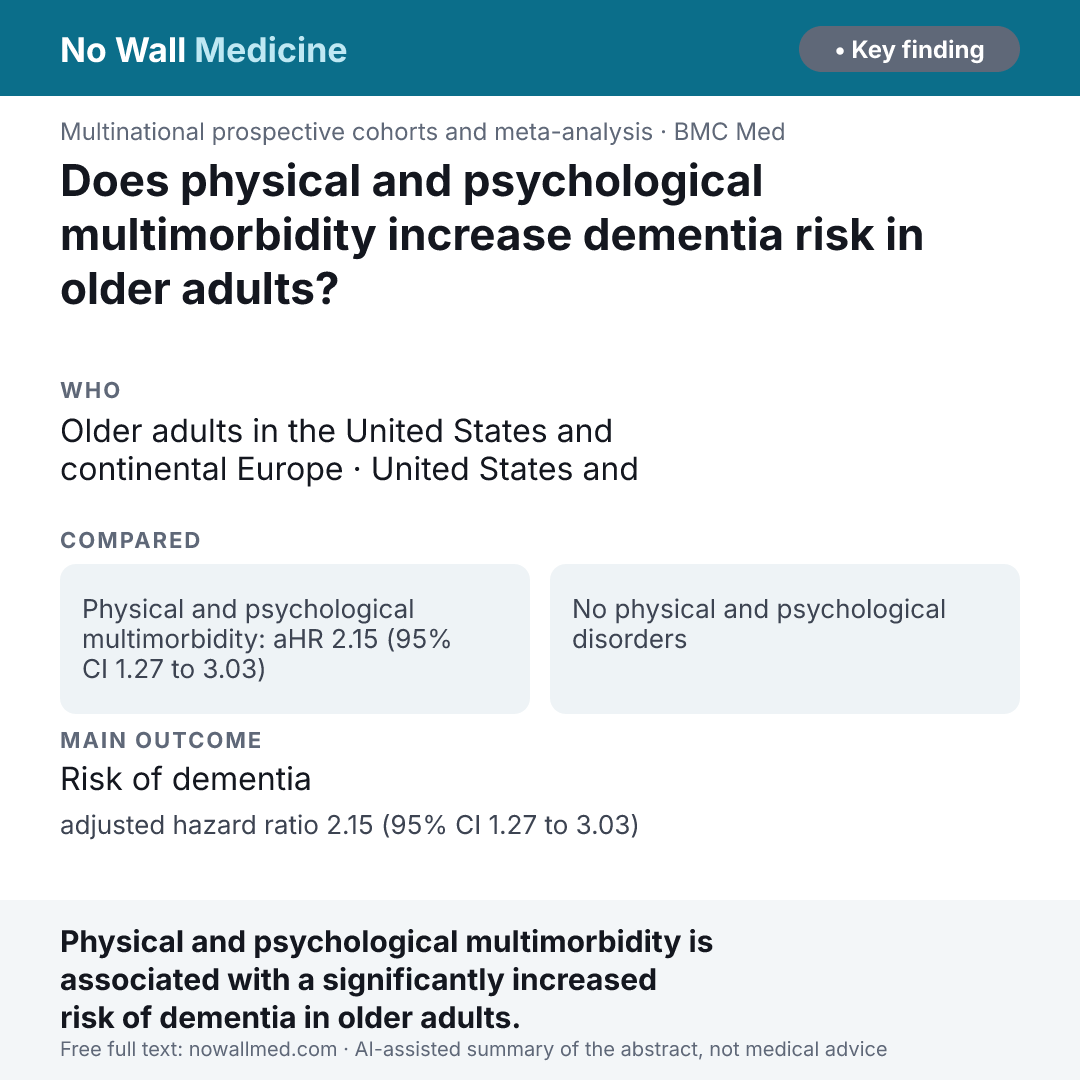
Effects of physical and psychological multimorbidity on the risk of dementia: multinational prospective cohorts and a meta-analysis
Multinational prospective cohorts and meta-analysisKey finding
Does physical and psychological multimorbidity increase dementia risk in older adults?
Who
Older adults in the United States and continental Europe · United States and continental Europe
Compared
Physical and psychological multimorbidity: aHR 2.15 (95% CI 1.27 to 3.03)
No physical and psychological disorders
Main outcome
Risk of dementia
Result: adjusted hazard ratio 2.15 (95% CI 1.27 to 3.03)
Bottom line: Physical and psychological multimorbidity is associated with a significantly increased risk of dementia in older adults.
BMC Med · 2024-09-27 · Save PNG
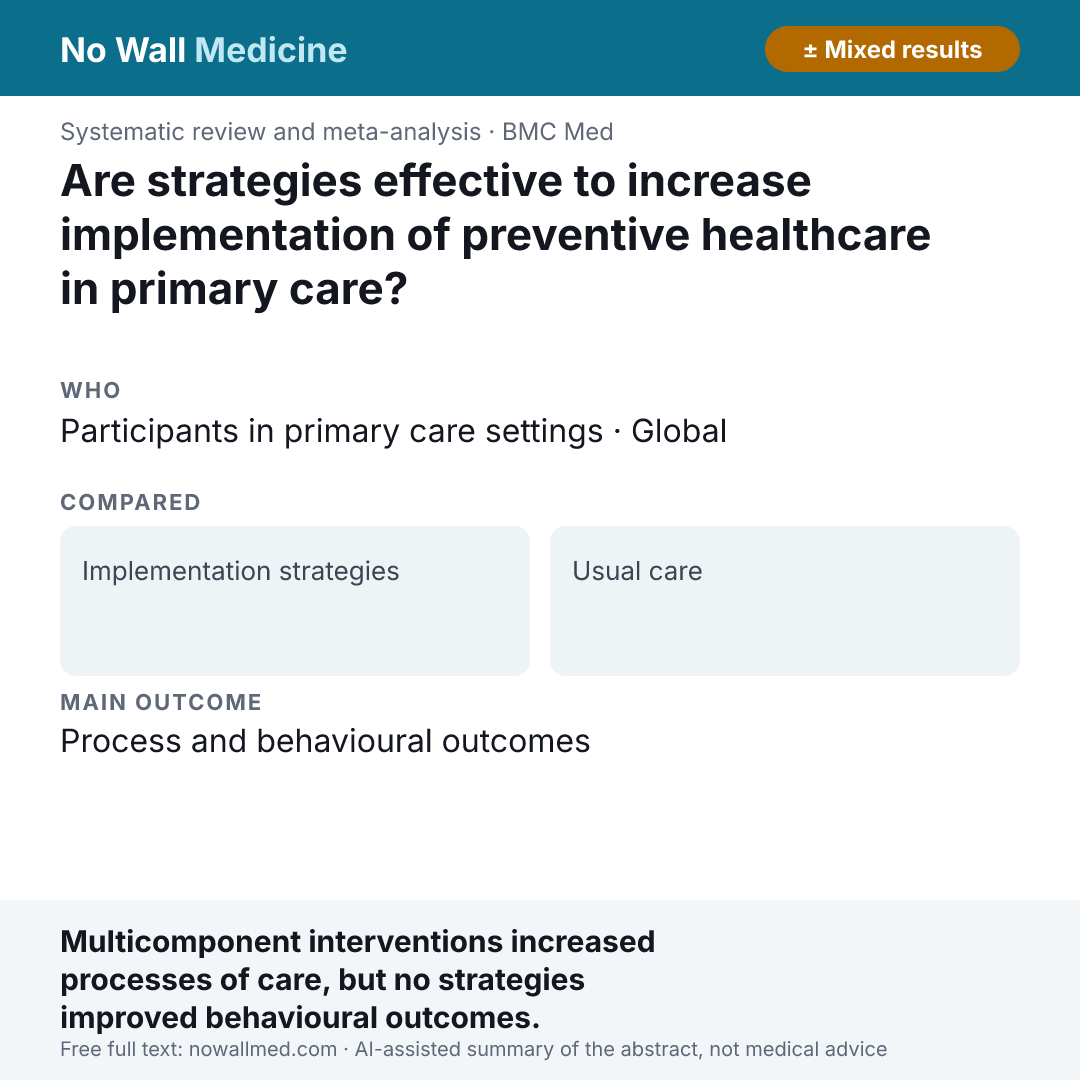
Strategies to improve the implementation of preventive care in primary care: a systematic review and meta-analysis
Systematic review and meta-analysisMixed results
Are strategies effective to increase implementation of preventive healthcare in primary care?
Who
Participants in primary care settings · Global
Compared
Implementation strategies
Usual care
Main outcome
Process and behavioural outcomes
Bottom line: Multicomponent interventions increased processes of care, but no strategies improved behavioural outcomes.
Limitation: High statistical heterogeneity and many studies did not account for clustering.
BMC Med · 2024-09-27 · Save PNG
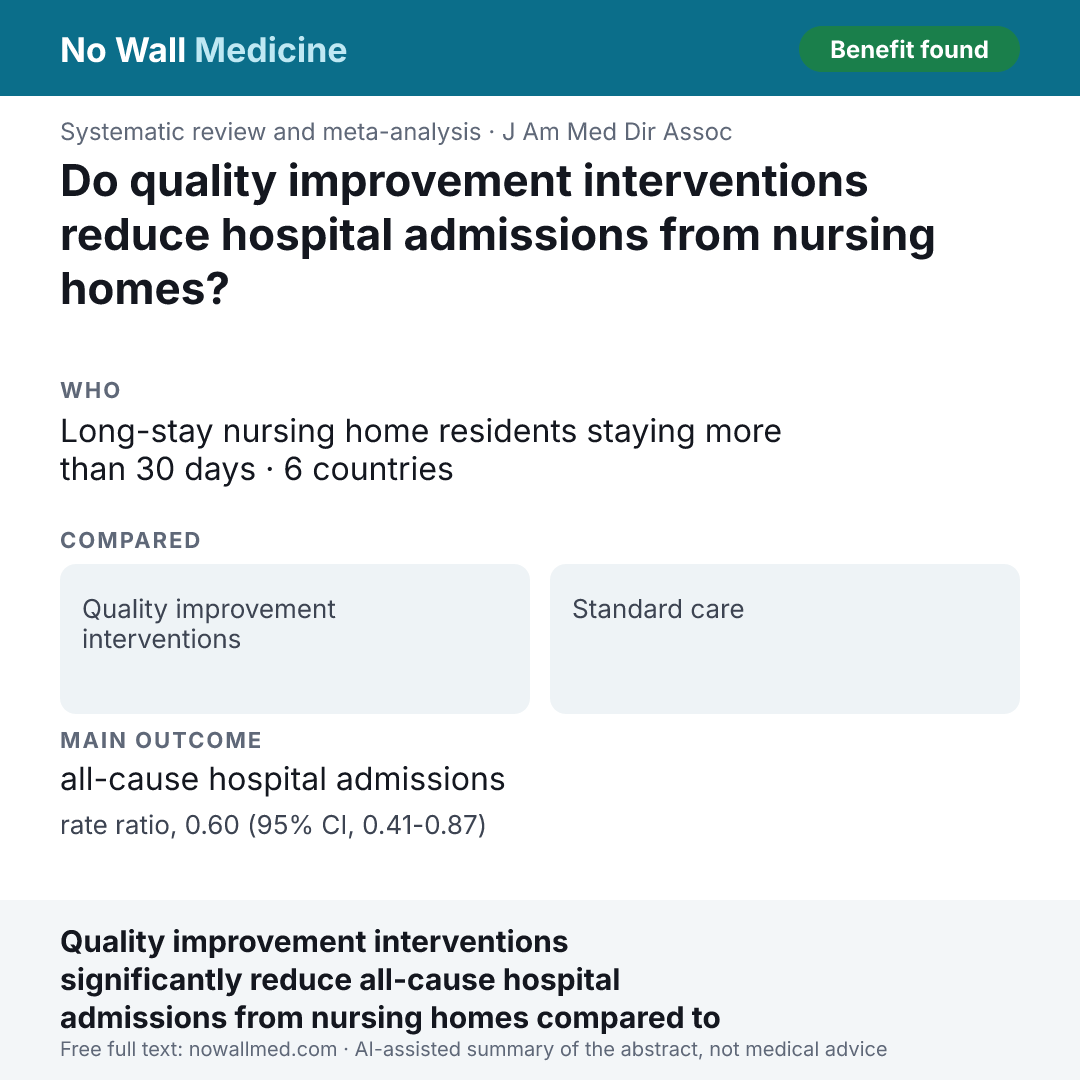
Impact of Quality Improvement Interventions on Hospital Admissions from Nursing Homes: A Systematic Review and Meta-Analysis
Systematic review and meta-analysisBenefit found
Do quality improvement interventions reduce hospital admissions from nursing homes?
Who
Long-stay nursing home residents staying more than 30 days · 6 countries
Compared
Quality improvement interventions
Standard care
Main outcome
all-cause hospital admissions
Result: rate ratio, 0.60 (95% CI, 0.41-0.87)
Bottom line: Quality improvement interventions significantly reduce all-cause hospital admissions from nursing homes compared to standard care.
Limitation: Findings require confirmation through future experimental research.
J Am Med Dir Assoc · 2024-09-27 · Save PNG
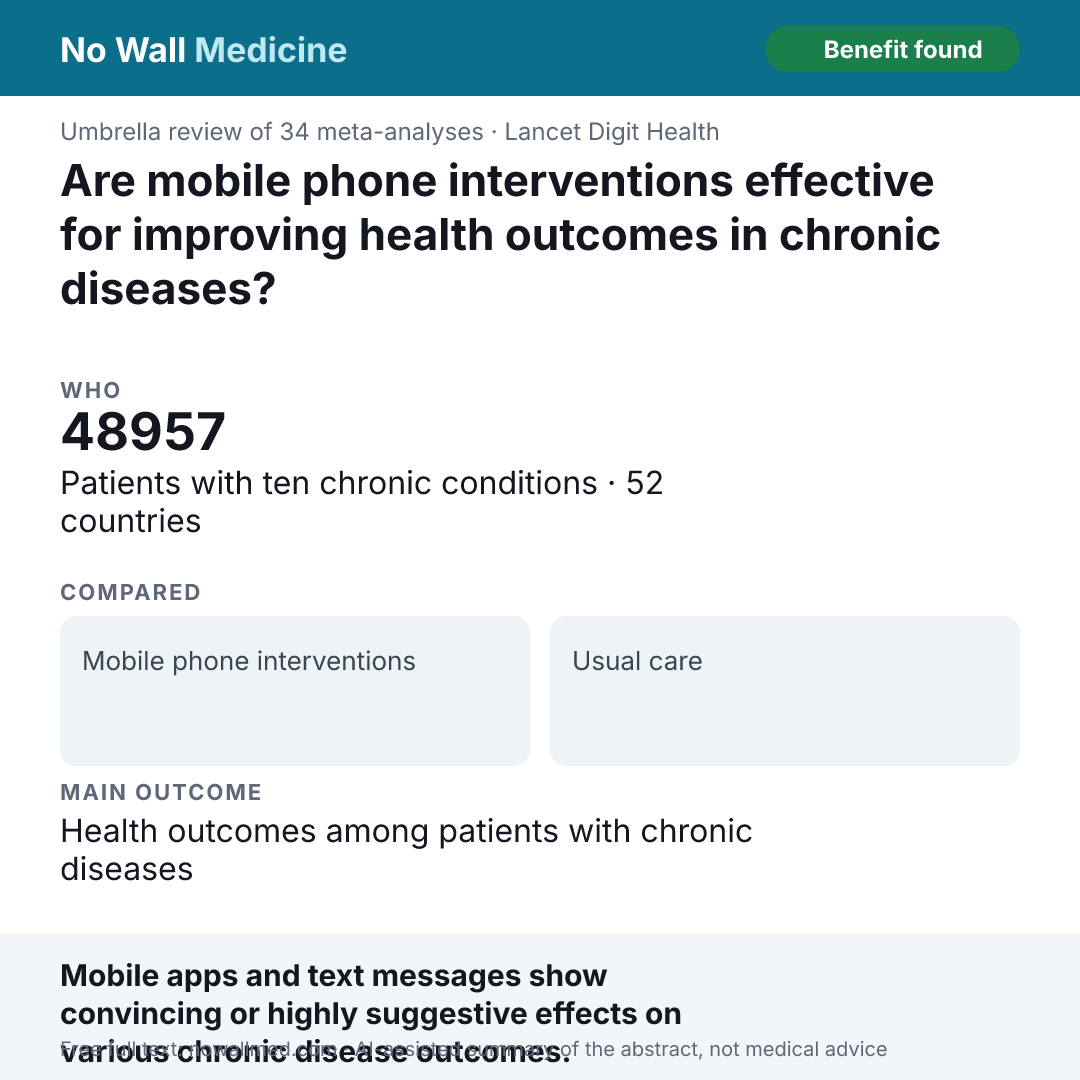
Mobile phone interventions to improve health outcomes among patients with chronic diseases: an umbrella review and evidence synthesis from 34 meta-analyses
Umbrella review of 34 meta-analysesBenefit found
Are mobile phone interventions effective for improving health outcomes in chronic diseases?
Who
48957
Patients with ten chronic conditions · 52 countries
Compared
Mobile phone interventions
Usual care
Main outcome
Health outcomes among patients with chronic diseases
Result: glycated haemoglobin reduction d=0·44
Bottom line: Mobile apps and text messages show convincing or highly suggestive effects on various chronic disease outcomes.
Limitation: Scarcity of reporting on moderators, publication bias, and little research in low-income countries.
Lancet Digit Health · 2024-09-26 · Save PNG
A systematic review of antibiotic drug shortages and the strategies employed for managing these shortages
Systematic reviewMixed results
What are the patterns, causes, effects, and management strategies of antibiotic shortages?
Who
Healthcare workers and patient populations affected by antibiotic shortages · Global, 82.4% in high-income countries
Compared
Piperacillin-tazobactam shortages: 21/74 (28.4%)
WHO Watch category antibiotics: 27/54 (51%)
Main outcome
Patterns, causes, health system effects, and management strategies
Bottom line: Antibiotic shortages cause increased hospital stays and treatment failure, but clinical outcome data remains limited.
Limitation: Robust economic impact analysis of shortages is unavailable.
Clin Microbiol Infect · 2024-09-26 · Save PNG

Prevalence and clinical relevance of viraemia in viral respiratory tract infections: a systematic review
Systematic reviewBenefit found
What is the prevalence and clinical relevance of viraemia in viral respiratory tract infections?
Who
Patients with SARS-CoV-2 and other respiratory viruses
Compared
34%SARS-CoV-2
Other viruses: between 6% and 65%
Main outcome
Prevalence of viraemia and its clinical associations
Bottom line: Viraemia is highly prevalent and associated with disease severity and long-term consequences in respiratory infections.
Lancet Microbe · 2024-09-26 · Save PNG

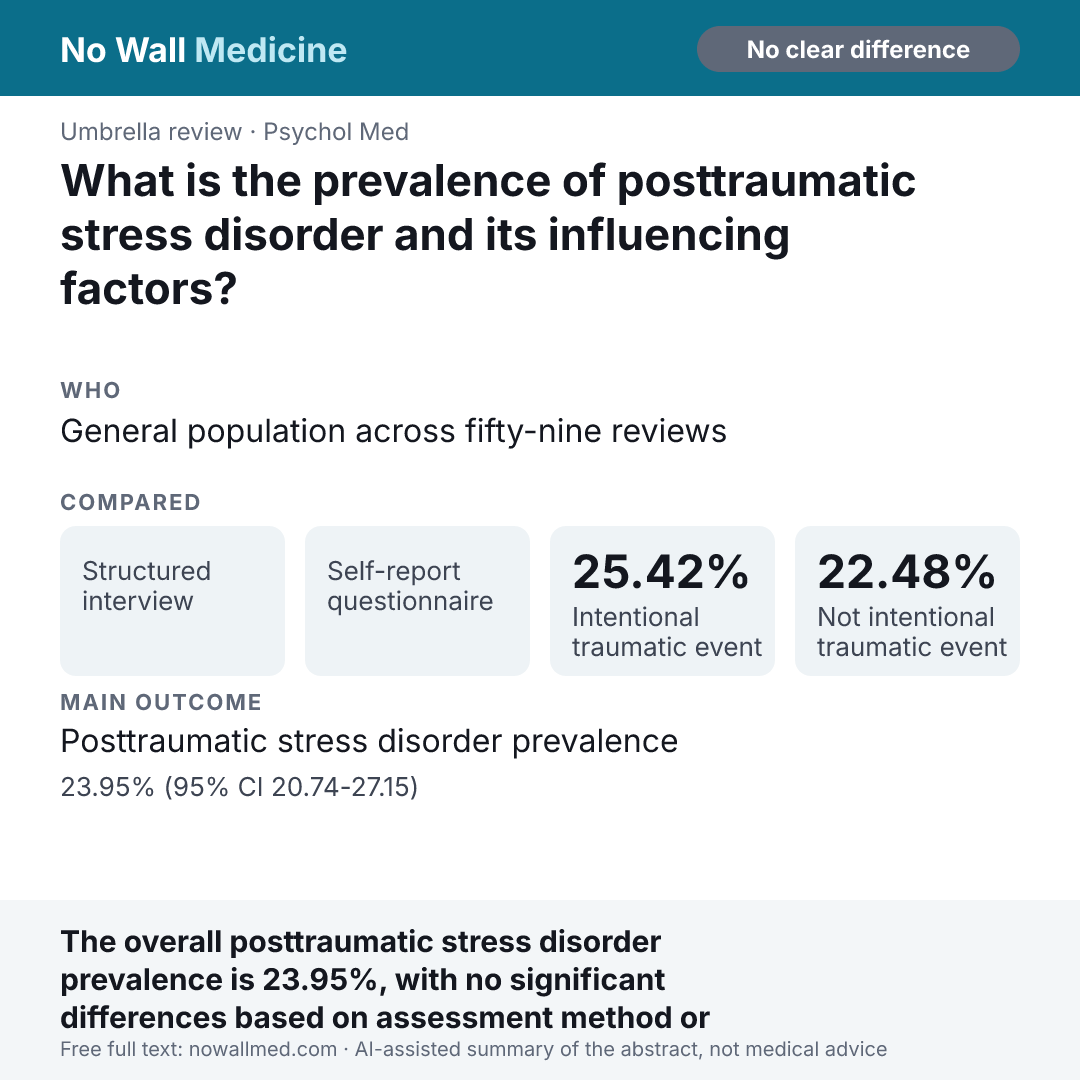
Posttraumatic stress disorder (PTSD) prevalence: an umbrella review
Umbrella reviewNo clear difference
What is the prevalence of posttraumatic stress disorder and its influencing factors?
Who
General population across fifty-nine reviews
Compared
Structured interview
Self-report questionnaire
25.42%Intentional traumatic event (95% CI 19.76-31.09)
22.48%Not intentional traumatic event (95% CI 17.22-27.73)
Main outcome
Posttraumatic stress disorder prevalence
Result: 23.95% (95% CI 20.74-27.15)
Bottom line: The overall posttraumatic stress disorder prevalence is 23.95%, with no significant differences based on assessment method or event nature.
Limitation: A high level of heterogeneity between meta-analyses.
Psychol Med · 2024-09-26 · Save PNG
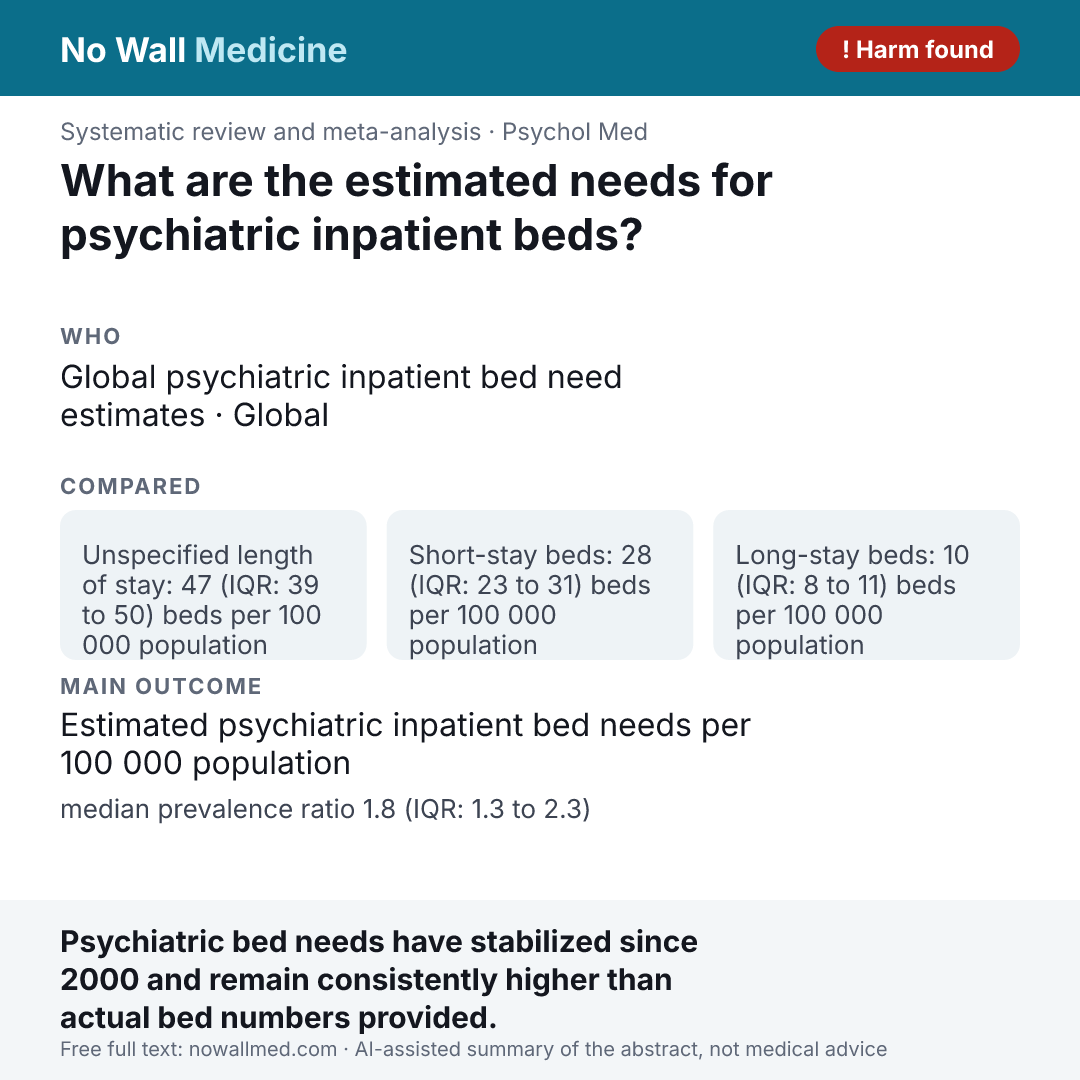
Need estimates of psychiatric beds: a systematic review and meta-analysis
Systematic review and meta-analysisHarm found
What are the estimated needs for psychiatric inpatient beds?
Who
Global psychiatric inpatient bed need estimates · Global
Compared
Unspecified length of stay: 47 (IQR: 39 to 50) beds per 100 000 population
Short-stay beds: 28 (IQR: 23 to 31) beds per 100 000 population
Long-stay beds: 10 (IQR: 8 to 11) beds per 100 000 population
Main outcome
Estimated psychiatric inpatient bed needs per 100 000 population
Result: median prevalence ratio 1.8 (IQR: 1.3 to 2.3)
Bottom line: Psychiatric bed needs have stabilized since 2000 and remain consistently higher than actual bed numbers provided.
Psychol Med · 2024-09-26 · Save PNG
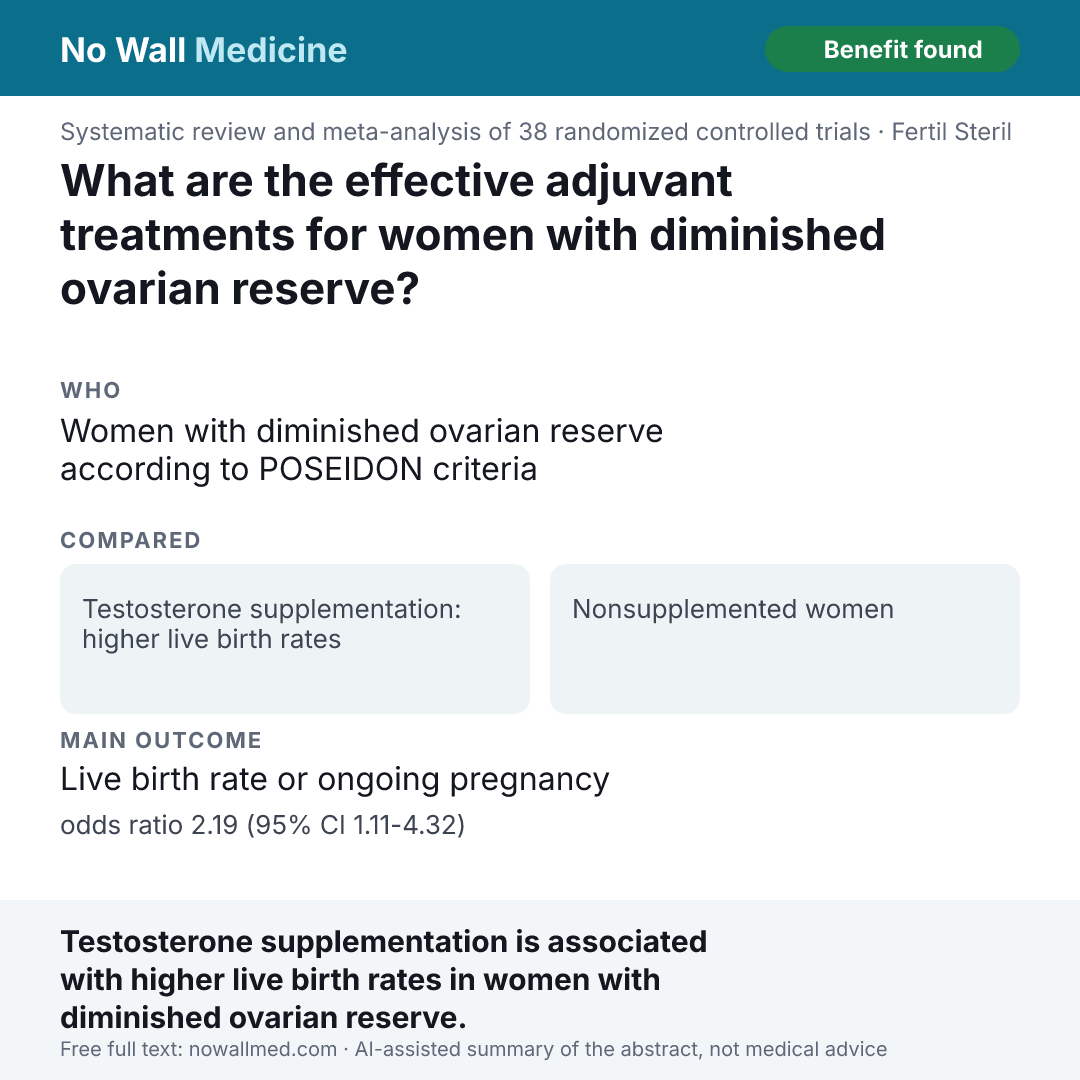
Therapeutic management in women with a diminished ovarian reserve: a systematic review and meta-analysis of randomized controlled trials
Systematic review and meta-analysis of 38 randomized controlled trialsBenefit found
What are the effective adjuvant treatments for women with diminished ovarian reserve?
Who
Women with diminished ovarian reserve according to POSEIDON criteria
Compared
Testosterone supplementation: higher live birth rates
Nonsupplemented women
Main outcome
Live birth rate or ongoing pregnancy
Result: odds ratio 2.19 (95% CI 1.11-4.32)
Bottom line: Testosterone supplementation is associated with higher live birth rates in women with diminished ovarian reserve.
Fertil Steril · 2024-09-26 · Save PNG
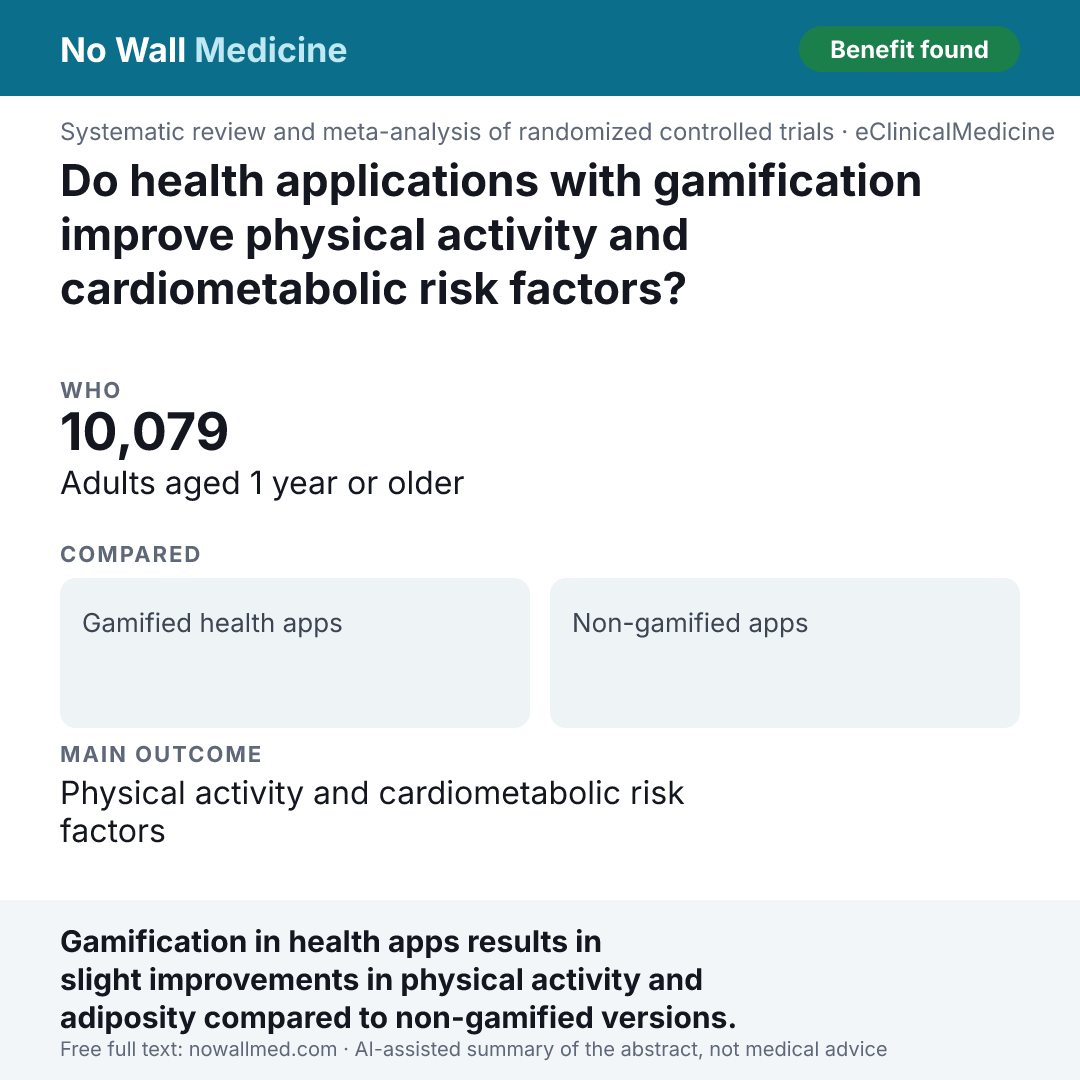
Effect of digital health applications with or without gamification on physical activity and cardiometabolic risk factors: a systematic review and meta-analysis of randomized controlled trials
Systematic review and meta-analysis of randomized controlled trialsBenefit found
Do health applications with gamification improve physical activity and cardiometabolic risk factors?
Who
10,079
Adults aged 1 year or older
Compared
Gamified health apps
Non-gamified apps
Main outcome
Physical activity and cardiometabolic risk factors
Result: steps 489 steps/day (95% CI 64 to 914); body mass index -0.28 kg/m2 (95% CI -0.44 to -0.12); body weight -0.70 kg (95% CI -1.18 to -0.22); body fat -1.92% (95% CI -2.71 to -1.14); waist circumference -1.16 cm (95% CI -1.93 to -0.39)
Bottom line: Gamification in health apps results in slight improvements in physical activity and adiposity compared to non-gamified versions.
Limitation: Certainty of evidence for some outcomes was very low to high.
eClinicalMedicine · 2024-09-25 · Save PNG
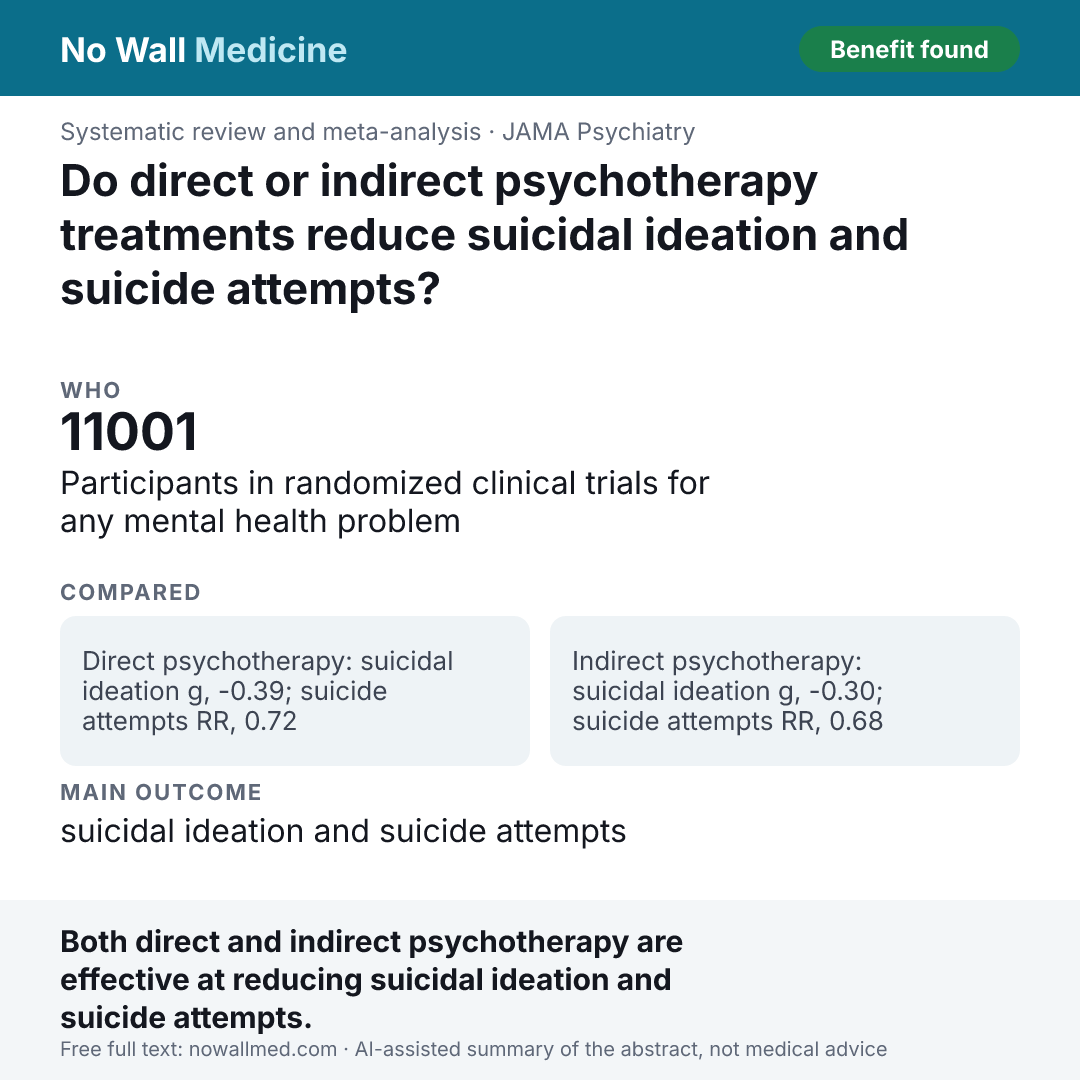
Suicidal Ideation and Suicide Attempts After Direct or Indirect Psychotherapy: A Systematic Review and Meta-Analysis
Systematic review and meta-analysisBenefit found
Do direct or indirect psychotherapy treatments reduce suicidal ideation and suicide attempts?
Who
11001
Participants in randomized clinical trials for any mental health problem
Compared
Direct psychotherapy: suicidal ideation g, -0.39; suicide attempts RR, 0.72
Indirect psychotherapy: suicidal ideation g, -0.30; suicide attempts RR, 0.68
Main outcome
suicidal ideation and suicide attempts
Bottom line: Both direct and indirect psychotherapy are effective at reducing suicidal ideation and suicide attempts.
JAMA Psychiatry · 2024-09-25 · Save PNG
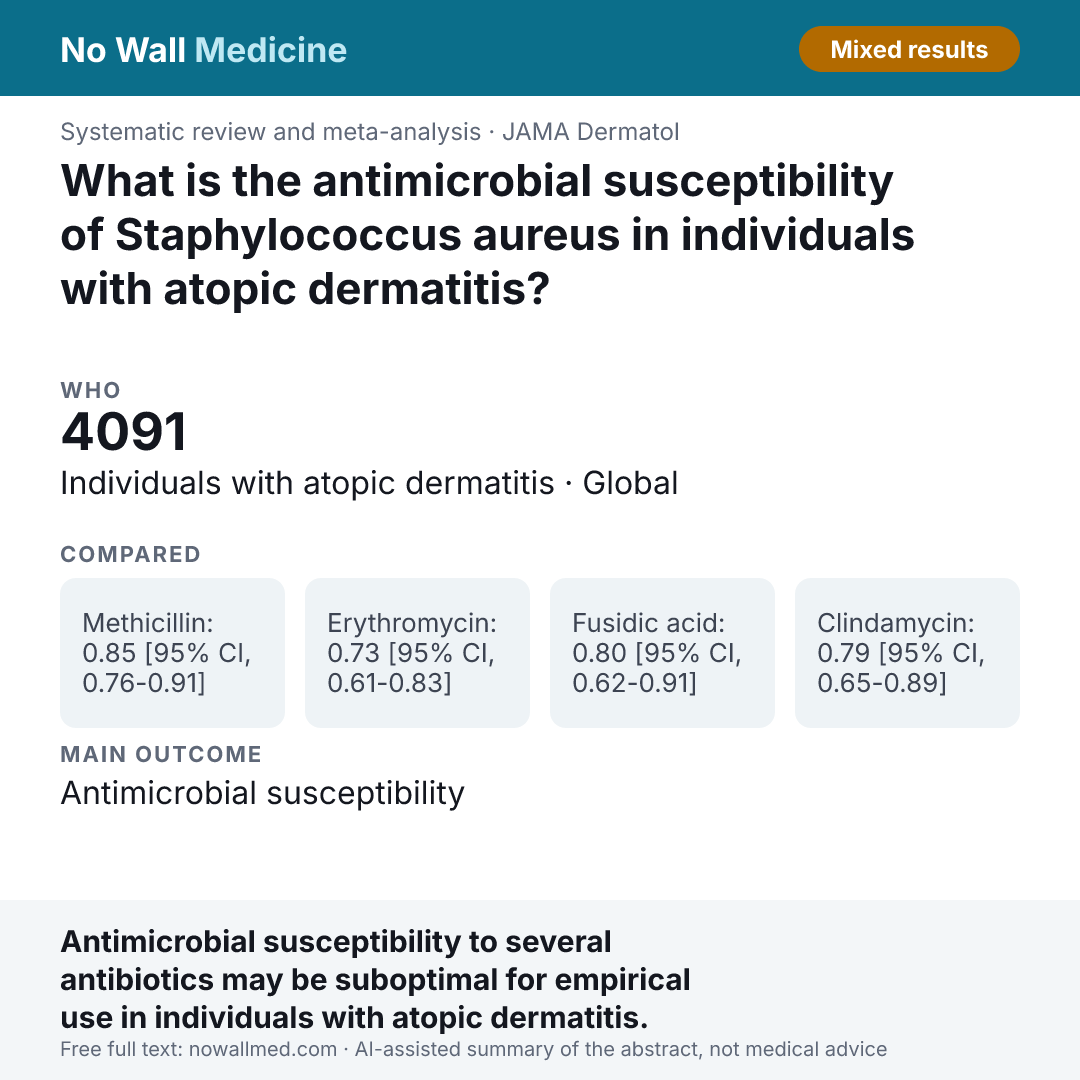
Global Antimicrobial Susceptibility Patterns of Staphylococcus aureus in Atopic Dermatitis: A Systematic Review and Meta-Analysis
Systematic review and meta-analysisMixed results
What is the antimicrobial susceptibility of Staphylococcus aureus in individuals with atopic dermatitis?
Who
4091
Individuals with atopic dermatitis · Global
Compared
Methicillin: 0.85 [95% CI, 0.76-0.91]
Erythromycin: 0.73 [95% CI, 0.61-0.83]
Fusidic acid: 0.80 [95% CI, 0.62-0.91]
Clindamycin: 0.79 [95% CI, 0.65-0.89]
Main outcome
Antimicrobial susceptibility
Bottom line: Antimicrobial susceptibility to several antibiotics may be suboptimal for empirical use in individuals with atopic dermatitis.
JAMA Dermatol · 2024-09-25 · Save PNG
A Meta-Analysis and Meta-Regression of the Efficacy, Toxicity, and Quality of Life Outcomes Following Prostate-Specific Membrane Antigen Radioligand Therapy Utilising Lutetium-177 and Actinium-225 in Metastatic Prostate Cancer
Systematic review and meta-analysisBenefit found
What are the efficacy, toxicity, and quality of life outcomes of two radioligand therapies?
Who
8711
Patients with metastatic prostate cancer
Compared
Lutetium-177 prostate-specific membrane antigen radioligand therapy: 0.49 proportion of patients with PSA decline ≥50%
Actinium-225 prostate-specific membrane antigen radioligand therapy: 0.60 proportion of patients with PSA decline ≥50%
Main outcome
Prostate-specific antigen response, toxicity, and quality of life
Bottom line: Both radioligand therapies show prostate-specific antigen reductions and improved survival with low incidence of severe toxicity.
Limitation: Heterogeneity across studies for prostate-specific antigen responses and toxicity profiles.
Eur Urol · 2024-09-25 · Save PNG