Visual abstracts
New randomized trials and meta-analyses from leading journals at a glance: who was studied, what was compared, and what was found. Every paper is free to read in full.
All specialtiesCardiology 4763Oncology 4042Gastroenterology & Hepatology 1902Infectious Disease 3756Neurology 1872Psychiatry & Mental Health 2214Pulmonology 2042Critical Care 1319Endocrinology & Diabetes 2544Pediatrics 2889Surgery 2479Orthopedics & Sports Medicine 917Neurosurgery 525Cardiothoracic & Vascular Surgery 656Plastic & Reconstructive Surgery 574Nephrology 1107Rheumatology 810Hematology 1090Dermatology 611Ophthalmology 532Obstetrics & Gynecology 1645Public & Global Health 1037Radiology & Imaging 617Anesthesiology 957Urology 745ENT (Otolaryngology) 494Emergency Medicine 481Allergy & Immunology 309Geriatrics 972Family Medicine & Primary Care 533Medical Genetics & Genomics 659Pathology & Laboratory Medicine 156Physical Medicine & Rehabilitation 734Palliative Care 421Nutrition 1560Digital Health & AI 2133General Medicine 318
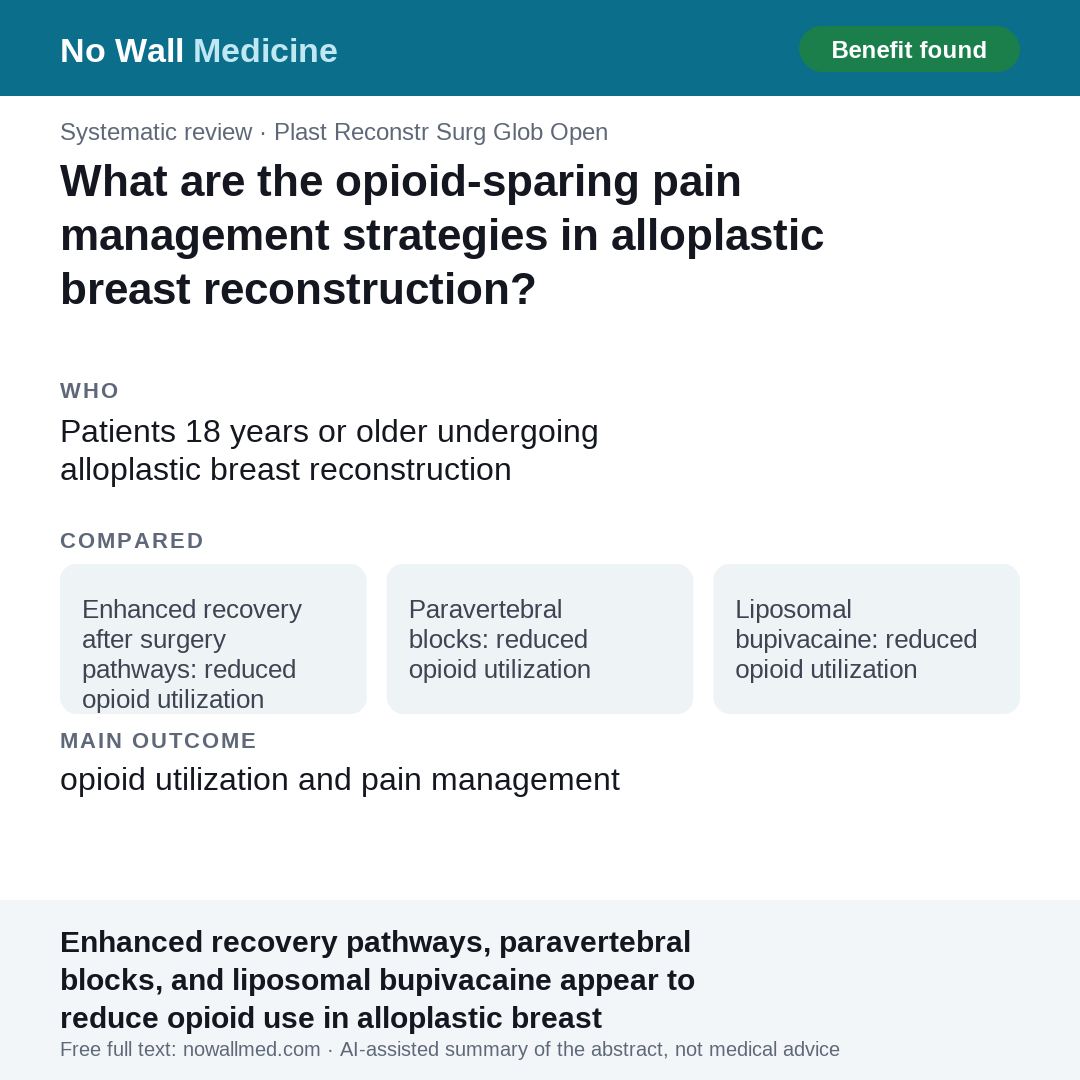
Opioid-sparing Strategies in Alloplastic Breast Reconstruction: A Systematic Review
Systematic reviewBenefit found
What are the opioid-sparing pain management strategies in alloplastic breast reconstruction?
Who
Patients 18 years or older undergoing alloplastic breast reconstruction
Compared
Enhanced recovery after surgery pathways: reduced opioid utilization
Paravertebral blocks: reduced opioid utilization
Liposomal bupivacaine: reduced opioid utilization
Main outcome
opioid utilization and pain management
Bottom line: Enhanced recovery pathways, paravertebral blocks, and liposomal bupivacaine appear to reduce opioid use in alloplastic breast reconstruction.
Limitation: Study characteristics, bias, and reporting outcomes were extensively heterogeneous between articles.
Plast Reconstr Surg Glob Open · 2021-11-16Download image
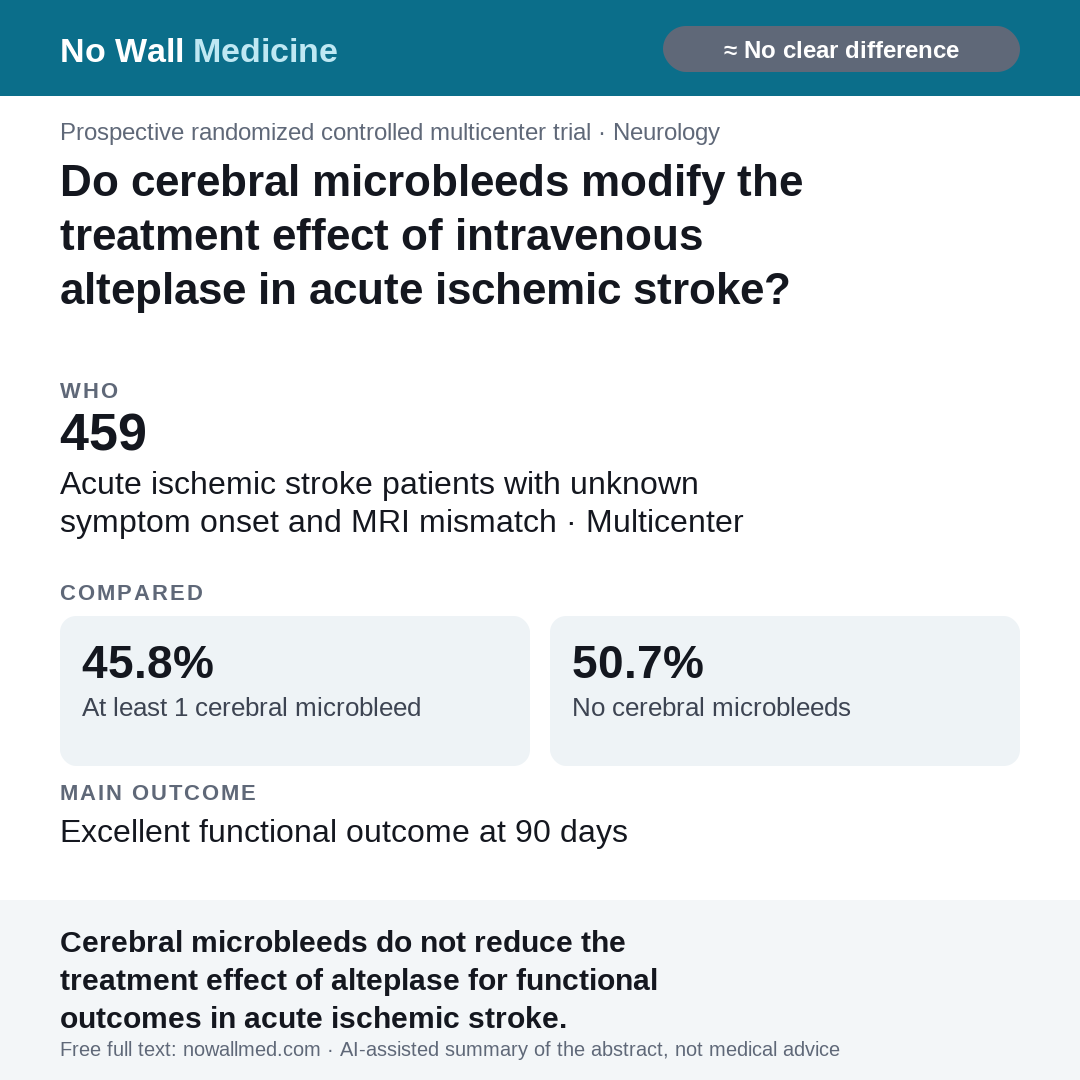
Cerebral Microbleeds and Treatment Effect of Intravenous Thrombolysis in Acute Stroke: An Analysis of the WAKE-UP Randomized Clinical Trial
Prospective randomized controlled multicenter trialNo clear difference
Do cerebral microbleeds modify the treatment effect of intravenous alteplase in acute ischemic stroke?
Who
459
Acute ischemic stroke patients with unknown symptom onset and MRI mismatch · Multicenter
Compared
45.8%At least 1 cerebral microbleed
50.7%No cerebral microbleeds
Main outcome
Excellent functional outcome at 90 days
Result: adjusted odds ratio 0.99 (95% CI 0.59-1.64)
Bottom line: Cerebral microbleeds do not reduce the treatment effect of alteplase for functional outcomes in acute ischemic stroke.
Neurology · 2021-11-15Download image
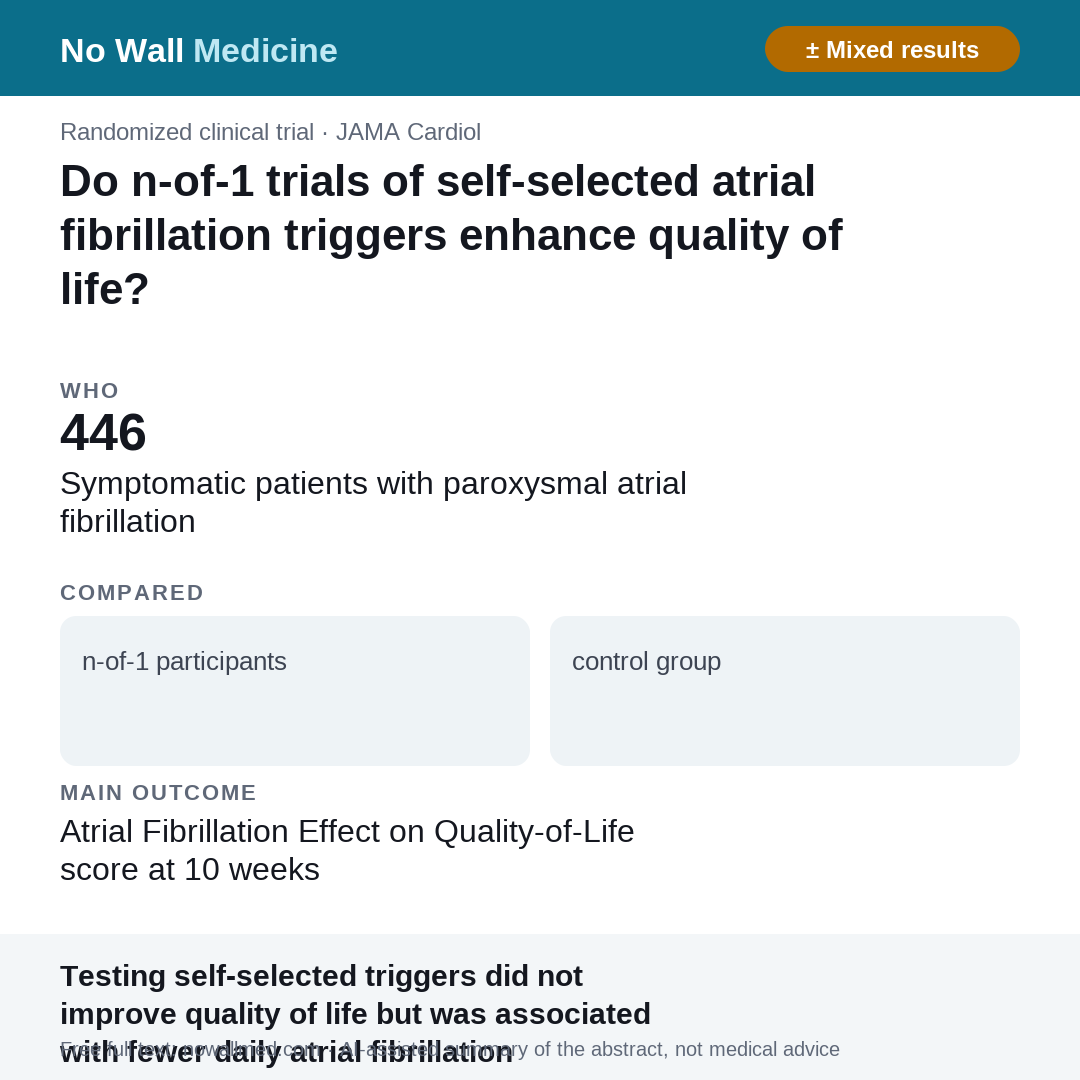
Individualized Studies of Triggers of Paroxysmal Atrial Fibrillation: The I-STOP-AFib Randomized Clinical Trial
Randomized clinical trialMixed results
Do n-of-1 trials of self-selected atrial fibrillation triggers enhance quality of life?
Who
446
Symptomatic patients with paroxysmal atrial fibrillation
Compared
n-of-1 participants
control group
Main outcome
Atrial Fibrillation Effect on Quality-of-Life score at 10 weeks
Bottom line: Testing self-selected triggers did not improve quality of life but was associated with fewer daily atrial fibrillation episodes.
JAMA Cardiol · 2021-11-15Download image
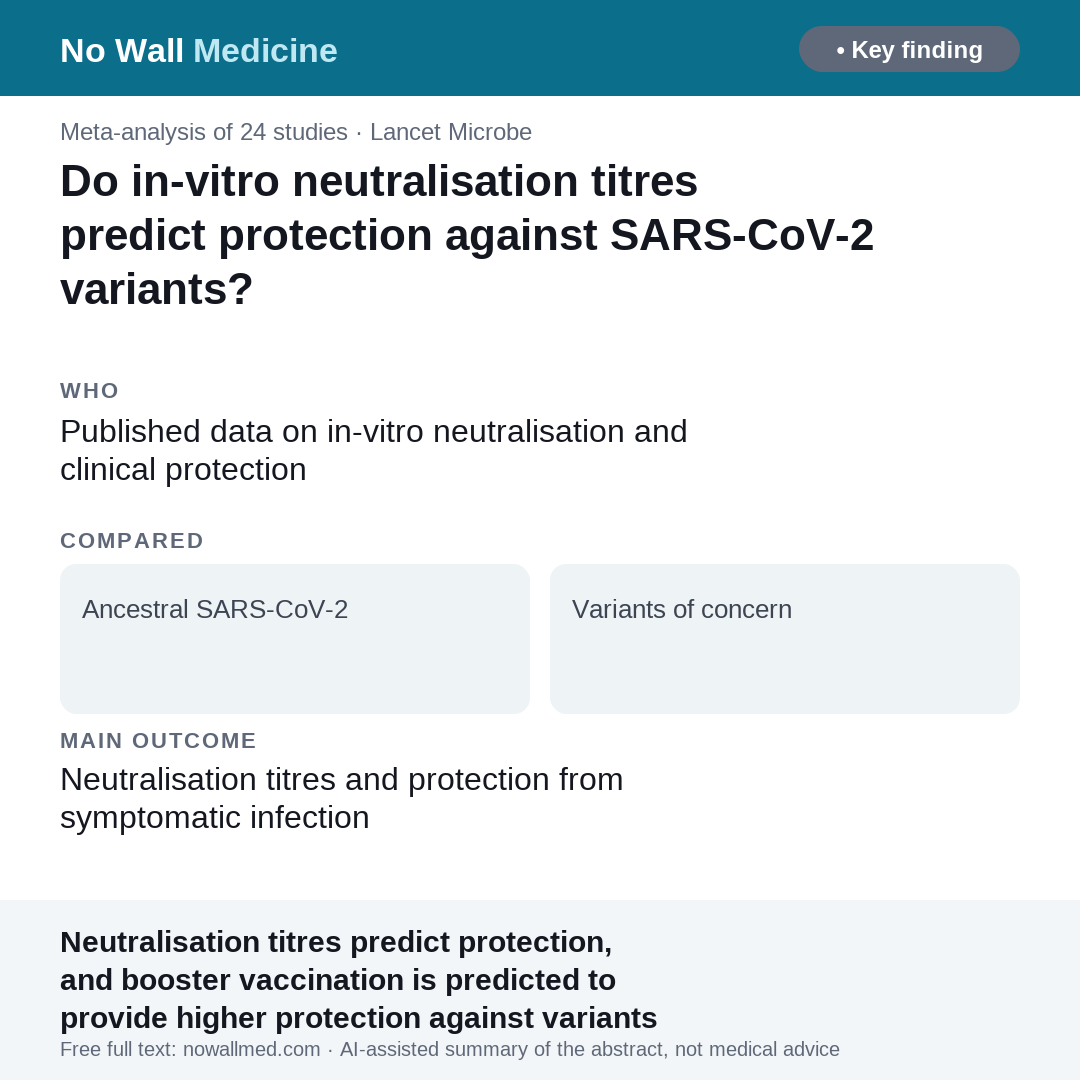
Neutralising antibody titres as predictors of protection against SARS-CoV-2 variants and the impact of boosting: a meta-analysis
Meta-analysis of 24 studiesKey finding
Do in-vitro neutralisation titres predict protection against SARS-CoV-2 variants?
Who
Published data on in-vitro neutralisation and clinical protection
Compared
Ancestral SARS-CoV-2
Variants of concern
Main outcome
Neutralisation titres and protection from symptomatic infection
Result: r S=0·81, p=0·0005
Bottom line: Neutralisation titres predict protection, and booster vaccination is predicted to provide higher protection against variants than primary vaccination.
Funded by: National Health and Medical Research Council, Medical Research Future Fund, Victorian Government
Lancet Microbe · 2021-11-15Download image
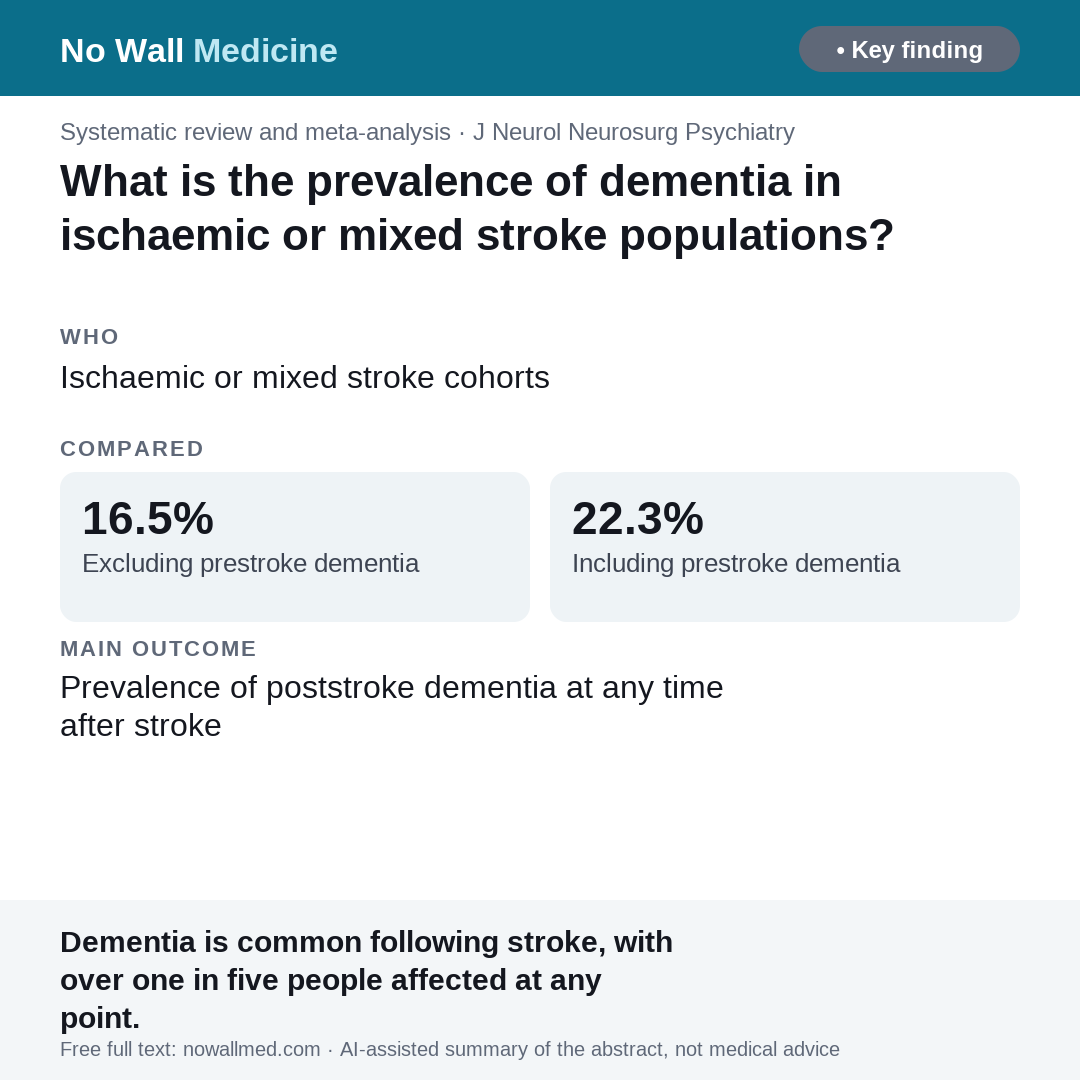
Prevalence of dementia in ischaemic or mixed stroke populations: systematic review and meta-analysis
Systematic review and meta-analysisKey finding
What is the prevalence of dementia in ischaemic or mixed stroke populations?
Who
Ischaemic or mixed stroke cohorts
Compared
16.5%Excluding prestroke dementia (95% CI 10.4% to 25.1%)
22.3%Including prestroke dementia (95% CI 18.8% to 26.2%)
Main outcome
Prevalence of poststroke dementia at any time after stroke
Bottom line: Dementia is common following stroke, with over one in five people affected at any point.
J Neurol Neurosurg Psychiatry · 2021-11-15Download image
Efficacy of bio- and neurofeedback for depression: a meta-analysis
Meta-analysisBenefit found
Are biofeedback and neurofeedback effective for treating depression?
Who
Patients with major depressive disorder or other depressive symptomatology
Compared
Bio- and neurofeedback
Control groups
Main outcome
Reduction in depressive symptomatology
Result: Hedges' g = 0.717 for major depressive disorder
Bottom line: Biofeedback and neurofeedback are associated with a reduction in self-reported depression.
Limitation: The field has a large room for improvement in terms of research quality.
Psychol Med · 2021-11-15Download image

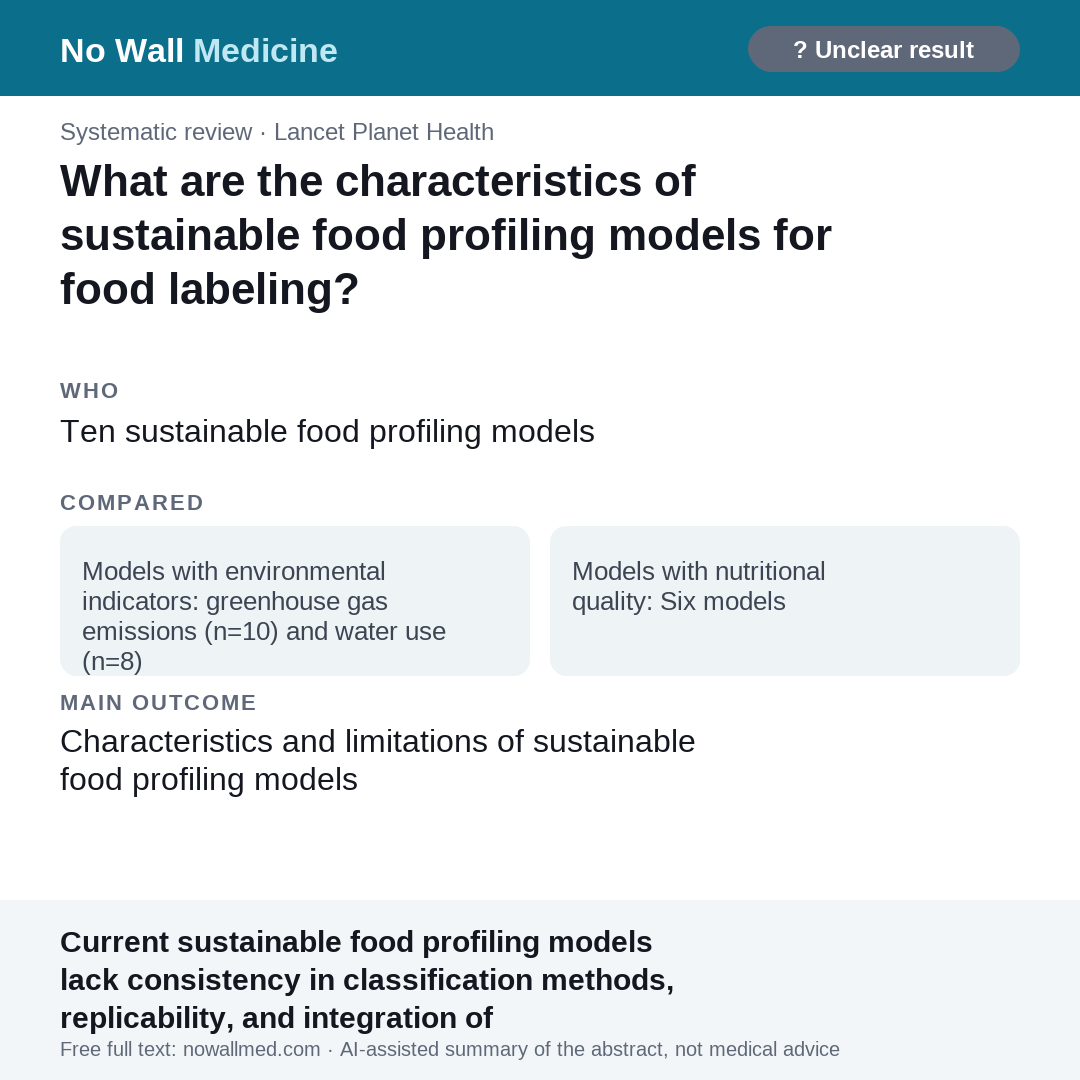
Sustainable food profiling models to inform the development of food labels that account for nutrition and the environment: a systematic review
Systematic reviewUnclear result
What are the characteristics of sustainable food profiling models for food labeling?
Who
Ten sustainable food profiling models
Compared
Models with environmental indicators: greenhouse gas emissions (n=10) and water use (n=8)
Models with nutritional quality: Six models
Main outcome
Characteristics and limitations of sustainable food profiling models
Bottom line: Current sustainable food profiling models lack consistency in classification methods, replicability, and integration of nutritional and environmental dimensions.
Lancet Planet Health · 2021-11-15Download image
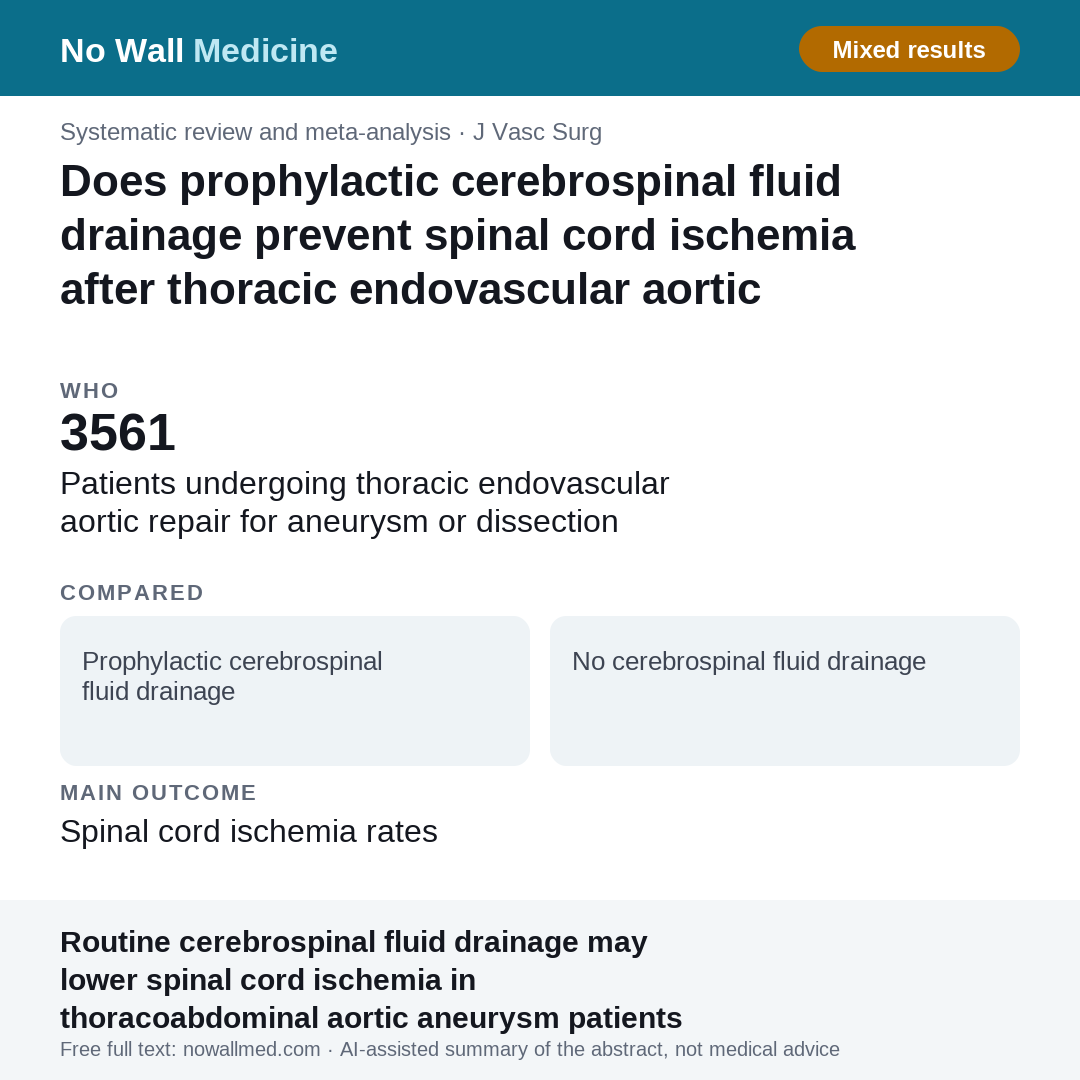
Systematic review and meta-analysis of association of prophylactic cerebrospinal fluid drainage in preventing spinal cord ischemia after thoracic endovascular aortic repair
Systematic review and meta-analysisMixed results
Does prophylactic cerebrospinal fluid drainage prevent spinal cord ischemia after thoracic endovascular aortic repair?
Who
3561
Patients undergoing thoracic endovascular aortic repair for aneurysm or dissection
Compared
Prophylactic cerebrospinal fluid drainage
No cerebrospinal fluid drainage
Main outcome
Spinal cord ischemia rates
Bottom line: Routine cerebrospinal fluid drainage may lower spinal cord ischemia in thoracoabdominal aortic aneurysm patients but showed no significant benefit elsewhere.
J Vasc Surg · 2021-11-15Download image
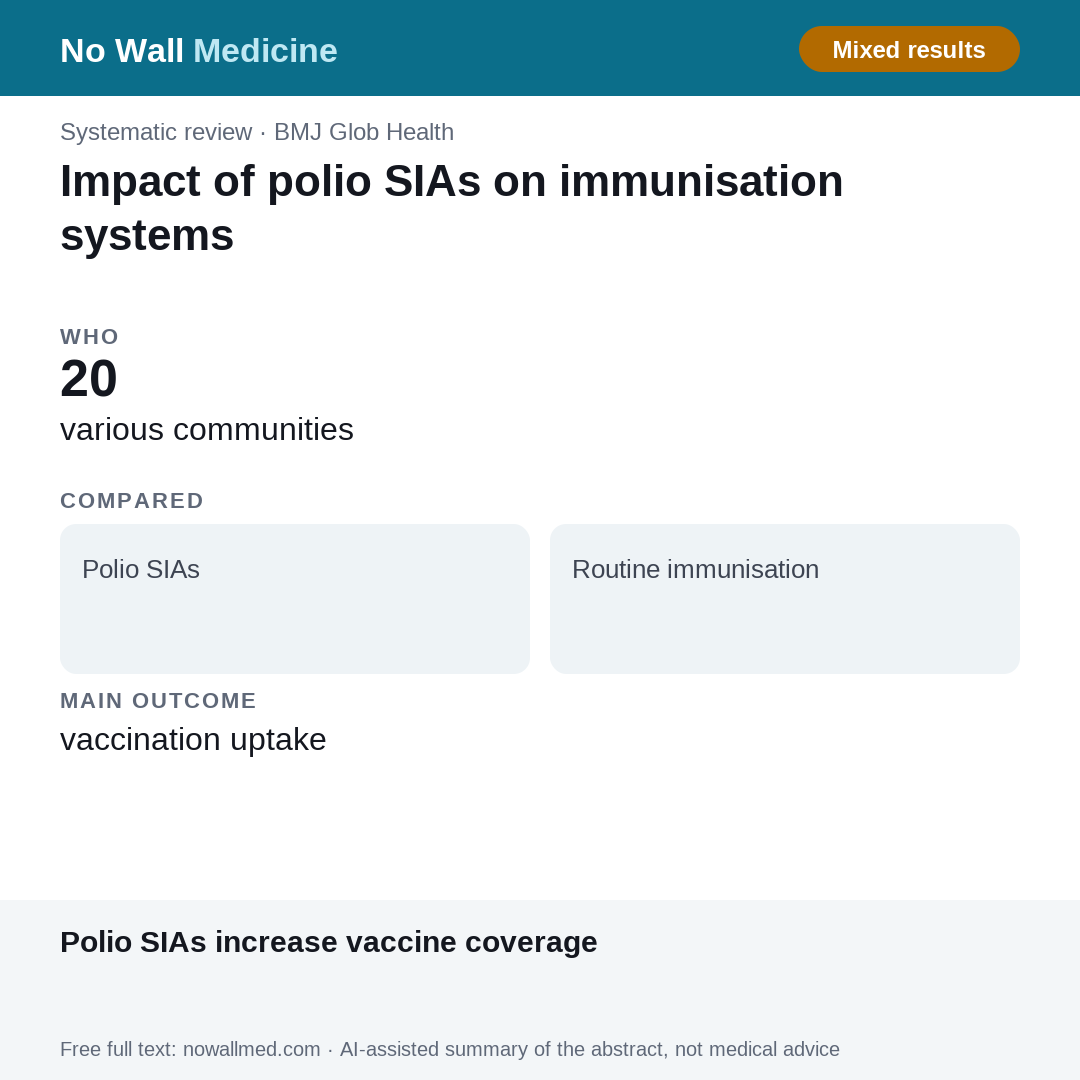
Intravenous Thrombolysis Before Mechanical Thrombectomy for Acute Ischemic Stroke: A Meta-Analysis
Meta-analysis of 12 studiesNo clear difference
Does intravenous thrombolysis before mechanical thrombectomy improve functional outcome in acute ischemic stroke?
Who
3924
Patients with acute ischemic stroke
Compared
Direct mechanical thrombectomy: OR 1.04 (95% CI 0.90-1.19) for 90-day functional independence
Bridging therapy
Main outcome
90-day functional independence
Result: odds ratio 1.04 (95% CI 0.90-1.19)
Bottom line: Direct mechanical thrombectomy showed no difference in functional outcome or mortality but had lower symptomatic intracranial hemorrhage rates.
J Am Heart Assoc · 2021-11-15Download image
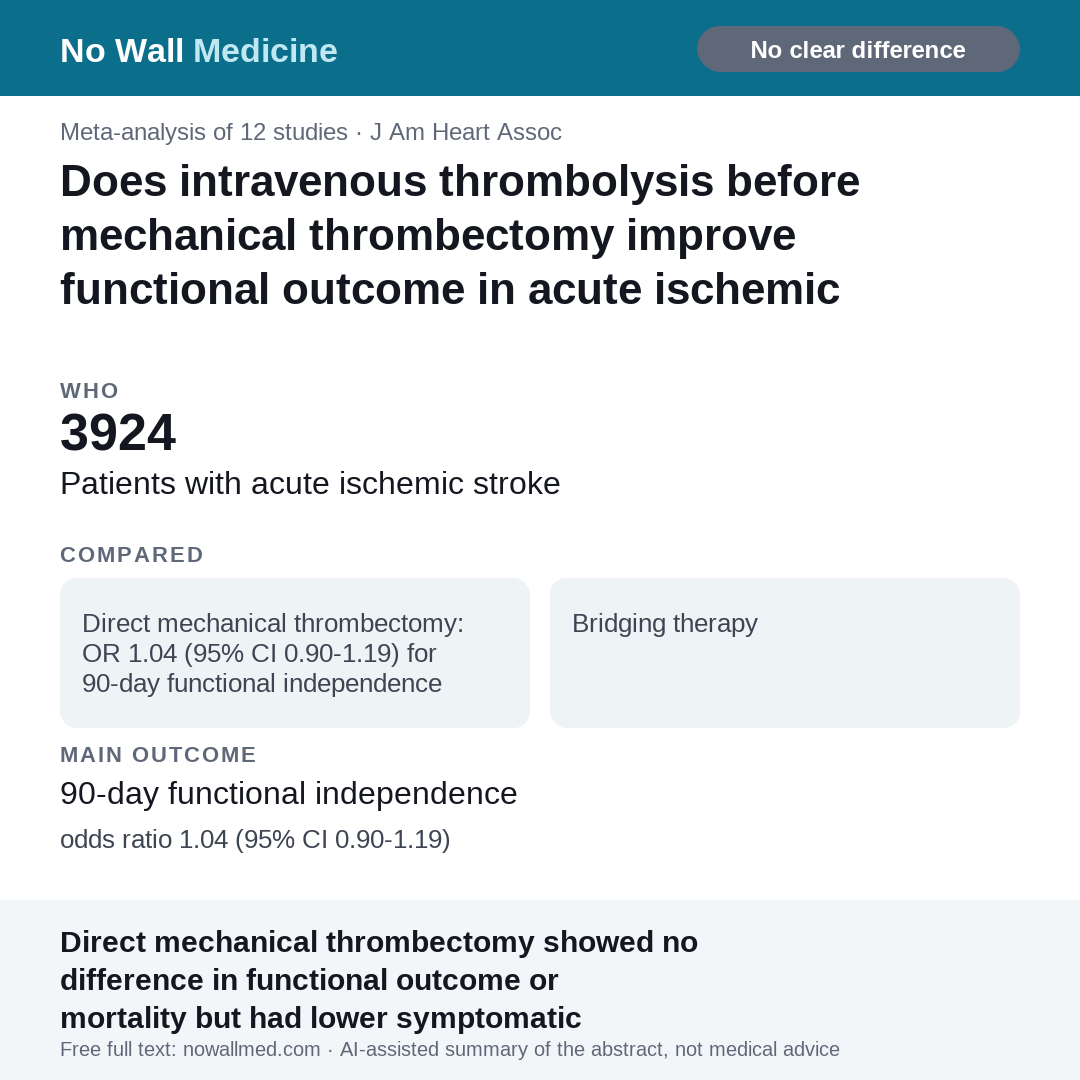
Assessment of Impact of Patient Recruitment Volume on Risk Profile, Outcomes, and Treatment Effect in a Randomized Trial of Ticagrelor Versus Prasugrel in Acute Coronary Syndromes
Analysis of a randomized multicenter trialNo clear difference
Does recruitment center volume affect risk profile, outcomes, and treatment effect?
Who
4018
Patients with acute coronary syndrome · Multicenter trial
Compared
8.4%High recruitment centers
7.3%Low recruitment centers
Main outcome
Composite of all-cause death, myocardial infarction, or stroke
Result: P for interaction=0.800
Bottom line: Recruitment volume did not interact with the treatment effect of ticagrelor versus prasugrel.
J Am Heart Assoc · 2021-11-15Download image
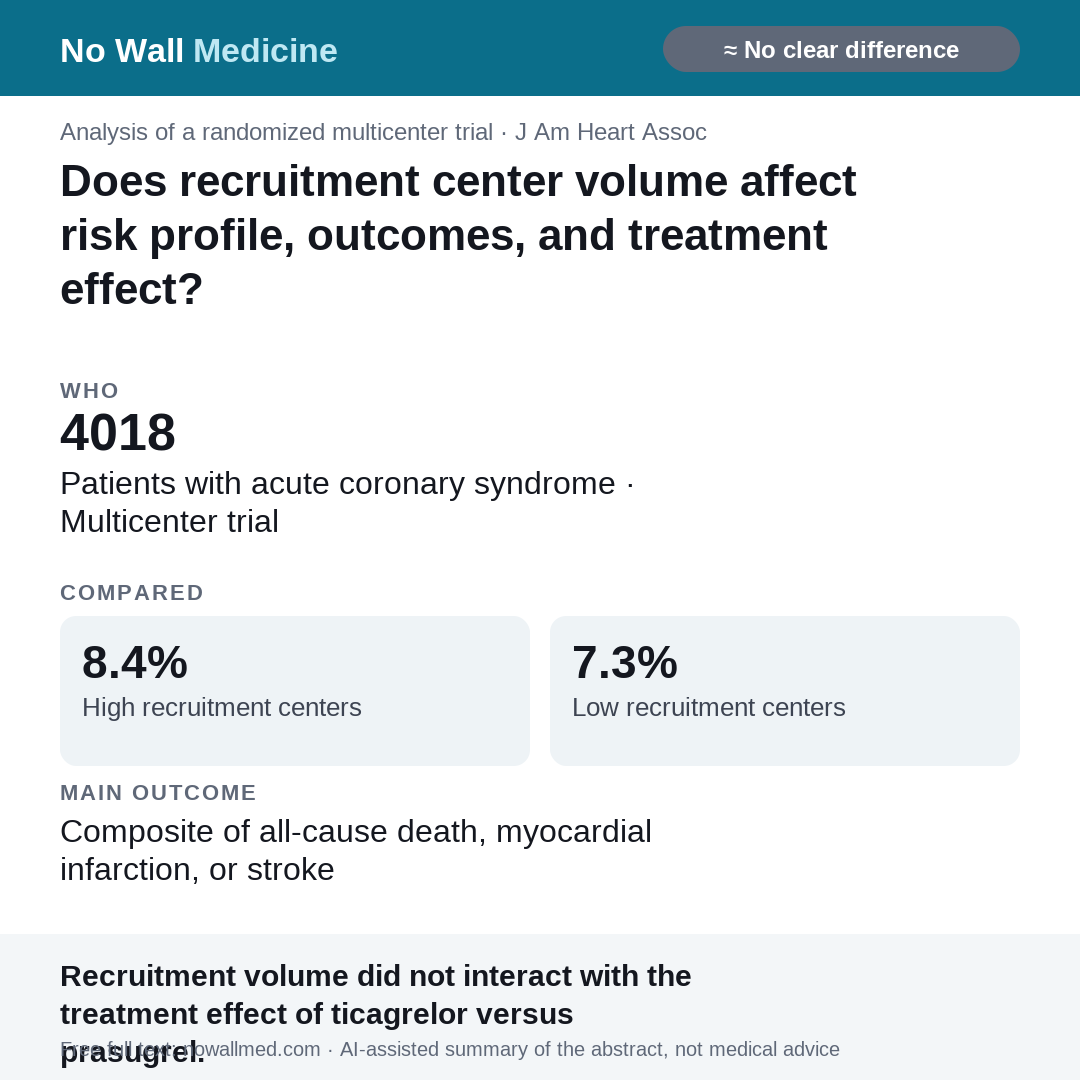
Study Criteria Applied to Real Life-A Multicenter Analysis of Stroke Patients Undergoing Endovascular Treatment in Clinical Practice
Multicenter prospective registry analysisBenefit found
Do applying randomized controlled trial criteria to daily practice improve stroke patient outcomes?
Who
2611
Stroke patients undergoing endovascular treatment · Multicenter, German Stroke Registry
Compared
41%Fulfilling MR CLEAN criteria
34%Not fulfilling MR CLEAN criteria
Main outcome
Good clinical outcome
Bottom line: Patients fulfilling randomized controlled trial criteria had higher rates of good clinical outcomes in daily practice.
J Am Heart Assoc · 2021-11-15Download image
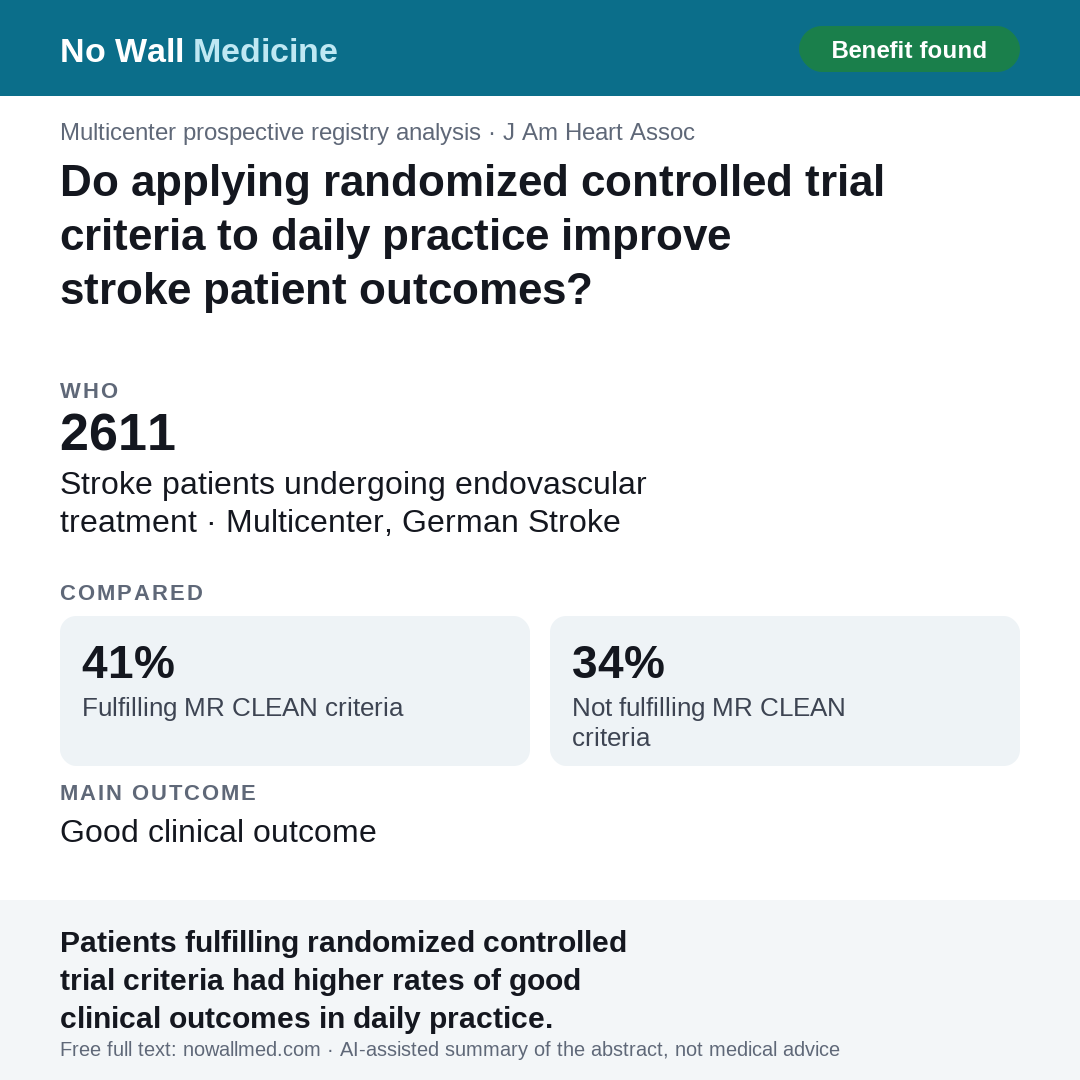
Assessing the impact of polio supplementary immunisation activities on routine immunisation and health systems: a systematic review
Systematic reviewMixed results
Impact of polio SIAs on immunisation systems
Who
20
various communities
Compared
Polio SIAs
Routine immunisation
Main outcome
vaccination uptake
Bottom line: Polio SIAs increase vaccine coverage
BMJ Glob Health · 2021-11-15Download image
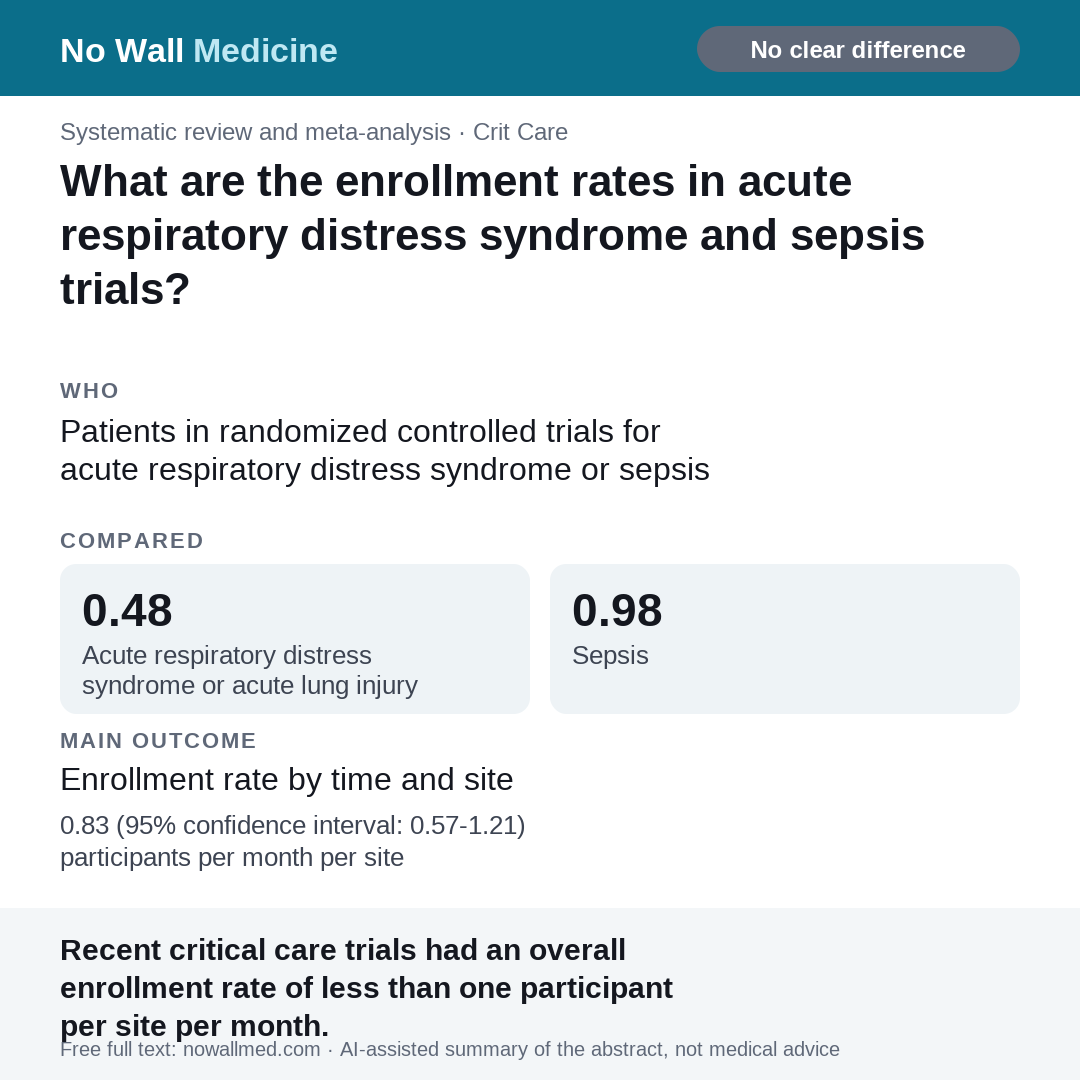
A systematic review and meta-analysis of enrollment into ARDS and sepsis trials published between 2009 and 2019 in major journals
Systematic review and meta-analysisNo clear difference
What are the enrollment rates in acute respiratory distress syndrome and sepsis trials?
Who
Patients in randomized controlled trials for acute respiratory distress syndrome or sepsis · Major general medicine and critical care journals
Compared
0.48Acute respiratory distress syndrome or acute lung injury (95% CI 0.32-0.70)
0.98Sepsis (95% CI 0.62-1.56)
Main outcome
Enrollment rate by time and site
Result: 0.83 (95% confidence interval: 0.57-1.21) participants per month per site
Bottom line: Recent critical care trials had an overall enrollment rate of less than one participant per site per month.
Crit Care · 2021-11-15Download image
Security Engineering of Patient-Centered Health Care Information Systems in Peer-to-Peer Environments: Systematic Review
Systematic literature reviewUnclear result
What are the security issues and suitable architectures for peer-to-peer patient-centered health care information systems?
Who
Peer-to-peer patient-centered health care information systems · Literature search of six electronic databases
Compared
Security issues identified: 8 key security issues
Promoting factors: 7 factors
Main outcome
Security issues and suitable architectures for peer-to-peer deployment
Bottom line: The review identifies eight security issues and seven promoting factors for peer-to-peer patient-centered health care information systems.
J Med Internet Res · 2021-11-15Download image

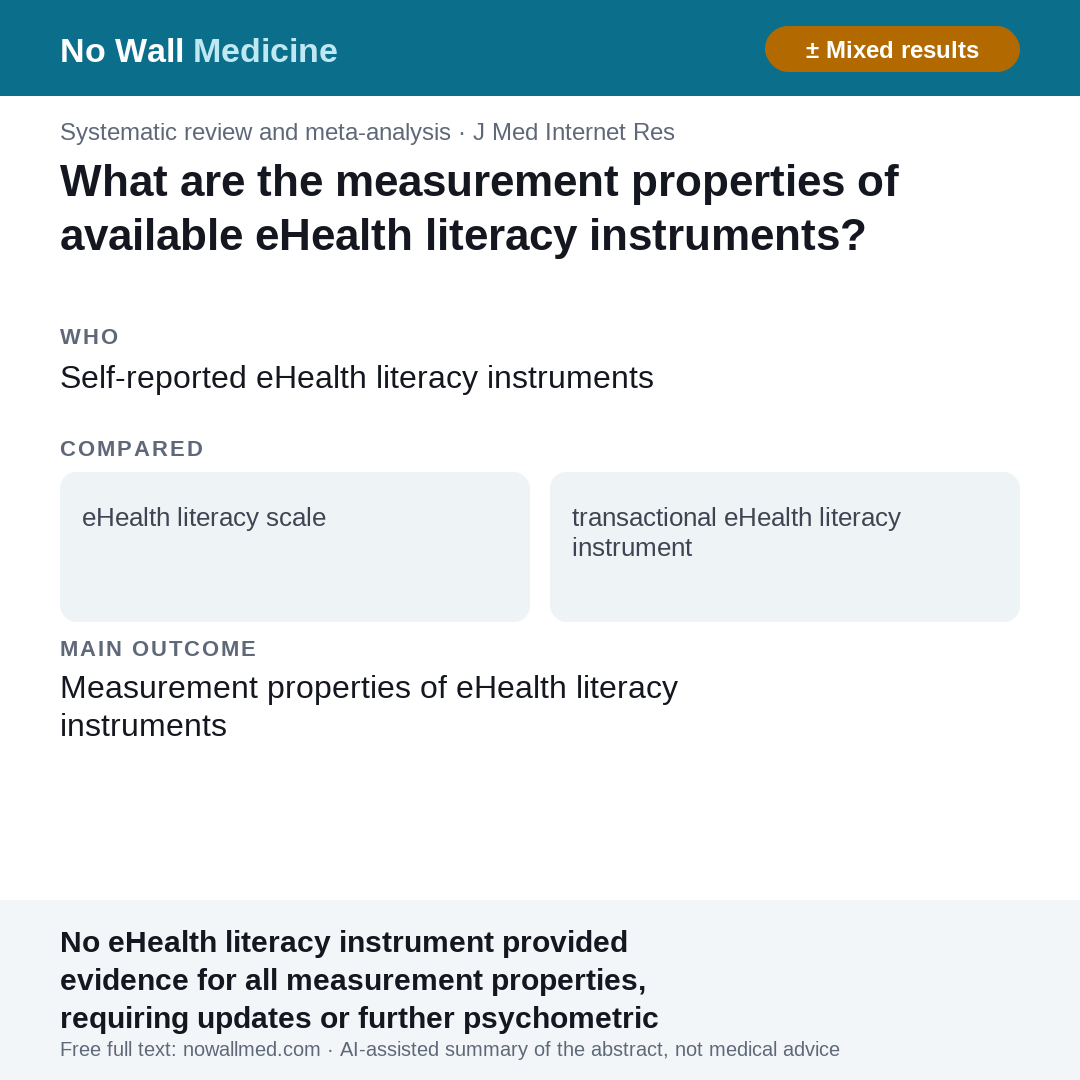
eHealth Literacy Instruments: Systematic Review of Measurement Properties
Systematic review and meta-analysisMixed results
What are the measurement properties of available eHealth literacy instruments?
Who
Self-reported eHealth literacy instruments
Compared
eHealth literacy scale
transactional eHealth literacy instrument
Main outcome
Measurement properties of eHealth literacy instruments
Bottom line: No eHealth literacy instrument provided evidence for all measurement properties, requiring updates or further psychometric studies.
Limitation: No eHealth literacy instrument provided evidence for all measurement properties.
J Med Internet Res · 2021-11-15Download image
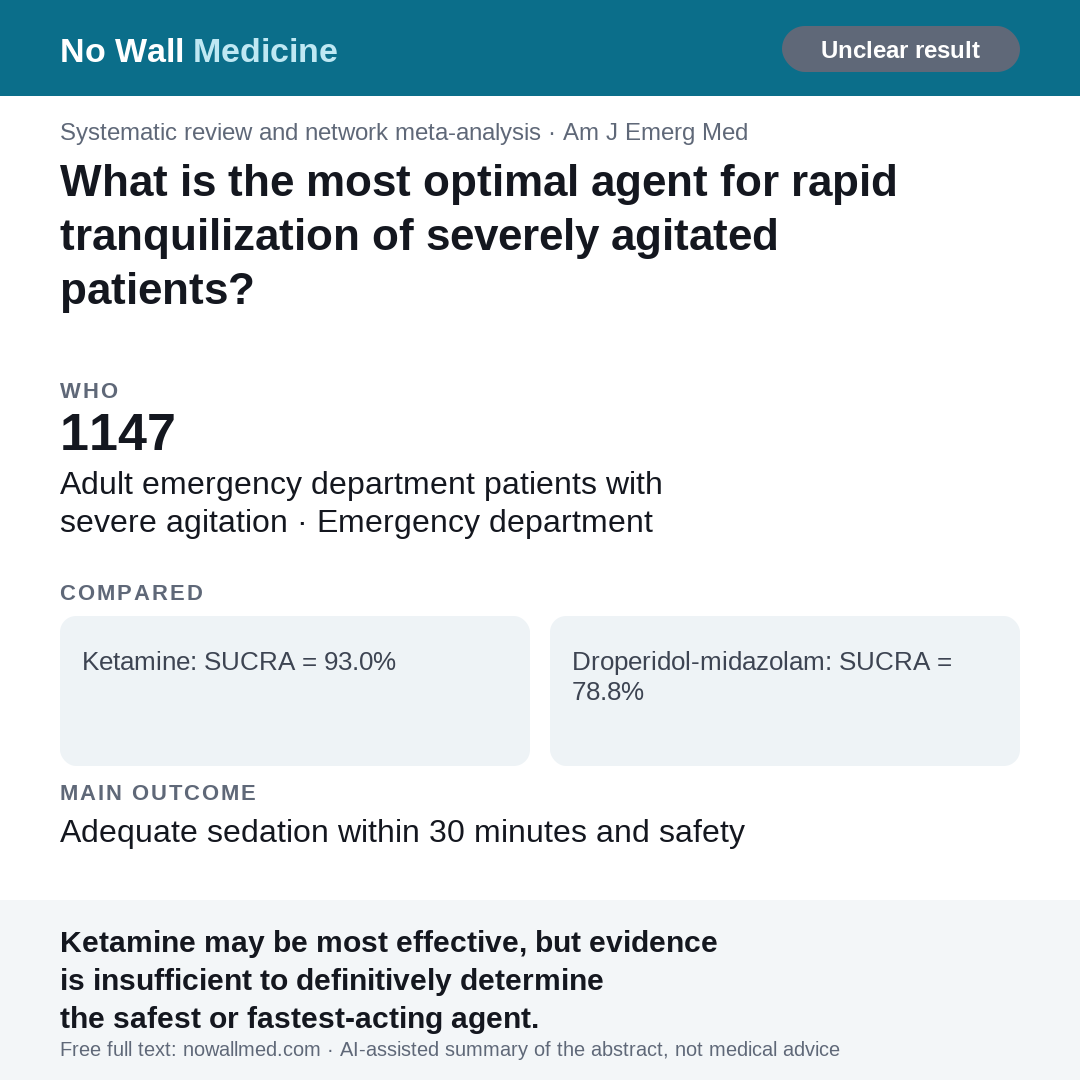
Rapid tranquilization of the agitated patient in the emergency department: A systematic review and network meta-analysis
Systematic review and network meta-analysisUnclear result
What is the most optimal agent for rapid tranquilization of severely agitated patients?
Who
1147
Adult emergency department patients with severe agitation · Emergency department
Compared
Ketamine: SUCRA = 93.0%
Droperidol-midazolam: SUCRA = 78.8%
Main outcome
Adequate sedation within 30 minutes and safety
Bottom line: Ketamine may be most effective, but evidence is insufficient to definitively determine the safest or fastest-acting agent.
Limitation: Concerns with study quality, imprecision, and very low quality for safety estimates.
Am J Emerg Med · 2021-11-14Download image
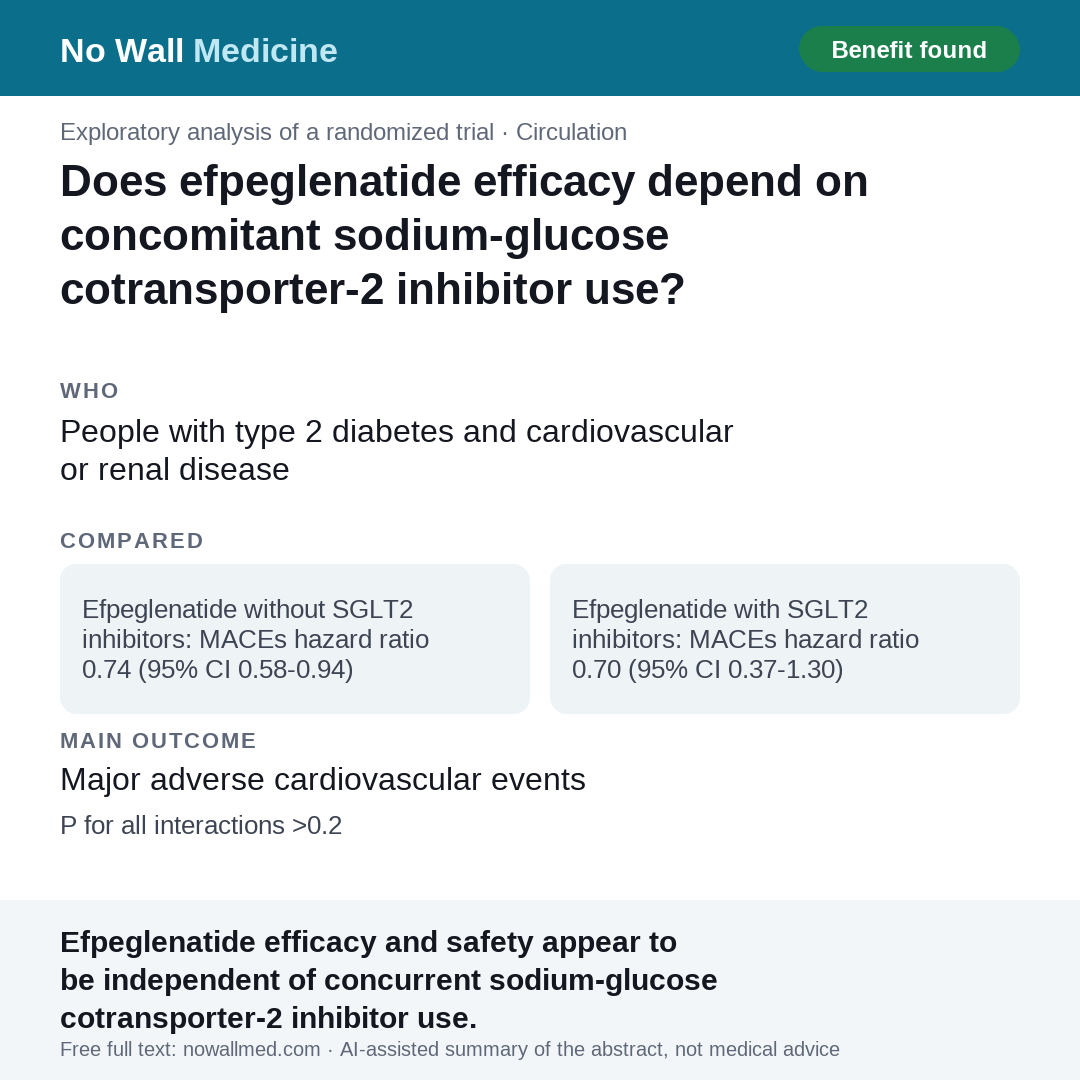
Efpeglenatide and Clinical Outcomes With and Without Concomitant Sodium-Glucose Cotransporter-2 Inhibition Use in Type 2 Diabetes: Exploratory Analysis of the AMPLITUDE-O Trial
Exploratory analysis of a randomized trialBenefit found
Does efpeglenatide efficacy depend on concomitant sodium-glucose cotransporter-2 inhibitor use?
Who
People with type 2 diabetes and cardiovascular or renal disease
Compared
Efpeglenatide without SGLT2 inhibitors: MACEs hazard ratio 0.74 (95% CI 0.58-0.94)
Efpeglenatide with SGLT2 inhibitors: MACEs hazard ratio 0.70 (95% CI 0.37-1.30)
Main outcome
Major adverse cardiovascular events
Result: P for all interactions >0.2
Bottom line: Efpeglenatide efficacy and safety appear to be independent of concurrent sodium-glucose cotransporter-2 inhibitor use.
Circulation · 2021-11-14Download image
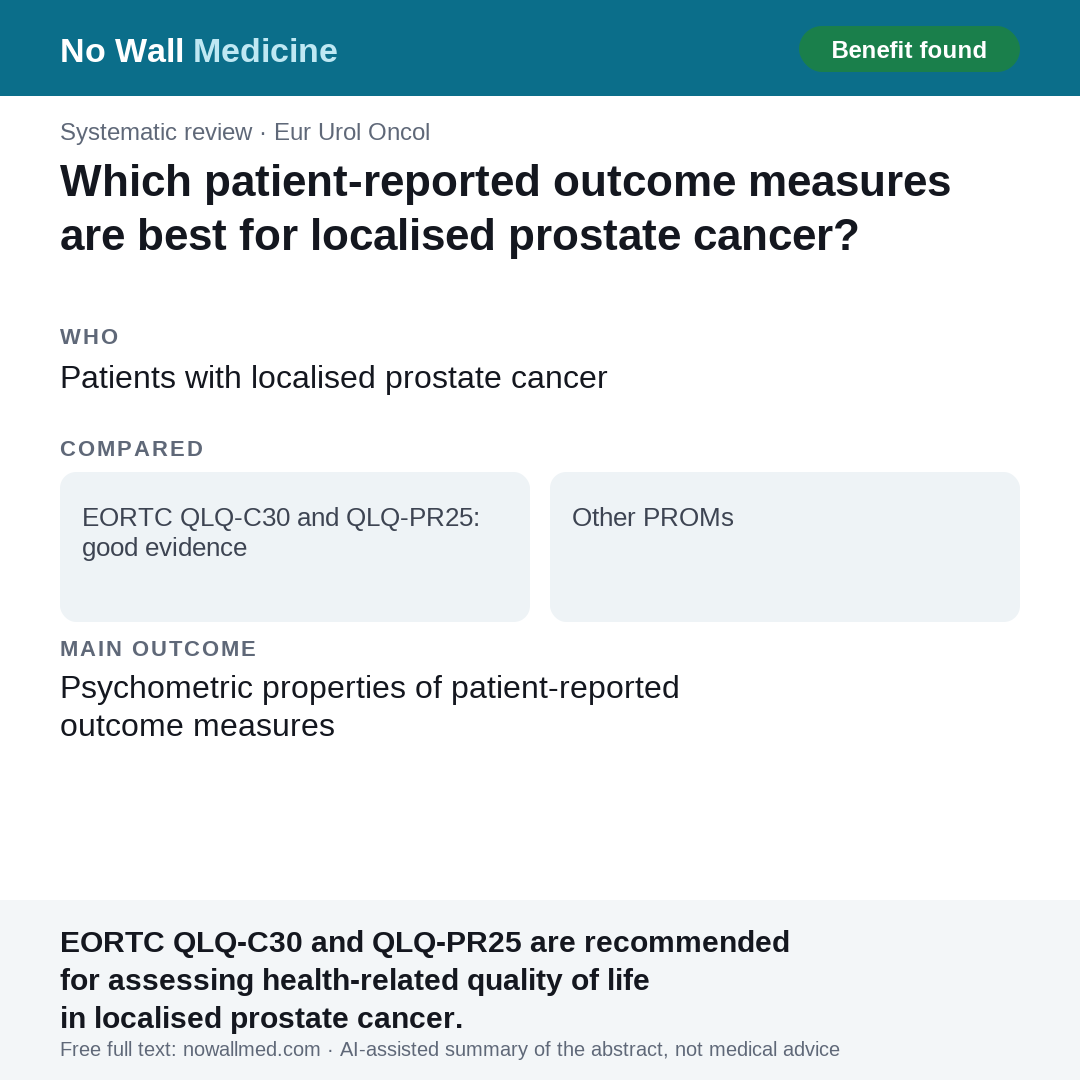
Standardising the Assessment of Patient-reported Outcome Measures in Localised Prostate Cancer. A Systematic Review
Systematic reviewBenefit found
Which patient-reported outcome measures are best for localised prostate cancer?
Who
Patients with localised prostate cancer
Compared
EORTC QLQ-C30 and QLQ-PR25: good evidence
Other PROMs
Main outcome
Psychometric properties of patient-reported outcome measures
Bottom line: EORTC QLQ-C30 and QLQ-PR25 are recommended for assessing health-related quality of life in localised prostate cancer.
Eur Urol Oncol · 2021-11-14Download image
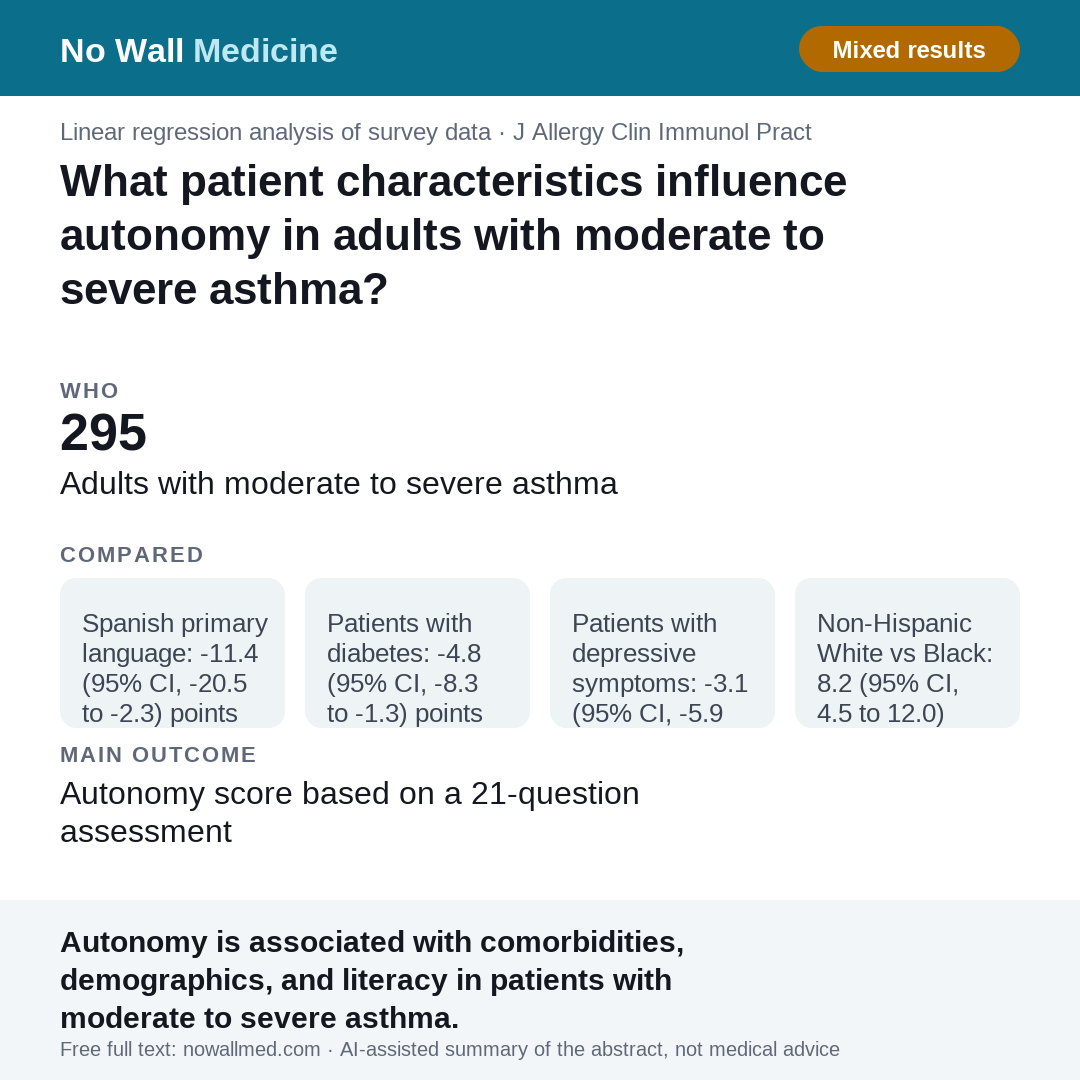
Understanding Autonomy in Patients with Moderate to Severe Asthma
Linear regression analysis of survey dataMixed results
What patient characteristics influence autonomy in adults with moderate to severe asthma?
Who
295
Adults with moderate to severe asthma
Compared
Spanish primary language: -11.4 (95% CI, -20.5 to -2.3) points
Patients with diabetes: -4.8 (95% CI, -8.3 to -1.3) points
Patients with depressive symptoms: -3.1 (95% CI, -5.9 to -0.3) points
Non-Hispanic White vs Black: 8.2 (95% CI, 4.5 to 12.0) points higher
Main outcome
Autonomy score based on a 21-question assessment
Bottom line: Autonomy is associated with comorbidities, demographics, and literacy in patients with moderate to severe asthma.
J Allergy Clin Immunol Pract · 2021-11-14Download image
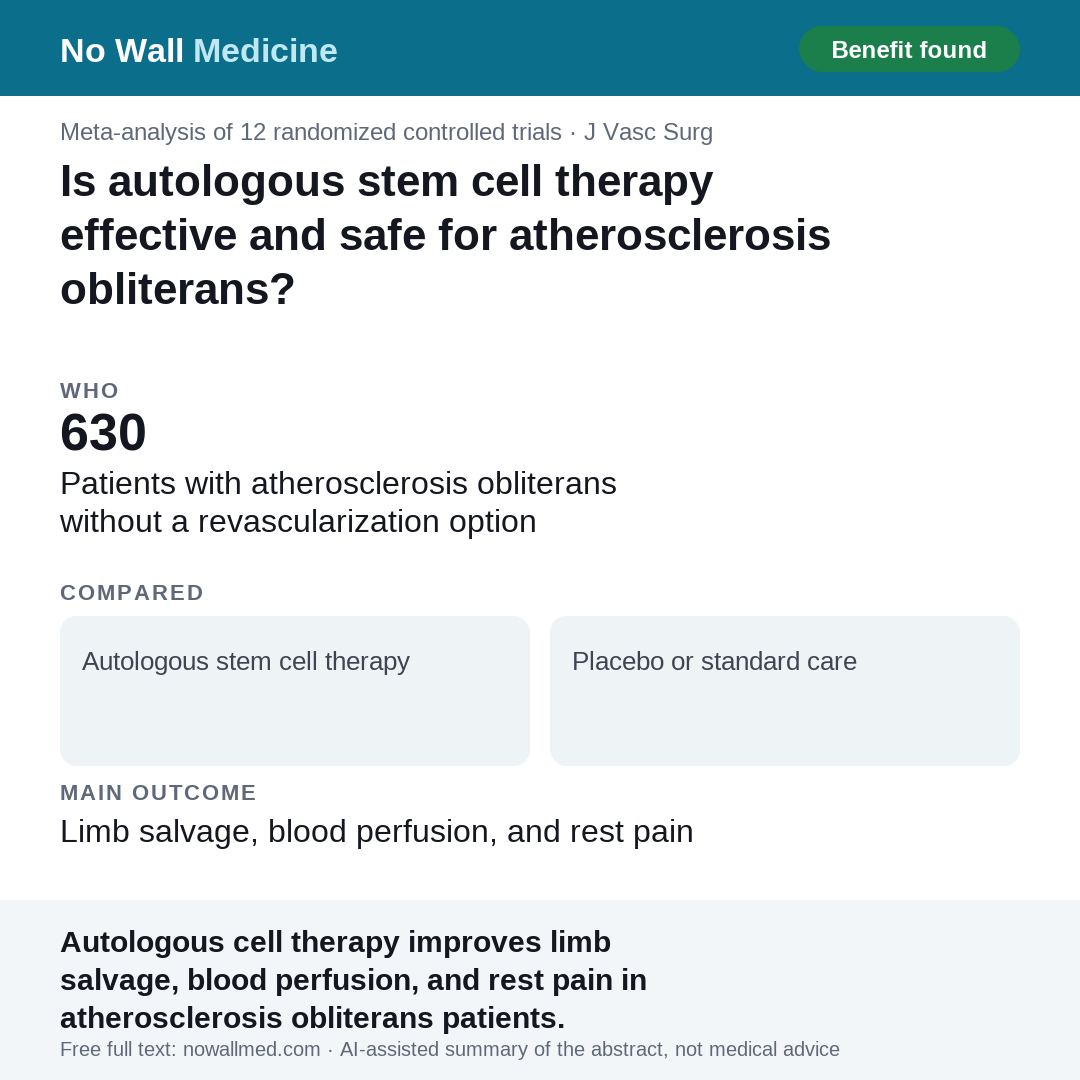
A meta-analysis of randomized controlled trials on therapeutic efficacy and safety of autologous cell therapy for atherosclerosis obliterans
Meta-analysis of 12 randomized controlled trialsBenefit found
Is autologous stem cell therapy effective and safe for atherosclerosis obliterans?
Who
630
Patients with atherosclerosis obliterans without a revascularization option
Compared
Autologous stem cell therapy
Placebo or standard care
Main outcome
Limb salvage, blood perfusion, and rest pain
Result: relative risk 0.64 (95% CI 0.47-0.87) for total amputation
Bottom line: Autologous cell therapy improves limb salvage, blood perfusion, and rest pain in atherosclerosis obliterans patients.
Limitation: The number of trials was limited and most were for no-option patients.
J Vasc Surg · 2021-11-14Download image