Visual abstracts
New randomized trials and meta-analyses from leading journals at a glance: who was studied, what was compared, and what was found. Every paper is free to read in full.
All specialtiesCardiology 4763Oncology 4043Gastroenterology & Hepatology 1903Infectious Disease 3756Neurology 1872Psychiatry & Mental Health 2216Pulmonology 2044Critical Care 1319Endocrinology & Diabetes 2544Pediatrics 2889Surgery 2480Orthopedics & Sports Medicine 917Neurosurgery 525Cardiothoracic & Vascular Surgery 656Plastic & Reconstructive Surgery 574Nephrology 1107Rheumatology 810Hematology 1090Dermatology 611Ophthalmology 532Obstetrics & Gynecology 1645Public & Global Health 1037Radiology & Imaging 619Anesthesiology 958Urology 745ENT (Otolaryngology) 494Emergency Medicine 481Allergy & Immunology 309Geriatrics 972Family Medicine & Primary Care 534Medical Genetics & Genomics 659Pathology & Laboratory Medicine 156Physical Medicine & Rehabilitation 734Palliative Care 421Nutrition 1560Digital Health & AI 2137General Medicine 318
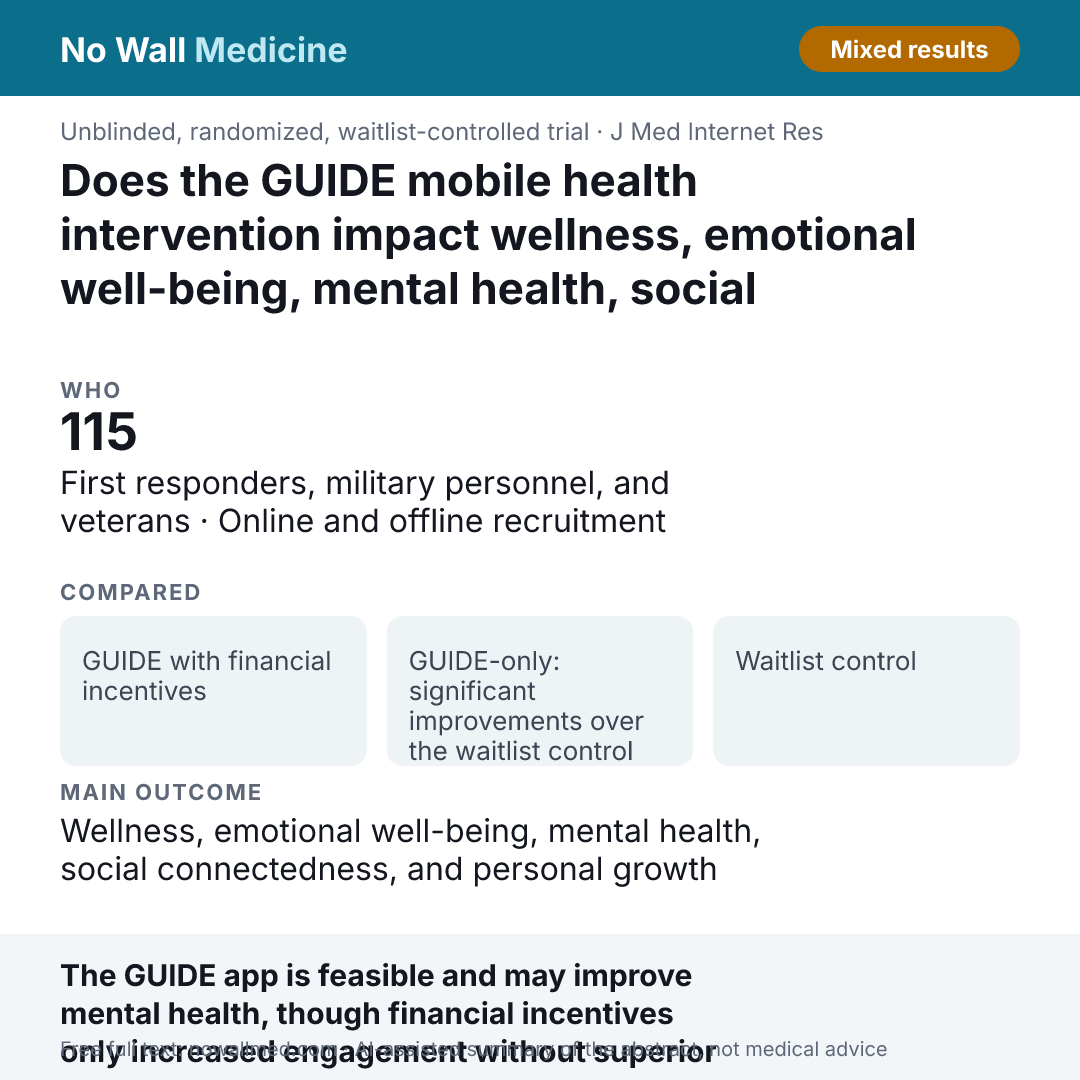
Evaluating a Mobile Health Intervention (GUIDE App) for First Responders, Military Personnel, and Veterans: Randomized Controlled Trial
Unblinded, randomized, waitlist-controlled trialMixed results
Does the GUIDE mobile health intervention impact wellness, emotional well-being, mental health, social connectedness, and personal growth?
Who
115
First responders, military personnel, and veterans · Online and offline recruitment
Compared
GUIDE with financial incentives
GUIDE-only: significant improvements over the waitlist control group in wellness (d=0.05-0.31), emotional well-being (d=0.06-0.31), depression (d=-0.30), and anxiety (d=-0.29)
Waitlist control
Main outcome
Wellness, emotional well-being, mental health, social connectedness, and personal growth
Bottom line: The GUIDE app is feasible and may improve mental health, though financial incentives only increased engagement without superior clinical outcomes.
Limitation: Future research should assess whether improvements are sustained in the long term.
J Med Internet Res · 2025-10-17 · Save PNG
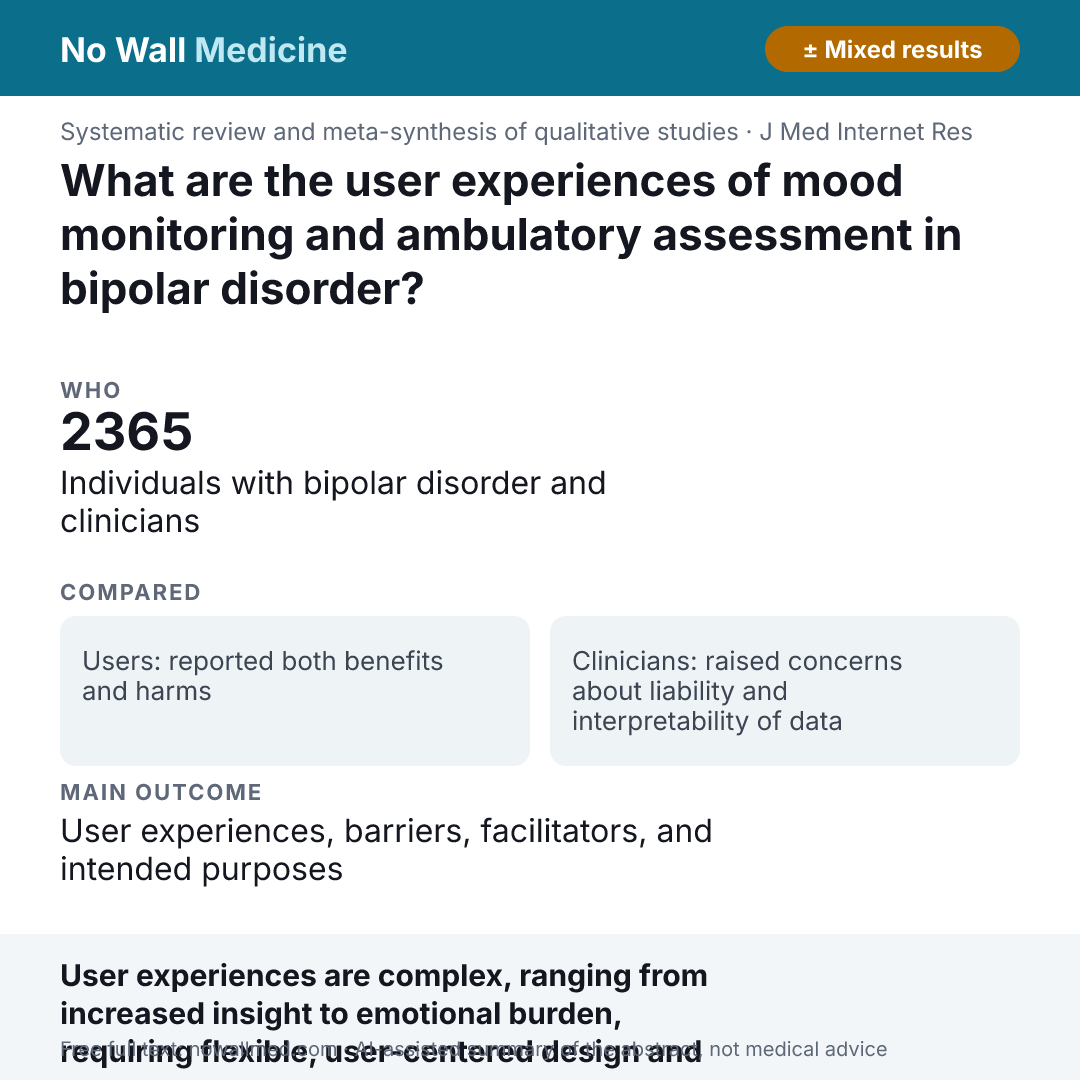
The User Experience of Ambulatory Assessment and Mood Monitoring in Bipolar Disorder: Systematic Review and Meta-Synthesis of Qualitative Studies
Systematic review and meta-synthesis of qualitative studiesMixed results
What are the user experiences of mood monitoring and ambulatory assessment in bipolar disorder?
Who
2365
Individuals with bipolar disorder and clinicians
Compared
Users: reported both benefits and harms
Clinicians: raised concerns about liability and interpretability of data
Main outcome
User experiences, barriers, facilitators, and intended purposes
Bottom line: User experiences are complex, ranging from increased insight to emotional burden, requiring flexible, user-centered design and personalization.
J Med Internet Res · 2025-10-17 · Save PNG
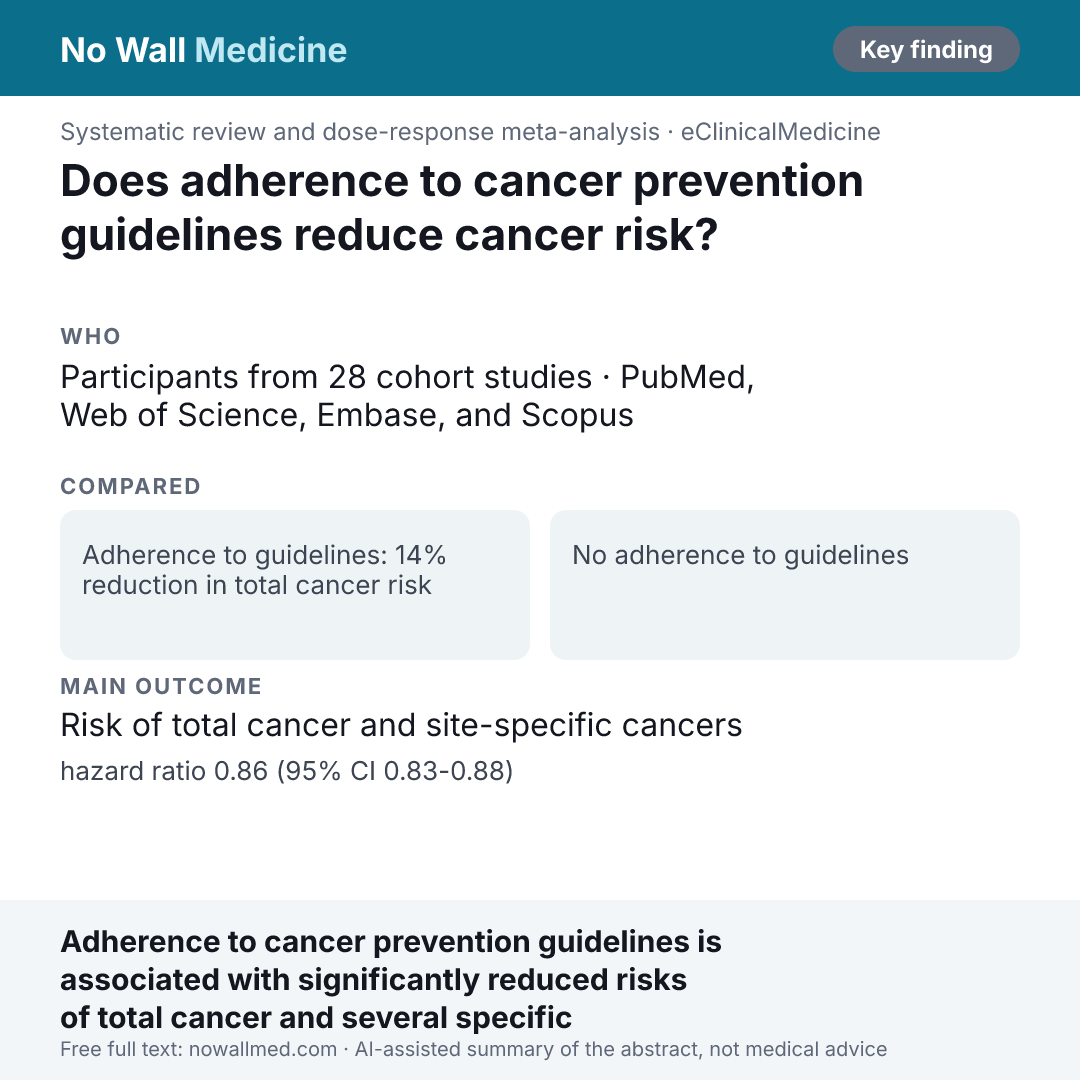
Association between adherence to cancer prevention guidelines and cancer risk: a comprehensive systematic review and dose-response meta-analysis of cohort studies
Systematic review and dose-response meta-analysisKey finding
Does adherence to cancer prevention guidelines reduce cancer risk?
Who
Participants from 28 cohort studies · PubMed, Web of Science, Embase, and Scopus
Compared
Adherence to guidelines: 14% reduction in total cancer risk
No adherence to guidelines
Main outcome
Risk of total cancer and site-specific cancers
Result: hazard ratio 0.86 (95% CI 0.83-0.88)
Bottom line: Adherence to cancer prevention guidelines is associated with significantly reduced risks of total cancer and several specific cancers.
Limitation: Further research is needed to elucidate associations with a broader spectrum of cancers, particularly in Asian populations.
Funded by: National Research Foundation of Korea
eClinicalMedicine · 2025-10-16 · Save PNG
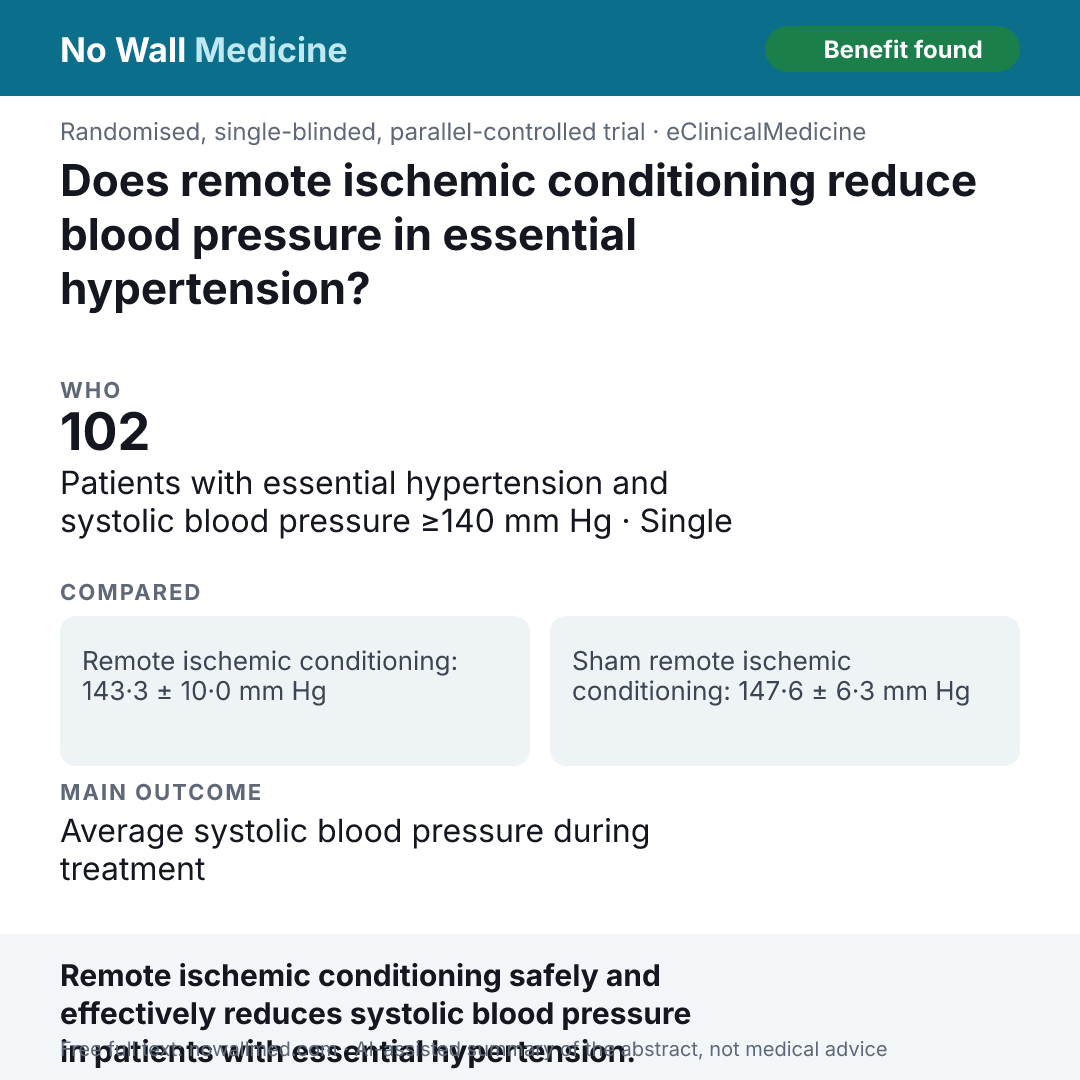
Efficacy of remote ischemic conditioning on blood pressure in essential hypertension in China (RICBP-EH): a randomised, controlled, parallel-group trial
Randomised, single-blinded, parallel-controlled trialBenefit found
Does remote ischemic conditioning reduce blood pressure in essential hypertension?
Who
102
Patients with essential hypertension and systolic blood pressure ≥140 mm Hg · Single centre in Changchun, China
Compared
Remote ischemic conditioning: 143·3 ± 10·0 mm Hg
Sham remote ischemic conditioning: 147·6 ± 6·3 mm Hg
Main outcome
Average systolic blood pressure during treatment
Result: -4·8 mm Hg [95% CI, -6·9, -2·7 mm Hg]
Bottom line: Remote ischemic conditioning safely and effectively reduces systolic blood pressure in patients with essential hypertension.
Limitation: Further research is warranted to explore the underlying mechanisms of blood pressure-lowering effects.
Funded by: National Natural Science Foundation of China and others
eClinicalMedicine · 2025-10-16 · Save PNG
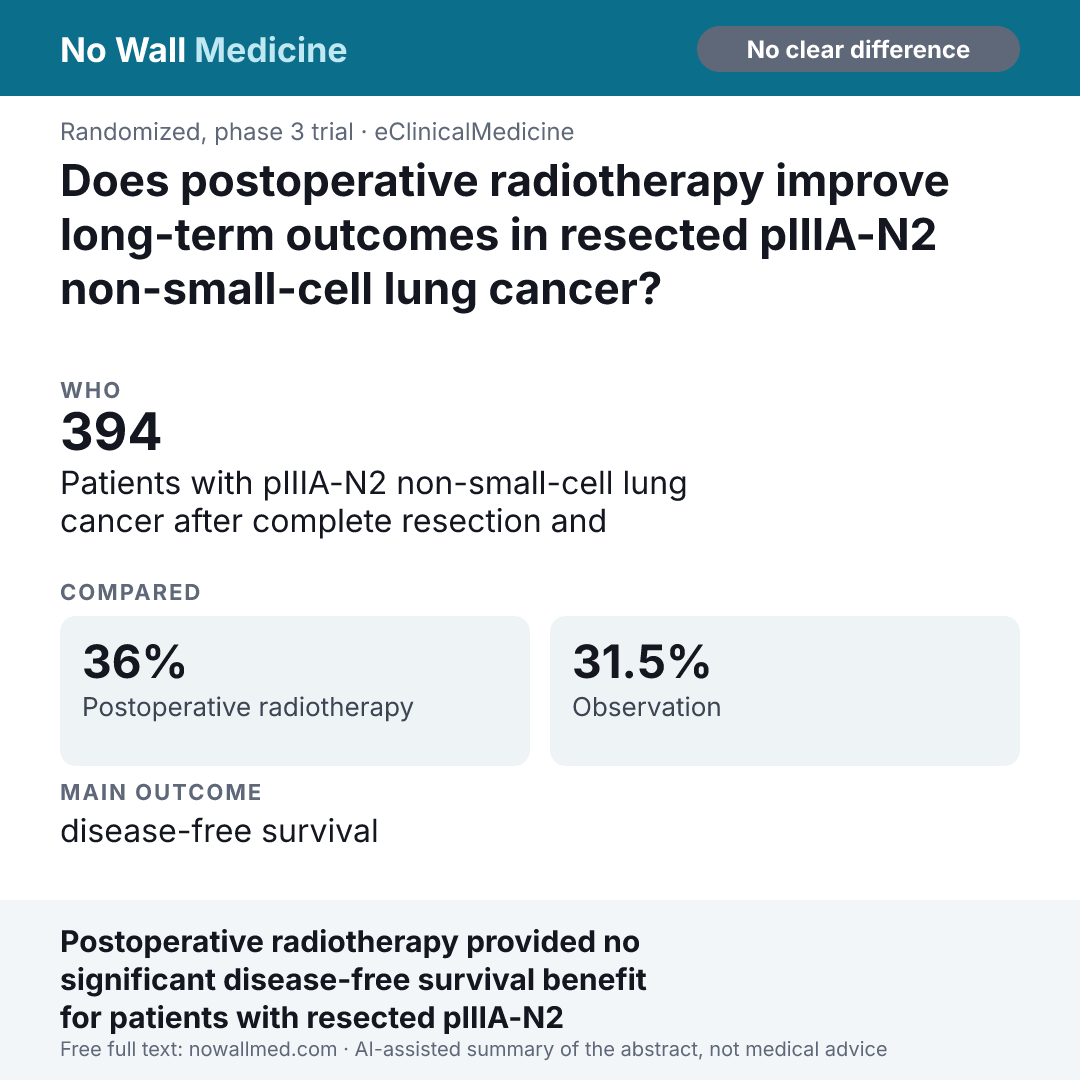
Long-term outcomes of postoperative radiotherapy for patients with pIIIA-N2 non-small-cell lung cancer after complete resection and adjuvant chemotherapy (PORT-C): a single-centre, randomized, phase 3 trial
Randomized, phase 3 trialNo clear difference
Does postoperative radiotherapy improve long-term outcomes in resected pIIIA-N2 non-small-cell lung cancer?
Who
394
Patients with pIIIA-N2 non-small-cell lung cancer after complete resection and chemotherapy · Single-centre
Compared
36%Postoperative radiotherapy (95% CI, 28.9%-43.1%)
31.5%Observation (95% CI, 24.6%-38.4%)
Main outcome
disease-free survival
Result: hazard ratio 0.90 (95% CI 0.70-1.12)
Bottom line: Postoperative radiotherapy provided no significant disease-free survival benefit for patients with resected pIIIA-N2 non-small-cell lung cancer.
Funded by: National Key R&D Program of China and others
eClinicalMedicine · 2025-10-16 · Save PNG
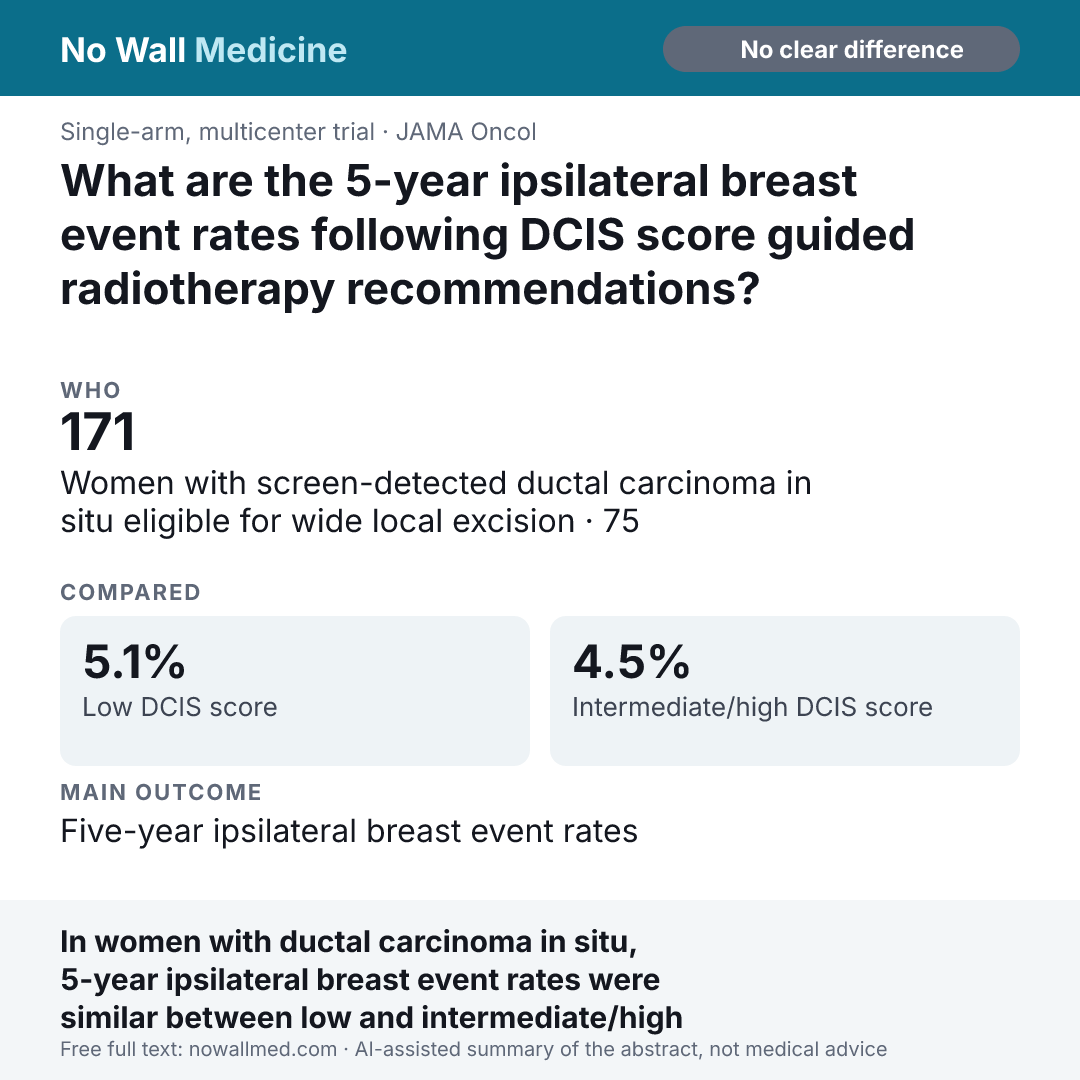
Radiotherapy With a 12-Gene Expression Assay for Ductal Carcinoma In Situ: A Randomized Clinical Trial
Single-arm, multicenter trialNo clear difference
What are the 5-year ipsilateral breast event rates following DCIS score guided radiotherapy recommendations?
Who
171
Women with screen-detected ductal carcinoma in situ eligible for wide local excision · 75 institutions within the Eastern Cooperative Oncology Group-American College of Radiology Imaging Network
Compared
5.1%Low DCIS score (95% CI, 1.9%-12.9%)
4.5%Intermediate/high DCIS score (95% CI, 1.7%-11.7%)
Main outcome
Five-year ipsilateral breast event rates
Bottom line: In women with ductal carcinoma in situ, 5-year ipsilateral breast event rates were similar between low and intermediate/high DCIS scores.
Limitation: Despite a limited sample size, these data potentially provide support, although confirmatory studies are needed.
JAMA Oncol · 2025-10-16 · Save PNG
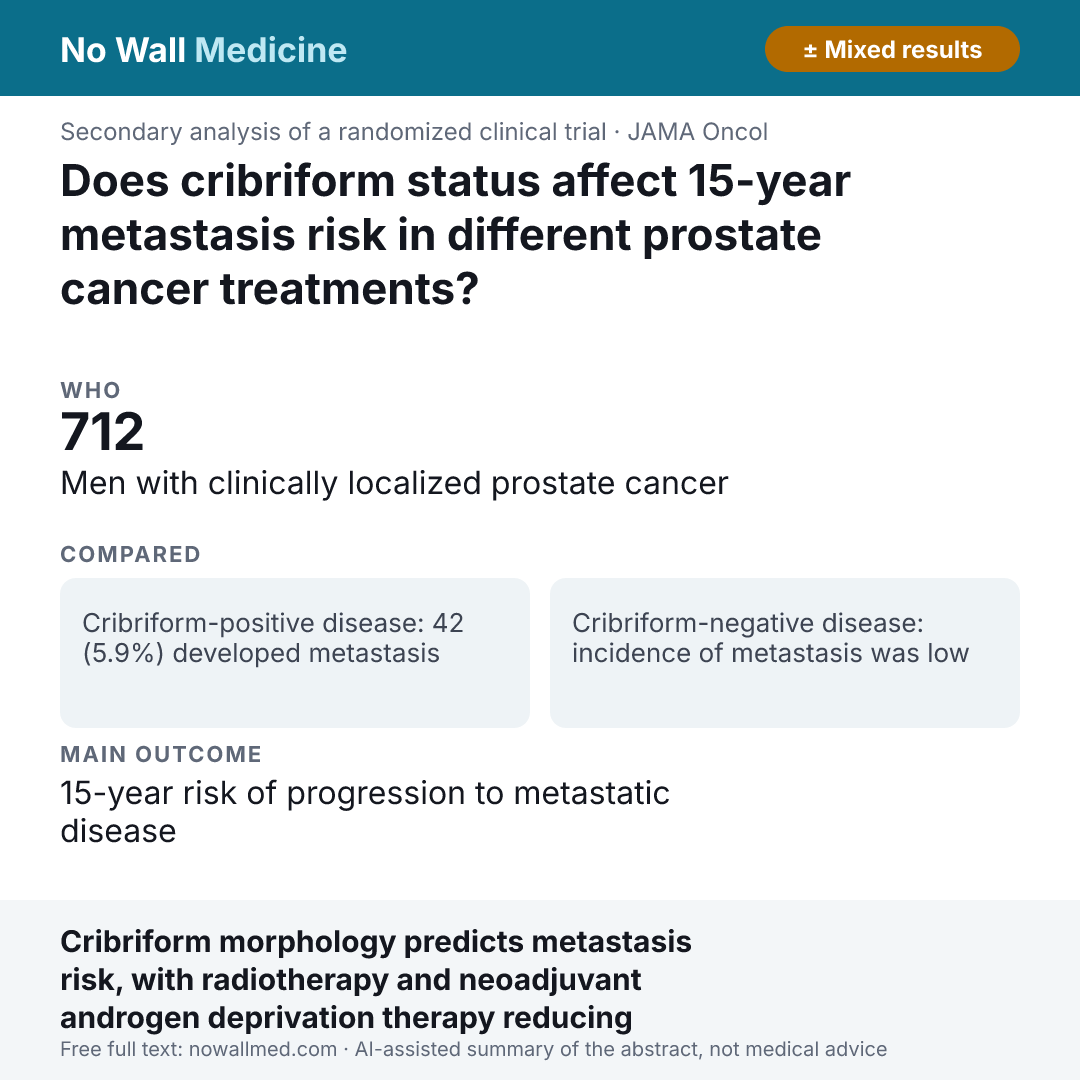
Active Monitoring, Surgery, and Radiotherapy for Cribriform-Positive and Cribriform-Negative Prostate Cancer: A Secondary Analysis of the PROTECT Randomized Clinical Trial
Secondary analysis of a randomized clinical trialMixed results
Does cribriform status affect 15-year metastasis risk in different prostate cancer treatments?
Who
712
Men with clinically localized prostate cancer
Compared
Cribriform-positive disease: 42 (5.9%) developed metastasis
Cribriform-negative disease: incidence of metastasis was low
Main outcome
15-year risk of progression to metastatic disease
Result: hazard ratio 3.61 (95% CI 1.60-8.11)
Bottom line: Cribriform morphology predicts metastasis risk, with radiotherapy and neoadjuvant androgen deprivation therapy reducing long-term risk.
JAMA Oncol · 2025-10-16 · Save PNG
Effects of Semaglutide on Cognitive Function in People With HIV: A Randomized, Controlled Trial
Randomized, double-blind, placebo-controlled phase 2b clinical trialEarly signal
Does semaglutide affect cognitive function in people with human immunodeficiency virus?
Who
108
People with human immunodeficiency virus on antiretroviral therapy
Compared
Semaglutide: significantly increased visuospatial, naming/language, and delayed recall scores
Placebo
Main outcome
change in cognitive function at 32 weeks
Bottom line: Semaglutide may improve visuospatial cognitive function in people with human immunodeficiency virus through effects on inflammation.
Clin Infect Dis · 2025-10-16 · Save PNG

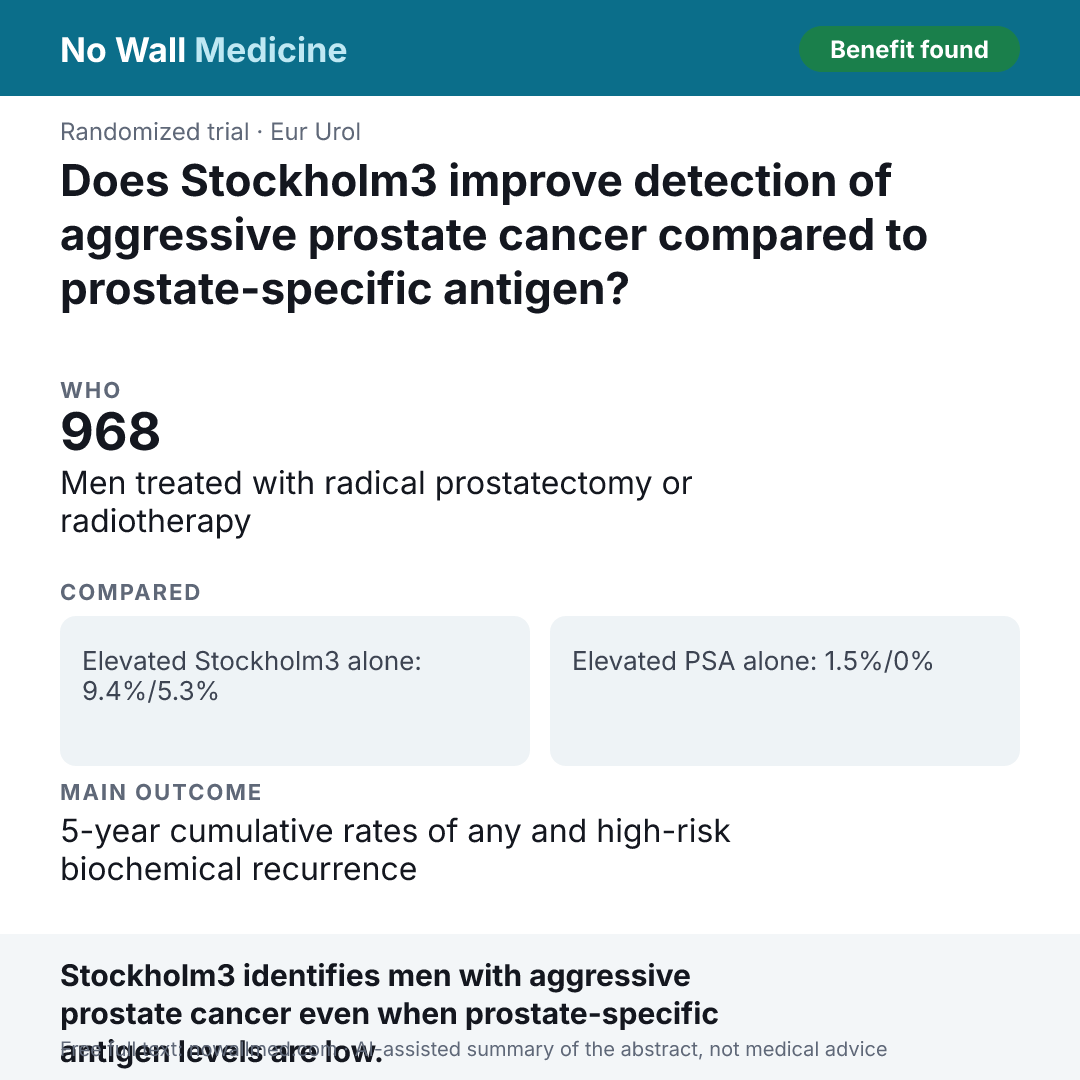
Stockholm3 Versus Prostate-specific Antigen in Prostate Cancer Screening: 9-year Outcomes Demonstrating Improved Detection of Aggressive Cancers and Reduced Overdiagnosis from the STHLM3 Trial
Randomized trialBenefit found
Does Stockholm3 improve detection of aggressive prostate cancer compared to prostate-specific antigen?
Who
968
Men treated with radical prostatectomy or radiotherapy
Compared
Elevated Stockholm3 alone: 9.4%/5.3%
Elevated PSA alone: 1.5%/0%
Main outcome
5-year cumulative rates of any and high-risk biochemical recurrence
Result: hazard ratio 8.8 (95% confidence interval 1.06-72) for high-risk BCR
Bottom line: Stockholm3 identifies men with aggressive prostate cancer even when prostate-specific antigen levels are low.
Eur Urol · 2025-10-16 · Save PNG
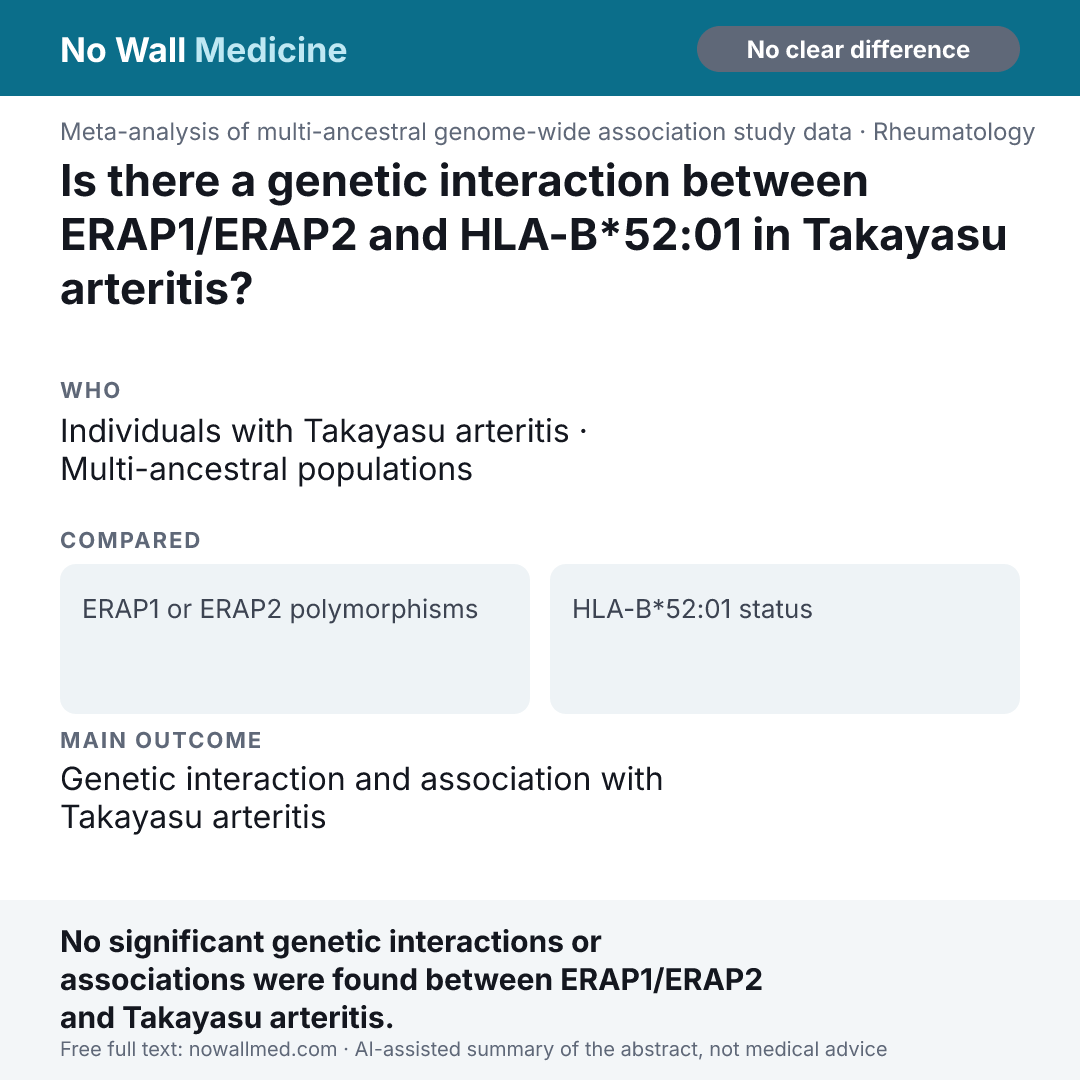
Exploring the genetic interaction between ERAP1/ERAP2 and HLA-B*52:01 in Takayasu arteritis
Meta-analysis of multi-ancestral genome-wide association study dataNo clear difference
Is there a genetic interaction between ERAP1/ERAP2 and HLA-B*52:01 in Takayasu arteritis?
Who
Individuals with Takayasu arteritis · Multi-ancestral populations
Compared
ERAP1 or ERAP2 polymorphisms
HLA-B*52:01 status
Main outcome
Genetic interaction and association with Takayasu arteritis
Bottom line: No significant genetic interactions or associations were found between ERAP1/ERAP2 and Takayasu arteritis.
Rheumatology · 2025-10-16 · Save PNG
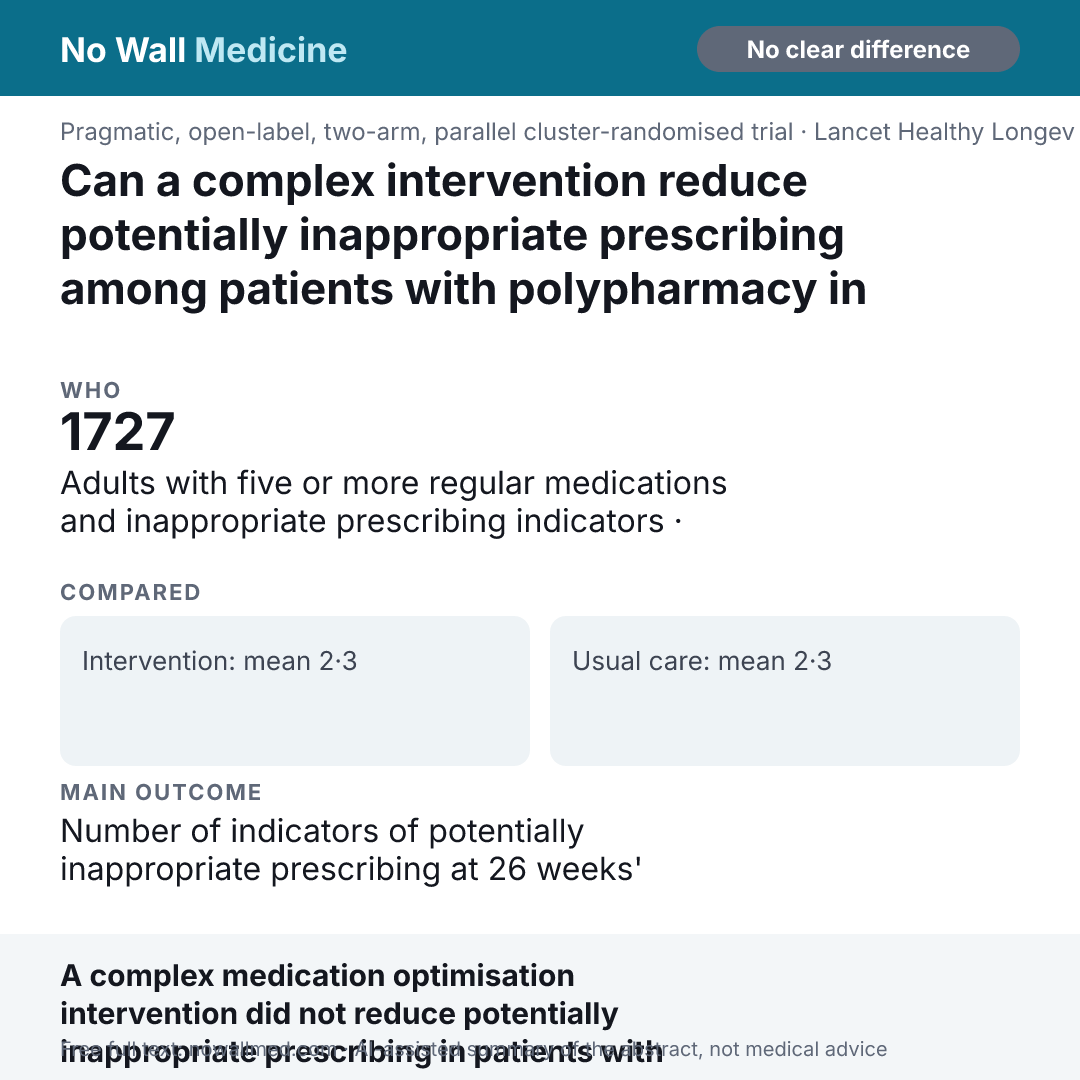
Optimising polypharmacy management in primary care through general practitioner-pharmacist collaboration, informatics, and enhancing clinician engagement: the IMPPP cluster-randomised trial
Pragmatic, open-label, two-arm, parallel cluster-randomised trialNo clear difference
Can a complex intervention reduce potentially inappropriate prescribing among patients with polypharmacy in primary care?
Who
1727
Adults with five or more regular medications and inappropriate prescribing indicators · United Kingdom general practices
Compared
Intervention: mean 2·3
Usual care: mean 2·3
Main outcome
Number of indicators of potentially inappropriate prescribing at 26 weeks' follow-up
Result: difference in means -0·007 (95% CI -0·21 to 0·20)
Bottom line: A complex medication optimisation intervention did not reduce potentially inappropriate prescribing in patients with polypharmacy.
Funded by: National Institute for Health and Care Research
Lancet Healthy Longev · 2025-10-16 · Save PNG
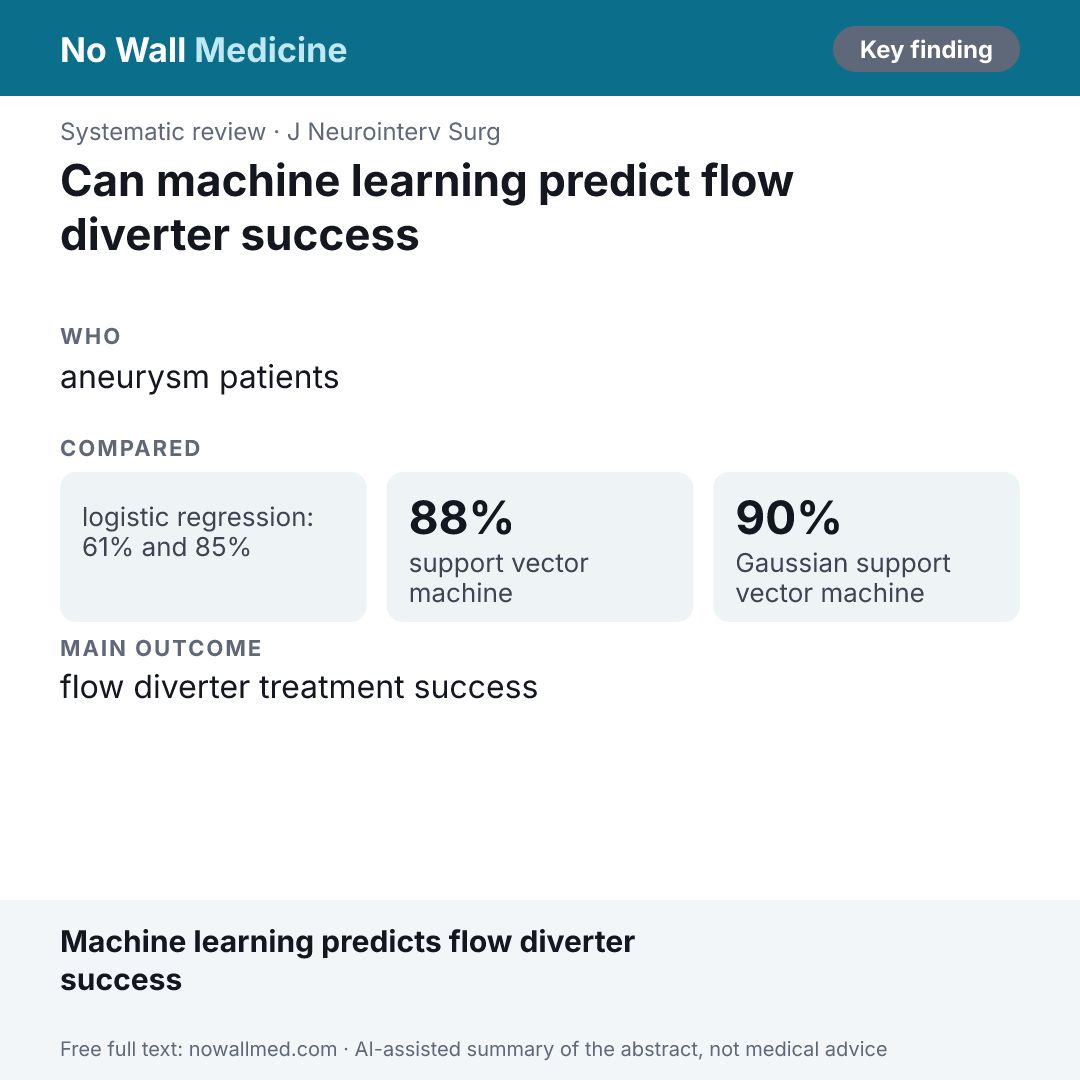
What can we learn from machine learning studies on flow diverter aneurysm embolization? A systematic review
Systematic reviewKey finding
Can machine learning predict flow diverter success
Who
aneurysm patients
Compared
logistic regression: 61% and 85%
88%support vector machine
90%Gaussian support vector machine
Main outcome
flow diverter treatment success
Bottom line: Machine learning predicts flow diverter success
J Neurointerv Surg · 2025-10-16 · Save PNG
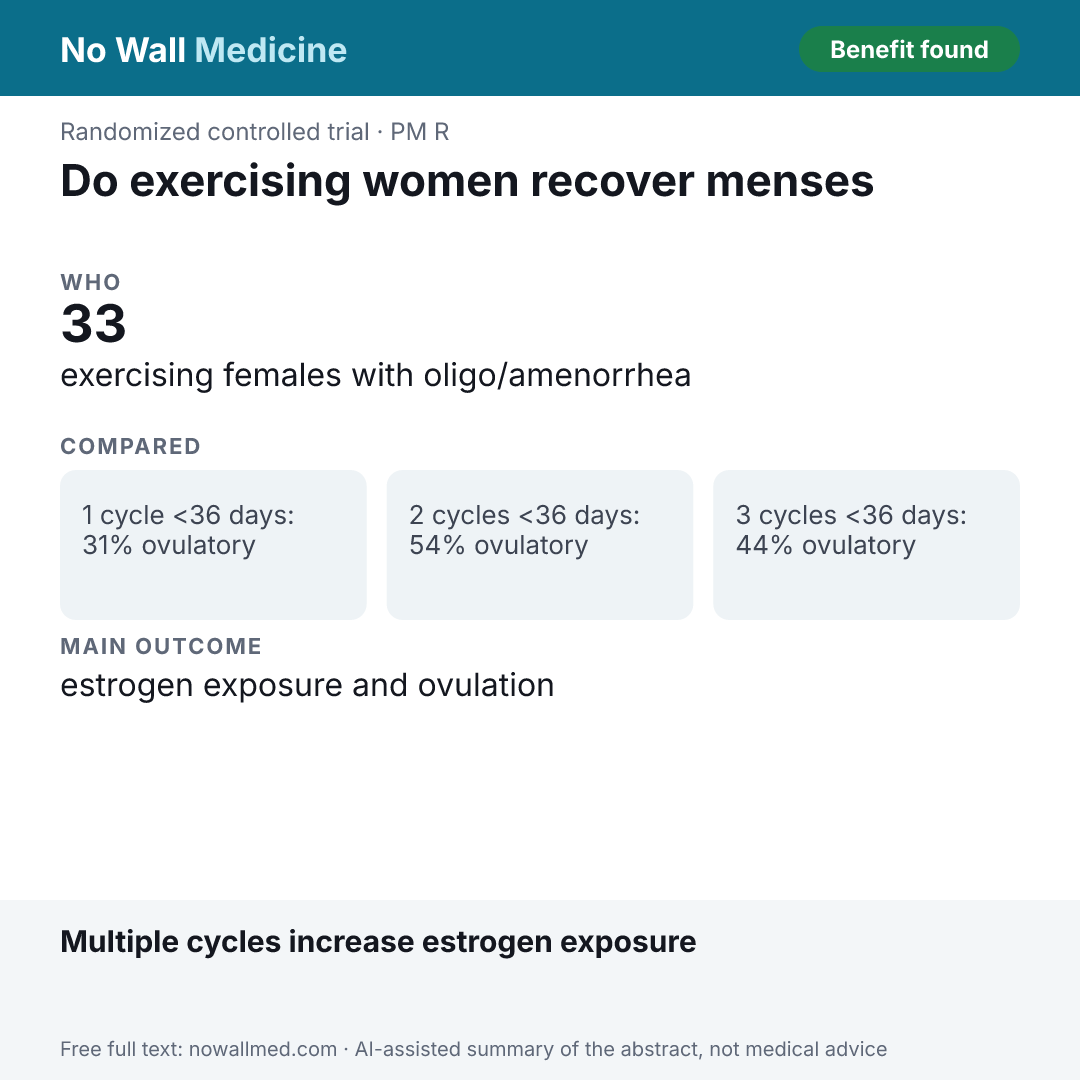
Multiple eumenorrheic cycles are necessary to observe a significant increase in estrogen exposure and ovulation in exercising women with functional hypothalamic oligo/amenorrhea undergoing a nutritional intervention: Insights from the REFUEL study
Randomized controlled trialBenefit found
Do exercising women recover menses
Who
33
exercising females with oligo/amenorrhea
Compared
1 cycle <36 days: 31% ovulatory
2 cycles <36 days: 54% ovulatory
3 cycles <36 days: 44% ovulatory
Main outcome
estrogen exposure and ovulation
Bottom line: Multiple cycles increase estrogen exposure
PM R · 2025-10-16 · Save PNG
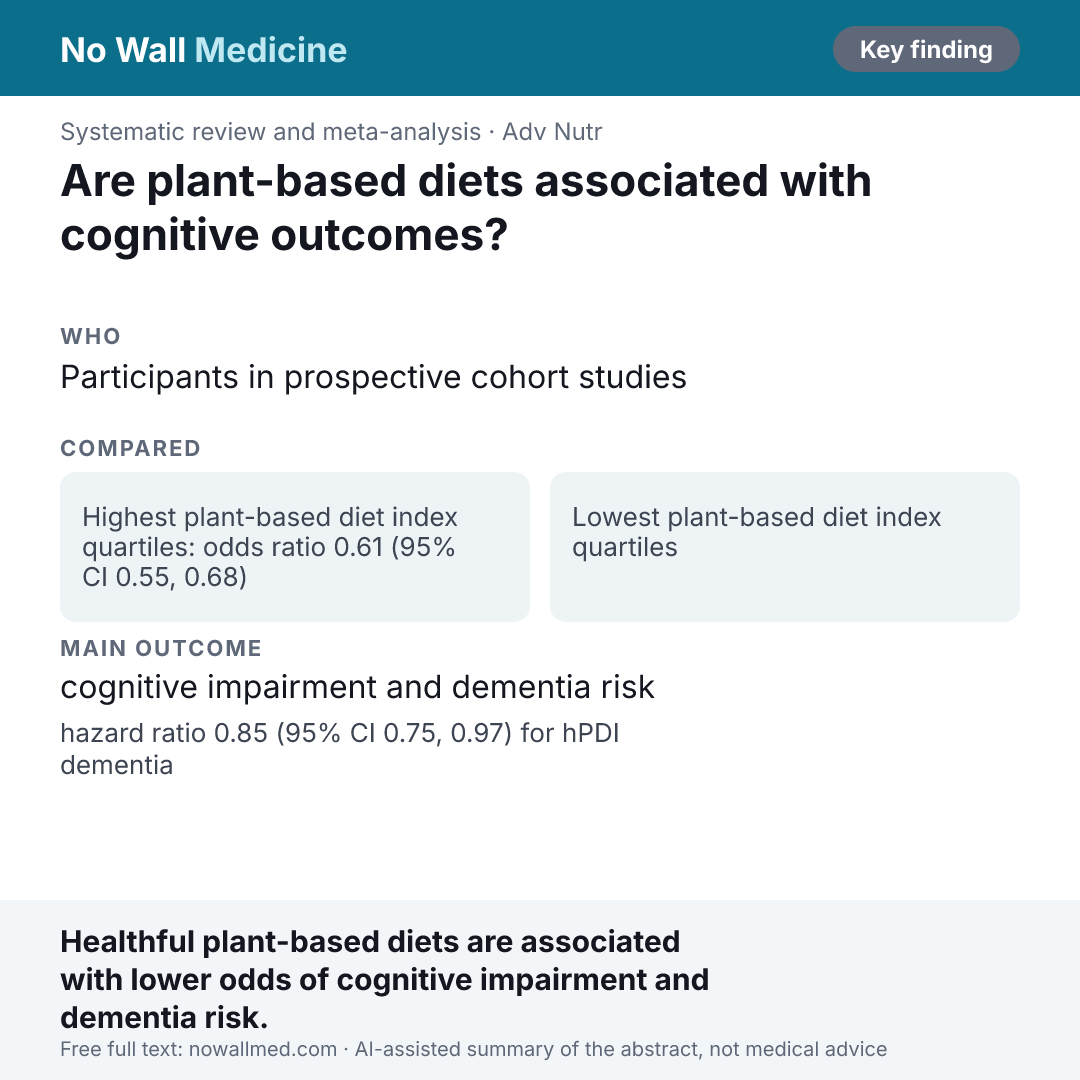
Plant-Based Diets and Cognitive Outcomes: A Systematic Review and Meta-analysis
Systematic review and meta-analysisKey finding
Are plant-based diets associated with cognitive outcomes?
Who
Participants in prospective cohort studies
Compared
Highest plant-based diet index quartiles: odds ratio 0.61 (95% CI 0.55, 0.68)
Lowest plant-based diet index quartiles
Main outcome
cognitive impairment and dementia risk
Result: hazard ratio 0.85 (95% CI 0.75, 0.97) for hPDI dementia
Bottom line: Healthful plant-based diets are associated with lower odds of cognitive impairment and dementia risk.
Limitation: Findings across individual studies were inconsistent.
Adv Nutr · 2025-10-16 · Save PNG
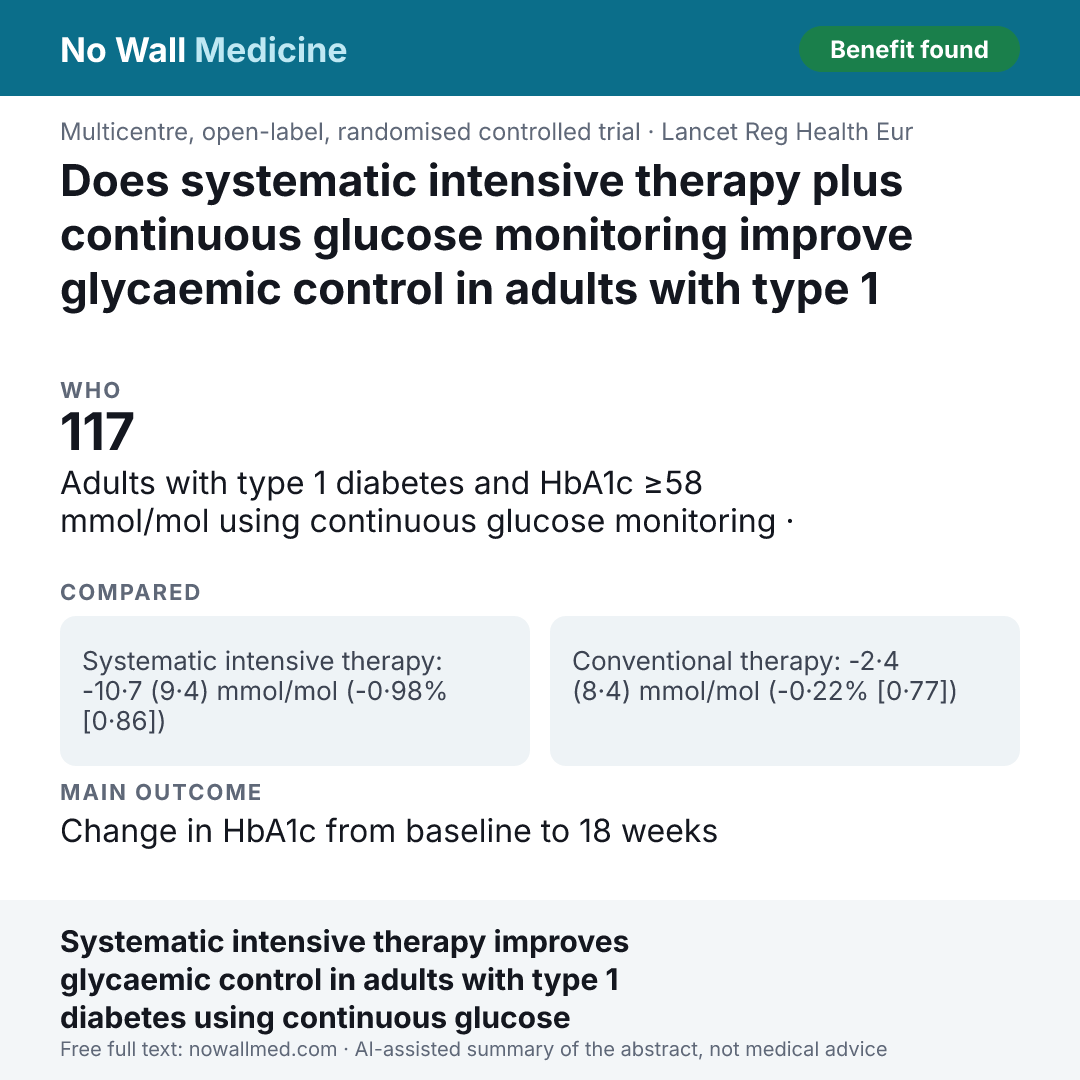
Systematic intensive therapy in addition to continuous glucose monitoring in adults with type 1 diabetes: a multicentre, open-label, randomised controlled trial
Multicentre, open-label, randomised controlled trialBenefit found
Does systematic intensive therapy plus continuous glucose monitoring improve glycaemic control in adults with type 1 diabetes?
Who
117
Adults with type 1 diabetes and HbA1c ≥58 mmol/mol using continuous glucose monitoring · Eight sites in Sweden and Norway
Compared
Systematic intensive therapy: -10·7 (9·4) mmol/mol (-0·98% [0·86])
Conventional therapy: -2·4 (8·4) mmol/mol (-0·22% [0·77])
Main outcome
Change in HbA1c from baseline to 18 weeks
Result: adjusted mean difference of -8·3 mmol/mol (95% CI -11·2 to -5·5)
Bottom line: Systematic intensive therapy improves glycaemic control in adults with type 1 diabetes using continuous glucose monitoring.
Funded by: Swedish state, Region Västra Götaland, and Swedish Diabetes Foundation
Lancet Reg Health Eur · 2025-10-16 · Save PNG
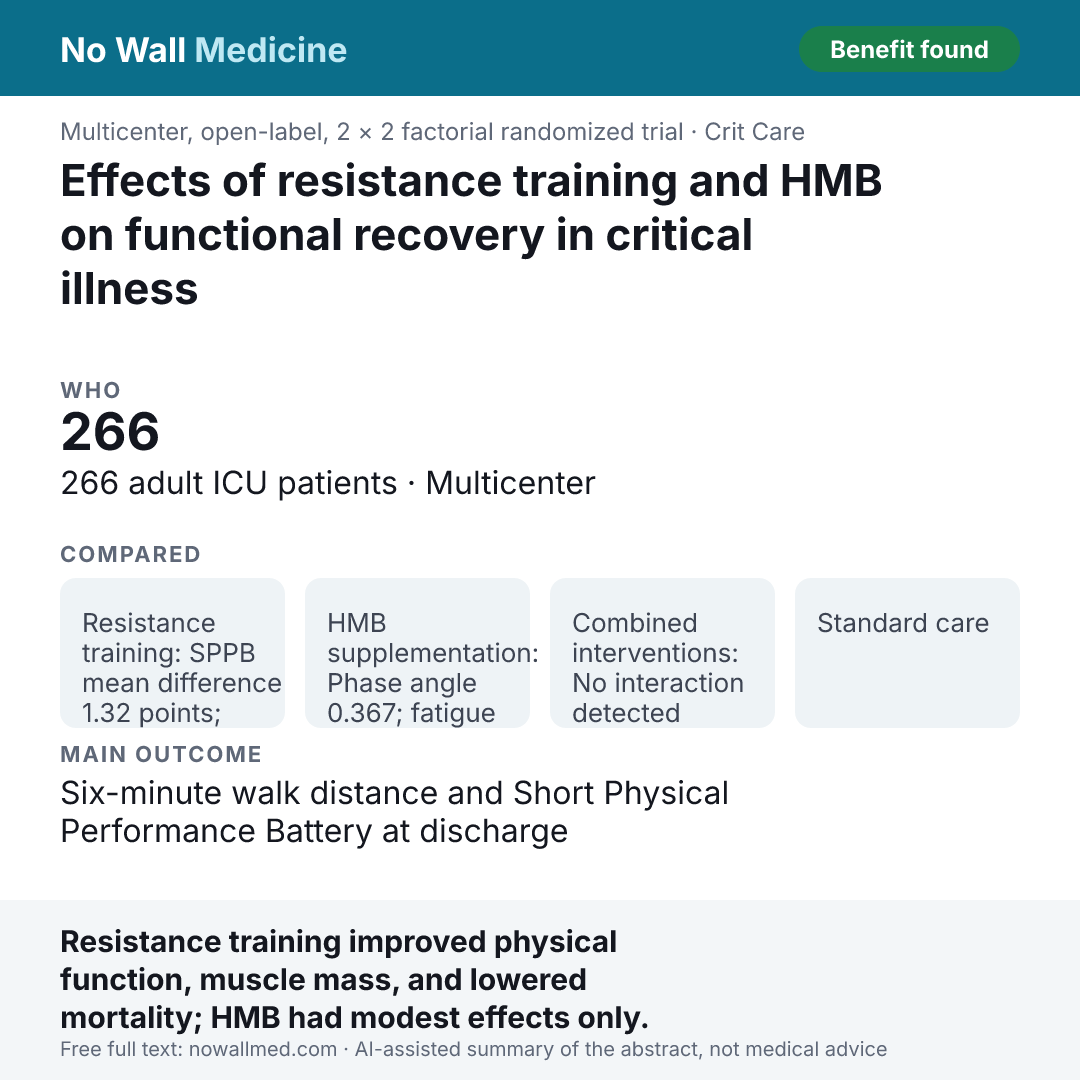
Resistance training and β-hydroxy-β-methylbutyrate for functional recovery in critical illness: a multicenter 2 × 2 factorial randomized trial
Multicenter, open-label, 2 × 2 factorial randomized trialBenefit found
Effects of resistance training and HMB on functional recovery in critical illness
Who
266
266 adult ICU patients · Multicenter
Compared
Resistance training: SPPB mean difference 1.32 points; 6MWD 56.20 m
HMB supplementation: Phase angle 0.367; fatigue –1.069 points
Combined interventions: No interaction detected
Standard care
Main outcome
Six-minute walk distance and Short Physical Performance Battery at discharge
Result: SPPB mean difference 1.32 points (P = 0.003); 6MWD 56.20 m (P < 0.001)
Bottom line: Resistance training improved physical function, muscle mass, and lowered mortality; HMB had modest effects only.
Crit Care · 2025-10-16 · Save PNG
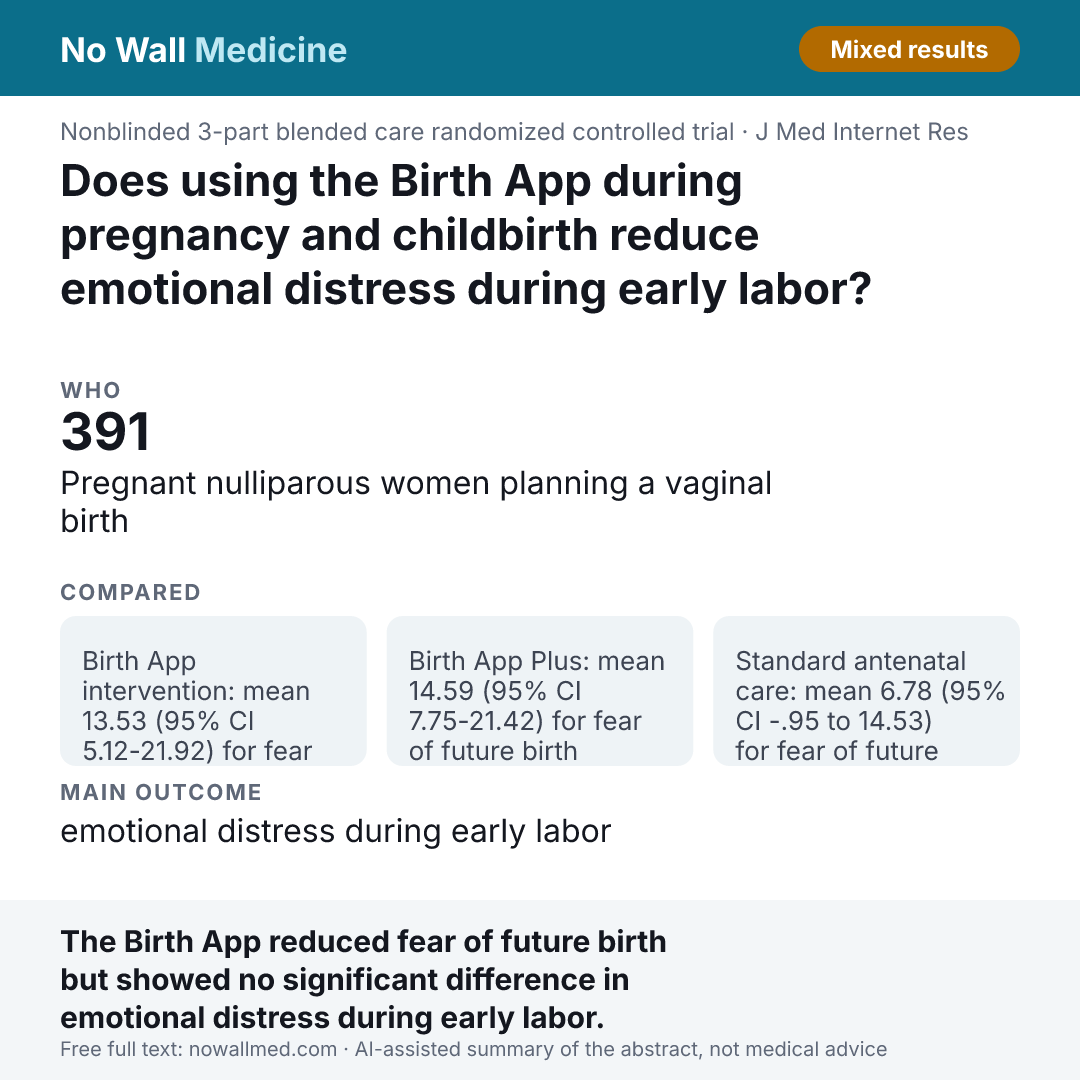
Testing the ELSA Birth App During Pregnancy and Labor for Primiparous Women: Randomized Controlled Trial
Nonblinded 3-part blended care randomized controlled trialMixed results
Does using the Birth App during pregnancy and childbirth reduce emotional distress during early labor?
Who
391
Pregnant nulliparous women planning a vaginal birth
Compared
Birth App intervention: mean 13.53 (95% CI 5.12-21.92) for fear of future birth
Birth App Plus: mean 14.59 (95% CI 7.75-21.42) for fear of future birth
Standard antenatal care: mean 6.78 (95% CI -.95 to 14.53) for fear of future birth
Main outcome
emotional distress during early labor
Bottom line: The Birth App reduced fear of future birth but showed no significant difference in emotional distress during early labor.
Limitation: The study was nonblinded and focused on women with spontaneous onset of labor for primary outcomes.
J Med Internet Res · 2025-10-16 · Save PNG
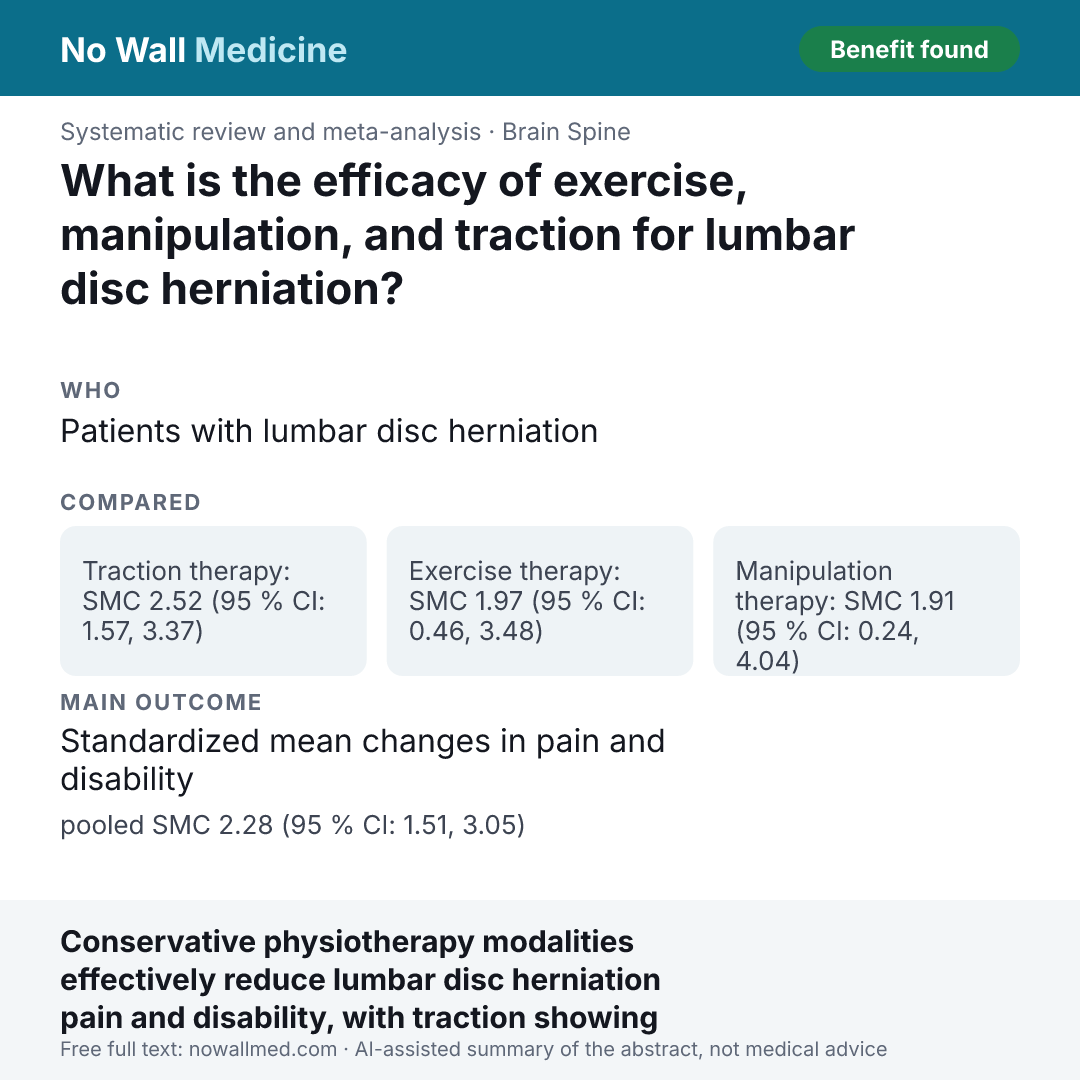
Exercise, manipulation and traction physiotherapy in the conservative management of lumbar disc herniation: A systematic review and meta-analysis
Systematic review and meta-analysisBenefit found
What is the efficacy of exercise, manipulation, and traction for lumbar disc herniation?
Who
Patients with lumbar disc herniation
Compared
Traction therapy: SMC 2.52 (95 % CI: 1.57, 3.37)
Exercise therapy: SMC 1.97 (95 % CI: 0.46, 3.48)
Manipulation therapy: SMC 1.91 (95 % CI: 0.24, 4.04)
Main outcome
Standardized mean changes in pain and disability
Result: pooled SMC 2.28 (95 % CI: 1.51, 3.05)
Bottom line: Conservative physiotherapy modalities effectively reduce lumbar disc herniation pain and disability, with traction showing the largest effect.
Limitation: High heterogeneity and limited quantitative evidence for subgroup differentiation.
Brain Spine · 2025-10-16 · Save PNG
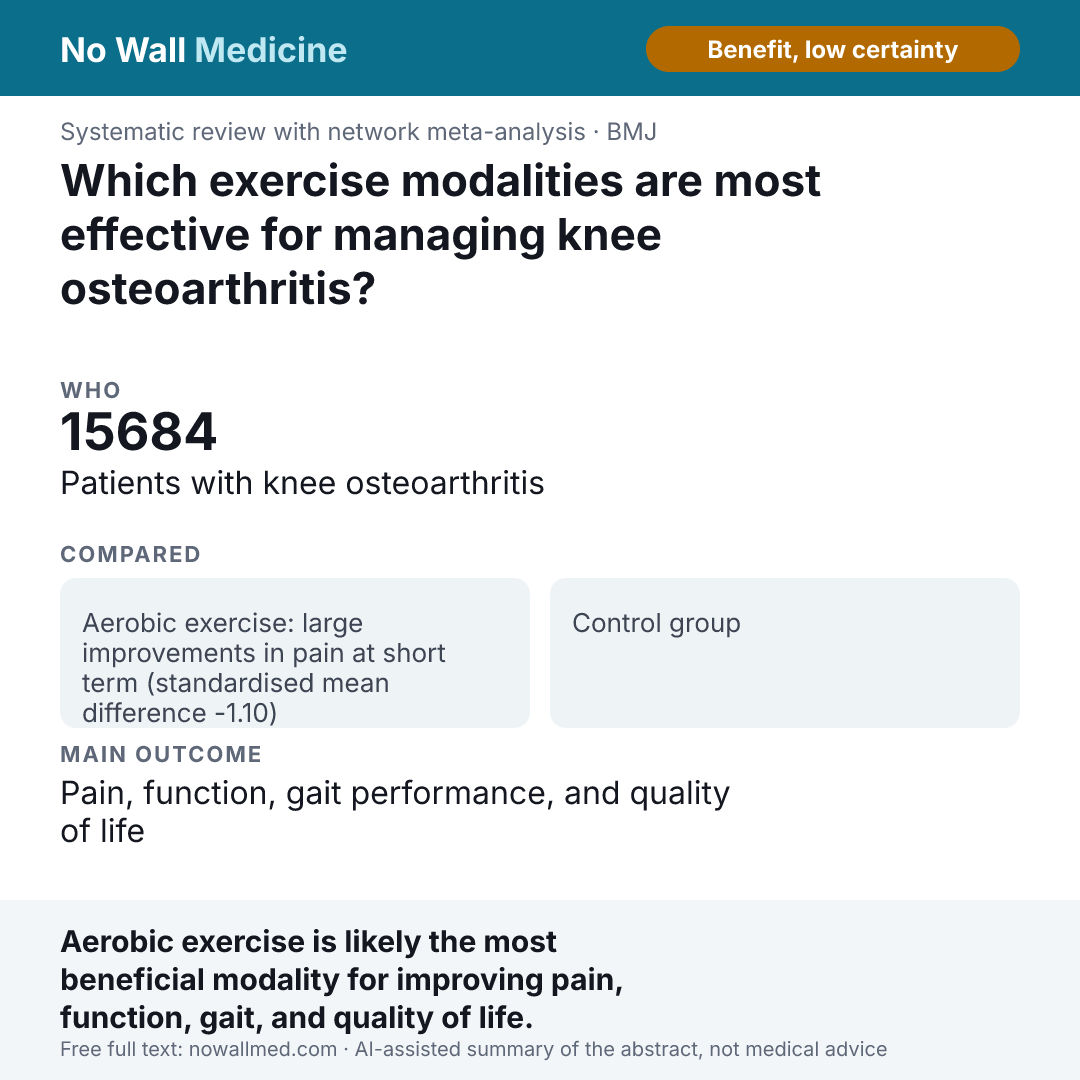
Comparative efficacy and safety of exercise modalities in knee osteoarthritis: systematic review and network meta-analysis
Systematic review with network meta-analysisBenefit, low certainty
Which exercise modalities are most effective for managing knee osteoarthritis?
Who
15684
Patients with knee osteoarthritis
Compared
Aerobic exercise: large improvements in pain at short term (standardised mean difference -1.10)
Control group
Main outcome
Pain, function, gait performance, and quality of life
Bottom line: Aerobic exercise is likely the most beneficial modality for improving pain, function, gait, and quality of life.
BMJ · 2025-10-15 · Save PNG
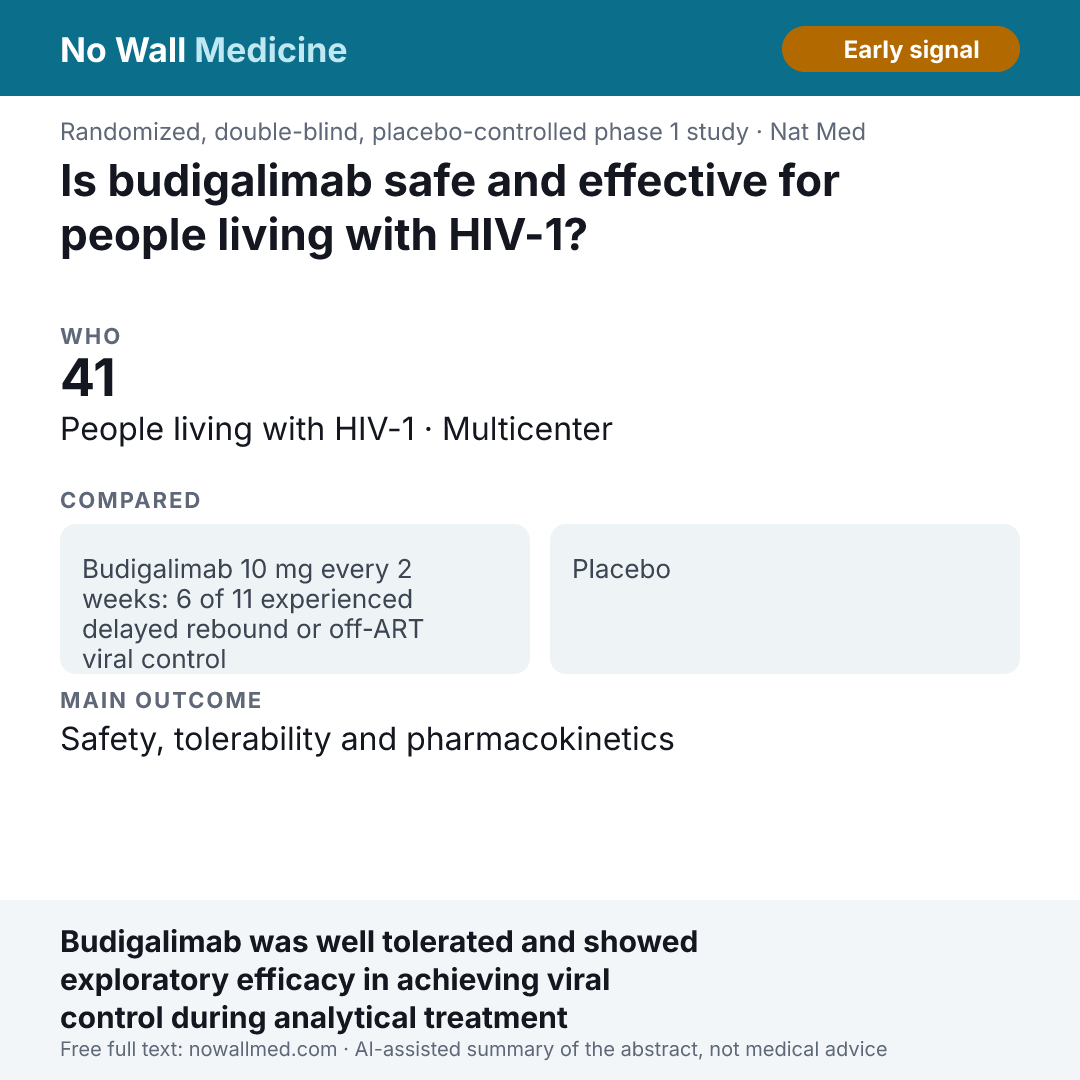
Budigalimab, an anti-PD-1 inhibitor, for people living with HIV-1: a randomized, placebo-controlled phase 1b study
Randomized, double-blind, placebo-controlled phase 1 studyEarly signal
Is budigalimab safe and effective for people living with HIV-1?
Who
41
People living with HIV-1 · Multicenter
Compared
Budigalimab 10 mg every 2 weeks: 6 of 11 experienced delayed rebound or off-ART viral control
Placebo
Main outcome
Safety, tolerability and pharmacokinetics
Bottom line: Budigalimab was well tolerated and showed exploratory efficacy in achieving viral control during analytical treatment interruption.
Nat Med · 2025-10-15 · Save PNG