Visual abstracts
New randomized trials and meta-analyses from leading journals at a glance: who was studied, what was compared, and what was found. Every paper is free to read in full.
All specialtiesCardiology 4765Oncology 4048Gastroenterology & Hepatology 1906Infectious Disease 3759Neurology 1874Psychiatry & Mental Health 2217Pulmonology 2046Critical Care 1323Endocrinology & Diabetes 2545Pediatrics 2891Surgery 2482Orthopedics & Sports Medicine 917Neurosurgery 526Cardiothoracic & Vascular Surgery 657Plastic & Reconstructive Surgery 574Nephrology 1108Rheumatology 810Hematology 1090Dermatology 611Ophthalmology 532Obstetrics & Gynecology 1646Public & Global Health 1037Radiology & Imaging 620Anesthesiology 958Urology 745ENT (Otolaryngology) 494Emergency Medicine 481Allergy & Immunology 309Geriatrics 973Family Medicine & Primary Care 534Medical Genetics & Genomics 659Pathology & Laboratory Medicine 156Physical Medicine & Rehabilitation 736Palliative Care 421Nutrition 1561Digital Health & AI 2136General Medicine 316
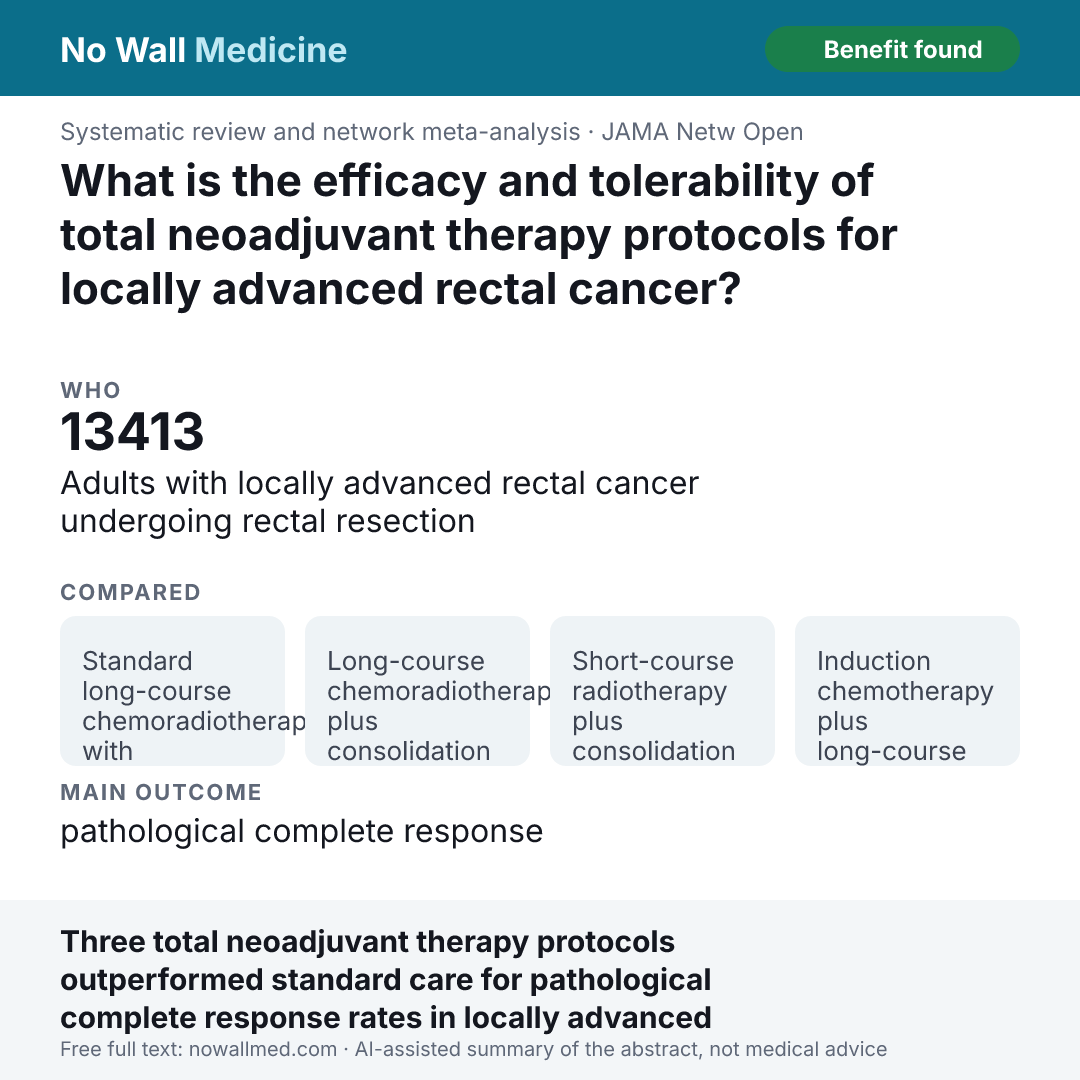
Treatment of Locally Advanced Rectal Cancer in the Era of Total Neoadjuvant Therapy: A Systematic Review and Network Meta-Analysis
Systematic review and network meta-analysisBenefit found
What is the efficacy and tolerability of total neoadjuvant therapy protocols for locally advanced rectal cancer?
Who
13413
Adults with locally advanced rectal cancer undergoing rectal resection
Compared
Standard long-course chemoradiotherapy with single-agent chemotherapy
Long-course chemoradiotherapy plus consolidation chemotherapy: RR, 1.96 (95% CI, 1.25-3.06)
Short-course radiotherapy plus consolidation chemotherapy: RR, 1.76 (95% CI, 1.34-2.30)
Induction chemotherapy plus long-course chemoradiotherapy: RR, 1.57 (95% CI, 1.09-2.25)
Main outcome
pathological complete response
Result: RR, 1.96 (95% CI, 1.25-3.06) for long-course chemoradiotherapy plus consolidation chemotherapy
Bottom line: Three total neoadjuvant therapy protocols outperformed standard care for pathological complete response rates in locally advanced rectal cancer.
JAMA Netw Open · 2024-06-03 · Save PNG
Patient-Reported Outcomes in Phase 3 Clinical Trials for Blood Cancers: A Systematic Review
Systematic reviewMixed results
What is the prevalence of patient-reported outcomes as endpoints and their reporting in blood cancer phase 3 trials?
Who
90
Adults with hematological malignant neoplasms in phase 3 trials · 8 high-impact journals
Compared
66Trials with patient-reported outcomes as endpoint (73%)
Trials reporting patient-reported outcomes in publications: 26 of 66 (39%)
Main outcome
Prevalence of patient-reported outcomes as endpoints and their reporting
Bottom line: Most blood cancer trials collect patient-reported outcomes, but few report them in primary publications, potentially indicating publication bias.
Limitation: The study focuses on primary publications and may reflect publication bias regarding reported outcomes.
JAMA Netw Open · 2024-06-03 · Save PNG

Trial Participation in Neurodegenerative Diseases: Barriers and Facilitators: A Systematic Review and Meta-Analysis
Systematic review and meta-analysisBenefit found
What are the barriers and facilitators of clinical trial participation in neurodegenerative diseases?
Who
5,269
Patients, caregivers, and health care professionals with neurodegenerative diseases
Compared
70%Relationship with clinical staff (95% CI 53%-83%)
67%Availability of study information (95% CI 38%-87%)
53%Use or absence of placebo or sham-control arm (95% CI 32%-72%)
Main outcome
Key enablers of clinical trial participation
Bottom line: Clinical staff relationships, information availability, and placebo use are key drivers for participating in neurodegenerative disease trials.
Limitation: There was significant heterogeneity between studies (all p < 0.001).
Neurology · 2024-06-03 · Save PNG

A Systematic Review Supporting the Endocrine Society Clinical Practice Guidelines on Vitamin D
Systematic reviewMixed results
What are the benefits and harms of vitamin D for disease prevention?
Who
General population, pregnant women, and adults with prediabetes
Compared
Vitamin D
No vitamin D
Main outcome
Prevention of disease and various clinical outcomes
Bottom line: Evidence shows varying benefits for respiratory infections, mortality, and diabetes progression, but results vary by population.
J Clin Endocrinol Metab · 2024-06-03 · Save PNG

Association of ankylosing spondylitis with the risk of cancer: a meta-analysis of cohort studies
Meta-analysis of 20 cohort studiesKey finding
Is ankylosing spondylitis associated with an increased risk of cancer?
Who
330000
Participants in cohort studies
Compared
Ankylosing spondylitis
No ankylosing spondylitis
Main outcome
Risk of different types of cancers
Result: relative risk 1.16 (95% CI 1.07-1.26)
Bottom line: Ankylosing spondylitis is associated with a higher risk of various cancers, including bone, thyroid, and kidney cancers.
Limitation: Influencing factors like disease course, medication histories, and potential biases require large-scale studies.
Rheumatology · 2024-06-03 · Save PNG

Noradrenaline-induced changes in cerebral blood flow in health, traumatic brain injury and critical illness: a systematic review with meta-analysis
Systematic review with meta-analysisMixed results
How does noradrenaline affect cerebral blood flow in health, traumatic brain injury, and critical illness?
Who
28
Healthy subjects, patients with traumatic brain injury, and critically ill patients
Compared
-1.7%Healthy and non-injured subjects (95%CI -4.7-1.3%)
21.5%Patients with traumatic brain injury (95%CI 11.0-32.0%)
20.0%Critically ill patients (95%CI 9.7-30.3%)
Main outcome
Cerebral blood flow velocity
Bottom line: Noradrenaline increases cerebral blood flow in patients with impaired autoregulation but not in healthy subjects.
Anaesthesia · 2024-06-03 · Save PNG

Population attributable fractions of modifiable risk factors for dementia: a systematic review and meta-analysis
Systematic review and meta-analysisBenefit found
What are the population attributable fractions for modifiable risk factors for dementia?
Who
People aged 60 years or older with dementia · Global
Compared
17·2%Low education (unweighted)
15·8%Hypertension (unweighted)
15·6%Hearing loss (unweighted)
15·2%Physical inactivity (unweighted)
Main outcome
Population attributable fraction for dementia
Result: pooled unweighted PAF for seven-factor model 55·0% (46·5-63·5)
Bottom line: Modifiable risk factors like low education and hypertension contribute significantly to dementia population attributable fractions worldwide.
Funded by: UK Research and Innovation (Medical Research Council)
Lancet Healthy Longev · 2024-06-03 · Save PNG

Outcomes in Subfascial Versus Subglandular Planes in Breast Augmentation: A Systematic Review and Meta-analysis
Systematic review and meta-analysisBenefit, low certainty
Are subfascial or subglandular planes better for breast augmentation outcomes?
Who
Women undergoing breast augmentation
Compared
Subfascial plane
Subglandular plane
Main outcome
Incidence of seroma, hematoma, infection, rippling, capsular contracture, and revision surgery
Bottom line: The subfascial plane decreases the risk of capsular contracture, hematoma, and rippling compared with the subglandular plane.
Limitation: All included studies had a high risk of bias.
Aesthet Surg J · 2024-06-03 · Save PNG

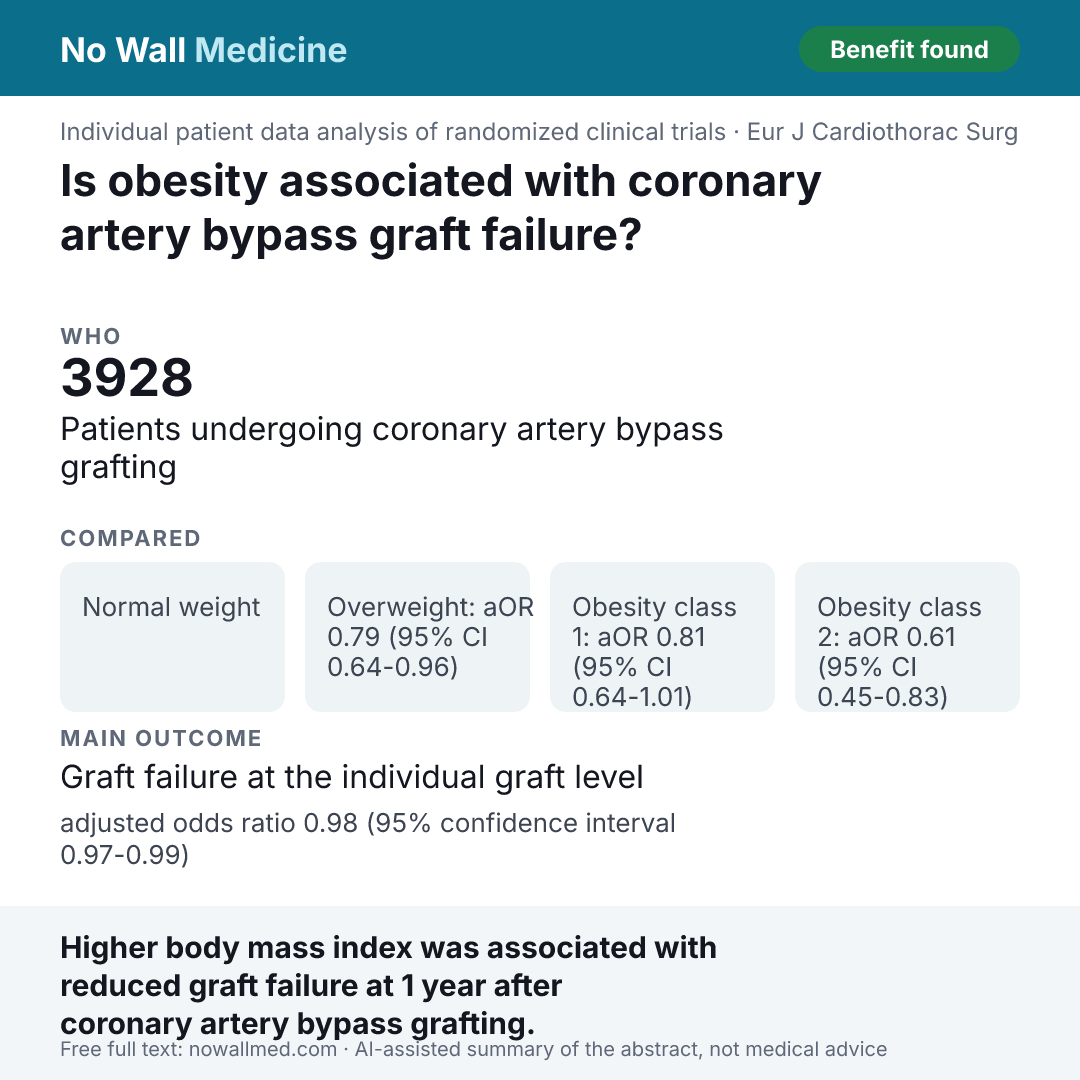
Association between overweight and obesity with coronary artery bypass graft failure: an individual patient data analysis of clinical trials
Individual patient data analysis of randomized clinical trialsBenefit found
Is obesity associated with coronary artery bypass graft failure?
Who
3928
Patients undergoing coronary artery bypass grafting
Compared
Normal weight
Overweight: aOR 0.79 (95% CI 0.64-0.96)
Obesity class 1: aOR 0.81 (95% CI 0.64-1.01)
Obesity class 2: aOR 0.61 (95% CI 0.45-0.83)
Main outcome
Graft failure at the individual graft level
Result: adjusted odds ratio 0.98 (95% confidence interval 0.97-0.99)
Bottom line: Higher body mass index was associated with reduced graft failure at 1 year after coronary artery bypass grafting.
Eur J Cardiothorac Surg · 2024-06-03 · Save PNG
Public participation in decisions about measures to manage the COVID-19 pandemic: a systematic review
Systematic reviewUnclear result
How can public participation be achieved in decisions about COVID-19 pandemic management?
Who
Reports of public participation initiatives during the COVID-19 pandemic · Mostly high-income countries
Compared
Included reports: 17 involved consulting the public
Included reports: 17 did not include explicit decision-making criteria
Main outcome
Examples and characteristics of public participation in pandemic decisions
Bottom line: Few reported public participation initiatives exist, and most lack formal evaluation or explicit decision-making criteria.
BMJ Glob Health · 2024-06-03 · Save PNG

The effectiveness of digital twins in promoting precision health across the entire population: a systematic review
Systematic reviewBenefit found
Do digital twins improve precision health?
Who
Patients with various medical conditions
Compared
80%Digital twins (36 out of 45)
Control
Main outcome
Precision health outcomes
Bottom line: Digital twins improve precision health outcomes
NPJ Digit Med · 2024-06-03 · Save PNG

A systematic review and meta-analysis of systematic and topical tranexamic acid administration in aesthetic plastic surgery
Meta-analysis of prospective randomized clinical trialsBenefit found
Is tranexamic acid effective in aesthetic plastic surgery?
Who
960
Patients undergoing aesthetic plastic surgeries
Compared
Systematic tranexamic acid: MD -18.05 (95% CI -22.01 to -14.09)
Topical tranexamic acid: MD -74.93 (95% CI -88.79 to -61.07)
Control group
Main outcome
Total blood loss
Result: MD -18.05 (95% CI -22.01 to -14.09) for systematic and MD -74.93 (95% CI -88.79 to -61.07) for topical
Bottom line: Systematic and topical tranexamic acid administration reduces total blood loss in aesthetic plastic surgery.
Limitation: More strictly defined randomized clinical trials using high-quality methodology are needed.
Perioper Med · 2024-06-03 · Save PNG

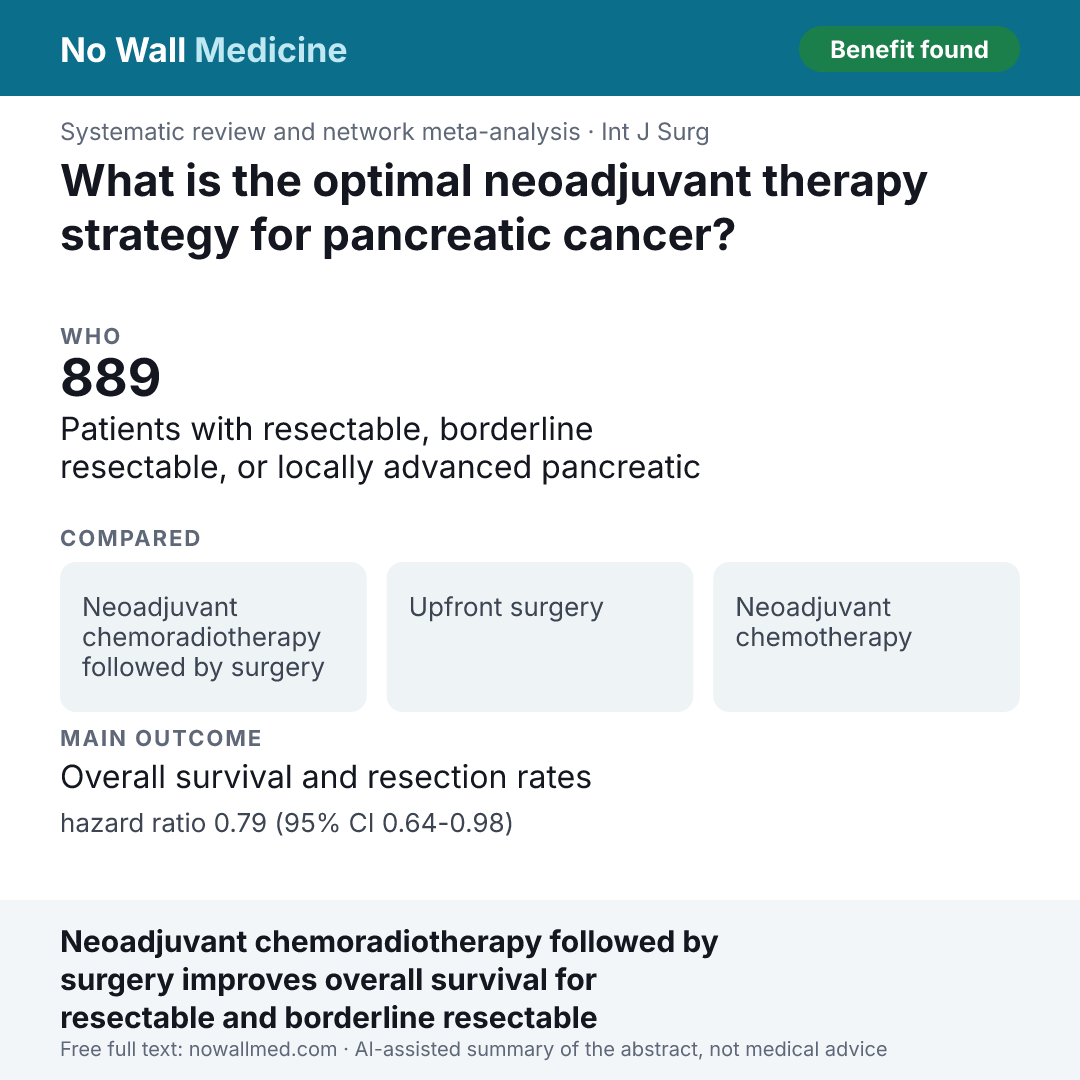
Comparing upfront surgery with neoadjuvant treatments in patients with resectable, borderline resectable or locally advanced pancreatic cancer: a systematic review and network meta-analysis of randomized clinical trials
Systematic review and network meta-analysisBenefit found
What is the optimal neoadjuvant therapy strategy for pancreatic cancer?
Who
889
Patients with resectable, borderline resectable, or locally advanced pancreatic cancer
Compared
Neoadjuvant chemoradiotherapy followed by surgery
Upfront surgery
Neoadjuvant chemotherapy
Main outcome
Overall survival and resection rates
Result: hazard ratio 0.79 (95% CI 0.64-0.98)
Bottom line: Neoadjuvant chemoradiotherapy followed by surgery improves overall survival for resectable and borderline resectable pancreatic cancer.
Limitation: Neoadjuvant chemoradiotherapy increased the risk of grade 3 or higher treatment-related adverse events.
Int J Surg · 2024-06-01 · Save PNG
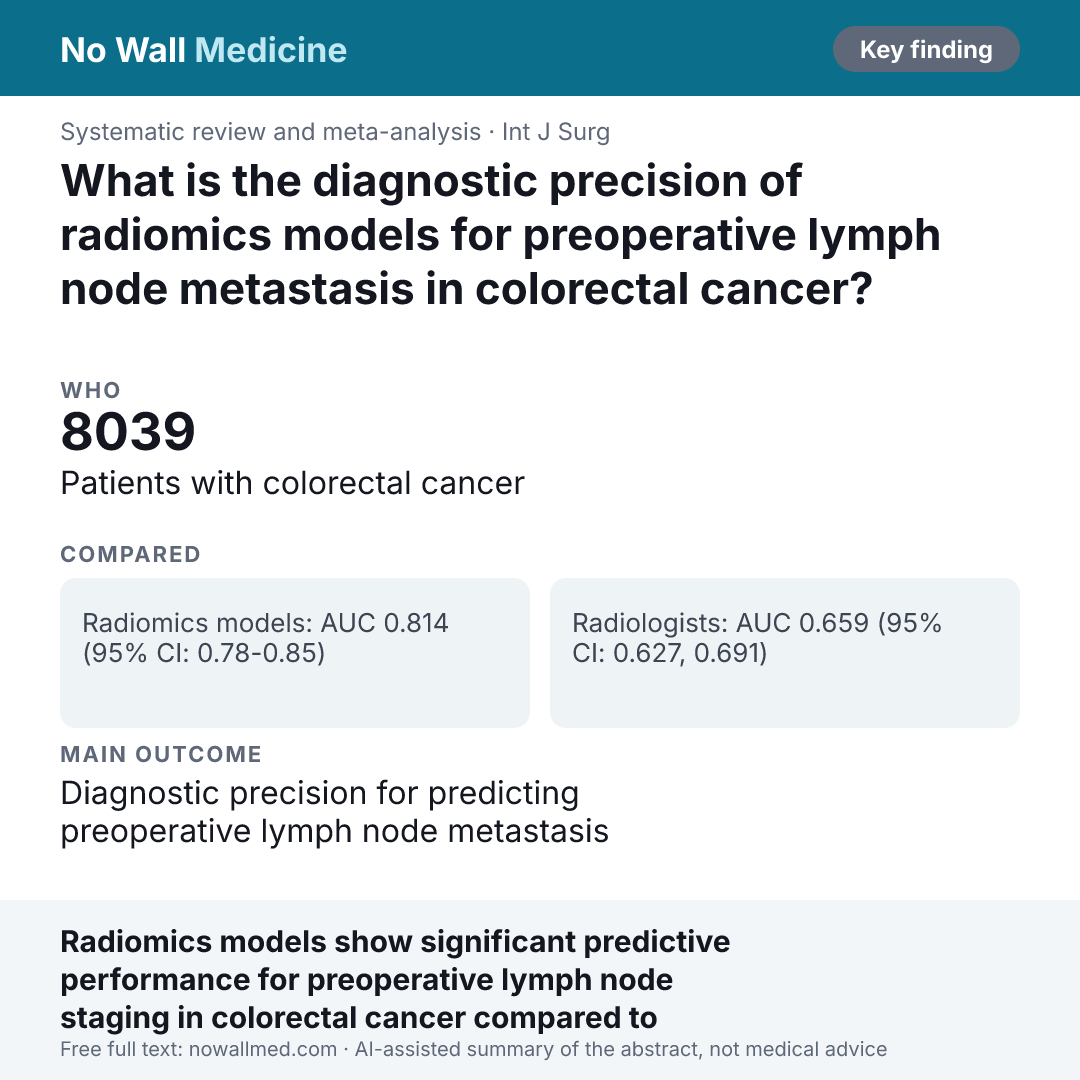
Application of radiomics for preoperative prediction of lymph node metastasis in colorectal cancer: a systematic review and meta-analysis
Systematic review and meta-analysisKey finding
What is the diagnostic precision of radiomics models for preoperative lymph node metastasis in colorectal cancer?
Who
8039
Patients with colorectal cancer
Compared
Radiomics models: AUC 0.814 (95% CI: 0.78-0.85)
Radiologists: AUC 0.659 (95% CI: 0.627, 0.691)
Main outcome
Diagnostic precision for predicting preoperative lymph node metastasis
Result: AUC 0.814 (95% CI: 0.78-0.85)
Bottom line: Radiomics models show significant predictive performance for preoperative lymph node staging in colorectal cancer compared to radiologists.
Int J Surg · 2024-06-01 · Save PNG
The value of cholinesterase inhibitors for improving neuropsychiatric and functional assessment scores in patients with Alzheimer disease: a systematic review and meta-analysis of on placebo-controlled RCTs
Meta-analysis of 12 randomized, double-blind, placebo-controlled trialsBenefit found
Do cholinesterase inhibitors improve neuropsychiatric and functional assessment scores in Alzheimer disease patients?
Who
6908
Patients with Alzheimer disease
Compared
Cholinesterase inhibitors
Placebo
Main outcome
Neuropsychiatric and functional assessment scores
Result: SMD -1.57 (95% CI: -2.64 to -0.51) for ADAS
Bottom line: Cholinesterase inhibitors generally improve neuropsychiatric and functional assessment scores in Alzheimer disease patients with an acceptable safety profile.
Limitation: Opposite result was observed in Wechsler Memory Scale.
Int J Surg · 2024-06-01 · Save PNG

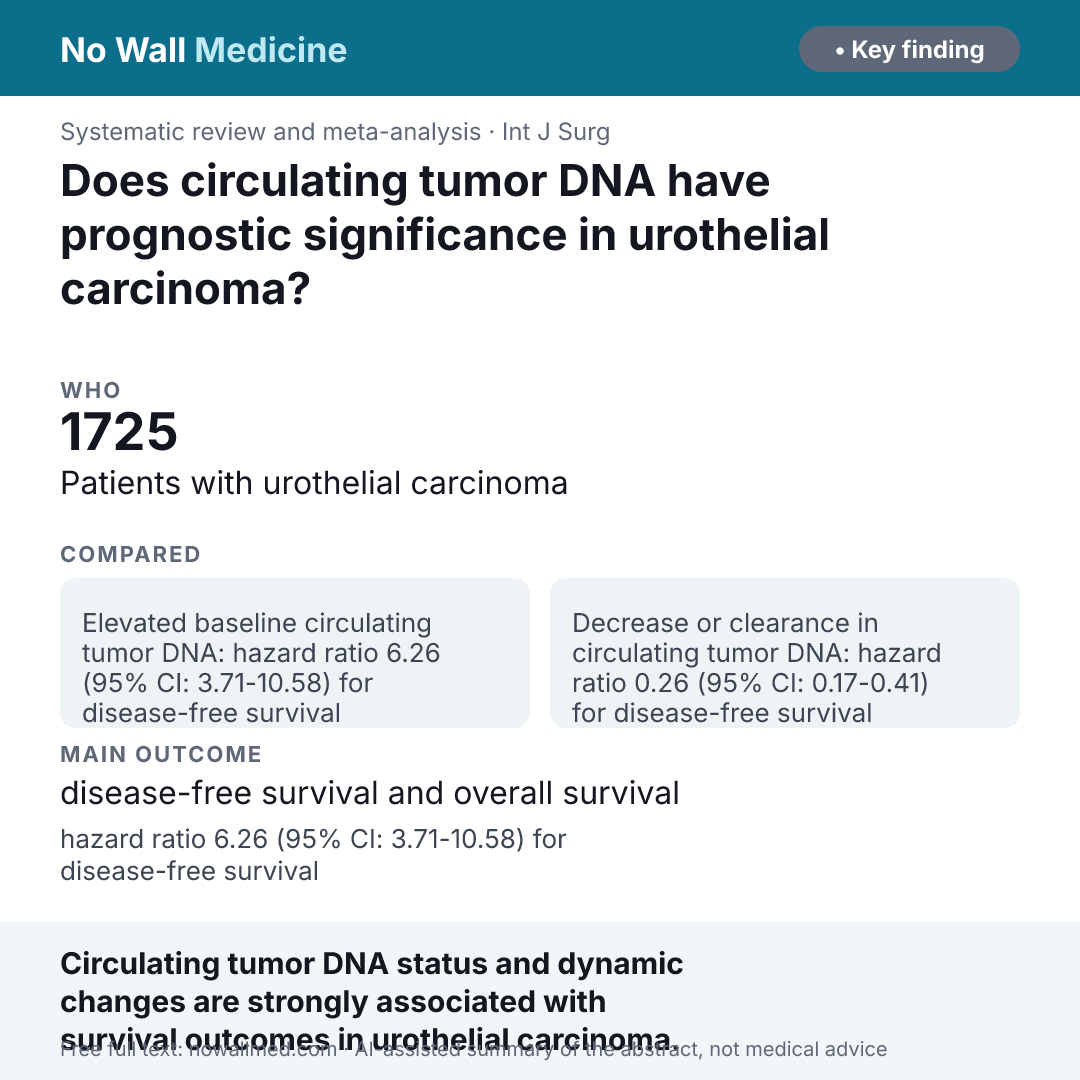
Prognostic significance of circulating tumor DNA in urothelial carcinoma: a systematic review and meta-analysis
Systematic review and meta-analysisKey finding
Does circulating tumor DNA have prognostic significance in urothelial carcinoma?
Who
1725
Patients with urothelial carcinoma
Compared
Elevated baseline circulating tumor DNA: hazard ratio 6.26 (95% CI: 3.71-10.58) for disease-free survival
Decrease or clearance in circulating tumor DNA: hazard ratio 0.26 (95% CI: 0.17-0.41) for disease-free survival
Main outcome
disease-free survival and overall survival
Result: hazard ratio 6.26 (95% CI: 3.71-10.58) for disease-free survival
Bottom line: Circulating tumor DNA status and dynamic changes are strongly associated with survival outcomes in urothelial carcinoma.
Int J Surg · 2024-06-01 · Save PNG
Efficacy of mitral valve repair in combination with coronary revascularization for moderate ischaemic mitral regurgitation: a systematic review and meta-analysis of randomized controlled trials
Systematic review and meta-analysis of randomized controlled trialsNo clear difference
Is mitral valve repair plus coronary artery bypass grafting superior to coronary artery bypass grafting alone?
Who
Patients with moderate ischaemic mitral regurgitation
Compared
Mitral valve repair plus coronary artery bypass grafting
Coronary artery bypass grafting alone
Main outcome
Operative and long-term mortality
Result: risk ratio 0.676 (95% CI, 0.417-1.097) for long-term mortality
Bottom line: Mitral valve repair combined with coronary artery bypass grafting fails to improve clinical outcomes compared to coronary artery bypass grafting alone.
Int J Surg · 2024-06-01 · Save PNG

Current perspectives and trend of computer-aided drug design: a review and bibliometric analysis
Meta-analysis of publicationsUnclear result
trends in computer-aided drug design
Who
researchers and institutions · 99 countries or regions
Compared
U.S.
China
Main outcome
publications and collaborations
Bottom line: CADD improves drug discovery efficiency
Int J Surg · 2024-06-01 · Save PNG

Assessment of treatment outcomes: cytoreductive surgery compared to radiotherapy in oligometastatic prostate cancer - an in-depth quantitative evaluation and retrospective cohort analysis
Meta-analysis and retrospective cohort analysisBenefit found
Is cytoreductive surgery or radiotherapy more effective for oligometastatic prostate cancer?
Who
1425
Patients with oligometastatic prostate cancer
Compared
Cytoreductive surgery
Radiotherapy
Main outcome
Cancer-specific survival and overall survival
Result: hazard ratio 0.70 (95% CI 0.59-0.81) for cancer-specific survival
Bottom line: Cytoreductive surgery was linked to significantly better cancer-specific and overall survival compared to radiotherapy.
Limitation: Further prospective studies and randomized controlled trials are essential to corroborate these results.
Int J Surg · 2024-06-01 · Save PNG

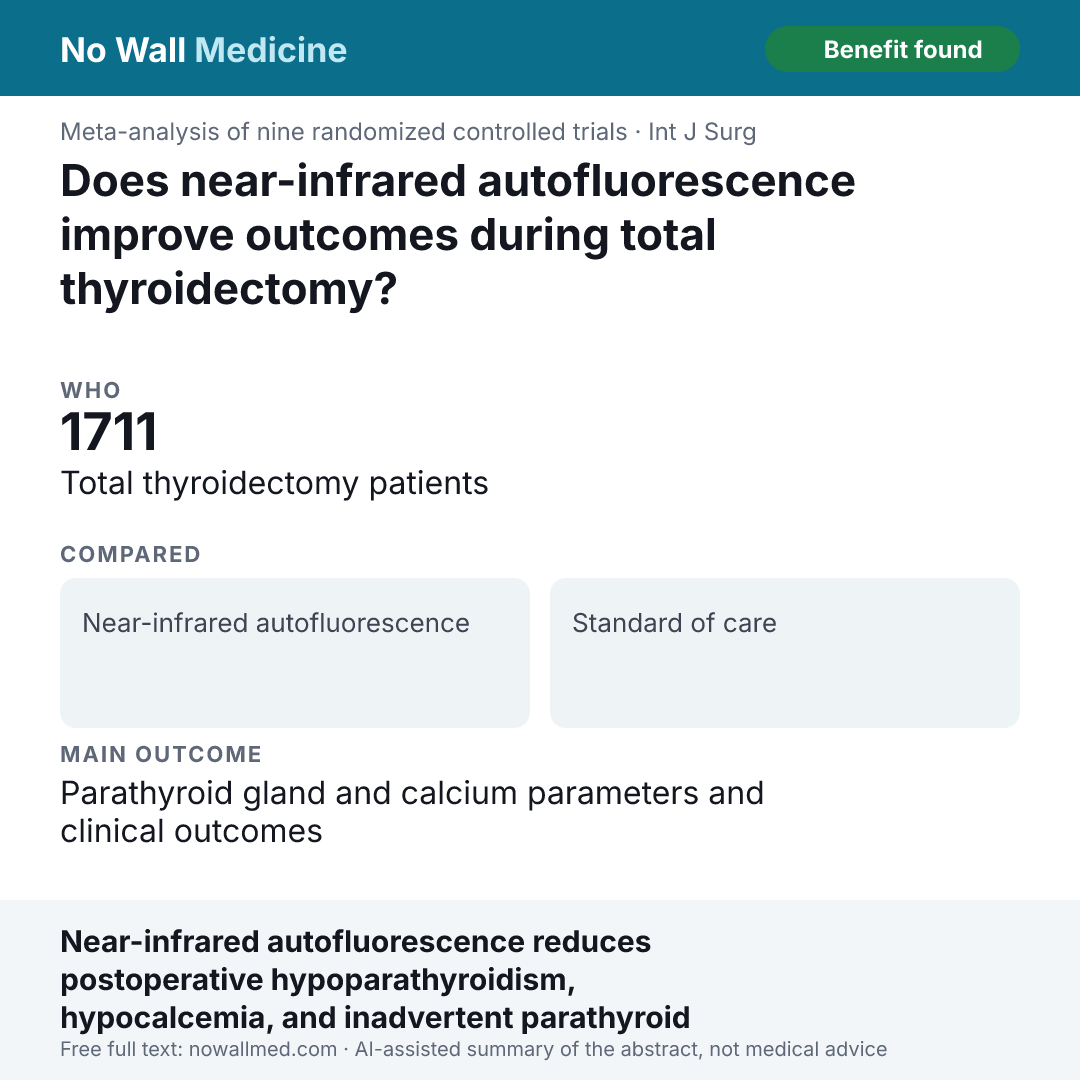
The impact of using near-infrared autofluorescence on parathyroid gland parameters and clinical outcomes during total thyroidectomy: a meta-analytic study of randomized controlled trials
Meta-analysis of nine randomized controlled trialsBenefit found
Does near-infrared autofluorescence improve outcomes during total thyroidectomy?
Who
1711
Total thyroidectomy patients
Compared
Near-infrared autofluorescence
Standard of care
Main outcome
Parathyroid gland and calcium parameters and clinical outcomes
Result: logOR -0.31 (95% CI -0.57 to -0.05) for postoperative hypoparathyroidism
Bottom line: Near-infrared autofluorescence reduces postoperative hypoparathyroidism, hypocalcemia, and inadvertent parathyroid gland removal during total thyroidectomy.
Limitation: Two trials had some concerns regarding methodological quality.
Int J Surg · 2024-06-01 · Save PNG