Visual abstracts
New randomized trials and meta-analyses from leading journals at a glance: who was studied, what was compared, and what was found. Every paper is free to read in full.
All specialtiesCardiology 4765Oncology 4048Gastroenterology & Hepatology 1906Infectious Disease 3759Neurology 1874Psychiatry & Mental Health 2217Pulmonology 2046Critical Care 1323Endocrinology & Diabetes 2545Pediatrics 2891Surgery 2482Orthopedics & Sports Medicine 917Neurosurgery 526Cardiothoracic & Vascular Surgery 657Plastic & Reconstructive Surgery 574Nephrology 1108Rheumatology 810Hematology 1090Dermatology 611Ophthalmology 532Obstetrics & Gynecology 1646Public & Global Health 1037Radiology & Imaging 620Anesthesiology 958Urology 745ENT (Otolaryngology) 494Emergency Medicine 481Allergy & Immunology 309Geriatrics 973Family Medicine & Primary Care 534Medical Genetics & Genomics 659Pathology & Laboratory Medicine 156Physical Medicine & Rehabilitation 736Palliative Care 421Nutrition 1561Digital Health & AI 2136General Medicine 316
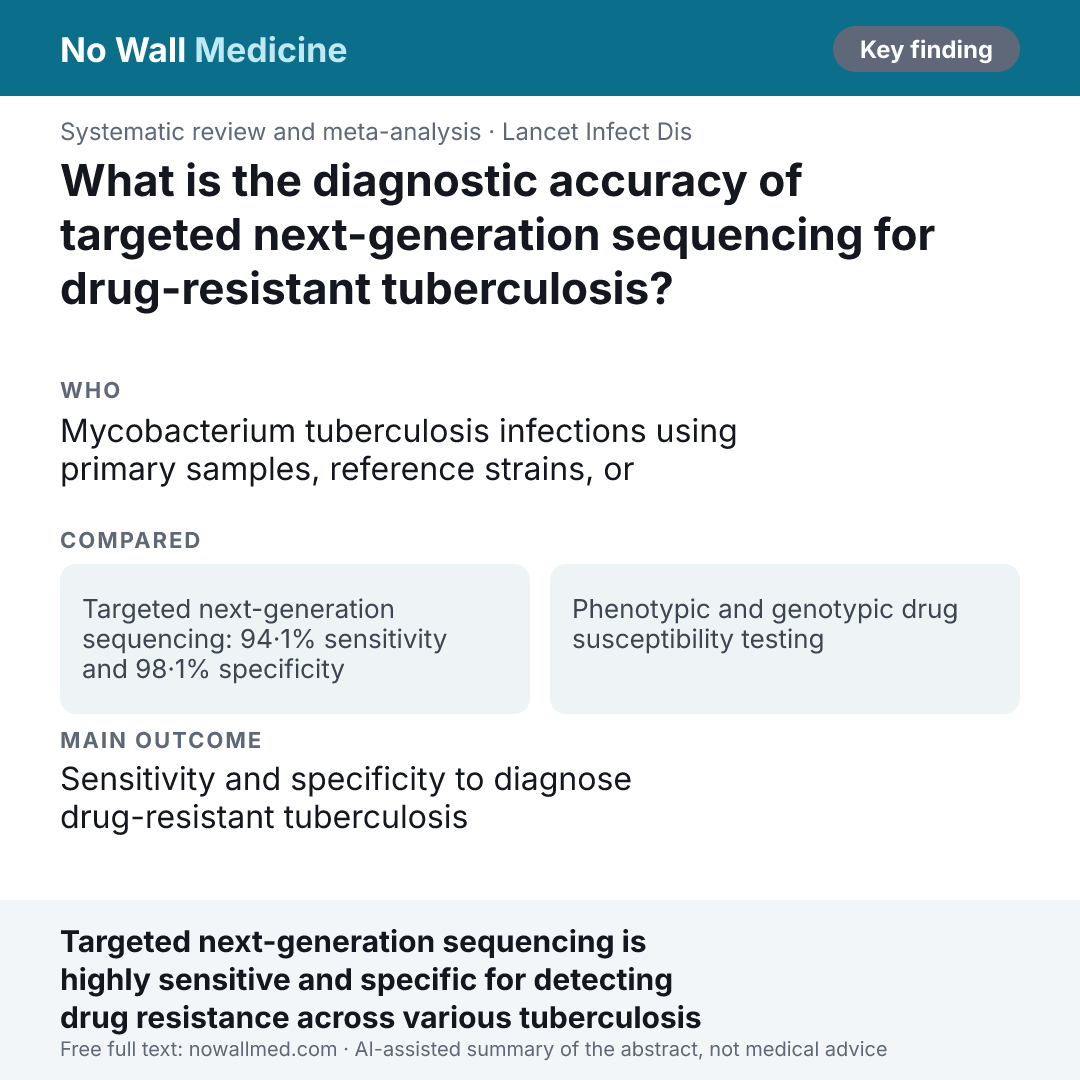
Targeted next-generation sequencing to diagnose drug-resistant tuberculosis: a systematic review and meta-analysis
Systematic review and meta-analysisKey finding
What is the diagnostic accuracy of targeted next-generation sequencing for drug-resistant tuberculosis?
Who
Mycobacterium tuberculosis infections using primary samples, reference strains, or cultured isolates · USA, western Europe, India, and China
Compared
Targeted next-generation sequencing: 94·1% sensitivity and 98·1% specificity
Phenotypic and genotypic drug susceptibility testing
Main outcome
Sensitivity and specificity to diagnose drug-resistant tuberculosis
Result: sensitivity 94·1% (95% credible interval [CrI] 90·9-96·3) and specificity 98·1% (97·0-98·9)
Bottom line: Targeted next-generation sequencing is highly sensitive and specific for detecting drug resistance across various tuberculosis drugs.
Limitation: There is a paucity of data on performance for some currently recommended drugs.
Funded by: National Institutes of Allergy and Infectious Diseases and Swiss National Science Foundation
Lancet Infect Dis · 2024-05-22 · Save PNG
Pharmacoeconomic study of anti-influenza virus drugs in Japan based on a network meta-analysis
Network meta-analysis and decision tree modelBenefit found
Which neuraminidase inhibitor is most cost-effective for treating influenza in Japan?
Who
Adult patients with a history of influenza virus infections · Japan
Compared
Oseltamivir: most cost-effective
Laninamivir, zanamivir and peramivir: outperformed by oseltamivir
Main outcome
Cost-effectiveness based on medical costs and drug prices
Bottom line: Oseltamivir is the most cost-effective neuraminidase inhibitor for treating influenza in Japan.
Limitation: The study reanalysed findings from a previous study with specific limitations.
J Antimicrob Chemother · 2024-05-22 · Save PNG

Efficacy and safety of biologic drugs in Still's disease: a systematic review and network meta-analysis of randomized controlled trials
Systematic review and network meta-analysisBenefit found
Are biologic drugs effective and safe for Still's disease management?
Who
430
Patients with systemic juvenile idiopathic arthritis or adult-onset Still's disease
Compared
Biologic drugs: greater odds of ACR50 response
Placebo
Main outcome
Achievement of ACR50 response and serious adverse events
Bottom line: Biologic drugs are effective in achieving ACR50 response and have a low serious adverse event profile.
Rheumatology · 2024-05-22 · Save PNG

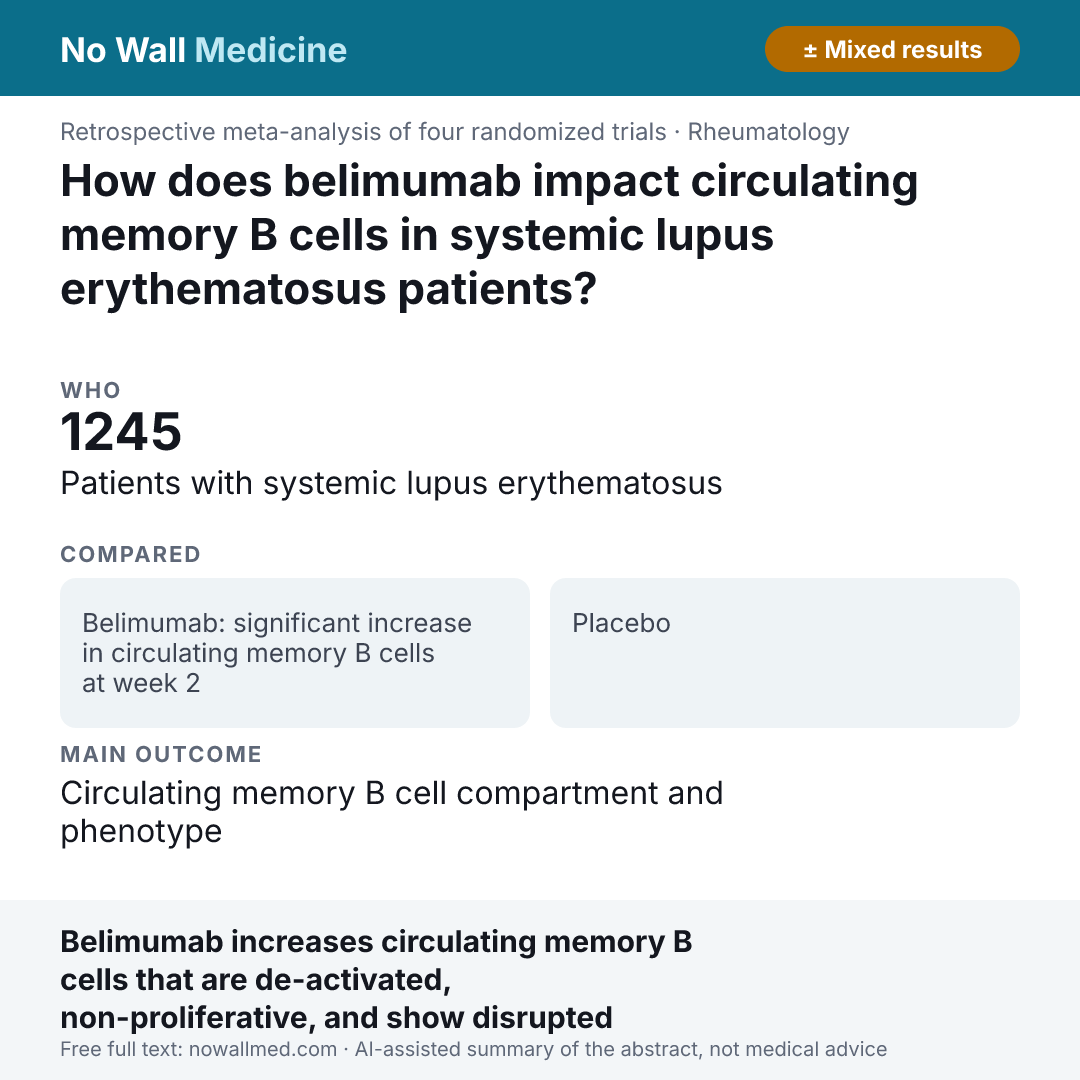
Disruption of memory B-cell trafficking by belimumab in patients with systemic lupus erythematosus
Retrospective meta-analysis of four randomized trialsMixed results
How does belimumab impact circulating memory B cells in systemic lupus erythematosus patients?
Who
1245
Patients with systemic lupus erythematosus
Compared
Belimumab: significant increase in circulating memory B cells at week 2
Placebo
Main outcome
Circulating memory B cell compartment and phenotype
Bottom line: Belimumab increases circulating memory B cells that are de-activated, non-proliferative, and show disrupted lymphocyte trafficking.
Rheumatology · 2024-05-22 · Save PNG
Standalone deep learning versus experts for diagnosis lung cancer on chest computed tomography: a systematic review
Systematic reviewKey finding
How do deep learning algorithms compare to experts for lung cancer diagnosis on chest computed tomography?
Who
Adult lung cancer patients
Compared
Deep learning algorithms: sensitivity 82% and specificity 75%
Human experts: sensitivity 81% and specificity 69%
Main outcome
Diagnostic performance in malignancy and invasiveness classification
Bottom line: Deep learning algorithms showed improved accuracy over human experts, specifically matching sensitivity and surpassing specificity in lung cancer diagnosis.
Limitation: Performance varies across different imaging modalities, requiring tailored optimization.
Eur Radiol · 2024-05-22 · Save PNG

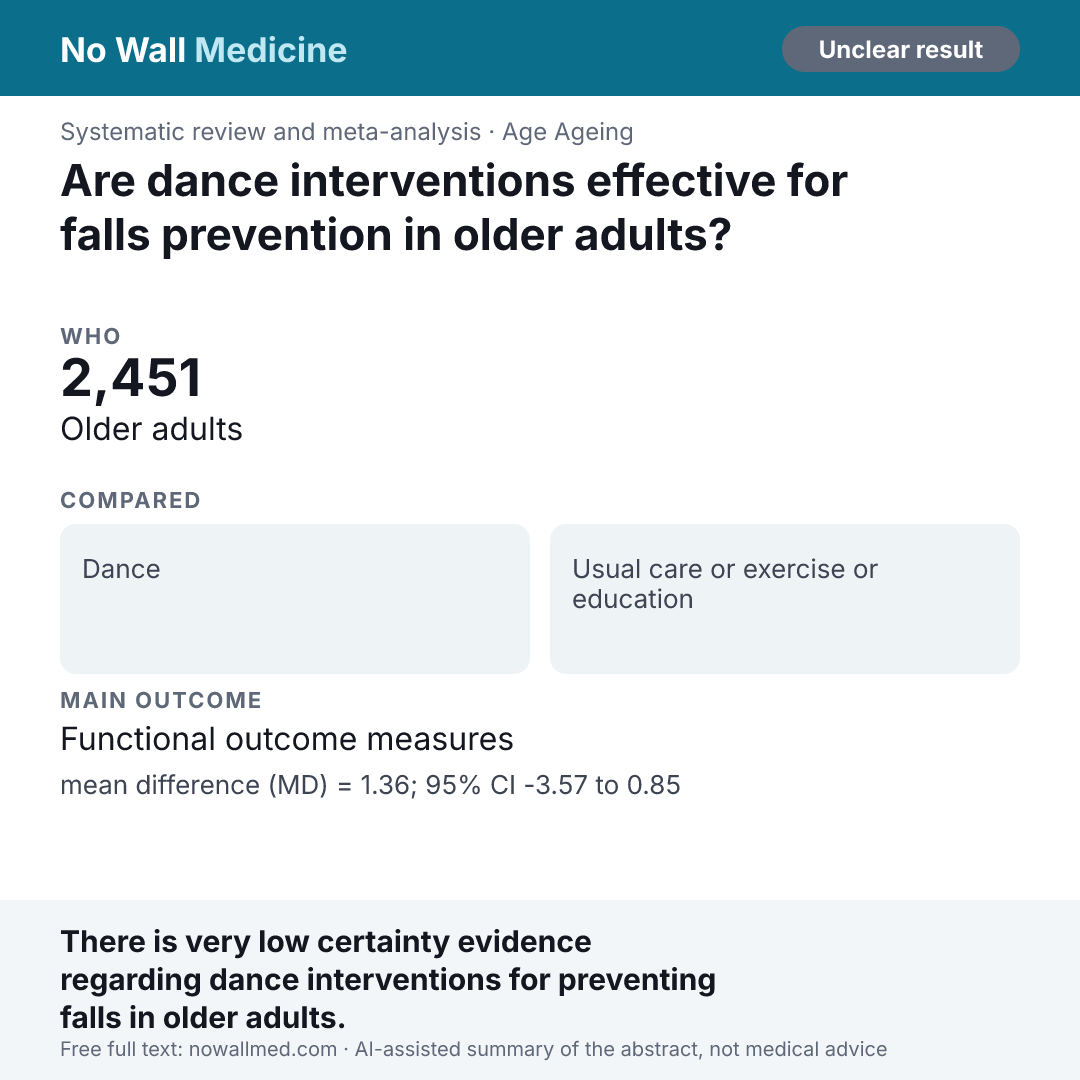
Effectiveness of dance interventions for falls prevention in older adults: systematic review and meta-analysis
Systematic review and meta-analysisUnclear result
Are dance interventions effective for falls prevention in older adults?
Who
2,451
Older adults
Compared
Dance
Usual care or exercise or education
Main outcome
Functional outcome measures
Result: mean difference (MD) = 1.36; 95% CI -3.57 to 0.85
Bottom line: There is very low certainty evidence regarding dance interventions for preventing falls in older adults.
Limitation: Overall certainty of evidence was very low and there was unexplained variance in effects.
Age Ageing · 2024-05-22 · Save PNG
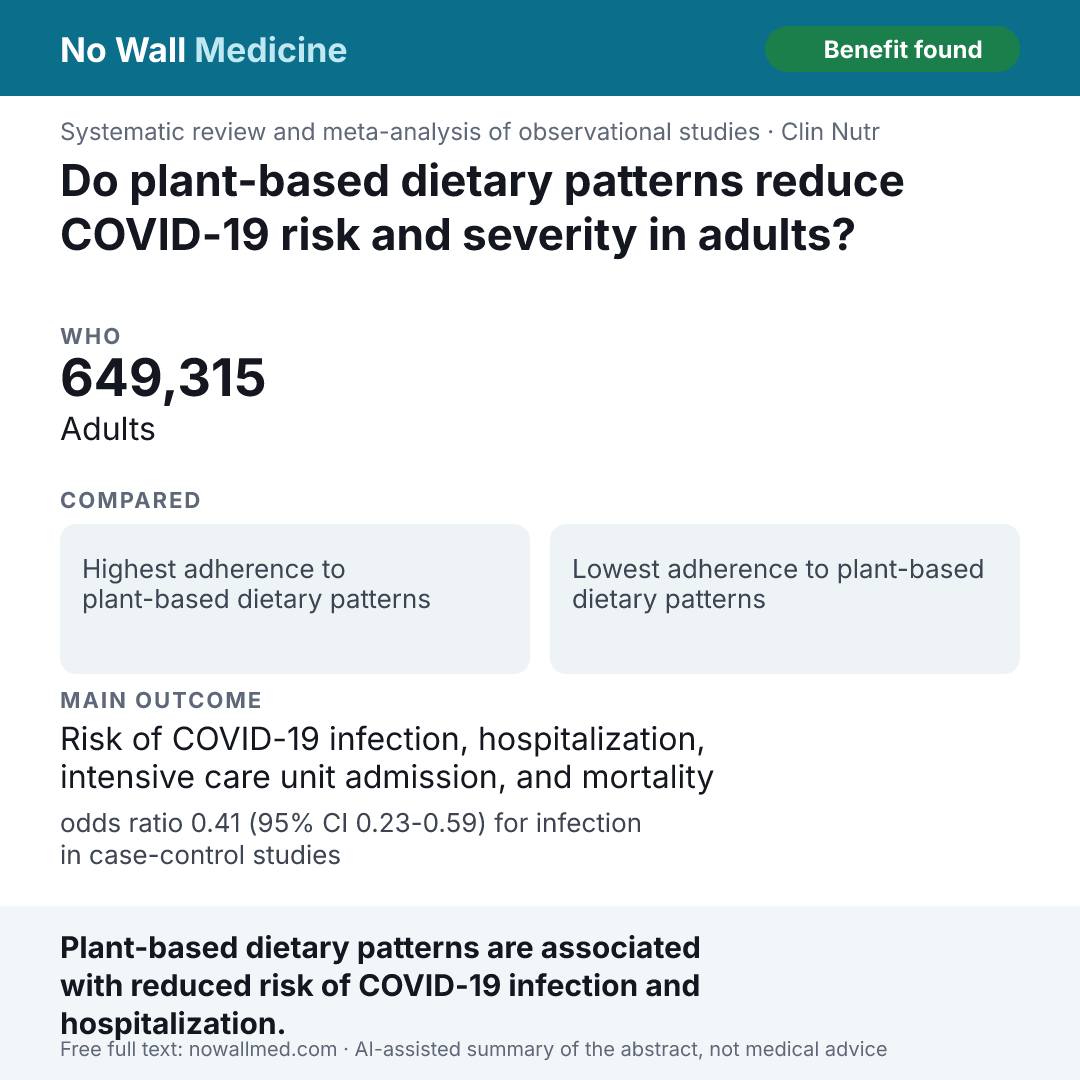
The role of plant-based dietary patterns in reducing COVID-19 risk and/or severity in adults: A systematic review and meta-analysis of observational studies
Systematic review and meta-analysis of observational studiesBenefit found
Do plant-based dietary patterns reduce COVID-19 risk and severity in adults?
Who
649,315
Adults
Compared
Highest adherence to plant-based dietary patterns
Lowest adherence to plant-based dietary patterns
Main outcome
Risk of COVID-19 infection, hospitalization, intensive care unit admission, and mortality
Result: odds ratio 0.41 (95% CI 0.23-0.59) for infection in case-control studies
Bottom line: Plant-based dietary patterns are associated with reduced risk of COVID-19 infection and hospitalization.
Limitation: More studies are needed to establish association with intensive care unit admission and mortality.
Clin Nutr · 2024-05-22 · Save PNG
Cardiac Damage Staging Predicts Outcomes in Aortic Valve Stenosis After Aortic Valve Replacement: Meta-Analysis
Meta-analysis of 16 studiesKey finding
Does cardiac damage staging predict mortality after aortic valve replacement?
Who
14499
Patients with symptomatic or asymptomatic moderate to severe aortic stenosis
Compared
Cardiac damage stage 0: 24.0% (symptomatic) or 19.3% (asymptomatic)
Higher cardiac damage stages: up to 57.3% (symptomatic) or 67.8% (asymptomatic)
Main outcome
All-cause mortality
Result: hazard ratio 3.51 (95% CI 2.79 to 4.41) for stage 4
Bottom line: Higher baseline cardiac damage staging predicts increased mortality after aortic valve replacement in patients with aortic stenosis.
JACC Adv · 2024-05-22 · Save PNG

Systematic review and narrative description of the outcomes of group preoperative education before elective major surgery
Systematic review and meta-analysisKey finding
Does group preoperative education improve patient outcomes before elective major surgery?
Who
Patients undergoing elective major surgery
Compared
Group preoperative education
Control arm
Main outcome
Patient outcomes including length of stay and complications
Result: odds ratio 0.56 (95% confidence interval 0.36-0.85)
Bottom line: Group preoperative education may reduce length of stay and postoperative complications after abdominal surgery.
BJA Open · 2024-05-22 · Save PNG

The use of probiotics and prebiotics in decolonizing pathogenic bacteria from the gut; a systematic review and meta-analysis of clinical outcomes
Meta-analysis of 29 randomized controlled trialsBenefit found
Do probiotics and prebiotics decolonize antimicrobial resistant pathogenic bacteria from the gut?
Who
2871
Subjects undergoing treatment to decolonize antimicrobial resistant pathogens
Compared
22%probiotics
30.8%placebo
Main outcome
persistence of pathogenic bacteria after treatment
Result: odds ratio 0.59 (95% CI 0.43-0.81)
Bottom line: Probiotics and prebiotics may decolonize antimicrobial resistant pathogens by modulating gut diversity.
Limitation: more clinical outcomes are required on particular strains to confirm decolonization.
Gut Microbes · 2024-05-22 · Save PNG

AI Quality Standards in Health Care: Rapid Umbrella Review
Rapid umbrella reviewHarm found
How are artificial intelligence quality standards used in health care systematic reviews?
Who
English-language health care artificial intelligence systematic reviews · MEDLINE and Google Scholar
Compared
39%Reviews applying quality standards (13/33)
14%Original studies applying quality standards (25/178)
Main outcome
Use of artificial intelligence quality standards
Bottom line: Artificial intelligence quality standards are seldom applied in practice within health care systematic reviews.
J Med Internet Res · 2024-05-22 · Save PNG

Genome-wide investigation of exogenous female hormones, genetic variation, and venous thromboembolism risk
Gene-by-environment case-only meta-analysisMixed results
Is there a genetic predisposition to venous thromboembolism in oral contraceptive or hormone therapy users?
Who
Venous thromboembolism cases using oral contraceptives or hormone therapy
Compared
Oral contraceptive users: 2895 users and 6607 nonusers
Hormone therapy users: 2434 users and 12793 nonusers
Main outcome
Synergy index of gene-by-environment interactions for venous thromboembolism
Result: F5 rs6025 SI 1.29; F11 rs2036914 SI 0.91
Bottom line: Candidate variant analysis identified a new association with F11, but agnostic genome-wide interrogation yielded no new discoveries.
J Thromb Haemost · 2024-05-21 · Save PNG

Systematic review and meta-analysis to assess the racial disparities in the outcomes of carotid endarterectomy in the United States
Systematic review and meta-analysisMixed results
Are there racial disparities in carotid endarterectomy outcomes in the United States?
Who
574055
Patients undergoing carotid endarterectomy for carotid artery disease · United States
Compared
White patients
non-White patients
Main outcome
30-day mortality, stroke, or composite mortality and stroke
Result: odds ratio 1.73 (95% CI 1.37-2.18) for mortality
Bottom line: Non-White patients have a higher risk of mortality, but no significant differences were found for stroke or composite outcomes.
J Vasc Surg · 2024-05-21 · Save PNG

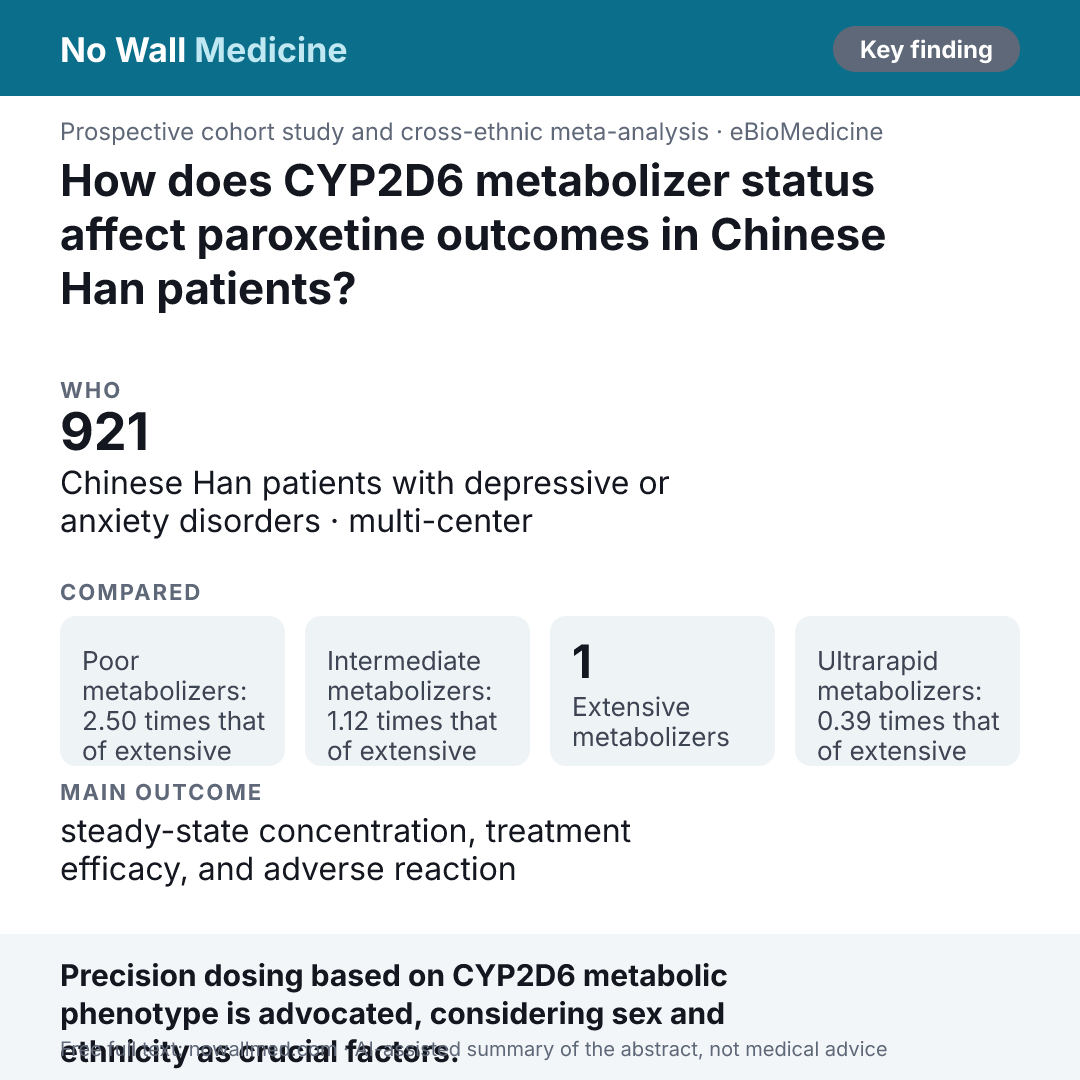
Dose adjustment of paroxetine based on CYP2D6 activity score inferred metabolizer status in Chinese Han patients with depressive or anxiety disorders: a prospective study and cross-ethnic meta-analysis
Prospective cohort study and cross-ethnic meta-analysisKey finding
How does CYP2D6 metabolizer status affect paroxetine outcomes in Chinese Han patients?
Who
921
Chinese Han patients with depressive or anxiety disorders · multi-center
Compared
Poor metabolizers: 2.50 times that of extensive metabolizers
Intermediate metabolizers: 1.12 times that of extensive metabolizers
1Extensive metabolizers
Ultrarapid metabolizers: 0.39 times that of extensive metabolizers
Main outcome
steady-state concentration, treatment efficacy, and adverse reaction
Bottom line: Precision dosing based on CYP2D6 metabolic phenotype is advocated, considering sex and ethnicity as crucial factors.
Funded by: National Natural Science Foundation of China; Academy of Medical Sciences Research Unit
eBioMedicine · 2024-05-21 · Save PNG
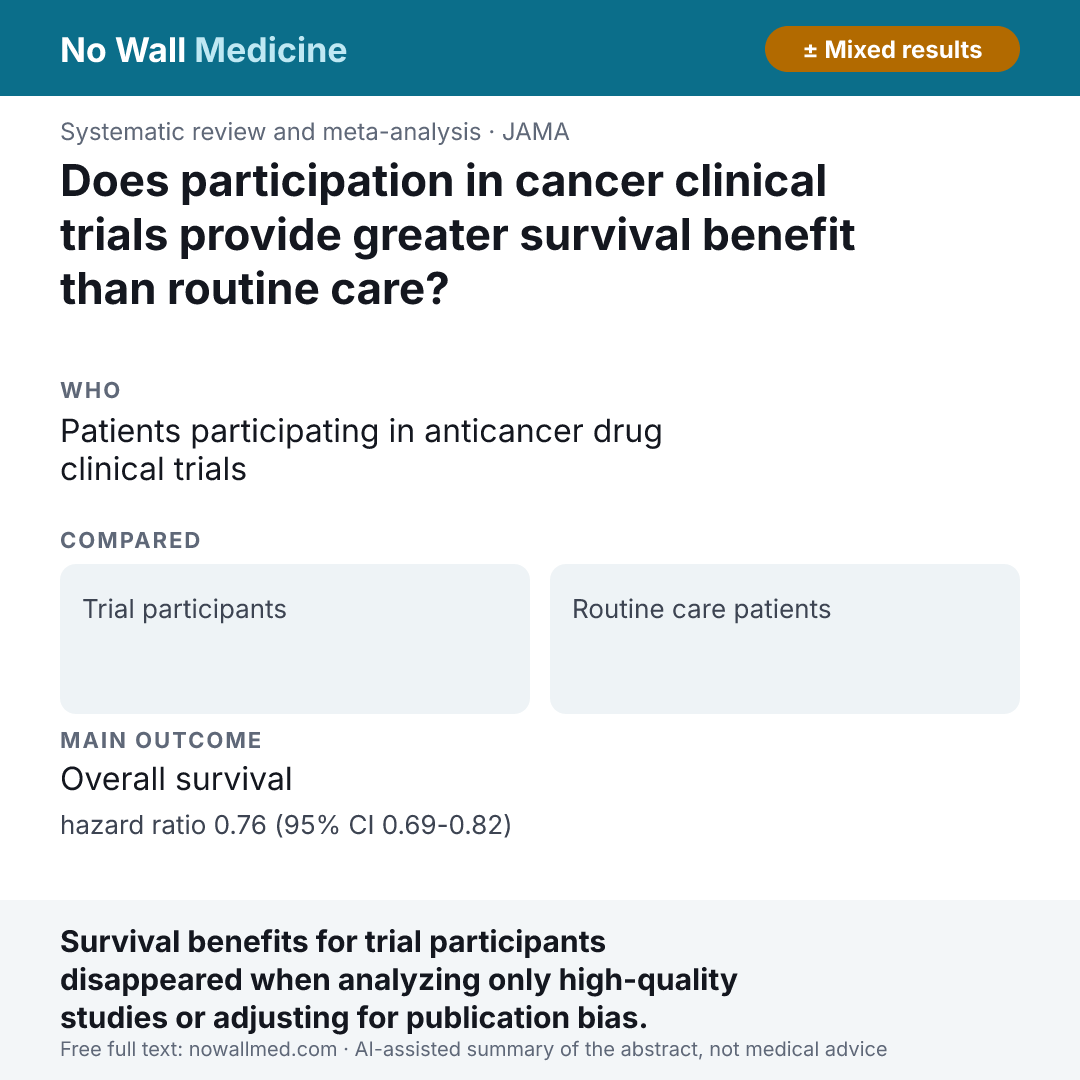
Survival Benefit Associated With Participation in Clinical Trials of Anticancer Drugs: A Systematic Review and Meta-Analysis
Systematic review and meta-analysisMixed results
Does participation in cancer clinical trials provide greater survival benefit than routine care?
Who
Patients participating in anticancer drug clinical trials
Compared
Trial participants
Routine care patients
Main outcome
Overall survival
Result: hazard ratio 0.76 (95% CI 0.69-0.82)
Bottom line: Survival benefits for trial participants disappeared when analyzing only high-quality studies or adjusting for publication bias.
Limitation: Benefits were not detected in studies addressing important sources of bias and confounding.
JAMA · 2024-05-20 · Save PNG
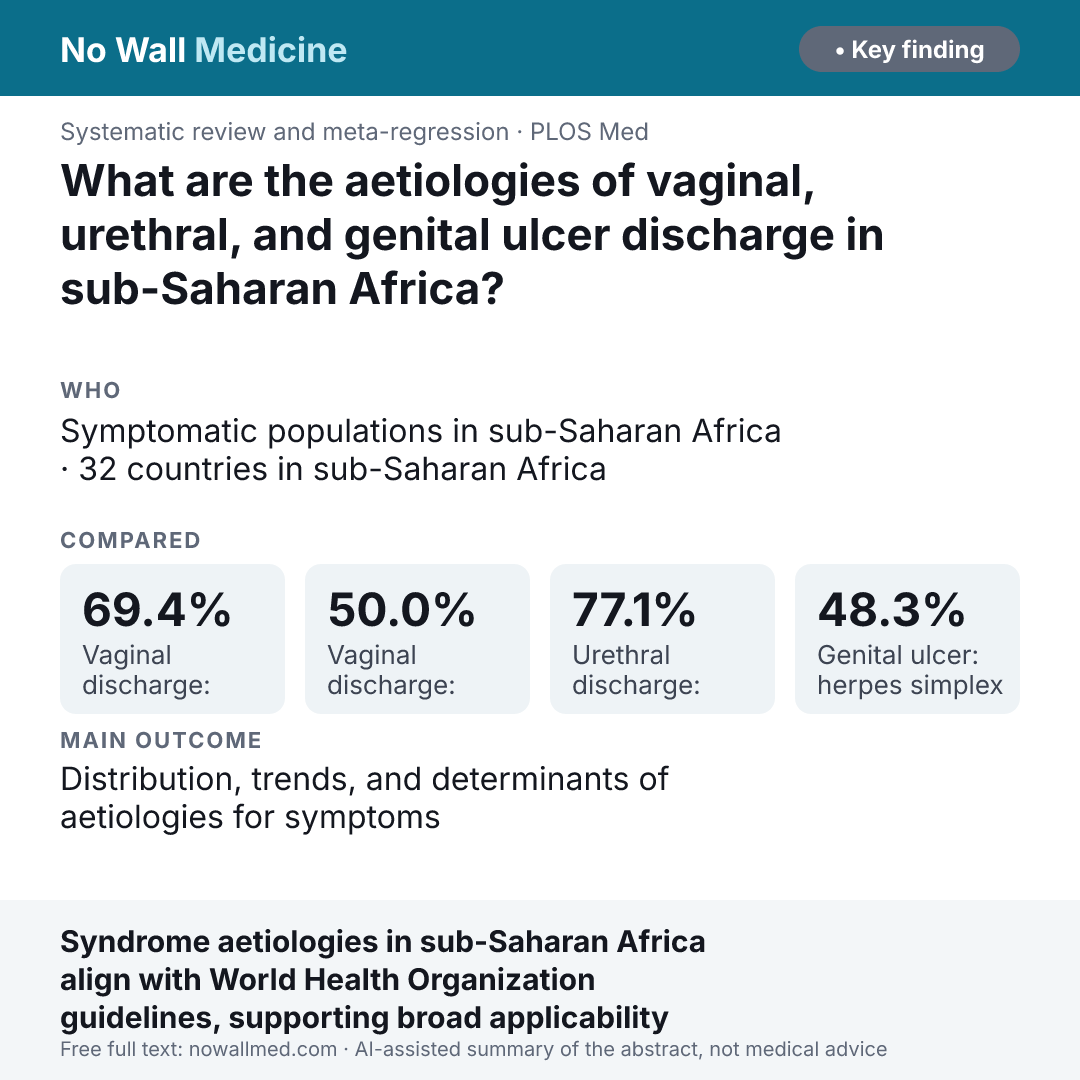
Aetiology of vaginal discharge, urethral discharge, and genital ulcer in sub-Saharan Africa: A systematic review and meta-regression
Systematic review and meta-regressionKey finding
What are the aetiologies of vaginal, urethral, and genital ulcer discharge in sub-Saharan Africa?
Who
Symptomatic populations in sub-Saharan Africa · 32 countries in sub-Saharan Africa
Compared
69.4%Vaginal discharge: candidiasis (95% CI: 44.3% to 86.6%)
50.0%Vaginal discharge: bacterial vaginosis (95% CI: 32.3% to 67.8%)
77.1%Urethral discharge: gonorrhoea (95% CI: 68.1% to 84.1%)
48.3%Genital ulcer: herpes simplex virus type 2 (95% CI: 32.9% to 64.1%)
Main outcome
Distribution, trends, and determinants of aetiologies for symptoms
Bottom line: Syndrome aetiologies in sub-Saharan Africa align with World Health Organization guidelines, supporting broad applicability of syndromic management.
Limitation: Absence of studies in 16 countries and substantial heterogeneity in study observations.
PLOS Med · 2024-05-20 · Save PNG
ABO and Rhesus blood groups and multiple health outcomes: an umbrella review of systematic reviews with meta-analyses of observational studies
Umbrella review of systematic reviews with meta-analysesMixed results
What is the relationship between ABO and Rhesus blood groups and various health outcomes?
Who
Diverse health outcomes across various observational studies
Compared
1.28Blood group B (95% confidence interval: 1.17, 1.40)
Non-B blood group
Main outcome
Risk of type 2 diabetes mellitus
Result: odds ratio 1.28 (95% confidence interval: 1.17, 1.40)
Bottom line: There is potential relationship between blood groups and health outcomes, specifically blood group B and type 2 diabetes risk.
BMC Med · 2024-05-20 · Save PNG

Effect of Brain-Gut Behavioral Treatments on Abdominal Pain in Irritable Bowel Syndrome: Systematic Review and Network Meta-Analysis
Systematic review and network meta-analysisBenefit found
Do brain-gut behavioral treatments improve abdominal pain in irritable bowel syndrome?
Who
5220
Adults with irritable bowel syndrome
Compared
Self-guided/minimal contact cognitive behavioral therapy: RR, 0.71 (95% CI, 0.54-0.95)
Face-to-face multicomponent behavioral therapy: RR, 0.72 (95% CI, 0.54-0.97)
Face-to-face gut-directed hypnotherapy: RR, 0.77 (95% CI, 0.61-0.96)
Main outcome
Abdominal pain resolution or improvement at treatment completion
Bottom line: Several brain-gut behavioral treatments may be efficacious for abdominal pain in irritable bowel syndrome, though none was superior to another.
Limitation: No trials were low risk of bias across all domains and there was funnel plot asymmetry.
Gastroenterology · 2024-05-20 · Save PNG

Seizure Outcome After Intraoperative Electrocorticography-Tailored Epilepsy Surgery: A Systematic Review and Meta-Analysis
Systematic review and meta-analysisKey finding
Does intraoperative electrocorticography-tailored epilepsy surgery improve favorable seizure outcomes?
Who
3631
Patients undergoing epilepsy surgery
Compared
74%Intraoperative electrocorticography-tailored surgery (95% CI 71-77)
Non-intraoperative electrocorticography-tailored surgery
Main outcome
Favorable seizure outcome
Result: odds ratio 2.10 (95% CI 1.37-3.24)
Bottom line: Intraoperative electrocorticography-tailored surgery is associated with higher rates of favorable seizure outcomes compared to non-tailored surgery.
Limitation: Limited by low-quality evidence and significant heterogeneity.
Neurology · 2024-05-20 · Save PNG

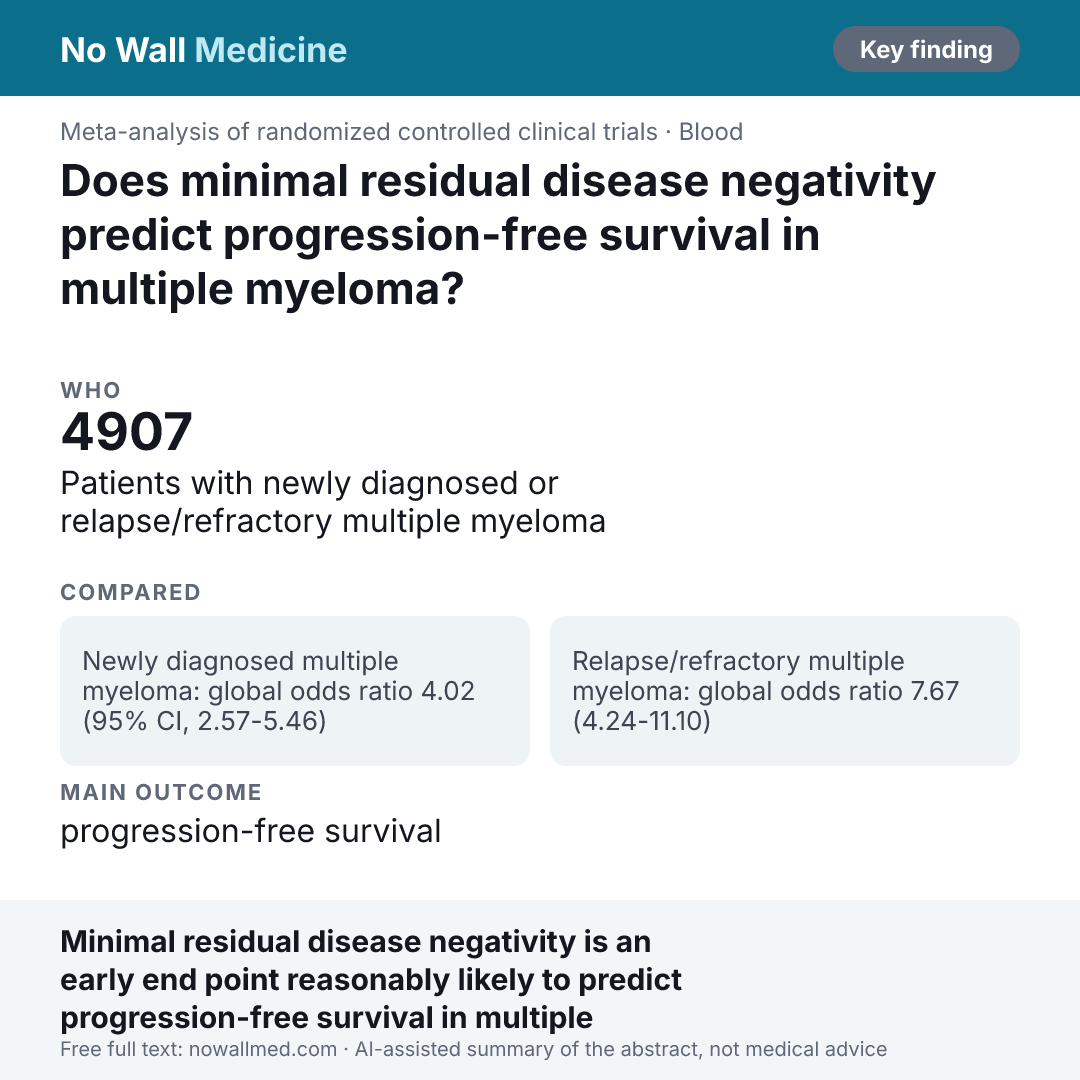
EVIDENCE meta-analysis: evaluating minimal residual disease as an intermediate clinical end point for multiple myeloma
Meta-analysis of randomized controlled clinical trialsKey finding
Does minimal residual disease negativity predict progression-free survival in multiple myeloma?
Who
4907
Patients with newly diagnosed or relapse/refractory multiple myeloma
Compared
Newly diagnosed multiple myeloma: global odds ratio 4.02 (95% CI, 2.57-5.46)
Relapse/refractory multiple myeloma: global odds ratio 7.67 (4.24-11.10)
Main outcome
progression-free survival
Result: global odds ratio 4.02 (95% CI, 2.57-5.46)
Bottom line: Minimal residual disease negativity is an early end point reasonably likely to predict progression-free survival in multiple myeloma.
Blood · 2024-05-20 · Save PNG