Visual abstracts
New randomized trials and meta-analyses from leading journals at a glance: who was studied, what was compared, and what was found. Every paper is free to read in full.
All specialtiesCardiology 4765Oncology 4048Gastroenterology & Hepatology 1906Infectious Disease 3759Neurology 1874Psychiatry & Mental Health 2217Pulmonology 2046Critical Care 1323Endocrinology & Diabetes 2545Pediatrics 2891Surgery 2482Orthopedics & Sports Medicine 917Neurosurgery 526Cardiothoracic & Vascular Surgery 657Plastic & Reconstructive Surgery 574Nephrology 1108Rheumatology 810Hematology 1090Dermatology 611Ophthalmology 532Obstetrics & Gynecology 1646Public & Global Health 1037Radiology & Imaging 620Anesthesiology 958Urology 745ENT (Otolaryngology) 494Emergency Medicine 481Allergy & Immunology 309Geriatrics 973Family Medicine & Primary Care 534Medical Genetics & Genomics 659Pathology & Laboratory Medicine 156Physical Medicine & Rehabilitation 736Palliative Care 421Nutrition 1561Digital Health & AI 2136General Medicine 316
Antibiotics Versus Placebo for Acute Bacterial Conjunctivitis: Findings From a Cochrane Systematic Review
Systematic review and meta-analysisBenefit, low certainty
Are antibiotics more effective than placebo for acute bacterial conjunctivitis?
Who
8805
Participants with acute bacterial conjunctivitis
Compared
Antibiotics: 26% increase in clinical recovery
Placebo
Main outcome
Clinical recovery and microbiological cure
Result: risk ratio 1.26 (95% CI 1.09-1.46)
Bottom line: Antibiotics may increase clinical recovery and microbiological clearance compared with placebo for acute bacterial conjunctivitis.
Limitation: Potential risk of bias, inconsistency in outcome measurement, and reporting limit evidence certainty.
Am J Ophthalmol · 2023-07-21 · Save PNG

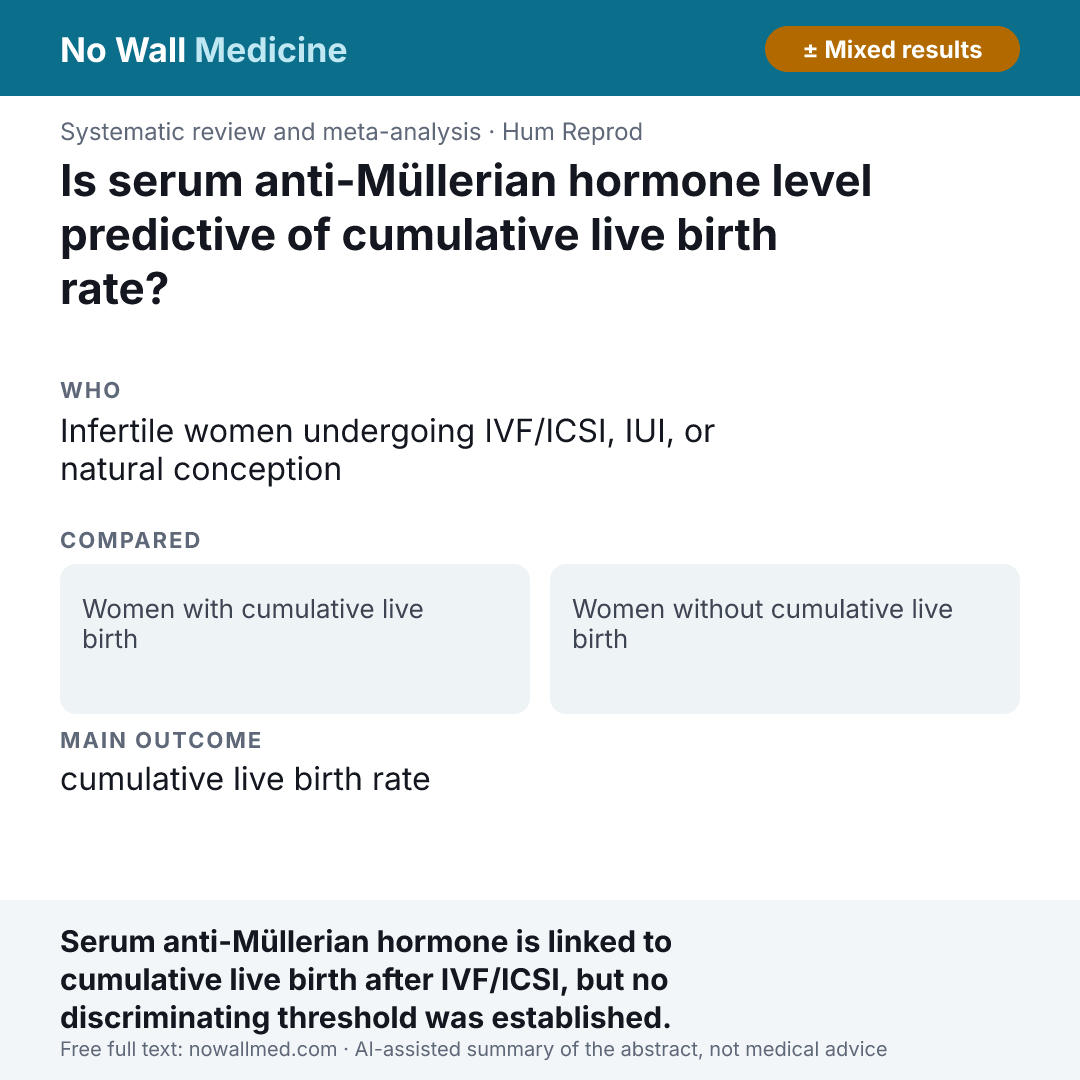
Using serum anti-Müllerian hormone levels to predict the chance of live birth after spontaneous or assisted conception: a systematic review and meta-analysis
Systematic review and meta-analysisMixed results
Is serum anti-Müllerian hormone level predictive of cumulative live birth rate?
Who
Infertile women undergoing IVF/ICSI, IUI, or natural conception
Compared
Women with cumulative live birth
Women without cumulative live birth
Main outcome
cumulative live birth rate
Bottom line: Serum anti-Müllerian hormone is linked to cumulative live birth after IVF/ICSI, but no discriminating threshold was established.
Limitation: Heterogeneity caused by different baseline characteristics, stimulation protocols, thresholds, and assays used in included studies.
Funded by: No external funding was obtained
Hum Reprod · 2023-07-21 · Save PNG
Pancreatic CT perfusion: quantitative meta-analysis of disease discrimination, protocol development, and effect of CT parameters
Quantitative meta-analysisBenefit found
Can pancreatic computed tomography perfusion discriminate between different pancreatic diseases?
Who
Human subjects with pancreatic pathologies
Compared
Normal pancreas
Pancreatitis
Pancreatic ductal adenocarcinoma
Non-pancreatic ductal adenocarcinoma
Main outcome
Blood flow, blood volume, and permeability
Bottom line: Quantitative computed tomography perfusion enables differentiation of pancreatic pathologies despite heterogeneity in study parameters.
Insights Imaging · 2023-07-21 · Save PNG

Association between birth location and short-term outcomes for babies with gastroschisis, congenital diaphragmatic hernia and oesophageal fistula: a systematic review
Systematic review of nineteen cohort studiesMixed results
Does birth location affect short-term outcomes for babies with specific congenital surgical conditions?
Who
Babies with gastroschisis, congenital diaphragmatic hernia or oesophageal atresia · High income countries
Compared
Colocated maternity and surgical services
Non-surgical centres
Main outcome
Mortality, length of stay, age at first feed, comorbidities, and parenteral nutrition
Bottom line: Evidence is conflicting and limited regarding birth location impact on mortality and length of stay.
Limitation: Significant heterogeneity, potential for bias and paucity of strong evidence.
BMJ Paediatr Open · 2023-07-21 · Save PNG

Diagnostic Test Accuracy of Deep Learning Prediction Models on COVID-19 Severity: Systematic Review and Meta-Analysis
Systematic review and meta-analysisKey finding
What is the diagnostic accuracy of deep learning models for COVID-19 severity?
Who
Patients with COVID-19
Compared
Cross-sectional assessment: sensitivity 0.92 (95% CI 0.89-0.94) and area under the curve 0.95 (95% CI 0.92-0.96)
Longitudinal predictive value: sensitivity 0.76 (95% CI 0.74-0.79) and area under the curve 0.80 (95% CI 0.76-0.83)
Main outcome
diagnostic test accuracy of deep learning prediction models
Bottom line: Deep learning models can help clinicians identify potentially severe COVID-19 cases for early triage.
Limitation: high-quality research is lacking
J Med Internet Res · 2023-07-21 · Save PNG

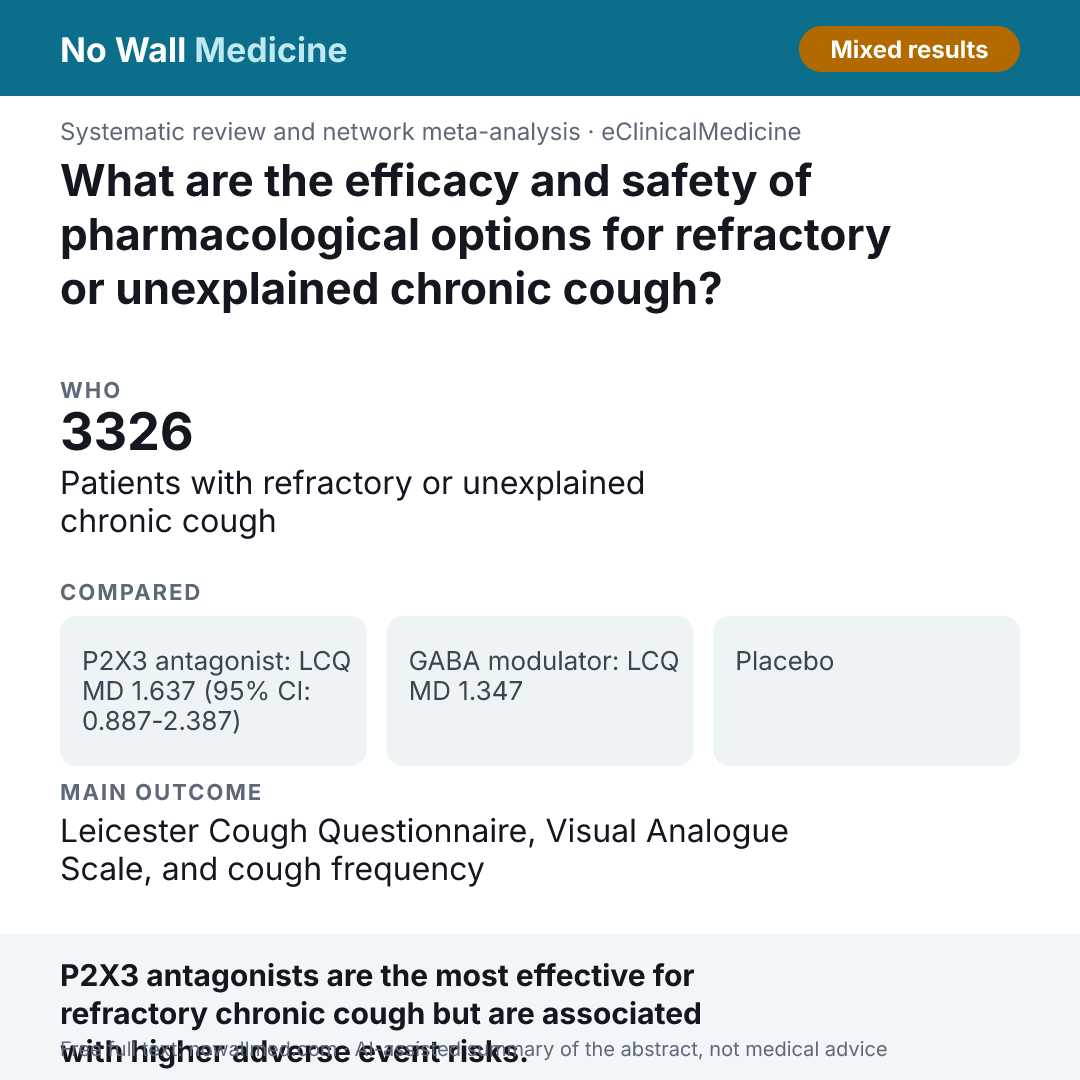
Efficacy and safety of pharmacotherapy for refractory or unexplained chronic cough: a systematic review and network meta-analysis
Systematic review and network meta-analysisMixed results
What are the efficacy and safety of pharmacological options for refractory or unexplained chronic cough?
Who
3326
Patients with refractory or unexplained chronic cough
Compared
P2X3 antagonist: LCQ MD 1.637 (95% CI: 0.887-2.387)
GABA modulator: LCQ MD 1.347
Placebo
Main outcome
Leicester Cough Questionnaire, Visual Analogue Scale, and cough frequency
Result: P2X3 antagonist adverse events RR 1.129 (95% CI 1.012-1.259)
Bottom line: P2X3 antagonists are the most effective for refractory chronic cough but are associated with higher adverse event risks.
Limitation: Further research is needed to determine the potential beneficiary population for optimizing management.
Funded by: National Natural Science Foundation of China and others
eClinicalMedicine · 2023-07-20 · Save PNG
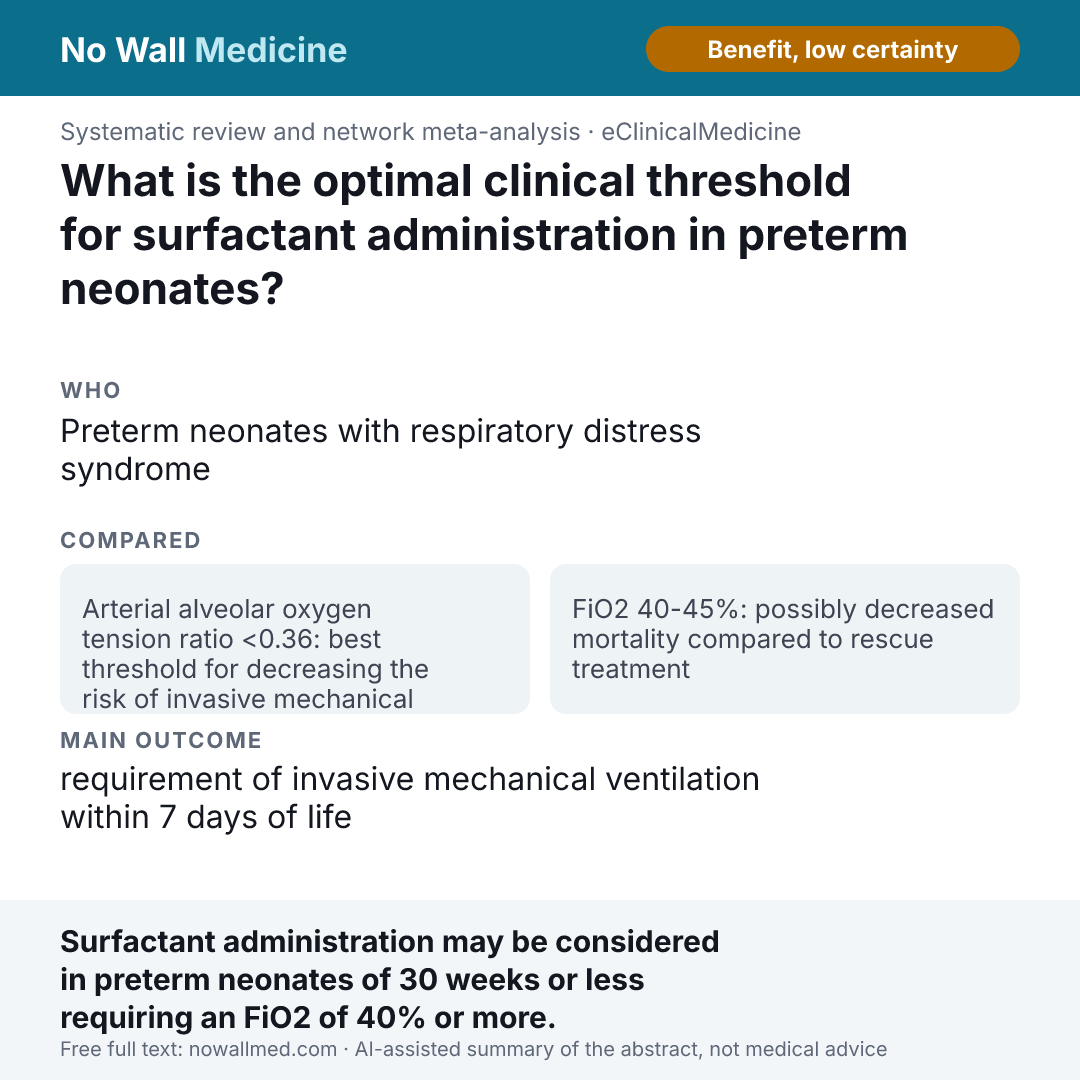
Clinical decision thresholds for surfactant administration in preterm infants: a systematic review and network meta-analysis
Systematic review and network meta-analysisBenefit, low certainty
What is the optimal clinical threshold for surfactant administration in preterm neonates?
Who
Preterm neonates with respiratory distress syndrome
Compared
Arterial alveolar oxygen tension ratio <0.36: best threshold for decreasing the risk of invasive mechanical ventilation
FiO2 40-45%: possibly decreased mortality compared to rescue treatment
Main outcome
requirement of invasive mechanical ventilation within 7 days of life
Bottom line: Surfactant administration may be considered in preterm neonates of 30 weeks or less requiring an FiO2 of 40% or more.
Limitation: Very low certainty of evidence and insufficient evidence for comparing 30% versus 40% FiO2 thresholds.
eClinicalMedicine · 2023-07-20 · Save PNG
Omega-3 Fatty Acid Biomarkers and Incident Atrial Fibrillation
Meta-analysis of 17 prospective cohort studiesKey finding
Are blood or adipose tissue omega-3 fatty acid levels associated with incident atrial fibrillation?
Who
54,799
Participants with baseline omega-3 fatty acid levels · Global consortium of 17 cohorts
Compared
Higher docosapentaenoic acid levels: hazard ratio 0.89 (95% CI 0.83-0.95)
Higher docosahexaenoic acid levels: hazard ratio 0.90 (95% CI 0.85-0.96)
Higher eicosapentaenoic acid and docosahexaenoic acid levels: hazard ratio 0.93 (95% CI 0.87-0.99)
Main outcome
Incident atrial fibrillation
Result: hazard ratio 0.89 (95% CI 0.83-0.95) for DPA
Bottom line: Higher levels of docosapentaenoic acid, docosahexaenoic acid, and combined EPA and DHA were associated with lower incident atrial fibrillation risk.
JACC · 2023-07-20 · Save PNG

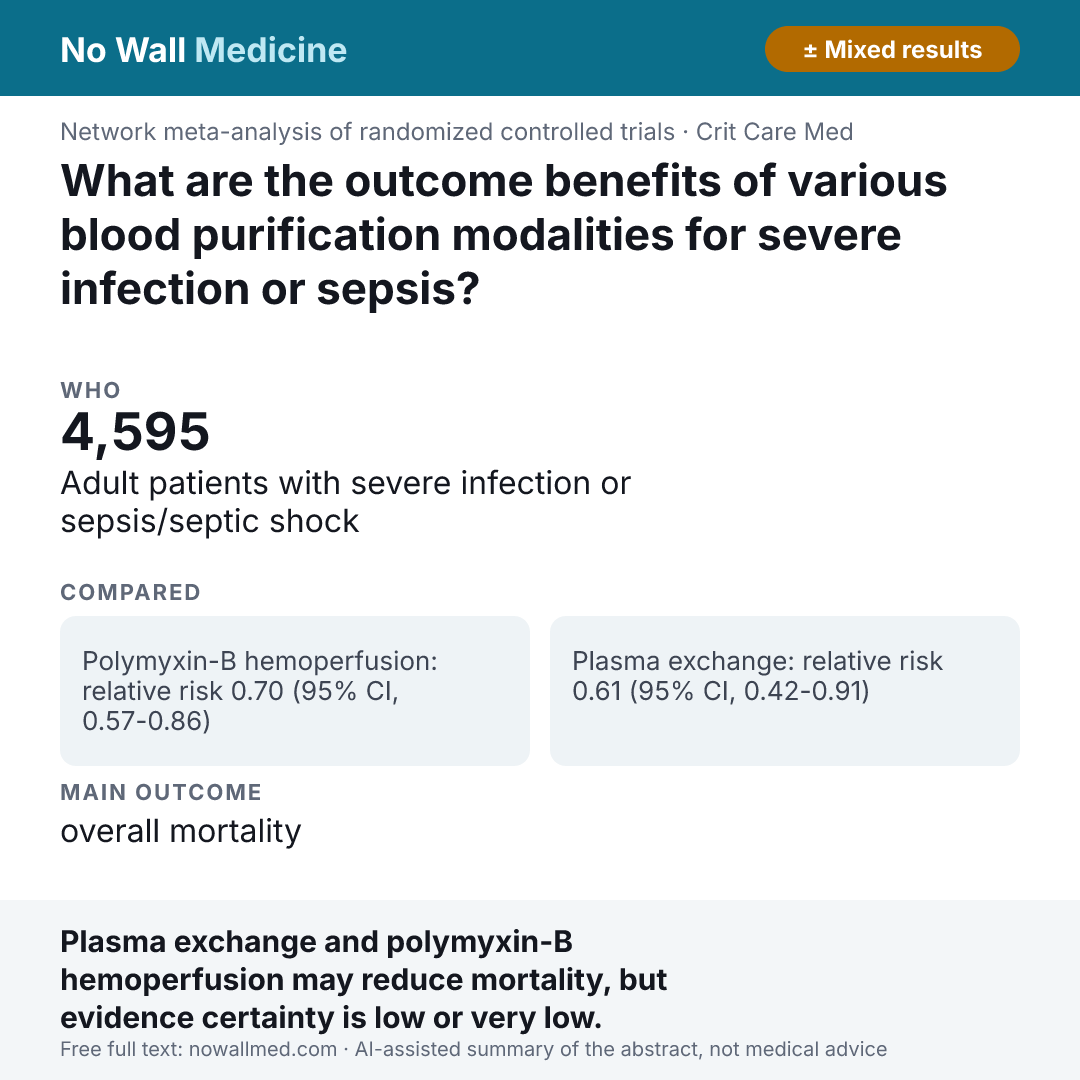
Blood Purification for Adult Patients With Severe Infection or Sepsis/Septic Shock: A Network Meta-Analysis of Randomized Controlled Trials
Network meta-analysis of randomized controlled trialsMixed results
What are the outcome benefits of various blood purification modalities for severe infection or sepsis?
Who
4,595
Adult patients with severe infection or sepsis/septic shock
Compared
Polymyxin-B hemoperfusion: relative risk 0.70 (95% CI, 0.57-0.86)
Plasma exchange: relative risk 0.61 (95% CI, 0.42-0.91)
Main outcome
overall mortality
Result: relative risk 0.70 (95% CI, 0.57-0.86) for polymyxin-B hemoperfusion; relative risk 0.61 (95% CI, 0.42-0.91) for plasma exchange
Bottom line: Plasma exchange and polymyxin-B hemoperfusion may reduce mortality, but evidence certainty is low or very low.
Limitation: High clinical heterogeneity, intransitivity, and scarcity of studies for secondary outcomes.
Crit Care Med · 2023-07-20 · Save PNG
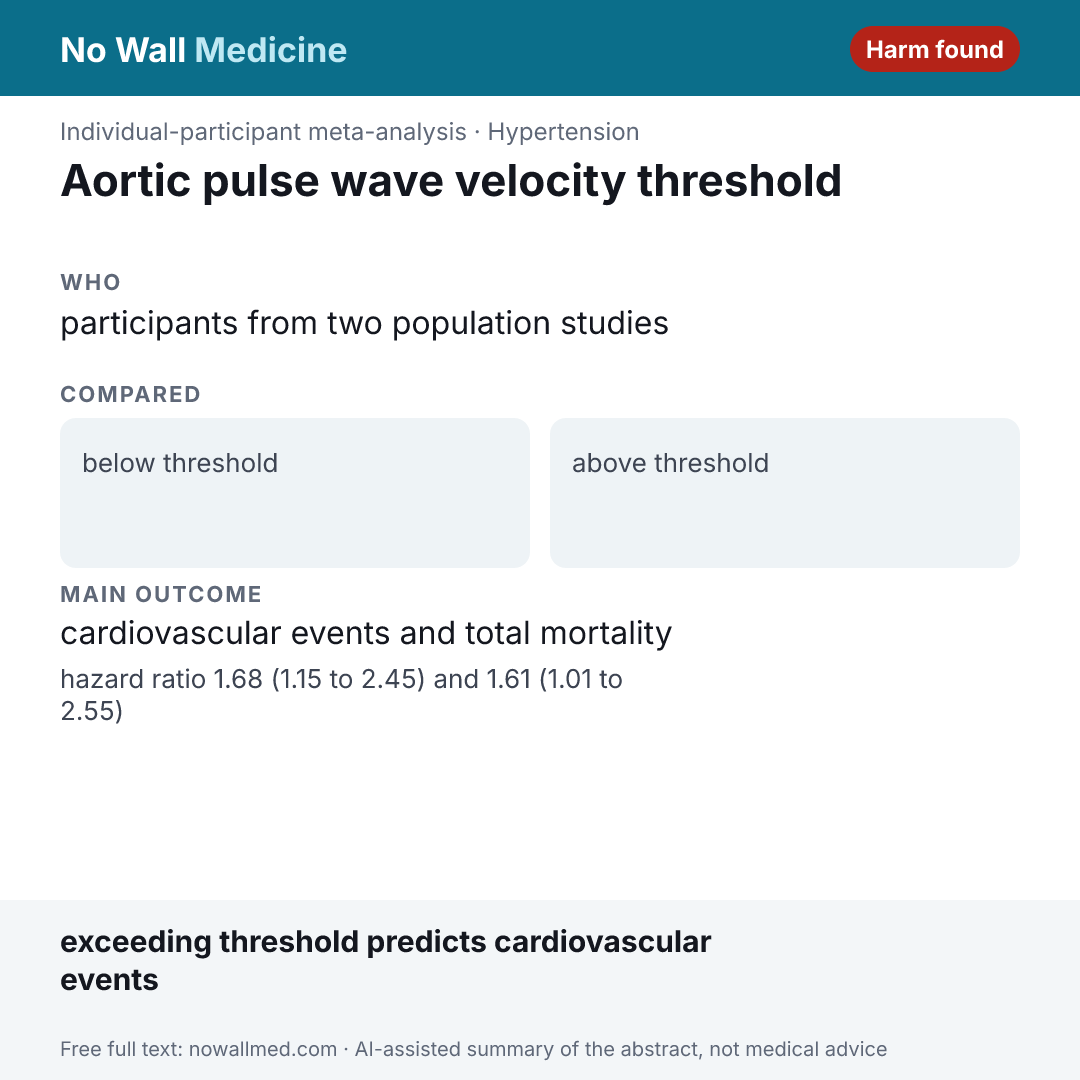
Derivation of an Outcome-Driven Threshold for Aortic Pulse Wave Velocity: An Individual-Participant Meta-Analysis
Individual-participant meta-analysisHarm found
Aortic pulse wave velocity threshold
Who
participants from two population studies
Compared
below threshold
above threshold
Main outcome
cardiovascular events and total mortality
Result: hazard ratio 1.68 (1.15 to 2.45) and 1.61 (1.01 to 2.55)
Bottom line: exceeding threshold predicts cardiovascular events
Hypertension · 2023-07-20 · Save PNG
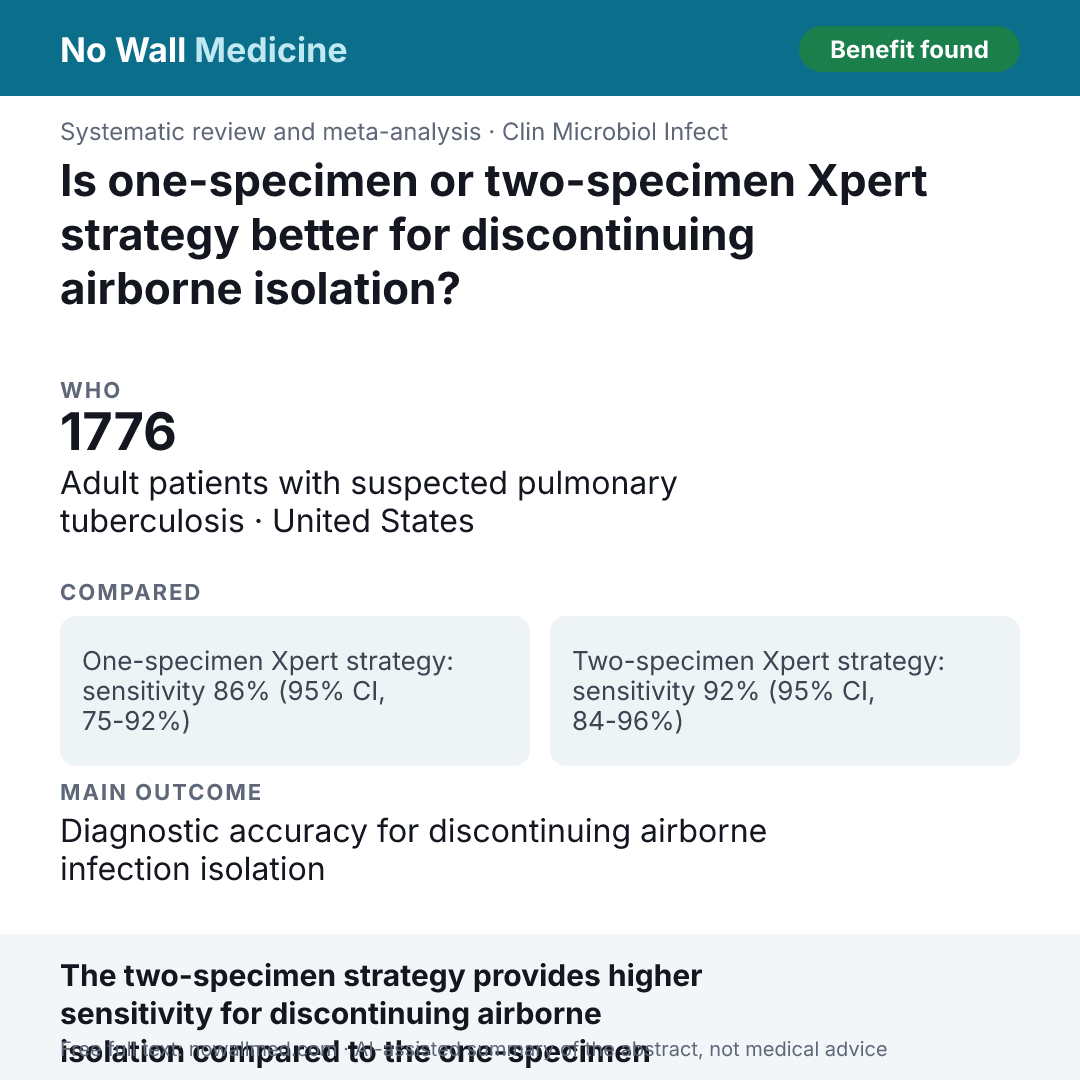
One- versus two-specimen Xpert strategy to discontinue airborne isolation in suspected pulmonary tuberculosis: systematic review and meta-analysis
Systematic review and meta-analysisBenefit found
Is one-specimen or two-specimen Xpert strategy better for discontinuing airborne isolation?
Who
1776
Adult patients with suspected pulmonary tuberculosis · United States
Compared
One-specimen Xpert strategy: sensitivity 86% (95% CI, 75-92%)
Two-specimen Xpert strategy: sensitivity 92% (95% CI, 84-96%)
Main outcome
Diagnostic accuracy for discontinuing airborne infection isolation
Result: sensitivity difference p 0.05
Bottom line: The two-specimen strategy provides higher sensitivity for discontinuing airborne isolation compared to the one-specimen strategy.
Limitation: Results must be interpreted in the context of a predominantly low-tuberculosis prevalence setting.
Clin Microbiol Infect · 2023-07-20 · Save PNG
Efficacy and safety of direct oral anticoagulants in the pediatric population: a systematic review and a meta-analysis
Systematic review and meta-analysis of 6 trialsBenefit found
What are the efficacy and safety of direct oral anticoagulants in pediatric patients?
Who
Patients aged under 18 years
Compared
Direct oral anticoagulants
Standard of care
Main outcome
Venous thromboembolism recurrence and bleeding safety
Result: odds ratio 0.42 (95% CI, 0.19-0.94) for VTE recurrence in treatment
Bottom line: Direct oral anticoagulants reduce venous thromboembolism compared to standard of care without major safety issues in children.
J Thromb Haemost · 2023-07-20 · Save PNG

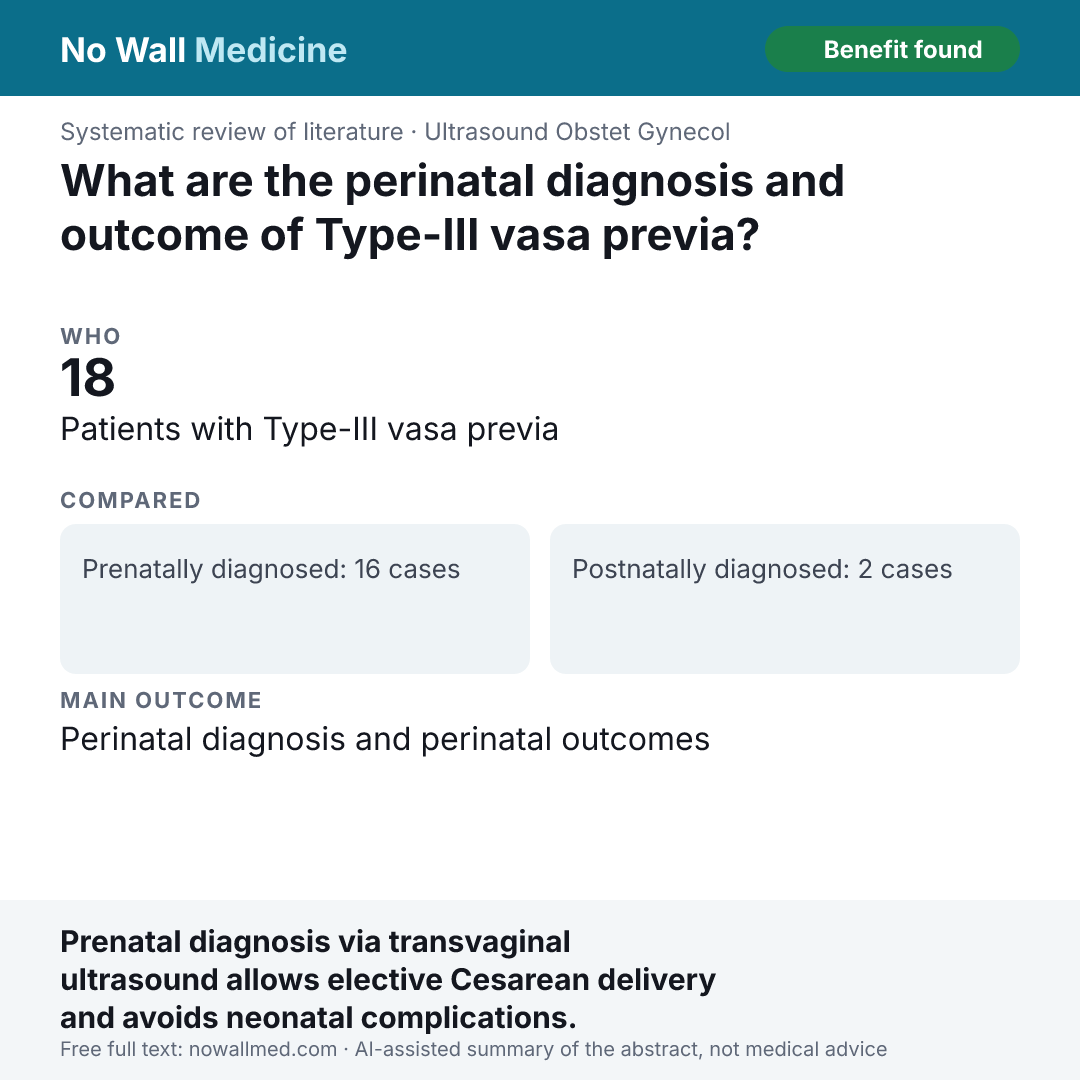
Prenatal diagnosis and postnatal outcome of Type-III vasa previa: systematic review of literature
Systematic review of literatureBenefit found
What are the perinatal diagnosis and outcome of Type-III vasa previa?
Who
18
Patients with Type-III vasa previa
Compared
Prenatally diagnosed: 16 cases
Postnatally diagnosed: 2 cases
Main outcome
Perinatal diagnosis and perinatal outcomes
Bottom line: Prenatal diagnosis via transvaginal ultrasound allows elective Cesarean delivery and avoids neonatal complications.
Limitation: Type-III vasa previa is a rare form with few reported cases in the literature.
Ultrasound Obstet Gynecol · 2023-07-20 · Save PNG
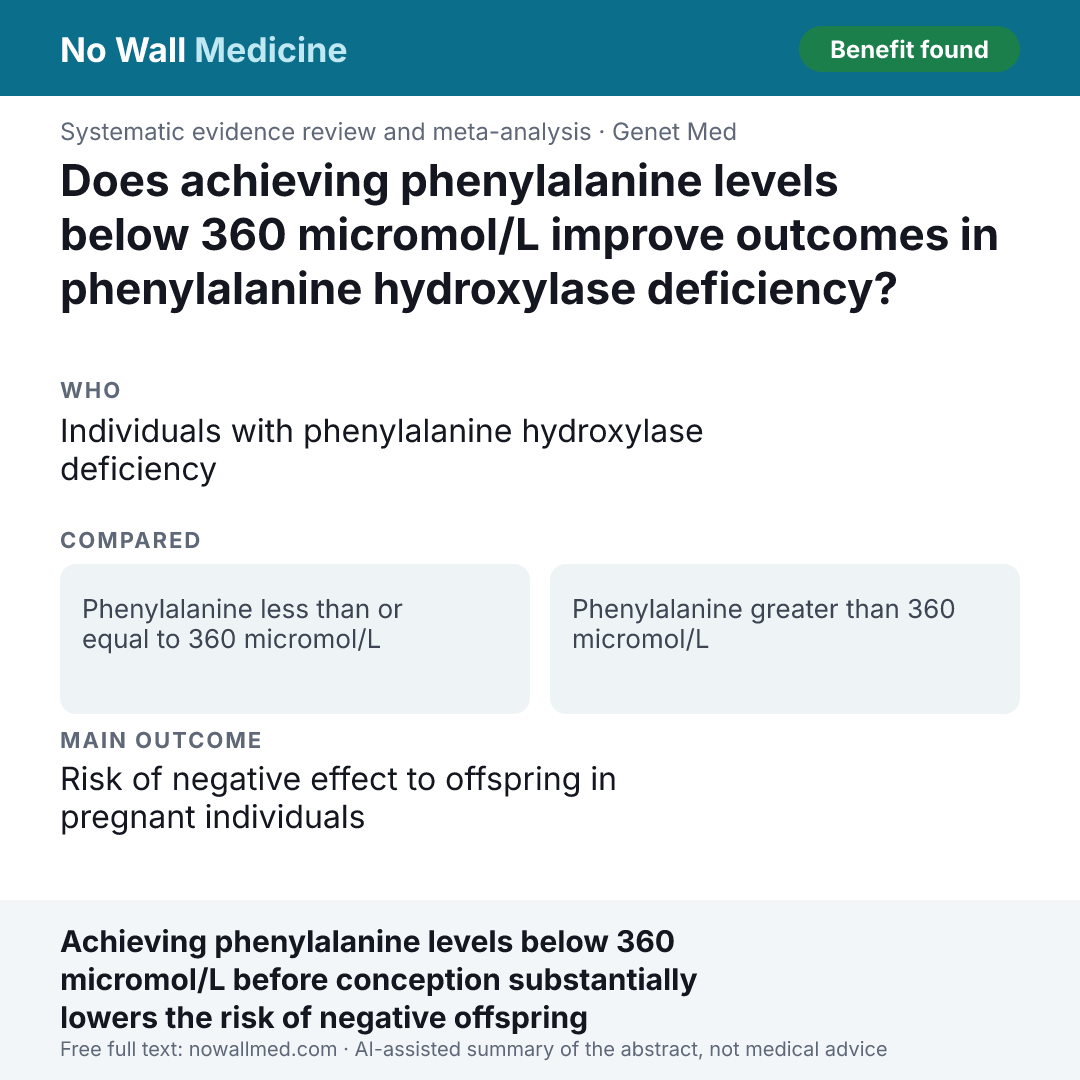
Phenylalanine hydroxylase deficiency treatment and management: A systematic evidence review of the American College of Medical Genetics and Genomics (ACMG)
Systematic evidence review and meta-analysisBenefit found
Does achieving phenylalanine levels below 360 micromol/L improve outcomes in phenylalanine hydroxylase deficiency?
Who
Individuals with phenylalanine hydroxylase deficiency
Compared
Phenylalanine less than or equal to 360 micromol/L
Phenylalanine greater than 360 micromol/L
Main outcome
Risk of negative effect to offspring in pregnant individuals
Result: odds ratio 0.07 (95% CI 0.04-0.14)
Bottom line: Achieving phenylalanine levels below 360 micromol/L before conception substantially lowers the risk of negative offspring outcomes.
Limitation: Risk of bias was moderate.
Genet Med · 2023-07-20 · Save PNG
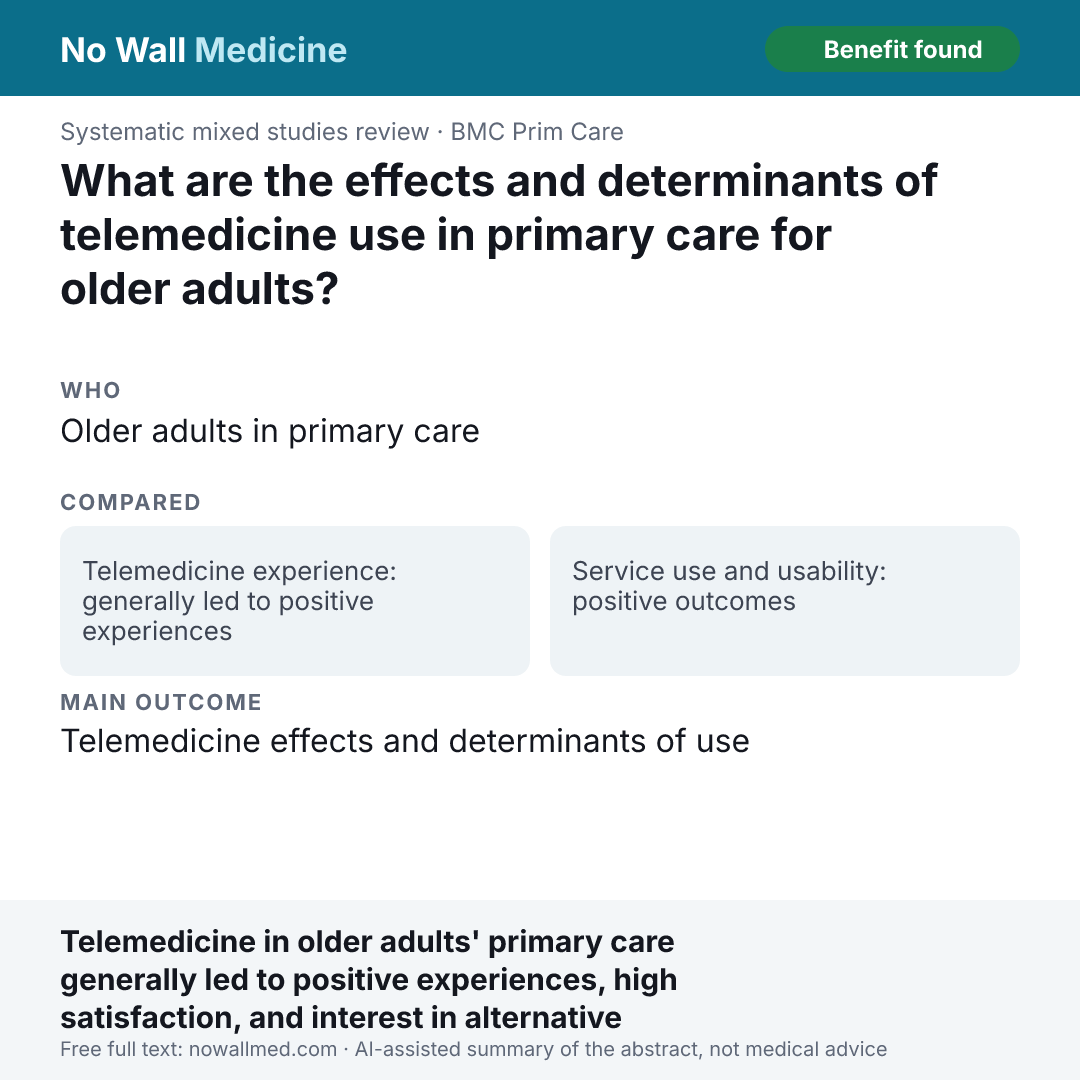
Telemedicine in the primary care of older adults: a systematic mixed studies review
Systematic mixed studies reviewBenefit found
What are the effects and determinants of telemedicine use in primary care for older adults?
Who
Older adults in primary care
Compared
Telemedicine experience: generally led to positive experiences
Service use and usability: positive outcomes
Main outcome
Telemedicine effects and determinants of use
Bottom line: Telemedicine in older adults' primary care generally led to positive experiences, high satisfaction, and interest in alternative delivery models.
Limitation: Future research should explore efficacy on clinical, health-related and healthcare services use.
BMC Prim Care · 2023-07-20 · Save PNG
A systematic review and meta-analysis on the effect of virtual reality-based rehabilitation for people with Parkinson's disease
Meta-analysis of 14 randomized controlled trialsMixed results
Does virtual reality-based rehabilitation improve outcomes in people with Parkinson's disease?
Who
524
People with Parkinson's disease
Compared
Virtual reality training
Conventional treatment
Main outcome
Balance function, gait ability, activities of daily living, motor function, and quality of life
Bottom line: Virtual reality-based rehabilitation significantly improves balance function compared to conventional treatment in Parkinson's disease patients.
Limitation: Future research should focus on long-term follow-up studies and developing standardized protocols.
J Neuroeng Rehabil · 2023-07-20 · Save PNG

Evaluating trends in private equity ownership and impacts on health outcomes, costs, and quality: systematic review
Systematic review of 55 empirical studiesKey finding
What are the impacts of private equity ownership on healthcare outcomes, costs, and quality?
Who
55
Patients and operators in private equity owned healthcare settings · Eight countries, mostly the United States
Compared
Private equity owned operators: Increased costs to patients or payers
Non-private equity owned operators: Reference group for comparison
Main outcome
Health outcomes, costs, and quality of care
Result: PE ownership associated with increased costs and mixed to harmful quality impacts
Bottom line: Private equity ownership was associated with increased costs and mixed to harmful impacts on quality.
Limitation: Risk of bias and frequent geographic focus on the US limit generalizability.
BMJ · 2023-07-19 · Save PNG

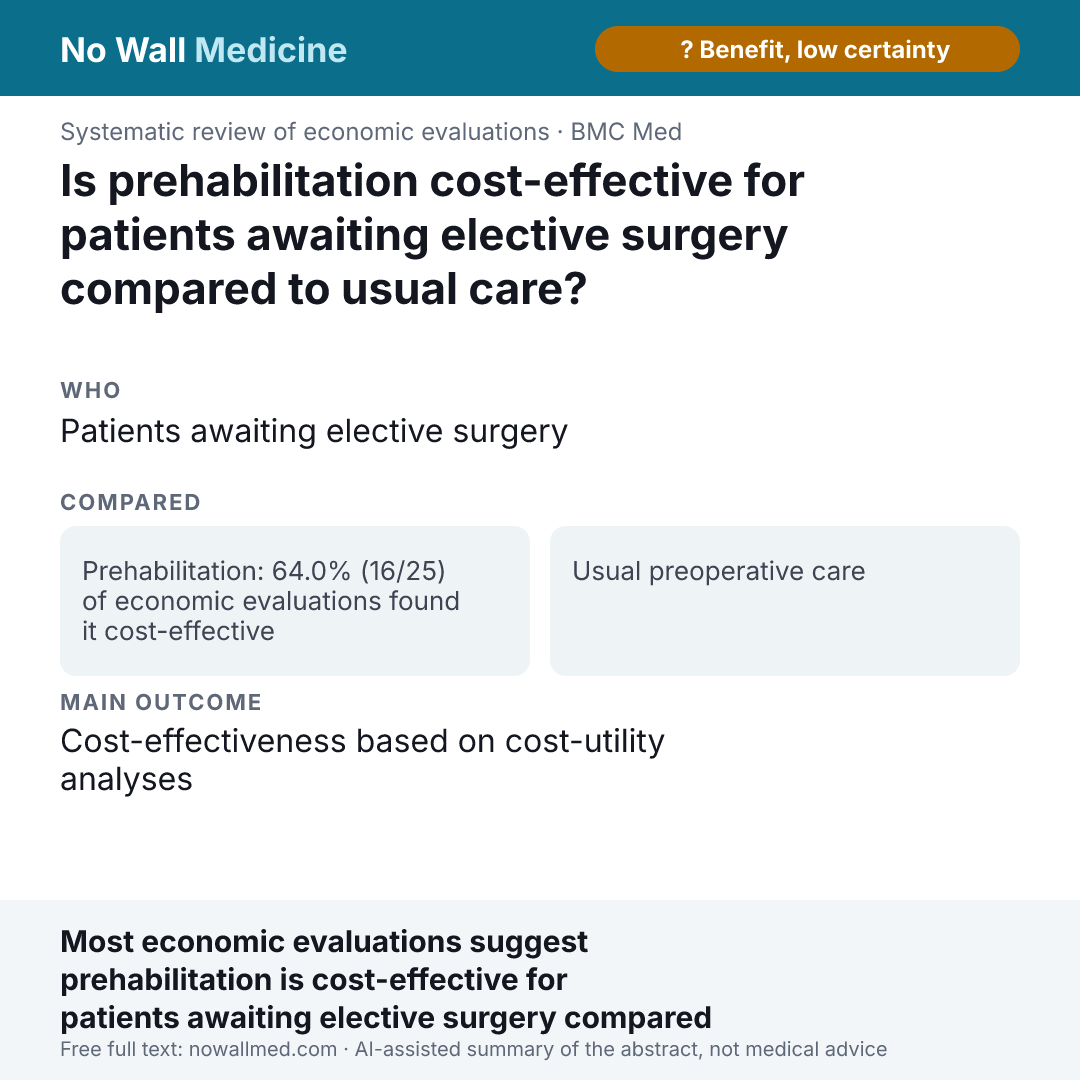
Cost-effectiveness of prehabilitation prior to elective surgery: a systematic review of economic evaluations
Systematic review of economic evaluationsBenefit, low certainty
Is prehabilitation cost-effective for patients awaiting elective surgery compared to usual care?
Who
Patients awaiting elective surgery
Compared
Prehabilitation: 64.0% (16/25) of economic evaluations found it cost-effective
Usual preoperative care
Main outcome
Cost-effectiveness based on cost-utility analyses
Bottom line: Most economic evaluations suggest prehabilitation is cost-effective for patients awaiting elective surgery compared to usual care.
Limitation: High risk of bias, low methodological quality, and potential publication bias.
BMC Med · 2023-07-19 · Save PNG
Probiotic supplementation during antibiotic treatment is unjustified in maintaining the gut microbiome diversity: a systematic review and meta-analysis
Systematic review and meta-analysisNo clear difference
Does probiotic supplementation during antibiotic therapy affect gut microbiome diversity?
Who
Patients on antibiotic therapy
Compared
Probiotic supplemented
Control
Main outcome
Gut microbiome diversity indices
Result: Shannon MD 0.23 (95% CI -0.06 to 0.51)
Bottom line: Probiotic supplementation during antibiotic therapy does not significantly influence gut microbiome diversity indices.
Limitation: Limited number of studies, low sample sizes, and high variability across studies.
BMC Med · 2023-07-19 · Save PNG

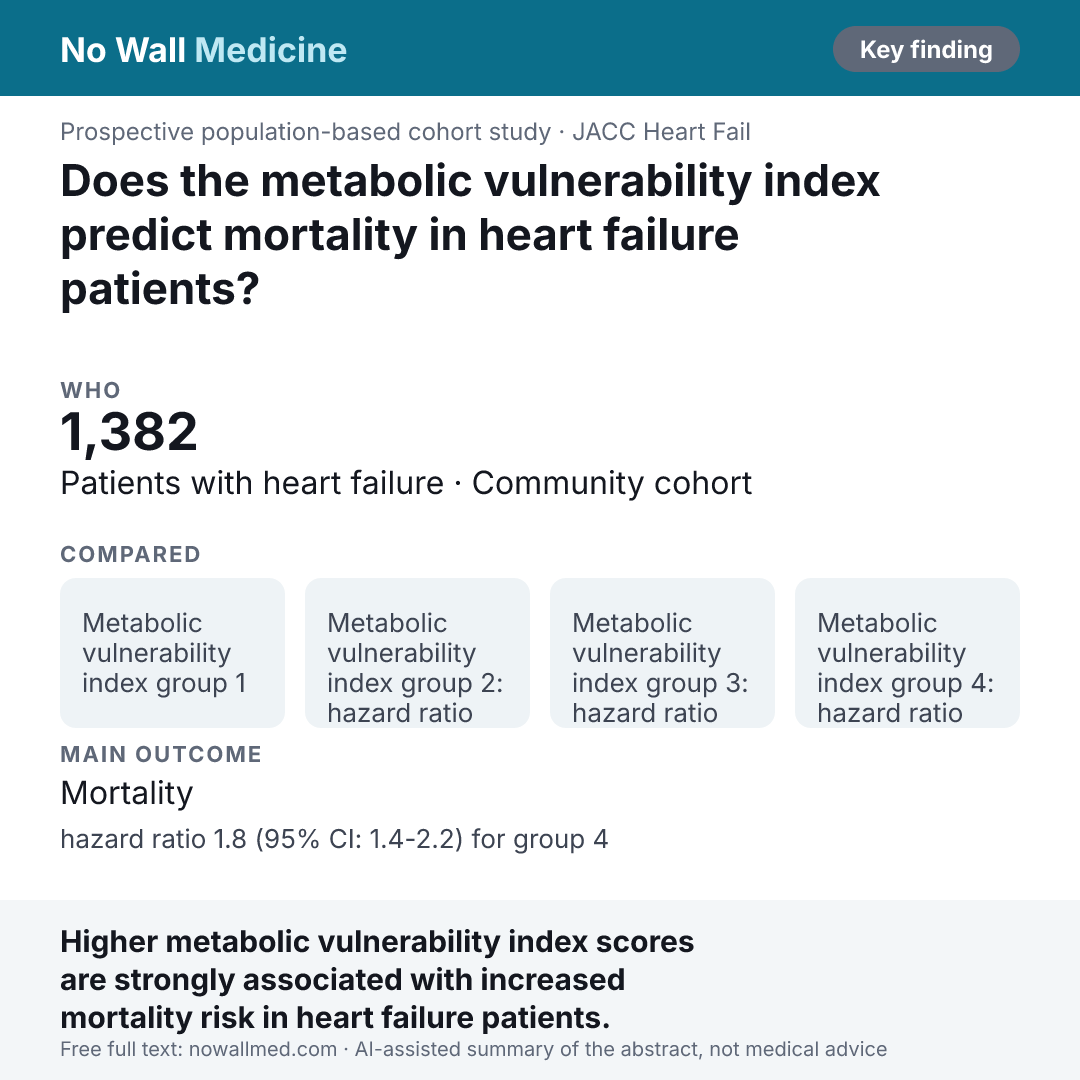
The Metabolic Vulnerability Index: A Novel Marker for Mortality Prediction in Heart Failure
Prospective population-based cohort studyKey finding
Does the metabolic vulnerability index predict mortality in heart failure patients?
Who
1,382
Patients with heart failure · Community cohort
Compared
Metabolic vulnerability index group 1
Metabolic vulnerability index group 2: hazard ratio 1.2 (95% CI: 0.9-1.4)
Metabolic vulnerability index group 3: hazard ratio 1.6 (95% CI: 1.3-2.0)
Metabolic vulnerability index group 4: hazard ratio 1.8 (95% CI: 1.4-2.2)
Main outcome
Mortality
Result: hazard ratio 1.8 (95% CI: 1.4-2.2) for group 4
Bottom line: Higher metabolic vulnerability index scores are strongly associated with increased mortality risk in heart failure patients.
JACC Heart Fail · 2023-07-19 · Save PNG