Visual abstracts
New randomized trials and meta-analyses from leading journals at a glance: who was studied, what was compared, and what was found. Every paper is free to read in full.
All specialtiesCardiology 4765Oncology 4048Gastroenterology & Hepatology 1906Infectious Disease 3759Neurology 1874Psychiatry & Mental Health 2217Pulmonology 2046Critical Care 1323Endocrinology & Diabetes 2545Pediatrics 2891Surgery 2482Orthopedics & Sports Medicine 917Neurosurgery 526Cardiothoracic & Vascular Surgery 657Plastic & Reconstructive Surgery 574Nephrology 1108Rheumatology 810Hematology 1090Dermatology 611Ophthalmology 532Obstetrics & Gynecology 1646Public & Global Health 1037Radiology & Imaging 620Anesthesiology 958Urology 745ENT (Otolaryngology) 494Emergency Medicine 481Allergy & Immunology 309Geriatrics 973Family Medicine & Primary Care 534Medical Genetics & Genomics 659Pathology & Laboratory Medicine 156Physical Medicine & Rehabilitation 736Palliative Care 421Nutrition 1561Digital Health & AI 2136General Medicine 316
Assessing the Content and Effect of Web-Based Decision Aids for Postmastectomy Breast Reconstruction: Systematic Review and Meta-Analysis of Randomized Controlled Trials
Systematic review and meta-analysis of randomized controlled trialsMixed results
Do web-based decision aids affect decision-making and psychological outcomes in postmastectomy breast reconstruction?
Who
579
women facing postmastectomy breast reconstruction
Compared
Web-based decision aids
Control
Main outcome
decision-related, psychological-related, and surgical decision-making outcomes
Result: decisional conflict mean difference -5.43 (95% CI -8.87 to -1.99)
Bottom line: Web-based decision aids improve knowledge, decisional conflict, and satisfaction, but do not affect informed choice, regret, or anxiety.
Limitation: The overall Grading of Recommendations, Assessment, Development, and Evaluation quality of the evidence was low.
J Med Internet Res · 2024-05-27 · Save PNG

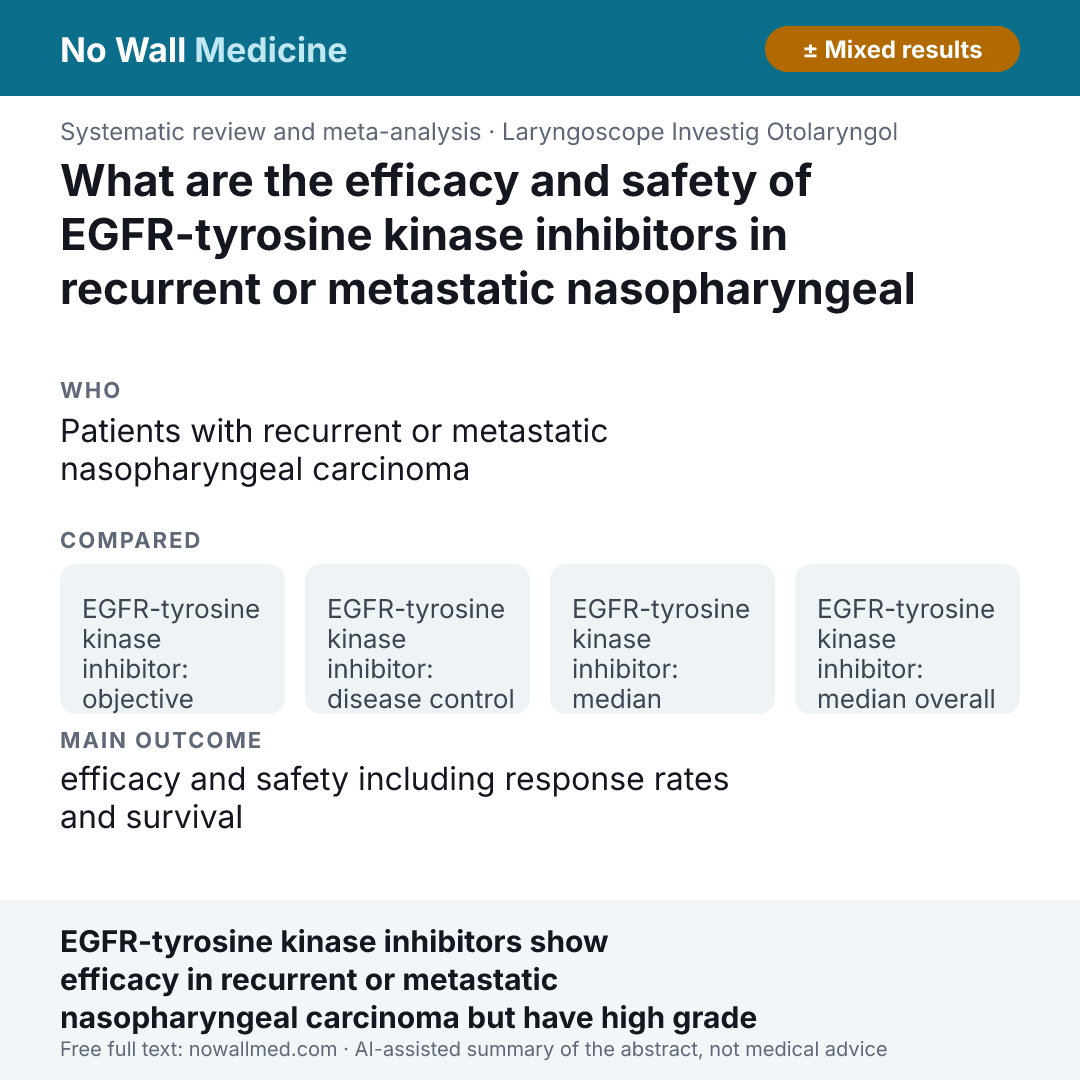
The efficacy and safety of EGFR-TKI in recurrent/metastatic nasopharyngeal carcinoma patients: A systematic review and meta-analysis
Systematic review and meta-analysisMixed results
What are the efficacy and safety of EGFR-tyrosine kinase inhibitors in recurrent or metastatic nasopharyngeal carcinoma?
Who
Patients with recurrent or metastatic nasopharyngeal carcinoma
Compared
EGFR-tyrosine kinase inhibitor: objective response rate 38% (95% CI 27%-49%)
EGFR-tyrosine kinase inhibitor: disease control rate 71% (95% CI 61%-80%)
EGFR-tyrosine kinase inhibitor: median progression-free survival 6.29 months (95% CI 5.22-7.35)
EGFR-tyrosine kinase inhibitor: median overall survival 15.94 months (95% CI 14.68-17.20)
Main outcome
efficacy and safety including response rates and survival
Result: grade 3-4 adverse events incidence rate 49% (95% CI 38%-61%)
Bottom line: EGFR-tyrosine kinase inhibitors show efficacy in recurrent or metastatic nasopharyngeal carcinoma but have high grade 3-4 adverse event rates.
Laryngoscope Investig Otolaryngol · 2024-05-27 · Save PNG
Colorectal cancer screening participation in First Nations populations worldwide: a systematic review and data synthesis
Systematic review and narrative synthesisMixed results
What are the colorectal cancer screening participation rates in First Nations populations worldwide?
Who
Adult First Nations populations worldwide · United States, Australia, New Zealand, Canada, Dominica and Guatemala
Compared
United States: 4.0 to 79.2%
Australia: 10.6-35.2%
New Zealand: 18.4-49%
Canada: 22.4-53.4%
Main outcome
Colorectal cancer screening participation rates
Bottom line: Colorectal cancer screening participation rates vary widely across different global First Nations populations.
Limitation: Screening data are lacking in direct comparator groups and longitudinal outcomes.
eClinicalMedicine · 2024-05-25 · Save PNG

Genetically proxied IL-6 receptor inhibition is associated with increased risk of atopic dermatitis
Mendelian randomization meta-analysisHarm found
Is interleukin-6 receptor inhibition associated with increased risk of atopic dermatitis?
Who
Individuals of European, Finnish, and East Asian ancestry
Compared
Genetically proxied interleukin-6 receptor inhibition
Control
Main outcome
Risk of atopic dermatitis
Result: odds ratio 1.89 (95% CI 1.57 to 2.28)
Bottom line: Genetically proxied interleukin-6 receptor inhibition is causally associated with increased atopic dermatitis risk across multiple populations.
JACI · 2024-05-25 · Save PNG

Modifiable risk factors and inflammation-related proteins in polymyalgia rheumatica: genome-wide meta-analysis and Mendelian randomization
Genome-wide meta-analysis and Mendelian randomizationBenefit found
What are the modifiable risk factors and inflammation-related proteins associated with polymyalgia rheumatica?
Who
8156 cases and 416495 controls of European ancestry · UK Biobank and FinnGen
Compared
Smoking intensity: OR 1.32; 95%CI 1.08-1.60
Visceral adiposity: OR 1.22; 95%CI 1.10-1.37
Main outcome
Polymyalgia rheumatica susceptibility
Bottom line: Reducing smoking and visceral adiposity might reduce the incidence of polymyalgia rheumatica.
Rheumatology · 2024-05-25 · Save PNG

Timing of cerebral damage in molybdenum cofactor deficiency: A meta-analysis of case reports
Meta-analysis of case reportsBenefit found
Is cerebral damage in molybdenum cofactor deficiency prenatal or postnatal in origin?
Who
30
Individuals with genetically proven molybdenum cofactor deficiency
Compared
Classical molybdenum cofactor deficiency: Prenatal origin possible in all cases
Late-onset molybdenum cofactor deficiency: Multiple postnatal events in 3 of 9 cases
Main outcome
Timing of cerebral damage onset
Bottom line: Prenatal onset of cerebral damage is possible in all classical molybdenum cofactor deficiency cases.
Genet Med Open · 2024-05-24 · Save PNG

Influencing factors of sedentary behaviour in people with chronic obstructive pulmonary disease: a systematic review
Mixed-methods systematic reviewMixed results
What factors influence sedentary behaviour in people with chronic obstructive pulmonary disease?
Who
People with chronic obstructive pulmonary disease · High-income countries
Compared
Quantitative studies: 26 studies
Qualitative studies: 3 studies
Main outcome
Factors contributing to sedentary behaviour
Bottom line: Sedentary behaviour in people with chronic obstructive pulmonary disease is influenced by multifactorial disease, environmental, and psychological factors.
BMJ Open Respir Res · 2024-05-24 · Save PNG

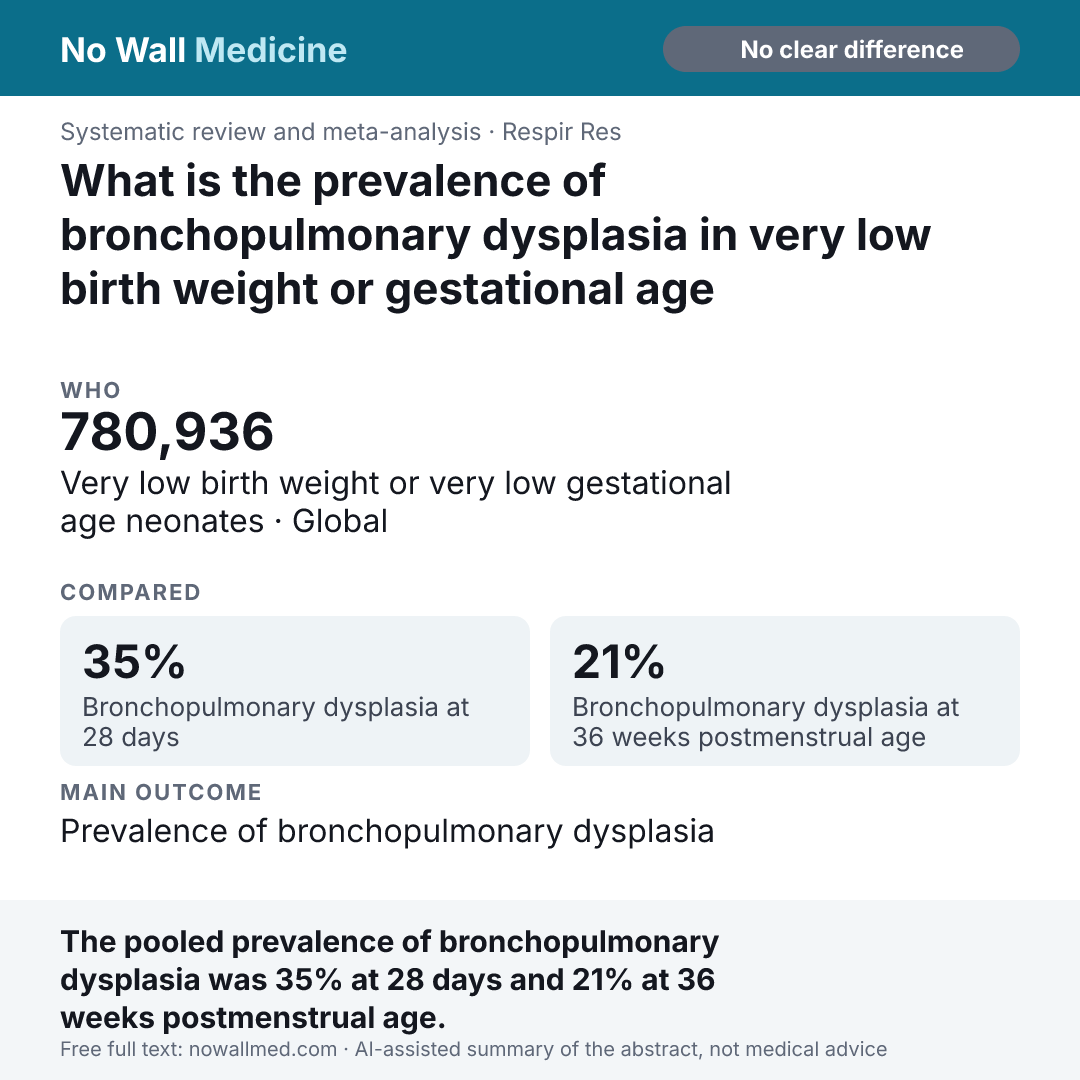
Rates of bronchopulmonary dysplasia in very low birth weight neonates: a systematic review and meta-analysis
Systematic review and meta-analysisNo clear difference
What is the prevalence of bronchopulmonary dysplasia in very low birth weight or gestational age neonates?
Who
780,936
Very low birth weight or very low gestational age neonates · Global
Compared
35%Bronchopulmonary dysplasia at 28 days (95% CI, 28-42%)
21%Bronchopulmonary dysplasia at 36 weeks postmenstrual age (95% CI, 19-24%)
Main outcome
Prevalence of bronchopulmonary dysplasia
Bottom line: The pooled prevalence of bronchopulmonary dysplasia was 35% at 28 days and 21% at 36 weeks postmenstrual age.
Respir Res · 2024-05-24 · Save PNG
Digital Behavior Change Intervention Designs for Habit Formation: Systematic Review
Systematic reviewMixed results
What are the design implementations of habit formation techniques in digital behavior change interventions?
Who
41
Digital behavior change interventions for physical activity
Compared
Existing studies: Most use explicit interaction and personalized habit formation techniques
Implicit interaction design: Lacking in the reviewed studies
Main outcome
Design implementations of behavior change techniques and habit formation strategies
Bottom line: Digital interventions favor explicit and personalized strategies, but lack implicit interaction design strategies for habit formation.
J Med Internet Res · 2024-05-24 · Save PNG

Nipple Adenoma: Systematic Review of Literature
Systematic reviewMixed results
What are the clinical characteristics, treatment, and outcomes of nipple adenomas?
Who
387
Patients with nipple adenomas
Compared
Sole nipple adenoma: 1.79% malignancy development
Co-diagnosis with other conditions: 33.33% malignancy development
Main outcome
Clinical presentation, treatment, recurrence, and malignancy development
Bottom line: Nipple adenomas are mostly benign, but co-diagnosis with other conditions significantly increases malignancy risk.
Limitation: Predominance of case reports may introduce bias.
Plast Reconstr Surg Glob Open · 2024-05-24 · Save PNG

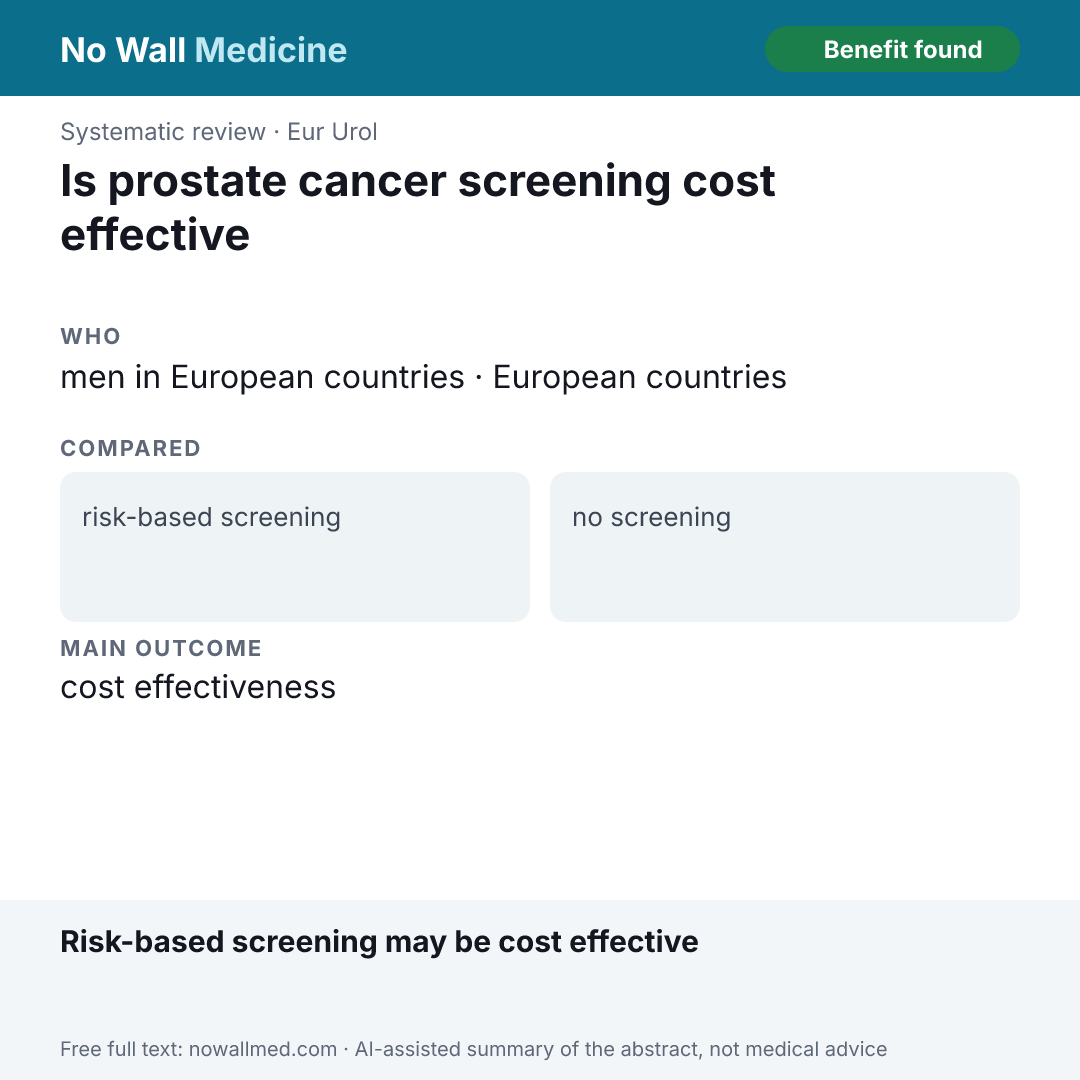
Systematic Review on the Cost Effectiveness of Prostate Cancer Screening in Europe
Systematic reviewBenefit found
Is prostate cancer screening cost effective
Who
men in European countries · European countries
Compared
risk-based screening
no screening
Main outcome
cost effectiveness
Bottom line: Risk-based screening may be cost effective
Limitation: knowledge gap remains
Eur Urol · 2024-05-23 · Save PNG
Accuracy of Salivary Circulating Tumor Human Papillomavirus DNA in Detecting Oropharyngeal Cancer: A Systematic Review and Meta-Analysis
Systematic review and meta-analysisMixed results
How accurate is salivary circulating tumor human papillomavirus DNA for detecting oropharyngeal cancer?
Who
263
Patients with possible or diagnosed HPV-related oropharyngeal cancer
Compared
Salivary ctHPV DNA testing: sensitivity 64% (95% CI, 36%-85%)
Salivary ctHPV DNA testing: specificity 89% (95% CI, 46%-99%)
Main outcome
Sensitivity, specificity, and diagnostic accuracy
Result: area under the curve 0.80
Bottom line: Salivary circulating tumor human papillomavirus DNA is an acceptably specific test for detecting HPV-associated oropharyngeal cancer.
JAMA Otolaryngol · 2024-05-23 · Save PNG

Individualized prediction models in ADHD: a systematic review and meta-regression
Systematic review and meta-regressionMixed results
What factors impact the performance of prediction models in attention deficit hyperactivity disorder?
Who
100 prediction models for attention deficit hyperactivity disorder
Compared
Models including clinical predictors
Models not including clinical predictors
Main outcome
Area under the curve of the prediction models
Result: β = 6.54, p = 0.007
Bottom line: Clinical predictors improve model performance, but no models are currently ready for clinical practice implementation.
Limitation: Sixty-seven percent of models were considered at high risk of bias.
Mol Psychiatry · 2024-05-23 · Save PNG

Intravenous versus perineural dexamethasone to prolong analgesia after interscalene brachial plexus block: a systematic review with meta-analysis and trial sequential analysis
Systematic review and meta-analysisBenefit, low certainty
Does perineural or intravenous dexamethasone prolong analgesia after interscalene brachial plexus block?
Who
1145
Patients receiving interscalene brachial plexus block
Compared
Perineural dexamethasone
Intravenous dexamethasone
Main outcome
Duration of analgesia
Result: mean difference 122 (95% CI 62-183) min
Bottom line: Perineural dexamethasone increases analgesia duration by 2 hours, but intravenous administration is recommended due to low evidence quality.
Limitation: Moderate inconsistency and serious publication bias
Br J Anaesth · 2024-05-23 · Save PNG

A systematic review and meta-analysis of nutritional and dietary interventions in randomized controlled trials for skin symptoms in children with atopic dermatitis and without food allergy: An EAACI task force report
Systematic review and meta-analysis of 27 randomized controlled trialsBenefit found
Do dietary interventions reduce skin symptoms in children with atopic dermatitis without food allergies?
Who
Children with atopic dermatitis without food allergies
Compared
Probiotics or probiotics combined with prebiotics: significant reduction in SCORAD scores
Other dietary interventions
Main outcome
SCORAD scores for atopic dermatitis clinical expression
Bottom line: Probiotics or probiotics combined with prebiotics significantly reduce skin symptom scores in children without food allergies.
Limitation: Evidence for other dietary interventions remains limited.
Allergy · 2024-05-23 · Save PNG

The role of information systems in emergency department decision-making-a literature review
Systematic reviewMixed results
How do timing and mode of delivery influence information systems effectiveness in emergency departments?
Who
Healthcare providers in the emergency department
Compared
Active interventions during heuristic decision-making: ineffective
Passive interventions during heuristic decision-making: generally improved outcomes
Active interventions during analytical phase: improved outcomes
Passive interventions during analytical phase: consistently improved outcomes
Main outcome
process, economic, and clinical outcomes
Bottom line: Information system effectiveness depends on whether delivery is active or passive and the timing of decision-making.
J Am Med Inform Assoc · 2024-05-23 · Save PNG

Editor's Choice - Prognostic Factors and Models to Predict Mortality Outcomes in Patients with Peripheral Arterial Disease: A Systematic Review
Systematic reviewMixed results
Prognostic factors for mortality in PAD
Who
Patients with peripheral arterial disease
Compared
Prognostic factors
Prognostic models: > 70%
Main outcome
Mortality outcomes
Bottom line: Age, sex, and others predict mortality in PAD
Limitation: Heterogeneity and risk of bias
Eur J Vasc Endovasc Surg · 2024-05-23 · Save PNG

Triglyceride-glucose index and health outcomes: an umbrella review of systematic reviews with meta-analyses of observational studies
Umbrella review of systematic reviews and meta-analysesBenefit found
What is the association between triglyceride-glucose index and health outcomes?
Who
Various populations across 29 meta-analyses
Compared
High triglyceride-glucose index: 87.4% of associations were statistically significant
Lowest triglyceride-glucose index
Main outcome
Diverse health outcomes
Bottom line: High triglyceride-glucose index is positively associated with various diseases, including stroke and coronary artery disease.
Cardiovasc Diabetol · 2024-05-23 · Save PNG

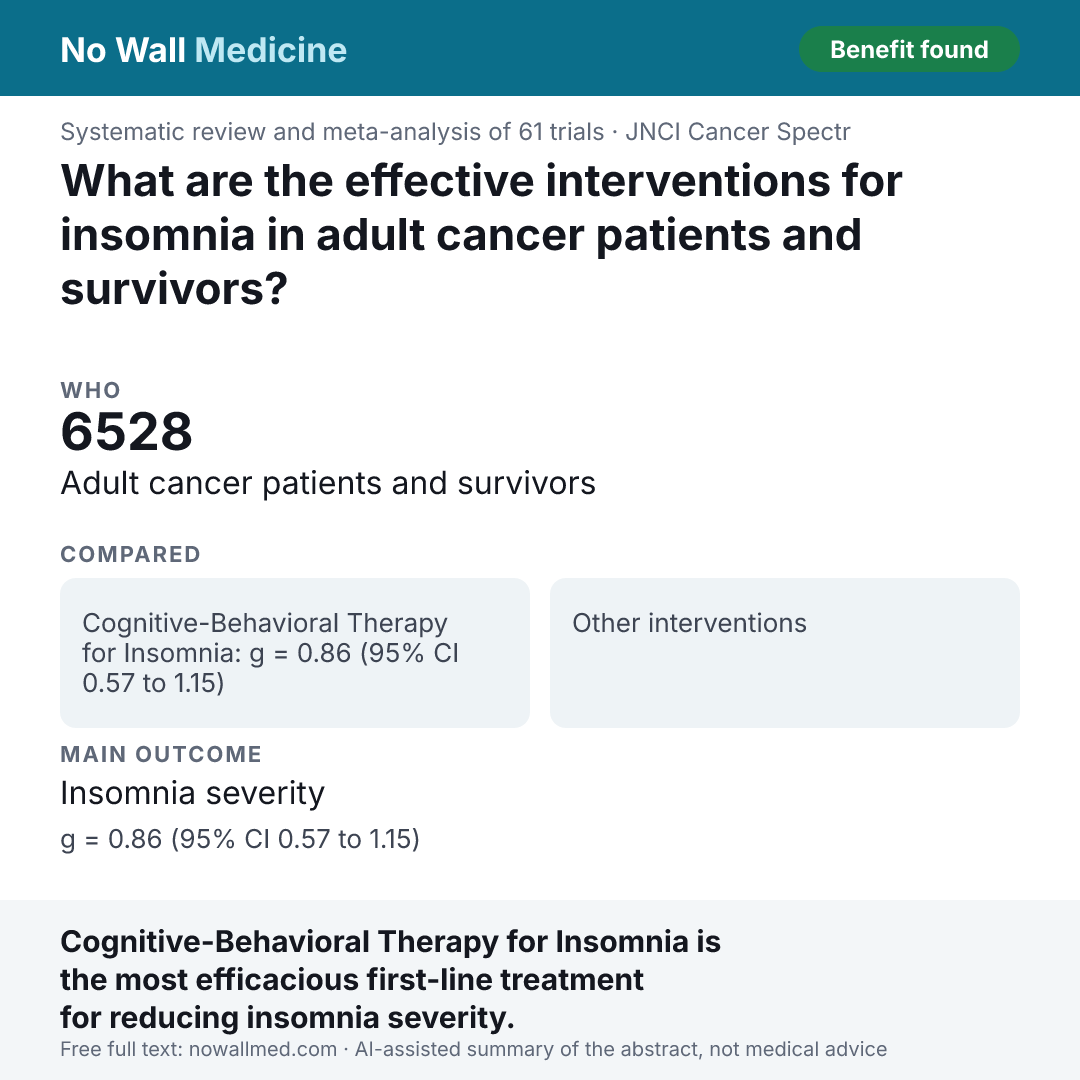
Interventions for insomnia in cancer patients and survivors-a comprehensive systematic review and meta-analysis
Systematic review and meta-analysis of 61 trialsBenefit found
What are the effective interventions for insomnia in adult cancer patients and survivors?
Who
6528
Adult cancer patients and survivors
Compared
Cognitive-Behavioral Therapy for Insomnia: g = 0.86 (95% CI 0.57 to 1.15)
Other interventions
Main outcome
Insomnia severity
Result: g = 0.86 (95% CI 0.57 to 1.15)
Bottom line: Cognitive-Behavioral Therapy for Insomnia is the most efficacious first-line treatment for reducing insomnia severity.
JNCI Cancer Spectr · 2024-05-23 · Save PNG
Role of nebulised magnesium sulfate in treating acute asthma in children: a systematic review and meta-analysis
Meta-analysis of 10 randomized controlled trialsNo clear difference
Does nebulised magnesium sulfate improve outcomes in children with acute asthma?
Who
2301
Children presenting with acute asthma exacerbation
Compared
Nebulised magnesium sulfate
Placebo
Main outcome
Composite Asthma Severity Score and peak expiratory flow rate
Result: standardised mean difference -0.09 (95% CI -0.2 to +0.02)
Bottom line: Nebulised magnesium sulfate does not reduce asthma severity or hospitalisation needs, despite slightly better lung functions.
Limitation: Low-certainty evidence
BMJ Paediatr Open · 2024-05-23 · Save PNG