Visual abstracts
New randomized trials and meta-analyses from leading journals at a glance: who was studied, what was compared, and what was found. Every paper is free to read in full.
All specialtiesCardiology 4765Oncology 4048Gastroenterology & Hepatology 1906Infectious Disease 3759Neurology 1874Psychiatry & Mental Health 2217Pulmonology 2046Critical Care 1323Endocrinology & Diabetes 2545Pediatrics 2891Surgery 2482Orthopedics & Sports Medicine 917Neurosurgery 526Cardiothoracic & Vascular Surgery 657Plastic & Reconstructive Surgery 574Nephrology 1108Rheumatology 810Hematology 1090Dermatology 611Ophthalmology 532Obstetrics & Gynecology 1646Public & Global Health 1037Radiology & Imaging 620Anesthesiology 958Urology 745ENT (Otolaryngology) 494Emergency Medicine 481Allergy & Immunology 309Geriatrics 973Family Medicine & Primary Care 534Medical Genetics & Genomics 659Pathology & Laboratory Medicine 156Physical Medicine & Rehabilitation 736Palliative Care 421Nutrition 1561Digital Health & AI 2136General Medicine 316
Comparison of learning curves and related postoperative indicators between endoscopic and robotic thyroidectomy: a systematic review and meta-analysis
Meta-analysis of 33 studiesBenefit found
How do learning curves and perioperative outcomes compare between endoscopic and robotic thyroidectomy?
Who
Patients undergoing endoscopic or robotic thyroidectomy
Compared
Endoscopic thyroidectomy: drainage volume WMD=-17.56 [30.22, -4.49]
Robotic thyroidectomy: drainage volume WMD=-17.56 [30.22, -4.49]
Main outcome
Learning curve and perioperative outcomes
Result: incidence-rate ratios 0.64 [0.57-0.72] for number of surgeries
Bottom line: Robotic thyroidectomy has a smaller learning curve and better perioperative outcomes than endoscopic thyroidectomy after reaching the stable stage.
Int J Surg · 2025-01-01 · Save PNG

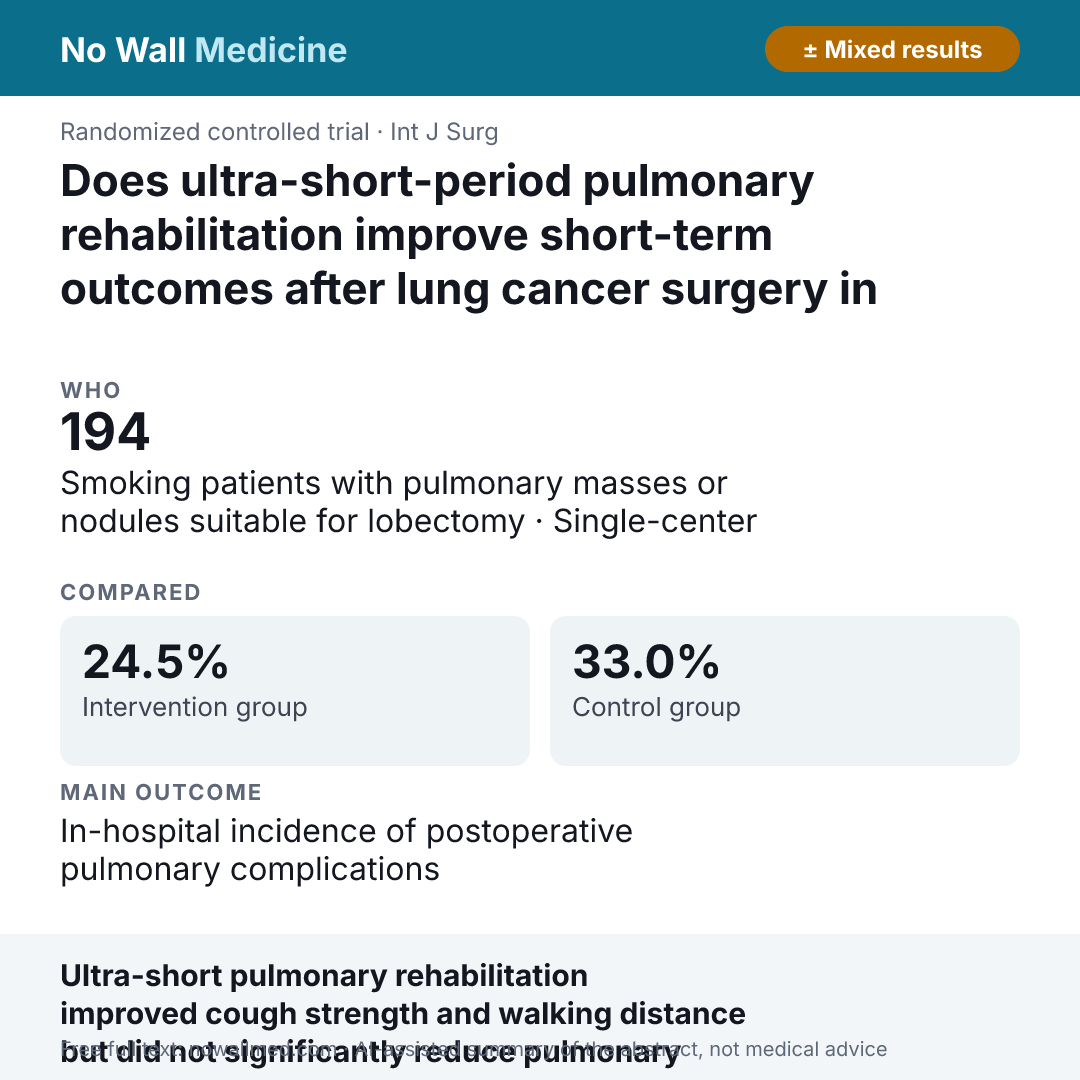
Ultra-short-period perioperative pulmonary rehabilitation on short-term outcomes after surgery in smoking patients with lung cancer: a randomized clinical trial
Randomized controlled trialMixed results
Does ultra-short-period pulmonary rehabilitation improve short-term outcomes after lung cancer surgery in smokers?
Who
194
Smoking patients with pulmonary masses or nodules suitable for lobectomy · Single-center
Compared
24.5%Intervention group
33.0%Control group
Main outcome
In-hospital incidence of postoperative pulmonary complications
Bottom line: Ultra-short pulmonary rehabilitation improved cough strength and walking distance but did not significantly reduce pulmonary complications.
Int J Surg · 2025-01-01 · Save PNG
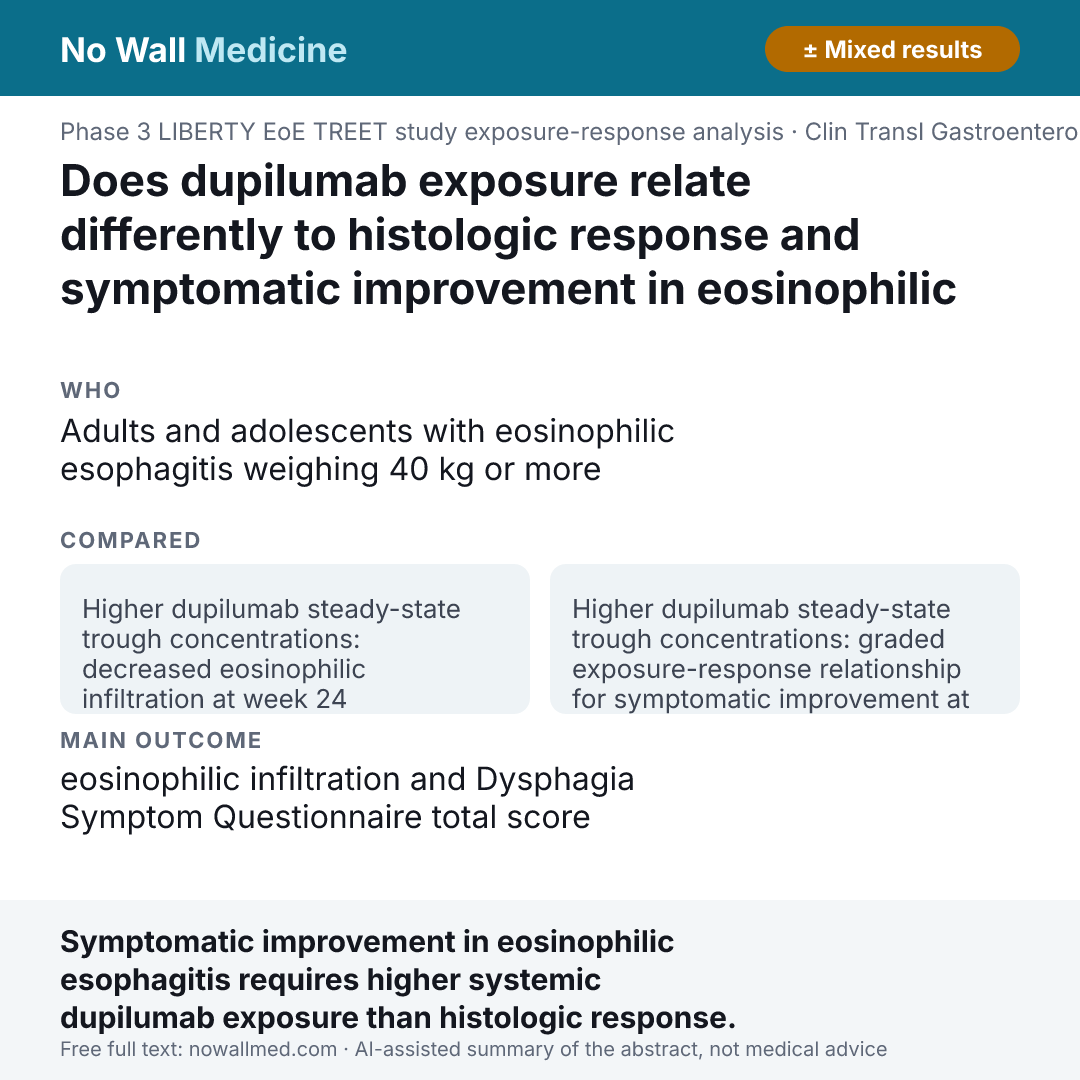
Symptomatic Improvement in Adults and Adolescents With Eosinophilic Esophagitis Requires Higher Systemic Dupilumab Exposure Than Histologic Response
Phase 3 LIBERTY EoE TREET study exposure-response analysisMixed results
Does dupilumab exposure relate differently to histologic response and symptomatic improvement in eosinophilic esophagitis?
Who
Adults and adolescents with eosinophilic esophagitis weighing 40 kg or more
Compared
Higher dupilumab steady-state trough concentrations: decreased eosinophilic infiltration at week 24
Higher dupilumab steady-state trough concentrations: graded exposure-response relationship for symptomatic improvement at week 24
Main outcome
eosinophilic infiltration and Dysphagia Symptom Questionnaire total score
Bottom line: Symptomatic improvement in eosinophilic esophagitis requires higher systemic dupilumab exposure than histologic response.
Clin Transl Gastroenterol · 2025-01-01 · Save PNG
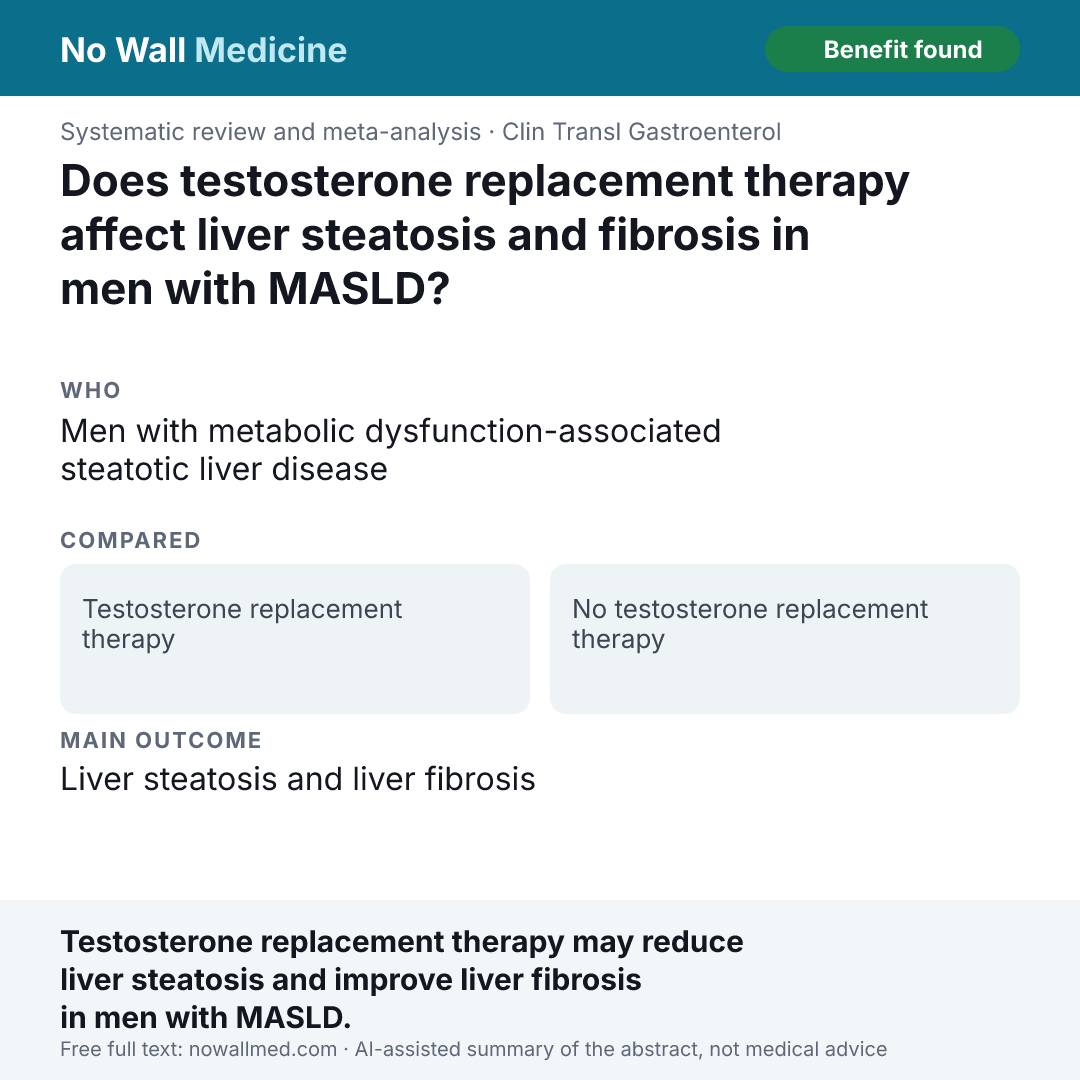
The Effects of Testosterone Replacement Therapy in Adult Men With Metabolic Dysfunction-Associated Steatotic Liver Disease: A Systematic Review and Meta-analysis
Systematic review and meta-analysisBenefit found
Does testosterone replacement therapy affect liver steatosis and fibrosis in men with MASLD?
Who
Men with metabolic dysfunction-associated steatotic liver disease
Compared
Testosterone replacement therapy
No testosterone replacement therapy
Main outcome
Liver steatosis and liver fibrosis
Bottom line: Testosterone replacement therapy may reduce liver steatosis and improve liver fibrosis in men with MASLD.
Limitation: Studies were heterogeneous in population characteristics, treatment modalities, endpoints, and follow-up.
Clin Transl Gastroenterol · 2025-01-01 · Save PNG
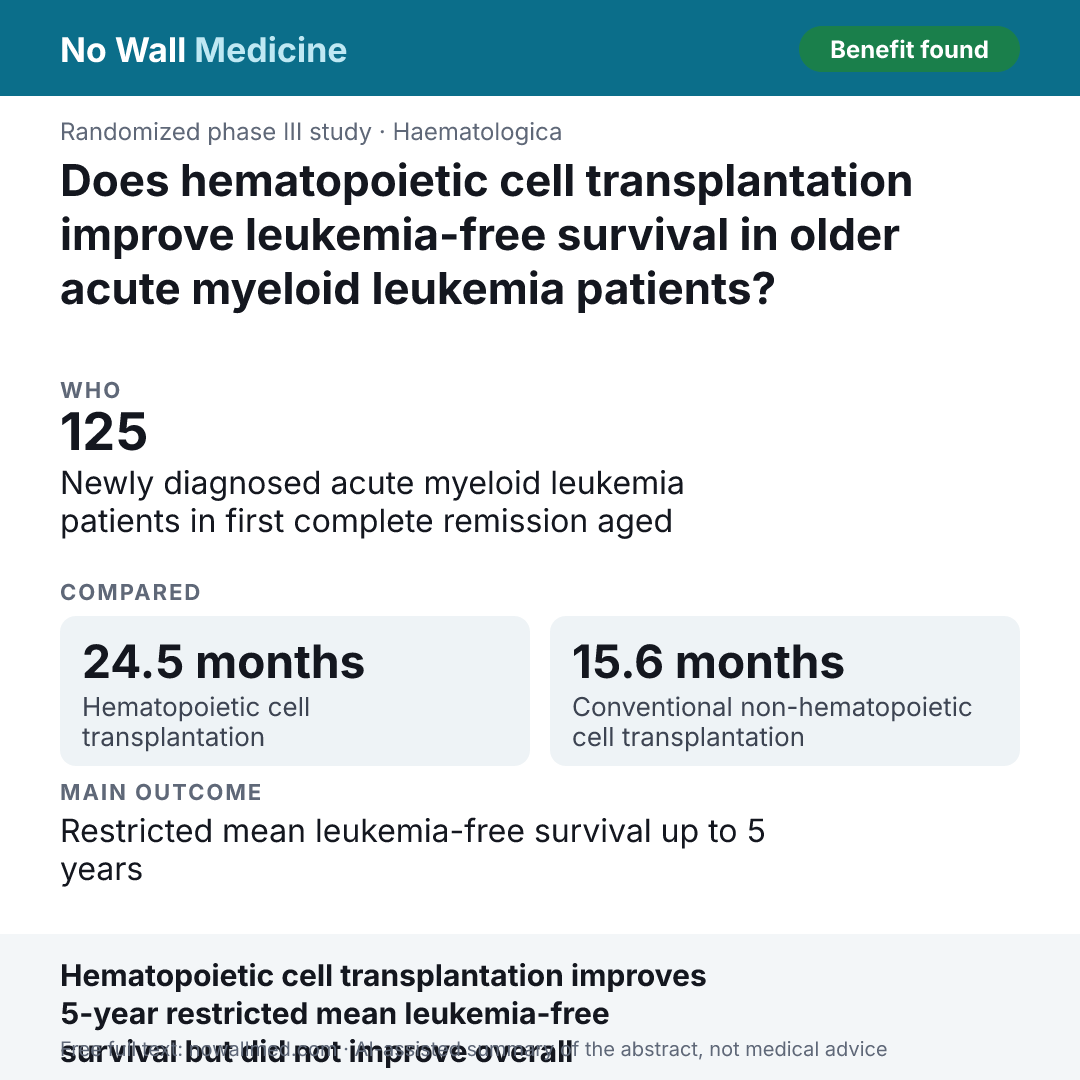
Hematopoietic cell transplantation for older acute myeloid leukemia patients in first complete remission: results of a randomized phase III study
Randomized phase III studyBenefit found
Does hematopoietic cell transplantation improve leukemia-free survival in older acute myeloid leukemia patients?
Who
125
Newly diagnosed acute myeloid leukemia patients in first complete remission aged 60-75 years
Compared
24.5 monthsHematopoietic cell transplantation (95% CI: 18.9-30.1)
15.6 monthsConventional non-hematopoietic cell transplantation (95% CI: 10.4-20.8)
Main outcome
Restricted mean leukemia-free survival up to 5 years
Result: 24.5 months (95% CI: 18.9-30.1) vs 15.6 months (95% CI: 10.4-20.8)
Bottom line: Hematopoietic cell transplantation improves 5-year restricted mean leukemia-free survival but did not improve overall survival during the study period.
Haematologica · 2025-01-01 · Save PNG
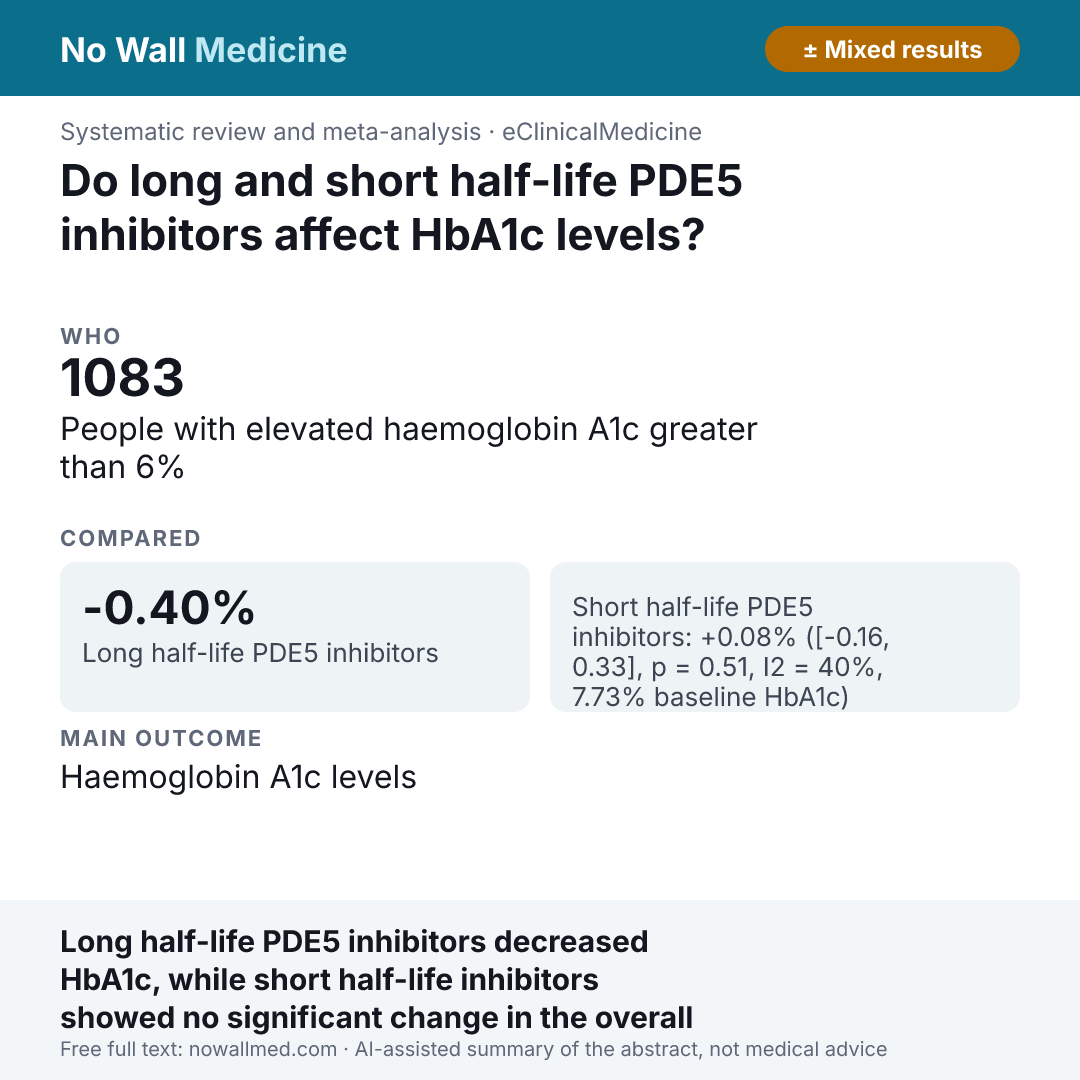
Effect of long and short half-life PDE5 inhibitors on HbA1c levels: a systematic review and meta-analysis
Systematic review and meta-analysisMixed results
Do long and short half-life PDE5 inhibitors affect HbA1c levels?
Who
1083
People with elevated haemoglobin A1c greater than 6%
Compared
-0.40%Long half-life PDE5 inhibitors ([-0.66, -0.14], p = 0.002, I2 = 82%, 7.70% baseline HbA1c)
Short half-life PDE5 inhibitors: +0.08% ([-0.16, 0.33], p = 0.51, I2 = 40%, 7.73% baseline HbA1c)
Main outcome
Haemoglobin A1c levels
Bottom line: Long half-life PDE5 inhibitors decreased HbA1c, while short half-life inhibitors showed no significant change in the overall analysis.
Limitation: Variable risk of biases, homogeneity, and sample sizes in the included studies.
eClinicalMedicine · 2024-12-31 · Save PNG
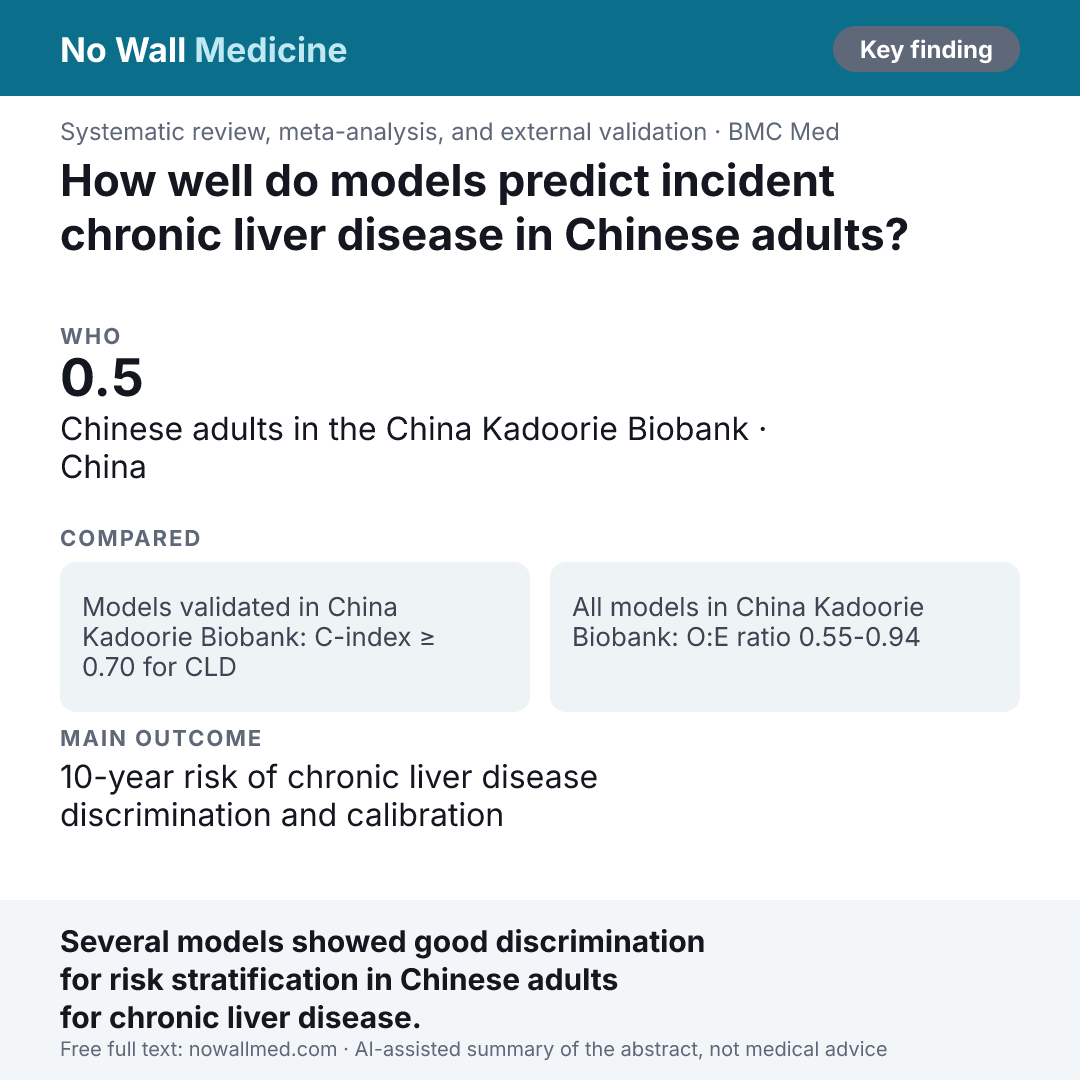
Comparison of models to predict incident chronic liver disease: a systematic review and external validation in Chinese adults
Systematic review, meta-analysis, and external validationKey finding
How well do models predict incident chronic liver disease in Chinese adults?
Who
0.5
Chinese adults in the China Kadoorie Biobank · China
Compared
Models validated in China Kadoorie Biobank: C-index ≥ 0.70 for CLD
All models in China Kadoorie Biobank: O:E ratio 0.55-0.94
Main outcome
10-year risk of chronic liver disease discrimination and calibration
Bottom line: Several models showed good discrimination for risk stratification in Chinese adults for chronic liver disease.
Limitation: All models tended to overestimate the risk in the validation cohort.
BMC Med · 2024-12-31 · Save PNG
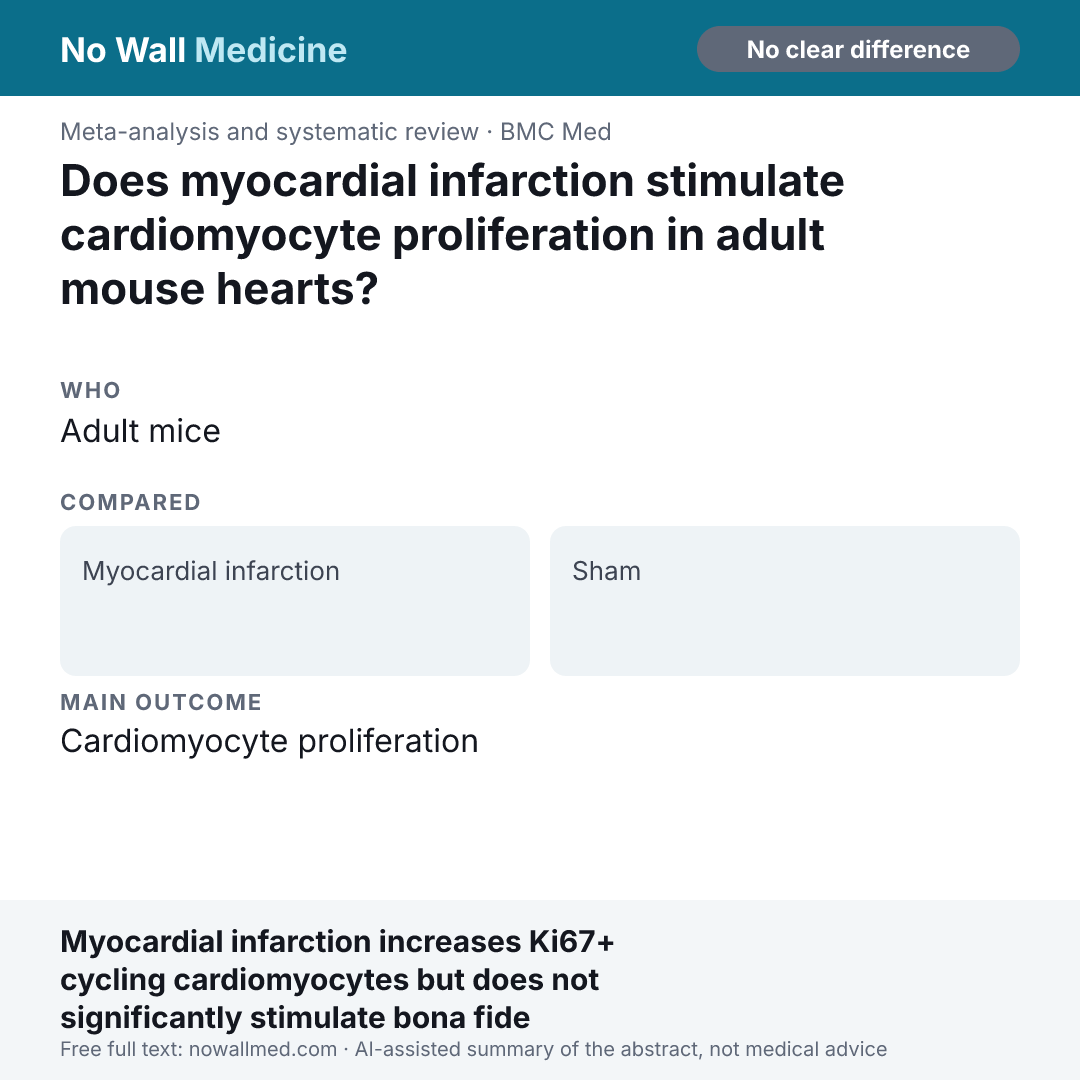
A meta-analysis and systematic review of myocardial infarction-induced cardiomyocyte proliferation in adult mouse heart
Meta-analysis and systematic reviewNo clear difference
Does myocardial infarction stimulate cardiomyocyte proliferation in adult mouse hearts?
Who
Adult mice
Compared
Myocardial infarction
Sham
Main outcome
Cardiomyocyte proliferation
Bottom line: Myocardial infarction increases Ki67+ cycling cardiomyocytes but does not significantly stimulate bona fide cardiomyocyte proliferation.
Limitation: Methodological shortages in several studies prevented demonstration of bona fide cardiomyocyte proliferation.
BMC Med · 2024-12-31 · Save PNG
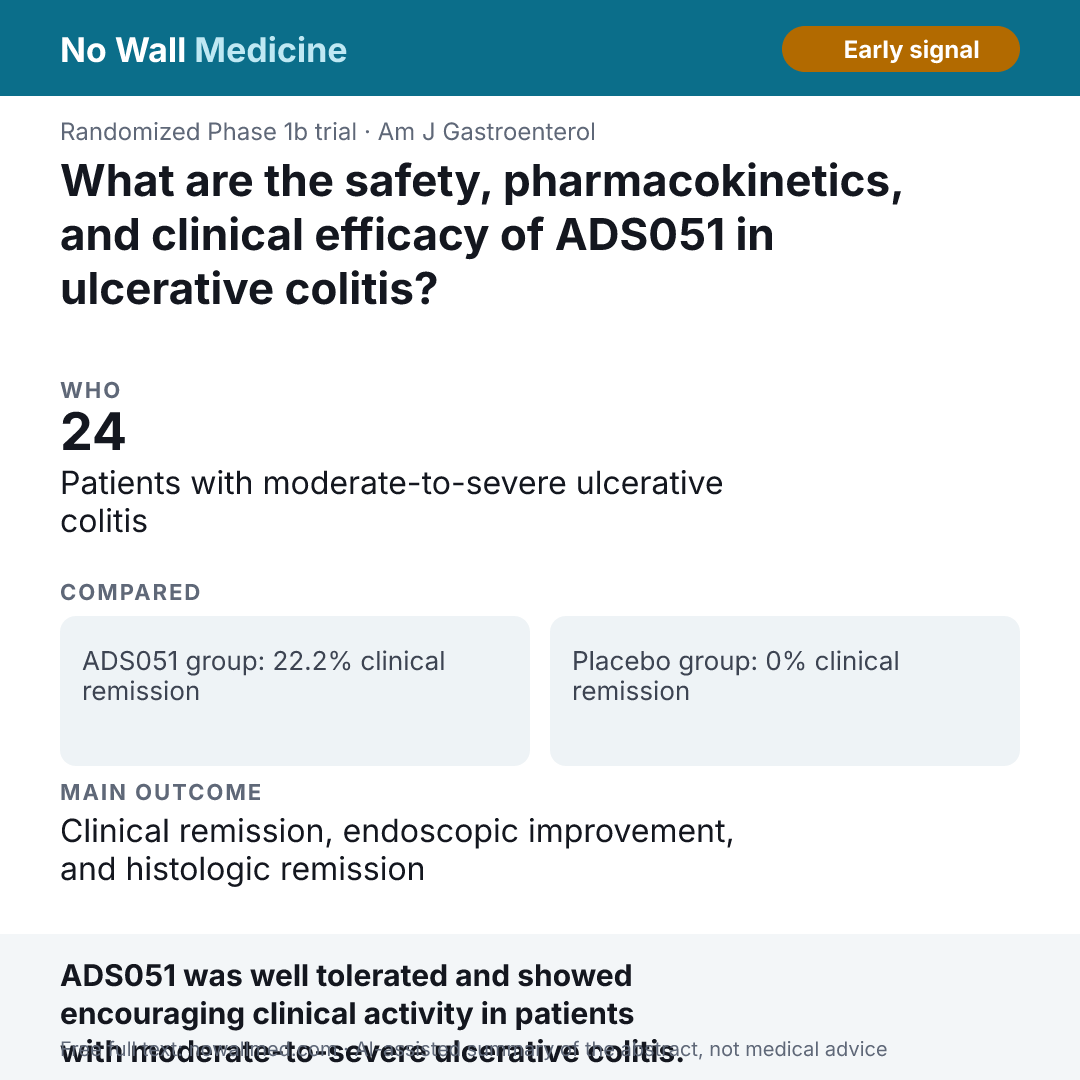
Safety, Pharmacokinetics, and Clinical Efficacy of ADS051, a Neutrophil Modulator, in Ulcerative Colitis: Results of a Randomized Phase 1b Trial
Randomized Phase 1b trialEarly signal
What are the safety, pharmacokinetics, and clinical efficacy of ADS051 in ulcerative colitis?
Who
24
Patients with moderate-to-severe ulcerative colitis
Compared
ADS051 group: 22.2% clinical remission
Placebo group: 0% clinical remission
Main outcome
Clinical remission, endoscopic improvement, and histologic remission
Bottom line: ADS051 was well tolerated and showed encouraging clinical activity in patients with moderate-to-severe ulcerative colitis.
Am J Gastroenterol · 2024-12-31 · Save PNG
What is the most effective antibiotic monotherapy for severe Pseudomonas aeruginosa infection? A systematic review and meta-analysis of randomized controlled trials
Systematic review and meta-analysis of randomized controlled trialsNo clear difference
What is the most effective antibiotic monotherapy for severe Pseudomonas aeruginosa infection?
Who
1681
Hospitalized adults with microbiologically confirmed severe Pseudomonas aeruginosa infections
Compared
All-cause mortality comparisons: no difference
Carbapenems versus piperacillin-tazobactam for pneumonia clinical failure: RR, 2.55 (95% CI, 1.29-5.03)
Carbapenems versus other comparators microbiological failure: RR, 1.24 (95% CI, 1.02-1.51)
Imipenem resistance versus comparators: RR, 2.33 (95% CI, 1.61-3.38)
Main outcome
30-day mortality
Bottom line: No difference in all-cause mortality was found for any direct antibiotic comparison in severe Pseudomonas aeruginosa infections.
Limitation: All subgroup analyses were underpowered due to the low number of studies reporting outcomes of interest.
Clin Microbiol Infect · 2024-12-31 · Save PNG

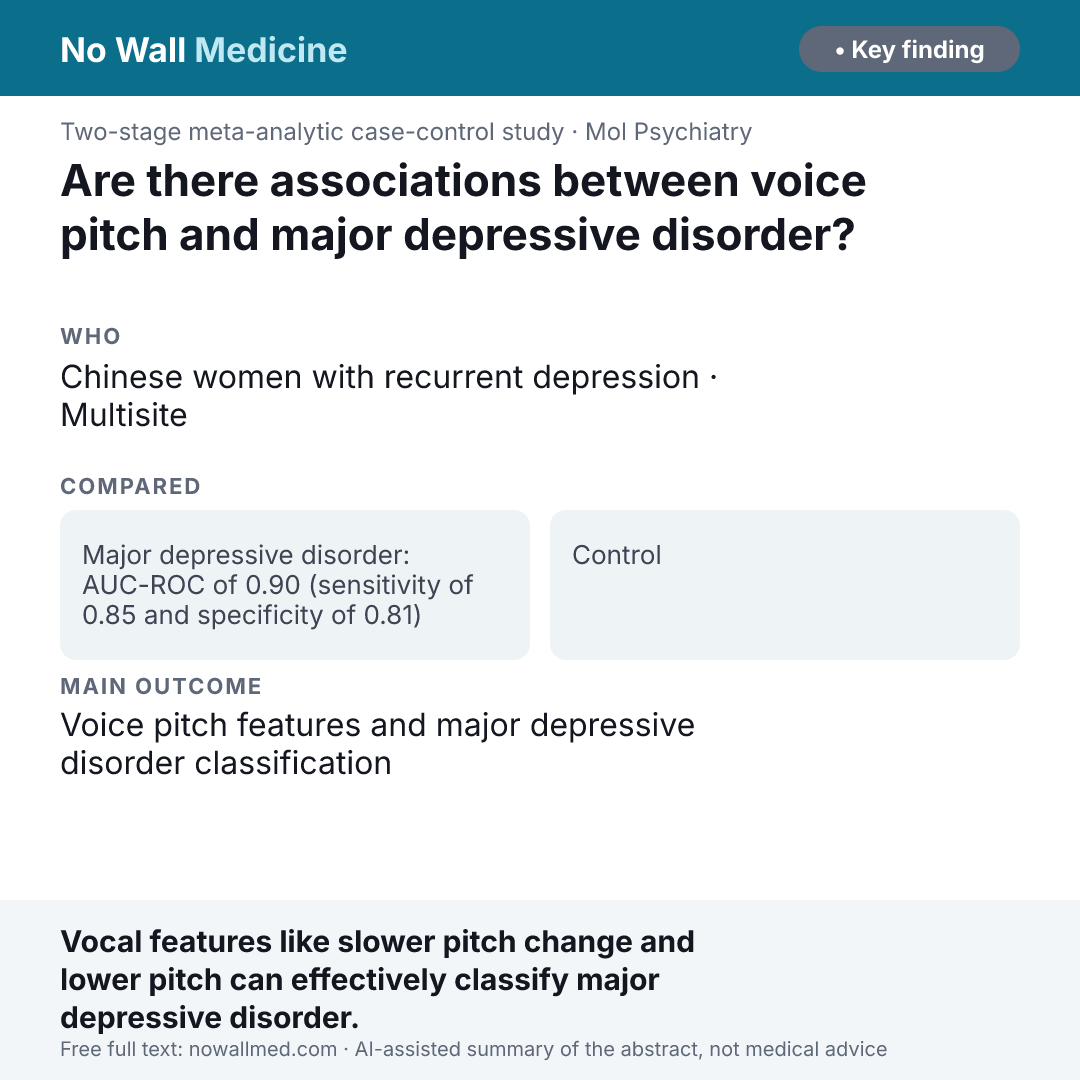
Unraveling the associations between voice pitch and major depressive disorder: a multisite genetic study
Two-stage meta-analytic case-control studyKey finding
Are there associations between voice pitch and major depressive disorder?
Who
Chinese women with recurrent depression · Multisite
Compared
Major depressive disorder: AUC-ROC of 0.90 (sensitivity of 0.85 and specificity of 0.81)
Control
Main outcome
Voice pitch features and major depressive disorder classification
Bottom line: Vocal features like slower pitch change and lower pitch can effectively classify major depressive disorder.
Mol Psychiatry · 2024-12-31 · Save PNG
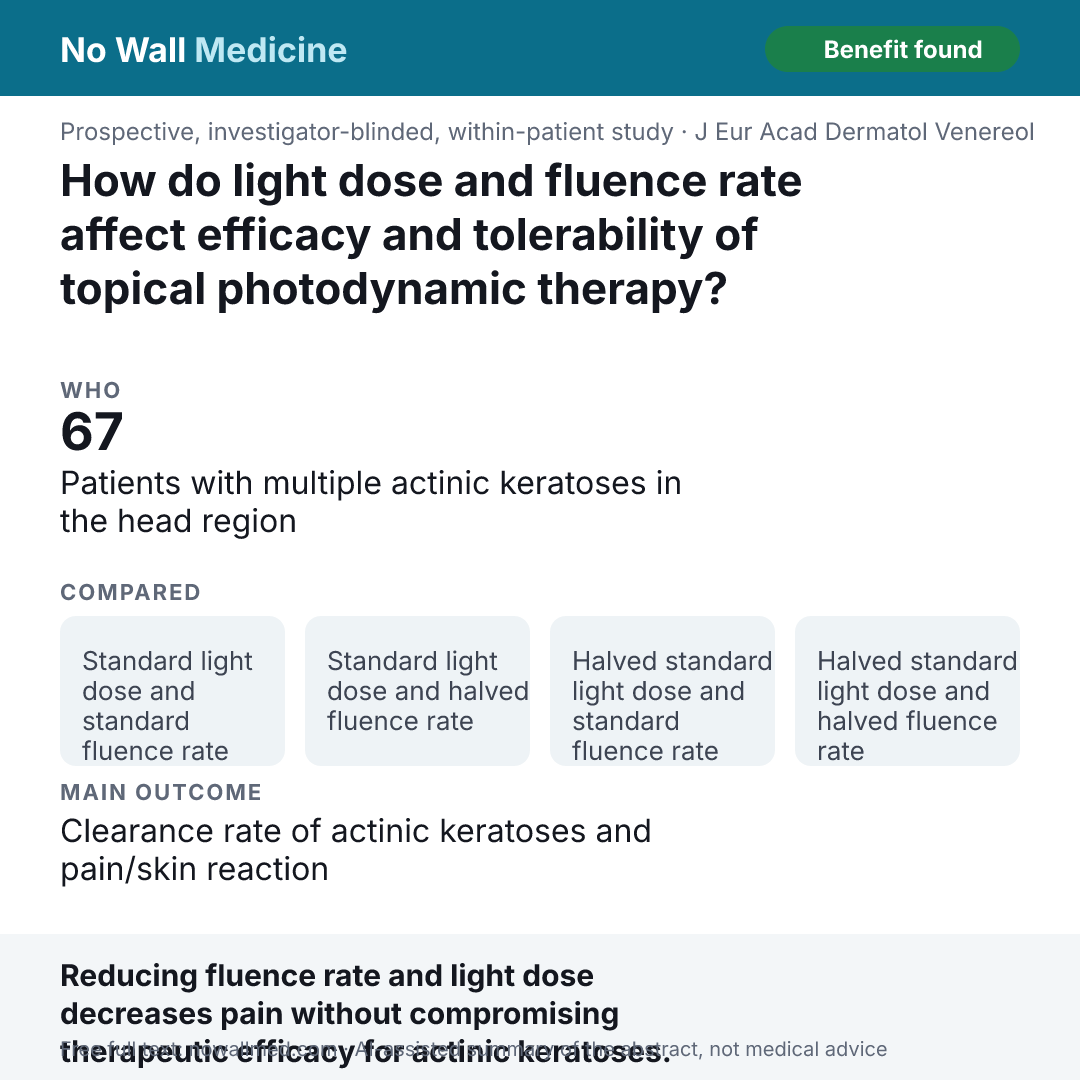
Impact of light dose and fluence rate on the efficacy and tolerability of topical 5-ALA photodynamic therapy for actinic keratoses: A randomized, controlled, observer-blinded intrapatient comparison study
Prospective, investigator-blinded, within-patient studyBenefit found
How do light dose and fluence rate affect efficacy and tolerability of topical photodynamic therapy?
Who
67
Patients with multiple actinic keratoses in the head region
Compared
Standard light dose and standard fluence rate
Standard light dose and halved fluence rate
Halved standard light dose and standard fluence rate
Halved standard light dose and halved fluence rate
Main outcome
Clearance rate of actinic keratoses and pain/skin reaction
Bottom line: Reducing fluence rate and light dose decreases pain without compromising therapeutic efficacy for actinic keratoses.
J Eur Acad Dermatol Venereol · 2024-12-31 · Save PNG
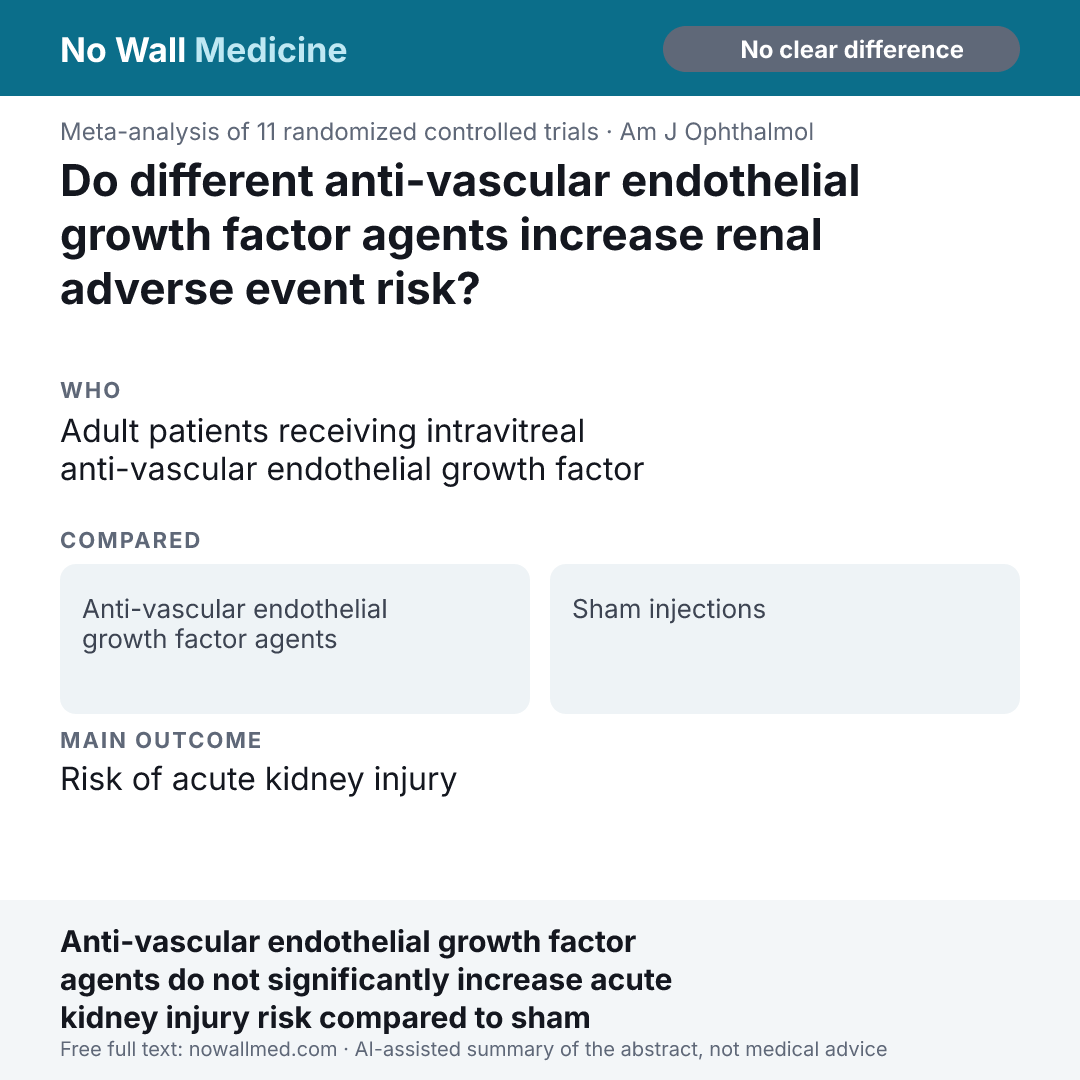
Comparison of Renal Adverse Events Between Intravitreal Anti-Vascular Endothelial Growth Factor Agents: A Meta-Analysis
Meta-analysis of 11 randomized controlled trialsNo clear difference
Do different anti-vascular endothelial growth factor agents increase renal adverse event risk?
Who
Adult patients receiving intravitreal anti-vascular endothelial growth factor injections
Compared
Anti-vascular endothelial growth factor agents
Sham injections
Main outcome
Risk of acute kidney injury
Bottom line: Anti-vascular endothelial growth factor agents do not significantly increase acute kidney injury risk compared to sham injections.
Am J Ophthalmol · 2024-12-31 · Save PNG
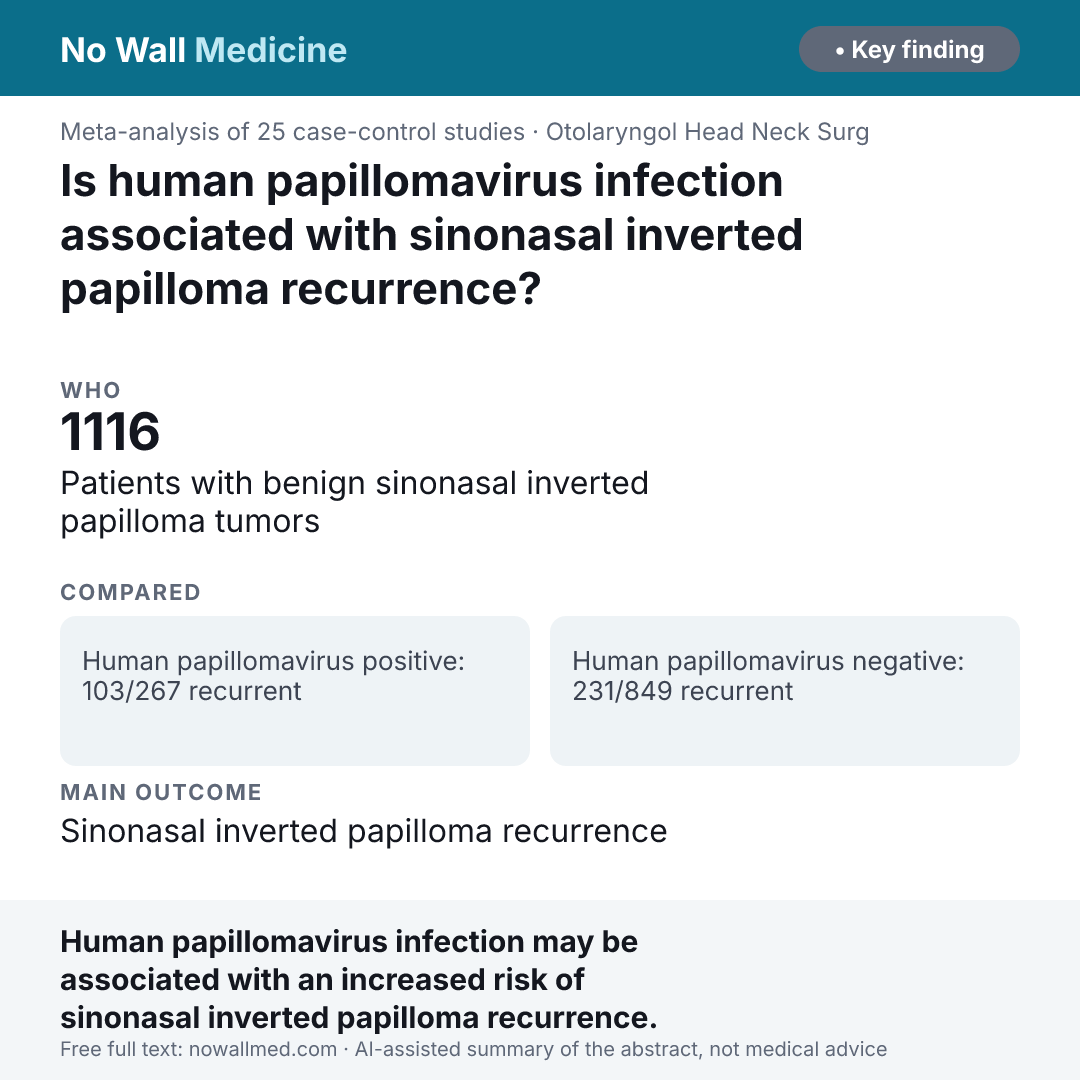
Human Papilloma Virus Infection and Sinonasal Inverted Papilloma Recurrence: A Meta-Analysis
Meta-analysis of 25 case-control studiesKey finding
Is human papillomavirus infection associated with sinonasal inverted papilloma recurrence?
Who
1116
Patients with benign sinonasal inverted papilloma tumors
Compared
Human papillomavirus positive: 103/267 recurrent
Human papillomavirus negative: 231/849 recurrent
Main outcome
Sinonasal inverted papilloma recurrence
Result: odds ratio 2.05 (95% CI 1.31-3.19)
Bottom line: Human papillomavirus infection may be associated with an increased risk of sinonasal inverted papilloma recurrence.
Limitation: Correlation was variable among recently published studies requiring additional investigation.
Otolaryngol Head Neck Surg · 2024-12-31 · Save PNG
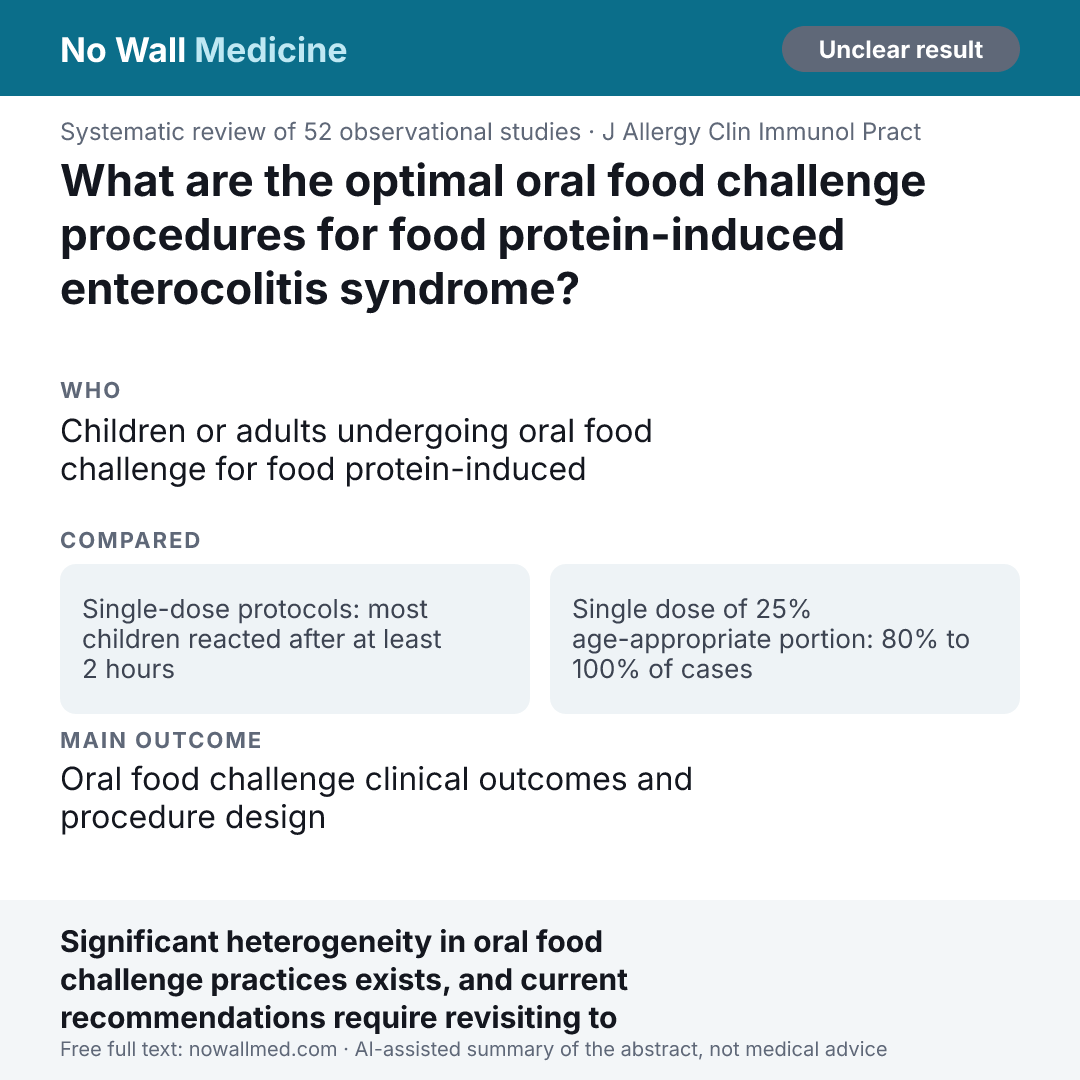
Oral Food Challenge Protocols in Food Protein-Induced Enterocolitis Syndrome: A Systematic Review
Systematic review of 52 observational studiesUnclear result
What are the optimal oral food challenge procedures for food protein-induced enterocolitis syndrome?
Who
Children or adults undergoing oral food challenge for food protein-induced enterocolitis syndrome
Compared
Single-dose protocols: most children reacted after at least 2 hours
Single dose of 25% age-appropriate portion: 80% to 100% of cases
Main outcome
Oral food challenge clinical outcomes and procedure design
Bottom line: Significant heterogeneity in oral food challenge practices exists, and current recommendations require revisiting to improve safety and accuracy.
Limitation: Methodological heterogeneity and insufficient outcome reporting prevented assessment of protocol characteristics associated with safer outcomes.
J Allergy Clin Immunol Pract · 2024-12-31 · Save PNG
Cost Outcomes of Virtual Surgical Planning in Head and Neck Reconstruction: A Systematic Review
Systematic reviewBenefit found
Is virtual surgical planning cost-beneficial in head and neck reconstruction?
Who
733
Patients undergoing head and neck reconstruction
Compared
Virtual surgical planning: 78% found cost savings or comparable to freehand surgery
Freehand surgery
Main outcome
Economic viability and cost outcomes
Bottom line: Virtual surgical planning is potentially cost-beneficial compared to traditional unplanned surgery.
Limitation: Substantial heterogeneity amongst methods and outcome measures impedes generalizability.
Head Neck · 2024-12-31 · Save PNG

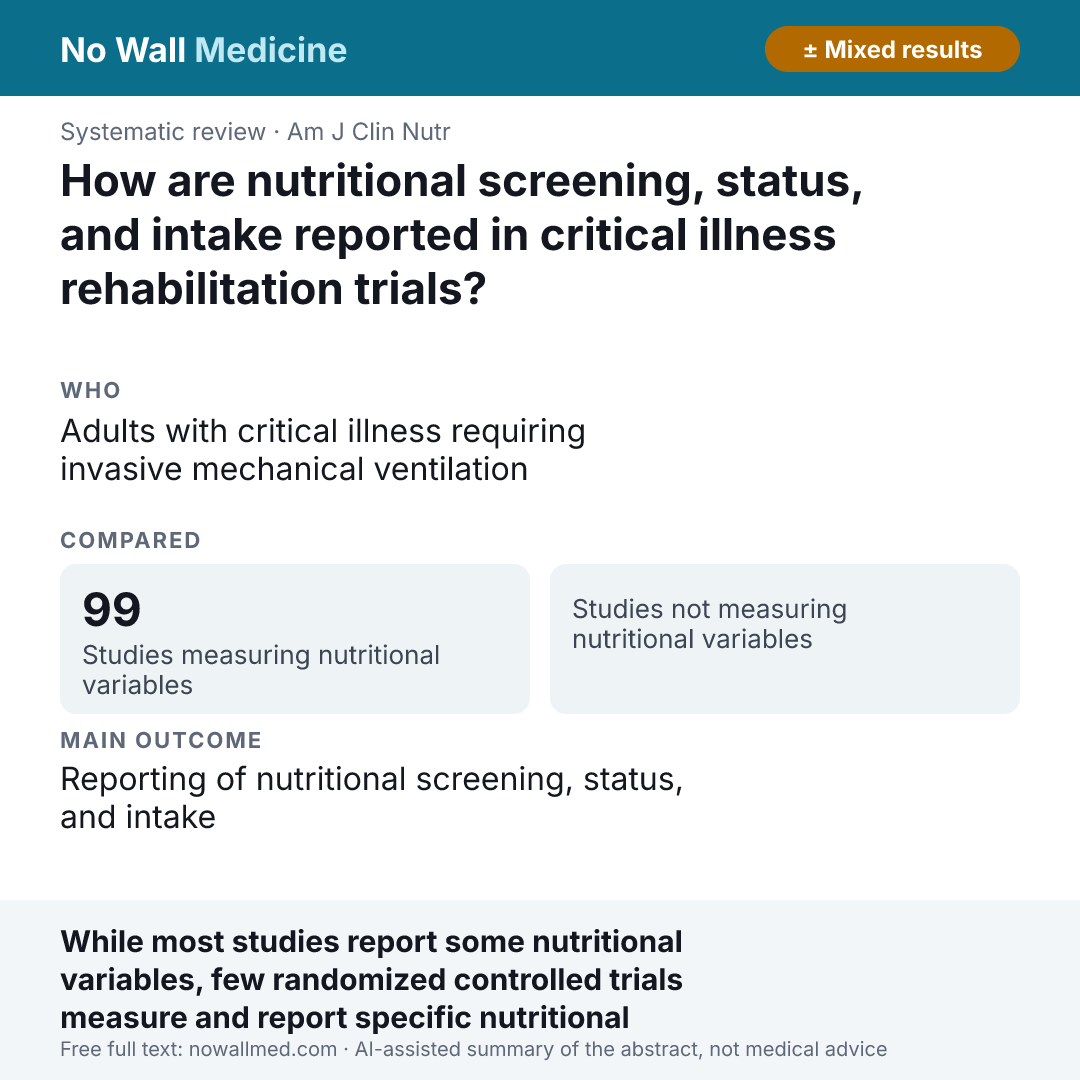
Reporting of nutritional screening, status, and intake in trials of nutritional and physical rehabilitation following critical illness: a systematic review
Systematic reviewMixed results
How are nutritional screening, status, and intake reported in critical illness rehabilitation trials?
Who
Adults with critical illness requiring invasive mechanical ventilation
Compared
99Studies measuring nutritional variables (80%)
Studies not measuring nutritional variables
Main outcome
Reporting of nutritional screening, status, and intake
Bottom line: While most studies report some nutritional variables, few randomized controlled trials measure and report specific nutritional factors comprehensively.
Limitation: Only 3 studies were considered to have low risk of bias in all categories.
Am J Clin Nutr · 2024-12-31 · Save PNG
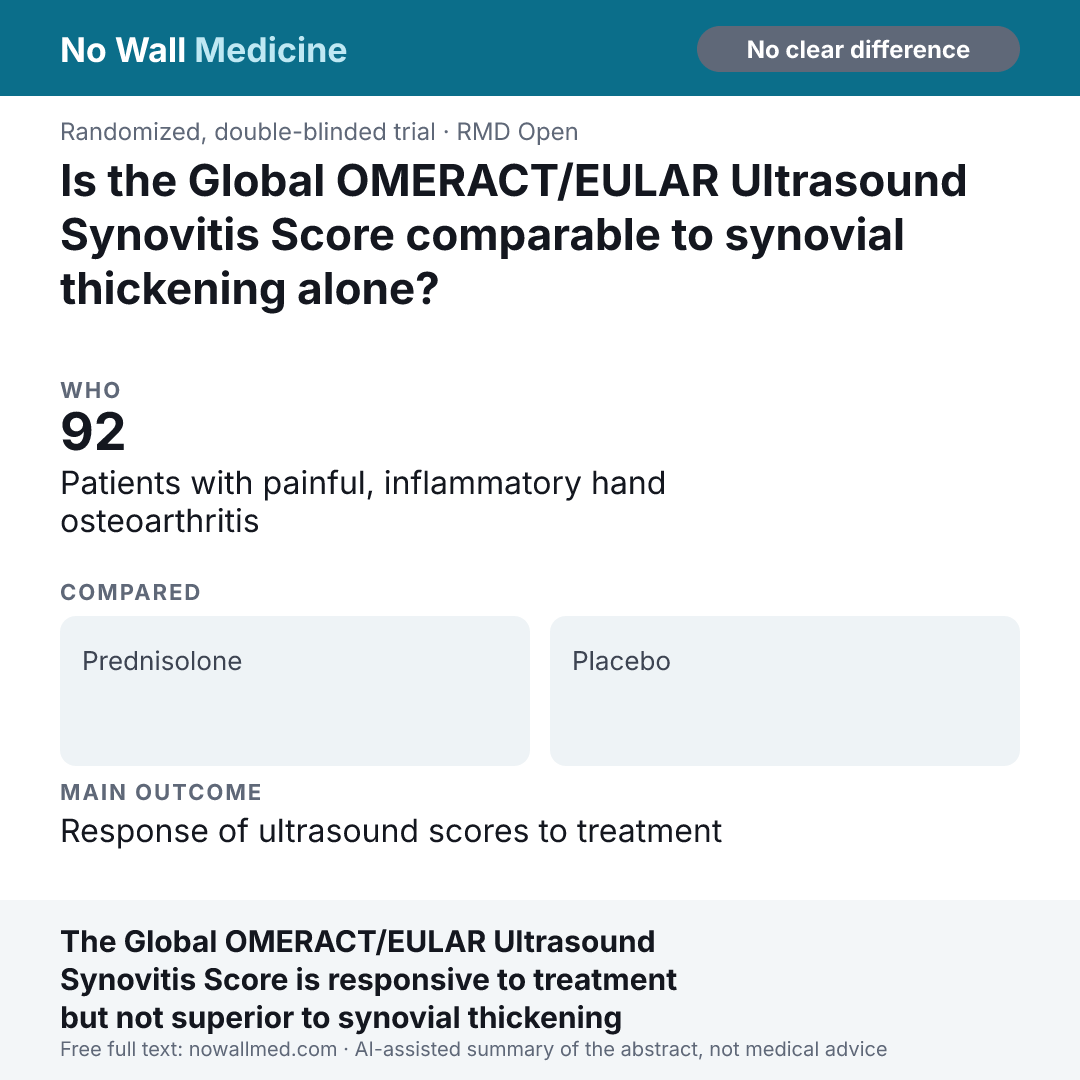
Synovitis scoring in hand osteoarthritis with ultrasonography: the performance of the Global OMERACT/EULAR Ultrasound Synovitis Score (GLOESS) is comparable to synovial thickening alone
Randomized, double-blinded trialNo clear difference
Is the Global OMERACT/EULAR Ultrasound Synovitis Score comparable to synovial thickening alone?
Who
92
Patients with painful, inflammatory hand osteoarthritis
Compared
Prednisolone
Placebo
Main outcome
Response of ultrasound scores to treatment
Bottom line: The Global OMERACT/EULAR Ultrasound Synovitis Score is responsive to treatment but not superior to synovial thickening alone.
RMD Open · 2024-12-31 · Save PNG
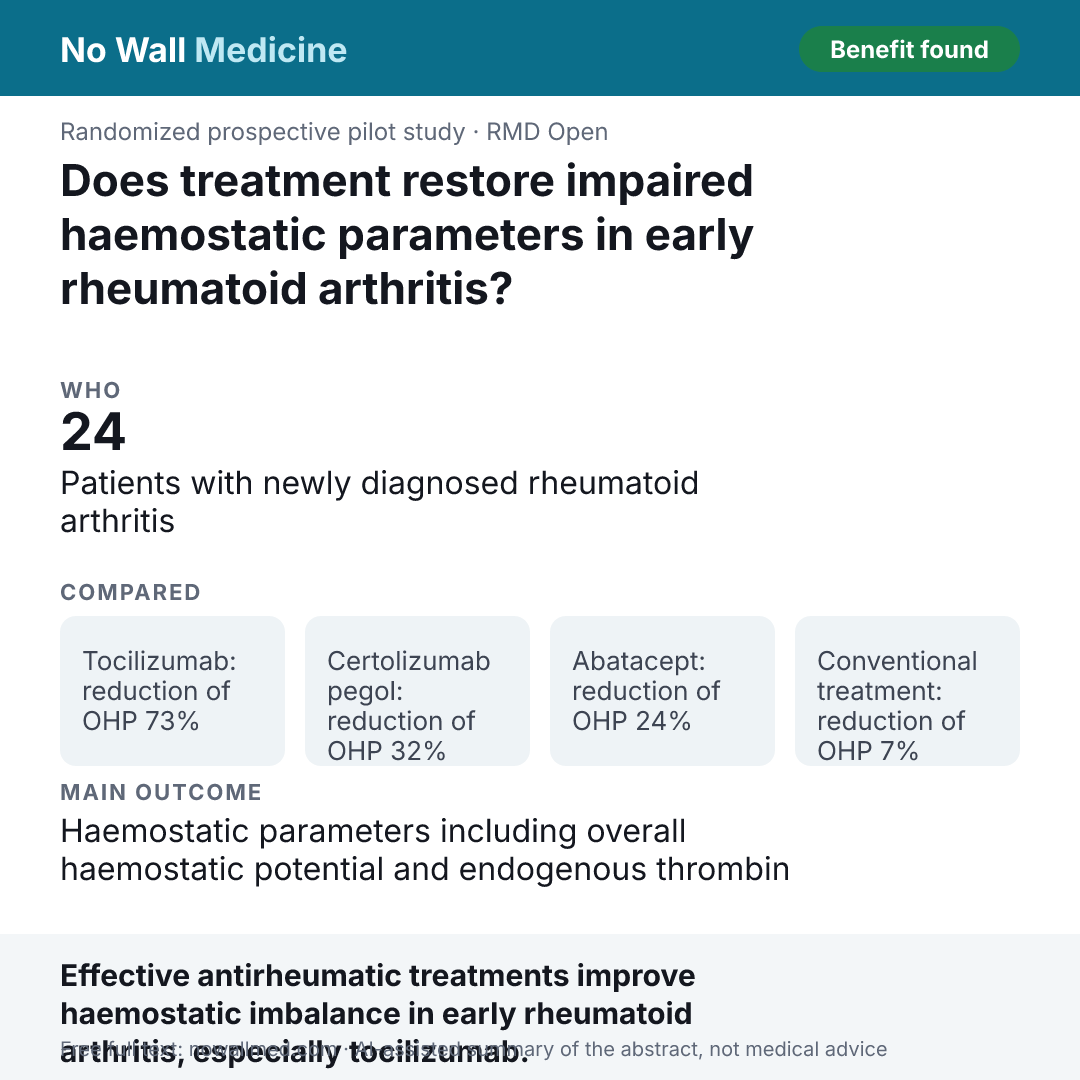
Impaired coagulation parameters in early RA are restored by effective antirheumatic therapy: a prospective pilot study
Randomized prospective pilot studyBenefit found
Does treatment restore impaired haemostatic parameters in early rheumatoid arthritis?
Who
24
Patients with newly diagnosed rheumatoid arthritis
Compared
Tocilizumab: reduction of OHP 73%
Certolizumab pegol: reduction of OHP 32%
Abatacept: reduction of OHP 24%
Conventional treatment: reduction of OHP 7%
Main outcome
Haemostatic parameters including overall haemostatic potential and endogenous thrombin potential
Bottom line: Effective antirheumatic treatments improve haemostatic imbalance in early rheumatoid arthritis, especially tocilizumab.
RMD Open · 2024-12-31 · Save PNG
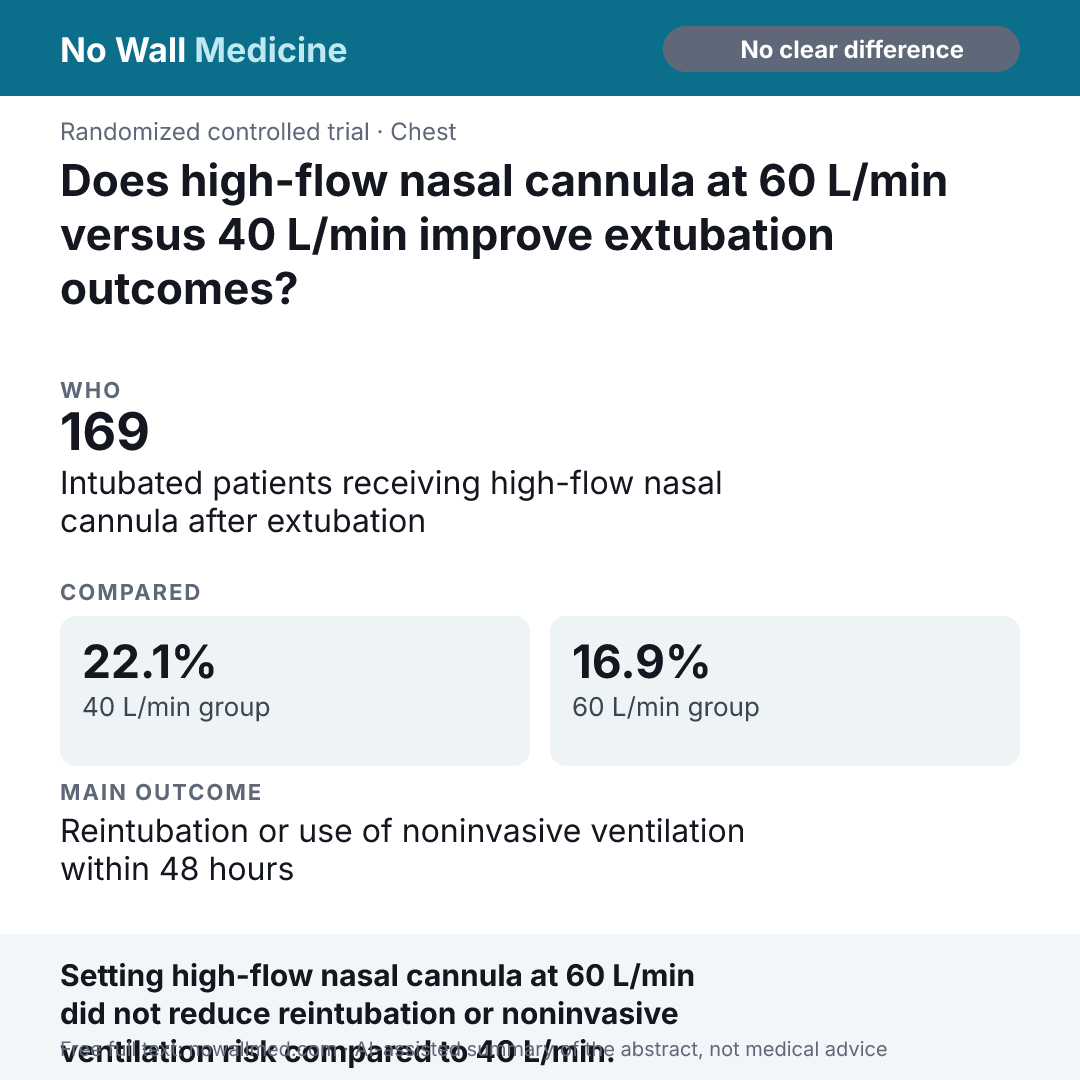
Effect of Flow Rates of High-Flow Nasal Cannula on Extubation Outcomes: A Randomized Controlled Trial
Randomized controlled trialNo clear difference
Does high-flow nasal cannula at 60 L/min versus 40 L/min improve extubation outcomes?
Who
169
Intubated patients receiving high-flow nasal cannula after extubation
Compared
22.1%40 L/min group
16.9%60 L/min group
Main outcome
Reintubation or use of noninvasive ventilation within 48 hours
Result: risk difference, 5.2% (95% CI, -6.7% to 17.1%)
Bottom line: Setting high-flow nasal cannula at 60 L/min did not reduce reintubation or noninvasive ventilation risk compared to 40 L/min.
Limitation: The trial may not have been sufficiently powered to exclude a small between-group difference.
Chest · 2024-12-30 · Save PNG