Visual abstracts
New randomized trials and meta-analyses from leading journals at a glance: who was studied, what was compared, and what was found. Every paper is free to read in full.
All specialtiesCardiology 4877Oncology 4138Gastroenterology & Hepatology 1942Infectious Disease 3837Neurology 1905Psychiatry & Mental Health 2273Pulmonology 2143Critical Care 1365Endocrinology & Diabetes 2580Pediatrics 2980Surgery 2559Orthopedics & Sports Medicine 931Neurosurgery 537Cardiothoracic & Vascular Surgery 674Plastic & Reconstructive Surgery 591Nephrology 1133Rheumatology 823Hematology 1109Dermatology 621Ophthalmology 543Obstetrics & Gynecology 1686Public & Global Health 1058Radiology & Imaging 648Anesthesiology 986Urology 764ENT (Otolaryngology) 503Emergency Medicine 511Allergy & Immunology 313Geriatrics 981Family Medicine & Primary Care 562Medical Genetics & Genomics 676Pathology & Laboratory Medicine 159Physical Medicine & Rehabilitation 757Palliative Care 444Nutrition 1588Digital Health & AI 2201General Medicine 321
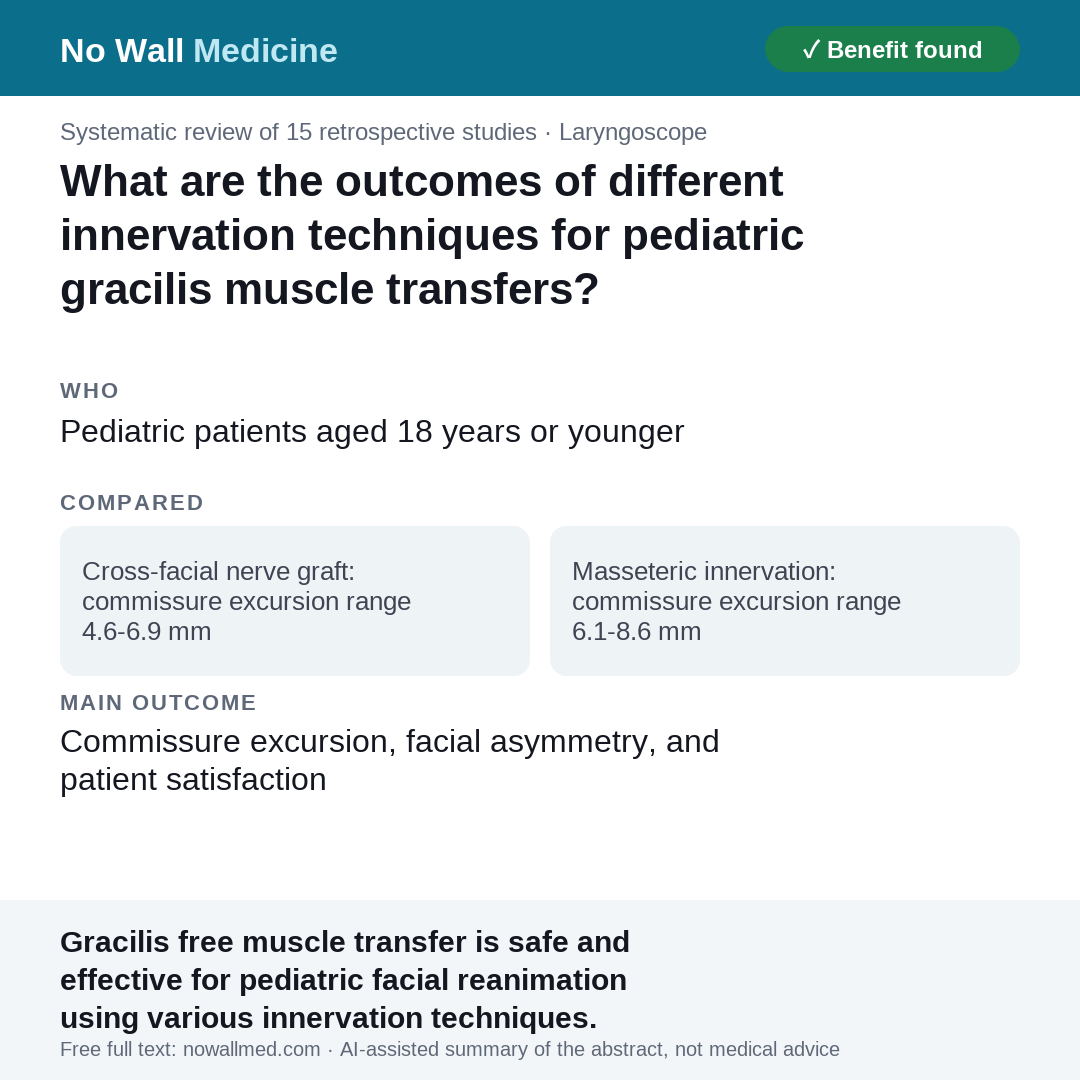
Outcomes and Innervation of Gracilis for Pediatric Facial Paralysis: A Systematic Review
Systematic review of 15 retrospective studiesBenefit found
What are the outcomes of different innervation techniques for pediatric gracilis muscle transfers?
Who
Pediatric patients aged 18 years or younger
Compared
Cross-facial nerve graft: commissure excursion range 4.6-6.9 mm
Masseteric innervation: commissure excursion range 6.1-8.6 mm
Main outcome
Commissure excursion, facial asymmetry, and patient satisfaction
Bottom line: Gracilis free muscle transfer is safe and effective for pediatric facial reanimation using various innervation techniques.
Laryngoscope · 2025-12-30Download image
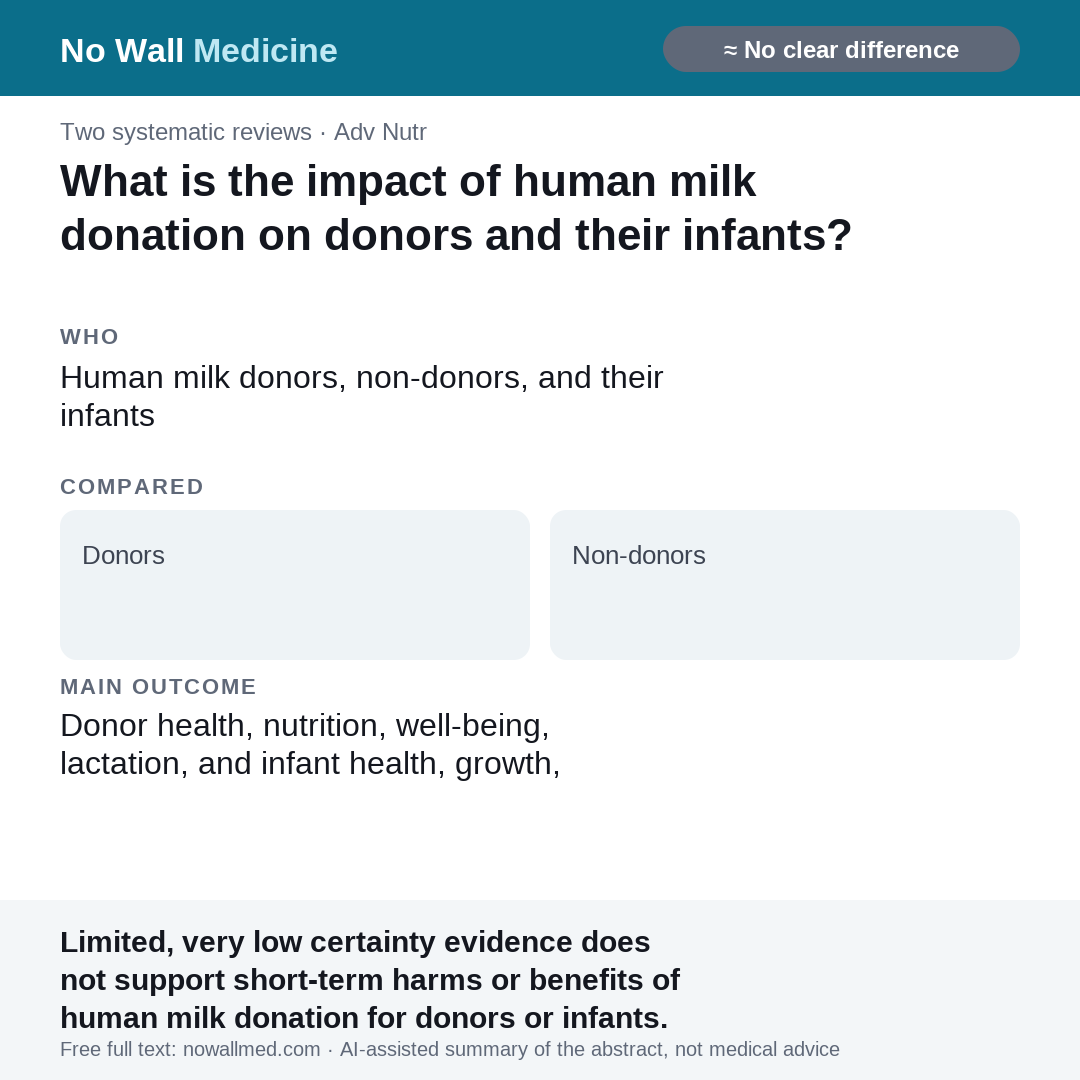
The Impact of Donating Human Milk on the Health of the Donor and Their Infant: Evidence from Two Systematic Reviews
Two systematic reviewsNo clear difference
What is the impact of human milk donation on donors and their infants?
Who
Human milk donors, non-donors, and their infants
Compared
Donors
Non-donors
Main outcome
Donor health, nutrition, well-being, lactation, and infant health, growth, development
Bottom line: Limited, very low certainty evidence does not support short-term harms or benefits of human milk donation for donors or infants.
Limitation: The certainty of evidence was very low for all outcomes.
Adv Nutr · 2025-12-30Download image
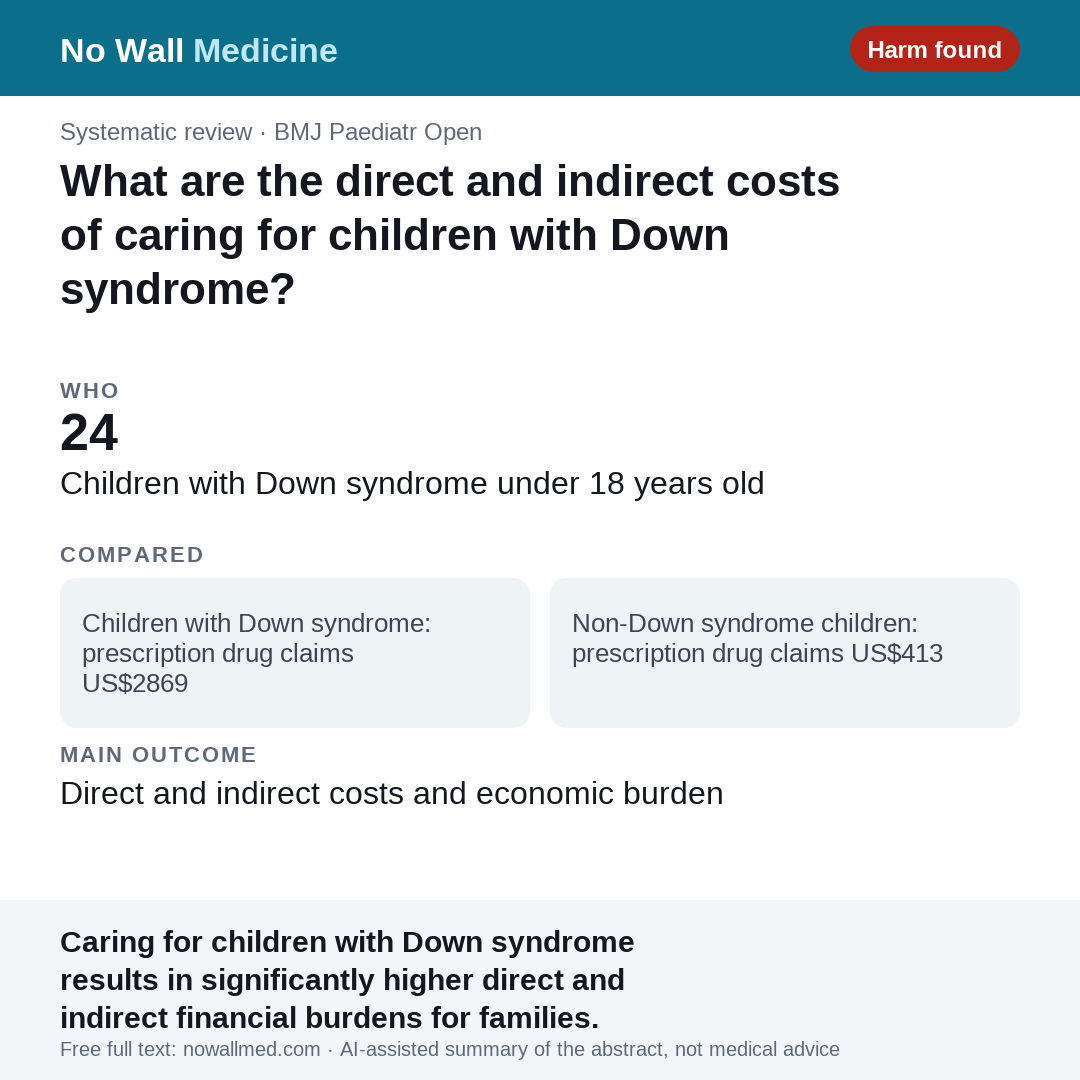
Cost and economic burden associated with caring for children with Down syndrome: a systematic review
Systematic reviewHarm found
What are the direct and indirect costs of caring for children with Down syndrome?
Who
24
Children with Down syndrome under 18 years old
Compared
Children with Down syndrome: prescription drug claims US$2869
Non-Down syndrome children: prescription drug claims US$413
Main outcome
Direct and indirect costs and economic burden
Bottom line: Caring for children with Down syndrome results in significantly higher direct and indirect financial burdens for families.
BMJ Paediatr Open · 2025-12-25Download image
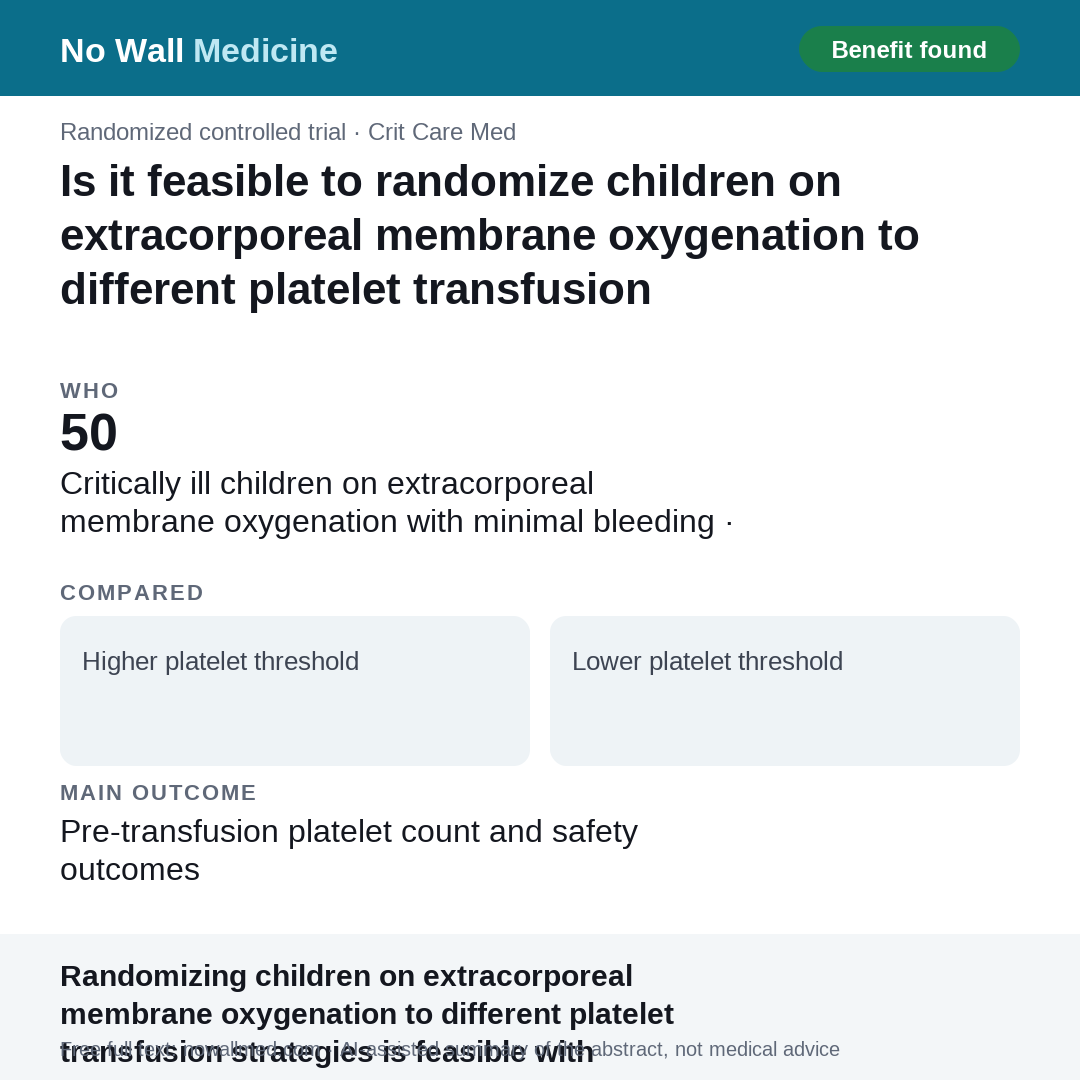
Platelet Transfusion Thresholds for Children Supported by Extracorporeal Membrane Oxygenation: The Extracorporeal Membrane Oxygenation Hemostatic Transfusions in Children (ECSTATIC) Feasibility Clinical Trial
Randomized controlled trialBenefit found
Is it feasible to randomize children on extracorporeal membrane oxygenation to different platelet transfusion thresholds?
Who
50
Critically ill children on extracorporeal membrane oxygenation with minimal bleeding · Ten centers in United States and Israel
Compared
Higher platelet threshold
Lower platelet threshold
Main outcome
Pre-transfusion platelet count and safety outcomes
Bottom line: Randomizing children on extracorporeal membrane oxygenation to different platelet transfusion strategies is feasible with excellent protocol compliance.
Crit Care Med · 2025-12-23Download image
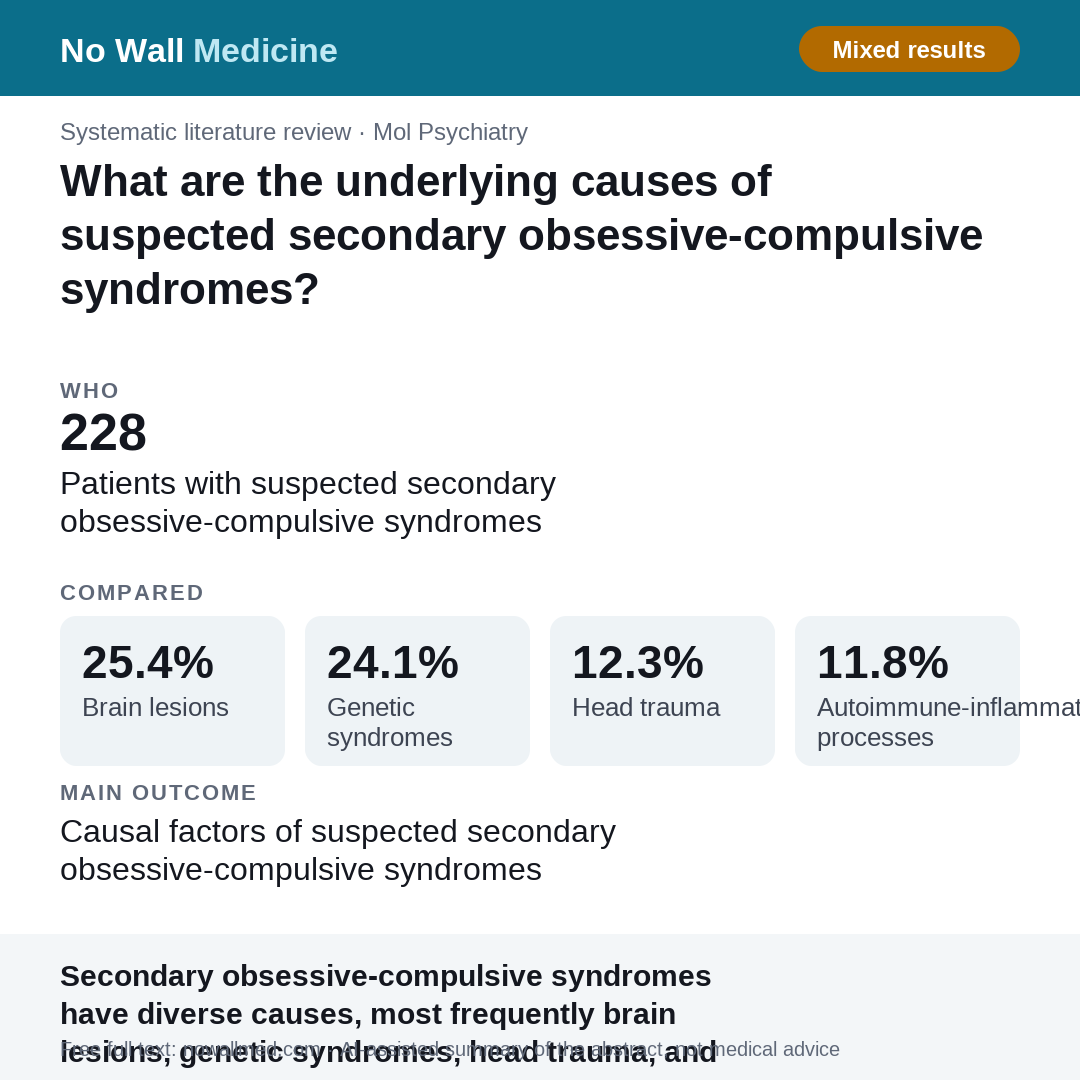
Secondary obsessive-compulsive syndromes: a systematic literature review resulting in 228 suspected cases
Systematic literature reviewMixed results
What are the underlying causes of suspected secondary obsessive-compulsive syndromes?
Who
228
Patients with suspected secondary obsessive-compulsive syndromes
Compared
25.4%Brain lesions
24.1%Genetic syndromes
12.3%Head trauma
11.8%Autoimmune-inflammatory processes
Main outcome
Causal factors of suspected secondary obsessive-compulsive syndromes
Bottom line: Secondary obsessive-compulsive syndromes have diverse causes, most frequently brain lesions, genetic syndromes, head trauma, and autoimmune-inflammatory processes.
Mol Psychiatry · 2025-12-23Download image
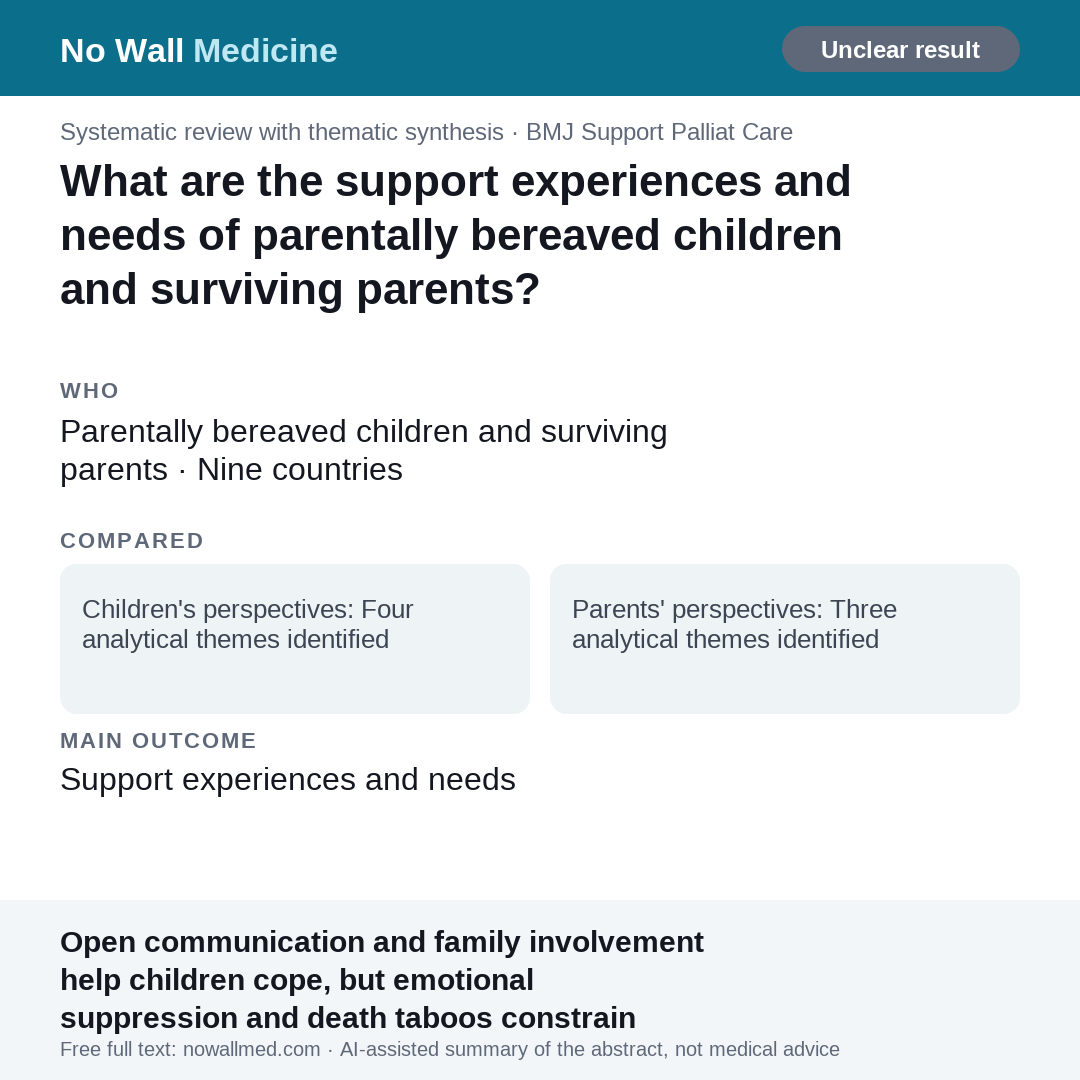
Parental death: a systematic review of support experiences and needs of children and parent survivors
Systematic review with thematic synthesisUnclear result
What are the support experiences and needs of parentally bereaved children and surviving parents?
Who
Parentally bereaved children and surviving parents · Nine countries
Compared
Children's perspectives: Four analytical themes identified
Parents' perspectives: Three analytical themes identified
Main outcome
Support experiences and needs
Bottom line: Open communication and family involvement help children cope, but emotional suppression and death taboos constrain support.
BMJ Support Palliat Care · 2025-12-23Download image
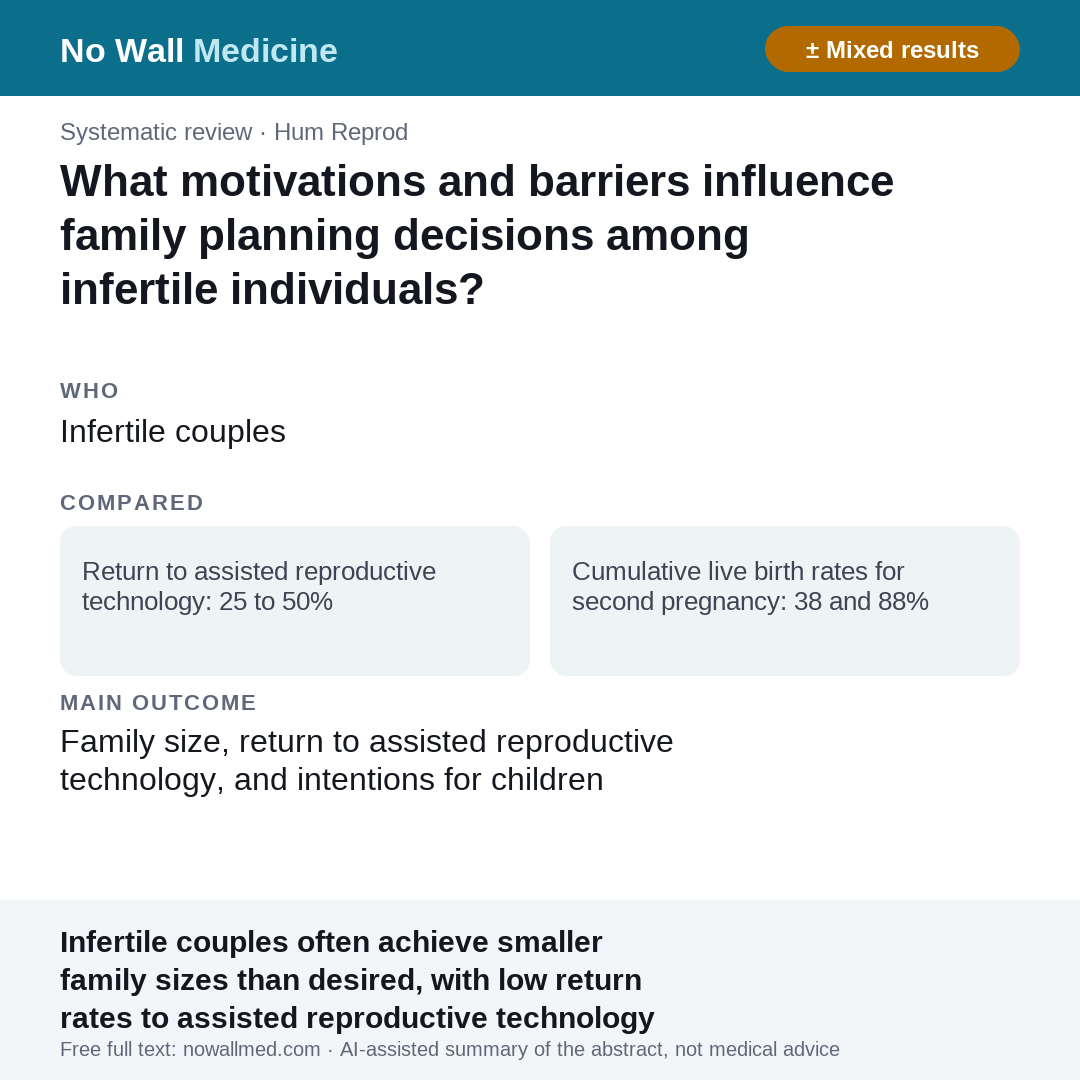
Family planning of infertile couples: a systematic review of intentions regarding parenthood and return to ART
Systematic reviewMixed results
What motivations and barriers influence family planning decisions among infertile individuals?
Who
9
Infertile couples
Compared
Return to assisted reproductive technology: 25 to 50%
Cumulative live birth rates for second pregnancy: 38 and 88%
Main outcome
Family size, return to assisted reproductive technology, and intentions for children
Bottom line: Infertile couples often achieve smaller family sizes than desired, with low return rates to assisted reproductive technology for subsequent children.
Limitation: Scarcity of evidence and high heterogeneity across studies may have limited comparability.
Funded by: Università degli Studi di Milano and Italian Ministry of Health
Hum Reprod · 2025-12-22Download image
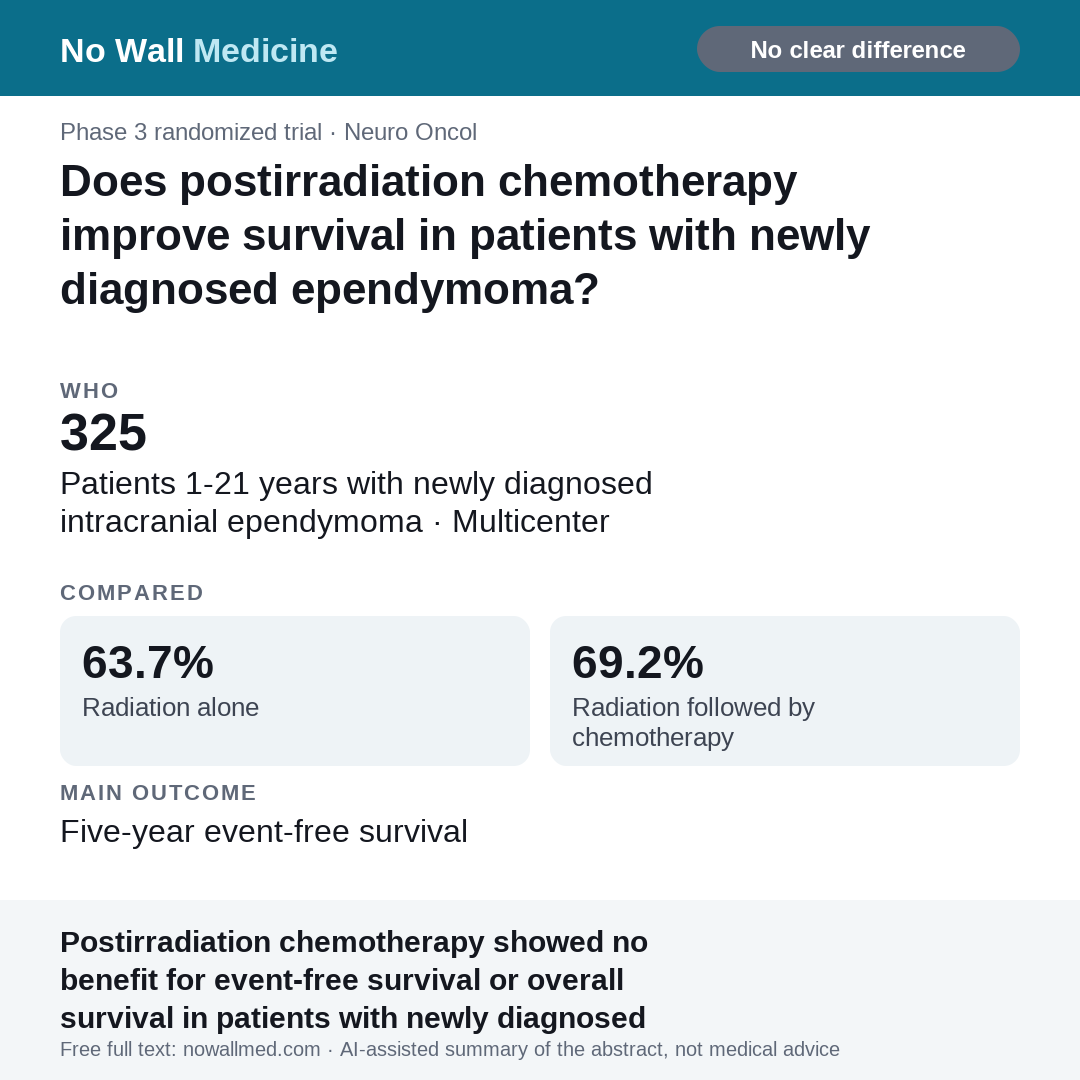
Phase 3 randomized trial of postirradiation chemotherapy in patients with newly diagnosed ependymoma: A report from the Children's Oncology Group
Phase 3 randomized trialNo clear difference
Does postirradiation chemotherapy improve survival in patients with newly diagnosed ependymoma?
Who
325
Patients 1-21 years with newly diagnosed intracranial ependymoma · Multicenter
Compared
63.7%Radiation alone (95% CI: 55.1%-71.1%)
69.2%Radiation followed by chemotherapy (60.8%-76.3%)
Main outcome
Five-year event-free survival
Result: hazard ratio 0.866
Bottom line: Postirradiation chemotherapy showed no benefit for event-free survival or overall survival in patients with newly diagnosed ependymoma.
Neuro Oncol · 2025-12-22Download image
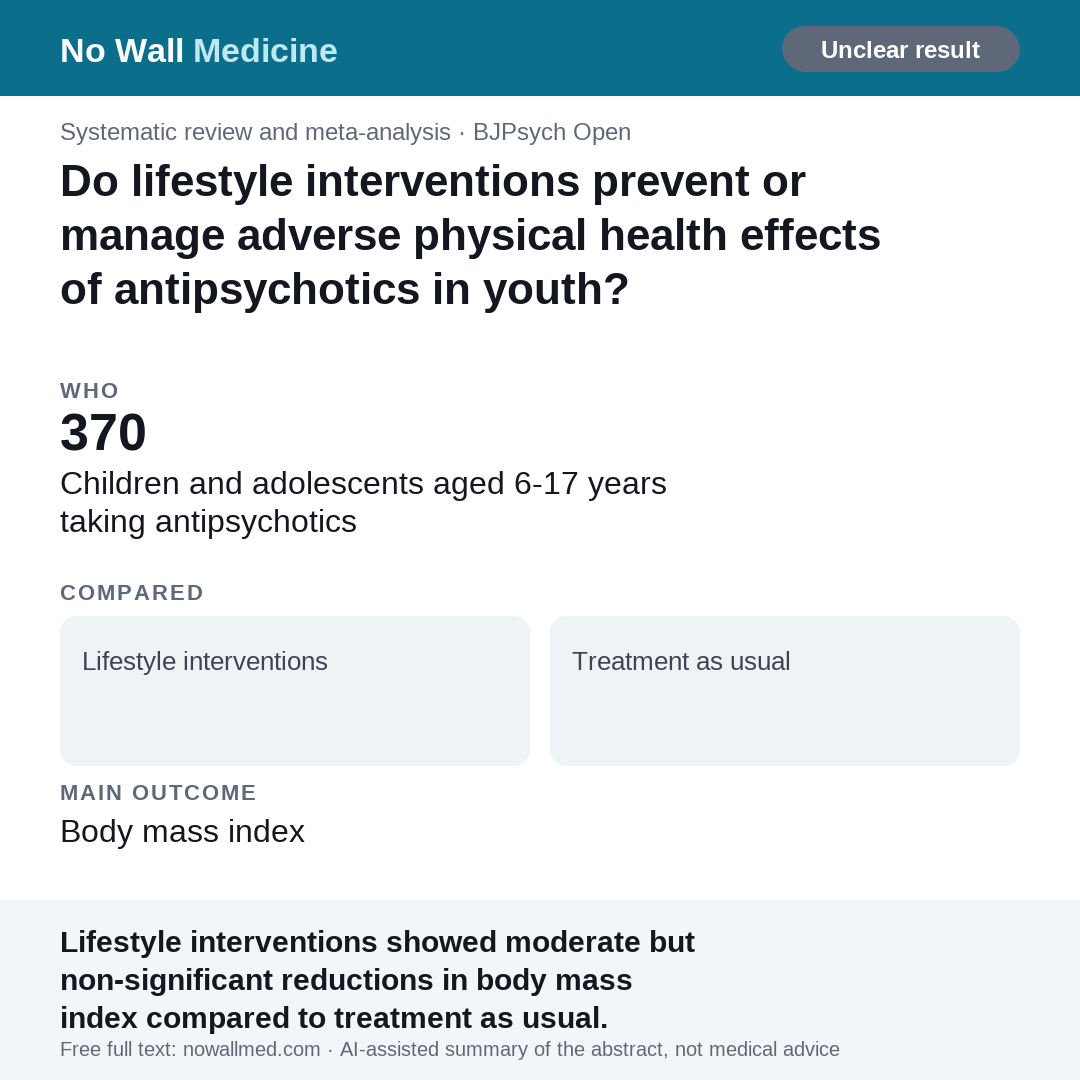
Effectiveness of lifestyle interventions for preventing or managing the adverse cardiometabolic and other physical health effects of antipsychotic medications in children and adolescents: systematic review and meta-analysis
Systematic review and meta-analysisUnclear result
Do lifestyle interventions prevent or manage adverse physical health effects of antipsychotics in youth?
Who
370
Children and adolescents aged 6-17 years taking antipsychotics
Compared
Lifestyle interventions
Treatment as usual
Main outcome
Body mass index
Result: standard mean difference -0.70 (95% CI: -1.70 to 0.31)
Bottom line: Lifestyle interventions showed moderate but non-significant reductions in body mass index compared to treatment as usual.
Limitation: Limited number of trials, small samples, and high risk of bias.
BJPsych Open · 2025-12-22Download image
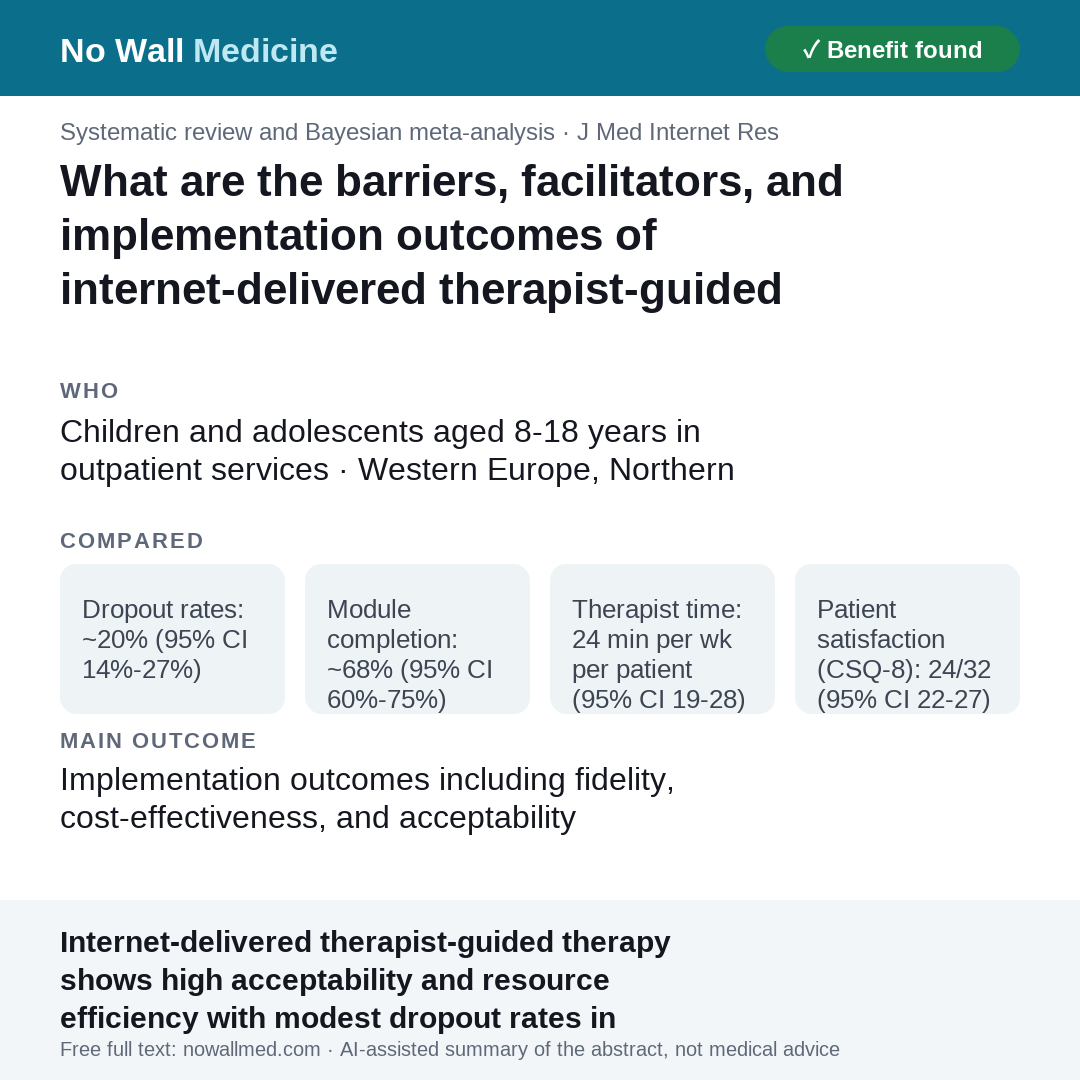
Barriers to and Facilitators of Implementation of Internet-Delivered Therapist-Guided Therapy in Child and Adolescent Mental Health Services: Systematic Review and Bayesian Meta-Analysis
Systematic review and Bayesian meta-analysisBenefit found
What are the barriers, facilitators, and implementation outcomes of internet-delivered therapist-guided therapy in child mental health services?
Who
50
Children and adolescents aged 8-18 years in outpatient services · Western Europe, Northern America, and Oceania
Compared
Dropout rates: ~20% (95% CI 14%-27%)
Module completion: ~68% (95% CI 60%-75%)
Therapist time: 24 min per wk per patient (95% CI 19-28)
Patient satisfaction (CSQ-8): 24/32 (95% CI 22-27)
Main outcome
Implementation outcomes including fidelity, cost-effectiveness, and acceptability
Bottom line: Internet-delivered therapist-guided therapy shows high acceptability and resource efficiency with modest dropout rates in child mental health services.
J Med Internet Res · 2025-12-22Download image
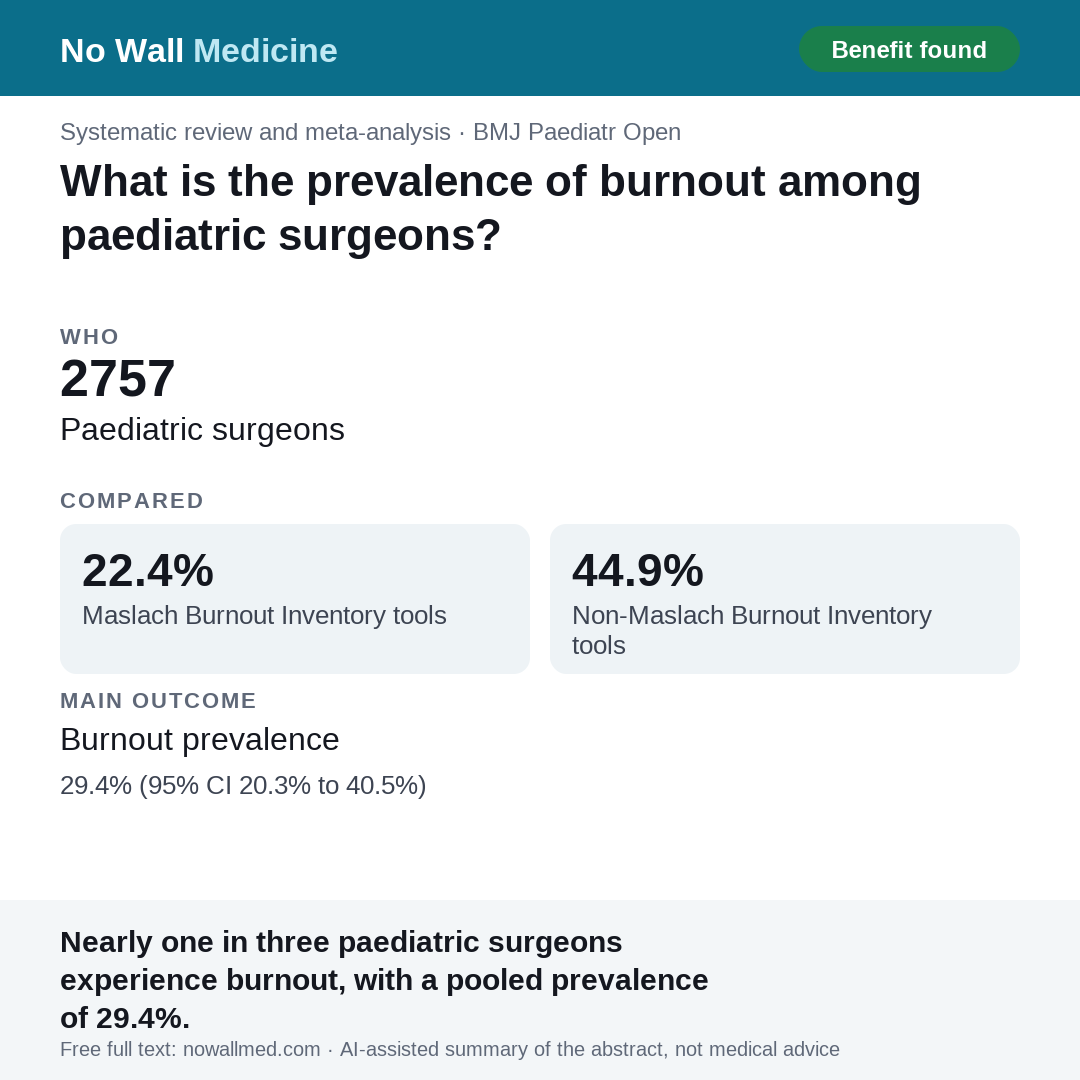
Burnout among paediatric surgeons: a systematic review and meta-analysis
Systematic review and meta-analysisBenefit found
What is the prevalence of burnout among paediatric surgeons?
Who
2757
Paediatric surgeons
Compared
22.4%Maslach Burnout Inventory tools
44.9%Non-Maslach Burnout Inventory tools
Main outcome
Burnout prevalence
Result: 29.4% (95% CI 20.3% to 40.5%)
Bottom line: Nearly one in three paediatric surgeons experience burnout, with a pooled prevalence of 29.4%.
Limitation: Substantial heterogeneity (I²=96.4%) was observed among the included studies.
BMJ Paediatr Open · 2025-12-21Download image
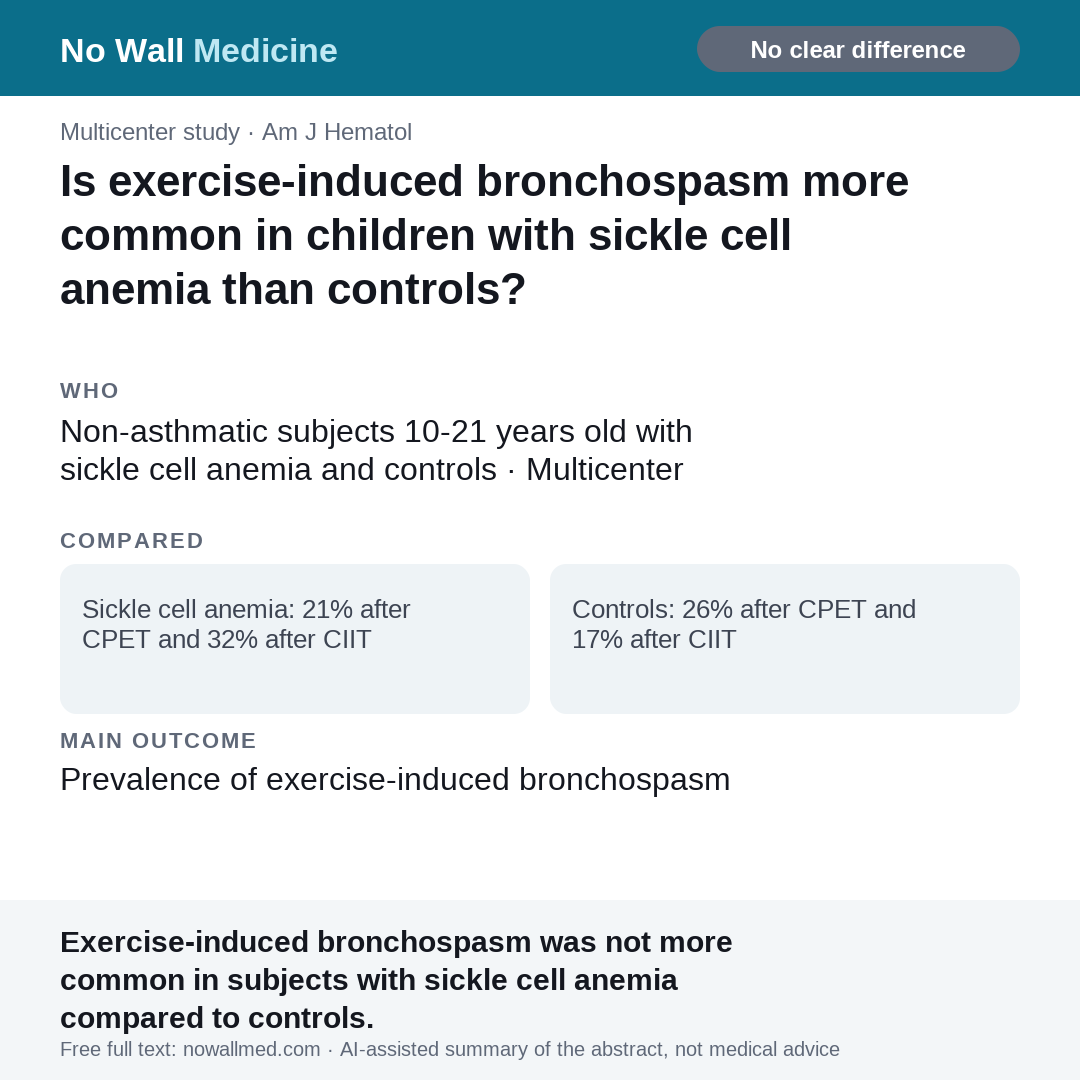
Acute Exercise Challenge and Airway Dynamics in Youth With Sickle Cell Anemia: A Multicenter Study
Multicenter studyNo clear difference
Is exercise-induced bronchospasm more common in children with sickle cell anemia than controls?
Who
Non-asthmatic subjects 10-21 years old with sickle cell anemia and controls · Multicenter
Compared
Sickle cell anemia: 21% after CPET and 32% after CIIT
Controls: 26% after CPET and 17% after CIIT
Main outcome
Prevalence of exercise-induced bronchospasm
Bottom line: Exercise-induced bronchospasm was not more common in subjects with sickle cell anemia compared to controls.
Am J Hematol · 2025-12-20Download image
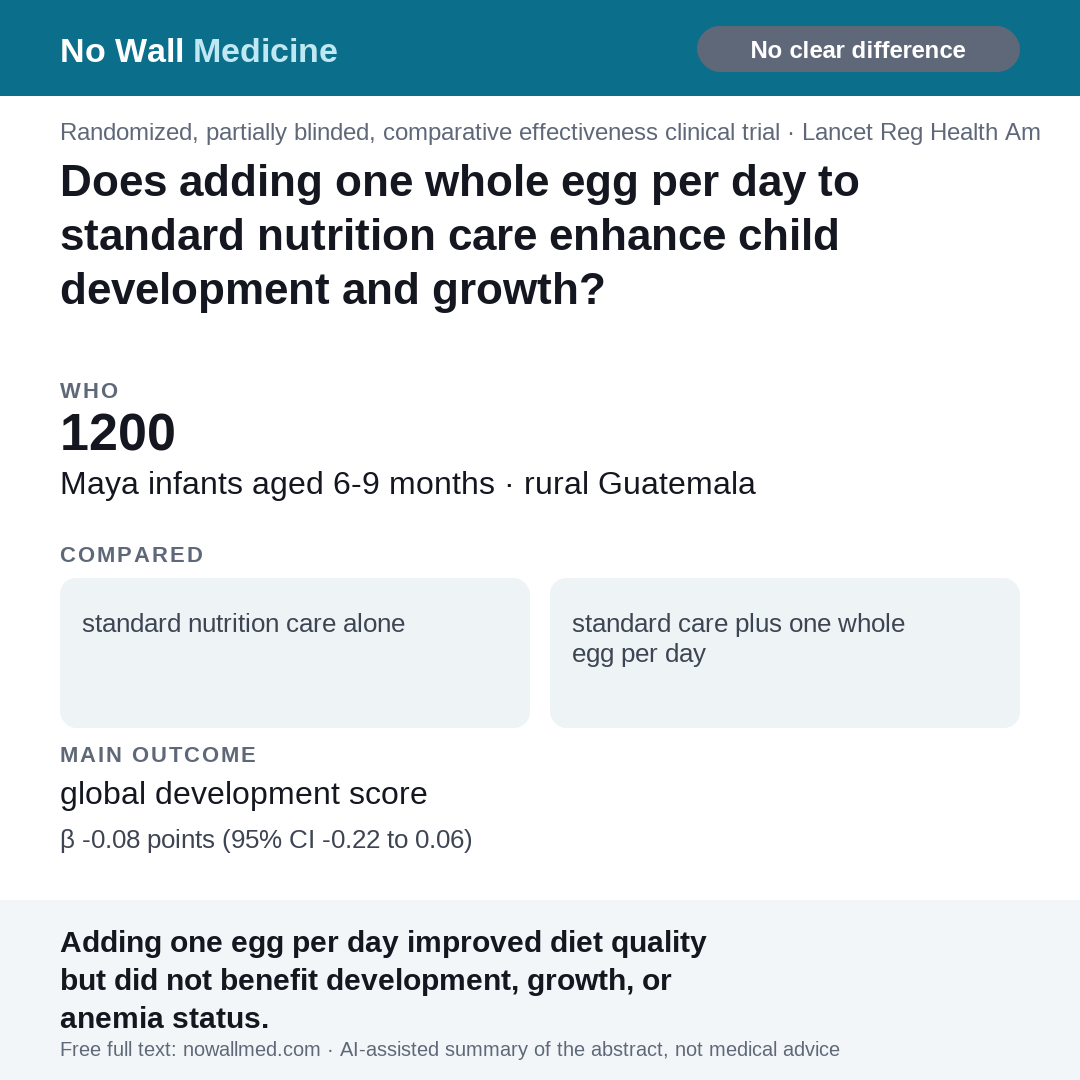
Effect of eggs on Maya child development and growth: the Saqmolo' Project randomized clinical trial
Randomized, partially blinded, comparative effectiveness clinical trialNo clear difference
Does adding one whole egg per day to standard nutrition care enhance child development and growth?
Who
1200
Maya infants aged 6-9 months · rural Guatemala
Compared
standard nutrition care alone
standard care plus one whole egg per day
Main outcome
global development score
Result: β -0.08 points (95% CI -0.22 to 0.06)
Bottom line: Adding one egg per day improved diet quality but did not benefit development, growth, or anemia status.
Funded by: Academy of Nutrition and Dietetics Foundation
Lancet Reg Health Am · 2025-12-20Download image
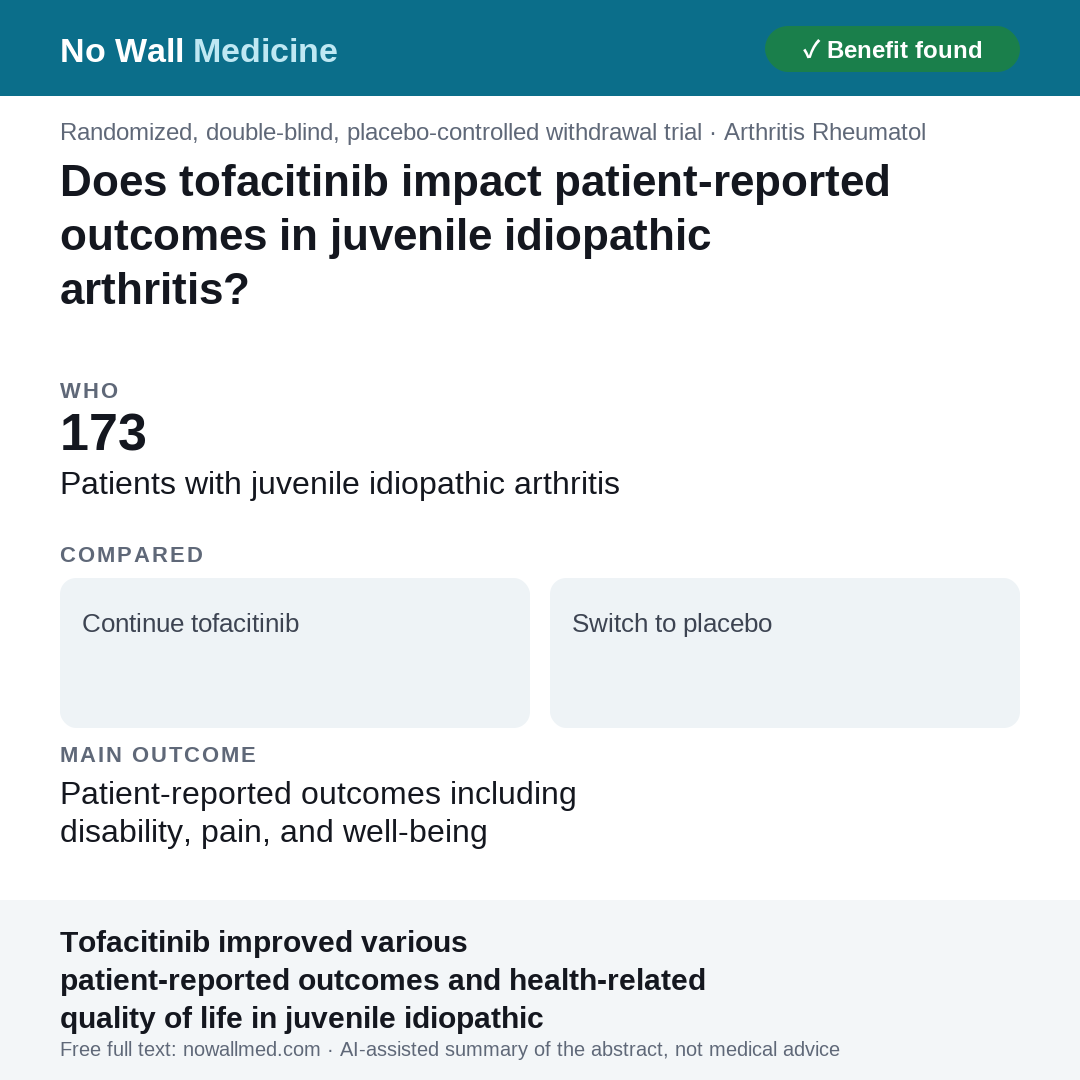
Tofacitinib for the Treatment of Juvenile Idiopathic Arthritis: Patient-Reported Outcomes in a Phase 3, Randomized, Double-Blind, Placebo-Controlled Withdrawal Trial
Randomized, double-blind, placebo-controlled withdrawal trialBenefit found
Does tofacitinib impact patient-reported outcomes in juvenile idiopathic arthritis?
Who
173
Patients with juvenile idiopathic arthritis
Compared
Continue tofacitinib
Switch to placebo
Main outcome
Patient-reported outcomes including disability, pain, and well-being
Bottom line: Tofacitinib improved various patient-reported outcomes and health-related quality of life in juvenile idiopathic arthritis.
Arthritis Rheumatol · 2025-12-19Download image
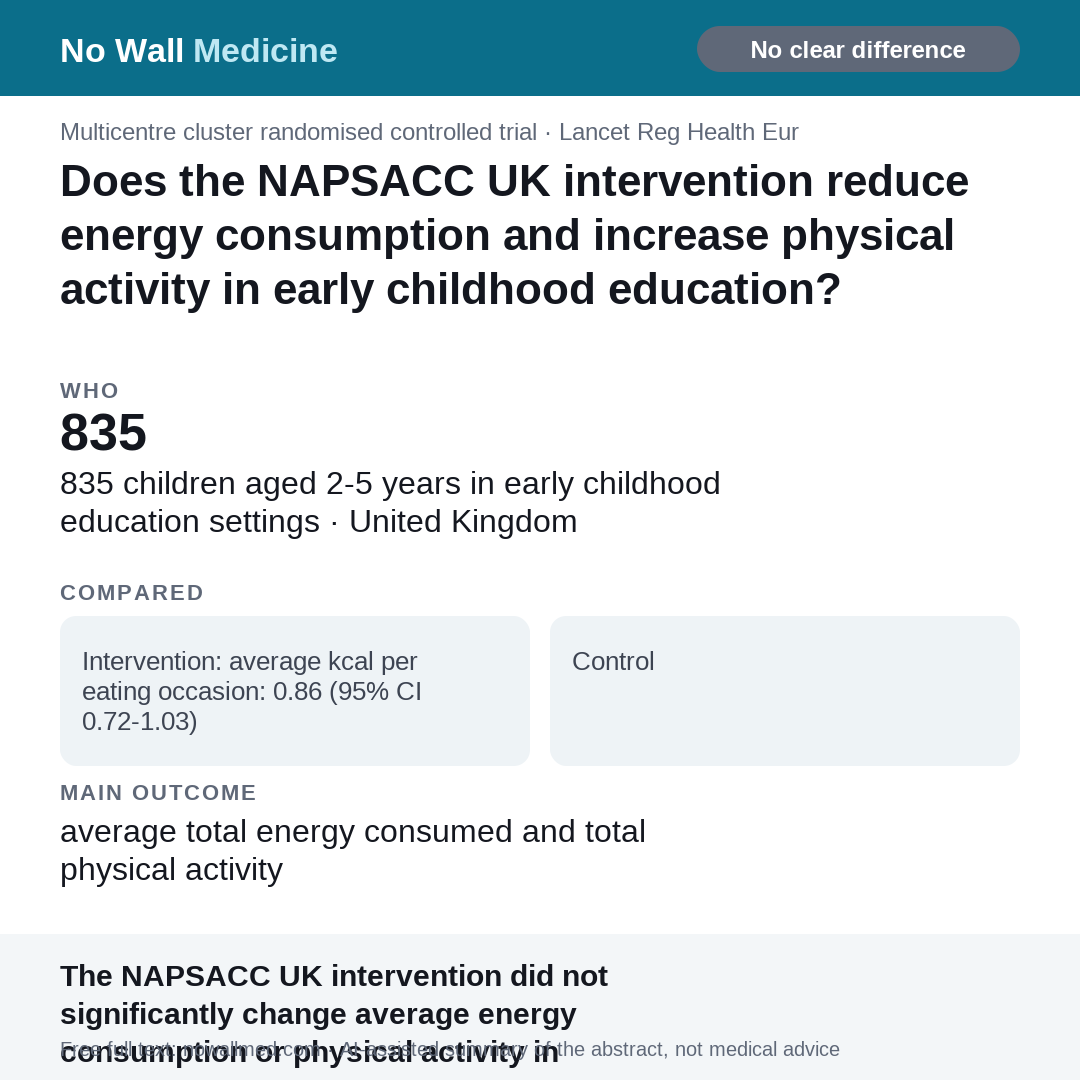
Effectiveness of an environmental nutrition and physical activity intervention in early childhood education and care settings (NAPSACC UK): a multicentre cluster randomised controlled trial
Multicentre cluster randomised controlled trialNo clear difference
Does the NAPSACC UK intervention reduce energy consumption and increase physical activity in early childhood education?
Who
835
835 children aged 2-5 years in early childhood education settings · United Kingdom
Compared
Intervention: average kcal per eating occasion: 0.86 (95% CI 0.72-1.03)
Control
Main outcome
average total energy consumed and total physical activity
Result: adjusted geometric mean ratio 0.86 (95% CI 0.72-1.03); adjusted mean difference -2.13 min (95% CI -10.96 to 6.70)
Bottom line: The NAPSACC UK intervention did not significantly change average energy consumption or physical activity in children.
Funded by: National Institute for Health and Care Research
Lancet Reg Health Eur · 2025-12-18Download image
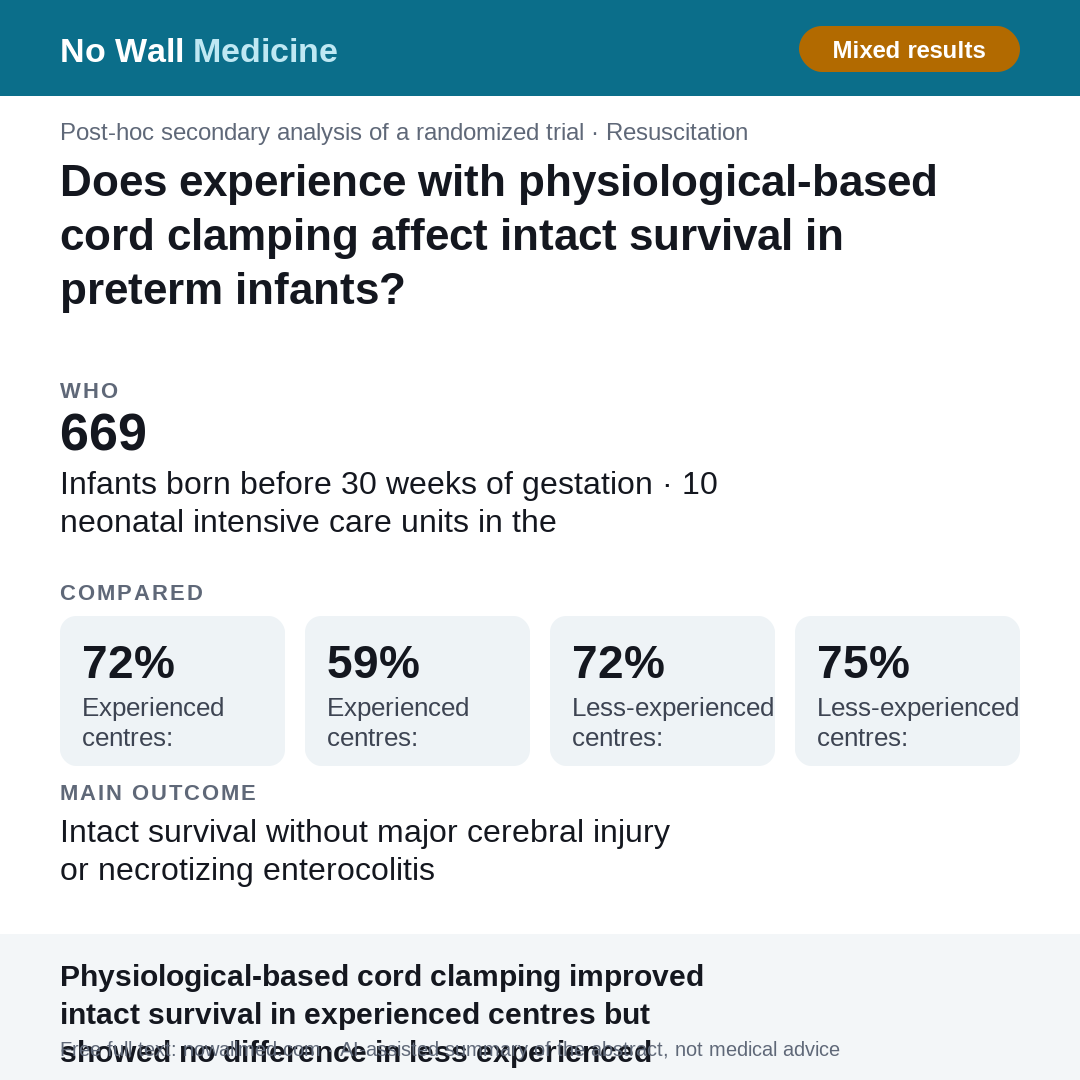
Experience with physiological based cord clamping is associated with increased effect size: a post-hoc analysis of the ABC3 trial
Post-hoc secondary analysis of a randomized trialMixed results
Does experience with physiological-based cord clamping affect intact survival in preterm infants?
Who
669
Infants born before 30 weeks of gestation · 10 neonatal intensive care units in the Netherlands
Compared
72%Experienced centres: physiological-based cord clamping
59%Experienced centres: time-based delayed cord clamping
72%Less-experienced centres: physiological-based cord clamping
75%Less-experienced centres: time-based delayed cord clamping
Main outcome
Intact survival without major cerebral injury or necrotizing enterocolitis
Result: aOR 1.93 (95% CI 1.73-2.17) in experienced centres
Bottom line: Physiological-based cord clamping improved intact survival in experienced centres but showed no difference in less experienced centres.
Resuscitation · 2025-12-17Download image
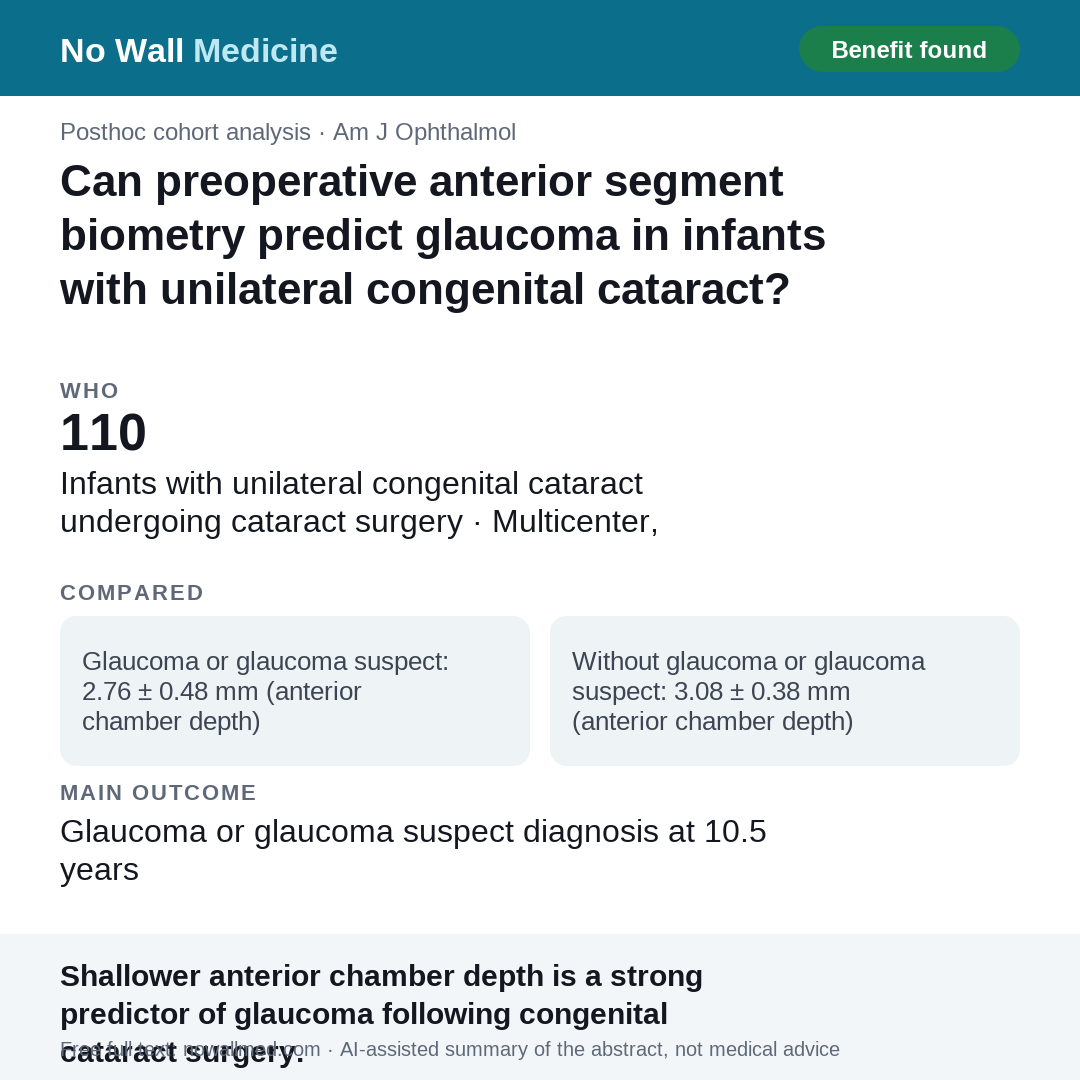
Predicting 10 Year Glaucoma Using Anterior Segment Biometry for Infants with Unilateral Congenital Cataract
Posthoc cohort analysisBenefit found
Can preoperative anterior segment biometry predict glaucoma in infants with unilateral congenital cataract?
Who
110
Infants with unilateral congenital cataract undergoing cataract surgery · Multicenter, United States
Compared
Glaucoma or glaucoma suspect: 2.76 ± 0.48 mm (anterior chamber depth)
Without glaucoma or glaucoma suspect: 3.08 ± 0.38 mm (anterior chamber depth)
Main outcome
Glaucoma or glaucoma suspect diagnosis at 10.5 years
Result: odds ratio 5.8 (95% CI 1.8 to 18.9)
Bottom line: Shallower anterior chamber depth is a strong predictor of glaucoma following congenital cataract surgery.
Am J Ophthalmol · 2025-12-17Download image
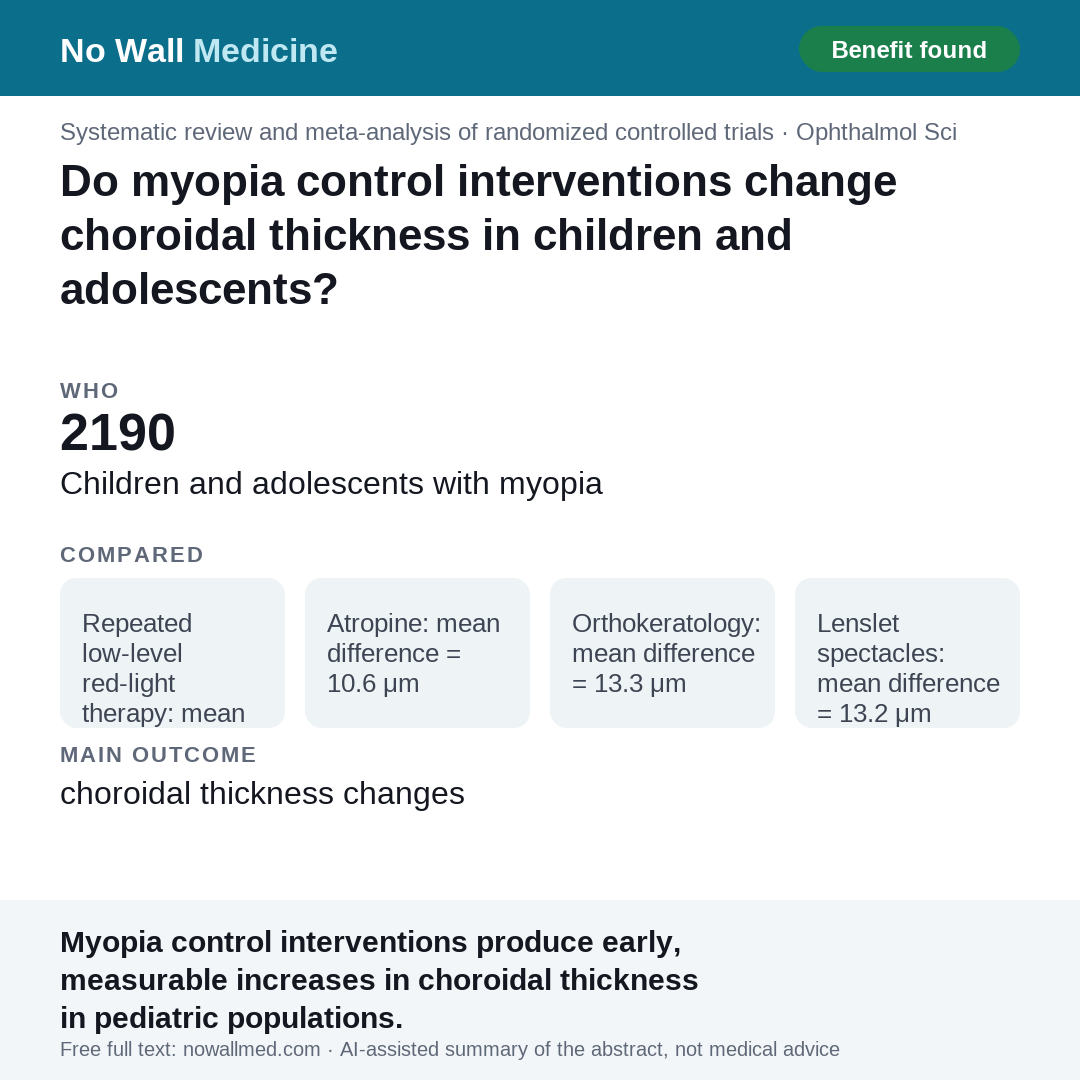
Impact of Myopia Control Interventions on Choroidal Thickness in Children: A Systematic Review and Meta-Analysis of Randomized Controlled Trials
Systematic review and meta-analysis of randomized controlled trialsBenefit found
Do myopia control interventions change choroidal thickness in children and adolescents?
Who
2190
Children and adolescents with myopia
Compared
Repeated low-level red-light therapy: mean difference = 24.1 μm
Atropine: mean difference = 10.6 μm
Orthokeratology: mean difference = 13.3 μm
Lenslet spectacles: mean difference = 13.2 μm
Main outcome
choroidal thickness changes
Bottom line: Myopia control interventions produce early, measurable increases in choroidal thickness in pediatric populations.
Limitation: clinical relevance remains uncertain
Ophthalmol Sci · 2025-12-17Download image
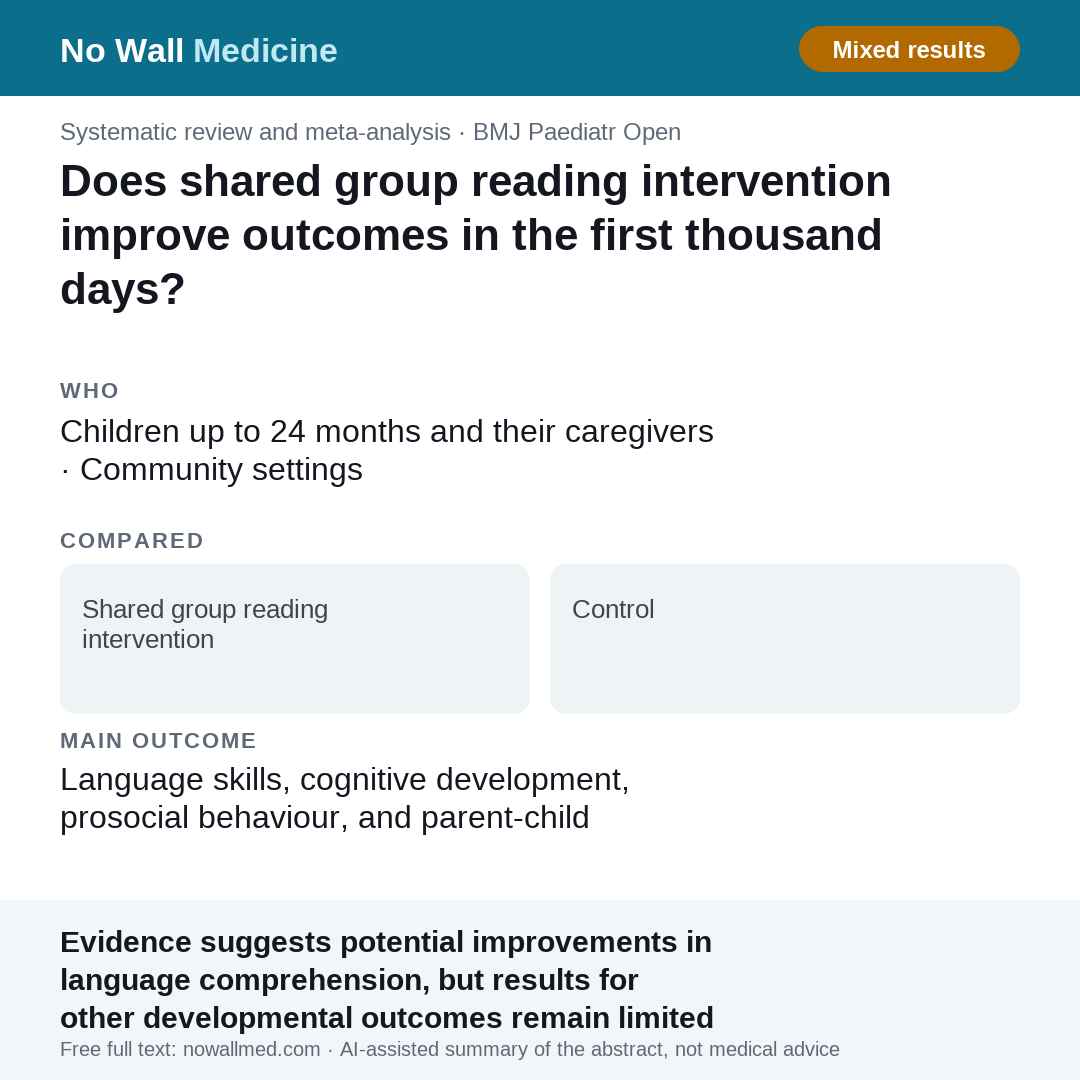
Health promotion through reading in the first thousand days: a systematic review and meta-analysis
Systematic review and meta-analysisMixed results
Does shared group reading intervention improve outcomes in the first thousand days?
Who
Children up to 24 months and their caregivers · Community settings
Compared
Shared group reading intervention
Control
Main outcome
Language skills, cognitive development, prosocial behaviour, and parent-child relationship
Bottom line: Evidence suggests potential improvements in language comprehension, but results for other developmental outcomes remain limited and inconsistent.
Limitation: Evidence was limited and inconsistent.
BMJ Paediatr Open · 2025-12-17Download image
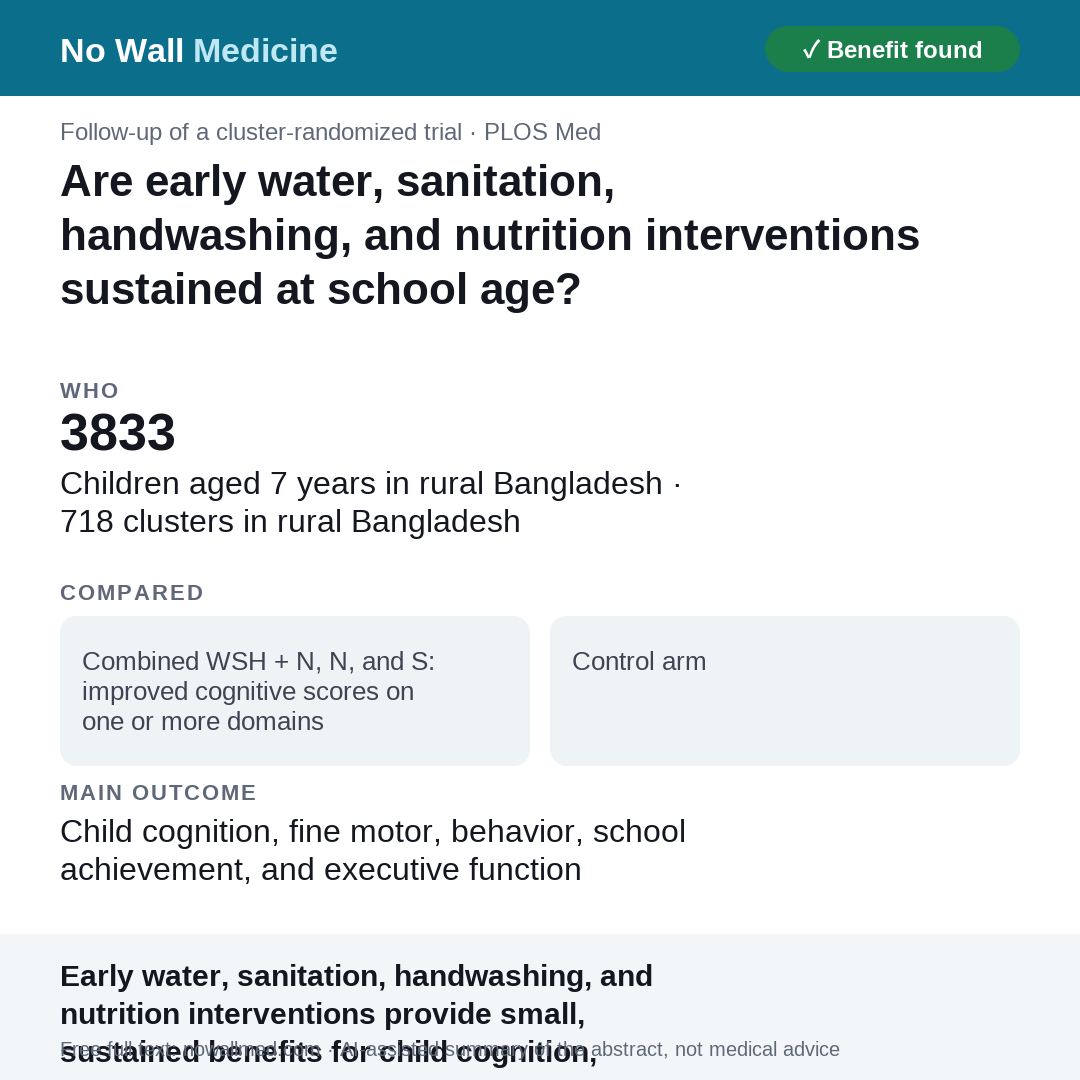
Effects of early water, sanitation, handwashing, and nutrition interventions on child development at school age: a follow-on study of a cluster-randomized trial in rural Bangladesh
Follow-up of a cluster-randomized trialBenefit found
Are early water, sanitation, handwashing, and nutrition interventions sustained at school age?
Who
3833
Children aged 7 years in rural Bangladesh · 718 clusters in rural Bangladesh
Compared
Combined WSH + N, N, and S: improved cognitive scores on one or more domains
Control arm
Main outcome
Child cognition, fine motor, behavior, school achievement, and executive function
Result: adjusted effect sizes between 0.10 (95%CI: 0.00, 0.20) and 0.15 (0.03, 0.27)
Bottom line: Early water, sanitation, handwashing, and nutrition interventions provide small, sustained benefits for child cognition, socioemotional outcomes, and maternal mental health.
Limitation: The main limitation of this study is loss to follow-up.
PLOS Med · 2025-12-16Download image