Visual abstracts
New randomized trials and meta-analyses from leading journals at a glance: who was studied, what was compared, and what was found. Every paper is free to read in full.
All specialtiesCardiology 4877Oncology 4138Gastroenterology & Hepatology 1942Infectious Disease 3837Neurology 1905Psychiatry & Mental Health 2273Pulmonology 2143Critical Care 1365Endocrinology & Diabetes 2580Pediatrics 2980Surgery 2559Orthopedics & Sports Medicine 931Neurosurgery 537Cardiothoracic & Vascular Surgery 674Plastic & Reconstructive Surgery 591Nephrology 1133Rheumatology 823Hematology 1109Dermatology 621Ophthalmology 543Obstetrics & Gynecology 1686Public & Global Health 1058Radiology & Imaging 648Anesthesiology 986Urology 764ENT (Otolaryngology) 503Emergency Medicine 511Allergy & Immunology 313Geriatrics 981Family Medicine & Primary Care 562Medical Genetics & Genomics 676Pathology & Laboratory Medicine 159Physical Medicine & Rehabilitation 757Palliative Care 444Nutrition 1588Digital Health & AI 2201General Medicine 321
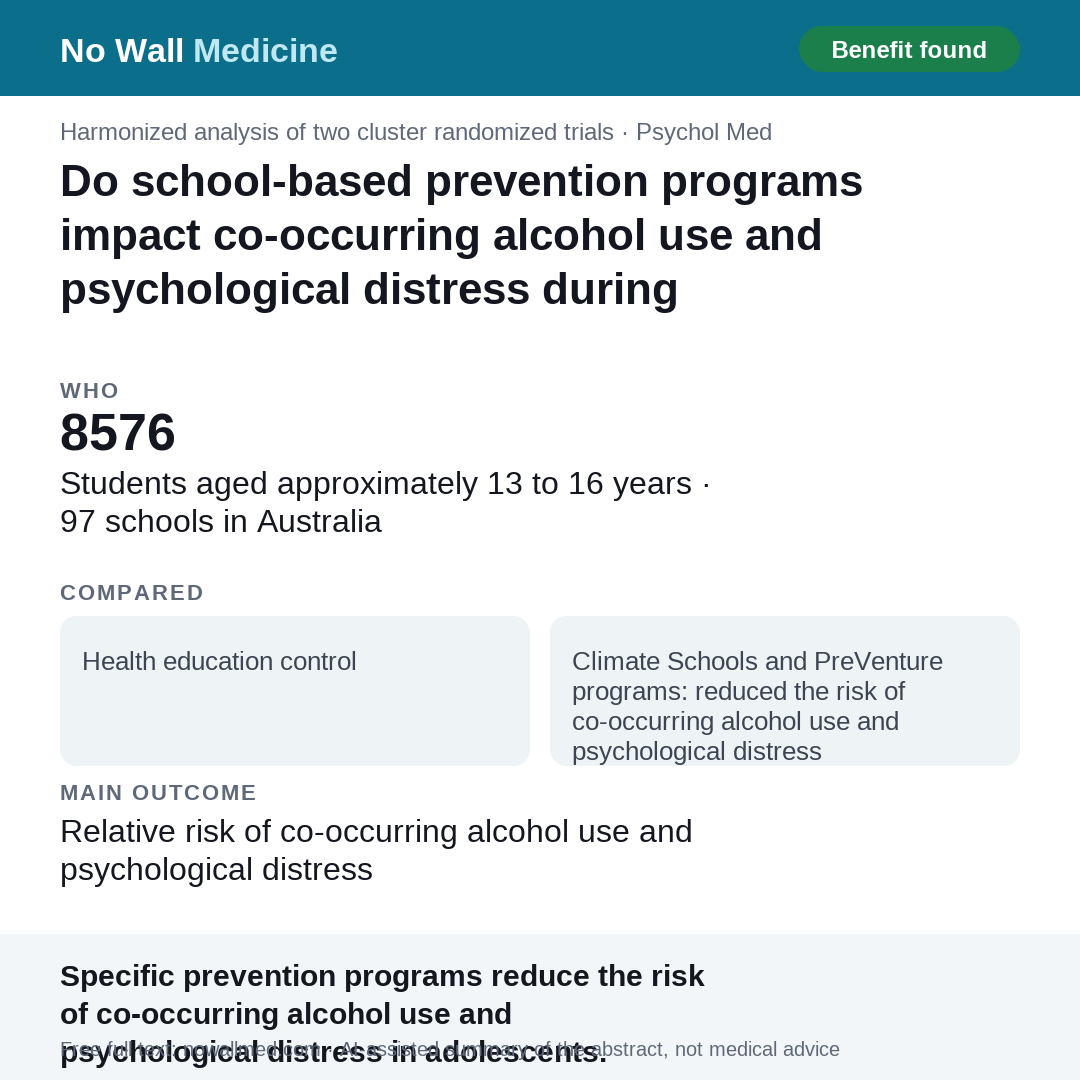
Do school-based prevention programs impact co-occurring alcohol use and psychological distress during adolescence?
Harmonized analysis of two cluster randomized trialsBenefit found
Do school-based prevention programs impact co-occurring alcohol use and psychological distress during adolescence?
Who
8576
Students aged approximately 13 to 16 years · 97 schools in Australia
Compared
Health education control
Climate Schools and PreVenture programs: reduced the risk of co-occurring alcohol use and psychological distress
Main outcome
Relative risk of co-occurring alcohol use and psychological distress
Result: RR Climate Schools 0.37; RR PreVenture 0.22
Bottom line: Specific prevention programs reduce the risk of co-occurring alcohol use and psychological distress in adolescents.
Limitation: Preventing psychological distress alone requires further exploration.
Psychol Med · 2024-12-23Download image
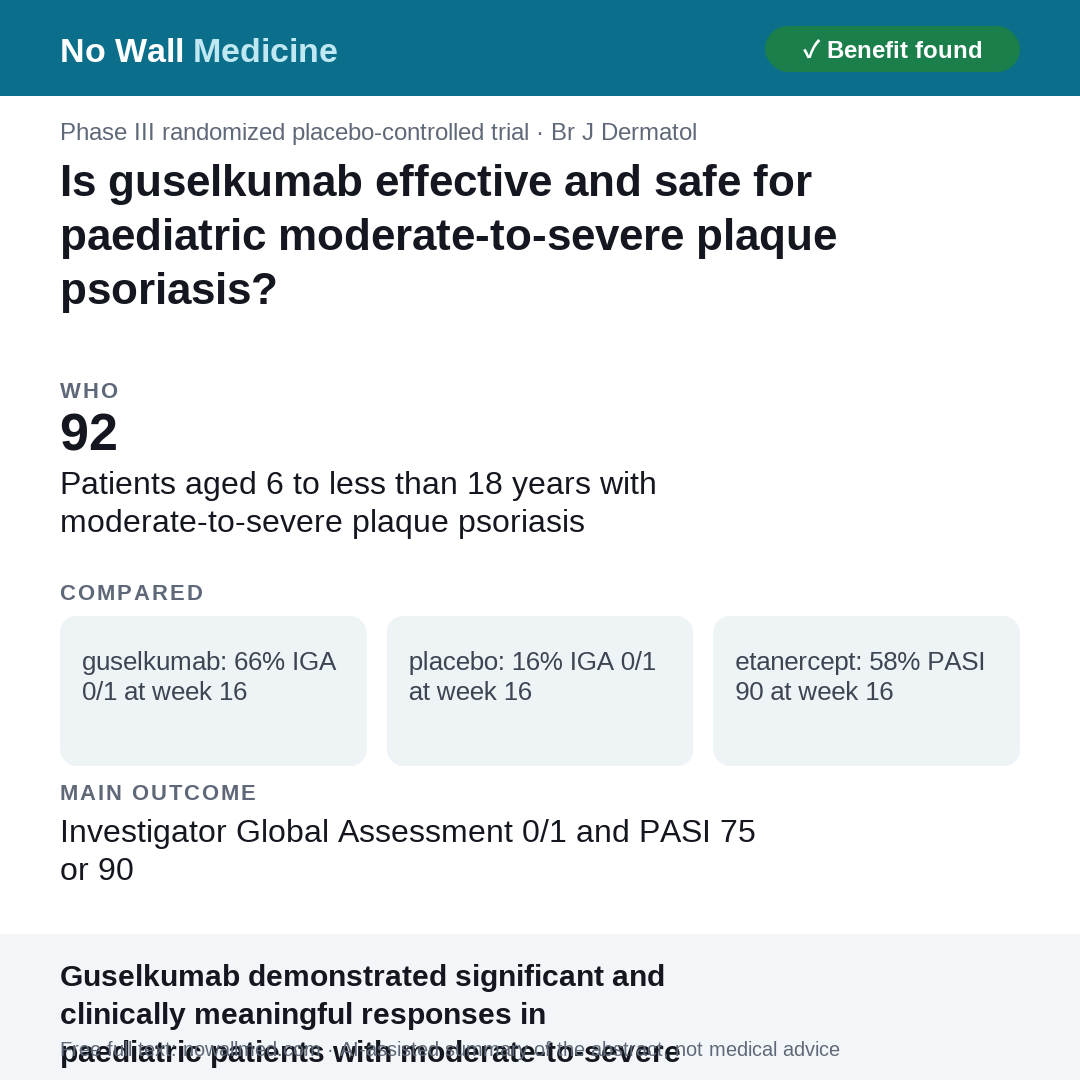
Guselkumab for the treatment of moderate-to-severe plaque psoriasis in paediatric patients: results of the phase III randomized placebo-controlled PROTOSTAR study
Phase III randomized placebo-controlled trialBenefit found
Is guselkumab effective and safe for paediatric moderate-to-severe plaque psoriasis?
Who
92
Patients aged 6 to less than 18 years with moderate-to-severe plaque psoriasis
Compared
guselkumab: 66% IGA 0/1 at week 16
placebo: 16% IGA 0/1 at week 16
etanercept: 58% PASI 90 at week 16
Main outcome
Investigator Global Assessment 0/1 and PASI 75 or 90
Bottom line: Guselkumab demonstrated significant and clinically meaningful responses in paediatric patients with moderate-to-severe plaque psoriasis.
Br J Dermatol · 2024-12-22Download image
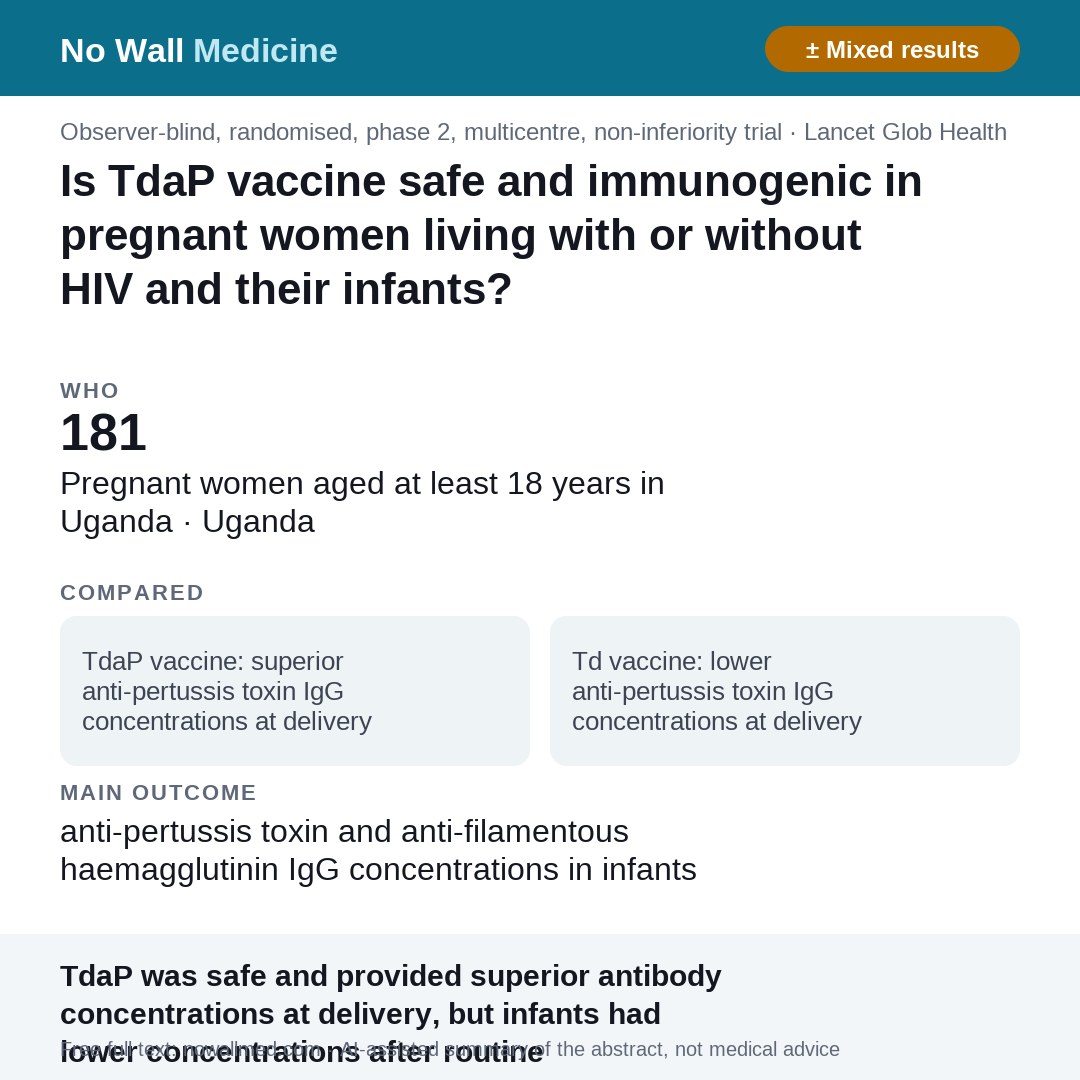
Safety and immunogenicity of an acellular pertussis vaccine containing genetically detoxified pertussis toxin administered to pregnant women living with and without HIV and their newborns (WoMANPOWER): a randomised controlled trial in Uganda
Observer-blind, randomised, phase 2, multicentre, non-inferiority trialMixed results
Is TdaP vaccine safe and immunogenic in pregnant women living with or without HIV and their infants?
Who
181
Pregnant women aged at least 18 years in Uganda · Uganda
Compared
TdaP vaccine: superior anti-pertussis toxin IgG concentrations at delivery
Td vaccine: lower anti-pertussis toxin IgG concentrations at delivery
Main outcome
anti-pertussis toxin and anti-filamentous haemagglutinin IgG concentrations in infants
Result: geometric mean ratio 9·61 (95% CI 5·21-17·74) for HIV-exposed uninfected infants
Bottom line: TdaP was safe and provided superior antibody concentrations at delivery, but infants had lower concentrations after routine whole-cell vaccination.
Funded by: Medical Research Council, Canadian Institutes of Health Research, British Columbia Children's Hospital
Lancet Glob Health · 2024-12-21Download image
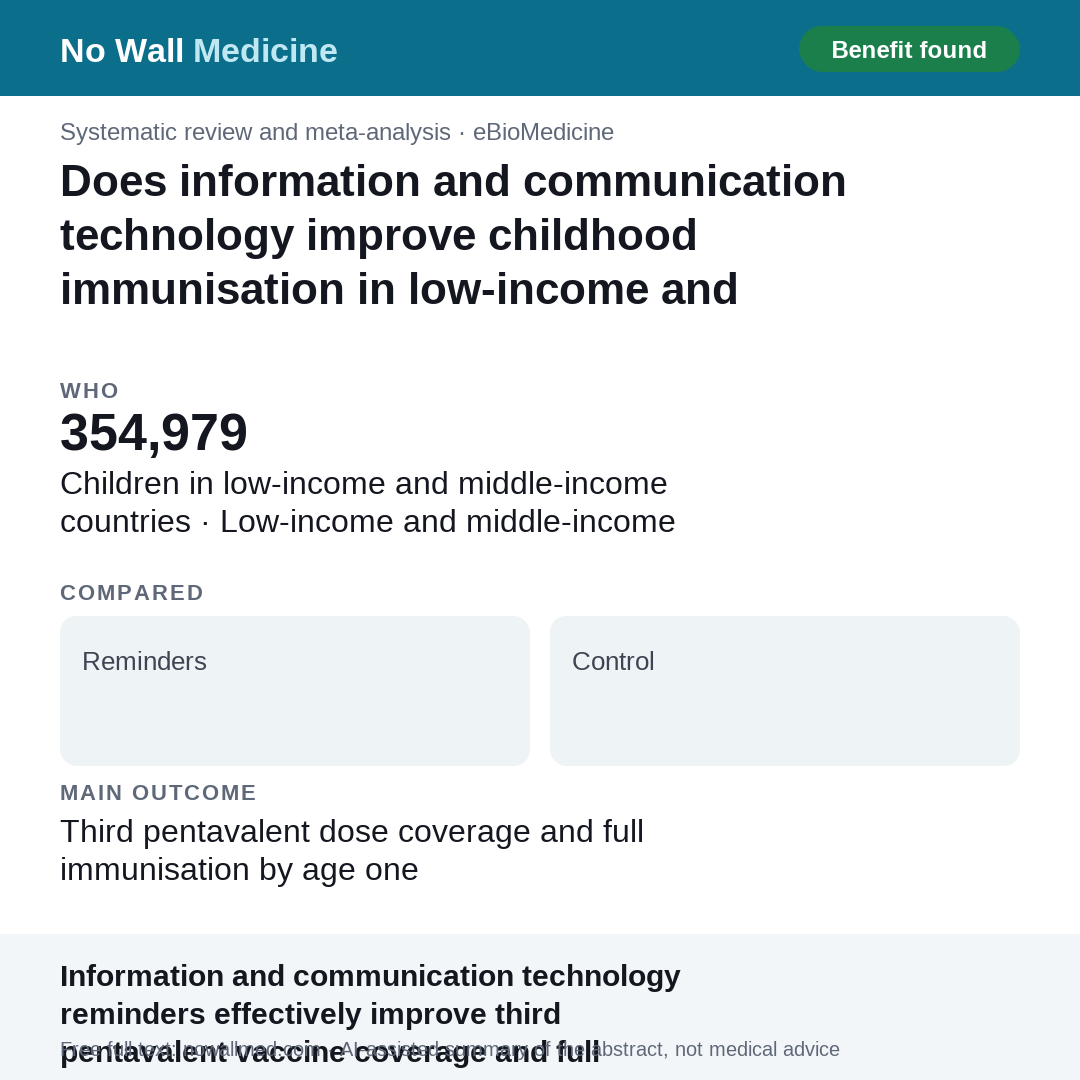
The impact of information and communication technology on immunisation and immunisation programmes in low-income and middle-income countries: a systematic review and meta-analysis
Systematic review and meta-analysisBenefit found
Does information and communication technology improve childhood immunisation in low-income and middle-income countries?
Who
354,979
Children in low-income and middle-income countries · Low-income and middle-income countries
Compared
Reminders
Control
Main outcome
Third pentavalent dose coverage and full immunisation by age one
Result: OR 2.32 (95% CI 1.34-4.03) for third pentavalent dose; OR 2.61 (95% CI 1.2-5.67) for full immunisation
Bottom line: Information and communication technology reminders effectively improve third pentavalent vaccine coverage and full immunisation rates in low-income and middle-income countries.
Limitation: Main concerns included unblinded outcome assessors, intervention providers, and higher risk of baseline differences in quasi-experimental studies.
Funded by: German Corporation for International Cooperation and Federal Ministry for Economic Cooperation and Development
eBioMedicine · 2024-12-21Download image
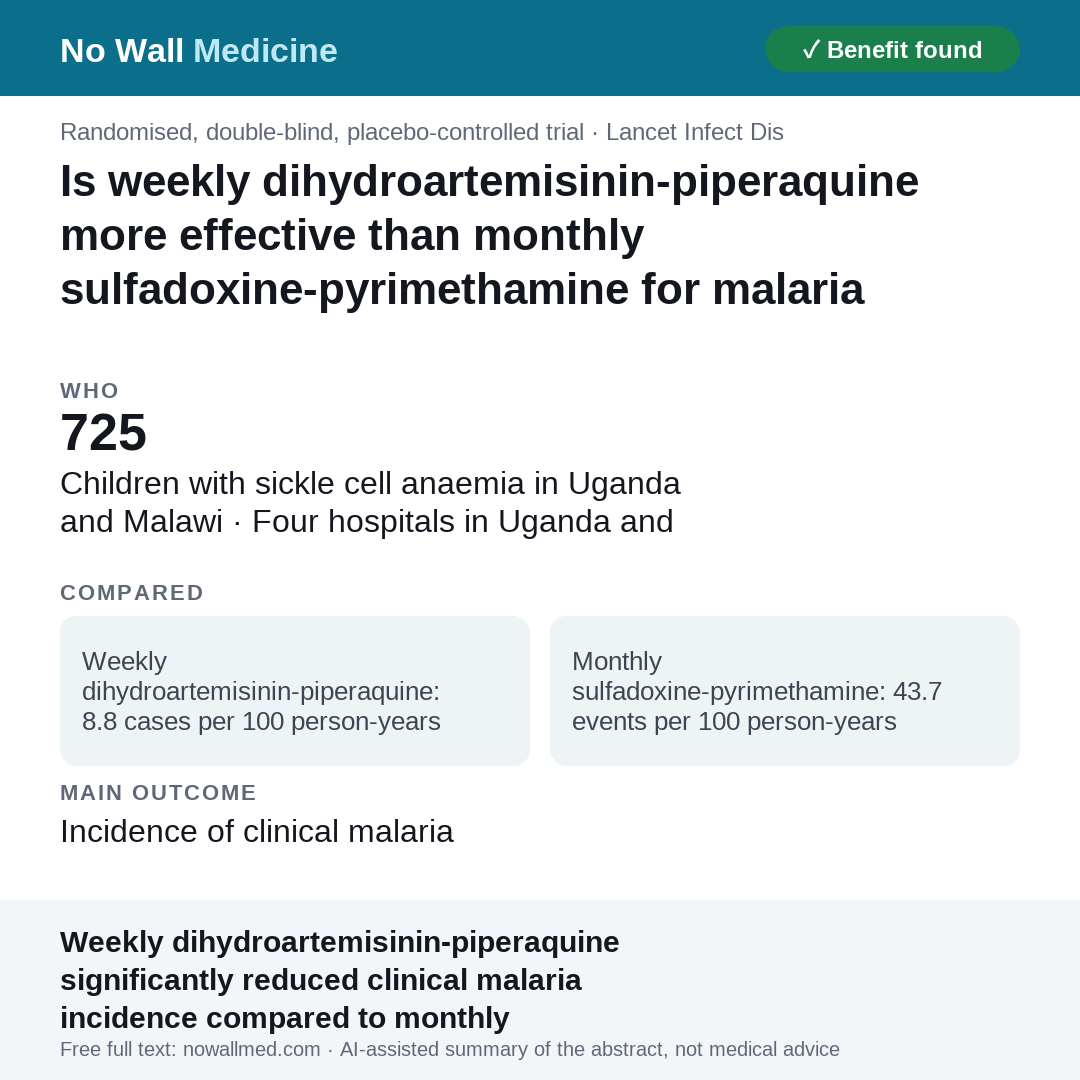
Weekly dihydroartemisinin-piperaquine versus monthly sulfadoxine-pyrimethamine for malaria chemoprevention in children with sickle cell anaemia in Uganda and Malawi (CHEMCHA): a randomised, double-blind, placebo-controlled trial
Randomised, double-blind, placebo-controlled trialBenefit found
Is weekly dihydroartemisinin-piperaquine more effective than monthly sulfadoxine-pyrimethamine for malaria chemoprevention?
Who
725
Children with sickle cell anaemia in Uganda and Malawi · Four hospitals in Uganda and Malawi
Compared
Weekly dihydroartemisinin-piperaquine: 8.8 cases per 100 person-years
Monthly sulfadoxine-pyrimethamine: 43.7 events per 100 person-years
Main outcome
Incidence of clinical malaria
Result: incidence rate ratio 0.20 (95% CI 0.14-0.30)
Bottom line: Weekly dihydroartemisinin-piperaquine significantly reduced clinical malaria incidence compared to monthly sulfadoxine-pyrimethamine in children with sickle cell anaemia.
Lancet Infect Dis · 2024-12-20Download image
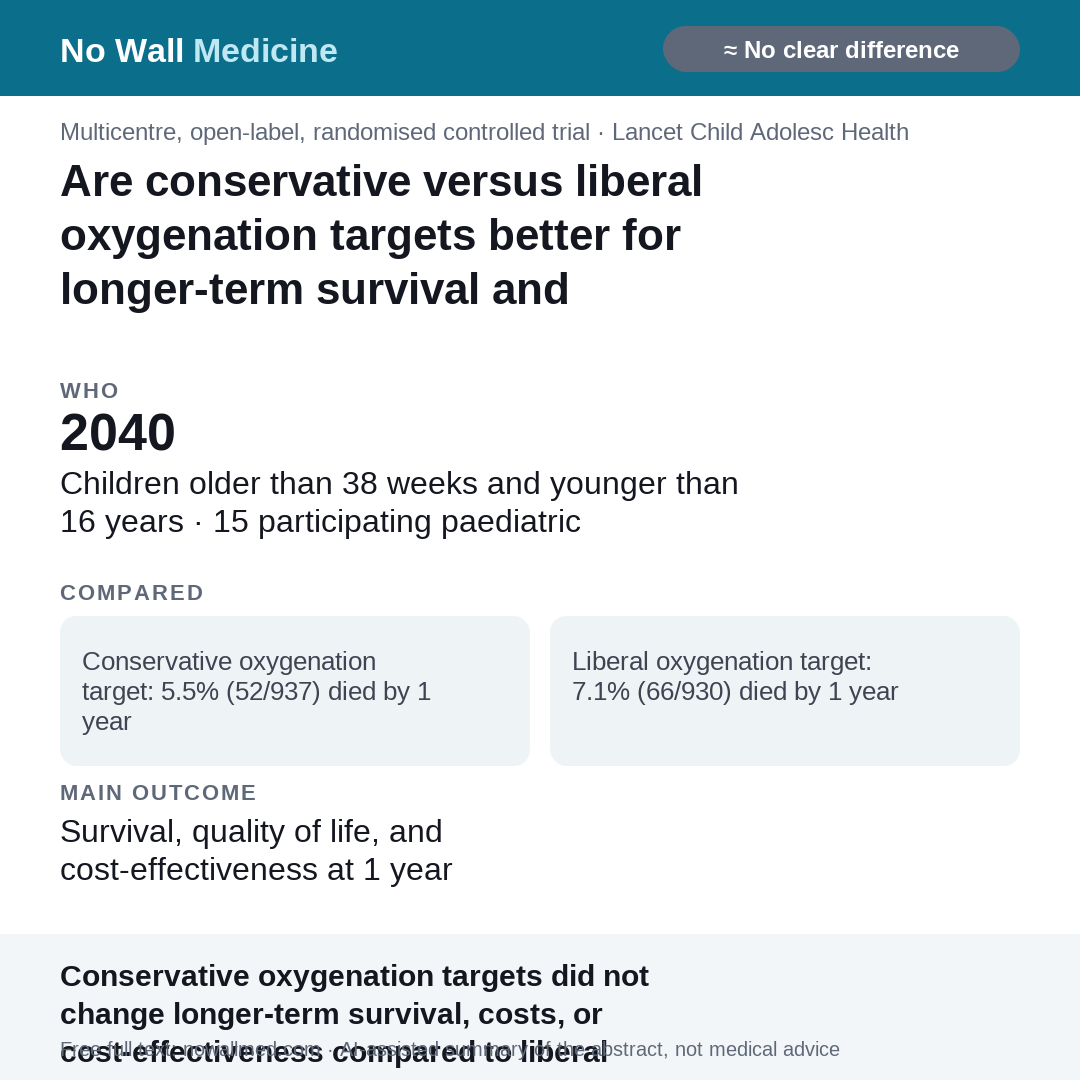
Longer-term survival, quality of life, and cost-effectiveness of conservative versus liberal oxygenation targets in critically ill children: a pre-specified analysis from Oxy-PICU, a multicentre, open, parallel-group, randomised controlled trial
Multicentre, open-label, randomised controlled trialNo clear difference
Are conservative versus liberal oxygenation targets better for longer-term survival and cost-effectiveness?
Who
2040
Children older than 38 weeks and younger than 16 years · 15 participating paediatric intensive care units in England and Scotland
Compared
Conservative oxygenation target: 5.5% (52/937) died by 1 year
Liberal oxygenation target: 7.1% (66/930) died by 1 year
Main outcome
Survival, quality of life, and cost-effectiveness at 1 year
Result: adjusted hazard ratio 0.77 (95% CI 0.53 to 1.10)
Bottom line: Conservative oxygenation targets did not change longer-term survival, costs, or cost-effectiveness compared to liberal oxygenation.
Funded by: UK National Institute for Health and Social Care Research
Lancet Child Adolesc Health · 2024-12-20Download image
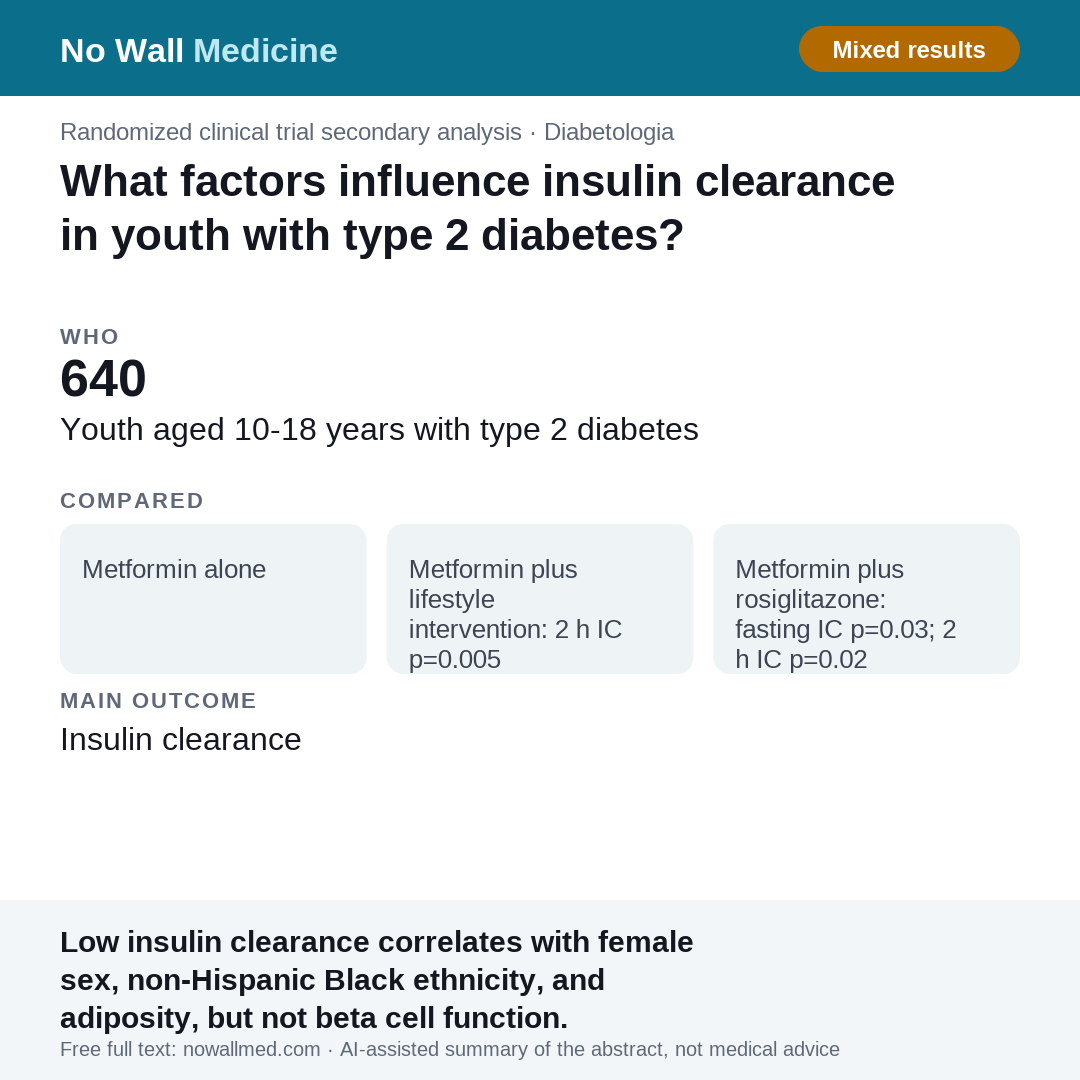
Insulin clearance at randomisation and in response to treatment in youth with type 2 diabetes: a secondary analysis of the TODAY randomised clinical trial
Randomized clinical trial secondary analysisMixed results
What factors influence insulin clearance in youth with type 2 diabetes?
Who
640
Youth aged 10-18 years with type 2 diabetes
Compared
Metformin alone
Metformin plus lifestyle intervention: 2 h IC p=0.005
Metformin plus rosiglitazone: fasting IC p=0.03; 2 h IC p=0.02
Main outcome
Insulin clearance
Bottom line: Low insulin clearance correlates with female sex, non-Hispanic Black ethnicity, and adiposity, but not beta cell function.
Diabetologia · 2024-12-20Download image
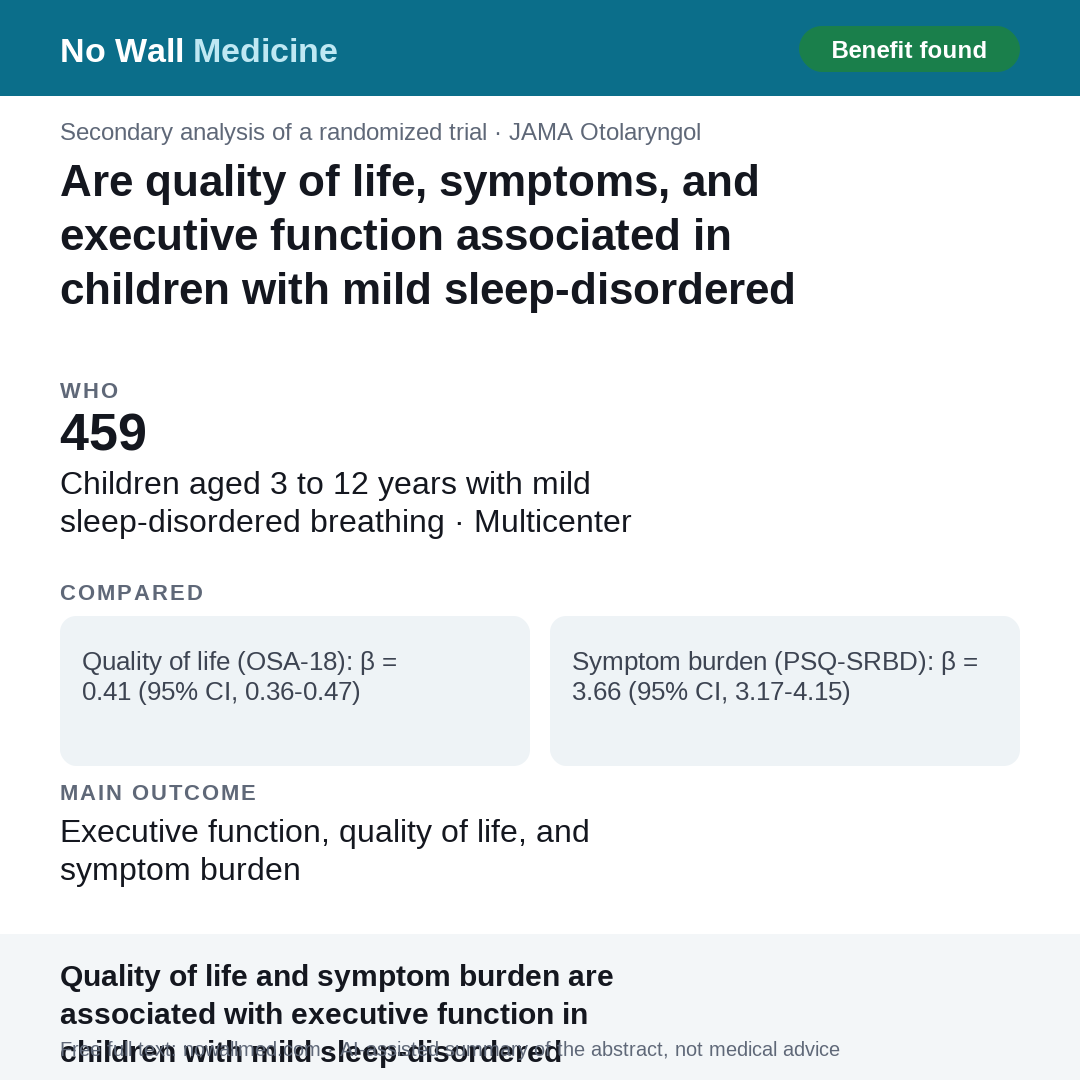
A Systematic Review: The Impact of COVID-19 Policy Flexibilities on SNAP and WIC Programmatic Outcomes
Systematic reviewBenefit found
How did COVID-19 policy flexibilities impact SNAP and WIC programmatic outcomes?
Who
37
Supplemental Nutrition Assistance Program and WIC participants
Compared
Policy flexibilities
No flexibilities
Main outcome
Access, enrollment, benefit utilization, and perceptions
Bottom line: Policy flexibilities improved enrollment, benefit utilization, and participant satisfaction in SNAP and WIC programs.
Limitation: Potential risks of bias including selection bias and confounding bias.
Adv Nutr · 2024-12-20Download image
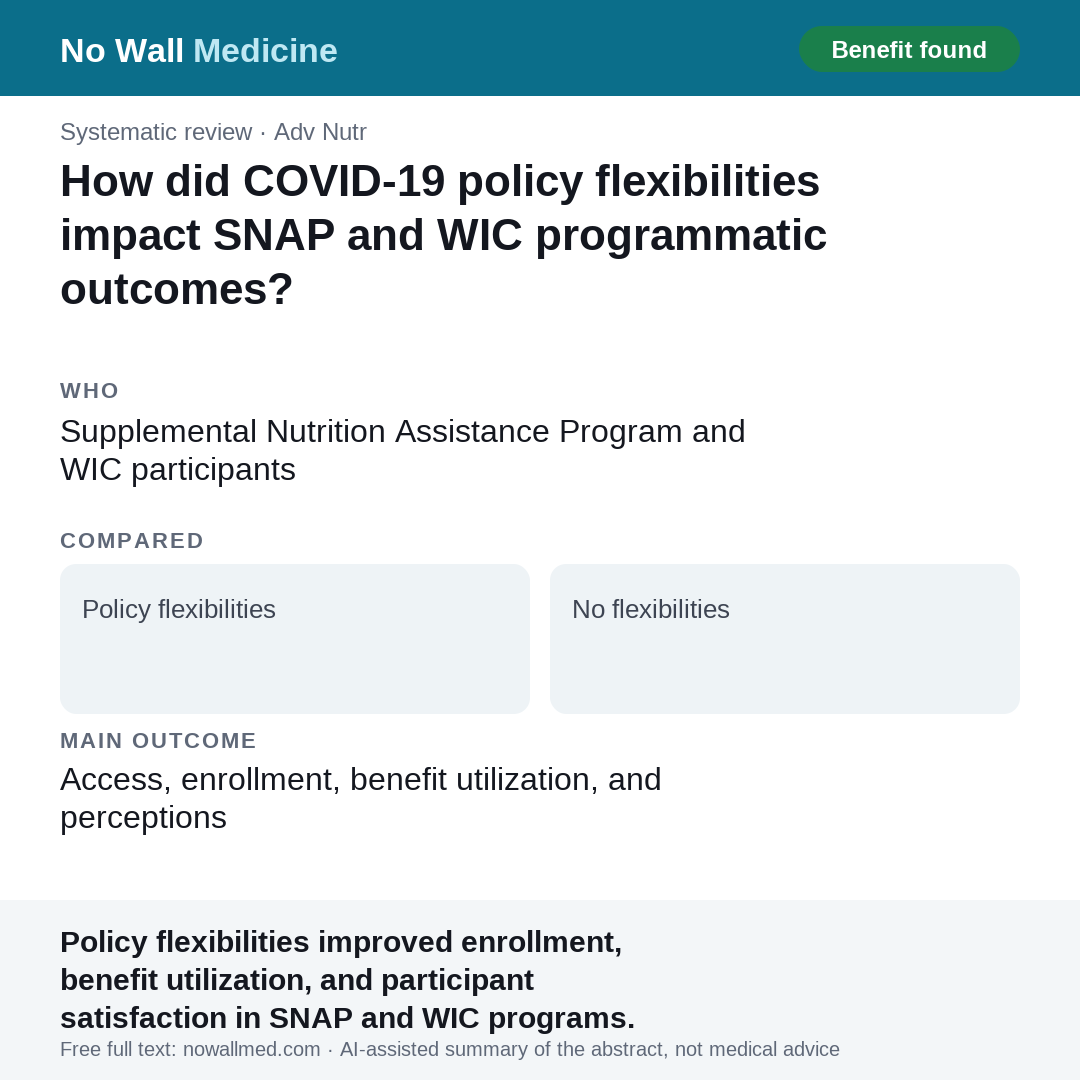
Effect of a spatial repellent on malaria incidence in an area of western Kenya characterised by high malaria transmission, insecticide resistance, and universal coverage of insecticide treated nets (part of the AEGIS Consortium): a cluster-randomised, controlled trial
Cluster-randomised, controlled trialBenefit found
Does spatial repellent reduce malaria infection
Who
1526
Children aged 6 months to 10 years · Busia County, Kenya
Compared
Spatial repellent: 33.4% reduction
Placebo
Main outcome
Malaria infection incidence
Result: hazard ratio not given, but 33.4% (95% CI 11.1-50.1) reduction
Bottom line: Spatial repellent reduces malaria infection risk
Funded by: Unitaid to University of Notre Dame
Lancet · 2024-12-19Download image
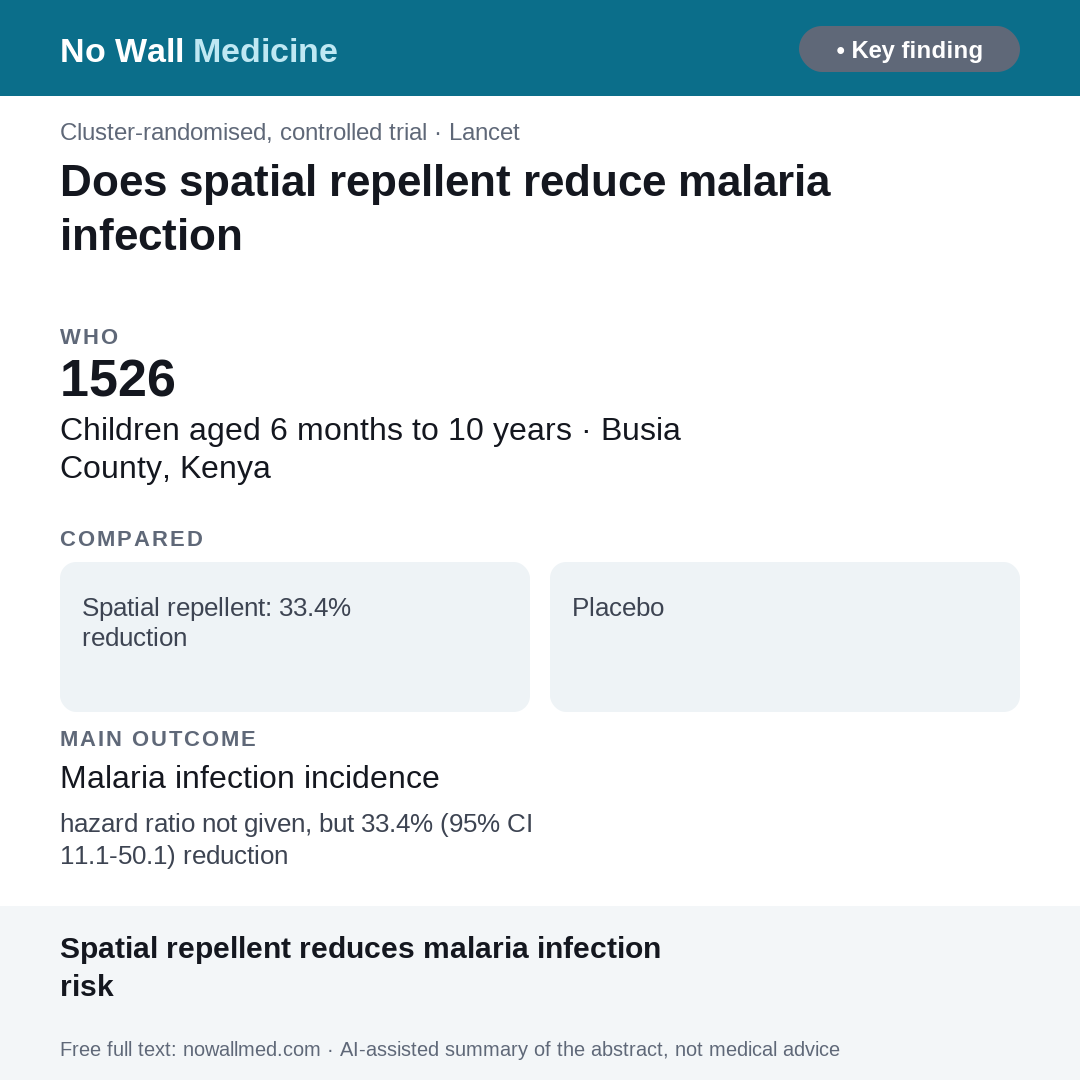
The global epidemiology and health burden of the autism spectrum: findings from the Global Burden of Disease Study 2021
Meta-regression analysisUnclear result
What is the global prevalence and health burden of autism spectrum disorder in 2021?
Who
Global population · Global
Compared
Global prevalence: 61·8 million (95% uncertainty interval 52·1-72·7)
Global disability-adjusted life-years: 11·5 million (7·8-16·3)
Main outcome
Prevalence and disability-adjusted life-years
Result: 788·3 (663·8-927·2) age-standardised prevalence per 100 000 people
Bottom line: Autism spectrum disorder affects 61.8 million people globally, representing a significant non-fatal health burden for those under 20.
Funded by: Queensland Health and the Bill & Melinda Gates Foundation
Lancet Psychiatry · 2024-12-19Download image
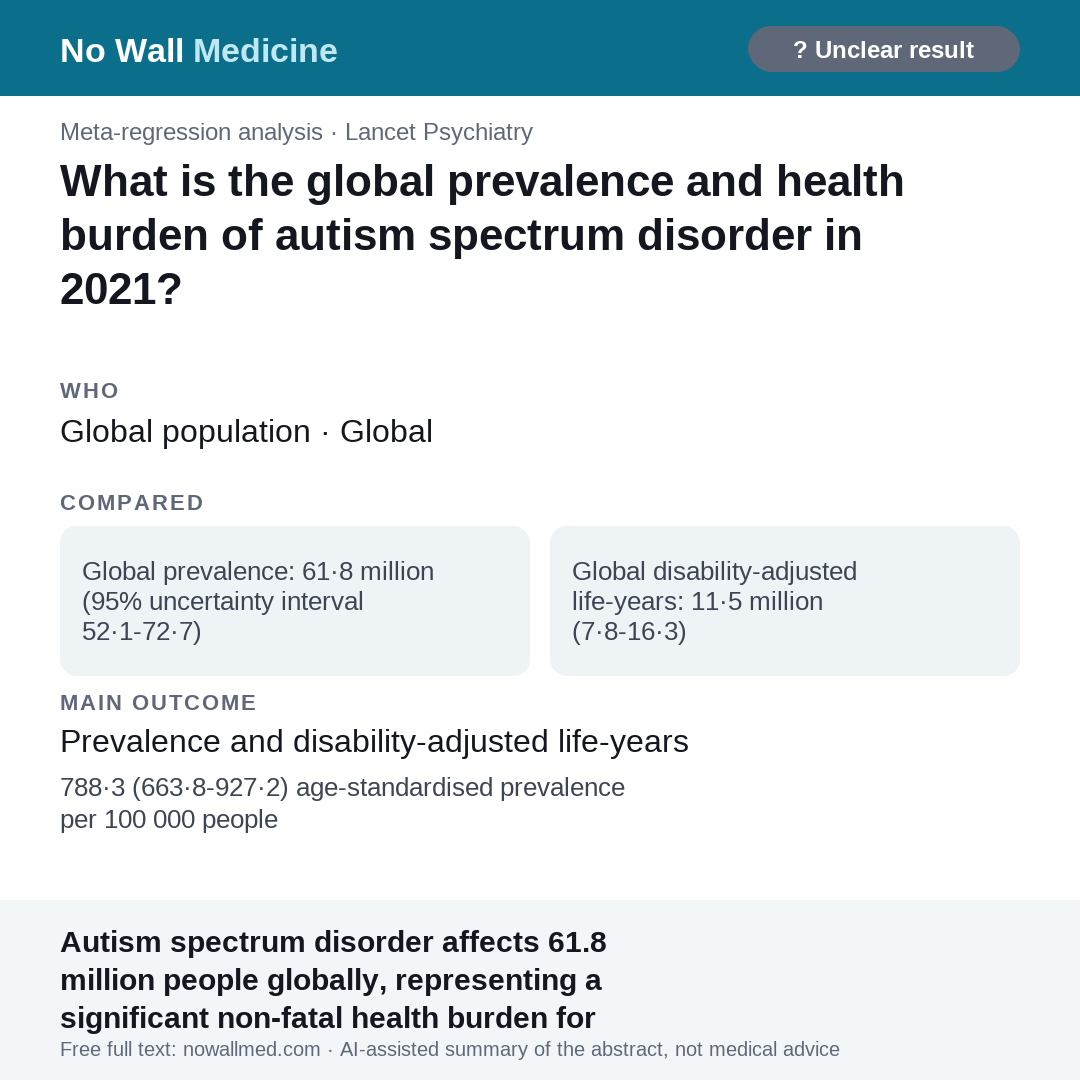
Symptoms, Quality of Life, and Executive Function in Children Who Snore
Secondary analysis of a randomized trialBenefit found
Are quality of life, symptoms, and executive function associated in children with mild sleep-disordered breathing?
Who
459
Children aged 3 to 12 years with mild sleep-disordered breathing · Multicenter
Compared
Quality of life (OSA-18): β = 0.41 (95% CI, 0.36-0.47)
Symptom burden (PSQ-SRBD): β = 3.66 (95% CI, 3.17-4.15)
Main outcome
Executive function, quality of life, and symptom burden
Bottom line: Quality of life and symptom burden are associated with executive function in children with mild sleep-disordered breathing.
JAMA Otolaryngol · 2024-12-19Download image
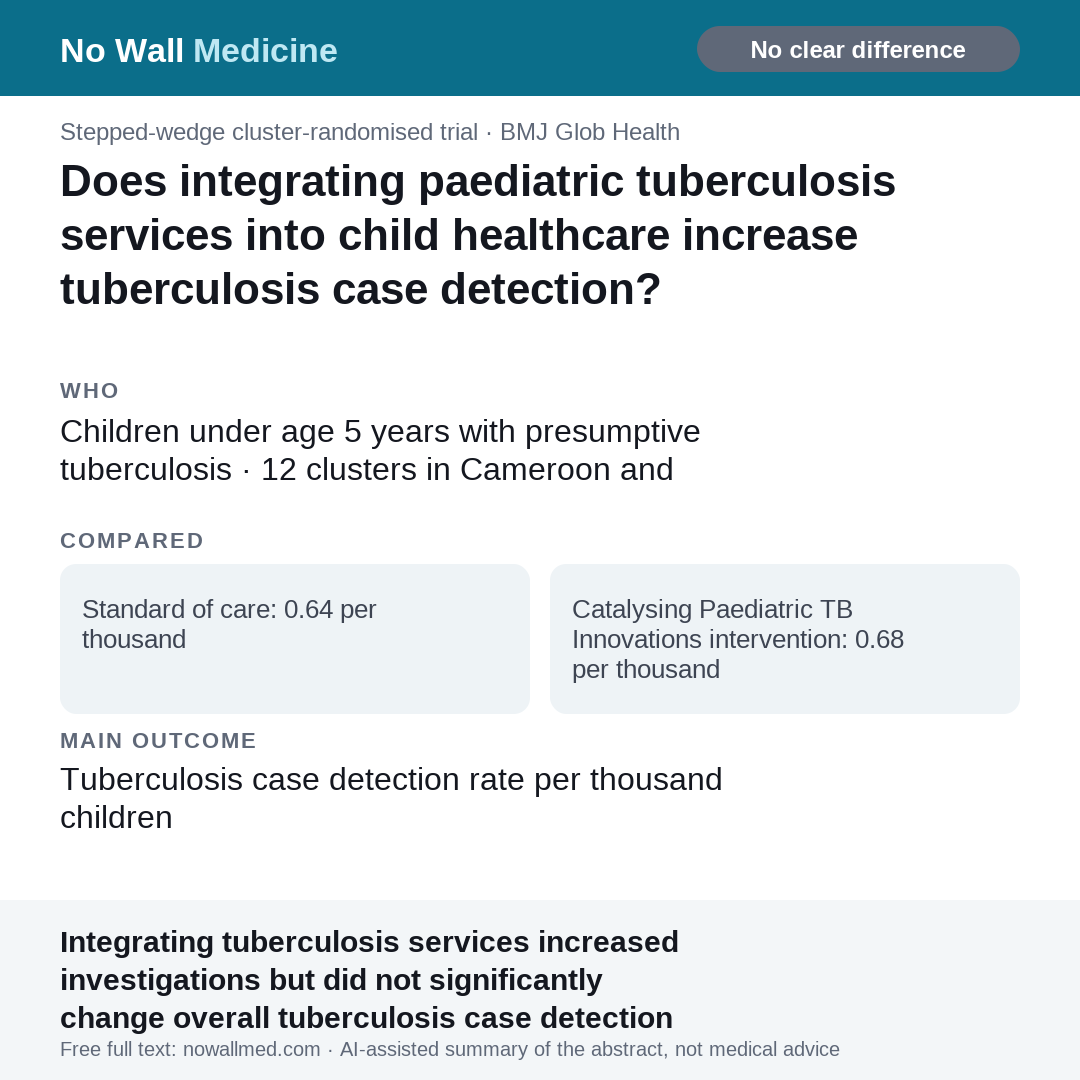
Effect of integrating paediatric tuberculosis services into child healthcare services on case detection in Africa: the INPUT stepped-wedge cluster-randomised trial
Stepped-wedge cluster-randomised trialNo clear difference
Does integrating paediatric tuberculosis services into child healthcare increase tuberculosis case detection?
Who
Children under age 5 years with presumptive tuberculosis · 12 clusters in Cameroon and Kenya
Compared
Standard of care: 0.64 per thousand
Catalysing Paediatric TB Innovations intervention: 0.68 per thousand
Main outcome
Tuberculosis case detection rate per thousand children
Result: adjusted rate ratio 1.32 (95% CI 0.66 to 2.61)
Bottom line: Integrating tuberculosis services increased investigations but did not significantly change overall tuberculosis case detection rates.
BMJ Glob Health · 2024-12-18Download image
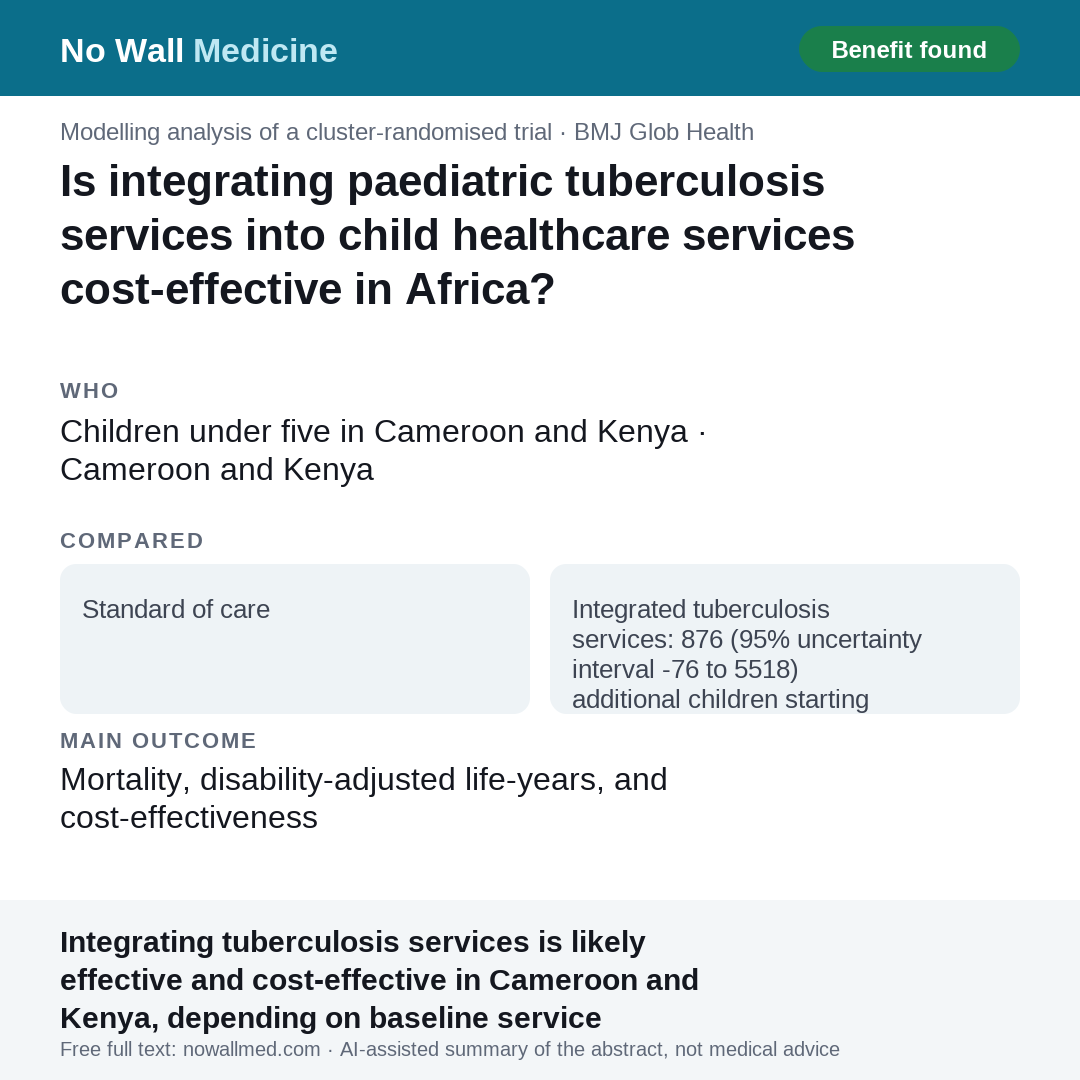
Cost-effectiveness of integrating paediatric tuberculosis services into child healthcare services in Africa: a modelling analysis of a cluster-randomised trial
Modelling analysis of a cluster-randomised trialBenefit found
Is integrating paediatric tuberculosis services into child healthcare services cost-effective in Africa?
Who
Children under five in Cameroon and Kenya · Cameroon and Kenya
Compared
Standard of care
Integrated tuberculosis services: 876 (95% uncertainty interval -76 to 5518) additional children starting treatment in Cameroon
Main outcome
Mortality, disability-adjusted life-years, and cost-effectiveness
Result: US$506 per disability-adjusted life-year averted in Cameroon and US$1299 in Kenya
Bottom line: Integrating tuberculosis services is likely effective and cost-effective in Cameroon and Kenya, depending on baseline service coverage.
Limitation: Cost-effectiveness depends on baseline service coverage, tuberculosis detection and treatment outcomes.
BMJ Glob Health · 2024-12-18Download image
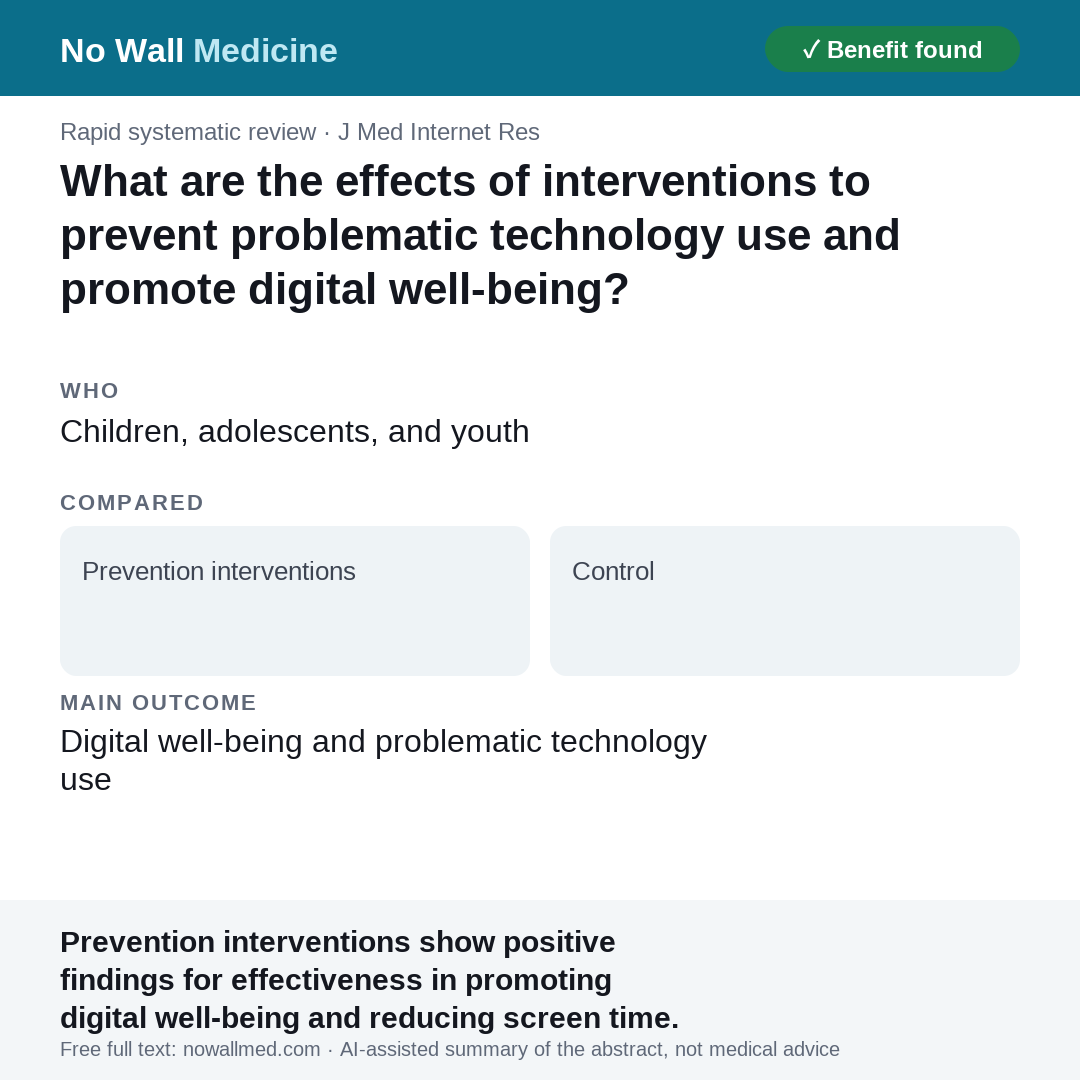
Prevention and Health Promotion Interventions for Young People in the Context of Digital Well-Being: Rapid Systematic Review
Rapid systematic reviewBenefit found
What are the effects of interventions to prevent problematic technology use and promote digital well-being?
Who
Children, adolescents, and youth
Compared
Prevention interventions
Control
Main outcome
Digital well-being and problematic technology use
Bottom line: Prevention interventions show positive findings for effectiveness in promoting digital well-being and reducing screen time.
Limitation: Study reporting was overall lacking, impairing the ability to draw conclusions.
J Med Internet Res · 2024-12-18Download image
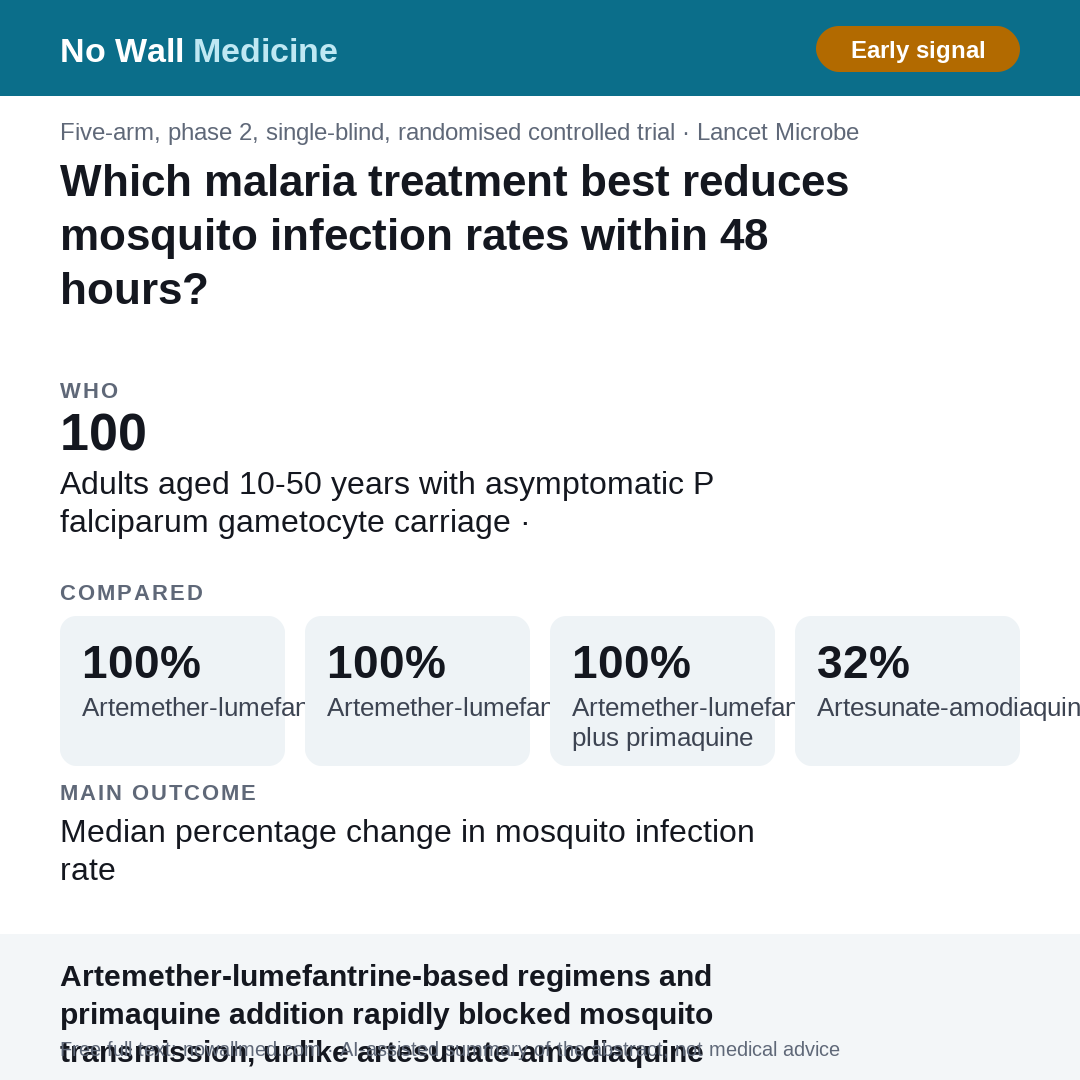
Artemether-lumefantrine-amodiaquine or artesunate-amodiaquine combined with single low-dose primaquine to reduce Plasmodium falciparum malaria transmission in Ouélessébougou, Mali: a five-arm, phase 2, single-blind, randomised controlled trial
Five-arm, single-blind, phase 2 randomised controlled trialMixed results
Do different antimalarial combinations with or without primaquine reduce malaria transmission to mosquitoes?
Who
100
Asymptomatic Plasmodium falciparum microscopy-detected gametocyte carriage, aged 10-50 years · Mali, Ouélessébougou Clinical Research Unit
Compared
100%Artemether-lumefantrine (IQR 100 to 100)
100%Artemether-lumefantrine-amodiaquine (IQR 100 to 100)
100%Artemether-lumefantrine-amodiaquine plus primaquine (IQR 100 to 100)
32%Artesunate-amodiaquine (IQR -10·9 to 79·4)
Main outcome
Median percentage change in mosquito infection rate
Bottom line: Artemether-lumefantrine combinations and artesunate-amodiaquine plus primaquine effectively reduced mosquito infection rates by 100% within 48 hours.
Funded by: Bill & Melinda Gates Foundation
Lancet Microbe · 2024-12-17Download image
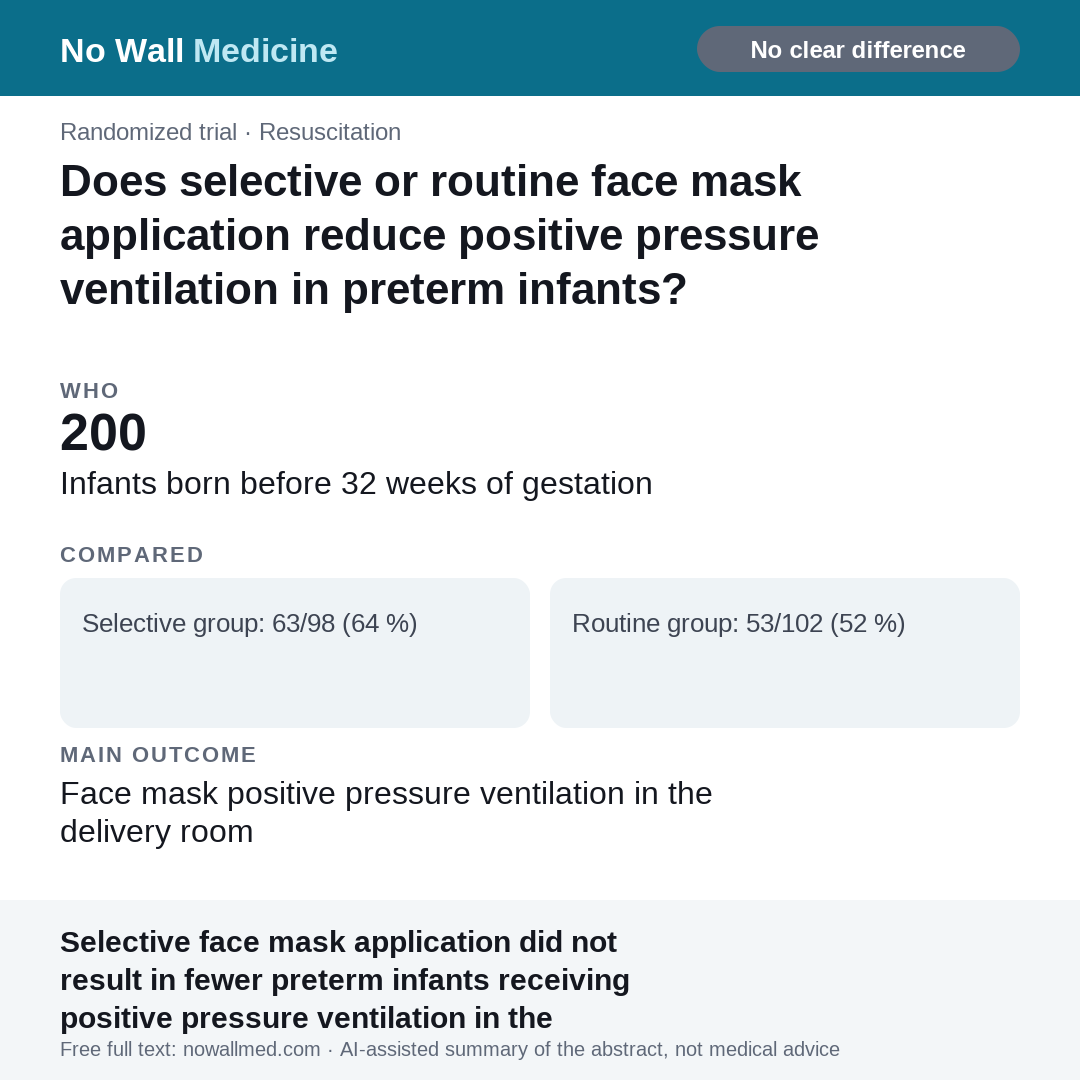
Selective or routine face mask application for breathing support of preterm infants at birth: a randomised trial
Randomized trialNo clear difference
Does selective or routine face mask application reduce positive pressure ventilation in preterm infants?
Who
200
Infants born before 32 weeks of gestation
Compared
Selective group: 63/98 (64 %)
Routine group: 53/102 (52 %)
Main outcome
Face mask positive pressure ventilation in the delivery room
Result: relative risk 1.24 (95% CI 0.98-1.57)
Bottom line: Selective face mask application did not result in fewer preterm infants receiving positive pressure ventilation in the delivery room.
Resuscitation · 2024-12-17Download image
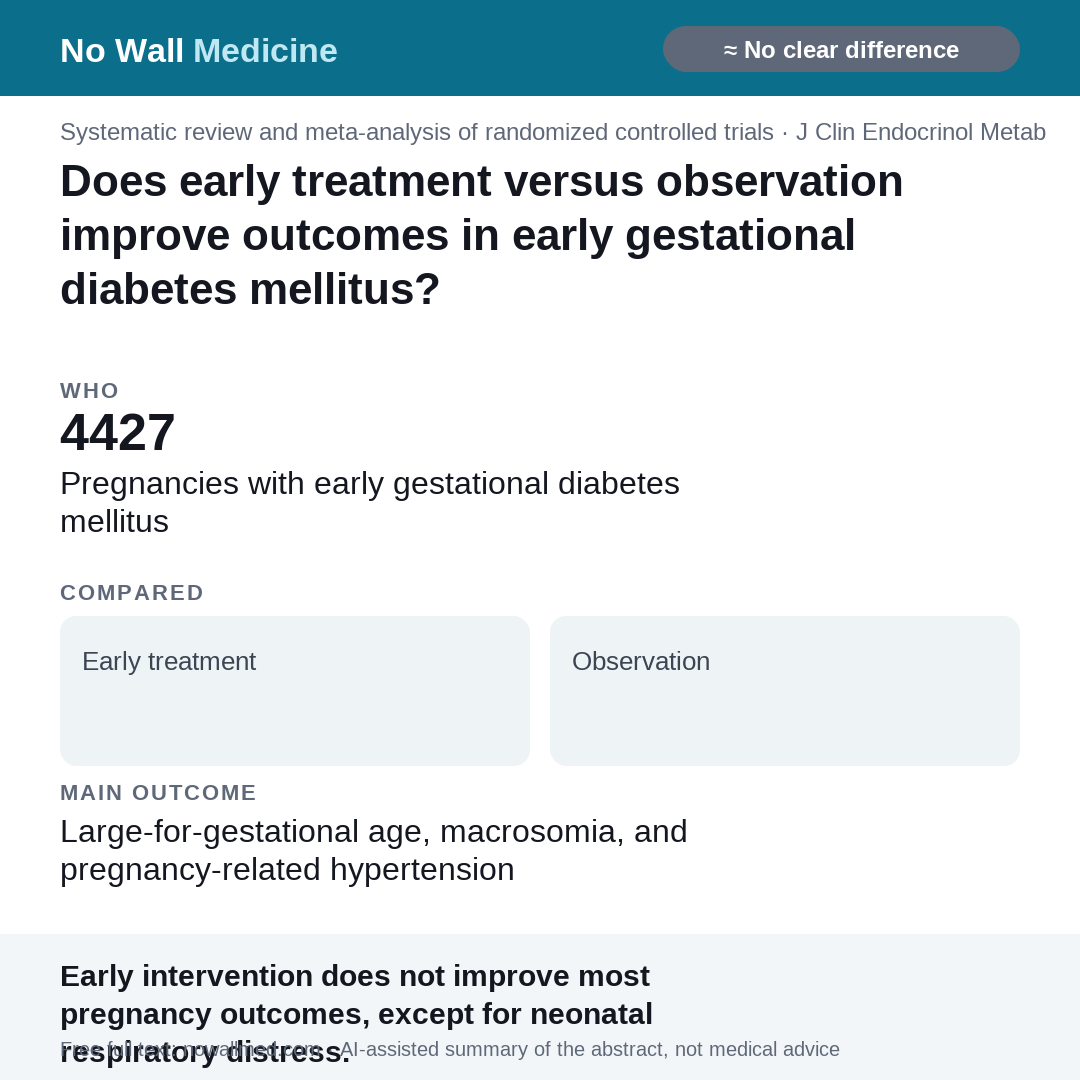
Treatment Versus Observation in Early Gestational Diabetes Mellitus: A Systematic Review and Meta-analysis of Randomized Controlled Trials
Systematic review and meta-analysis of randomized controlled trialsNo clear difference
Does early treatment versus observation improve outcomes in early gestational diabetes mellitus?
Who
4427
Pregnancies with early gestational diabetes mellitus
Compared
Early treatment
Observation
Main outcome
Large-for-gestational age, macrosomia, and pregnancy-related hypertension
Result: odds ratio 0.84 (95% confidence interval 0.53-1.32) for large-for-gestational age
Bottom line: Early intervention does not improve most pregnancy outcomes, except for neonatal respiratory distress.
Limitation: Variability in study designs and the inclusion of a lifestyle-only study.
J Clin Endocrinol Metab · 2024-12-17Download image
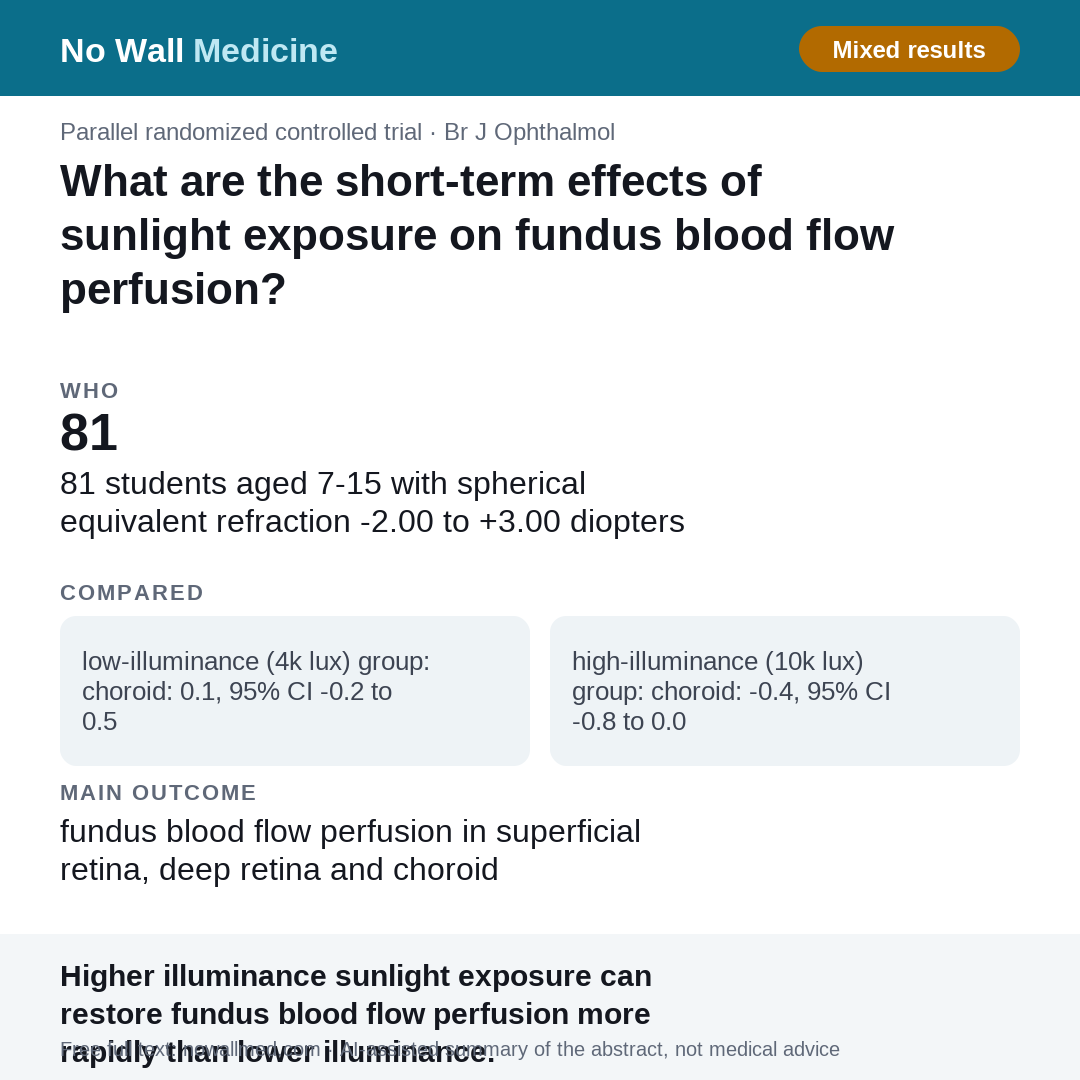
Short-term effects of sunlight exposure on fundus blood flow perfusion in children: a randomised controlled trial
Parallel randomized controlled trialMixed results
What are the short-term effects of sunlight exposure on fundus blood flow perfusion?
Who
81
81 students aged 7-15 with spherical equivalent refraction -2.00 to +3.00 diopters
Compared
low-illuminance (4k lux) group: choroid: 0.1, 95% CI -0.2 to 0.5
high-illuminance (10k lux) group: choroid: -0.4, 95% CI -0.8 to 0.0
Main outcome
fundus blood flow perfusion in superficial retina, deep retina and choroid
Bottom line: Higher illuminance sunlight exposure can restore fundus blood flow perfusion more rapidly than lower illuminance.
Br J Ophthalmol · 2024-12-17Download image
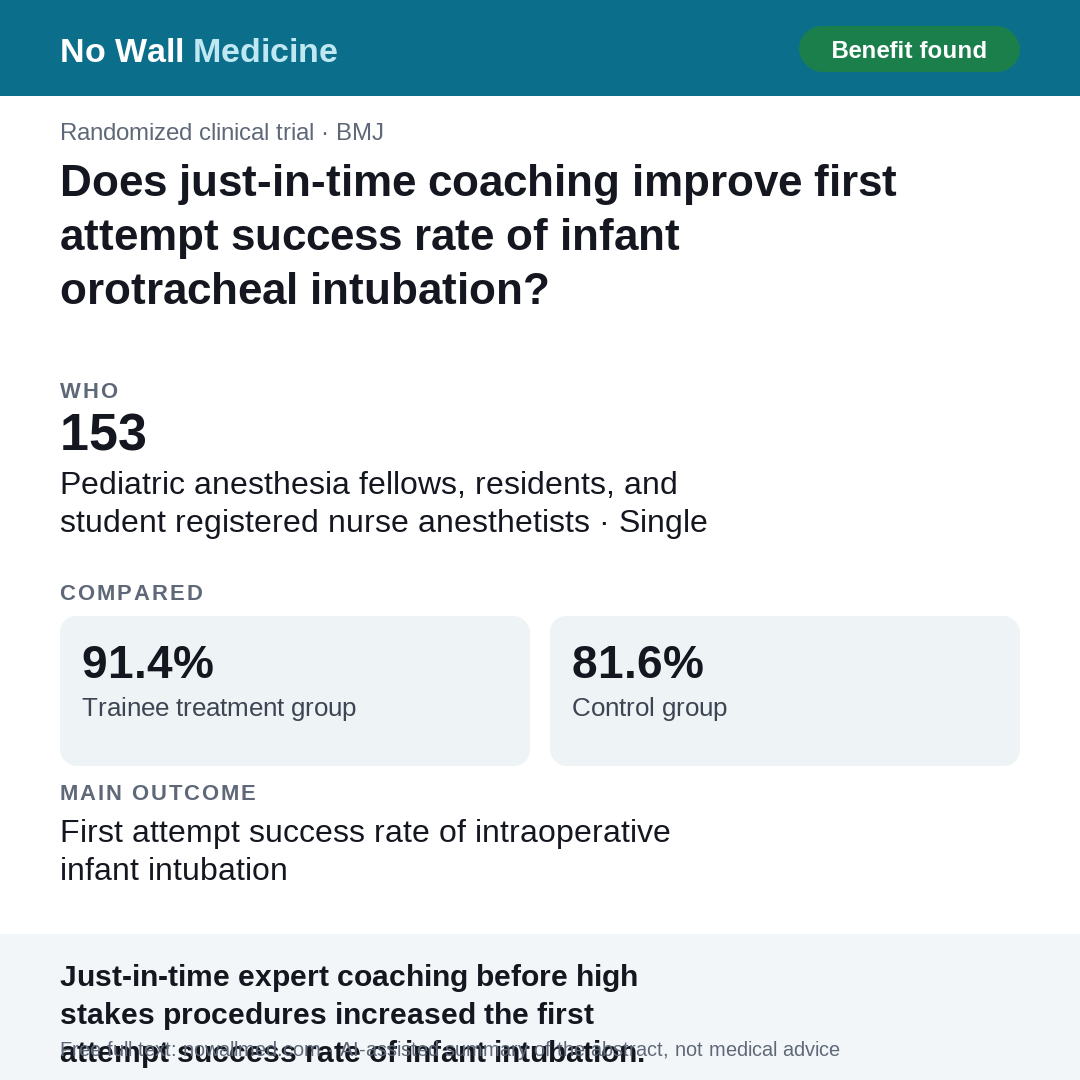
Coaching inexperienced clinicians before a high stakes medical procedure: randomized clinical trial
Randomized clinical trialBenefit found
Does just-in-time coaching improve first attempt success rate of infant orotracheal intubation?
Who
153
Pediatric anesthesia fellows, residents, and student registered nurse anesthetists · Single center quaternary children's hospital in Boston, MA, USA
Compared
91.4%Trainee treatment group (212/232)
81.6%Control group (231/283)
Main outcome
First attempt success rate of intraoperative infant intubation
Result: odds ratio 2.42 (95% confidence interval 1.45 to 4.04)
Bottom line: Just-in-time expert coaching before high stakes procedures increased the first attempt success rate of infant intubation.
Limitation: Randomized evaluation in other settings is warranted.
BMJ · 2024-12-16Download image
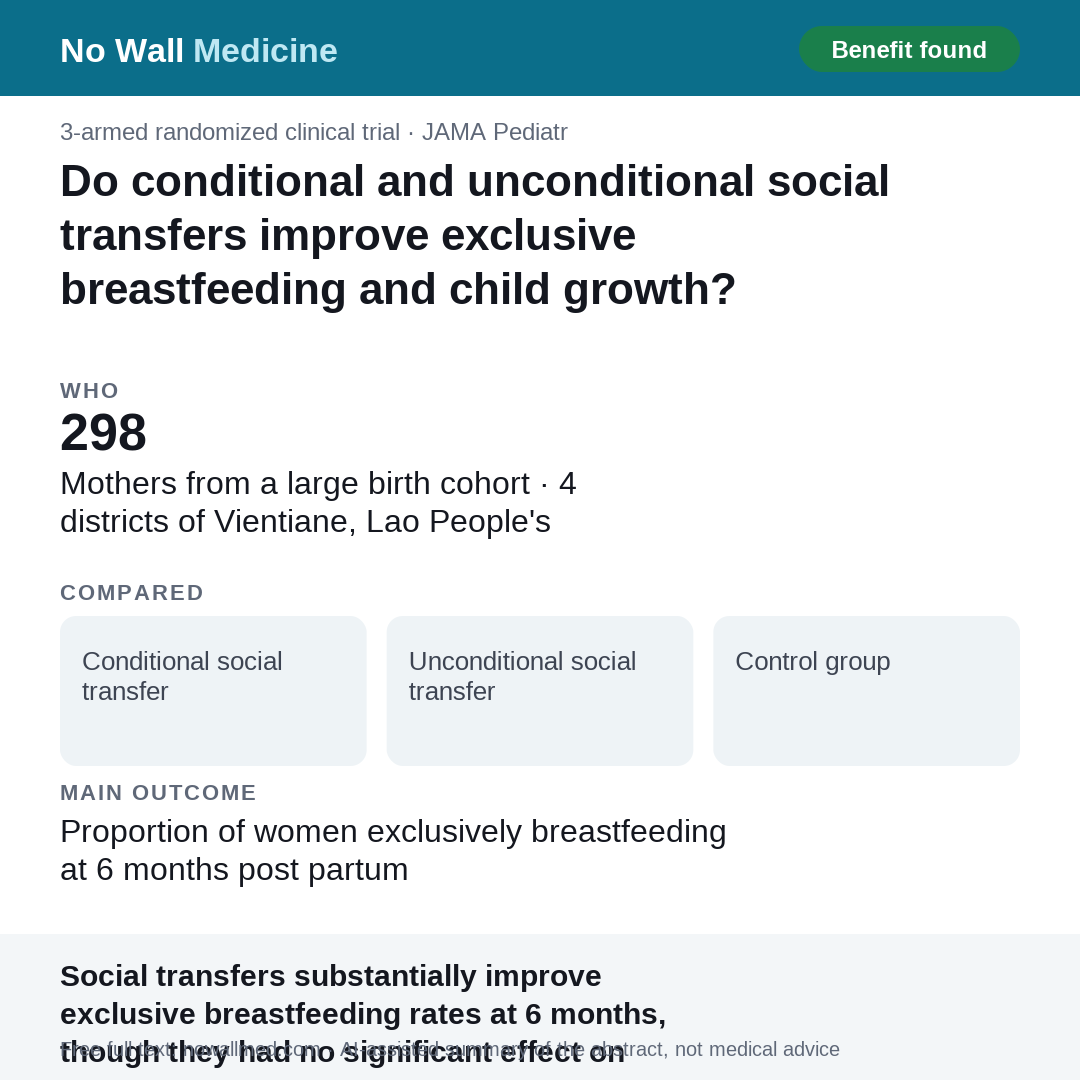
Conditional and Unconditional Social Transfers, Early-Life Nutrition, and Child Growth: A Randomized Clinical Trial
3-armed randomized clinical trialBenefit found
Do conditional and unconditional social transfers improve exclusive breastfeeding and child growth?
Who
298
Mothers from a large birth cohort · 4 districts of Vientiane, Lao People's Democratic Republic
Compared
Conditional social transfer
Unconditional social transfer
Control group
Main outcome
Proportion of women exclusively breastfeeding at 6 months post partum
Result: adjusted odds ratio 4.60 (95% CI, 2.10-10.07) and 2.51 (95% CI, 1.11-5.66)
Bottom line: Social transfers substantially improve exclusive breastfeeding rates at 6 months, though they had no significant effect on child growth.
JAMA Pediatr · 2024-12-16Download image