Visual abstracts
New randomized trials and meta-analyses from leading journals at a glance: who was studied, what was compared, and what was found. Every paper is free to read in full.
All specialtiesCardiology 4800Oncology 4084Gastroenterology & Hepatology 1917Infectious Disease 3789Neurology 1886Psychiatry & Mental Health 2240Pulmonology 2061Critical Care 1335Endocrinology & Diabetes 2553Pediatrics 2914Surgery 2500Orthopedics & Sports Medicine 923Neurosurgery 532Cardiothoracic & Vascular Surgery 665Plastic & Reconstructive Surgery 585Nephrology 1115Rheumatology 815Hematology 1099Dermatology 619Ophthalmology 539Obstetrics & Gynecology 1661Public & Global Health 1044Radiology & Imaging 637Anesthesiology 959Urology 751ENT (Otolaryngology) 497Emergency Medicine 484Allergy & Immunology 310Geriatrics 974Family Medicine & Primary Care 538Medical Genetics & Genomics 662Pathology & Laboratory Medicine 156Physical Medicine & Rehabilitation 746Palliative Care 422Nutrition 1566Digital Health & AI 2191General Medicine 319
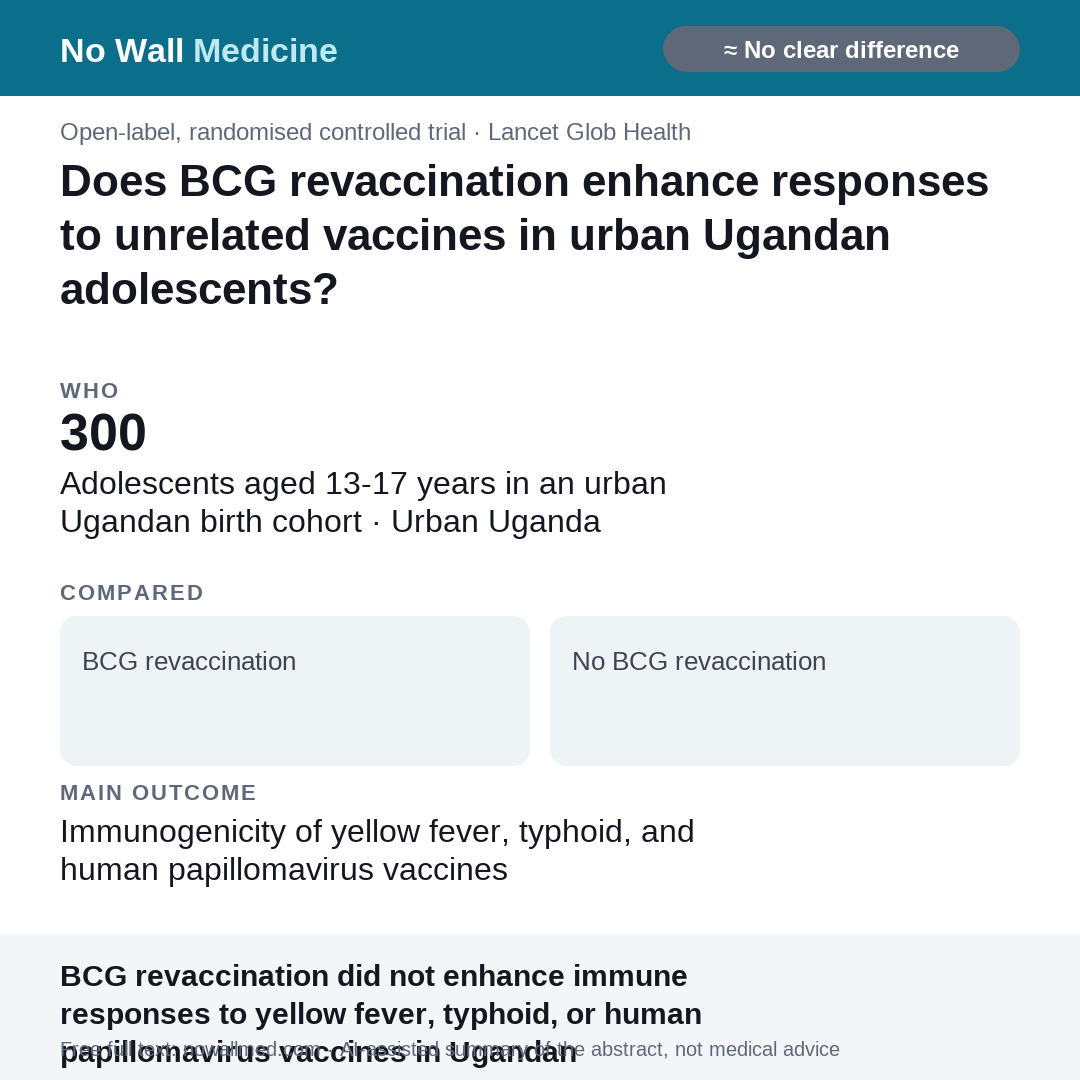
The effect of BCG revaccination on the response to unrelated vaccines in urban Ugandan adolescents (POPVAC C): an open-label, randomised controlled trial
Open-label, randomised controlled trialNo clear difference
Does BCG revaccination enhance responses to unrelated vaccines in urban Ugandan adolescents?
Who
300
Adolescents aged 13-17 years in an urban Ugandan birth cohort · Urban Uganda
Compared
BCG revaccination
No BCG revaccination
Main outcome
Immunogenicity of yellow fever, typhoid, and human papillomavirus vaccines
Result: GMR 0.95 (95% CI 0.75-1.19) for yellow fever PRNT50
Bottom line: BCG revaccination did not enhance immune responses to yellow fever, typhoid, or human papillomavirus vaccines in Ugandan adolescents.
Lancet Glob Health · 2024-10-19Download image
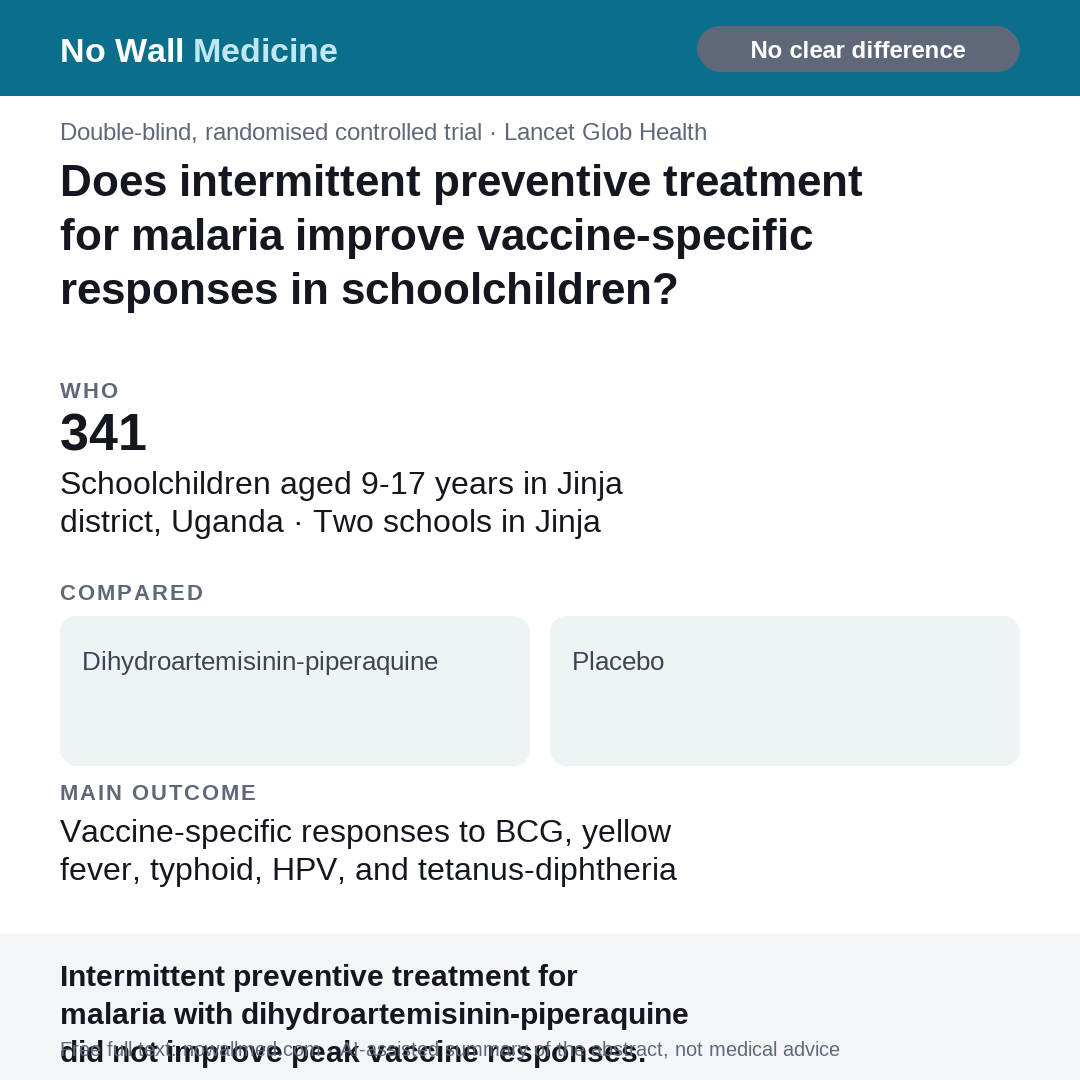
The effect of intermittent preventive treatment for malaria with dihydroartemisinin-piperaquine on vaccine-specific responses among schoolchildren in rural Uganda (POPVAC B): a double-blind, randomised controlled trial
Double-blind, randomised controlled trialNo clear difference
Does intermittent preventive treatment for malaria improve vaccine-specific responses in schoolchildren?
Who
341
Schoolchildren aged 9-17 years in Jinja district, Uganda · Two schools in Jinja district, Uganda
Compared
Dihydroartemisinin-piperaquine
Placebo
Main outcome
Vaccine-specific responses to BCG, yellow fever, typhoid, HPV, and tetanus-diphtheria
Bottom line: Intermittent preventive treatment for malaria with dihydroartemisinin-piperaquine did not improve peak vaccine responses.
Funded by: UK Medical Research Council
Lancet Glob Health · 2024-10-19Download image
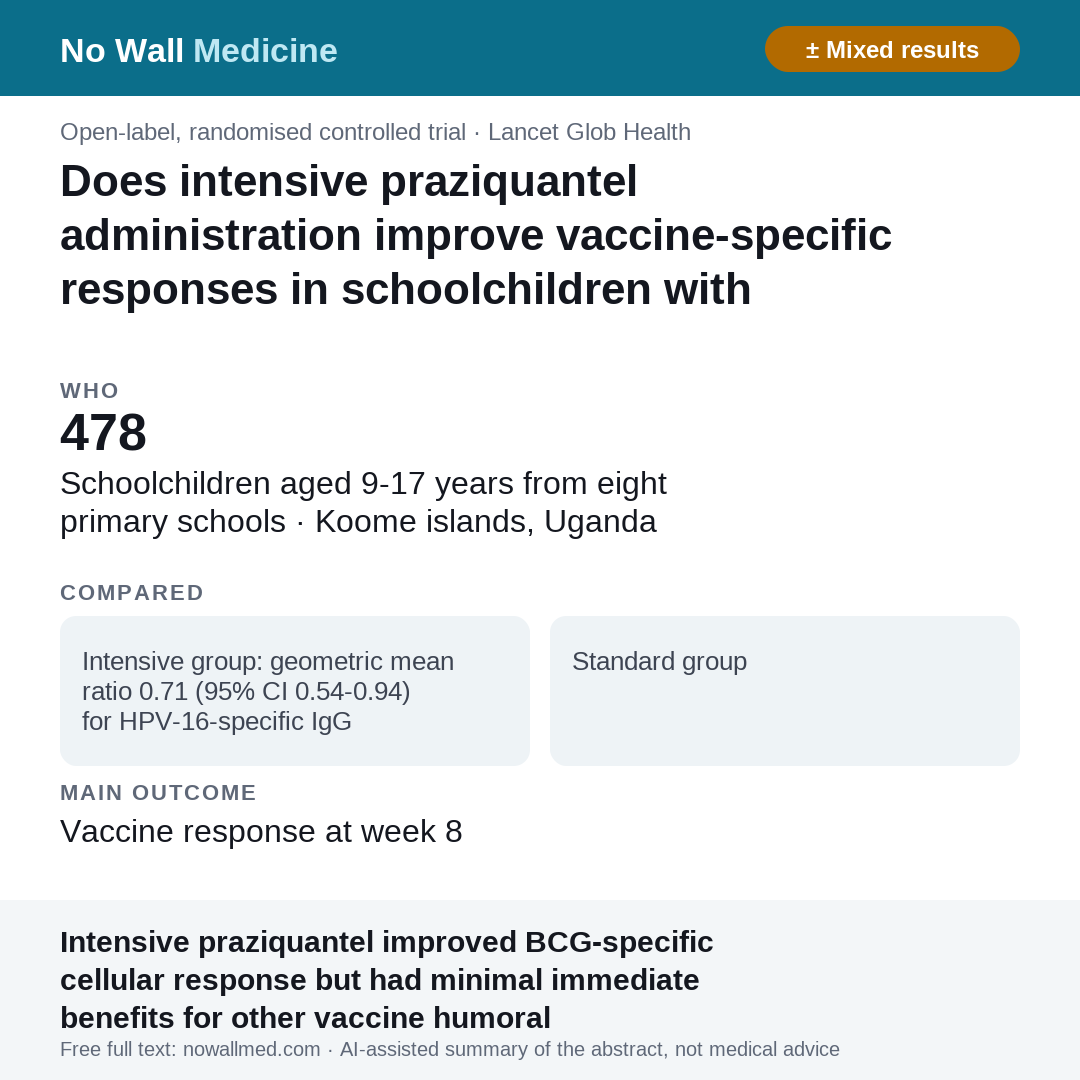
The effect of intensive praziquantel administration on vaccine-specific responses among schoolchildren in Ugandan schistosomiasis-endemic islands (POPVAC A): an open-label, randomised controlled trial
Open-label, randomised controlled trialMixed results
Does intensive praziquantel administration improve vaccine-specific responses in schoolchildren with Schistosoma mansoni?
Who
478
Schoolchildren aged 9-17 years from eight primary schools · Koome islands, Uganda
Compared
Intensive group: geometric mean ratio 0.71 (95% CI 0.54-0.94) for HPV-16-specific IgG
Standard group
Main outcome
Vaccine response at week 8
Result: geometric mean ratio 0.71 (95% CI 0.54-0.94)
Bottom line: Intensive praziquantel improved BCG-specific cellular response but had minimal immediate benefits for other vaccine humoral responses.
Funded by: UK Medical Research Council
Lancet Glob Health · 2024-10-19Download image
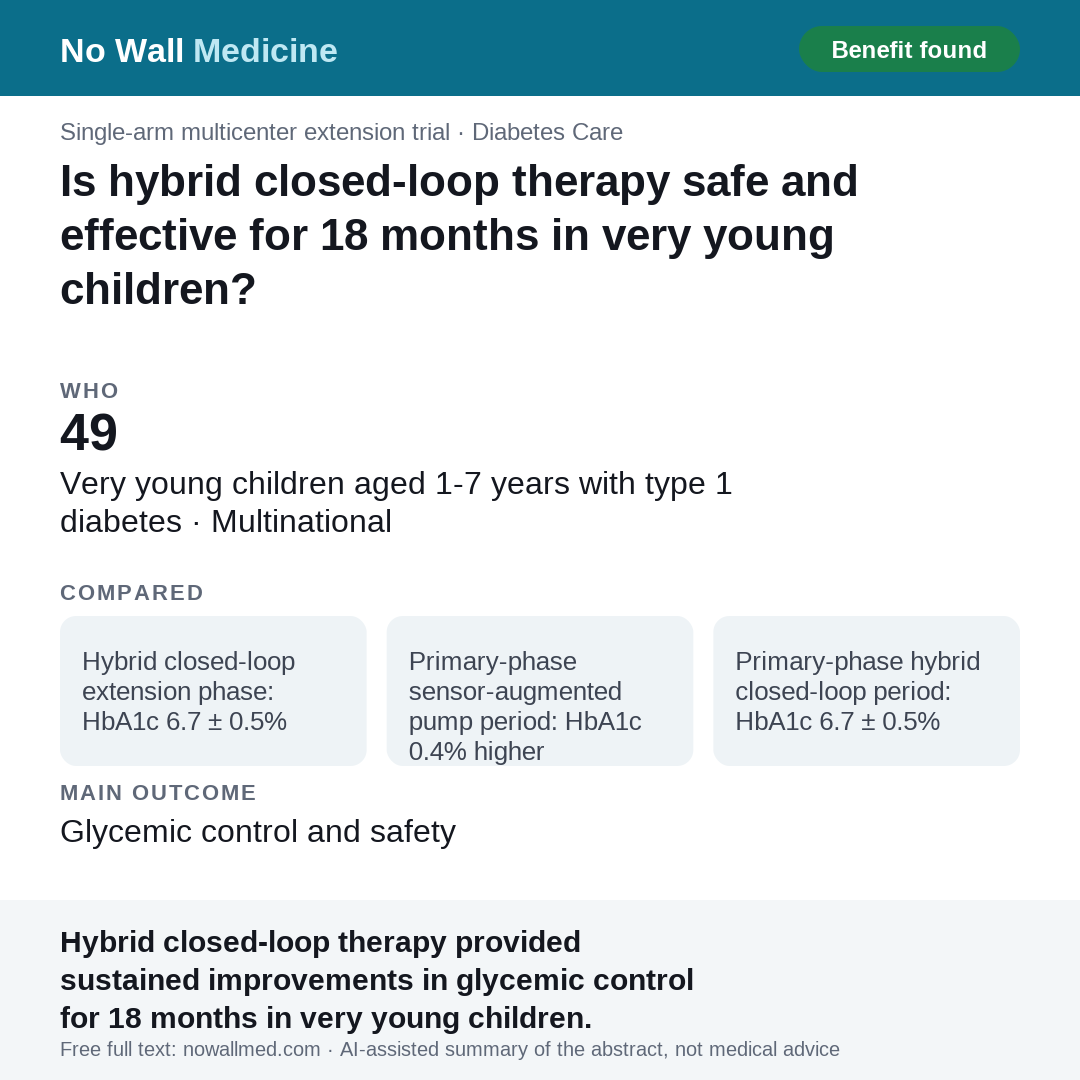
Eighteen-Month Hybrid Closed-Loop Use in Very Young Children With Type 1 Diabetes: A Single-Arm Multicenter Trial
Single-arm multicenter extension trialBenefit found
Is hybrid closed-loop therapy safe and effective for 18 months in very young children?
Who
49
Very young children aged 1-7 years with type 1 diabetes · Multinational
Compared
Hybrid closed-loop extension phase: HbA1c 6.7 ± 0.5%
Primary-phase sensor-augmented pump period: HbA1c 0.4% higher
Primary-phase hybrid closed-loop period: HbA1c 6.7 ± 0.5%
Main outcome
Glycemic control and safety
Bottom line: Hybrid closed-loop therapy provided sustained improvements in glycemic control for 18 months in very young children.
Diabetes Care · 2024-10-18Download image
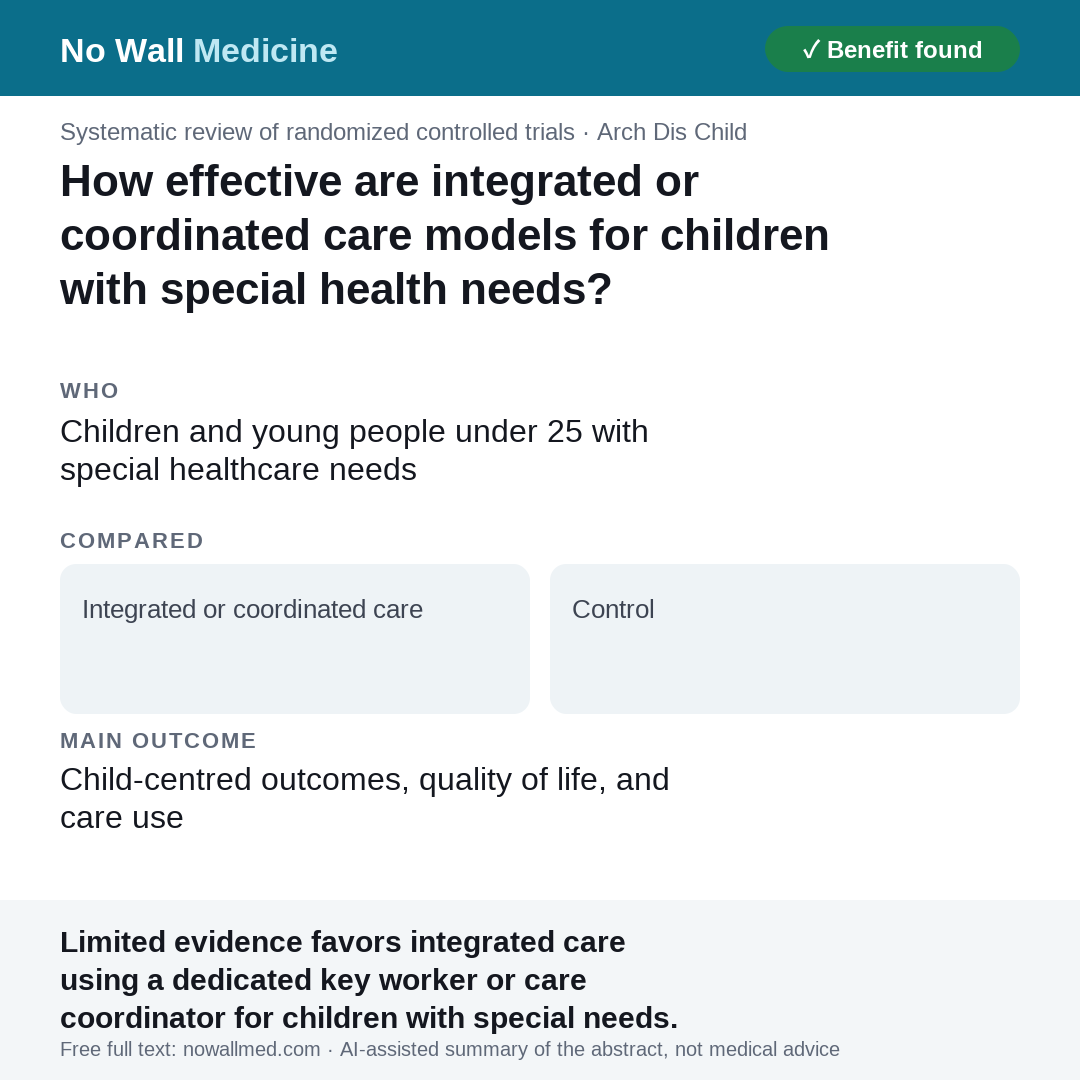
Integrated care for children and young people with special health and care needs: a systematic review
Systematic review of randomized controlled trialsBenefit found
How effective are integrated or coordinated care models for children with special health needs?
Who
Children and young people under 25 with special healthcare needs
Compared
Integrated or coordinated care
Control
Main outcome
Child-centred outcomes, quality of life, and care use
Bottom line: Limited evidence favors integrated care using a dedicated key worker or care coordinator for children with special needs.
Limitation: Low or very low certainty of evidence and heterogeneity in study outcomes and definitions.
Arch Dis Child · 2024-10-18Download image
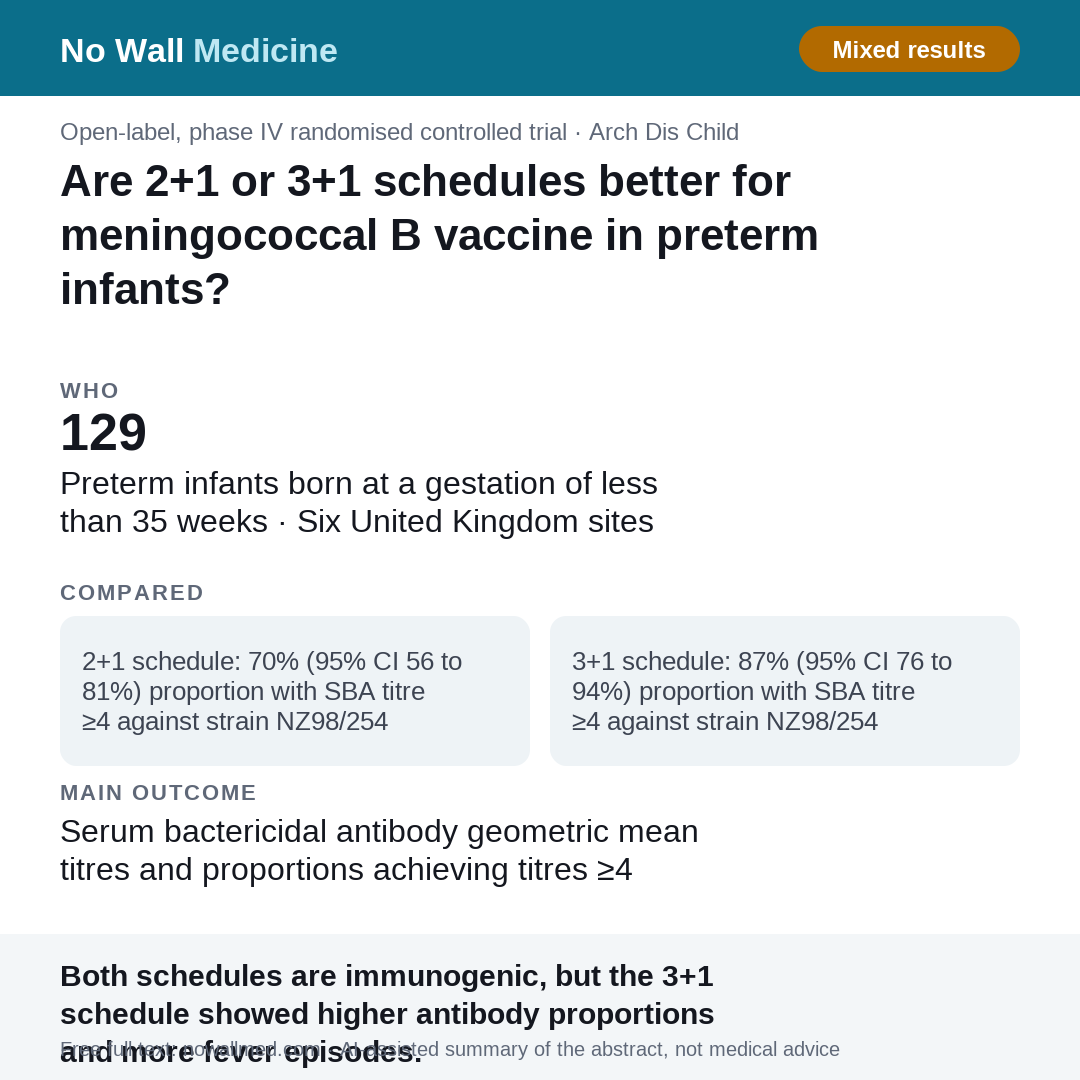
An open-label, phase IV randomised controlled trial of two schedules of a four-component meningococcal B vaccine in UK preterm infants
Open-label, phase IV randomised controlled trialMixed results
Are 2+1 or 3+1 schedules better for meningococcal B vaccine in preterm infants?
Who
129
Preterm infants born at a gestation of less than 35 weeks · Six United Kingdom sites
Compared
2+1 schedule: 70% (95% CI 56 to 81%) proportion with SBA titre ≥4 against strain NZ98/254
3+1 schedule: 87% (95% CI 76 to 94%) proportion with SBA titre ≥4 against strain NZ98/254
Main outcome
Serum bactericidal antibody geometric mean titres and proportions achieving titres ≥4
Result: p=0.03 for proportion with SBA titre ≥4 against strain NZ98/254
Bottom line: Both schedules are immunogenic, but the 3+1 schedule showed higher antibody proportions and more fever episodes.
Arch Dis Child · 2024-10-18Download image
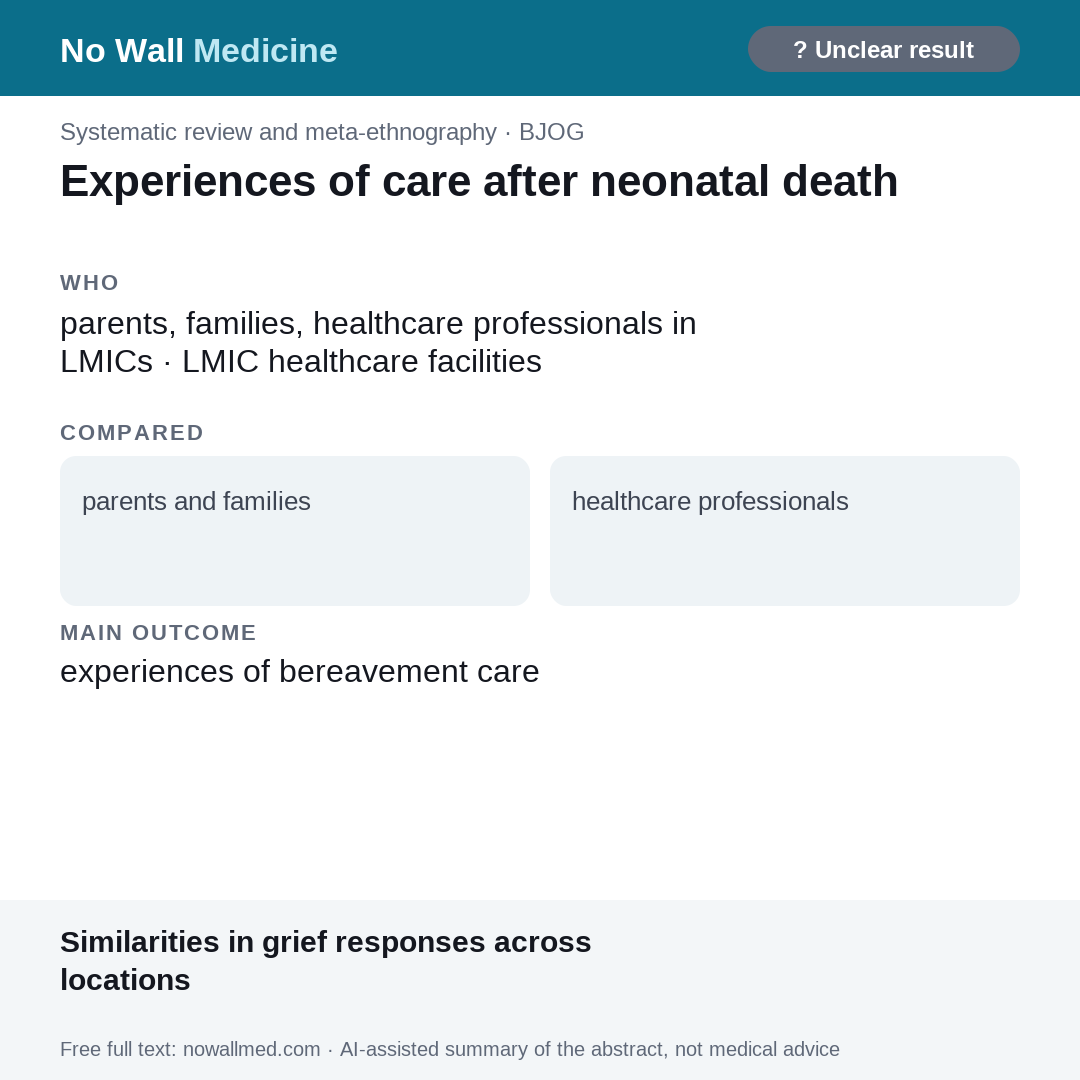
Parents', Families', Communities' and Healthcare Professionals' Experiences of Care Following Neonatal Death in Healthcare Facilities in LMICs: A Systematic Review and Meta-Ethnography
Systematic review and meta-ethnographyUnclear result
Experiences of care after neonatal death
Who
parents, families, healthcare professionals in LMICs · LMIC healthcare facilities
Compared
parents and families
healthcare professionals
Main outcome
experiences of bereavement care
Bottom line: Similarities in grief responses across locations
BJOG · 2024-10-18Download image
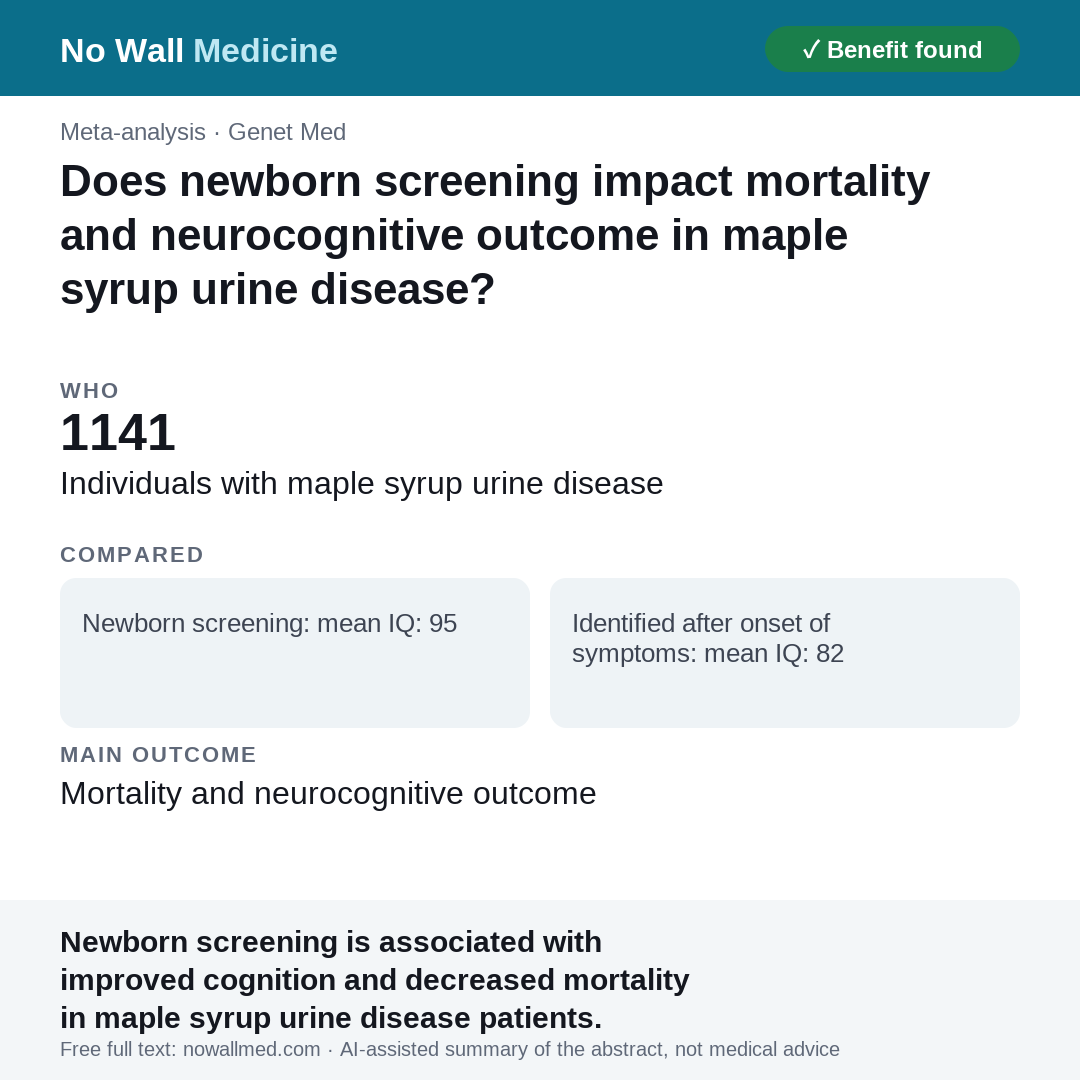
Impact of early diagnosis, disease variant, and quality of care on the neurocognitive outcome in maple syrup urine disease: A meta-analysis
Meta-analysisBenefit found
Does newborn screening impact mortality and neurocognitive outcome in maple syrup urine disease?
Who
1141
Individuals with maple syrup urine disease
Compared
Newborn screening: mean IQ: 95
Identified after onset of symptoms: mean IQ: 82
Main outcome
Mortality and neurocognitive outcome
Bottom line: Newborn screening is associated with improved cognition and decreased mortality in maple syrup urine disease patients.
Genet Med · 2024-10-18Download image
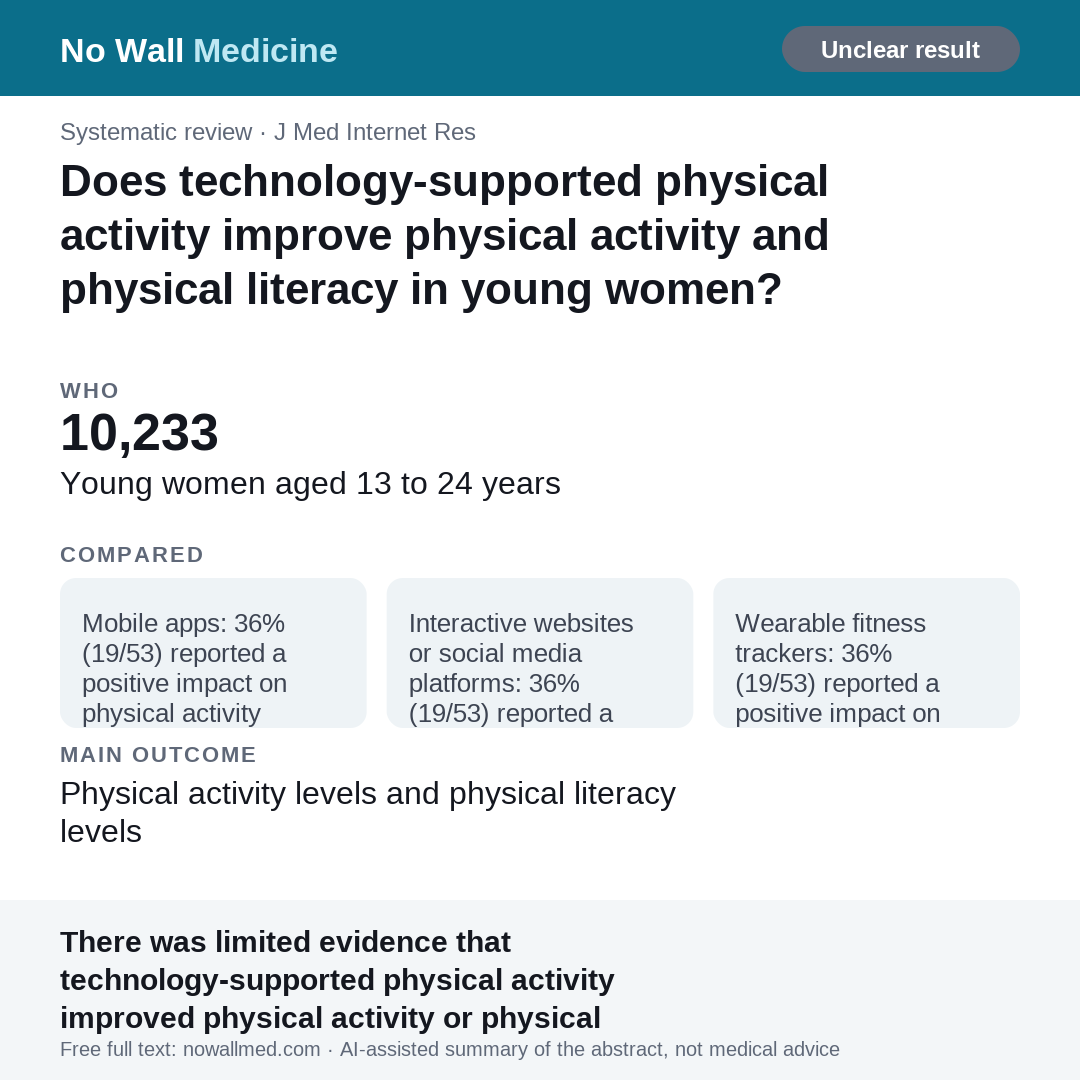
Technology-Supported Physical Activity and Its Potential as a Tool to Promote Young Women's Physical Activity and Physical Literacy: Systematic Review
Systematic reviewUnclear result
Does technology-supported physical activity improve physical activity and physical literacy in young women?
Who
10,233
Young women aged 13 to 24 years
Compared
Mobile apps: 36% (19/53) reported a positive impact on physical activity
Interactive websites or social media platforms: 36% (19/53) reported a positive impact on physical activity
Wearable fitness trackers: 36% (19/53) reported a positive impact on physical activity
Main outcome
Physical activity levels and physical literacy levels
Bottom line: There was limited evidence that technology-supported physical activity improved physical activity or physical literacy in young women.
Limitation: Evidence was limited by poor study quality, lack of theoretical frameworks, and little information on technology designs.
J Med Internet Res · 2024-10-18Download image
Surgical Treatments of Pediatric Bilateral Vocal Fold Paralysis: A Systematic Review
Systematic reviewMixed results
What are the surgical treatments and outcomes for pediatric bilateral vocal fold paralysis?
Who
320
Patients with pediatric bilateral vocal fold paralysis
Compared
No laryngeal procedure: 76.7% decannulation
Laterofixation of the vocal fold: 84.6% decannulation
Cricoid split approaches: 66.6% decannulation
Partial or total arytenoidectomy: 83.3% decannulation
Main outcome
Decannulation rates and symptom relief
Bottom line: Surgical procedures may improve symptoms, but conflicting results and study heterogeneity prevent determining the superior technique.
J Otolaryngol Head Neck Surg · 2024-10-18Download image

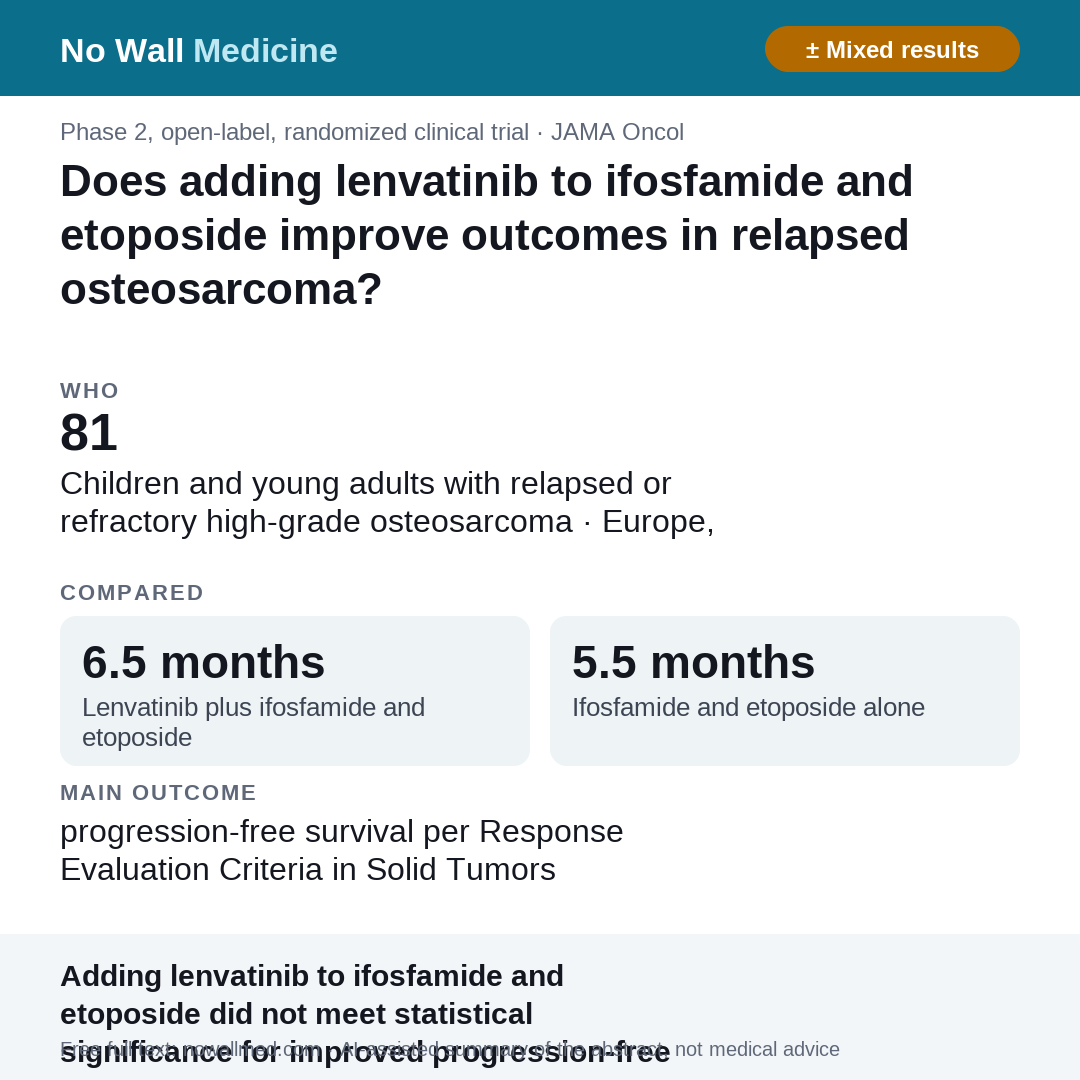
Lenvatinib Plus Ifosfamide and Etoposide in Children and Young Adults With Relapsed Osteosarcoma: A Phase 2 Randomized Clinical Trial
Phase 2, open-label, randomized clinical trialMixed results
Does adding lenvatinib to ifosfamide and etoposide improve outcomes in relapsed osteosarcoma?
Who
81
Children and young adults with relapsed or refractory high-grade osteosarcoma · Europe, Asia, Pacific, and North America
Compared
6.5 monthsLenvatinib plus ifosfamide and etoposide
5.5 monthsIfosfamide and etoposide alone
Main outcome
progression-free survival per Response Evaluation Criteria in Solid Tumors
Result: hazard ratio 0.54 (95% CI 0.27 to 1.08)
Bottom line: Adding lenvatinib to ifosfamide and etoposide did not meet statistical significance for improved progression-free survival.
Limitation: The study did not meet prespecified statistical significance for improved progression-free survival.
JAMA Oncol · 2024-10-17Download image
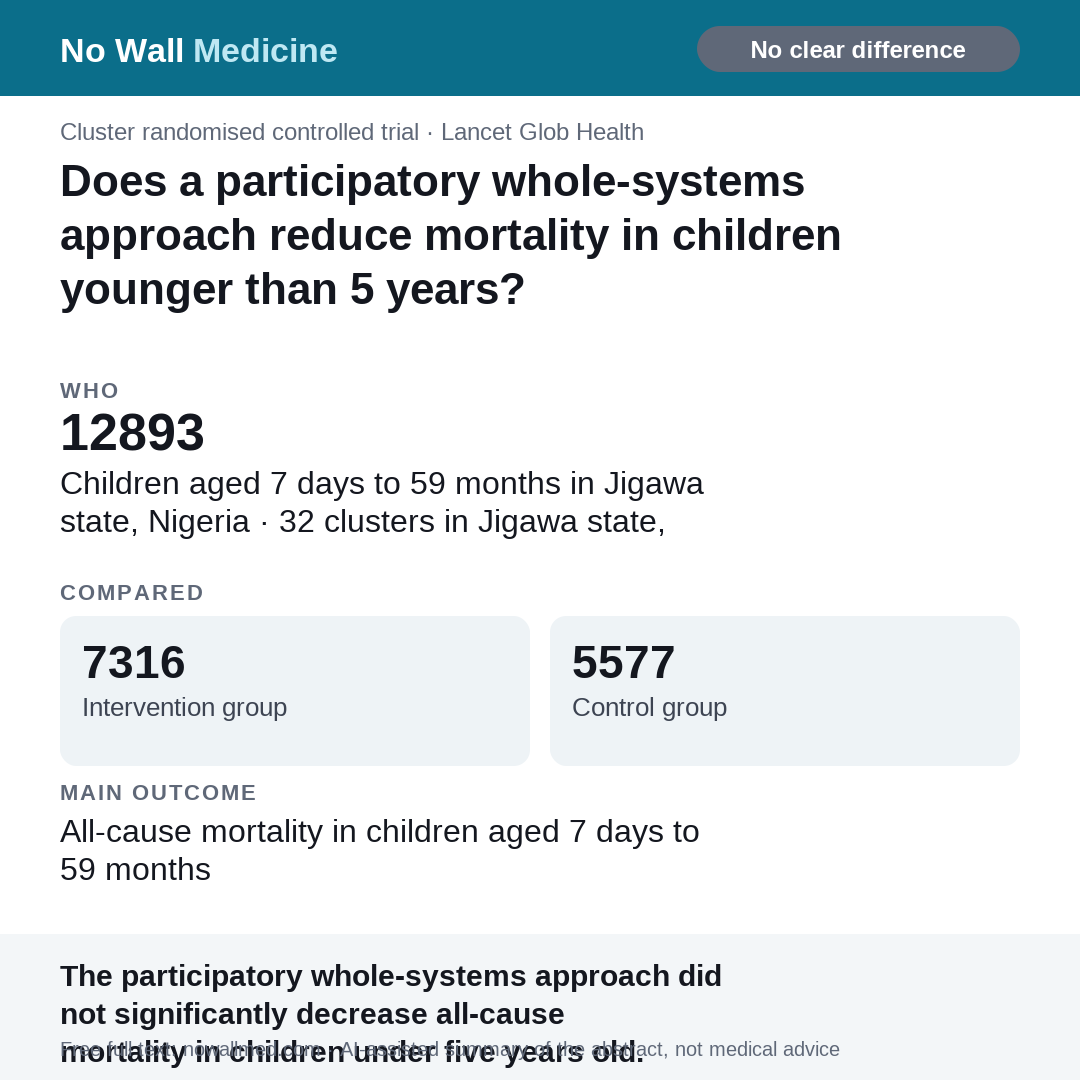
Effect of a participatory whole-systems approach on mortality in children younger than 5 years in Jigawa state, Nigeria (INSPIRING trial): a community-based, parallel-arm, pragmatic, cluster randomised controlled trial and concurrent mixed-methods process evaluation
Cluster randomised controlled trialNo clear difference
Does a participatory whole-systems approach reduce mortality in children younger than 5 years?
Who
12893
Children aged 7 days to 59 months in Jigawa state, Nigeria · 32 clusters in Jigawa state, Nigeria
Compared
7316Intervention group (56·8%)
5577Control group (43·3%)
Main outcome
All-cause mortality in children aged 7 days to 59 months
Result: hazard ratio 0·95 (95% CI 0·68-1·33)
Bottom line: The participatory whole-systems approach did not significantly decrease all-cause mortality in children under five years old.
Limitation: The process evaluation showed low coverage and issues in reach of the intervention.
Funded by: GSK and Save the Children UK
Lancet Glob Health · 2024-10-17Download image
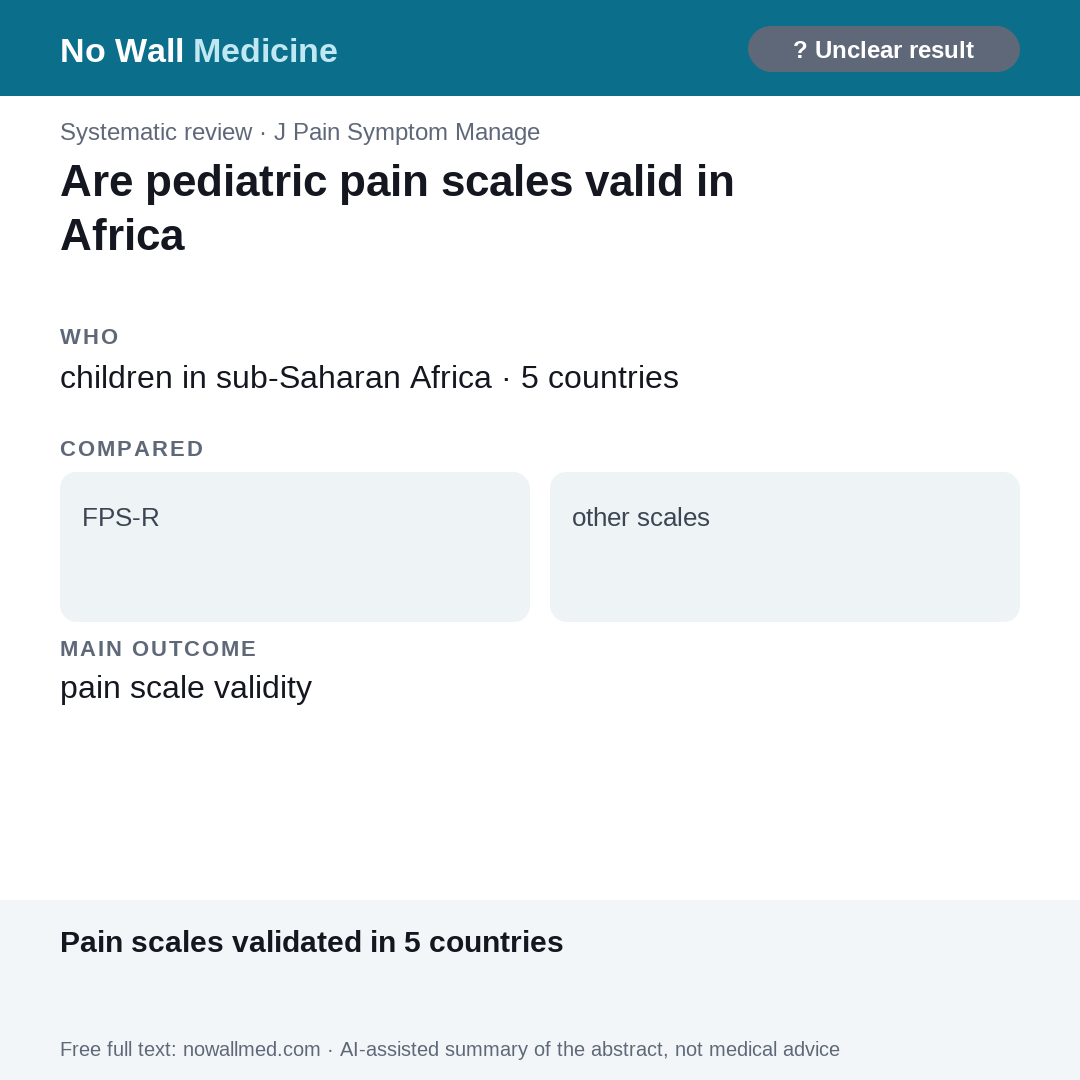
Validation of Pediatric Self-Report Pain Scales in Sub-Saharan Africa: A Systematic Review
Systematic reviewUnclear result
Are pediatric pain scales valid in Africa
Who
children in sub-Saharan Africa · 5 countries
Compared
FPS-R
other scales
Main outcome
pain scale validity
Bottom line: Pain scales validated in 5 countries
J Pain Symptom Manage · 2024-10-17Download image
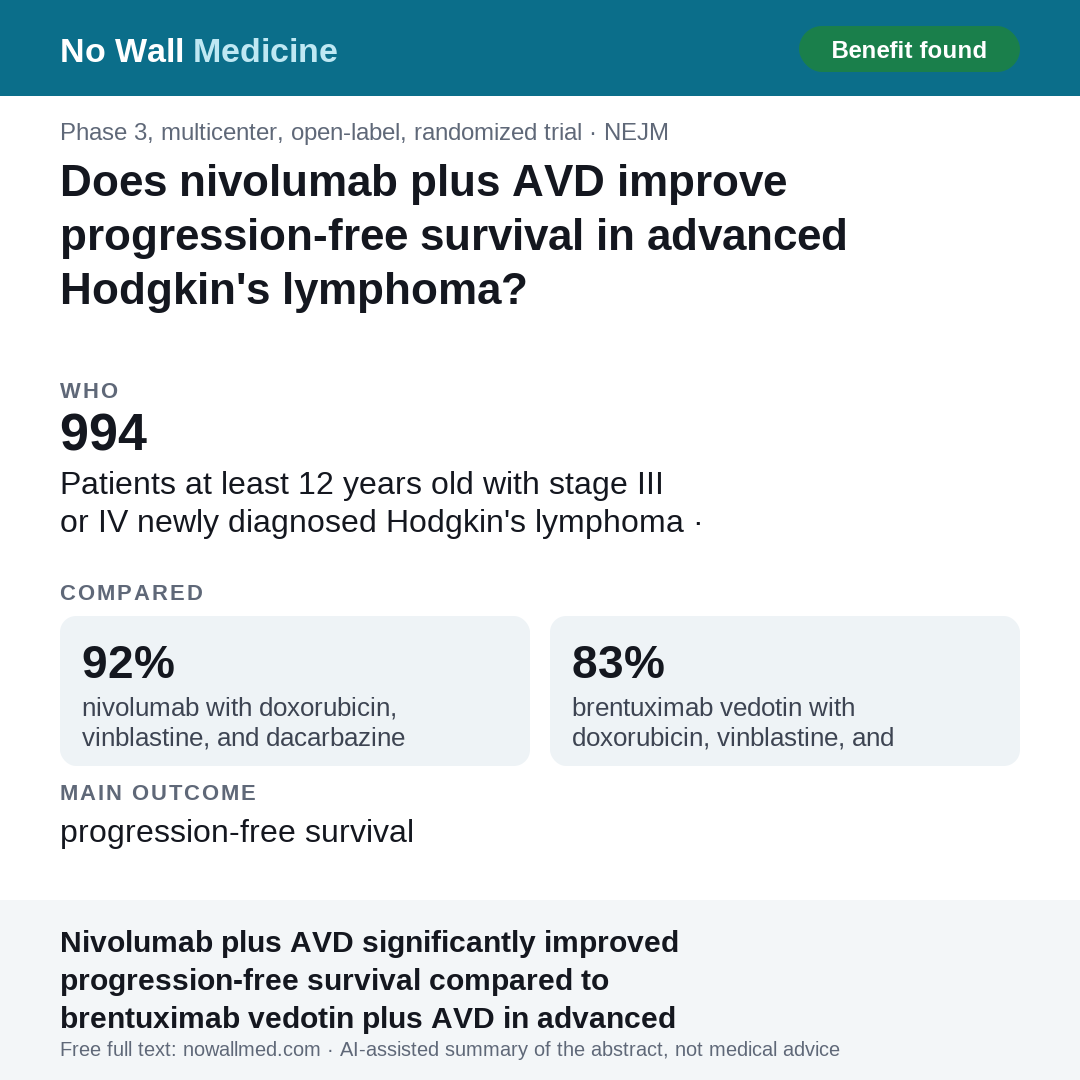
Nivolumab+AVD in Advanced-Stage Classic Hodgkin's Lymphoma
Phase 3, multicenter, open-label, randomized trialBenefit found
Does nivolumab plus AVD improve progression-free survival in advanced Hodgkin's lymphoma?
Who
994
Patients at least 12 years old with stage III or IV newly diagnosed Hodgkin's lymphoma · multicenter
Compared
92%nivolumab with doxorubicin, vinblastine, and dacarbazine (95% CI, 89 to 94)
83%brentuximab vedotin with doxorubicin, vinblastine, and dacarbazine (95% CI, 79 to 86)
Main outcome
progression-free survival
Result: hazard ratio 0.45 (95% CI, 0.30 to 0.65)
Bottom line: Nivolumab plus AVD significantly improved progression-free survival compared to brentuximab vedotin plus AVD in advanced Hodgkin's lymphoma.
Limitation: short follow-up time
Funded by: National Cancer Institute of the National Institutes of Health
NEJM · 2024-10-16Download image
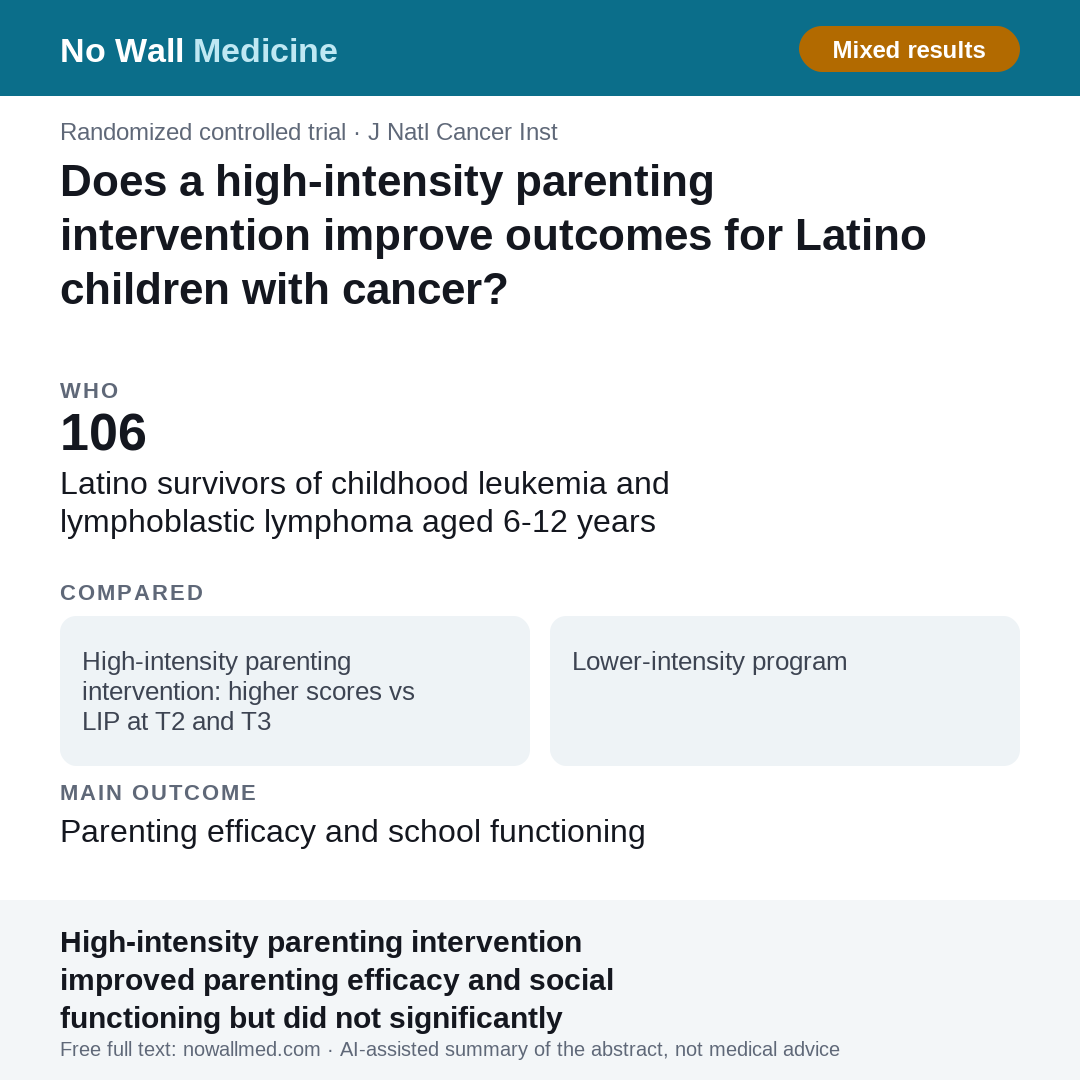
Reducing learning and psychosocial disparities in Latino children with cancer: a randomized intervention trial
Randomized controlled trialMixed results
Does a high-intensity parenting intervention improve outcomes for Latino children with cancer?
Who
106
Latino survivors of childhood leukemia and lymphoblastic lymphoma aged 6-12 years
Compared
High-intensity parenting intervention: higher scores vs LIP at T2 and T3
Lower-intensity program
Main outcome
Parenting efficacy and school functioning
Bottom line: High-intensity parenting intervention improved parenting efficacy and social functioning but did not significantly improve school functioning.
Limitation: Adherence challenges were observed, with only 61% completing the intervention.
J Natl Cancer Inst · 2024-10-16Download image
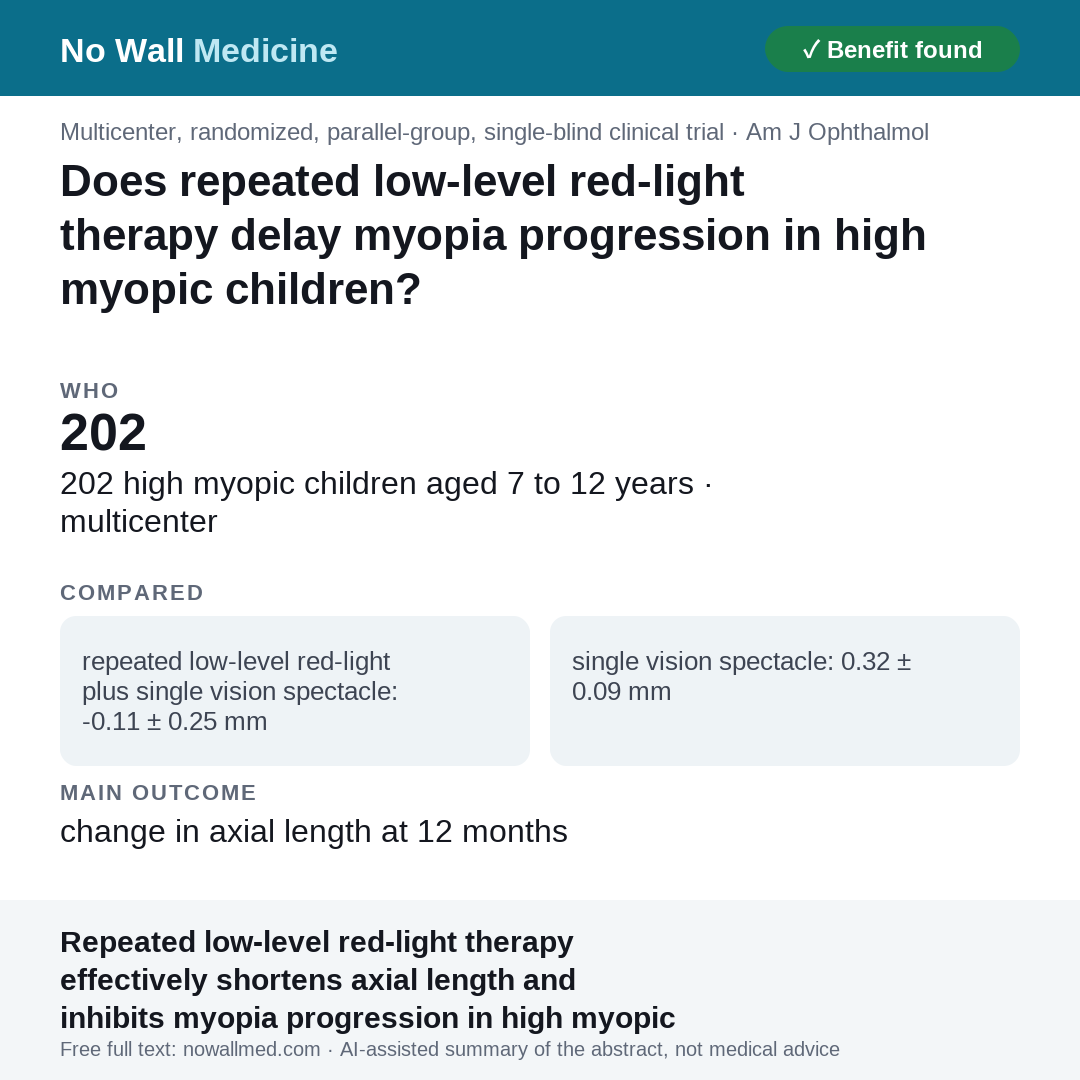
Axial Shortening Effects of Repeated Low-level Red-light Therapy in Children With High Myopia: A Multicenter Randomized Controlled Trial
Multicenter, randomized, parallel-group, single-blind clinical trialBenefit found
Does repeated low-level red-light therapy delay myopia progression in high myopic children?
Who
202
202 high myopic children aged 7 to 12 years · multicenter
Compared
repeated low-level red-light plus single vision spectacle: -0.11 ± 0.25 mm
single vision spectacle: 0.32 ± 0.09 mm
Main outcome
change in axial length at 12 months
Bottom line: Repeated low-level red-light therapy effectively shortens axial length and inhibits myopia progression in high myopic children.
Am J Ophthalmol · 2024-10-16Download image
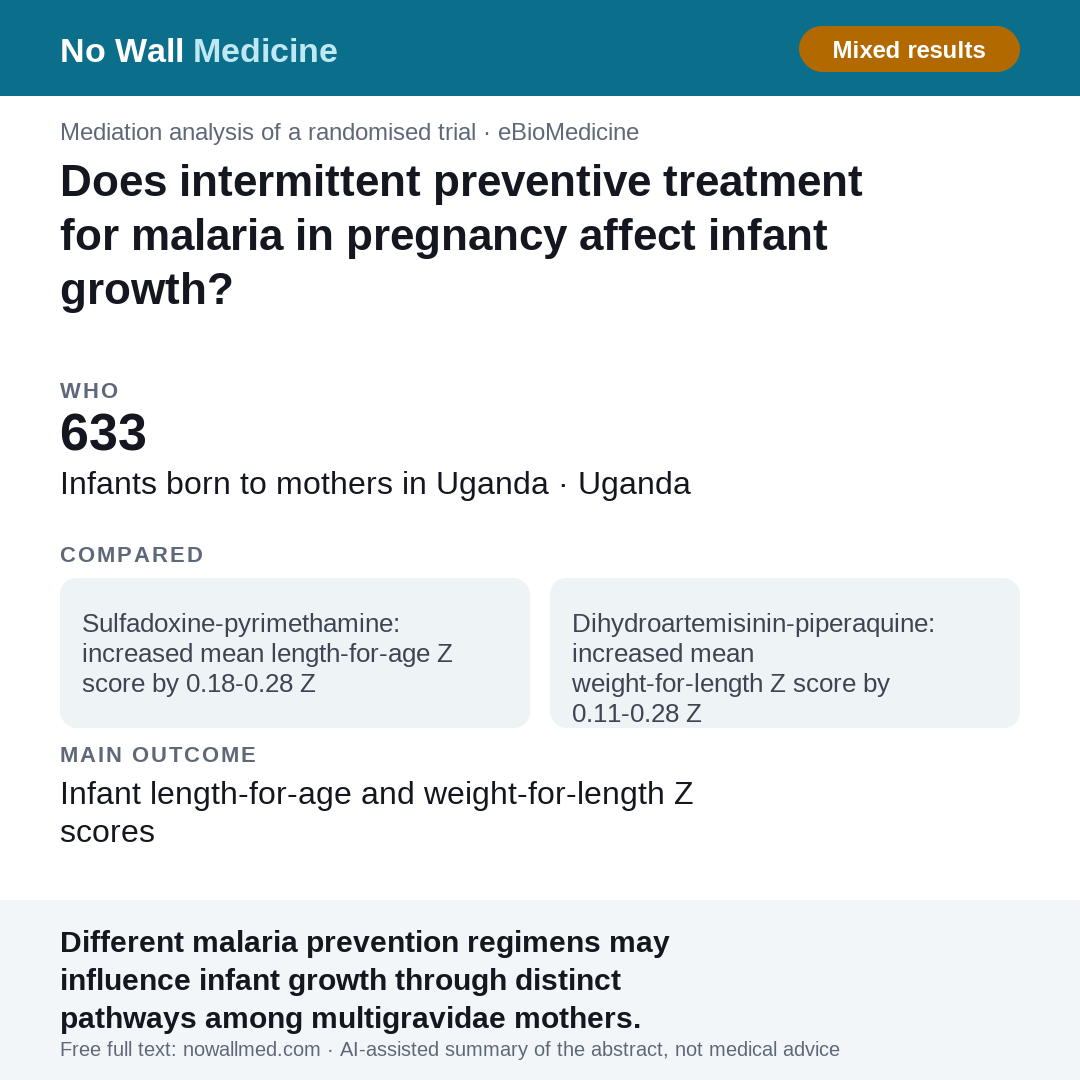
Intermittent preventive treatment for malaria in pregnancy and infant growth: a mediation analysis of a randomised trial
Mediation analysis of a randomised trialMixed results
Does intermittent preventive treatment for malaria in pregnancy affect infant growth?
Who
633
Infants born to mothers in Uganda · Uganda
Compared
Sulfadoxine-pyrimethamine: increased mean length-for-age Z score by 0.18-0.28 Z
Dihydroartemisinin-piperaquine: increased mean weight-for-length Z score by 0.11-0.28 Z
Main outcome
Infant length-for-age and weight-for-length Z scores
Bottom line: Different malaria prevention regimens may influence infant growth through distinct pathways among multigravidae mothers.
Funded by: Stanford, Eunice Kennedy Shriver NIH, Bill & Melinda Gates Foundation
eBioMedicine · 2024-10-16Download image
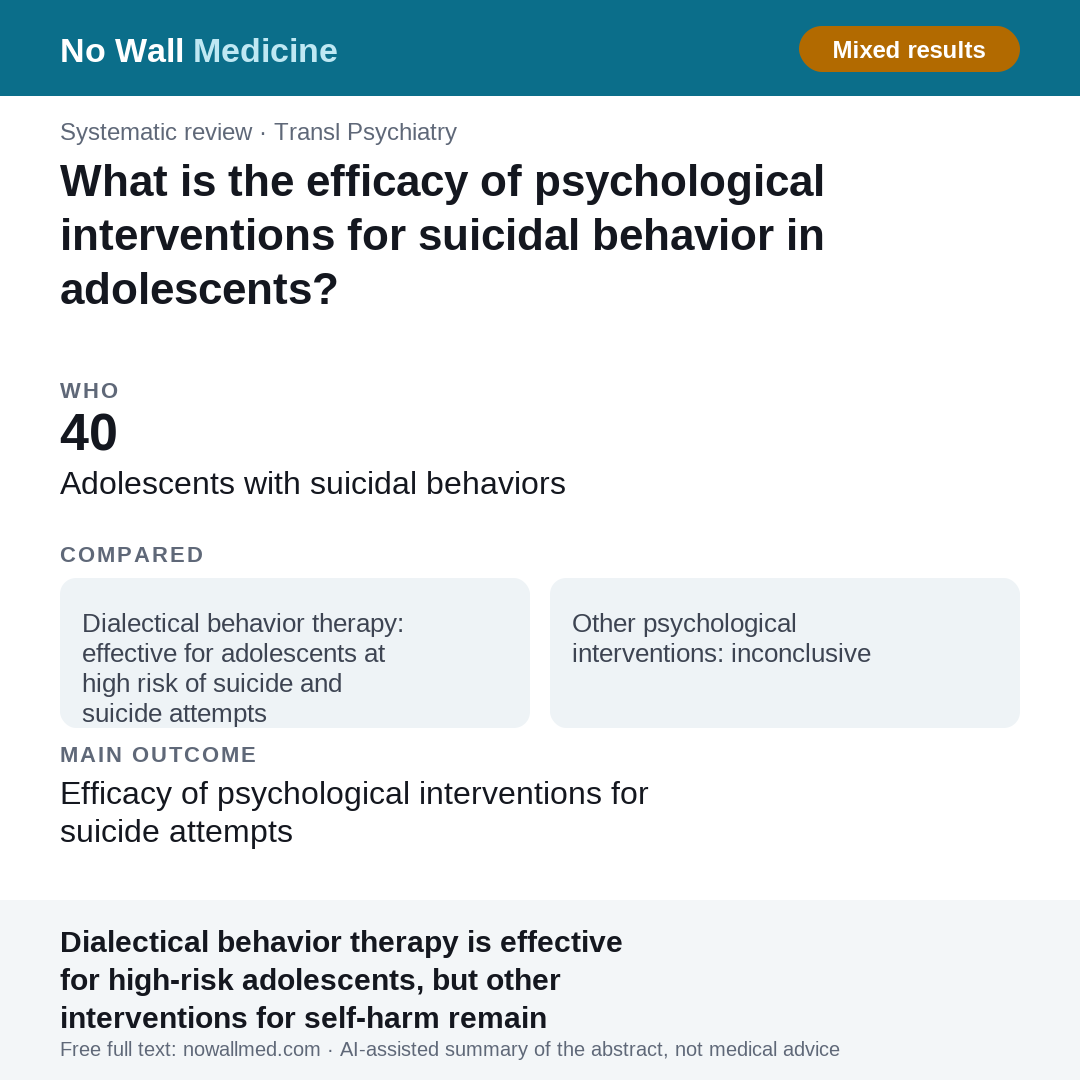
Psychological interventions for suicidal behavior in adolescents: a comprehensive systematic review
Systematic reviewMixed results
What is the efficacy of psychological interventions for suicidal behavior in adolescents?
Who
40
Adolescents with suicidal behaviors
Compared
Dialectical behavior therapy: effective for adolescents at high risk of suicide and suicide attempts
Other psychological interventions: inconclusive
Main outcome
Efficacy of psychological interventions for suicide attempts
Bottom line: Dialectical behavior therapy is effective for high-risk adolescents, but other interventions for self-harm remain inconclusive.
Limitation: Replication and dismantling studies are needed to identify specific intervention effects and components.
Transl Psychiatry · 2024-10-16Download image
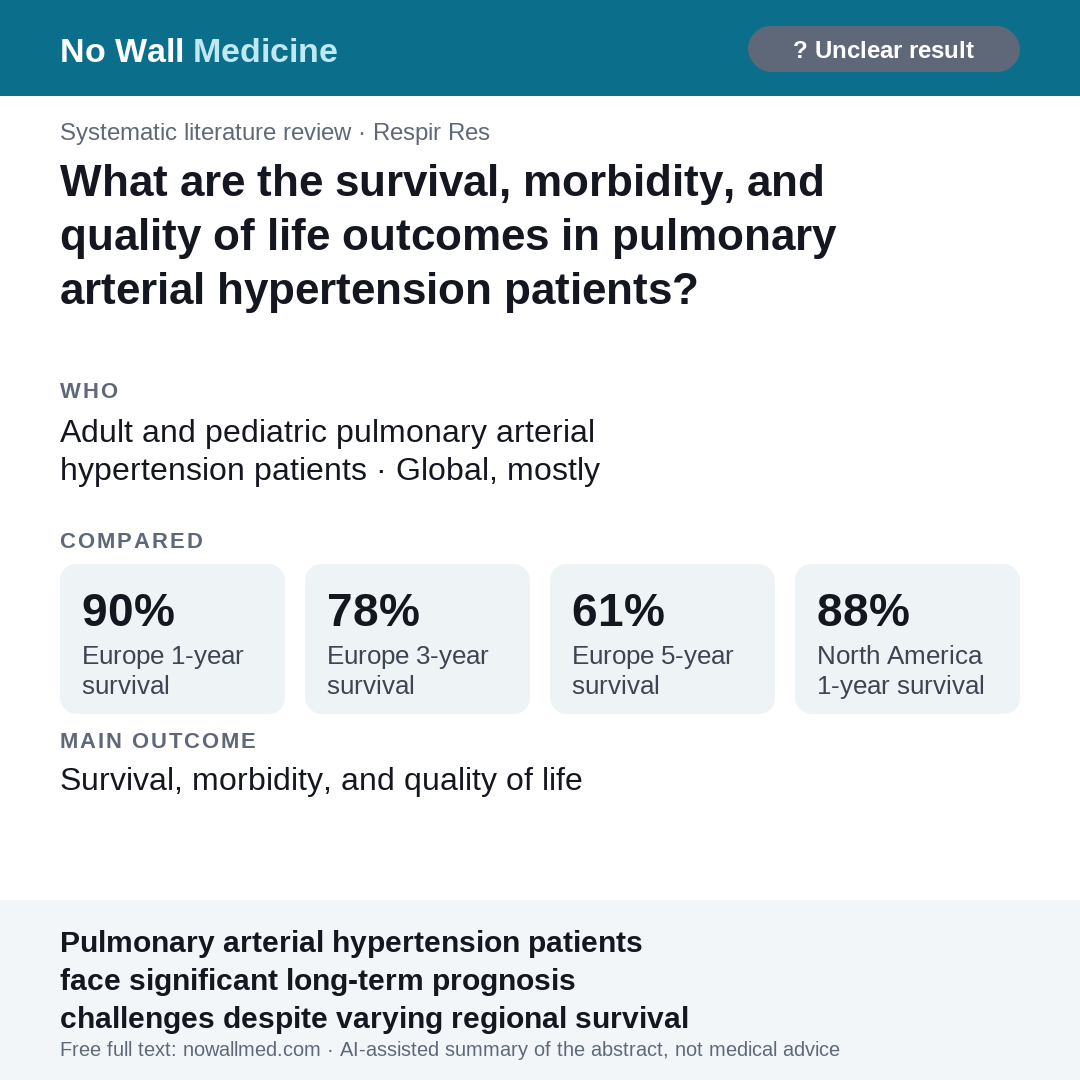
Survival, morbidity, and quality of life in pulmonary arterial hypertension patients: a systematic review of outcomes reported by population-based observational studies
Systematic literature reviewUnclear result
What are the survival, morbidity, and quality of life outcomes in pulmonary arterial hypertension patients?
Who
Adult and pediatric pulmonary arterial hypertension patients · Global, mostly national registries
Compared
90%Europe 1-year survival (95% CI 86-94%)
78%Europe 3-year survival (95% CI 68-86%)
61%Europe 5-year survival (95% CI 49-72%)
88%North America 1-year survival (95% CI 83-93%)
Main outcome
Survival, morbidity, and quality of life
Bottom line: Pulmonary arterial hypertension patients face significant long-term prognosis challenges despite varying regional survival rates.
Limitation: Large subgroup heterogeneity, potential missingness of data, and scarce pediatric survival estimates.
Respir Res · 2024-10-16Download image
Clonidine as Monotherapy for Neonatal Opioid Withdrawal Syndrome: A Randomized Trial
Randomized clinical trialNo clear difference
Is clonidine effective as monotherapy for neonatal opioid withdrawal syndrome?
Who
120
Infants with prenatal opioid exposure needing pharmacotherapy
Compared
Clonidine: median 15 (13-17) days
Morphine: median 17 (15-19) days
Main outcome
Length of treatment and neurobehavioral performance
Result: adjusted odds ratio 8.85 (95% CI 2.87-27.31) for adjunct therapy
Bottom line: Clonidine and morphine showed no significant difference in treatment length or neurobehavioral performance.
Pediatrics · 2024-10-15Download image