Visual abstracts
New randomized trials and meta-analyses from leading journals at a glance: who was studied, what was compared, and what was found. Every paper is free to read in full.
All specialtiesCardiology 4763Oncology 4042Gastroenterology & Hepatology 1902Infectious Disease 3756Neurology 1872Psychiatry & Mental Health 2214Pulmonology 2042Critical Care 1319Endocrinology & Diabetes 2544Pediatrics 2889Surgery 2479Orthopedics & Sports Medicine 917Neurosurgery 525Cardiothoracic & Vascular Surgery 656Plastic & Reconstructive Surgery 574Nephrology 1107Rheumatology 810Hematology 1090Dermatology 611Ophthalmology 532Obstetrics & Gynecology 1645Public & Global Health 1037Radiology & Imaging 617Anesthesiology 957Urology 745ENT (Otolaryngology) 494Emergency Medicine 481Allergy & Immunology 309Geriatrics 972Family Medicine & Primary Care 533Medical Genetics & Genomics 659Pathology & Laboratory Medicine 156Physical Medicine & Rehabilitation 734Palliative Care 421Nutrition 1560Digital Health & AI 2133General Medicine 318
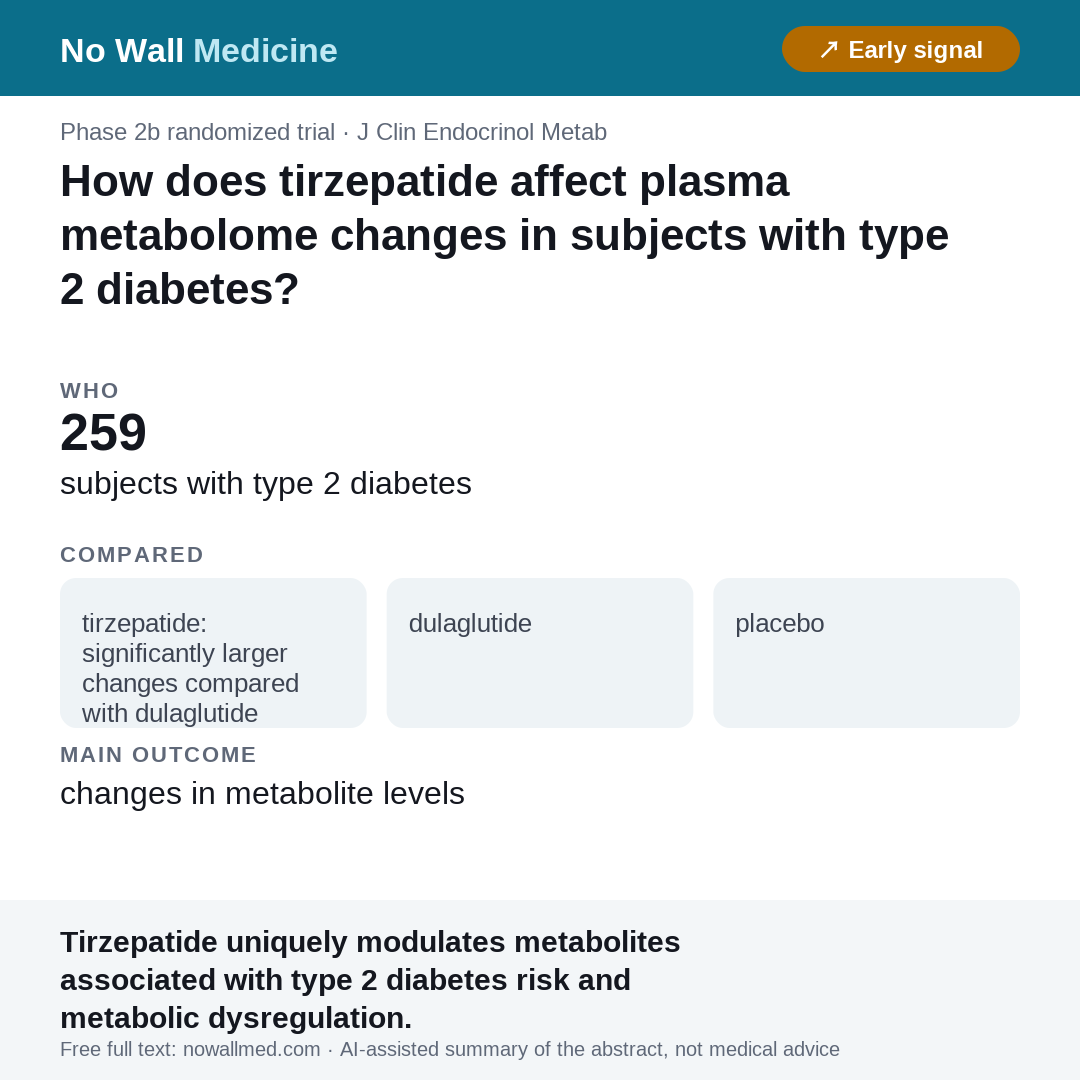
Effects of Tirzepatide, a Dual GIP and GLP-1 RA, on Lipid and Metabolite Profiles in Subjects With Type 2 Diabetes
Phase 2b randomized trialEarly signal
How does tirzepatide affect plasma metabolome changes in subjects with type 2 diabetes?
Who
259
subjects with type 2 diabetes
Compared
tirzepatide: significantly larger changes compared with dulaglutide
dulaglutide
placebo
Main outcome
changes in metabolite levels
Bottom line: Tirzepatide uniquely modulates metabolites associated with type 2 diabetes risk and metabolic dysregulation.
Limitation: Post hoc exploratory metabolomics and lipidomics analyses were performed.
J Clin Endocrinol Metab · 2021-10-06Download image
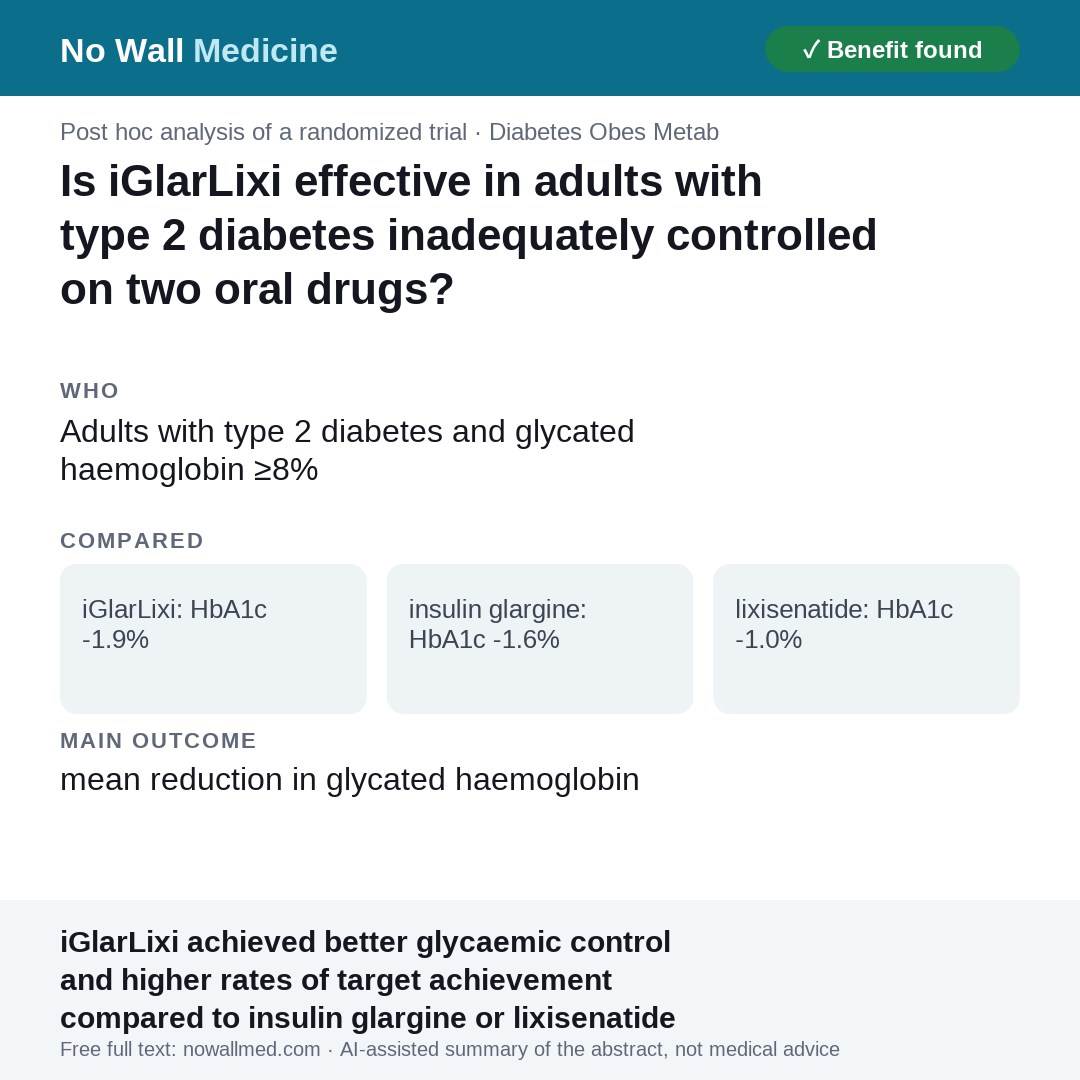
Efficacy of iGlarLixi in adults with type 2 diabetes inadequately controlled (glycated haemoglobin ≥8%, ≥64 mmol/mol) on two oral antidiabetes drugs: Post hoc analysis of the LixiLan-O randomized trial
Post hoc analysis of a randomized trialBenefit found
Is iGlarLixi effective in adults with type 2 diabetes inadequately controlled on two oral drugs?
Who
Adults with type 2 diabetes and glycated haemoglobin ≥8%
Compared
iGlarLixi: HbA1c -1.9%
insulin glargine: HbA1c -1.6%
lixisenatide: HbA1c -1.0%
Main outcome
mean reduction in glycated haemoglobin
Bottom line: iGlarLixi achieved better glycaemic control and higher rates of target achievement compared to insulin glargine or lixisenatide alone.
Diabetes Obes Metab · 2021-10-06Download image
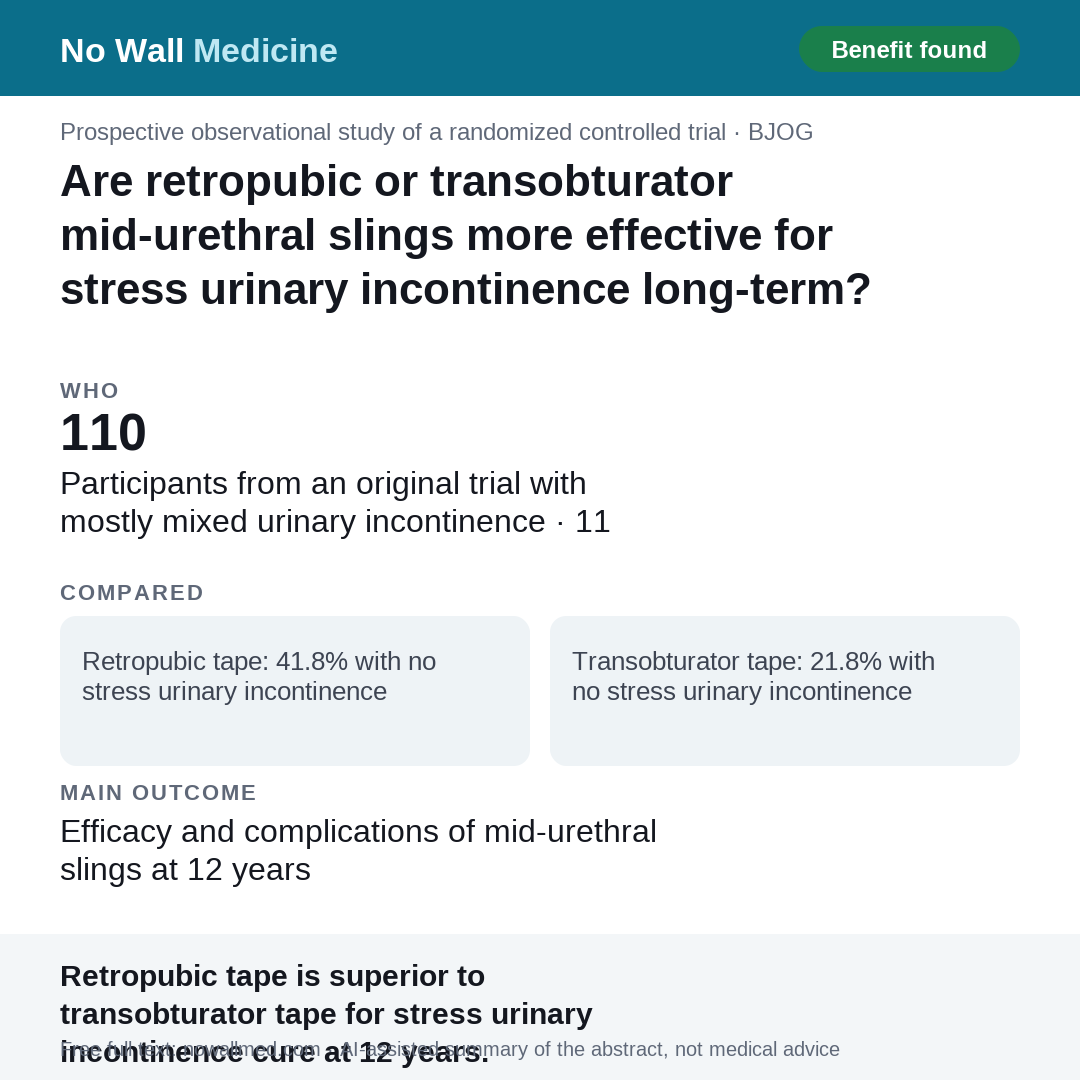
Long-term efficacy and complications of a multicentre randomised controlled trial comparing retropubic and transobturator mid-urethral slings: a prospective observational study
Prospective observational study of a randomized controlled trialBenefit found
Are retropubic or transobturator mid-urethral slings more effective for stress urinary incontinence long-term?
Who
110
Participants from an original trial with mostly mixed urinary incontinence · 11 tertiary referral centres
Compared
Retropubic tape: 41.8% with no stress urinary incontinence
Transobturator tape: 21.8% with no stress urinary incontinence
Main outcome
Efficacy and complications of mid-urethral slings at 12 years
Bottom line: Retropubic tape is superior to transobturator tape for stress urinary incontinence cure at 12 years.
BJOG · 2021-10-06Download image
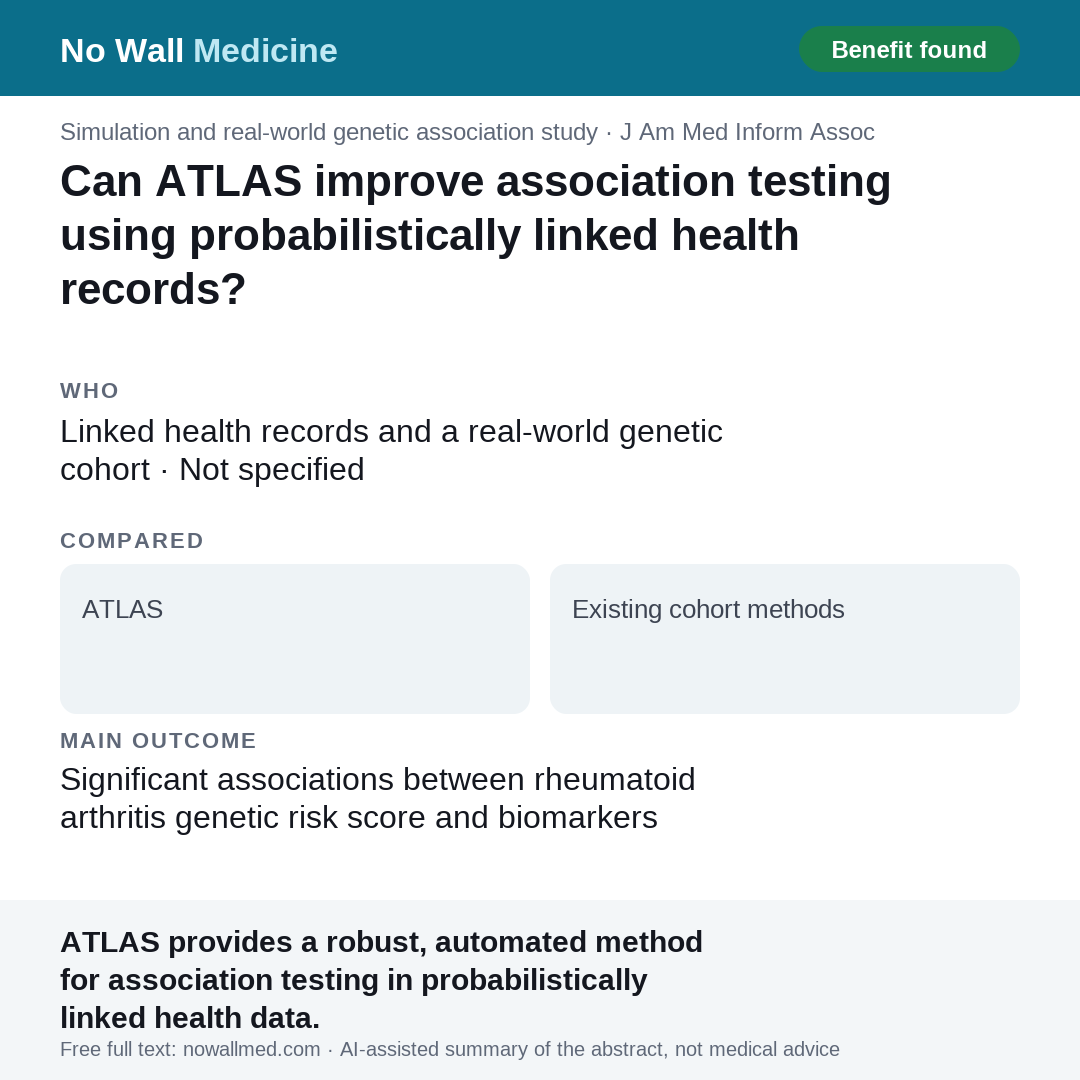
ATLAS: an automated association test using probabilistically linked health records with application to genetic studies
Simulation and real-world genetic association studyKey finding
Can ATLAS improve association testing using probabilistically linked health records?
Who
Linked health records and a real-world genetic cohort · Not specified
Compared
ATLAS
Existing cohort methods
Main outcome
Significant associations between rheumatoid arthritis genetic risk score and biomarkers
Bottom line: ATLAS provides a robust, automated method for association testing in probabilistically linked health data.
J Am Med Inform Assoc · 2021-10-06Download image
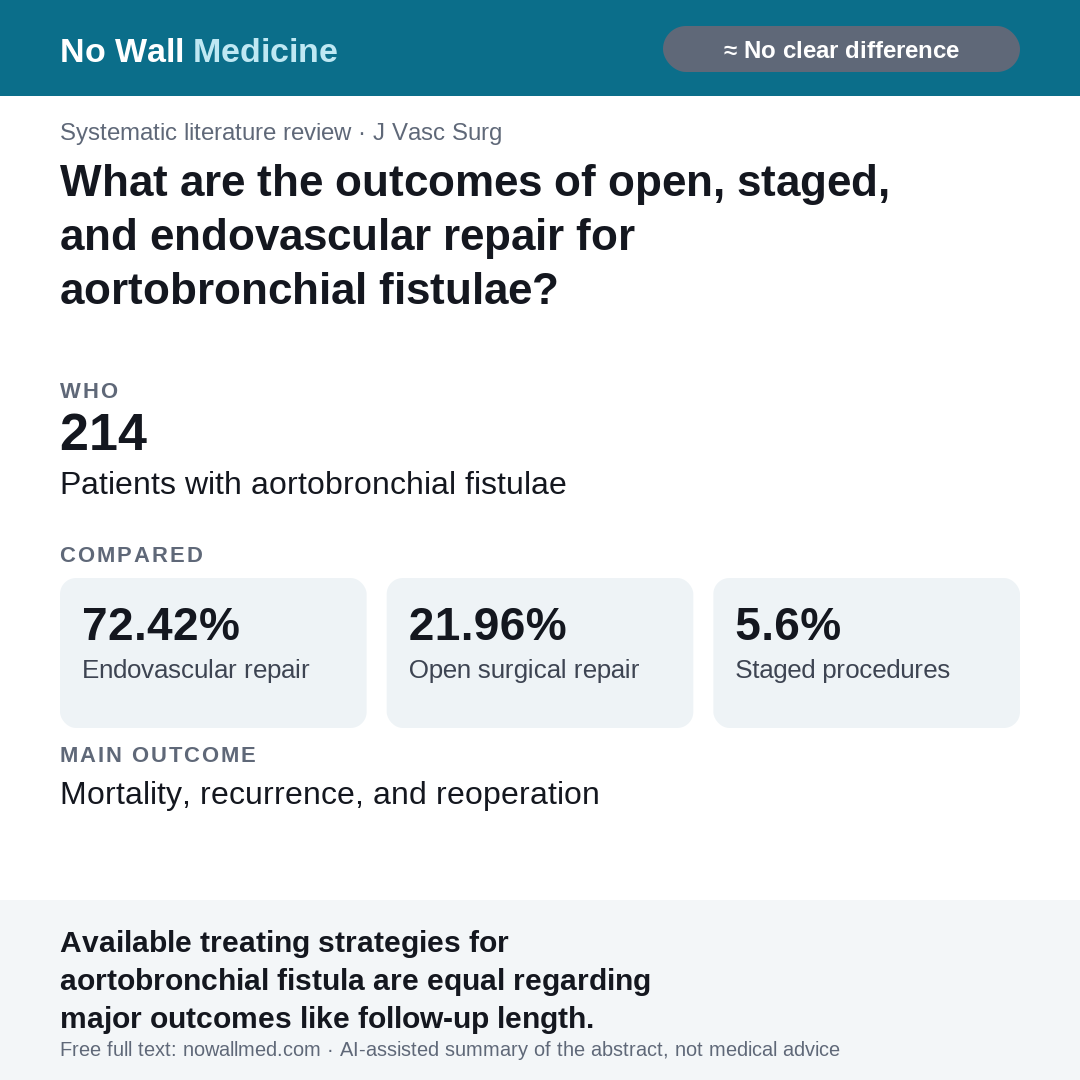
A systematic review of therapies for aortobronchial fistulae
Systematic literature reviewNo clear difference
What are the outcomes of open, staged, and endovascular repair for aortobronchial fistulae?
Who
214
Patients with aortobronchial fistulae
Compared
72.42%Endovascular repair
21.96%Open surgical repair
5.6%Staged procedures
Main outcome
Mortality, recurrence, and reoperation
Bottom line: Available treating strategies for aortobronchial fistula are equal regarding major outcomes like follow-up length.
Limitation: Only case reports and small case series were available, leading to significant data heterogeneity.
J Vasc Surg · 2021-10-06Download image
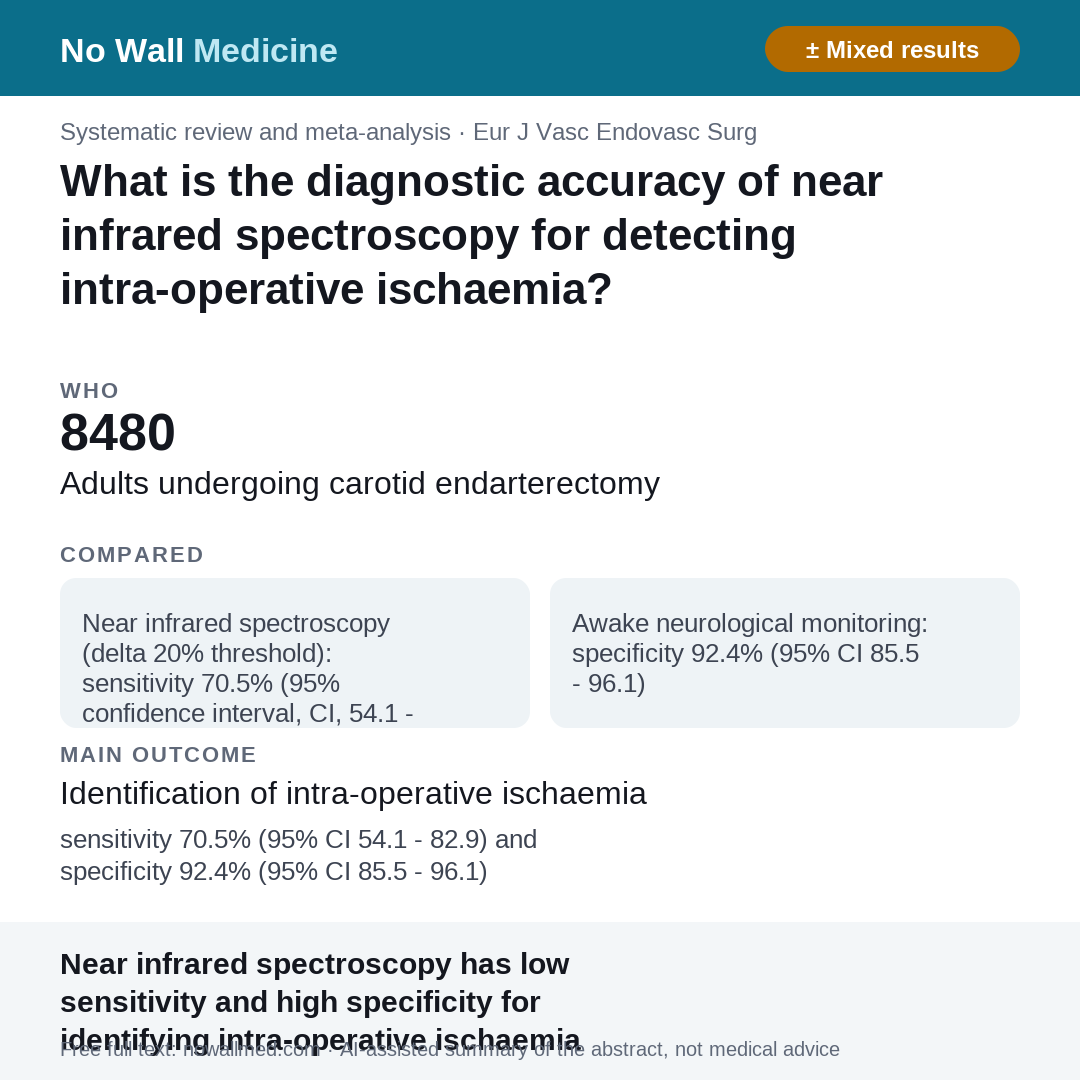
Overview and Diagnostic Accuracy of Near Infrared Spectroscopy in Carotid Endarterectomy: A Systematic Review and Meta-analysis
Systematic review and meta-analysisMixed results
What is the diagnostic accuracy of near infrared spectroscopy for detecting intra-operative ischaemia?
Who
8480
Adults undergoing carotid endarterectomy
Compared
Near infrared spectroscopy (delta 20% threshold): sensitivity 70.5% (95% confidence interval, CI, 54.1 - 82.9)
Awake neurological monitoring: specificity 92.4% (95% CI 85.5 - 96.1)
Main outcome
Identification of intra-operative ischaemia
Result: sensitivity 70.5% (95% CI 54.1 - 82.9) and specificity 92.4% (95% CI 85.5 - 96.1)
Bottom line: Near infrared spectroscopy has low sensitivity and high specificity for identifying intra-operative ischaemia compared with awake monitoring.
Limitation: Data from high quality studies are desperately needed to determine the utility of near infrared spectroscopy.
Eur J Vasc Endovasc Surg · 2021-10-06Download image
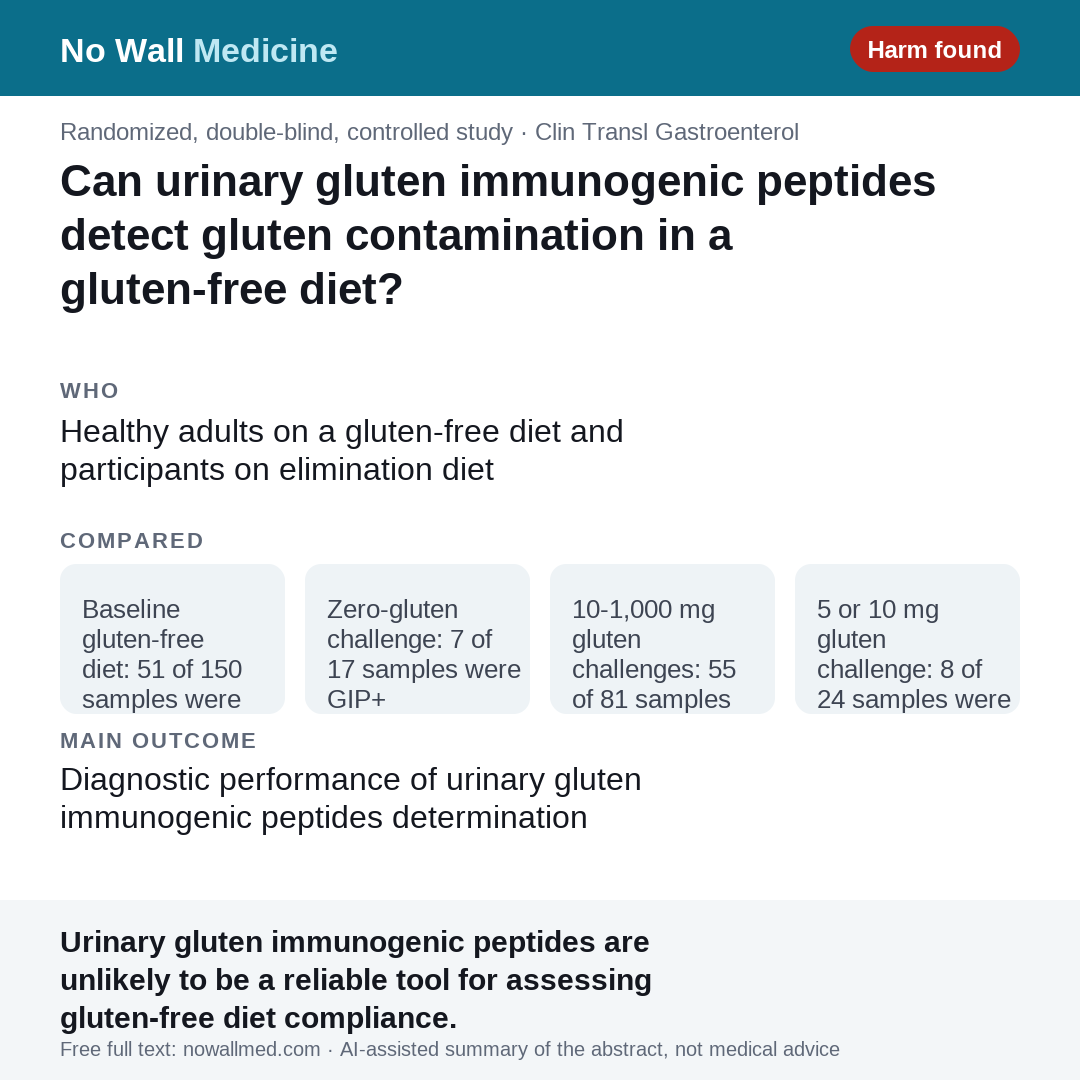
Determination of Urinary Gluten Immunogenic Peptides to Assess Adherence to the Gluten-Free Diet: A Randomized, Double-Blind, Controlled Study
Randomized, double-blind, controlled studyHarm found
Can urinary gluten immunogenic peptides detect gluten contamination in a gluten-free diet?
Who
Healthy adults on a gluten-free diet and participants on elimination diet
Compared
Baseline gluten-free diet: 51 of 150 samples were GIP+
Zero-gluten challenge: 7 of 17 samples were GIP+
10-1,000 mg gluten challenges: 55 of 81 samples were GIP+
5 or 10 mg gluten challenge: 8 of 24 samples were GIP+
Main outcome
Diagnostic performance of urinary gluten immunogenic peptides determination
Bottom line: Urinary gluten immunogenic peptides are unlikely to be a reliable tool for assessing gluten-free diet compliance.
Clin Transl Gastroenterol · 2021-10-06Download image
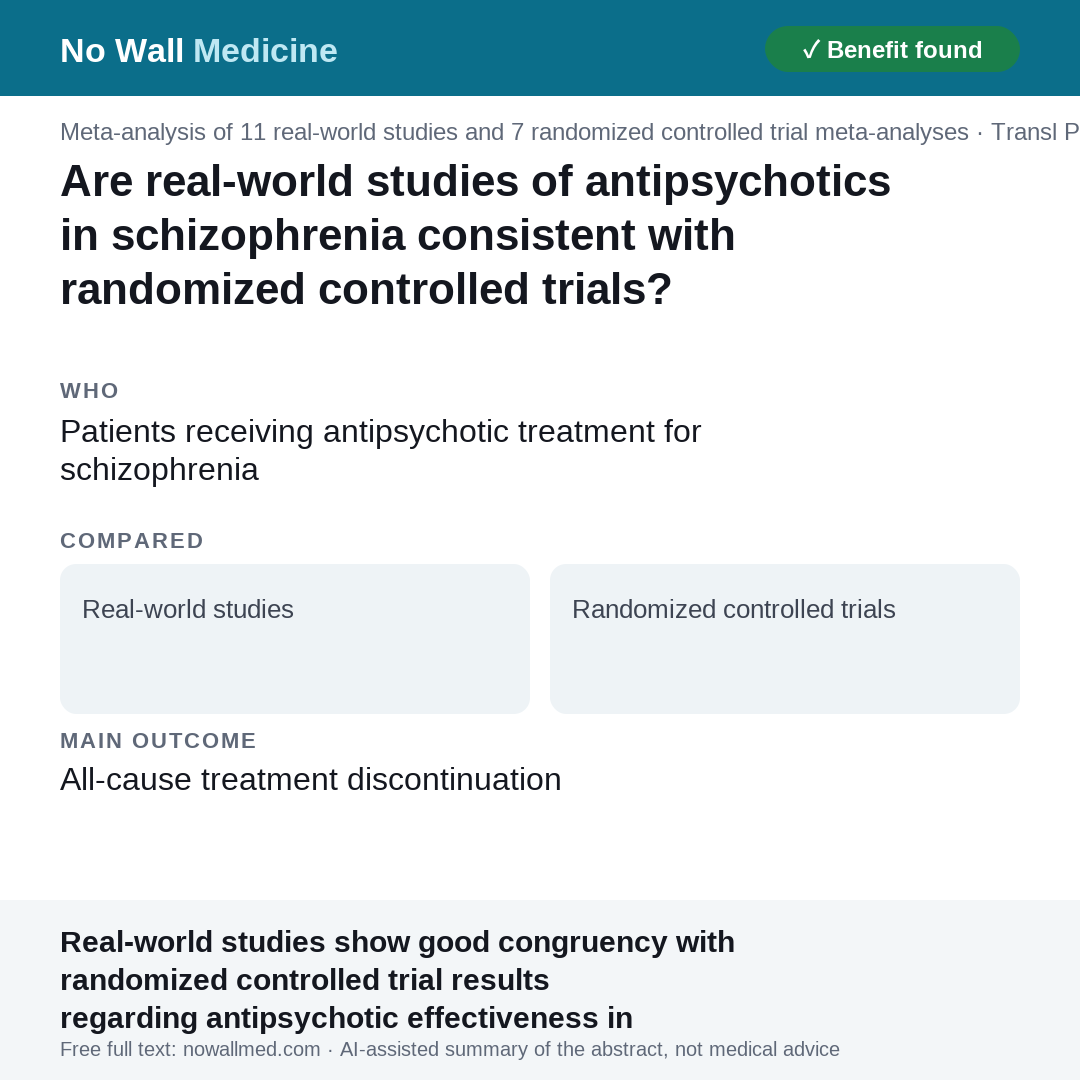
A meta-analysis of effectiveness of real-world studies of antipsychotics in schizophrenia: Are the results consistent with the findings of randomized controlled trials?
Meta-analysis of 11 real-world studies and 7 randomized controlled trial meta-analysesBenefit found
Are real-world studies of antipsychotics in schizophrenia consistent with randomized controlled trials?
Who
Patients receiving antipsychotic treatment for schizophrenia
Compared
Real-world studies
Randomized controlled trials
Main outcome
All-cause treatment discontinuation
Bottom line: Real-world studies show good congruency with randomized controlled trial results regarding antipsychotic effectiveness in schizophrenia.
Transl Psychiatry · 2021-10-06Download image
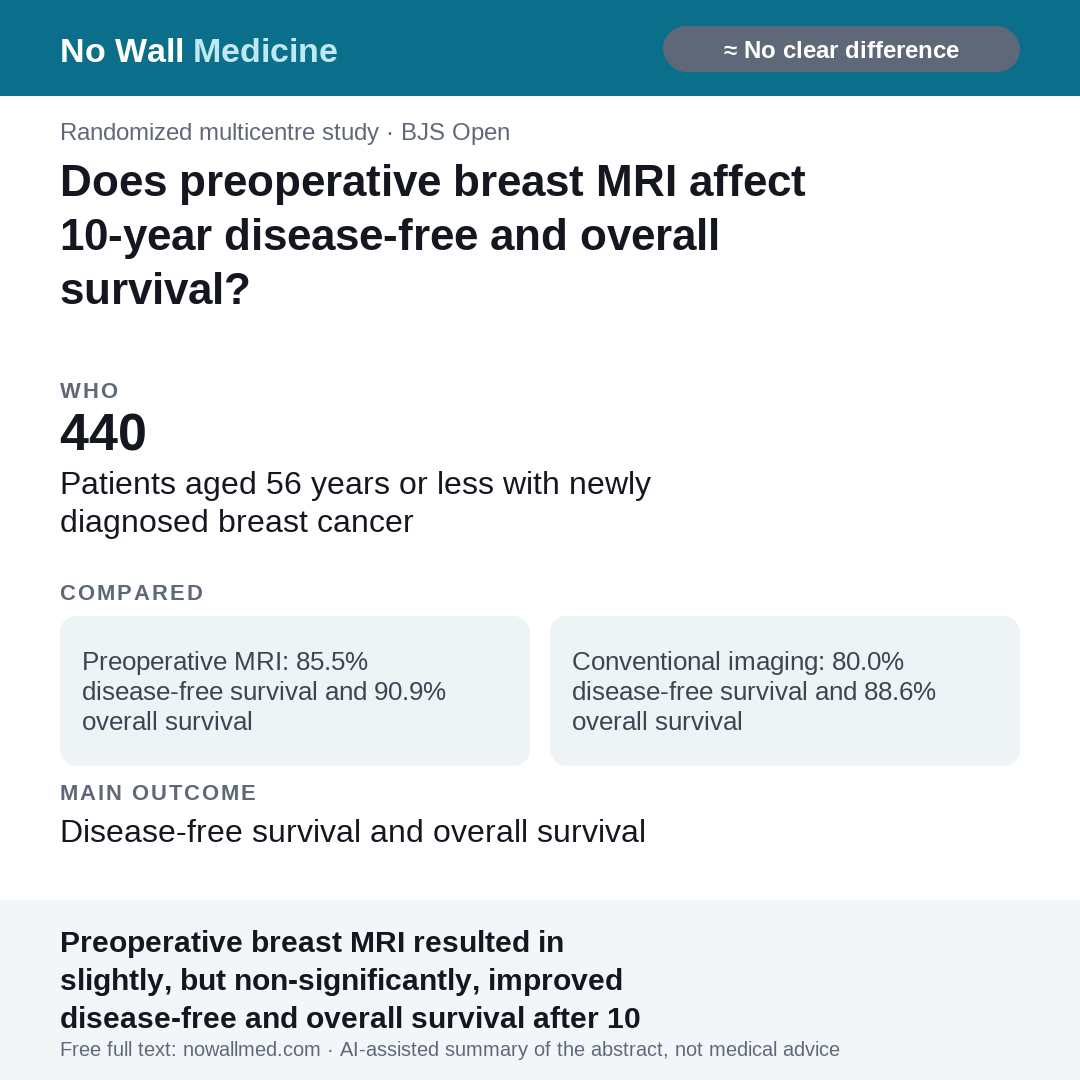
Impact of preoperative breast MRI on 10-year survival of patients included in the Swedish randomized multicentre POMB trial
Randomized multicentre studyNo clear difference
Does preoperative breast MRI affect 10-year disease-free and overall survival?
Who
440
Patients aged 56 years or less with newly diagnosed breast cancer
Compared
Preoperative MRI: 85.5% disease-free survival and 90.9% overall survival
Conventional imaging: 80.0% disease-free survival and 88.6% overall survival
Main outcome
Disease-free survival and overall survival
Result: hazard ratio 1.46 (95% CI 0.93 to 2.29) for disease-free survival
Bottom line: Preoperative breast MRI resulted in slightly, but non-significantly, improved disease-free and overall survival after 10 years.
BJS Open · 2021-10-06Download image
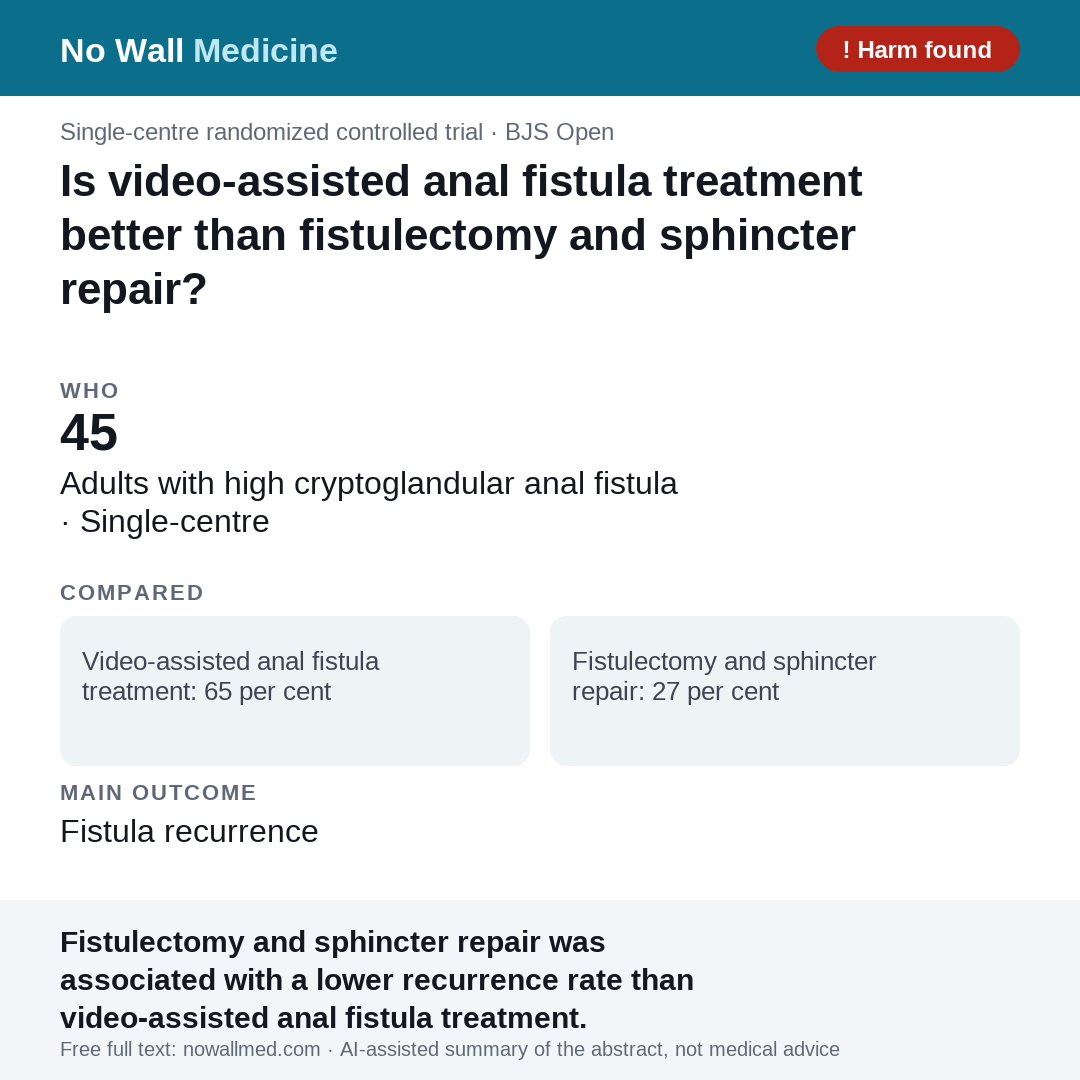
Video-assisted anal fistula treatment versus fistulectomy and sphincter repair in the treatment of high cryptoglandular anal fistula: a randomized clinical study
Single-centre randomized controlled trialHarm found
Is video-assisted anal fistula treatment better than fistulectomy and sphincter repair?
Who
45
Adults with high cryptoglandular anal fistula · Single-centre
Compared
Video-assisted anal fistula treatment: 65 per cent
Fistulectomy and sphincter repair: 27 per cent
Main outcome
Fistula recurrence
Result: hazard ratio 4.18 (P = 0.016)
Bottom line: Fistulectomy and sphincter repair was associated with a lower recurrence rate than video-assisted anal fistula treatment.
BJS Open · 2021-10-06Download image
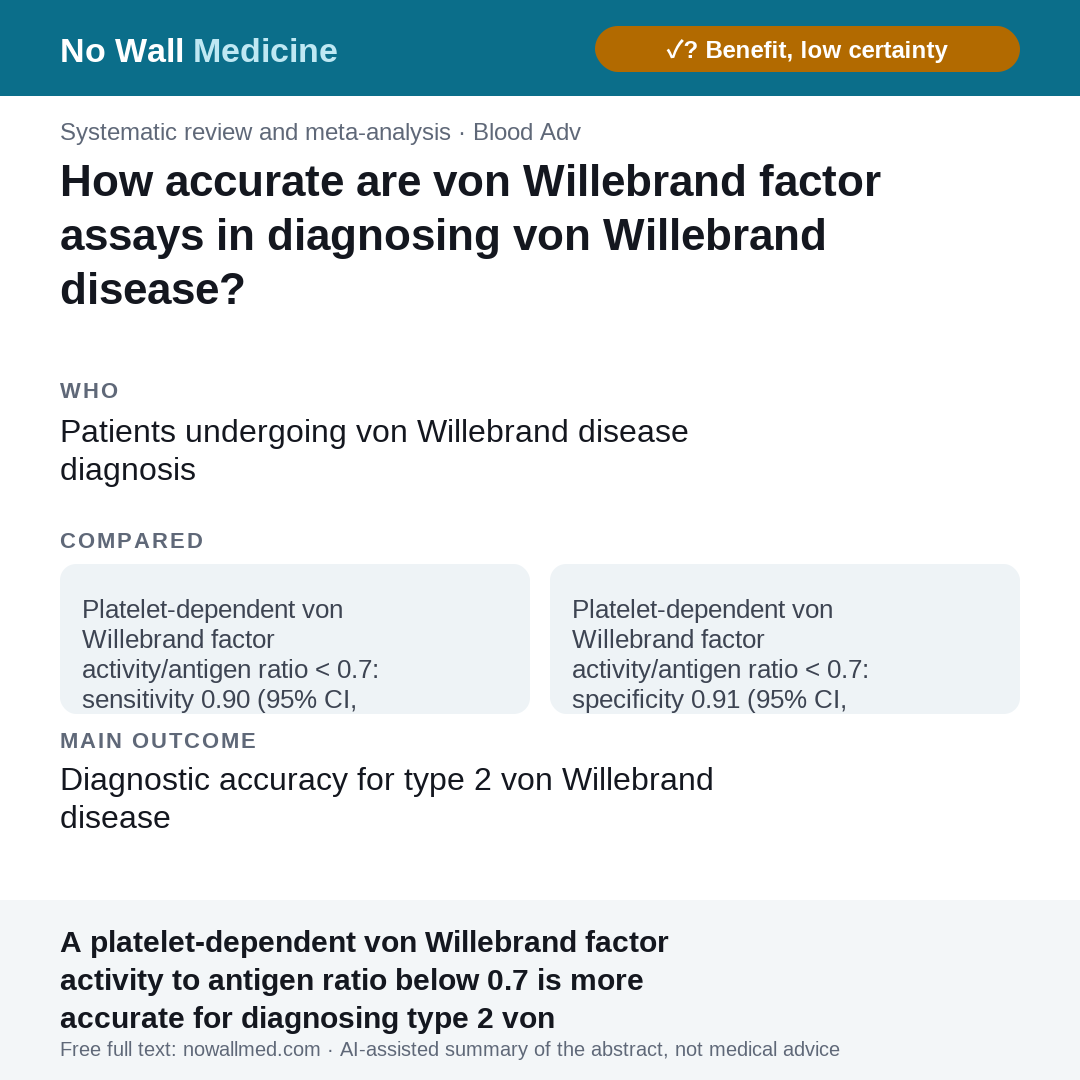
von Willebrand factor levels in the diagnosis of von Willebrand disease: a systematic review and meta-analysis
Systematic review and meta-analysisBenefit, low certainty
How accurate are von Willebrand factor assays in diagnosing von Willebrand disease?
Who
Patients undergoing von Willebrand disease diagnosis
Compared
Platelet-dependent von Willebrand factor activity/antigen ratio < 0.7: sensitivity 0.90 (95% CI, 0.83-0.94)
Platelet-dependent von Willebrand factor activity/antigen ratio < 0.7: specificity 0.91 (95% CI, 0.76-0.97)
Main outcome
Diagnostic accuracy for type 2 von Willebrand disease
Result: sensitivity 0.90 (95% CI, 0.83-0.94); specificity 0.91 (95% CI, 0.76-0.97)
Bottom line: A platelet-dependent von Willebrand factor activity to antigen ratio below 0.7 is more accurate for diagnosing type 2 von Willebrand disease.
Blood Adv · 2021-10-06Download image
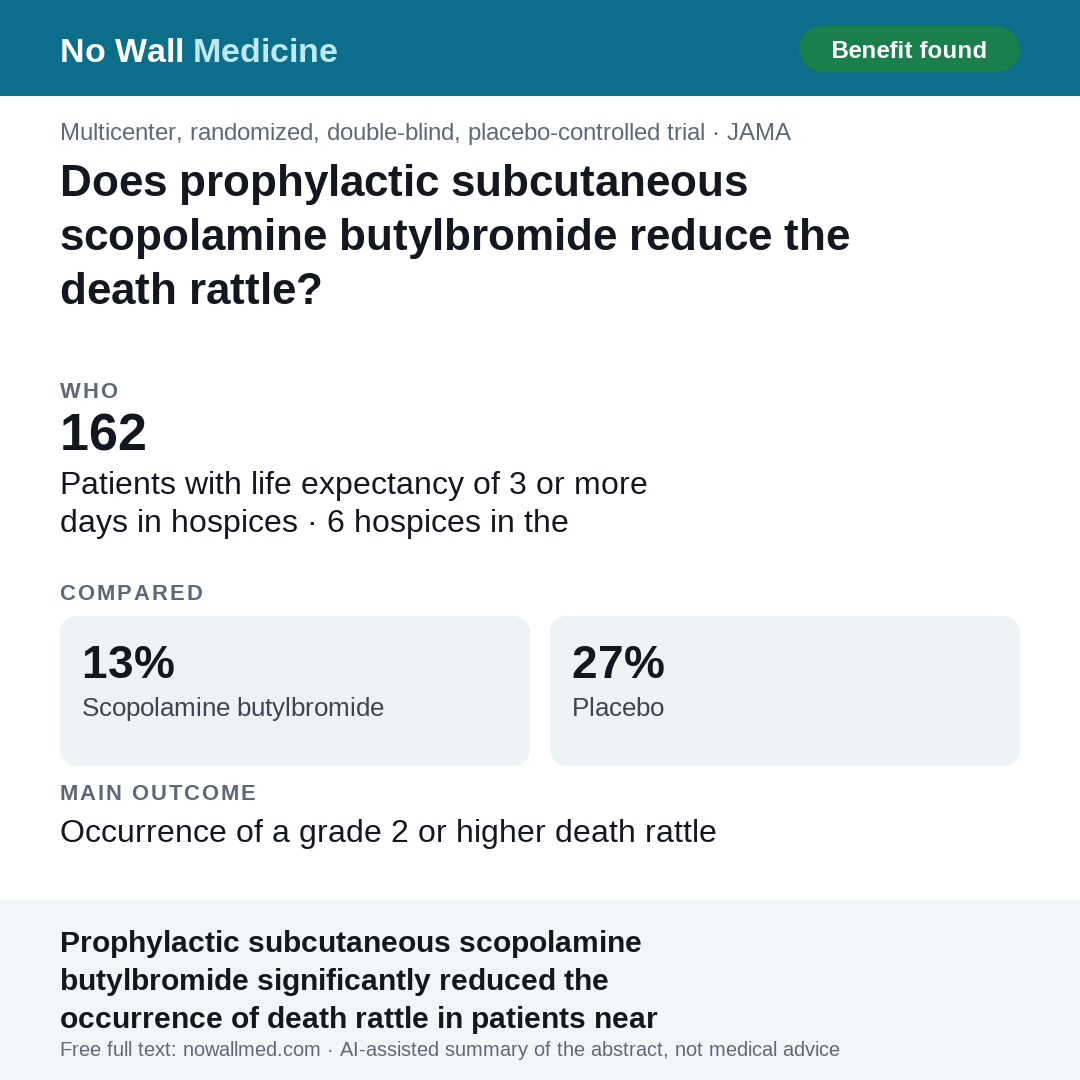
Effect of Prophylactic Subcutaneous Scopolamine Butylbromide on Death Rattle in Patients at the End of Life: The SILENCE Randomized Clinical Trial
Multicenter, randomized, double-blind, placebo-controlled trialBenefit found
Does prophylactic subcutaneous scopolamine butylbromide reduce the death rattle?
Who
162
Patients with life expectancy of 3 or more days in hospices · 6 hospices in the Netherlands
Compared
13%Scopolamine butylbromide
27%Placebo
Main outcome
Occurrence of a grade 2 or higher death rattle
Result: difference, 14%; 95% CI, 2%-27%
Bottom line: Prophylactic subcutaneous scopolamine butylbromide significantly reduced the occurrence of death rattle in patients near the end of life.
JAMA · 2021-10-05Download image
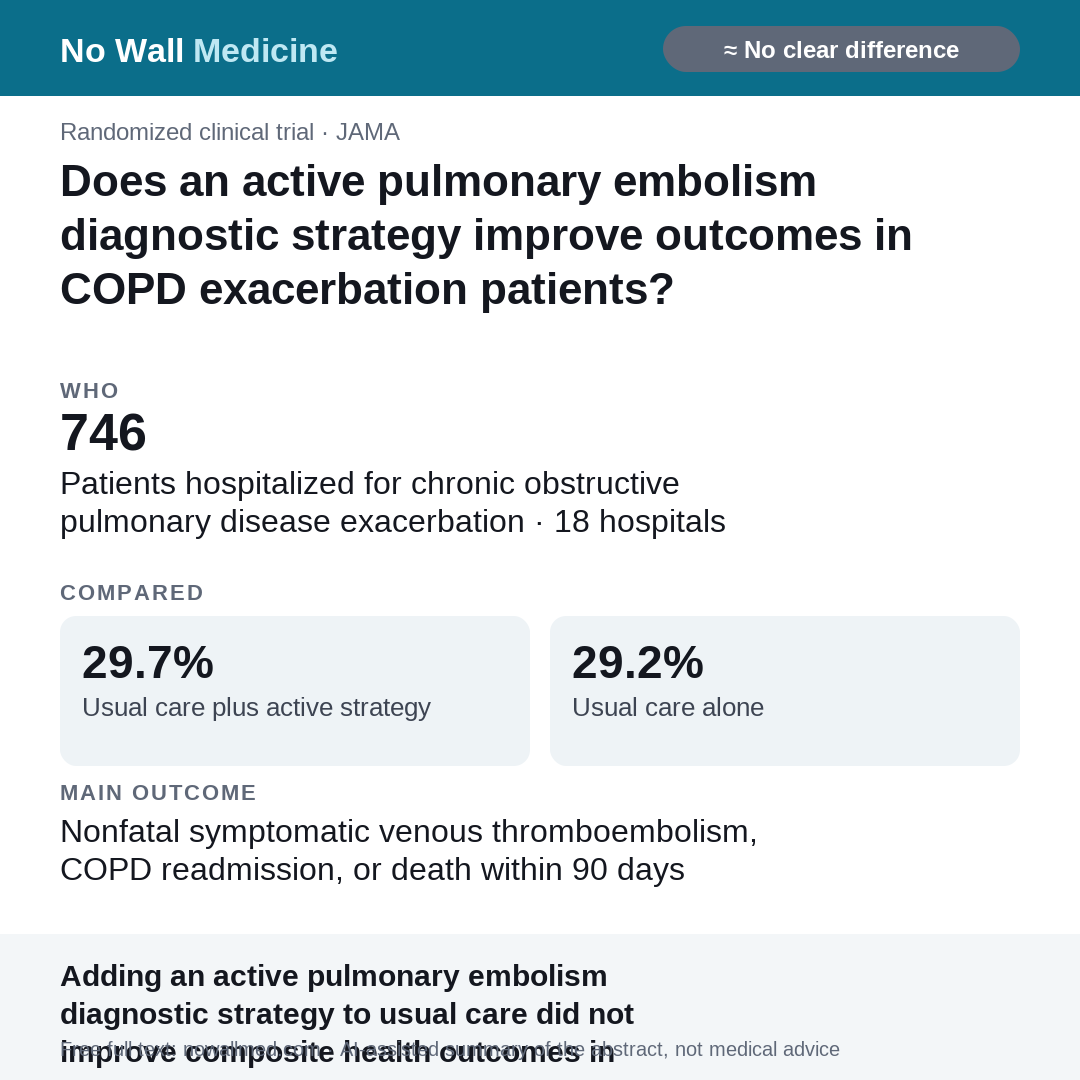
Effect of a Pulmonary Embolism Diagnostic Strategy on Clinical Outcomes in Patients Hospitalized for COPD Exacerbation: A Randomized Clinical Trial
Randomized clinical trialNo clear difference
Does an active pulmonary embolism diagnostic strategy improve outcomes in COPD exacerbation patients?
Who
746
Patients hospitalized for chronic obstructive pulmonary disease exacerbation · 18 hospitals in Spain
Compared
29.7%Usual care plus active strategy
29.2%Usual care alone
Main outcome
Nonfatal symptomatic venous thromboembolism, COPD readmission, or death within 90 days
Result: relative risk 1.02 (95% CI 0.82-1.28)
Bottom line: Adding an active pulmonary embolism diagnostic strategy to usual care did not improve composite health outcomes in hospitalized COPD patients.
JAMA · 2021-10-05Download image
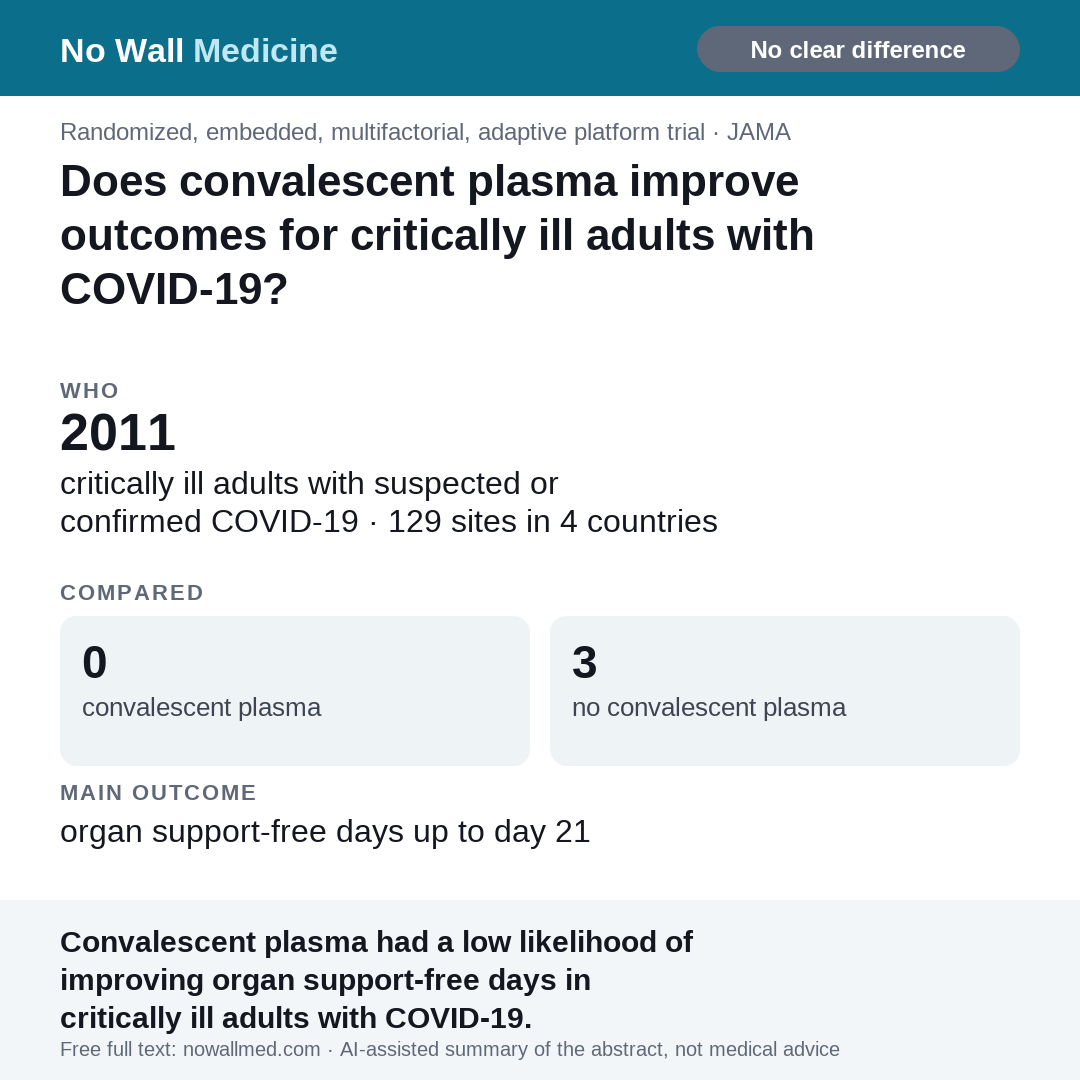
Effect of Convalescent Plasma on Organ Support-Free Days in Critically Ill Patients With COVID-19: A Randomized Clinical Trial
Randomized, embedded, multifactorial, adaptive platform trialNo clear difference
Does convalescent plasma improve outcomes for critically ill adults with COVID-19?
Who
2011
critically ill adults with suspected or confirmed COVID-19 · 129 sites in 4 countries
Compared
0convalescent plasma (IQR, -1 to 16)
3no convalescent plasma (IQR, -1 to 16)
Main outcome
organ support-free days up to day 21
Result: odds ratio 0.97 (95% credible interval, 0.83 to 1.15)
Bottom line: Convalescent plasma had a low likelihood of improving organ support-free days in critically ill adults with COVID-19.
JAMA · 2021-10-05Download image
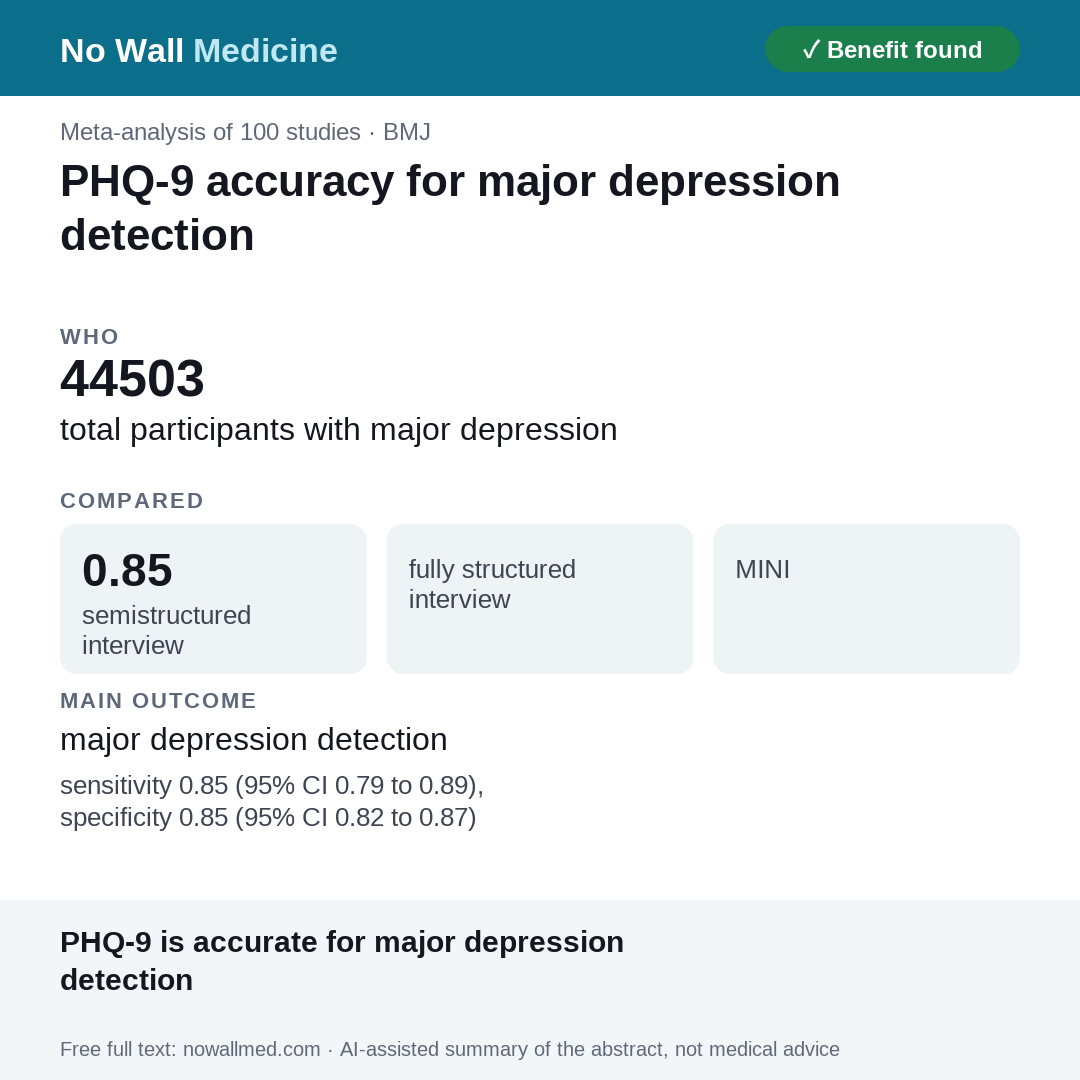
Accuracy of the Patient Health Questionnaire-9 for screening to detect major depression: updated systematic review and individual participant data meta-analysis
Meta-analysis of 100 studiesBenefit found
PHQ-9 accuracy for major depression detection
Who
44503
total participants with major depression
Compared
0.85semistructured interview (0.79 to 0.89)
fully structured interview
MINI
Main outcome
major depression detection
Result: sensitivity 0.85 (95% CI 0.79 to 0.89), specificity 0.85 (95% CI 0.82 to 0.87)
Bottom line: PHQ-9 is accurate for major depression detection
BMJ · 2021-10-05Download image
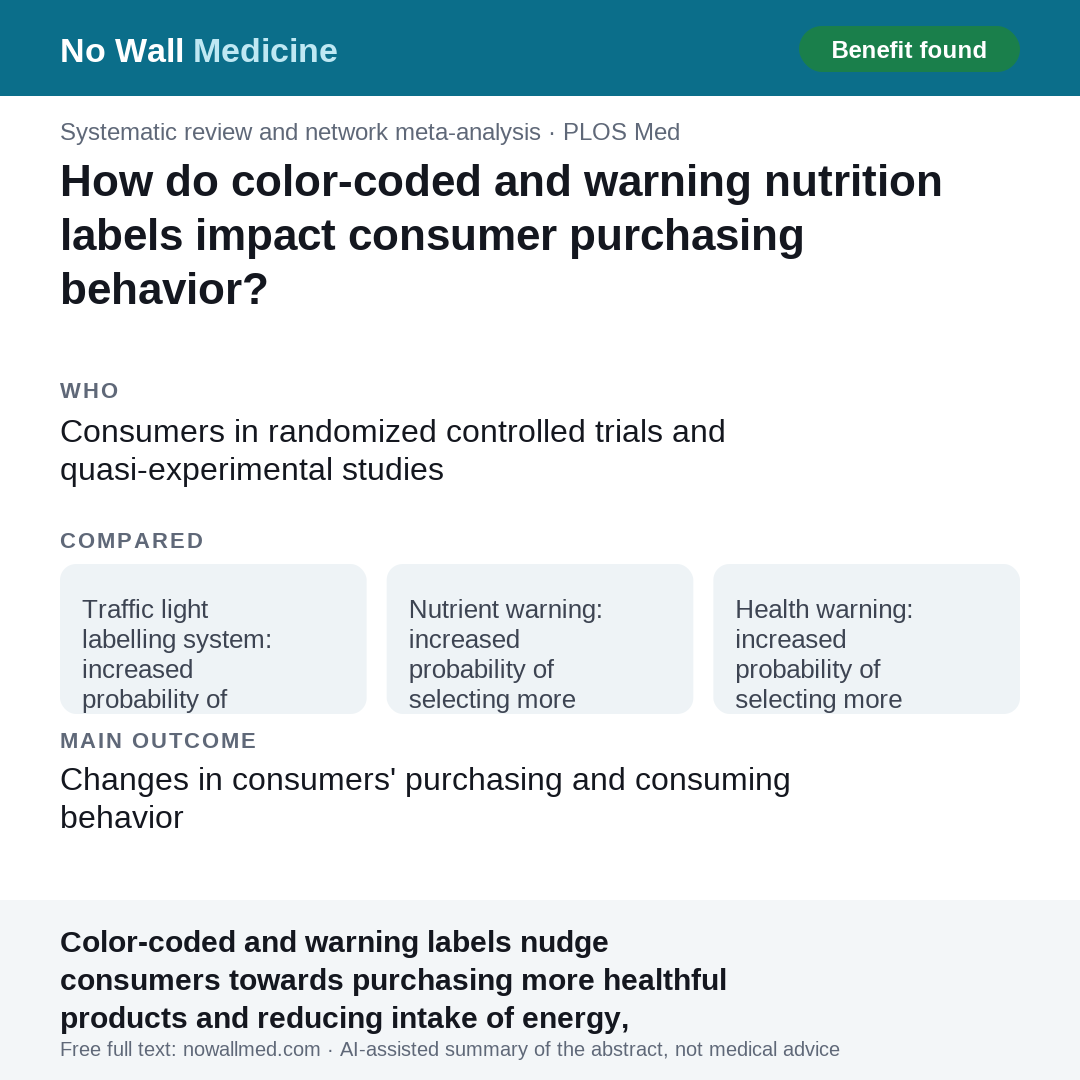
Impact of color-coded and warning nutrition labelling schemes: A systematic review and network meta-analysis
Systematic review and network meta-analysisBenefit found
How do color-coded and warning nutrition labels impact consumer purchasing behavior?
Who
Consumers in randomized controlled trials and quasi-experimental studies
Compared
Traffic light labelling system: increased probability of selecting more healthful products OR 1.5 (95% CI 1.2, 1.87)
Nutrient warning: increased probability of selecting more healthful products OR 3.61 (95% CI 2.82, 4.63)
Health warning: increased probability of selecting more healthful products OR 1.65 (95% CI 1.32, 2.06)
Main outcome
Changes in consumers' purchasing and consuming behavior
Bottom line: Color-coded and warning labels nudge consumers towards purchasing more healthful products and reducing intake of energy, sodium, fat, and saturated fat.
Limitation: High heterogeneity, limited real-world studies, and lack of long-term impact assessments.
PLOS Med · 2021-10-05Download image
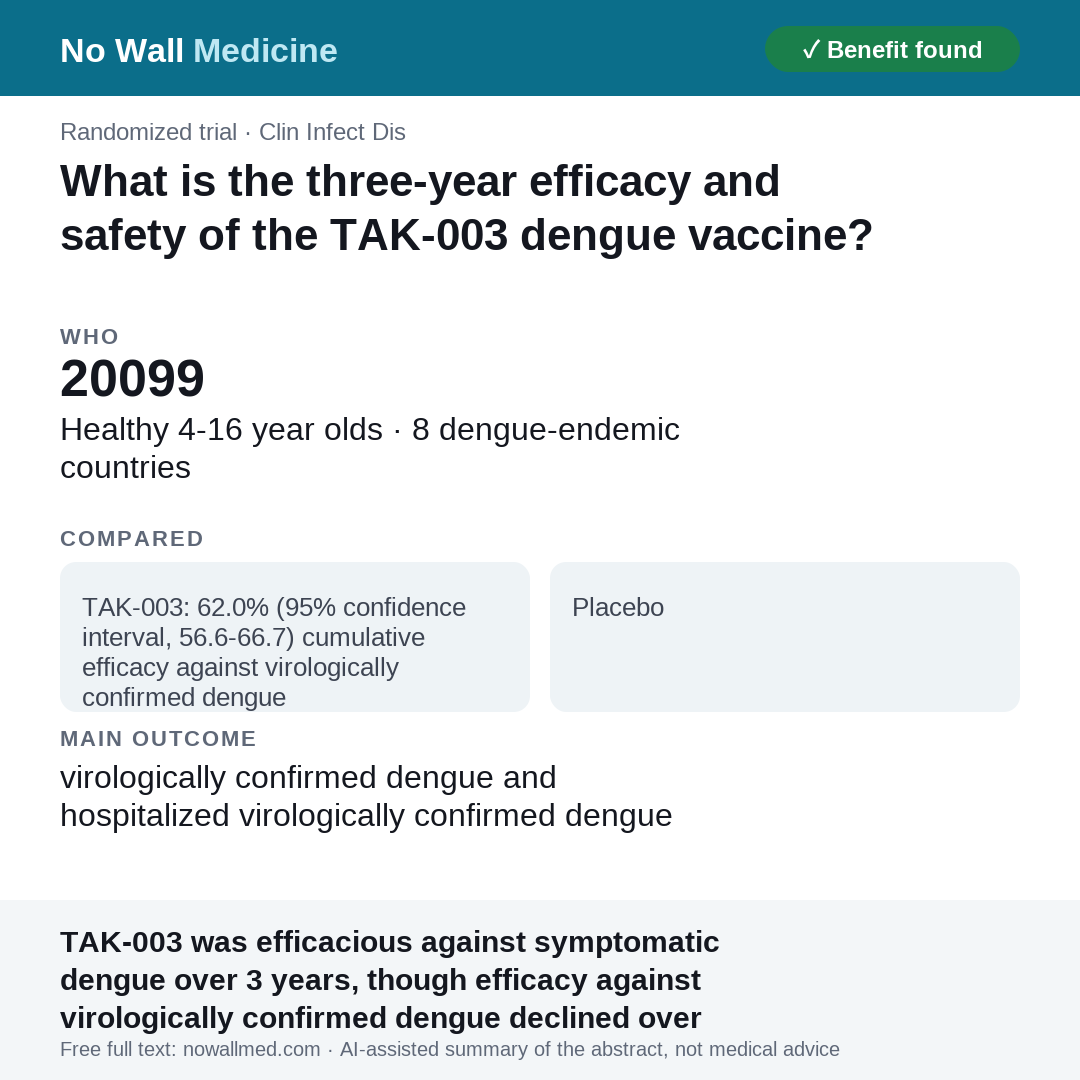
Three-year Efficacy and Safety of Takeda's Dengue Vaccine Candidate (TAK-003)
Randomized trialBenefit found
What is the three-year efficacy and safety of the TAK-003 dengue vaccine?
Who
20099
Healthy 4-16 year olds · 8 dengue-endemic countries
Compared
TAK-003: 62.0% (95% confidence interval, 56.6-66.7) cumulative efficacy against virologically confirmed dengue
Placebo
Main outcome
virologically confirmed dengue and hospitalized virologically confirmed dengue
Result: 62.0% (95% confidence interval, 56.6-66.7) against virologically confirmed dengue
Bottom line: TAK-003 was efficacious against symptomatic dengue over 3 years, though efficacy against virologically confirmed dengue declined over time.
Clin Infect Dis · 2021-10-05Download image
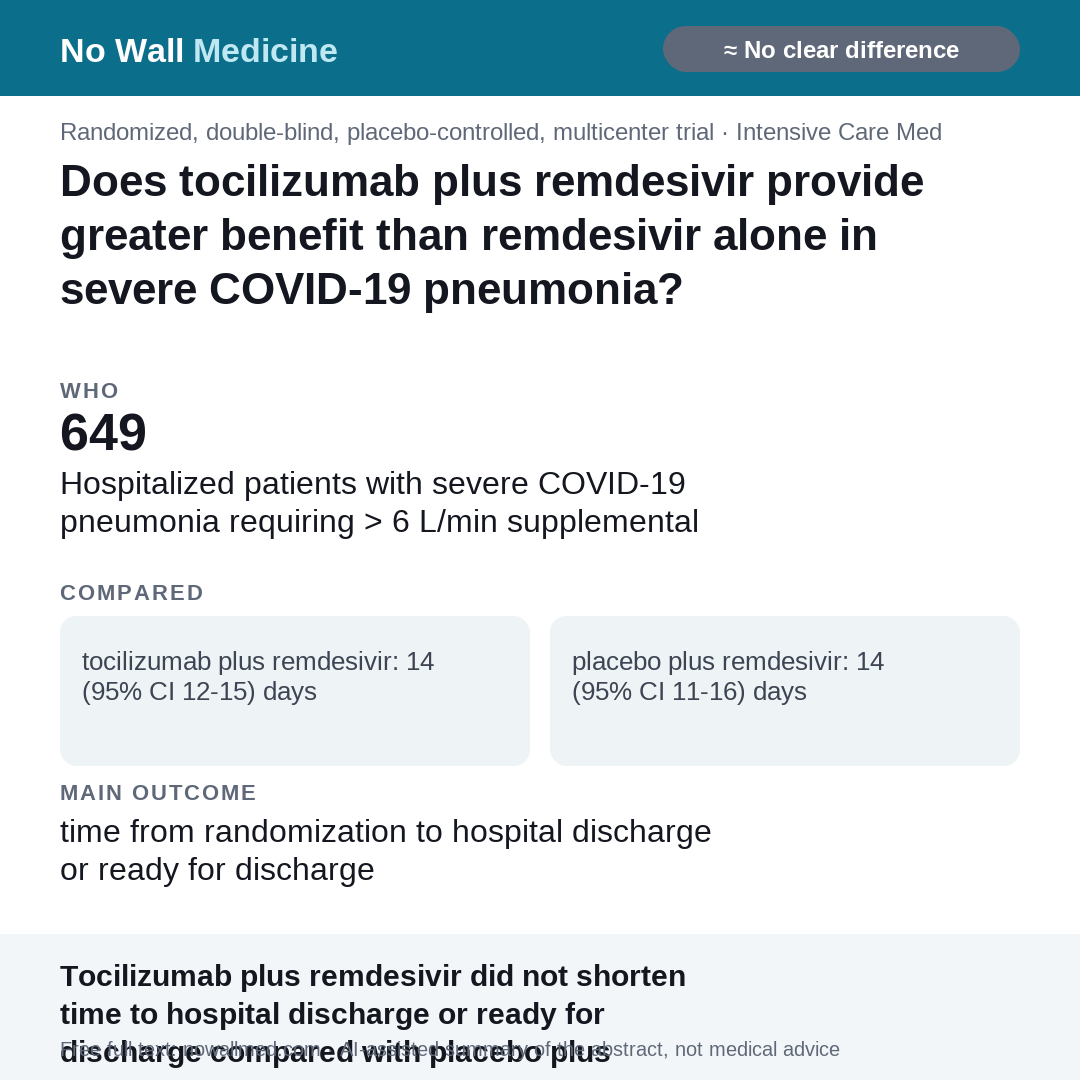
Tocilizumab and remdesivir in hospitalized patients with severe COVID-19 pneumonia: a randomized clinical trial
Randomized, double-blind, placebo-controlled, multicenter trialNo clear difference
Does tocilizumab plus remdesivir provide greater benefit than remdesivir alone in severe COVID-19 pneumonia?
Who
649
Hospitalized patients with severe COVID-19 pneumonia requiring > 6 L/min supplemental oxygen · multicenter
Compared
tocilizumab plus remdesivir: 14 (95% CI 12-15) days
placebo plus remdesivir: 14 (95% CI 11-16) days
Main outcome
time from randomization to hospital discharge or ready for discharge
Result: Cox proportional hazards ratio 0.97 (95% CI 0.78-1.19)
Bottom line: Tocilizumab plus remdesivir did not shorten time to hospital discharge or ready for discharge compared with placebo plus remdesivir.
Intensive Care Med · 2021-10-05Download image
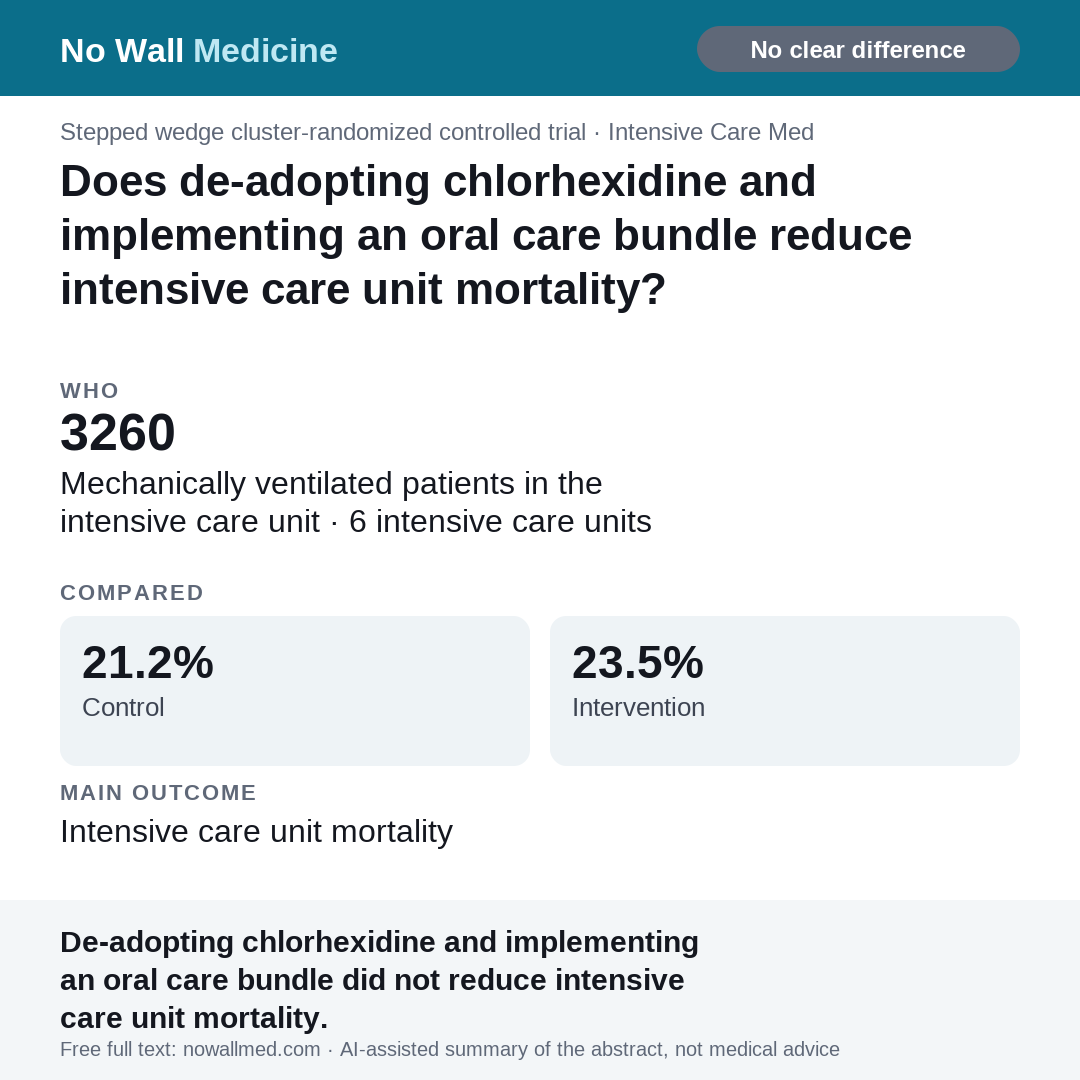
Effect of oral chlorhexidine de-adoption and implementation of an oral care bundle on mortality for mechanically ventilated patients in the intensive care unit (CHORAL): a multi-center stepped wedge cluster-randomized controlled trial
Stepped wedge cluster-randomized controlled trialNo clear difference
Does de-adopting chlorhexidine and implementing an oral care bundle reduce intensive care unit mortality?
Who
3260
Mechanically ventilated patients in the intensive care unit · 6 intensive care units in Toronto, Canada
Compared
21.2%Control
23.5%Intervention
Main outcome
Intensive care unit mortality
Result: adjusted odds ratio 1.13 (95% CI 0.82 to 1.54)
Bottom line: De-adopting chlorhexidine and implementing an oral care bundle did not reduce intensive care unit mortality.
Intensive Care Med · 2021-10-05Download image
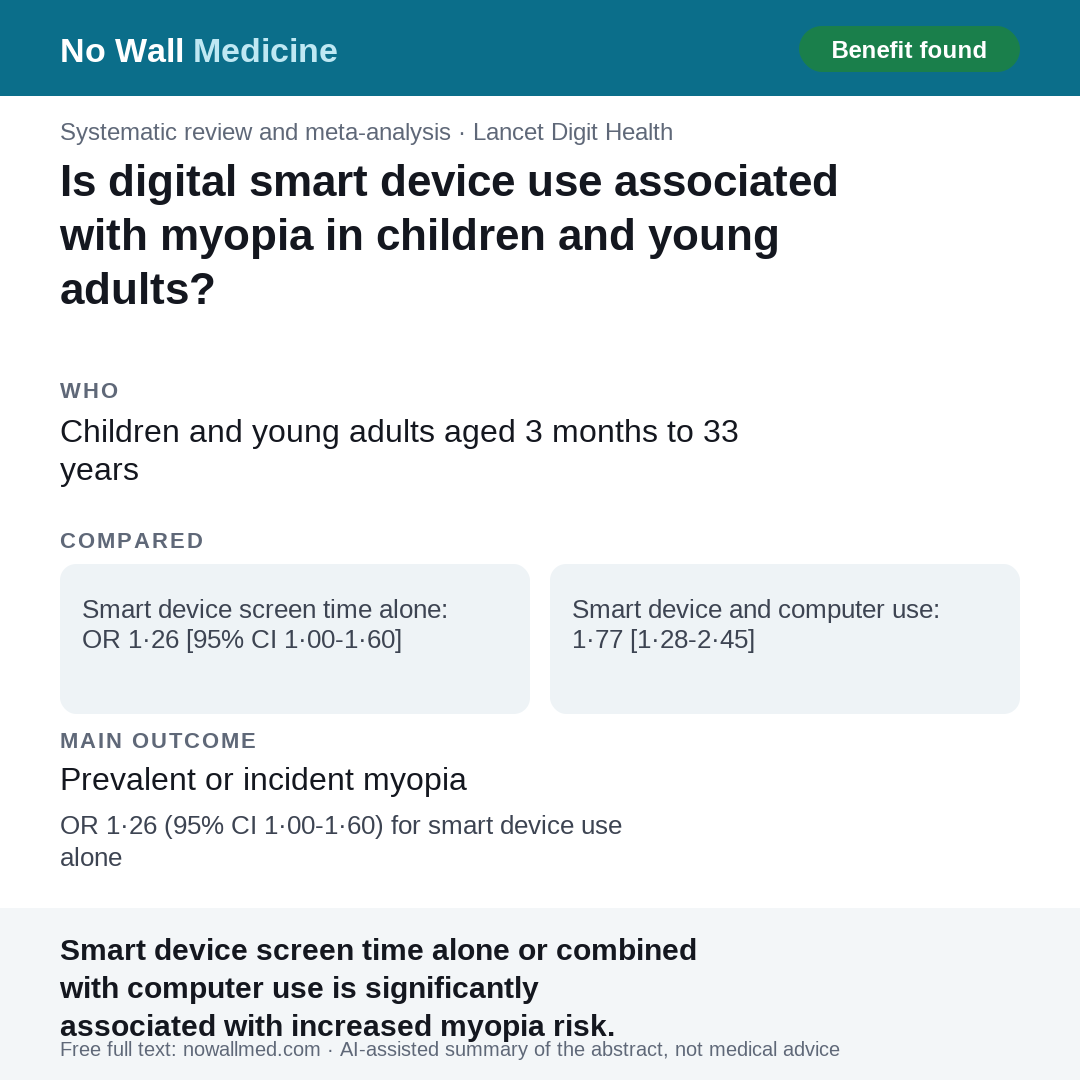
Association between digital smart device use and myopia: a systematic review and meta-analysis
Systematic review and meta-analysisKey finding
Is digital smart device use associated with myopia in children and young adults?
Who
Children and young adults aged 3 months to 33 years
Compared
Smart device screen time alone: OR 1·26 [95% CI 1·00-1·60]
Smart device and computer use: 1·77 [1·28-2·45]
Main outcome
Prevalent or incident myopia
Result: OR 1·26 (95% CI 1·00-1·60) for smart device use alone
Bottom line: Smart device screen time alone or combined with computer use is significantly associated with increased myopia risk.
Limitation: Studies lacked reliable measures of screen time and objective myopia measurements.
Lancet Digit Health · 2021-10-05Download image