Visual abstracts
New randomized trials and meta-analyses from leading journals at a glance: who was studied, what was compared, and what was found. Every paper is free to read in full.
All specialtiesCardiology 4763Oncology 4042Gastroenterology & Hepatology 1902Infectious Disease 3756Neurology 1872Psychiatry & Mental Health 2214Pulmonology 2042Critical Care 1319Endocrinology & Diabetes 2544Pediatrics 2889Surgery 2479Orthopedics & Sports Medicine 917Neurosurgery 525Cardiothoracic & Vascular Surgery 656Plastic & Reconstructive Surgery 574Nephrology 1107Rheumatology 810Hematology 1090Dermatology 611Ophthalmology 532Obstetrics & Gynecology 1645Public & Global Health 1037Radiology & Imaging 617Anesthesiology 957Urology 745ENT (Otolaryngology) 494Emergency Medicine 481Allergy & Immunology 309Geriatrics 972Family Medicine & Primary Care 533Medical Genetics & Genomics 659Pathology & Laboratory Medicine 156Physical Medicine & Rehabilitation 734Palliative Care 421Nutrition 1560Digital Health & AI 2133General Medicine 318
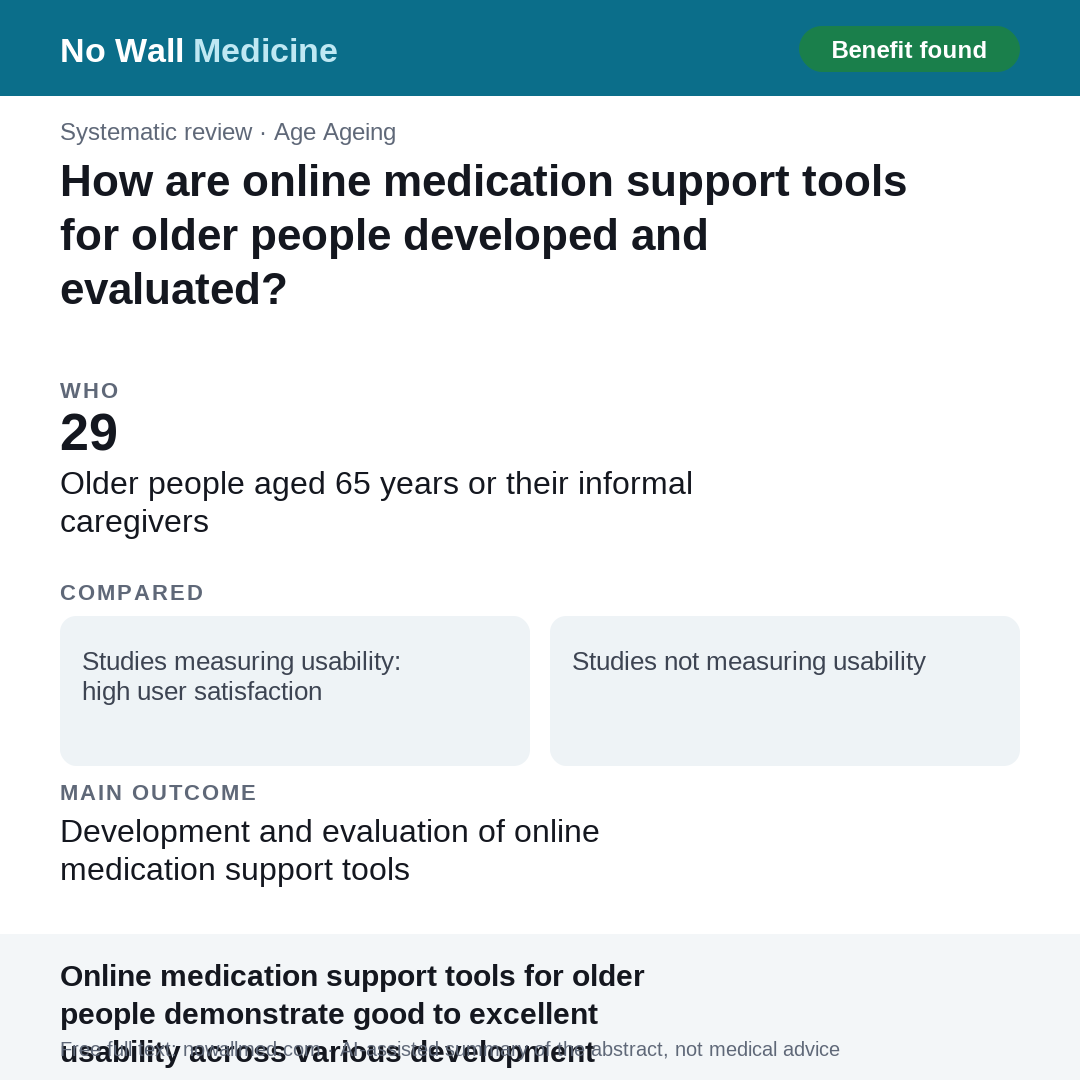
Development and evaluation of online medication support tools for older people: a systematic review
Systematic reviewBenefit found
How are online medication support tools for older people developed and evaluated?
Who
Older people aged 65 years or their informal caregivers
Compared
Studies measuring usability: high user satisfaction
Studies not measuring usability
Main outcome
Development and evaluation of online medication support tools
Bottom line: Online medication support tools for older people demonstrate good to excellent usability across various development methodologies.
Age Ageing · 2025-10-19Download image
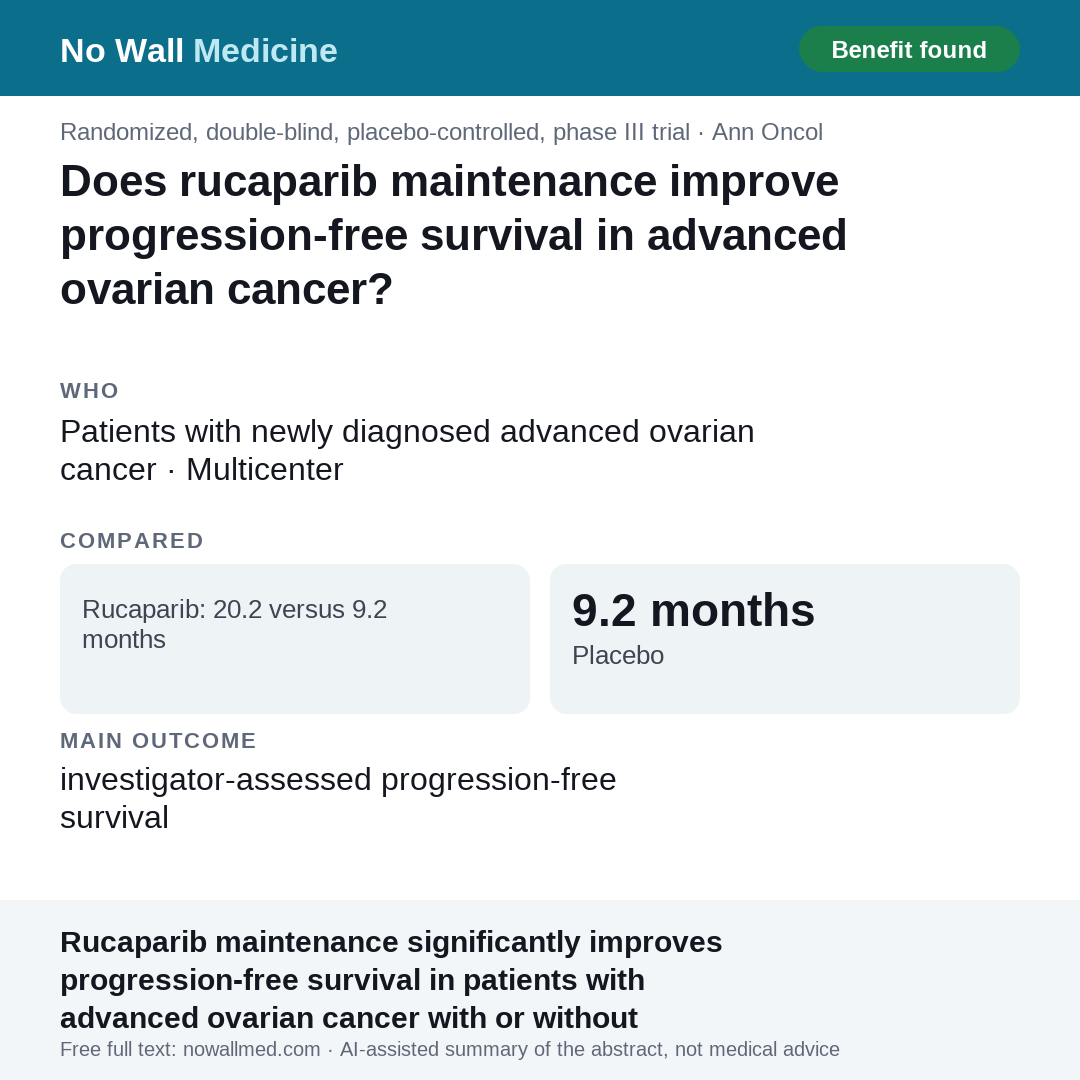
Rucaparib maintenance for newly diagnosed advanced ovarian cancer: interim overall survival, progression-free survival, and safety at 5 years of follow-up from the phase III ATHENA-MONO/GOG-3020/ENGOT-ov45 study
Randomized, double-blind, placebo-controlled, phase III trialBenefit found
Does rucaparib maintenance improve progression-free survival in advanced ovarian cancer?
Who
Patients with newly diagnosed advanced ovarian cancer · Multicenter
Compared
Rucaparib: 20.2 versus 9.2 months
9.2 monthsPlacebo
Main outcome
investigator-assessed progression-free survival
Result: hazard ratio 0.53 (95% CI 0.42 to 0.69)
Bottom line: Rucaparib maintenance significantly improves progression-free survival in patients with advanced ovarian cancer with or without homologous recombination deficiency.
Ann Oncol · 2025-10-18Download image
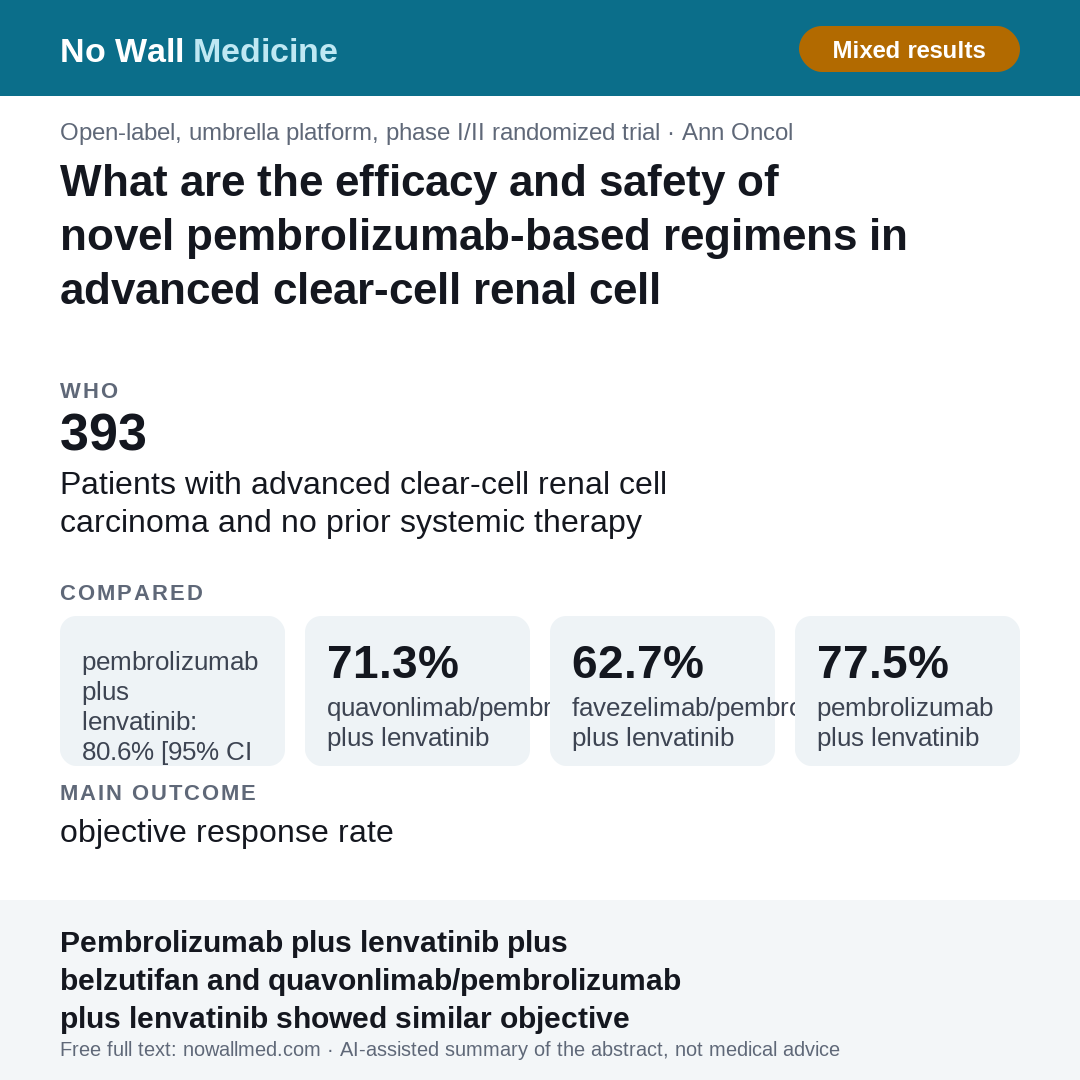
Novel pembrolizumab-based treatments as first-line therapy in advanced clear-cell renal cell carcinoma: substudy 03A of the open-label, umbrella platform, phase I/II KEYMAKER-U03 trial
Open-label, umbrella platform, phase I/II randomized trialMixed results
What are the efficacy and safety of novel pembrolizumab-based regimens in advanced clear-cell renal cell carcinoma?
Who
393
Patients with advanced clear-cell renal cell carcinoma and no prior systemic therapy
Compared
pembrolizumab plus lenvatinib: 80.6% [95% CI 68.6% to 89.6%]
71.3%quavonlimab/pembrolizumab plus lenvatinib (95% CI 60.0% to 80.8%)
62.7%favezelimab/pembrolizumab plus lenvatinib (95% CI 48.1% to 75.9%)
77.5%pembrolizumab plus lenvatinib plus belzutifan (95% CI 66.8% to 86.1%)
Main outcome
objective response rate
Bottom line: Pembrolizumab plus lenvatinib plus belzutifan and quavonlimab/pembrolizumab plus lenvatinib showed similar objective response rates to the reference treatment.
Ann Oncol · 2025-10-18Download image
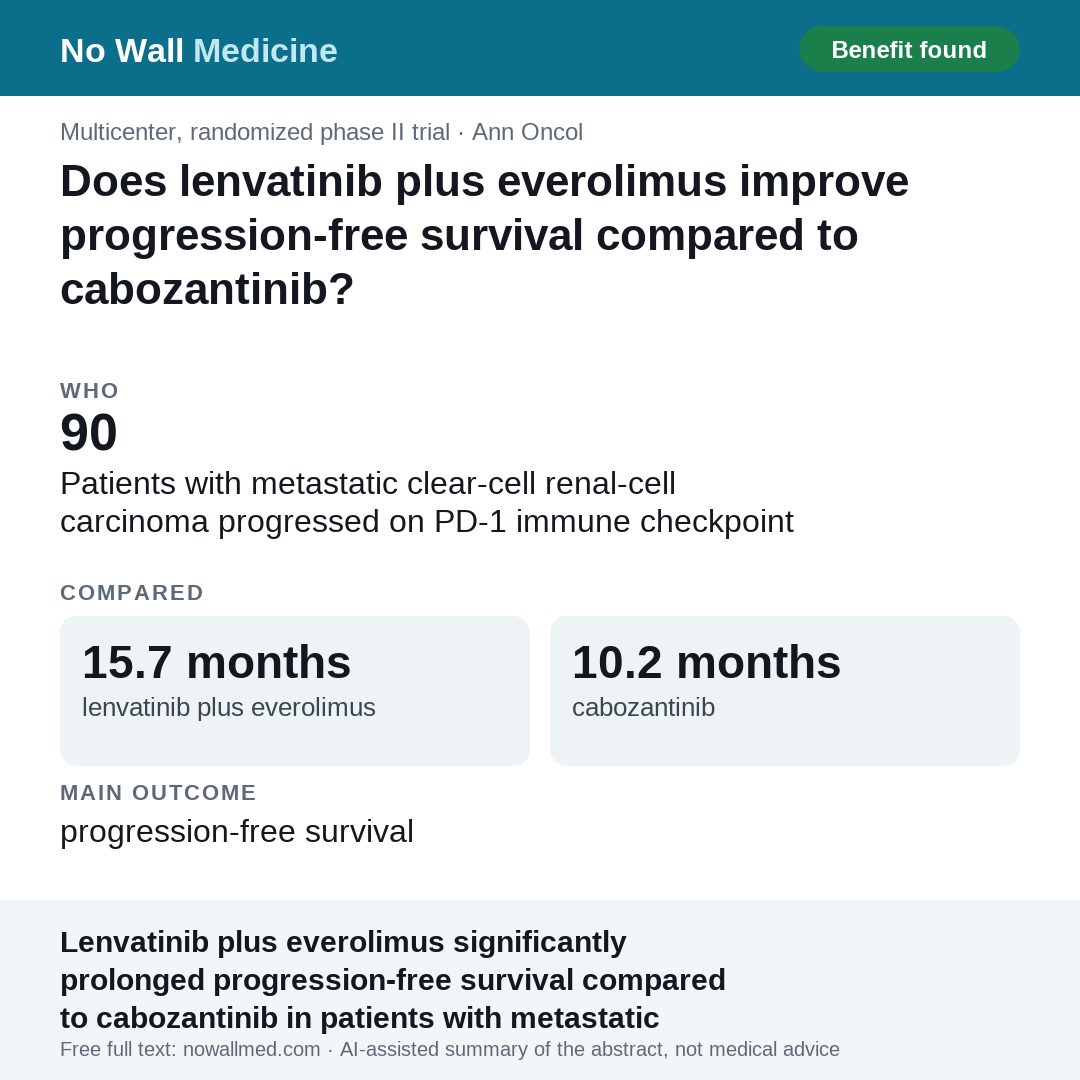
A multicenter randomized phase II trial of lenvatinib plus everolimus versus cabozantinib in patients with metastatic clear-cell RCC that progressed on PD-1 immune checkpoint inhibition (LenCabo)
Multicenter, randomized phase II trialEarly signal
Does lenvatinib plus everolimus improve progression-free survival compared to cabozantinib?
Who
90
Patients with metastatic clear-cell renal-cell carcinoma progressed on PD-1 immune checkpoint inhibition
Compared
15.7 monthslenvatinib plus everolimus
10.2 monthscabozantinib
Main outcome
progression-free survival
Result: hazard ratio 0.51, 95% confidence interval (CI) 0.29-0.89
Bottom line: Lenvatinib plus everolimus significantly prolonged progression-free survival compared to cabozantinib in patients with metastatic clear-cell renal-cell carcinoma.
Ann Oncol · 2025-10-18Download image
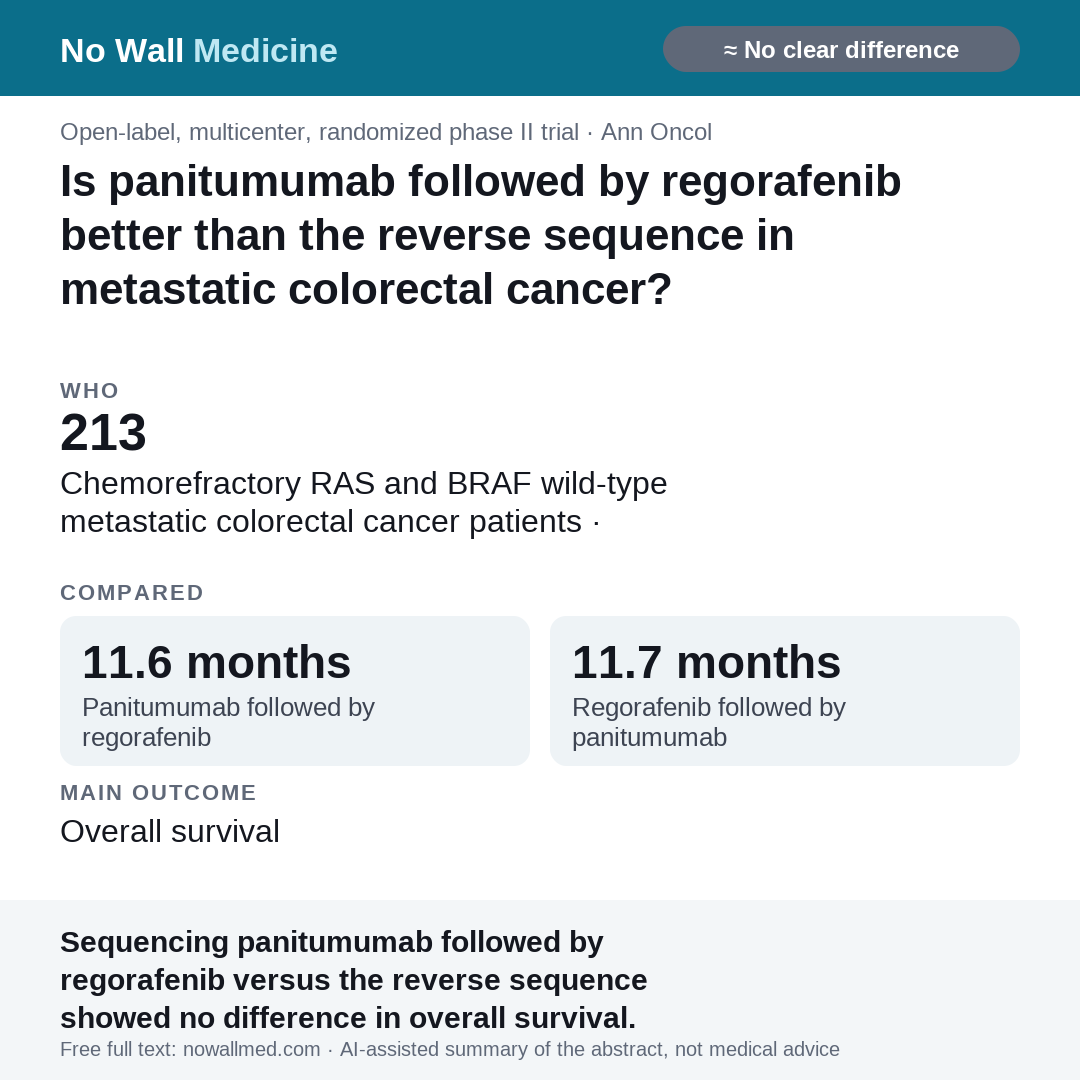
Re-treatment with panitumumab followed by regorafenib versus the reverse sequence in chemorefractory metastatic colorectal cancer patients with RAS and BRAF wild-type circulating tumor DNA: the PARERE study by GONO
Open-label, multicenter, randomized phase II trialNo clear difference
Is panitumumab followed by regorafenib better than the reverse sequence in metastatic colorectal cancer?
Who
213
Chemorefractory RAS and BRAF wild-type metastatic colorectal cancer patients · Multicenter
Compared
11.6 monthsPanitumumab followed by regorafenib
11.7 monthsRegorafenib followed by panitumumab
Main outcome
Overall survival
Result: hazard ratio 1.13, 85% confidence interval 0.90-1.41
Bottom line: Sequencing panitumumab followed by regorafenib versus the reverse sequence showed no difference in overall survival.
Ann Oncol · 2025-10-18Download image
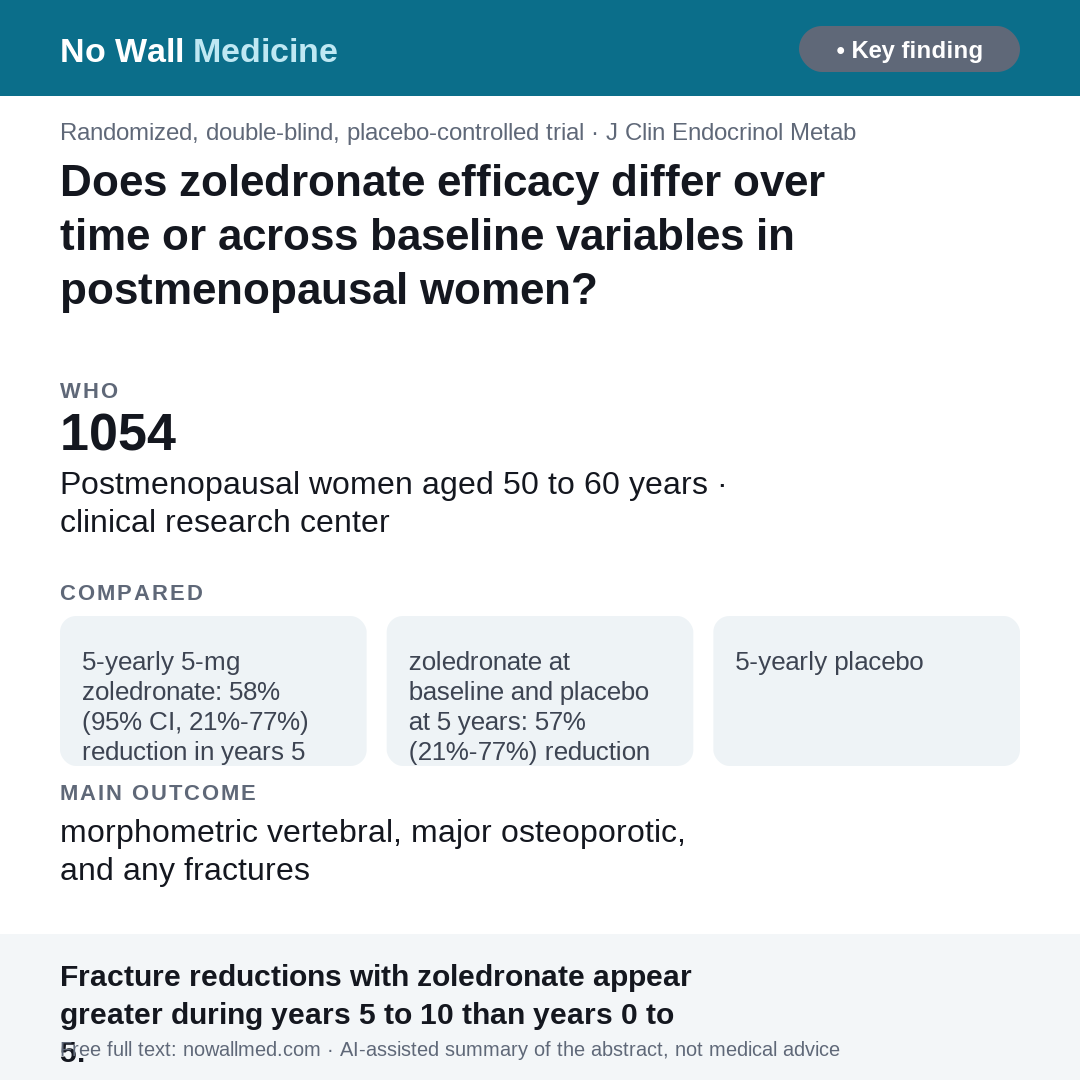
Antifracture Efficacy of 5- or 10-Yearly Zoledronate in Women Aged 50 to 60 Years: Secondary Analyses of a Randomized Trial
Randomized, double-blind, placebo-controlled trialKey finding
Does zoledronate efficacy differ over time or across baseline variables in postmenopausal women?
Who
1054
Postmenopausal women aged 50 to 60 years · clinical research center
Compared
5-yearly 5-mg zoledronate: 58% (95% CI, 21%-77%) reduction in years 5 to 10
zoledronate at baseline and placebo at 5 years: 57% (21%-77%) reduction in years 5 to 10
5-yearly placebo
Main outcome
morphometric vertebral, major osteoporotic, and any fractures
Bottom line: Fracture reductions with zoledronate appear greater during years 5 to 10 than years 0 to 5.
J Clin Endocrinol Metab · 2025-10-18Download image
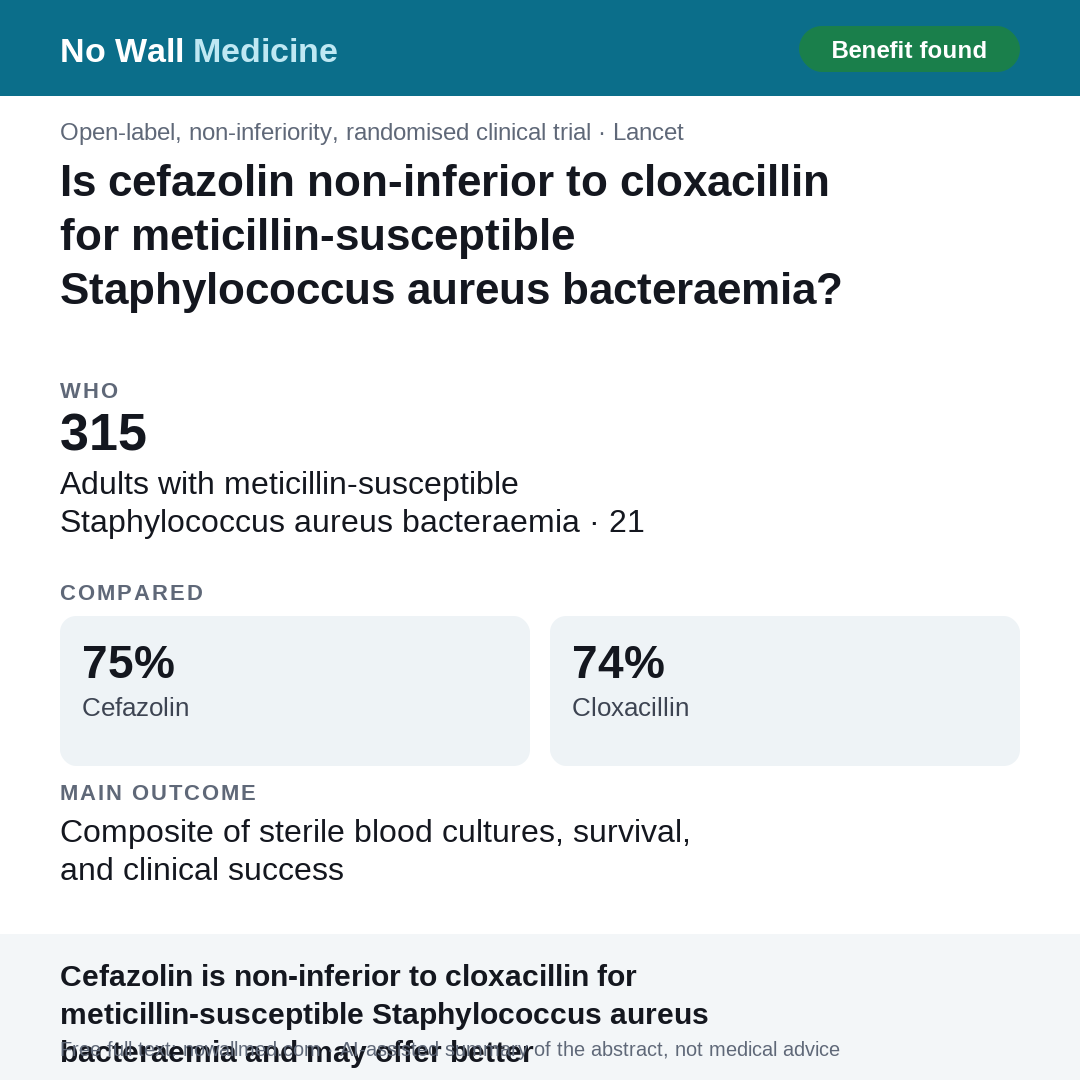
Cloxacillin versus cefazolin for meticillin-susceptible Staphylococcus aureus bacteraemia (CloCeBa): a prospective, open-label, multicentre, non-inferiority, randomised clinical trial
Open-label, non-inferiority, randomised clinical trialBenefit found
Is cefazolin non-inferior to cloxacillin for meticillin-susceptible Staphylococcus aureus bacteraemia?
Who
315
Adults with meticillin-susceptible Staphylococcus aureus bacteraemia · 21 hospitals in France
Compared
75%Cefazolin (109/146)
74%Cloxacillin (108/146)
Main outcome
Composite of sterile blood cultures, survival, and clinical success
Result: treatment difference -1% (95% CI -11 to 9)
Bottom line: Cefazolin is non-inferior to cloxacillin for meticillin-susceptible Staphylococcus aureus bacteraemia and may offer better tolerability.
Funded by: French Ministry of Health
Lancet · 2025-10-17Download image
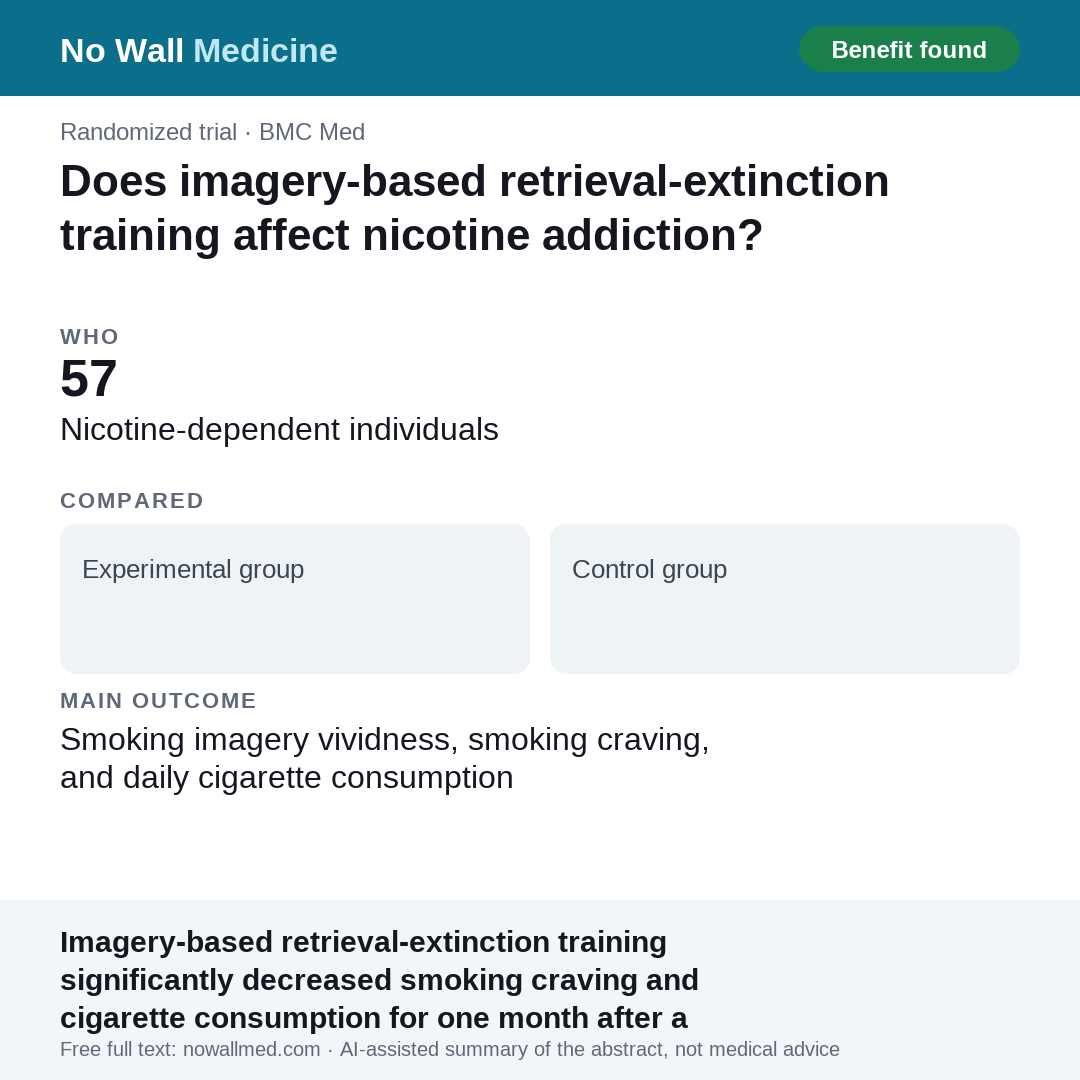
A novel imagery-based retrieval-extinction training for intervention in nicotine addiction
Randomized trialBenefit found
Does imagery-based retrieval-extinction training affect nicotine addiction?
Who
57
Nicotine-dependent individuals
Compared
Experimental group
Control group
Main outcome
Smoking imagery vividness, smoking craving, and daily cigarette consumption
Bottom line: Imagery-based retrieval-extinction training significantly decreased smoking craving and cigarette consumption for one month after a single session.
BMC Med · 2025-10-17Download image
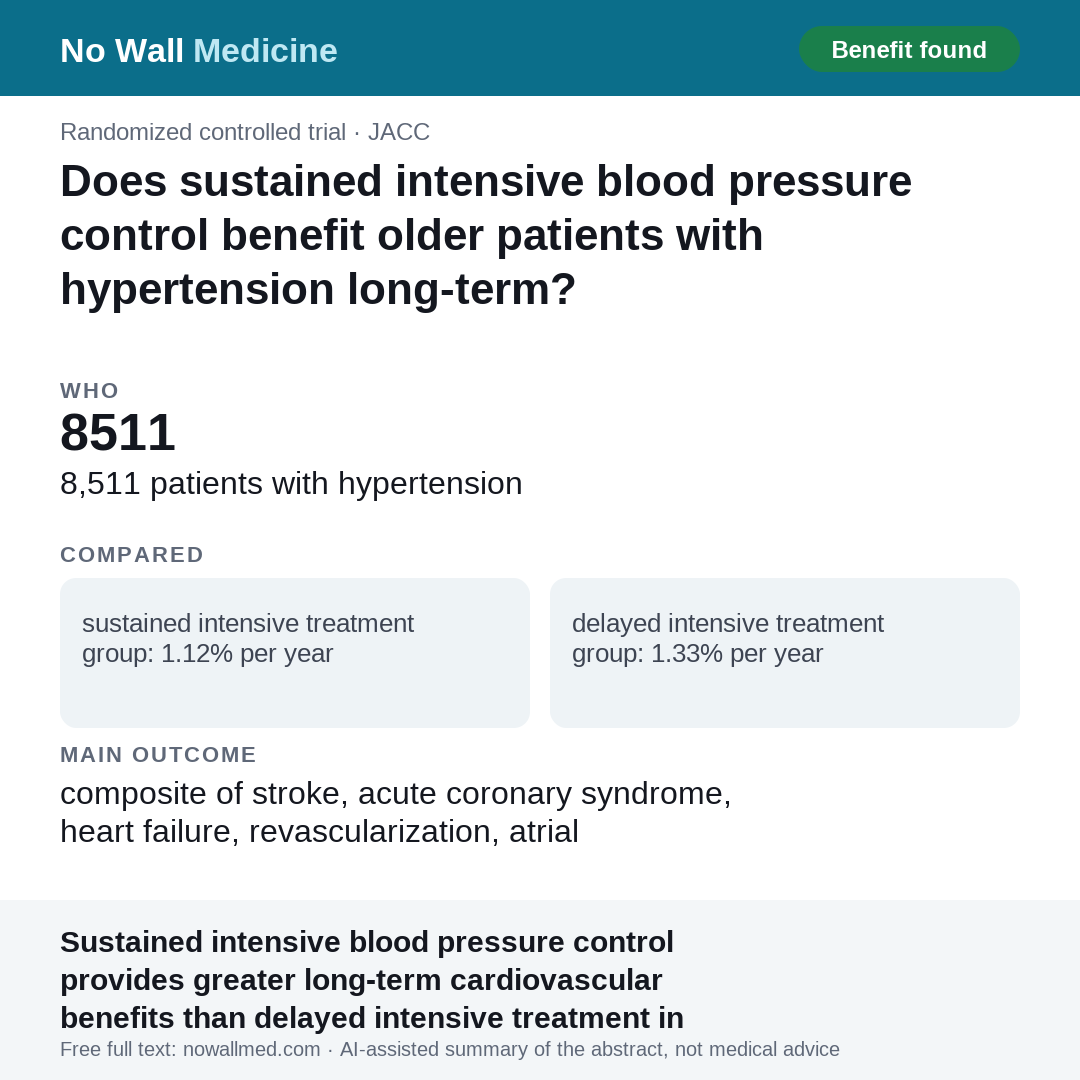
Intensive Blood Pressure Control in Older Patients With Hypertension: 6-Year Results of the STEP Trial
Randomized controlled trialBenefit found
Does sustained intensive blood pressure control benefit older patients with hypertension long-term?
Who
8511
8,511 patients with hypertension
Compared
sustained intensive treatment group: 1.12% per year
delayed intensive treatment group: 1.33% per year
Main outcome
composite of stroke, acute coronary syndrome, heart failure, revascularization, atrial fibrillation, or cardiovascular death
Result: hazard ratio 0.82 (95% CI 0.71-0.96)
Bottom line: Sustained intensive blood pressure control provides greater long-term cardiovascular benefits than delayed intensive treatment in older hypertensive patients.
JACC · 2025-10-17Download image
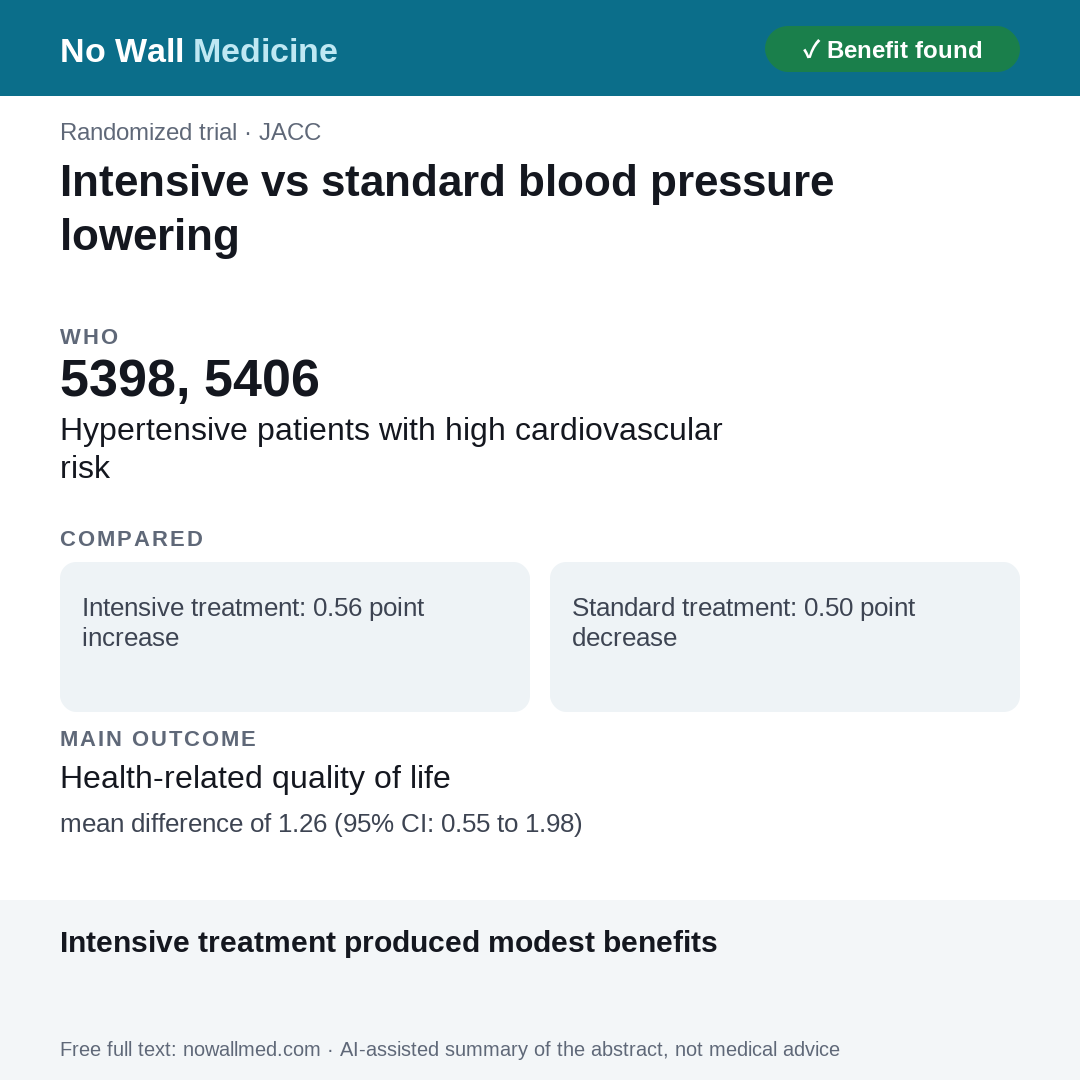
Modest Effects of Intensive Blood Pressure-Lowering on Quality of Life in Patients at High Cardiovascular Risk: The ESPRIT Trial
Randomized trialBenefit found
Intensive vs standard blood pressure lowering
Who
5398, 5406
Hypertensive patients with high cardiovascular risk
Compared
Intensive treatment: 0.56 point increase
Standard treatment: 0.50 point decrease
Main outcome
Health-related quality of life
Result: mean difference of 1.26 (95% CI: 0.55 to 1.98)
Bottom line: Intensive treatment produced modest benefits
JACC · 2025-10-17Download image
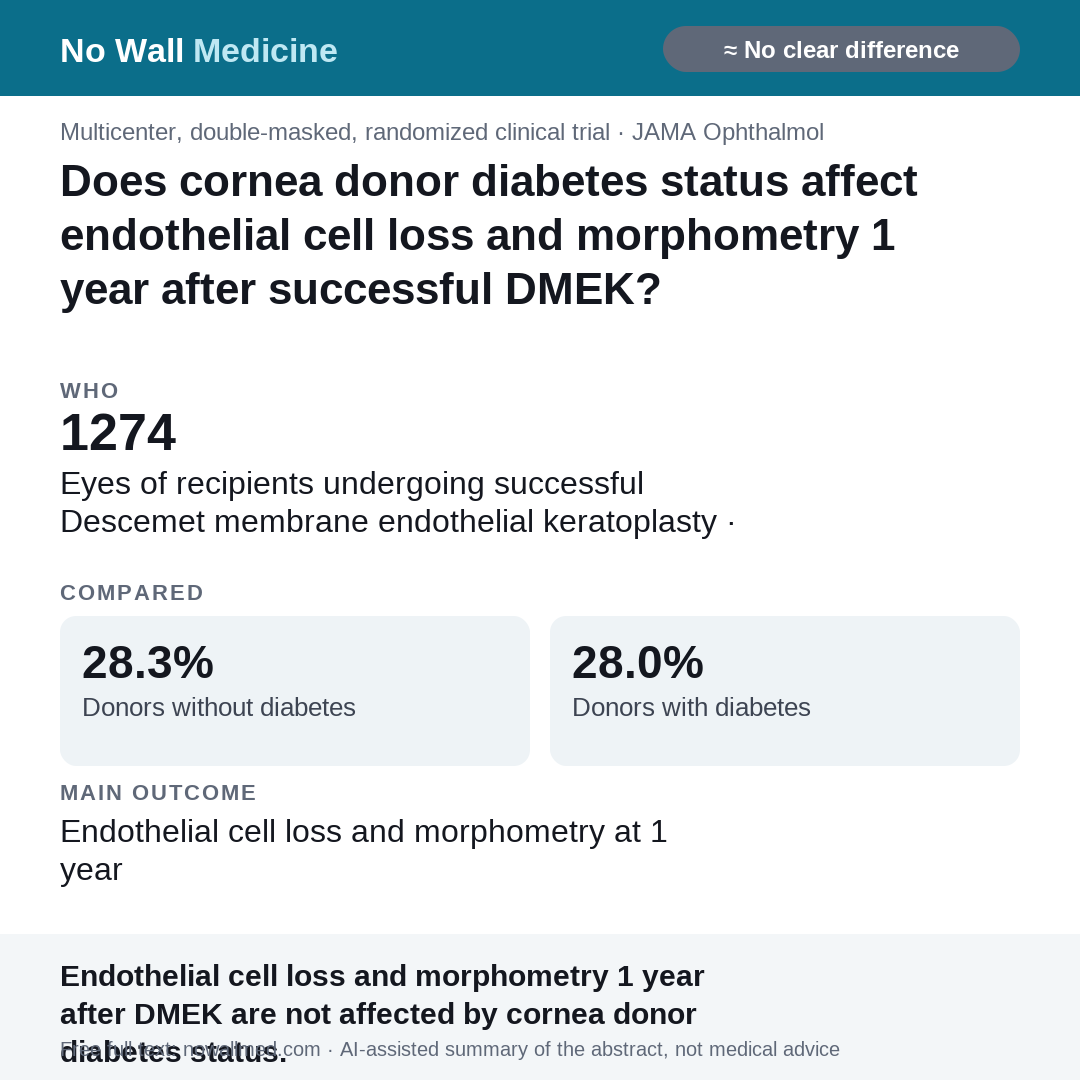
Endothelial Cell Loss 1 Year After Successful DMEK in the Diabetes Endothelial Keratoplasty Study: A Randomized Clinical Trial
Multicenter, double-masked, randomized clinical trialNo clear difference
Does cornea donor diabetes status affect endothelial cell loss and morphometry 1 year after successful DMEK?
Who
1274
Eyes of recipients undergoing successful Descemet membrane endothelial keratoplasty · 28 US clinical sites and 13 eye banks
Compared
28.3%Donors without diabetes (16.1%)
28.0%Donors with diabetes (17.0%)
Main outcome
Endothelial cell loss and morphometry at 1 year
Result: adjusted mean difference -0.4% (95% CI, -2.3% to 1.4%)
Bottom line: Endothelial cell loss and morphometry 1 year after DMEK are not affected by cornea donor diabetes status.
JAMA Ophthalmol · 2025-10-17Download image
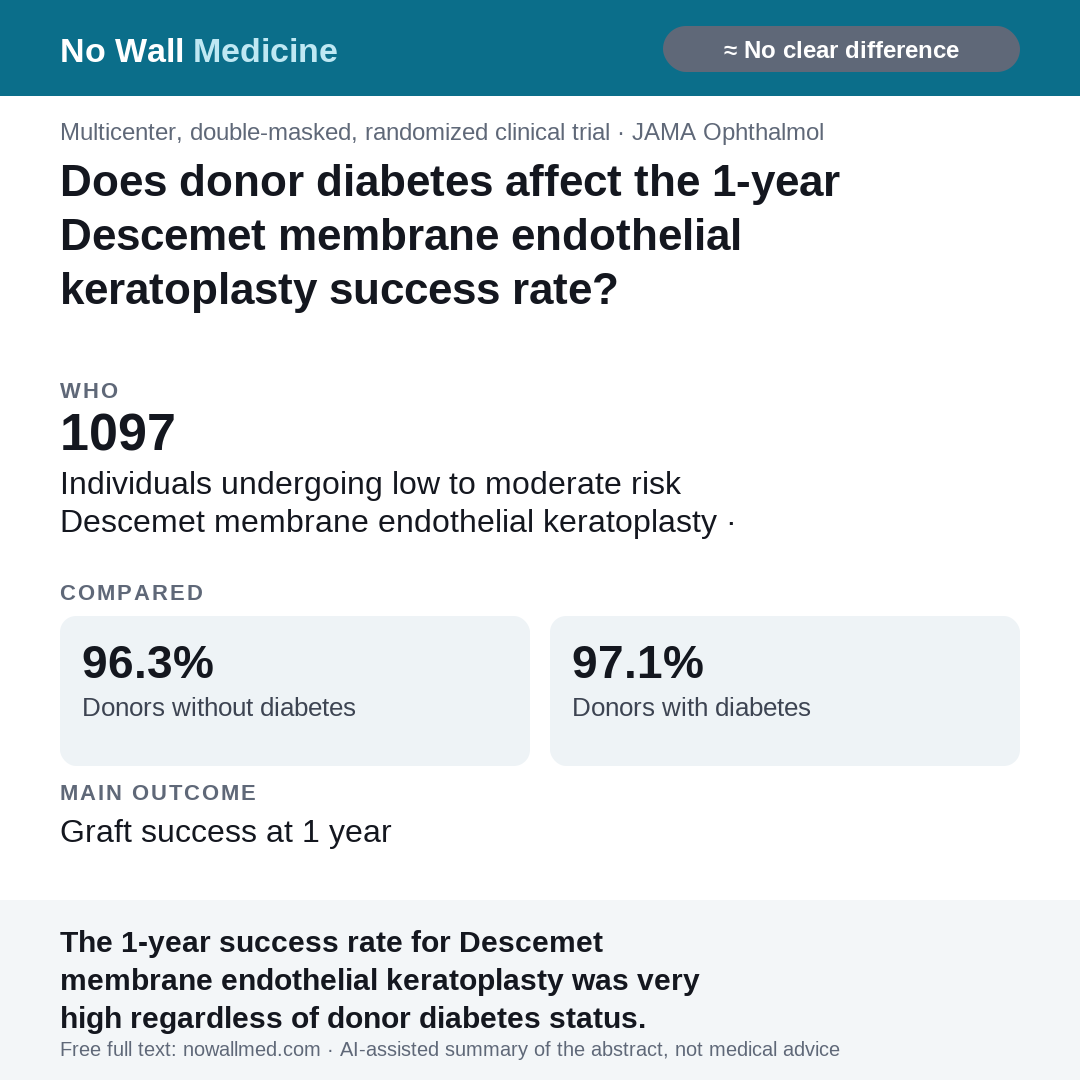
Donor Diabetes and 1-Year Descemet Membrane Endothelial Keratoplasty Success Rate: A Randomized Clinical Trial
Multicenter, double-masked, randomized clinical trialNo clear difference
Does donor diabetes affect the 1-year Descemet membrane endothelial keratoplasty success rate?
Who
1097
Individuals undergoing low to moderate risk Descemet membrane endothelial keratoplasty · 28 clinical sites in the US
Compared
96.3%Donors without diabetes (95% CI, 95.0%-97.5%)
97.1%Donors with diabetes (95% CI, 95.5%-98.4%)
Main outcome
Graft success at 1 year
Result: difference between groups = 0.7 percentage points; 95% CI, -1.2 to 2.6
Bottom line: The 1-year success rate for Descemet membrane endothelial keratoplasty was very high regardless of donor diabetes status.
JAMA Ophthalmol · 2025-10-17Download image
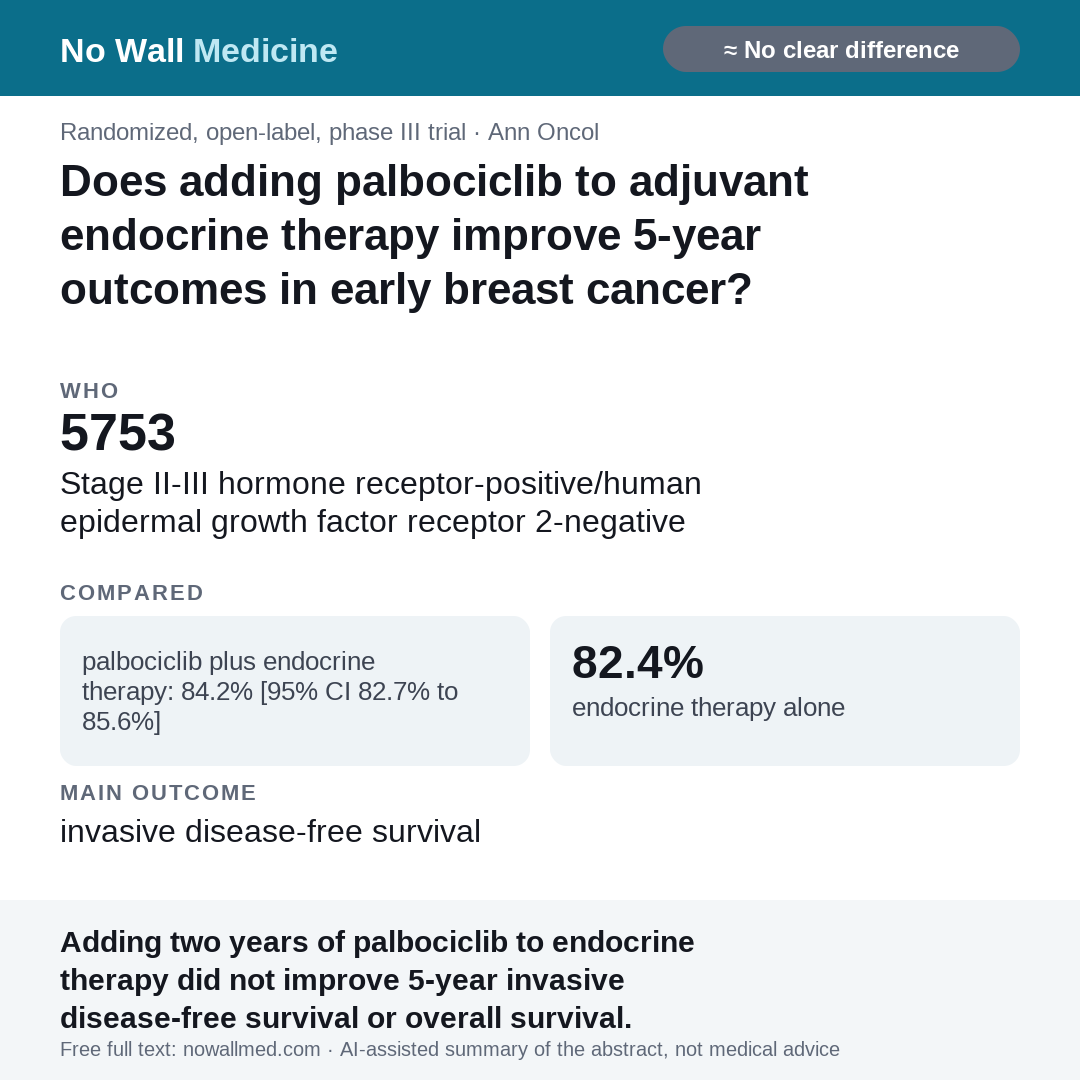
Palbociclib with adjuvant endocrine therapy in early breast cancer: 5-year follow-up analysis of the global multicenter, open-label, randomized phase III PALLAS trial (ABCSG-42/AFT-05/PrE0109/BIG-14-13)
Randomized, open-label, phase III trialNo clear difference
Does adding palbociclib to adjuvant endocrine therapy improve 5-year outcomes in early breast cancer?
Who
5753
Stage II-III hormone receptor-positive/human epidermal growth factor receptor 2-negative breast cancer · international
Compared
palbociclib plus endocrine therapy: 84.2% [95% CI 82.7% to 85.6%]
82.4%endocrine therapy alone (95% CI 80.8% to 83.9%)
Main outcome
invasive disease-free survival
Result: hazard ratio 0.88, 95% CI 0.77-1.01
Bottom line: Adding two years of palbociclib to endocrine therapy did not improve 5-year invasive disease-free survival or overall survival.
Ann Oncol · 2025-10-17Download image
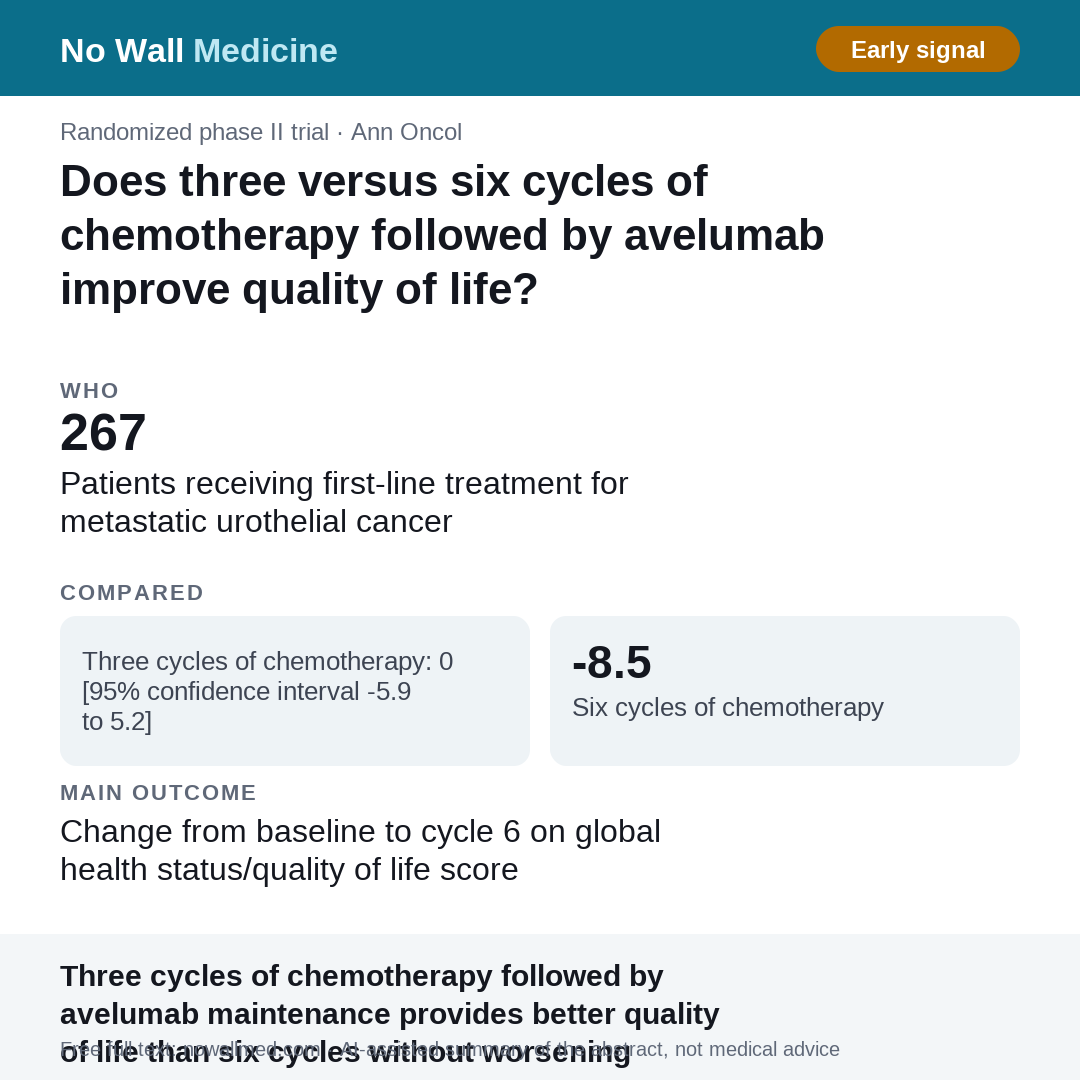
Three versus six cycles of platinum-based chemotherapy followed by avelumab maintenance as first-line treatment for advanced urothelial cancer: the phase II DISCUS trial
Randomized phase II trialEarly signal
Does three versus six cycles of chemotherapy followed by avelumab improve quality of life?
Who
267
Patients receiving first-line treatment for metastatic urothelial cancer
Compared
Three cycles of chemotherapy: 0 [95% confidence interval -5.9 to 5.2]
-8.5Six cycles of chemotherapy (95% CI -14.1 to -2.9)
Main outcome
Change from baseline to cycle 6 on global health status/quality of life score
Result: +8.5 points, 95% CI 0.7-16.3, P = 0.016
Bottom line: Three cycles of chemotherapy followed by avelumab maintenance provides better quality of life than six cycles without worsening overall survival.
Ann Oncol · 2025-10-17Download image
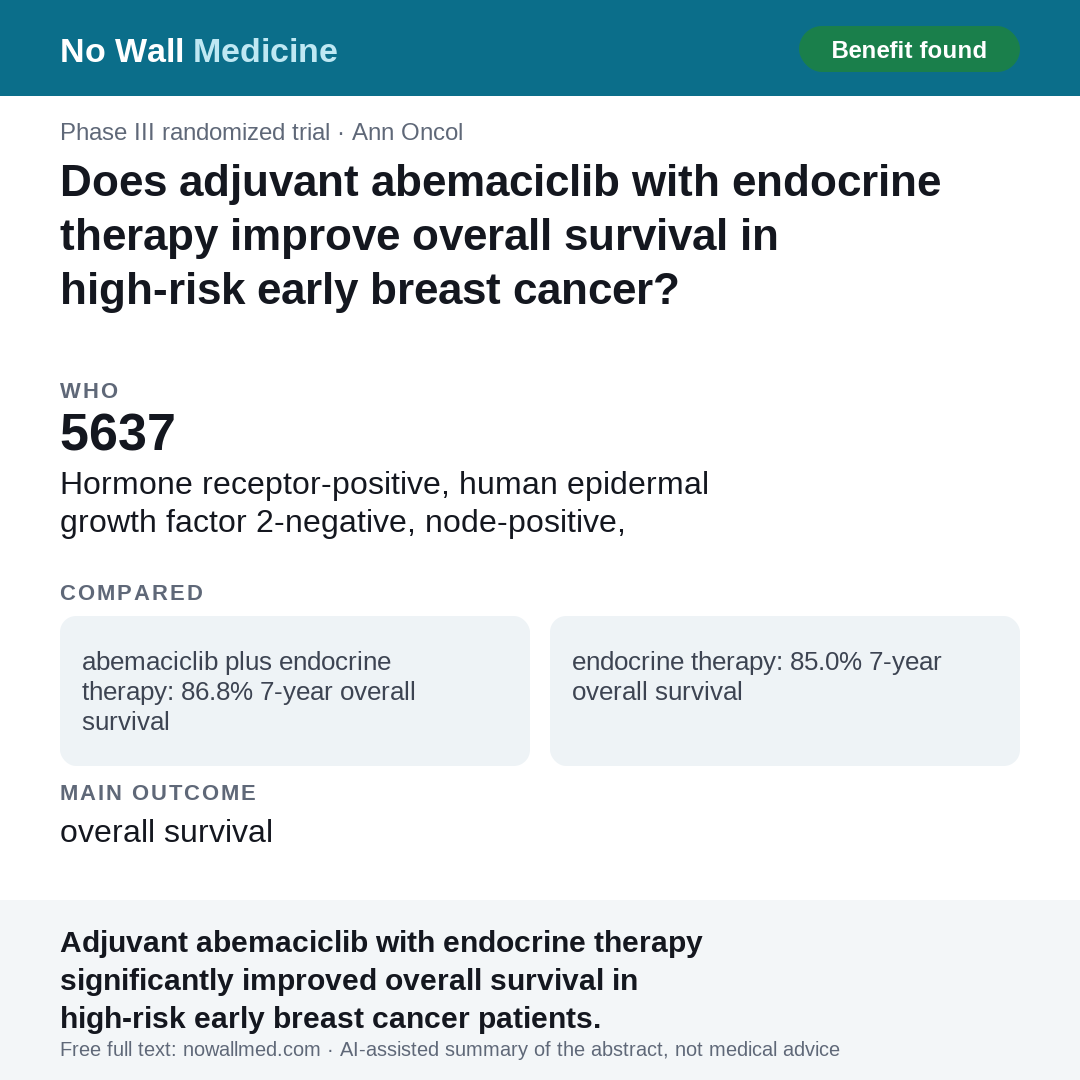
Overall survival with abemaciclib in early breast cancer
Phase III randomized trialBenefit found
Does adjuvant abemaciclib with endocrine therapy improve overall survival in high-risk early breast cancer?
Who
5637
Hormone receptor-positive, human epidermal growth factor 2-negative, node-positive, high-risk early breast cancer
Compared
abemaciclib plus endocrine therapy: 86.8% 7-year overall survival
endocrine therapy: 85.0% 7-year overall survival
Main outcome
overall survival
Result: hazard ratio 0.842, 95% confidence interval 0.722-0.981
Bottom line: Adjuvant abemaciclib with endocrine therapy significantly improved overall survival in high-risk early breast cancer patients.
Ann Oncol · 2025-10-17Download image
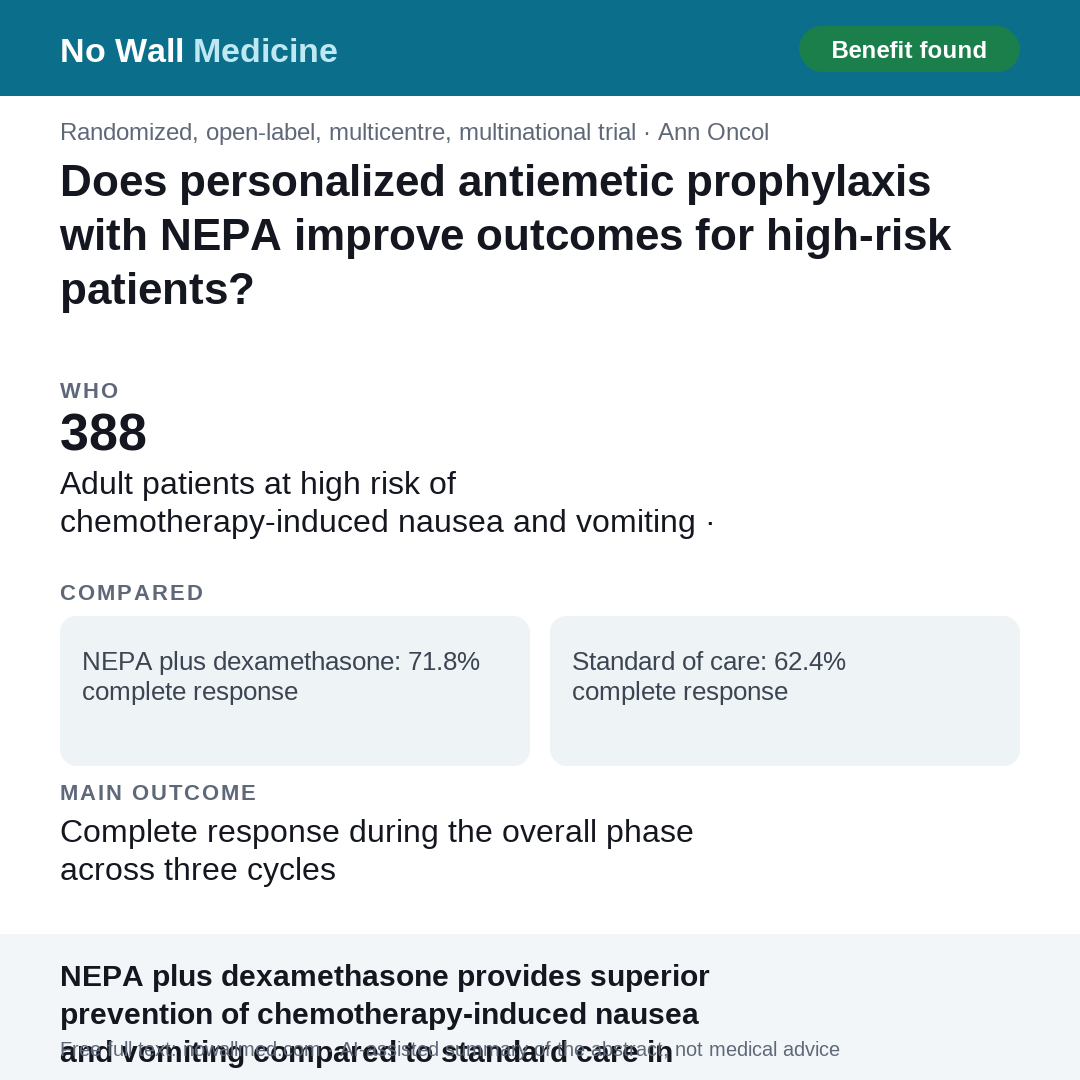
Personalised antiemetic prophylaxis with NEPA for patients at high risk of chemotherapy-induced nausea and vomiting receiving moderately emetogenic chemotherapy: results from the randomised, multinational MyRisk trial
Randomized, open-label, multicentre, multinational trialBenefit found
Does personalized antiemetic prophylaxis with NEPA improve outcomes for high-risk patients?
Who
388
Adult patients at high risk of chemotherapy-induced nausea and vomiting · Multicentre, multinational
Compared
NEPA plus dexamethasone: 71.8% complete response
Standard of care: 62.4% complete response
Main outcome
Complete response during the overall phase across three cycles
Result: odds ratio 1.67 (95% confidence interval 1.12-2.49)
Bottom line: NEPA plus dexamethasone provides superior prevention of chemotherapy-induced nausea and vomiting compared to standard care in high-risk patients.
Ann Oncol · 2025-10-17Download image
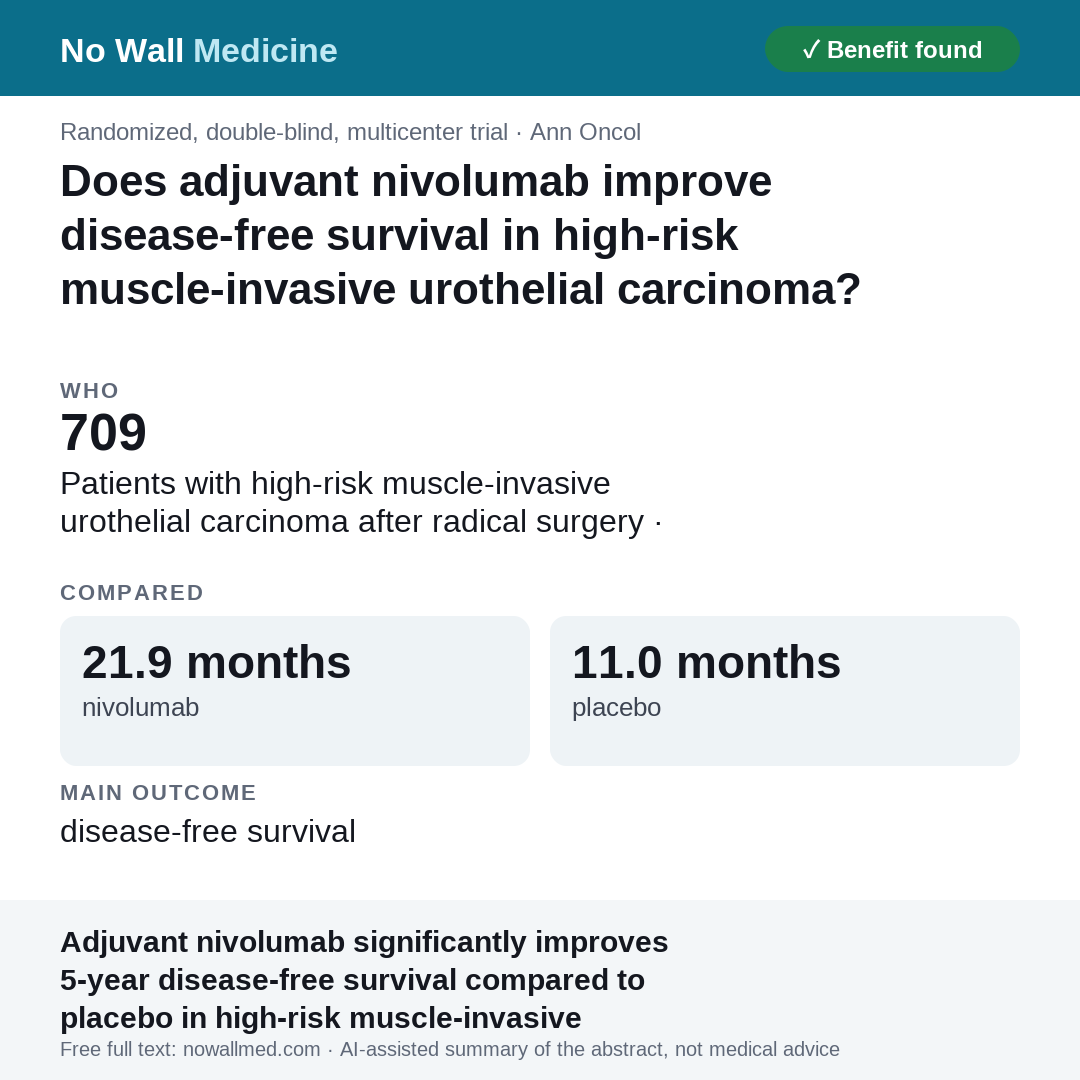
Adjuvant nivolumab versus placebo for high-risk muscle-invasive urothelial carcinoma: 5-year efficacy and ctDNA results from CheckMate 274
Randomized, double-blind, multicenter trialBenefit found
Does adjuvant nivolumab improve disease-free survival in high-risk muscle-invasive urothelial carcinoma?
Who
709
Patients with high-risk muscle-invasive urothelial carcinoma after radical surgery · multicenter
Compared
21.9 monthsnivolumab
11.0 monthsplacebo
Main outcome
disease-free survival
Result: hazard ratio 0.74 (95% CI 0.61-0.90)
Bottom line: Adjuvant nivolumab significantly improves 5-year disease-free survival compared to placebo in high-risk muscle-invasive urothelial carcinoma.
Ann Oncol · 2025-10-17Download image
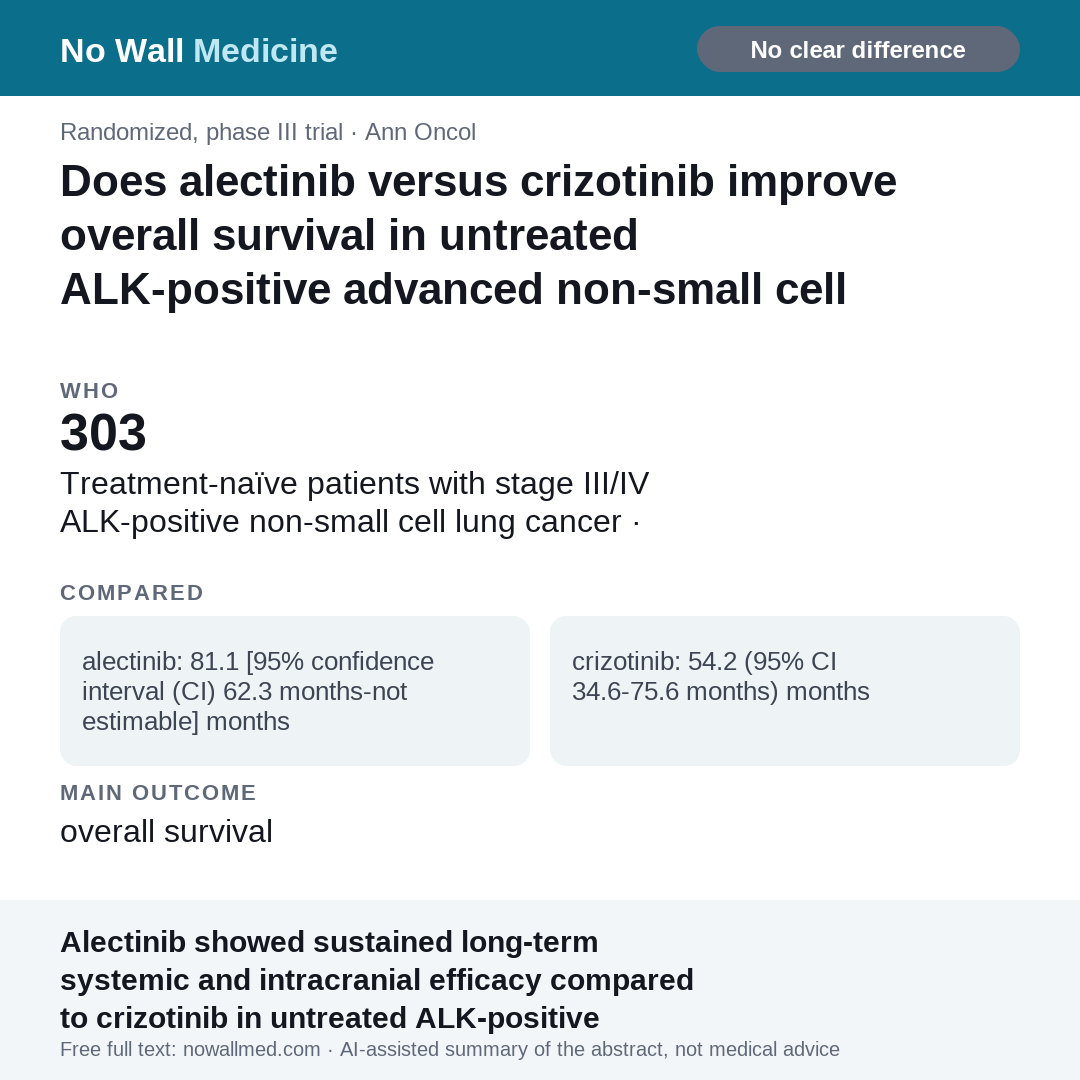
Alectinib versus crizotinib in previously untreated ALK-positive advanced non-small cell lung cancer: final overall survival analysis of the phase III ALEX study
Randomized, phase III trialNo clear difference
Does alectinib versus crizotinib improve overall survival in untreated ALK-positive advanced non-small cell lung cancer?
Who
303
Treatment-naïve patients with stage III/IV ALK-positive non-small cell lung cancer · Global
Compared
alectinib: 81.1 [95% confidence interval (CI) 62.3 months-not estimable] months
crizotinib: 54.2 (95% CI 34.6-75.6 months) months
Main outcome
overall survival
Result: hazard ratio 0.78 (95% CI 0.56-1.08)
Bottom line: Alectinib showed sustained long-term systemic and intracranial efficacy compared to crizotinib in untreated ALK-positive non-small cell lung cancer.
Ann Oncol · 2025-10-17Download image
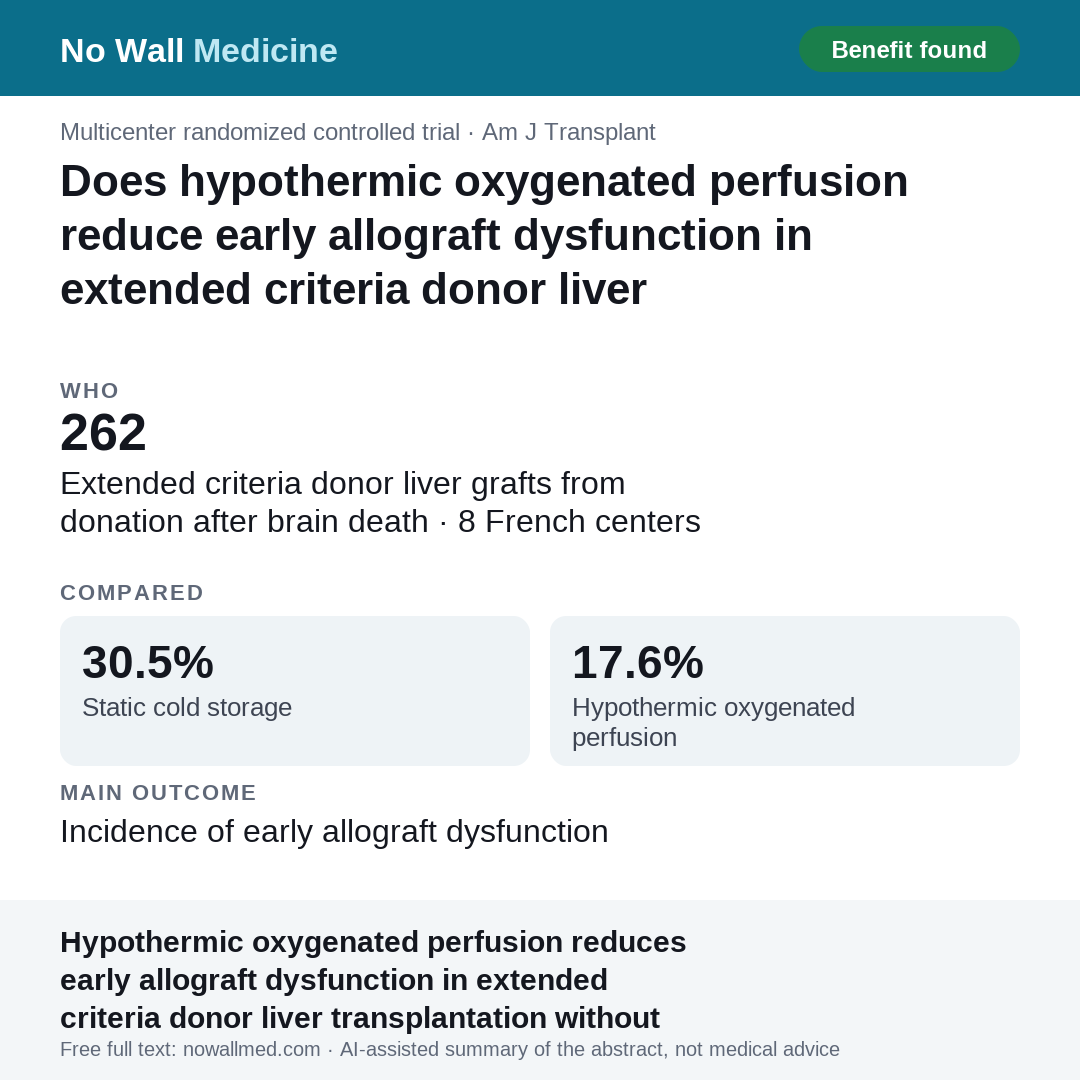
A French multicenter randomized controlled trial of hypothermic oxygenated perfusion in extended criteria donor liver transplantation
Multicenter randomized controlled trialBenefit found
Does hypothermic oxygenated perfusion reduce early allograft dysfunction in extended criteria donor liver transplantation?
Who
262
Extended criteria donor liver grafts from donation after brain death · 8 French centers
Compared
30.5%Static cold storage
17.6%Hypothermic oxygenated perfusion
Main outcome
Incidence of early allograft dysfunction
Bottom line: Hypothermic oxygenated perfusion reduces early allograft dysfunction in extended criteria donor liver transplantation without affecting mortality.
Am J Transplant · 2025-10-17Download image
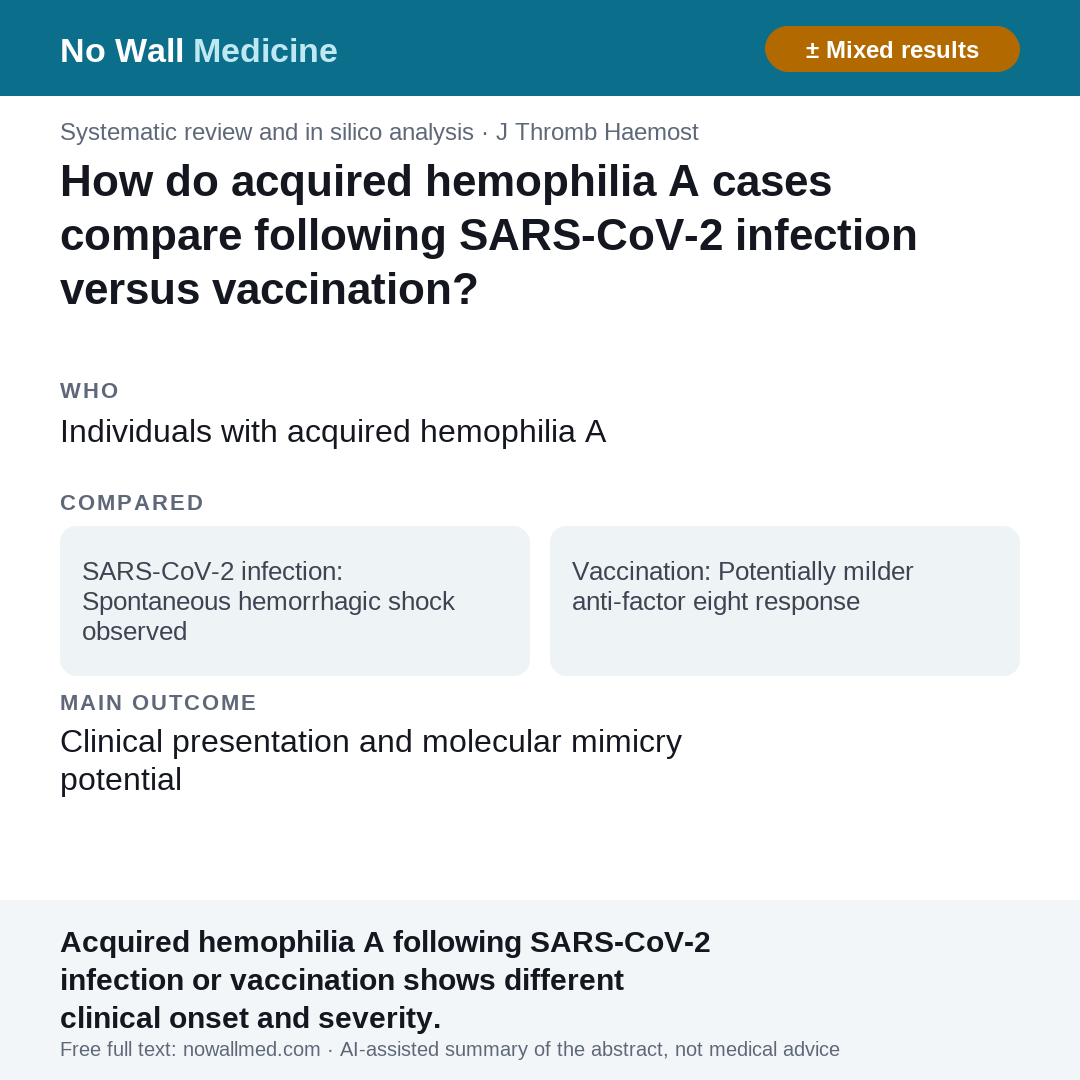
Acquired hemophilia A following SARS-CoV-2 infection and vaccination: clinical summary and insights
Systematic review and in silico analysisMixed results
How do acquired hemophilia A cases compare following SARS-CoV-2 infection versus vaccination?
Who
Individuals with acquired hemophilia A
Compared
SARS-CoV-2 infection: Spontaneous hemorrhagic shock observed
Vaccination: Potentially milder anti-factor eight response
Main outcome
Clinical presentation and molecular mimicry potential
Bottom line: Acquired hemophilia A following SARS-CoV-2 infection or vaccination shows different clinical onset and severity.
J Thromb Haemost · 2025-10-17Download image