Visual abstracts
New randomized trials and meta-analyses from leading journals at a glance: who was studied, what was compared, and what was found. Every paper is free to read in full.
All specialtiesCardiology 131Oncology 98Gastroenterology & Hepatology 53Infectious Disease 100Neurology 50Psychiatry & Mental Health 64Pulmonology 51Critical Care 32Endocrinology & Diabetes 59Pediatrics 54Surgery 36Orthopedics & Sports Medicine 20Neurosurgery 5Cardiothoracic & Vascular Surgery 8Plastic & Reconstructive Surgery 24Nephrology 20Rheumatology 22Hematology 32Dermatology 12Ophthalmology 20Obstetrics & Gynecology 36Public & Global Health 38Radiology & Imaging 10Anesthesiology 18Urology 26ENT (Otolaryngology) 9Emergency Medicine 14Allergy & Immunology 10Geriatrics 35Family Medicine & Primary Care 13Medical Genetics & Genomics 12Pathology & Laboratory Medicine 1Physical Medicine & Rehabilitation 28Palliative Care 14Nutrition 40Digital Health & AI 111General Medicine 20
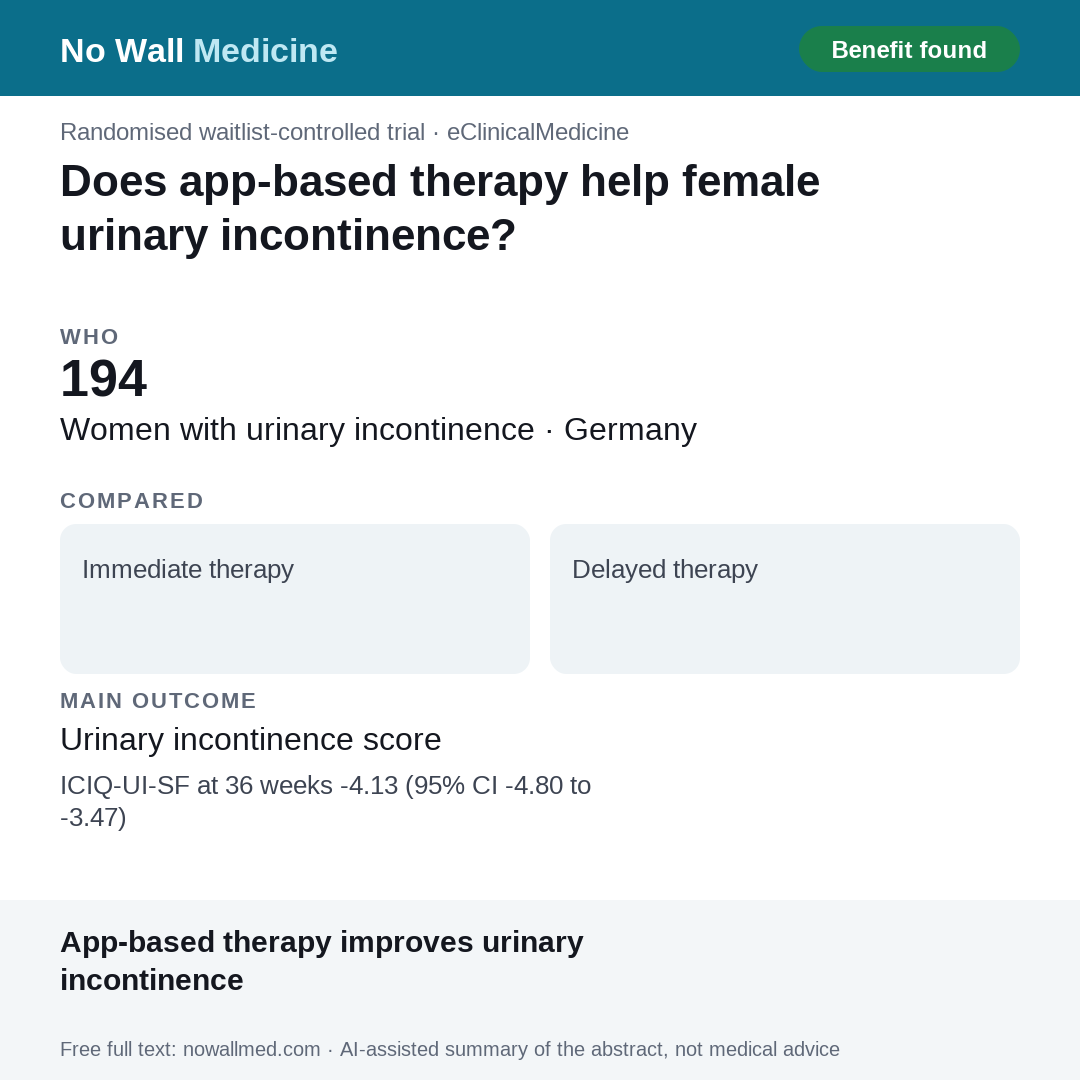
Long-term effectiveness of app-based therapy for female urinary incontinence: 48-week follow-up of a randomised controlled trial
Randomised waitlist-controlled trialBenefit found
Does app-based therapy help female urinary incontinence?
Who
194
Women with urinary incontinence · Germany
Compared
Immediate therapy
Delayed therapy
Main outcome
Urinary incontinence score
Result: ICIQ-UI-SF at 36 weeks -4.13 (95% CI -4.80 to -3.47)
Bottom line: App-based therapy improves urinary incontinence
Funded by: Kranus Health GmbH
eClinicalMedicine · 2026-10-28Download image
Food supplementation and behavioural counselling to reduce the double burden of malnutrition among pregnant women and their infants: protocol for the K'ASLEM hybrid type 1 effectiveness-implementation randomised controlled trial
Randomized controlled trialUnclear result
Does food supplementation reduce malnutrition?
Who
766
Pregnant women and their infants · Guatemala
Compared
Intervention
Comparator
Main outcome
Maternal weight and child length
Bottom line: Study will assess food supplementation impact
BMJ Paediatr Open · 2026-10-28Download image

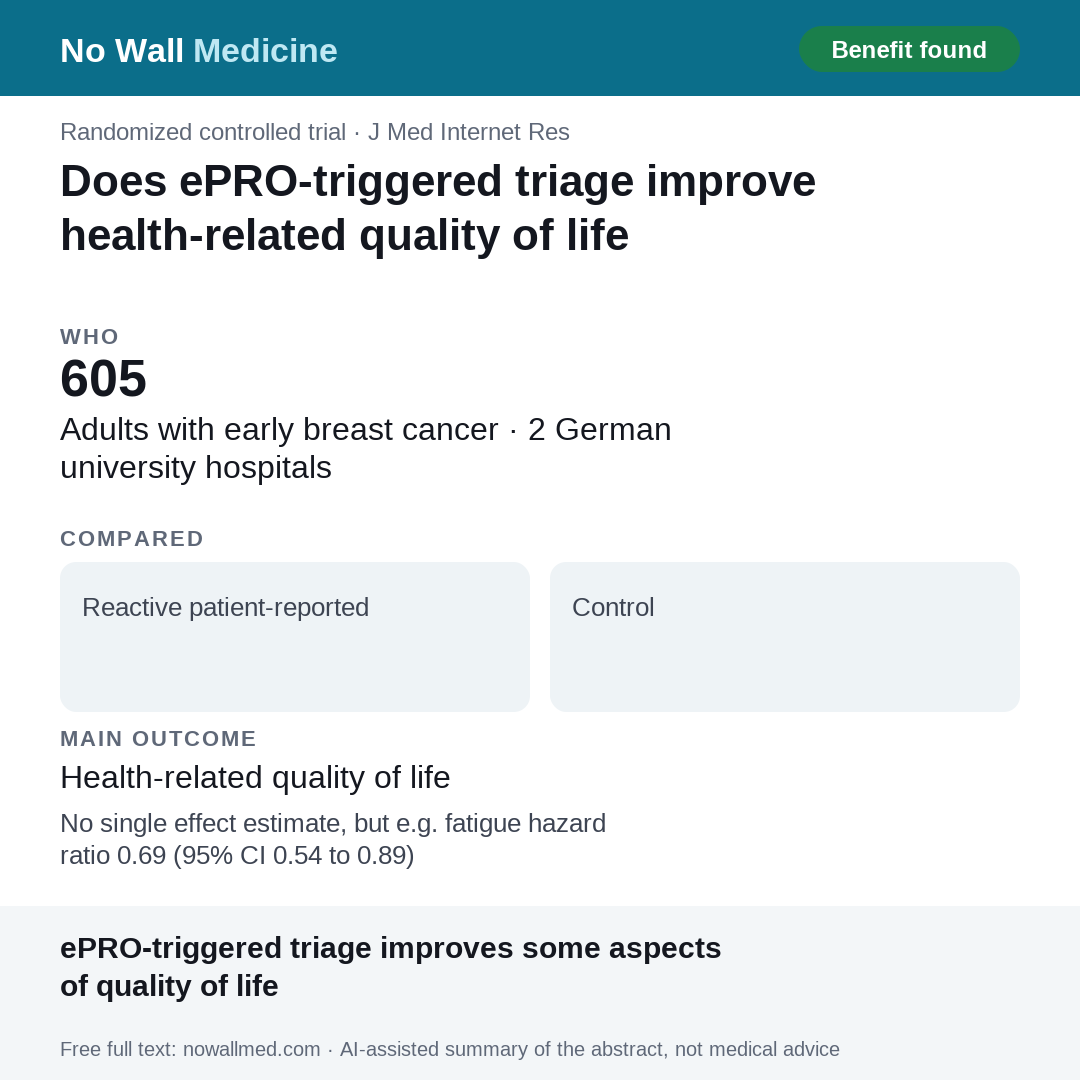
Real-Time Electronic Patient-Reported Outcome Monitoring With Digital Triage and Care-Team Integration in Early Breast Cancer: ENABLE Randomized Controlled Trial
Randomized controlled trialBenefit found
Does ePRO-triggered triage improve quality of life
Who
605
Adults with early breast cancer · 2 German university hospitals
Compared
ePRO triage
control
Main outcome
health-related quality of life
Result: hazard ratio 0.69 (95% CI 0.54-0.89) for fatigue
Bottom line: ePRO triage improves some aspects of quality of life
J Med Internet Res · 2026-10-28Download image
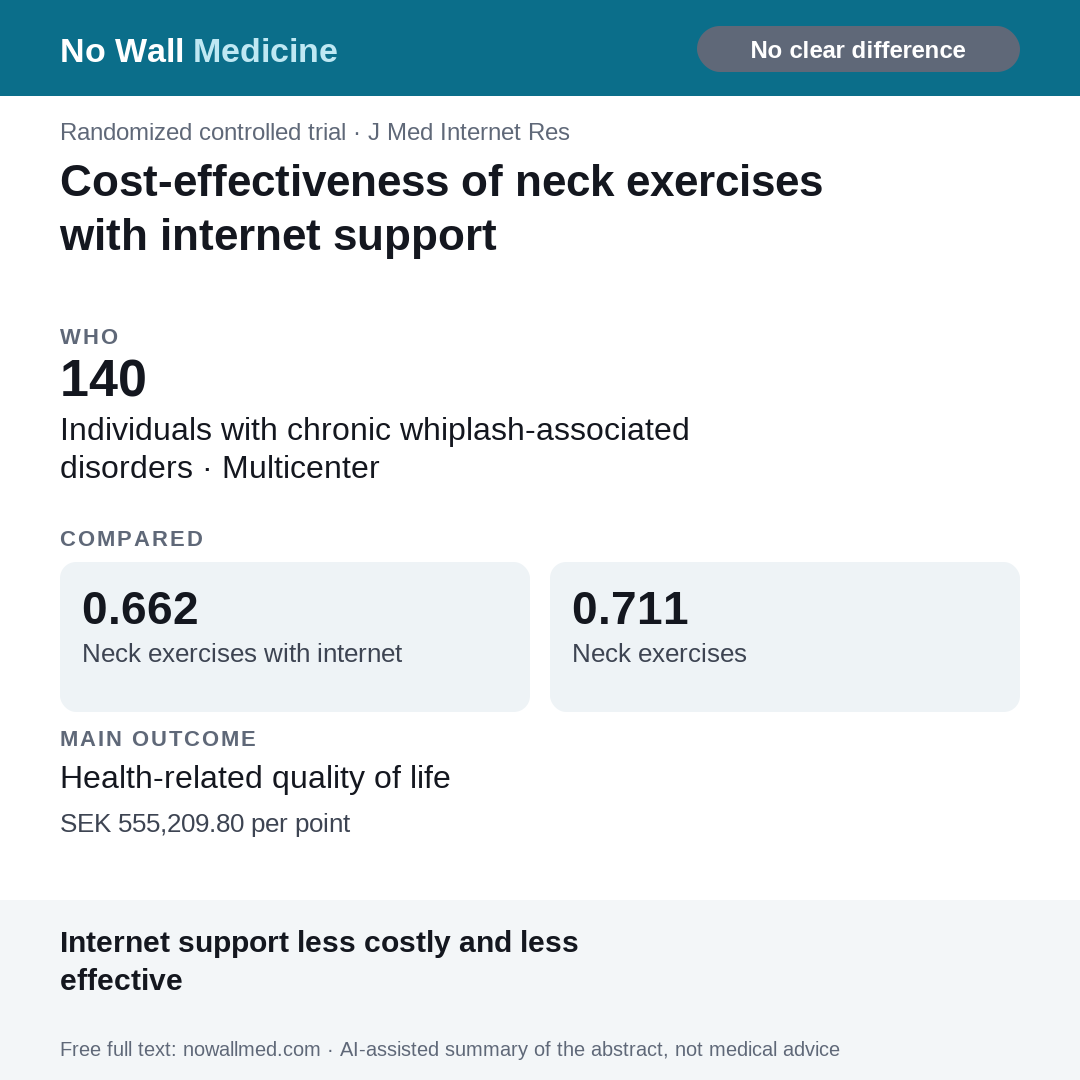
Neck-Specific Exercises With Internet Support Versus Standard Neck-Specific Exercise for the Treatment of Chronic Whiplash-Associated Disorders: Cost-Effectiveness Analysis
Randomized controlled trialNo clear difference
Cost-effectiveness of neck exercises with internet support
Who
140
Individuals with chronic whiplash-associated disorders · Multicenter
Compared
0.662Neck exercises with internet (95% CI 0.73-0.59)
0.711Neck exercises (95% CI 0.77-0.65)
Main outcome
Health-related quality of life
Result: SEK 555,209.80 per point
Bottom line: Internet support less costly and less effective
Limitation: Exclusion of presenteeism costs and small difference
J Med Internet Res · 2026-10-28Download image
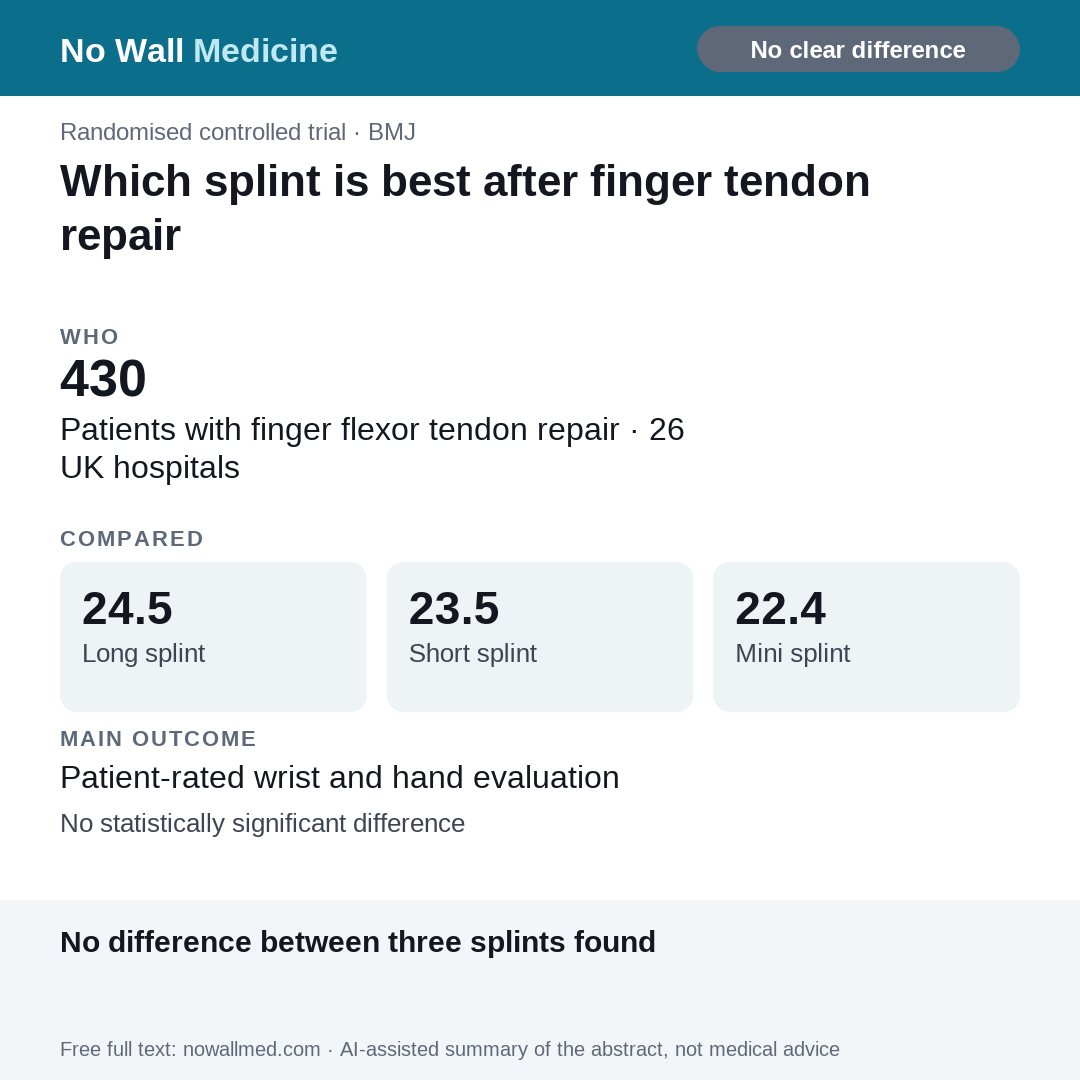
Comparative effectiveness of three splints for rehabilitation after finger flexor tendon repair (FIRST): randomised controlled trial
Randomised controlled trialNo clear difference
Which splint is best after finger tendon repair
Who
430
Patients with finger flexor tendon repair · 26 UK hospitals
Compared
24.5Long splint
23.5Short splint
22.4Mini splint
Main outcome
Patient-rated wrist and hand evaluation
Result: No statistically significant difference
Bottom line: No difference between three splints found
BMJ · 2026-10-27Download image
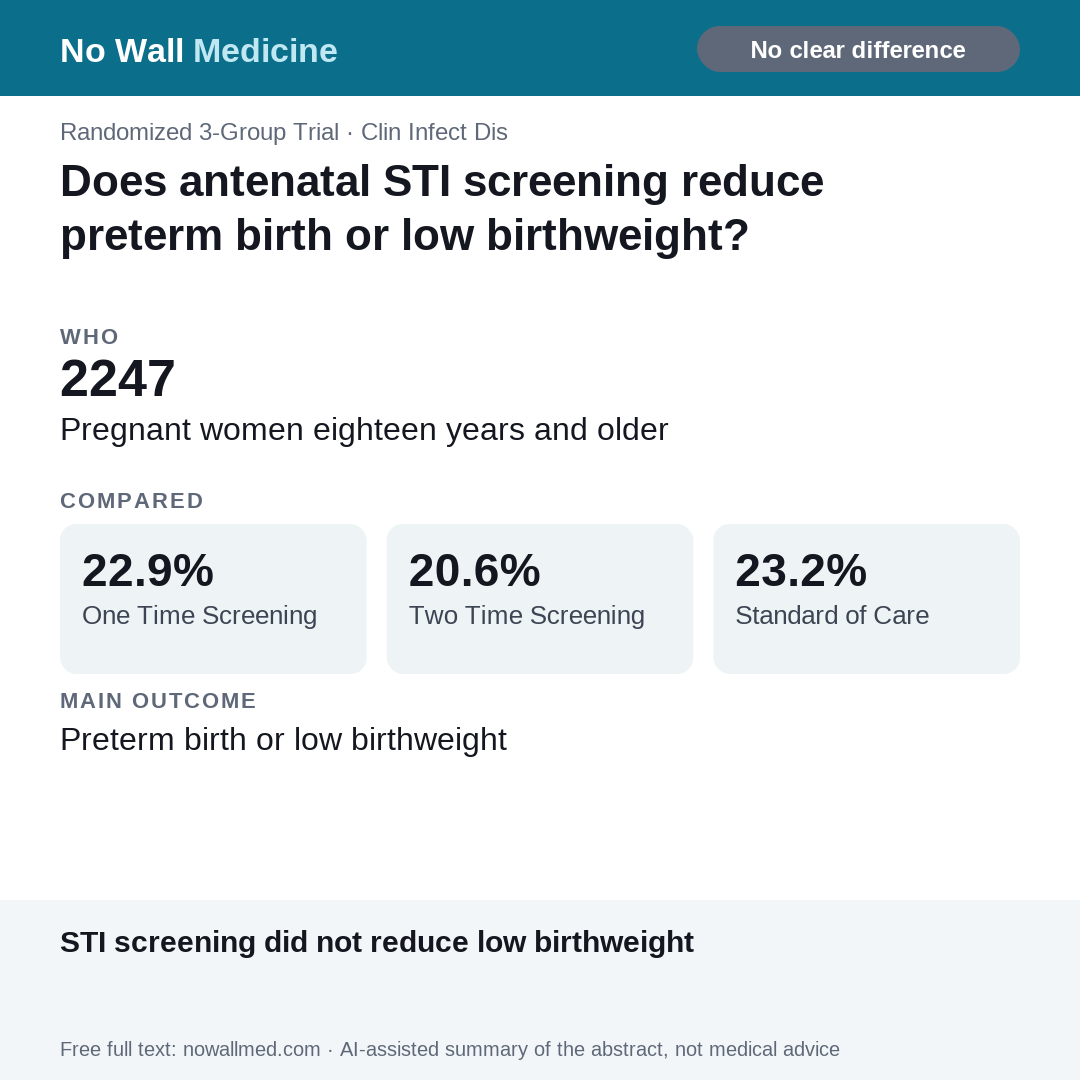
Antenatal Screening for Sexually Transmitted Infections to Reduce Preterm Birth or Low Birthweight (Philani Ndiphile Study): A Randomized 3-Group Trial
Randomized 3-Group TrialNo clear difference
Does antenatal STI screening reduce preterm birth?
Who
2247
Pregnant women eighteen years and older
Compared
22.9%One Time Screening
20.6%Two Time Screening
23.2%Standard of Care
Main outcome
Preterm birth or low birthweight
Bottom line: STI screening did not reduce low birthweight
Clin Infect Dis · 2026-10-27Download image
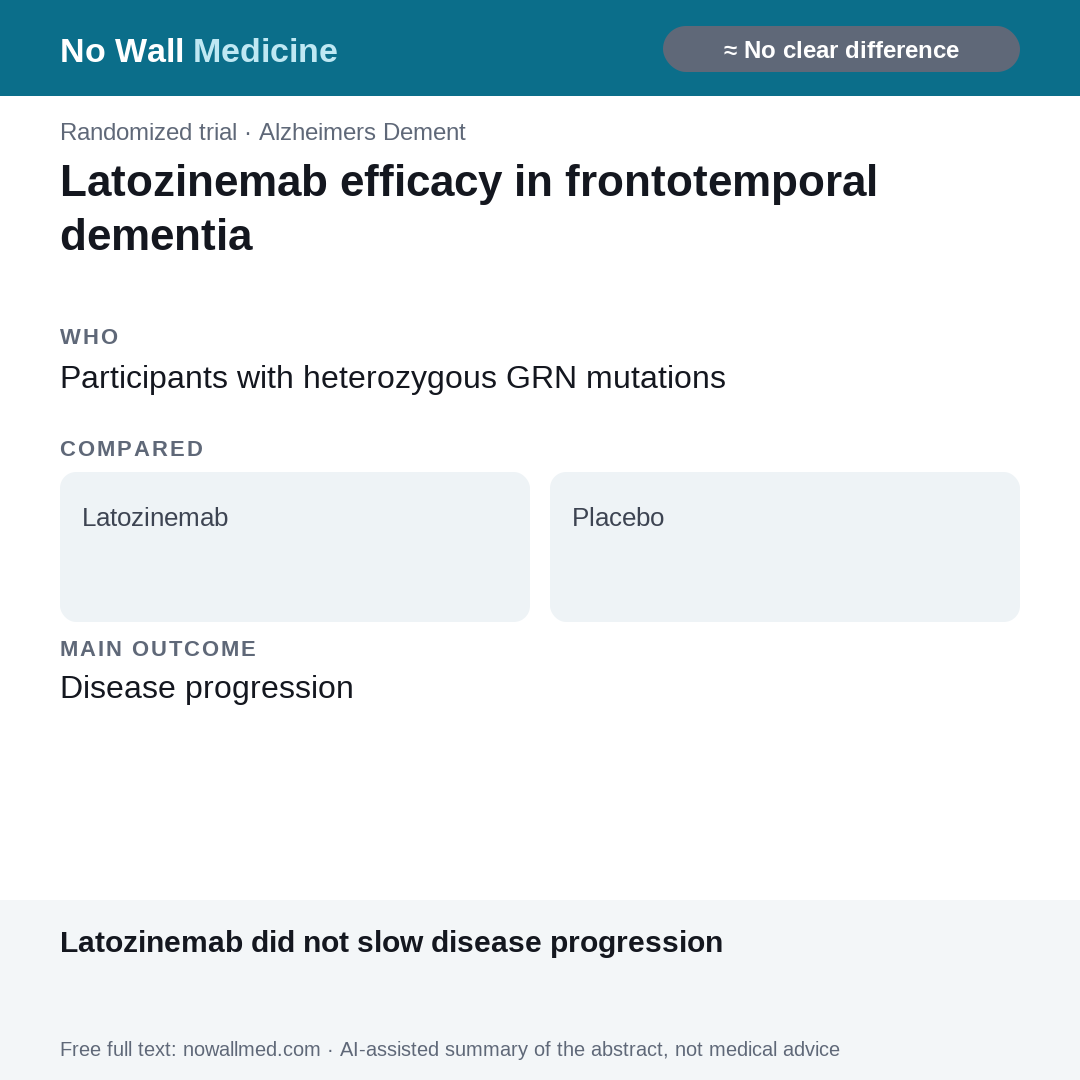
Phase 3 randomized trial of latozinemab in frontotemporal dementia due to GRN mutations
Randomized trialNo clear difference
Latozinemab efficacy in frontotemporal dementia
Who
Participants with heterozygous GRN mutations
Compared
Latozinemab
Placebo
Main outcome
Disease progression
Bottom line: Latozinemab did not slow disease progression
Alzheimers Dement · 2026-10-27Download image
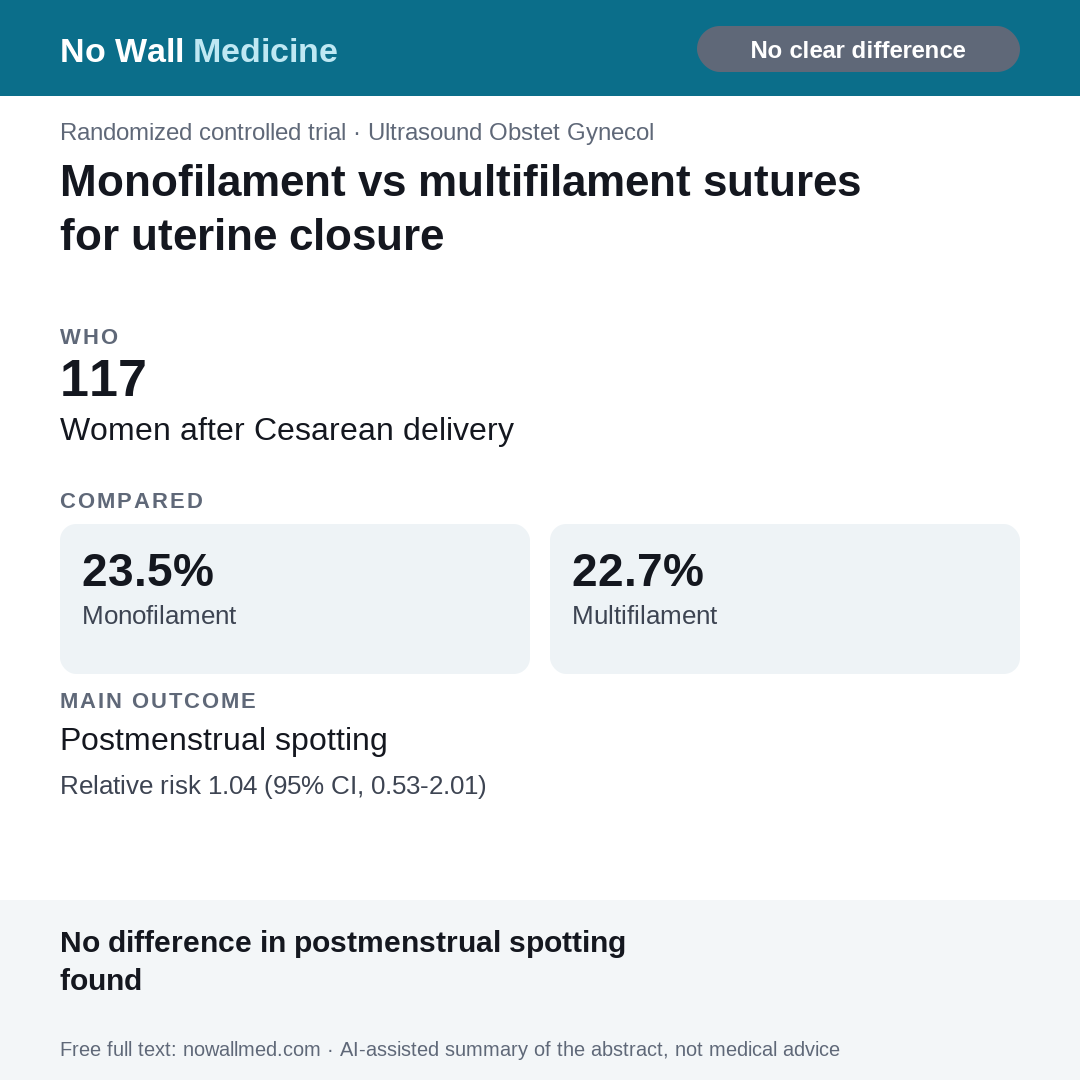
Long-term gynecological symptoms and ultrasound and reproductive outcomes after monofilament vs multifilament uterine closure at Cesarean delivery: secondary analysis of randomized controlled trial
Randomized controlled trialNo clear difference
Monofilament vs multifilament sutures for uterine closure
Who
117
Women after Cesarean delivery
Compared
23.5%Monofilament
22.7%Multifilament
Main outcome
Postmenstrual spotting
Result: Relative risk 1.04 (95% CI, 0.53-2.01)
Bottom line: No difference in postmenstrual spotting found
Limitation: Limited sample size
Ultrasound Obstet Gynecol · 2026-10-27Download image
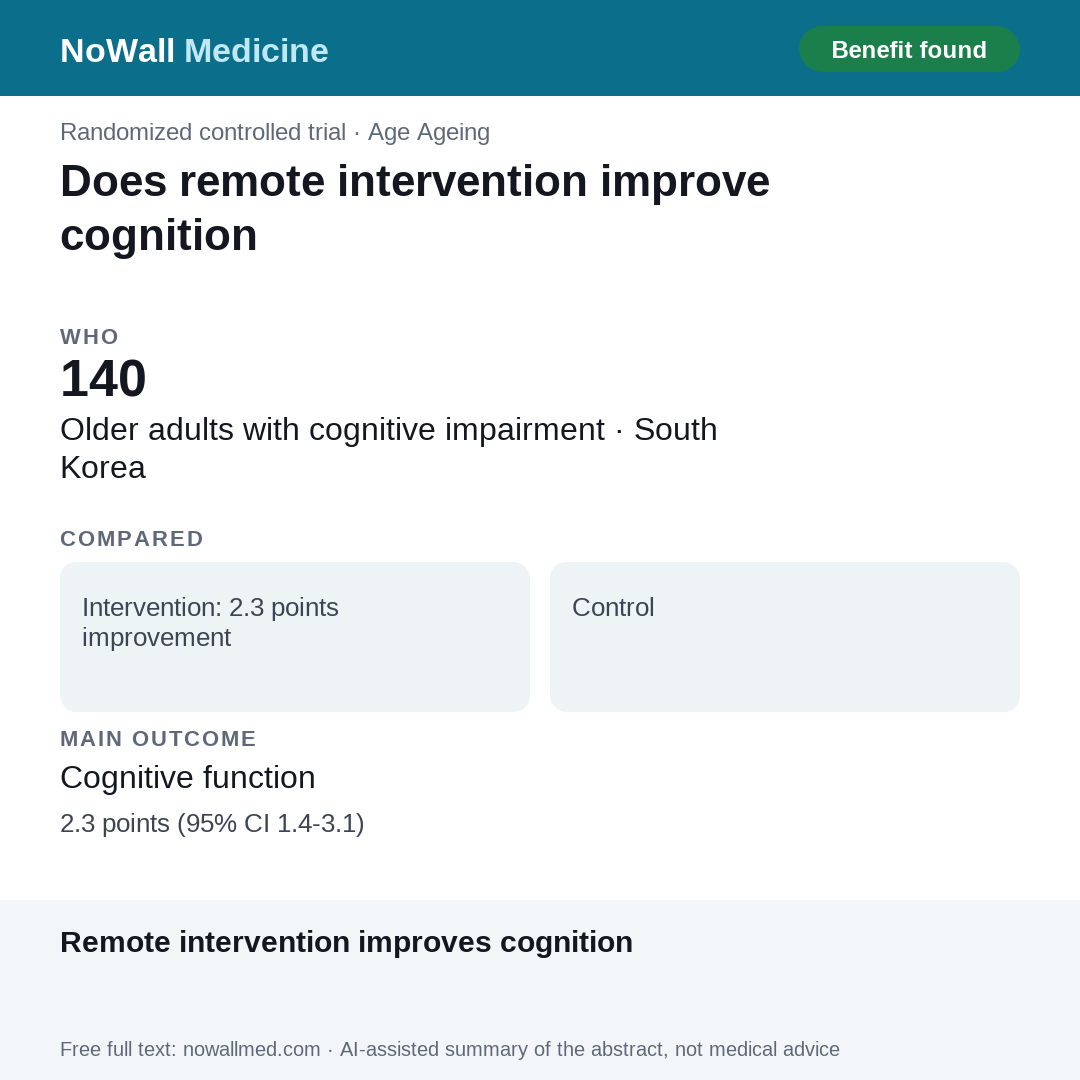
Remote multicomponent intervention for older adults with cognitive impairment in community settings: multisite randomised controlled trial
Randomized controlled trialBenefit found
Does remote intervention improve cognition
Who
140
Older adults with cognitive impairment · South Korea
Compared
Intervention: 2.3 points improvement
Control
Main outcome
Cognitive function
Result: 2.3 points (95% CI 1.4-3.1)
Bottom line: Remote intervention improves cognition
Age Ageing · 2026-10-27Download image
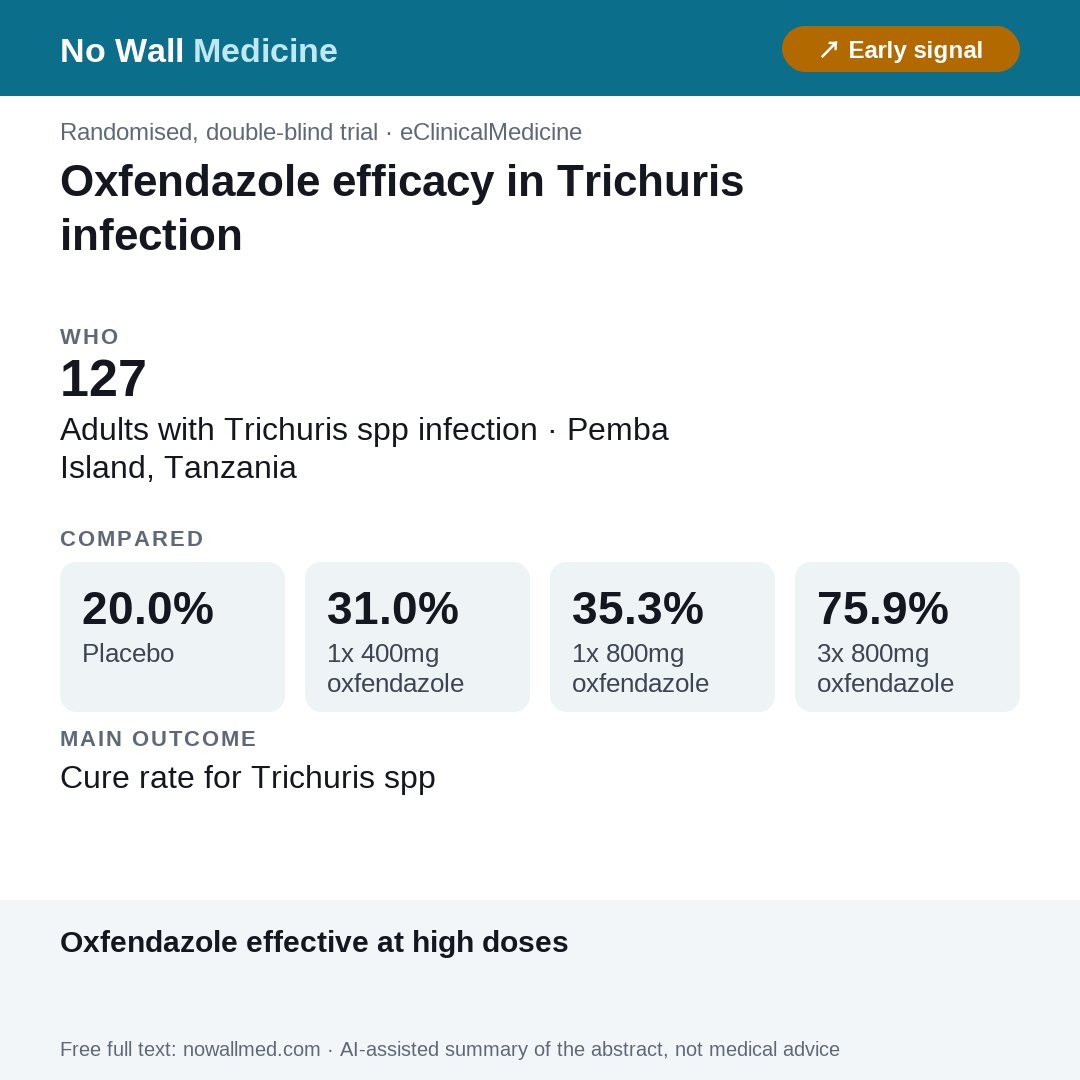
Efficacy and safety of oxfendazole in adults with Trichuris spp. infection in Pemba Island, Tanzania: a double-blind, phase 2a, randomised controlled trial
Randomised, double-blind trialBenefit found
Oxfendazole efficacy in Trichuris infection
Who
127
Adults with Trichuris spp infection · Pemba Island, Tanzania
Compared
20.0%Placebo (95% CI 9.5-37.3)
31.0%1x 400mg oxfendazole (95% CI 17.3-49.2)
35.3%1x 800mg oxfendazole (95% CI 21.5-52.1)
75.9%3x 800mg oxfendazole (95% CI 57.9-87.8)
Main outcome
Cure rate for Trichuris spp
Bottom line: Oxfendazole effective at high doses
Funded by: EDCTP3 and Swiss SERI
eClinicalMedicine · 2026-10-26Download image
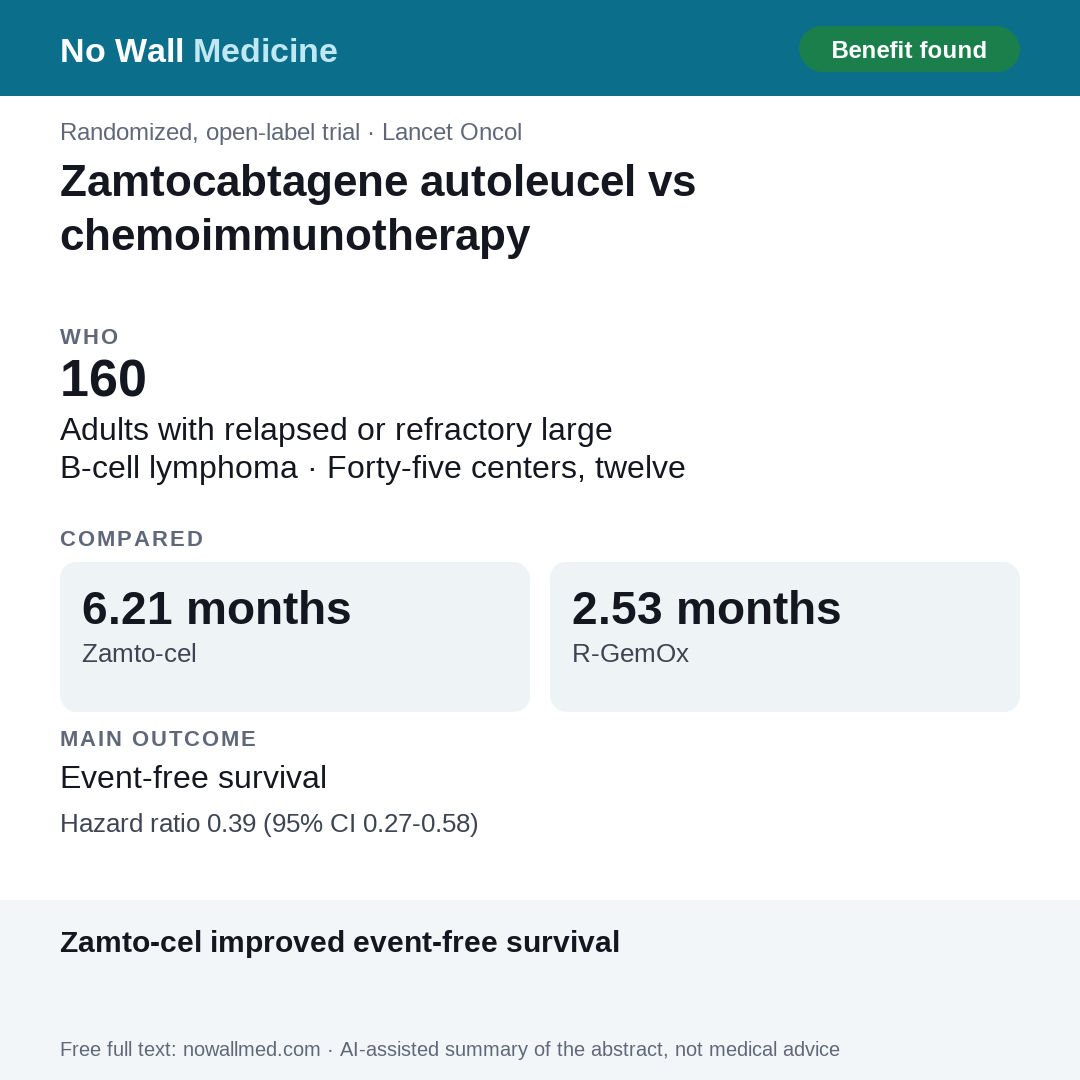
Zamtocabtagene autoleucel, a tandem CD20-CD19-directed CAR T-cell therapy, for second line treatment of large B-cell lymphoma in patients ineligible for transplantation (DALY 2-EU): primary analysis of an open-label, multicentre, randomised phase 2 study
Randomised, open-label trialBenefit found
Zamtocabtagene autoleucel vs chemoimmunotherapy
Who
160
Adults with relapsed large B-cell lymphoma · 45 centres, 12 European countries
Compared
Zamto-cel
R-GemOx
Main outcome
Event-free survival
Result: hazard ratio 0.39 (95% CI 0.27 to 0.58)
Bottom line: Zamto-cel improved event-free survival
Funded by: Miltenyi Biomedicine
Lancet Oncol · 2026-10-26Download image
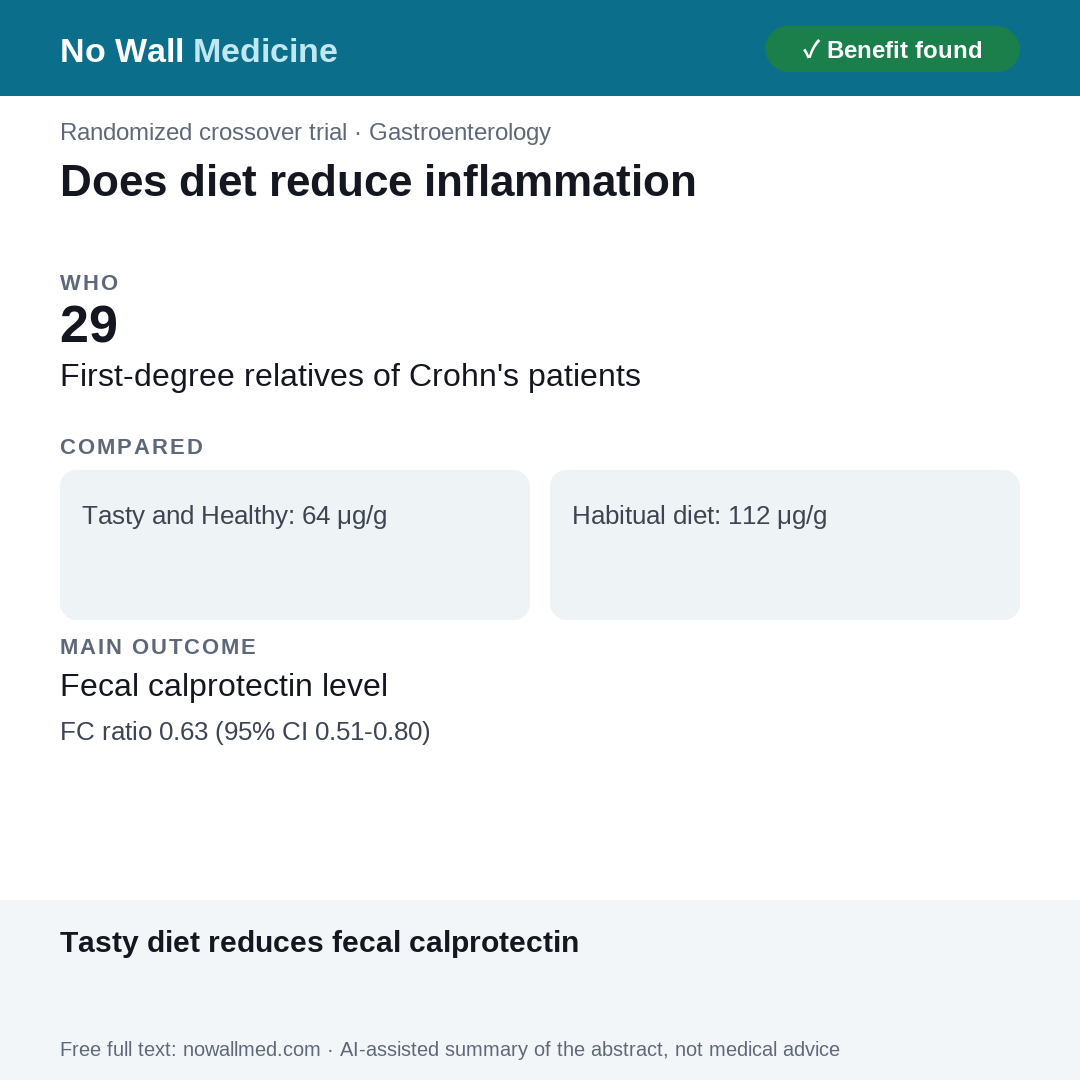
Tasty and Healthy Diet Reduces Fecal Calprotectin in High-Risk First-Degree Relatives of Patients With Crohn's Disease: Preventing IBD ONset in Individuals at Risk (PIONIR) Randomized Crossover Trial
Randomized crossover trialBenefit found
Does diet reduce fecal calprotectin
Who
29
First-degree relatives of Crohn's patients
Compared
Tasty&Healthy diet: 64 μg/g
Habitual diet: 112 μg/g
Main outcome
Fecal calprotectin level
Result: FC ratio 0.63 (95% CI 0.51-0.80)
Bottom line: Tasty diet reduces fecal calprotectin
Gastroenterology · 2026-10-26Download image
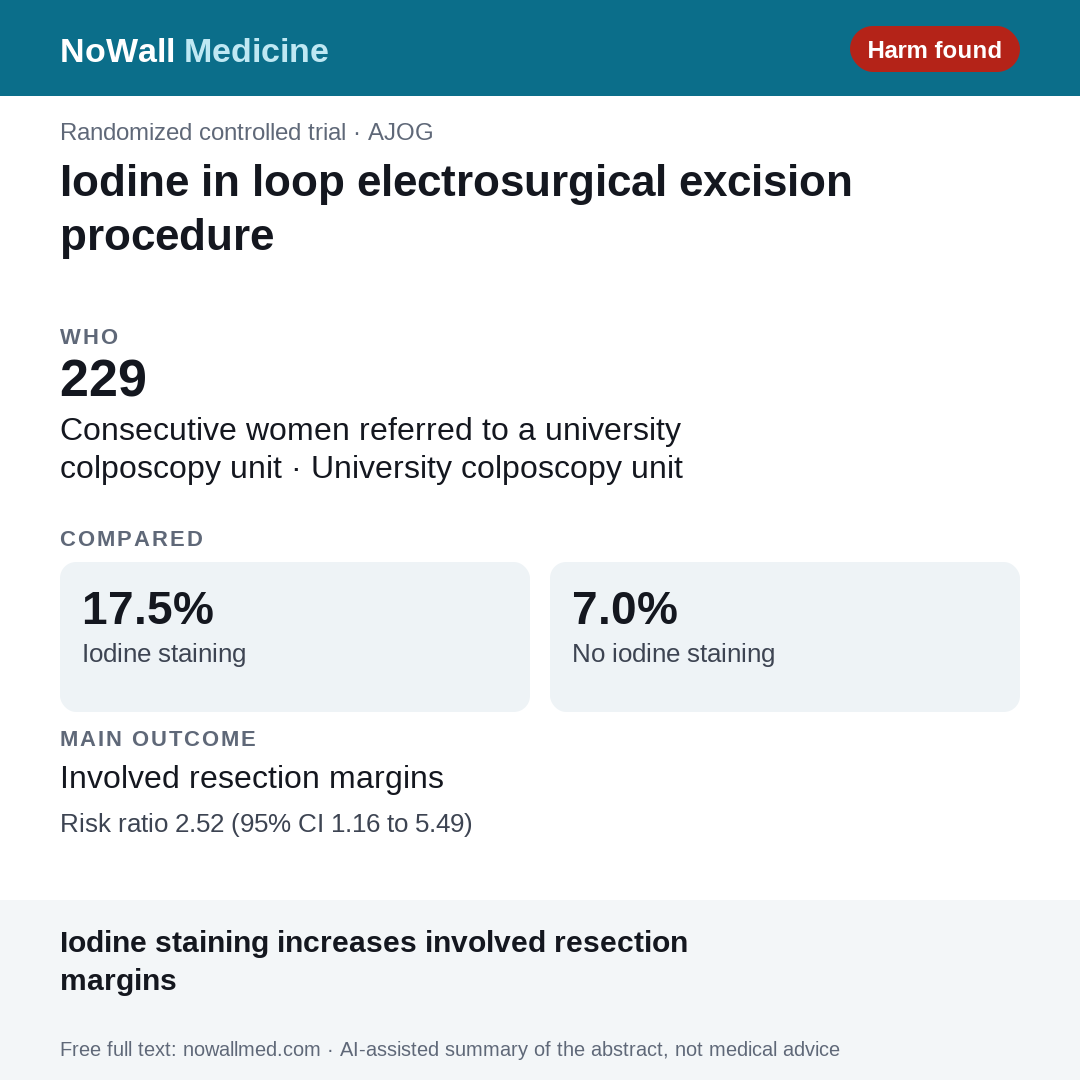
Loop electrosurgical excision procedure with or without intraoperative iodine: a randomized controlled trial
Randomized controlled trialHarm found
Iodine in loop electrosurgical excision procedure
Who
229
Consecutive women referred to a university colposcopy unit · University colposcopy unit
Compared
17.5%Iodine staining (20/114)
7.0%No iodine staining (8/115)
Main outcome
Involved resection margins
Result: Risk ratio 2.52 (95% CI 1.16 to 5.49)
Bottom line: Iodine staining increases involved resection margins
AJOG · 2026-10-26Download image
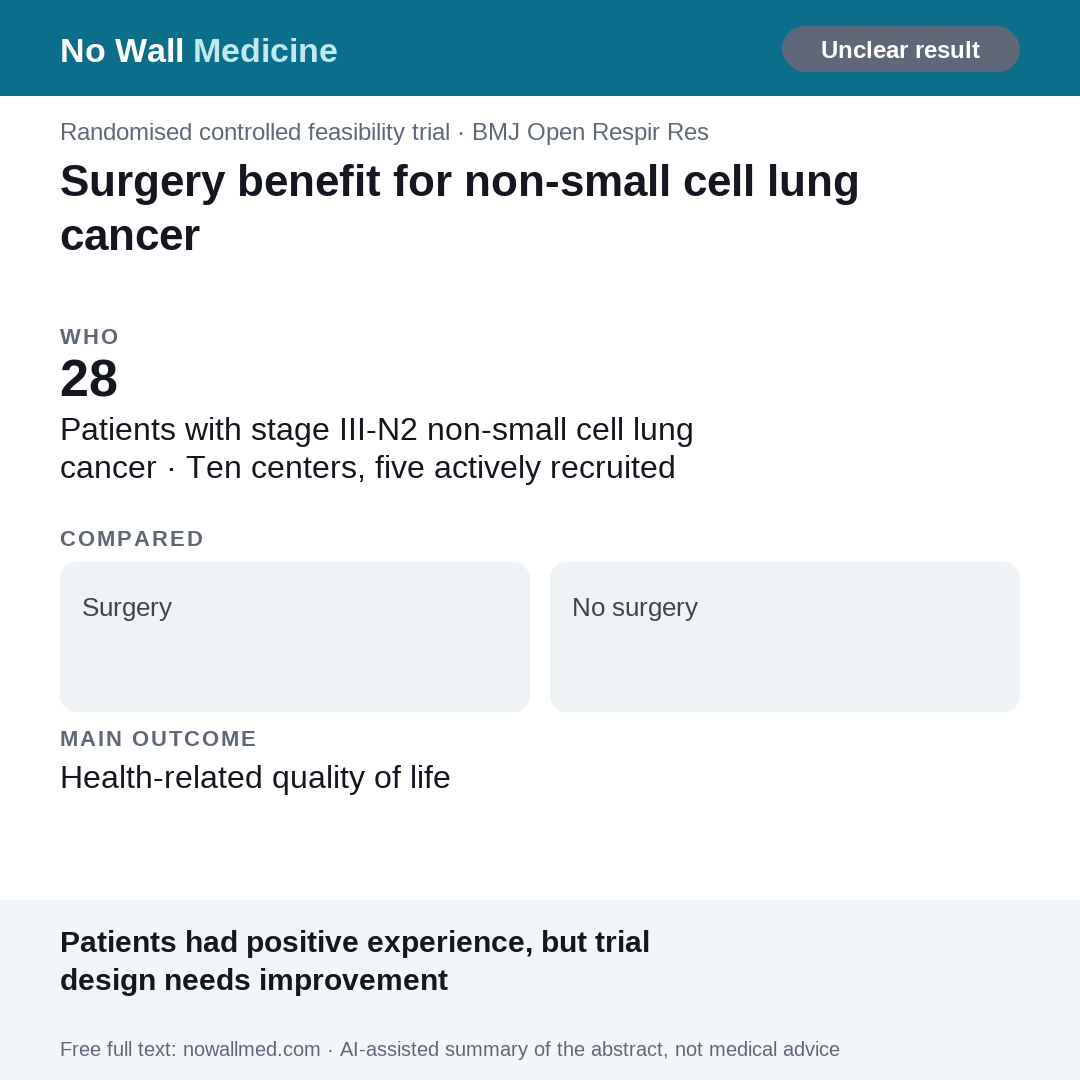
Experience of participating in a randomised controlled feasibility trial of surgery versus no surgery as part of multimodality treatment in stage III-N2 non-small cell lung cancer: PIONEER
Randomised controlled feasibility trialUnclear result
Surgery benefit for non-small cell lung cancer
Who
28
Patients with stage III-N2 non-small cell lung cancer · Ten centers, five actively recruited
Compared
Surgery
No surgery
Main outcome
Health-related quality of life
Bottom line: Patients had positive experience, but trial design needs improvement
Limitation: Recruitment difficulties, limited eligible patients
BMJ Open Respir Res · 2026-10-26Download image
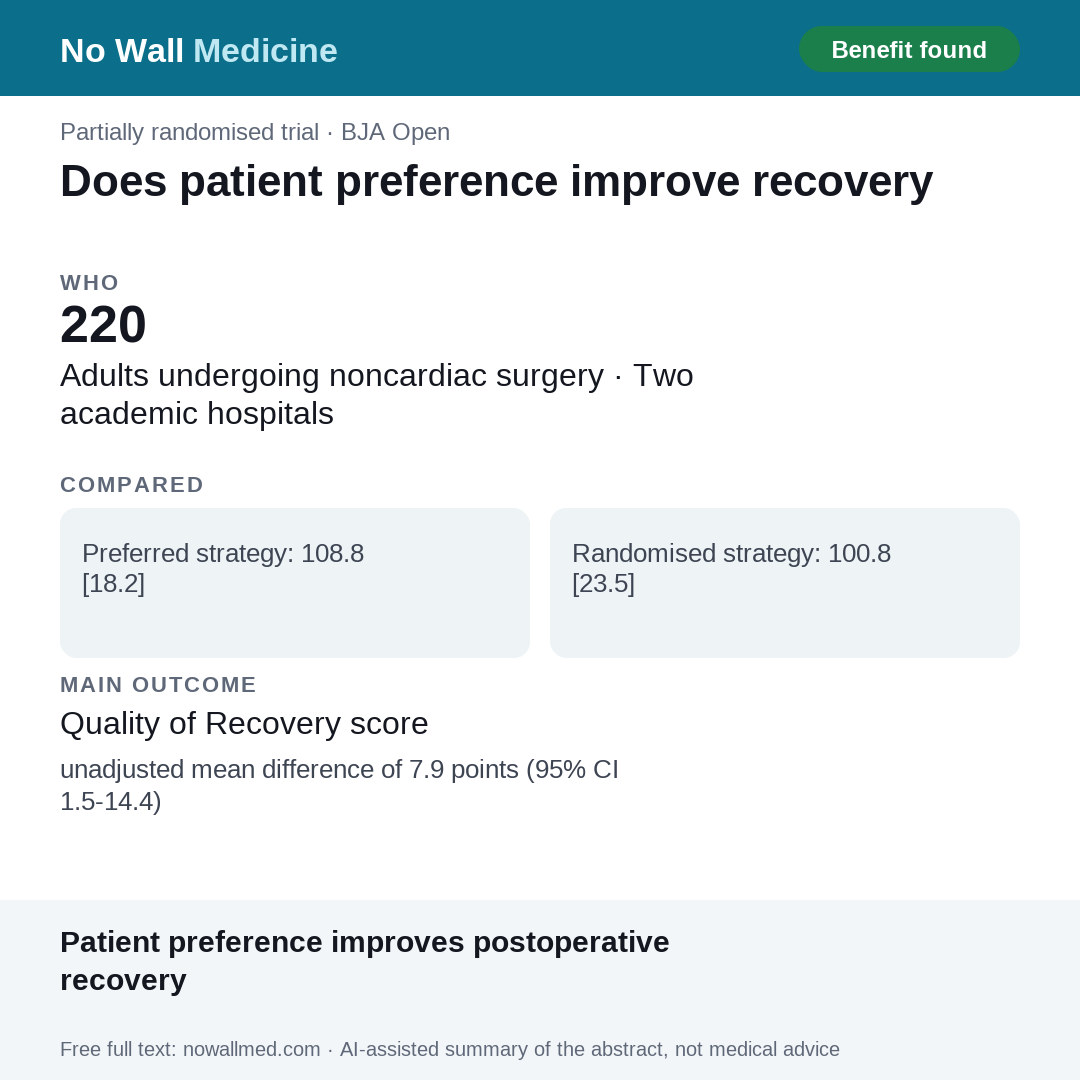
Patient preference for intraoperative opioid strategy and early postoperative recovery after noncardiac surgery: a prospective partially randomised patient-preference trial (the PERFECT trial)
Partially randomised trialBenefit found
Does patient preference improve recovery
Who
220
Adults undergoing noncardiac surgery · Two academic hospitals
Compared
Preferred strategy: 108.8 [18.2]
Randomised strategy: 100.8 [23.5]
Main outcome
Quality of Recovery score
Result: unadjusted mean difference of 7.9 points (95% CI 1.5-14.4)
Bottom line: Patient preference improves postoperative recovery
Limitation: Non-randomised comparison and limited precision
BJA Open · 2026-10-26Download image
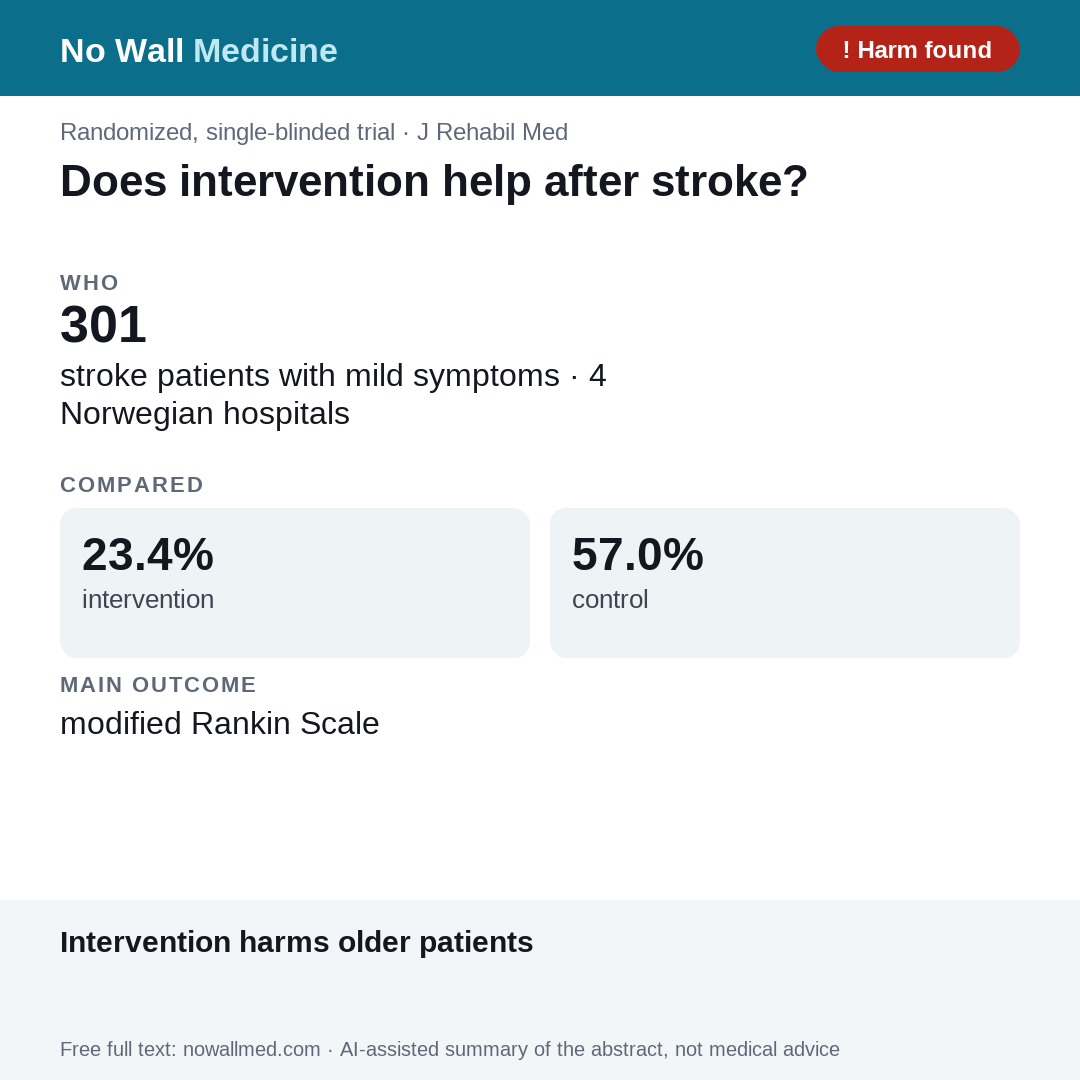
Impact of age and frailty on the effect of a multimodal individualized long-term intervention after stroke: the last-long trial
Randomized, single-blinded trialHarm found
Does intervention help after stroke?
Who
301
stroke patients with mild symptoms · 4 Norwegian hospitals
Compared
23.4%intervention
57.0%control
Main outcome
modified Rankin Scale
Bottom line: Intervention harms older patients
J Rehabil Med · 2026-10-26Download image
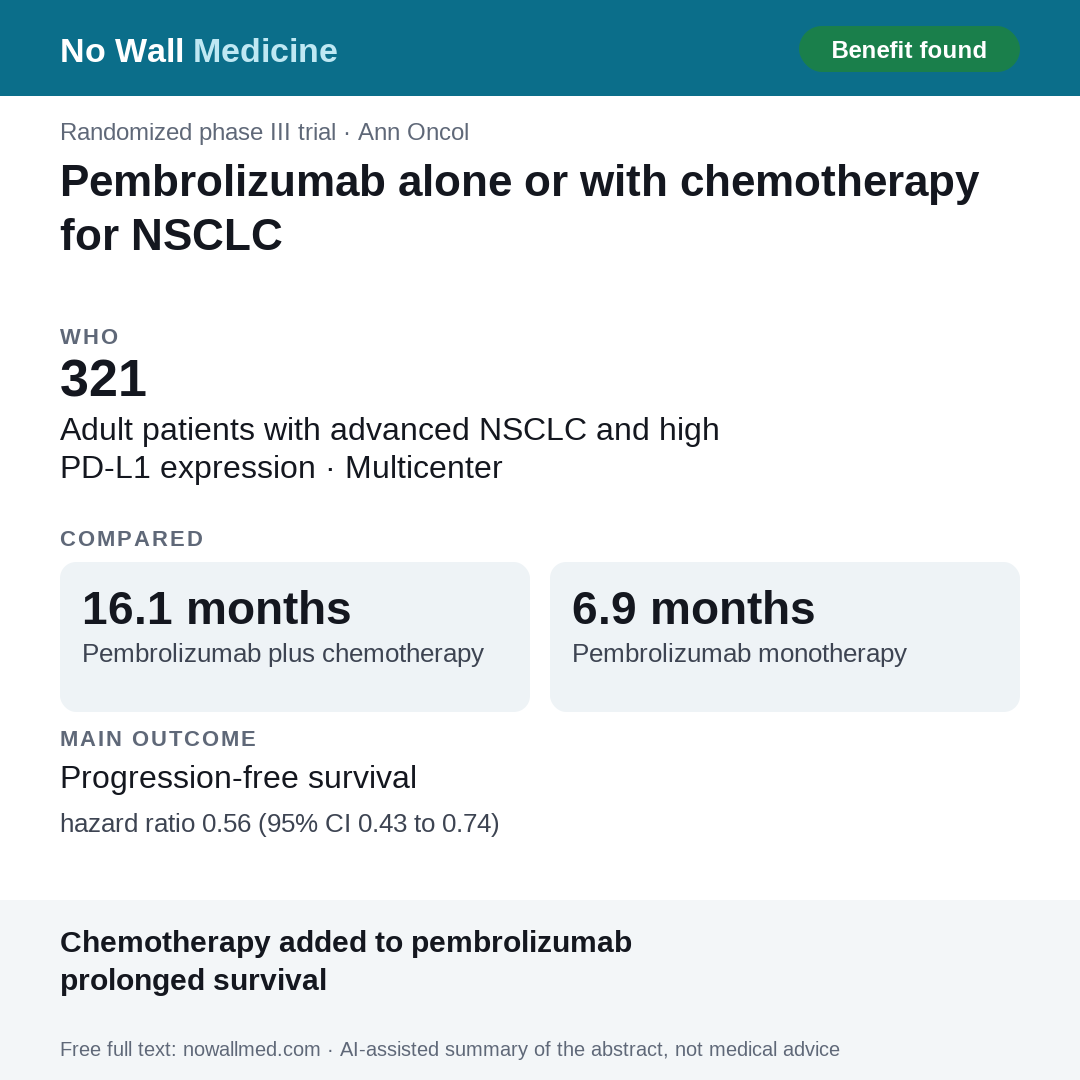
Pembrolizumab with or without platinum-based chemotherapy as first-line treatment in advanced NSCLC expressing PD-L1 ≥50%: The PERSEE randomized phase III trial (GFPC 01-2020)
Randomized phase III trialBenefit found
Pembrolizumab alone or with chemotherapy for NSCLC
Who
321
Adult patients with advanced NSCLC and high PD-L1 expression · Multicenter
Compared
16.1 monthsPembrolizumab plus chemotherapy
6.9 monthsPembrolizumab monotherapy
Main outcome
Progression-free survival
Result: hazard ratio 0.56 (95% CI 0.43 to 0.74)
Bottom line: Chemotherapy added to pembrolizumab prolonged survival
Ann Oncol · 2026-10-25Download image
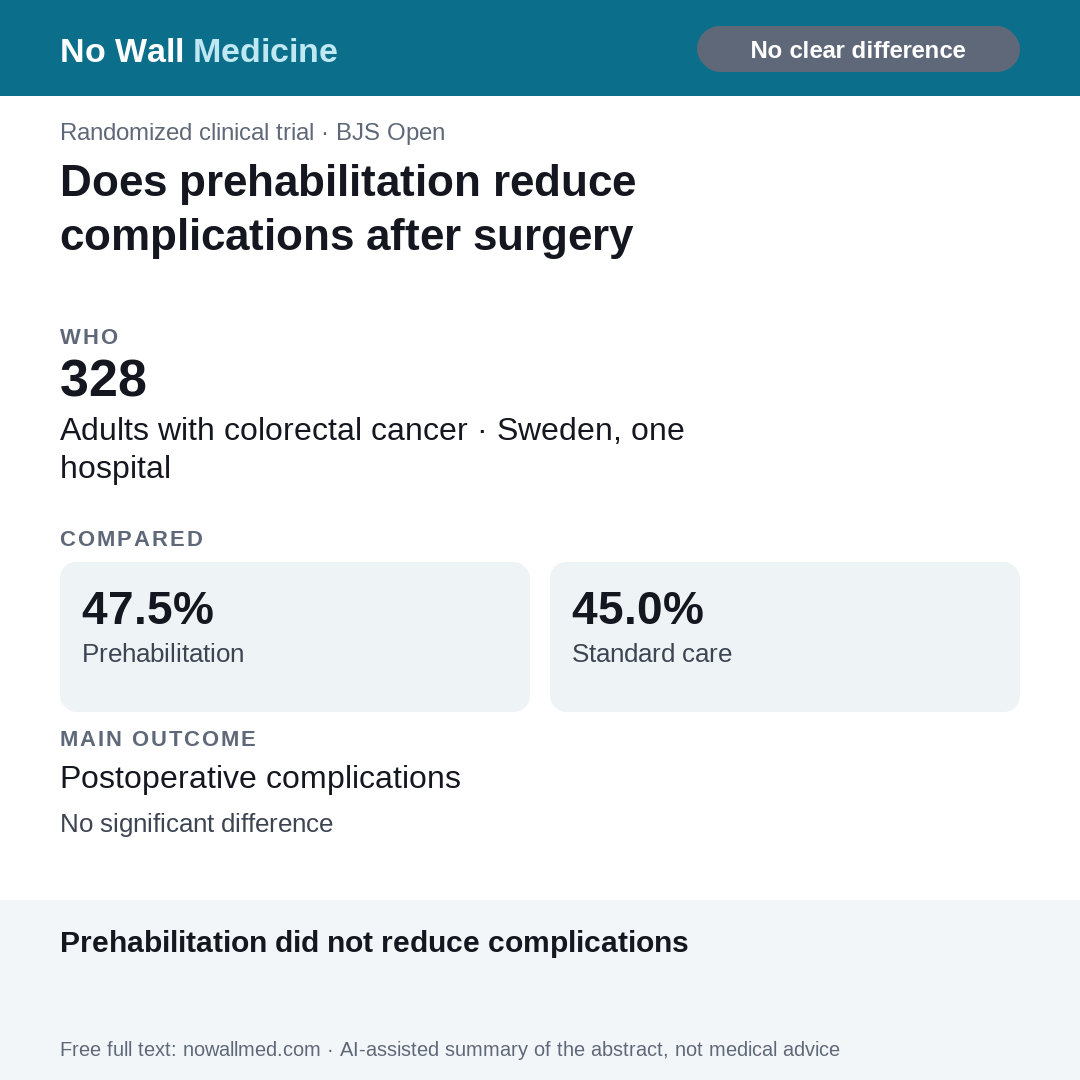
Multimodal prehabilitation in colorectal cancer surgery: randomized clinical trial
Randomized clinical trialNo clear difference
Does prehabilitation reduce complications after surgery
Who
328
Adults with colorectal cancer · Sweden, one hospital
Compared
47.5%Prehabilitation
45.0%Standard care
Main outcome
Postoperative complications
Result: No significant difference
Bottom line: Prehabilitation did not reduce complications
Limitation: Single-centre trial
BJS Open · 2026-10-25Download image
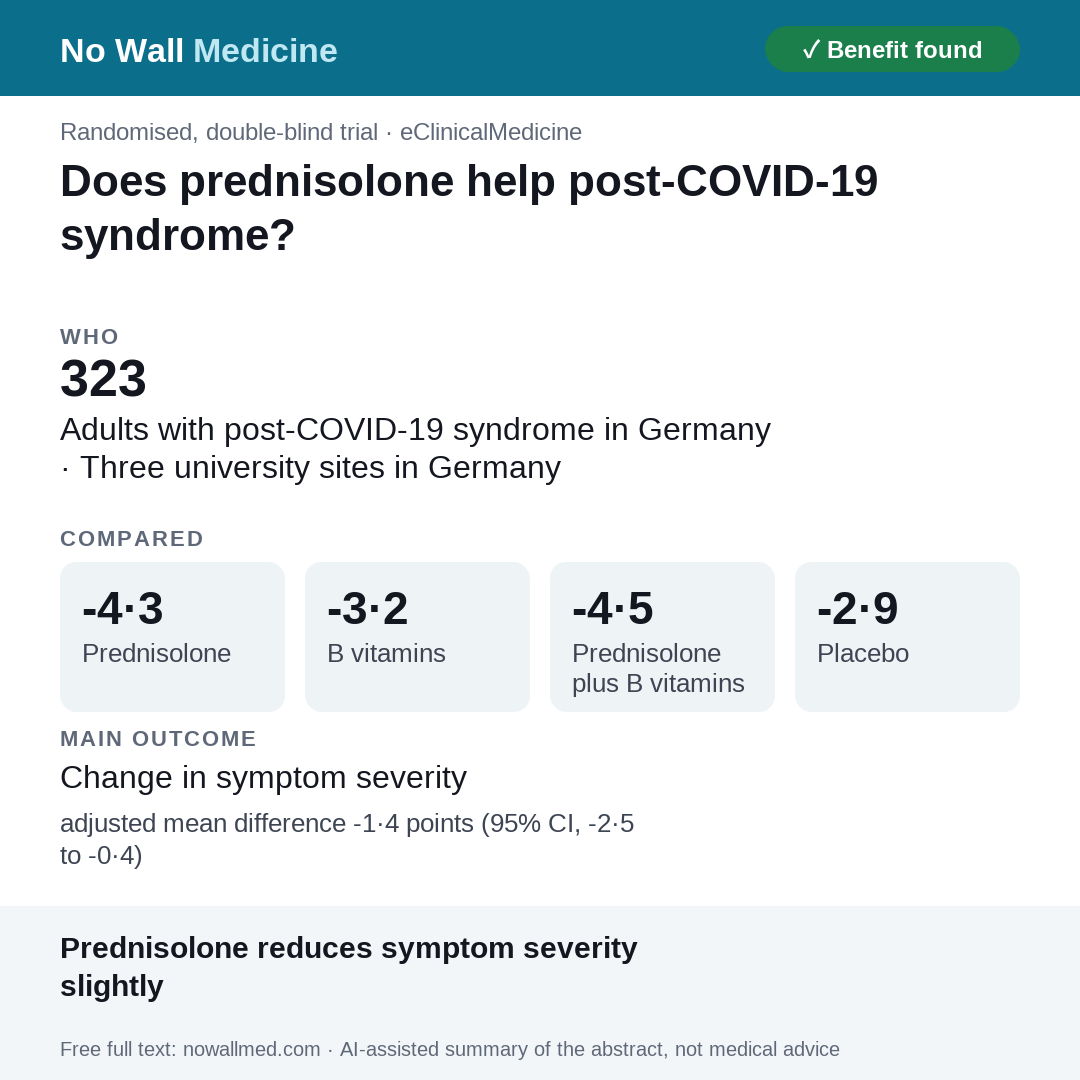
Low-dose prednisolone and B vitamins for post-COVID-19 syndrome in Germany: the PreVitaCOV randomised clinical trial
Randomised, double-blind trialBenefit found
Does prednisolone help post-COVID-19 syndrome?
Who
323
Adults with post-COVID-19 symptoms · Germany, three sites
Compared
-4·3Prednisolone (SD 5·1)
-3·2B vitamins (SD 5·0)
-4·5Prednisolone plus B vitamins (SD 4·5)
-2·9Placebo (SD 4·6)
Main outcome
Symptom severity change
Result: adjusted mean difference -1·4 points (95% CI, -2·5 to -0·4)
Bottom line: Prednisolone reduces symptom severity slightly
Limitation: effect did not reach clinical relevance threshold
Funded by: German Federal Ministry of Research
eClinicalMedicine · 2026-10-24Download image
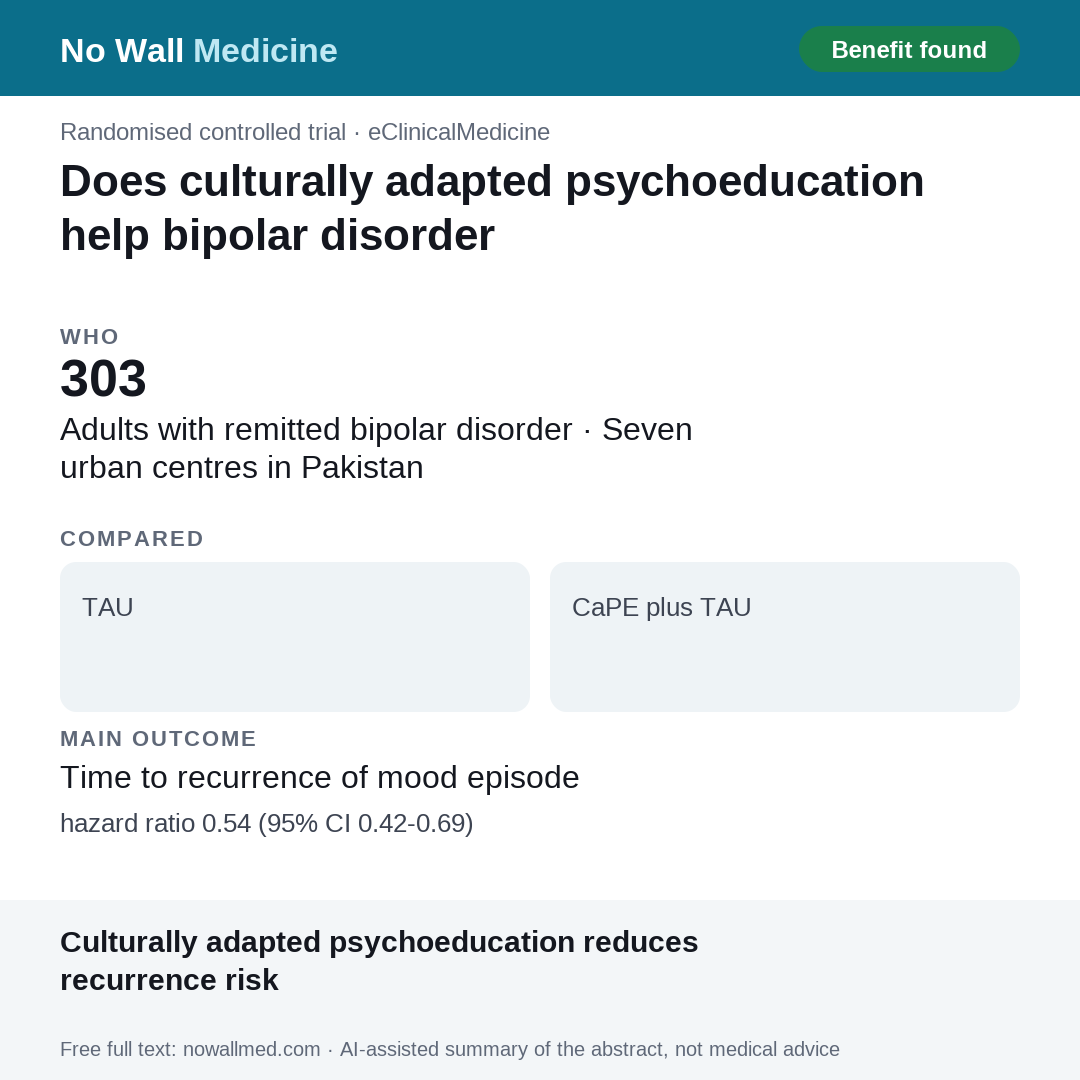
Culturally adapted psychoeducation for bipolar disorder: a multicentre, assessor-masked, randomised controlled trial
Randomized controlled trialBenefit found
Does psychoeducation reduce mood episode recurrence
Who
303
Adults with remitted bipolar disorder · Seven urban centres in Pakistan
Compared
TAU
CaPE plus TAU
Main outcome
Time to recurrence of mood episode
Result: hazard ratio 0.54 (95% CI 0.42-0.69)
Bottom line: Psychoeducation reduces mood episode recurrence
Funded by: Canadian Institutes of Health Research
eClinicalMedicine · 2026-10-24Download image