Visual abstracts
New randomized trials and meta-analyses from leading journals at a glance: who was studied, what was compared, and what was found. Every paper is free to read in full.
All specialtiesCardiology 4763Oncology 4043Gastroenterology & Hepatology 1903Infectious Disease 3756Neurology 1872Psychiatry & Mental Health 2216Pulmonology 2044Critical Care 1319Endocrinology & Diabetes 2544Pediatrics 2889Surgery 2480Orthopedics & Sports Medicine 917Neurosurgery 525Cardiothoracic & Vascular Surgery 656Plastic & Reconstructive Surgery 574Nephrology 1107Rheumatology 810Hematology 1090Dermatology 611Ophthalmology 532Obstetrics & Gynecology 1645Public & Global Health 1037Radiology & Imaging 619Anesthesiology 958Urology 745ENT (Otolaryngology) 494Emergency Medicine 481Allergy & Immunology 309Geriatrics 972Family Medicine & Primary Care 534Medical Genetics & Genomics 659Pathology & Laboratory Medicine 156Physical Medicine & Rehabilitation 734Palliative Care 421Nutrition 1560Digital Health & AI 2137General Medicine 318
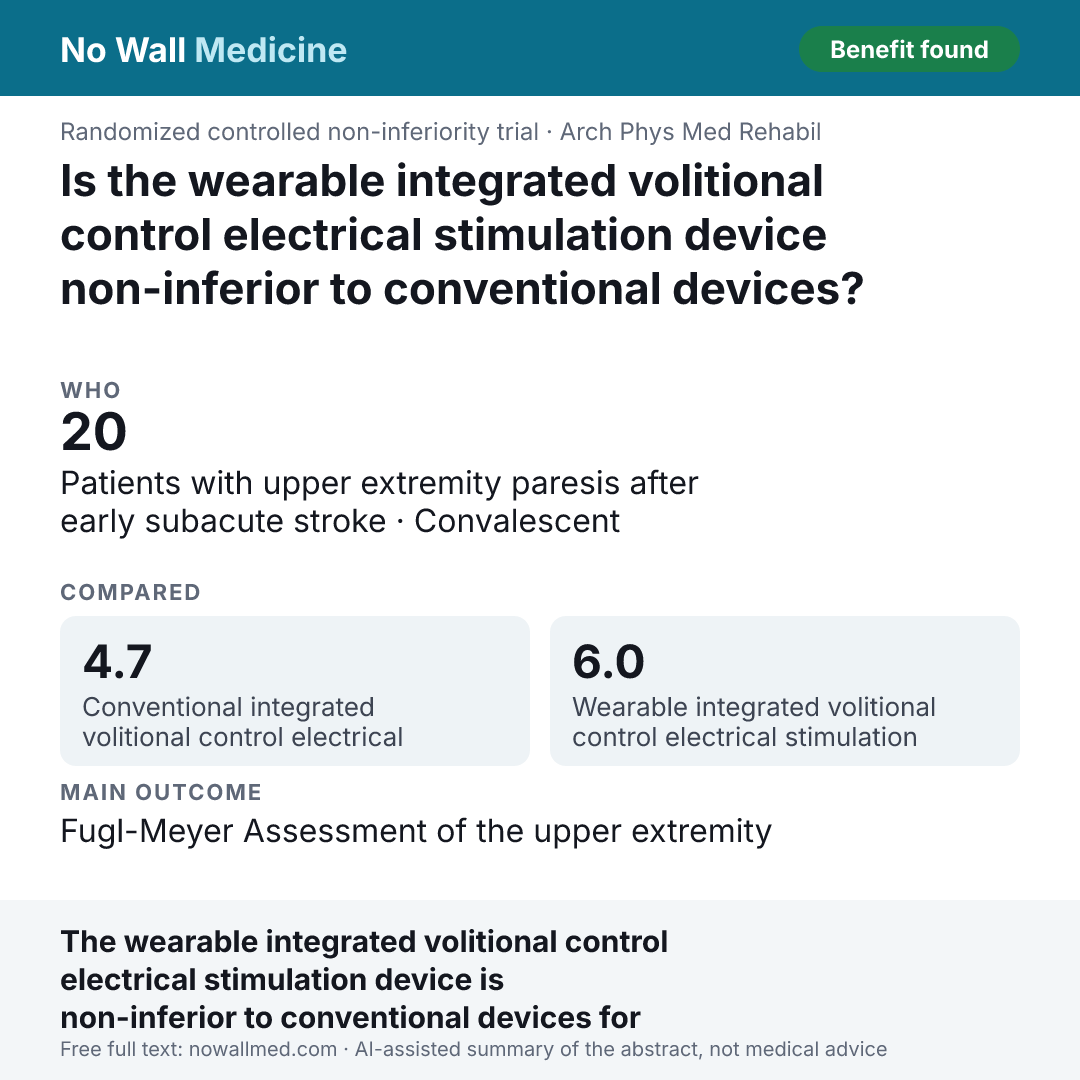
Wearable Integrated Volitional Control Electrical Stimulation Device as Treatment for Paresis of the Upper Extremity in Early Subacute Stroke Patients: A Randomized Controlled Non-inferiority Trial
Randomized controlled non-inferiority trialBenefit found
Is the wearable integrated volitional control electrical stimulation device non-inferior to conventional devices?
Who
20
Patients with upper extremity paresis after early subacute stroke · Convalescent rehabilitation ward
Compared
4.7Conventional integrated volitional control electrical stimulation
6.0Wearable integrated volitional control electrical stimulation
Main outcome
Fugl-Meyer Assessment of the upper extremity
Result: mean difference 1.3 (95% confidence interval: -6.73 to 4.13)
Bottom line: The wearable integrated volitional control electrical stimulation device is non-inferior to conventional devices for upper extremity paresis.
Arch Phys Med Rehabil · 2023-09-14 · Save PNG
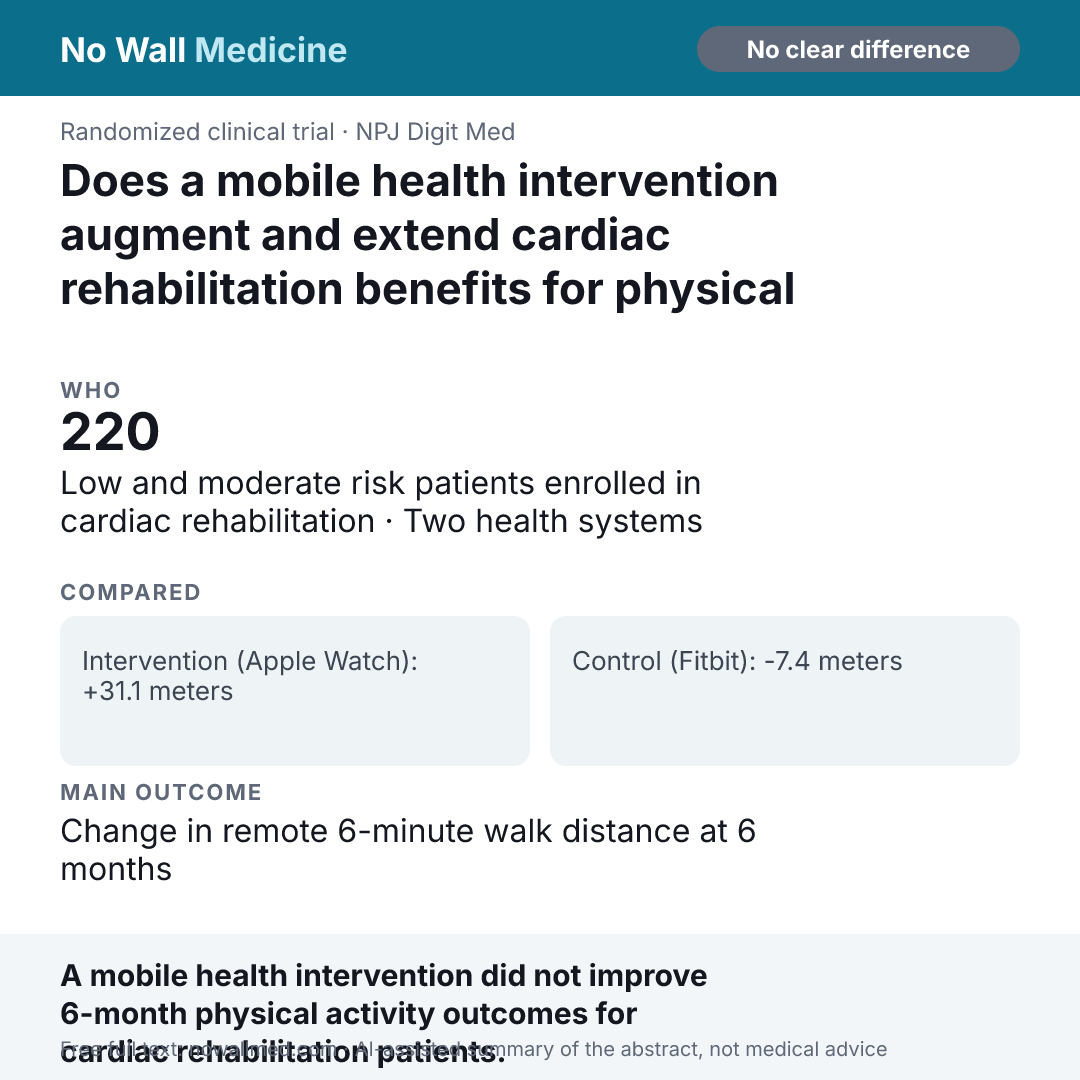
A randomized trial of a mobile health intervention to augment cardiac rehabilitation
Randomized clinical trialNo clear difference
Does a mobile health intervention augment and extend cardiac rehabilitation benefits for physical activity?
Who
220
Low and moderate risk patients enrolled in cardiac rehabilitation · Two health systems
Compared
Intervention (Apple Watch): +31.1 meters
Control (Fitbit): -7.4 meters
Main outcome
Change in remote 6-minute walk distance at 6 months
Result: p = 0.28
Bottom line: A mobile health intervention did not improve 6-month physical activity outcomes for cardiac rehabilitation patients.
NPJ Digit Med · 2023-09-14 · Save PNG
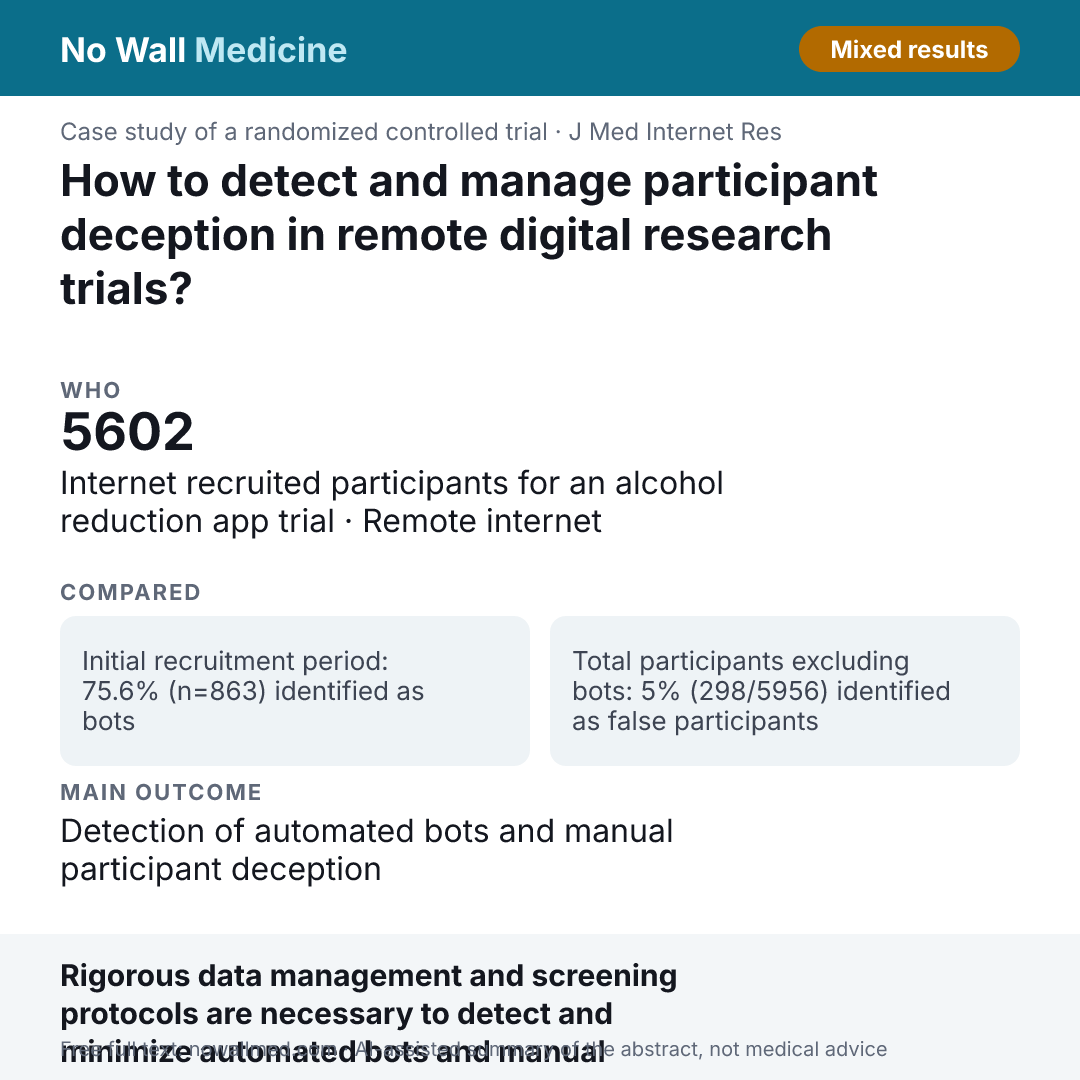
Bot or Not? Detecting and Managing Participant Deception When Conducting Digital Research Remotely: Case Study of a Randomized Controlled Trial
Case study of a randomized controlled trialMixed results
How to detect and manage participant deception in remote digital research trials?
Who
5602
Internet recruited participants for an alcohol reduction app trial · Remote internet recruitment
Compared
Initial recruitment period: 75.6% (n=863) identified as bots
Total participants excluding bots: 5% (298/5956) identified as false participants
Main outcome
Detection of automated bots and manual participant deception
Bottom line: Rigorous data management and screening protocols are necessary to detect and minimize automated bots and manual participant deception.
J Med Internet Res · 2023-09-14 · Save PNG
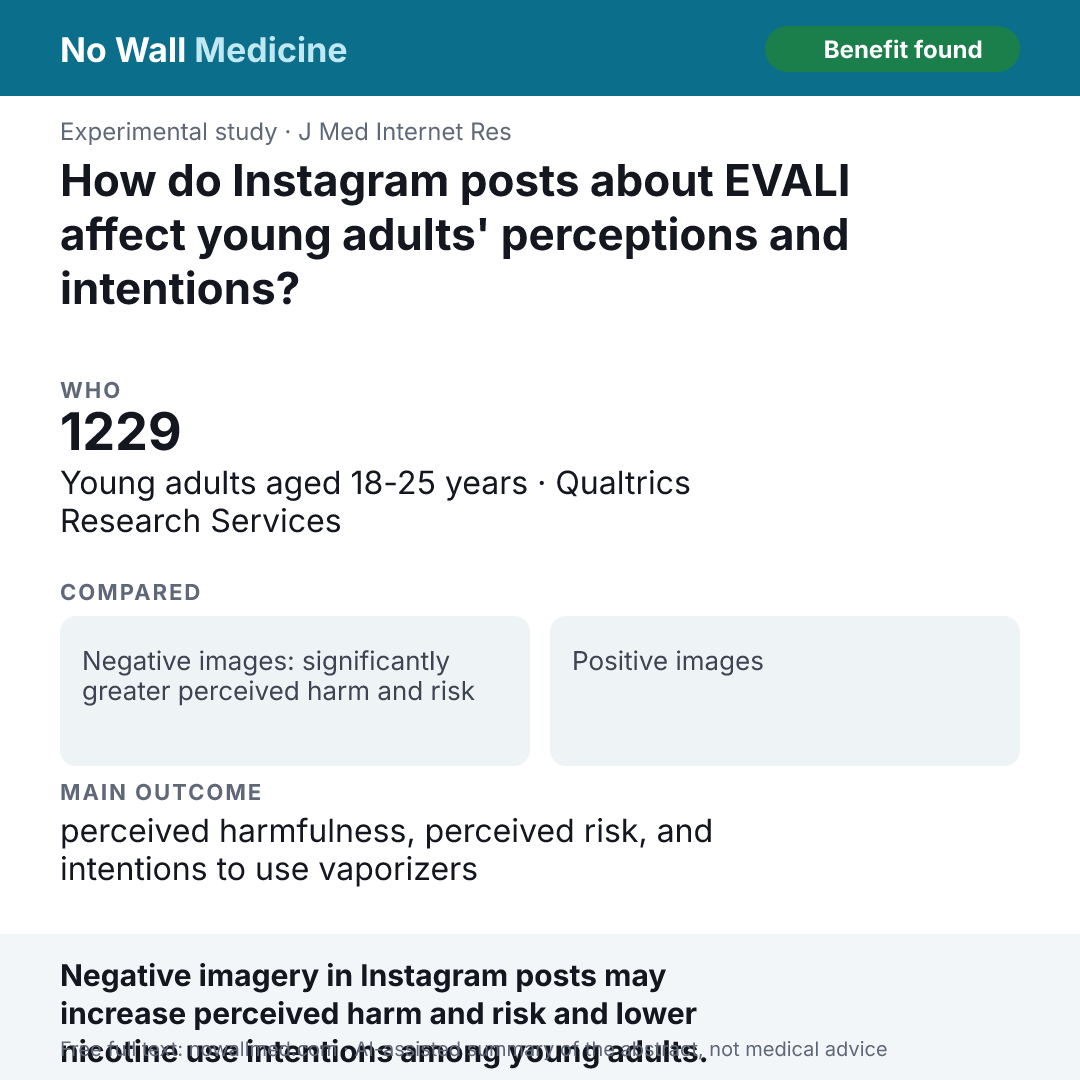
Young Adults' Perceptions of and Intentions to Use Nicotine and Cannabis Vaporizers in Response to e-Cigarette or Vaping-Associated Lung Injury Instagram Posts: Experimental Study
Experimental studyBenefit found
How do Instagram posts about EVALI affect young adults' perceptions and intentions?
Who
1229
Young adults aged 18-25 years · Qualtrics Research Services
Compared
Negative images: significantly greater perceived harm and risk
Positive images
Main outcome
perceived harmfulness, perceived risk, and intentions to use vaporizers
Bottom line: Negative imagery in Instagram posts may increase perceived harm and risk and lower nicotine use intentions among young adults.
J Med Internet Res · 2023-09-14 · Save PNG
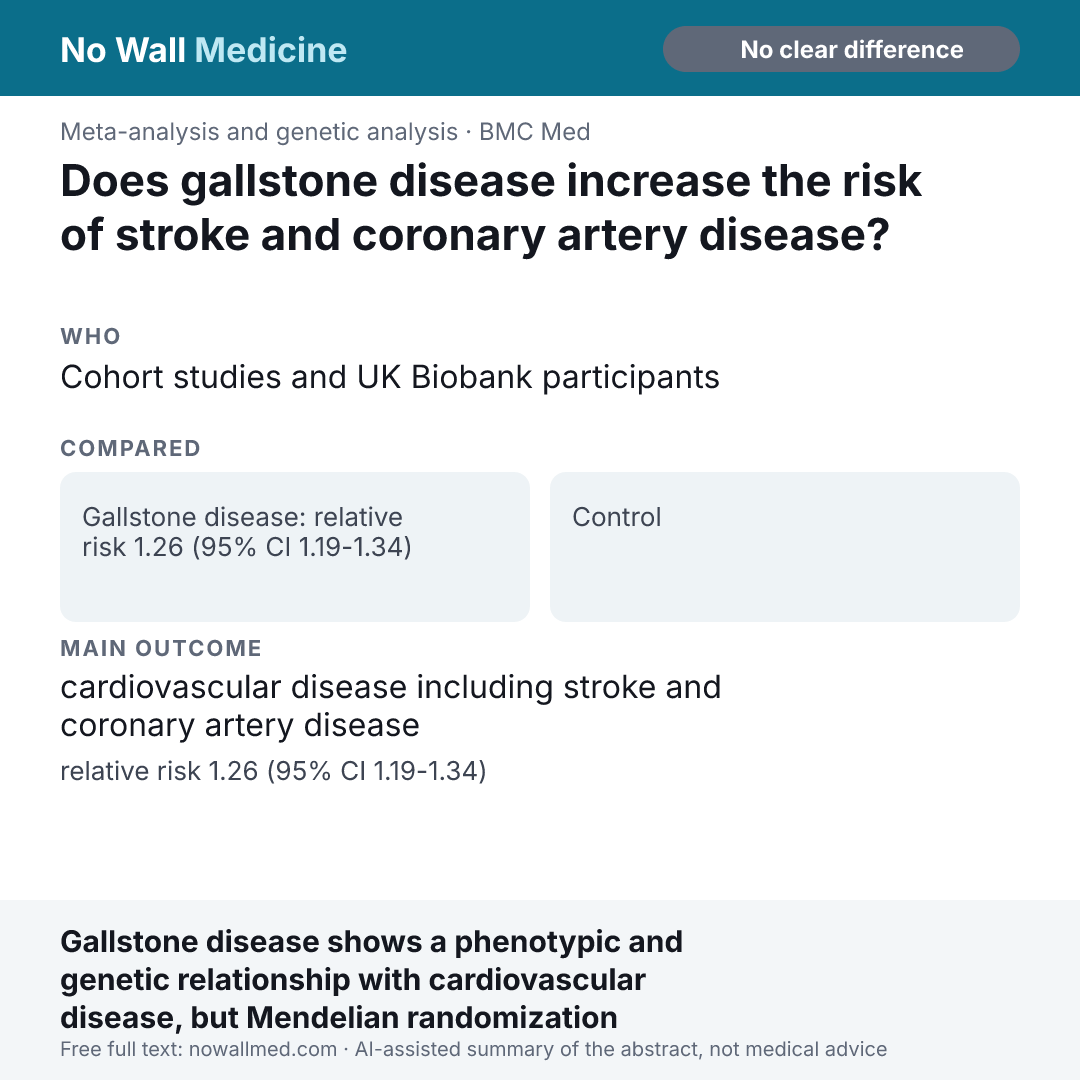
Impact of gallstone disease on the risk of stroke and coronary artery disease: evidence from prospective observational studies and genetic analyses
Meta-analysis and genetic analysisNo clear difference
Does gallstone disease increase the risk of stroke and coronary artery disease?
Who
Cohort studies and UK Biobank participants
Compared
Gallstone disease: relative risk 1.26 (95% CI 1.19-1.34)
Control
Main outcome
cardiovascular disease including stroke and coronary artery disease
Result: relative risk 1.26 (95% CI 1.19-1.34)
Bottom line: Gallstone disease shows a phenotypic and genetic relationship with cardiovascular disease, but Mendelian randomization suggests no direct causal effect.
BMC Med · 2023-09-13 · Save PNG
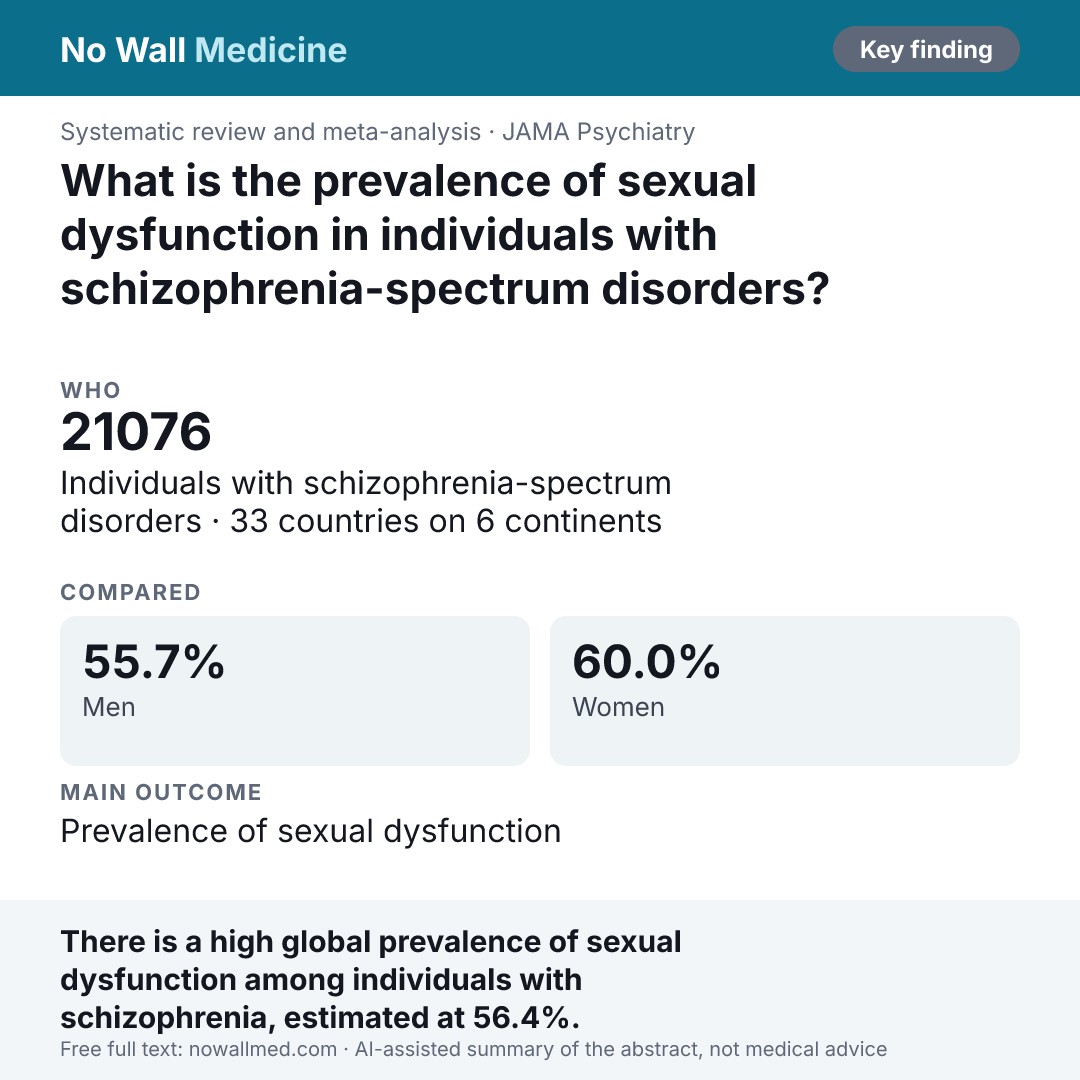
Sexual Dysfunction in Schizophrenia: A Systematic Review and Meta-Analysis
Systematic review and meta-analysisKey finding
What is the prevalence of sexual dysfunction in individuals with schizophrenia-spectrum disorders?
Who
21076
Individuals with schizophrenia-spectrum disorders · 33 countries on 6 continents
Compared
55.7%Men (95% CI, 48.1-63.1)
60.0%Women (95% CI, 48.0-70.8)
Main outcome
Prevalence of sexual dysfunction
Result: 56.4% (95% CI, 50.5-62.2)
Bottom line: There is a high global prevalence of sexual dysfunction among individuals with schizophrenia, estimated at 56.4%.
JAMA Psychiatry · 2023-09-13 · Save PNG
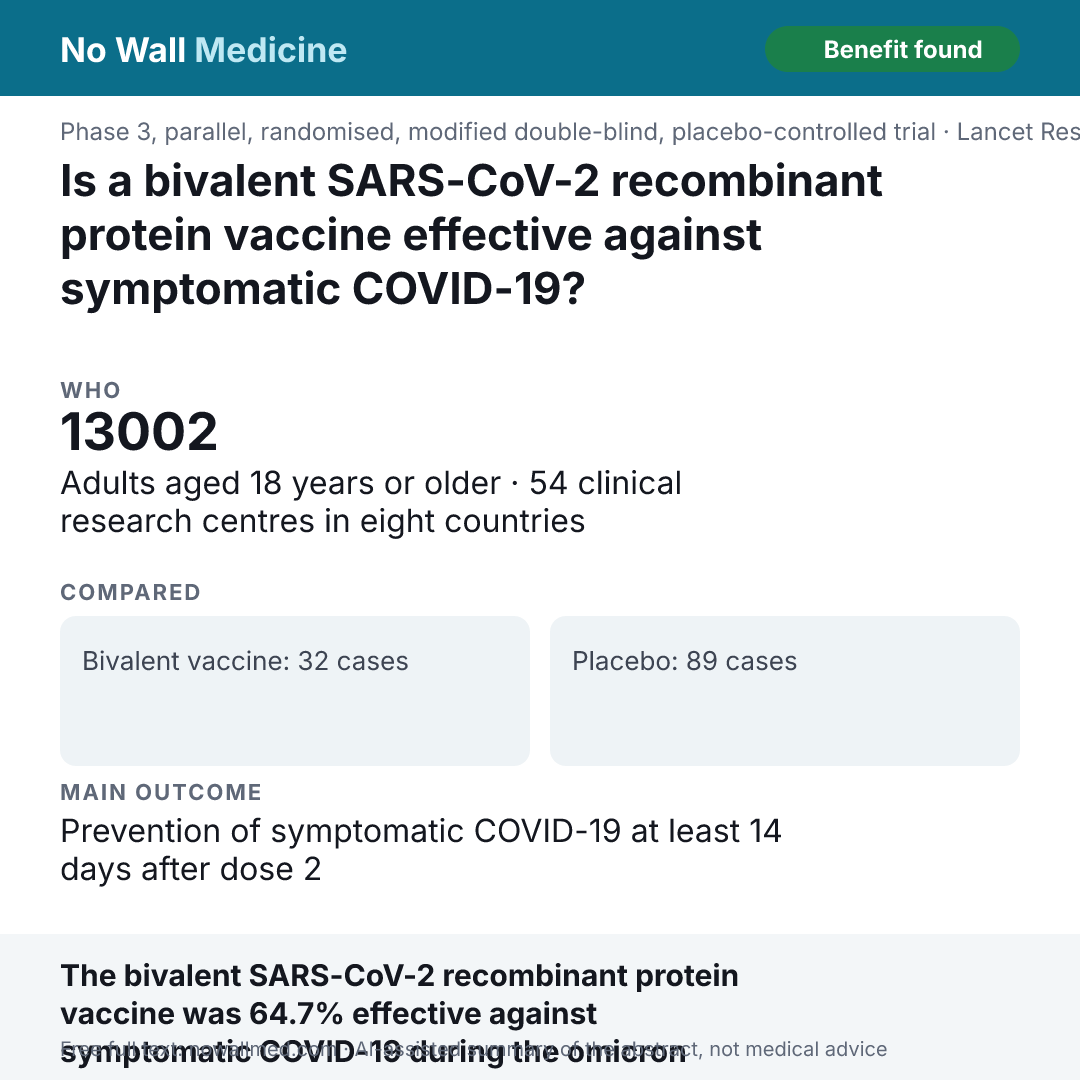
Efficacy of a bivalent (D614 + B.1.351) SARS-CoV-2 recombinant protein vaccine with AS03 adjuvant in adults: a phase 3, parallel, randomised, modified double-blind, placebo-controlled trial
Phase 3, parallel, randomised, modified double-blind, placebo-controlled trialBenefit found
Is a bivalent SARS-CoV-2 recombinant protein vaccine effective against symptomatic COVID-19?
Who
13002
Adults aged 18 years or older · 54 clinical research centres in eight countries
Compared
Bivalent vaccine: 32 cases
Placebo: 89 cases
Main outcome
Prevention of symptomatic COVID-19 at least 14 days after dose 2
Result: 64·7% (95% CI 46·6 to 77·2)
Bottom line: The bivalent SARS-CoV-2 recombinant protein vaccine was 64.7% effective against symptomatic COVID-19 during the omicron variant circulation.
Lancet Respir Med · 2023-09-13 · Save PNG
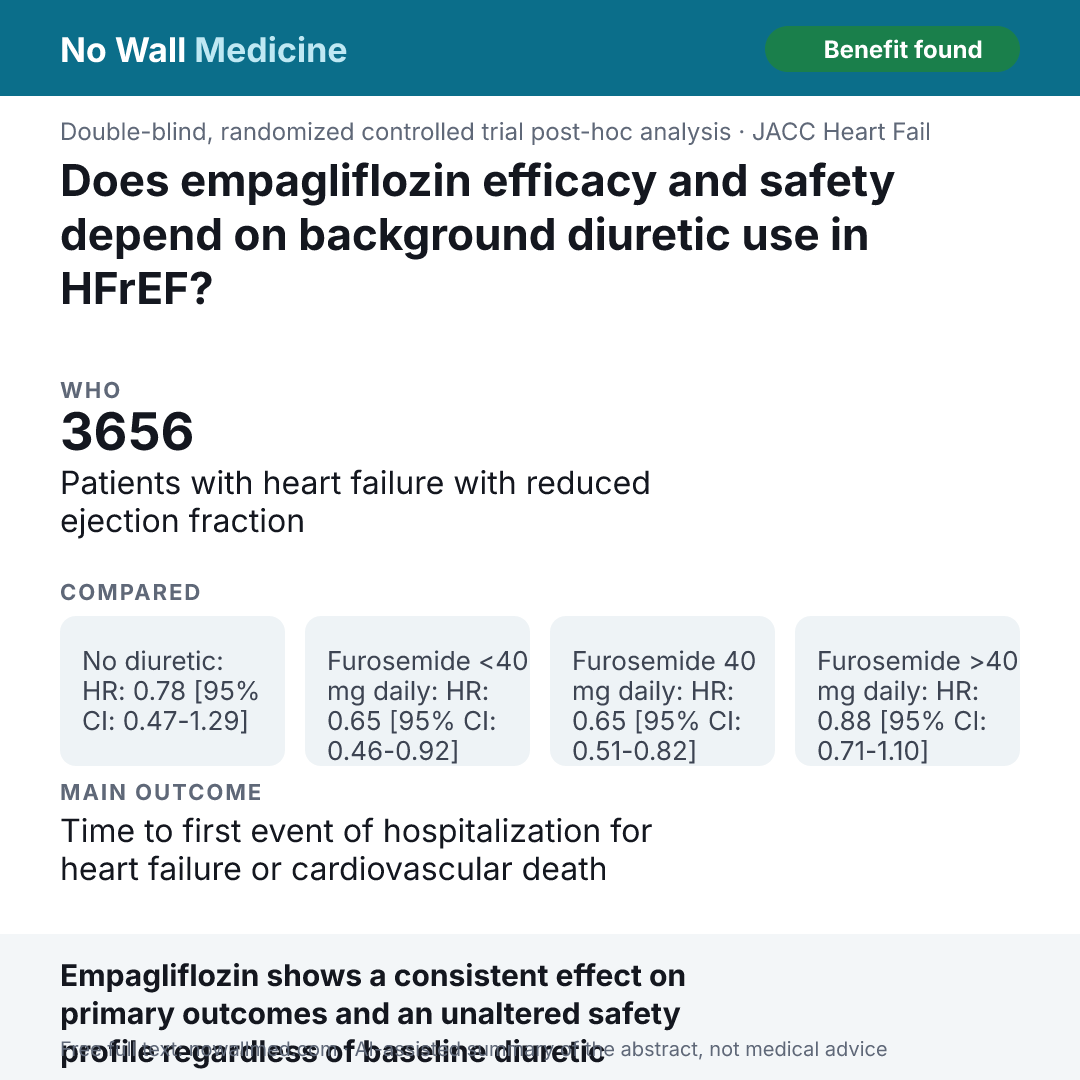
Efficacy and Safety of Empagliflozin According to Background Diuretic Use in HFrEF: Post-Hoc Analysis of EMPEROR-Reduced
Double-blind, randomized controlled trial post-hoc analysisBenefit found
Does empagliflozin efficacy and safety depend on background diuretic use in HFrEF?
Who
3656
Patients with heart failure with reduced ejection fraction
Compared
No diuretic: HR: 0.78 [95% CI: 0.47-1.29]
Furosemide <40 mg daily: HR: 0.65 [95% CI: 0.46-0.92]
Furosemide 40 mg daily: HR: 0.65 [95% CI: 0.51-0.82]
Furosemide >40 mg daily: HR: 0.88 [95% CI: 0.71-1.10]
Main outcome
Time to first event of hospitalization for heart failure or cardiovascular death
Result: Ptrend test = 0.192
Bottom line: Empagliflozin shows a consistent effect on primary outcomes and an unaltered safety profile regardless of baseline diuretic therapy.
JACC Heart Fail · 2023-09-13 · Save PNG
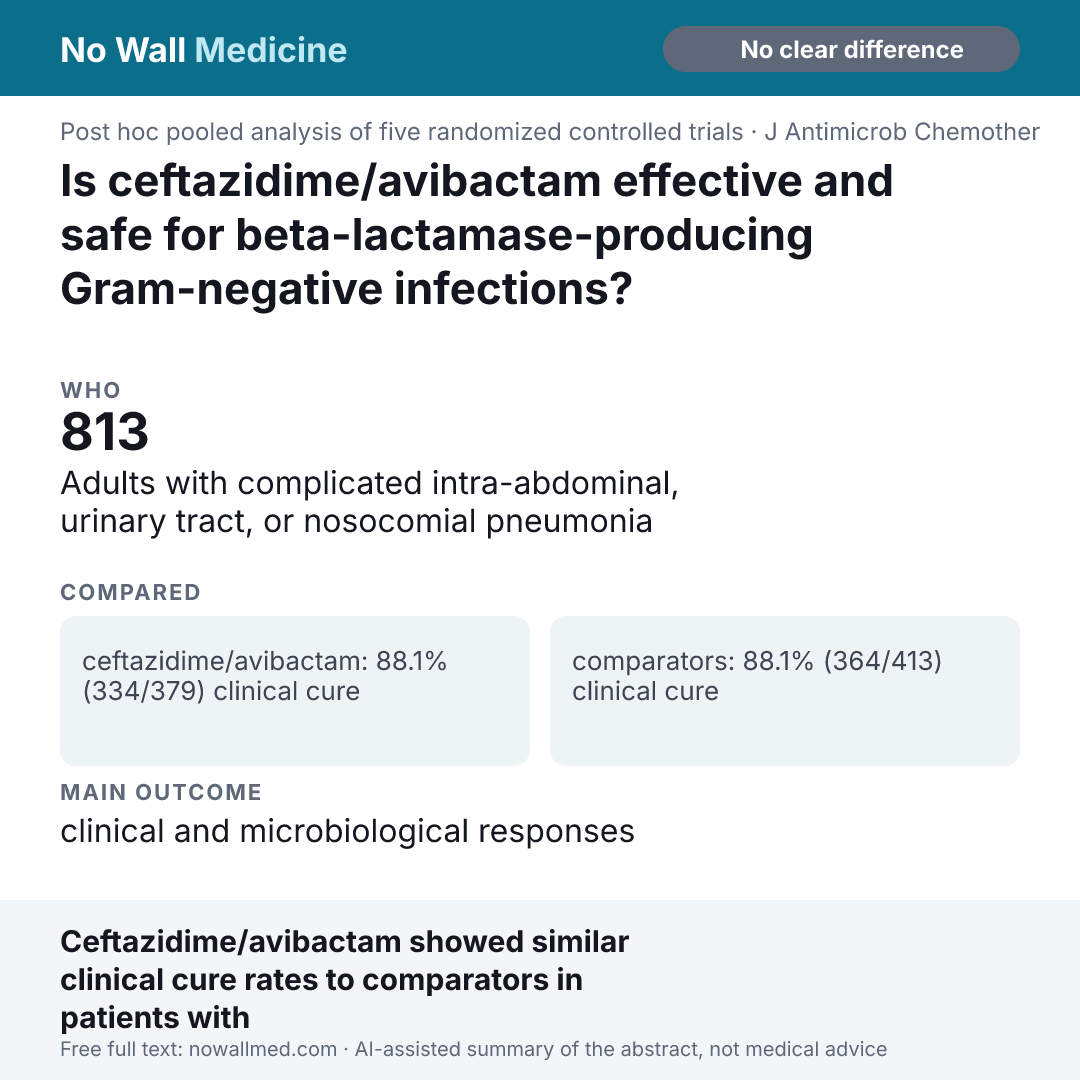
Efficacy and safety of ceftazidime/avibactam in patients with infections caused by β-lactamase-producing Gram-negative pathogens: a pooled analysis from the Phase 3 clinical trial programme
Post hoc pooled analysis of five randomized controlled trialsNo clear difference
Is ceftazidime/avibactam effective and safe for beta-lactamase-producing Gram-negative infections?
Who
813
Adults with complicated intra-abdominal, urinary tract, or nosocomial pneumonia infections · Multicentre
Compared
ceftazidime/avibactam: 88.1% (334/379) clinical cure
comparators: 88.1% (364/413) clinical cure
Main outcome
clinical and microbiological responses
Bottom line: Ceftazidime/avibactam showed similar clinical cure rates to comparators in patients with non-metallo-beta-lactamase-producing Gram-negative infections.
J Antimicrob Chemother · 2023-09-13 · Save PNG
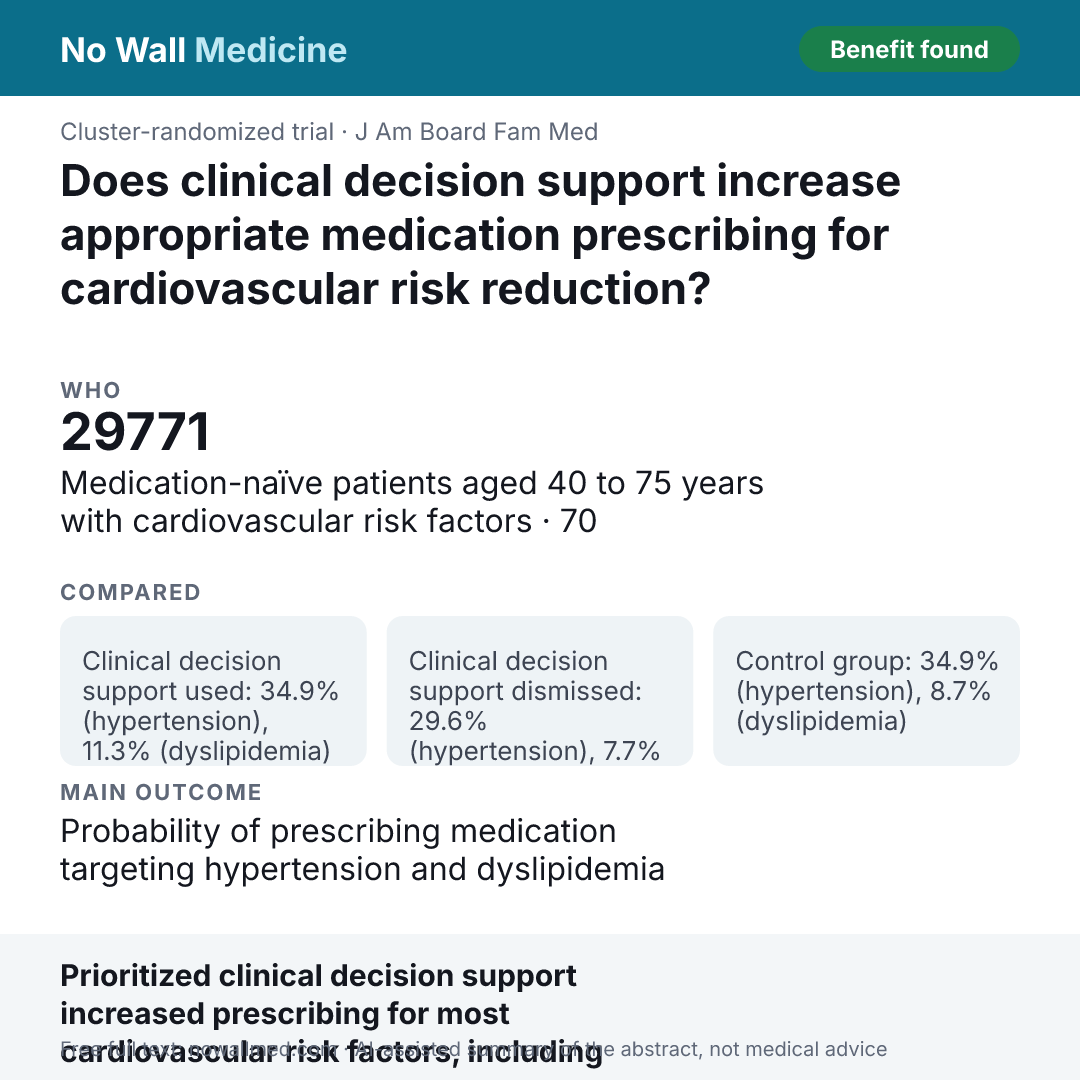
Does Clinical Decision Support Increase Appropriate Medication Prescribing for Cardiovascular Risk Reduction?
Cluster-randomized trialBenefit found
Does clinical decision support increase appropriate medication prescribing for cardiovascular risk reduction?
Who
29771
Medication-naïve patients aged 40 to 75 years with cardiovascular risk factors · 70 community health center clinics
Compared
Clinical decision support used: 34.9% (hypertension), 11.3% (dyslipidemia)
Clinical decision support dismissed: 29.6% (hypertension), 7.7% (dyslipidemia)
Control group: 34.9% (hypertension), 8.7% (dyslipidemia)
Main outcome
Probability of prescribing medication targeting hypertension and dyslipidemia
Bottom line: Prioritized clinical decision support increased prescribing for most cardiovascular risk factors, including dyslipidemia and smoking cessation.
J Am Board Fam Med · 2023-09-13 · Save PNG
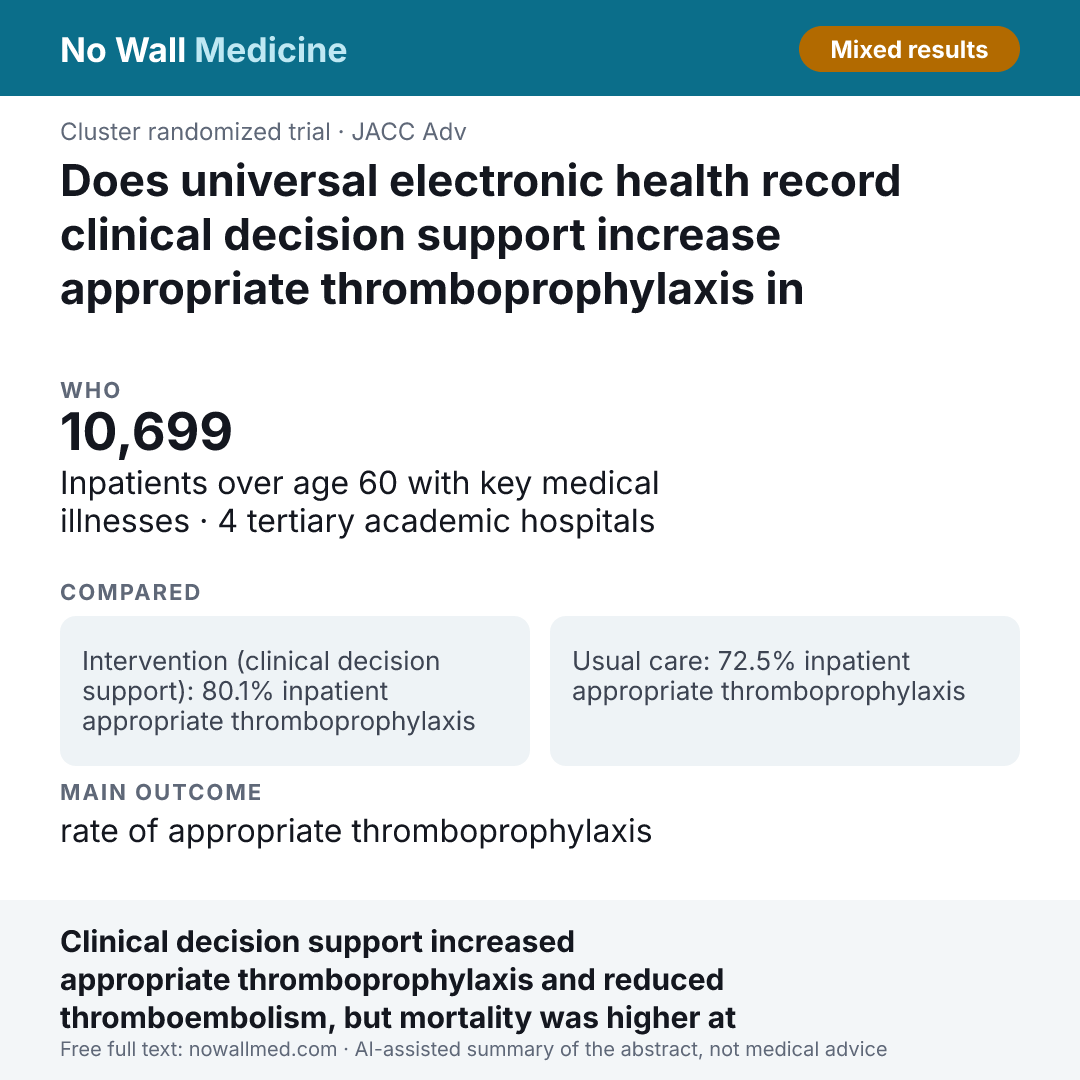
Universal EHRs Clinical Decision Support for Thromboprophylaxis in Medical Inpatients: A Cluster Randomized Trial
Cluster randomized trialMixed results
Does universal electronic health record clinical decision support increase appropriate thromboprophylaxis in medical inpatients?
Who
10,699
Inpatients over age 60 with key medical illnesses · 4 tertiary academic hospitals
Compared
Intervention (clinical decision support): 80.1% inpatient appropriate thromboprophylaxis
Usual care: 72.5% inpatient appropriate thromboprophylaxis
Main outcome
rate of appropriate thromboprophylaxis
Result: OR: 1.52, 95% CI: 1.39-1.67
Bottom line: Clinical decision support increased appropriate thromboprophylaxis and reduced thromboembolism, but mortality was higher at intervention hospitals.
JACC Adv · 2023-09-13 · Save PNG
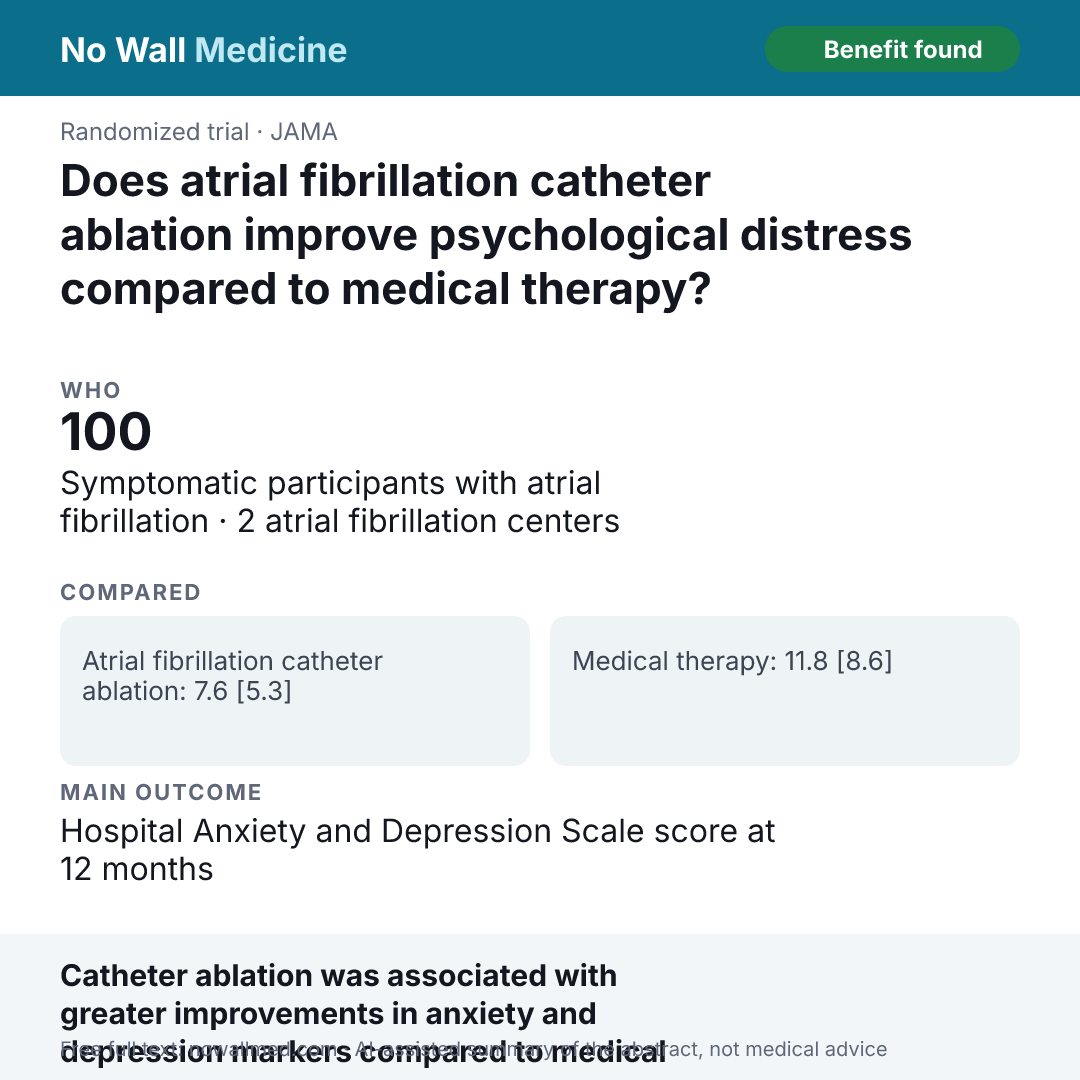
Atrial Fibrillation Catheter Ablation vs Medical Therapy and Psychological Distress: A Randomized Clinical Trial
Randomized trialBenefit found
Does atrial fibrillation catheter ablation improve psychological distress compared to medical therapy?
Who
100
Symptomatic participants with atrial fibrillation · 2 atrial fibrillation centers in Australia
Compared
Atrial fibrillation catheter ablation: 7.6 [5.3]
Medical therapy: 11.8 [8.6]
Main outcome
Hospital Anxiety and Depression Scale score at 12 months
Result: between-group difference, -4.17 [95% CI, -7.04 to -1.31]
Bottom line: Catheter ablation was associated with greater improvements in anxiety and depression markers compared to medical therapy alone.
JAMA · 2023-09-12 · Save PNG
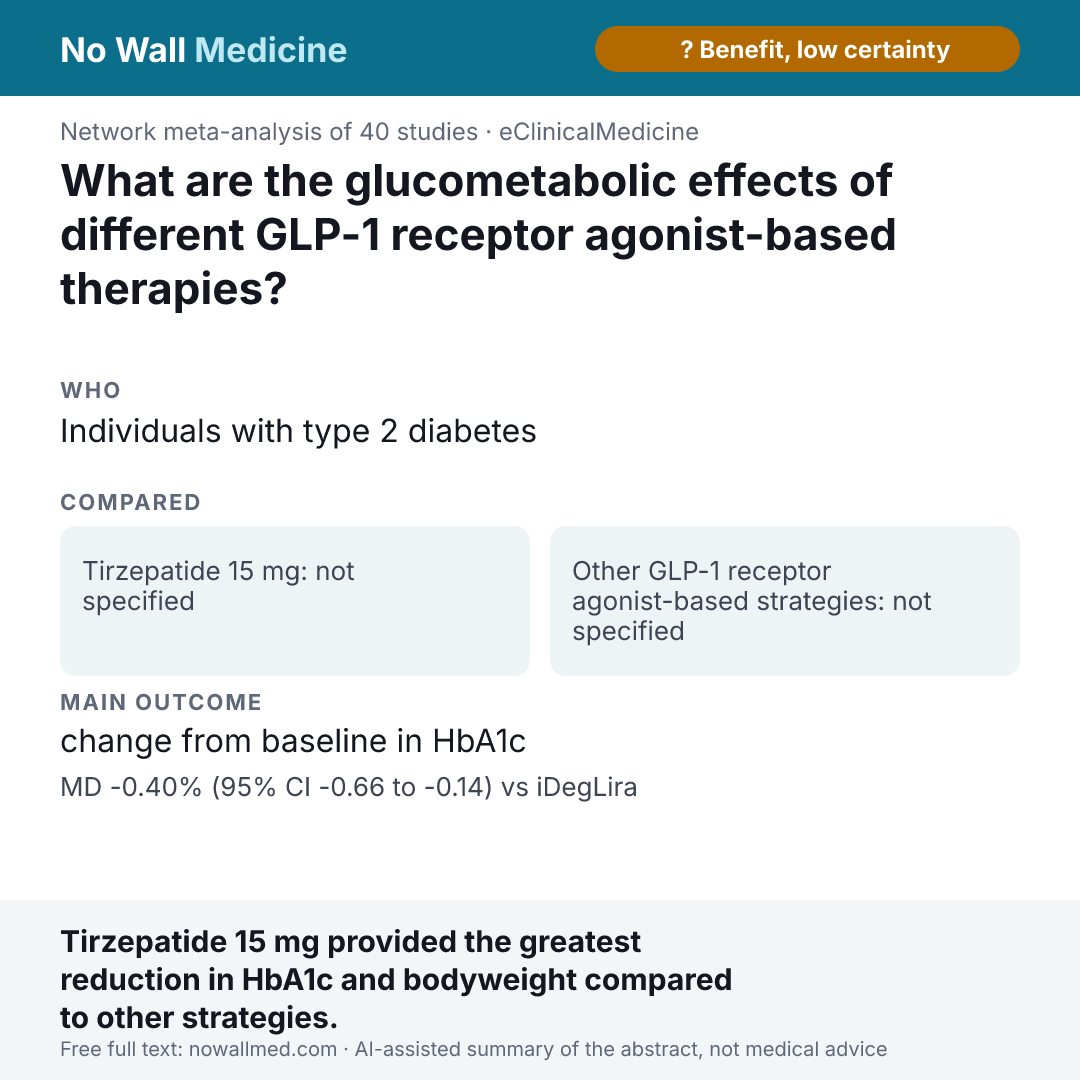
Glucometabolic outcomes of GLP-1 receptor agonist-based therapies in patients with type 2 diabetes: a systematic review and network meta-analysis
Network meta-analysis of 40 studiesBenefit, low certainty
What are the glucometabolic effects of different GLP-1 receptor agonist-based therapies?
Who
Individuals with type 2 diabetes
Compared
Tirzepatide 15 mg: not specified
Other GLP-1 receptor agonist-based strategies: not specified
Main outcome
change from baseline in HbA1c
Result: MD -0.40% (95% CI -0.66 to -0.14) vs iDegLira
Bottom line: Tirzepatide 15 mg provided the greatest reduction in HbA1c and bodyweight compared to other strategies.
Limitation: high levels of heterogeneity were detected for most outcomes
Funded by: Fondazione per la Ricerca Biomedica "Saverio e Isabella Cianciola" and Next Generation EU
eClinicalMedicine · 2023-09-12 · Save PNG
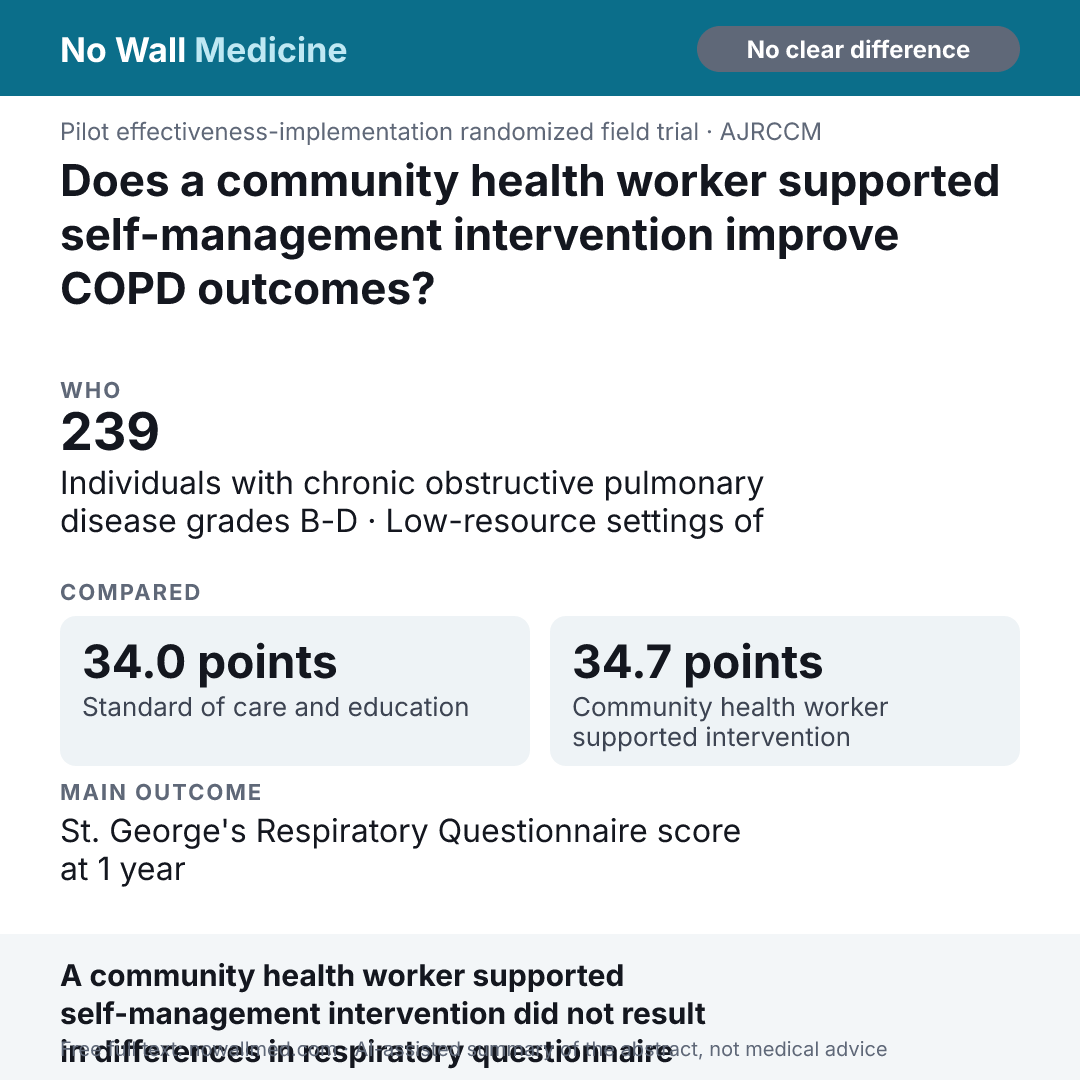
Chronic Obstructive Pulmonary Disease Self-Management in Three Low- and Middle-Income Countries: A Pilot Randomized Trial
Pilot effectiveness-implementation randomized field trialNo clear difference
Does a community health worker supported self-management intervention improve COPD outcomes?
Who
239
Individuals with chronic obstructive pulmonary disease grades B-D · Low-resource settings of Nepal, Peru, and Uganda
Compared
34.0 pointsStandard of care and education
34.7 pointsCommunity health worker supported intervention
Main outcome
St. George's Respiratory Questionnaire score at 1 year
Result: adjusted mean difference, 1.0; 95% confidence interval, -4.2, 6.1
Bottom line: A community health worker supported self-management intervention did not result in differences in respiratory questionnaire scores at 1 year.
AJRCCM · 2023-09-12 · Save PNG
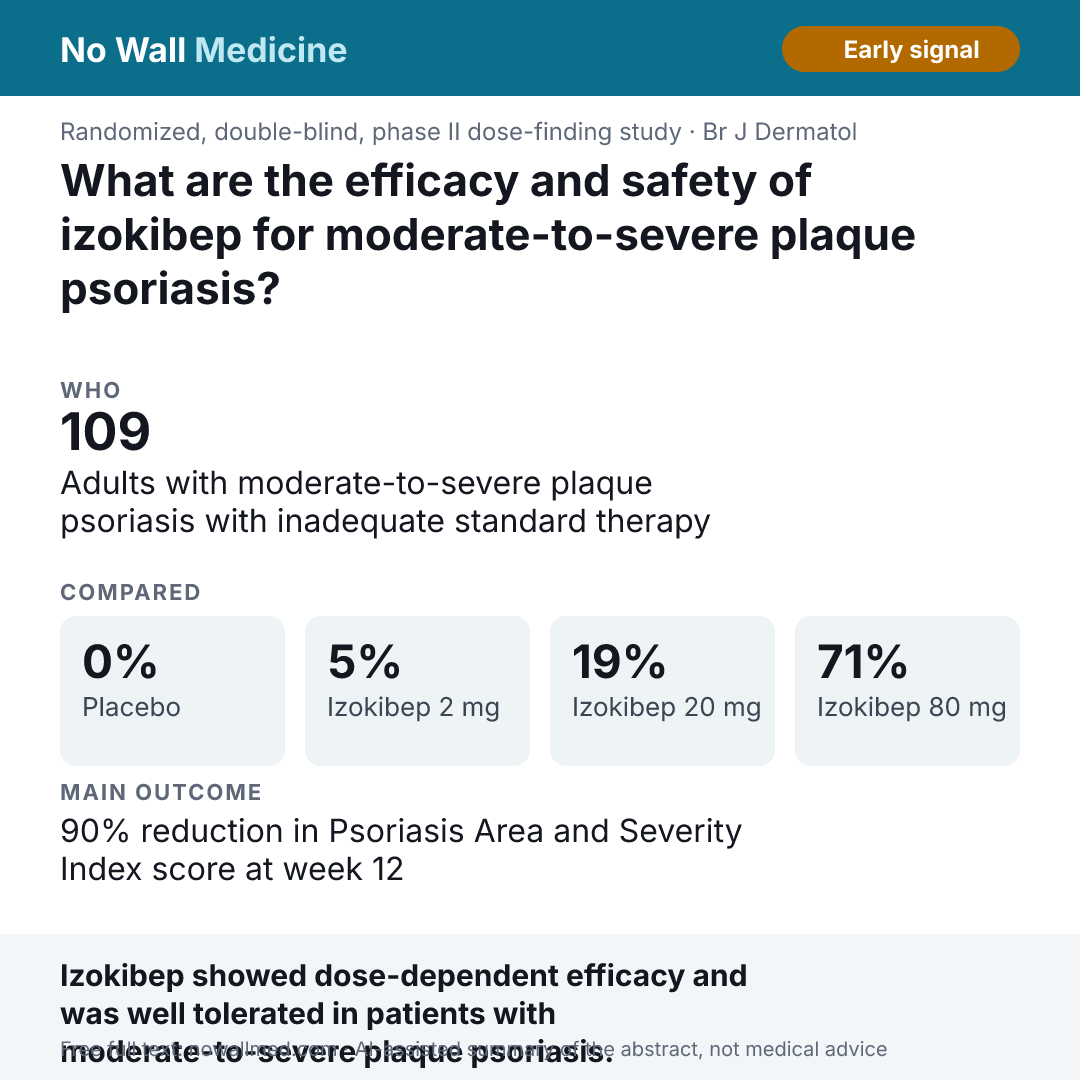
Izokibep for the treatment of moderate-to-severe plaque psoriasis: a phase II, randomized, placebo-controlled, double-blind, dose-finding multicentre study including long-term treatment
Randomized, double-blind, phase II dose-finding studyEarly signal
What are the efficacy and safety of izokibep for moderate-to-severe plaque psoriasis?
Who
109
Adults with moderate-to-severe plaque psoriasis with inadequate standard therapy response · multicentre study
Compared
0%Placebo
5%Izokibep 2 mg
19%Izokibep 20 mg
71%Izokibep 80 mg
Main outcome
90% reduction in Psoriasis Area and Severity Index score at week 12
Bottom line: Izokibep showed dose-dependent efficacy and was well tolerated in patients with moderate-to-severe plaque psoriasis.
Br J Dermatol · 2023-09-12 · Save PNG
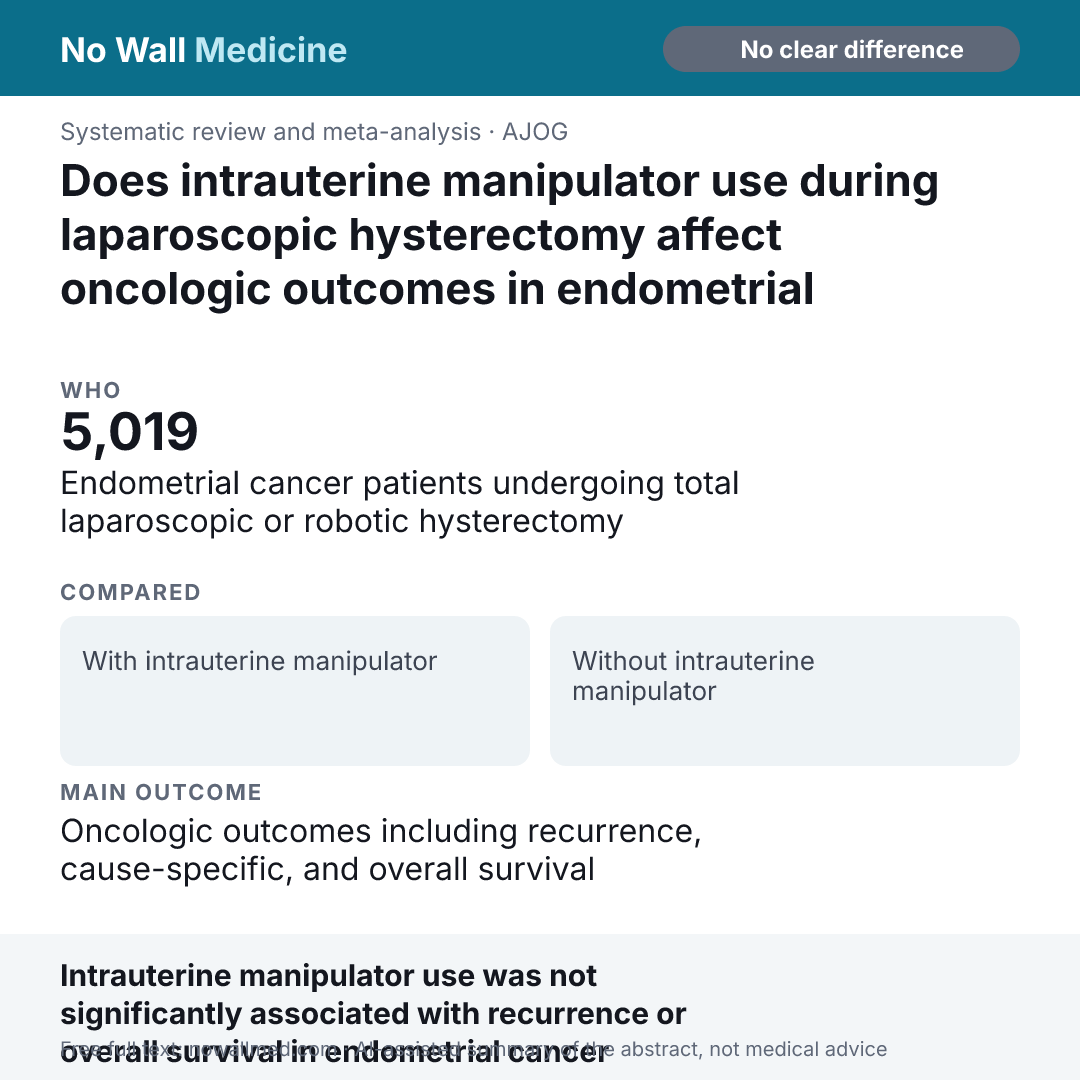
Intrauterine manipulator during hysterectomy for endometrial cancer: a systematic review and meta-analysis of oncologic outcomes
Systematic review and meta-analysisNo clear difference
Does intrauterine manipulator use during laparoscopic hysterectomy affect oncologic outcomes in endometrial cancer?
Who
5,019
Endometrial cancer patients undergoing total laparoscopic or robotic hysterectomy
Compared
With intrauterine manipulator
Without intrauterine manipulator
Main outcome
Oncologic outcomes including recurrence, cause-specific, and overall survival
Result: hazard ratio 1.52 (95% confidence interval, 0.99-2.33)
Bottom line: Intrauterine manipulator use was not significantly associated with recurrence or overall survival in endometrial cancer patients.
Limitation: further prospective studies are needed
AJOG · 2023-09-12 · Save PNG
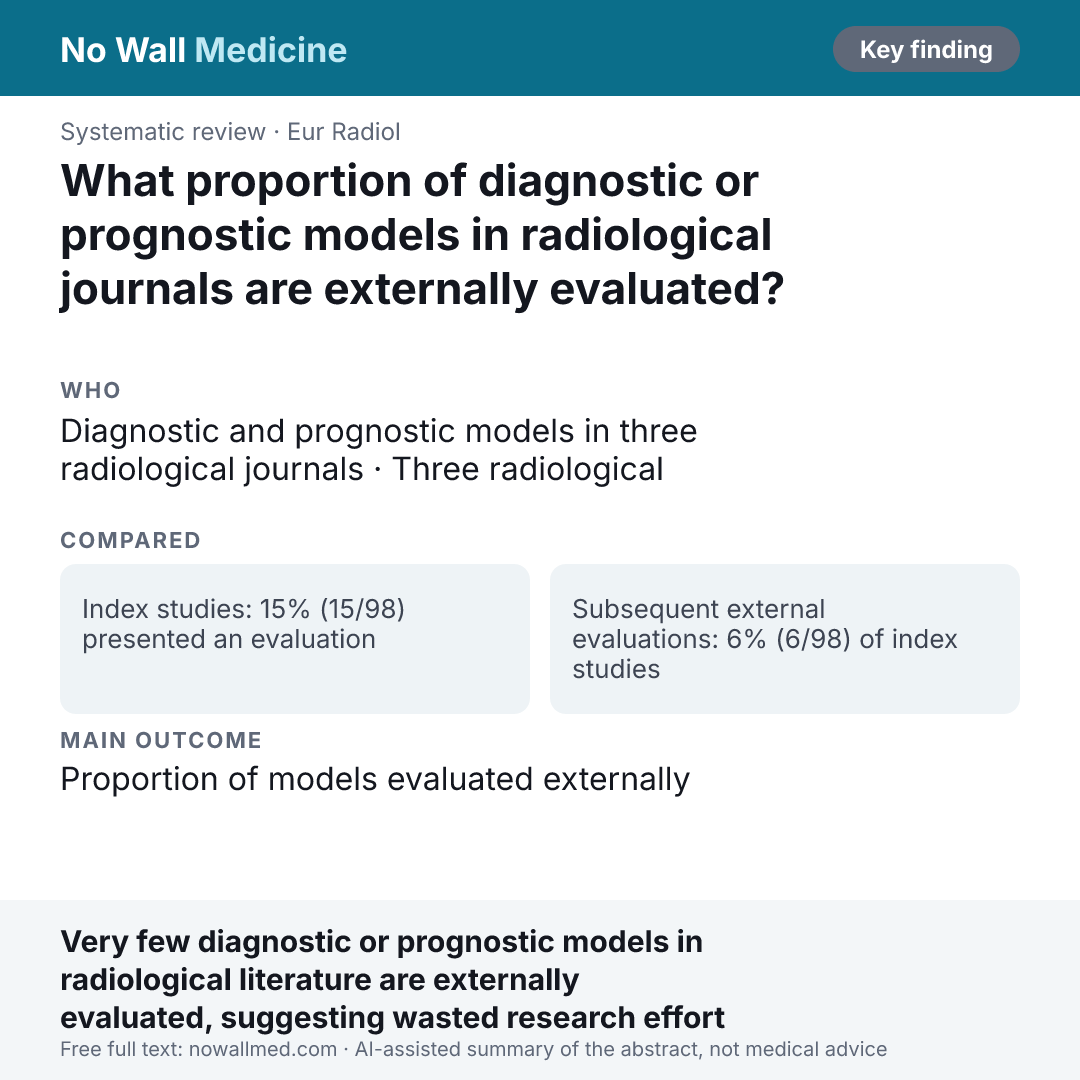
Meta-research: How many diagnostic or prognostic models published in radiological journals are evaluated externally?
Systematic reviewKey finding
What proportion of diagnostic or prognostic models in radiological journals are externally evaluated?
Who
Diagnostic and prognostic models in three radiological journals · Three radiological journals
Compared
Index studies: 15% (15/98) presented an evaluation
Subsequent external evaluations: 6% (6/98) of index studies
Main outcome
Proportion of models evaluated externally
Bottom line: Very few diagnostic or prognostic models in radiological literature are externally evaluated, suggesting wasted research effort and resources.
Eur Radiol · 2023-09-12 · Save PNG
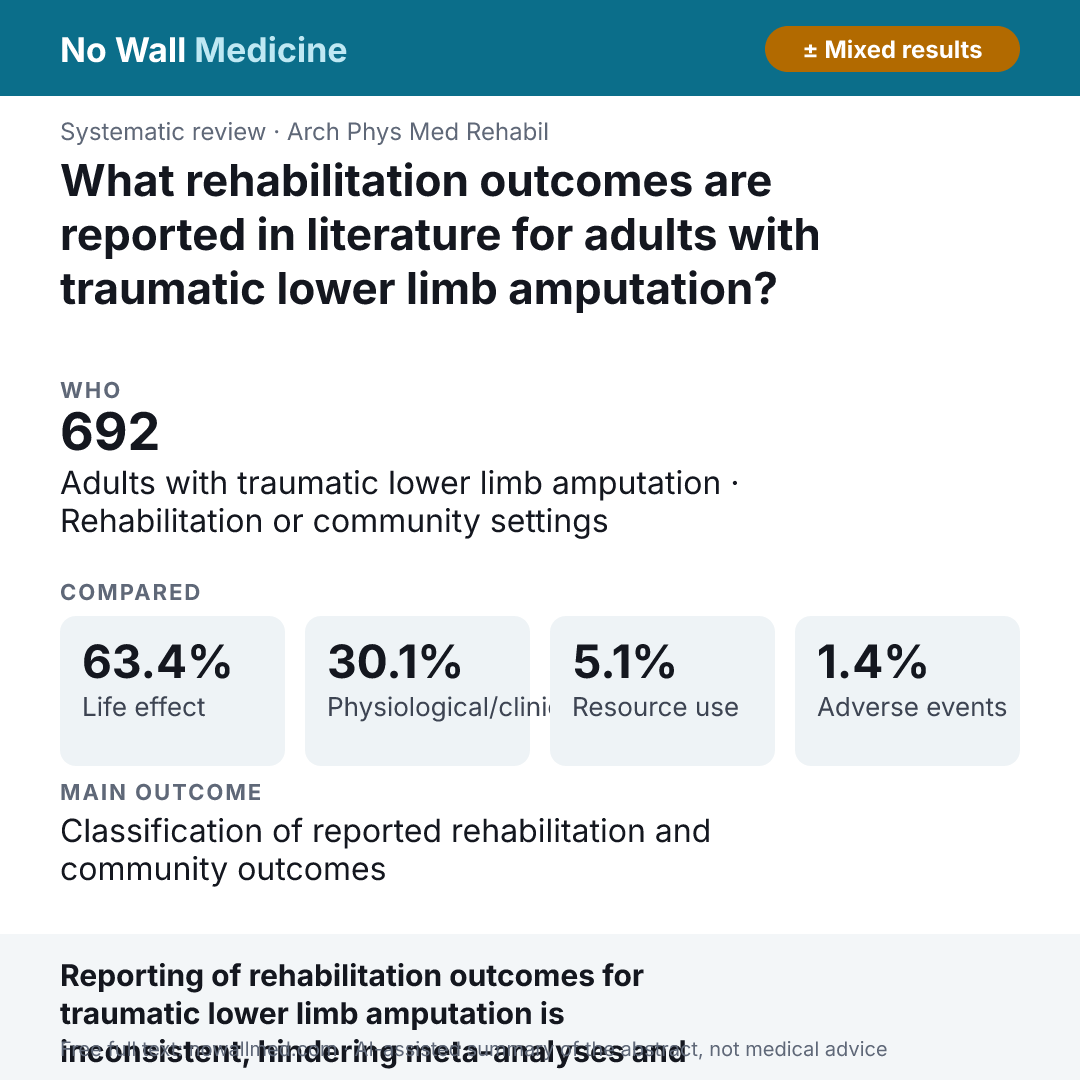
Reporting of Rehabilitation Outcomes in the Traumatic Lower Limb Amputation Literature: A Systematic Review
Systematic reviewMixed results
What rehabilitation outcomes are reported in literature for adults with traumatic lower limb amputation?
Who
692
Adults with traumatic lower limb amputation · Rehabilitation or community settings
Compared
63.4%Life effect
30.1%Physiological/clinical
5.1%Resource use
1.4%Adverse events
Main outcome
Classification of reported rehabilitation and community outcomes
Bottom line: Reporting of rehabilitation outcomes for traumatic lower limb amputation is inconsistent, hindering meta-analyses and identification of effective care.
Arch Phys Med Rehabil · 2023-09-12 · Save PNG
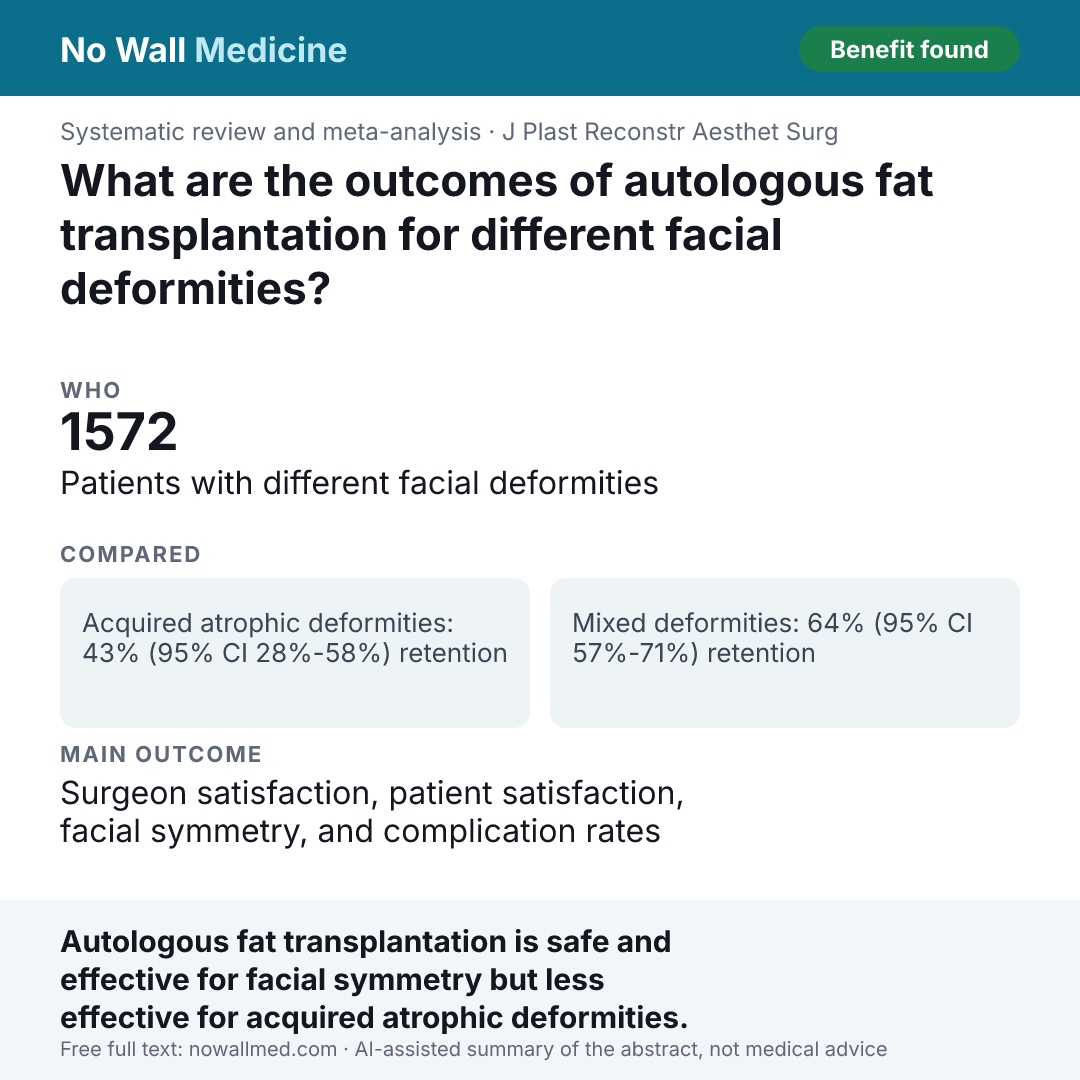
Quantifying outcomes of autologous fat transplantation in different facial deformities: A systemic review and meta-analysis
Systematic review and meta-analysisBenefit found
What are the outcomes of autologous fat transplantation for different facial deformities?
Who
1572
Patients with different facial deformities
Compared
Acquired atrophic deformities: 43% (95% CI 28%-58%) retention
Mixed deformities: 64% (95% CI 57%-71%) retention
Main outcome
Surgeon satisfaction, patient satisfaction, facial symmetry, and complication rates
Result: facial symmetry improved by 13% (95% CI 8.4%-18%)
Bottom line: Autologous fat transplantation is safe and effective for facial symmetry but less effective for acquired atrophic deformities.
J Plast Reconstr Aesthet Surg · 2023-09-12 · Save PNG
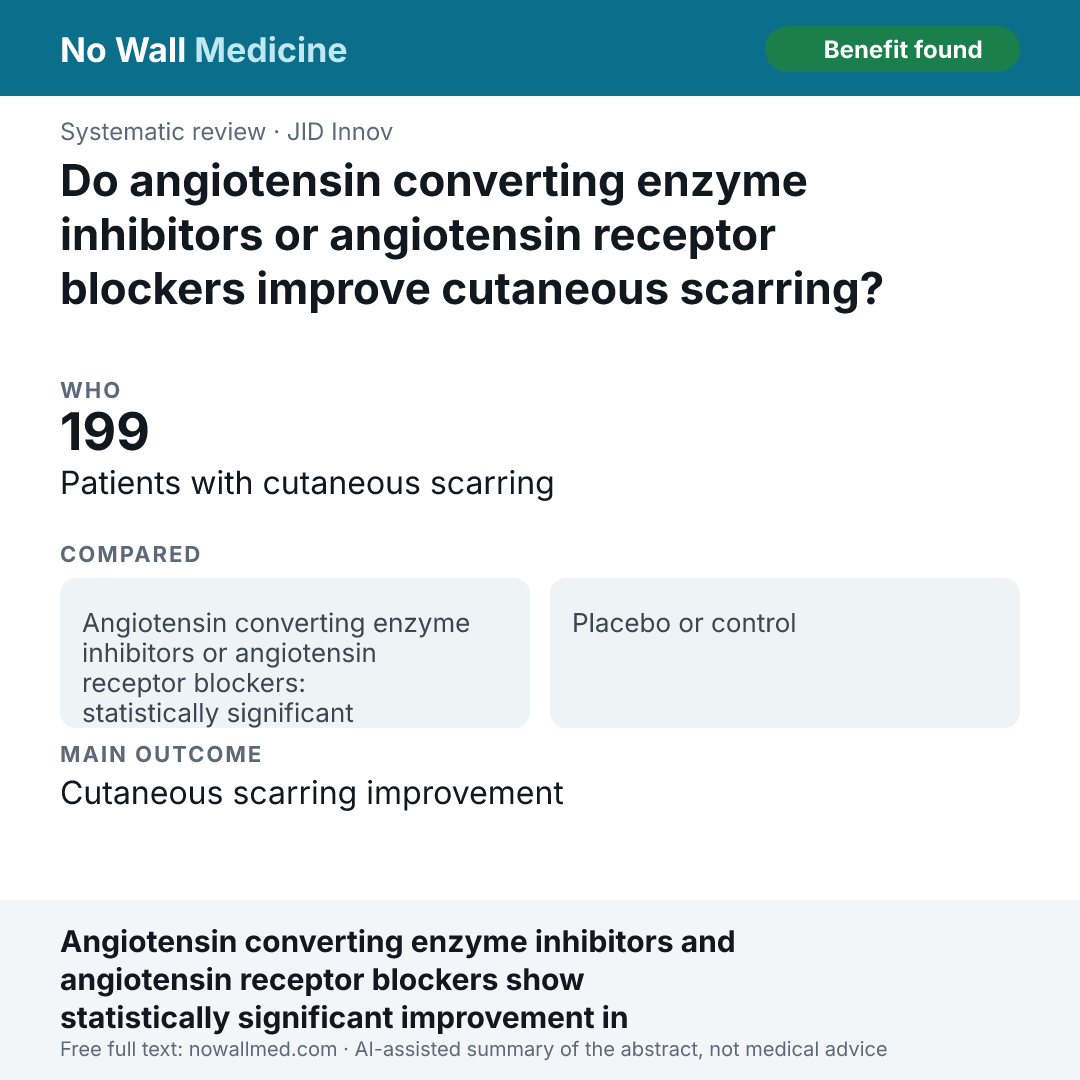
Targeting the Angiotensin Pathway in the Treatment of Cutaneous Fibrosis: A Systematic Review
Systematic reviewBenefit found
Do angiotensin converting enzyme inhibitors or angiotensin receptor blockers improve cutaneous scarring?
Who
199
Patients with cutaneous scarring
Compared
Angiotensin converting enzyme inhibitors or angiotensin receptor blockers: statistically significant improvement
Placebo or control
Main outcome
Cutaneous scarring improvement
Bottom line: Angiotensin converting enzyme inhibitors and angiotensin receptor blockers show statistically significant improvement in cutaneous scarring.
Limitation: Much of the literature is limited by study design.
JID Innov · 2023-09-12 · Save PNG