Visual abstracts
New randomized trials and meta-analyses from leading journals at a glance: who was studied, what was compared, and what was found. Every paper is free to read in full.
All specialtiesCardiology 322Oncology 242Gastroenterology & Hepatology 139Infectious Disease 250Neurology 146Psychiatry & Mental Health 213Pulmonology 144Critical Care 96Endocrinology & Diabetes 191Pediatrics 143Surgery 95Orthopedics & Sports Medicine 64Neurosurgery 18Cardiothoracic & Vascular Surgery 34Plastic & Reconstructive Surgery 64Nephrology 64Rheumatology 64Hematology 75Dermatology 32Ophthalmology 56Obstetrics & Gynecology 93Public & Global Health 96Radiology & Imaging 26Anesthesiology 55Urology 74ENT (Otolaryngology) 40Emergency Medicine 30Allergy & Immunology 31Geriatrics 91Family Medicine & Primary Care 49Medical Genetics & Genomics 29Pathology & Laboratory Medicine 5Physical Medicine & Rehabilitation 81Palliative Care 47Nutrition 111Digital Health & AI 273General Medicine 41
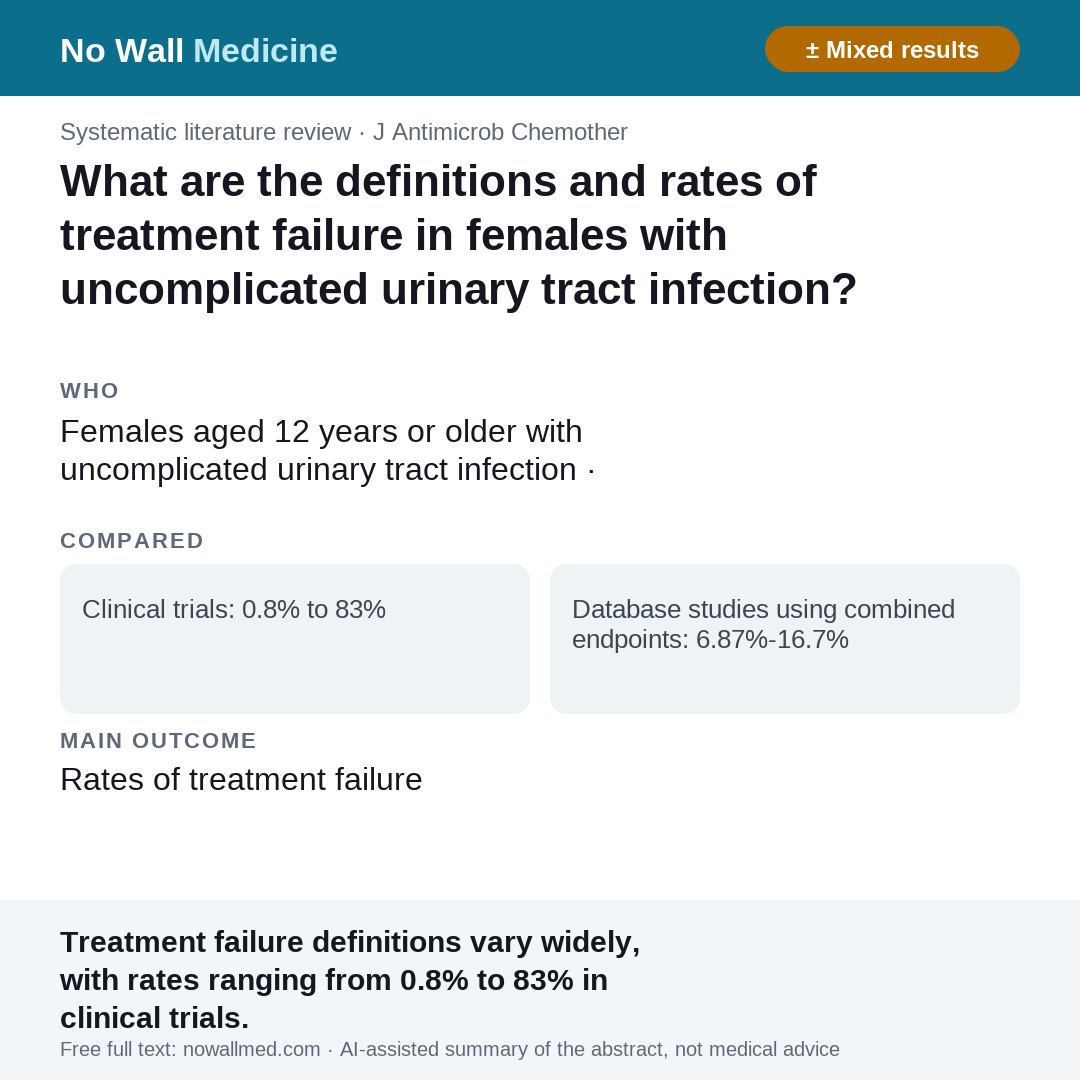
Definitions and rates of treatment failure in females with uncomplicated urinary tract infection: a systematic literature review
Systematic literature reviewMixed results
What are the definitions and rates of treatment failure in females with uncomplicated urinary tract infection?
Who
Females aged 12 years or older with uncomplicated urinary tract infection · MEDLINE, Embase and CENTRAL databases
Compared
Clinical trials: 0.8% to 83%
Database studies using combined endpoints: 6.87%-16.7%
Main outcome
Rates of treatment failure
Bottom line: Treatment failure definitions vary widely, with rates ranging from 0.8% to 83% in clinical trials.
J Antimicrob Chemother · 2026-04-09Download image
Effects of Nonpharmacological and Nonsurgical Intervention for Lower Urinary Tract Symptoms in Parkinson's Disease: A Systematic Review and Meta-analysis
Systematic review and meta-analysisBenefit found
Do nonpharmacological and nonsurgical interventions improve lower urinary tract symptoms in Parkinson's disease?
Who
Adults with Parkinson's disease
Compared
Nonpharmacological and nonsurgical interventions
No intervention, sham/placebo, or usual care
Main outcome
24-hour bladder-diary episodes and quality-of-life scales
Result: mean difference -0.91 episodes/24 h (95% confidence interval -1.74 to -0.08)
Bottom line: Nonpharmacological and nonsurgical interventions may improve urinary incontinence episodes in Parkinson's disease patients.
Limitation: Substantial heterogeneity and low certainty for many outcomes; publication bias could not be assessed.
Eur Urol Open Sci · 2026-04-09Download image

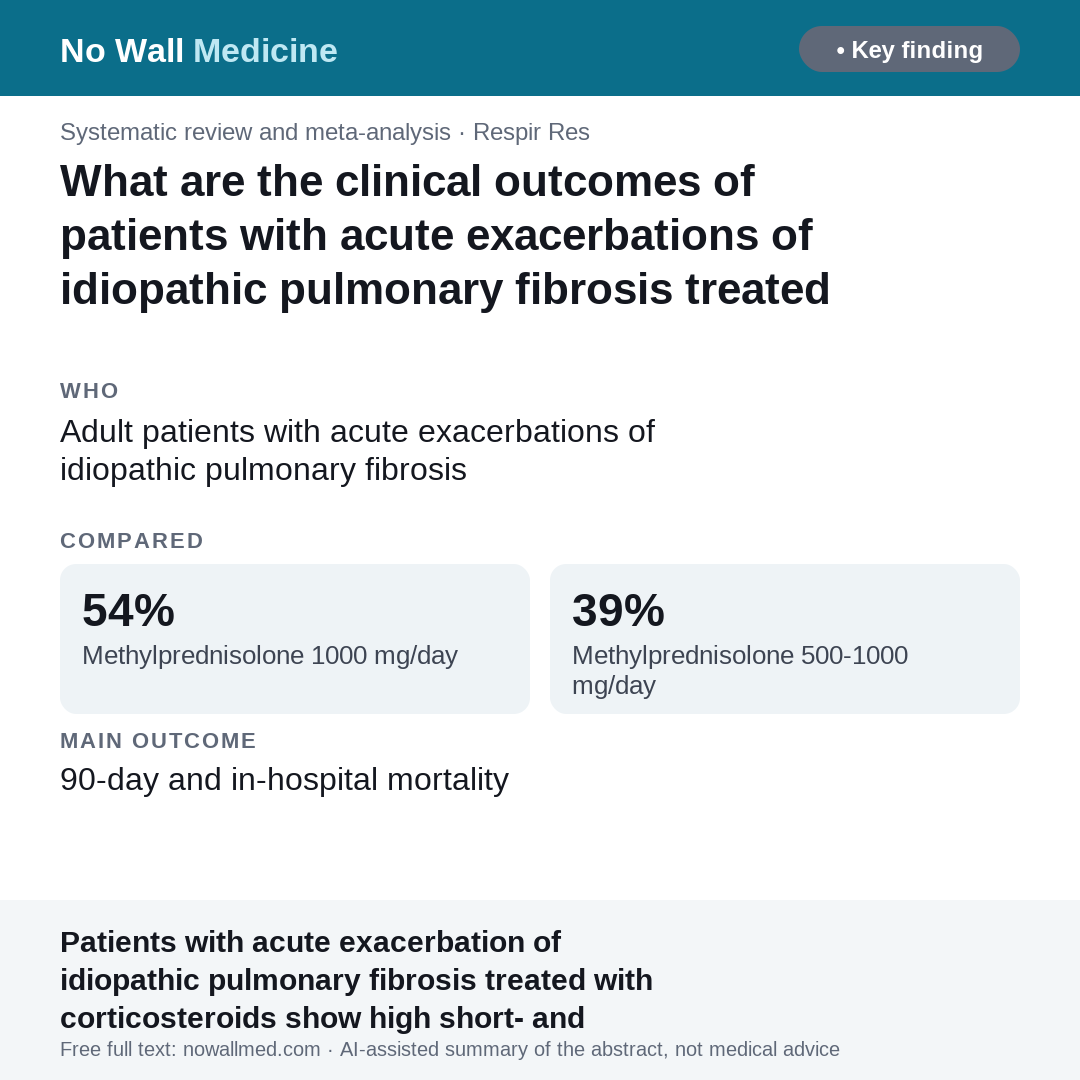
Outcomes of patients with acute exacerbations of idiopathic pulmonary fibrosis treated with corticosteroids: a systematic review and meta-analysis
Systematic review and meta-analysisHarm found
What are the clinical outcomes of patients with acute exacerbations of idiopathic pulmonary fibrosis treated with corticosteroids?
Who
32
Adult patients with acute exacerbations of idiopathic pulmonary fibrosis
Compared
54%Methylprednisolone 1000 mg/day (95% CI = 11-94%)
39%Methylprednisolone 500-1000 mg/day (95% CI = 12 to 71%)
Main outcome
90-day and in-hospital mortality
Bottom line: Patients with acute exacerbation of idiopathic pulmonary fibrosis treated with corticosteroids show high short- and long-term mortality.
Respir Res · 2026-04-09Download image
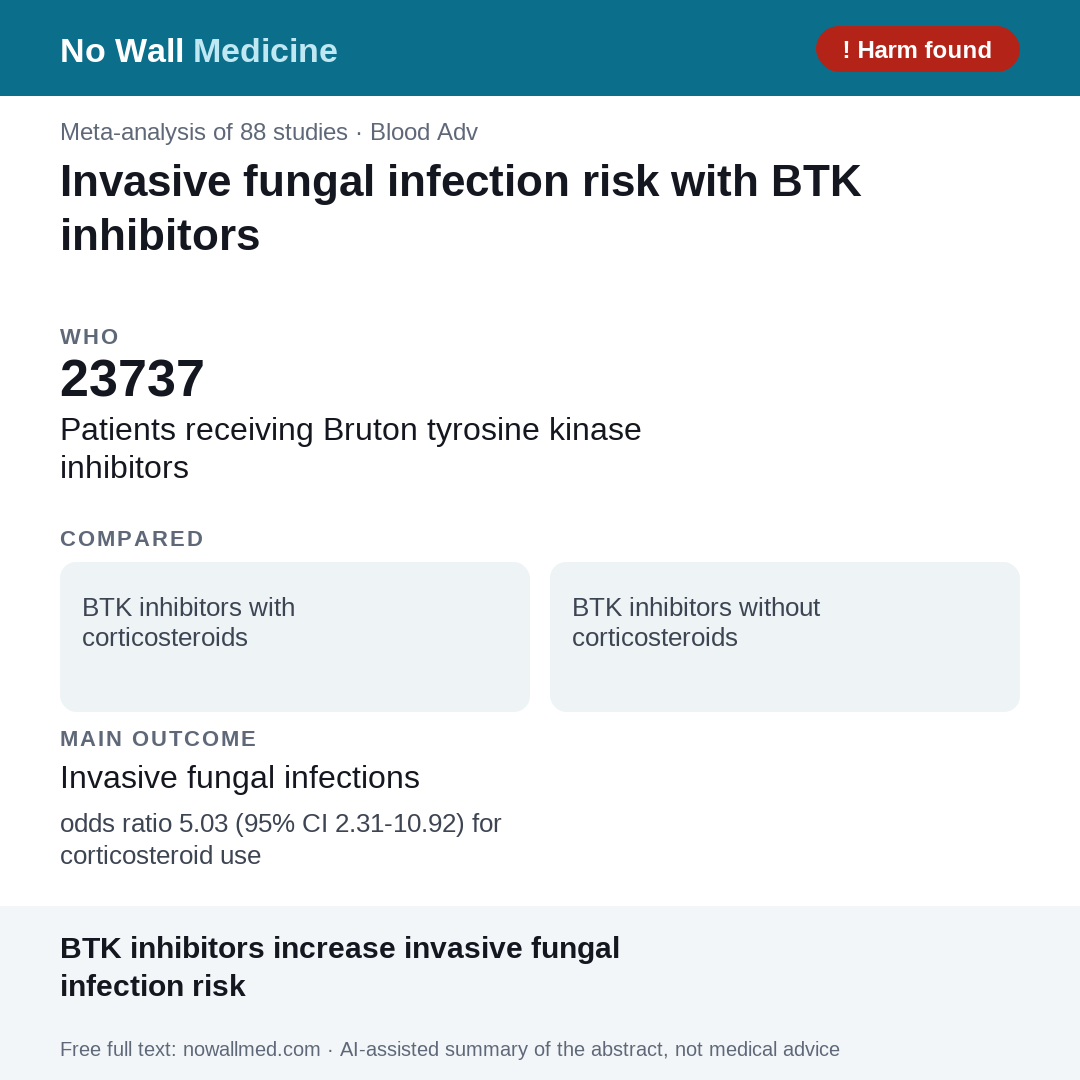
Invasive fungal infections after Bruton tyrosine kinase inhibitor treatment: a systematic review and meta-analysis
Meta-analysis of 88 studiesHarm found
Invasive fungal infection risk with BTK inhibitors
Who
23737
Patients receiving Bruton tyrosine kinase inhibitors
Compared
BTK inhibitors with corticosteroids
BTK inhibitors without corticosteroids
Main outcome
Invasive fungal infections
Result: odds ratio 5.03 (95% CI 2.31-10.92) for corticosteroid use
Bottom line: BTK inhibitors increase invasive fungal infection risk
Limitation: Data on prophylaxis limited and inconclusive
Blood Adv · 2026-04-09Download image
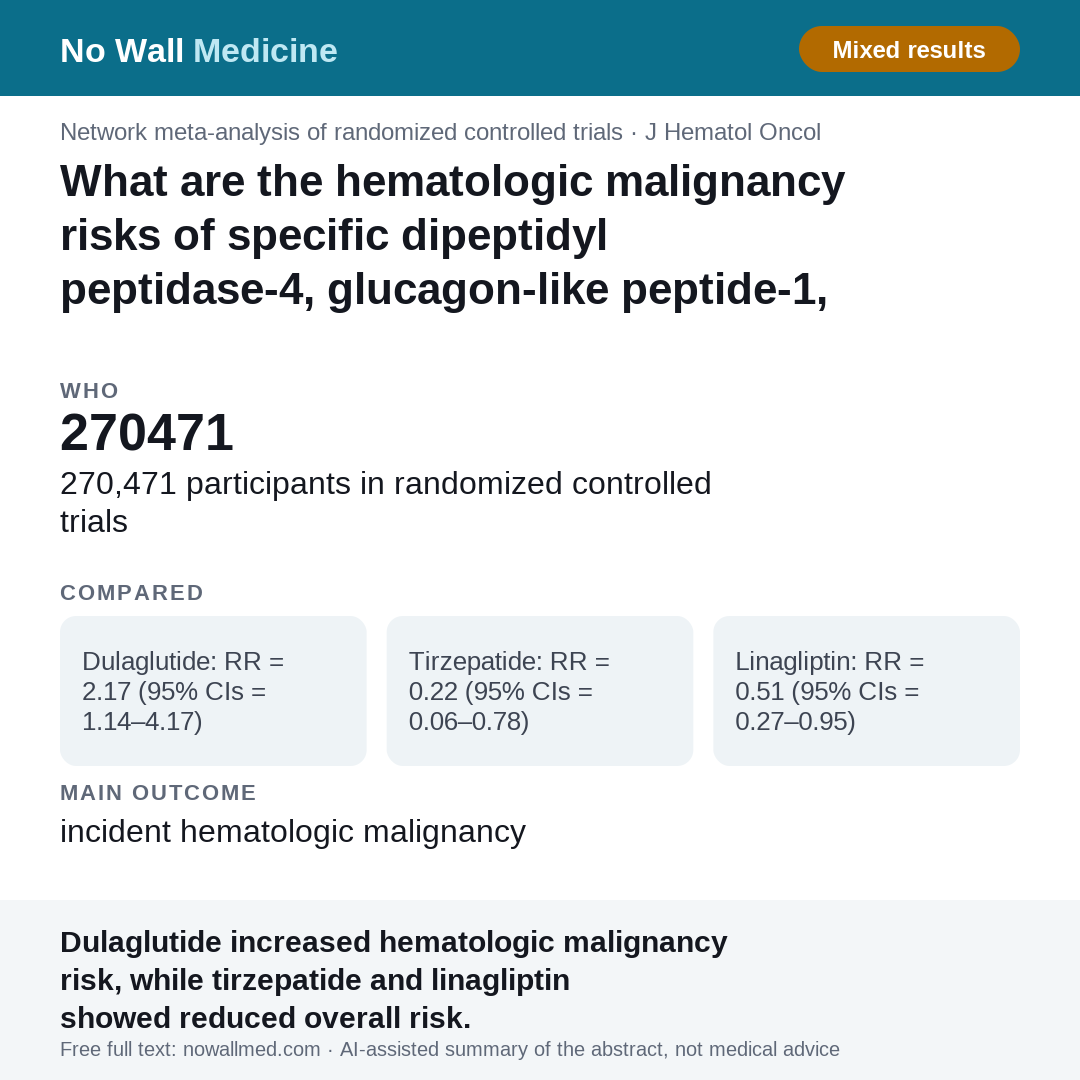
Agent-specific, histopathology-stratified hematologic malignancy risk among dpp-4 inhibitors, glp-1 receptor agonists, and SGLT2 inhibitors: a network meta-analysis of 270,471 participants
Network meta-analysis of randomized controlled trialsMixed results
What are the hematologic malignancy risks of specific dipeptidyl peptidase-4, glucagon-like peptide-1, and sodium-glucose cotransporter 2 inhibitors?
Who
270471
270,471 participants in randomized controlled trials
Compared
Dulaglutide: RR = 2.17 (95% CIs = 1.14–4.17)
Tirzepatide: RR = 0.22 (95% CIs = 0.06–0.78)
Linagliptin: RR = 0.51 (95% CIs = 0.27–0.95)
Main outcome
incident hematologic malignancy
Result: RR = 2.17, 95% CIs = 1.14–4.17 for dulaglutide
Bottom line: Dulaglutide increased hematologic malignancy risk, while tirzepatide and linagliptin showed reduced overall risk.
J Hematol Oncol · 2026-04-09Download image
Innovations in Deaf Health Care Communication: Systematic Review of Sign Language Recognition Systems
Systematic reviewUnclear result
What is the evidence on sign language recognition systems for deaf health care communication?
Who
23
Deaf individuals and hearing health professionals · Various health care settings
Compared
Image-based systems: 25% to 100% accuracy
Sensor-based systems: 72% to 99.7% accuracy
Main outcome
Accuracy of sign language recognition systems
Bottom line: Sign language recognition systems show wide accuracy variability and fail to address bidirectional communication or facial expressions.
J Med Internet Res · 2026-04-09Download image

Safety of synthetic and biological DMARDs: a systematic literature review informing the 2025 update of the EULAR recommendations for the management of rheumatoid arthritis
Systematic literature reviewMixed results
What is the safety profile of synthetic and biological disease-modifying antirheumatic drugs in rheumatoid arthritis?
Who
Patients with rheumatoid arthritis
Compared
Biological disease-modifying antirheumatic drugs
Conventional synthetic disease-modifying antirheumatic drugs
Janus kinase inhibitors
Main outcome
Safety outcomes including infections, malignancy, and cardiovascular events
Bottom line: Serious infections were more common with biological drugs, while Janus kinase inhibitors showed higher herpes zoster and venous thromboembolism risks.
Limitation: A substantial proportion of studies relied on claims databases, which carries important methodological limitations.
Ann Rheum Dis · 2026-04-08Download image

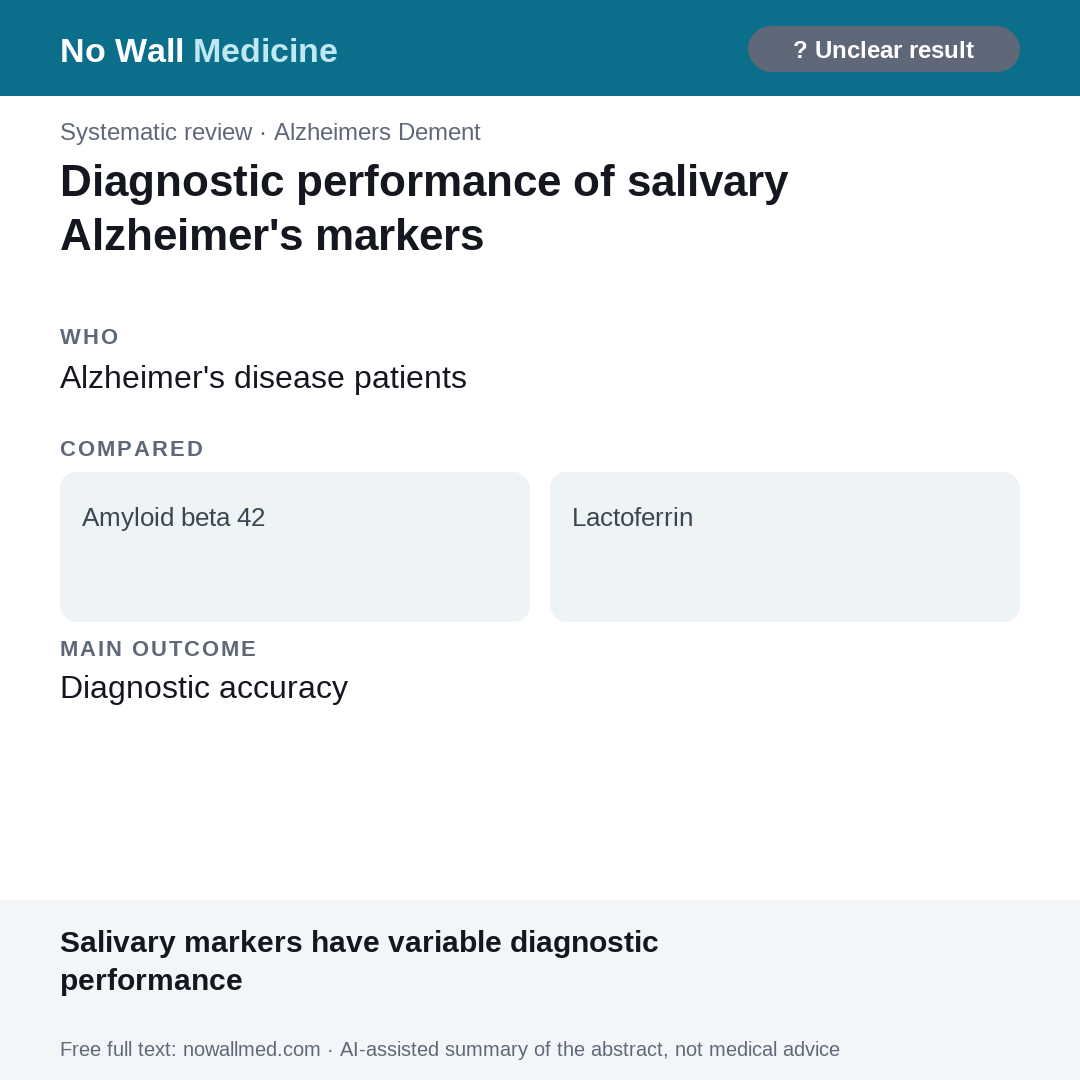
Diagnostic performance of salivary markers of Alzheimer's disease: A systematic review
Systematic reviewUnclear result
Diagnostic performance of salivary Alzheimer's markers
Who
Alzheimer's disease patients
Compared
Amyloid beta 42
Lactoferrin
Main outcome
Diagnostic accuracy
Bottom line: Salivary markers have variable diagnostic performance
Alzheimers Dement · 2026-04-08Download image
Does osteogenesis imperfecta predispose infants to metaphyseal fractures? A systematic review
Systematic reviewUnclear result
Does osteogenesis imperfecta predispose infants to fractures
Who
children with osteogenesis imperfecta under two years
Compared
children with OI: 4/41
other cases
Main outcome
metaphyseal fractures
Bottom line: Limited evidence of predisposition to fractures
Limitation: limited by small number of studies
BMJ Paediatr Open · 2026-04-08Download image

Machine Learning in Predicting the Risk of Esophagogastric Variceal Bleeding Among Patients With Liver Cirrhosis: Systematic Review and Meta-Analysis
Systematic review and meta-analysisBenefit found
How well do machine learning models predict esophagogastric variceal bleeding in liver cirrhosis patients?
Who
7011
Patients with liver cirrhosis
Compared
Esophageal variceal bleeding prediction: c-index 0.85 (95% CI 0.77-0.92)
Esophagogastric variceal bleeding prediction: c-index 0.89 (95% CI 0.85-0.94)
Main outcome
Predictive performance of machine learning models
Result: c-index 0.85 (95% CI 0.77-0.92) for esophageal and 0.89 (95% CI 0.85-0.94) for esophagogastric
Bottom line: Machine learning methods are feasible for predicting esophageal and esophagogastric variceal bleeding in patients with liver cirrhosis.
Limitation: The number of included original studies is limited.
J Med Internet Res · 2026-04-08Download image

Effects of virtual reality and robot-assisted therapy on rehabilitation outcomes in cerebral palsy: a systematic review and meta-analysis
Systematic review and meta-analysis of 17 randomized controlled trialsBenefit found
Do virtual reality and robot-assisted therapies improve rehabilitation outcomes in children with cerebral palsy?
Who
Children with cerebral palsy
Compared
Virtual reality and robot-assisted therapies
Conventional therapy
Main outcome
Gross motor function, balance, spasticity, activities of daily living, and joint range of motion
Result: SMD 0.53 (95% CI 0.32 to 0.75) for gross motor function
Bottom line: Virtual reality and robot-assisted therapies improve gross motor function, balance, spasticity, and activities of daily living in children with cerebral palsy.
Limitation: The findings were exploratory due to the limited number of included studies and certainty of evidence was very low to moderate.
J Neuroeng Rehabil · 2026-04-08Download image

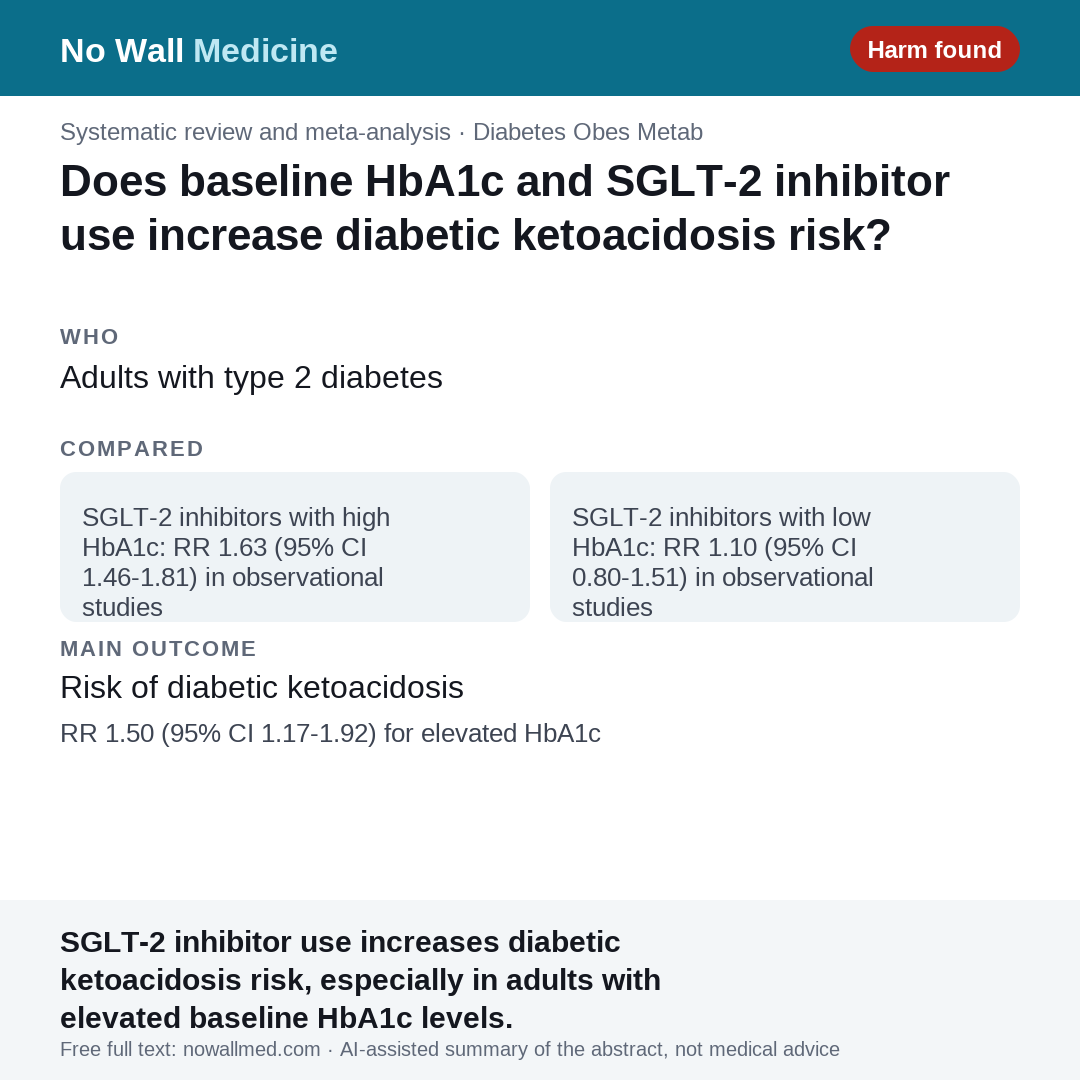
Interrelationship Between Baseline HbA1c, SGLT-2 Inhibitor Use and Risk of Diabetic Ketoacidosis in Adults With Type 2 Diabetes: A Systematic Review and Meta-Analysis
Systematic review and meta-analysisHarm found
Does baseline HbA1c and SGLT-2 inhibitor use increase diabetic ketoacidosis risk?
Who
Adults with type 2 diabetes
Compared
SGLT-2 inhibitors with high HbA1c: RR 1.63 (95% CI 1.46-1.81) in observational studies
SGLT-2 inhibitors with low HbA1c: RR 1.10 (95% CI 0.80-1.51) in observational studies
Main outcome
Risk of diabetic ketoacidosis
Result: RR 1.50 (95% CI 1.17-1.92) for elevated HbA1c
Bottom line: SGLT-2 inhibitor use increases diabetic ketoacidosis risk, especially in adults with elevated baseline HbA1c levels.
Limitation: The narrow range of HbA1c values across studies limits definitive conclusions.
Diabetes Obes Metab · 2026-04-07Download image
Clinical characteristics and outcomes of adult IDH-mutant brainstem gliomas: Institutional case series and systematic review
Institutional case series and reviewBenefit found
Outcomes of adult IDH-mutant brainstem gliomas
Who
84
Adults with IDH-mutant brainstem gliomas · One institution and literature
Compared
77.3 monthsNon-canonical IDH variants
Canonical IDH variants
Main outcome
Median overall survival
Result: hazard ratio 0.37 (no confidence interval given)
Bottom line: Non-canonical IDH variants predict improved survival
Limitation: Small cohort size
Neurooncol Adv · 2026-04-07Download image

Tension Band Fixation for Patellar Fractures Using K-Wires Versus Cannulated Screws: A Systematic Review and Meta-Analysis
Systematic review and meta-analysisBenefit found
Is cannulated screw tension band fixation better than Kirschner wire tension band fixation?
Who
1,272
Patients with patellar fractures
Compared
Kirschner wire tension band fixation
Cannulated screw tension band fixation
Main outcome
Union rate, time to union, infection, reoperation rate, and pain
Bottom line: Cannulated screw tension band fixation provides improved functional outcomes and lower complication rates than Kirschner wire tension band fixation.
JBJS Open Access · 2026-04-07Download image

Does This Child Have a Concussion?: The Rational Clinical Examination Systematic Review
Systematic review and meta-analysis of 23 studiesMixed results
How accurate are clinical history and physical examination findings for identifying concussion in children?
Who
Children and adolescents aged 2 to 18 years · Outpatient, emergency, or inpatient settings
Compared
Mental fog: likelihood ratio 11.8-12.0
Noise sensitivity: likelihood ratio 6.9 (95% CI 3.6-13.1)
Nausea: likelihood ratio 6.7 (95% CI 3.1-14.6)
Light sensitivity: likelihood ratio 6.4 (95% CI 2.1-19.7)
Main outcome
Accuracy of symptoms and physical signs for concussion diagnosis
Bottom line: No single finding confirms or excludes concussion, but specific symptoms and ocular signs increase diagnostic likelihood.
Limitation: Included studies were observational with level 4 evidence and case-control design.
JAMA · 2026-04-06Download image

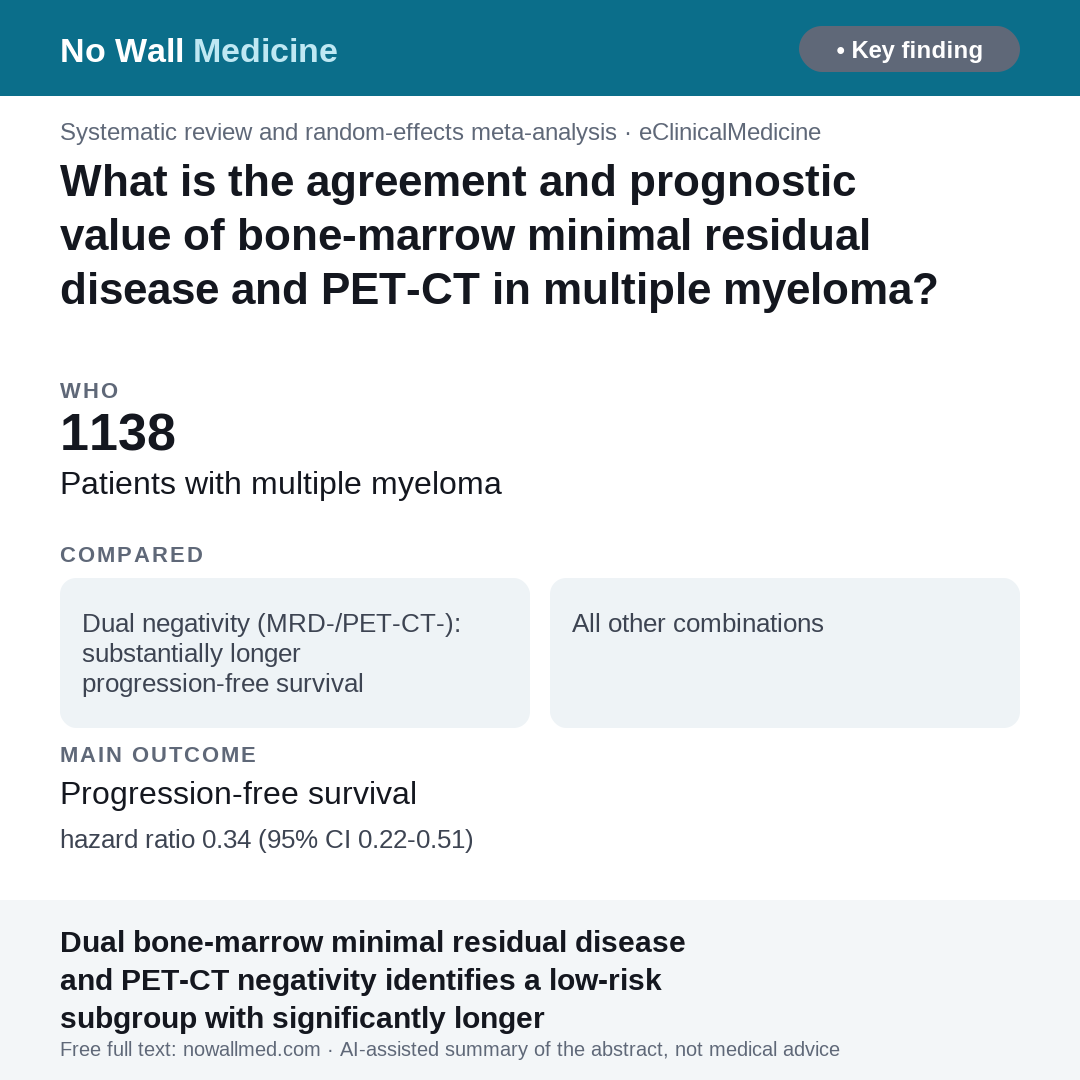
Concordance and prognostic value of bone-marrow MRD and PET-CT in multiple myeloma: a systematic review and meta-analysis
Systematic review and random-effects meta-analysisBenefit found
What is the agreement and prognostic value of bone-marrow minimal residual disease and PET-CT in multiple myeloma?
Who
1138
Patients with multiple myeloma
Compared
Dual negativity (MRD-/PET-CT-): substantially longer progression-free survival
All other combinations
Main outcome
Progression-free survival
Result: hazard ratio 0.34 (95% CI 0.22-0.51)
Bottom line: Dual bone-marrow minimal residual disease and PET-CT negativity identifies a low-risk subgroup with significantly longer progression-free survival.
Limitation: Low statistical concordance between bone-marrow minimal residual disease and PET-CT assessments.
eClinicalMedicine · 2026-04-06Download image
Economic evaluations of outpatient stroke rehabilitation models: a systematic review of evidence, methods, and gaps
Systematic review of full economic evaluationsBenefit found
What is the cost-effectiveness of different outpatient stroke rehabilitation models?
Who
27
Adults with ischemic or haemorrhagic stroke undergoing outpatient rehabilitation · Global, with over one-third from the United Kingdom
Compared
Community-based, home-based, and early supported discharge: favourable cost-effectiveness
Inpatient or outpatient clinic-based rehabilitation
Main outcome
Cost-effectiveness of outpatient stroke rehabilitation models
Bottom line: Community-based, home-based, and early supported discharge models may demonstrate more favourable cost-effectiveness than inpatient or clinic-based models.
Limitation: Substantial heterogeneity across study designs, comparators, outcomes, and economic evaluation methods.
eClinicalMedicine · 2026-04-06Download image

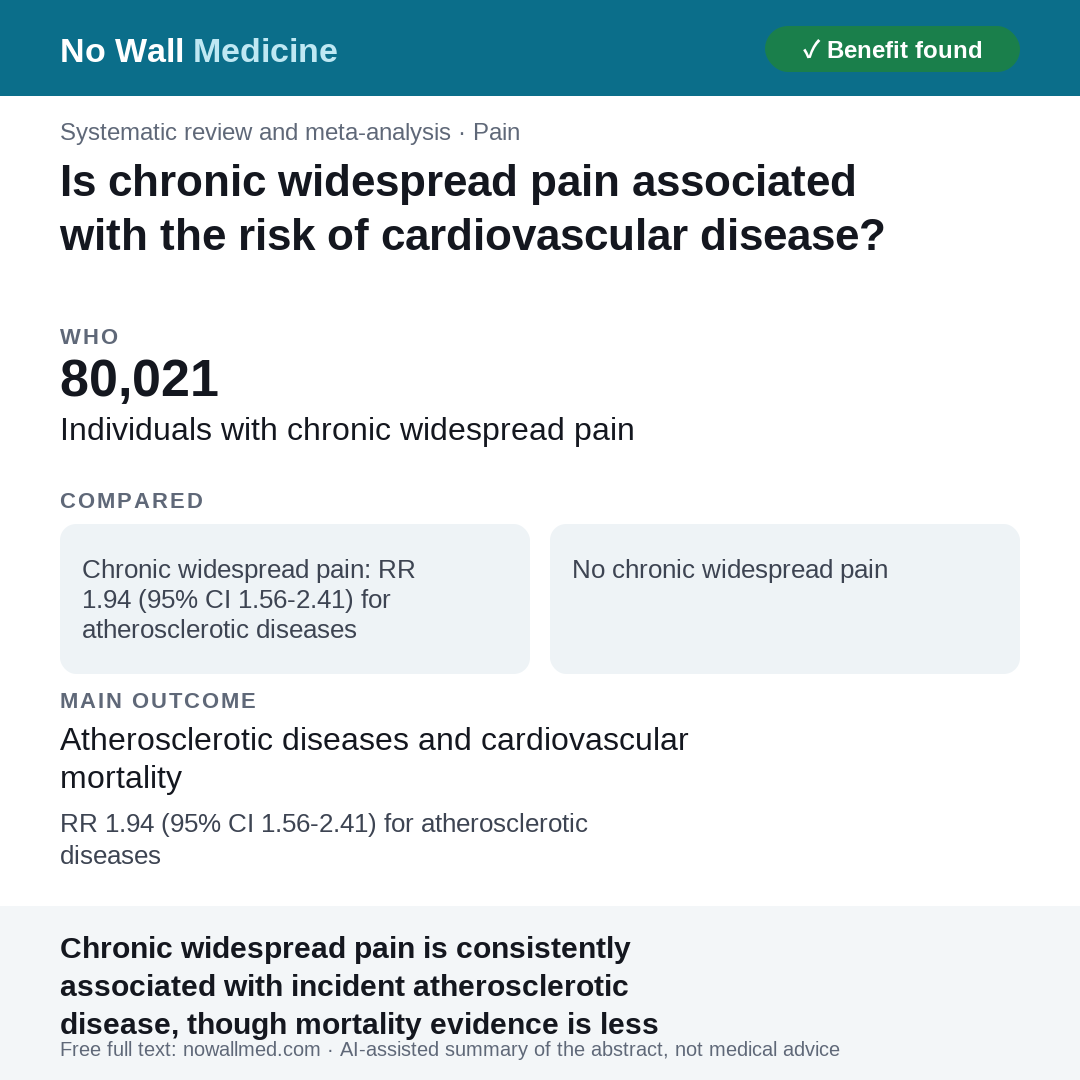
Chronic widespread pain and the risk of cardiovascular disease-a systematic review and meta-analysis
Systematic review and meta-analysisBenefit found
Is chronic widespread pain associated with the risk of cardiovascular disease?
Who
80,021
Individuals with chronic widespread pain
Compared
Chronic widespread pain: RR 1.94 (95% CI 1.56-2.41) for atherosclerotic diseases
No chronic widespread pain
Main outcome
Atherosclerotic diseases and cardiovascular mortality
Result: RR 1.94 (95% CI 1.56-2.41) for atherosclerotic diseases
Bottom line: Chronic widespread pain is consistently associated with incident atherosclerotic disease, though mortality evidence is less conclusive.
Limitation: High heterogeneity and potential publication bias for the mortality analysis.
Pain · 2026-04-06Download image
Urban and rural prevalence of tuberculosis in low- and middle-income countries: A systematic review and meta-analysis
Systematic review and meta-analysisNo clear difference
What are the differences in adult pulmonary tuberculosis prevalence between urban and rural settings?
Who
2454443
Adults in low- and middle-income countries · Low- and middle-income countries
Compared
Urban
Rural
Main outcome
Bacteriologically-confirmed and smear-positive tuberculosis prevalence
Result: prevalence ratio 1.09 (95% credible interval 0.90 to 1.30)
Bottom line: Tuberculosis epidemics have become increasingly urbanised between 2000 and 2024, despite no significant difference in overall prevalence ratios.
Limitation: Lack of unified definitions for urban and rural areas and absence of data for some regions.
PLOS Med · 2026-04-06Download image

Associations between five forms of child maltreatment and depression: a multilevel meta-analytic comparison
Multilevel meta-analysisMixed results
How do different forms of child maltreatment associate with depression?
Who
Studies assessing emotional, physical, and sexual abuse
Compared
Emotional abuse: strongest association
Physical abuse
Sexual abuse: weakest
Main outcome
Depression risk and depression severity
Bottom line: Emotional abuse is most strongly linked to depression, followed by physical and then sexual abuse.
Limitation: Incomplete-abuse studies obscured the differences between maltreatment forms.
Psychol Med · 2026-04-06Download image