Visual abstracts
New randomized trials and meta-analyses from leading journals at a glance: who was studied, what was compared, and what was found. Every paper is free to read in full.
All specialtiesCardiology 3410Oncology 2945Gastroenterology & Hepatology 1347Infectious Disease 2352Neurology 1381Psychiatry & Mental Health 1627Pulmonology 1460Critical Care 980Endocrinology & Diabetes 1736Pediatrics 2074Surgery 1825Orthopedics & Sports Medicine 629Neurosurgery 407Cardiothoracic & Vascular Surgery 401Plastic & Reconstructive Surgery 483Nephrology 735Rheumatology 544Hematology 768Dermatology 423Ophthalmology 380Obstetrics & Gynecology 1165Public & Global Health 657Radiology & Imaging 483Anesthesiology 700Urology 573ENT (Otolaryngology) 376Emergency Medicine 370Allergy & Immunology 212Geriatrics 721Family Medicine & Primary Care 397Medical Genetics & Genomics 434Pathology & Laboratory Medicine 112Physical Medicine & Rehabilitation 537Palliative Care 316Nutrition 1028Digital Health & AI 1617General Medicine 244
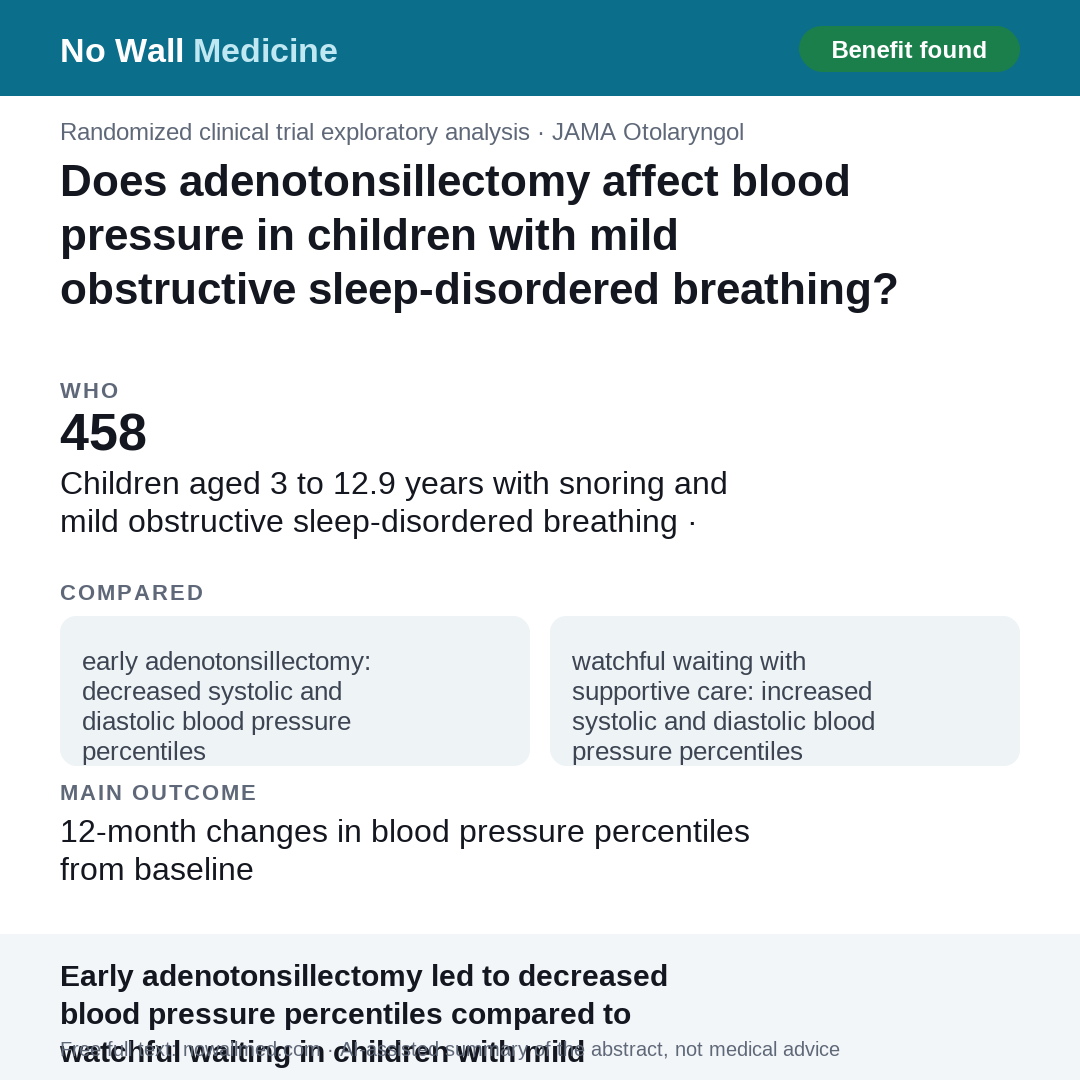
Adenotonsillectomy and Blood Pressure in Children With Mild Obstructive Sleep-Disordered Breathing: An Exploratory Analysis of the PATS Randomized Clinical Trial
Randomized clinical trial exploratory analysisBenefit found
Does adenotonsillectomy affect blood pressure in children with mild obstructive sleep-disordered breathing?
Who
458
Children aged 3 to 12.9 years with snoring and mild obstructive sleep-disordered breathing · 7 tertiary pediatric centers in the US
Compared
early adenotonsillectomy: decreased systolic and diastolic blood pressure percentiles
watchful waiting with supportive care: increased systolic and diastolic blood pressure percentiles
Main outcome
12-month changes in blood pressure percentiles from baseline
Result: systolic blood pressure difference -9.02 (95% CI, -14.77 to -3.28)
Bottom line: Early adenotonsillectomy led to decreased blood pressure percentiles compared to watchful waiting in children with mild obstructive sleep-disordered breathing.
JAMA Otolaryngol · 2025-08-30Download image
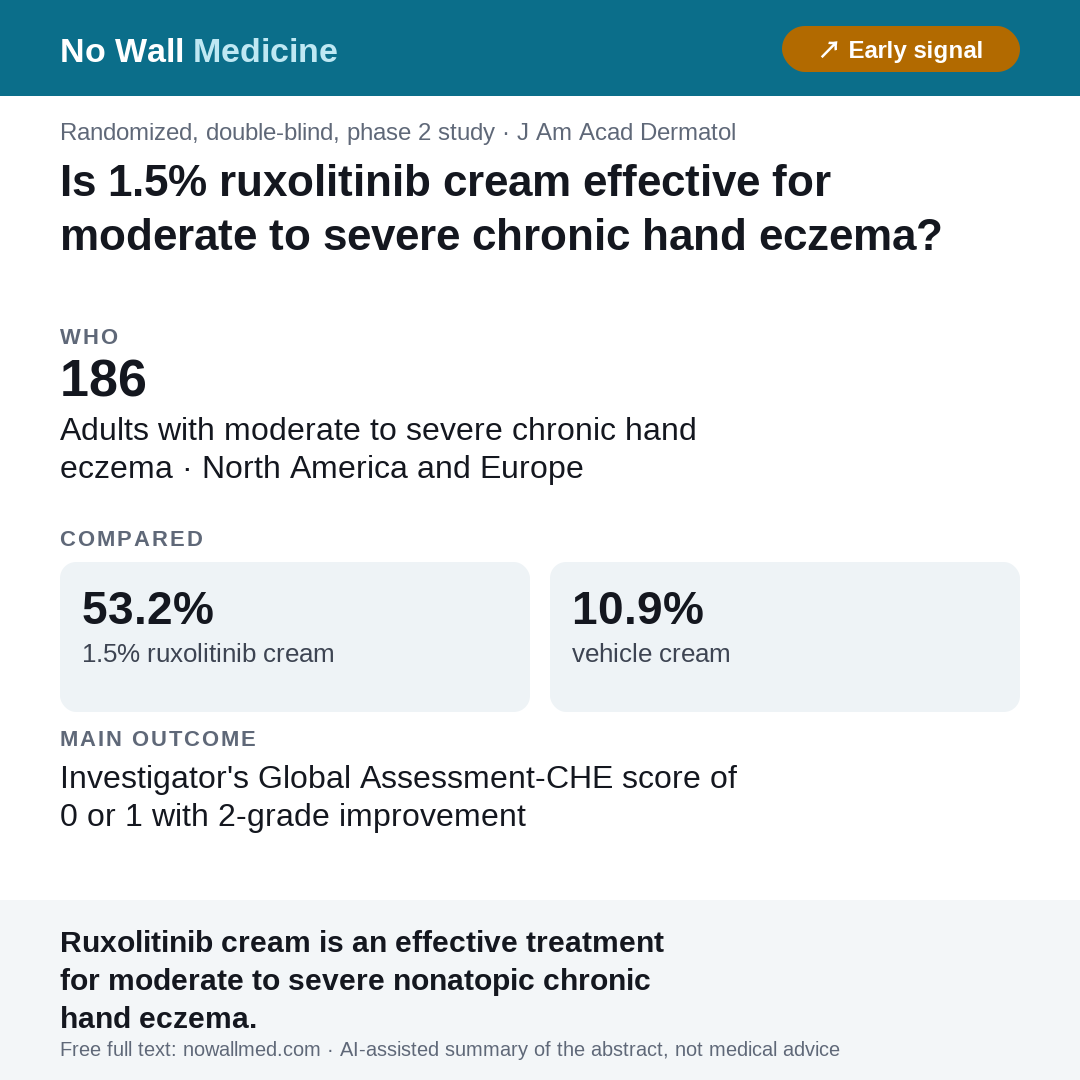
Efficacy and safety of ruxolitinib cream for the treatment of moderate to severe chronic hand eczema: Results from a 16-week, multicenter, randomized, double-blind study
Randomized, double-blind, phase 2 studyBenefit found
Is 1.5% ruxolitinib cream effective for moderate to severe chronic hand eczema?
Who
186
Adults with moderate to severe chronic hand eczema · North America and Europe
Compared
53.2%1.5% ruxolitinib cream
10.9%vehicle cream
Main outcome
Investigator's Global Assessment-CHE score of 0 or 1 with 2-grade improvement
Bottom line: Ruxolitinib cream is an effective treatment for moderate to severe nonatopic chronic hand eczema.
Limitation: Relatively small sample size.
J Am Acad Dermatol · 2025-08-30Download image
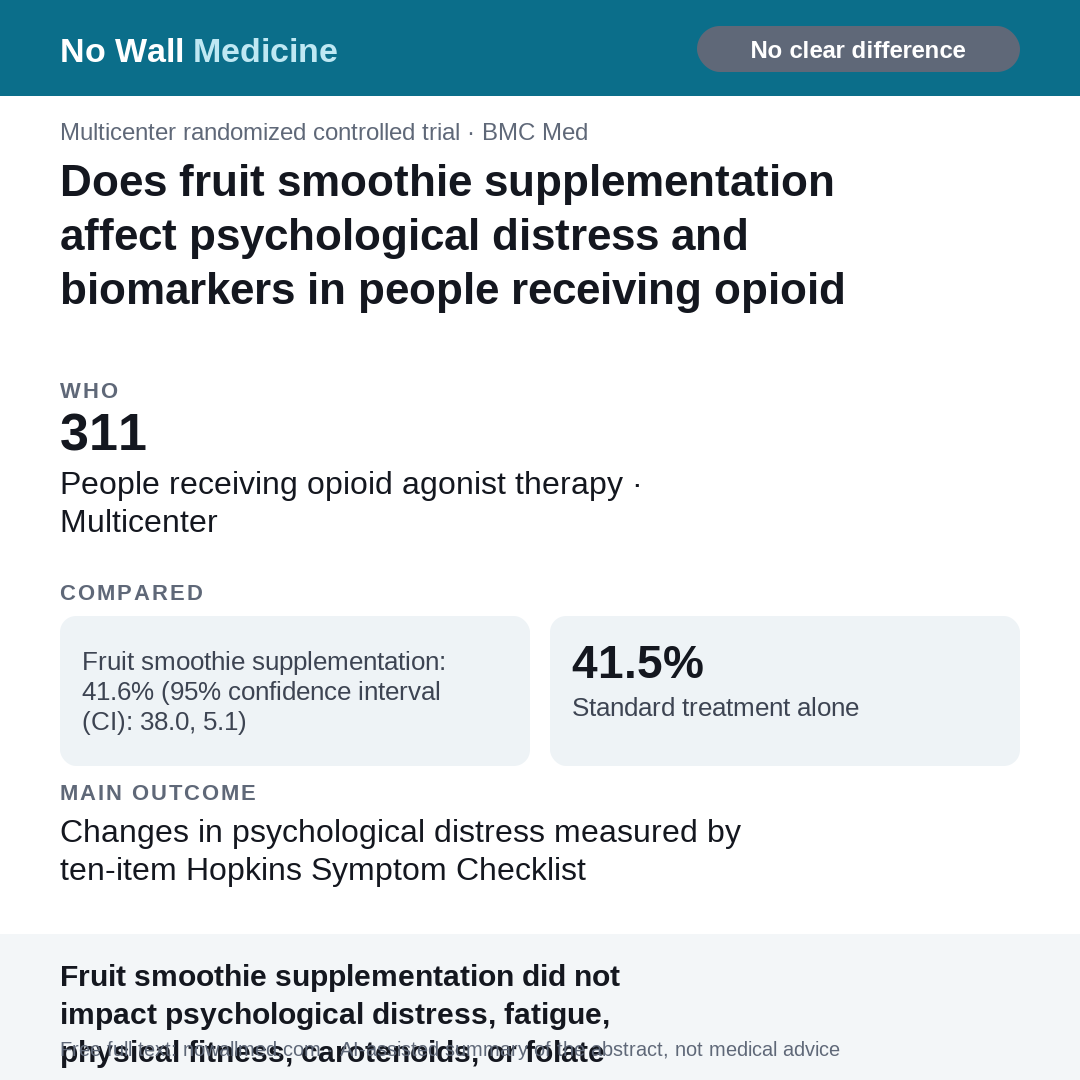
The effect of fruit smoothie supplementation on psychological distress and biomarkers among people with opioid dependence receiving opioid agonist therapy: a randomized controlled trial
Multicenter randomized controlled trialNo clear difference
Does fruit smoothie supplementation affect psychological distress and biomarkers in people receiving opioid agonist therapy?
Who
311
People receiving opioid agonist therapy · Multicenter
Compared
Fruit smoothie supplementation: 41.6% (95% confidence interval (CI): 38.0, 5.1)
41.5%Standard treatment alone (CI: 37.1, 45.8)
Main outcome
Changes in psychological distress measured by ten-item Hopkins Symptom Checklist
Result: -0.14%; CI: -4.49, 2.22
Bottom line: Fruit smoothie supplementation did not impact psychological distress, fatigue, physical fitness, carotenoids, or folate biomarkers in this population.
Limitation: Data indicates suboptimal adherence to the intervention.
BMC Med · 2025-08-29Download image
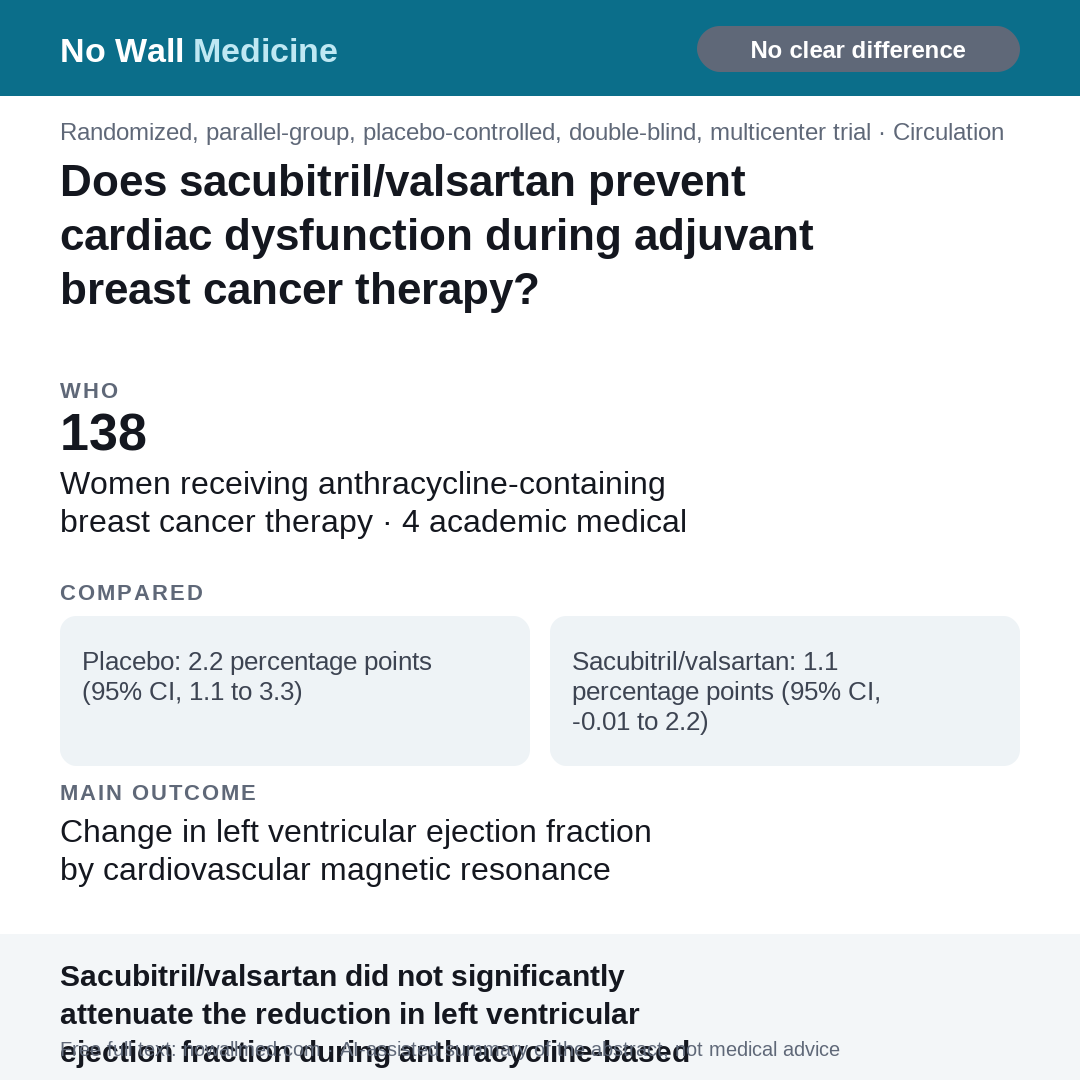
Sacubitril/Valsartan and Prevention of Cardiac Dysfunction During Adjuvant Breast Cancer Therapy: The PRADA II Randomized Clinical Trial
Randomized, parallel-group, placebo-controlled, double-blind, multicenter trialNo clear difference
Does sacubitril/valsartan prevent cardiac dysfunction during adjuvant breast cancer therapy?
Who
138
Women receiving anthracycline-containing breast cancer therapy · 4 academic medical centers in Norway
Compared
Placebo: 2.2 percentage points (95% CI, 1.1 to 3.3)
Sacubitril/valsartan: 1.1 percentage points (95% CI, -0.01 to 2.2)
Main outcome
Change in left ventricular ejection fraction by cardiovascular magnetic resonance
Result: 1.1 percentage points (95% CI, -0.4 to 2.7)
Bottom line: Sacubitril/valsartan did not significantly attenuate the reduction in left ventricular ejection fraction during anthracycline-based breast cancer treatment.
Circulation · 2025-08-29Download image
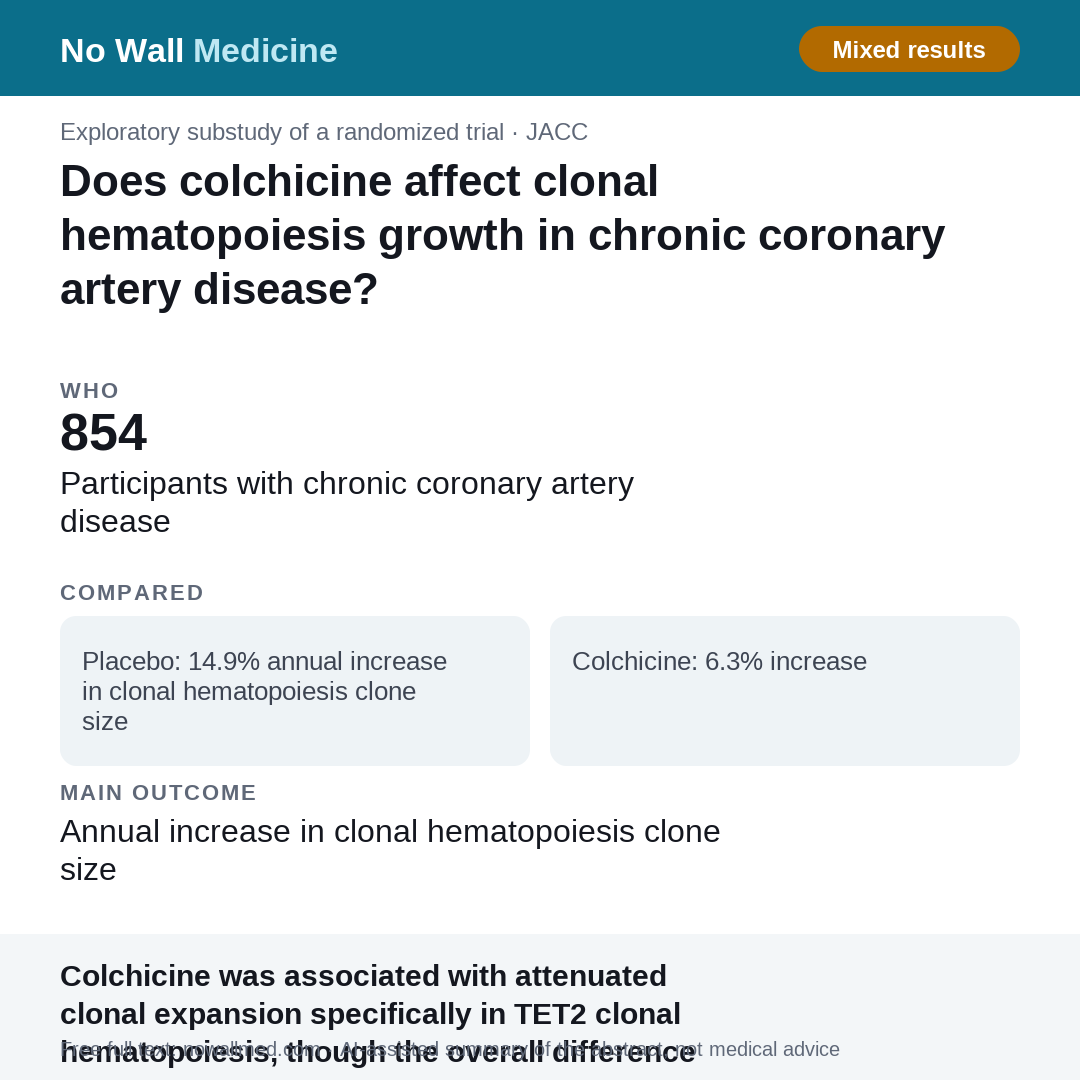
Colchicine and Longitudinal Dynamics of Clonal Hematopoiesis: An Exploratory Substudy of the LoDoCo2 Trial
Exploratory substudy of a randomized trialMixed results
Does colchicine affect clonal hematopoiesis growth in chronic coronary artery disease?
Who
854
Participants with chronic coronary artery disease
Compared
Placebo: 14.9% annual increase in clonal hematopoiesis clone size
Colchicine: 6.3% increase
Main outcome
Annual increase in clonal hematopoiesis clone size
Result: Pinteraction = 0.13
Bottom line: Colchicine was associated with attenuated clonal expansion specifically in TET2 clonal hematopoiesis, though the overall difference was not significant.
Limitation: This was an exploratory substudy requiring further validation in prospective studies.
JACC · 2025-08-29Download image
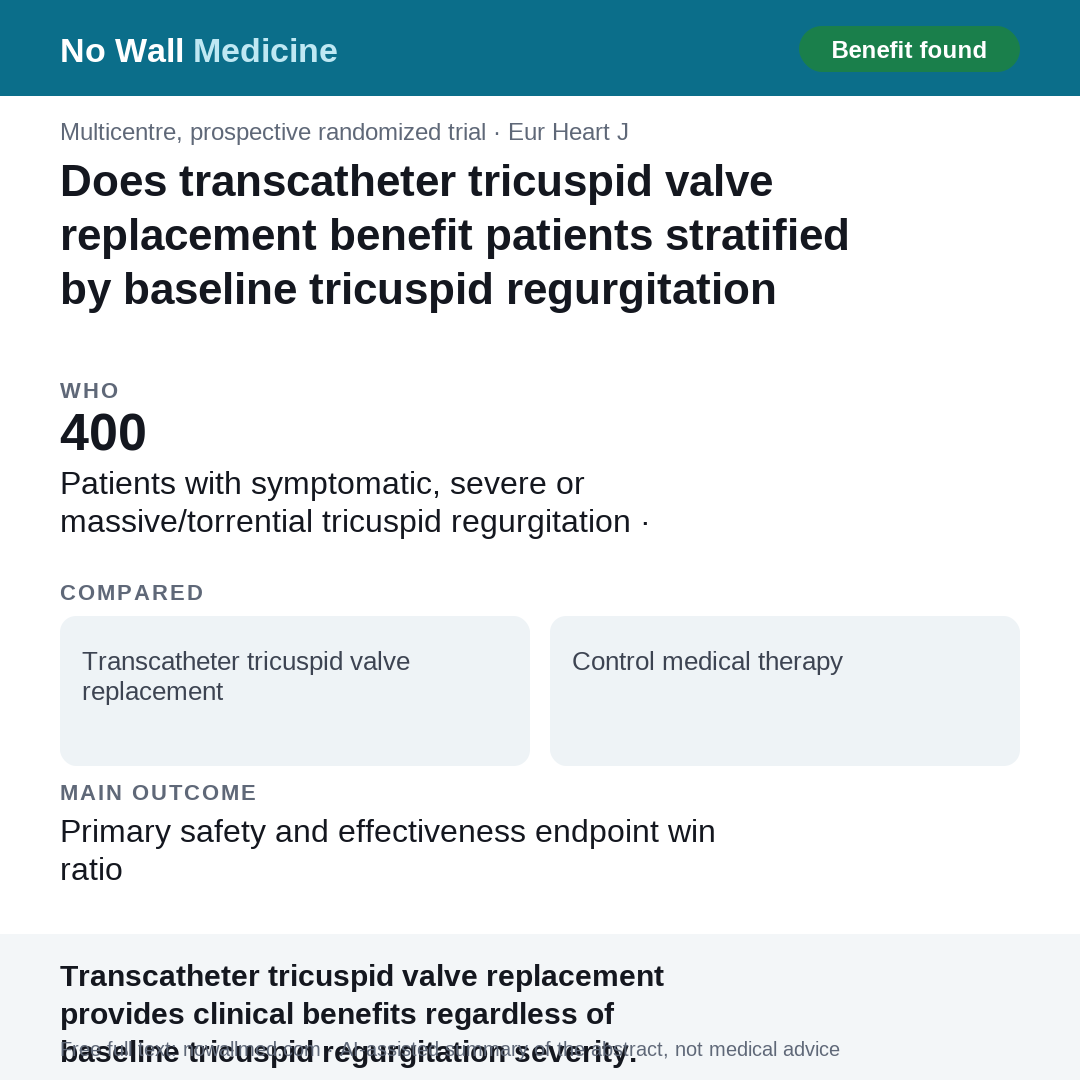
Tricuspid valve replacement outcomes by baseline tricuspid regurgitation severity: the TRISCEND II trial
Multicentre, prospective randomized trialBenefit found
Does transcatheter tricuspid valve replacement benefit patients stratified by baseline tricuspid regurgitation severity?
Who
400
Patients with symptomatic, severe or massive/torrential tricuspid regurgitation · Multicentre
Compared
Transcatheter tricuspid valve replacement
Control medical therapy
Main outcome
Primary safety and effectiveness endpoint win ratio
Result: severe 1.64 (95% CI 1.11 to 2.43) and massive/torrential 2.20 (1.55 to 3.14)
Bottom line: Transcatheter tricuspid valve replacement provides clinical benefits regardless of baseline tricuspid regurgitation severity.
Eur Heart J · 2025-08-29Download image
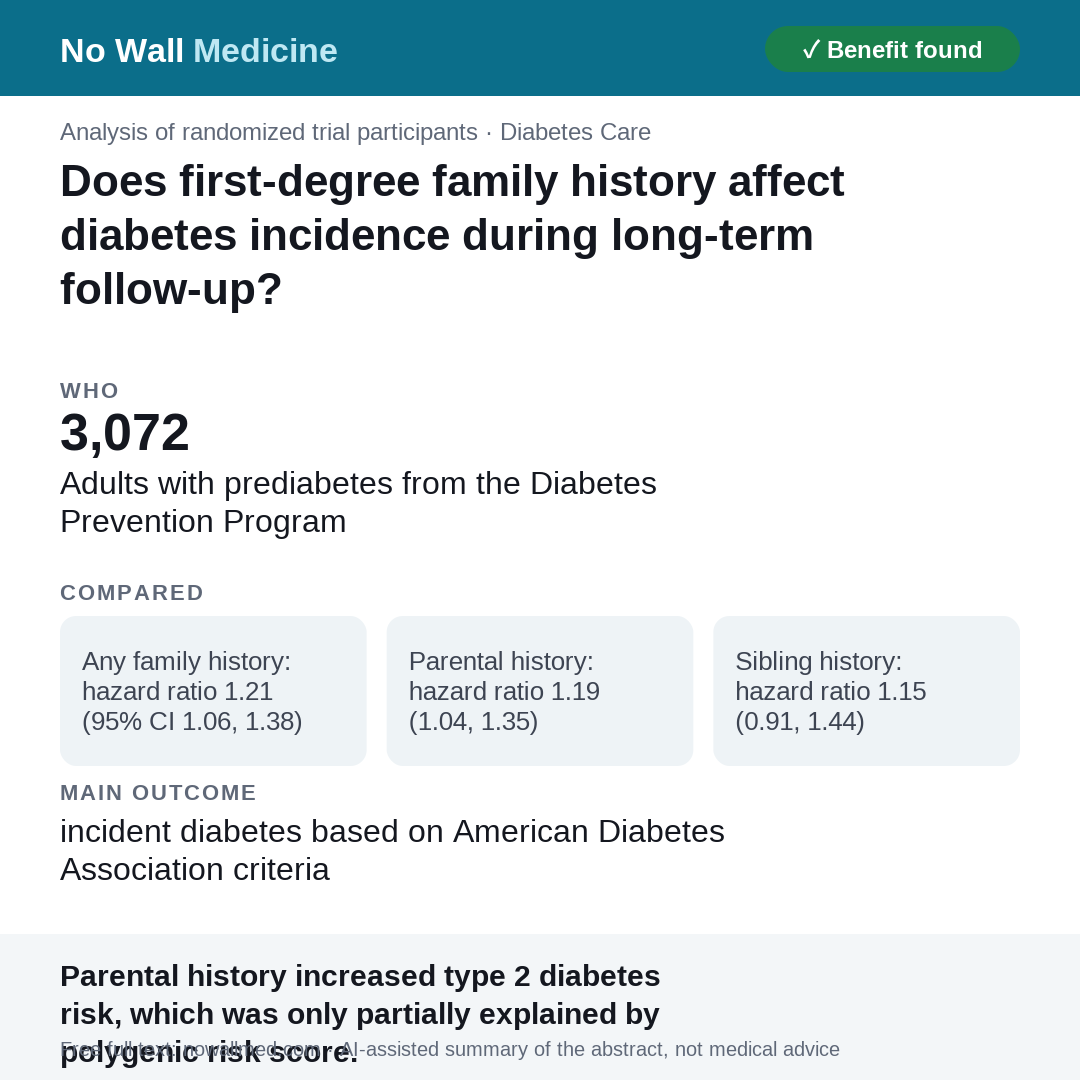
Impact of Parental or First-Degree Family History of Diabetes on Diabetes Incidence and Progression During Long-term Follow-up in the Diabetes Prevention Program Outcomes Study
Analysis of randomized trial participantsBenefit found
Does first-degree family history affect diabetes incidence during long-term follow-up?
Who
3,072
Adults with prediabetes from the Diabetes Prevention Program
Compared
Any family history: hazard ratio 1.21 (95% CI 1.06, 1.38)
Parental history: hazard ratio 1.19 (1.04, 1.35)
Sibling history: hazard ratio 1.15 (0.91, 1.44)
Main outcome
incident diabetes based on American Diabetes Association criteria
Result: hazard ratio 1.21 (95% CI 1.06, 1.38) for any family history
Bottom line: Parental history increased type 2 diabetes risk, which was only partially explained by polygenic risk score.
Diabetes Care · 2025-08-29Download image
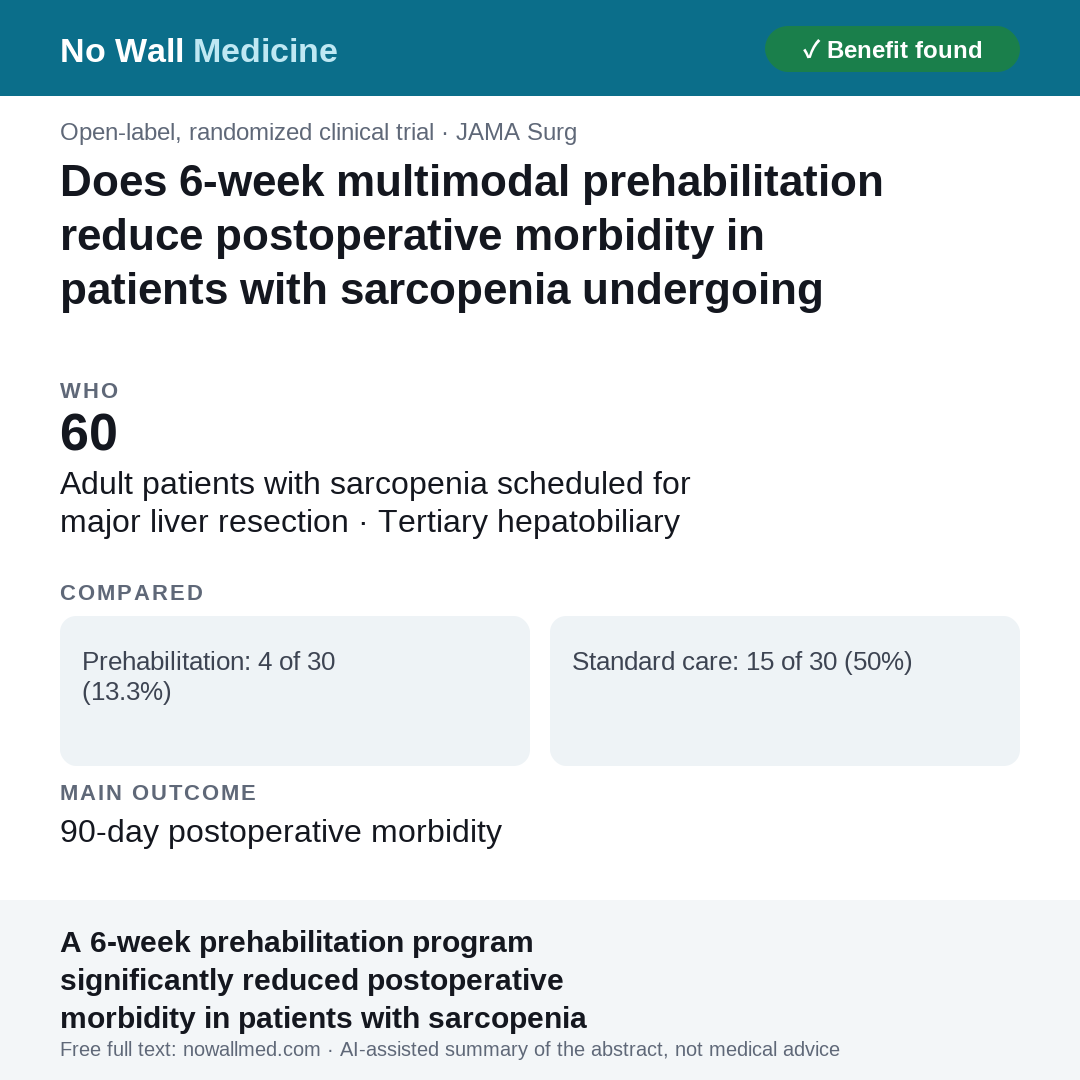
Prehabilitation With Exercise and Nutrition to Reduce Morbidity of Major Hepatectomy in Patients With Sarcopenia: The PREHEP Randomized Clinical Trial
Open-label, randomized clinical trialBenefit found
Does 6-week multimodal prehabilitation reduce postoperative morbidity in patients with sarcopenia undergoing major hepatectomy?
Who
60
Adult patients with sarcopenia scheduled for major liver resection · Tertiary hepatobiliary referral center in Italy
Compared
Prehabilitation: 4 of 30 (13.3%)
Standard care: 15 of 30 (50%)
Main outcome
90-day postoperative morbidity
Result: odds ratio 0.15 (95% CI 0.04-0.55)
Bottom line: A 6-week prehabilitation program significantly reduced postoperative morbidity in patients with sarcopenia undergoing major liver resection.
JAMA Surg · 2025-08-29Download image
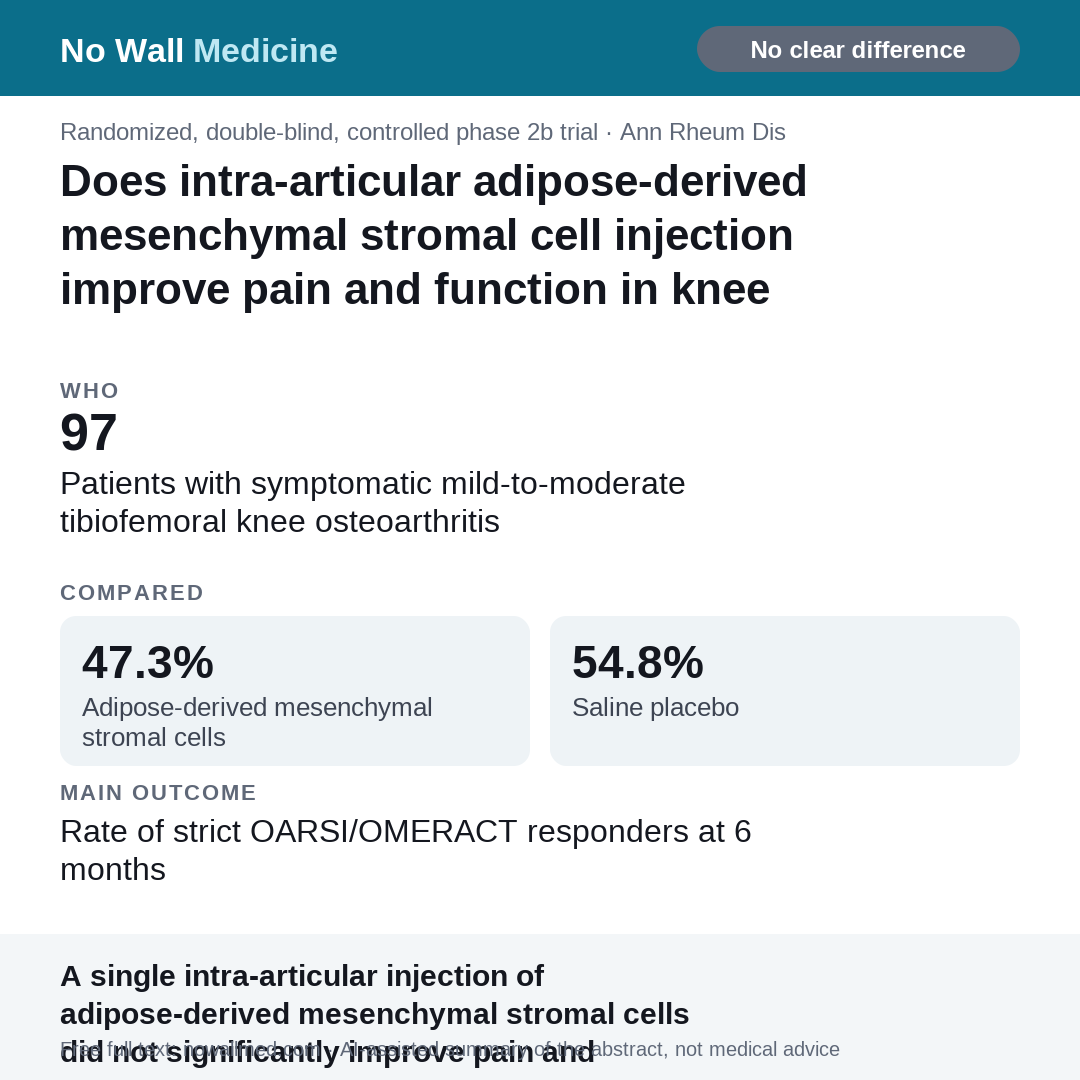
Effect of intra-articular adipose-derived mesenchymal stromal cell versus placebo injection on pain and function in patients with knee osteoarthritis: the ADIPOA2 phase 2b randomised clinical trial
Randomized, double-blind, controlled phase 2b trialNo clear difference
Does intra-articular adipose-derived mesenchymal stromal cell injection improve pain and function in knee osteoarthritis?
Who
97
Patients with symptomatic mild-to-moderate tibiofemoral knee osteoarthritis
Compared
47.3%Adipose-derived mesenchymal stromal cells
54.8%Saline placebo
Main outcome
Rate of strict OARSI/OMERACT responders at 6 months
Result: relative risk 0.86 (95% CI 0.58-1.28)
Bottom line: A single intra-articular injection of adipose-derived mesenchymal stromal cells did not significantly improve pain and function compared to placebo.
Ann Rheum Dis · 2025-08-29Download image
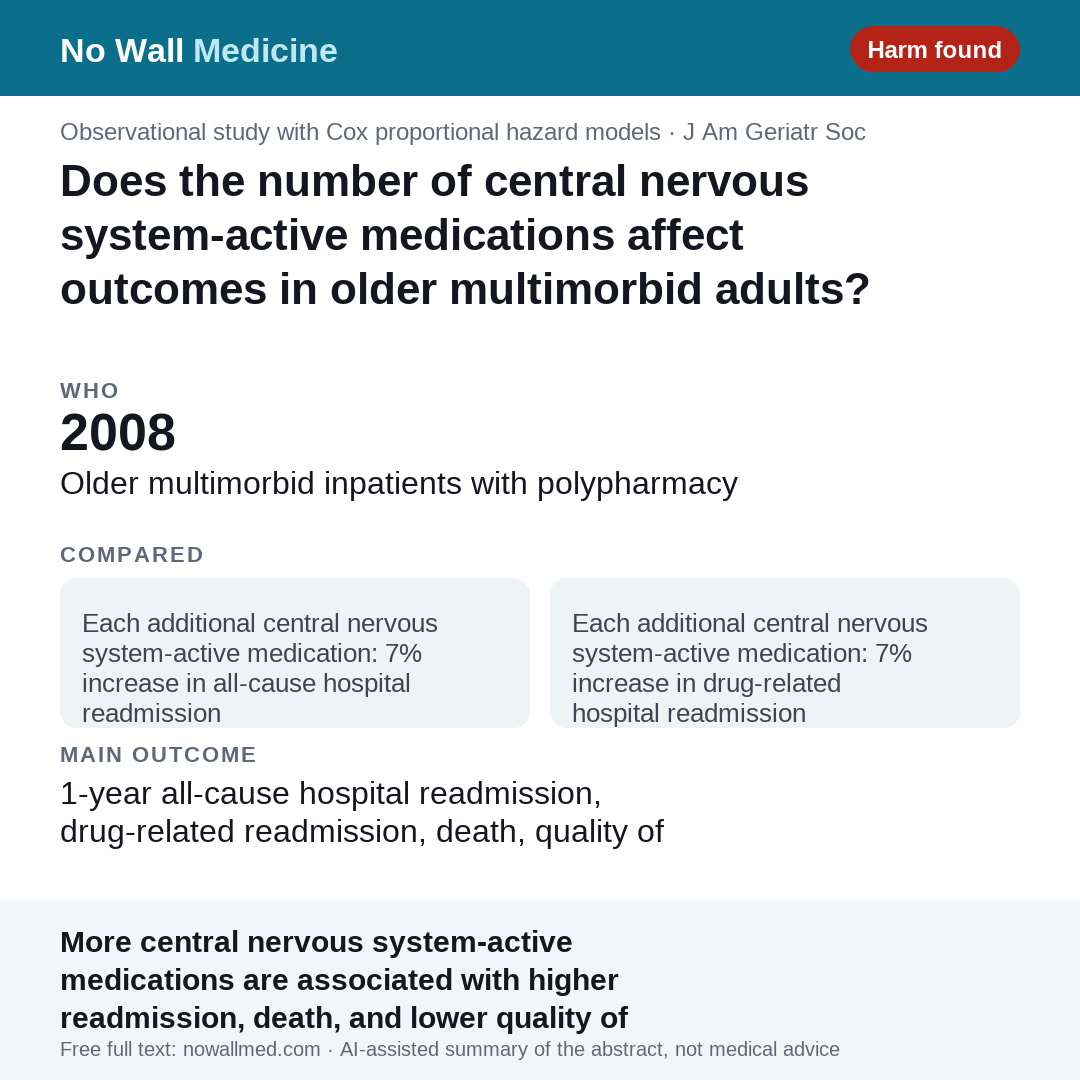
Central Nervous System-Active Medications and Risk of Hospital Readmission in Older Multimorbid Adults
Observational study with Cox proportional hazard modelsHarm found
Does the number of central nervous system-active medications affect outcomes in older multimorbid adults?
Who
2008
Older multimorbid inpatients with polypharmacy
Compared
Each additional central nervous system-active medication: 7% increase in all-cause hospital readmission
Each additional central nervous system-active medication: 7% increase in drug-related hospital readmission
Main outcome
1-year all-cause hospital readmission, drug-related readmission, death, quality of life, functional status
Result: hazard ratio 1.07 (95% confidence interval 1.03 to 1.12)
Bottom line: More central nervous system-active medications are associated with higher readmission, death, and lower quality of life.
J Am Geriatr Soc · 2025-08-29Download image
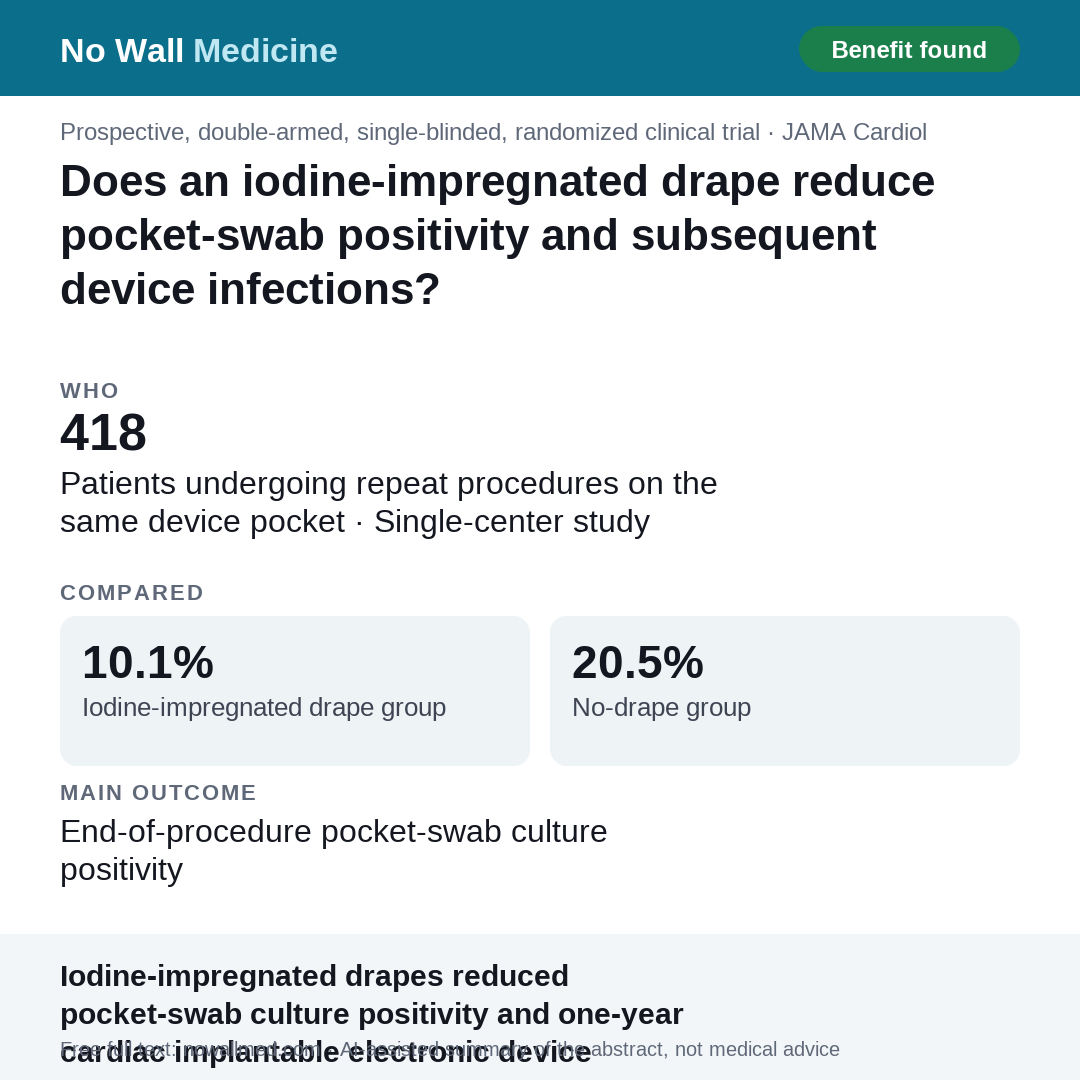
Iodinated Adhesive Drapes for Repeat Cardiac Implantable Device Implantation: A Randomized Clinical Trial
Prospective, double-armed, single-blinded, randomized clinical trialBenefit found
Does an iodine-impregnated drape reduce pocket-swab positivity and subsequent device infections?
Who
418
Patients undergoing repeat procedures on the same device pocket · Single-center study
Compared
10.1%Iodine-impregnated drape group
20.5%No-drape group
Main outcome
End-of-procedure pocket-swab culture positivity
Result: relative risk reduction 0.50 (95% CI, 0.24-0.75)
Bottom line: Iodine-impregnated drapes reduced pocket-swab culture positivity and one-year cardiac implantable electronic device infection rates.
JAMA Cardiol · 2025-08-29Download image
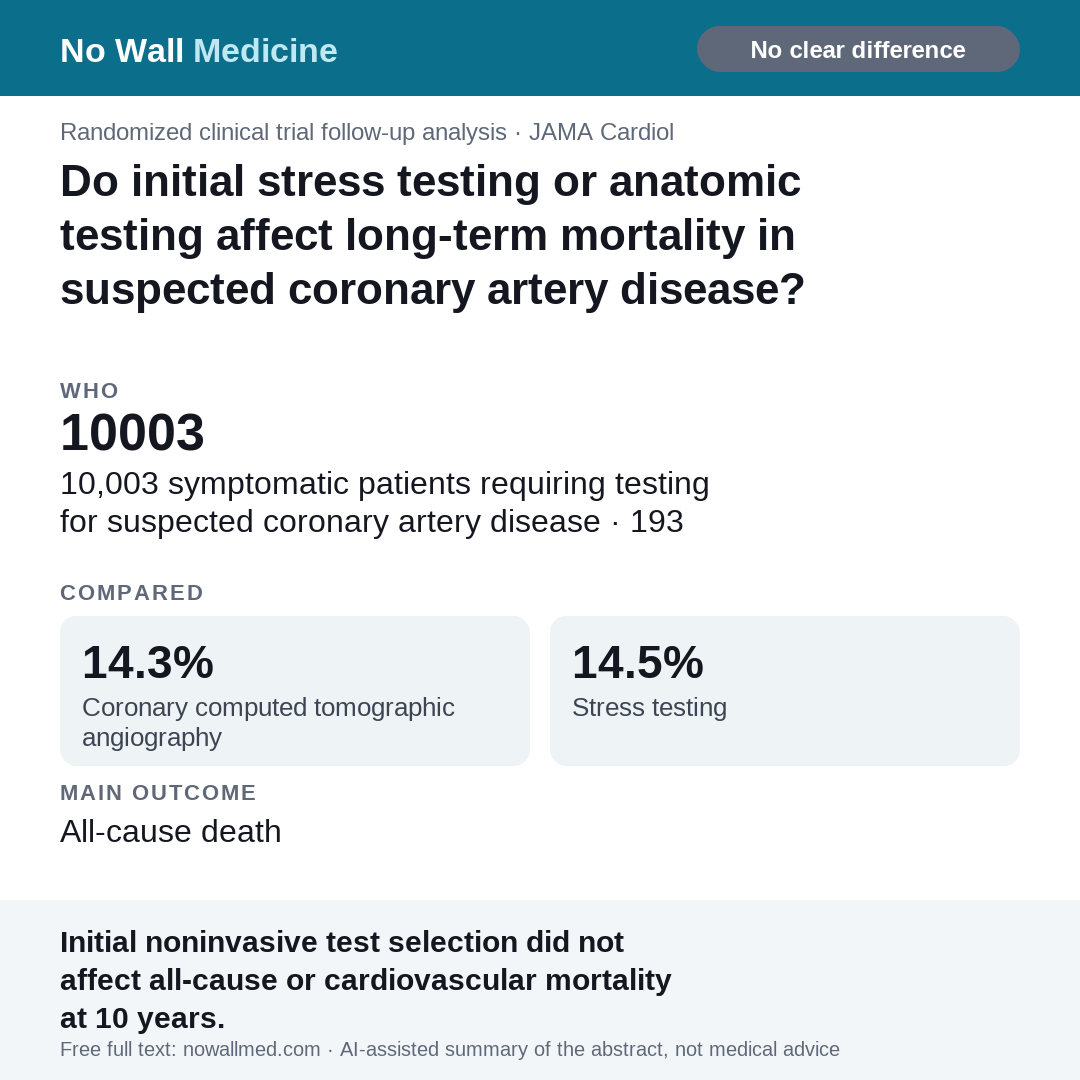
Survival After Initial Stress Testing vs Anatomic Testing in Suspected Coronary Artery Disease: Long-Term Follow-Up of the PROMISE Randomized Clinical Trial
Randomized clinical trial follow-up analysisNo clear difference
Do initial stress testing or anatomic testing affect long-term mortality in suspected coronary artery disease?
Who
10003
10,003 symptomatic patients requiring testing for suspected coronary artery disease · 193 multispecialty outpatient sites in North America
Compared
14.3%Coronary computed tomographic angiography
14.5%Stress testing
Main outcome
All-cause death
Result: hazard ratio 0.98 (95% CI, 0.87-1.10)
Bottom line: Initial noninvasive test selection did not affect all-cause or cardiovascular mortality at 10 years.
JAMA Cardiol · 2025-08-29Download image
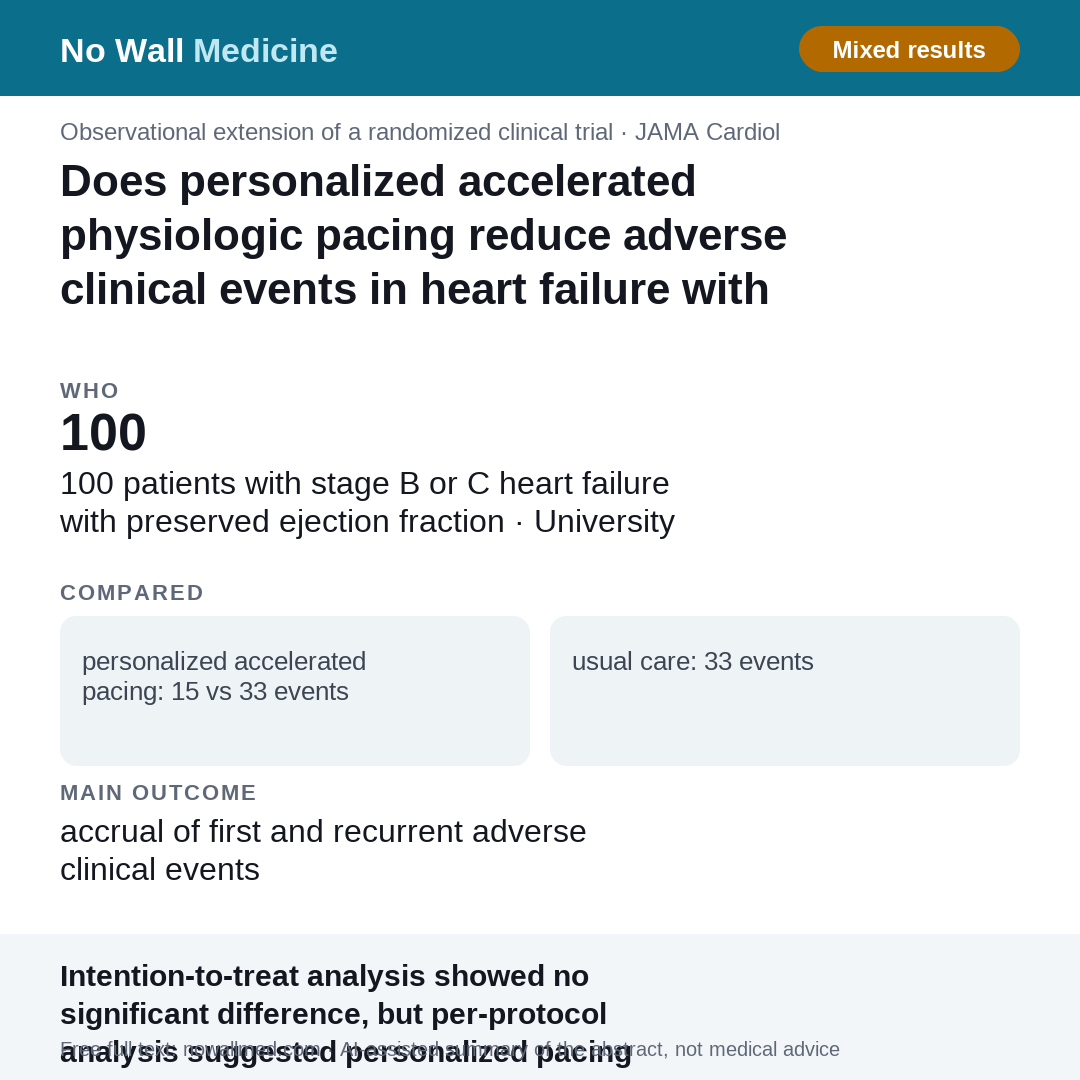
Clinical Outcomes With Personalized Accelerated Physiologic Pacing in Heart Failure With Preserved Ejection Fraction: Follow-up of the myPACE Trial
Observational extension of a randomized clinical trialMixed results
Does personalized accelerated physiologic pacing reduce adverse clinical events in heart failure with preserved ejection fraction?
Who
100
100 patients with stage B or C heart failure with preserved ejection fraction · University of Vermont Medical Center
Compared
personalized accelerated pacing: 15 vs 33 events
usual care: 33 events
Main outcome
accrual of first and recurrent adverse clinical events
Result: hazard ratio 0.63 (95% CI 0.31-1.29)
Bottom line: Intention-to-treat analysis showed no significant difference, but per-protocol analysis suggested personalized pacing reduces adverse clinical events.
Limitation: results are hypothesis generating and warrant confirmation in larger multicenter trials
JAMA Cardiol · 2025-08-29Download image
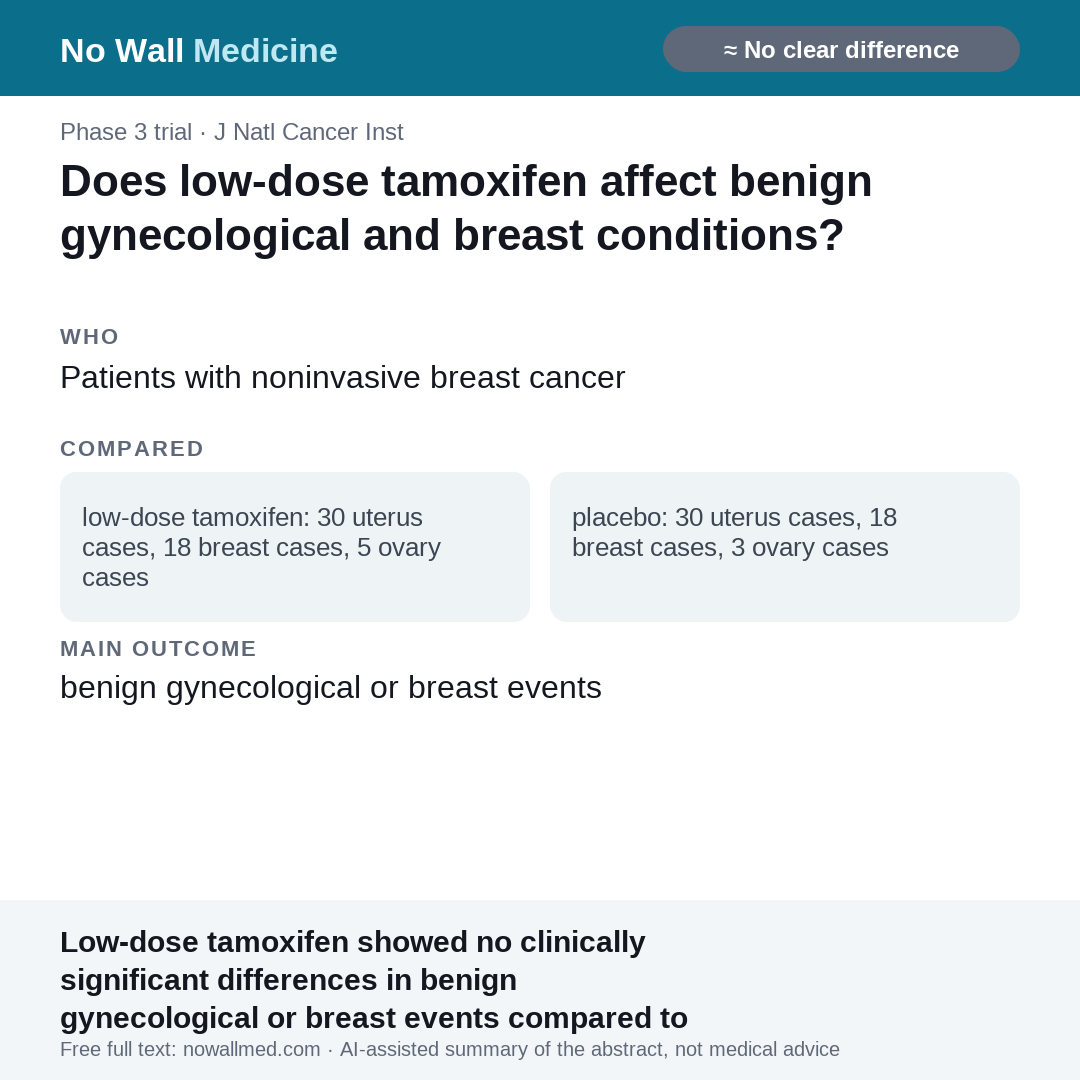
Effect of low-dose tamoxifen on benign gynecological and breast conditions in a phase 3 trial in noninvasive breast cancer
Phase 3 trialNo clear difference
Does low-dose tamoxifen affect benign gynecological and breast conditions?
Who
Patients with noninvasive breast cancer
Compared
low-dose tamoxifen: 30 uterus cases, 18 breast cases, 5 ovary cases
placebo: 30 uterus cases, 18 breast cases, 3 ovary cases
Main outcome
benign gynecological or breast events
Bottom line: Low-dose tamoxifen showed no clinically significant differences in benign gynecological or breast events compared to placebo.
J Natl Cancer Inst · 2025-08-29Download image
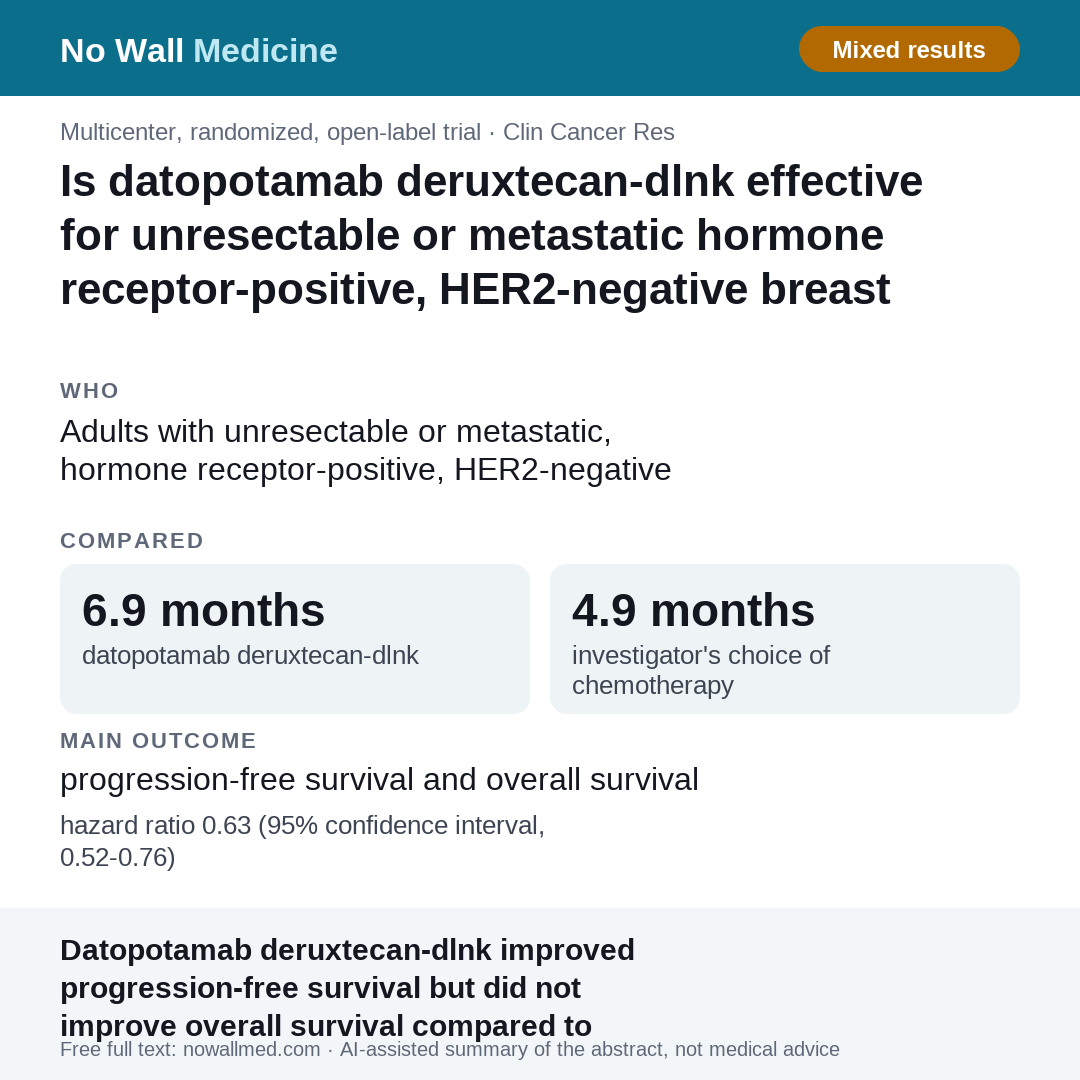
FDA Approval Summary: Datopotamab Deruxtecan-dlnk for Treatment of Patients with Unresectable or Metastatic, HR-Positive, HER2-Negative Breast Cancer
Multicenter, randomized, open-label trialMixed results
Is datopotamab deruxtecan-dlnk effective for unresectable or metastatic hormone receptor-positive, HER2-negative breast cancer?
Who
Adults with unresectable or metastatic, hormone receptor-positive, HER2-negative breast cancer · Multicenter
Compared
6.9 monthsdatopotamab deruxtecan-dlnk
4.9 monthsinvestigator's choice of chemotherapy
Main outcome
progression-free survival and overall survival
Result: hazard ratio 0.63 (95% confidence interval, 0.52-0.76)
Bottom line: Datopotamab deruxtecan-dlnk improved progression-free survival but did not improve overall survival compared to investigator's choice of chemotherapy.
Clin Cancer Res · 2025-08-29Download image
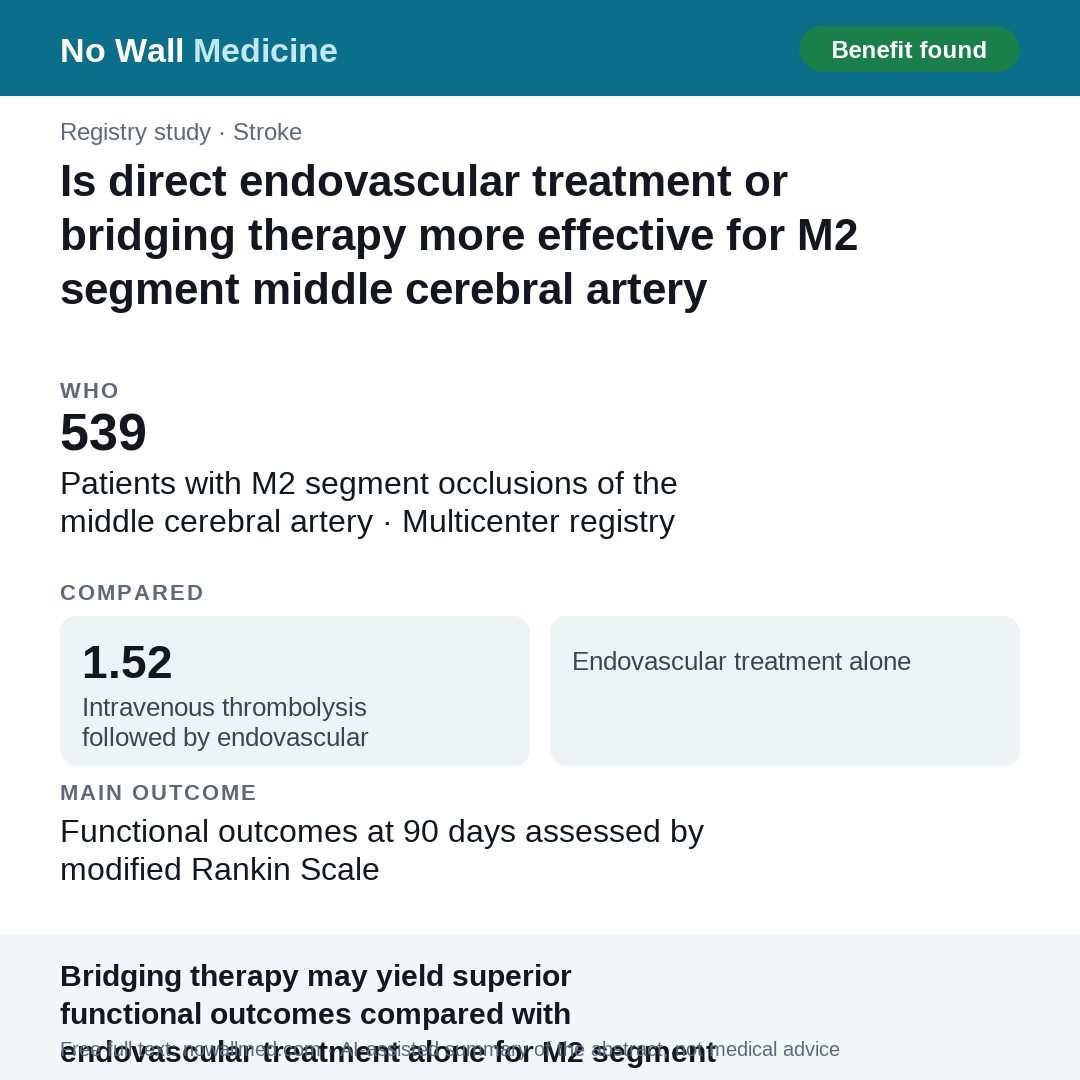
Direct Endovascular Versus Bridging Therapy in M2 Segment Occlusion of Middle Cerebral Artery: A MR CLEAN Registry Study
Registry studyBenefit found
Is direct endovascular treatment or bridging therapy more effective for M2 segment middle cerebral artery occlusions?
Who
539
Patients with M2 segment occlusions of the middle cerebral artery · Multicenter registry in the Netherlands
Compared
1.52Intravenous thrombolysis followed by endovascular treatment (95% CI, 1.04-2.21)
Endovascular treatment alone
Main outcome
Functional outcomes at 90 days assessed by modified Rankin Scale
Result: adjusted common odds ratio 1.52 (95% CI 1.04-2.21)
Bottom line: Bridging therapy may yield superior functional outcomes compared with endovascular treatment alone for M2 segment middle cerebral artery occlusions.
Stroke · 2025-08-29Download image
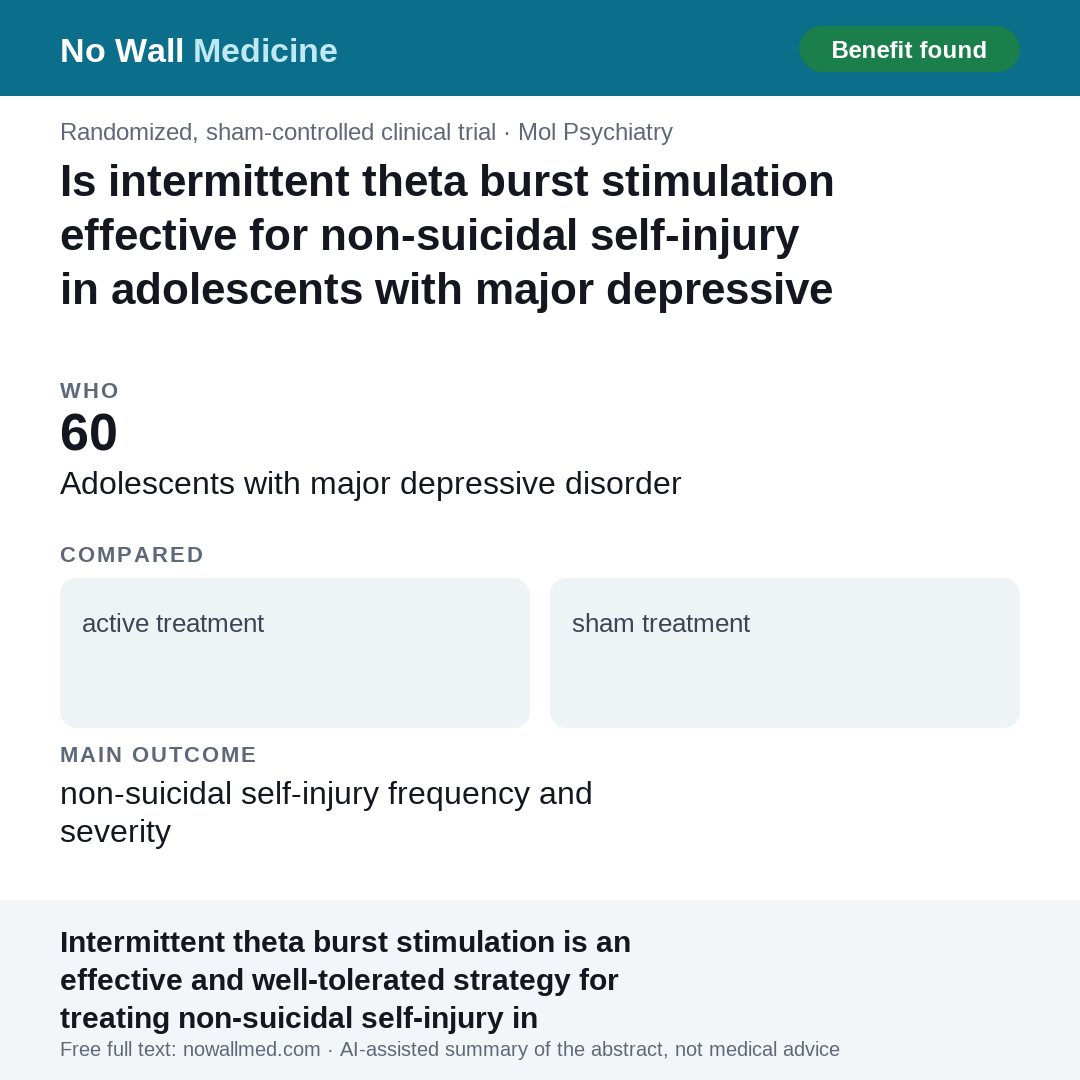
Intermittent theta burst stimulation for non-suicidal self-injury in adolescents with major depressive disorder: a randomized, sham-controlled trial
Randomized, sham-controlled clinical trialBenefit found
Is intermittent theta burst stimulation effective for non-suicidal self-injury in adolescents with major depressive disorder?
Who
60
Adolescents with major depressive disorder
Compared
active treatment
sham treatment
Main outcome
non-suicidal self-injury frequency and severity
Result: mean difference, -18.66 (95% CI, -28.35 to -8.97)
Bottom line: Intermittent theta burst stimulation is an effective and well-tolerated strategy for treating non-suicidal self-injury in adolescents.
Mol Psychiatry · 2025-08-29Download image
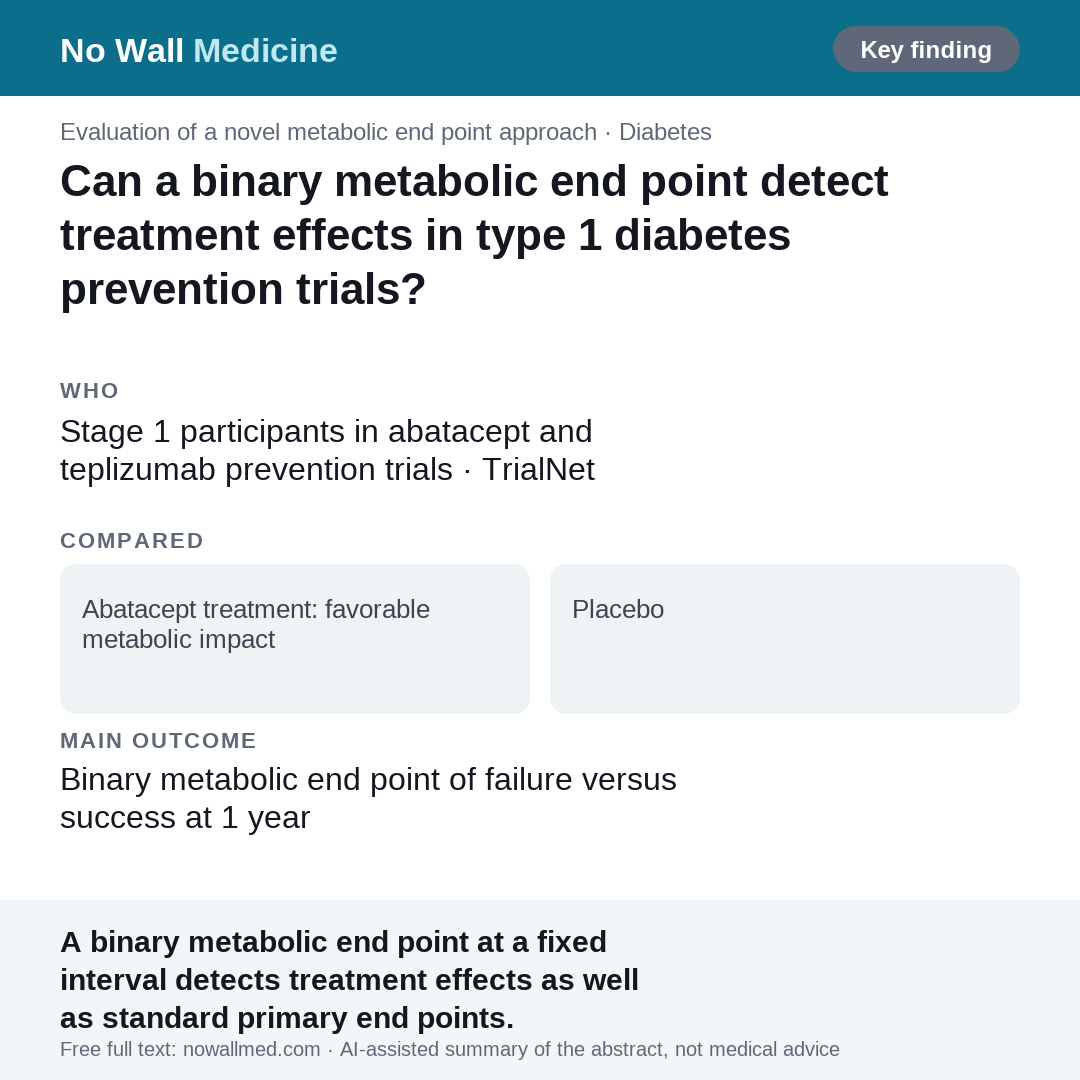
Novel Approach for Assessing Outcomes of Type 1 Diabetes Prevention Trials Over a Fixed Time Interval
Evaluation of a novel metabolic end point approachBenefit found
Can a binary metabolic end point detect treatment effects in type 1 diabetes prevention trials?
Who
Stage 1 participants in abatacept and teplizumab prevention trials · TrialNet Pathway to Prevention study
Compared
Abatacept treatment: favorable metabolic impact
Placebo
Main outcome
Binary metabolic end point of failure versus success at 1 year
Bottom line: A binary metabolic end point at a fixed interval detects treatment effects as well as standard primary end points.
Diabetes · 2025-08-29Download image
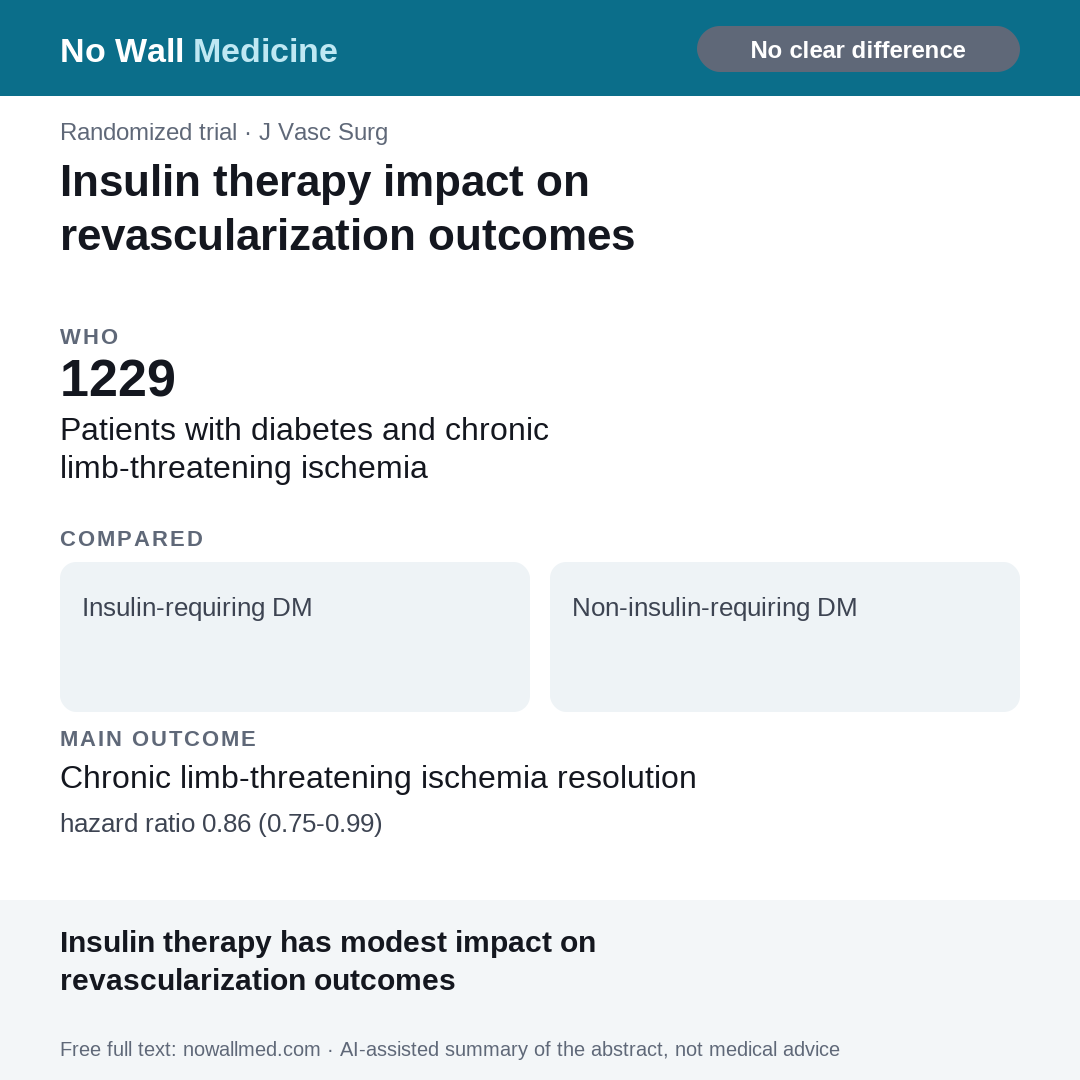
Insulin therapy and outcomes of revascularization procedures for chronic limb-threatening ischemia in the BEST-CLI trial
Randomized trialNo clear difference
Insulin therapy impact on revascularization outcomes
Who
1229
Patients with diabetes and chronic limb-threatening ischemia
Compared
Insulin-requiring DM
Non-insulin-requiring DM
Main outcome
Chronic limb-threatening ischemia resolution
Result: hazard ratio 0.86 (0.75-0.99)
Bottom line: Insulin therapy has modest impact on revascularization outcomes
J Vasc Surg · 2025-08-29Download image
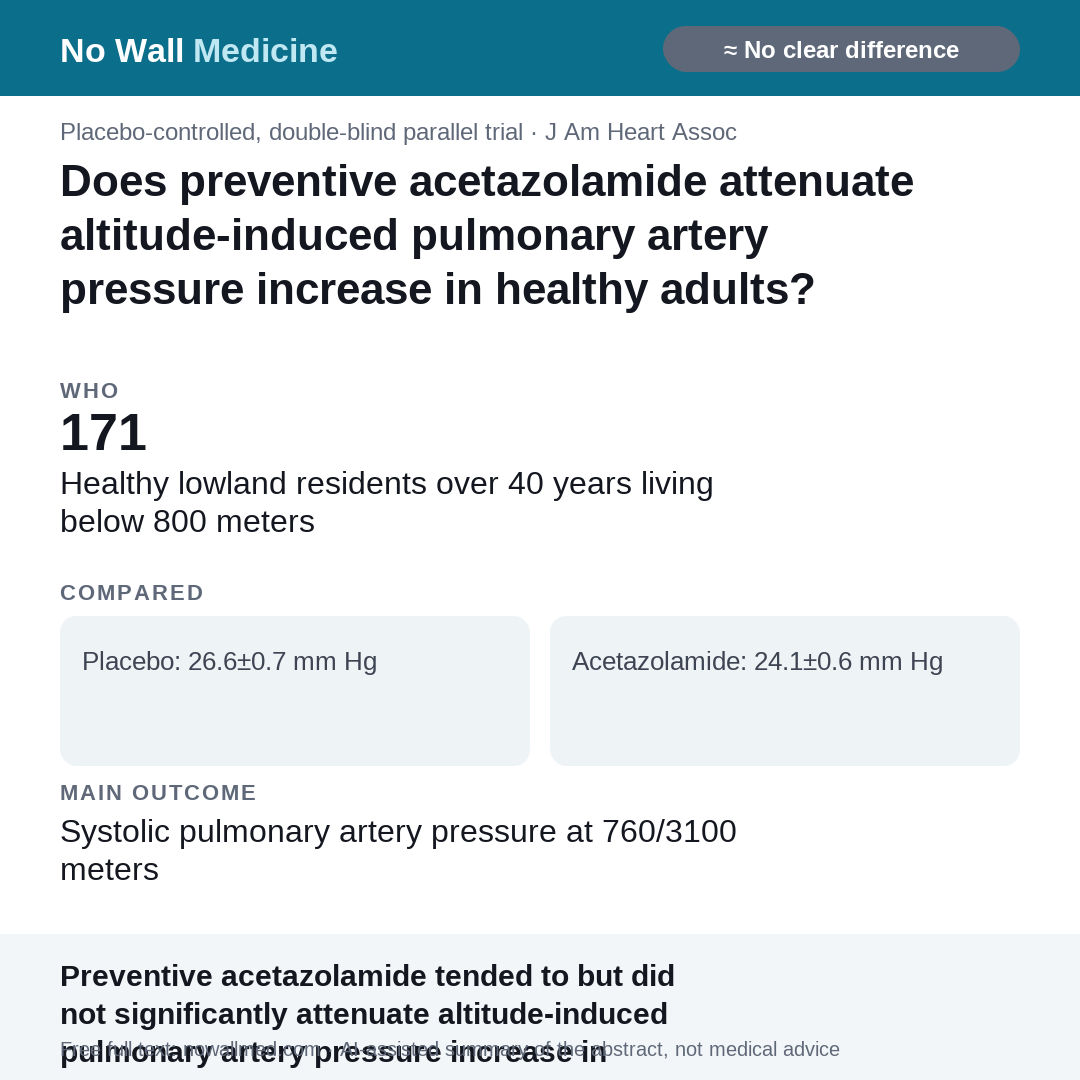
Effect of Acetazolamide on Pulmonary Hemodynamics and Right Heart Function in Healthy Adults Going to Altitude: A Randomized Controlled Trial
Placebo-controlled, double-blind parallel trialNo clear difference
Does preventive acetazolamide attenuate altitude-induced pulmonary artery pressure increase in healthy adults?
Who
171
Healthy lowland residents over 40 years living below 800 meters
Compared
Placebo: 26.6±0.7 mm Hg
Acetazolamide: 24.1±0.6 mm Hg
Main outcome
Systolic pulmonary artery pressure at 760/3100 meters
Result: -2.5 (95% CI, -5.3 to 0.4) mm Hg
Bottom line: Preventive acetazolamide tended to but did not significantly attenuate altitude-induced pulmonary artery pressure increase in healthy middle-aged adults.
J Am Heart Assoc · 2025-08-29Download image