Visual abstracts
New randomized trials and meta-analyses from leading journals at a glance: who was studied, what was compared, and what was found. Every paper is free to read in full.
All specialtiesCardiology 4763Oncology 4043Gastroenterology & Hepatology 1903Infectious Disease 3756Neurology 1872Psychiatry & Mental Health 2216Pulmonology 2044Critical Care 1319Endocrinology & Diabetes 2544Pediatrics 2889Surgery 2480Orthopedics & Sports Medicine 917Neurosurgery 525Cardiothoracic & Vascular Surgery 656Plastic & Reconstructive Surgery 574Nephrology 1107Rheumatology 810Hematology 1090Dermatology 611Ophthalmology 532Obstetrics & Gynecology 1645Public & Global Health 1037Radiology & Imaging 619Anesthesiology 958Urology 745ENT (Otolaryngology) 494Emergency Medicine 481Allergy & Immunology 309Geriatrics 972Family Medicine & Primary Care 534Medical Genetics & Genomics 659Pathology & Laboratory Medicine 156Physical Medicine & Rehabilitation 734Palliative Care 421Nutrition 1560Digital Health & AI 2137General Medicine 318
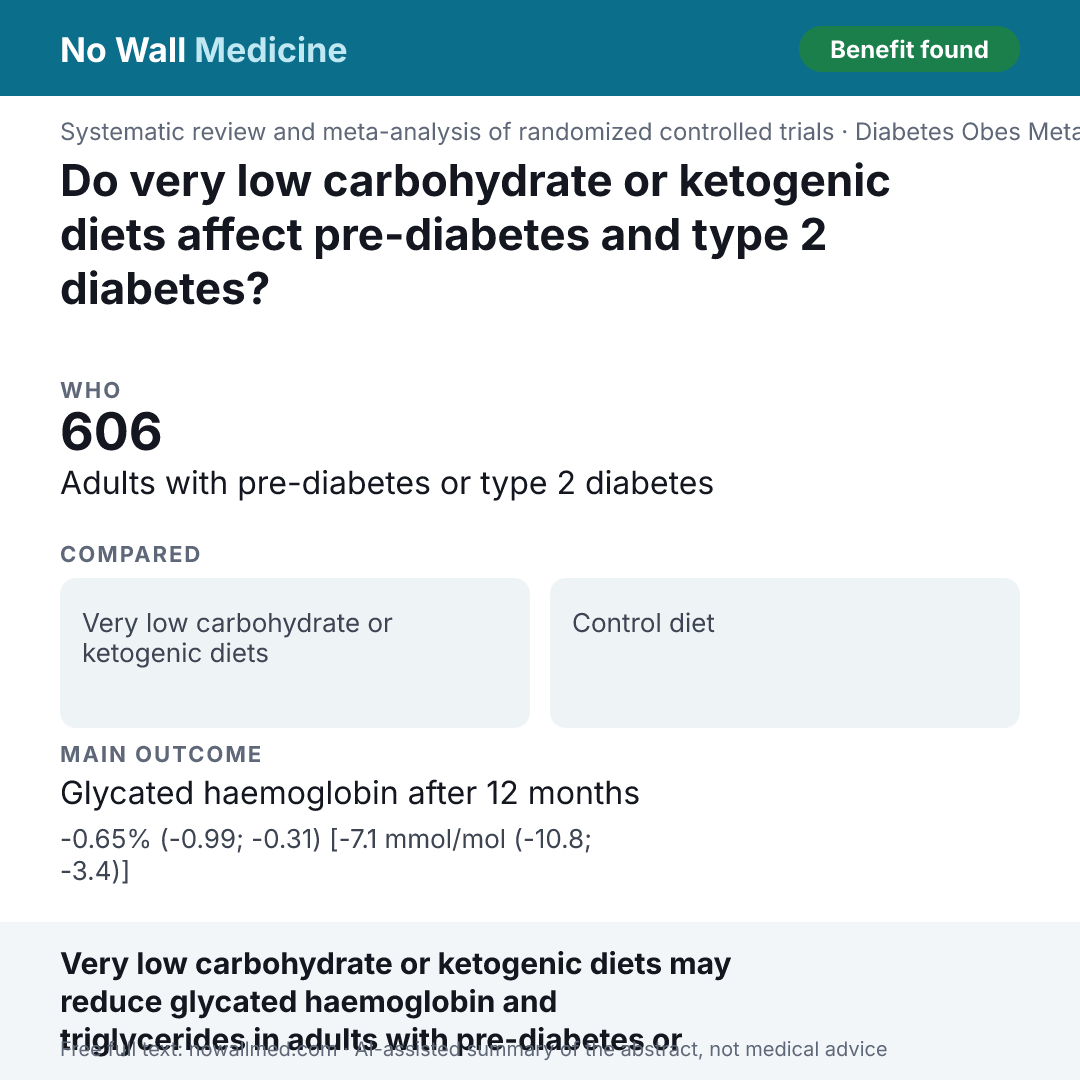
Very low carbohydrate (ketogenic) diets in type 2 diabetes: A systematic review and meta-analysis of randomized controlled trials
Systematic review and meta-analysis of randomized controlled trialsBenefit found
Do very low carbohydrate or ketogenic diets affect pre-diabetes and type 2 diabetes?
Who
606
Adults with pre-diabetes or type 2 diabetes
Compared
Very low carbohydrate or ketogenic diets
Control diet
Main outcome
Glycated haemoglobin after 12 months
Result: -0.65% (-0.99; -0.31) [-7.1 mmol/mol (-10.8; -3.4)]
Bottom line: Very low carbohydrate or ketogenic diets may reduce glycated haemoglobin and triglycerides in adults with pre-diabetes or type 2 diabetes.
Limitation: Evidence of an advantage over other strategies is limited.
Diabetes Obes Metab · 2022-09-05 · Save PNG
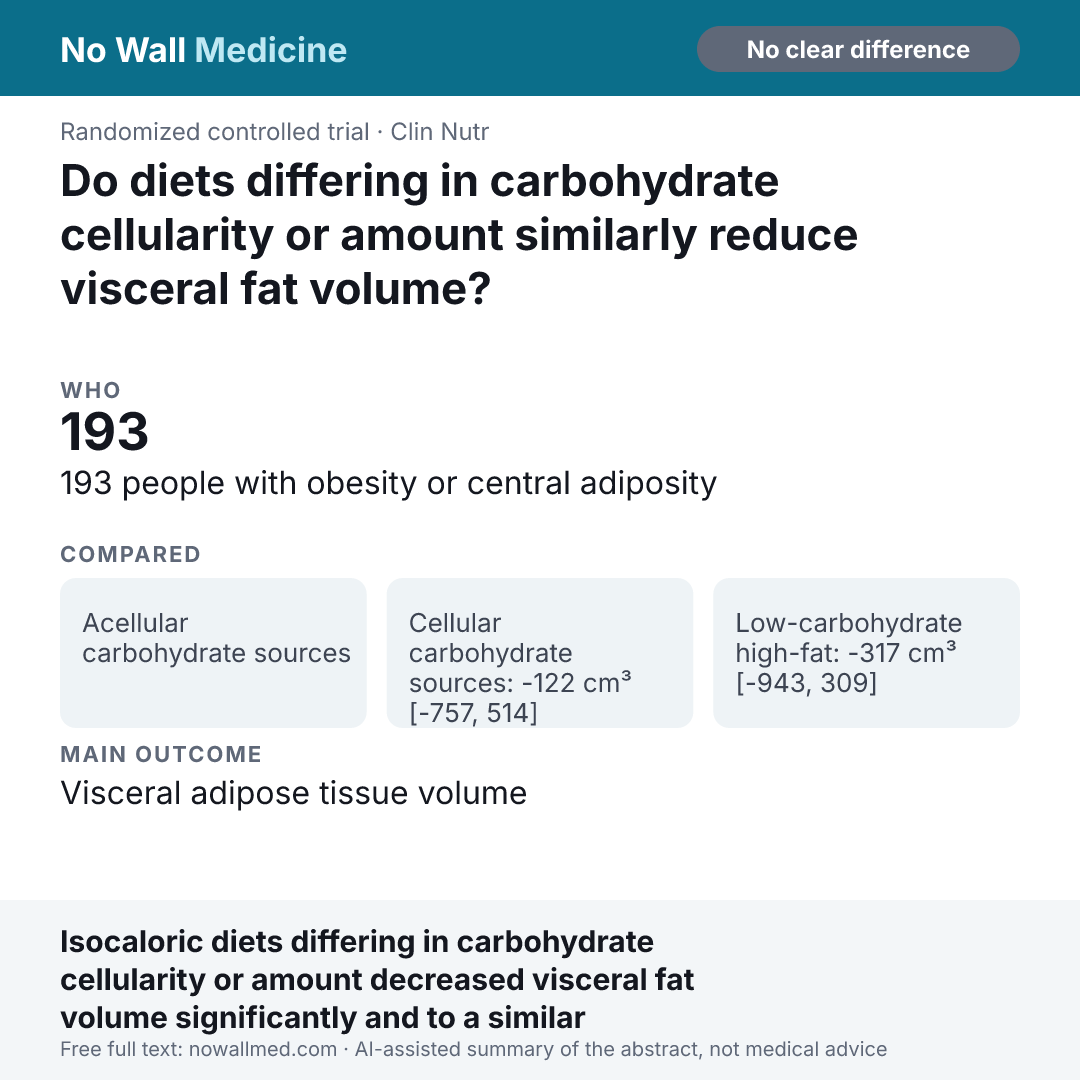
Diets differing in carbohydrate cellularity and amount similarly reduced visceral fat in people with obesity - a randomized controlled trial (CARBFUNC)
Randomized controlled trialNo clear difference
Do diets differing in carbohydrate cellularity or amount similarly reduce visceral fat volume?
Who
193
193 people with obesity or central adiposity
Compared
Acellular carbohydrate sources
Cellular carbohydrate sources: -122 cm³ [-757, 514]
Low-carbohydrate high-fat: -317 cm³ [-943, 309]
Main outcome
Visceral adipose tissue volume
Bottom line: Isocaloric diets differing in carbohydrate cellularity or amount decreased visceral fat volume significantly and to a similar degree.
Clin Nutr · 2022-09-05 · Save PNG
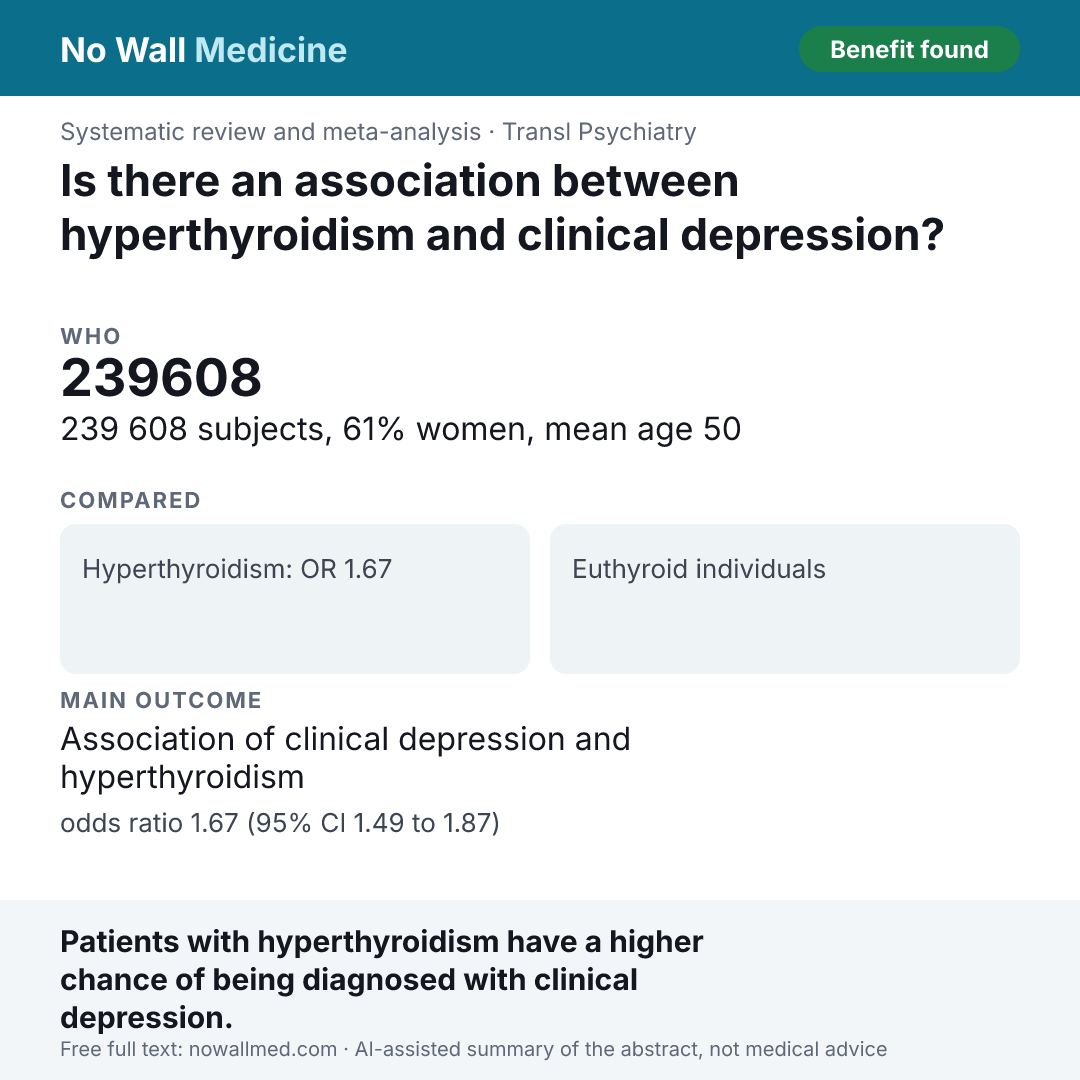
Hyperthyroidism and clinical depression: a systematic review and meta-analysis
Systematic review and meta-analysisBenefit found
Is there an association between hyperthyroidism and clinical depression?
Who
239608
239 608 subjects, 61% women, mean age 50
Compared
Hyperthyroidism: OR 1.67
Euthyroid individuals
Main outcome
Association of clinical depression and hyperthyroidism
Result: odds ratio 1.67 (95% CI 1.49 to 1.87)
Bottom line: Patients with hyperthyroidism have a higher chance of being diagnosed with clinical depression.
Transl Psychiatry · 2022-09-05 · Save PNG
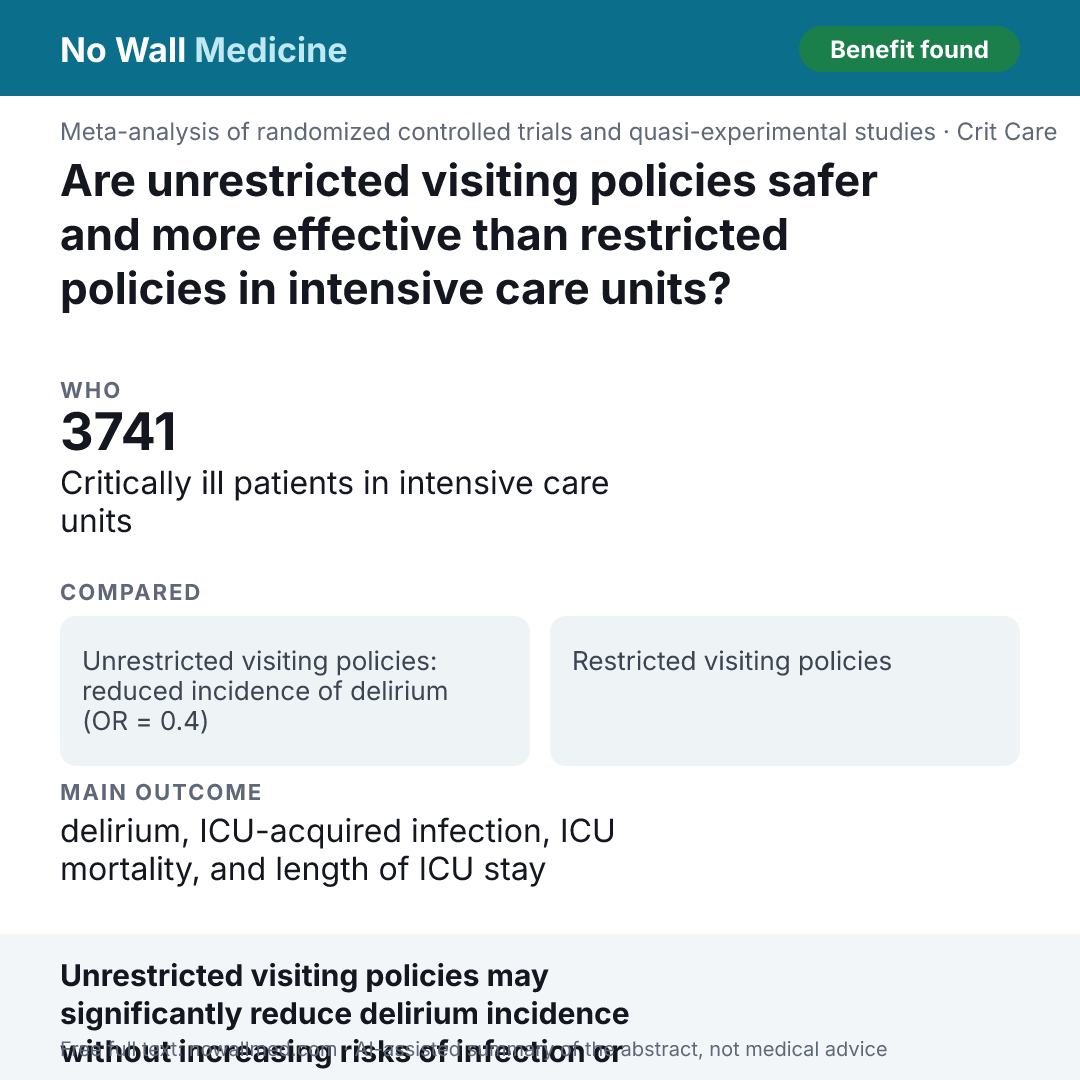
Efficacy and safety of unrestricted visiting policy for critically ill patients: a meta-analysis
Meta-analysis of randomized controlled trials and quasi-experimental studiesBenefit found
Are unrestricted visiting policies safer and more effective than restricted policies in intensive care units?
Who
3741
Critically ill patients in intensive care units
Compared
Unrestricted visiting policies: reduced incidence of delirium (OR = 0.4)
Restricted visiting policies
Main outcome
delirium, ICU-acquired infection, ICU mortality, and length of ICU stay
Result: OR = 0.4 (95% CI 0.25-0.63)
Bottom line: Unrestricted visiting policies may significantly reduce delirium incidence without increasing risks of infection or mortality in intensive care units.
Limitation: Further large-scale, multicenter studies are needed to confirm these indications.
Crit Care · 2022-09-05 · Save PNG
Right dose, right now: bedside, real-time, data-driven, and personalised antibiotic dosing in critically ill patients with sepsis or septic shock-a two-centre randomised clinical trial
Two-centre randomised clinical trialMixed results
Does personalized antibiotic dosing improve pharmacokinetic target attainment in critically ill patients?
Who
252
Critically ill adult patients with sepsis or septic shock · Two centres
Compared
AutoKinetics dosing: 69% for ciprofloxacin
Standard dosing: 3% for ciprofloxacin
Main outcome
Pharmacokinetic target attainment in the first 24 hours
Result: OR 62.5, CI 11.4-1173.78
Bottom line: Personalised dosing improved ciprofloxacin target attainment but did not improve outcomes for other antibiotics or clinical endpoints.
Crit Care · 2022-09-05 · Save PNG

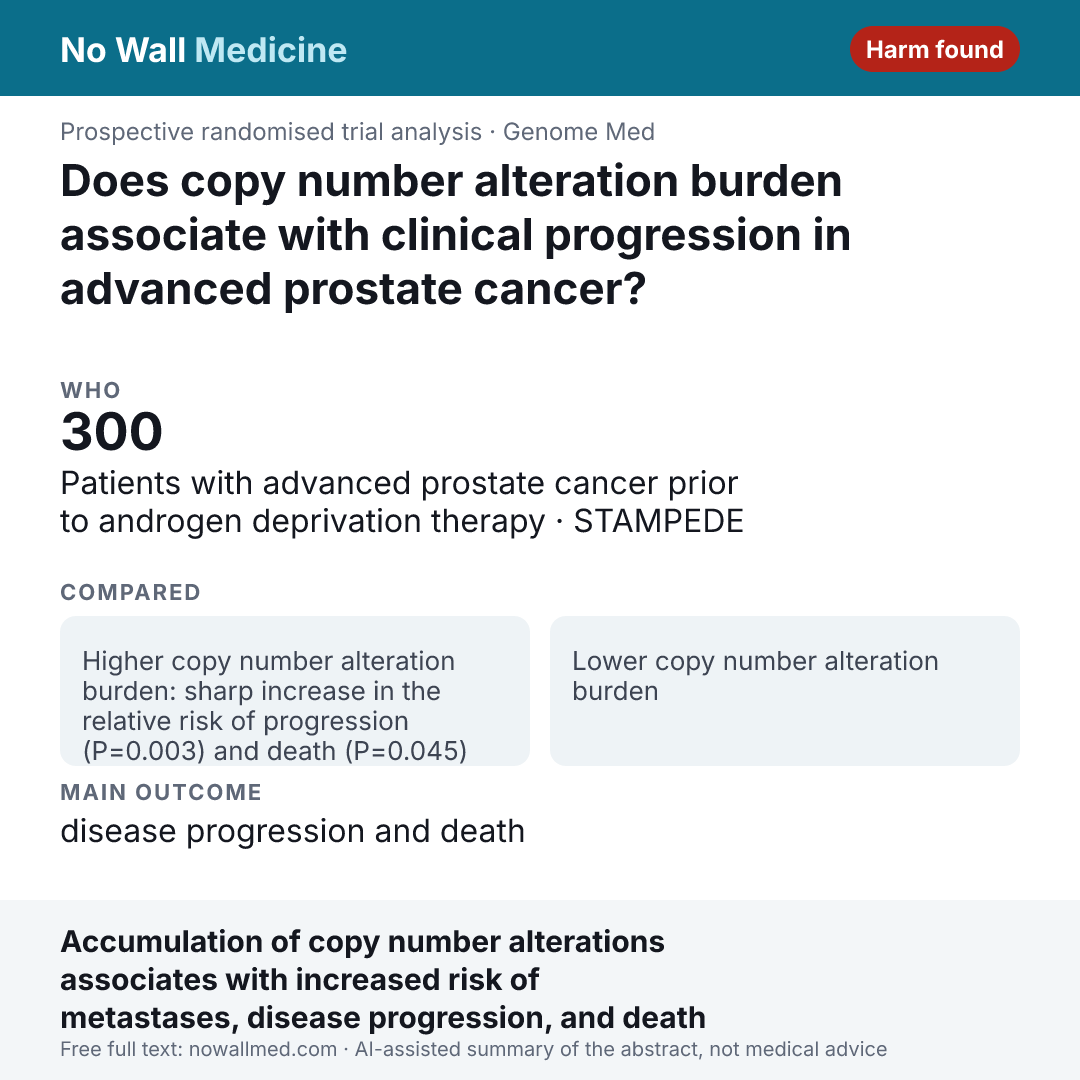
Accumulation of copy number alterations and clinical progression across advanced prostate cancer
Prospective randomised trial analysisHarm found
Does copy number alteration burden associate with clinical progression in advanced prostate cancer?
Who
300
Patients with advanced prostate cancer prior to androgen deprivation therapy · STAMPEDE trial
Compared
Higher copy number alteration burden: sharp increase in the relative risk of progression (P=0.003) and death (P=0.045)
Lower copy number alteration burden
Main outcome
disease progression and death
Bottom line: Accumulation of copy number alterations associates with increased risk of metastases, disease progression, and death in advanced prostate cancer.
Genome Med · 2022-09-05 · Save PNG
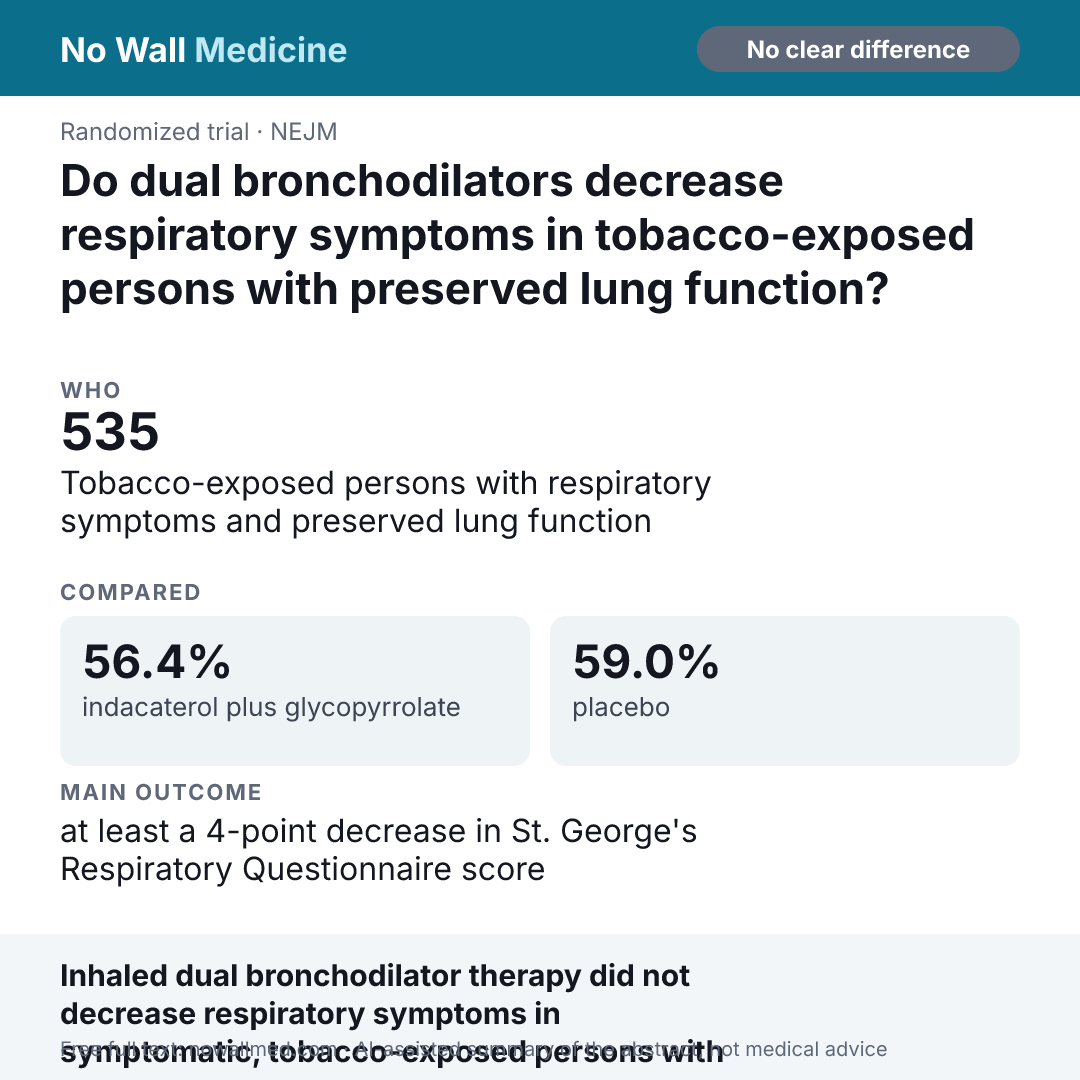
Bronchodilators in Tobacco-Exposed Persons with Symptoms and Preserved Lung Function
Randomized trialNo clear difference
Do dual bronchodilators decrease respiratory symptoms in tobacco-exposed persons with preserved lung function?
Who
535
Tobacco-exposed persons with respiratory symptoms and preserved lung function
Compared
56.4%indacaterol plus glycopyrrolate (128/227)
59.0%placebo (144/244)
Main outcome
at least a 4-point decrease in St. George's Respiratory Questionnaire score
Result: adjusted odds ratio, 0.91 (95% CI, 0.60 to 1.37)
Bottom line: Inhaled dual bronchodilator therapy did not decrease respiratory symptoms in symptomatic, tobacco-exposed persons with preserved lung function.
Funded by: National Heart, Lung, and Blood Institute and others
NEJM · 2022-09-04 · Save PNG
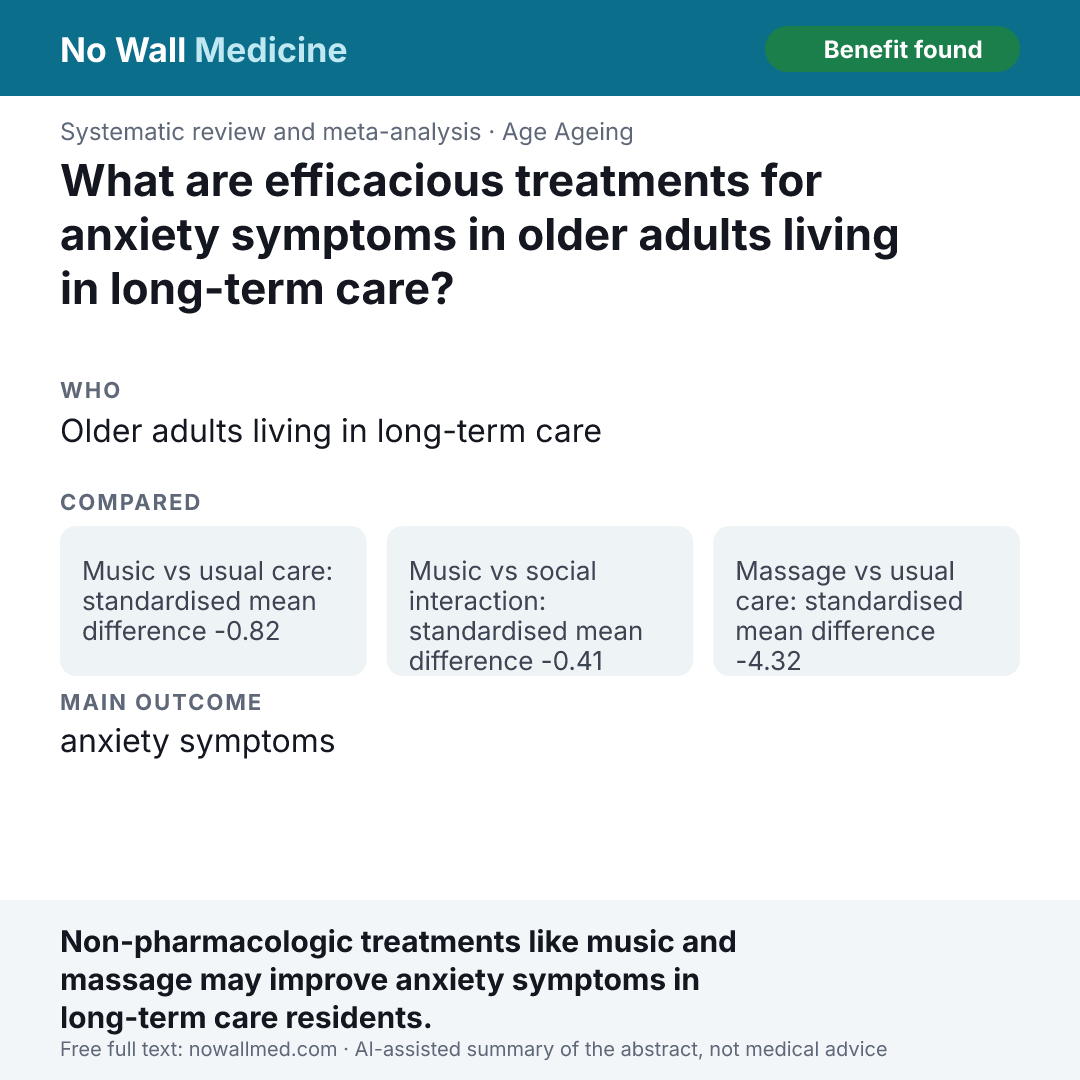
Non-pharmacologic and pharmacologic treatments for anxiety in long-term care: a systematic review and meta-analysis
Systematic review and meta-analysisBenefit found
What are efficacious treatments for anxiety symptoms in older adults living in long-term care?
Who
Older adults living in long-term care
Compared
Music vs usual care: standardised mean difference -0.82
Music vs social interaction: standardised mean difference -0.41
Massage vs usual care: standardised mean difference -4.32
Main outcome
anxiety symptoms
Bottom line: Non-pharmacologic treatments like music and massage may improve anxiety symptoms in long-term care residents.
Limitation: Limited clinically relevant evidence supporting pharmacologic treatments and significant heterogeneity in two comparisons.
Age Ageing · 2022-09-04 · Save PNG
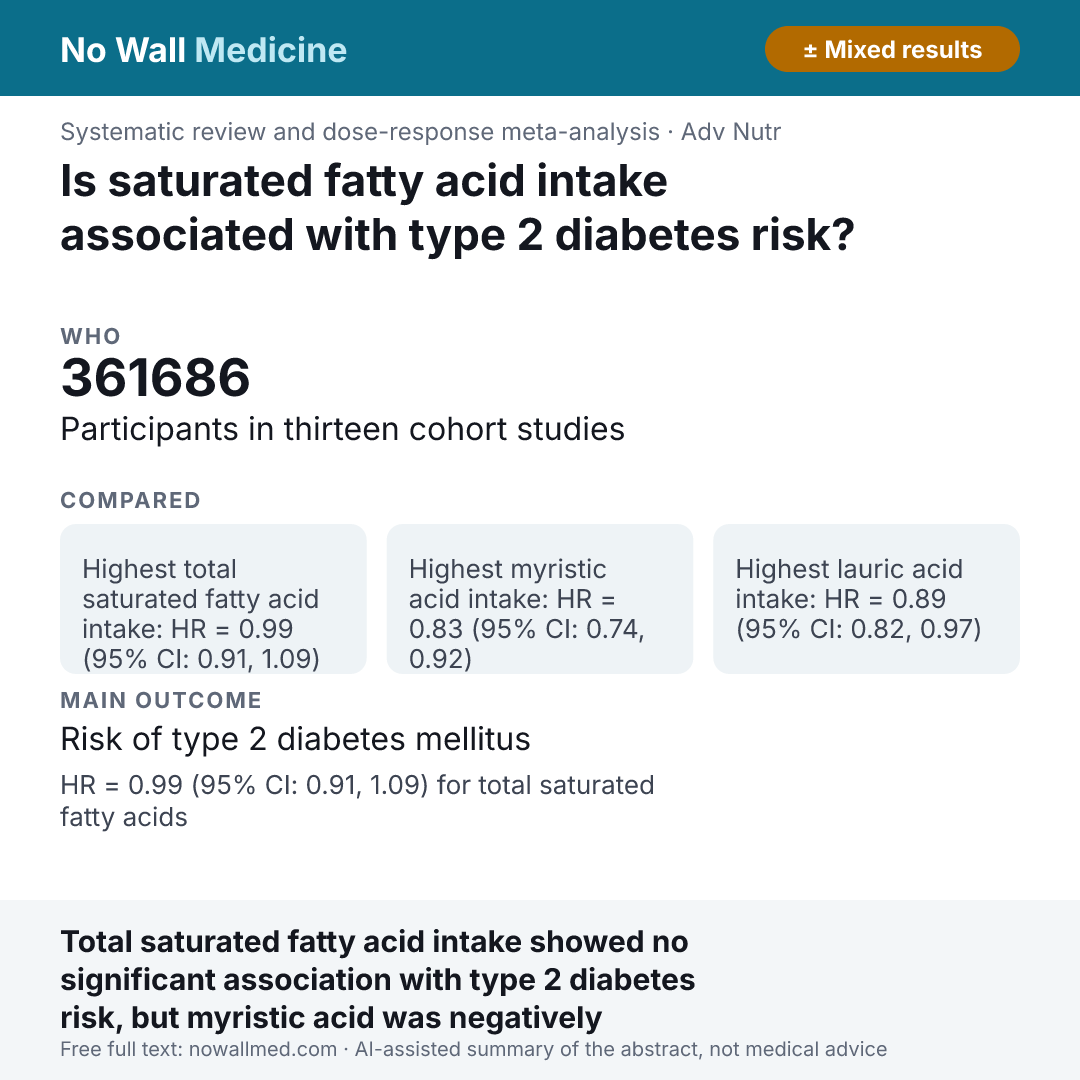
Saturated Fatty Acid Intake and Risk of Type 2 Diabetes: An Updated Systematic Review and Dose-Response Meta-Analysis of Cohort Studies
Systematic review and dose-response meta-analysisMixed results
Is saturated fatty acid intake associated with type 2 diabetes risk?
Who
361686
Participants in thirteen cohort studies
Compared
Highest total saturated fatty acid intake: HR = 0.99 (95% CI: 0.91, 1.09)
Highest myristic acid intake: HR = 0.83 (95% CI: 0.74, 0.92)
Highest lauric acid intake: HR = 0.89 (95% CI: 0.82, 0.97)
Main outcome
Risk of type 2 diabetes mellitus
Result: HR = 0.99 (95% CI: 0.91, 1.09) for total saturated fatty acids
Bottom line: Total saturated fatty acid intake showed no significant association with type 2 diabetes risk, but myristic acid was negatively associated.
Limitation: There was evidence of publication bias among studies on dietary total saturated fatty acids.
Adv Nutr · 2022-09-04 · Save PNG
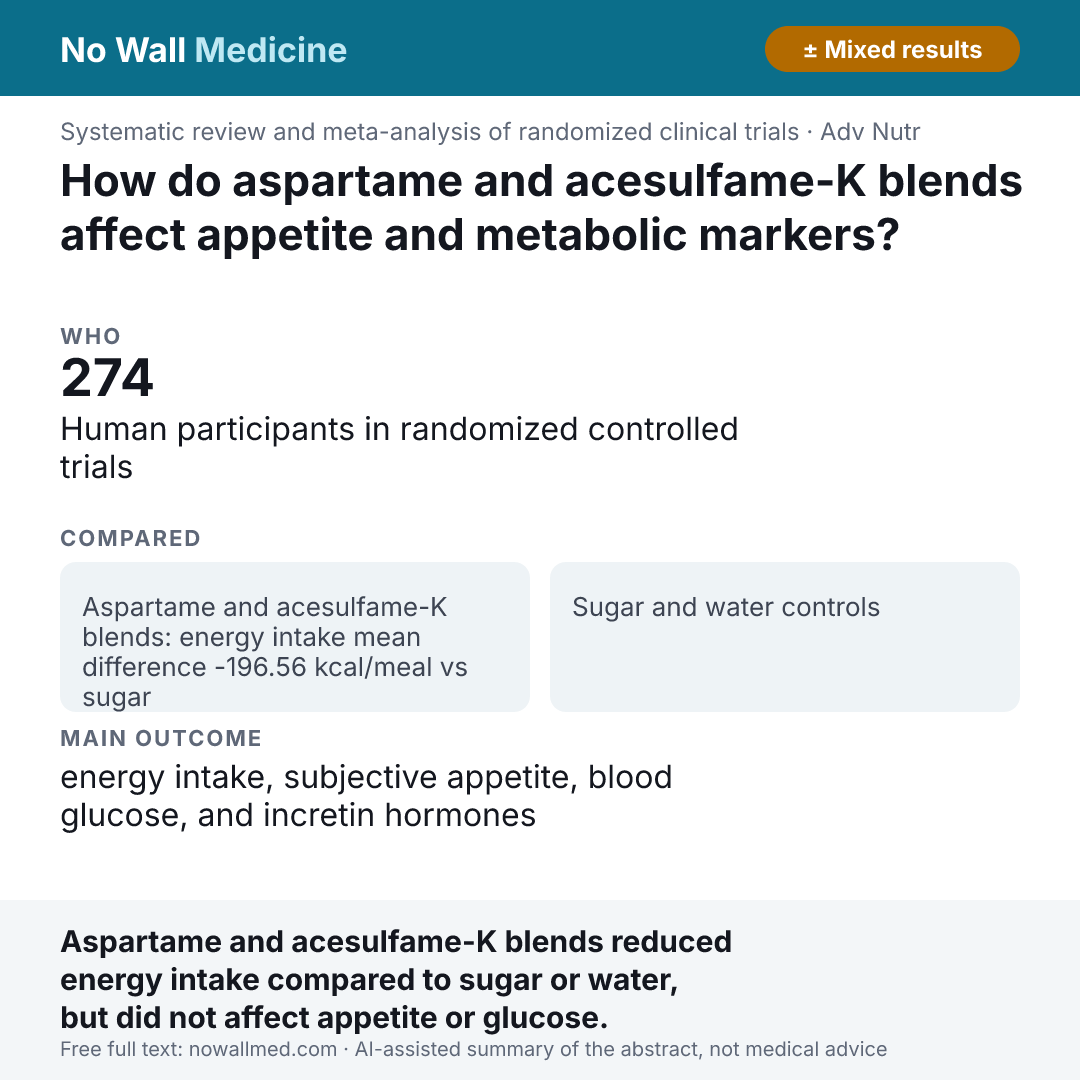
The Combined Effects of Aspartame and Acesulfame-K Blends on Appetite: A Systematic Review and Meta-Analysis of Randomized Clinical Trials
Systematic review and meta-analysis of randomized clinical trialsMixed results
How do aspartame and acesulfame-K blends affect appetite and metabolic markers?
Who
274
Human participants in randomized controlled trials
Compared
Aspartame and acesulfame-K blends: energy intake mean difference -196.56 kcal/meal vs sugar
Sugar and water controls
Main outcome
energy intake, subjective appetite, blood glucose, and incretin hormones
Result: mean difference -196.56 kcal/meal (95% CI -332.01, -61.11 kcal/meal) vs sugar
Bottom line: Aspartame and acesulfame-K blends reduced energy intake compared to sugar or water, but did not affect appetite or glucose.
Adv Nutr · 2022-09-04 · Save PNG
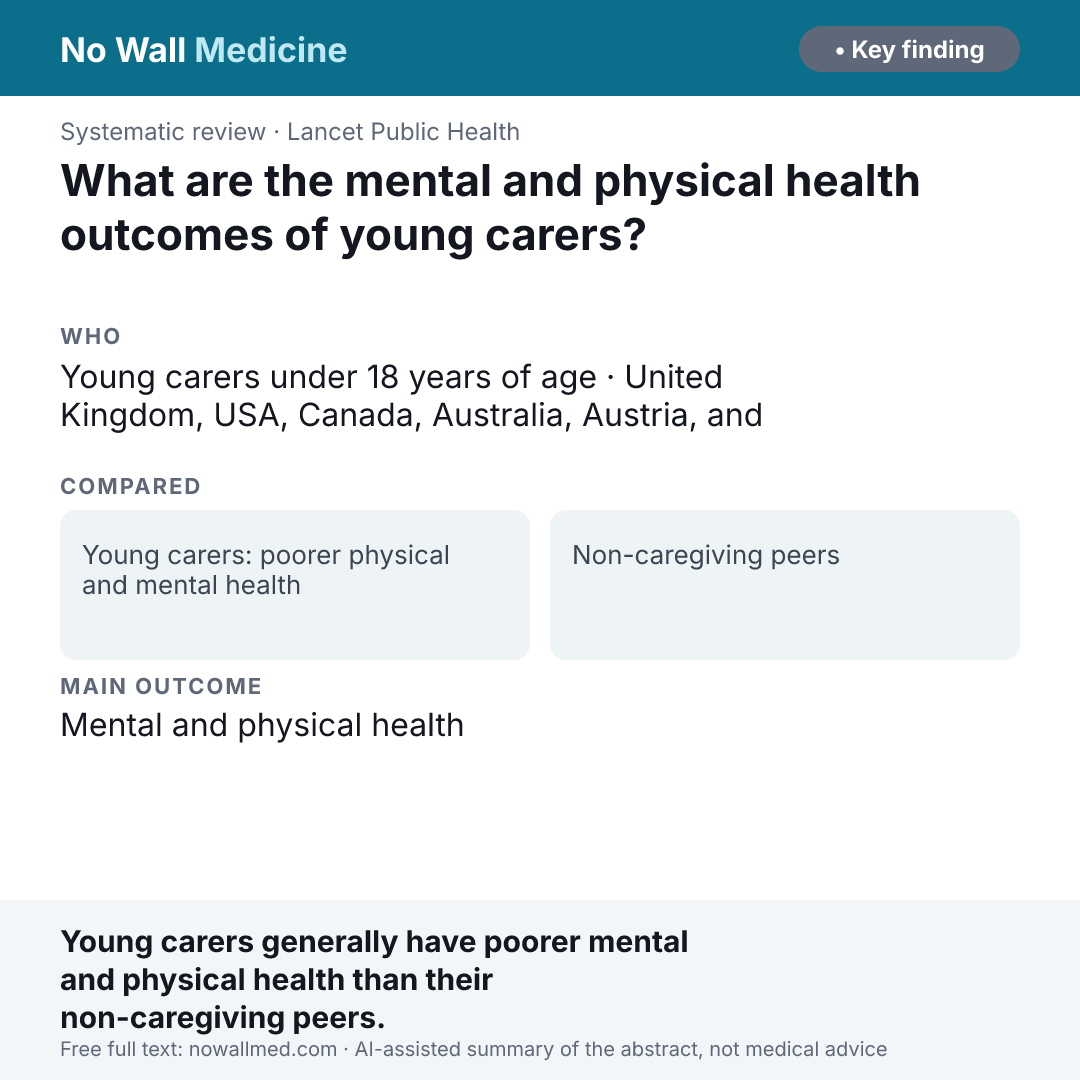
The mental and physical health of young carers: a systematic review
Systematic reviewKey finding
What are the mental and physical health outcomes of young carers?
Who
Young carers under 18 years of age · United Kingdom, USA, Canada, Australia, Austria, and 21 European countries
Compared
Young carers: poorer physical and mental health
Non-caregiving peers
Main outcome
Mental and physical health
Bottom line: Young carers generally have poorer mental and physical health than their non-caregiving peers.
Limitation: Most studies were cross-sectional and evidence is relatively weak.
Lancet Public Health · 2022-09-03 · Save PNG
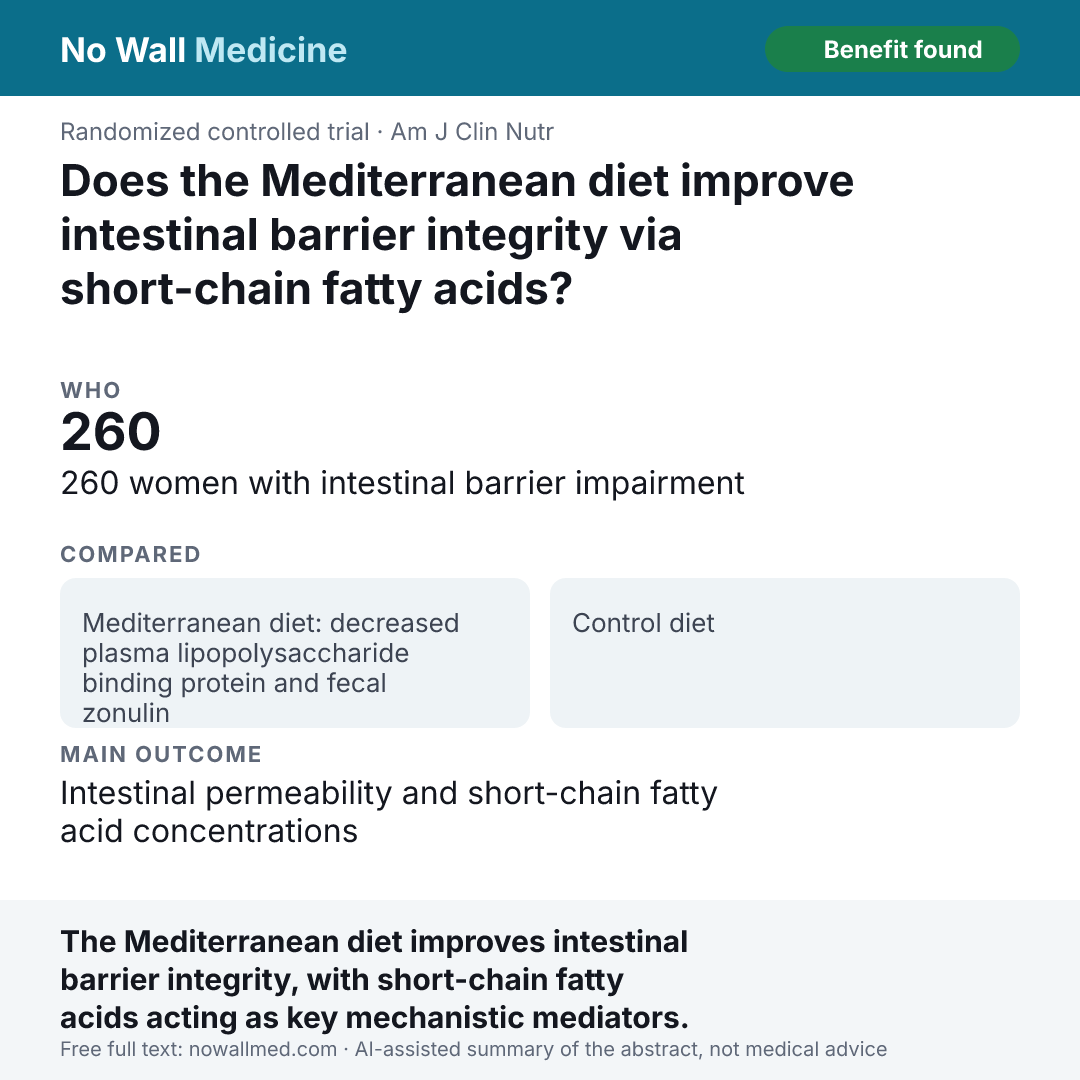
Short-chain fatty acids are key mediators of the favorable effects of the Mediterranean diet on intestinal barrier integrity: data from the randomized controlled LIBRE trial
Randomized controlled trialBenefit found
Does the Mediterranean diet improve intestinal barrier integrity via short-chain fatty acids?
Who
260
260 women with intestinal barrier impairment
Compared
Mediterranean diet: decreased plasma lipopolysaccharide binding protein and fecal zonulin
Control diet
Main outcome
Intestinal permeability and short-chain fatty acid concentrations
Bottom line: The Mediterranean diet improves intestinal barrier integrity, with short-chain fatty acids acting as key mechanistic mediators.
Am J Clin Nutr · 2022-09-03 · Save PNG
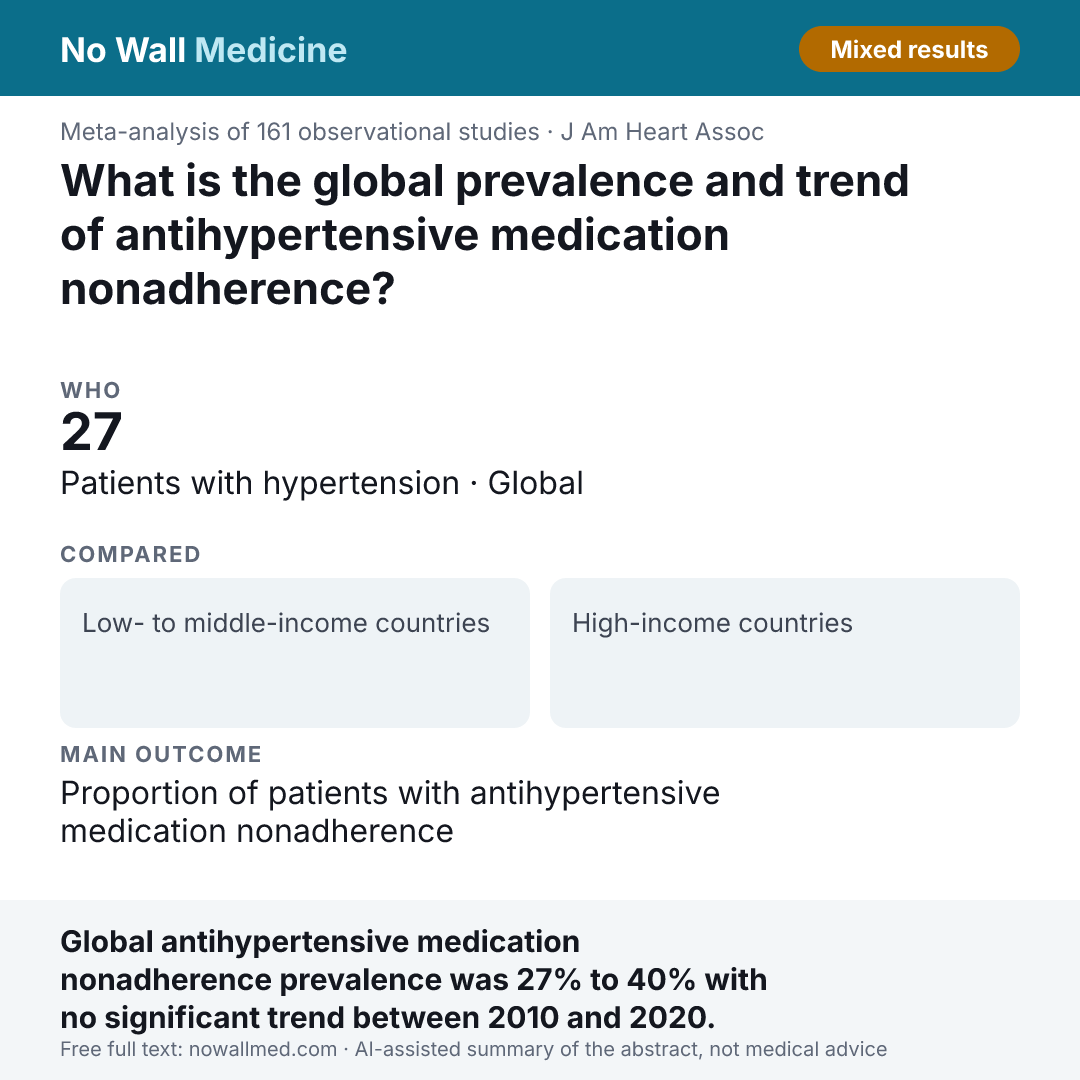
Global Burden, Regional Differences, Trends, and Health Consequences of Medication Nonadherence for Hypertension During 2010 to 2020: A Meta-Analysis Involving 27 Million Patients
Meta-analysis of 161 observational studiesMixed results
What is the global prevalence and trend of antihypertensive medication nonadherence?
Who
27
Patients with hypertension · Global
Compared
Low- to middle-income countries
High-income countries
Main outcome
Proportion of patients with antihypertensive medication nonadherence
Bottom line: Global antihypertensive medication nonadherence prevalence was 27% to 40% with no significant trend between 2010 and 2020.
Limitation: Current evidence is limited by high heterogeneity.
J Am Heart Assoc · 2022-09-03 · Save PNG
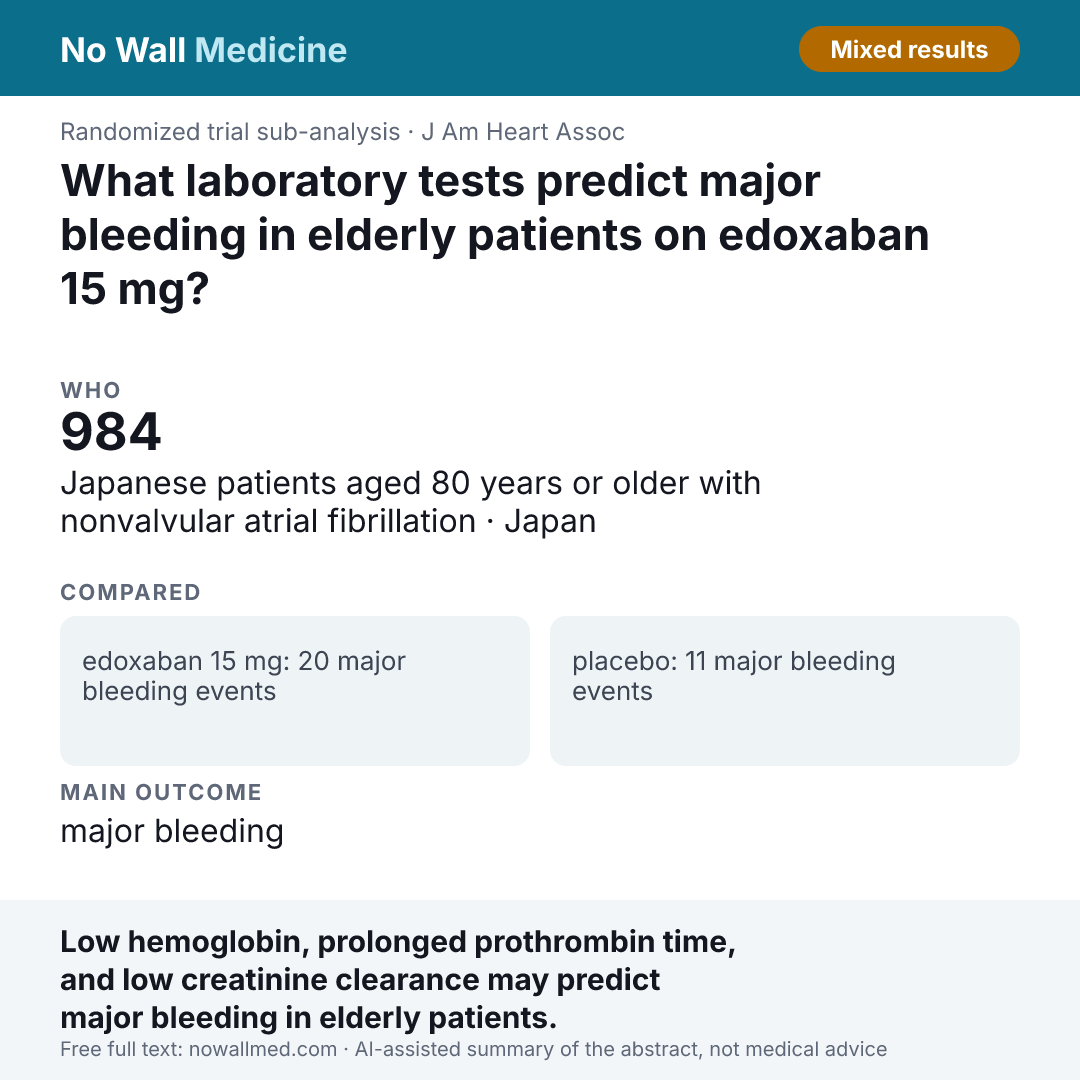
Laboratory Test Predictors for Major Bleeding in Elderly (≥80 Years) Patients With Nonvalvular Atrial Fibrillation Treated With Edoxaban 15 mg: Sub-Analysis of the ELDERCARE-AF Trial
Randomized trial sub-analysisMixed results
What laboratory tests predict major bleeding in elderly patients on edoxaban 15 mg?
Who
984
Japanese patients aged 80 years or older with nonvalvular atrial fibrillation · Japan
Compared
edoxaban 15 mg: 20 major bleeding events
placebo: 11 major bleeding events
Main outcome
major bleeding
Result: hemoglobin <12.3 g/dL adjusted hazard ratio 3.57 (95% CI 1.10-11.55)
Bottom line: Low hemoglobin, prolonged prothrombin time, and low creatinine clearance may predict major bleeding in elderly patients.
J Am Heart Assoc · 2022-09-03 · Save PNG
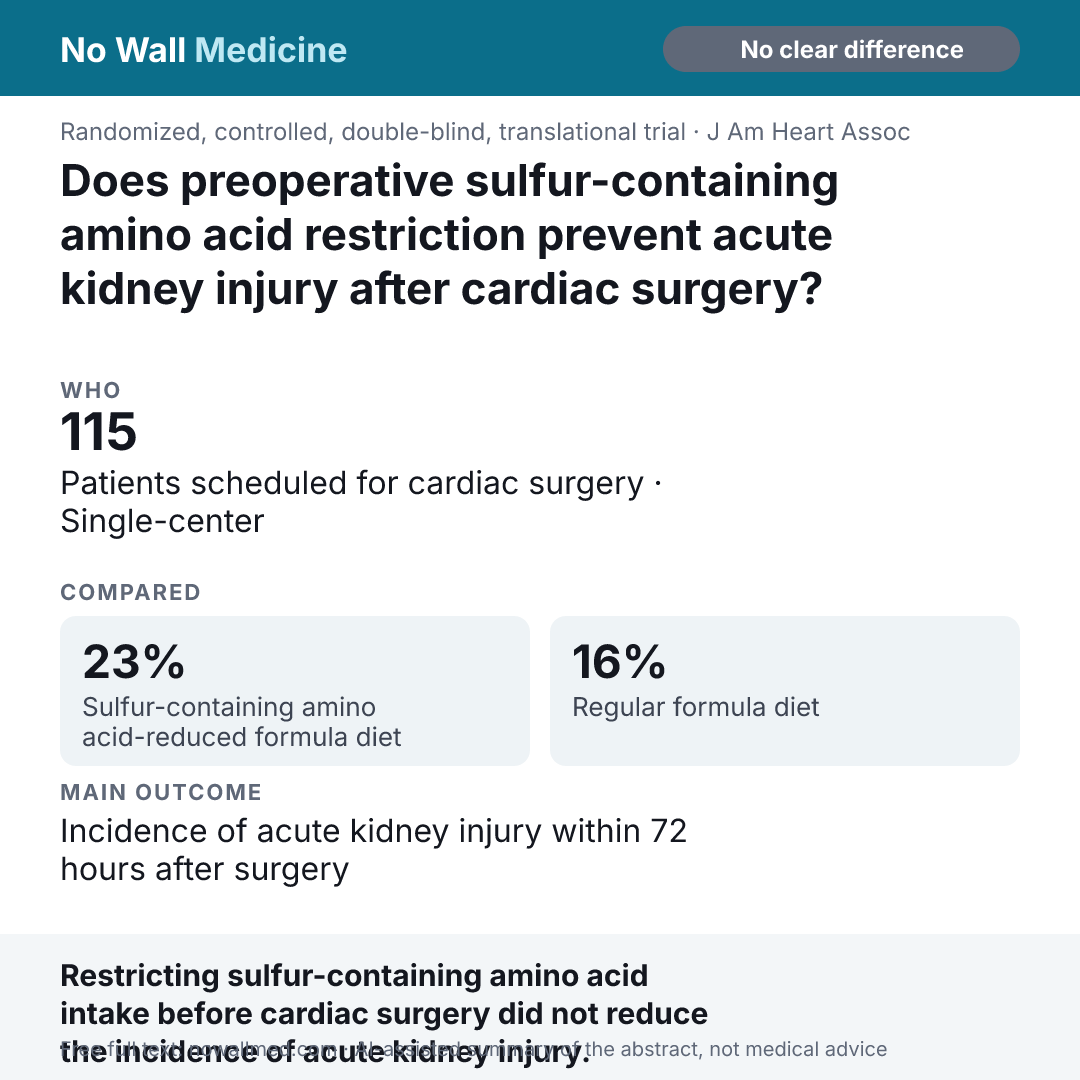
Preoperative Short-Term Restriction of Sulfur-Containing Amino Acid Intake for Prevention of Acute Kidney Injury After Cardiac Surgery: A Randomized, Controlled, Double-Blind, Translational Trial
Randomized, controlled, double-blind, translational trialNo clear difference
Does preoperative sulfur-containing amino acid restriction prevent acute kidney injury after cardiac surgery?
Who
115
Patients scheduled for cardiac surgery · Single-center
Compared
23%Sulfur-containing amino acid-reduced formula diet
16%Regular formula diet
Main outcome
Incidence of acute kidney injury within 72 hours after surgery
Bottom line: Restricting sulfur-containing amino acid intake before cardiac surgery did not reduce the incidence of acute kidney injury.
J Am Heart Assoc · 2022-09-03 · Save PNG
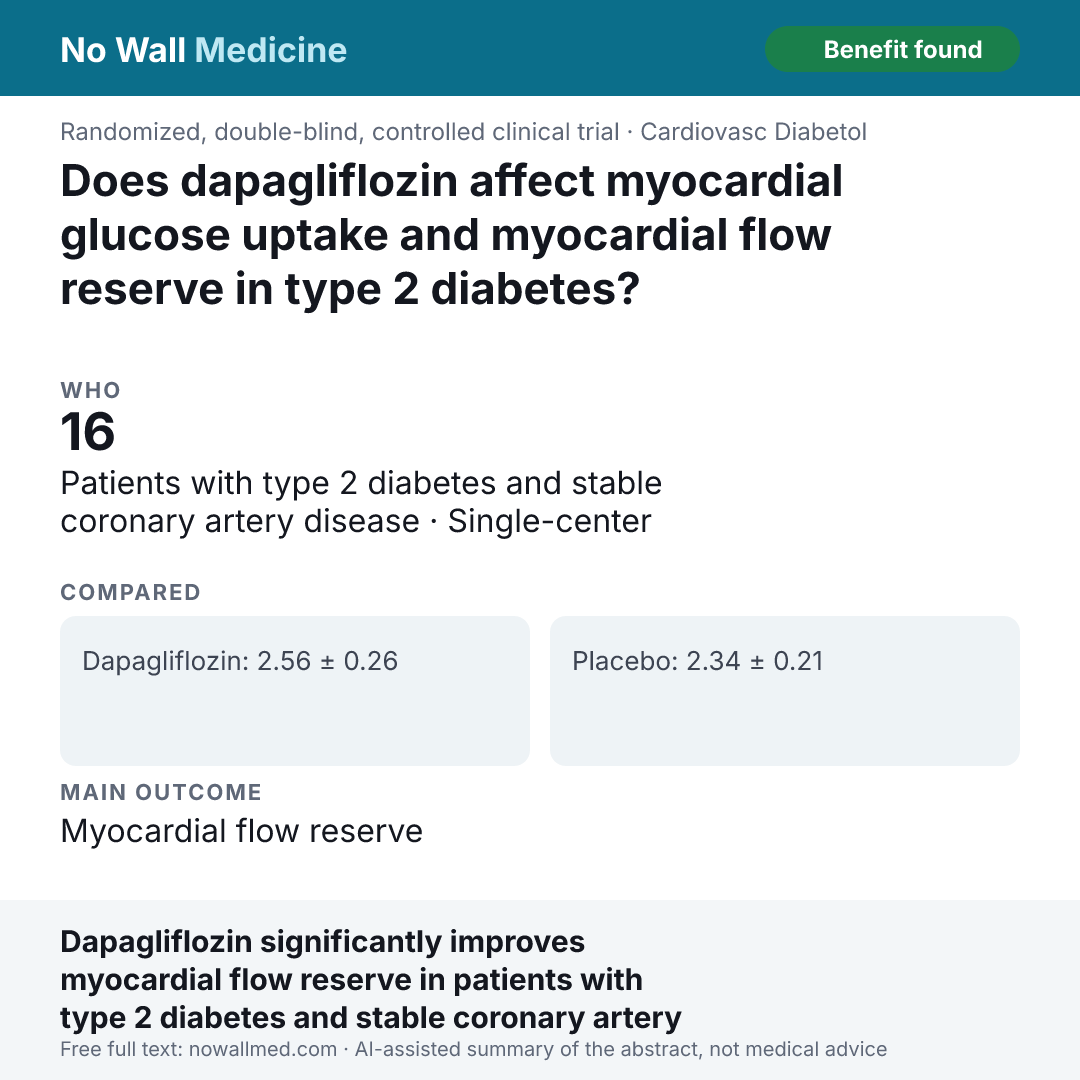
Dapagliflozin improves myocardial flow reserve in patients with type 2 diabetes: the DAPAHEART Trial: a preliminary report
Randomized, double-blind, controlled clinical trialBenefit found
Does dapagliflozin affect myocardial glucose uptake and myocardial flow reserve in type 2 diabetes?
Who
16
Patients with type 2 diabetes and stable coronary artery disease · Single-center
Compared
Dapagliflozin: 2.56 ± 0.26
Placebo: 2.34 ± 0.21
Main outcome
Myocardial flow reserve
Result: p = 0.001
Bottom line: Dapagliflozin significantly improves myocardial flow reserve in patients with type 2 diabetes and stable coronary artery disease.
Limitation: This is a preliminary report with a small sample size of 16 patients.
Cardiovasc Diabetol · 2022-09-03 · Save PNG
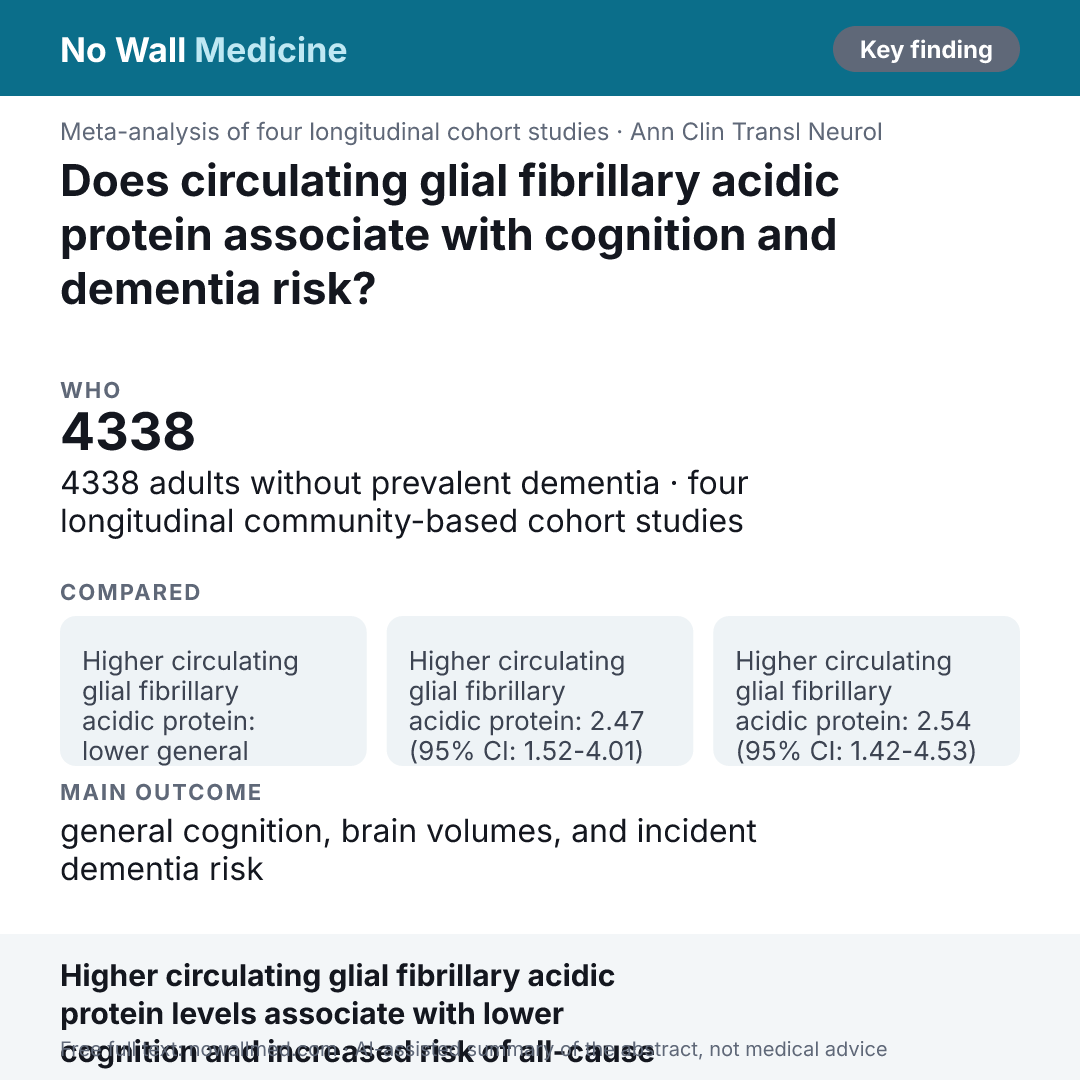
A population-based meta-analysis of circulating GFAP for cognition and dementia risk
Meta-analysis of four longitudinal cohort studiesKey finding
Does circulating glial fibrillary acidic protein associate with cognition and dementia risk?
Who
4338
4338 adults without prevalent dementia · four longitudinal community-based cohort studies
Compared
Higher circulating glial fibrillary acidic protein: lower general cognition (ß = -0.09, [95% CI: -0.15 to -0.03])
Higher circulating glial fibrillary acidic protein: 2.47 (95% CI: 1.52-4.01) hazard ratio for all-cause dementia
Higher circulating glial fibrillary acidic protein: 2.54 (95% CI: 1.42-4.53) hazard ratio for Alzheimer's disease dementia
Main outcome
general cognition, brain volumes, and incident dementia risk
Result: hazard ratio 2.47 (95% CI: 1.52-4.01) for all-cause dementia
Bottom line: Higher circulating glial fibrillary acidic protein levels associate with lower cognition and increased risk of all-cause and Alzheimer's disease dementia.
Ann Clin Transl Neurol · 2022-09-03 · Save PNG
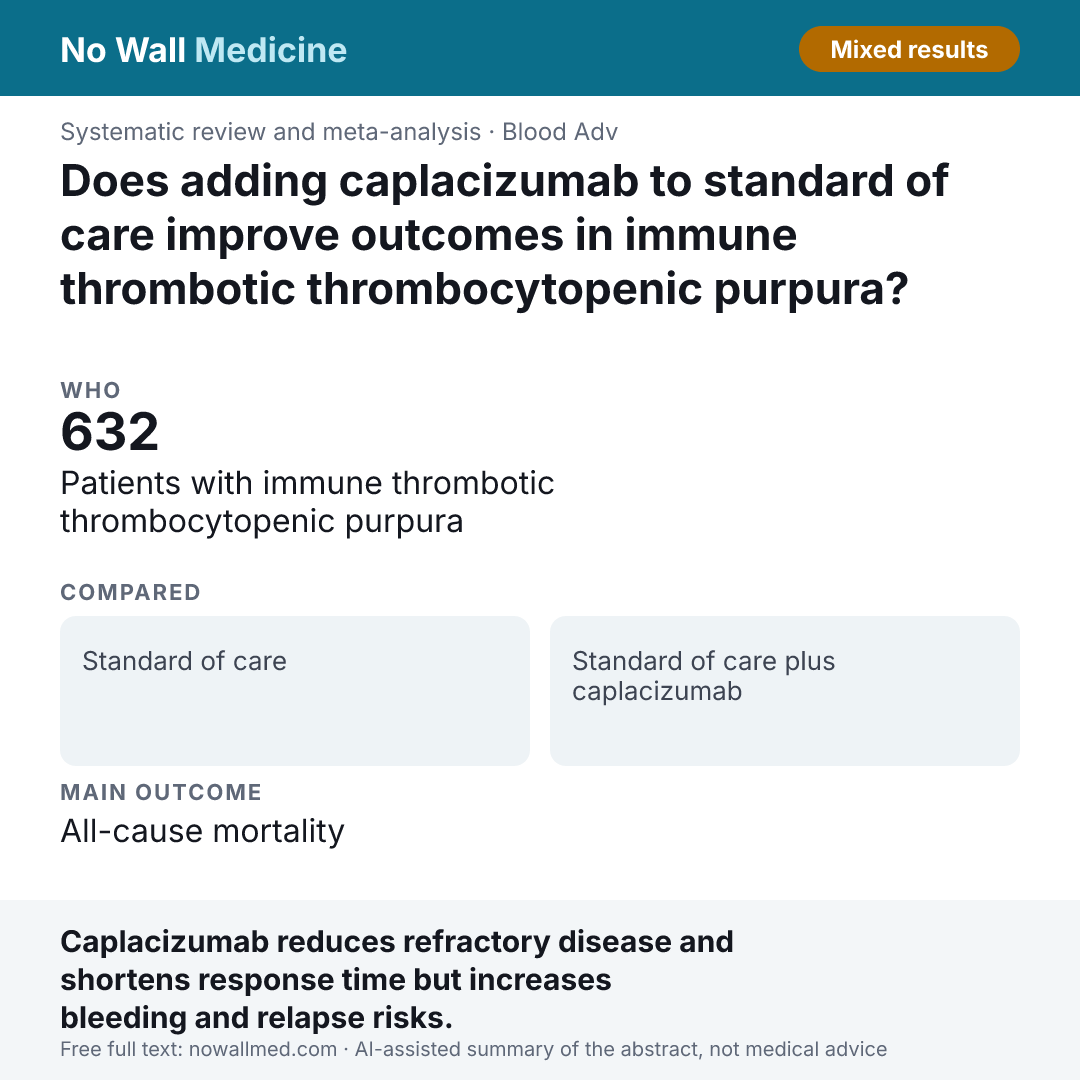
Adding caplacizumab to standard of care in thrombotic thrombocytopenic purpura: a systematic review and meta-analysis
Systematic review and meta-analysisMixed results
Does adding caplacizumab to standard of care improve outcomes in immune thrombotic thrombocytopenic purpura?
Who
632
Patients with immune thrombotic thrombocytopenic purpura
Compared
Standard of care
Standard of care plus caplacizumab
Main outcome
All-cause mortality
Result: relative risk 0.21 (95% CI 0.05-1.74) in randomized controlled trials
Bottom line: Caplacizumab reduces refractory disease and shortens response time but increases bleeding and relapse risks.
Limitation: Observational studies were at high risk of bias.
Blood Adv · 2022-09-03 · Save PNG
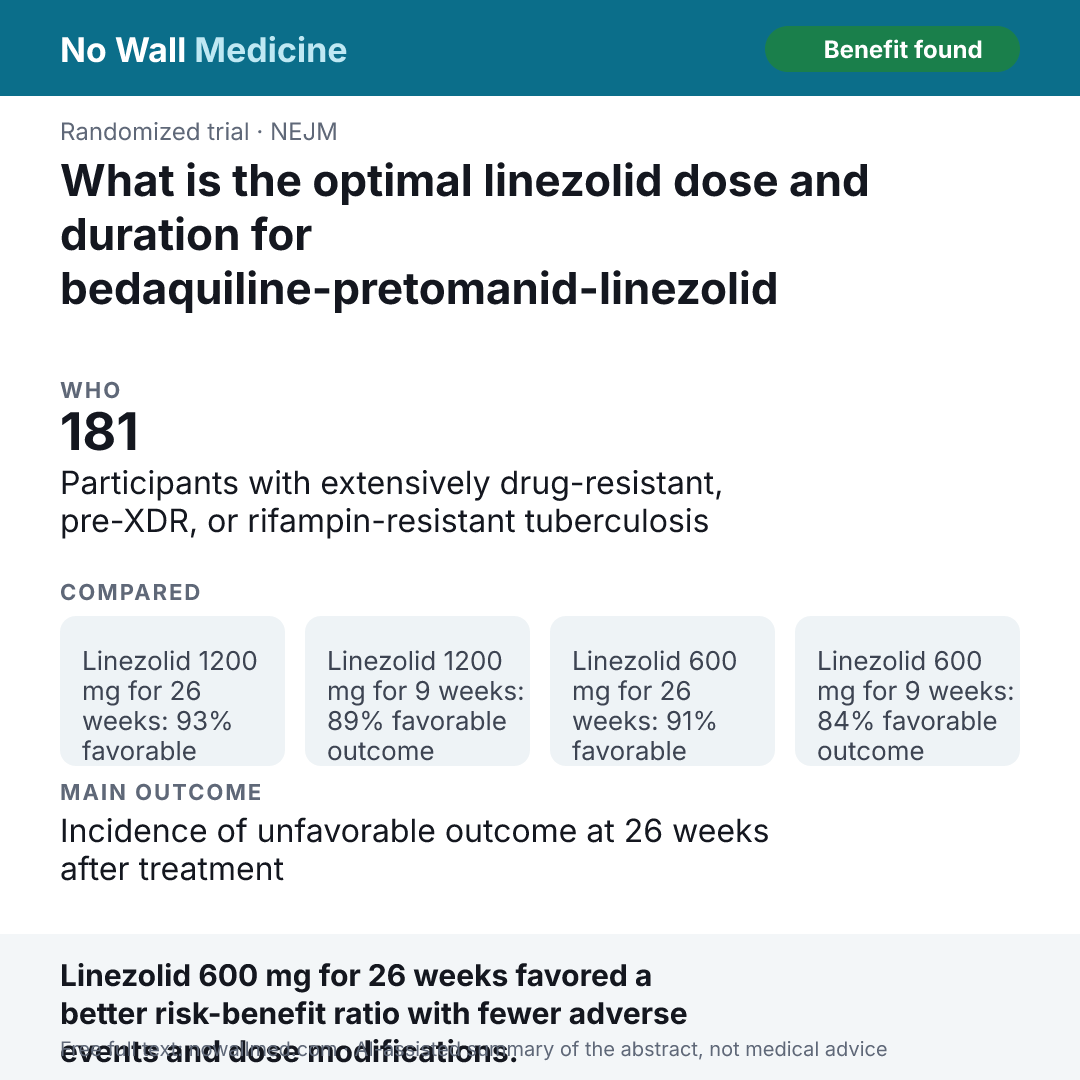
Bedaquiline-Pretomanid-Linezolid Regimens for Drug-Resistant Tuberculosis
Randomized trialBenefit found
What is the optimal linezolid dose and duration for bedaquiline-pretomanid-linezolid regimens?
Who
181
Participants with extensively drug-resistant, pre-XDR, or rifampin-resistant tuberculosis
Compared
Linezolid 1200 mg for 26 weeks: 93% favorable outcome
Linezolid 1200 mg for 9 weeks: 89% favorable outcome
Linezolid 600 mg for 26 weeks: 91% favorable outcome
Linezolid 600 mg for 9 weeks: 84% favorable outcome
Main outcome
Incidence of unfavorable outcome at 26 weeks after treatment
Bottom line: Linezolid 600 mg for 26 weeks favored a better risk-benefit ratio with fewer adverse events and dose modifications.
Funded by: TB Alliance and others
NEJM · 2022-09-02 · Save PNG
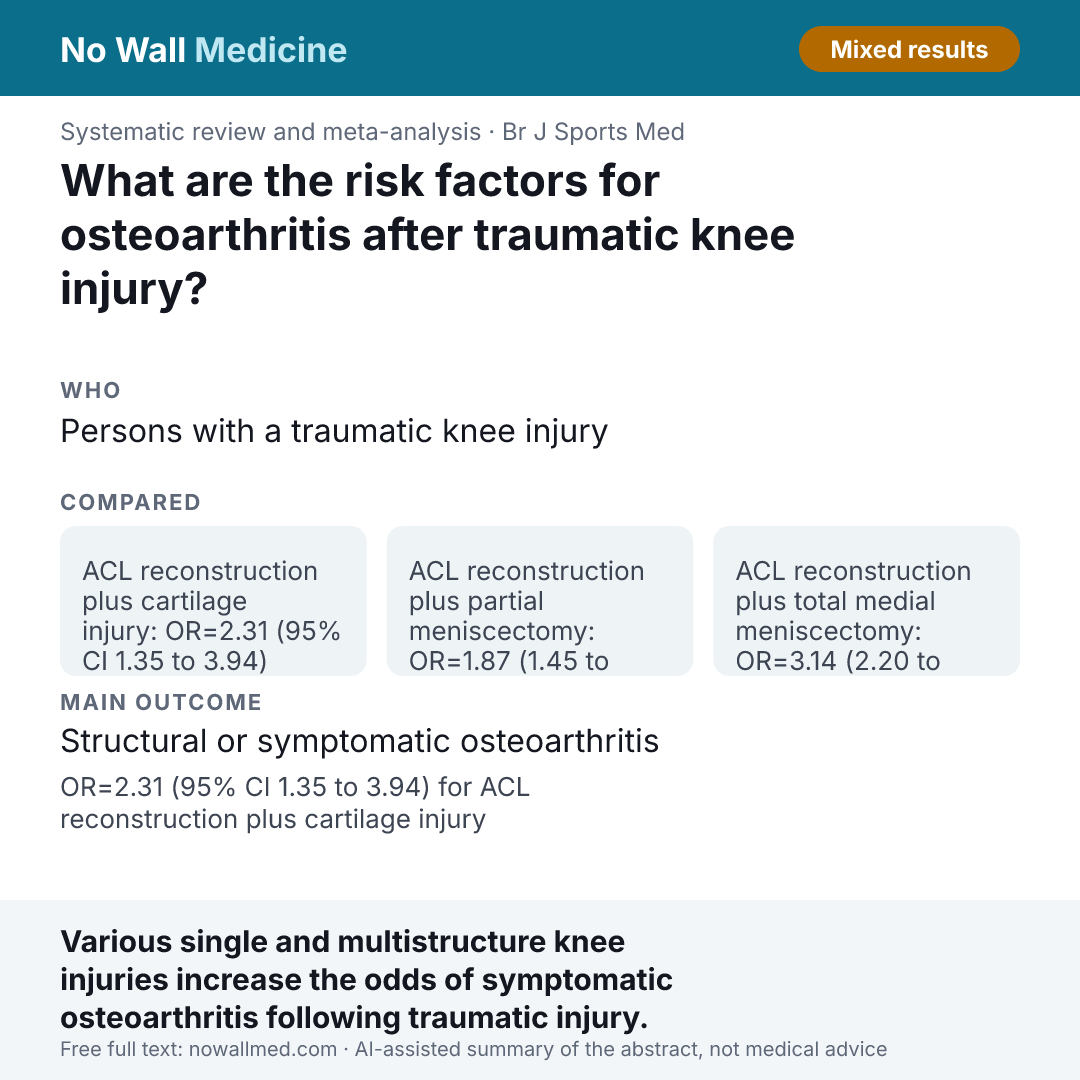
Risk factors for knee osteoarthritis after traumatic knee injury: a systematic review and meta-analysis of randomised controlled trials and cohort studies for the OPTIKNEE Consensus
Systematic review and meta-analysisMixed results
What are the risk factors for osteoarthritis after traumatic knee injury?
Who
Persons with a traumatic knee injury
Compared
ACL reconstruction plus cartilage injury: OR=2.31 (95% CI 1.35 to 3.94)
ACL reconstruction plus partial meniscectomy: OR=1.87 (1.45 to 2.42)
ACL reconstruction plus total medial meniscectomy: OR=3.14 (2.20 to 4.48)
Main outcome
Structural or symptomatic osteoarthritis
Result: OR=2.31 (95% CI 1.35 to 3.94) for ACL reconstruction plus cartilage injury
Bottom line: Various single and multistructure knee injuries increase the odds of symptomatic osteoarthritis following traumatic injury.
Limitation: Risk factor heterogeneity, high risk of bias, and inconsistency in risk factors and osteoarthritis definition.
Br J Sports Med · 2022-09-02 · Save PNG