Visual abstracts
New randomized trials and meta-analyses from leading journals at a glance: who was studied, what was compared, and what was found. Every paper is free to read in full.
All specialtiesCardiology 4763Oncology 4042Gastroenterology & Hepatology 1902Infectious Disease 3756Neurology 1872Psychiatry & Mental Health 2214Pulmonology 2042Critical Care 1319Endocrinology & Diabetes 2544Pediatrics 2889Surgery 2479Orthopedics & Sports Medicine 917Neurosurgery 525Cardiothoracic & Vascular Surgery 656Plastic & Reconstructive Surgery 574Nephrology 1107Rheumatology 810Hematology 1090Dermatology 611Ophthalmology 532Obstetrics & Gynecology 1645Public & Global Health 1037Radiology & Imaging 617Anesthesiology 957Urology 745ENT (Otolaryngology) 494Emergency Medicine 481Allergy & Immunology 309Geriatrics 972Family Medicine & Primary Care 533Medical Genetics & Genomics 659Pathology & Laboratory Medicine 156Physical Medicine & Rehabilitation 734Palliative Care 421Nutrition 1560Digital Health & AI 2133General Medicine 318
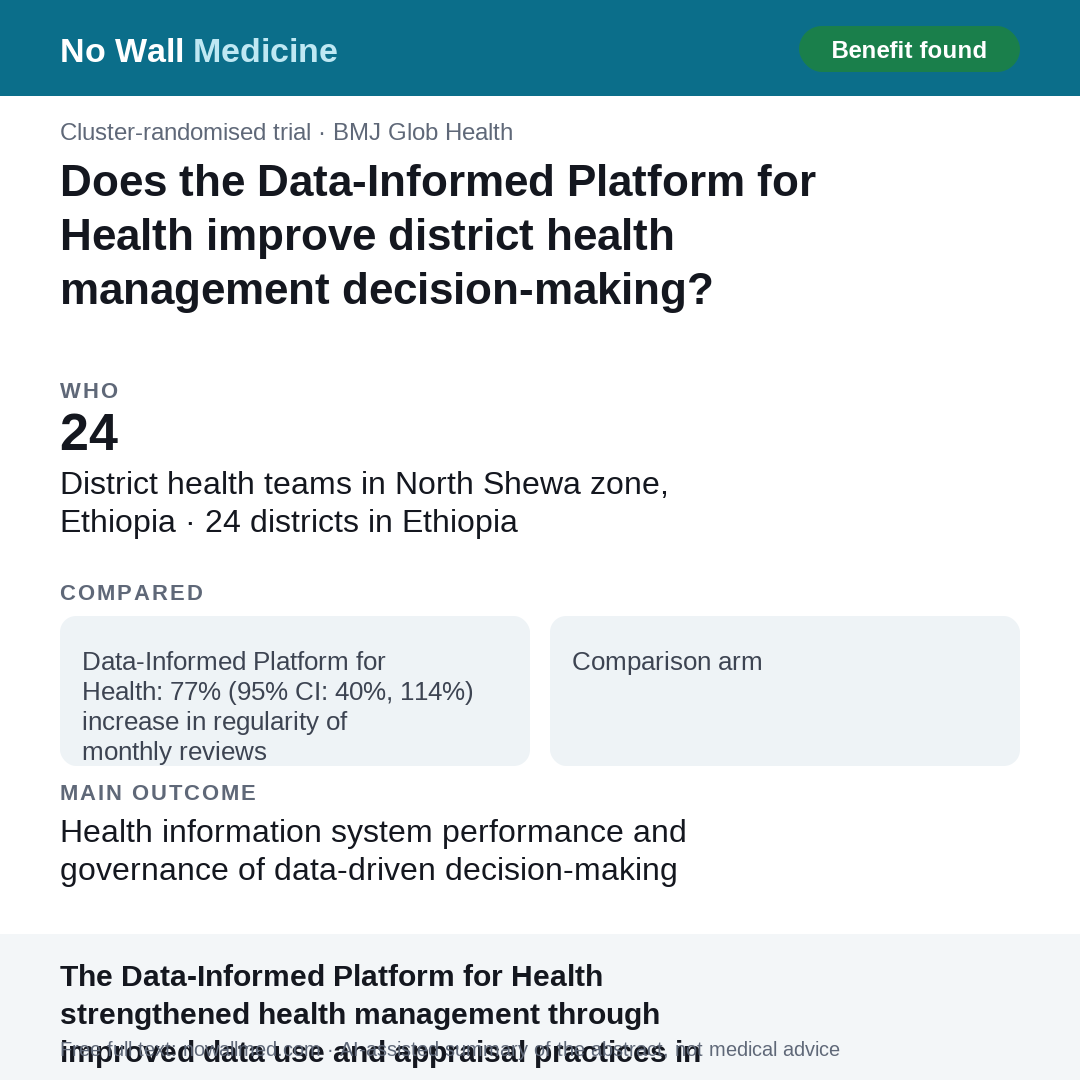
Data-driven decision-making for district health management: a cluster-randomised study in 24 districts of Ethiopia
Cluster-randomised trialBenefit found
Does the Data-Informed Platform for Health improve district health management decision-making?
Who
24
District health teams in North Shewa zone, Ethiopia · 24 districts in Ethiopia
Compared
Data-Informed Platform for Health: 77% (95% CI: 40%, 114%) increase in regularity of monthly reviews
Comparison arm
Main outcome
Health information system performance and governance of data-driven decision-making
Result: 77% (95% CI: 40%, 114%) increase in regularity of monthly reviews
Bottom line: The Data-Informed Platform for Health strengthened health management through improved data use and appraisal practices in Ethiopia.
BMJ Glob Health · 2024-02-29Download image
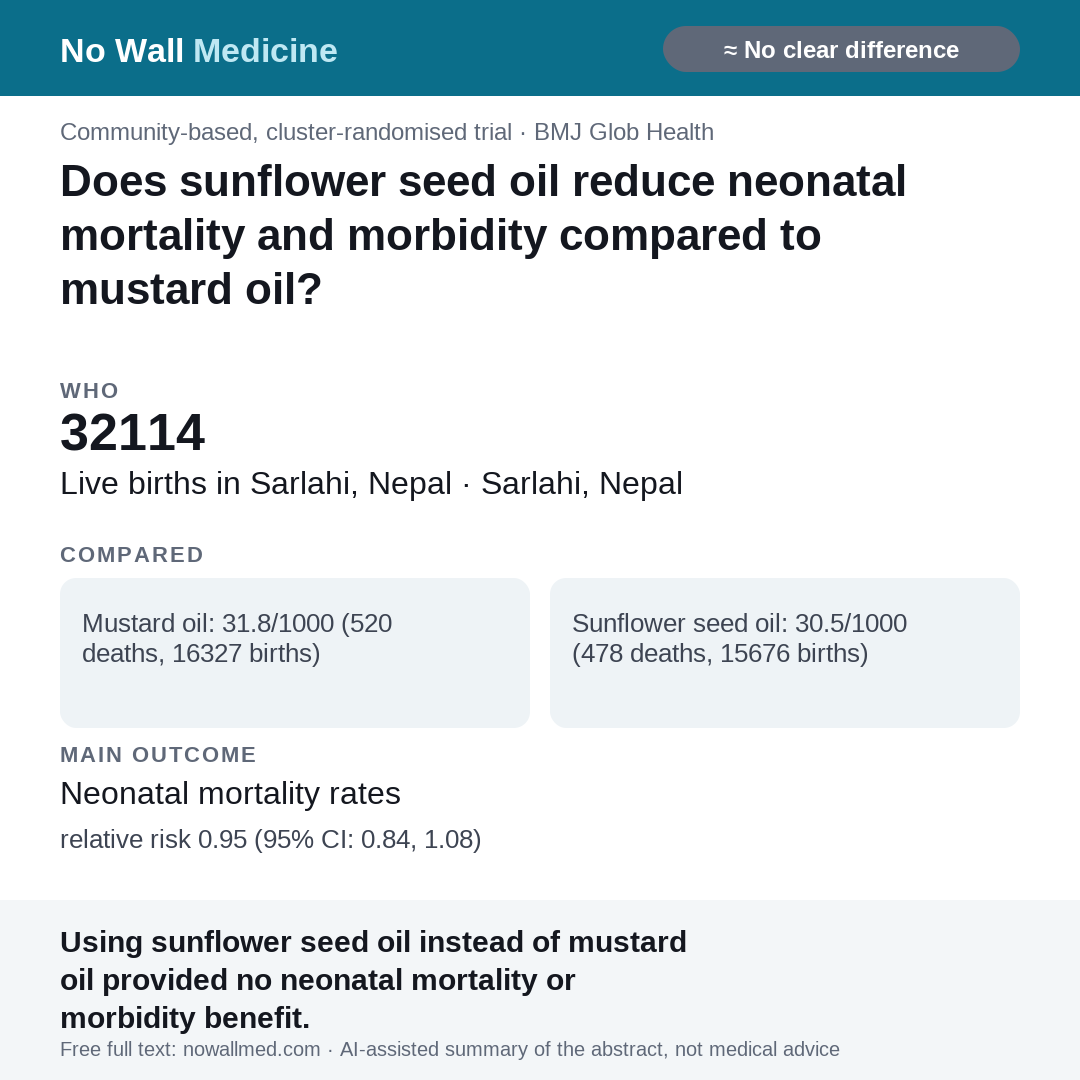
Impact of topical applications of sunflower seed oil on neonatal mortality and morbidity in southern Nepal: a community-based, cluster-randomised trial
Community-based, cluster-randomised trialNo clear difference
Does sunflower seed oil reduce neonatal mortality and morbidity compared to mustard oil?
Who
32114
Live births in Sarlahi, Nepal · Sarlahi, Nepal
Compared
Mustard oil: 31.8/1000 (520 deaths, 16327 births)
Sunflower seed oil: 30.5/1000 (478 deaths, 15676 births)
Main outcome
Neonatal mortality rates
Result: relative risk 0.95 (95% CI: 0.84, 1.08)
Bottom line: Using sunflower seed oil instead of mustard oil provided no neonatal mortality or morbidity benefit.
BMJ Glob Health · 2024-02-29Download image
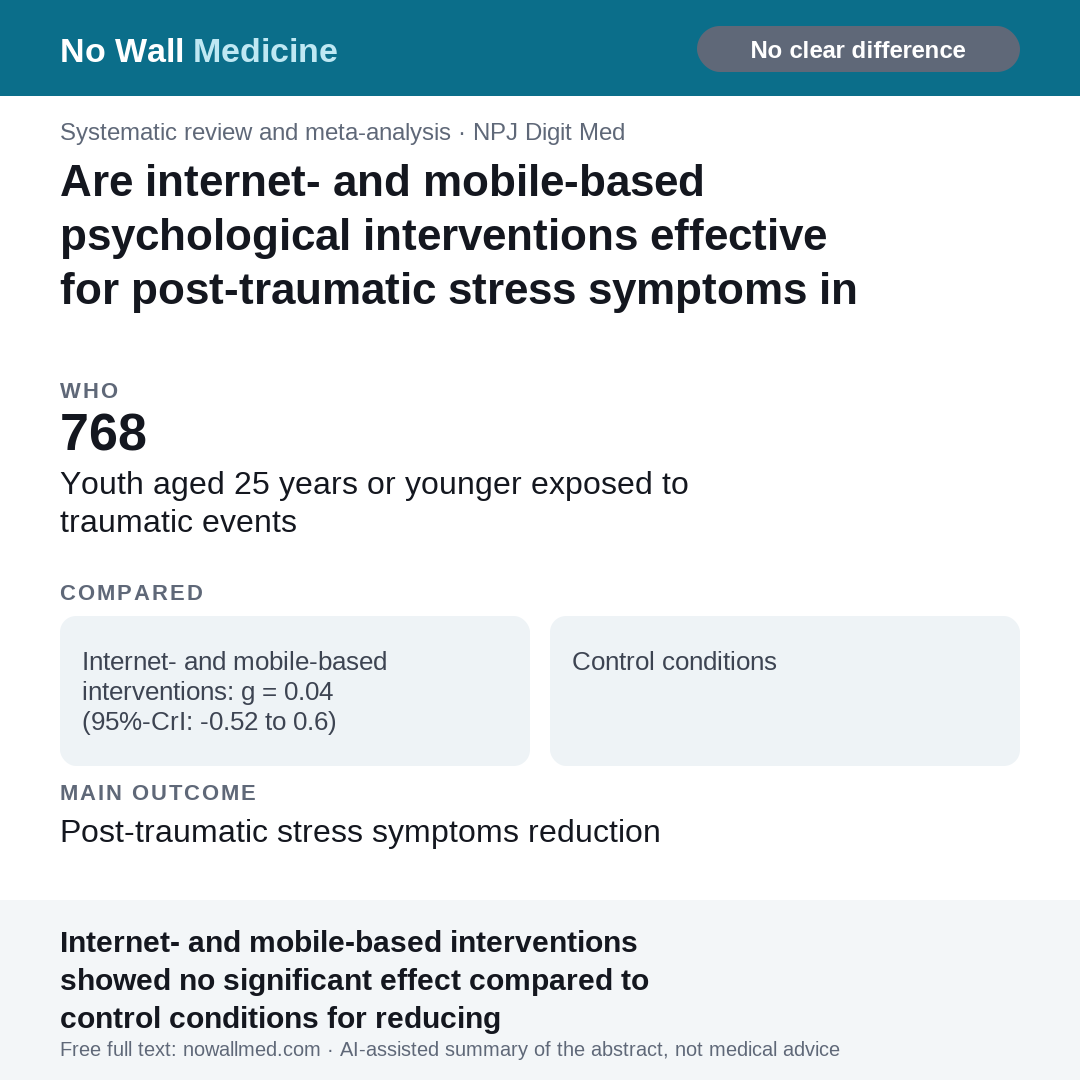
Internet- and mobile-based psychological interventions for post-traumatic stress symptoms in youth: a systematic review and meta-analysis
Systematic review and meta-analysisNo clear difference
Are internet- and mobile-based psychological interventions effective for post-traumatic stress symptoms in youth?
Who
768
Youth aged 25 years or younger exposed to traumatic events
Compared
Internet- and mobile-based interventions: g = 0.04 (95%-CrI: -0.52 to 0.6)
Control conditions
Main outcome
Post-traumatic stress symptoms reduction
Result: g = 0.04 (95%-CrI: -0.52 to 0.6)
Bottom line: Internet- and mobile-based interventions showed no significant effect compared to control conditions for reducing post-traumatic stress symptoms in youth.
Limitation: Scarcity of studies, most being feasibility studies rather than adequately powered randomized controlled trials.
NPJ Digit Med · 2024-02-29Download image
Antibiotic Exposure and Risk of New-Onset Inflammatory Bowel Disease: A Systematic Review and Dose-Response Meta-Analysis
Systematic review and dose-response meta-analysisHarm found
Is antibiotic exposure associated with the risk of new-onset inflammatory bowel disease?
Who
153,027
Patients with inflammatory bowel disease
Compared
Prescription-based studies: OR 1.41 (95% CI 1.29-1.53)
Questionnaire-based studies: OR 1.35 (95% CI 1.08-1.68)
Main outcome
Risk of new-onset inflammatory bowel disease
Result: pooled OR 1.41 (95% CI 1.29-1.53) for prescription-based studies
Bottom line: Antibiotic exposure is significantly associated with increased risk of new-onset inflammatory bowel disease with a nonlinear dose-response relationship.
Clin Gastroenterol Hepatol · 2024-02-28Download image

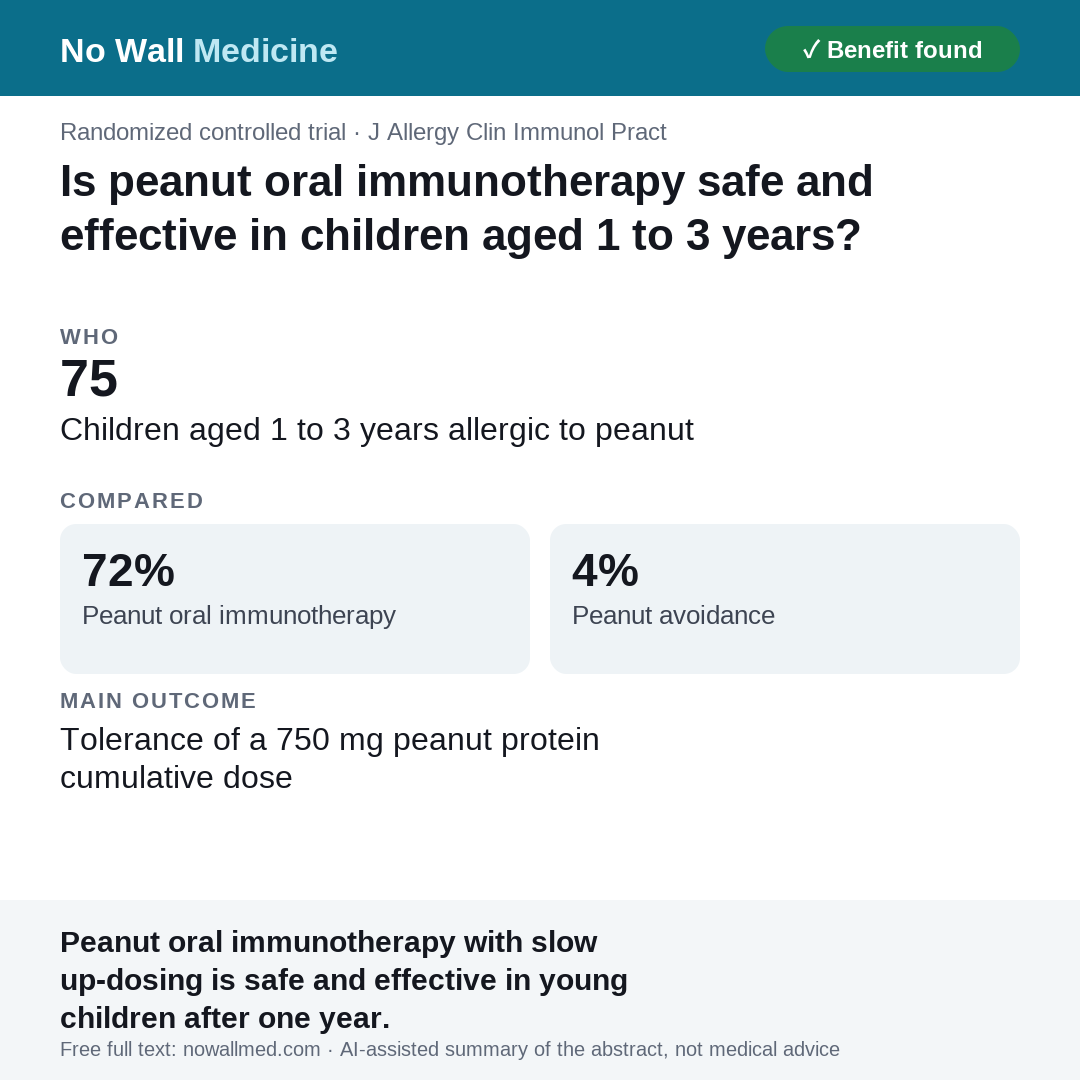
High Degree of Desensitization After 1 Year of Early-Life Peanut Oral Immunotherapy: Small Children Oral Immunotherapy (SmaChO) Randomized Controlled Trial
Randomized controlled trialBenefit found
Is peanut oral immunotherapy safe and effective in children aged 1 to 3 years?
Who
75
Children aged 1 to 3 years allergic to peanut
Compared
72%Peanut oral immunotherapy (36 of 50 children)
4%Peanut avoidance (1 of 25)
Main outcome
Tolerance of a 750 mg peanut protein cumulative dose
Bottom line: Peanut oral immunotherapy with slow up-dosing is safe and effective in young children after one year.
J Allergy Clin Immunol Pract · 2024-02-28Download image
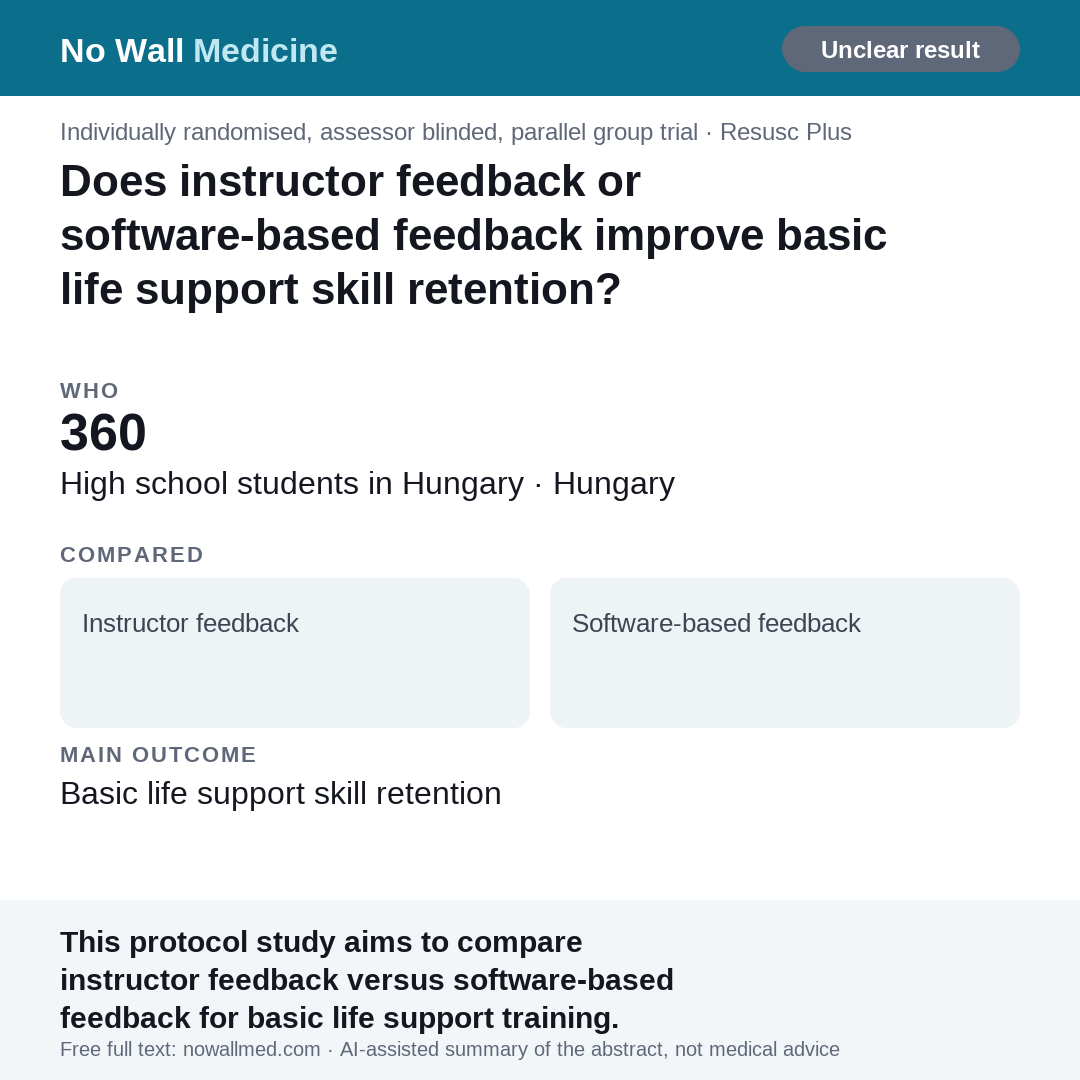
The investigation of the efficiency of basic life support education among high school students: Protocol, design and implementation of an interventional, prospective longitudinal, individually randomised, parallel 1:1 grouped trial
Individually randomised, assessor blinded, parallel group trialUnclear result
Does instructor feedback or software-based feedback improve basic life support skill retention?
Who
360
High school students in Hungary · Hungary
Compared
Instructor feedback
Software-based feedback
Main outcome
Basic life support skill retention
Bottom line: This protocol study aims to compare instructor feedback versus software-based feedback for basic life support training.
Resusc Plus · 2024-02-28Download image
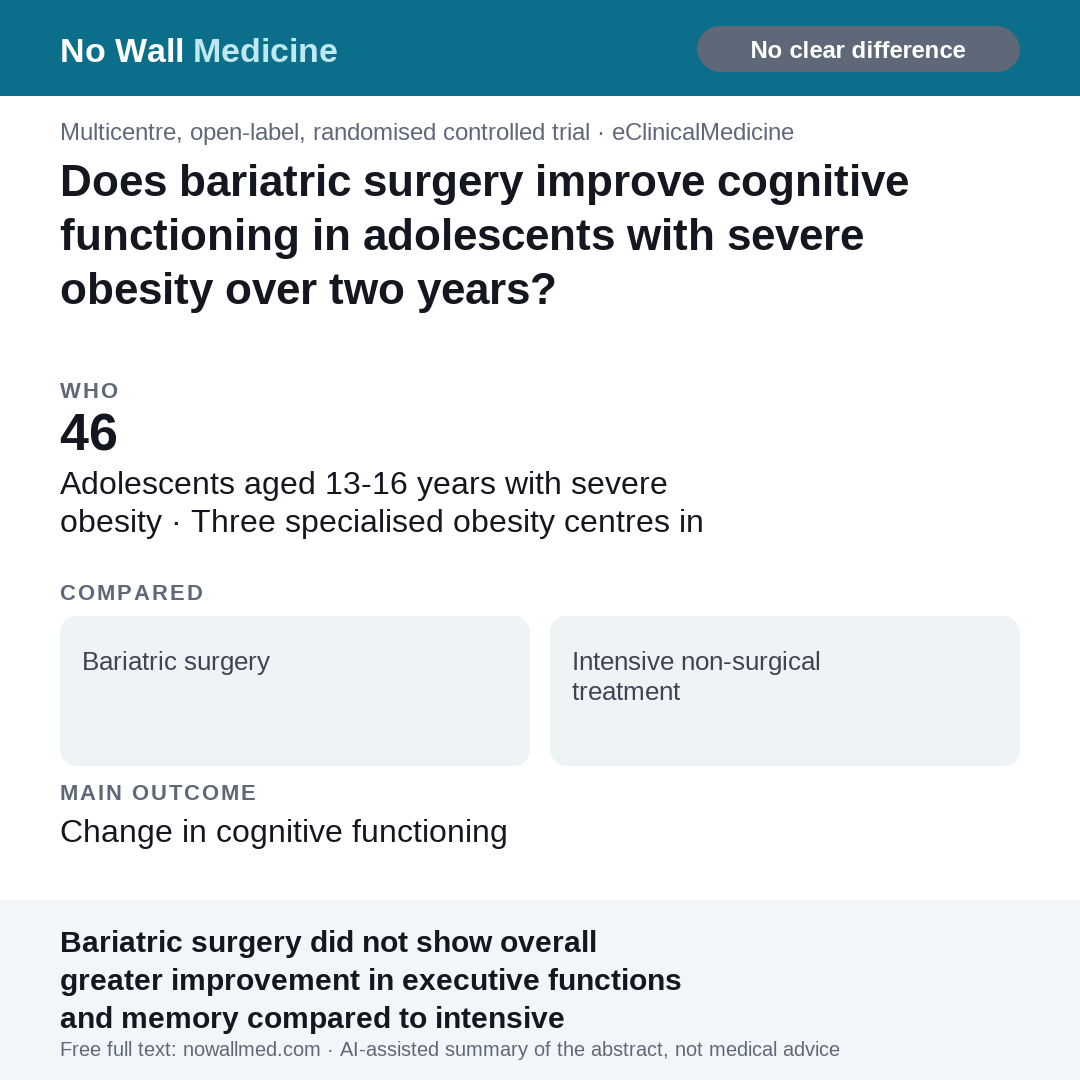
Cognitive functioning in adolescents with severe obesity undergoing bariatric surgery or intensive non-surgical treatment in Sweden (AMOS2): a multicentre, open-label, randomised controlled trial
Multicentre, open-label, randomised controlled trialNo clear difference
Does bariatric surgery improve cognitive functioning in adolescents with severe obesity over two years?
Who
46
Adolescents aged 13-16 years with severe obesity · Three specialised obesity centres in Sweden
Compared
Bariatric surgery
Intensive non-surgical treatment
Main outcome
Change in cognitive functioning
Bottom line: Bariatric surgery did not show overall greater improvement in executive functions and memory compared to intensive non-surgical treatment.
Limitation: Lack of statistical power is a potential limitation.
Funded by: Sweden's innovation agency (VINNOVA) and others
eClinicalMedicine · 2024-02-27Download image
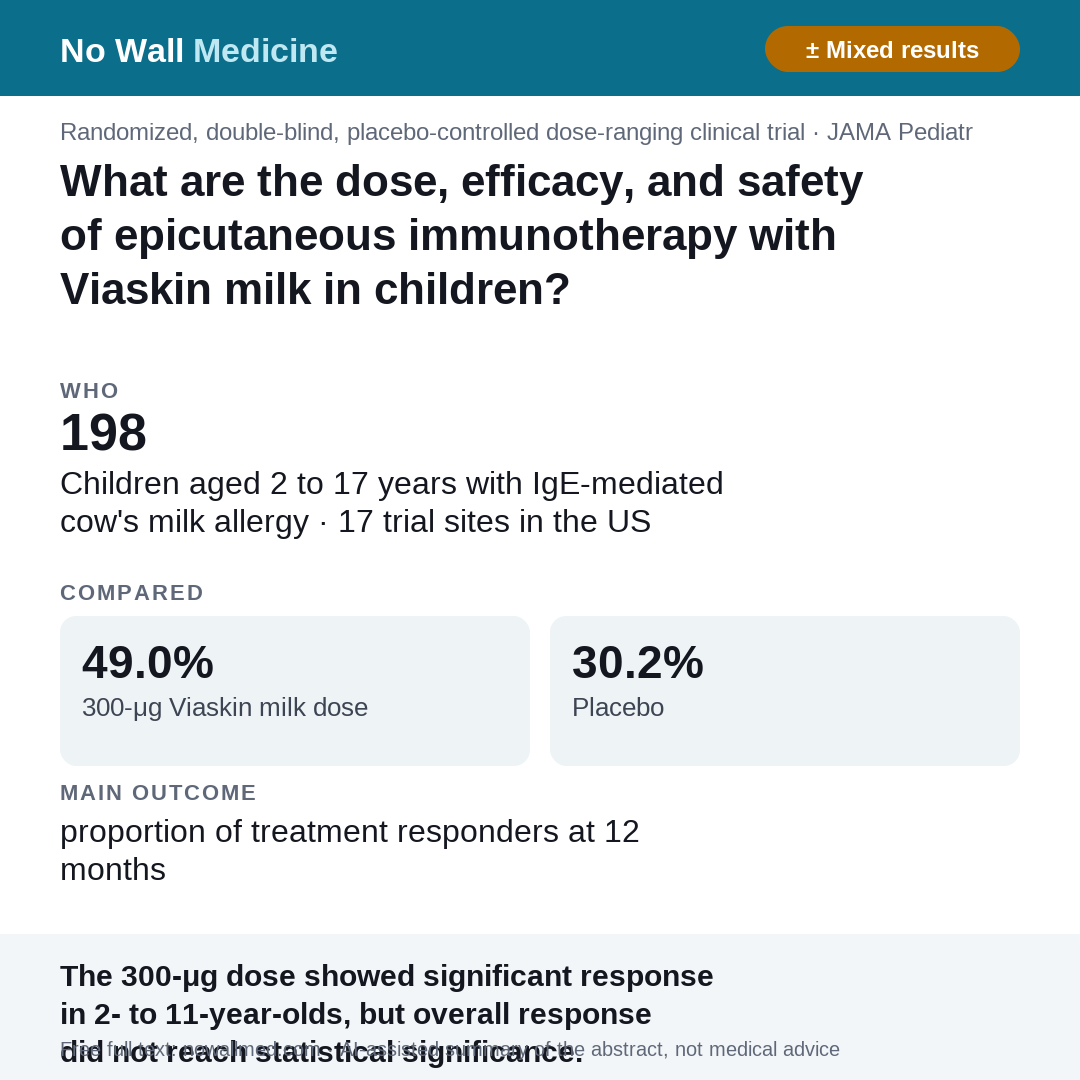
Varying Doses of Epicutaneous Immunotherapy With Viaskin Milk vs Placebo in Children With Cow's Milk Allergy: A Randomized Clinical Trial
Randomized, double-blind, placebo-controlled dose-ranging clinical trialMixed results
What are the dose, efficacy, and safety of epicutaneous immunotherapy with Viaskin milk in children?
Who
198
Children aged 2 to 17 years with IgE-mediated cow's milk allergy · 17 trial sites in the US and Canada
Compared
49.0%300-μg Viaskin milk dose
30.2%Placebo
Main outcome
proportion of treatment responders at 12 months
Result: odds ratio 2.19 (95% CI 0.91-5.41)
Bottom line: The 300-μg dose showed significant response in 2- to 11-year-olds, but overall response did not reach statistical significance.
JAMA Pediatr · 2024-02-26Download image
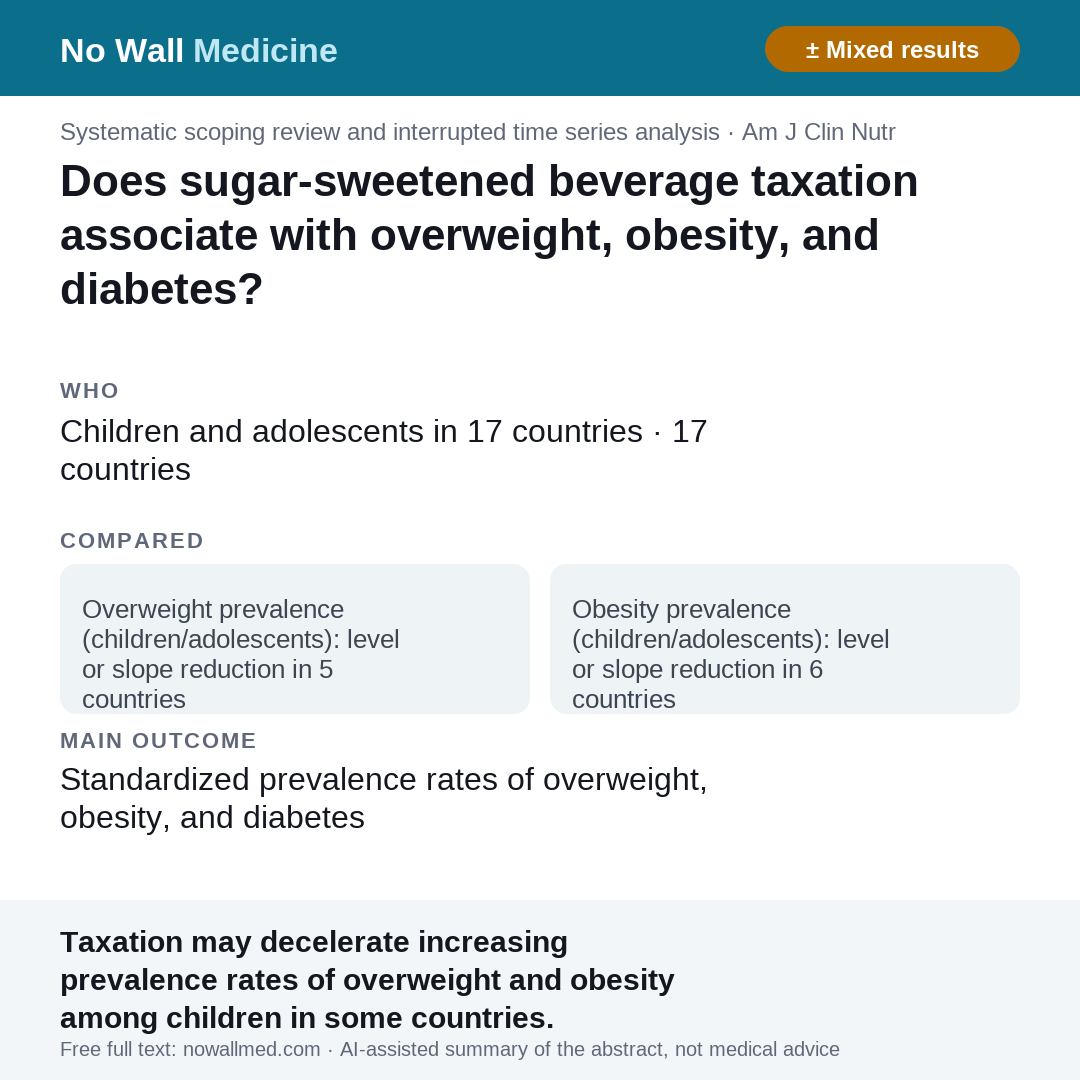
National taxation on sugar-sweetened beverages and its association with overweight, obesity, and diabetes
Systematic scoping review and interrupted time series analysisMixed results
Does sugar-sweetened beverage taxation associate with overweight, obesity, and diabetes?
Who
Children and adolescents in 17 countries · 17 countries
Compared
Overweight prevalence (children/adolescents): level or slope reduction in 5 countries
Obesity prevalence (children/adolescents): level or slope reduction in 6 countries
Main outcome
Standardized prevalence rates of overweight, obesity, and diabetes
Bottom line: Taxation may decelerate increasing prevalence rates of overweight and obesity among children in some countries.
Am J Clin Nutr · 2024-02-26Download image
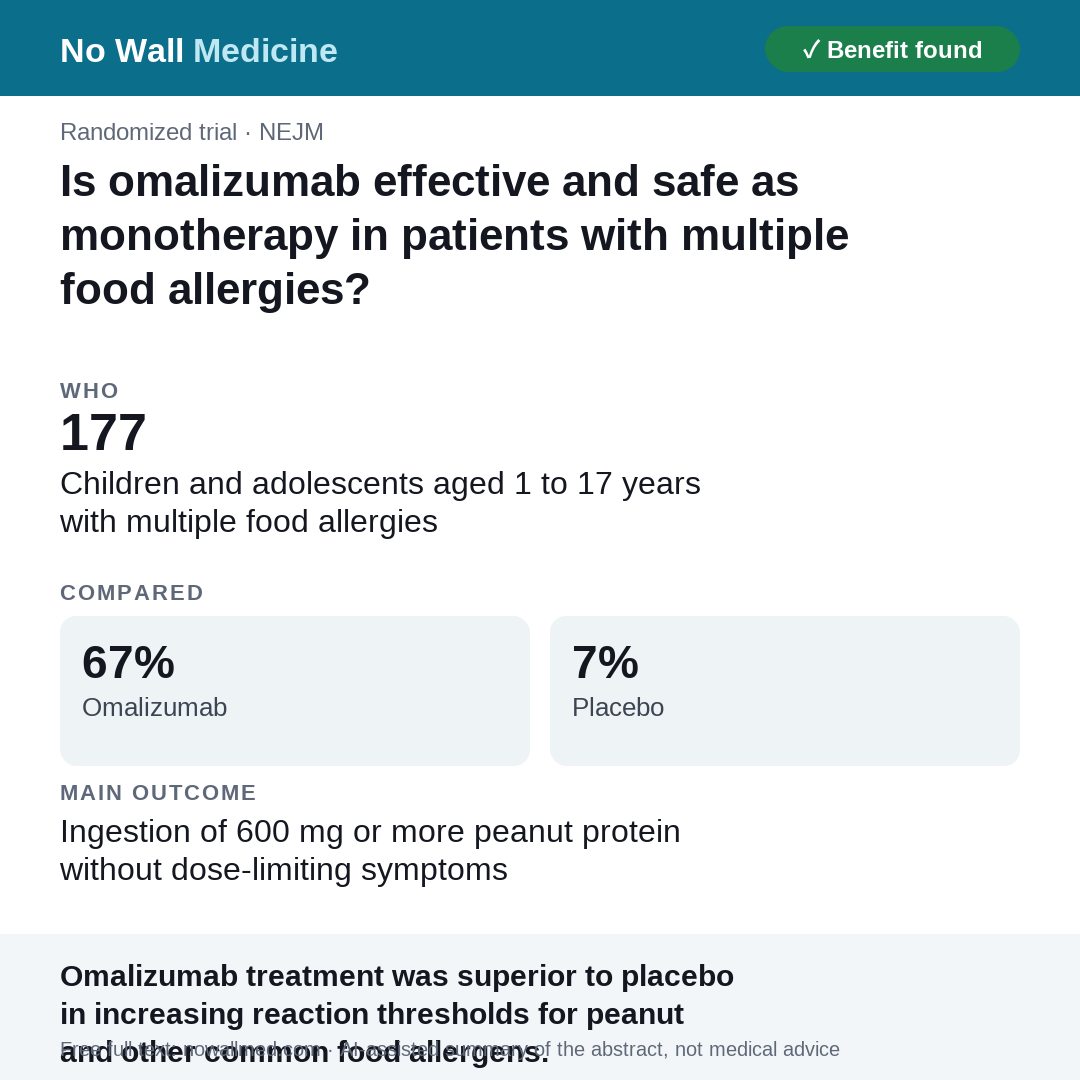
Omalizumab for the Treatment of Multiple Food Allergies
Randomized trialBenefit found
Is omalizumab effective and safe as monotherapy in patients with multiple food allergies?
Who
177
Children and adolescents aged 1 to 17 years with multiple food allergies
Compared
67%Omalizumab (79/118)
7%Placebo (4/59)
Main outcome
Ingestion of 600 mg or more peanut protein without dose-limiting symptoms
Bottom line: Omalizumab treatment was superior to placebo in increasing reaction thresholds for peanut and other common food allergens.
Funded by: National Institute of Allergy and Infectious Diseases and others
NEJM · 2024-02-25Download image
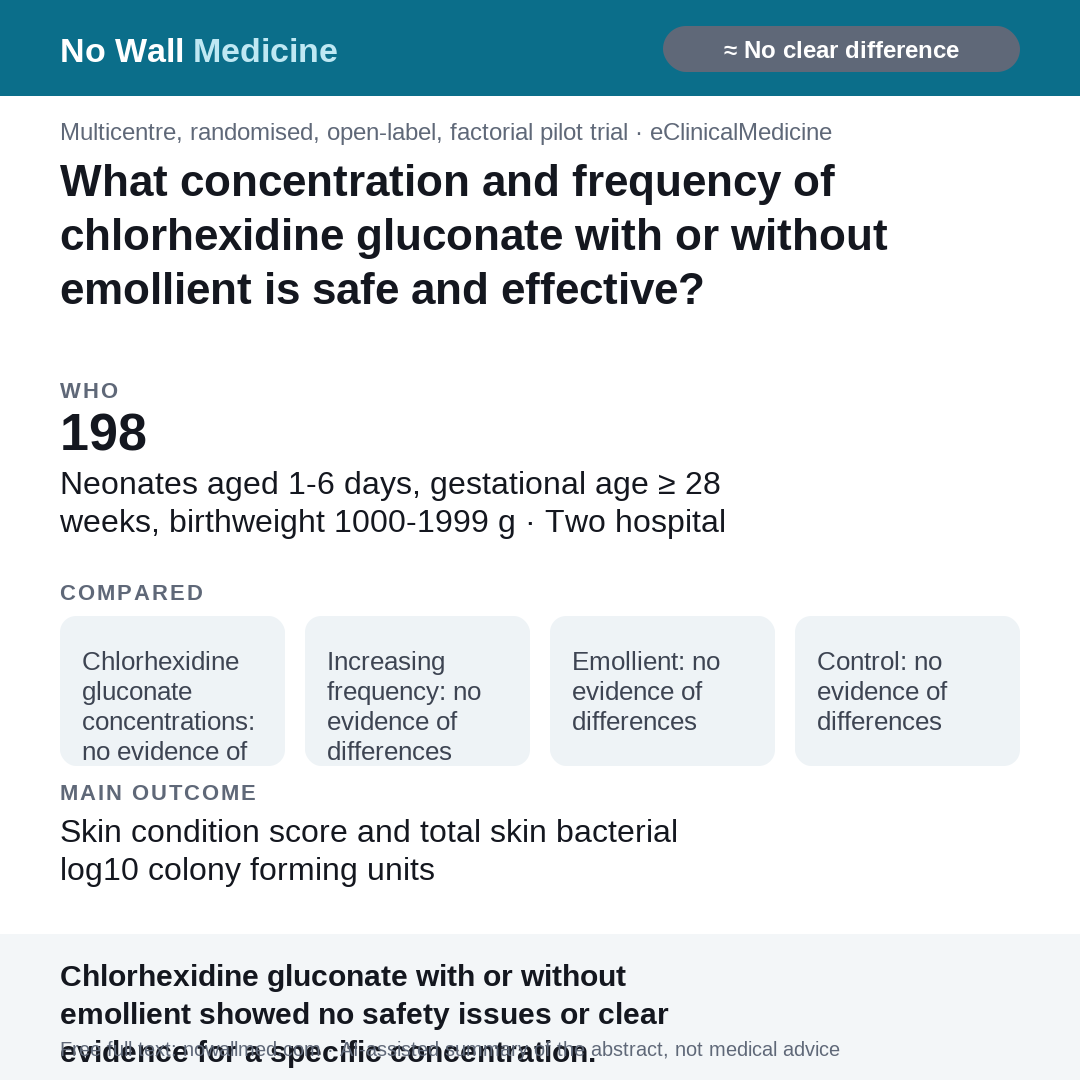
Safety and efficacy of whole-body chlorhexidine gluconate cleansing with or without emollient in hospitalised neonates (NeoCHG): a multicentre, randomised, open-label, factorial pilot trial
Multicentre, randomised, open-label, factorial pilot trialNo clear difference
What concentration and frequency of chlorhexidine gluconate with or without emollient is safe and effective?
Who
198
Neonates aged 1-6 days, gestational age ≥ 28 weeks, birthweight 1000-1999 g · Two hospital sites in South Africa and Bangladesh
Compared
Chlorhexidine gluconate concentrations: no evidence of differences
Increasing frequency: no evidence of differences
Emollient: no evidence of differences
Control: no evidence of differences
Main outcome
Skin condition score and total skin bacterial log10 colony forming units
Bottom line: Chlorhexidine gluconate with or without emollient showed no safety issues or clear evidence for a specific concentration.
Funded by: MRC, GARDP, MRC Clinical Trials Unit, St. George's, University of London
eClinicalMedicine · 2024-02-25Download image
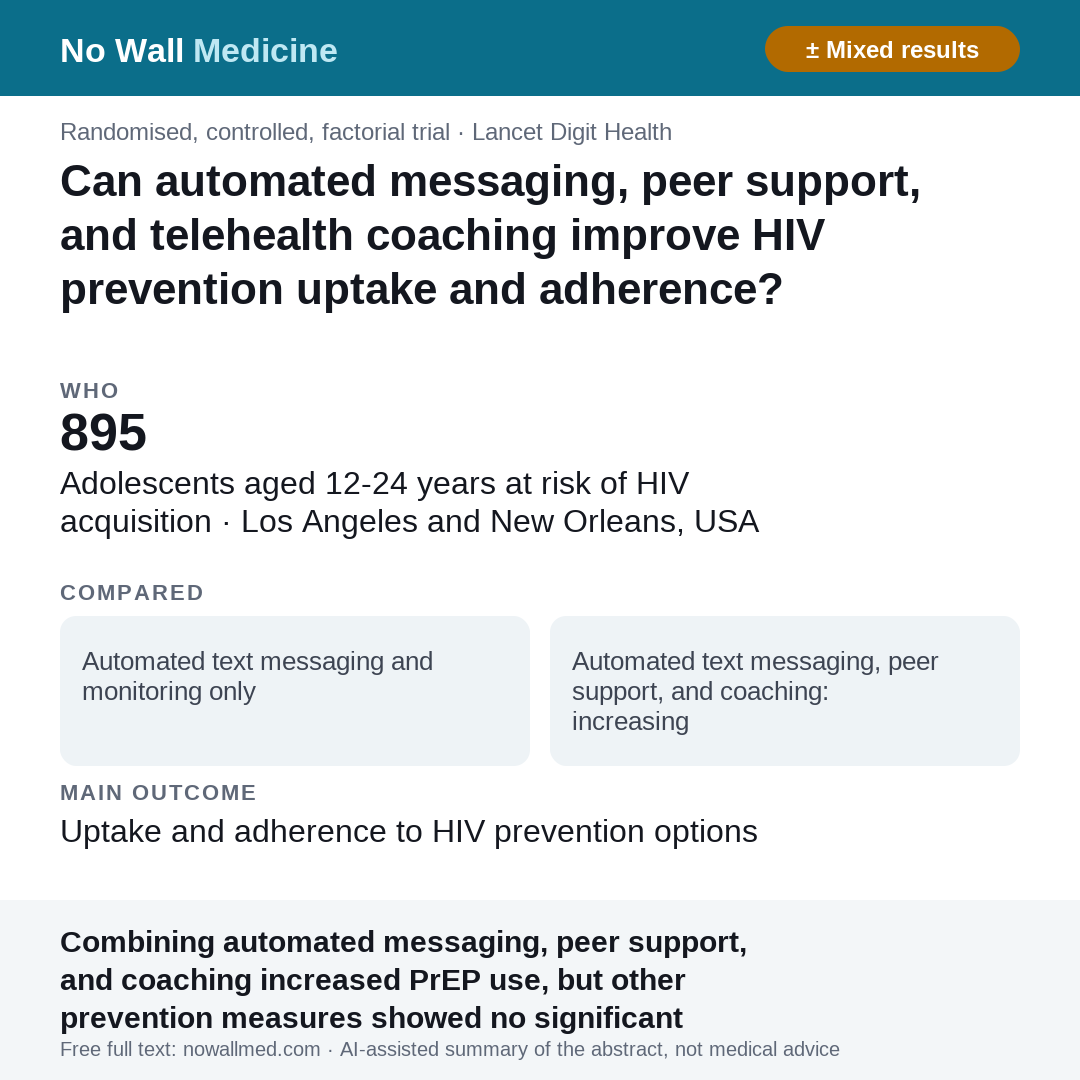
Optimal strategies to improve uptake of and adherence to HIV prevention among young people at risk for HIV acquisition in the USA (ATN 149): a randomised, controlled, factorial trial
Randomised, controlled, factorial trialMixed results
Can automated messaging, peer support, and telehealth coaching improve HIV prevention uptake and adherence?
Who
895
Adolescents aged 12-24 years at risk of HIV acquisition · Los Angeles and New Orleans, USA
Compared
Automated text messaging and monitoring only
Automated text messaging, peer support, and coaching: increasing
Main outcome
Uptake and adherence to HIV prevention options
Result: odds ratio 2·31, 95% CI 1·28-4·14
Bottom line: Combining automated messaging, peer support, and coaching increased PrEP use, but other prevention measures showed no significant improvement.
Lancet Digit Health · 2024-02-24Download image
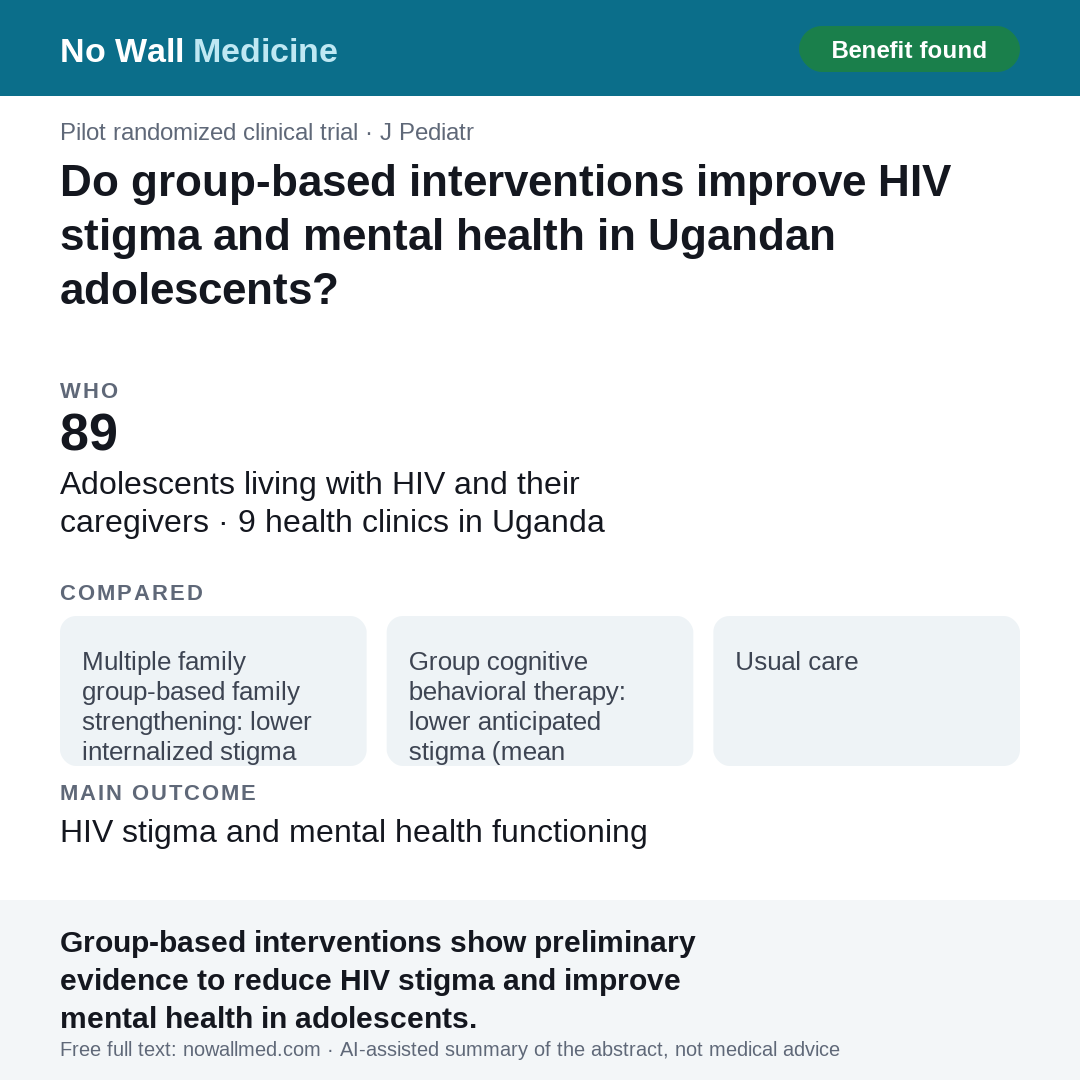
Preliminary Impact of Group-Based Interventions on Stigma, Mental Health, and Treatment Adherence Among Adolescents Living with Human Immunodeficiency Virus in Uganda
Pilot randomized clinical trialEarly signal
Do group-based interventions improve HIV stigma and mental health in Ugandan adolescents?
Who
89
Adolescents living with HIV and their caregivers · 9 health clinics in Uganda
Compared
Multiple family group-based family strengthening: lower internalized stigma (mean difference = -0.008, 95% CI = -0.015, -0.001)
Group cognitive behavioral therapy: lower anticipated stigma (mean difference = -0.039, 95% CI = -0.072, -0.006)
Usual care
Main outcome
HIV stigma and mental health functioning
Bottom line: Group-based interventions show preliminary evidence to reduce HIV stigma and improve mental health in adolescents.
J Pediatr · 2024-02-23Download image
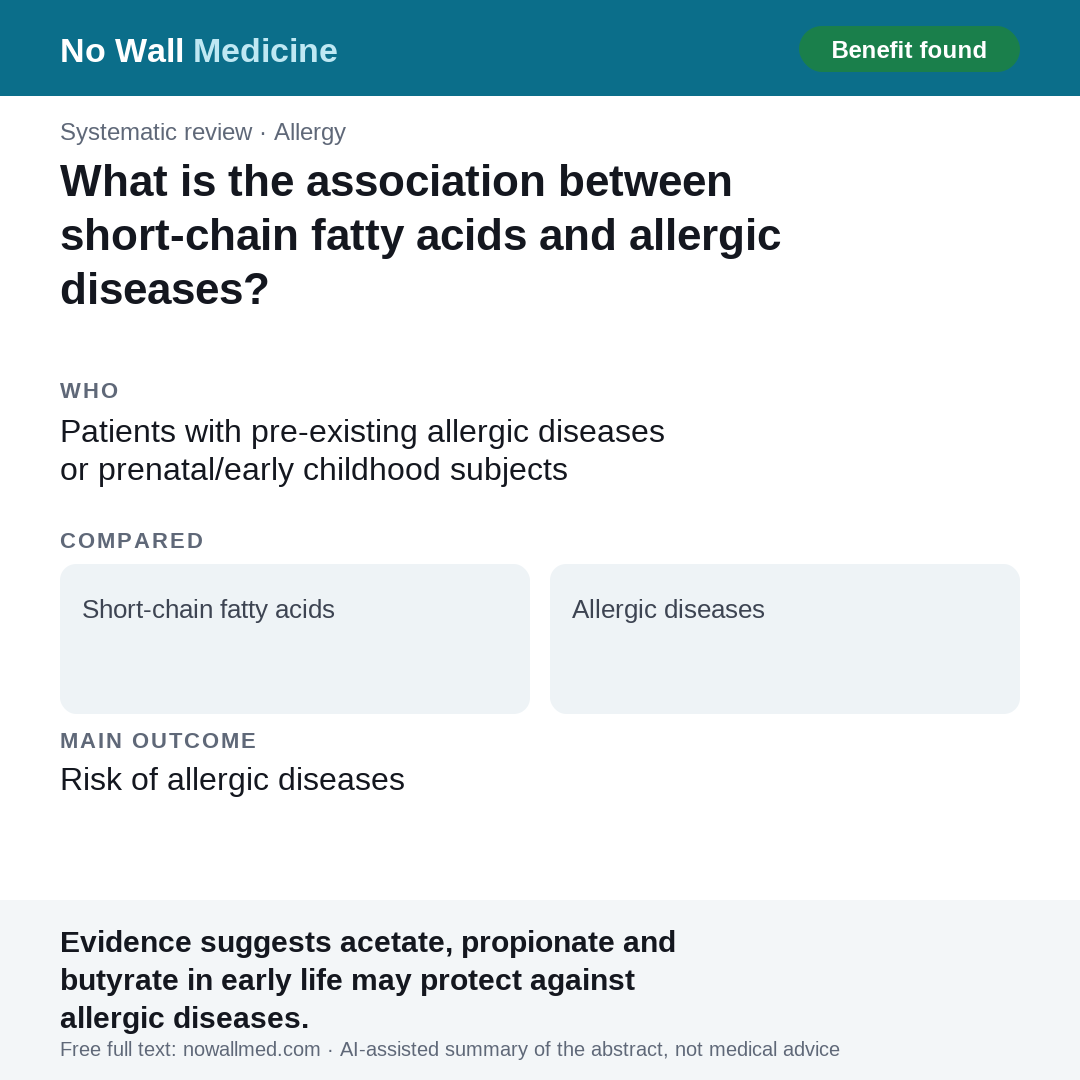
Systematic review of the association between short-chain fatty acids and allergic diseases
Systematic reviewBenefit found
What is the association between short-chain fatty acids and allergic diseases?
Who
Patients with pre-existing allergic diseases or prenatal/early childhood subjects
Compared
Short-chain fatty acids
Allergic diseases
Main outcome
Risk of allergic diseases
Bottom line: Evidence suggests acetate, propionate and butyrate in early life may protect against allergic diseases.
Allergy · 2024-02-23Download image
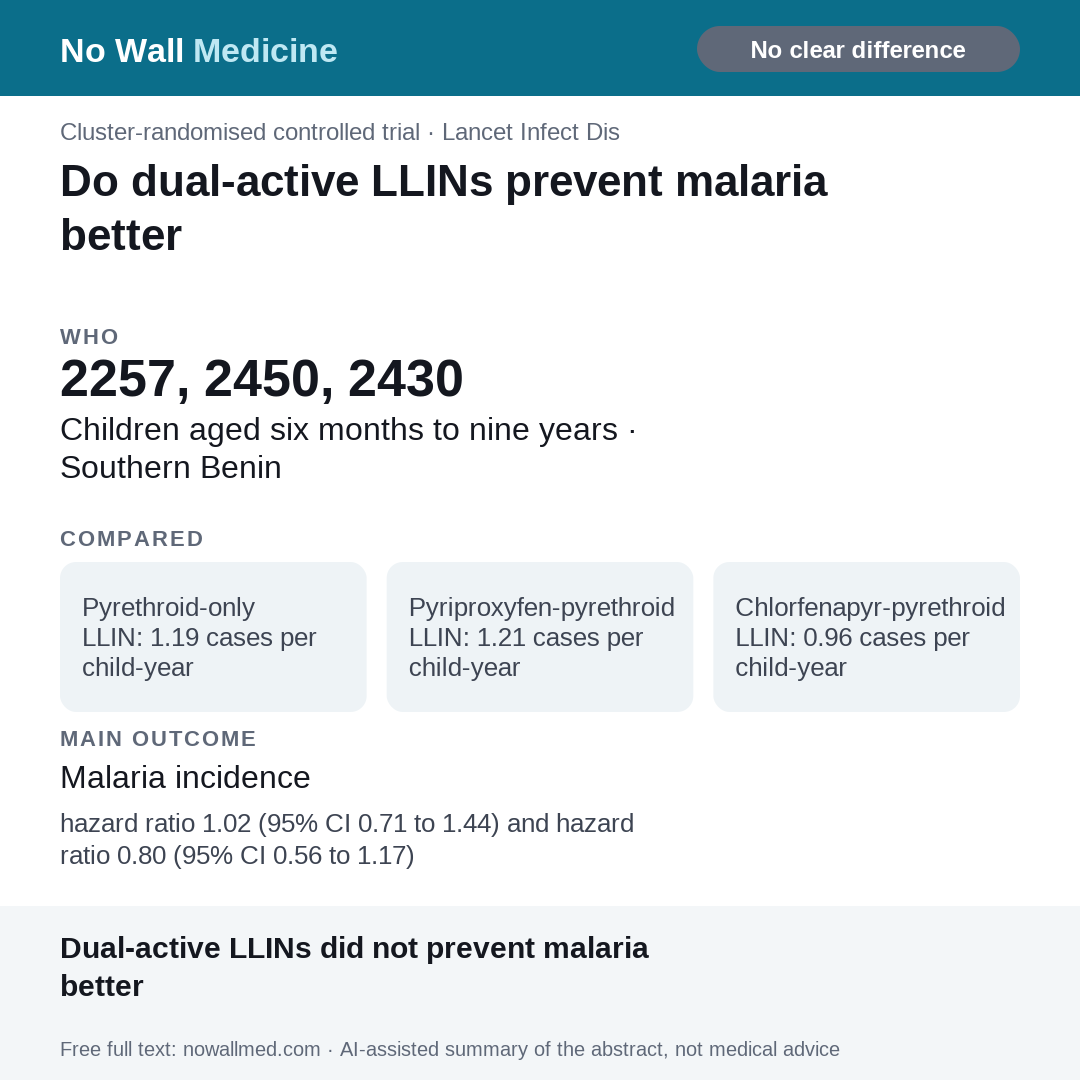
Effectiveness of pyriproxyfen-pyrethroid and chlorfenapyr-pyrethroid long-lasting insecticidal nets (LLINs) compared with pyrethroid-only LLINs for malaria control in the third year post-distribution: a secondary analysis of a cluster-randomised controlled trial in Benin
Cluster-randomised controlled trialNo clear difference
Do dual-active LLINs prevent malaria better
Who
2257, 2450, 2430
Children aged six months to nine years · Southern Benin
Compared
Pyrethroid-only LLIN: 1.19 cases per child-year
Pyriproxyfen-pyrethroid LLIN: 1.21 cases per child-year
Chlorfenapyr-pyrethroid LLIN: 0.96 cases per child-year
Main outcome
Malaria incidence
Result: hazard ratio 1.02 (95% CI 0.71 to 1.44) and hazard ratio 0.80 (95% CI 0.56 to 1.17)
Bottom line: Dual-active LLINs did not prevent malaria better
Limitation: lower study net use and declining insecticide concentration
Funded by: UNITAID, The Global Fund
Lancet Infect Dis · 2024-02-21Download image
Paediatric, maternal, and congenital mpox: a systematic review and meta-analysis
Systematic review and meta-analysisMixed results
What are the outcomes of paediatric, maternal, and congenital mpox?
Who
Paediatric, maternal, and congenital mpox cases · Global databases
Compared
Paediatric cases: 11% case fatality ratio
Pregnancies: half resulted in fetal death
Main outcome
Paediatric case fatality ratio
Result: 11% (95% CI 4-20)
Bottom line: The paediatric case fatality ratio was 11%, with significant knowledge gaps in prevention and treatment for these populations.
Lancet Glob Health · 2024-02-21Download image

Clinical care of childhood sexual abuse: a systematic review and critical appraisal of guidelines from European countries
Systematic review and critical appraisalHarm found
What is the quality and reporting of national clinical practice guidelines for childhood sexual abuse in Europe?
Who
National clinical practice guidelines from 34 COST Action 19106 Network Countries · European countries
Compared
National clinical practice guidelines: lacked many components compared to WHO reference standards
WHO reference standards
Main outcome
Quality and reporting of clinical practice guidelines
Bottom line: Many European countries lack guidelines, and existing ones often fall short in safety, risk assessment, and mental health interventions.
Funded by: International Centre for Missing and Exploited Children
Lancet Reg Health Eur · 2024-02-21Download image

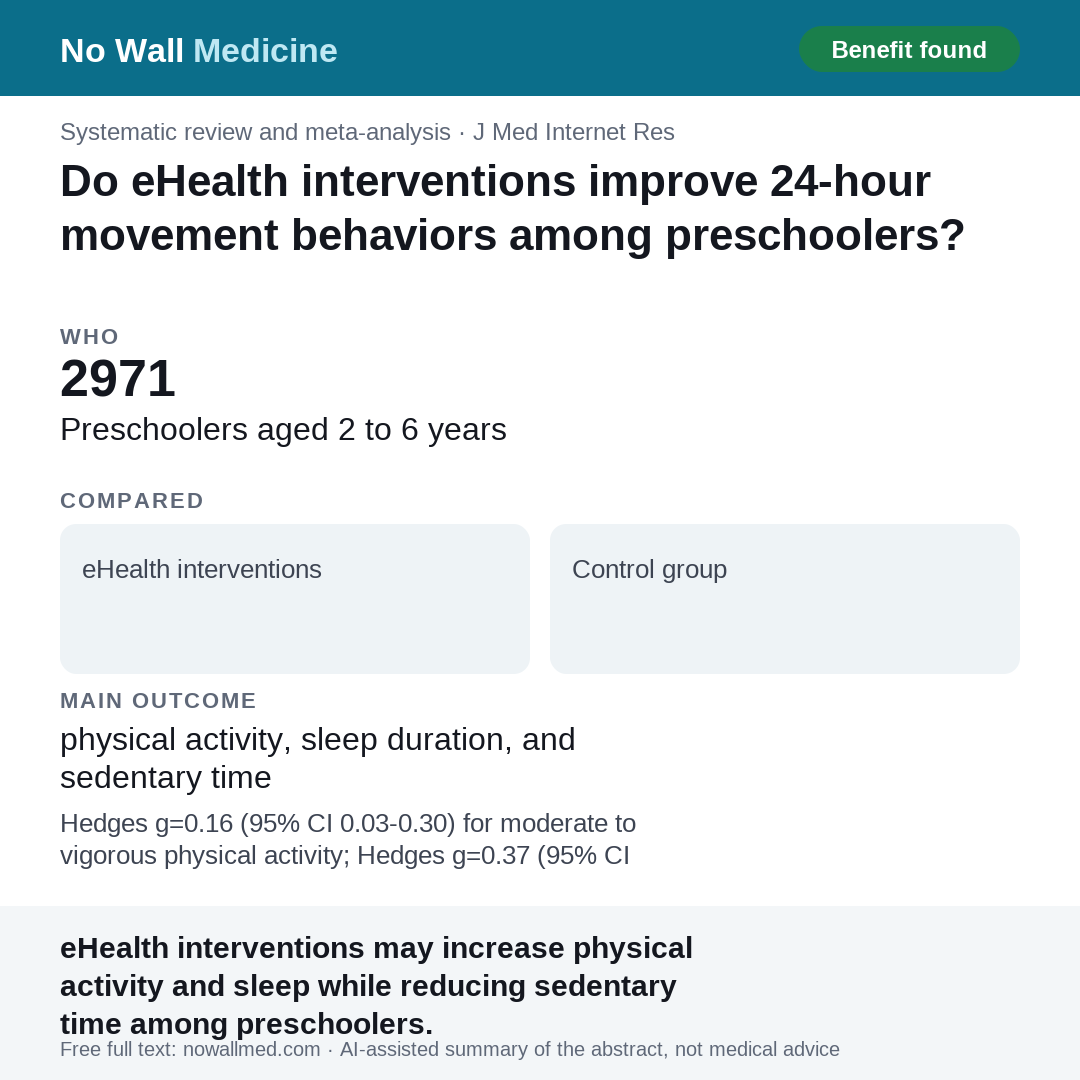
Effects of eHealth Interventions on 24-Hour Movement Behaviors Among Preschoolers: Systematic Review and Meta-Analysis
Systematic review and meta-analysisBenefit found
Do eHealth interventions improve 24-hour movement behaviors among preschoolers?
Who
2971
Preschoolers aged 2 to 6 years
Compared
eHealth interventions
Control group
Main outcome
physical activity, sleep duration, and sedentary time
Result: Hedges g=0.16 (95% CI 0.03-0.30) for moderate to vigorous physical activity; Hedges g=0.37 (95% CI 0.02-0.72) for total physical activity; Hedges g=-0.15 (95% CI -0.27 to -0.02) for sedentary time; Hedges g=0.47 (95% CI 0.18-0.75) for sleep duration
Bottom line: eHealth interventions may increase physical activity and sleep while reducing sedentary time among preschoolers.
Limitation: Need for larger sample sizes, more rigorous comparative trials, and exploration of long-term effects.
J Med Internet Res · 2024-02-21Download image
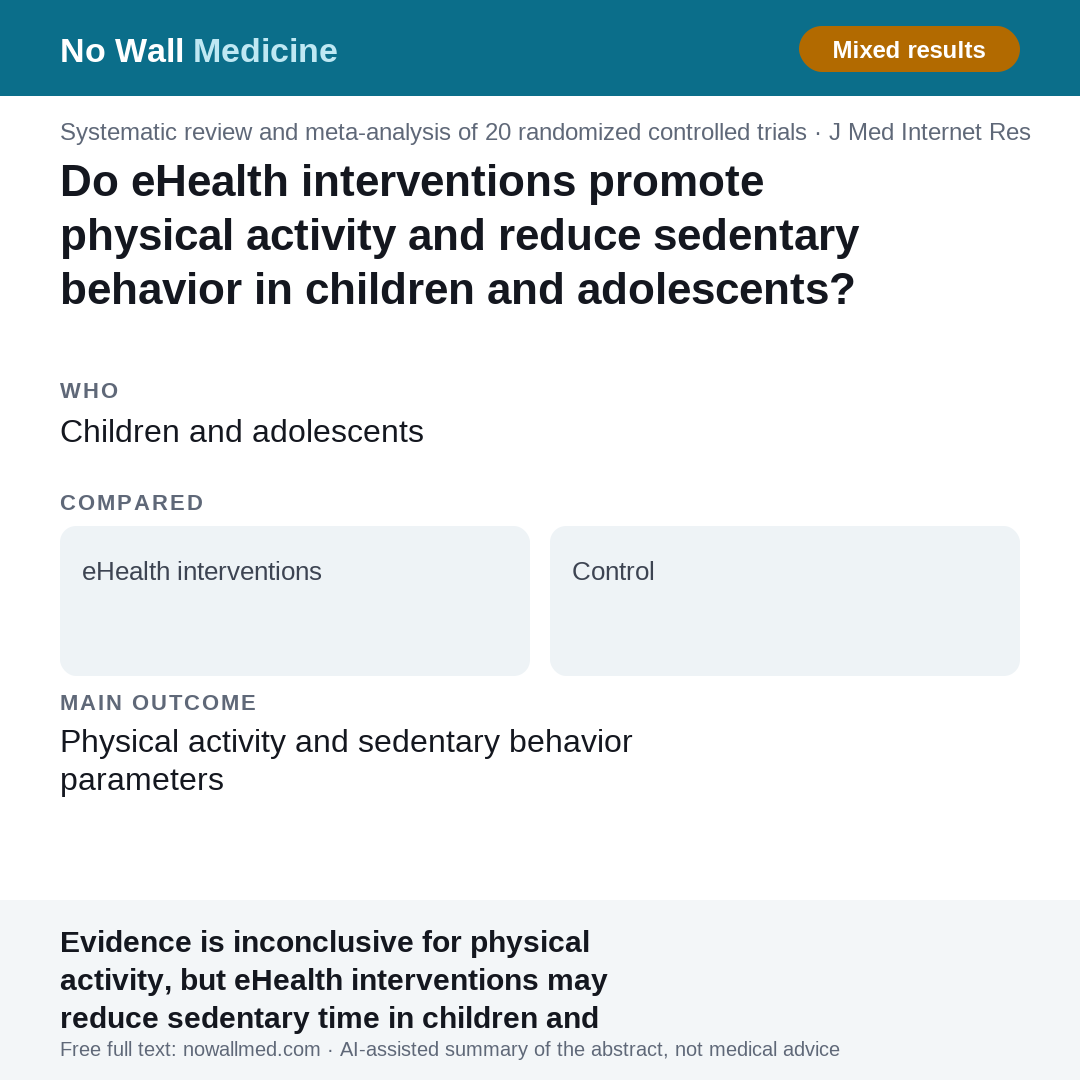
Effectiveness of eHealth Interventions Promoting Physical Activity in Children and Adolescents: Systematic Review and Meta-Analysis
Systematic review and meta-analysis of 20 randomized controlled trialsMixed results
Do eHealth interventions promote physical activity and reduce sedentary behavior in children and adolescents?
Who
Children and adolescents
Compared
eHealth interventions
Control
Main outcome
Physical activity and sedentary behavior parameters
Bottom line: Evidence is inconclusive for physical activity, but eHealth interventions may reduce sedentary time in children and adolescents.
Limitation: Scarcity of evidence, overall risk of bias, and low to very low certainty of evidence.
J Med Internet Res · 2024-02-21Download image
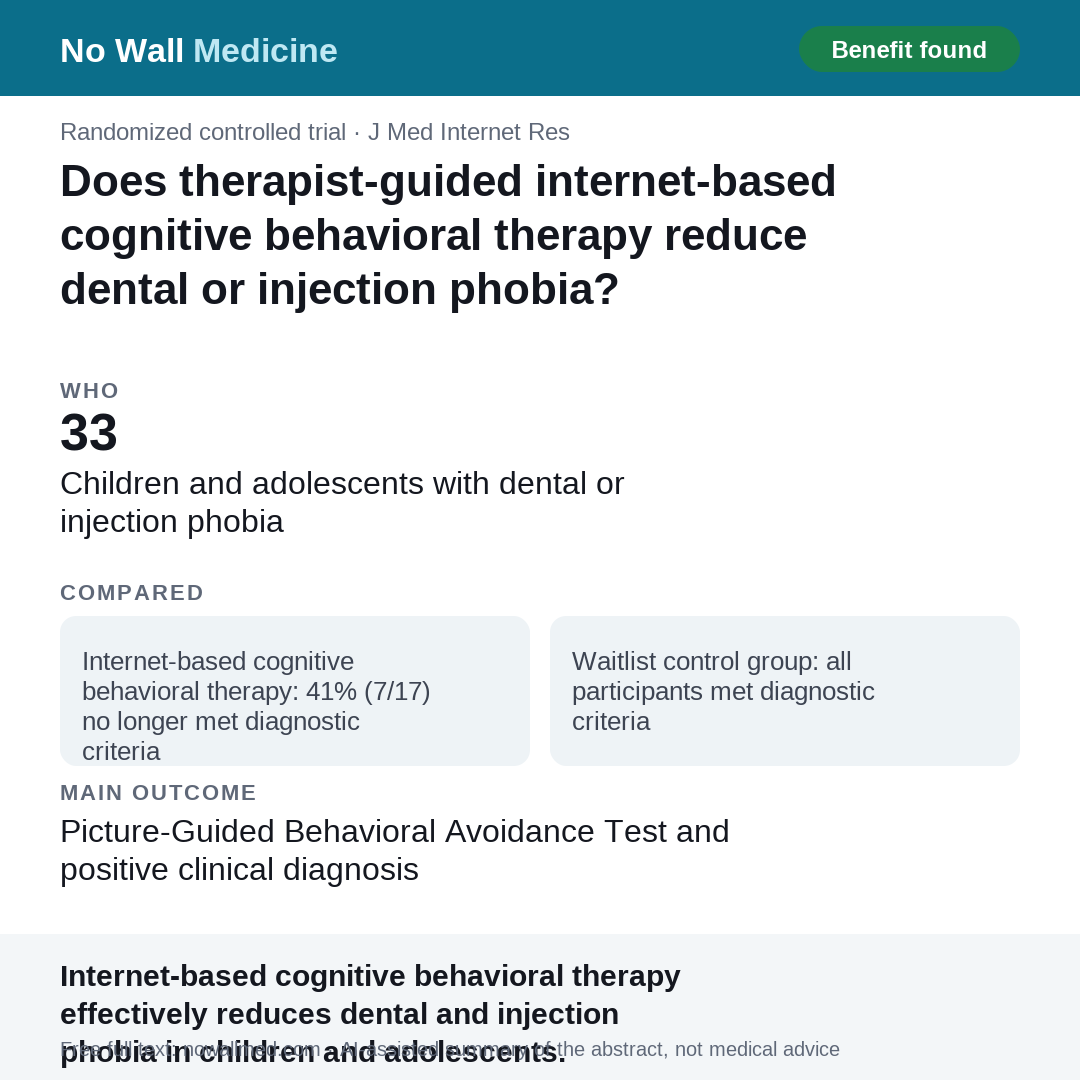
Internet-Based Cognitive Behavioral Therapy for Children and Adolescents With Dental or Injection Phobia: Randomized Controlled Trial
Randomized controlled trialBenefit found
Does therapist-guided internet-based cognitive behavioral therapy reduce dental or injection phobia?
Who
33
Children and adolescents with dental or injection phobia
Compared
Internet-based cognitive behavioral therapy: 41% (7/17) no longer met diagnostic criteria
Waitlist control group: all participants met diagnostic criteria
Main outcome
Picture-Guided Behavioral Avoidance Test and positive clinical diagnosis
Bottom line: Internet-based cognitive behavioral therapy effectively reduces dental and injection phobia in children and adolescents.
J Med Internet Res · 2024-02-21Download image