Visual abstracts
New randomized trials and meta-analyses from leading journals at a glance: who was studied, what was compared, and what was found. Every paper is free to read in full.
All specialtiesCardiology 331Oncology 257Gastroenterology & Hepatology 143Infectious Disease 259Neurology 149Psychiatry & Mental Health 219Pulmonology 152Critical Care 102Endocrinology & Diabetes 199Pediatrics 149Surgery 98Orthopedics & Sports Medicine 66Neurosurgery 19Cardiothoracic & Vascular Surgery 35Plastic & Reconstructive Surgery 67Nephrology 67Rheumatology 66Hematology 78Dermatology 32Ophthalmology 56Obstetrics & Gynecology 94Public & Global Health 98Radiology & Imaging 27Anesthesiology 59Urology 75ENT (Otolaryngology) 42Emergency Medicine 31Allergy & Immunology 33Geriatrics 92Family Medicine & Primary Care 50Medical Genetics & Genomics 30Pathology & Laboratory Medicine 5Physical Medicine & Rehabilitation 84Palliative Care 50Nutrition 113Digital Health & AI 284General Medicine 41
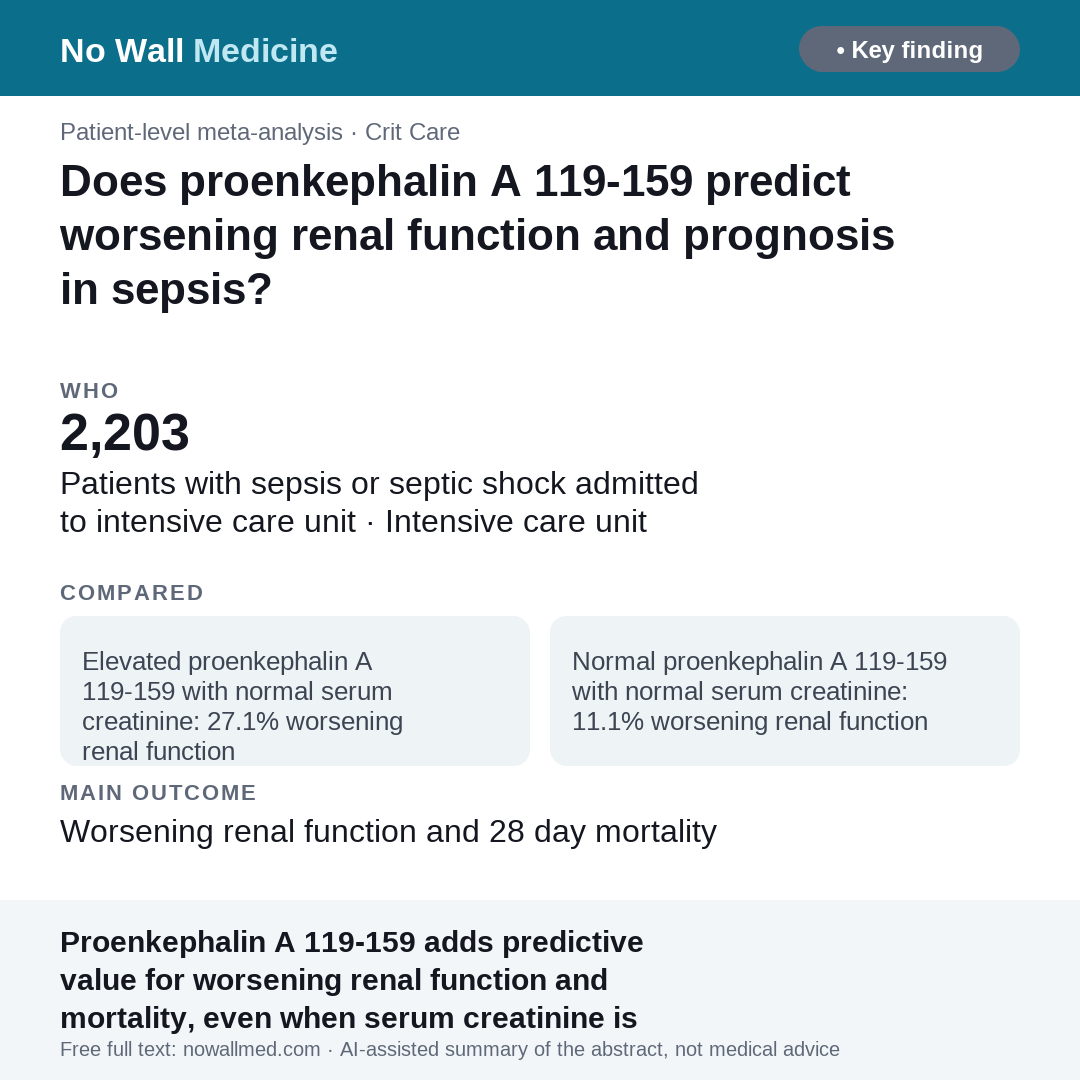
Clinical utility of proenkephalin A 119-159 for prediction of worsening renal function and prognosis in patients with sepsis -results of a patient-level meta-analysis
Patient-level meta-analysisBenefit found
Does proenkephalin A 119-159 predict worsening renal function and prognosis in sepsis?
Who
2,203
Patients with sepsis or septic shock admitted to intensive care unit · Intensive care unit
Compared
Elevated proenkephalin A 119-159 with normal serum creatinine: 27.1% worsening renal function
Normal proenkephalin A 119-159 with normal serum creatinine: 11.1% worsening renal function
Main outcome
Worsening renal function and 28 day mortality
Result: OR 3.4 (95% CI 2.7-4.3) for worsening renal function
Bottom line: Proenkephalin A 119-159 adds predictive value for worsening renal function and mortality, even when serum creatinine is normal.
Crit Care · 2026-03-24Download image
Effects of Virtual Reality-Based Interventions for Promoting Physical Activity in Patients With Heart Failure: Systematic Review
Systematic review of 10 studiesBenefit found
Do virtual reality-based interventions improve physical activity and psychosocial outcomes in heart failure patients?
Who
Adults with heart failure · Multiple countries
Compared
Virtual reality interventions
Control
Main outcome
Physical activity, exercise capacity, psychosocial outcomes, and quality of life
Bottom line: Virtual reality interventions show promise for improving exercise capacity, physical activity, and quality of life in heart failure patients.
Limitation: Heterogeneity in intervention design, small sample sizes, and high risk of bias in several domains.
J Med Internet Res · 2026-03-24Download image

Mechanism Failures in Externally Controlled Motorized Intramedullary Lengthening Nails: A Systematic Review
Systematic reviewMixed results
What is the incidence and etiology of mechanism failures in externally controlled motorized intramedullary lengthening nails?
Who
2495
Patients using externally controlled motorized intramedullary lengthening nails
Compared
4.2%Titanium-alloy nails (74/1,761)
12.9%Stainless steel nails (12/93)
3.3%FITBONE system (21/641)
Main outcome
Incidence and etiology of intrinsic mechanism-related failures
Bottom line: Mechanism failure occurs in 4.3% of cases, with titanium nails prone to jamming and stainless steel nails prone to tribocorrosion.
JBJS Open Access · 2026-03-24Download image

EULAR recommendations for the management of Behçet's syndrome: 2025 update
Expert consensus and systematic literature reviewBenefit found
How should Behçet's syndrome be managed according to updated clinical guidelines?
Who
Patients with Behçet's syndrome · 11 countries
Compared
Mucocutaneous and joint involvement: colchicine is recommended as the first-line treatment modality
Refractory mucocutaneous and joint involvement: Apremilast and immunosuppressives such as tumour necrosis factor alpha inhibitors
Organ involvement: aggressive treatment with glucocorticoids and immunosuppressives
Main outcome
Management and treatment recommendations for Behçet's syndrome
Bottom line: Updated recommendations emphasize individualized treatment, multidisciplinary approaches, and specific therapies based on organ involvement and disease activity.
Ann Rheum Dis · 2026-03-23Download image

Zanidatamab, a Dual HER2-Targeted Bispecific Antibody, in Patients with Unresectable Locally Advanced or Metastatic HER2-Positive Salivary Gland Cancer: A Combined Analysis of Early-Phase Studies
Combined analysis of three early-phase studiesBenefit found
What is the efficacy and safety of zanidatamab in HER2-positive salivary gland cancer?
Who
10
Adult patients with unresectable locally advanced or metastatic HER2-positive salivary gland cancer
Compared
Zanidatamab monotherapy: cORR 44% (14%-79%)
Zanidatamab plus evorpacept: one confirmed partial response
Main outcome
Confirmed objective response rate and progression-free survival
Result: median progression-free survival 10.1 (3.8-not estimable) months
Bottom line: Zanidatamab shows clinical benefit in patients with HER2-positive salivary gland cancer.
Clin Cancer Res · 2026-03-23Download image

Interventions for negative symptoms in schizophrenia: efficacy and clinical interpretability in a meta-analysis of 451 randomized controlled trials
Meta-analysis of 451 randomized controlled trialsBenefit found
What is the efficacy and clinical significance of interventions for negative symptoms in schizophrenia?
Who
42566
Patients with schizophrenia spectrum disorders
Compared
Selected interventions: clinically meaningful SMDs for antibiotics 0.95, integrated psychosocial 0.93, antidepressants 0.76, physical activity 0.68, transcranial current stimulation 0.52, and immunomodulators 0.47
Clinically meaningful threshold: SMD ≥ 0.457
Main outcome
change in negative symptom severity
Bottom line: Selected interventions like antibiotics and psychosocial treatments show clinically meaningful improvements in negative symptoms of schizophrenia.
Limitation: Heterogeneity was the main limitation.
Mol Psychiatry · 2026-03-23Download image

Validation of magnetic resonance imaging for quantification of intrapancreatic fat deposition using phantom and histologic comparators: a systematic review and meta-analysis
Systematic review and meta-analysisBenefit found
Is chemical shift-encoded magnetic resonance imaging valid for quantifying intrapancreatic fat deposition?
Who
Studies comparing magnetic resonance imaging with phantoms or histology
Compared
Chemical shift-encoded magnetic resonance imaging vs phantoms: r = 0.996
Chemical shift-encoded magnetic resonance imaging vs histology: r = 0.775
Main outcome
Correlation of fat fraction measurements
Result: r = 0.996 (95% CI: 0.992-0.998) and r = 0.775 (95% CI: 0.675-0.847)
Bottom line: Chemical shift-encoded magnetic resonance imaging is suitable for quantifying intrapancreatic fat deposition using phantom and histologic comparators.
Eur Radiol · 2026-03-23Download image

Loneliness among adults at the end of life: A systematic review of prevalence and correlates
Systematic review without meta-analysisMixed results
What is the prevalence and correlates of loneliness among adults at the end of life?
Who
Adults with terminal illness, receiving palliative care, or near death · North America and Europe
Compared
Clinical diagnosis or palliative care receipt: moderate or worse loneliness 20% to 73%
Clinical diagnosis or palliative care receipt: high loneliness 8% to 33%
Retrospective sampling based on time to death: moderate or worse loneliness 7%-12%
Retrospective sampling based on time to death: high loneliness 18.6%
Main outcome
Prevalence of moderate or worse and high loneliness
Bottom line: Loneliness affects a significant minority of people at the end of life, requiring individual and community support.
Limitation: Significant heterogeneity across studies and findings should be presented with caution.
Palliat Med · 2026-03-23Download image

Airflow for reducing breathlessness in people with serious respiratory illness: a systematic review
Systematic reviewMixed results
Does airflow reduce breathlessness in people with serious respiratory illness?
Who
413
People with chronic obstructive pulmonary disease, interstitial lung disease, bronchiectasis and asthma · Laboratory, hospital, exercise tests, or daily life settings
Compared
Airflow use
Control
Main outcome
Breathlessness and health-related quality of life
Bottom line: Airflow may provide beneficial acute relief of breathlessness, but long-term effects and quality of life improvements are unclear.
Limitation: Risk of bias was high in all studies and meta-analyses were not feasible.
ERJ Open Res · 2026-03-23Download image

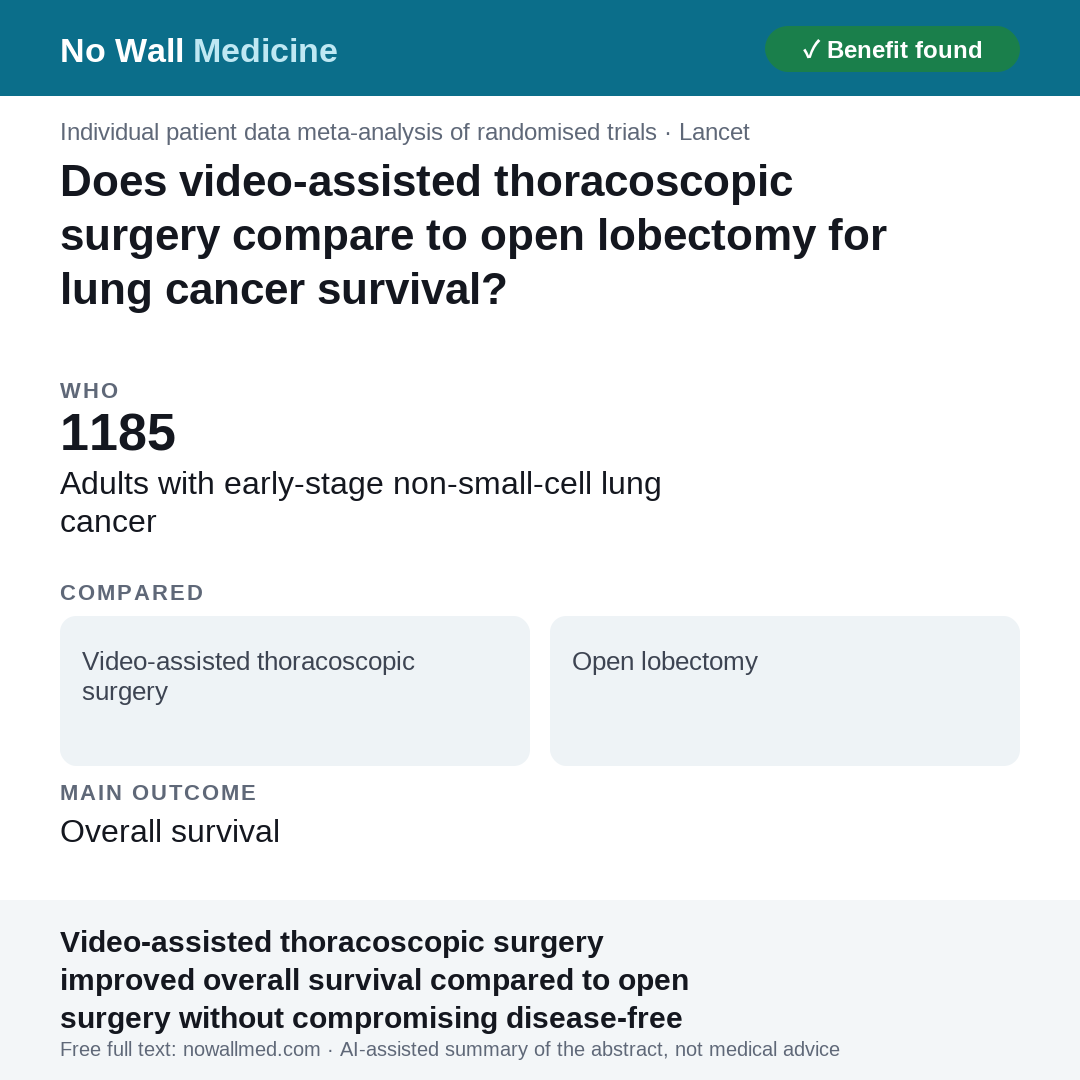
Survival outcome of VATS compared with open lobectomy for lung cancer: an individual patient data meta-analysis of randomised trials
Individual patient data meta-analysis of randomised trialsBenefit found
Does video-assisted thoracoscopic surgery compare to open lobectomy for lung cancer survival?
Who
1185
Adults with early-stage non-small-cell lung cancer
Compared
Video-assisted thoracoscopic surgery
Open lobectomy
Main outcome
Overall survival
Result: hazard ratio 0·79 (95% CI 0·65-0·96)
Bottom line: Video-assisted thoracoscopic surgery improved overall survival compared to open surgery without compromising disease-free survival.
Funded by: National Institute for Health and Care Research
Lancet · 2026-03-22Download image
Healthcare-seeking behavior for obstetrical fistula and its determinant factors in sub-Saharan Africa: systematic review and meta-analysis protocol
Systematic review and meta-analysisUnclear result
Healthcare seeking for obstetrical fistula in Africa
Who
Women with obstetrical fistula in sub-Saharan Africa · sub-Saharan Africa
Compared
Women seeking care
Women not seeking care
Main outcome
Healthcare seeking behavior
Bottom line: No results yet, study in progress
AJOG Glob Rep · 2026-03-22Download image

Assessing Statistical Methods for Estimating the Cerebrospinal Fluid Early Fungicidal Activity as an Endpoint for Cryptococcal Meningitis Clinical Trials: A Systematic Review and Simulation Study
Systematic review and simulation studyMixed results
Which statistical method best estimates cerebrospinal fluid early fungicidal activity in cryptococcal meningitis trials?
Who
Cryptococcal meningitis clinical trial data
Compared
2-step approach using linear regression: steeper estimates and larger estimated treatment effects
linear mixed model: smaller standard errors but estimates were biased toward the null
Main outcome
cerebrospinal fluid early fungicidal activity estimates
Bottom line: The 2-step approach is preferred for estimating early fungicidal activity, especially when early culture sterility occurs.
Open Forum Infect Dis · 2026-03-22Download image

Convolutional neural networks in paediatric fracture detection: pooled evidence from a systematic review and meta-analysis
Systematic review and meta-analysisBenefit found
What is the diagnostic accuracy of artificial intelligence models for detecting paediatric appendicular fractures?
Who
10,000
Paediatric patients under 21 years old
Compared
Artificial intelligence models: sensitivity 0.92 (95% CI: 0.89-0.94)
Human readers
Main outcome
Diagnostic accuracy for detecting paediatric appendicular fractures
Result: sensitivity 0.92 (95% CI: 0.89-0.94), specificity 0.90 (95% CI: 0.85-0.94)
Bottom line: Artificial intelligence models demonstrate high diagnostic accuracy for detecting paediatric appendicular fractures on plain radiographs.
Limitation: Many studies were retrospective and single-centre with limited external validation.
Eur Radiol · 2026-03-21Download image

Prediction models for overall survival and all-cause mortality risk in older adults with cancer: a systematic review
Systematic reviewHarm found
What are the characteristics of mortality risk prediction models in older adults with cancer?
Who
250
Adults with cancer aged 65 years or older
Compared
176Models predicting overall survival (70.4%)
138Models without geriatric variables (55.2%)
Main outcome
Overall survival and all-cause mortality prediction models
Bottom line: Existing mortality prediction models for older adults with cancer have high risk of bias and preclude clinical use.
Limitation: High risk of bias due to inappropriate handling of predictors and inadequate control for overfitting.
Lancet Healthy Longev · 2026-03-21Download image

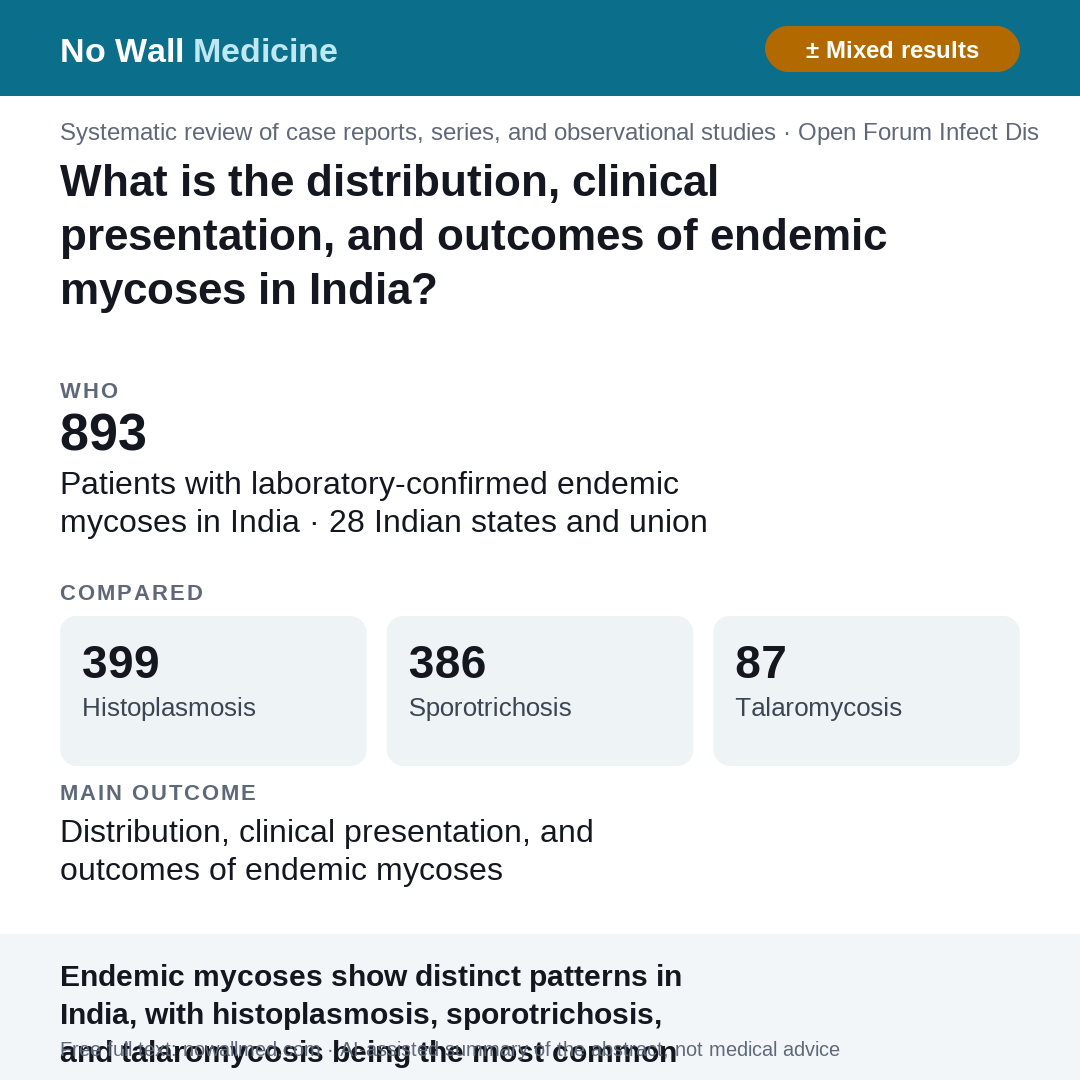
Mapping the Landscape of Endemic Mycoses in India: Insights From a Systematic Review of Reported Cases Spanning 6 Decades (1960-2025)
Systematic review of case reports, series, and observational studiesMixed results
What is the distribution, clinical presentation, and outcomes of endemic mycoses in India?
Who
893
Patients with laboratory-confirmed endemic mycoses in India · 28 Indian states and union territories
Compared
399Histoplasmosis (44.7%)
386Sporotrichosis (43.2%)
87Talaromycosis (9.7%)
Main outcome
Distribution, clinical presentation, and outcomes of endemic mycoses
Bottom line: Endemic mycoses show distinct patterns in India, with histoplasmosis, sporotrichosis, and talaromycosis being the most common infections.
Limitation: Probable and possible cases were excluded from the review.
Open Forum Infect Dis · 2026-03-21Download image
The prevalence and role of human respiratory syncytial virus in pediatric respiratory tract infections: a systematic review and meta-analysis of global data
Systematic review and meta-analysisBenefit found
What is the prevalence and role of human respiratory syncytial virus in pediatric respiratory infections?
Who
1,733,341
Children under 18 years with polymerase chain reaction-confirmed cases · Global
Compared
Human respiratory syncytial virus infection: odds ratio = 7.0
21.6%Global prevalence
Main outcome
Prevalence and association with respiratory disease risk
Result: odds ratio = 7.0
Bottom line: Human respiratory syncytial virus has a 21.6% global prevalence and significantly increases respiratory infection risk.
eClinicalMedicine · 2026-03-20Download image

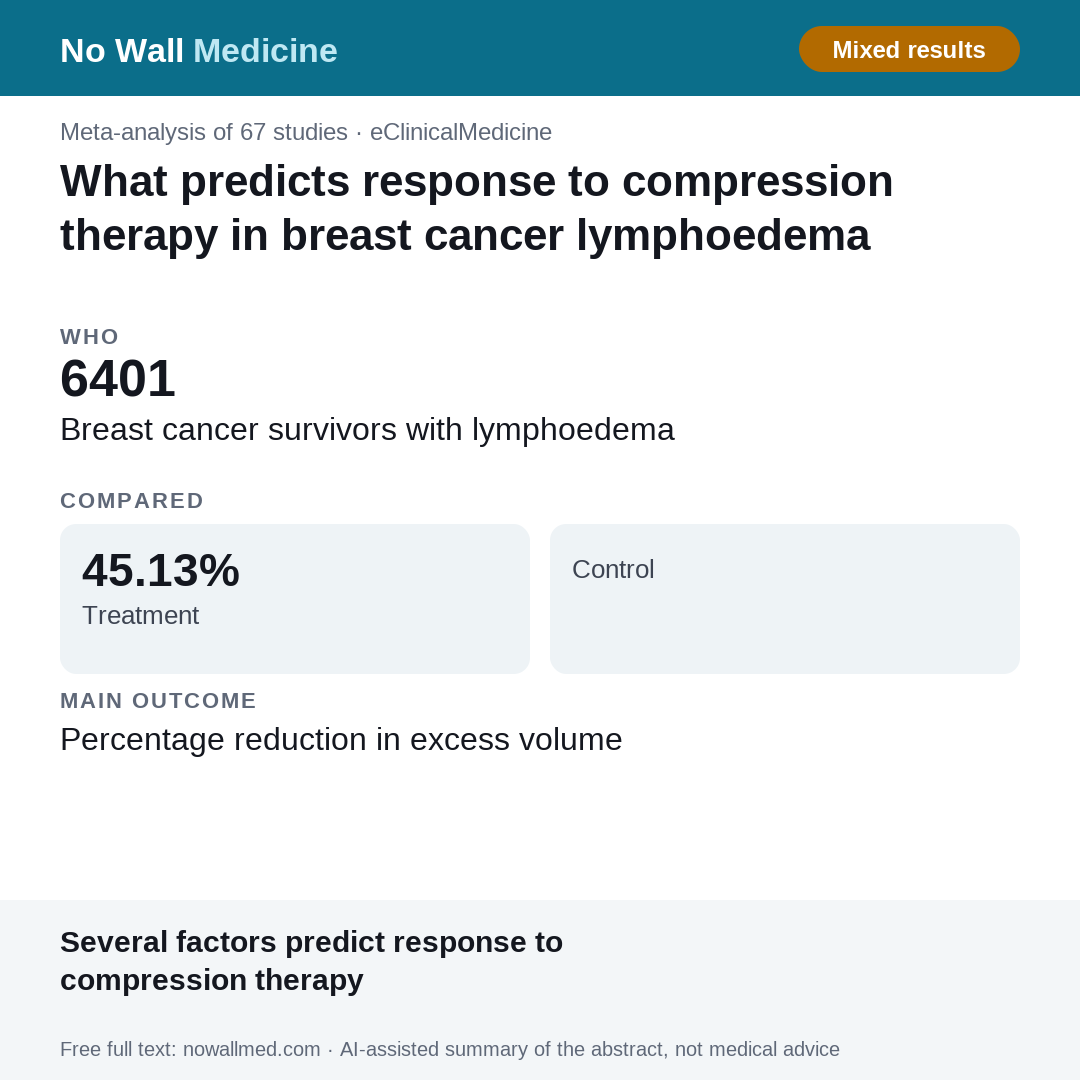
Predictors of response to compression therapy in breast cancer-related lymphoedema: a systematic review and meta-analysis
Meta-analysis of 67 studiesMixed results
What predicts response to compression therapy in breast cancer lymphoedema
Who
6401
Breast cancer survivors with lymphoedema
Compared
45.13%Treatment (mean PREV)
Control
Main outcome
Percentage reduction in excess volume
Bottom line: Several factors predict response to compression therapy
Limitation: Variability in study characteristics and analysis
eClinicalMedicine · 2026-03-20Download image
Strategies to reduce antimicrobial resistance in newborns in low-income and middle-income countries: a systematic review and meta-analysis
Systematic review and meta-analysisBenefit found
What is the effectiveness of antimicrobial resistance mitigation strategies for newborn care in low-income and middle-income countries?
Who
Newborns receiving facility-based or community-based care in low-income and middle-income countries · Low-income and middle-income countries
Compared
Regulation: risk of newborns receiving at least one antimicrobial reduced by 21%
Optimisation: culture-positive sepsis risk reduced by 32%
Regulation, education, and optimisation: neonatal mortality risk reduced by 27%
Main outcome
clinical and antibiotic use outcomes
Bottom line: Combining regulation, education, and optimisation is necessary to effectively reduce antimicrobial resistance and neonatal mortality.
Funded by: Bill & Melinda Gates Foundation
Lancet Glob Health · 2026-03-20Download image

Stroke Risk After Bioprosthetic Aortic Valve Replacement in Aortic Stenosis: Systematic Review and Meta-Analysis
Systematic review and meta-analysisMixed results
What is the proportion of ischemic stroke after bioprosthetic aortic valve replacement?
Who
Adults aged >18 with severe aortic stenosis
Compared
Transcatheter aortic valve replacement: 3.0% (95% CI, 2.5-3.9) at 30 days
Surgical aortic valve replacement
Main outcome
Ischemic stroke proportion
Result: odds ratio 0.73 (95% CI 0.57-0.93) for 30-day all stroke
Bottom line: Transcatheter aortic valve replacement had lower 30-day stroke odds than surgical replacement, but no long-term difference was observed.
Stroke · 2026-03-20Download image

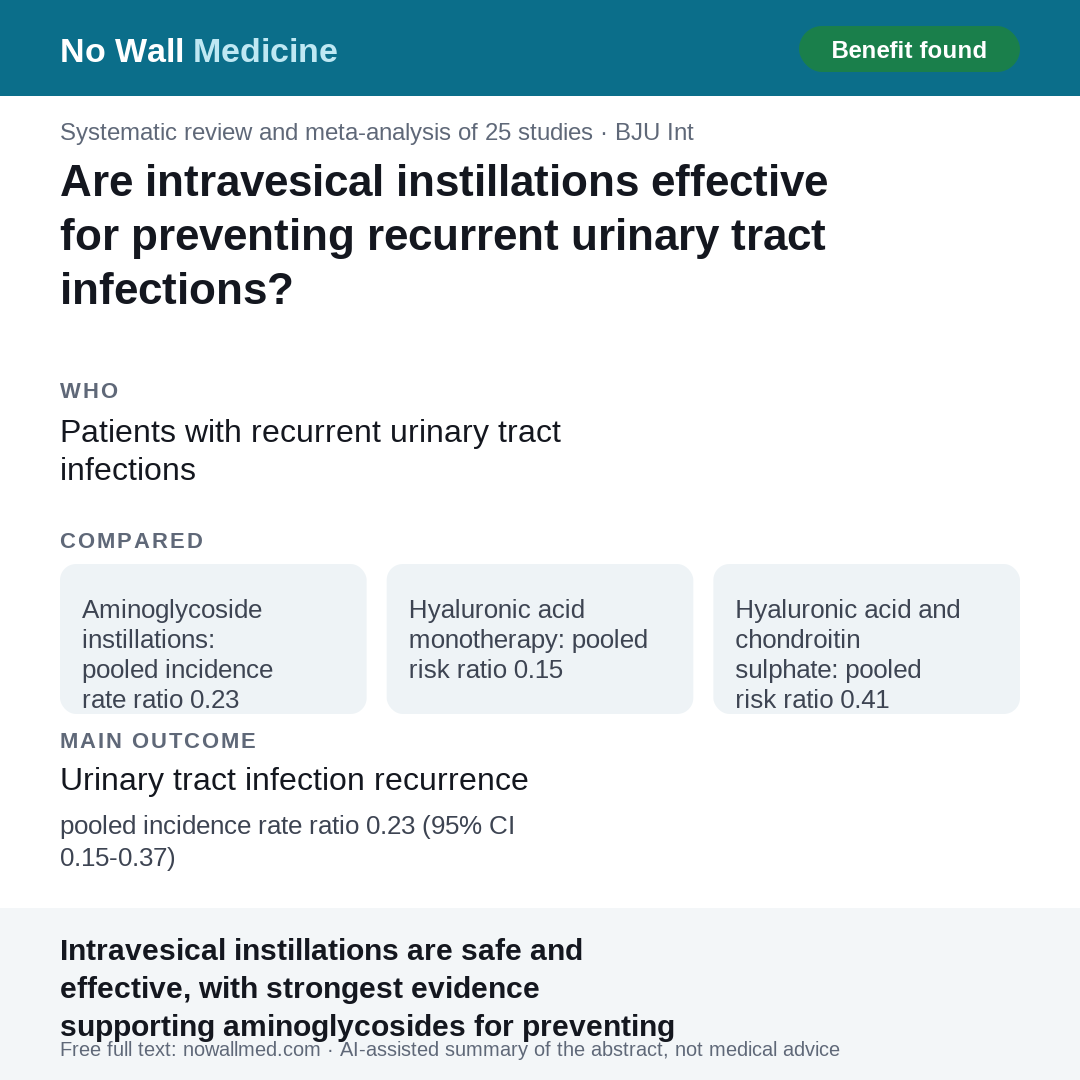
Intravesical therapy for recurrent urinary tract infection: a systematic review and meta-analysis
Systematic review and meta-analysis of 25 studiesBenefit found
Are intravesical instillations effective for preventing recurrent urinary tract infections?
Who
Patients with recurrent urinary tract infections
Compared
Aminoglycoside instillations: pooled incidence rate ratio 0.23
Hyaluronic acid monotherapy: pooled risk ratio 0.15
Hyaluronic acid and chondroitin sulphate: pooled risk ratio 0.41
Main outcome
Urinary tract infection recurrence
Result: pooled incidence rate ratio 0.23 (95% CI 0.15-0.37)
Bottom line: Intravesical instillations are safe and effective, with strongest evidence supporting aminoglycosides for preventing recurrent urinary tract infections.
BJU Int · 2026-03-20Download image