Visual abstracts
New randomized trials and meta-analyses from leading journals at a glance: who was studied, what was compared, and what was found. Every paper is free to read in full.
All specialtiesCardiology 3332Oncology 2852Gastroenterology & Hepatology 1310Infectious Disease 2263Neurology 1340Psychiatry & Mental Health 1579Pulmonology 1416Critical Care 945Endocrinology & Diabetes 1693Pediatrics 2020Surgery 1782Orthopedics & Sports Medicine 605Neurosurgery 394Cardiothoracic & Vascular Surgery 388Plastic & Reconstructive Surgery 468Nephrology 717Rheumatology 519Hematology 736Dermatology 413Ophthalmology 372Obstetrics & Gynecology 1129Public & Global Health 635Radiology & Imaging 470Anesthesiology 681Urology 566ENT (Otolaryngology) 366Emergency Medicine 360Allergy & Immunology 206Geriatrics 700Family Medicine & Primary Care 386Medical Genetics & Genomics 414Pathology & Laboratory Medicine 110Physical Medicine & Rehabilitation 526Palliative Care 304Nutrition 981Digital Health & AI 1587General Medicine 236
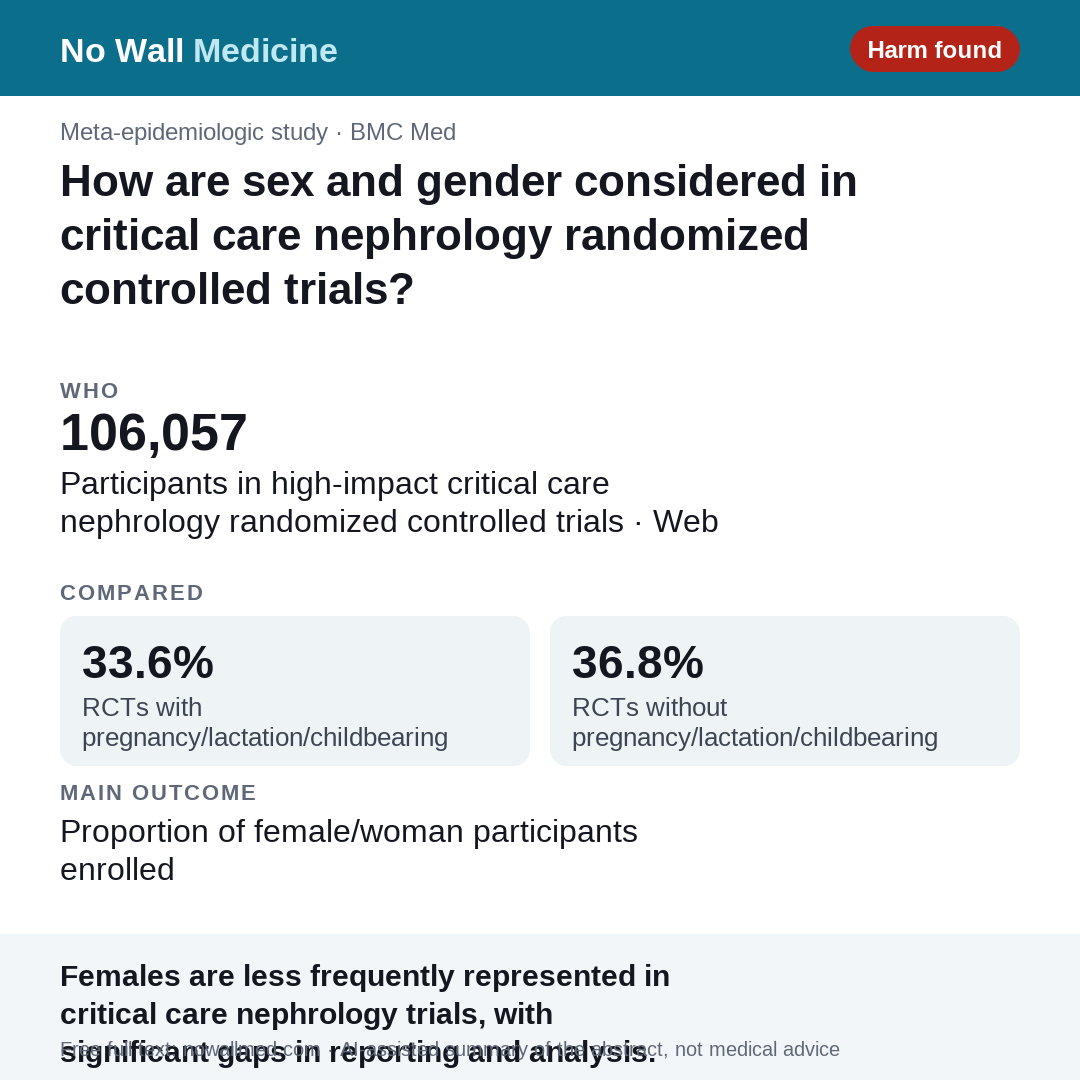
Sex and gender considerations in randomized controlled trials in critical care nephrology: a meta-epidemiologic study
Meta-epidemiologic studyHarm found
How are sex and gender considered in critical care nephrology randomized controlled trials?
Who
106,057
Participants in high-impact critical care nephrology randomized controlled trials · Web of Science Core Collection
Compared
33.6%RCTs with pregnancy/lactation/childbearing age exclusion
36.8%RCTs without pregnancy/lactation/childbearing age exclusion
Main outcome
Proportion of female/woman participants enrolled
Bottom line: Females are less frequently represented in critical care nephrology trials, with significant gaps in reporting and analysis.
BMC Med · 2025-07-01Download image
A conceptual model of factors potentially influencing prescribing decisions for chronic conditions: an overview of systematic reviews
Overview of systematic reviewsUnclear result
factors influencing prescribing decisions
Who
689
healthcare professionals and patients
Compared
prescribers
patients
Main outcome
prescribing decisions
Bottom line: multiple challenges influence prescribing decisions
BMC Med · 2025-07-01Download image
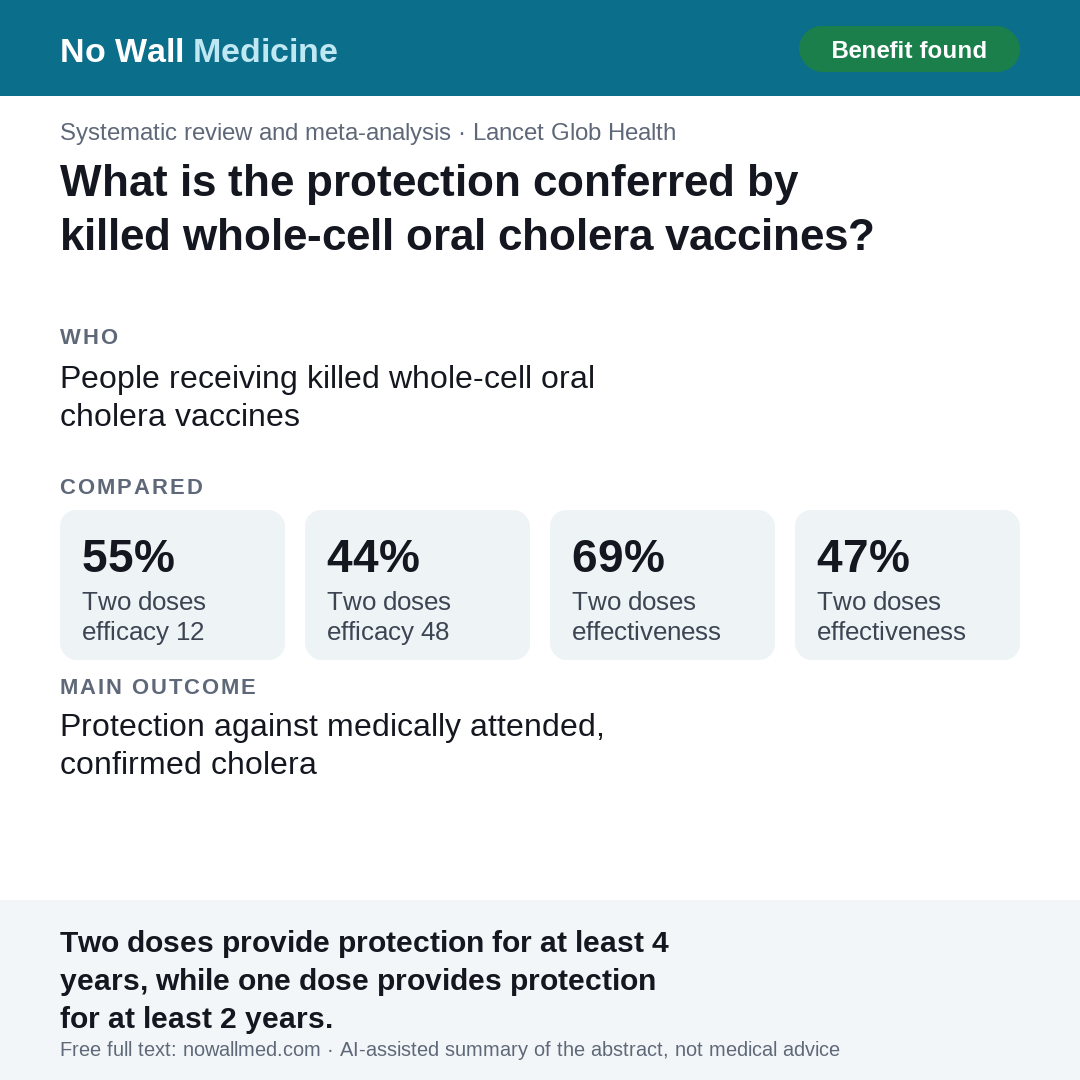
Protection from killed whole-cell cholera vaccines: a systematic review and meta-analysis
Systematic review and meta-analysisBenefit found
What is the protection conferred by killed whole-cell oral cholera vaccines?
Who
People receiving killed whole-cell oral cholera vaccines
Compared
55%Two doses efficacy 12 months (95% CI 46-62)
44%Two doses efficacy 48 months (25-59)
69%Two doses effectiveness 12 months (58-78)
47%Two doses effectiveness 48 months (9-70)
Main outcome
Protection against medically attended, confirmed cholera
Bottom line: Two doses provide protection for at least 4 years, while one dose provides protection for at least 2 years.
Funded by: Bill & Melinda Gates Foundation
Lancet Glob Health · 2025-07-01Download image
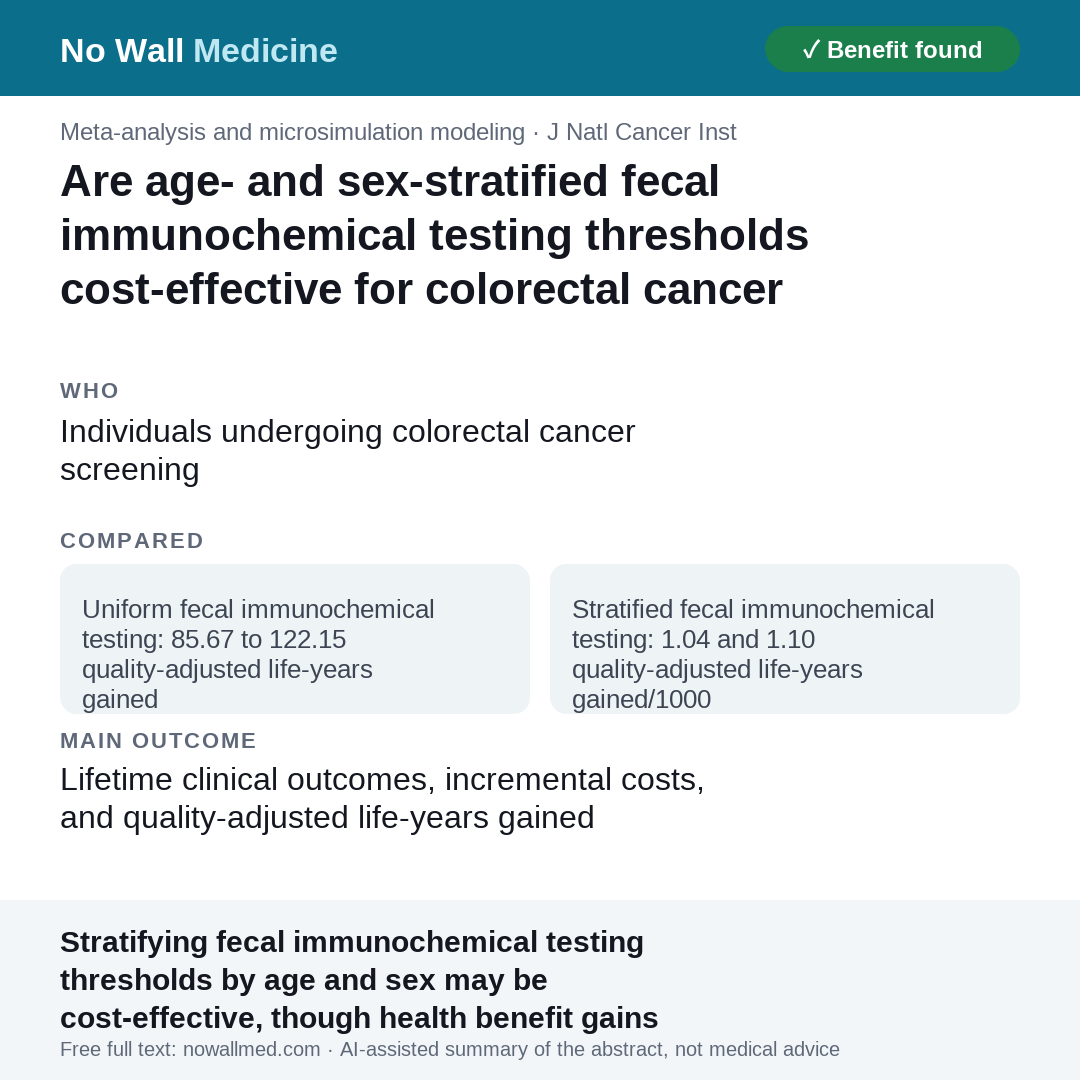
Benefits of colorectal cancer screening using fecal immunochemical testing with varying positivity thresholds by age and sex
Meta-analysis and microsimulation modelingBenefit found
Are age- and sex-stratified fecal immunochemical testing thresholds cost-effective for colorectal cancer screening?
Who
Individuals undergoing colorectal cancer screening
Compared
Uniform fecal immunochemical testing: 85.67 to 122.15 quality-adjusted life-years gained
Stratified fecal immunochemical testing: 1.04 and 1.10 quality-adjusted life-years gained/1000
Main outcome
Lifetime clinical outcomes, incremental costs, and quality-adjusted life-years gained
Bottom line: Stratifying fecal immunochemical testing thresholds by age and sex may be cost-effective, though health benefit gains are likely small.
Limitation: Results were sensitive to fecal immunochemical test performance characteristics and one-time setup costs.
J Natl Cancer Inst · 2025-07-01Download image
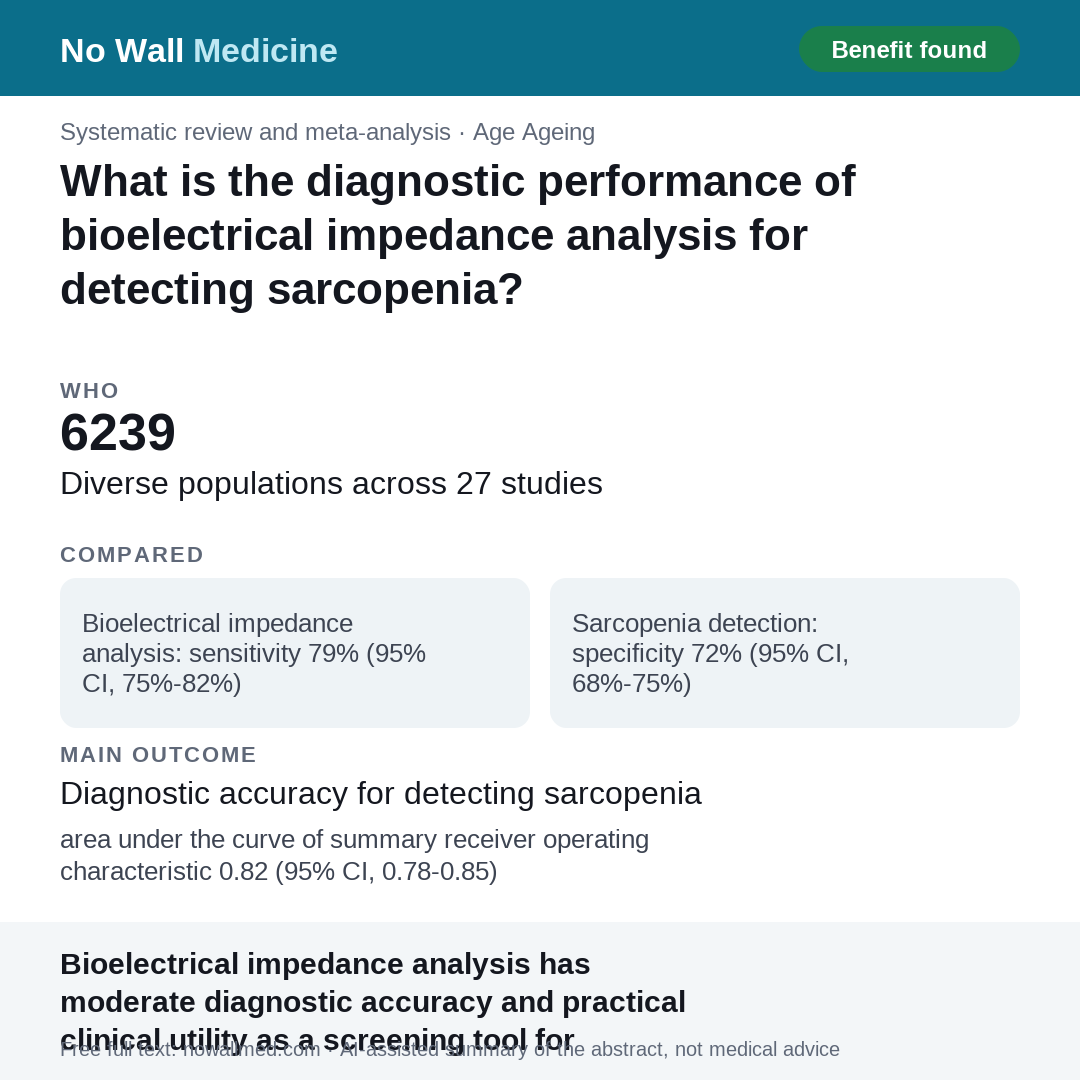
Bioelectrical impedance analysis for sarcopenia: a systematic review and meta-analysis of diagnostic accuracy
Systematic review and meta-analysisBenefit found
What is the diagnostic performance of bioelectrical impedance analysis for detecting sarcopenia?
Who
6239
Diverse populations across 27 studies
Compared
Bioelectrical impedance analysis: sensitivity 79% (95% CI, 75%-82%)
Sarcopenia detection: specificity 72% (95% CI, 68%-75%)
Main outcome
Diagnostic accuracy for detecting sarcopenia
Result: area under the curve of summary receiver operating characteristic 0.82 (95% CI, 0.78-0.85)
Bottom line: Bioelectrical impedance analysis has moderate diagnostic accuracy and practical clinical utility as a screening tool for sarcopenia.
Age Ageing · 2025-07-01Download image
Supporting clinical reasoning through visual summarization and presentation of patient data: a systematic review
Systematic reviewUnclear result
How are electronic health record data summarized and visualized to support clinical reasoning?
Who
112
Individual patient electronic health record data
Compared
Timeline-based presentations
Snapshot-based approaches
Main outcome
Data-information-visualization flows for clinical reasoning tasks
Bottom line: Visualization strategies like timelines and snapshots can support clinical reasoning through specific data-information-visualization flows.
J Am Med Inform Assoc · 2025-07-01Download image
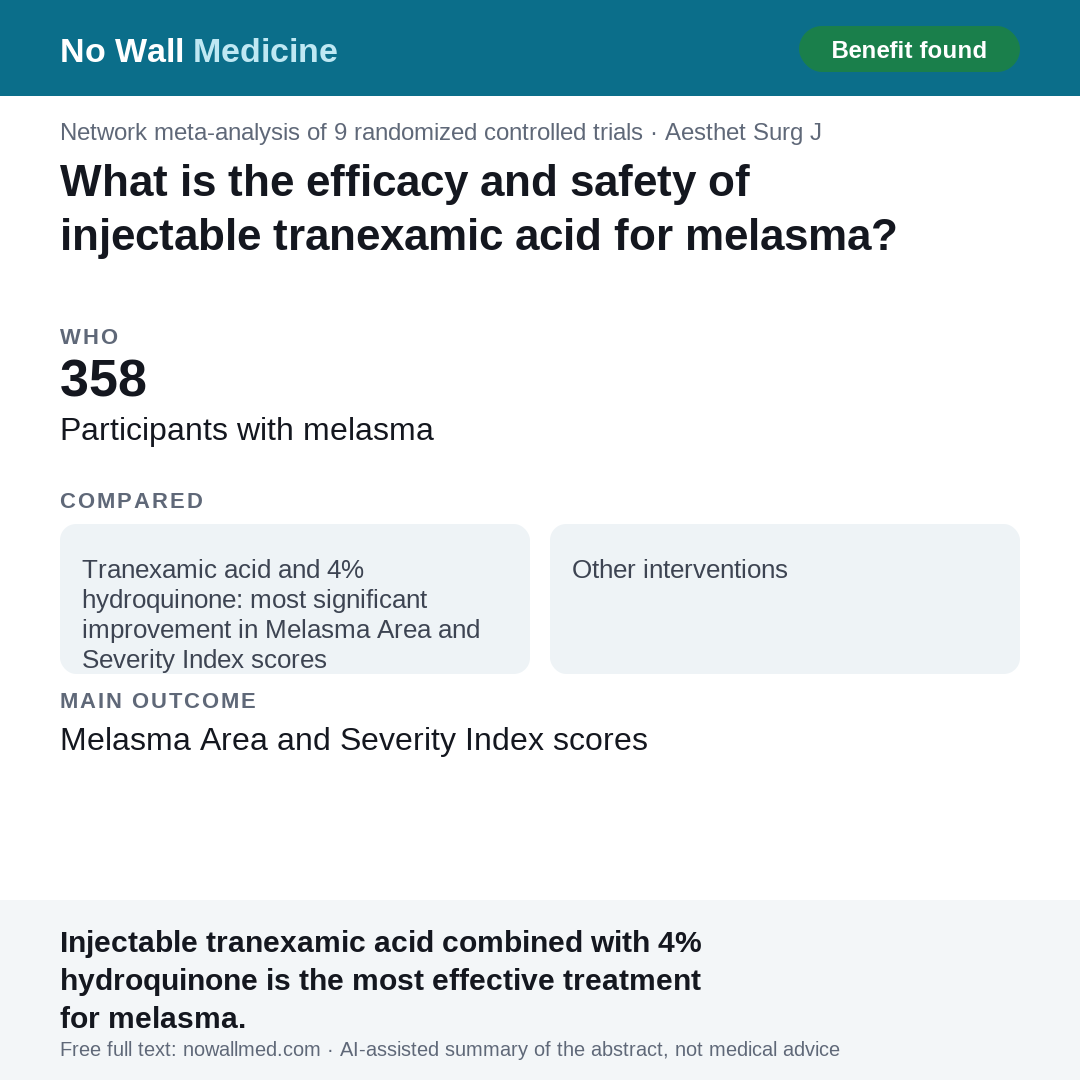
Comparative Efficacy and Safety of Injectable Tranexamic Acid Combination Therapies for Melasma: A Network Meta-analysis of Randomized Controlled Trials
Network meta-analysis of 9 randomized controlled trialsBenefit found
What is the efficacy and safety of injectable tranexamic acid for melasma?
Who
358
Participants with melasma
Compared
Tranexamic acid and 4% hydroquinone: most significant improvement in Melasma Area and Severity Index scores
Other interventions
Main outcome
Melasma Area and Severity Index scores
Bottom line: Injectable tranexamic acid combined with 4% hydroquinone is the most effective treatment for melasma.
Aesthet Surg J · 2025-07-01Download image
Systematic Review of Poly-4-Hydroxybutyrate in Modern Breast Surgery
Systematic reviewBenefit found
What are the outcomes and efficacy of poly-4-hydroxybutyrate in breast surgery?
Who
Patients undergoing reconstructive and aesthetic breast surgery · PubMed, EMBASE, and Cochrane databases
Compared
Poly-4-hydroxybutyrate: high rates of patient satisfaction and scaffold incorporation
Control
Main outcome
patient satisfaction, scaffold incorporation, and complication rates
Bottom line: Poly-4-hydroxybutyrate is a safe and efficacious adjunct in various breast surgery indications.
Aesthet Surg J · 2025-07-01Download image

Poly-L-Lactic Acid in Aesthetic Dermatology: A Decade Beyond Volume Restoration Toward Regenerative Biostimulation
Systematic reviewBenefit found
Poly-L-Lactic Acid effectiveness
Who
patients in aesthetic dermatology
Compared
Poly-L-Lactic Acid
control
Main outcome
skin quality improvement
Bottom line: Poly-L-Lactic Acid improves skin quality
Aesthet Surg J · 2025-07-01Download image
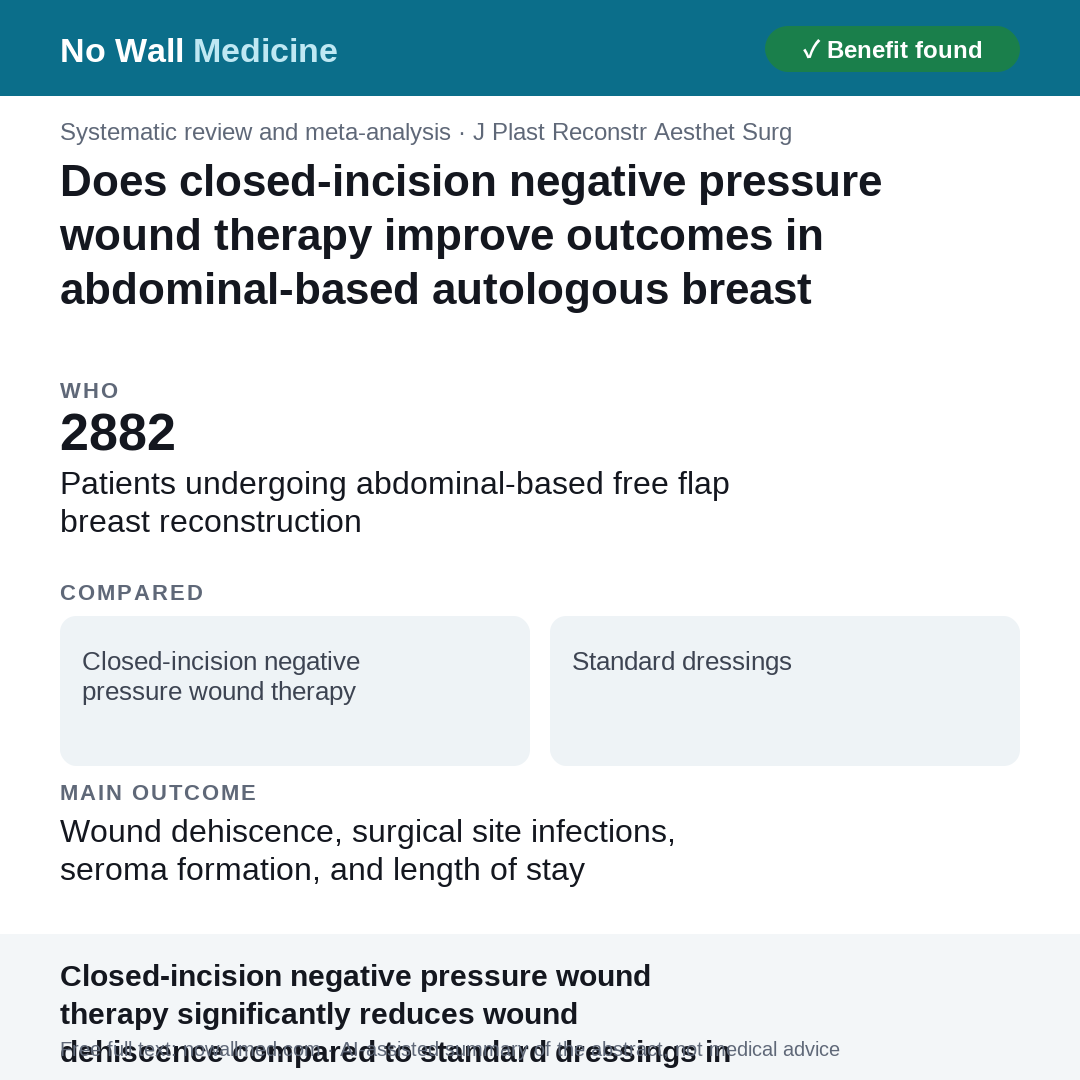
Efficacy of closed-incision negative pressure wound therapy in abdominal-based autologous breast reconstruction: A systematic review and meta-analysis
Systematic review and meta-analysisBenefit found
Does closed-incision negative pressure wound therapy improve outcomes in abdominal-based autologous breast reconstruction?
Who
2882
Patients undergoing abdominal-based free flap breast reconstruction
Compared
Closed-incision negative pressure wound therapy
Standard dressings
Main outcome
Wound dehiscence, surgical site infections, seroma formation, and length of stay
Result: odds ratio 0.58 (95% CI 0.42-0.79) for wound dehiscence
Bottom line: Closed-incision negative pressure wound therapy significantly reduces wound dehiscence compared to standard dressings in breast reconstruction.
Limitation: Further research involving larger, multicenter randomized controlled trials is necessary.
J Plast Reconstr Aesthet Surg · 2025-07-01Download image
Systematic Review of the Differential Effects of TGF-β1 in Ischemic and Hemorrhagic Preclinical Stroke Models
Systematic review of 89 animal studiesMixed results
What is the role of transforming growth factor beta 1 in ischemic and hemorrhagic stroke?
Who
89
Animal models of ischemic and hemorrhagic stroke
Compared
Ischemic stroke: protective in 76% of studies
Hemorrhagic stroke: protective in 33% of studies
Main outcome
Role of transforming growth factor beta 1 in stroke models
Bottom line: Transforming growth factor beta 1 is neuroprotective in ischemic stroke but potentially harmful in hemorrhagic stroke.
Limitation: Low compliance with SYRCLE guidelines and variable methodological approaches to stroke models.
J Am Heart Assoc · 2025-07-01Download image

Is cardiac autonomic control affected in major depressive disorder? A systematic review of heart rate variability studies
Systematic reviewHarm found
Is cardiac autonomic control affected in major depressive disorder?
Who
Drug-free major depressive disorder patients and healthy controls
Compared
Major depressive disorder patients
Healthy controls
Main outcome
Short-term resting-state heart rate variability measures
Bottom line: Major depressive disorder is characterized by decreased parasympathetic tone and autonomic dysregulation.
Transl Psychiatry · 2025-07-01Download image

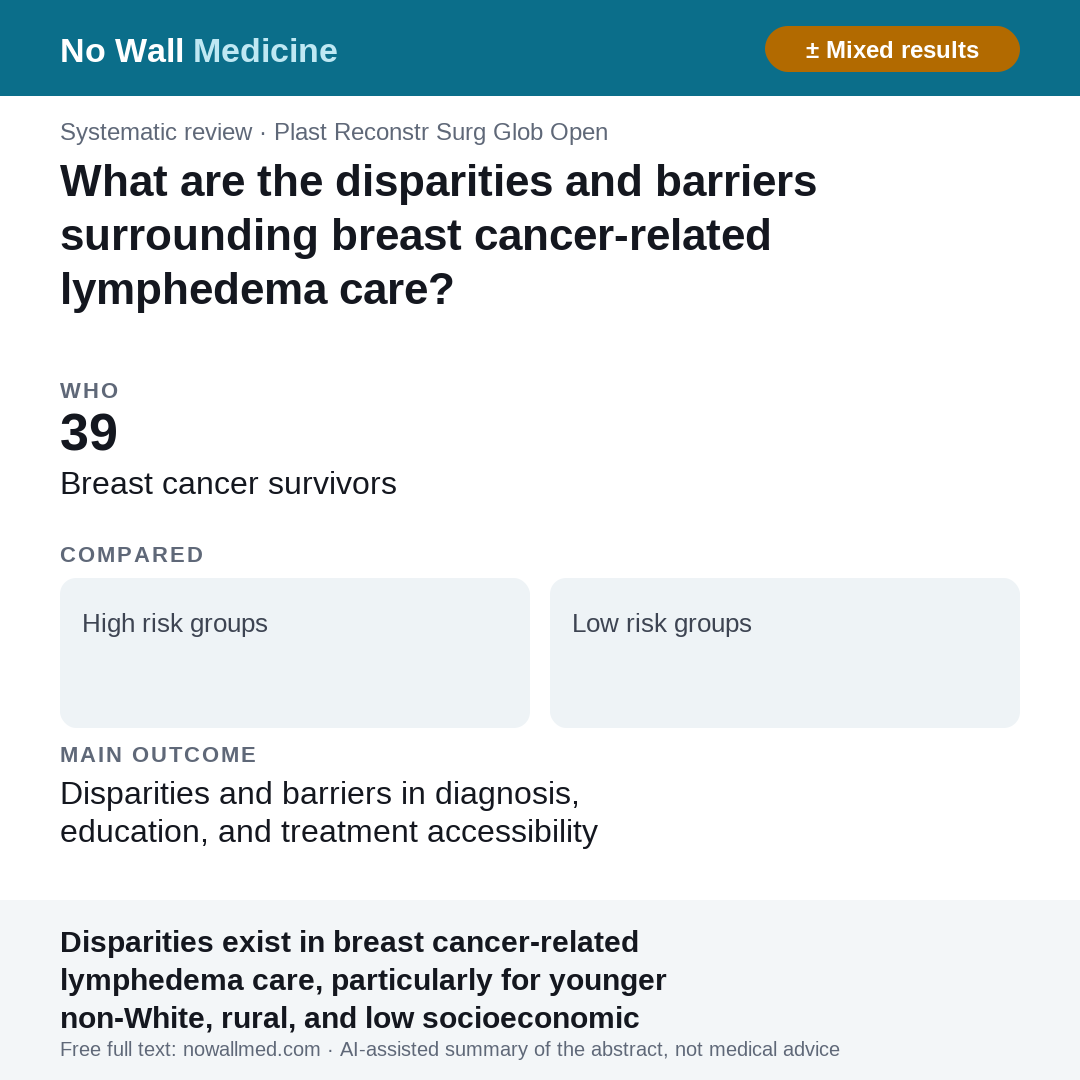
Disparities in Breast Cancer-related Lymphedema: A Systematic Review of Inequities and Barriers in Care
Systematic reviewMixed results
What are the disparities and barriers surrounding breast cancer-related lymphedema care?
Who
39
Breast cancer survivors
Compared
High risk groups
Low risk groups
Main outcome
Disparities and barriers in diagnosis, education, and treatment accessibility
Bottom line: Disparities exist in breast cancer-related lymphedema care, particularly for younger non-White, rural, and low socioeconomic status women.
Plast Reconstr Surg Glob Open · 2025-07-01Download image
Using nudges with electronic health records systems to improve advance care planning: a systematic review
Systematic review of randomized controlled trialsBenefit found
Do electronic health record nudges improve advance care planning outcomes?
Who
27,556
Healthcare professionals and patients in healthcare settings
Compared
Electronic health record nudges
Non-electronic health record nudges
Main outcome
Advance care planning documentation and communication
Bottom line: Electronic health record nudges may improve advance care planning documentation and communication practices for seriously ill patients.
Limitation: Limited number of studies and high heterogeneity.
BMC Palliat Care · 2025-07-01Download image

Ethical aspects of limiting end-of-Life treatment of adult patients at the primary healthcare level in family and emergency medicine: a systematic review
Systematic reviewUnclear result
What are the ethical aspects and decision-making processes of limiting end-of-life treatment?
Who
Adult patients in family and emergency medicine · Primary healthcare level
Compared
Emergency medicine: rapid, protocol-driven processes, often constrained by time and workload
Family medicine: relied on longitudinal patient relationships and clinical judgment
Main outcome
Ethical considerations and decision-making processes regarding treatment limitation
Bottom line: End-of-life treatment limitation decisions are underexplored, especially in family medicine, requiring clearer guidelines and enhanced physician collaboration.
Limitation: Decisions regarding treatment limitations in primary care settings remain underexplored.
BMC Palliat Care · 2025-07-01Download image

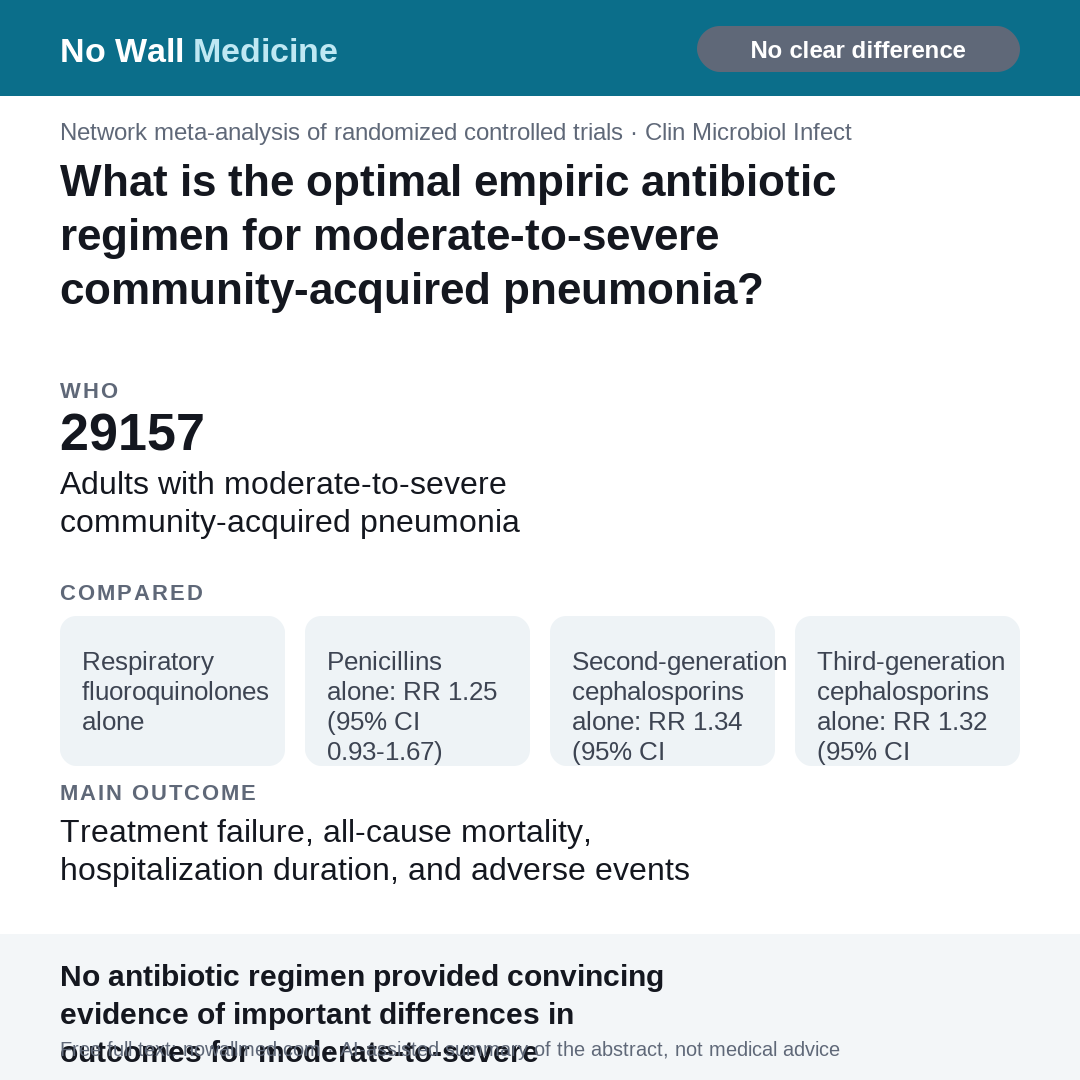
Empiric antibiotic therapy for moderate-to-severe community-acquired pneumonia: a systematic review and network meta-analysis
Network meta-analysis of randomized controlled trialsNo clear difference
What is the optimal empiric antibiotic regimen for moderate-to-severe community-acquired pneumonia?
Who
29157
Adults with moderate-to-severe community-acquired pneumonia
Compared
Respiratory fluoroquinolones alone
Penicillins alone: RR 1.25 (95% CI 0.93-1.67)
Second-generation cephalosporins alone: RR 1.34 (95% CI 0.89-2.02)
Third-generation cephalosporins alone: RR 1.32 (95% CI 0.99-1.77)
Main outcome
Treatment failure, all-cause mortality, hospitalization duration, and adverse events
Bottom line: No antibiotic regimen provided convincing evidence of important differences in outcomes for moderate-to-severe community-acquired pneumonia.
Limitation: Most evidence was of low or very low certainty.
Clin Microbiol Infect · 2025-06-30Download image
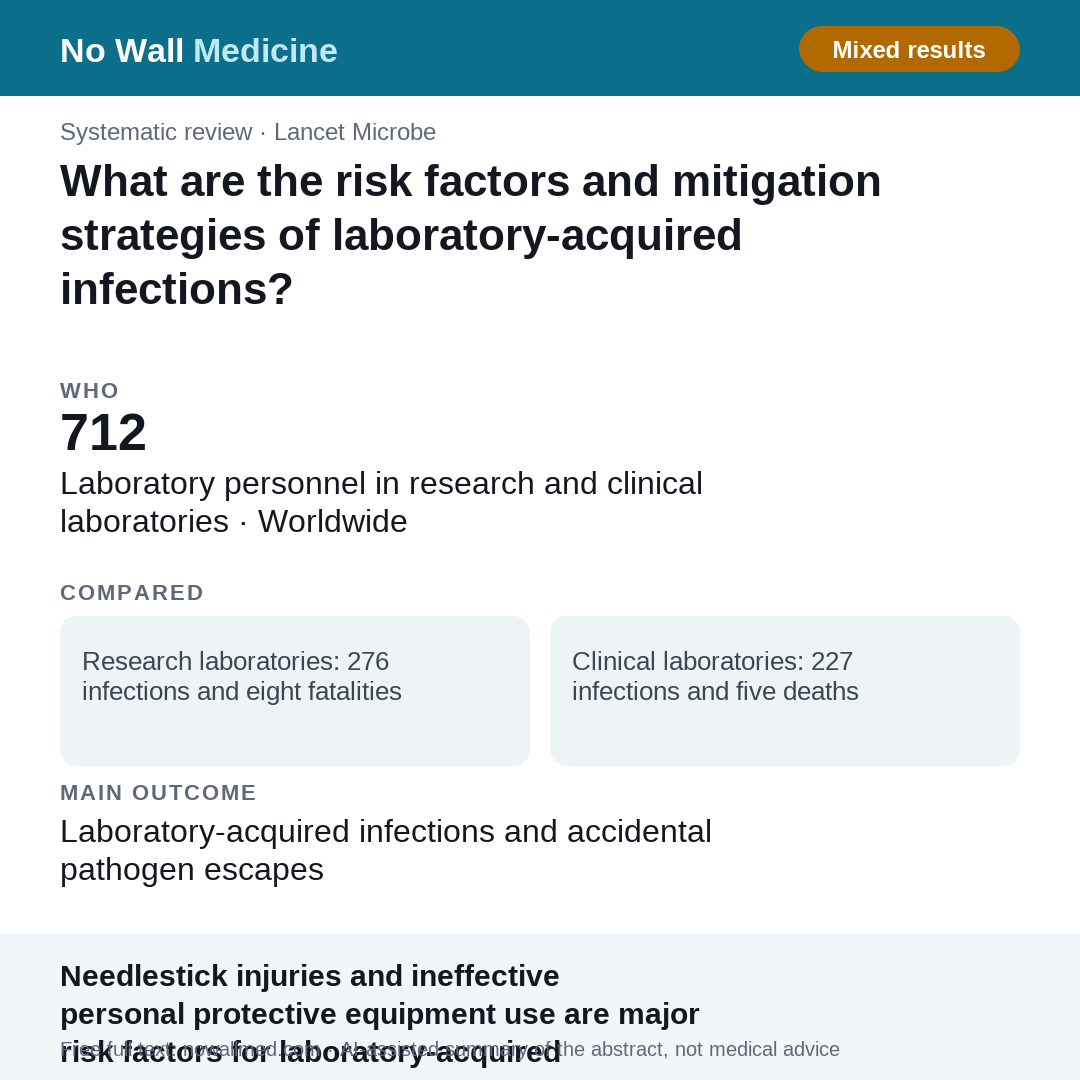
Risk factors and mitigation strategies of laboratory-acquired infections in research and clinical laboratories worldwide: a systematic review
Systematic reviewMixed results
What are the risk factors and mitigation strategies of laboratory-acquired infections?
Who
712
Laboratory personnel in research and clinical laboratories · Worldwide
Compared
Research laboratories: 276 infections and eight fatalities
Clinical laboratories: 227 infections and five deaths
Main outcome
Laboratory-acquired infections and accidental pathogen escapes
Bottom line: Needlestick injuries and ineffective personal protective equipment use are major risk factors for laboratory-acquired infections.
Lancet Microbe · 2025-06-30Download image
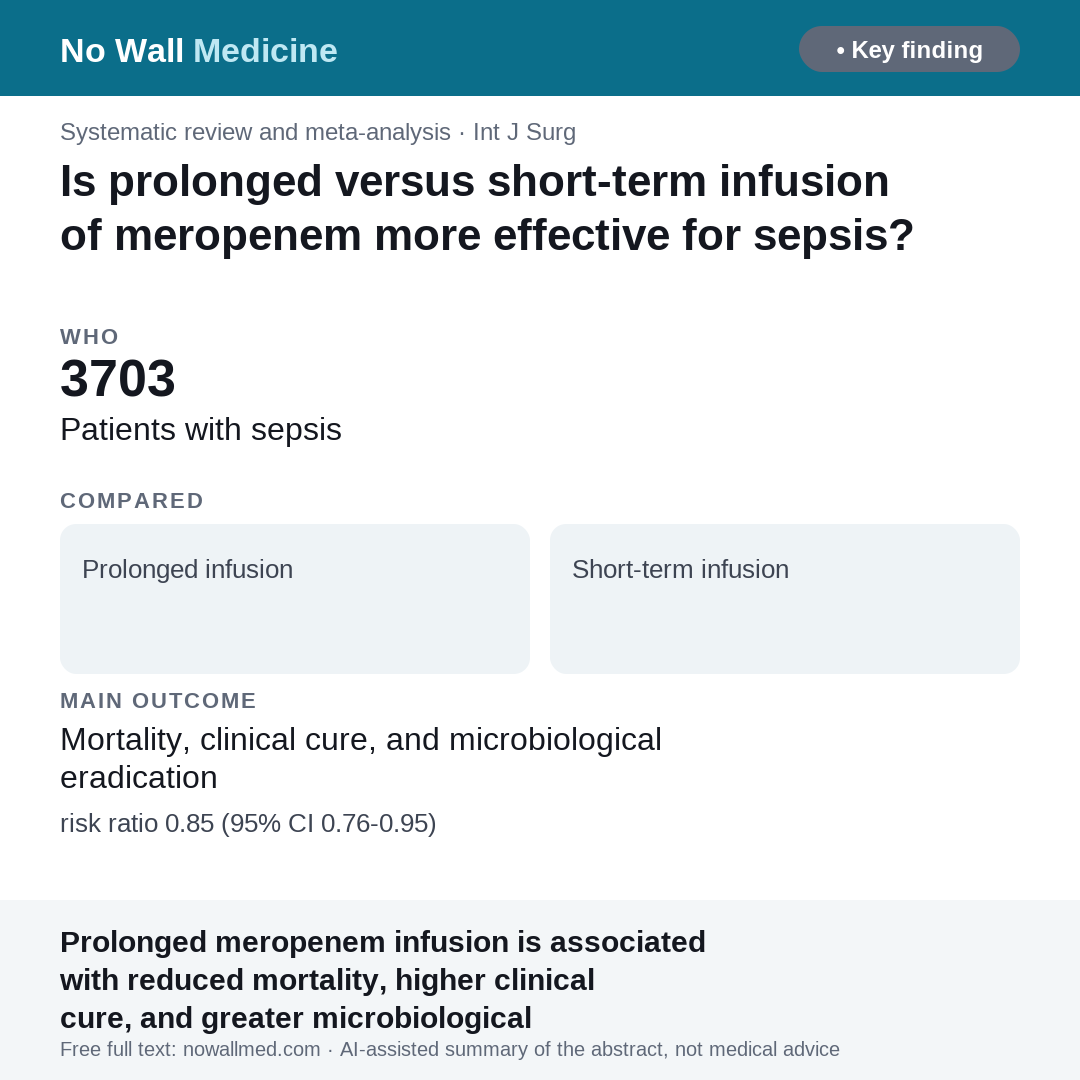
Prolonged versus short-term infusion of meropenem for the treatment of sepsis: a systematic review and meta-analysis
Systematic review and meta-analysisBenefit found
Is prolonged versus short-term infusion of meropenem more effective for sepsis?
Who
3703
Patients with sepsis
Compared
Prolonged infusion
Short-term infusion
Main outcome
Mortality, clinical cure, and microbiological eradication
Result: risk ratio 0.85 (95% CI 0.76-0.95)
Bottom line: Prolonged meropenem infusion is associated with reduced mortality, higher clinical cure, and greater microbiological eradication in sepsis patients.
Int J Surg · 2025-06-30Download image
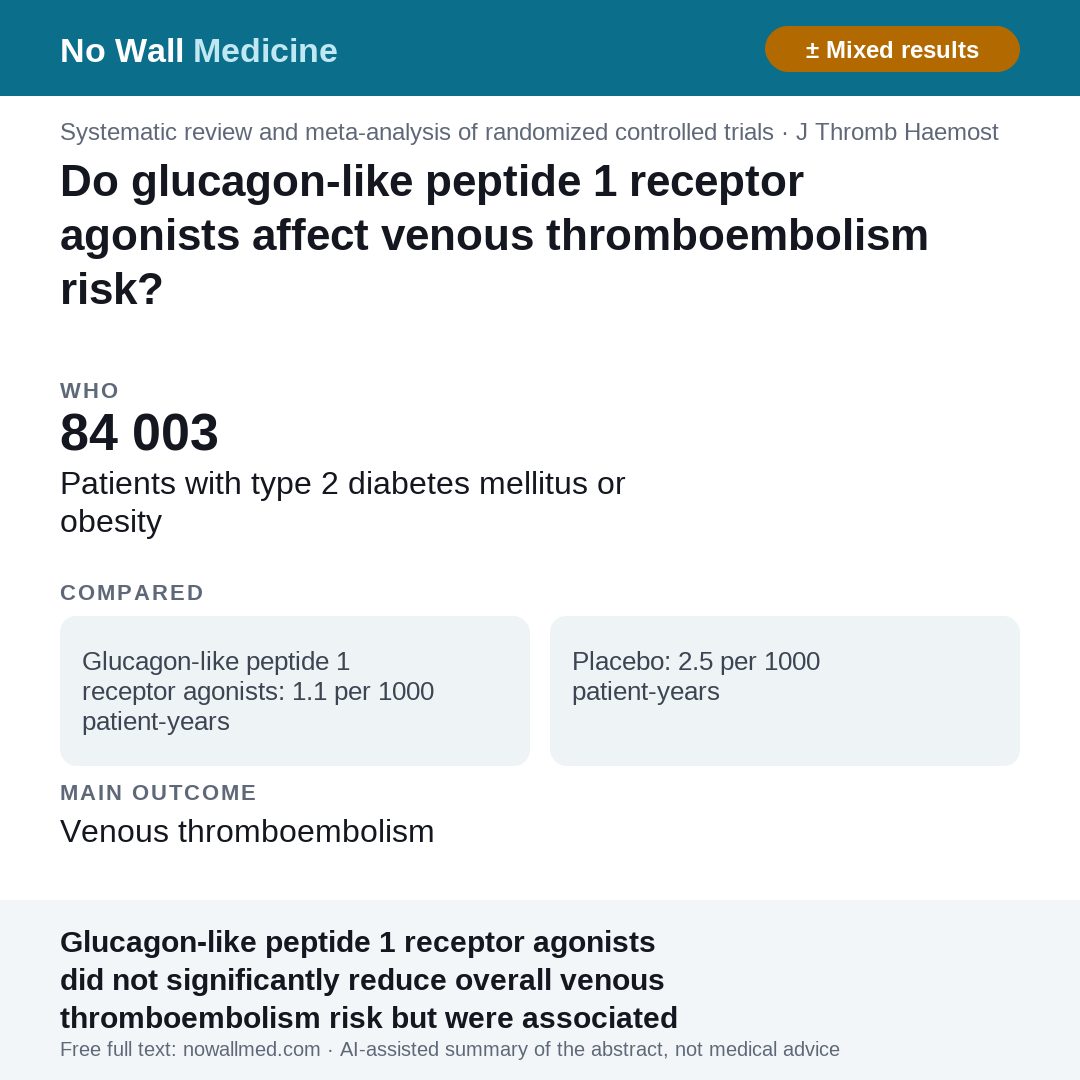
Glucagon-like peptide 1 receptor agonists and risk of venous thromboembolism: a systematic review and meta-analysis of randomized controlled trials
Systematic review and meta-analysis of randomized controlled trialsMixed results
Do glucagon-like peptide 1 receptor agonists affect venous thromboembolism risk?
Who
84 003
Patients with type 2 diabetes mellitus or obesity
Compared
Glucagon-like peptide 1 receptor agonists: 1.1 per 1000 patient-years
Placebo: 2.5 per 1000 patient-years
Main outcome
Venous thromboembolism
Result: risk ratio 0.70 (95% CI, 0.46-1.07)
Bottom line: Glucagon-like peptide 1 receptor agonists did not significantly reduce overall venous thromboembolism risk but were associated with lower pulmonary embolism risk.
J Thromb Haemost · 2025-06-30Download image
Advancements in Herpes Zoster Diagnosis, Treatment, and Management: Systematic Review of Artificial Intelligence Applications
Systematic literature reviewBenefit found
What is the current research status of artificial intelligence applications in herpes zoster?
Who
26
Studies involving artificial intelligence applications in herpes zoster · Web of Science Core Collection, PubMed, and IEEE
Compared
Diagnosis
Treatment
Management
Main outcome
AI task types, algorithms, data sources, and clinical applications
Bottom line: Artificial intelligence enhances herpes zoster diagnosis, treatment outcome predictions, and disease management through various algorithms and data types.
Limitation: Potential omissions from excluding Embase and Scopus, language bias, and risk of subjective bias in study selection.
J Med Internet Res · 2025-06-30Download image