Visual abstracts
New randomized trials and meta-analyses from leading journals at a glance: who was studied, what was compared, and what was found. Every paper is free to read in full.
All specialtiesCardiology 182Oncology 148Gastroenterology & Hepatology 86Infectious Disease 144Neurology 83Psychiatry & Mental Health 118Pulmonology 88Critical Care 51Endocrinology & Diabetes 114Pediatrics 76Surgery 56Orthopedics & Sports Medicine 37Neurosurgery 6Cardiothoracic & Vascular Surgery 17Plastic & Reconstructive Surgery 43Nephrology 37Rheumatology 38Hematology 48Dermatology 19Ophthalmology 33Obstetrics & Gynecology 48Public & Global Health 54Radiology & Imaging 15Anesthesiology 29Urology 44ENT (Otolaryngology) 23Emergency Medicine 18Allergy & Immunology 14Geriatrics 56Family Medicine & Primary Care 21Medical Genetics & Genomics 19Pathology & Laboratory Medicine 5Physical Medicine & Rehabilitation 46Palliative Care 24Nutrition 61Digital Health & AI 169General Medicine 26
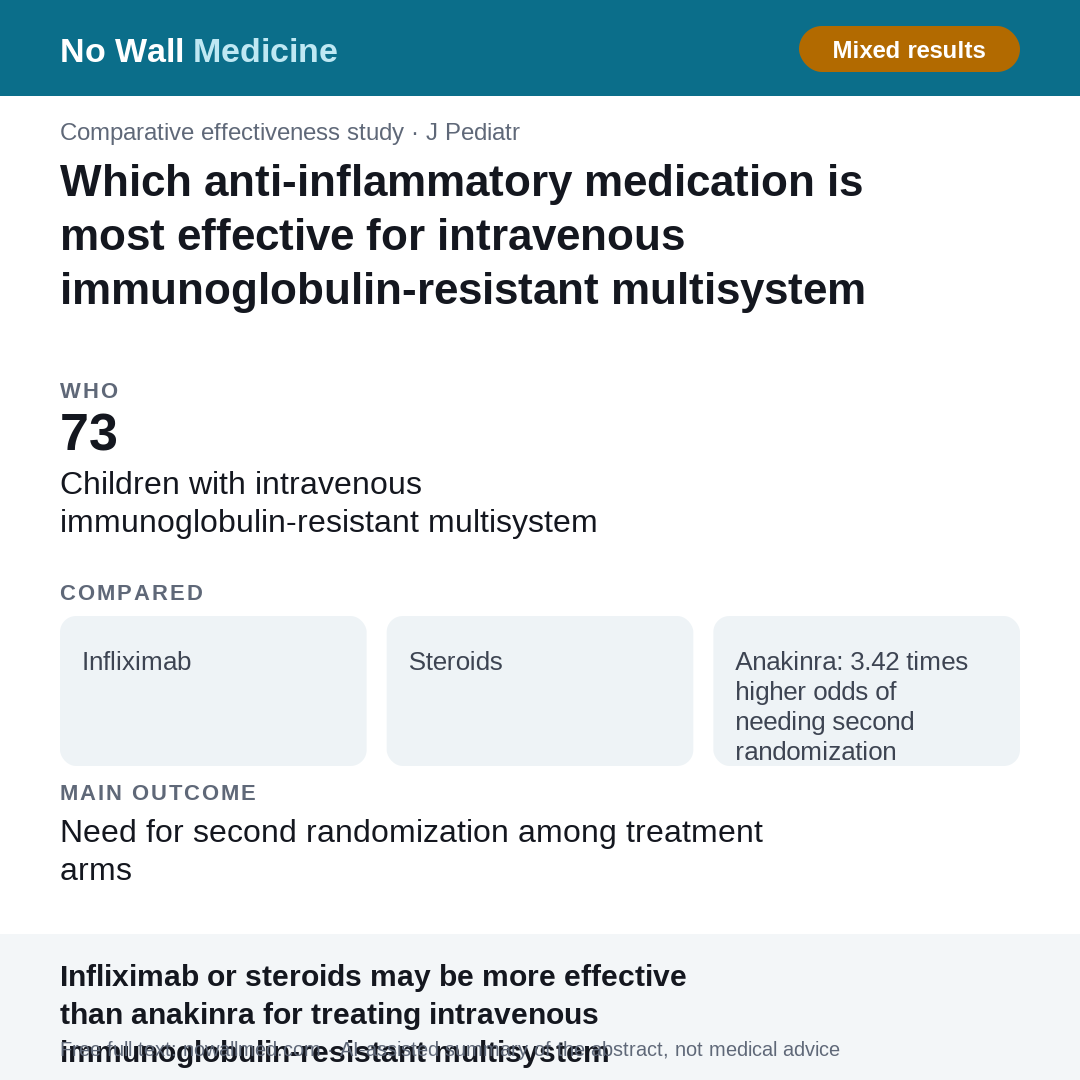
Multisystem Inflammatory Syndrome Therapies in Children: A Comparative Effectiveness Trial
Comparative effectiveness studyMixed results
Which anti-inflammatory medication is most effective for intravenous immunoglobulin-resistant multisystem inflammatory syndrome in children?
Who
73
Children with intravenous immunoglobulin-resistant multisystem inflammatory syndrome · Two hospitals
Compared
Infliximab
Steroids
Anakinra: 3.42 times higher odds of needing second randomization
Main outcome
Need for second randomization among treatment arms
Result: odds ratio 3.42 (95% CI 1.03 to 12.29)
Bottom line: Infliximab or steroids may be more effective than anakinra for treating intravenous immunoglobulin-resistant multisystem inflammatory syndrome in children.
J Pediatr · 2026-08-19Download image
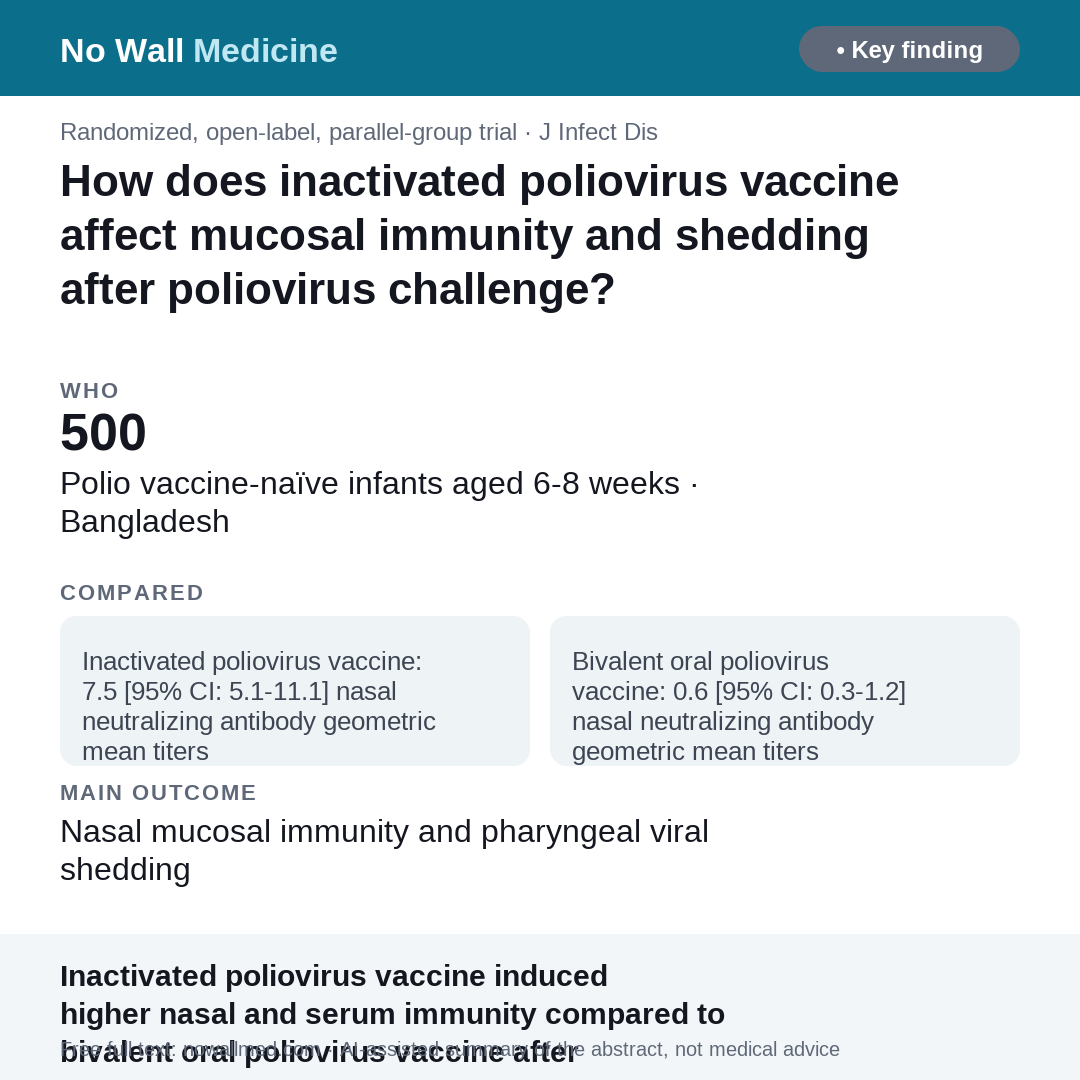
Effect of inactivated poliovirus vaccine on nasal mucosal immunity and pharyngeal shedding following novel oral poliovirus vaccine type 2 challenge: A randomized, open-label trial
Randomized, open-label, parallel-group trialBenefit found
How does inactivated poliovirus vaccine affect mucosal immunity and shedding after poliovirus challenge?
Who
500
Polio vaccine-naïve infants aged 6-8 weeks · Bangladesh
Compared
Inactivated poliovirus vaccine: 7.5 [95% CI: 5.1-11.1] nasal neutralizing antibody geometric mean titers
Bivalent oral poliovirus vaccine: 0.6 [95% CI: 0.3-1.2] nasal neutralizing antibody geometric mean titers
Main outcome
Nasal mucosal immunity and pharyngeal viral shedding
Bottom line: Inactivated poliovirus vaccine induced higher nasal and serum immunity compared to bivalent oral poliovirus vaccine after challenge.
J Infect Dis · 2026-08-18Download image
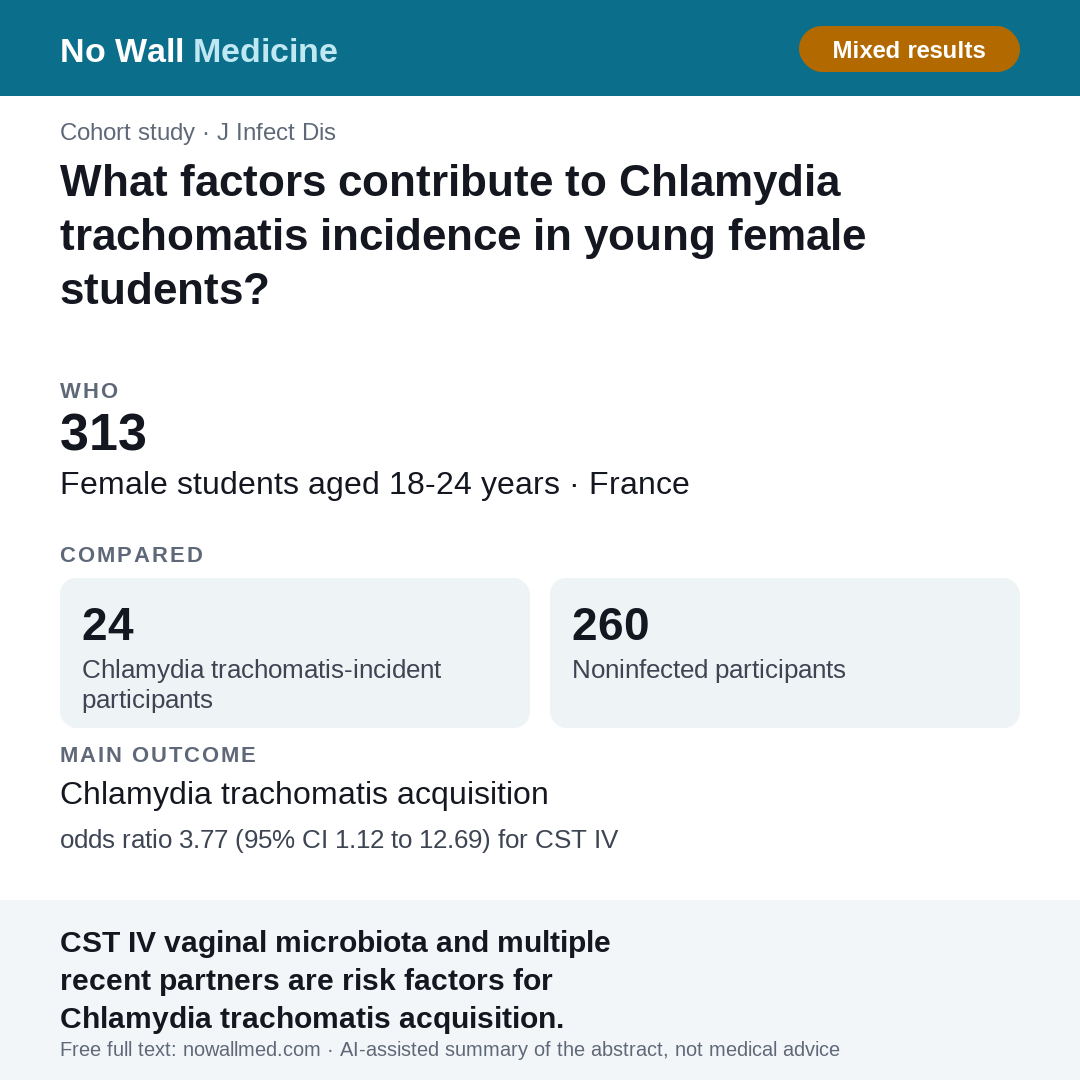
Chlamydia trachomatis Incidence in Relation to Vaginal Microbiota Dynamics, Immunogenetics and Exposures in a Cohort of Young Student Women in France
Cohort studyMixed results
What factors contribute to Chlamydia trachomatis incidence in young female students?
Who
313
Female students aged 18-24 years · France
Compared
24Chlamydia trachomatis-incident participants
260Noninfected participants
Main outcome
Chlamydia trachomatis acquisition
Result: odds ratio 3.77 (95% CI 1.12 to 12.69) for CST IV
Bottom line: CST IV vaginal microbiota and multiple recent partners are risk factors for Chlamydia trachomatis acquisition.
J Infect Dis · 2026-08-18Download image
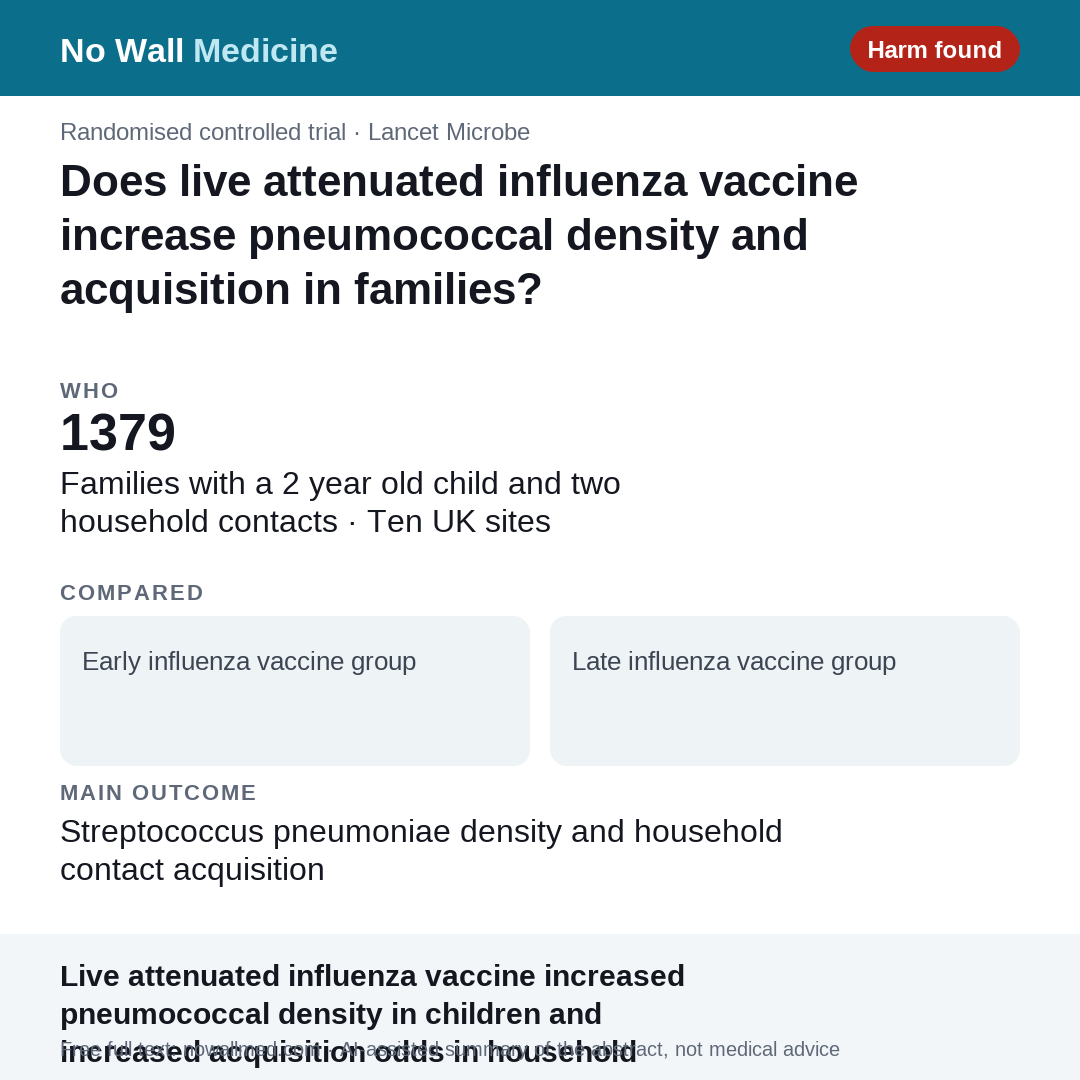
Effects of attenuated influenza virus administration to young children on pneumococcal density and acquisition in UK families: a randomised controlled trial
Randomised controlled trialHarm found
Does live attenuated influenza vaccine increase pneumococcal density and acquisition in families?
Who
1379
Families with a 2 year old child and two household contacts · Ten UK sites
Compared
Early influenza vaccine group
Late influenza vaccine group
Main outcome
Streptococcus pneumoniae density and household contact acquisition
Result: odds ratio 2.5 (95% CI 1.5-4.3) for density; odds ratio 2.0 (95% CI 1.2-3.5) for acquisition
Bottom line: Live attenuated influenza vaccine increased pneumococcal density in children and increased acquisition odds in household contacts.
Lancet Microbe · 2026-08-18Download image
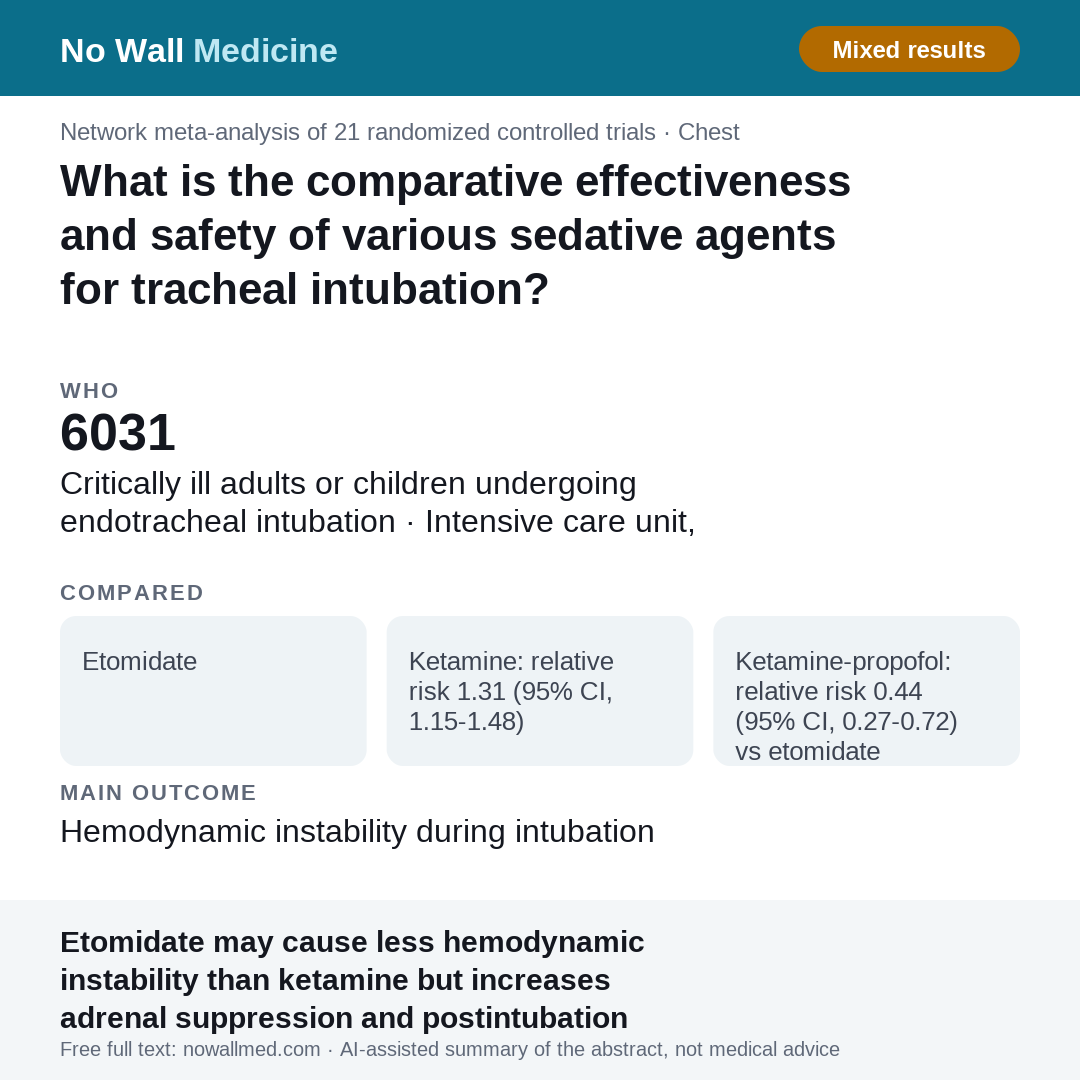
Induction Agents for Tracheal Intubation of Critically Ill Patients: A Systematic Review and Network Meta-Analysis of Randomized Controlled Trials
Network meta-analysis of 21 randomized controlled trialsMixed results
What is the comparative effectiveness and safety of various sedative agents for tracheal intubation?
Who
6031
Critically ill adults or children undergoing endotracheal intubation · Intensive care unit, emergency department, operating room, and prehospital
Compared
Etomidate
Ketamine: relative risk 1.31 (95% CI, 1.15-1.48)
Ketamine-propofol: relative risk 0.44 (95% CI, 0.27-0.72) vs etomidate
Main outcome
Hemodynamic instability during intubation
Result: relative risk 1.31 (95% CI, 1.15-1.48) for ketamine vs etomidate
Bottom line: Etomidate may cause less hemodynamic instability than ketamine but increases adrenal suppression and postintubation vasopressor needs.
Limitation: Evidence for ketamine-propofol is too limited and uncertain to support firm conclusions.
Chest · 2026-08-18Download image
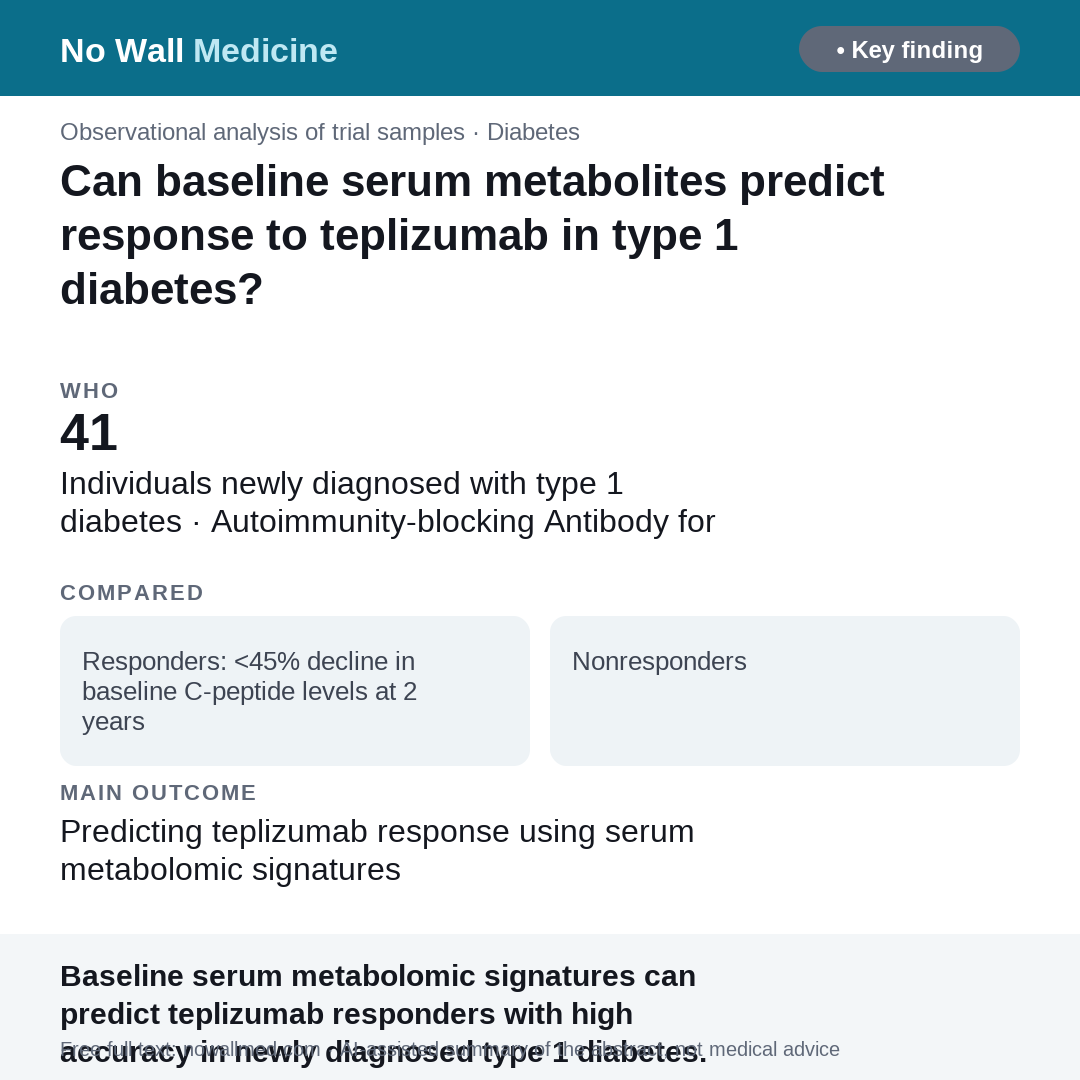
Baseline Serum Metabolites as Predictors of Teplizumab Response in Individuals With Type 1 Diabetes
Analysis of baseline serum samplesUnclear result
Can baseline serum metabolomic profiles distinguish responders from nonresponders to teplizumab?
Who
41
Individuals newly diagnosed with type 1 diabetes · Autoimmunity-blocking Antibody for Tolerance trial
Compared
Responders
Nonresponders
Main outcome
Baseline serum metabolomic signatures
Bottom line: Baseline serum metabolomic signatures may predict which newly diagnosed type 1 diabetes patients respond to teplizumab.
Diabetes · 2026-08-18Download image
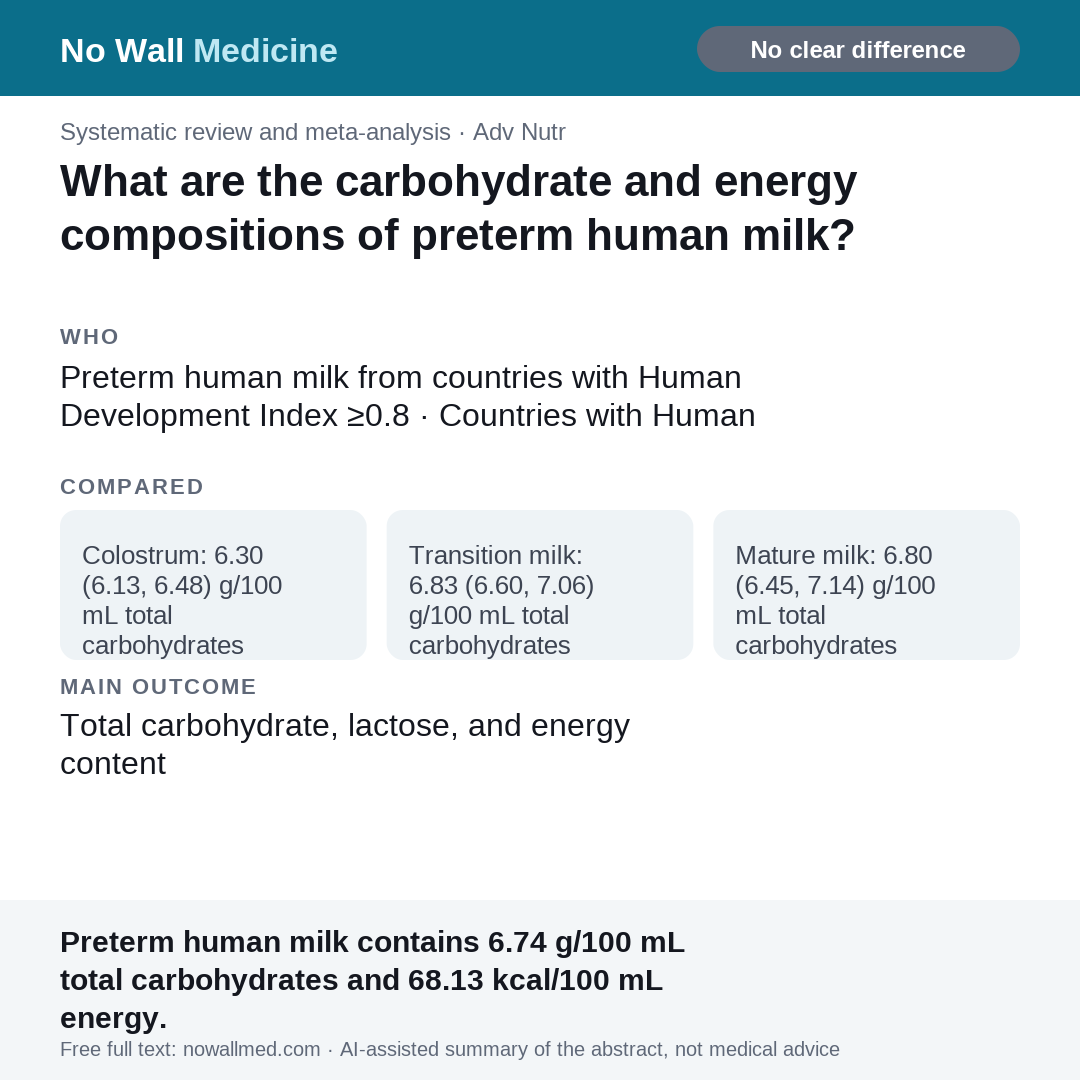
Carbohydrate and Energy Composition of Preterm Human Milk: A Systematic Review and Meta-Analysis
Systematic review and meta-analysisNo clear difference
What are the carbohydrate and energy compositions of preterm human milk?
Who
53
Preterm human milk from countries with Human Development Index ≥0.8 · Countries with Human Development Index ≥0.8
Compared
Colostrum: 6.30 (6.13, 6.48) g/100 mL total carbohydrates
Transition milk: 6.83 (6.60, 7.06) g/100 mL total carbohydrates
Mature milk: 6.80 (6.45, 7.14) g/100 mL total carbohydrates
Main outcome
Total carbohydrate, lactose, and energy content
Bottom line: Preterm human milk contains 6.74 g/100 mL total carbohydrates and 68.13 kcal/100 mL energy.
Limitation: Substantial variability related to study design, analytical methods, and data reporting.
Adv Nutr · 2026-08-18Download image
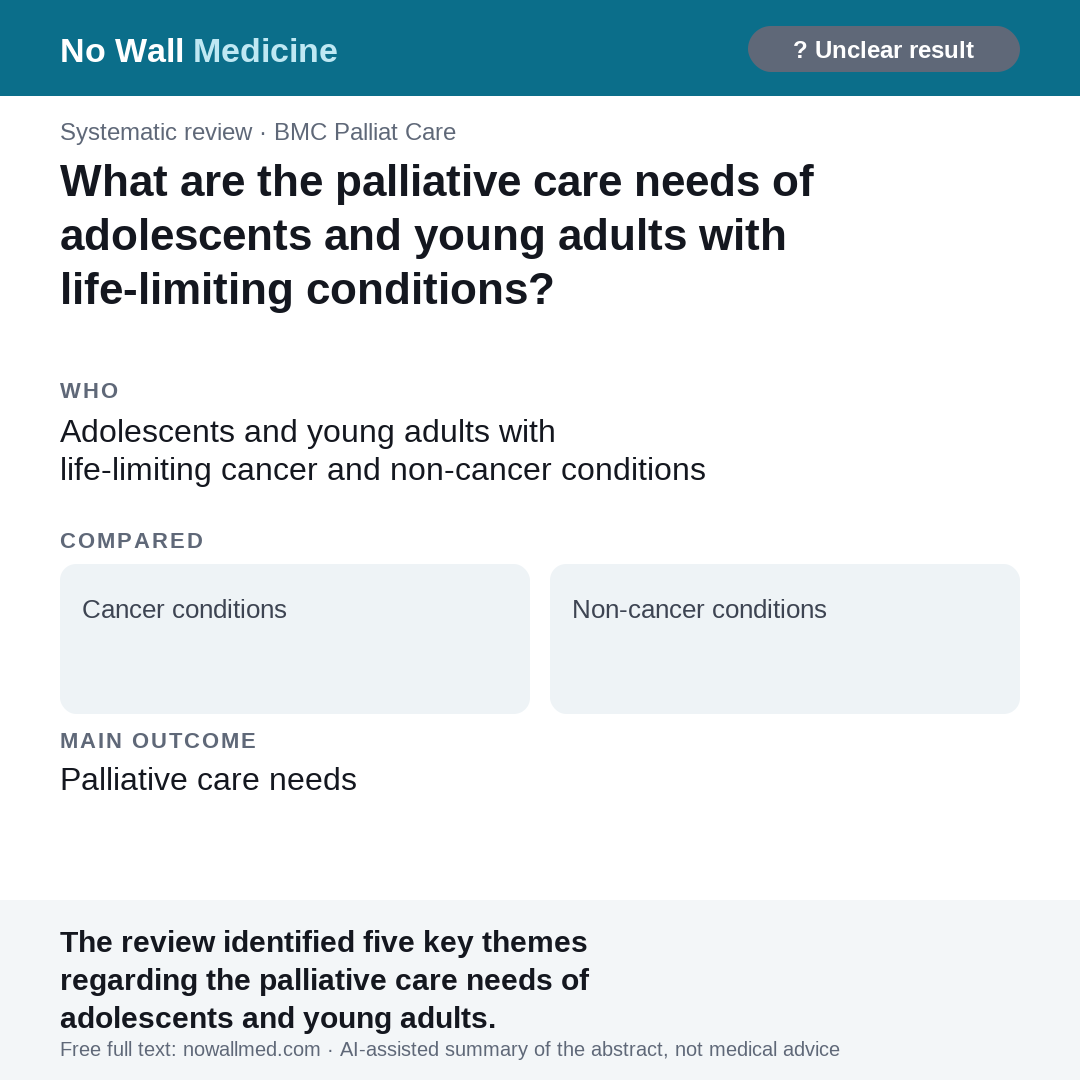
Verbally induced placebo effects on heat pain tolerance in preschool-aged children
Experimental studyBenefit found
Do verbal suggestions induce placebo effects on heat pain tolerance in preschool-aged children?
Who
117
Children aged 3 to 6 years
Compared
Placebo magical analgesic cream: Significant placebo effects on heat pain tolerance
Control cream
Natural history condition
Main outcome
Heat pain tolerance and self-reported pain
Bottom line: Verbal suggestions elicit robust behavioral placebo effects on heat pain tolerance in preschool-aged children.
Pain · 2026-08-17Download image
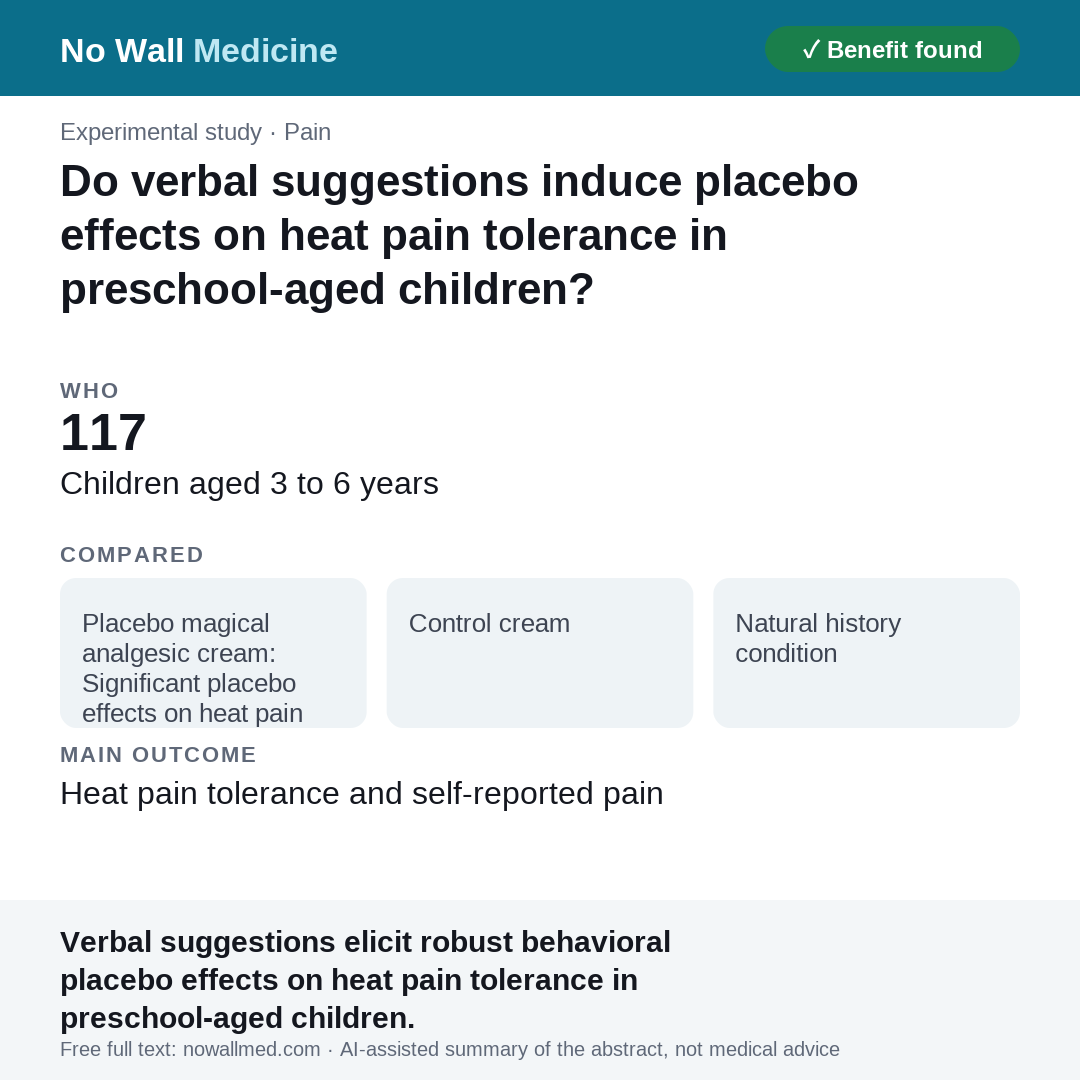
The optimal stent-strategy in paediatric pyeloplasty: a systematic review and network meta-analysis
Systematic review and network meta-analysisMixed results
What is the optimal stent strategy in paediatric pyeloplasty?
Who
3298
Children with pelvi-ureteric junction obstruction undergoing Anderson-Hynes pyeloplasty
Compared
Internal JJ stenting
External transanastomotic stenting
Stentless repair
Main outcome
Overall complications and operative success
Result: odds ratio 0.56 (95% confidence interval 0.33-0.93)
Bottom line: Stented approaches may reduce major leakage compared to stentless repair, but internal stents may increase infectious complications.
Limitation: Certainty of evidence was low or very low for most outcomes.
BJU Int · 2026-08-16Download image
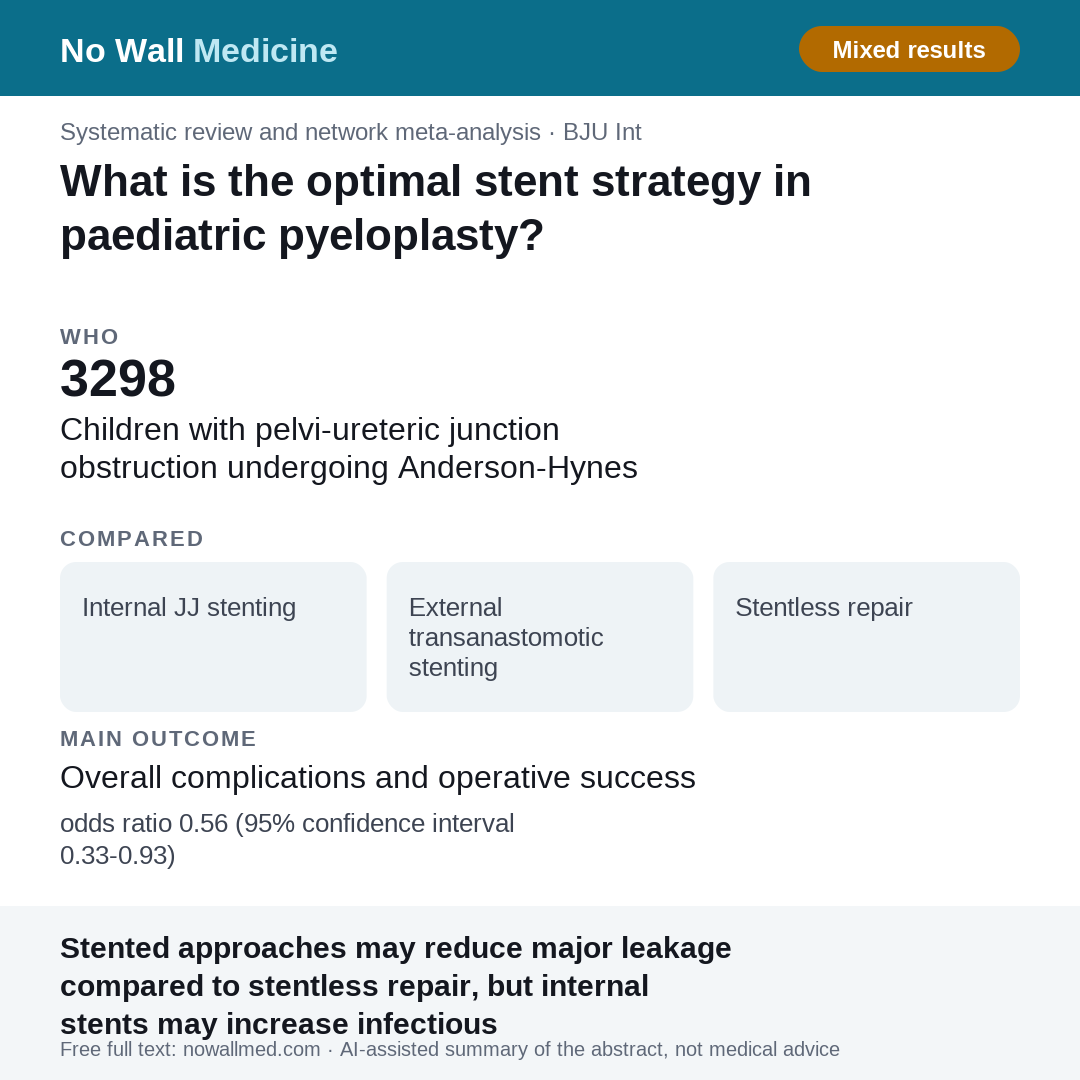
Pancreatic enzymes and bile acids alone and in combination for acutely ill, severely malnourished children: a multi-country double-blind randomised placebo-controlled trial
Multicentre, adaptive, 2 x 2 factorial, randomised, double-blinded controlled trialNo clear difference
Do pancreatic enzymes and bile acids improve survival in severely malnourished children?
Who
429
Hospitalised, acutely ill, severely malnourished children aged 2-59 months · Six sites in Bangladesh, Kenya, Malawi and Uganda
Compared
Pancreatic enzymes: 35 children (16%)
36Pancreatic enzyme placebo (17%)
Bile acids: 39 children (18%)
32Bile acid placebo (15%)
Main outcome
Mortality within 60 days of enrolment
Result: hazard ratio 1.02 (95% CI 0.64-1.62) for pancreatic enzymes; hazard ratio 1.27 (95% CI 0.79-2.02) for bile acids
Bottom line: Pancreatic enzymes and bile acids do not reduce mortality or improve clinical outcomes in severely malnourished children.
Funded by: The Gates Foundation, Wellcome
eClinicalMedicine · 2026-08-15Download image
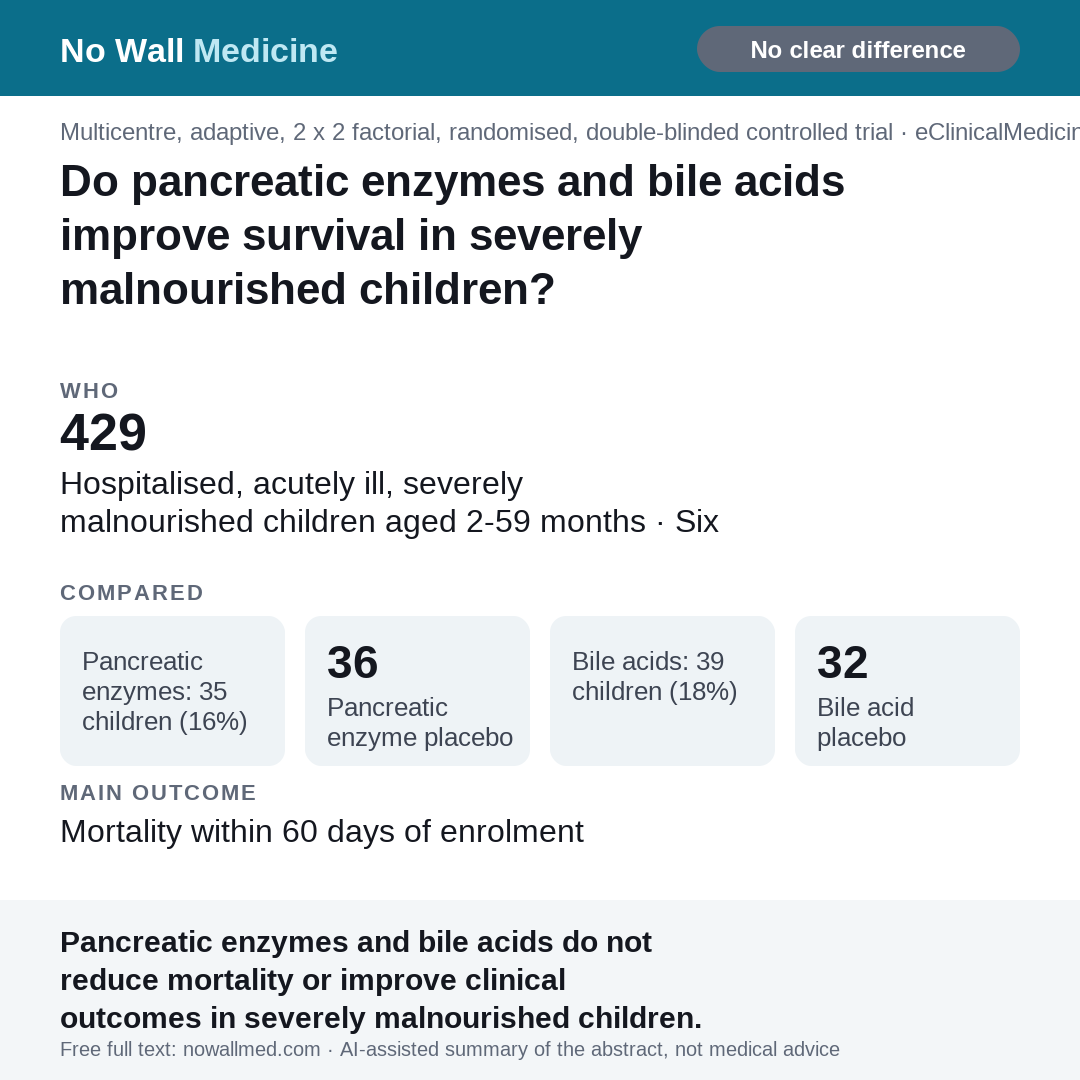
The palliative care needs of adolescents and young adults with a life limiting condition: a systematic review
Systematic reviewUnclear result
What are the palliative care needs of adolescents and young adults with life-limiting conditions?
Who
Adolescents and young adults with life-limiting cancer and non-cancer conditions
Compared
Cancer conditions
Non-cancer conditions
Main outcome
Palliative care needs
Bottom line: The review identified five key themes regarding the palliative care needs of adolescents and young adults.
BMC Palliat Care · 2026-08-15Download image
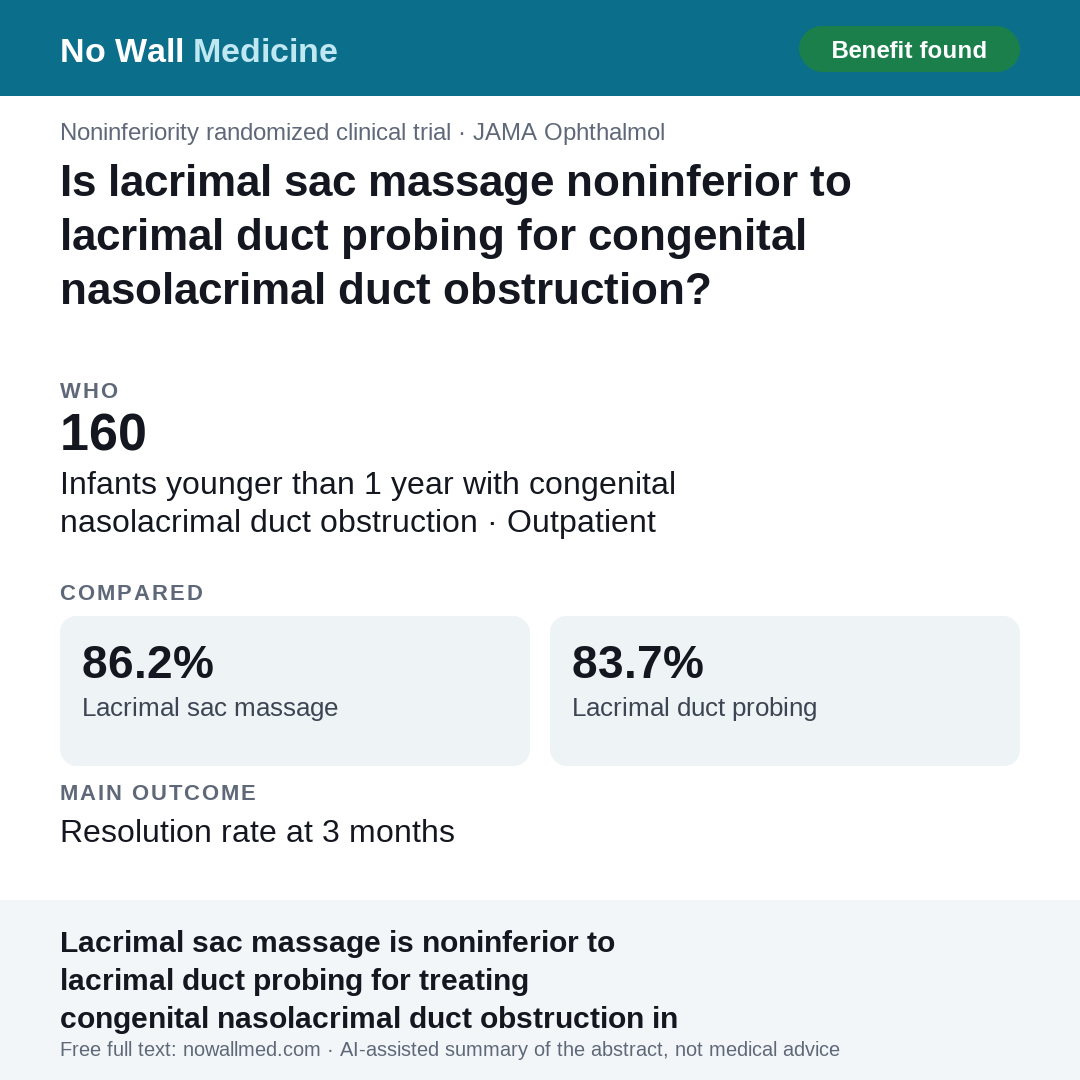
Standardized Lacrimal Sac Massage vs Probing for Congenital Nasolacrimal Duct Obstruction in Infants: A Noninferiority Randomized Trial
Noninferiority randomized clinical trialBenefit found
Is lacrimal sac massage noninferior to probing for congenital nasolacrimal duct obstruction?
Who
160
Infants younger than 1 year with congenital nasolacrimal duct obstruction · Outpatient clinic in Guangzhou, China
Compared
86.2%Lacrimal sac massage
83.7%Lacrimal duct probing
Main outcome
Resolution rate at 3 months
Result: difference, 2.5 percentage points; 95% CI, -8.78 to 13.76
Bottom line: Lacrimal sac massage is noninferior to lacrimal duct probing for treating congenital nasolacrimal duct obstruction in infants.
JAMA Ophthalmol · 2026-08-13Download image
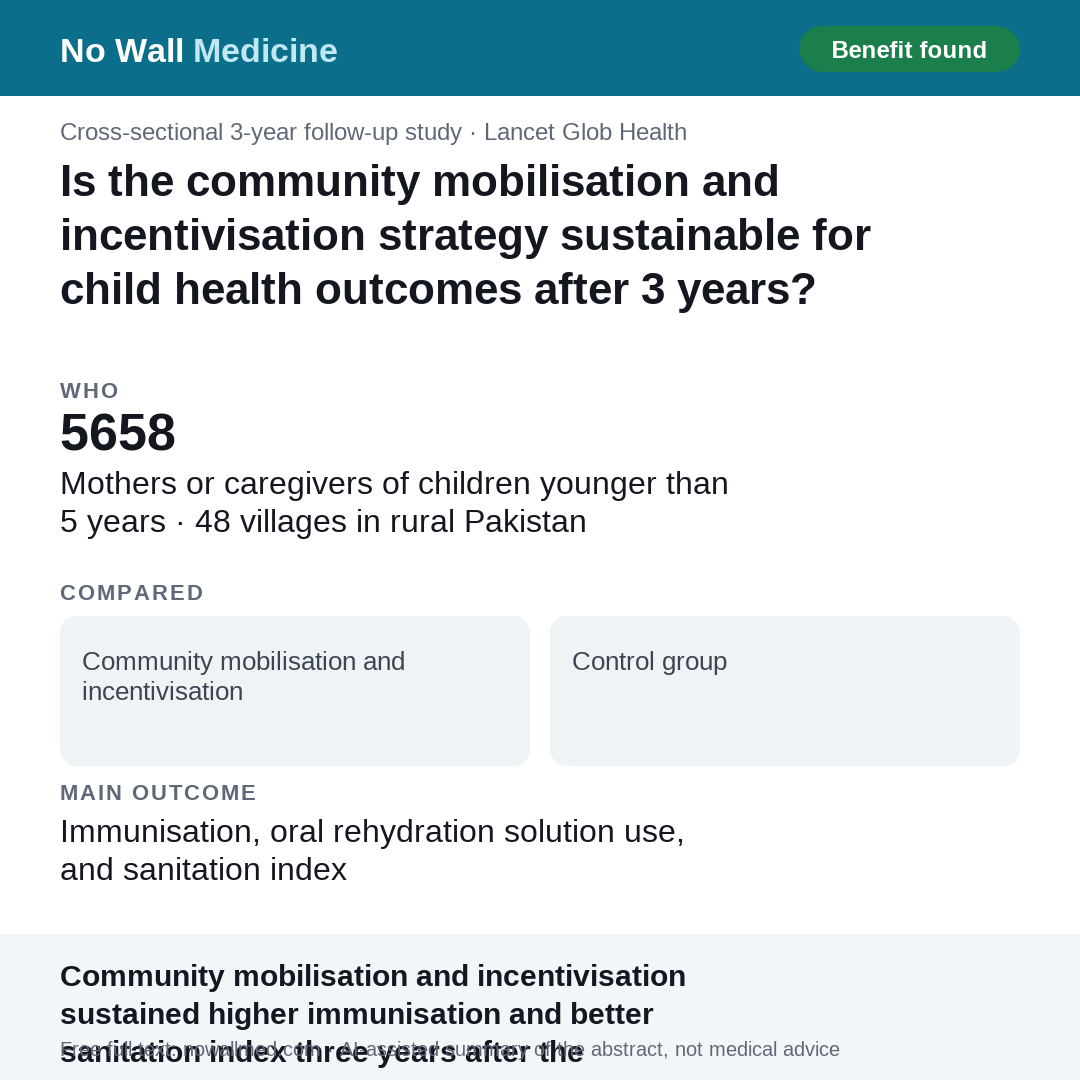
Sustainability and adherence to behaviour change: a cross-sectional 3-year follow-up survey of an innovative Community Mobilisation and Community Incentivisation strategy (CoMIC trial) for child health in rural Pakistan
Cross-sectional 3-year follow-up studyBenefit found
Is the community mobilisation and incentivisation strategy sustainable for child health outcomes after 3 years?
Who
5658
Mothers or caregivers of children younger than 5 years · 48 villages in rural Pakistan
Compared
Community mobilisation and incentivisation
Control group
Main outcome
Immunisation, oral rehydration solution use, and sanitation index
Result: adjusted risk ratio 1·20 (95% CI 1·00-1·43) for full immunisation
Bottom line: Community mobilisation and incentivisation sustained higher immunisation and better sanitation index three years after the intervention ended.
Funded by: Bill & Melinda Gates Foundation
Lancet Glob Health · 2026-08-13Download image
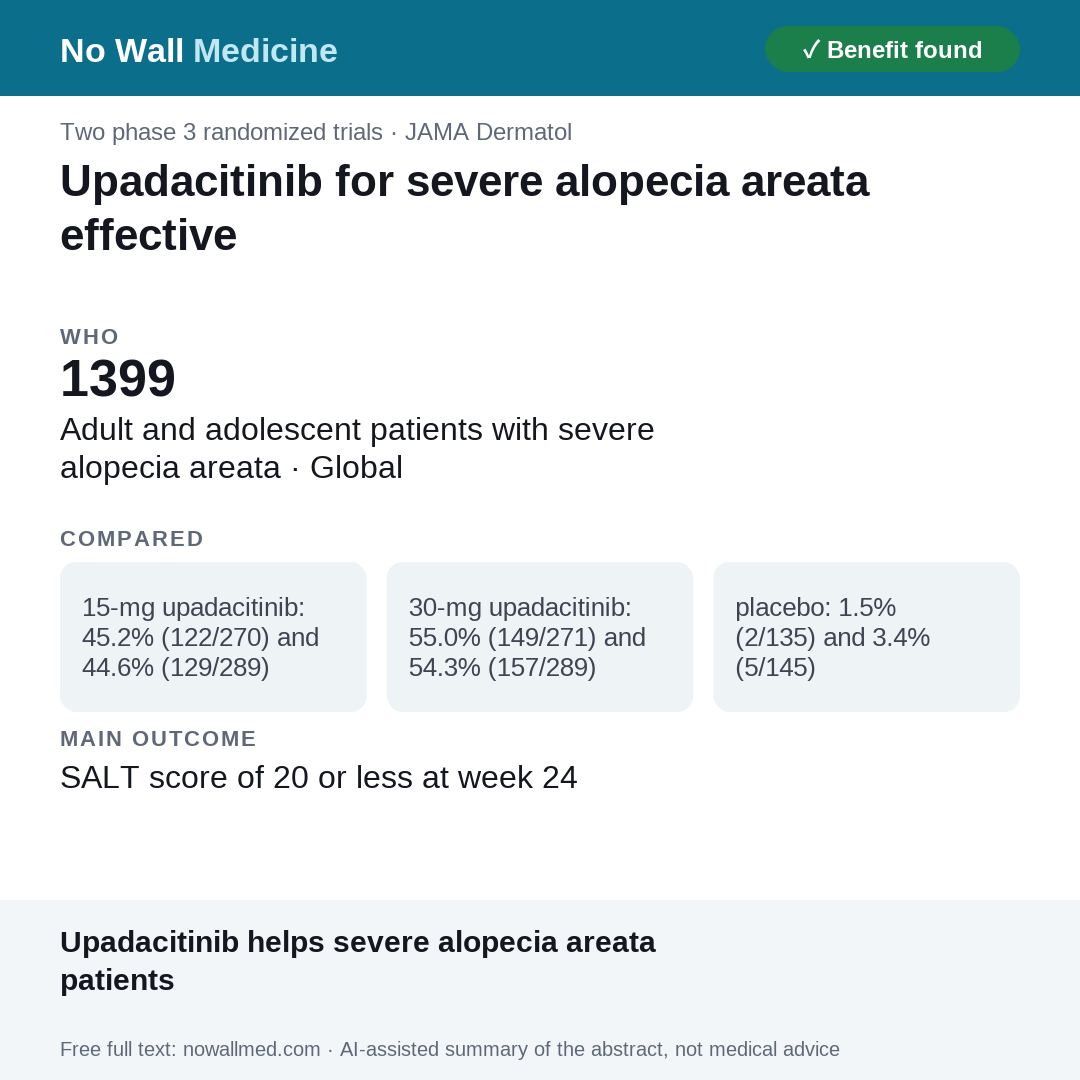
Upadacitinib for Severe Alopecia Areata in Adults and Adolescents: Two Phase 3 UP-AA Randomized Clinical Trials
Two parallel phase 3 replicate randomized clinical trialsBenefit found
Is upadacitinib effective for adults and adolescents with severe alopecia areata?
Who
1399
Adult and adolescent patients aged 12 to 64 years with severe alopecia areata · Global clinical program
Compared
15-mg upadacitinib: 45.2% and 44.6%
30-mg upadacitinib: 55.0% and 54.3%
Placebo: 1.5% and 3.4%
Main outcome
Achievement of SALT score of 20 or less at week 24
Bottom line: Upadacitinib at 15-mg or 30-mg doses demonstrated a positive benefit-risk profile for severe alopecia areata.
JAMA Dermatol · 2026-08-12Download image
Evidence based interventions for bipolar disorder across phases and age groups: living umbrella review, evaluation, analysis, and communication hub (U-REACH) project
Living umbrella reviewBenefit found
What treatments work for bipolar disorder
Who
People with bipolar disorder
Compared
Treatment
Control
Main outcome
Efficacy and safety outcomes
Bottom line: Several treatments are effective for bipolar disorder
BMJ · 2026-08-11Download image

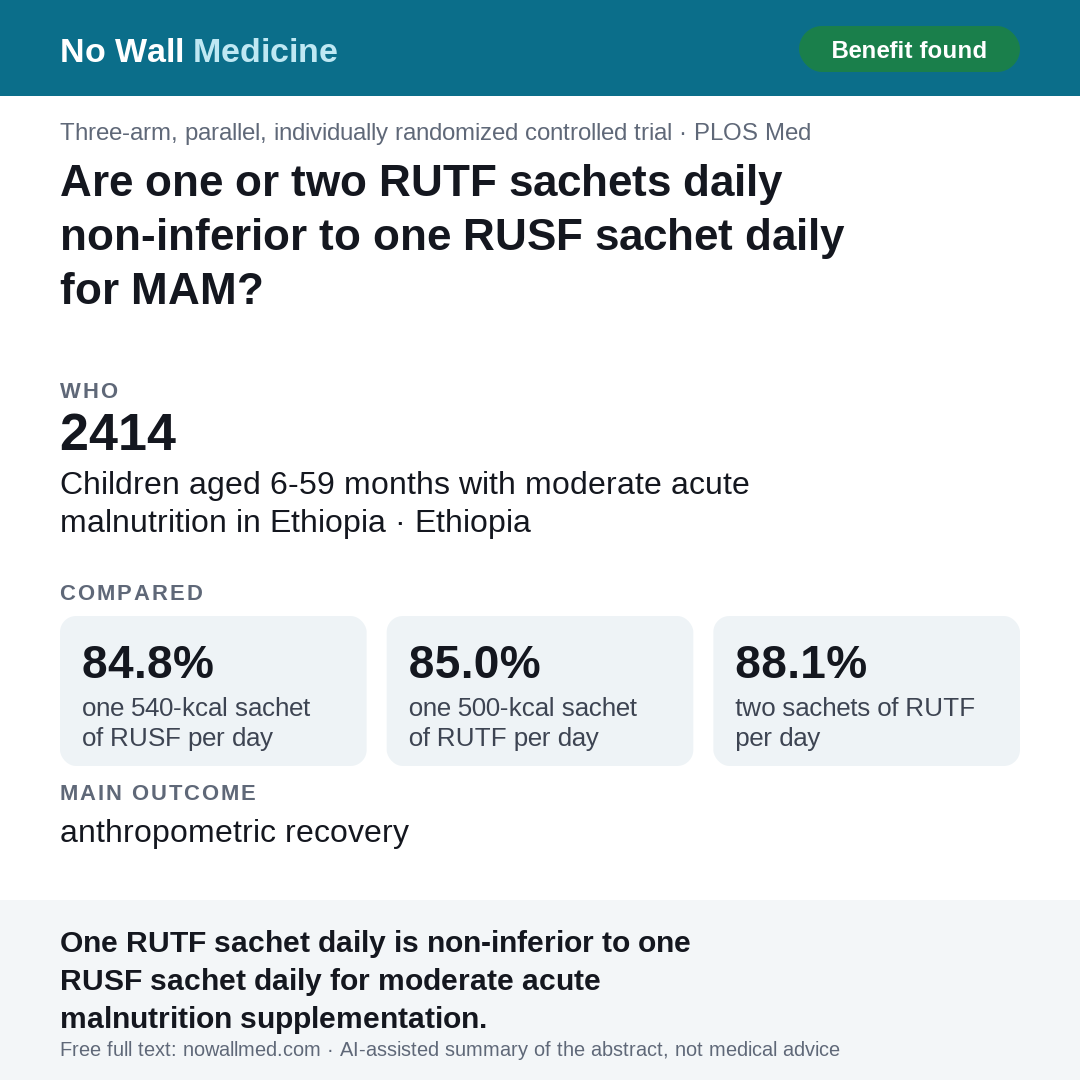
Comparative effectiveness of lipid-nutrient spread supplementation regimens for moderate acute malnutrition in Ethiopia: The MODAM-MAM individually randomized controlled trial
Three-arm, parallel, individually randomized controlled trialBenefit found
Are one or two RUTF sachets daily non-inferior to one RUSF sachet daily for MAM?
Who
2414
Children aged 6-59 months with moderate acute malnutrition in Ethiopia · Ethiopia
Compared
84.8%one 540-kcal sachet of RUSF per day (679/801)
85.0%one 500-kcal sachet of RUTF per day (674/793)
88.1%two sachets of RUTF per day (721/818)
Main outcome
anthropometric recovery
Result: risk difference +0.2 percentage points (95% CI [-3.3, 3.7]) for 1-RUTF; +3.4 percentage points (95% CI [0.0, 6.7]) for 2-RUTF
Bottom line: One RUTF sachet daily is non-inferior to one RUSF sachet daily for moderate acute malnutrition supplementation.
Limitation: evaluation of a single ready-to-use supplementary food formulation and earlier-than-typical case-finding
PLOS Med · 2026-08-11Download image
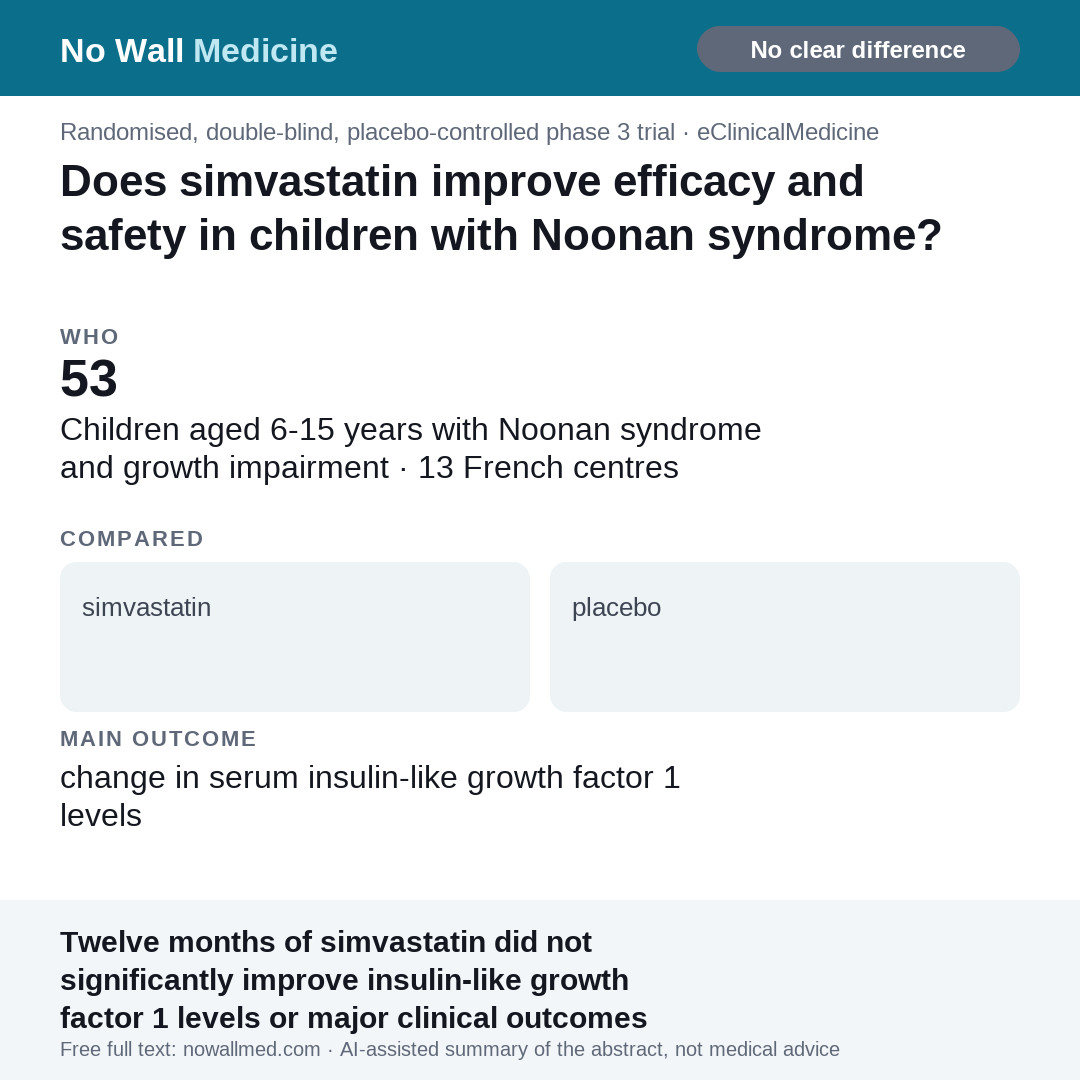
RAS/MAPK pathway modulation with simvastatin in children with Noonan syndrome: a multicentre, randomised, double-blind, placebo-controlled phase 3 trial
Randomised, double-blind, placebo-controlled phase 3 trialNo clear difference
Does simvastatin improve efficacy and safety in children with Noonan syndrome?
Who
53
Children aged 6-15 years with Noonan syndrome and growth impairment · 13 French centres
Compared
simvastatin
placebo
Main outcome
change in serum insulin-like growth factor 1 levels
Result: between-group difference -0.08 log ng/mL, 95% CI -0.18 to 0.01
Bottom line: Twelve months of simvastatin did not significantly improve insulin-like growth factor 1 levels or major clinical outcomes in children.
Limitation: Changes in secondary findings were of borderline statistical significance and lacked corresponding clinical improvements.
Funded by: French Ministry of Health
eClinicalMedicine · 2026-08-11Download image
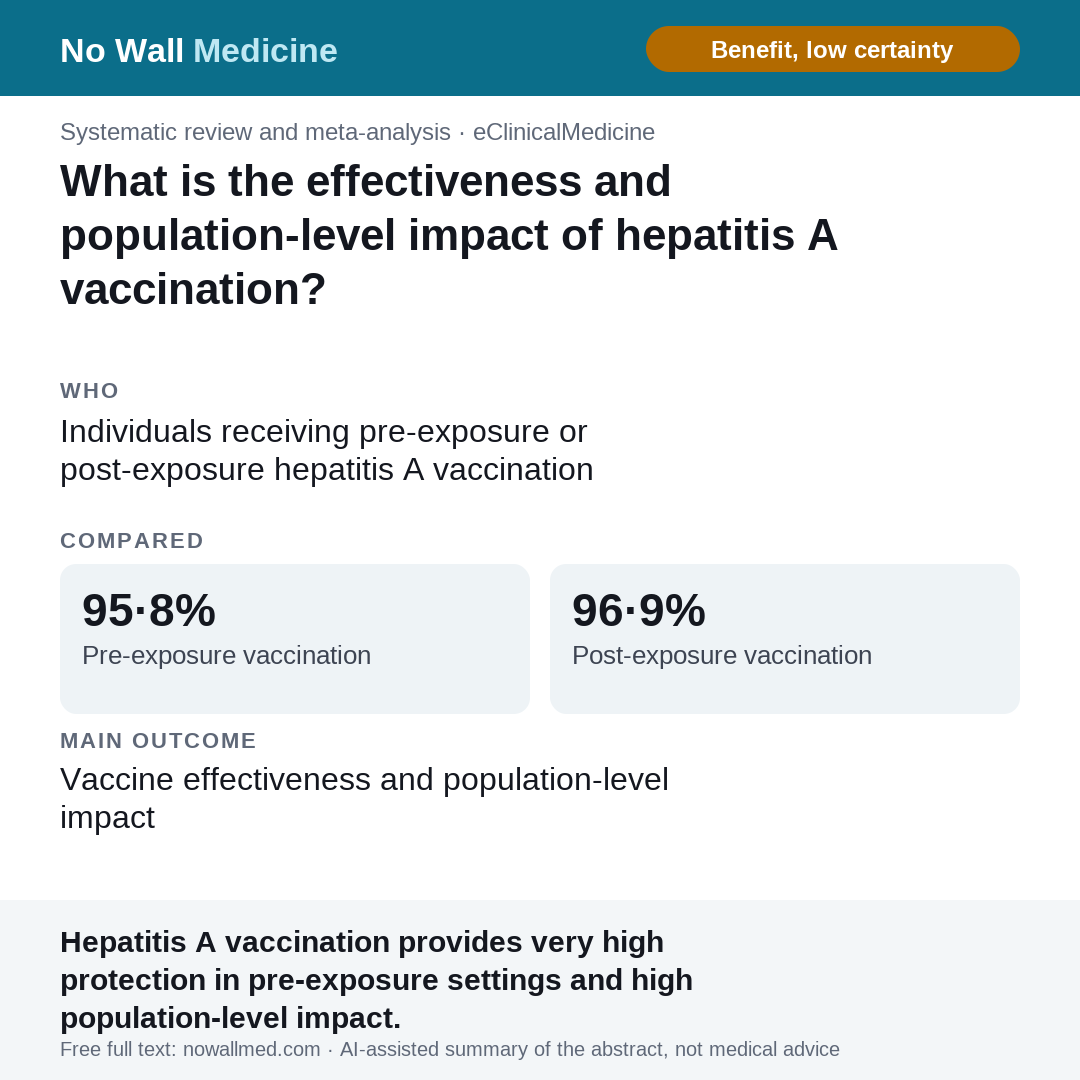
Hepatitis A vaccination and its public-health impact in routine prevention and outbreak control: a systematic review and meta-analysis
Systematic review and meta-analysisBenefit found
What is the effectiveness and population-level impact of hepatitis A vaccination?
Who
Individuals receiving pre-exposure or post-exposure hepatitis A vaccination
Compared
95·8%Pre-exposure vaccination (95% CI 93·1-97·4)
96·9%Post-exposure vaccination (89·3-99·1)
Main outcome
Vaccine effectiveness and population-level impact
Result: 95·8% (95% CI 93·1-97·4) for pre-exposure vaccination
Bottom line: Hepatitis A vaccination provides very high protection in pre-exposure settings and high population-level impact.
Limitation: Post-exposure vaccination effectiveness is limited by very low-certainty evidence and substantial heterogeneity.
Funded by: Cooperatio 31 fund, Charles University
eClinicalMedicine · 2026-08-11Download image
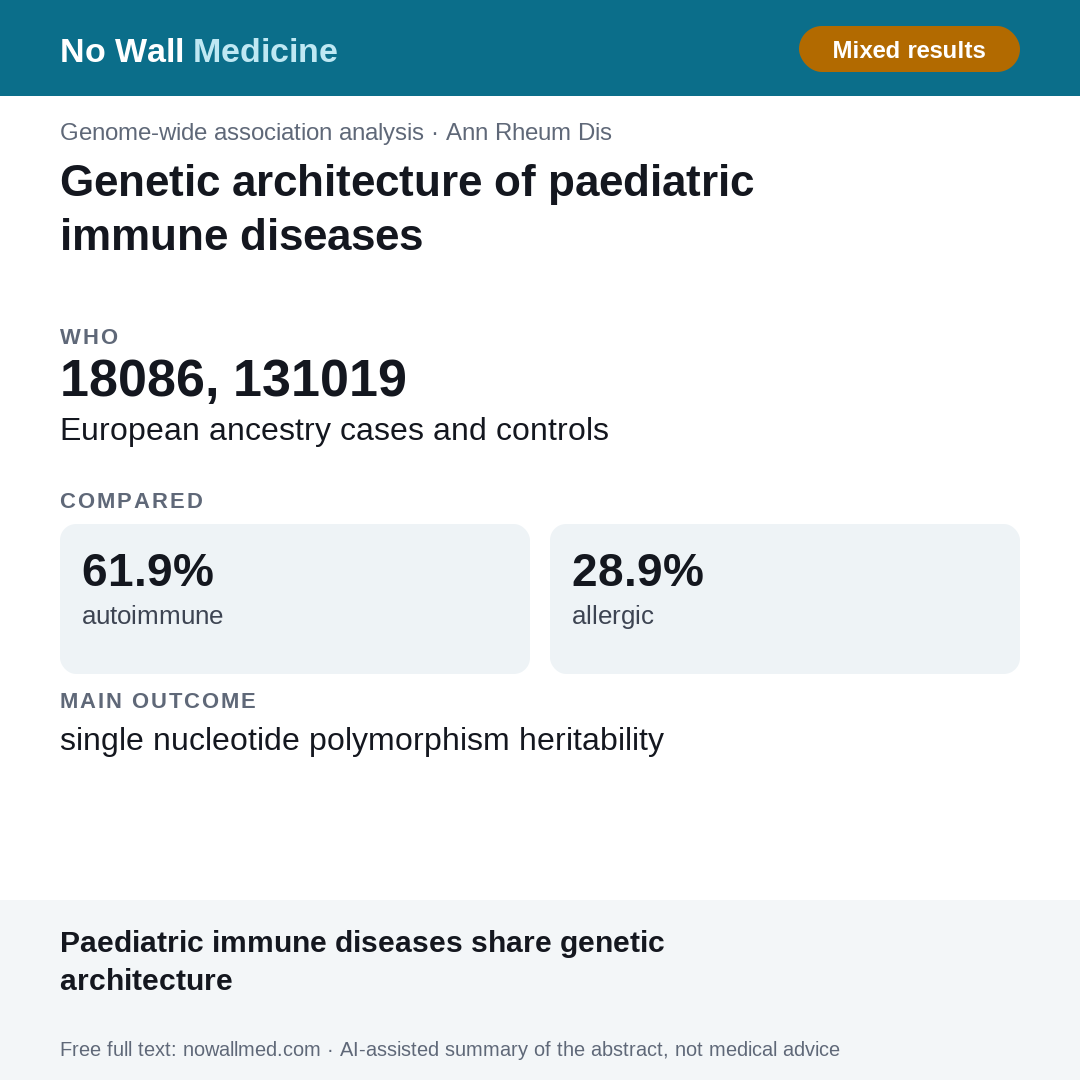
Shared genetic architecture and therapeutic targets across paediatric immune-mediated diseases
Genome-wide association analysisMixed results
Genetic architecture of paediatric immune diseases
Who
18086, 131019
European ancestry cases and controls
Compared
61.9%autoimmune
28.9%allergic
Main outcome
single nucleotide polymorphism heritability
Bottom line: Paediatric immune diseases share genetic architecture
Ann Rheum Dis · 2026-08-10Download image
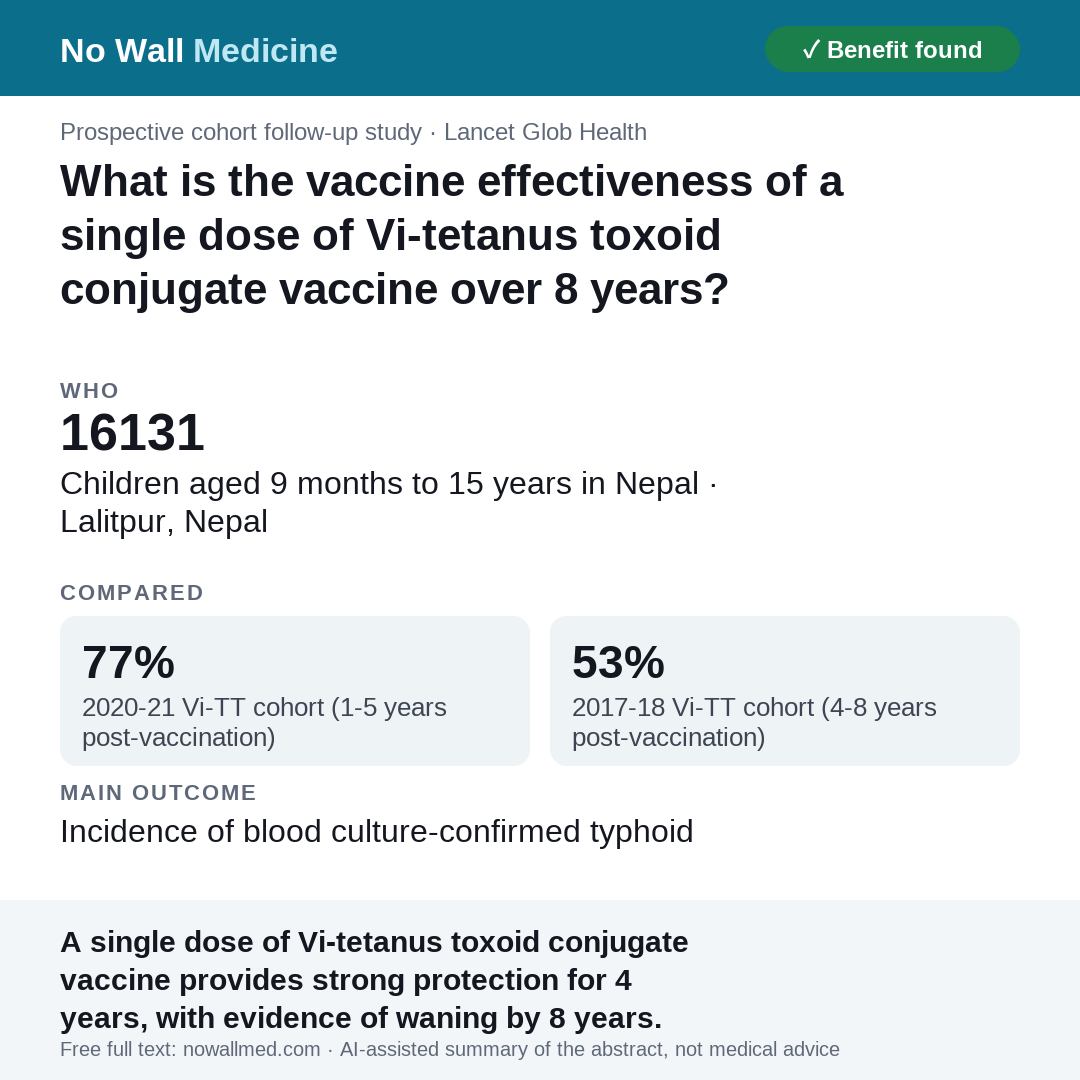
8-year vaccine protection following a single dose of Vi-tetanus toxoid conjugate vaccine in children in Nepal (TyVOID): a prospective cohort follow-up study of the TyVAC Nepal randomised controlled trial
Prospective cohort follow-up studyBenefit found
What is the vaccine effectiveness of a single dose of Vi-tetanus toxoid conjugate vaccine over 8 years?
Who
16131
Children aged 9 months to 15 years in Nepal · Lalitpur, Nepal
Compared
77%2020-21 Vi-TT cohort (1-5 years post-vaccination) (95% CI 46-90)
53%2017-18 Vi-TT cohort (4-8 years post-vaccination) (8-76)
Main outcome
Incidence of blood culture-confirmed typhoid
Bottom line: A single dose of Vi-tetanus toxoid conjugate vaccine provides strong protection for 4 years, with evidence of waning by 8 years.
Funded by: Gates Foundation and Wellcome Trust
Lancet Glob Health · 2026-08-10Download image