Visual abstracts
New randomized trials and meta-analyses from leading journals at a glance: who was studied, what was compared, and what was found. Every paper is free to read in full.
All specialtiesCardiology 4832Oncology 4114Gastroenterology & Hepatology 1934Infectious Disease 3824Neurology 1899Psychiatry & Mental Health 2256Pulmonology 2082Critical Care 1345Endocrinology & Diabetes 2572Pediatrics 2940Surgery 2525Orthopedics & Sports Medicine 926Neurosurgery 534Cardiothoracic & Vascular Surgery 671Plastic & Reconstructive Surgery 591Nephrology 1124Rheumatology 823Hematology 1104Dermatology 620Ophthalmology 543Obstetrics & Gynecology 1684Public & Global Health 1056Radiology & Imaging 641Anesthesiology 962Urology 754ENT (Otolaryngology) 503Emergency Medicine 489Allergy & Immunology 313Geriatrics 981Family Medicine & Primary Care 541Medical Genetics & Genomics 675Pathology & Laboratory Medicine 157Physical Medicine & Rehabilitation 751Palliative Care 424Nutrition 1580Digital Health & AI 2195General Medicine 321
Design and Reporting Quality of Noninferiority Trials in Kidney Transplantation: A Systematic Review
Systematic reviewHarm found
What is the design and reporting quality of kidney transplantation noninferiority trials?
Who
43
Randomized controlled noninferiority trials in kidney transplantation · Online, Embase, and Cochrane Central Register of Controlled Trials
Compared
Noninferiority margin justification: not justified in 28 (65%) studies
Incorrect conclusions: Twelve studies (28%) provided an incorrect conclusion
Main outcome
Design and reporting quality adherence to guidelines
Bottom line: Noninferiority trials in kidney transplantation show major deficiencies in design, conduct, and reporting quality.
JASN · 2026-02-25Download image

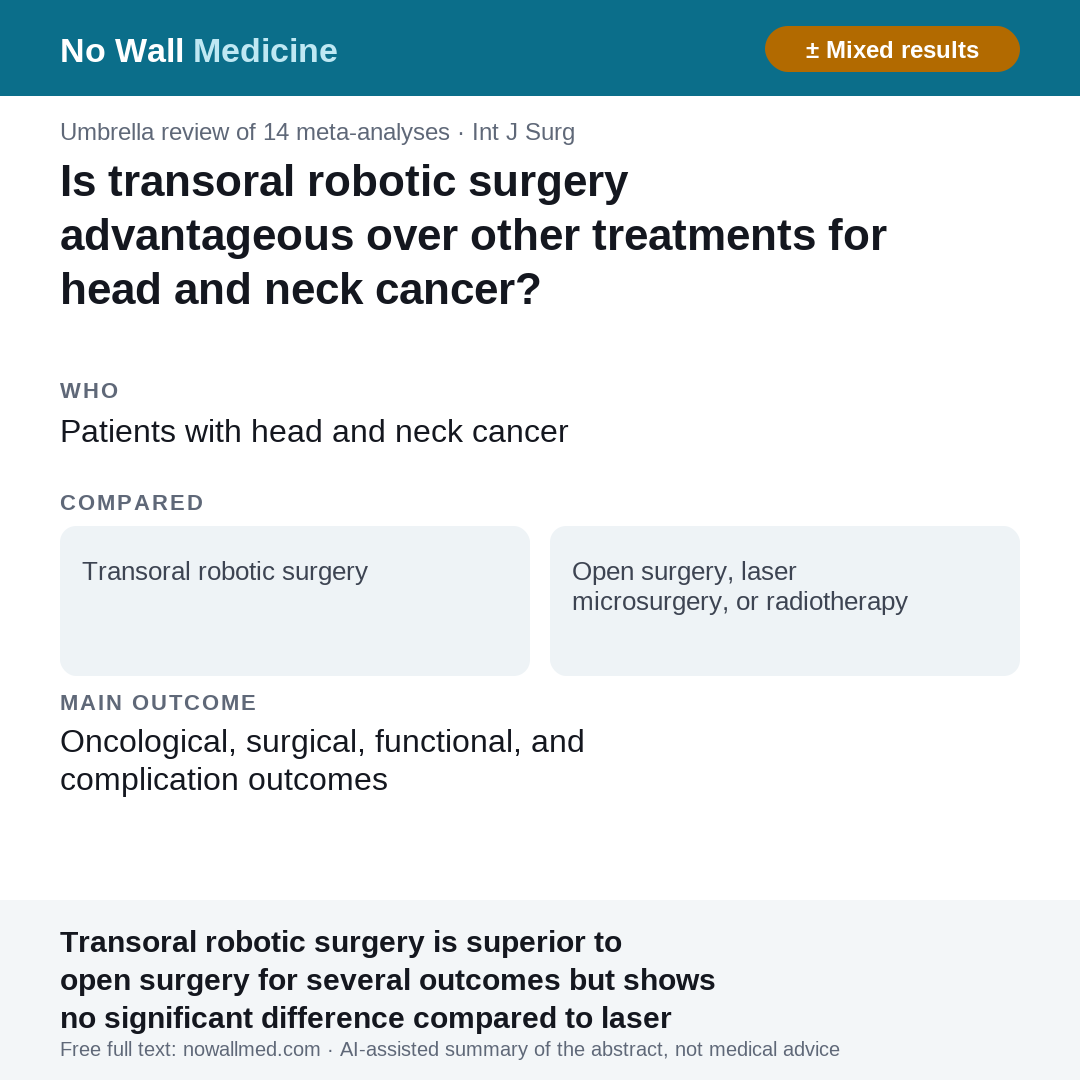
Transoral robotic surgery in head and neck cancer: an umbrella review of meta-analyses
Umbrella review of 14 meta-analysesMixed results
Is transoral robotic surgery advantageous over other treatments for head and neck cancer?
Who
Patients with head and neck cancer
Compared
Transoral robotic surgery
Open surgery, laser microsurgery, or radiotherapy
Main outcome
Oncological, surgical, functional, and complication outcomes
Bottom line: Transoral robotic surgery is superior to open surgery for several outcomes but shows no significant difference compared to laser microsurgery or radiotherapy.
Int J Surg · 2026-02-25Download image
Effect of bariatric surgery and pharmacological treatments on cardiovascular risk factors for adults with overweight and obesity: a systematic review and network meta-analysis
Systematic review and network meta-analysisMixed results
How do bariatric surgery, pharmacological treatments, and lifestyle interventions affect weight and cardiovascular risk?
Who
Adults with overweight and obesity
Compared
Bariatric surgery
Pharmacological therapies
Lifestyle interventions
Main outcome
Body weight and cardiovascular risk factors
Bottom line: Bariatric surgery is most effective for weight loss, but semaglutide offers comparable efficacy with a superior safety profile.
Int J Surg · 2026-02-25Download image

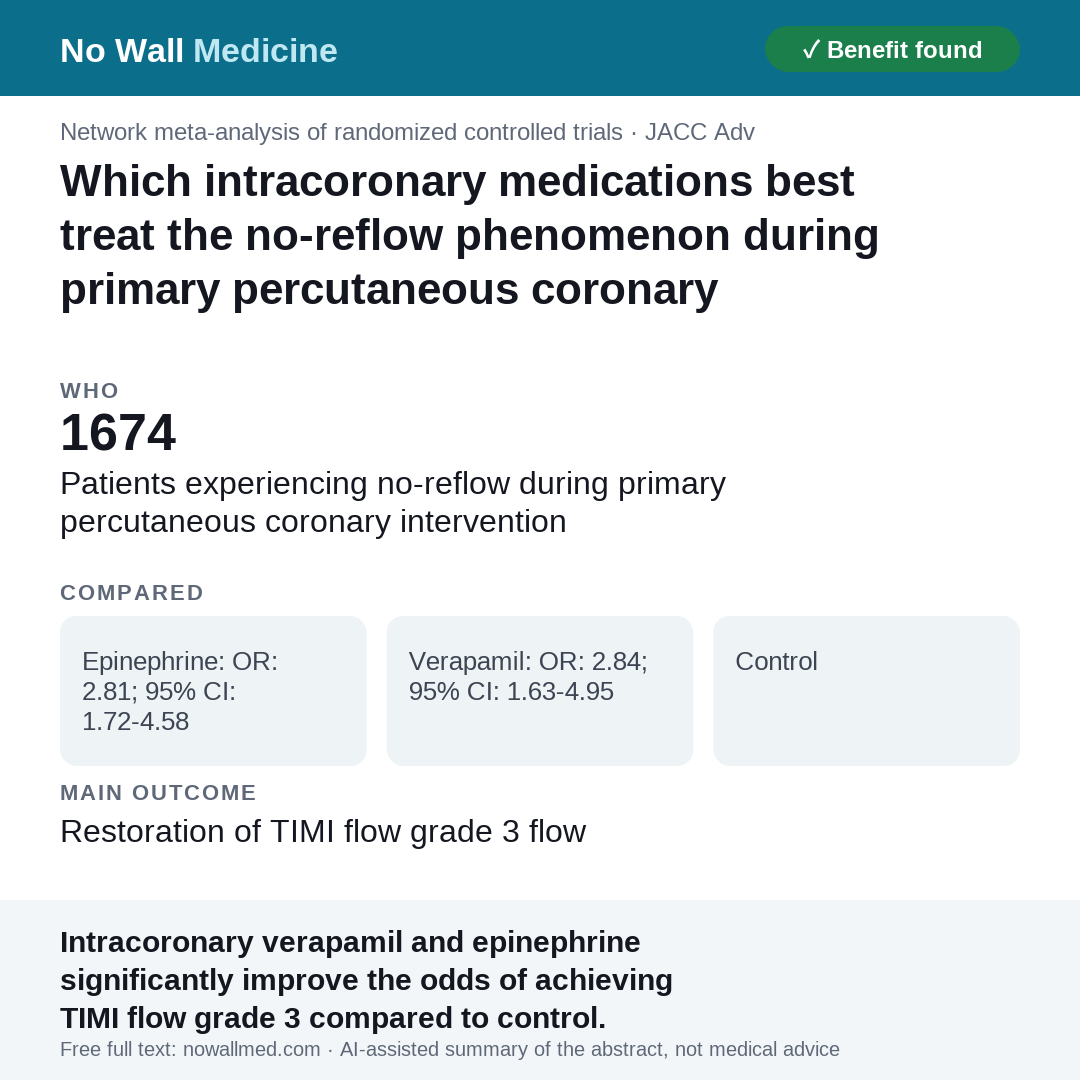
Intracoronary Vasoactive Therapy for No-Reflow During Primary PCI: A Network Meta-Analysis of Randomized Trials
Network meta-analysis of randomized controlled trialsBenefit found
Which intracoronary medications best treat the no-reflow phenomenon during primary percutaneous coronary intervention?
Who
1674
Patients experiencing no-reflow during primary percutaneous coronary intervention
Compared
Epinephrine: OR: 2.81; 95% CI: 1.72-4.58
Verapamil: OR: 2.84; 95% CI: 1.63-4.95
Control
Main outcome
Restoration of TIMI flow grade 3 flow
Result: OR: 2.81 (95% CI: 1.72-4.58) for epinephrine; OR: 2.84 (95% CI: 1.63-4.95) for verapamil
Bottom line: Intracoronary verapamil and epinephrine significantly improve the odds of achieving TIMI flow grade 3 compared to control.
Limitation: The analysis was underpowered to determine effects on major adverse cardiovascular events or mortality.
JACC Adv · 2026-02-25Download image
The predictive value of polygenic risk scores for depression in gene-environment interaction studies: a systematic review
Systematic reviewMixed results
Do polygenic risk scores predict depression?
Who
people with depression
Compared
polygenic risk score
environmental exposures
Main outcome
depression phenotypes
Bottom line: Polygenic risk scores add little to depression prediction
Limitation: require large samples
Transl Psychiatry · 2026-02-25Download image

Levels of immunoglobulin isotypes in serum and respiratory samples of patients with chronic obstructive pulmonary disease: a systematic review and meta-analysis
Systematic review and meta-analysisMixed results
What are the immunoglobulin levels in COPD patients compared to healthy controls?
Who
Patients with chronic obstructive pulmonary disease and healthy controls
Compared
COPD: elevated secretory IgA (SMD 1.68 [95% CI, 0.78, 2.59])
Healthy controls: lower IgG2 (SMD -0.91 [-1.24, -0.58])
Main outcome
Serum, sputum, and bronchoalveolar lavage immunoglobulin levels
Bottom line: Serum IgG2 is lower in COPD and low IgG is associated with increased COPD-related admissions.
Limitation: Non-randomized studies were included
Respir Res · 2026-02-25Download image

Effectiveness, acceptability, adherence, and safety of exergaming for depressive symptoms: a systematic review and meta-analysis
Systematic review and meta-analysis of 58 trialsBenefit found
Is exergaming effective for improving depressive symptoms?
Who
3614
Participants with depressive symptoms
Compared
Exergaming
Control
Main outcome
Depressive symptoms
Result: g = -0.40 (95% CI: -0.56 to -0.25)
Bottom line: Exergaming demonstrated a moderate, significant reduction in depression symptoms with high adherence and good safety.
Limitation: Future larger-scale randomized controlled trials and studies with extended follow-up periods are needed.
NPJ Digit Med · 2026-02-25Download image

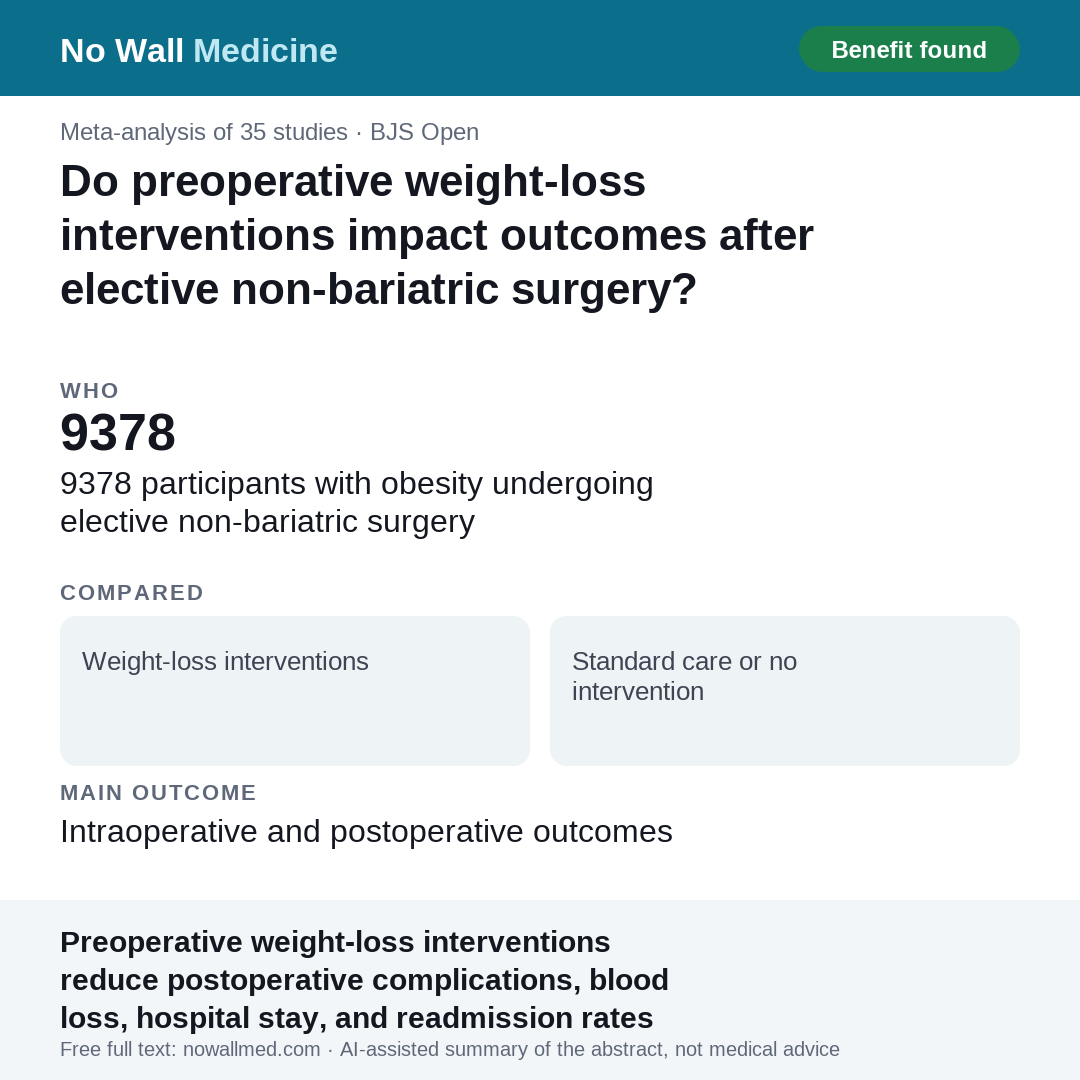
Impact of preoperative weight-loss interventions on outcomes after elective non-bariatric surgery: meta-analysis
Meta-analysis of 35 studiesBenefit found
Do preoperative weight-loss interventions impact outcomes after elective non-bariatric surgery?
Who
9378
9378 participants with obesity undergoing elective non-bariatric surgery
Compared
Weight-loss interventions
Standard care or no intervention
Main outcome
Intraoperative and postoperative outcomes
Result: odds ratio 0.63 (95% confidence interval 0.43 to 0.93)
Bottom line: Preoperative weight-loss interventions reduce postoperative complications, blood loss, hospital stay, and readmission rates in elective non-bariatric surgery.
Limitation: Heterogeneity in study design and surgical populations
BJS Open · 2026-02-25Download image
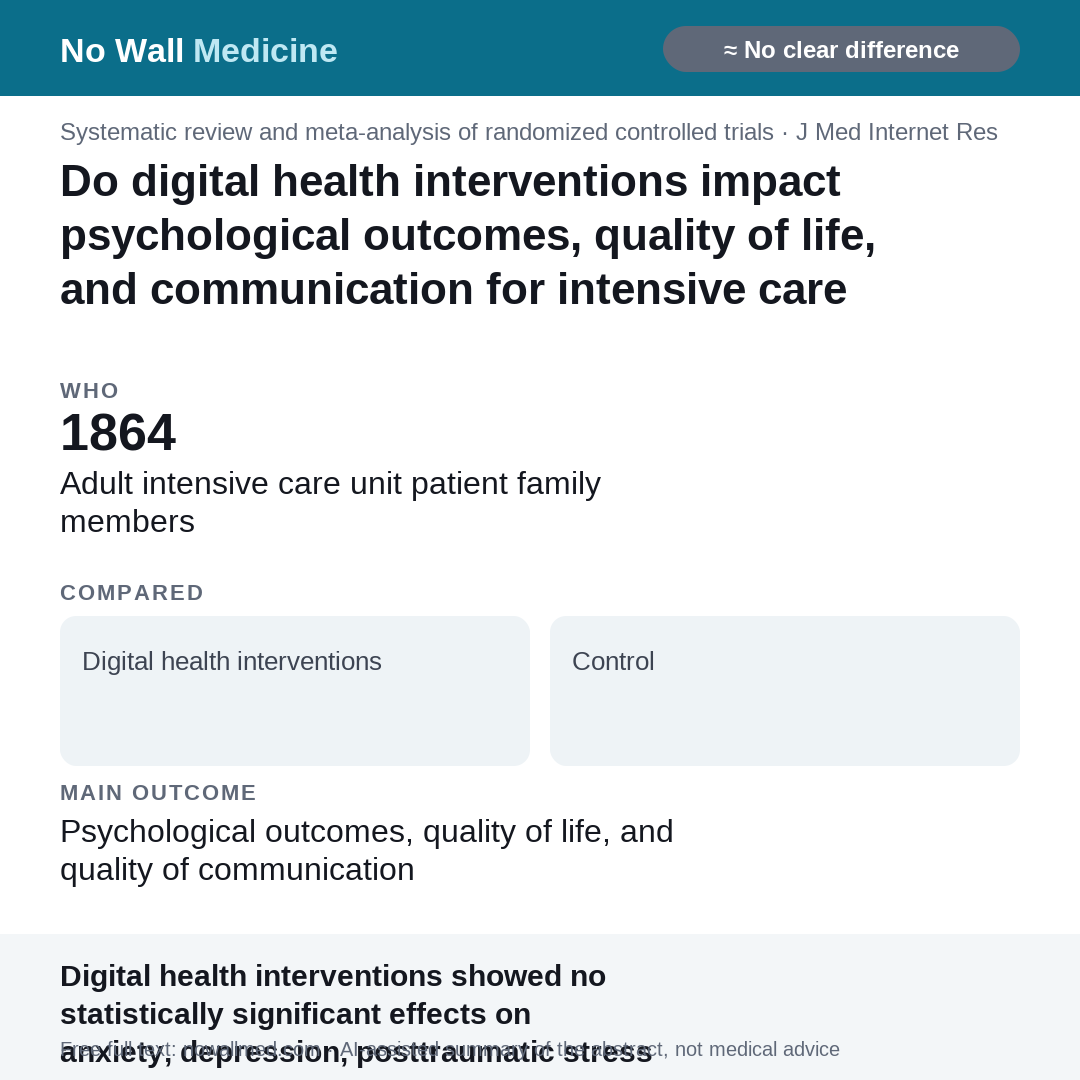
The Effects of Digital Health Interventions for Family Members in Intensive Care Units: Systematic Review and Meta-Analysis of Randomized Controlled Trials
Systematic review and meta-analysis of randomized controlled trialsNo clear difference
Do digital health interventions impact psychological outcomes, quality of life, and communication for intensive care unit family members?
Who
1864
Adult intensive care unit patient family members
Compared
Digital health interventions
Control
Main outcome
Psychological outcomes, quality of life, and quality of communication
Result: no statistically significant pooled effects
Bottom line: Digital health interventions showed no statistically significant effects on anxiety, depression, posttraumatic stress disorder, quality of life, or communication.
Limitation: High heterogeneity and low certainty of the underlying evidence limit the conclusions.
J Med Internet Res · 2026-02-25Download image
Learning Curves in Robotic Thyroid Surgery: A Systematic Review Comparing Transoral, Axillary, and Facelift Approaches
Systematic reviewMixed results
What are the learning curves and required case volumes for different robotic thyroid surgery approaches?
Who
6438
Practitioners performing robotic thyroid surgery
Compared
Axillary robotic partial thyroidectomy: 46 cases (range: 20-66)
Axillary robotic total thyroidectomy: 34 cases (range: 20-50)
Transoral robotic approach: 31 (15-55) cases
Facelift approach: 32 (15-50) cases
Main outcome
Number of cases required for achieving proficiency
Bottom line: Facelift and transoral approaches may have faster learning curves than axillary approaches for robotic thyroid surgery.
Limitation: Substantial heterogeneity across studies for inclusion criteria, surgeon experience, and surgical outcomes.
J Otolaryngol Head Neck Surg · 2026-02-25Download image

Combination of heart failure and atrial fibrillation worsens ethnicity-related disparity: an individual patient-level meta-analysis of randomized trials
Individual patient-level meta-analysis of 12 randomized trialsHarm found
Does comorbid atrial fibrillation worsen ethnicity-related mortality disparities in heart failure patients?
Who
16713
Patients with heart failure and comorbid atrial fibrillation or sinus rhythm
Compared
Non-white patients with HF and AF: 21% (394/1899) all-cause mortality
White patients with HF and AF: 15% (2142/13568) all-cause mortality
Main outcome
all-cause mortality
Result: hazard ratio 1.36 (95% CI 1.20-1.54)
Bottom line: Comorbid atrial fibrillation significantly worsens ethnicity-related mortality disparities in patients with heart failure.
Limitation: Baseline differences between ethnicities were addressed using propensity-score matching.
Eur J Heart Fail · 2026-02-24Download image

Effectiveness of group-based art interventions for late-life depression: a systematic review and meta-analysis of randomized controlled trials
Systematic review and meta-analysis of randomized controlled trialsBenefit found
Are group-based art interventions effective for late-life depression?
Who
3791
Adults aged older than 55 years with depression
Compared
Art-based interventions
Controls
Main outcome
Depression levels
Result: standardized mean difference -0.93 (95% CI -1.19 to -0.68)
Bottom line: Art-based interventions effectively reduce depression in older adults, though high heterogeneity and variable study quality exist.
Limitation: High degree of heterogeneity and most studies had moderate to high risk of bias.
BMC Med · 2026-02-24Download image

Review of the Performance of Laboratory-Based Molecular Diagnostics for Chlamydia trachomatis and Neisseria gonorrhoeae
Systematic review and narrative reviewBenefit found
What is the performance of laboratory-based molecular diagnostics for chlamydia and gonorrhea?
Who
145
Patients tested for Chlamydia trachomatis and Neisseria gonorrhoeae
Compared
Self-collected vaginal swabs: sensitivity >90% and specificity >98%
Clinician-collected extragenital specimens: sensitivity >90% and specificity >98%
Main outcome
Diagnostic performance of nucleic acid amplification tests
Bottom line: Nucleic acid amplification tests show high sensitivity and specificity for chlamydia and gonorrhea diagnosis.
Limitation: No nucleic acid amplification tests currently have claims for patient-collected extragenital specimens.
Clin Infect Dis · 2026-02-24Download image

Point-of-care Tests for Chlamydia trachomatis and Neisseria gonorrhoeae: Review of the Literature
Systematic literature reviewBenefit found
What is the accuracy and clinical utility of molecular-based point-of-care tests?
Who
Patients with Chlamydia trachomatis and Neisseria gonorrhoeae · Not specified
Compared
Point-of-care tests
Near-point-of-care tests
Main outcome
Performance characteristics and implementation considerations
Bottom line: Point-of-care tests are most beneficial in symptomatic patients within acute care settings to prevent loss to follow-up.
Clin Infect Dis · 2026-02-24Download image

Review of Methods for Detecting Antimicrobial Resistance of Neisseria gonorrhoeae
Systematic reviewMixed results
What are the methods for detecting antimicrobial resistance of Neisseria gonorrhoeae?
Who
Neisseria gonorrhoeae · Medline, Embase, Cochrane, CINAHL, and Scopus
Compared
Culture-based antimicrobial susceptibility testing
Molecular antimicrobial susceptibility testing
Main outcome
Performance of phenotypic and molecular antimicrobial susceptibility testing methods
Bottom line: Culture-based testing remains most reliable, while molecular methods show targeted utility primarily for ciprofloxacin.
Limitation: Molecular predictive accuracy for other antibiotics is limited due to multigenic resistance mechanisms.
Clin Infect Dis · 2026-02-24Download image

Effectiveness of Virtual Reality for Pain Relief in Procedures Related to Obstetrics and Gynaecology: A Systematic Review and Meta-Analysis of Randomised Controlled Trials
Systematic review and meta-analysis of randomized controlled trialsBenefit found
Is immersive virtual reality effective for pain relief in obstetric and gynaecological procedures?
Who
5355
Women undergoing obstetric or gynaecological procedures
Compared
Virtual reality
Standard care
Main outcome
Pain perception and anxiety scores
Result: SMD -0.93 (95% CI -1.25 to -0.60) in labour
Bottom line: Immersive virtual reality effectively reduces pain and anxiety during obstetric and gynaecological procedures, especially during childbirth.
Limitation: High levels of heterogeneity and variability in procedural protocols.
BJOG · 2026-02-24Download image

Anticholinergic Medication Burden Scales: A Systematic Review
Systematic reviewUnclear result
What are the characteristics and variability of anticholinergic burden scales?
Who
Studies proposing novel or updated anticholinergic burden scales
Compared
Medications included per scale: 27 to 217
74%High-potency drugs scored inconsistently
Main outcome
Scale development strategies, scoring methods, and clinical outcomes
Bottom line: No gold standard anticholinergic burden scale was identified due to significant variability in drug coverage and scoring methods.
J Am Geriatr Soc · 2026-02-23Download image

AI and Wearables for Early Detection of Cognitive Impairment and Dementia: Systematic Review
Systematic review and narrative synthesisBenefit found
Can wearable devices detect early cognitive impairment and dementia?
Who
200000
Human participants with a mean age 50 years or older
Compared
Disrupted sleep, circadian rhythm, and activity patterns: linked to worse cognitive outcomes
Machine learning and deep learning approaches: area under the curve values between approximately 0.70 and 0.95
Main outcome
early detection and prevention of cognitive impairment and dementia
Bottom line: Wearable-derived behavioral markers show promise for early risk stratification through continuous, passive monitoring.
Limitation: Small sample sizes, short monitoring durations, and limited external validation.
J Med Internet Res · 2026-02-23Download image

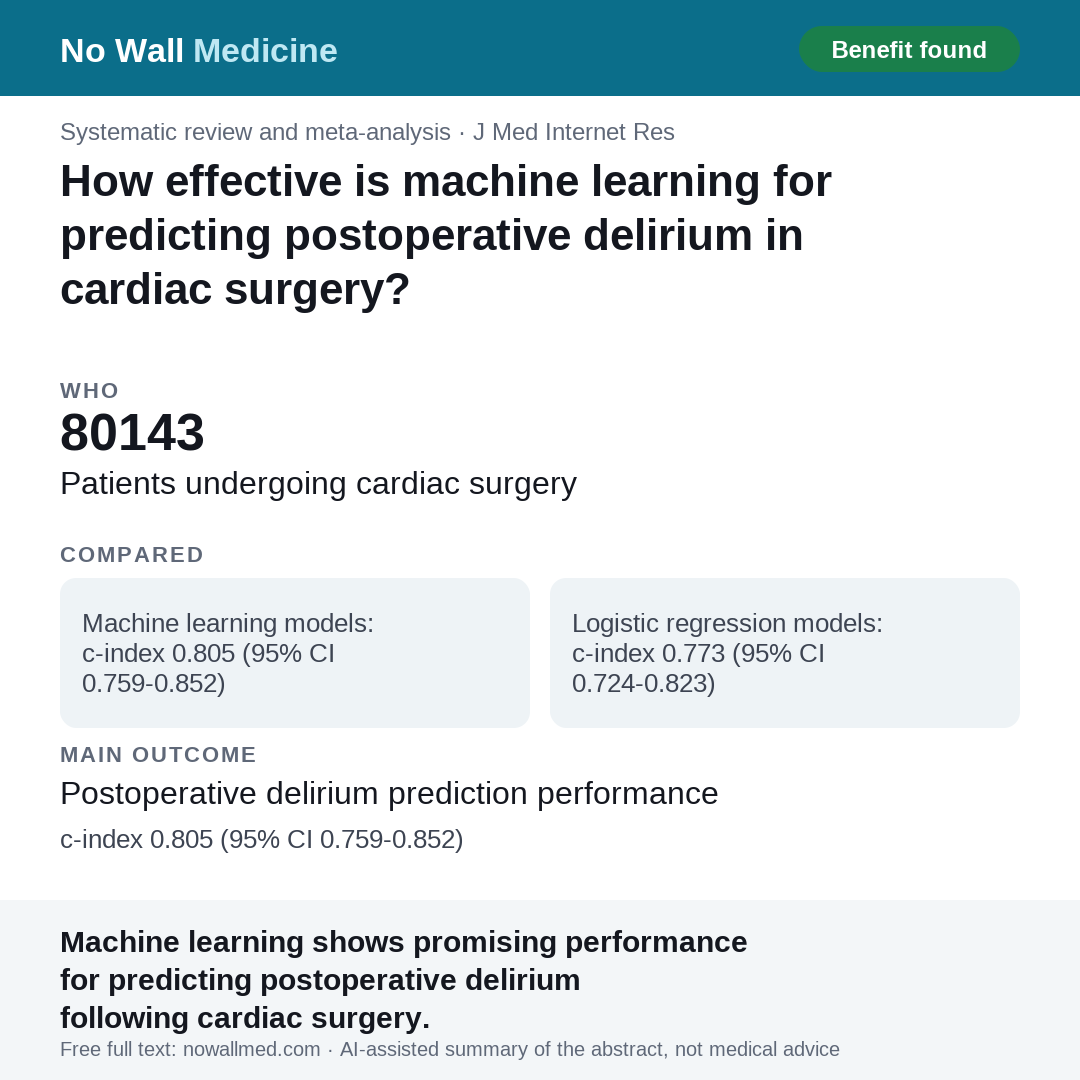
The Predictive Value of Machine Learning for Postoperative Delirium in Cardiac Surgery: Systematic Review and Meta-Analysis
Systematic review and meta-analysisBenefit found
How effective is machine learning for predicting postoperative delirium in cardiac surgery?
Who
80143
Patients undergoing cardiac surgery
Compared
Machine learning models: c-index 0.805 (95% CI 0.759-0.852)
Logistic regression models: c-index 0.773 (95% CI 0.724-0.823)
Main outcome
Postoperative delirium prediction performance
Result: c-index 0.805 (95% CI 0.759-0.852)
Bottom line: Machine learning shows promising performance for predicting postoperative delirium following cardiac surgery.
Limitation: Limited number of studies and validation approaches necessitate cautious interpretation.
J Med Internet Res · 2026-02-23Download image
Barriers and enablers of implementing spiritual care at the end of life: a mixed-methods systematic review using the theoretical domains framework
Mixed-methods systematic reviewMixed results
What are the barriers and enablers of implementing spiritual care at the end of life?
Who
Patients and healthcare providers in palliative care
Compared
Barriers: 16 sub-themes
Enablers: 16 sub-themes
Main outcome
Barriers and enablers of implementing spiritual care
Bottom line: Implementation requires shifting from spiritual rescue toward longitudinal spiritual integration and multidisciplinary training.
BMC Palliat Care · 2026-02-23Download image