Visual abstracts
New randomized trials and meta-analyses from leading journals at a glance: who was studied, what was compared, and what was found. Every paper is free to read in full.
All specialtiesCardiology 4877Oncology 4138Gastroenterology & Hepatology 1942Infectious Disease 3837Neurology 1905Psychiatry & Mental Health 2273Pulmonology 2143Critical Care 1365Endocrinology & Diabetes 2580Pediatrics 2980Surgery 2559Orthopedics & Sports Medicine 931Neurosurgery 537Cardiothoracic & Vascular Surgery 674Plastic & Reconstructive Surgery 591Nephrology 1133Rheumatology 823Hematology 1109Dermatology 621Ophthalmology 543Obstetrics & Gynecology 1686Public & Global Health 1058Radiology & Imaging 648Anesthesiology 986Urology 764ENT (Otolaryngology) 503Emergency Medicine 511Allergy & Immunology 313Geriatrics 981Family Medicine & Primary Care 562Medical Genetics & Genomics 676Pathology & Laboratory Medicine 159Physical Medicine & Rehabilitation 757Palliative Care 444Nutrition 1588Digital Health & AI 2201General Medicine 321
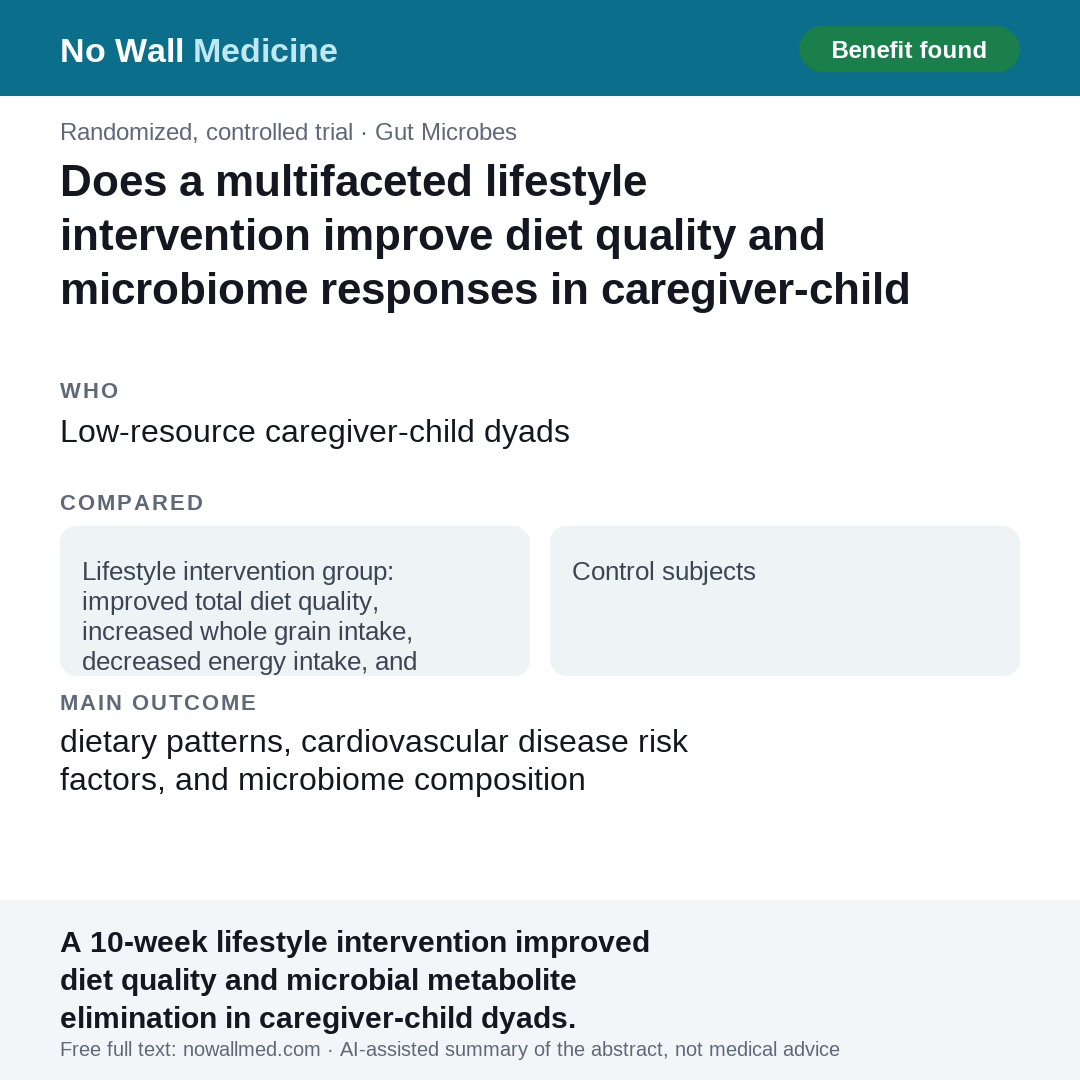
Facilitating a high-quality dietary pattern induces shared microbial responses linking diet quality, blood pressure, and microbial sterol metabolism in caregiver-child dyads
Randomized, controlled trialBenefit found
Does a multifaceted lifestyle intervention improve diet quality and microbiome responses in caregiver-child dyads?
Who
Low-resource caregiver-child dyads
Compared
Lifestyle intervention group: improved total diet quality, increased whole grain intake, decreased energy intake, and enhanced fecal elimination of lithocholic acid
Control subjects
Main outcome
dietary patterns, cardiovascular disease risk factors, and microbiome composition
Bottom line: A 10-week lifestyle intervention improved diet quality and microbial metabolite elimination in caregiver-child dyads.
Gut Microbes · 2022-12-02Download image
Association of Fluid Balance With Short- and Long-term Respiratory Outcomes in Extremely Premature Neonates: A Secondary Analysis of a Randomized Clinical Trial
Secondary analysis of a randomized clinical trialHarm found
Is peak fluid balance associated with respiratory outcomes in extremely premature neonates?
Who
874
Extremely premature neonates born at 24 to 27 weeks' gestation · 30 neonatal intensive care units in the US
Compared
Mechanical ventilation on day 14: 15% above birth weight
No mechanical ventilation on day 14: 8% above birth weight
Main outcome
Mechanical ventilation on postnatal day 14
Result: adjusted odds ratio 2.03 (95% CI 1.64-2.51)
Bottom line: Higher peak fluid balance in the first 14 days is associated with increased odds of mechanical ventilation.
JAMA Netw Open · 2022-12-01Download image

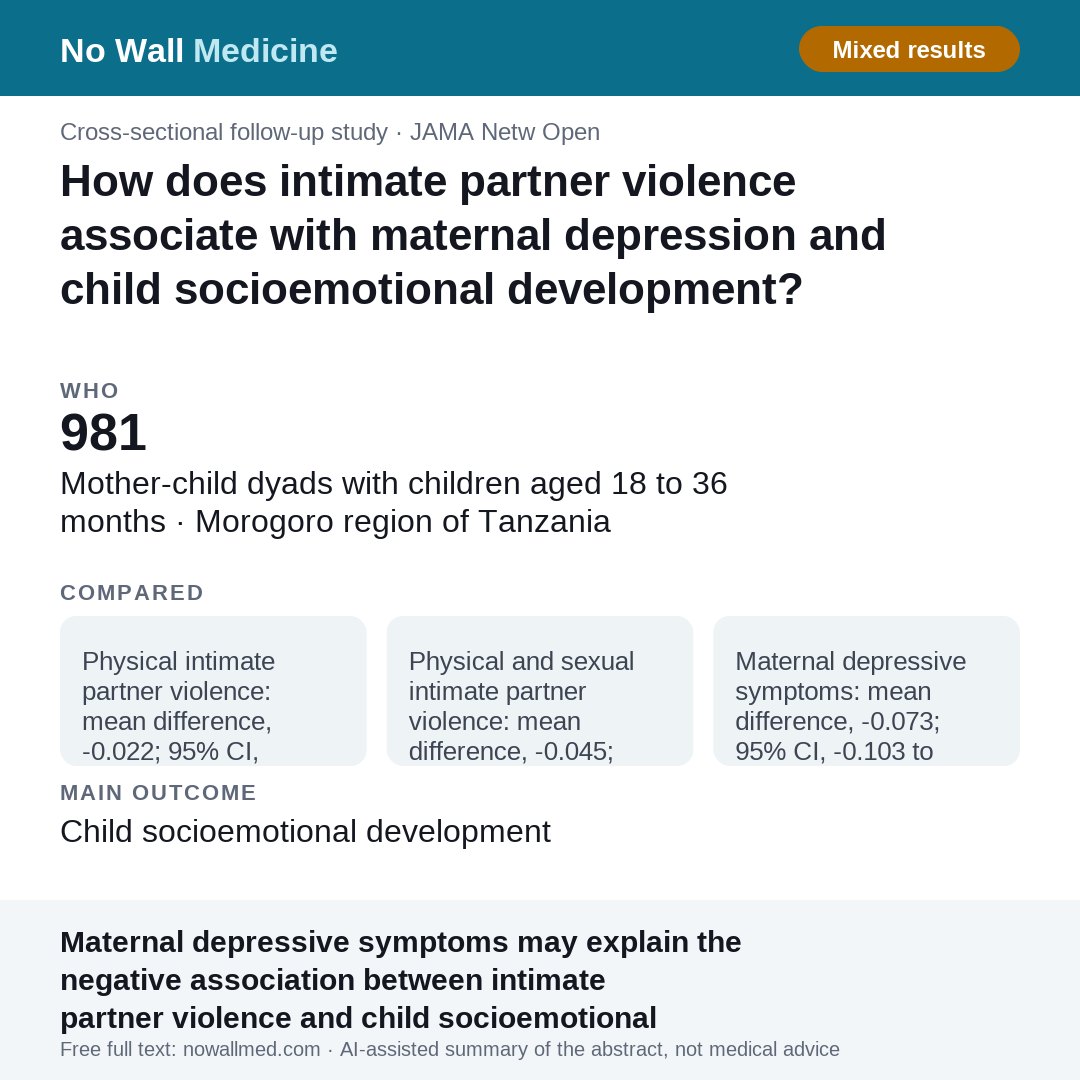
Association of Exposure to Intimate Partner Violence With Maternal Depressive Symptoms and Early Childhood Socioemotional Development Among Mothers and Children in Rural Tanzania
Cross-sectional follow-up studyMixed results
How does intimate partner violence associate with maternal depression and child socioemotional development?
Who
981
Mother-child dyads with children aged 18 to 36 months · Morogoro region of Tanzania
Compared
Physical intimate partner violence: mean difference, -0.022; 95% CI, -0.045 to -0.006
Physical and sexual intimate partner violence: mean difference, -0.045; 95% CI, -0.077 to -0.013
Maternal depressive symptoms: mean difference, -0.073; 95% CI, -0.103 to -0.043
Main outcome
Child socioemotional development
Result: mean difference, -0.073; 95% CI, -0.103 to -0.043
Bottom line: Maternal depressive symptoms may explain the negative association between intimate partner violence and child socioemotional development.
JAMA Netw Open · 2022-12-01Download image
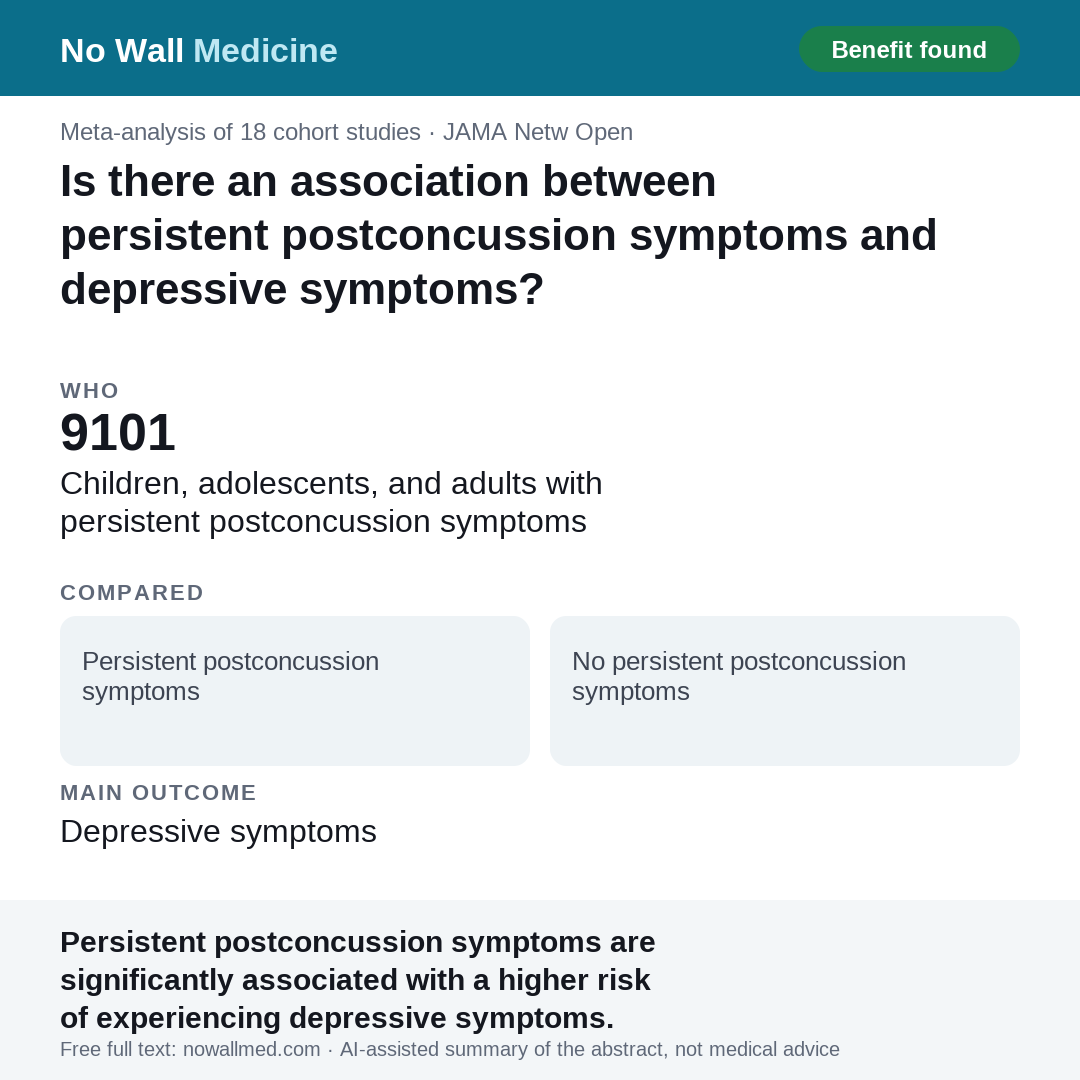
Depressive Symptoms in Individuals With Persistent Postconcussion Symptoms: A Systematic Review and Meta-Analysis
Meta-analysis of 18 cohort studiesBenefit found
Is there an association between persistent postconcussion symptoms and depressive symptoms?
Who
9101
Children, adolescents, and adults with persistent postconcussion symptoms
Compared
Persistent postconcussion symptoms
No persistent postconcussion symptoms
Main outcome
Depressive symptoms
Result: odds ratio 4.56 (95% CI 2.82-7.37)
Bottom line: Persistent postconcussion symptoms are significantly associated with a higher risk of experiencing depressive symptoms.
Limitation: Small number of studies included for investigating potential moderators.
JAMA Netw Open · 2022-12-01Download image
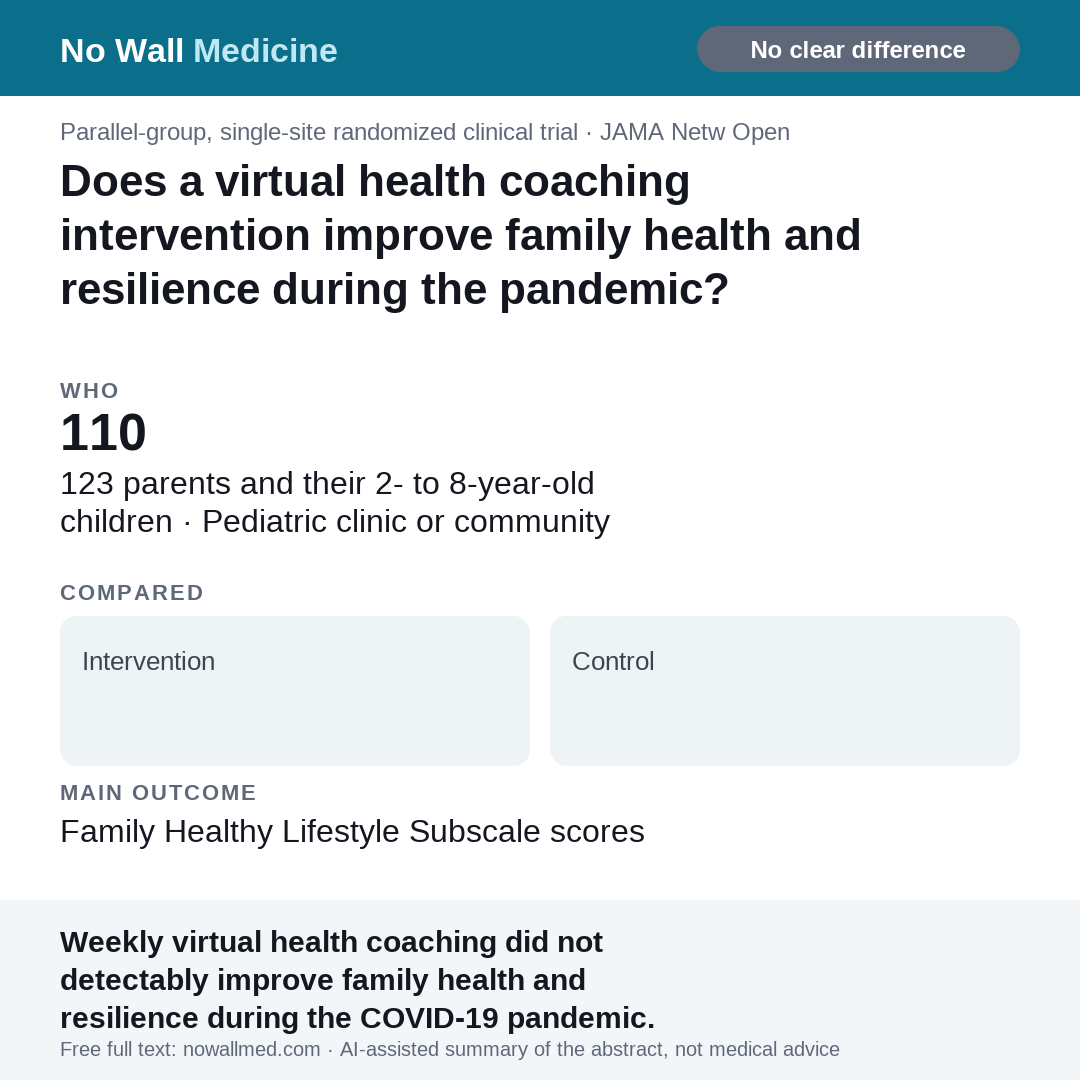
Effect of a Virtual Home-Based Behavioral Intervention on Family Health and Resilience During the COVID-19 Pandemic: A Randomized Clinical Trial
Parallel-group, single-site randomized clinical trialNo clear difference
Does a virtual health coaching intervention improve family health and resilience during the pandemic?
Who
110
123 parents and their 2- to 8-year-old children · Pediatric clinic or community partner site in Tennessee
Compared
Intervention
Control
Main outcome
Family Healthy Lifestyle Subscale scores
Result: 0.7 (95% CI, -0.6 to 2.0)
Bottom line: Weekly virtual health coaching did not detectably improve family health and resilience during the COVID-19 pandemic.
JAMA Netw Open · 2022-12-01Download image
The Prevalence of Obesity Among Children With Type 2 Diabetes: A Systematic Review and Meta-analysis
Systematic review and meta-analysisMixed results
What is the global prevalence of obesity in children with type 2 diabetes?
Who
8942
Children with type 2 diabetes
Compared
75.27%Overall prevalence (95% CI, 70.47%-79.78%)
77.24%Prevalence at diabetes diagnosis (95% CI, 70.55%-83.34%)
Main outcome
Prevalence of obesity
Bottom line: Obesity prevalence is 75.27% among children with type 2 diabetes, but it is not a universal phenotype.
Limitation: High heterogeneity across studies and varying degrees of glycemic control and dyslipidemia were noted.
JAMA Netw Open · 2022-12-01Download image
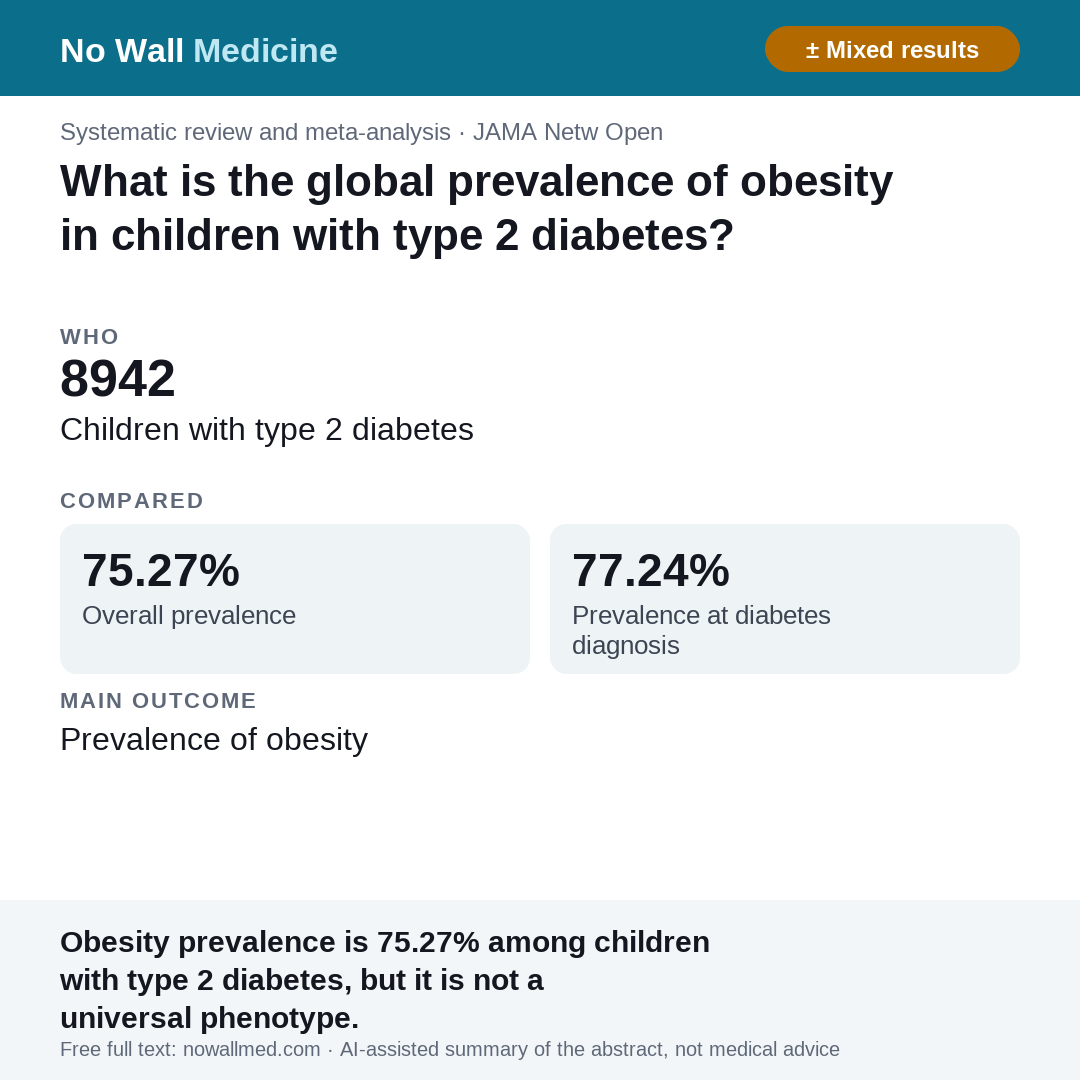
Effect of Early High-Dose Recombinant Human Erythropoietin on Behavior and Quality of Life in Children Aged 5 Years Born Very Preterm: Secondary Analysis of a Randomized Clinical Trial
Double-blind, placebo-controlled, multicenter randomized clinical trialNo clear difference
Does early high-dose recombinant human erythropoietin improve behavior and quality of life in very preterm children?
Who
448
Infants born between 26 weeks 0 days and 31 weeks 6 days gestation · 5 level-III perinatal centers in Switzerland
Compared
Recombinant human erythropoietin: 8.41 [5.60] points
Placebo: 7.76 [4.81] points
Main outcome
Behavioral outcomes and health-related quality of life at age 5 years
Bottom line: Early high-dose recombinant human erythropoietin showed no effect on behavioral outcomes or health-related quality of life at age 5 years.
JAMA Netw Open · 2022-12-01Download image
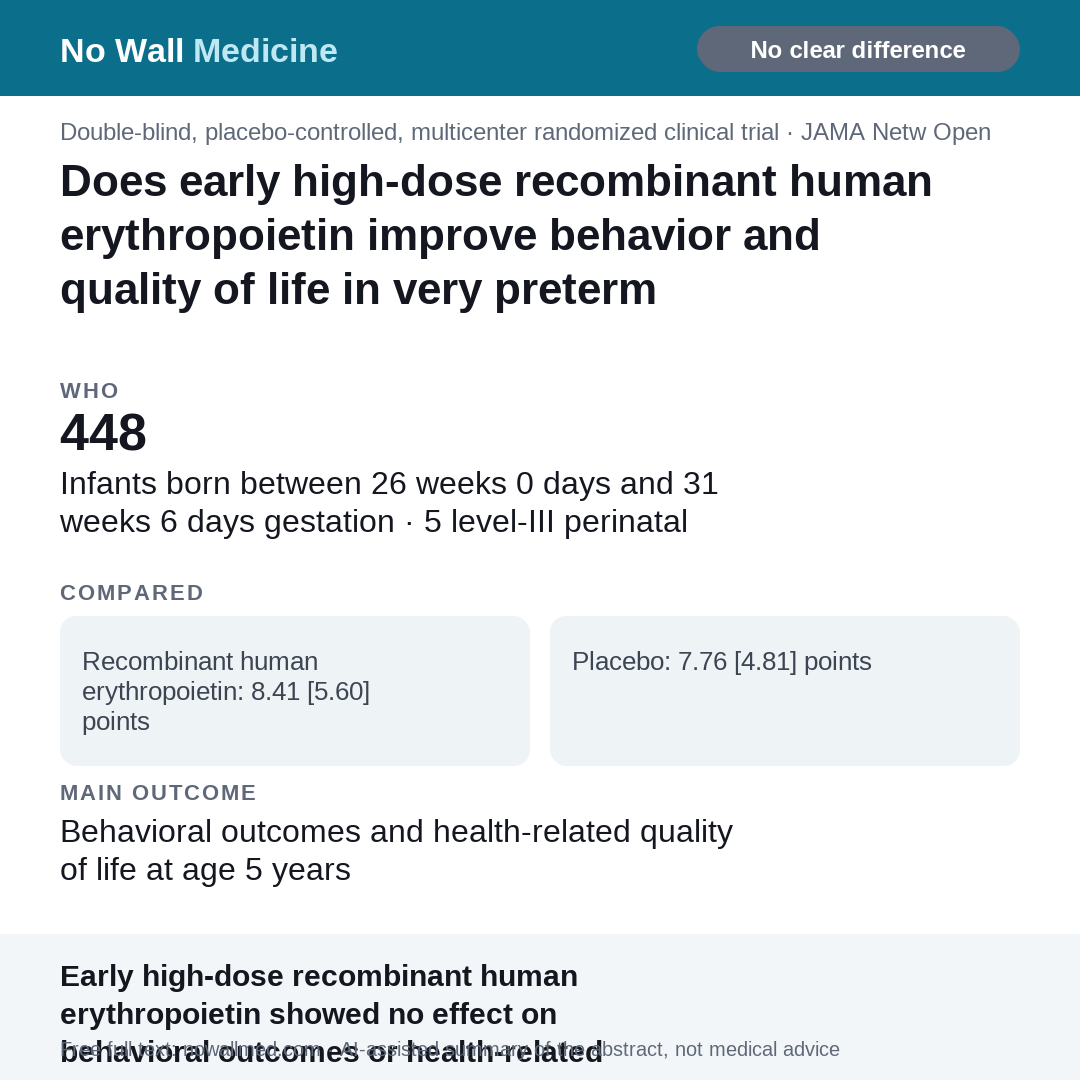
Therapeutic Effects of Butyrate on Pediatric Obesity: A Randomized Clinical Trial
Randomized, quadruple-blind, placebo-controlled trialBenefit found
Is oral butyrate supplementation effective in treating pediatric obesity?
Who
54
Children aged 5 to 17 years with body mass index greater than 95th percentile · Naples, Italy
Compared
96%butyrate
56%placebo
Main outcome
decrease of at least 0.25 body mass index standard deviation scores
Result: absolute benefit increase, 40% (95% CI, 21% to 61%)
Bottom line: Oral butyrate supplementation may be effective in the treatment of pediatric obesity.
JAMA Netw Open · 2022-12-01Download image
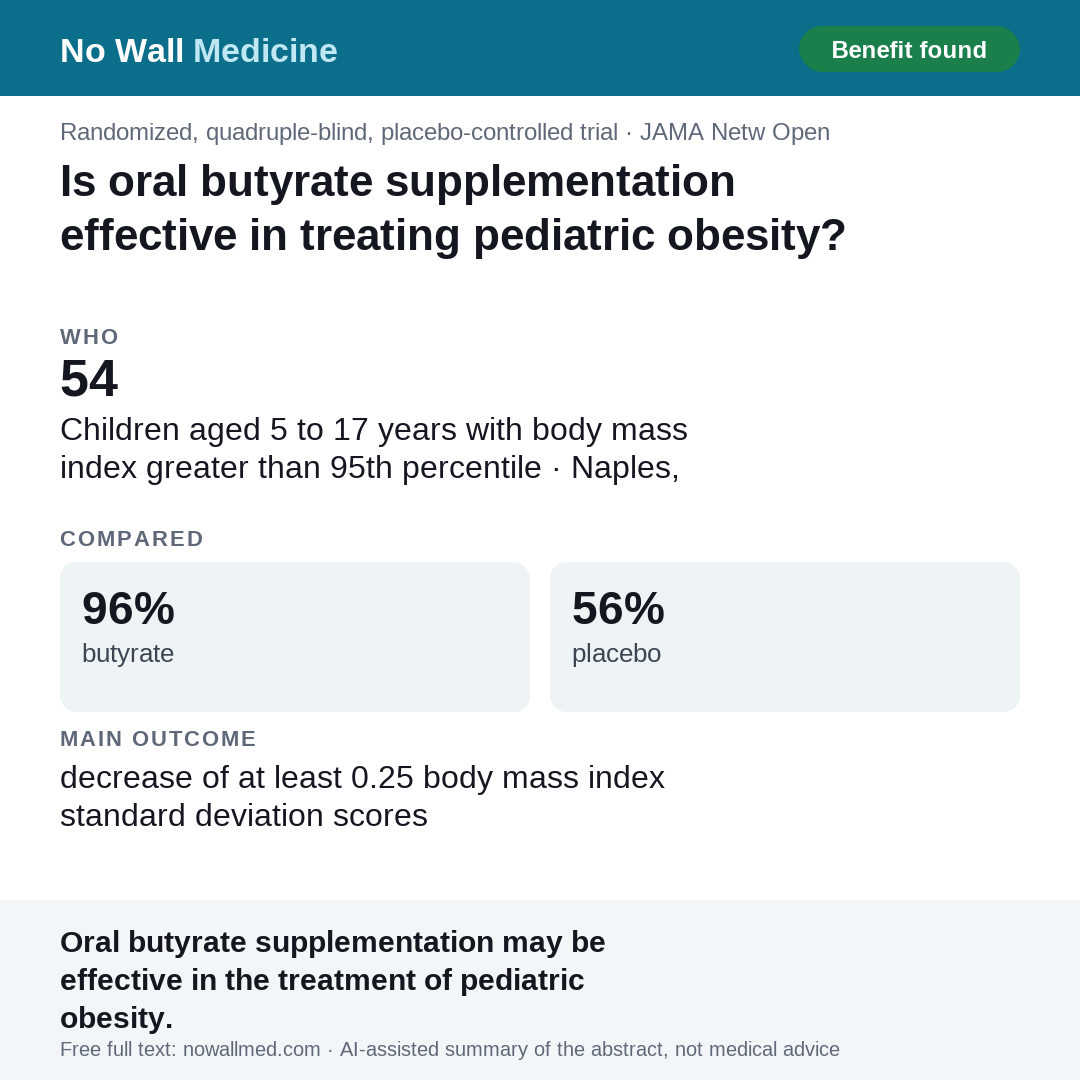
Safety and Short-term Outcomes of High-Dose Erythropoietin in Preterm Infants With Intraventricular Hemorrhage: The EpoRepair Randomized Clinical Trial
Randomized, double-blind clinical trialNo clear difference
Is high-dose erythropoietin safe and effective for preterm infants with intraventricular hemorrhage?
Who
121
Preterm infants with moderate to severe intraventricular hemorrhage · 8 Swiss and Austrian tertiary neonatal units
Compared
High-dose erythropoietin: 16.7% died
Placebo: 8.2% died
Main outcome
Brain magnetic resonance imaging findings at term-equivalent age
Result: adjusted odds ratio 2.24 (95% CI 0.74 to 7.66)
Bottom line: High-dose erythropoietin showed no significant effect on brain injury scores at term-equivalent age.
JAMA Netw Open · 2022-12-01Download image
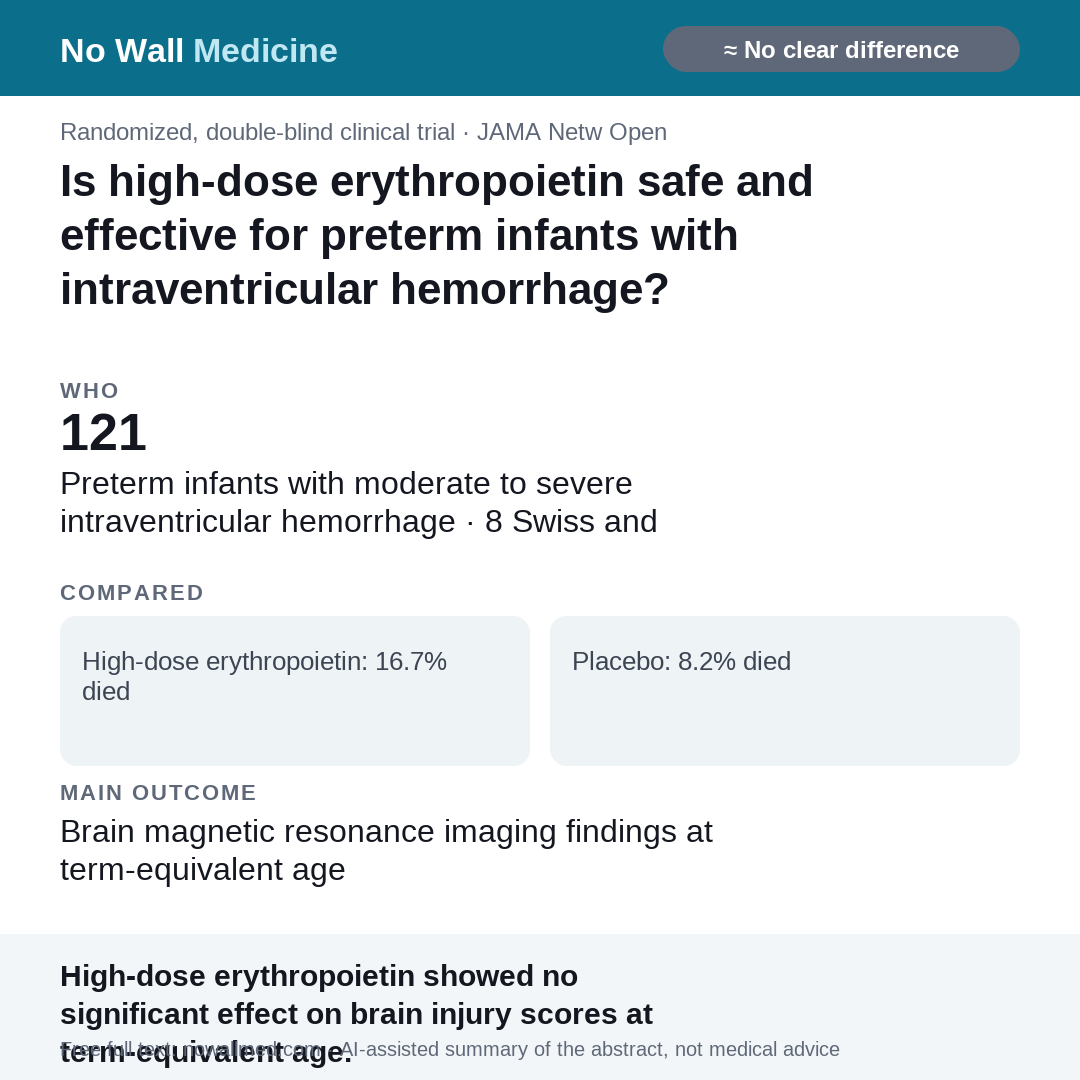
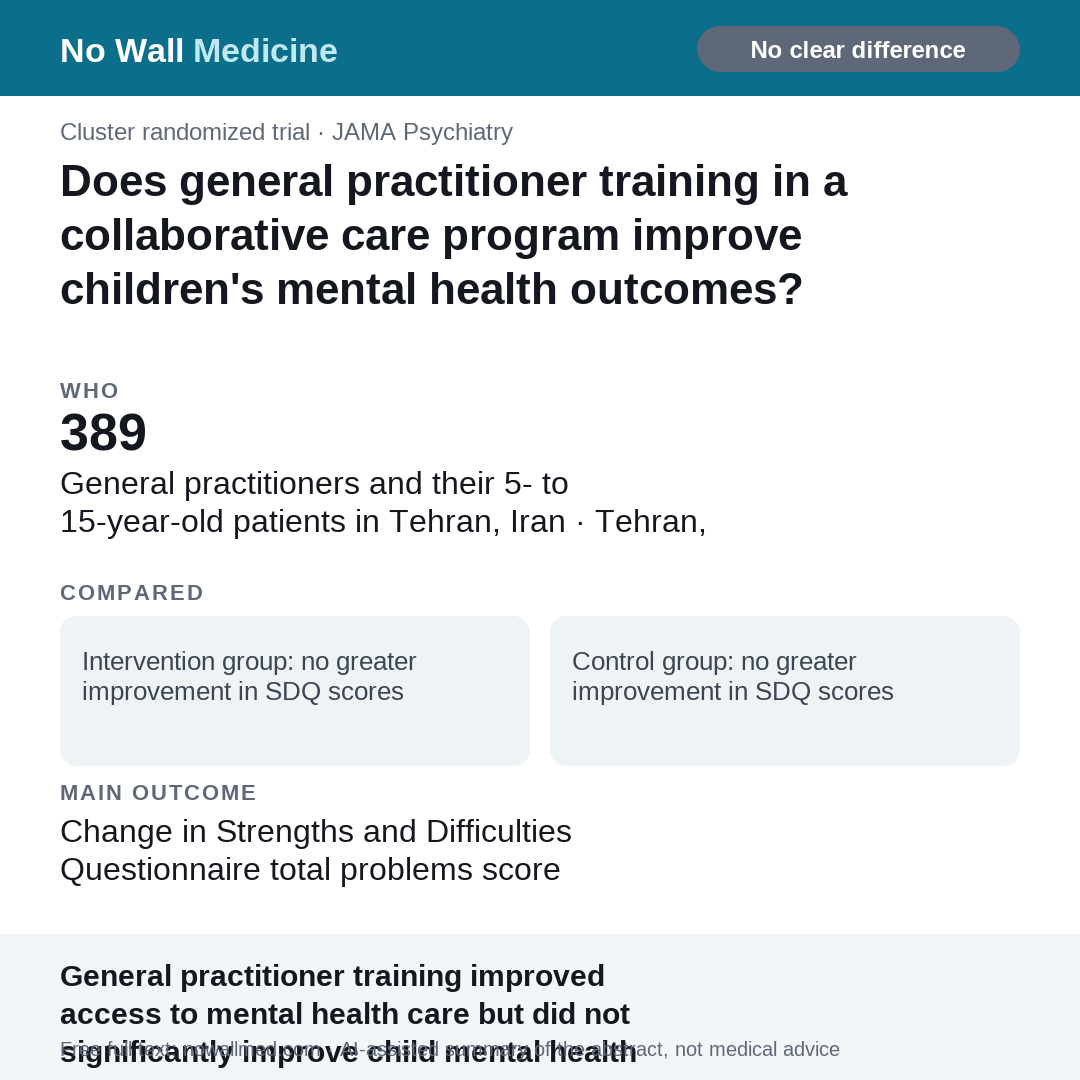
Effect of General Practitioner Training in a Collaborative Child Mental Health Care Program on Children's Mental Health Outcomes in a Low-Resource Setting: A Cluster Randomized Trial
Cluster randomized trialNo clear difference
Does general practitioner training in a collaborative care program improve children's mental health outcomes?
Who
389
General practitioners and their 5- to 15-year-old patients in Tehran, Iran · Tehran, Iran
Compared
Intervention group: no greater improvement in SDQ scores
Control group: no greater improvement in SDQ scores
Main outcome
Change in Strengths and Difficulties Questionnaire total problems score
Result: linear combination of coefficients for intervention, 0.57 (95% CI, -1.07 to 2.22)
Bottom line: General practitioner training improved access to mental health care but did not significantly improve child mental health scores overall.
Limitation: Prior experience working with children may be required to improve child outcomes.
JAMA Psychiatry · 2022-12-01Download image
Effect of Wearing a Face Mask on Hand-to-Face Contact by Children in a Simulated School Environment: The Back-to-School COVID-19 Simulation Randomized Clinical Trial
Prospective randomized clinical trialNo clear difference
Does wearing a face mask affect hand-to-face contact by children in school?
Who
171
Students from junior kindergarten to grade 12 · 2 schools in Toronto, Ontario, Canada
Compared
mask group: 88.2 events per student per hour
control group: 88.7 events per student per hour
Main outcome
number of hand-to-face contacts per student per hour
Result: rate ratio 1.00 (95% CI 0.78-1.28)
Bottom line: Wearing face masks did not increase the rate of hand-to-face contacts among students in a simulated school environment.
JAMA Pediatr · 2022-12-01Download image

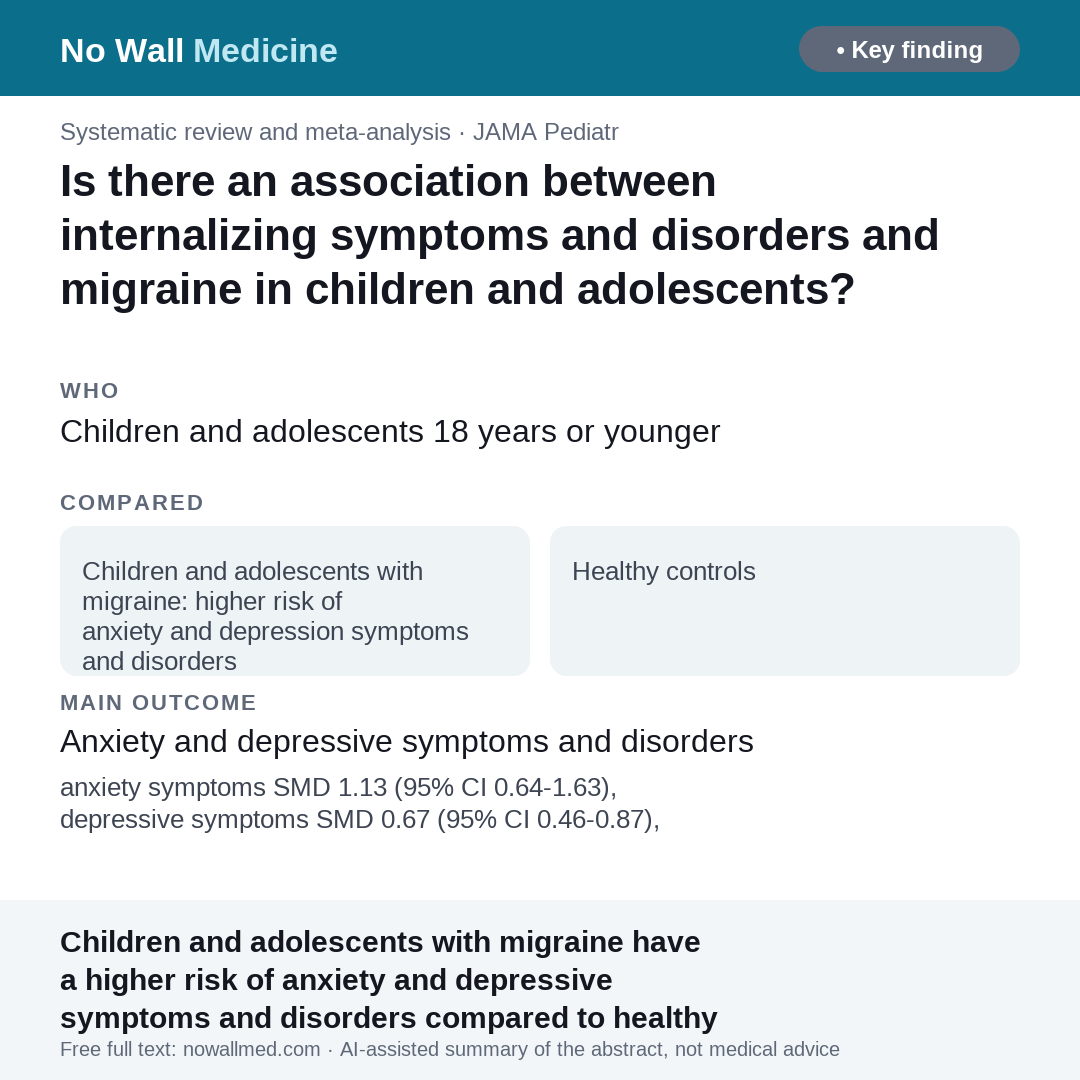
Anxiety and Depressive Symptoms and Disorders in Children and Adolescents With Migraine: A Systematic Review and Meta-analysis
Systematic review and meta-analysisBenefit found
Is there an association between internalizing symptoms and disorders and migraine in children and adolescents?
Who
Children and adolescents 18 years or younger
Compared
Children and adolescents with migraine: higher risk of anxiety and depression symptoms and disorders
Healthy controls
Main outcome
Anxiety and depressive symptoms and disorders
Result: anxiety symptoms SMD 1.13 (95% CI 0.64-1.63), depressive symptoms SMD 0.67 (95% CI 0.46-0.87), anxiety disorders OR 1.93 (95% CI 1.49-2.50), depressive disorders OR 2.01 (95% CI 1.46-2.78)
Bottom line: Children and adolescents with migraine have a higher risk of anxiety and depressive symptoms and disorders compared to healthy controls.
Limitation: Significant heterogeneity prevented conclusions regarding migraine outcomes or incident migraine.
JAMA Pediatr · 2022-12-01Download image
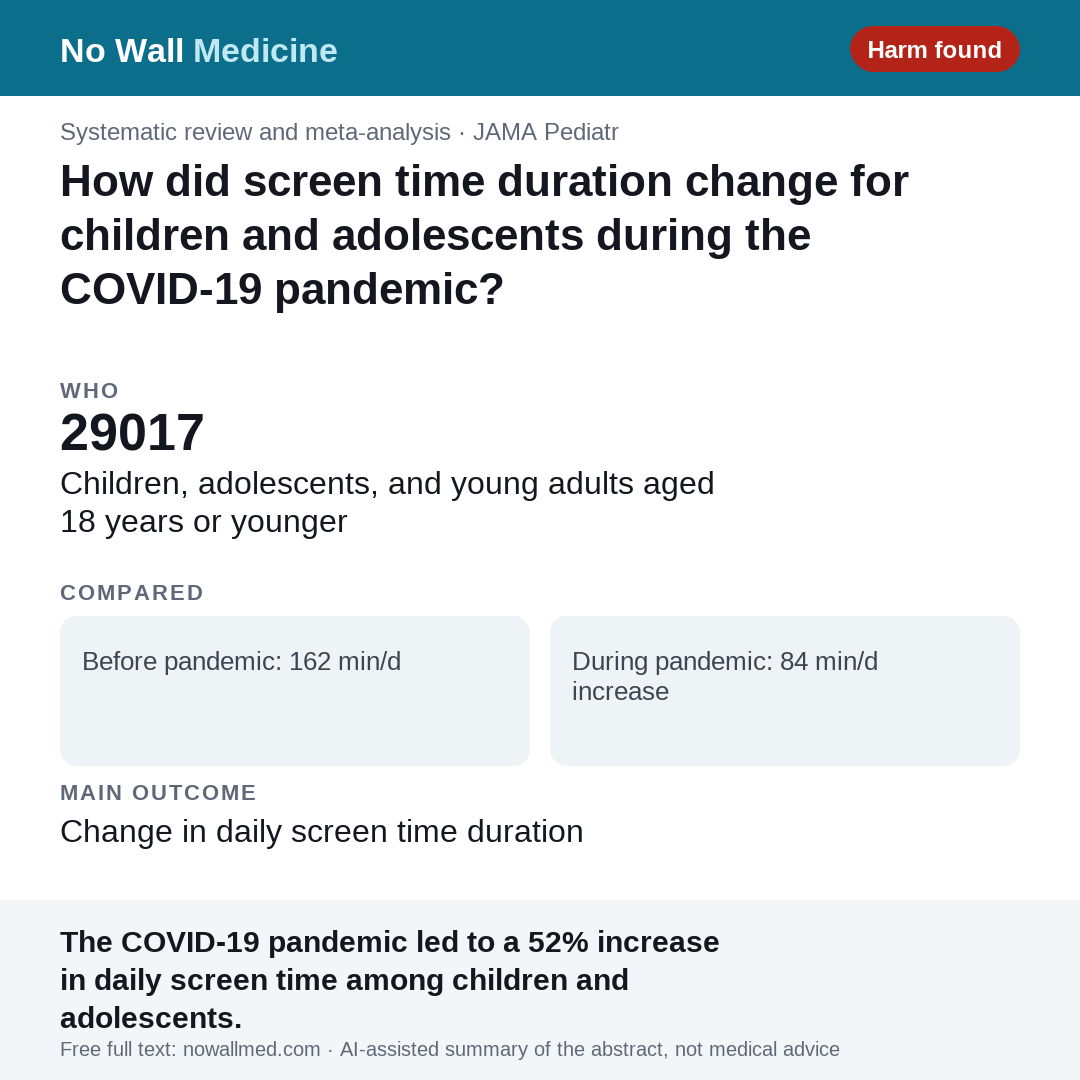
Assessment of Changes in Child and Adolescent Screen Time During the COVID-19 Pandemic: A Systematic Review and Meta-analysis
Systematic review and meta-analysisHarm found
How did screen time duration change for children and adolescents during the COVID-19 pandemic?
Who
29017
Children, adolescents, and young adults aged 18 years or younger
Compared
Before pandemic: 162 min/d
During pandemic: 84 min/d increase
Main outcome
Change in daily screen time duration
Result: 52% increase
Bottom line: The COVID-19 pandemic led to a 52% increase in daily screen time among children and adolescents.
JAMA Pediatr · 2022-12-01Download image
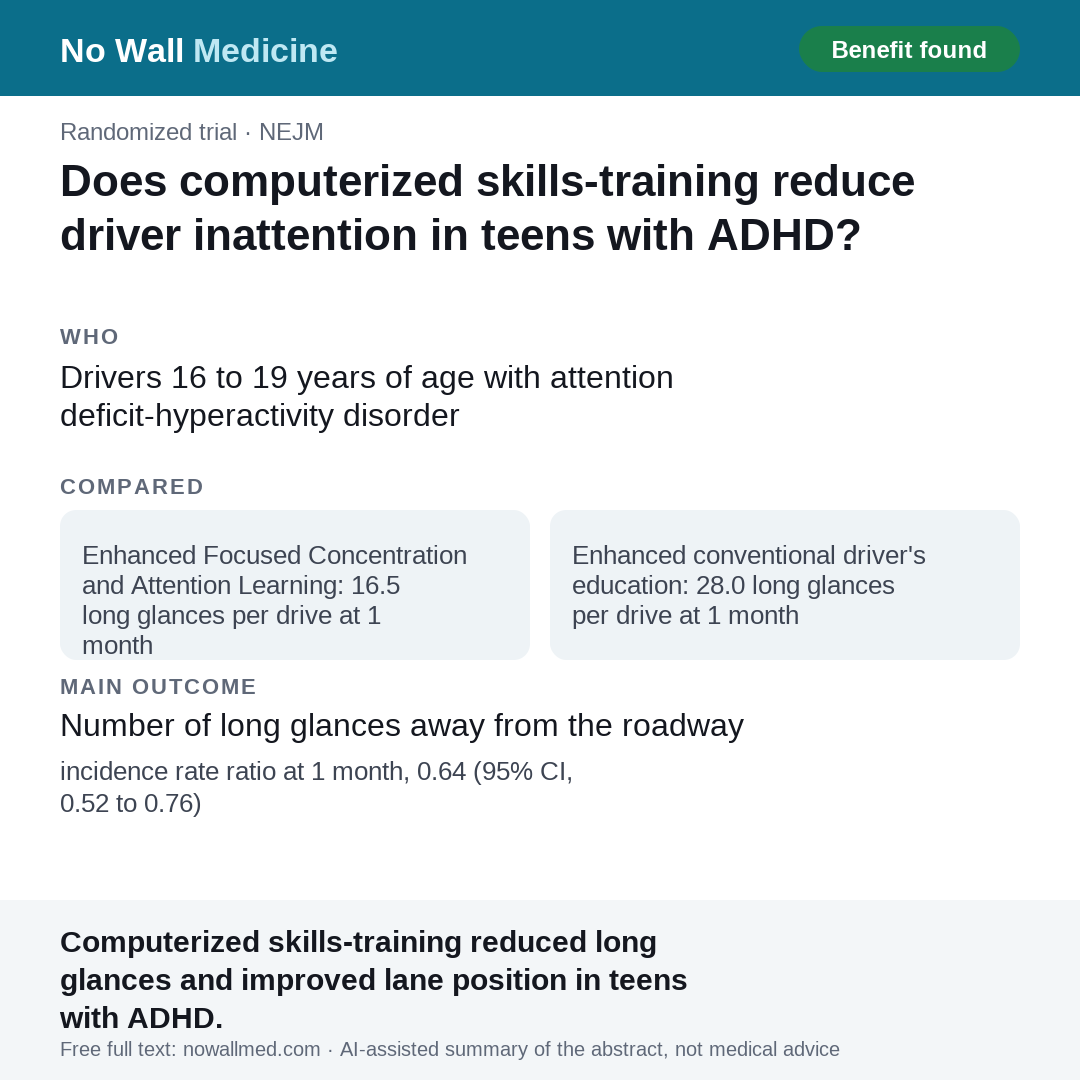
Trial of Training to Reduce Driver Inattention in Teens with ADHD
Randomized trialBenefit found
Does computerized skills-training reduce driver inattention in teens with ADHD?
Who
Drivers 16 to 19 years of age with attention deficit-hyperactivity disorder
Compared
Enhanced Focused Concentration and Attention Learning: 16.5 long glances per drive at 1 month
Enhanced conventional driver's education: 28.0 long glances per drive at 1 month
Main outcome
Number of long glances away from the roadway
Result: incidence rate ratio at 1 month, 0.64 (95% CI, 0.52 to 0.76)
Bottom line: Computerized skills-training reduced long glances and improved lane position in teens with ADHD.
Funded by: National Institutes of Health
NEJM · 2022-11-30Download image
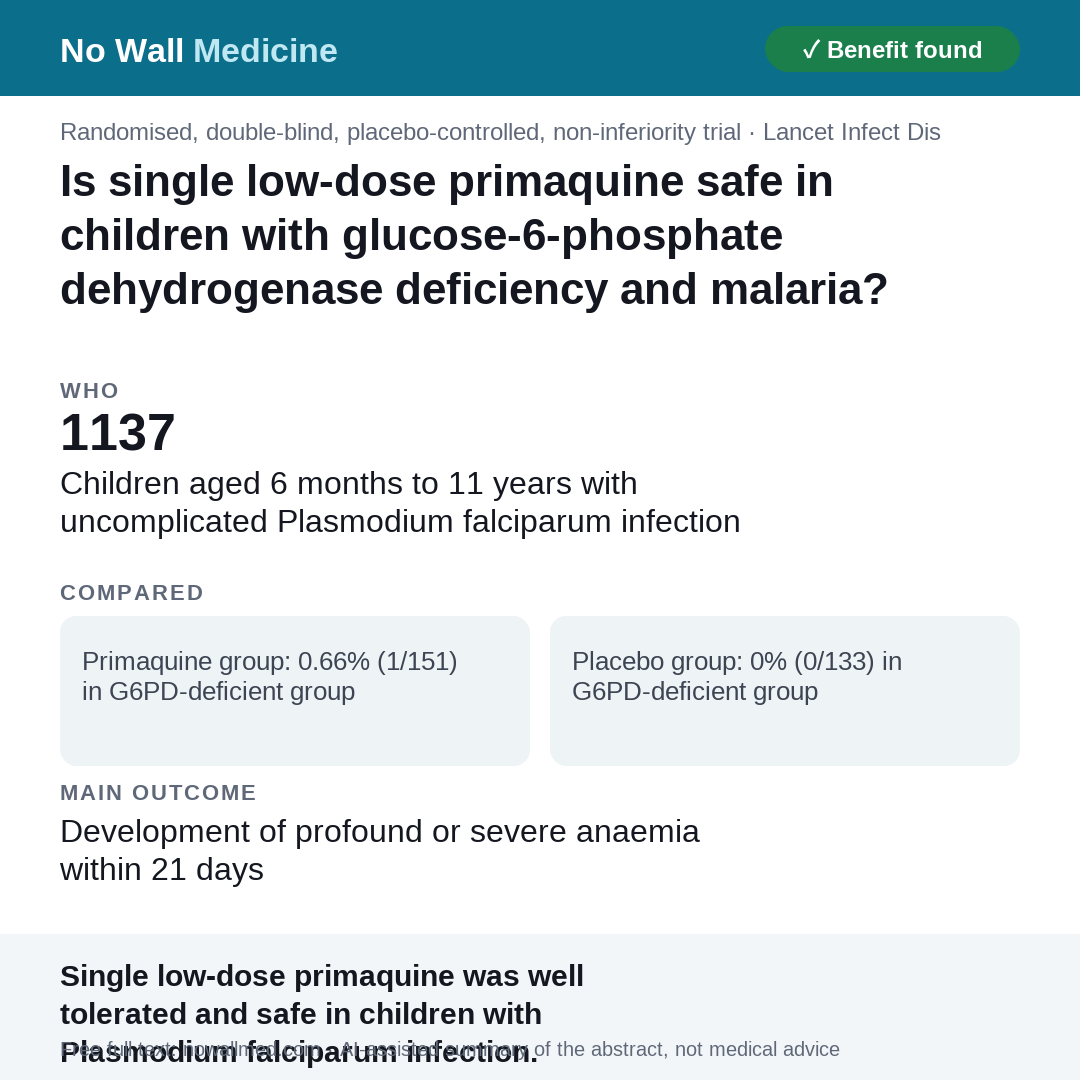
Safety of age-dosed, single low-dose primaquine in children with glucose-6-phosphate dehydrogenase deficiency who are infected with Plasmodium falciparum in Uganda and the Democratic Republic of the Congo: a randomised, double-blind, placebo-controlled, non-inferiority trial
Randomised, double-blind, placebo-controlled, non-inferiority trialBenefit found
Is single low-dose primaquine safe in children with glucose-6-phosphate dehydrogenase deficiency and malaria?
Who
1137
Children aged 6 months to 11 years with uncomplicated Plasmodium falciparum infection · Uganda and Democratic Republic of the Congo
Compared
Primaquine group: 0.66% (1/151) in G6PD-deficient group
Placebo group: 0% (0/133) in G6PD-deficient group
Main outcome
Development of profound or severe anaemia within 21 days
Result: difference -0.66%, 95% CI -1.96 to 0.63
Bottom line: Single low-dose primaquine was well tolerated and safe in children with Plasmodium falciparum infection.
Funded by: UK Government, Medical Research Council, NIHR, and Wellcome Trust
Lancet Infect Dis · 2022-11-30Download image
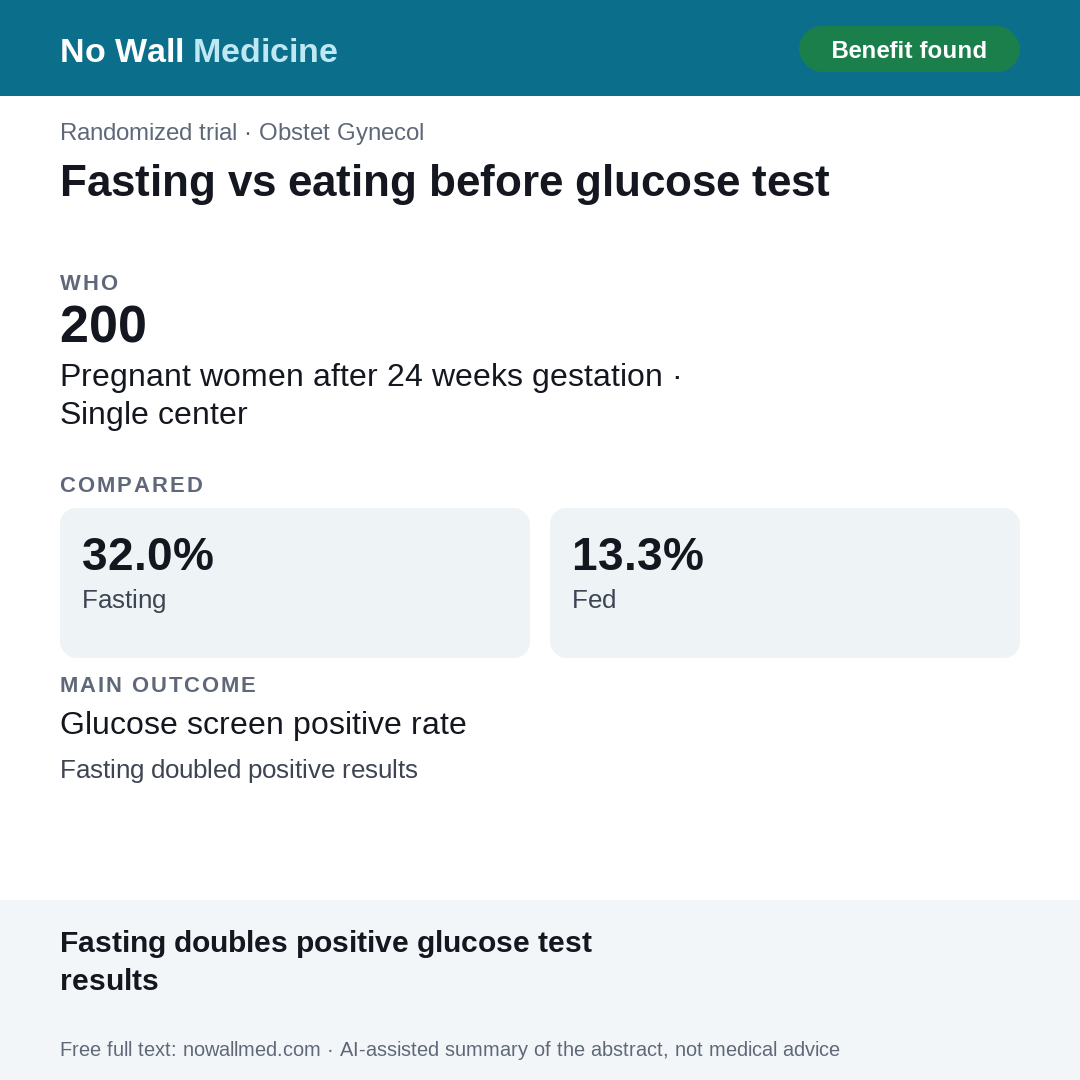
Fasting Compared With Fed and Oral Intake Before the 1-Hour Oral Glucose Tolerance Test: A Randomized Controlled Trial
Randomized trialBenefit found
Fasting vs eating before glucose test
Who
200
Pregnant women after 24 weeks gestation · Single center
Compared
32.0%Fasting
13.3%Fed
Main outcome
Glucose screen positive rate
Result: Fasting doubled positive results
Bottom line: Fasting doubles positive glucose test results
Obstet Gynecol · 2022-11-30Download image
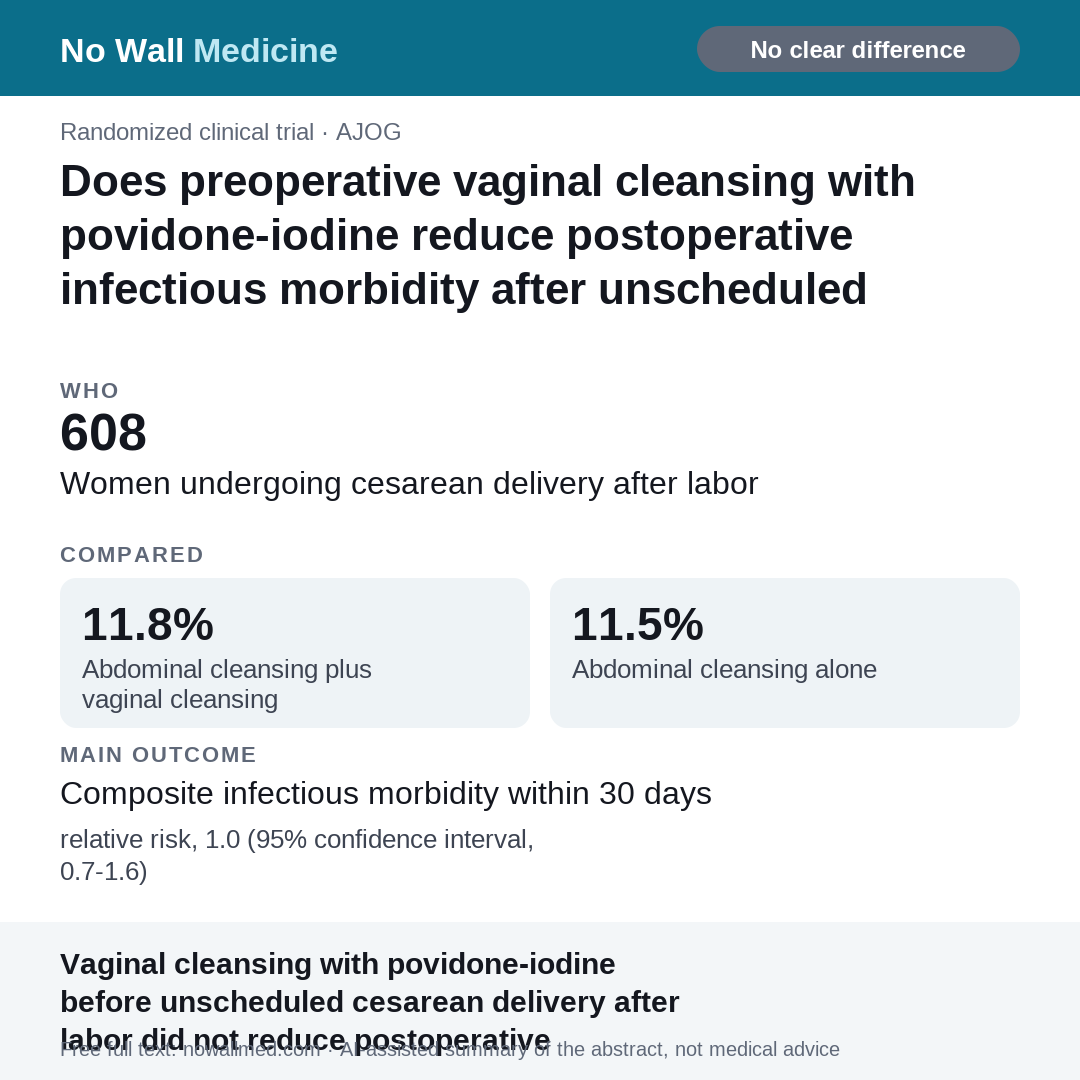
Vaginal cleansing before unscheduled cesarean delivery to reduce infection: a randomized clinical trial
Randomized clinical trialNo clear difference
Does preoperative vaginal cleansing with povidone-iodine reduce postoperative infectious morbidity after unscheduled cesarean delivery?
Who
608
Women undergoing cesarean delivery after labor
Compared
11.8%Abdominal cleansing plus vaginal cleansing
11.5%Abdominal cleansing alone
Main outcome
Composite infectious morbidity within 30 days
Result: relative risk, 1.0 (95% confidence interval, 0.7-1.6)
Bottom line: Vaginal cleansing with povidone-iodine before unscheduled cesarean delivery after labor did not reduce postoperative infectious morbidity.
AJOG · 2022-11-30Download image
Influence of Vitamin D Supplementation on Growth, Body Composition, and Pubertal Development Among School-aged Children in an Area With a High Prevalence of Vitamin D Deficiency: A Randomized Clinical Trial
Double-blind, placebo-controlled randomized clinical trialNo clear difference
Does weekly vitamin D supplementation influence growth, body composition, or pubertal development?
Who
8851
School-aged children aged 6 to 13 years · 18 grade schools in Ulaanbaatar, Mongolia
Compared
Vitamin D3 14,000 IU weekly: 31.0 ng/mL
Placebo: 10.7 ng/mL
Main outcome
Height for age, body composition, and pubertal development
Result: mean difference 20.3 (95% CI 19.9-20.6) for 25(OH)D
Bottom line: Weekly vitamin D3 supplementation increased vitamin D concentrations but did not influence growth, body composition, or pubertal development.
JAMA Pediatr · 2022-11-29Download image

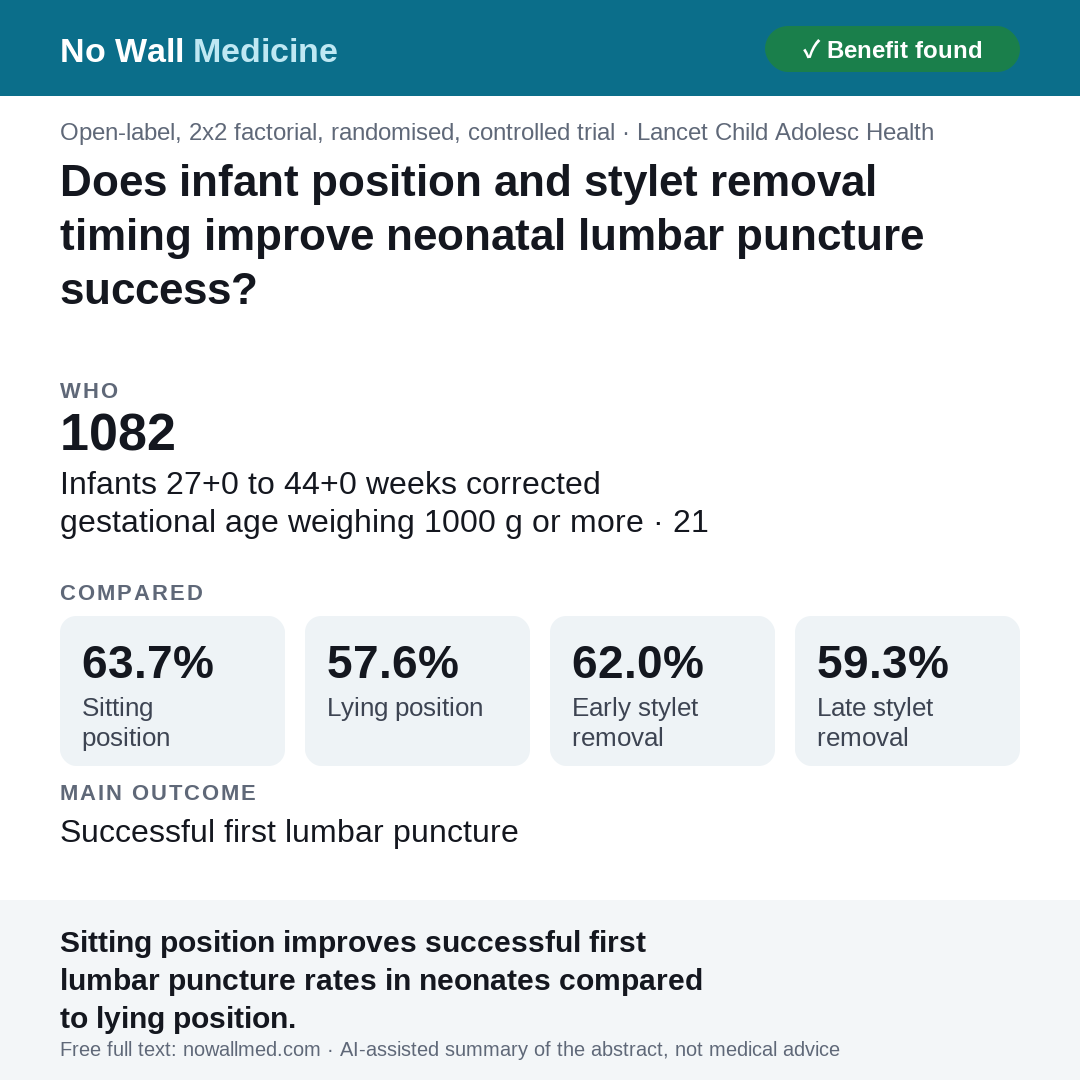
Assessment of infant position and timing of stylet removal to improve lumbar puncture success in neonates (NeoCLEAR): an open-label, 2 × 2 factorial, randomised, controlled trial
Open-label, 2x2 factorial, randomised, controlled trialBenefit found
Does infant position and stylet removal timing improve neonatal lumbar puncture success?
Who
1082
Infants 27+0 to 44+0 weeks corrected gestational age weighing 1000 g or more · 21 United Kingdom neonatal and maternity units
Compared
63.7%Sitting position (346/543)
57.6%Lying position (307/533)
62.0%Early stylet removal (338/545)
59.3%Late stylet removal (315/531)
Main outcome
Successful first lumbar puncture
Result: adjusted risk ratio 1.10 (95% CI 1.01 to 1.21) for sitting vs lying
Bottom line: Sitting position improves successful first lumbar puncture rates in neonates compared to lying position.
Funded by: United Kingdom National Institute for Health and Care Research
Lancet Child Adolesc Health · 2022-11-29Download image
Comorbidities in Patients with Vitiligo: A Systematic Review and Meta-Analysis
Systematic review and meta-analysisBenefit found
What is the prevalence of comorbid diseases in patients with vitiligo?
Who
Patients with vitiligo compared with healthy controls · MEDLINE and EMBASE databases
Compared
Patients with vitiligo
Healthy controls
Main outcome
Prevalence of comorbid autoimmune and connective tissue diseases
Result: OR 2.63 (95% CI 2.50-2.78) for alopecia areata
Bottom line: Vitiligo is associated with higher risks of various autoimmune and connective tissue diseases.
Limitation: Excluded pediatric studies or studies providing only laboratory results
J Invest Dermatol · 2022-11-28Download image