Visual abstracts
New randomized trials and meta-analyses from leading journals at a glance: who was studied, what was compared, and what was found. Every paper is free to read in full.
All specialtiesCardiology 4800Oncology 4084Gastroenterology & Hepatology 1917Infectious Disease 3789Neurology 1886Psychiatry & Mental Health 2240Pulmonology 2061Critical Care 1335Endocrinology & Diabetes 2553Pediatrics 2914Surgery 2500Orthopedics & Sports Medicine 923Neurosurgery 532Cardiothoracic & Vascular Surgery 665Plastic & Reconstructive Surgery 585Nephrology 1115Rheumatology 815Hematology 1099Dermatology 619Ophthalmology 539Obstetrics & Gynecology 1661Public & Global Health 1044Radiology & Imaging 637Anesthesiology 959Urology 751ENT (Otolaryngology) 497Emergency Medicine 484Allergy & Immunology 310Geriatrics 974Family Medicine & Primary Care 538Medical Genetics & Genomics 662Pathology & Laboratory Medicine 156Physical Medicine & Rehabilitation 746Palliative Care 422Nutrition 1566Digital Health & AI 2191General Medicine 319
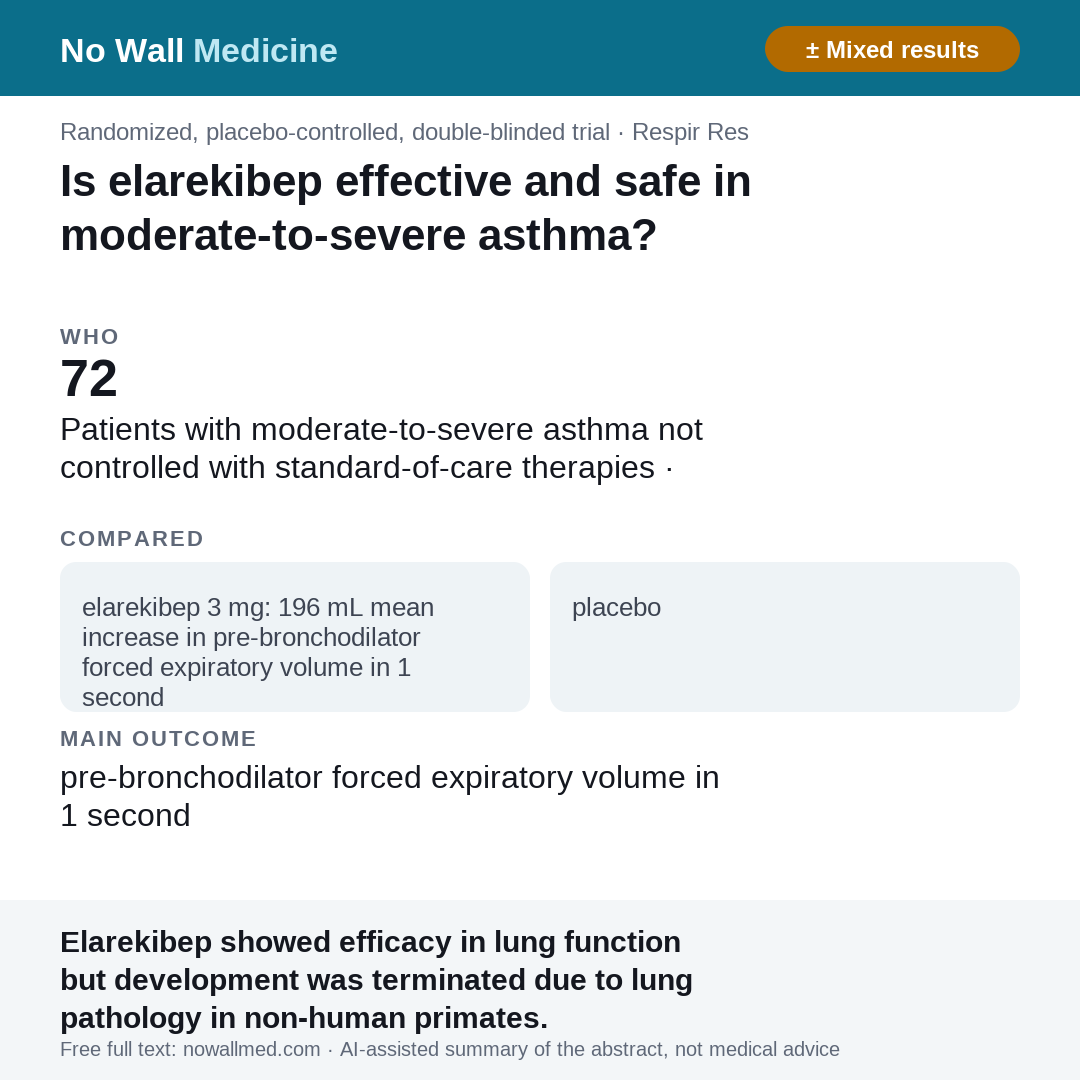
Elarekibep, an inhaled anti-IL-4 receptor alpha Anticalin, in moderate-to-severe asthma: a randomized, placebo-controlled phase 2a study (APATURA)
Randomized, placebo-controlled, double-blinded trialMixed results
Is elarekibep effective and safe in moderate-to-severe asthma?
Who
72
Patients with moderate-to-severe asthma not controlled with standard-of-care therapies · multicentre
Compared
elarekibep 3 mg: 196 mL mean increase in pre-bronchodilator forced expiratory volume in 1 second
placebo
Main outcome
pre-bronchodilator forced expiratory volume in 1 second
Result: 95% confidence interval: 14.3, 378
Bottom line: Elarekibep showed efficacy in lung function but development was terminated due to lung pathology in non-human primates.
Respir Res · 2026-04-14Download image
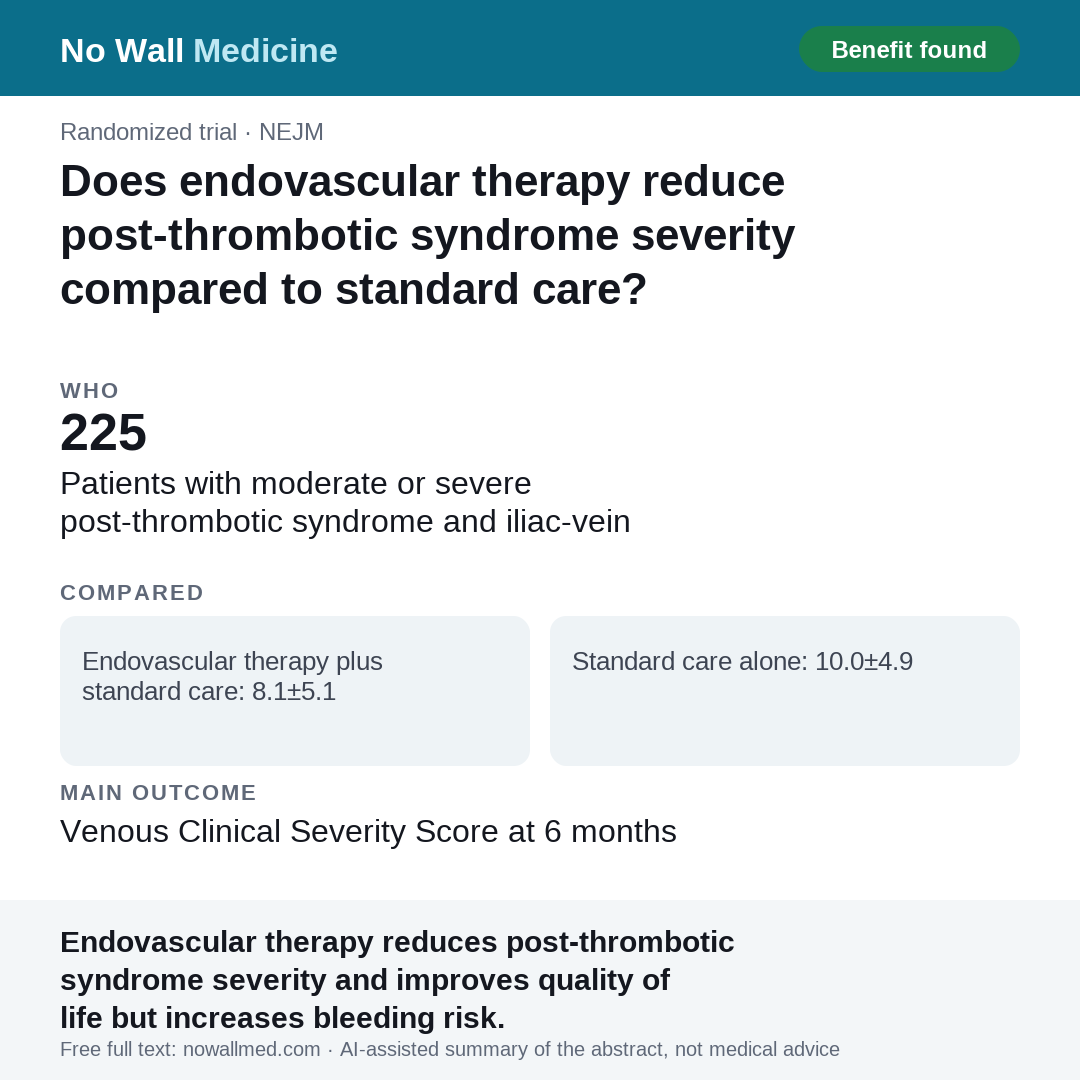
Endovascular Therapy for Post-Thrombotic Syndrome - A Randomized Trial
Randomized trialBenefit found
Does endovascular therapy reduce post-thrombotic syndrome severity compared to standard care?
Who
225
Patients with moderate or severe post-thrombotic syndrome and iliac-vein obstruction
Compared
Endovascular therapy plus standard care: 8.1±5.1
Standard care alone: 10.0±4.9
Main outcome
Venous Clinical Severity Score at 6 months
Result: adjusted difference, -2.0; P = 0.001
Bottom line: Endovascular therapy reduces post-thrombotic syndrome severity and improves quality of life but increases bleeding risk.
Funded by: National Heart, Lung, and Blood Institute and others
NEJM · 2026-04-13Download image
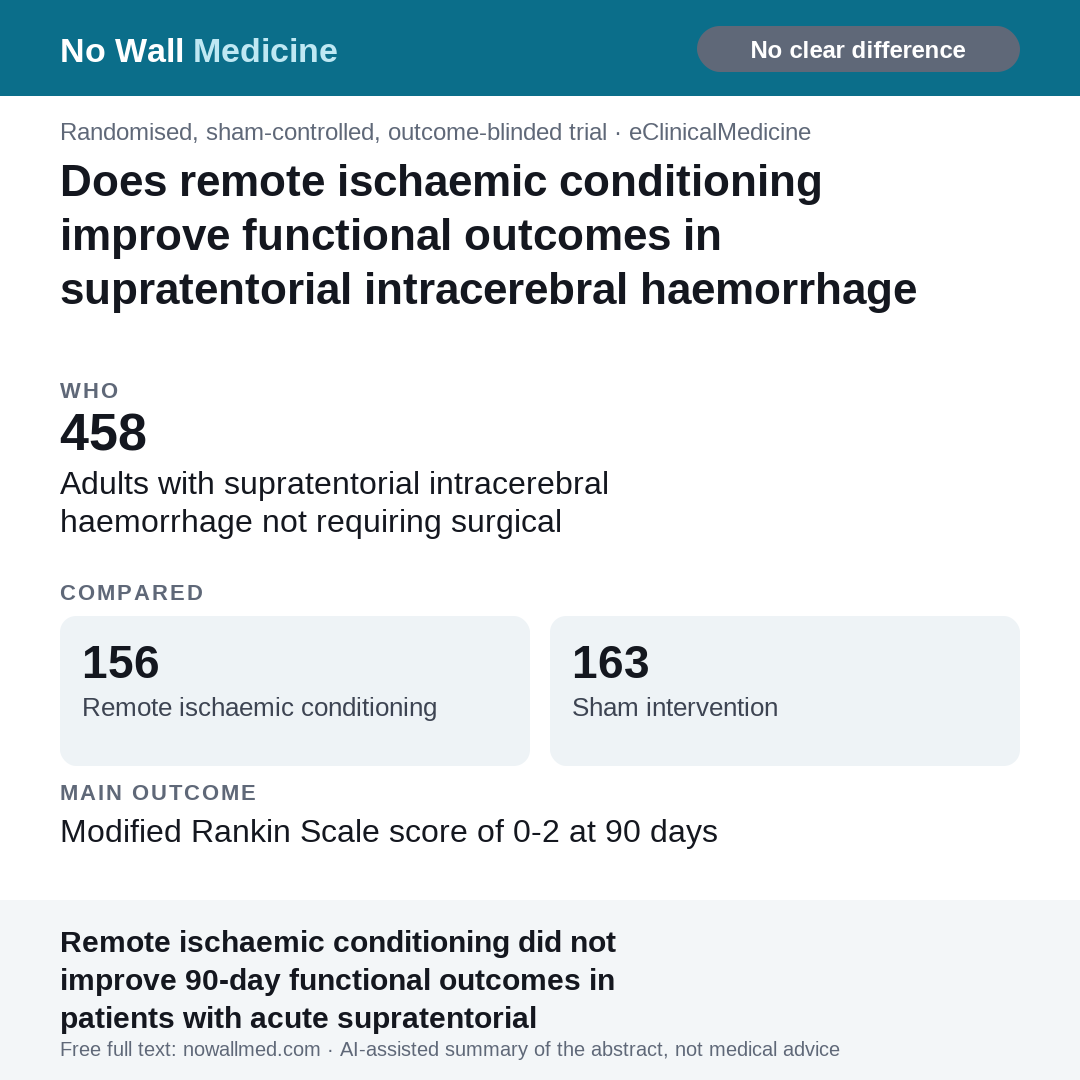
Remote ischaemic conditioning in patients with supratentorial intracerebral haemorrhage (RICH-2): a multicentre, randomised, sham-controlled phase 3 trial in China
Randomised, sham-controlled, outcome-blinded trialNo clear difference
Does remote ischaemic conditioning improve functional outcomes in supratentorial intracerebral haemorrhage patients?
Who
458
Adults with supratentorial intracerebral haemorrhage not requiring surgical intervention · 20 centres in China
Compared
156Remote ischaemic conditioning (68.1%)
163Sham intervention (71.2%)
Main outcome
Modified Rankin Scale score of 0-2 at 90 days
Result: adjusted risk ratio 0.97 (95% confidence interval 0.87-1.08)
Bottom line: Remote ischaemic conditioning did not improve 90-day functional outcomes in patients with acute supratentorial intracerebral haemorrhage.
eClinicalMedicine · 2026-04-13Download image
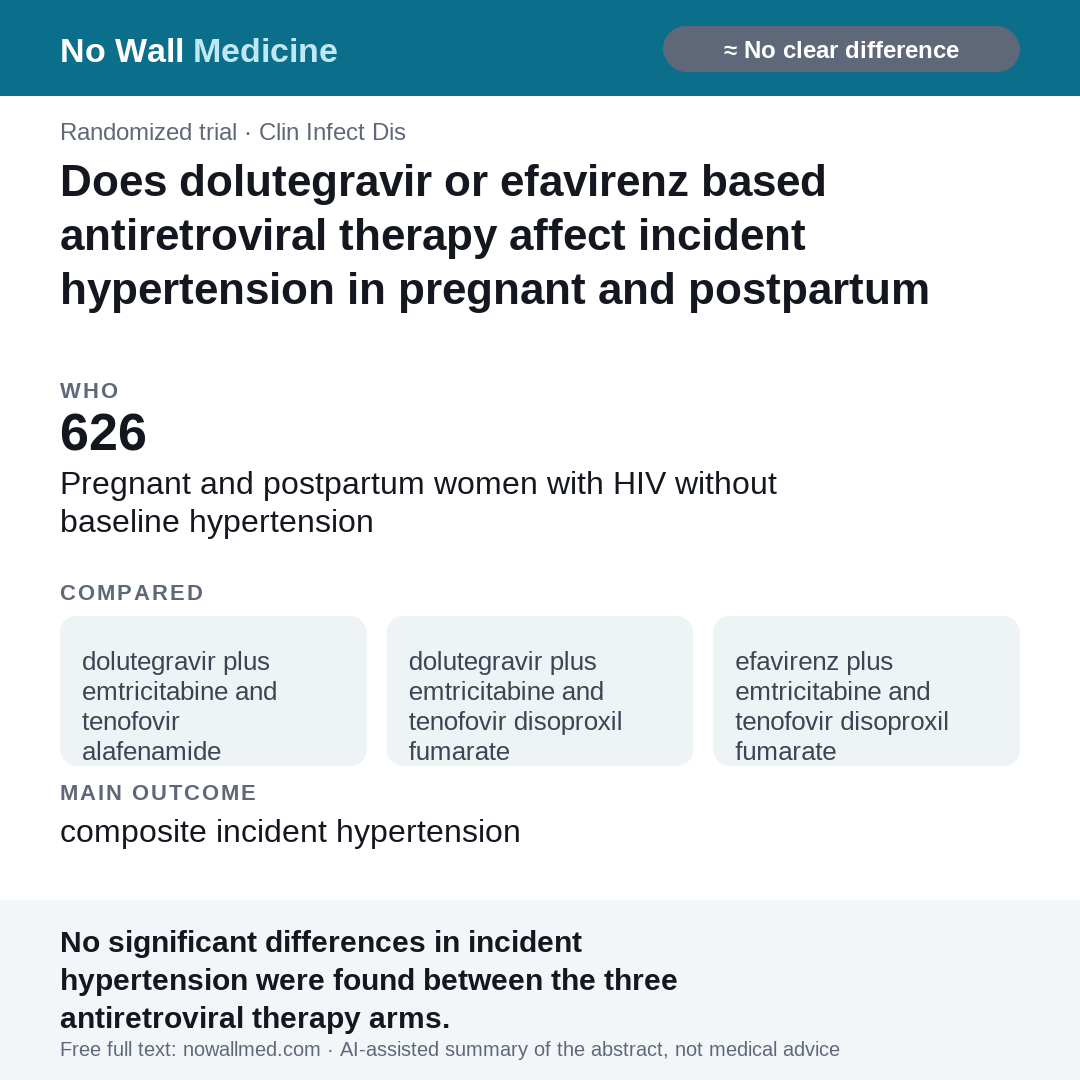
Hypertension in a Randomized Trial of Dolutegravir- Versus Efavirenz-Based Antiretroviral Therapy in Pregnant and Postpartum Women with HIV
Randomized trialNo clear difference
Does dolutegravir or efavirenz based antiretroviral therapy affect incident hypertension in pregnant and postpartum women?
Who
626
Pregnant and postpartum women with HIV without baseline hypertension
Compared
dolutegravir plus emtricitabine and tenofovir alafenamide
dolutegravir plus emtricitabine and tenofovir disoproxil fumarate
efavirenz plus emtricitabine and tenofovir disoproxil fumarate
Main outcome
composite incident hypertension
Bottom line: No significant differences in incident hypertension were found between the three antiretroviral therapy arms.
Clin Infect Dis · 2026-04-13Download image
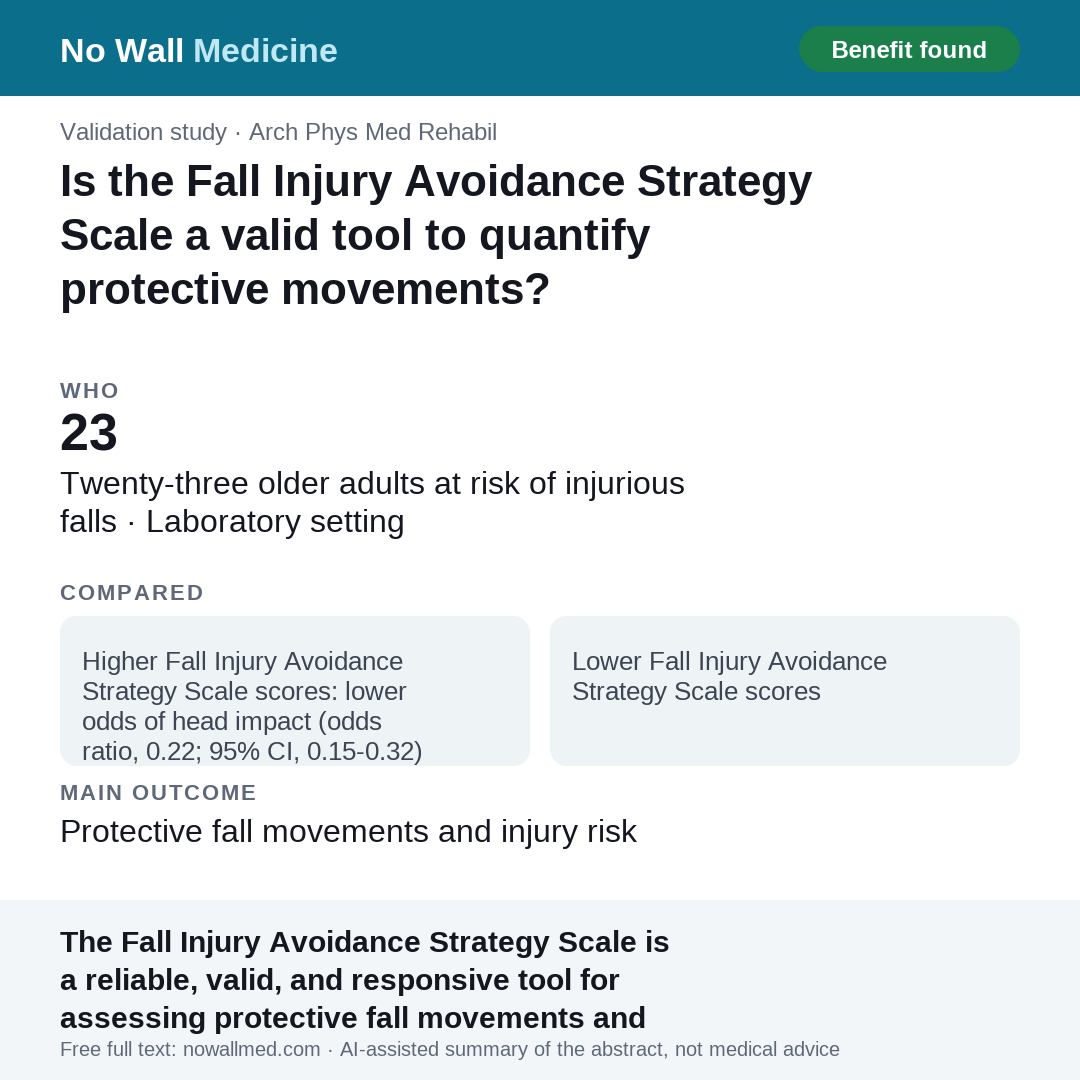
Fall Injury Avoidance Strategy Scale (FIAS)-Validation of a Scale to Quantify Fall-Related Protective Movements
Validation studyBenefit found
Is the Fall Injury Avoidance Strategy Scale a valid tool to quantify protective movements?
Who
23
Twenty-three older adults at risk of injurious falls · Laboratory setting
Compared
Higher Fall Injury Avoidance Strategy Scale scores: lower odds of head impact (odds ratio, 0.22; 95% CI, 0.15-0.32)
Lower Fall Injury Avoidance Strategy Scale scores
Main outcome
Protective fall movements and injury risk
Result: odds ratio, 0.22 (95% CI, 0.15-0.32)
Bottom line: The Fall Injury Avoidance Strategy Scale is a reliable, valid, and responsive tool for assessing protective fall movements and injury risk.
Arch Phys Med Rehabil · 2026-04-13Download image
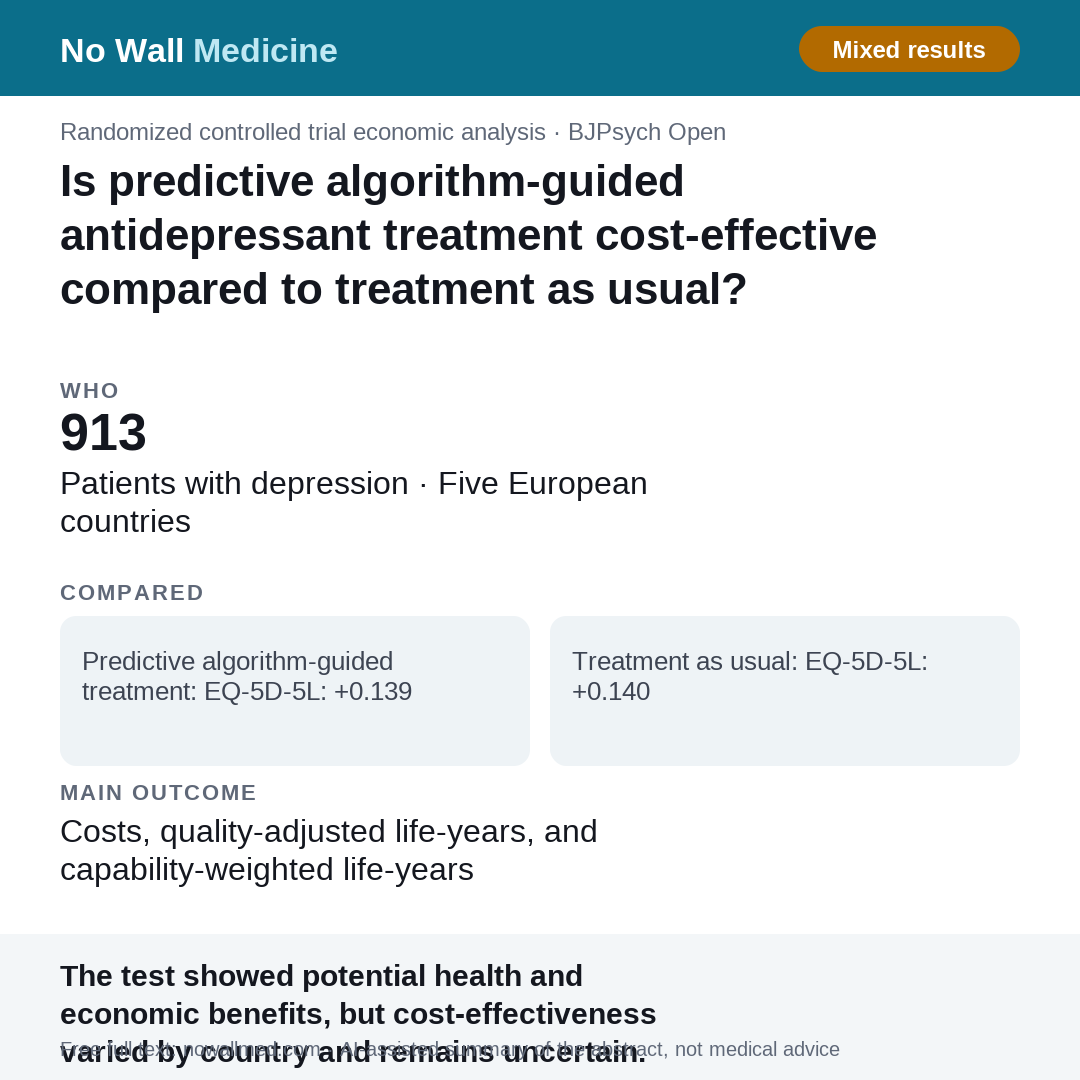
The cost-effectiveness of predictive algorithm guided primary antidepressant treatment: economic evaluation of the multinational PReDicT randomised controlled trial
Randomized controlled trial economic analysisMixed results
Is predictive algorithm-guided antidepressant treatment cost-effective compared to treatment as usual?
Who
913
Patients with depression · Five European countries
Compared
Predictive algorithm-guided treatment: EQ-5D-5L: +0.139
Treatment as usual: EQ-5D-5L: +0.140
Main outcome
Costs, quality-adjusted life-years, and capability-weighted life-years
Bottom line: The test showed potential health and economic benefits, but cost-effectiveness varied by country and remains uncertain.
Limitation: Great uncertainty and country-level variations in cost-effectiveness.
BJPsych Open · 2026-04-13Download image
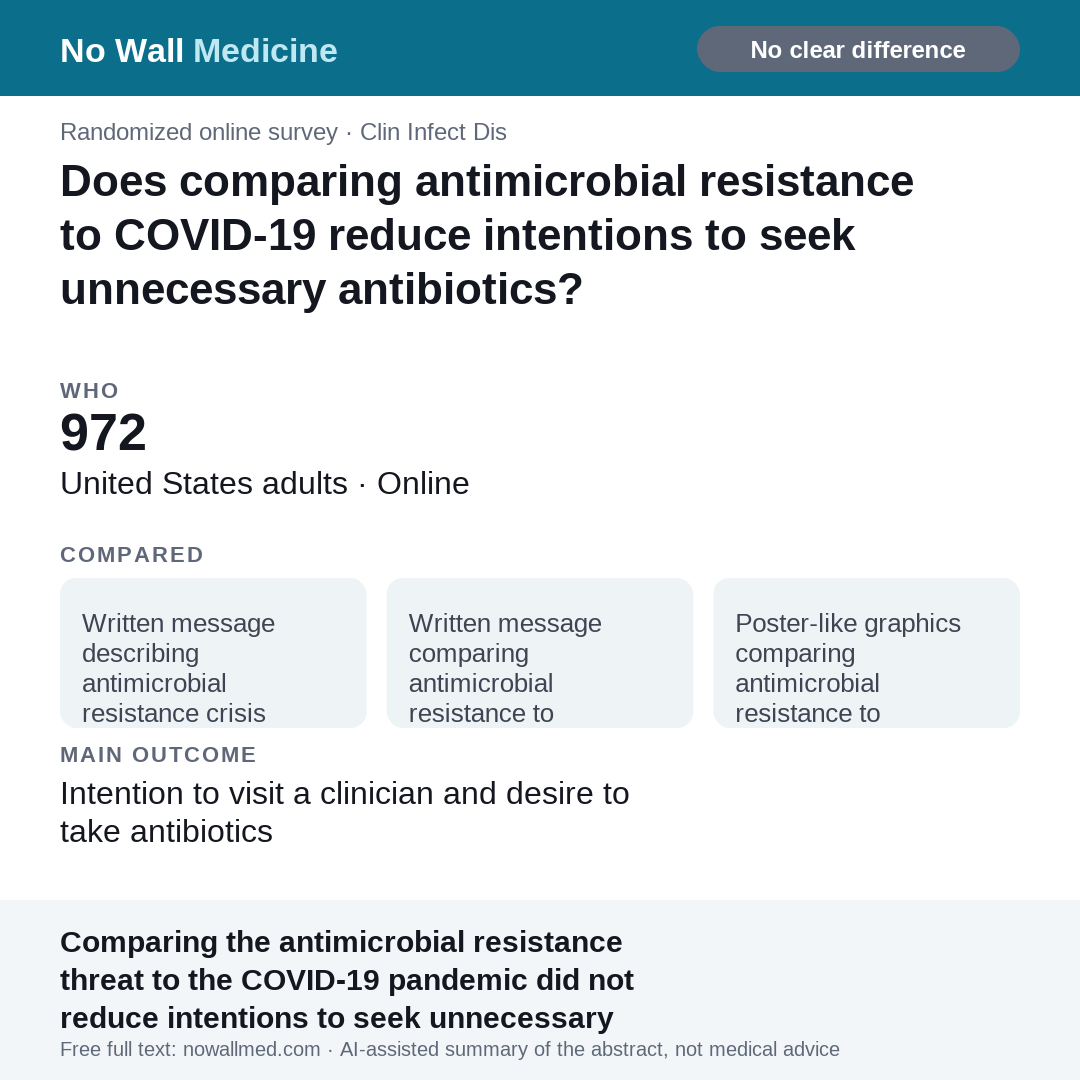
Comparing the Antimicrobial Resistance Crisis to the COVID-19 Pandemic: A Randomized Public Health Messaging Experiment
Randomized online surveyNo clear difference
Does comparing antimicrobial resistance to COVID-19 reduce intentions to seek unnecessary antibiotics?
Who
972
United States adults · Online
Compared
Written message describing antimicrobial resistance crisis
Written message comparing antimicrobial resistance to COVID-19
Poster-like graphics comparing antimicrobial resistance to COVID-19
Main outcome
Intention to visit a clinician and desire to take antibiotics
Bottom line: Comparing the antimicrobial resistance threat to the COVID-19 pandemic did not reduce intentions to seek unnecessary antibiotics.
Clin Infect Dis · 2026-04-12Download image
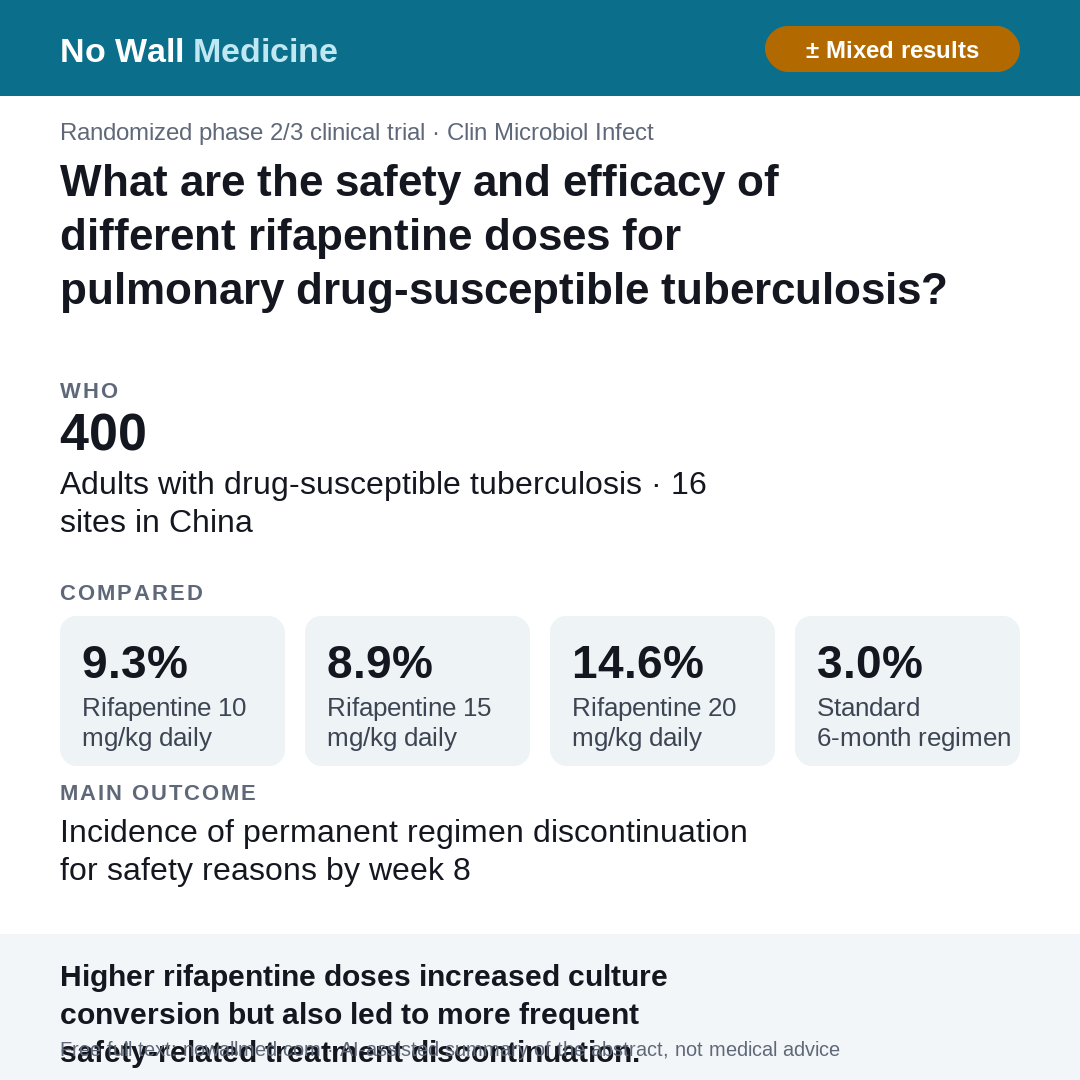
Rifapentine dosing for drug-susceptible tuberculosis: stage 1 of a seamless phase 2/3 randomized clinical trial
Randomized phase 2/3 clinical trialMixed results
What are the safety and efficacy of different rifapentine doses for pulmonary drug-susceptible tuberculosis?
Who
400
Adults with drug-susceptible tuberculosis · 16 sites in China
Compared
9.3%Rifapentine 10 mg/kg daily (9/97)
8.9%Rifapentine 15 mg/kg daily (9/101)
14.6%Rifapentine 20 mg/kg daily (14/96)
3.0%Standard 6-month regimen (3/99)
Main outcome
Incidence of permanent regimen discontinuation for safety reasons by week 8
Bottom line: Higher rifapentine doses increased culture conversion but also led to more frequent safety-related treatment discontinuation.
Clin Microbiol Infect · 2026-04-12Download image
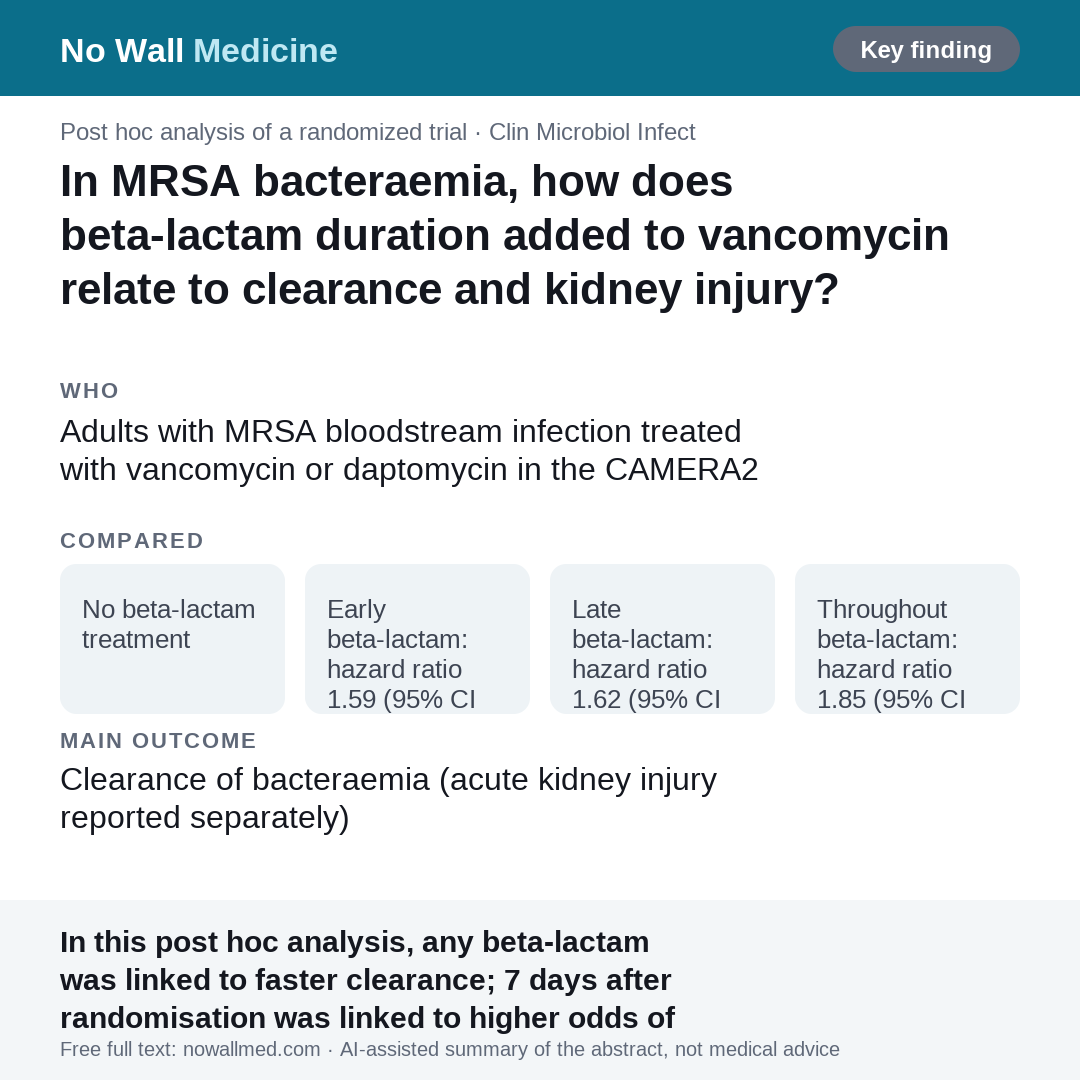
Association between β-lactam exposure and clearance of bacteraemia and acute kidney injury in patients with methicillin-resistant Staphylococcus aureus bloodstream infections-a post hoc analysis of the CAMERA2 trial
Post hoc analysis of a randomized trialMixed results
Does beta-lactam therapy duration impact bacteraemia clearance and acute kidney injury?
Who
Patients with methicillin-resistant Staphylococcus aureus bloodstream infections
Compared
No beta-lactam treatment
Early beta-lactam: hazard ratio 1.59 (95% CI 1.16-2.19)
Late beta-lactam: hazard ratio 1.62 (95% CI 1.14-2.31)
Throughout beta-lactam: hazard ratio 1.85 (95% CI 1.36-2.52)
Main outcome
clearance of bacteraemia and acute kidney injury
Result: hazard ratio 1.59 (95% CI 1.16-2.19) to 1.85 (95% CI 1.36-2.52)
Bottom line: Beta-lactam duration-dependent effects were seen for faster bacteraemia clearance and increased acute kidney injury risk.
Clin Microbiol Infect · 2026-04-12Download image
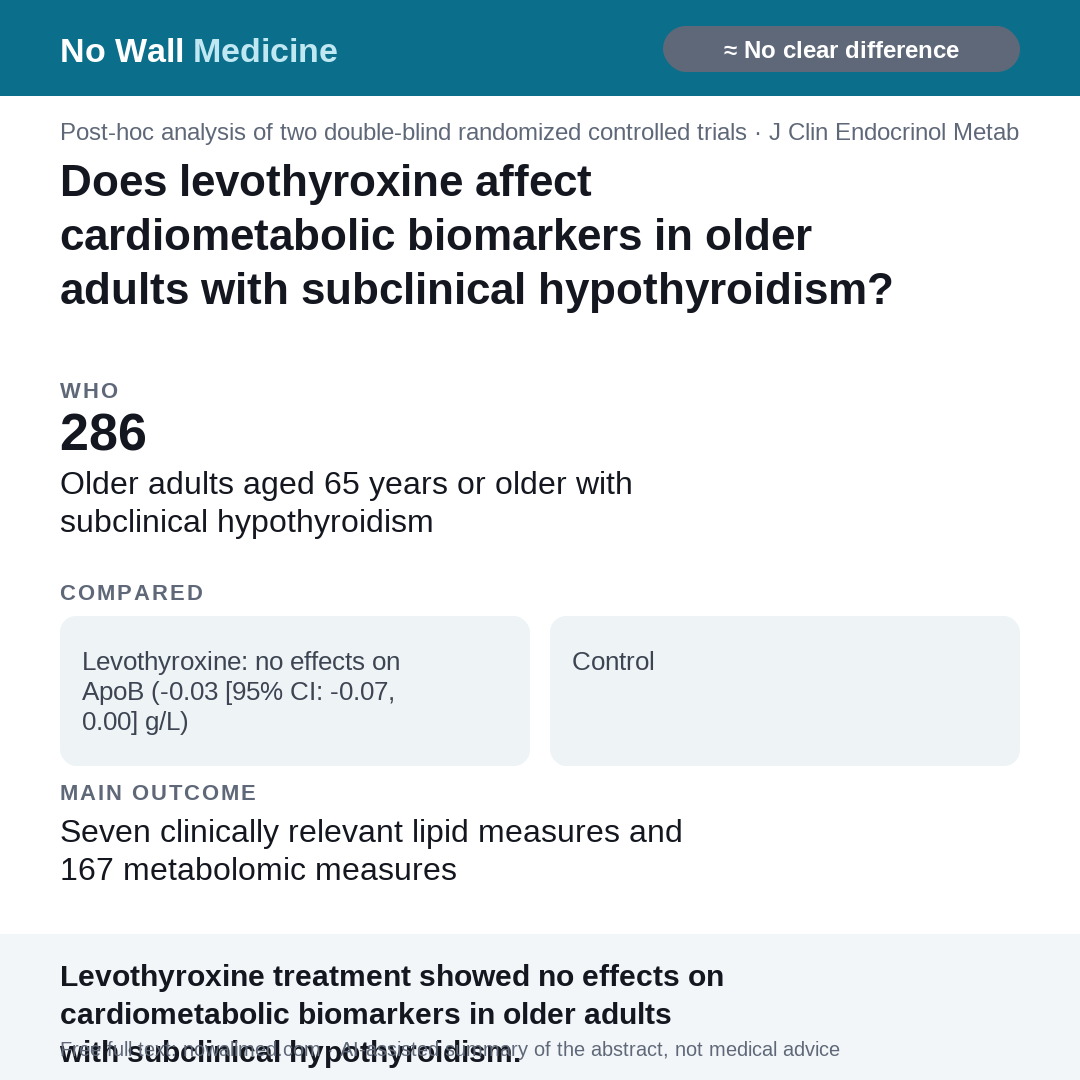
Levothyroxine treatment response of cardiometabolic biomarkers in older adults with subclinical hypothyroidism
Post-hoc analysis of two double-blind randomized controlled trialsNo clear difference
Does levothyroxine affect cardiometabolic biomarkers in older adults with subclinical hypothyroidism?
Who
286
Older adults aged 65 years or older with subclinical hypothyroidism
Compared
Levothyroxine: no effects on ApoB (-0.03 [95% CI: -0.07, 0.00] g/L)
Control
Main outcome
Seven clinically relevant lipid measures and 167 metabolomic measures
Bottom line: Levothyroxine treatment showed no effects on cardiometabolic biomarkers in older adults with subclinical hypothyroidism.
J Clin Endocrinol Metab · 2026-04-12Download image
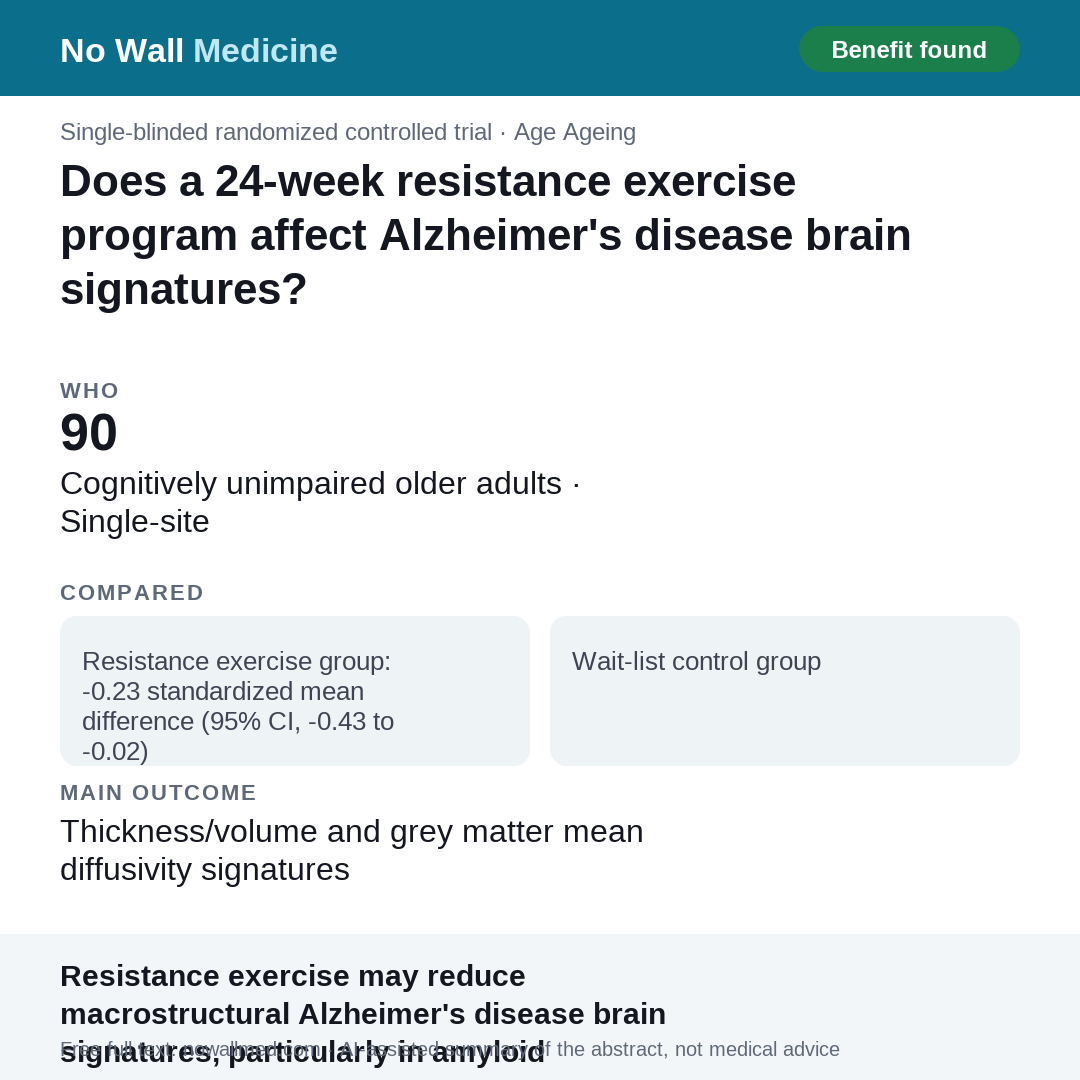
Effects of a 24-week resistance exercise program on Alzheimer's disease brain signatures in cognitively unimpaired older adults: a secondary analysis of the AGUEDA randomized controlled trial
Single-blinded randomized controlled trialBenefit found
Does a 24-week resistance exercise program affect Alzheimer's disease brain signatures?
Who
90
Cognitively unimpaired older adults · Single-site
Compared
Resistance exercise group: -0.23 standardized mean difference (95% CI, -0.43 to -0.02)
Wait-list control group
Main outcome
Thickness/volume and grey matter mean diffusivity signatures
Result: -0.23 standardized mean difference (95% CI, -0.43 to -0.02)
Bottom line: Resistance exercise may reduce macrostructural Alzheimer's disease brain signatures, particularly in amyloid beta-positive older adults.
Age Ageing · 2026-04-12Download image
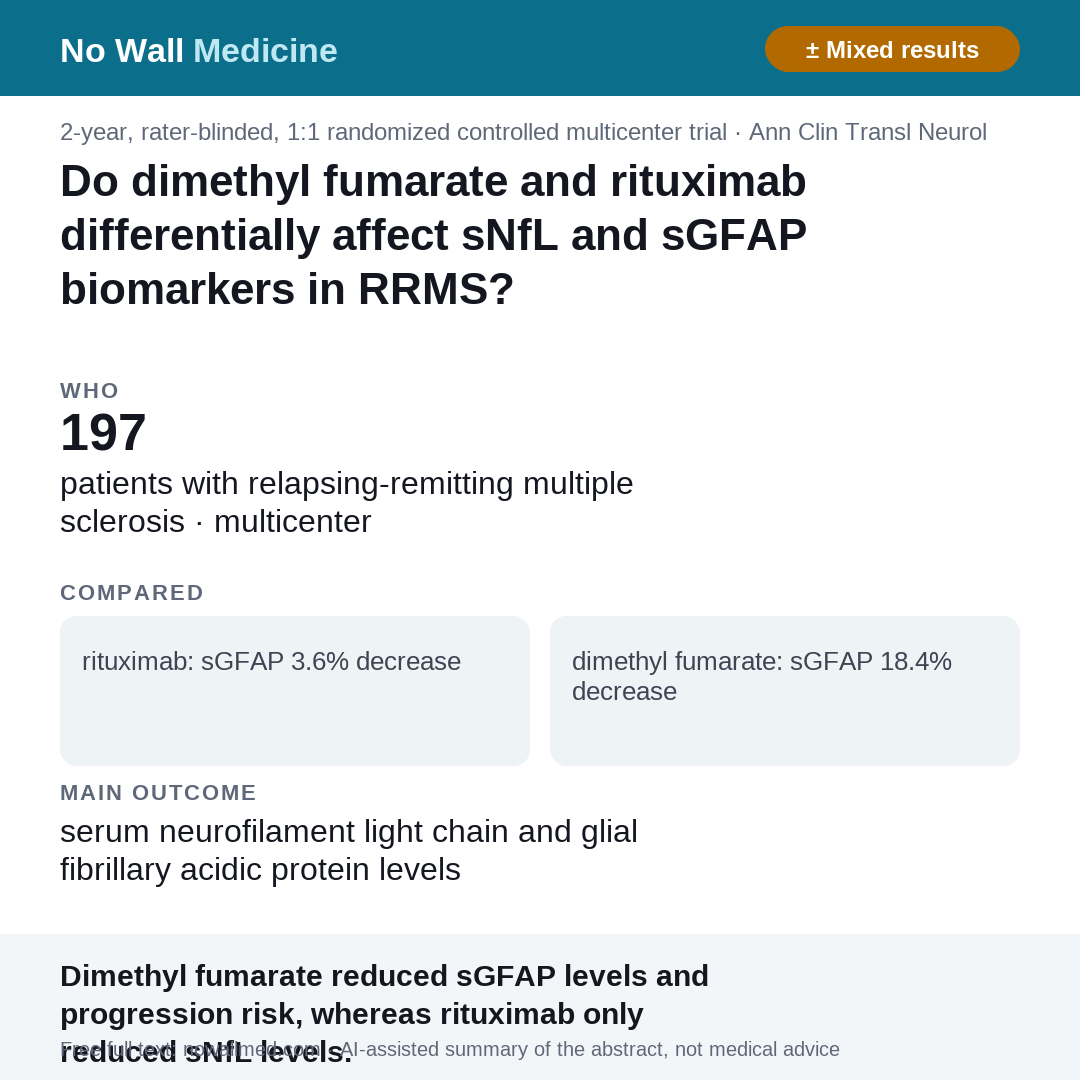
Dimethyl Fumarate, But Not Rituximab, Reduces Serum GFAP Levels and PIRMA in Relapsing-Remitting MS
2-year, rater-blinded, 1:1 randomized controlled multicenter trialMixed results
Do dimethyl fumarate and rituximab differentially affect sNfL and sGFAP biomarkers in RRMS?
Who
197
patients with relapsing-remitting multiple sclerosis · multicenter
Compared
rituximab: sGFAP 3.6% decrease
dimethyl fumarate: sGFAP 18.4% decrease
Main outcome
serum neurofilament light chain and glial fibrillary acidic protein levels
Result: hazard ratio 3.3 (CI 1.1-10) for progression with rituximab
Bottom line: Dimethyl fumarate reduced sGFAP levels and progression risk, whereas rituximab only reduced sNfL levels.
Ann Clin Transl Neurol · 2026-04-12Download image
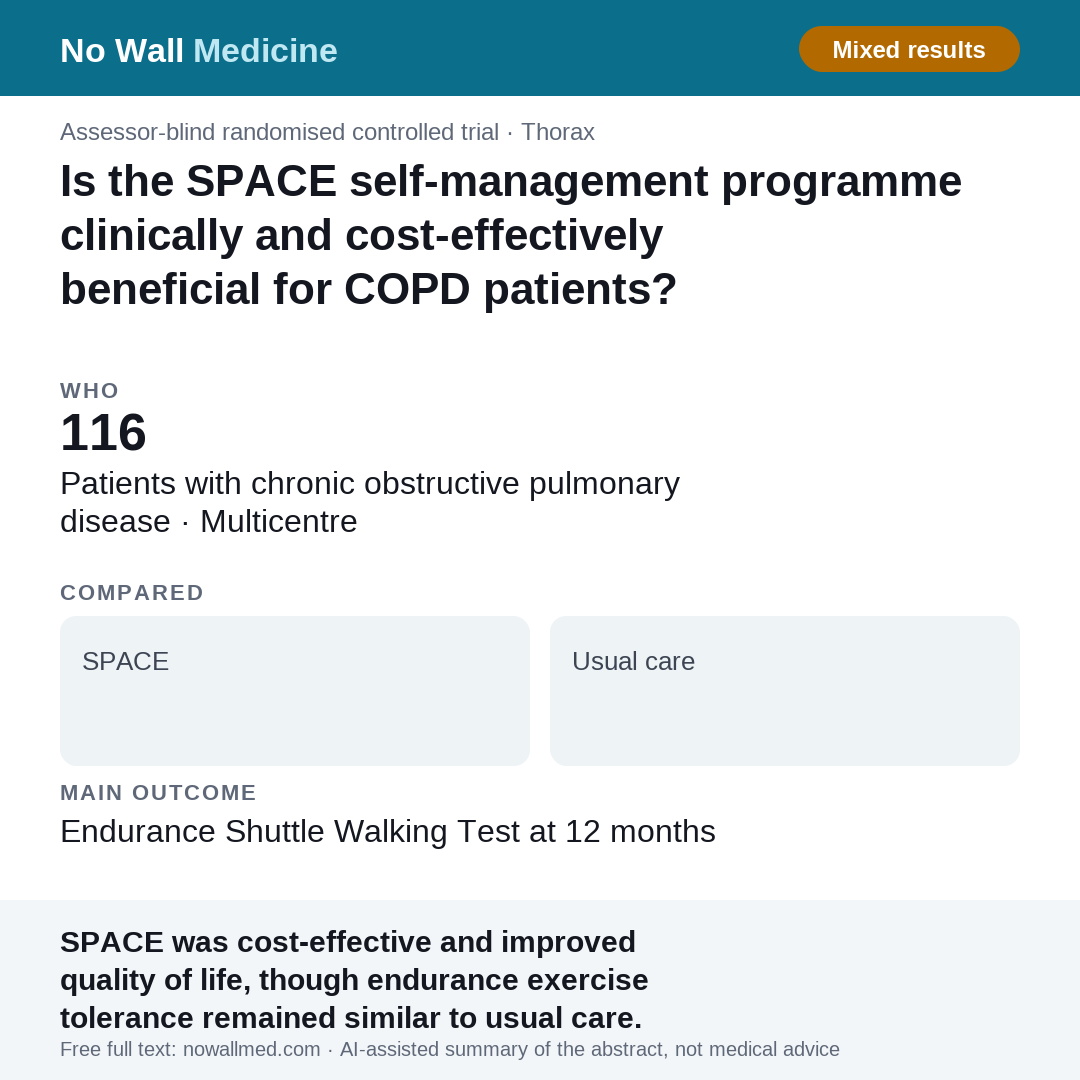
Clinical and cost-effectiveness of SPACE for COPD delivered as a pulmonary rehabilitation maintenance programme: a randomised controlled trial
Assessor-blind randomised controlled trialMixed results
Is the SPACE self-management programme clinically and cost-effectively beneficial for COPD patients?
Who
116
Patients with chronic obstructive pulmonary disease · Multicentre
Compared
SPACE
Usual care
Main outcome
Endurance Shuttle Walking Test at 12 months
Bottom line: SPACE was cost-effective and improved quality of life, though endurance exercise tolerance remained similar to usual care.
Thorax · 2026-04-11Download image
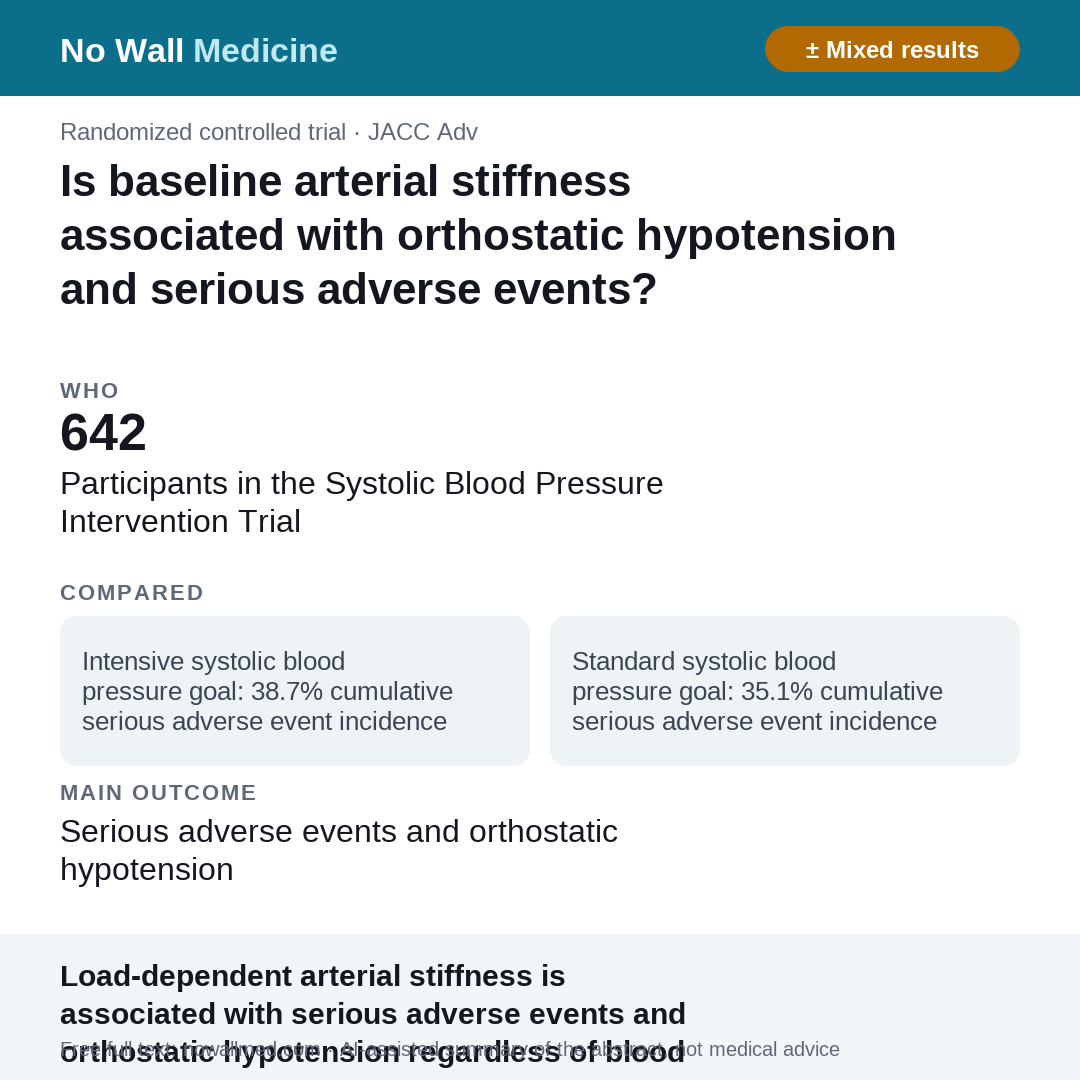
Arterial Stiffness Mechanisms and Orthostatic Hypotension in SPRINT: A Randomized Controlled Trial
Randomized controlled trialMixed results
Is baseline arterial stiffness associated with orthostatic hypotension and serious adverse events?
Who
642
Participants in the Systolic Blood Pressure Intervention Trial
Compared
Intensive systolic blood pressure goal: 38.7% cumulative serious adverse event incidence
Standard systolic blood pressure goal: 35.1% cumulative serious adverse event incidence
Main outcome
Serious adverse events and orthostatic hypotension
Bottom line: Load-dependent arterial stiffness is associated with serious adverse events and orthostatic hypotension regardless of blood pressure treatment intensity.
JACC Adv · 2026-04-11Download image
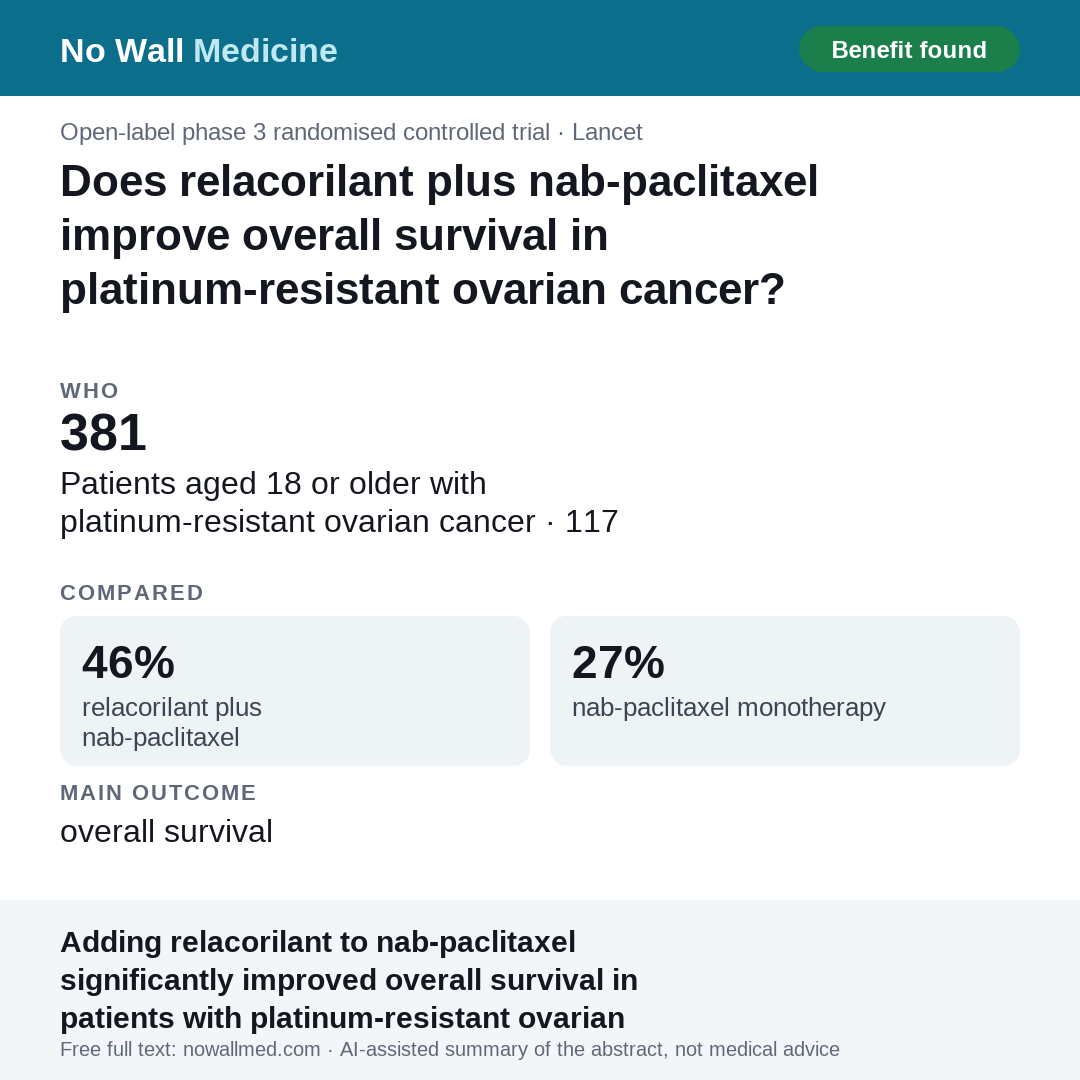
Overall survival with relacorilant and nab-paclitaxel in patients with platinum-resistant ovarian cancer (ROSELLA): a phase 3 randomised controlled trial
Open-label phase 3 randomised controlled trialBenefit found
Does relacorilant plus nab-paclitaxel improve overall survival in platinum-resistant ovarian cancer?
Who
381
Patients aged 18 or older with platinum-resistant ovarian cancer · 117 hospitals and community oncology centres in 14 countries
Compared
46%relacorilant plus nab-paclitaxel (18-month overall survival)
27%nab-paclitaxel monotherapy (18-month overall survival)
Main outcome
overall survival
Result: hazard ratio 0·65 (95% CI 0·51-0·83)
Bottom line: Adding relacorilant to nab-paclitaxel significantly improved overall survival in patients with platinum-resistant ovarian cancer.
Funded by: Corcept Therapeutics
Lancet · 2026-04-10Download image
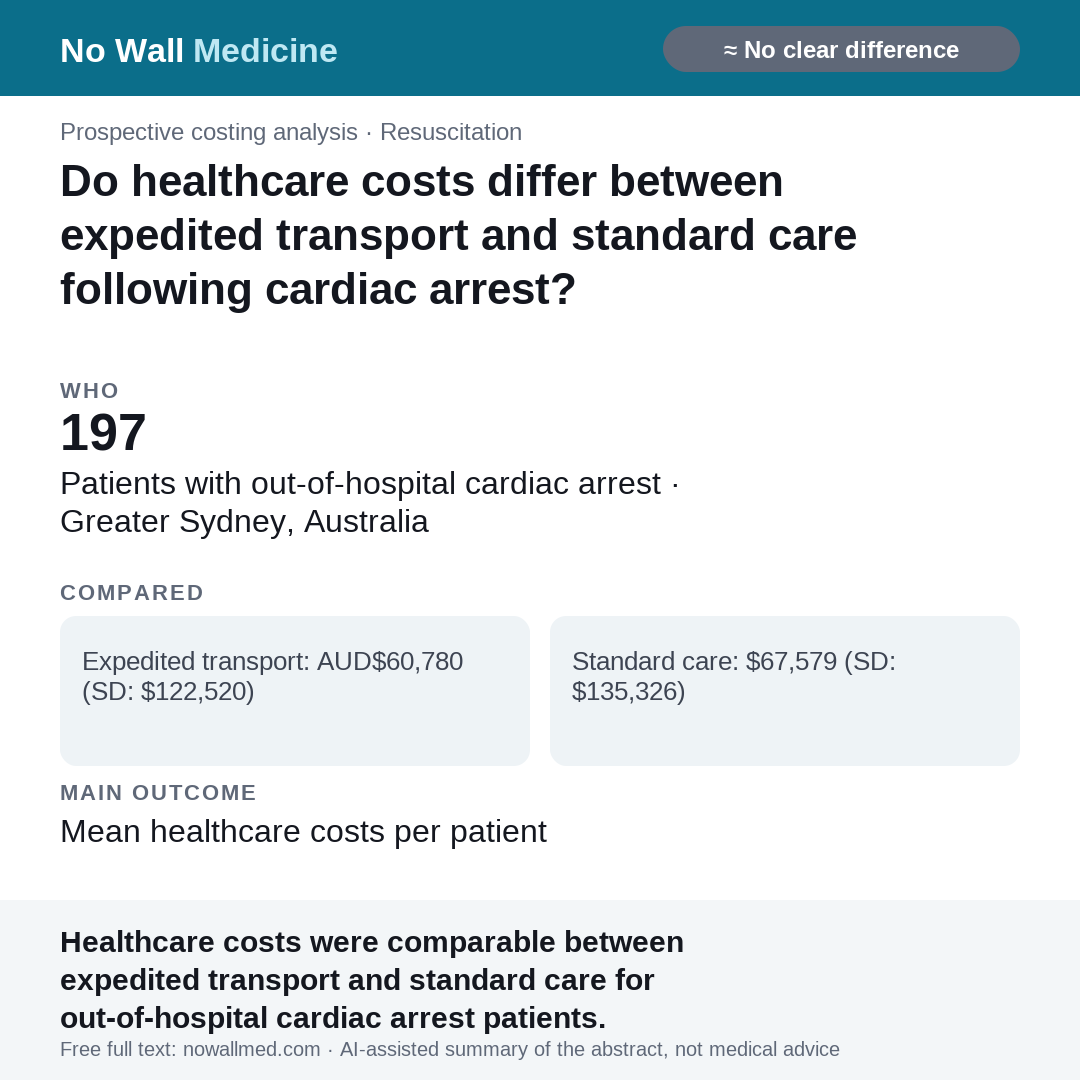
Healthcare costs of expedited transport compared with standard care following out-of-hospital cardiac arrest: results from the EVIDENCE randomised controlled trial
Prospective costing analysisNo clear difference
Do healthcare costs differ between expedited transport and standard care following cardiac arrest?
Who
197
Patients with out-of-hospital cardiac arrest · Greater Sydney, Australia
Compared
Expedited transport: AUD$60,780 (SD: $122,520)
Standard care: $67,579 (SD: $135,326)
Main outcome
Mean healthcare costs per patient
Result: -$6799 (95% CI: -$44,014 to $30,416)
Bottom line: Healthcare costs were comparable between expedited transport and standard care for out-of-hospital cardiac arrest patients.
Resuscitation · 2026-04-10Download image
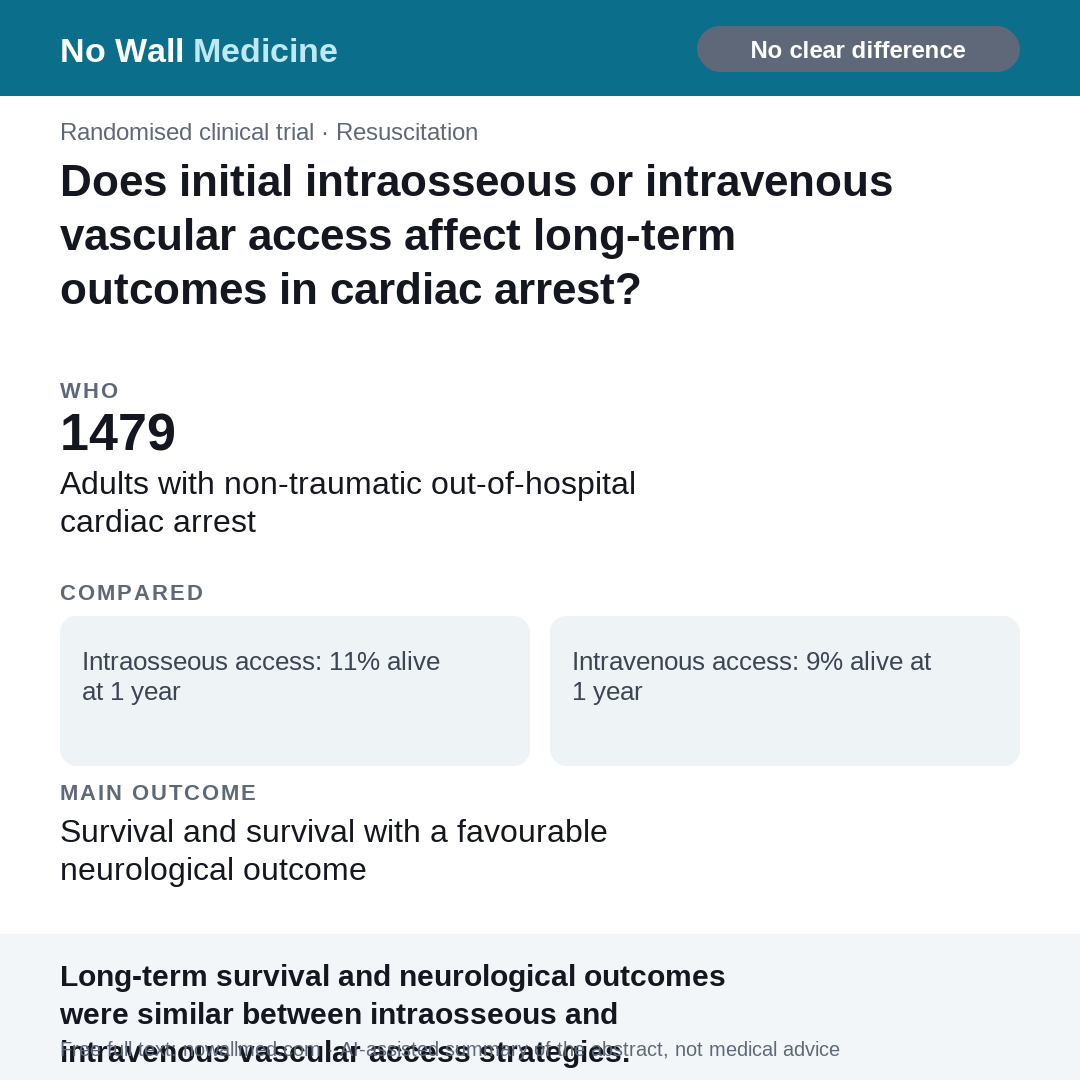
Effect of vascular access strategy on long-term outcomes in patients with out-of-hospital cardiac arrest: a randomised clinical trial
Randomised clinical trialNo clear difference
Does initial intraosseous or intravenous vascular access affect long-term outcomes in cardiac arrest?
Who
1479
Adults with non-traumatic out-of-hospital cardiac arrest
Compared
Intraosseous access: 11% alive at 1 year
Intravenous access: 9% alive at 1 year
Main outcome
Survival and survival with a favourable neurological outcome
Result: risk ratio 1.24 (95% confidence interval 0.91-1.67)
Bottom line: Long-term survival and neurological outcomes were similar between intraosseous and intravenous vascular access strategies.
Resuscitation · 2026-04-10Download image
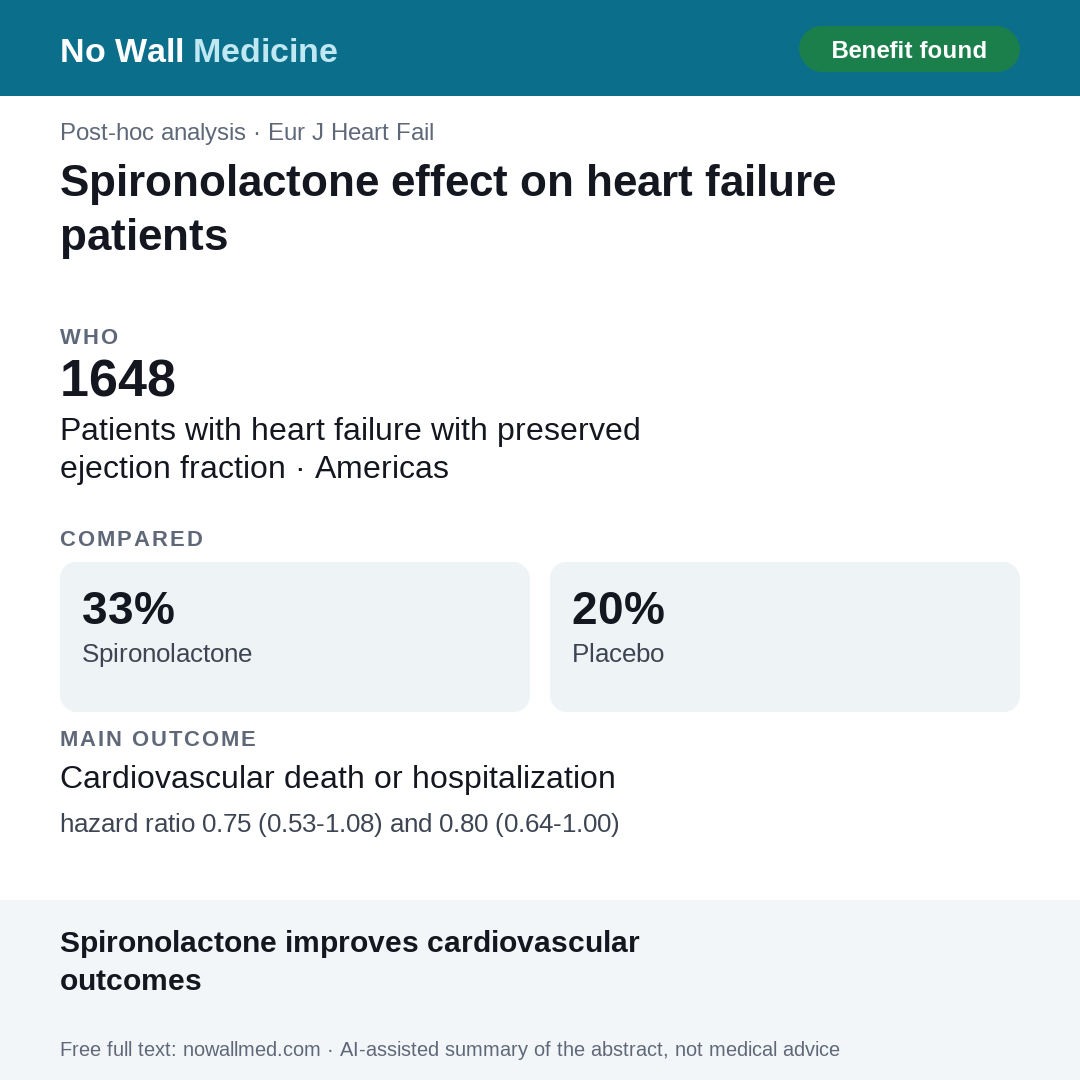
Spironolactone, early acute eGFR changes, and clinical outcomes in patients with heart failure with preserved ejection fraction: insights from TOPCAT Americas
Post-hoc analysisBenefit found
Spironolactone effect on heart failure patients
Who
1648
Patients with heart failure with preserved ejection fraction · Americas
Compared
33%Spironolactone
20%Placebo
Main outcome
Cardiovascular death or hospitalization
Result: hazard ratio 0.75 (0.53-1.08) and 0.80 (0.64-1.00)
Bottom line: Spironolactone improves cardiovascular outcomes
Eur J Heart Fail · 2026-04-10Download image
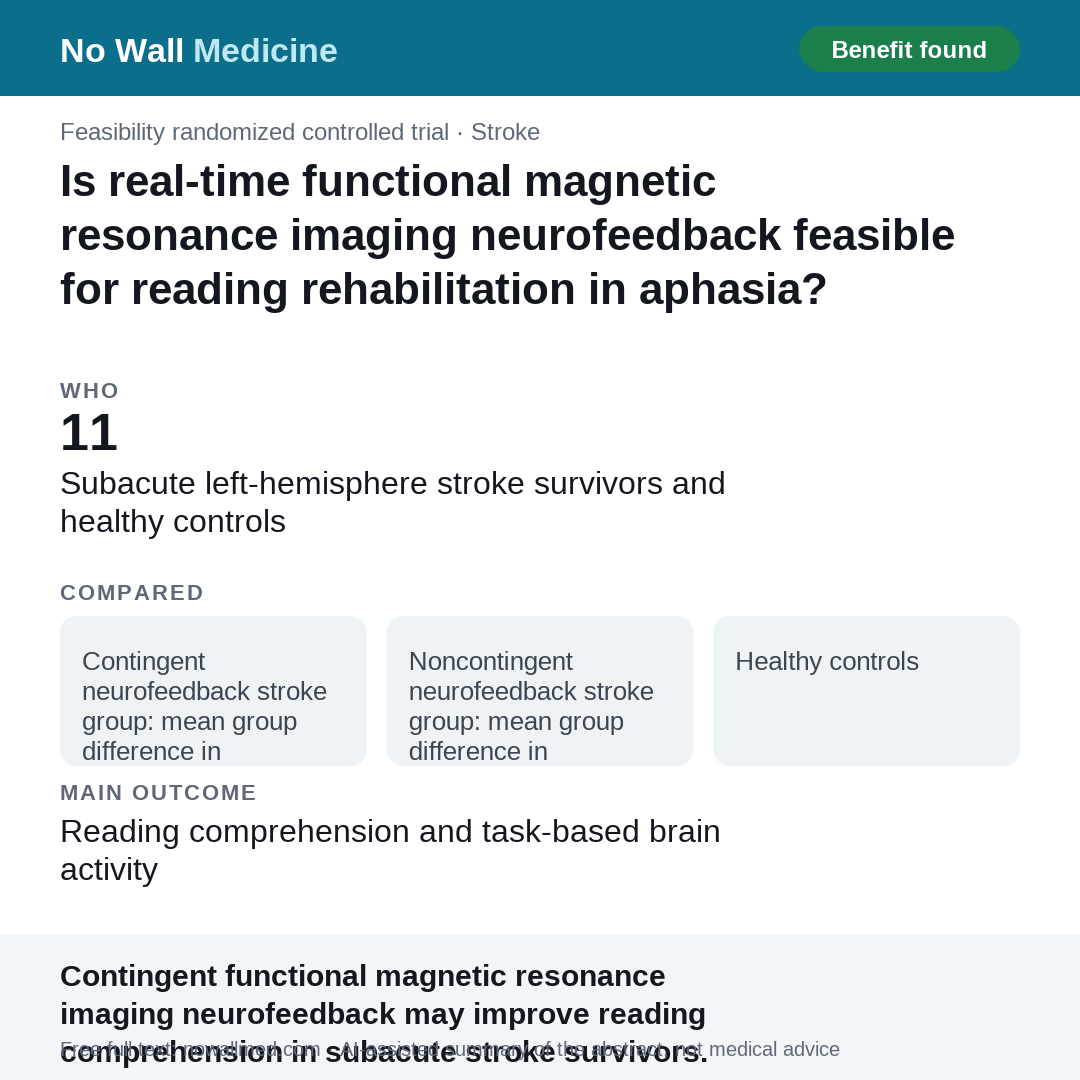
Feasibility Randomized Controlled Trial of Real-Time fMRI Neurofeedback for Reading Rehabilitation in Aphasia
Feasibility randomized controlled trialEarly signal
Is real-time functional magnetic resonance imaging neurofeedback feasible for reading rehabilitation in aphasia?
Who
11
Subacute left-hemisphere stroke survivors and healthy controls
Compared
Contingent neurofeedback stroke group: mean group difference in Reading Comprehension Battery for Aphasia, second edition, change score=9.75 [95% CI, 1.99-17.51]
Noncontingent neurofeedback stroke group: mean group difference in Reading Comprehension Battery for Aphasia, second edition, change score=11.42 [95% CI, 1.12-21.71]
Healthy controls
Main outcome
Reading comprehension and task-based brain activity
Result: mean group difference in Reading Comprehension Battery for Aphasia, second edition, change score=9.75 [95% CI, 1.99-17.51]
Bottom line: Contingent functional magnetic resonance imaging neurofeedback may improve reading comprehension in subacute stroke survivors.
Limitation: Confirmation of these preliminary effects awaits completion of the ongoing randomized controlled trial.
Stroke · 2026-04-10Download image
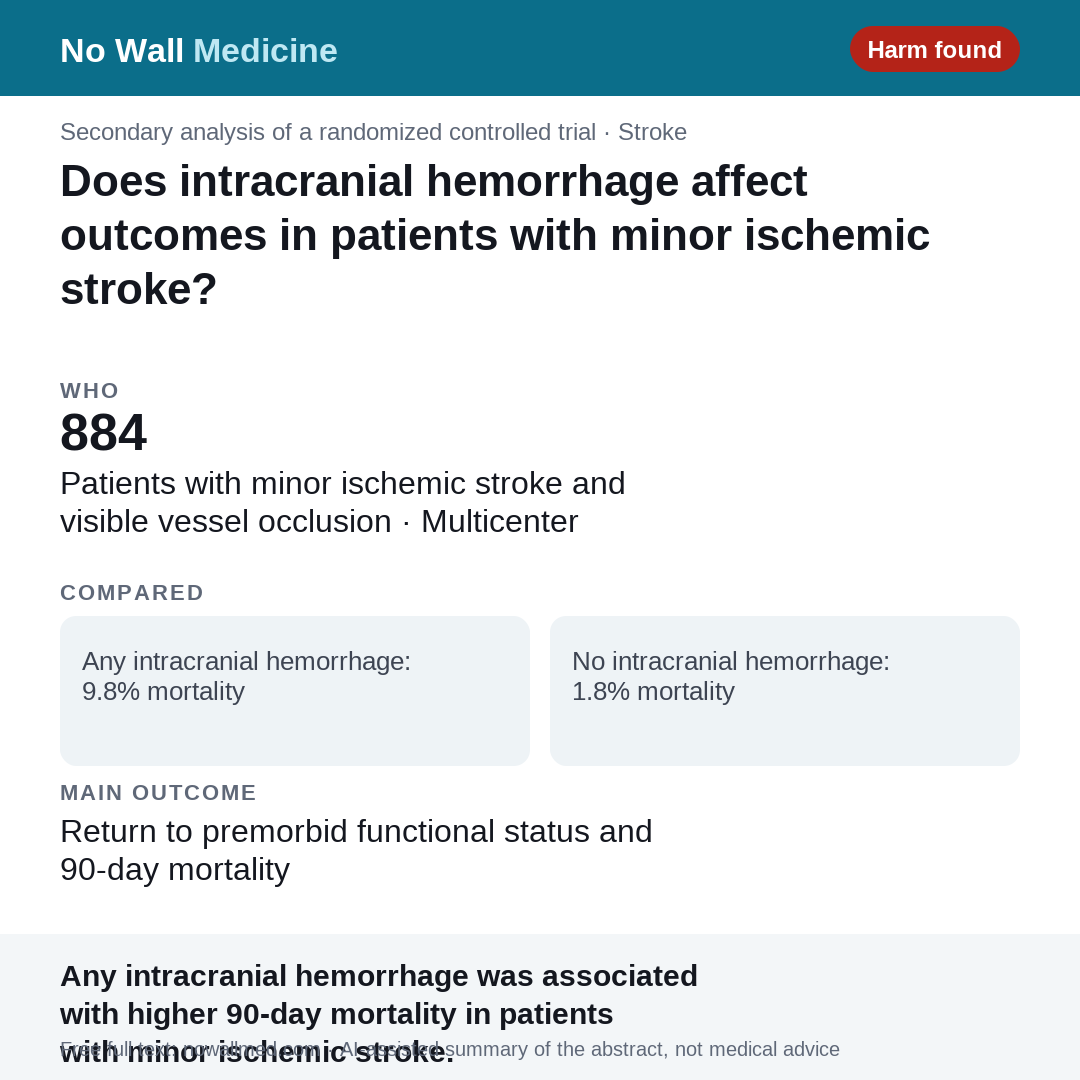
Intracranial Hemorrhage Patterns and Outcomes in Minor Stroke: Analysis of the TEMPO-2 Trial
Secondary analysis of a randomized controlled trialHarm found
Does intracranial hemorrhage affect outcomes in patients with minor ischemic stroke?
Who
884
Patients with minor ischemic stroke and visible vessel occlusion · Multicenter
Compared
Any intracranial hemorrhage: 9.8% mortality
No intracranial hemorrhage: 1.8% mortality
Main outcome
Return to premorbid functional status and 90-day mortality
Result: adjusted hazard ratio 3.71 (95% CI 1.54-8.95)
Bottom line: Any intracranial hemorrhage was associated with higher 90-day mortality in patients with minor ischemic stroke.
Stroke · 2026-04-10Download image