Visual abstracts
New randomized trials and meta-analyses from leading journals at a glance: who was studied, what was compared, and what was found. Every paper is free to read in full.
All specialtiesCardiology 382Oncology 296Gastroenterology & Hepatology 151Infectious Disease 296Neurology 173Psychiatry & Mental Health 248Pulmonology 171Critical Care 116Endocrinology & Diabetes 220Pediatrics 175Surgery 114Orthopedics & Sports Medicine 70Neurosurgery 24Cardiothoracic & Vascular Surgery 41Plastic & Reconstructive Surgery 74Nephrology 74Rheumatology 73Hematology 85Dermatology 39Ophthalmology 60Obstetrics & Gynecology 111Public & Global Health 112Radiology & Imaging 30Anesthesiology 67Urology 87ENT (Otolaryngology) 47Emergency Medicine 38Allergy & Immunology 47Geriatrics 110Family Medicine & Primary Care 63Medical Genetics & Genomics 34Pathology & Laboratory Medicine 5Physical Medicine & Rehabilitation 91Palliative Care 58Nutrition 131Digital Health & AI 320General Medicine 46
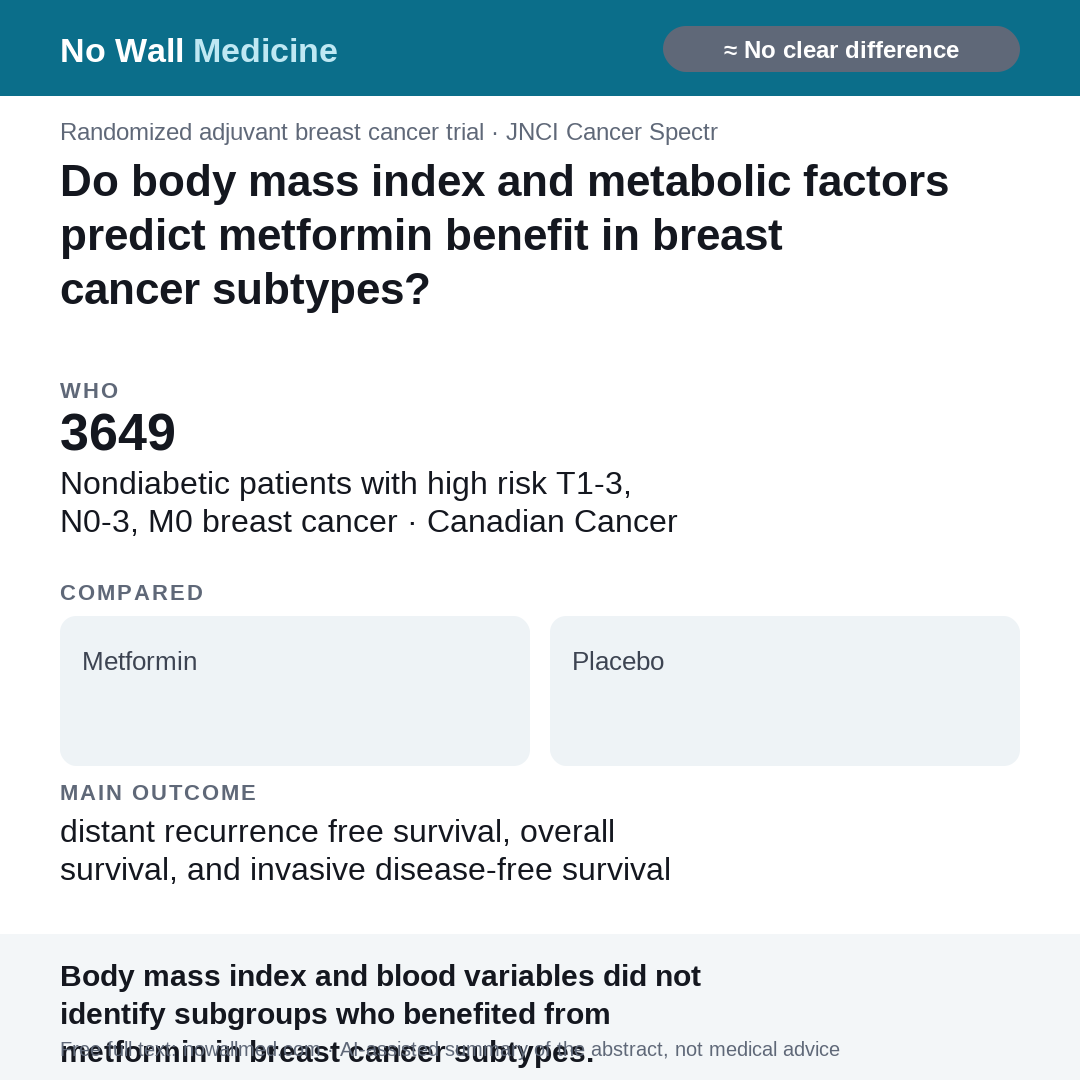
Exploration of body mass index and circulating metabolic factors as predictors of metformin benefit in the Canadian Cancer Trials Group MA.32
Randomized adjuvant breast cancer trialNo clear difference
Do body mass index and metabolic factors predict metformin benefit in breast cancer subtypes?
Who
3649
Nondiabetic patients with high risk T1-3, N0-3, M0 breast cancer · Canadian Cancer Trials Group
Compared
Metformin
Placebo
Main outcome
distant recurrence free survival, overall survival, and invasive disease-free survival
Bottom line: Body mass index and blood variables did not identify subgroups who benefited from metformin in breast cancer subtypes.
JNCI Cancer Spectr · 2026-05-01Download image
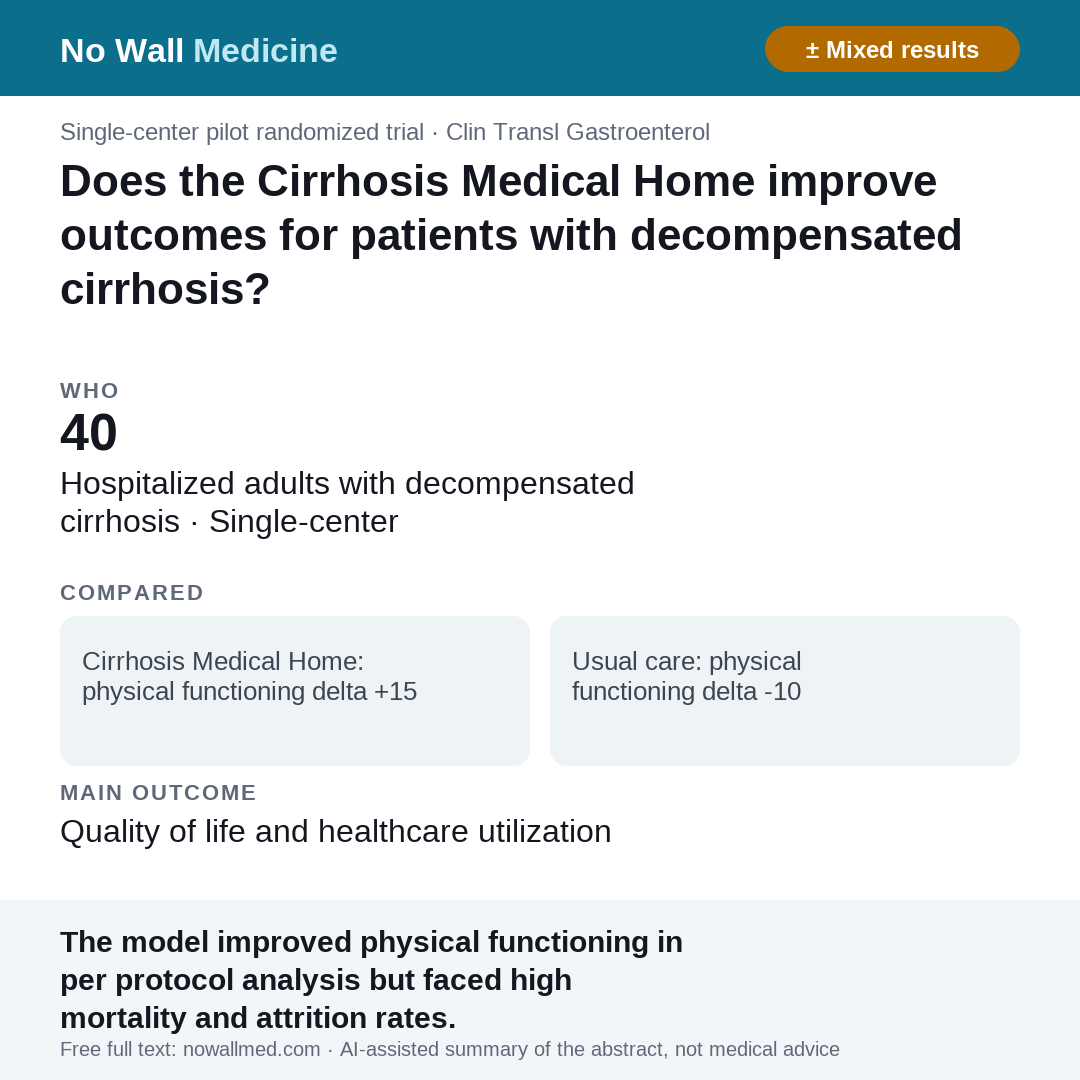
The Cirrhosis Medical Home: A Pilot Randomized Trial of a Collaborative Care Model for Patients With Decompensated Cirrhosis
Single-center pilot randomized trialMixed results
Does the Cirrhosis Medical Home improve outcomes for patients with decompensated cirrhosis?
Who
40
Hospitalized adults with decompensated cirrhosis · Single-center
Compared
Cirrhosis Medical Home: physical functioning delta +15
Usual care: physical functioning delta -10
Main outcome
Quality of life and healthcare utilization
Bottom line: The model improved physical functioning in per protocol analysis but faced high mortality and attrition rates.
Limitation: High mortality, transplant, and loss to follow-up limited patient-reported outcome assessment.
Clin Transl Gastroenterol · 2026-05-01Download image
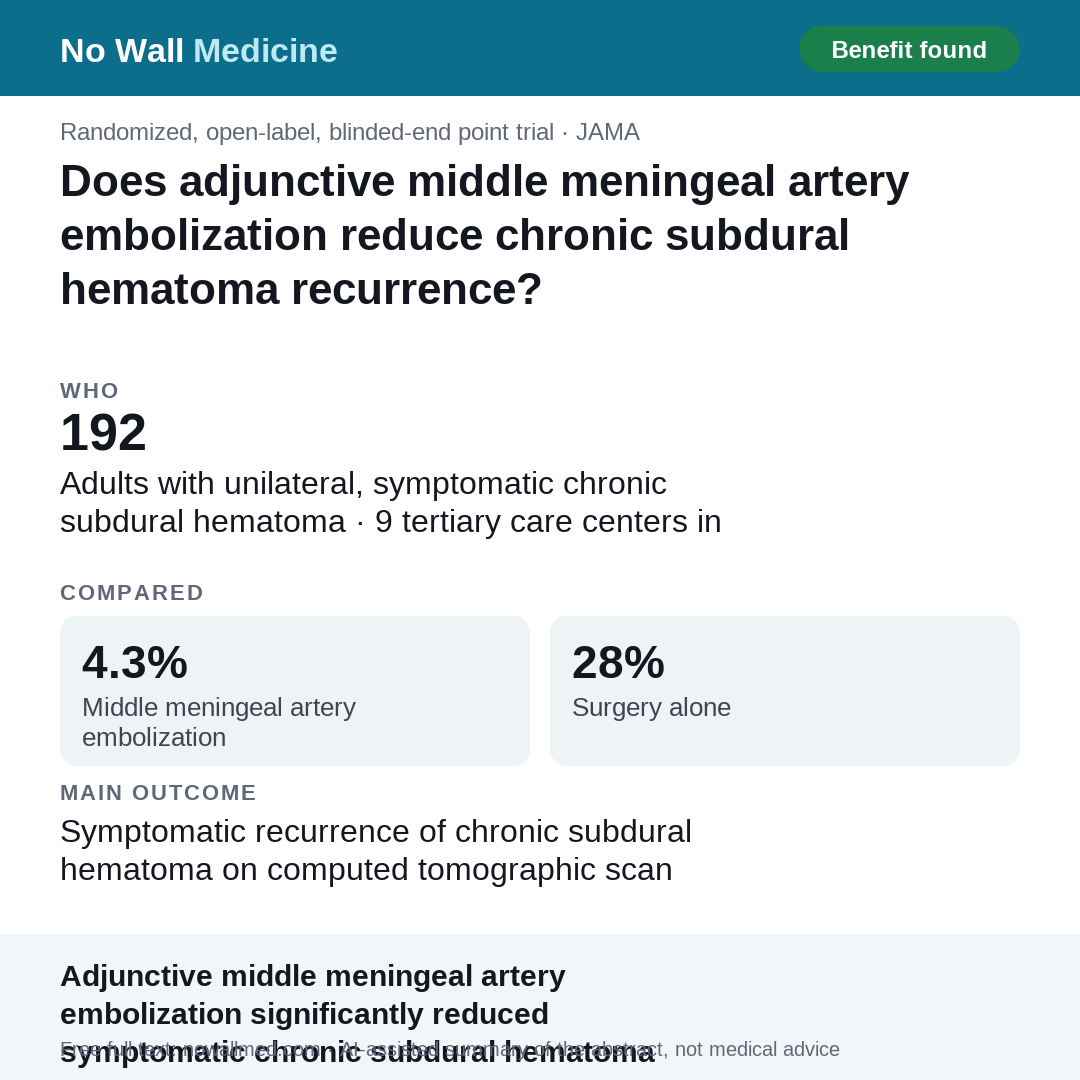
Management of Chronic Subdural Hematoma With Adjunctive Embolization of Middle Meningeal Artery: The EMMA-Can Randomized Clinical Trial
Randomized, open-label, blinded-end point trialBenefit found
Does adjunctive middle meningeal artery embolization reduce chronic subdural hematoma recurrence?
Who
192
Adults with unilateral, symptomatic chronic subdural hematoma · 9 tertiary care centers in Canada
Compared
4.3%Middle meningeal artery embolization
28%Control group
Main outcome
Symptomatic recurrence of chronic subdural hematoma on computed tomographic scan
Result: risk difference, -23.7 (95% CI, -34.1 to -13.9)
Bottom line: Adjunctive middle meningeal artery embolization significantly reduced symptomatic chronic subdural hematoma recurrence compared to surgery alone.
JAMA · 2026-04-30Download image
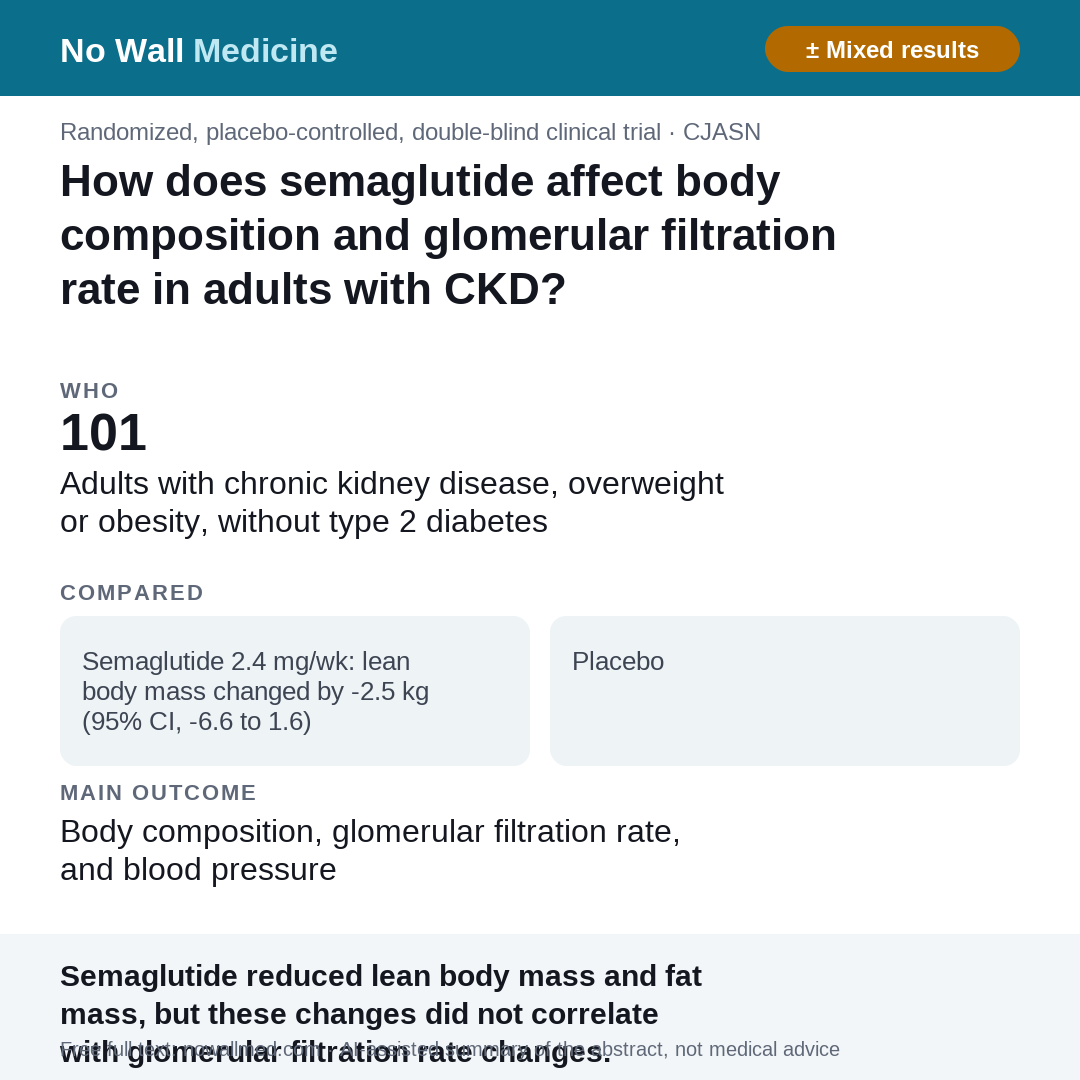
Effects of Semaglutide on Body Composition and GFR: A Prespecified Analysis of the SMART Trial
Randomized, placebo-controlled, double-blind clinical trialMixed results
How does semaglutide affect body composition and glomerular filtration rate in adults with CKD?
Who
101
Adults with chronic kidney disease, overweight or obesity, without type 2 diabetes
Compared
Semaglutide 2.4 mg/wk: lean body mass changed by -2.5 kg (95% CI, -6.6 to 1.6)
Placebo
Main outcome
Body composition, glomerular filtration rate, and blood pressure
Bottom line: Semaglutide reduced lean body mass and fat mass, but these changes did not correlate with glomerular filtration rate changes.
CJASN · 2026-04-30Download image
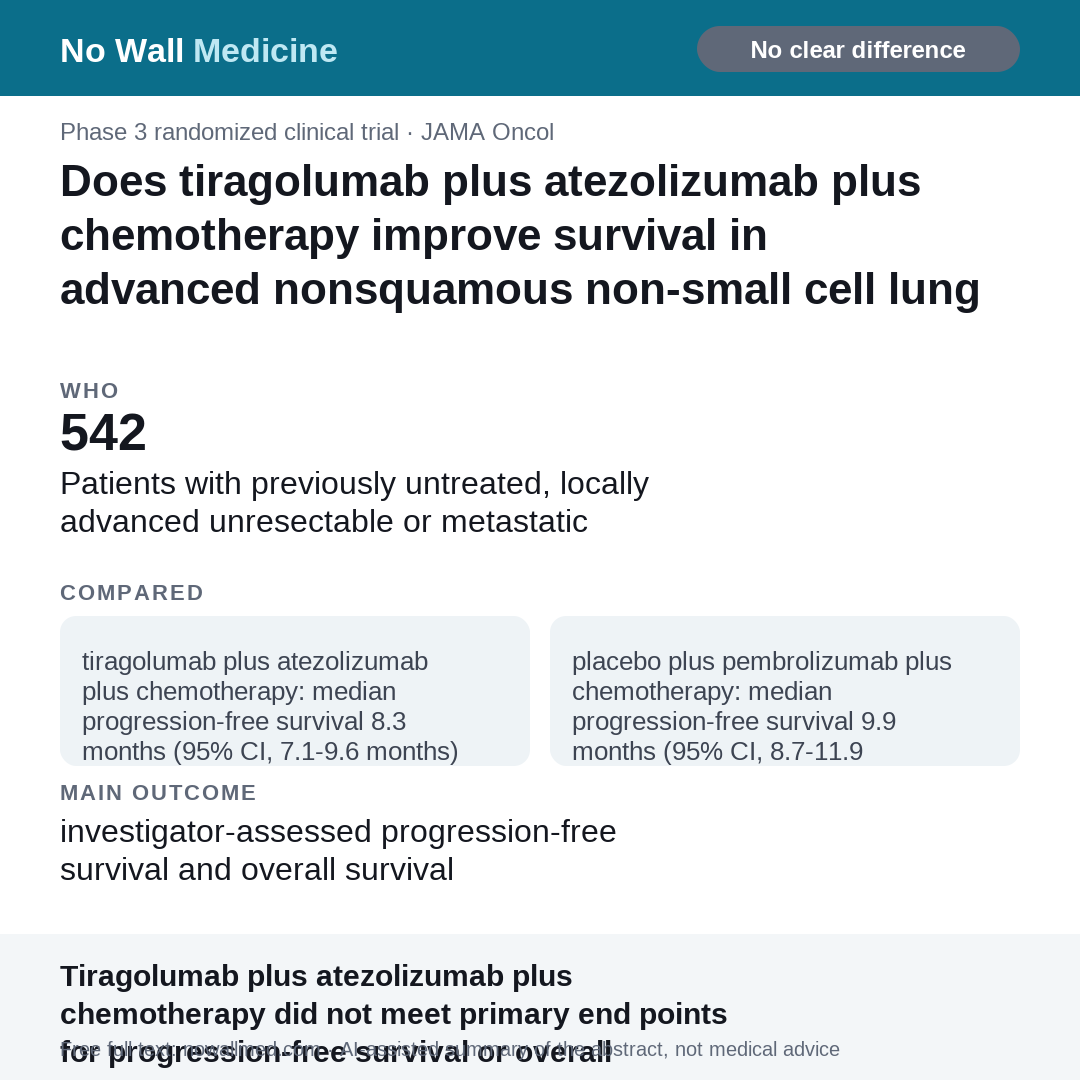
Tiragolumab Plus Atezolizumab and Chemotherapy for Advanced Nonsquamous Non-Small Cell Lung Cancer: The Phase 3 SKYSCRAPER-06 Randomized Clinical Trial
Phase 3 randomized clinical trialNo clear difference
Does tiragolumab plus atezolizumab plus chemotherapy improve survival in advanced nonsquamous non-small cell lung cancer?
Who
542
Patients with previously untreated, locally advanced unresectable or metastatic nonsquamous non-small cell lung cancer · 129 sites in 21 countries
Compared
tiragolumab plus atezolizumab plus chemotherapy: median progression-free survival 8.3 months (95% CI, 7.1-9.6 months)
placebo plus pembrolizumab plus chemotherapy: median progression-free survival 9.9 months (95% CI, 8.7-11.9 months)
Main outcome
investigator-assessed progression-free survival and overall survival
Result: hazard ratio 1.27 (95% CI, 1.02-1.57) for progression-free survival
Bottom line: Tiragolumab plus atezolizumab plus chemotherapy did not meet primary end points for progression-free survival or overall survival.
Limitation: the study has been terminated
JAMA Oncol · 2026-04-30Download image
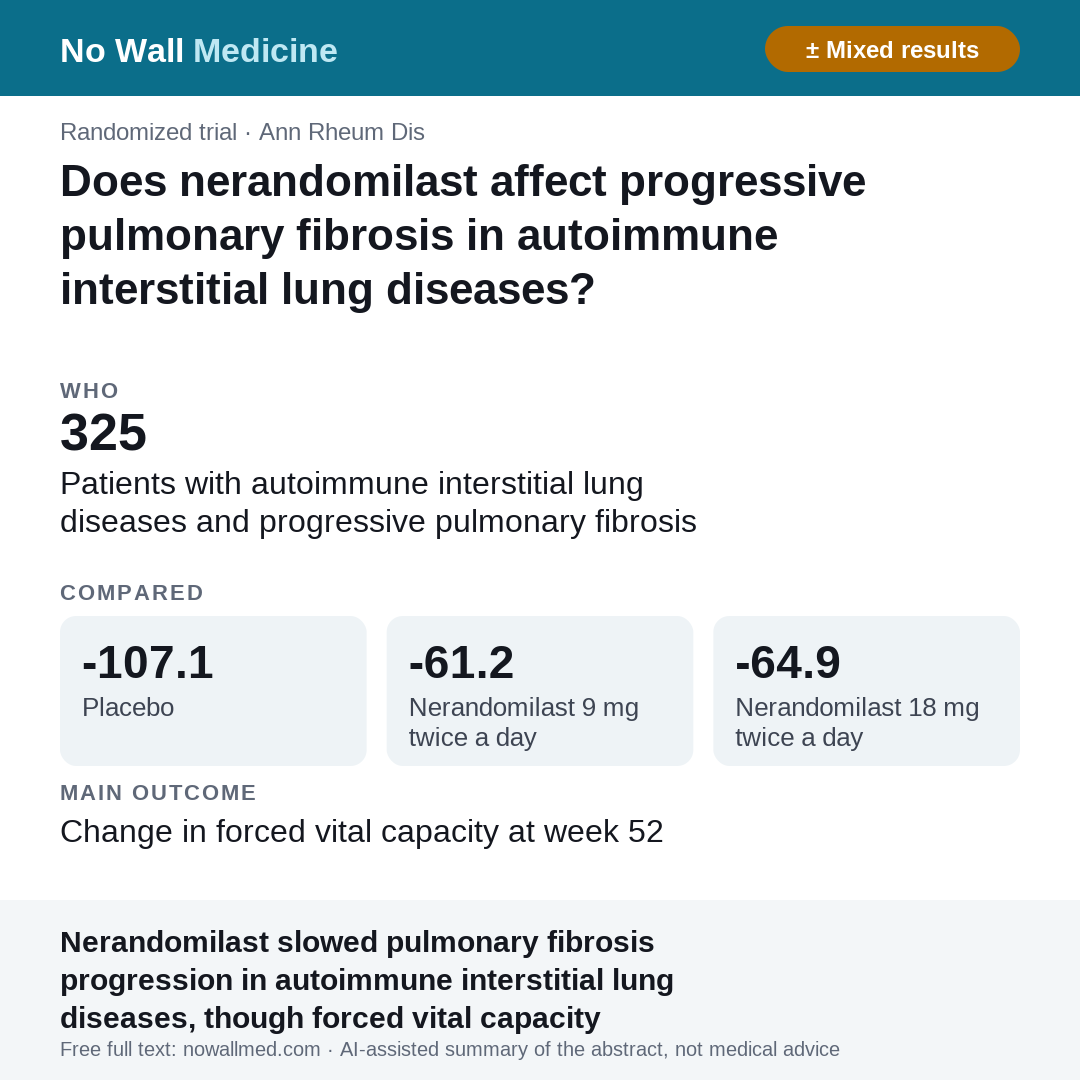
Efficacy and safety of nerandomilast in patients with autoimmune disease-related progressive pulmonary fibrosis in the FIBRONEER-ILD trial
Randomized trialMixed results
Does nerandomilast affect progressive pulmonary fibrosis in autoimmune interstitial lung diseases?
Who
325
Patients with autoimmune interstitial lung diseases and progressive pulmonary fibrosis
Compared
-107.1Placebo (25.0)
-61.2Nerandomilast 9 mg twice a day (23.3)
-64.9Nerandomilast 18 mg twice a day (23.5)
Main outcome
Change in forced vital capacity at week 52
Result: difference vs placebo: 45.9 [95% CI: -20.8 to 112.6]
Bottom line: Nerandomilast slowed pulmonary fibrosis progression in autoimmune interstitial lung diseases, though forced vital capacity results were not statistically significant.
Ann Rheum Dis · 2026-04-30Download image
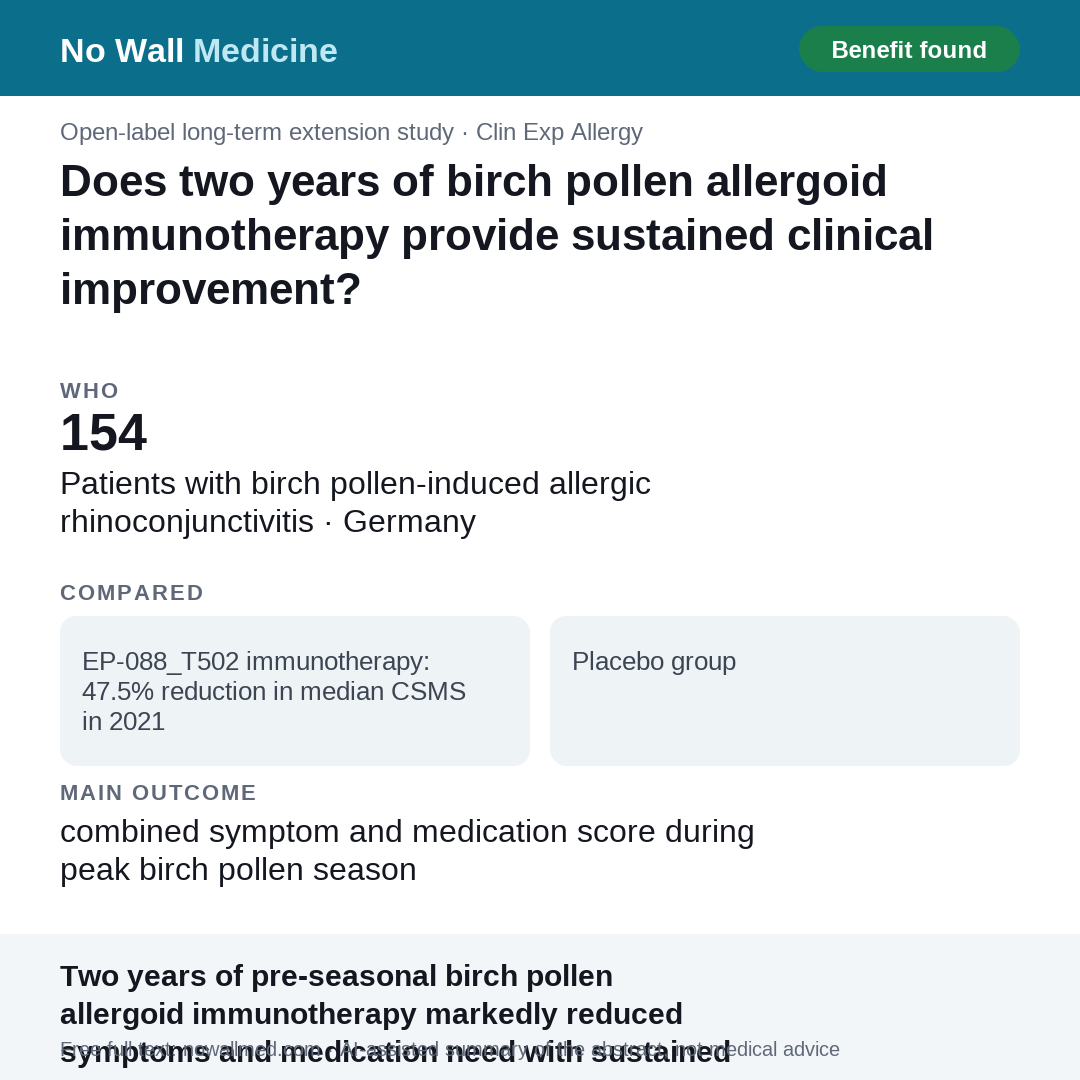
Sustained Clinical Improvement in Birch Pollen Allergy After Two Pre-Seasonal Short Courses of Allergen-Specific Immunotherapy: A Long-Term Open-Label Extension Study
Open-label long-term extension studyBenefit found
Does two years of birch pollen allergoid immunotherapy provide sustained clinical improvement?
Who
154
Patients with birch pollen-induced allergic rhinoconjunctivitis · Germany
Compared
EP-088_T502 immunotherapy: 47.5% reduction in median CSMS in 2021
Placebo group
Main outcome
combined symptom and medication score during peak birch pollen season
Bottom line: Two years of pre-seasonal birch pollen allergoid immunotherapy markedly reduced symptoms and medication need with sustained effects.
Limitation: Limited by attrition of the study population
Clin Exp Allergy · 2026-04-30Download image
Mistletoe extract in patients with advanced pancreatic cancer: Health-related quality of life in a double-blind, randomized, placebo-controlled trial (MISTRAL)
Randomized, double-blind, placebo-controlled trialNo clear difference
Does mistletoe extract improve quality of life in advanced pancreatic cancer patients?
Who
290
Patients with advanced pancreatic cancer and performance status 0-2 · 9 oncology centers
Compared
Standard treatment plus mistletoe extract
Standard treatment plus placebo
Main outcome
Health-related quality of life
Bottom line: Mistletoe extract showed no significant benefit for quality of life or weight in advanced pancreatic cancer patients.
Palliat Med · 2026-04-30Download image
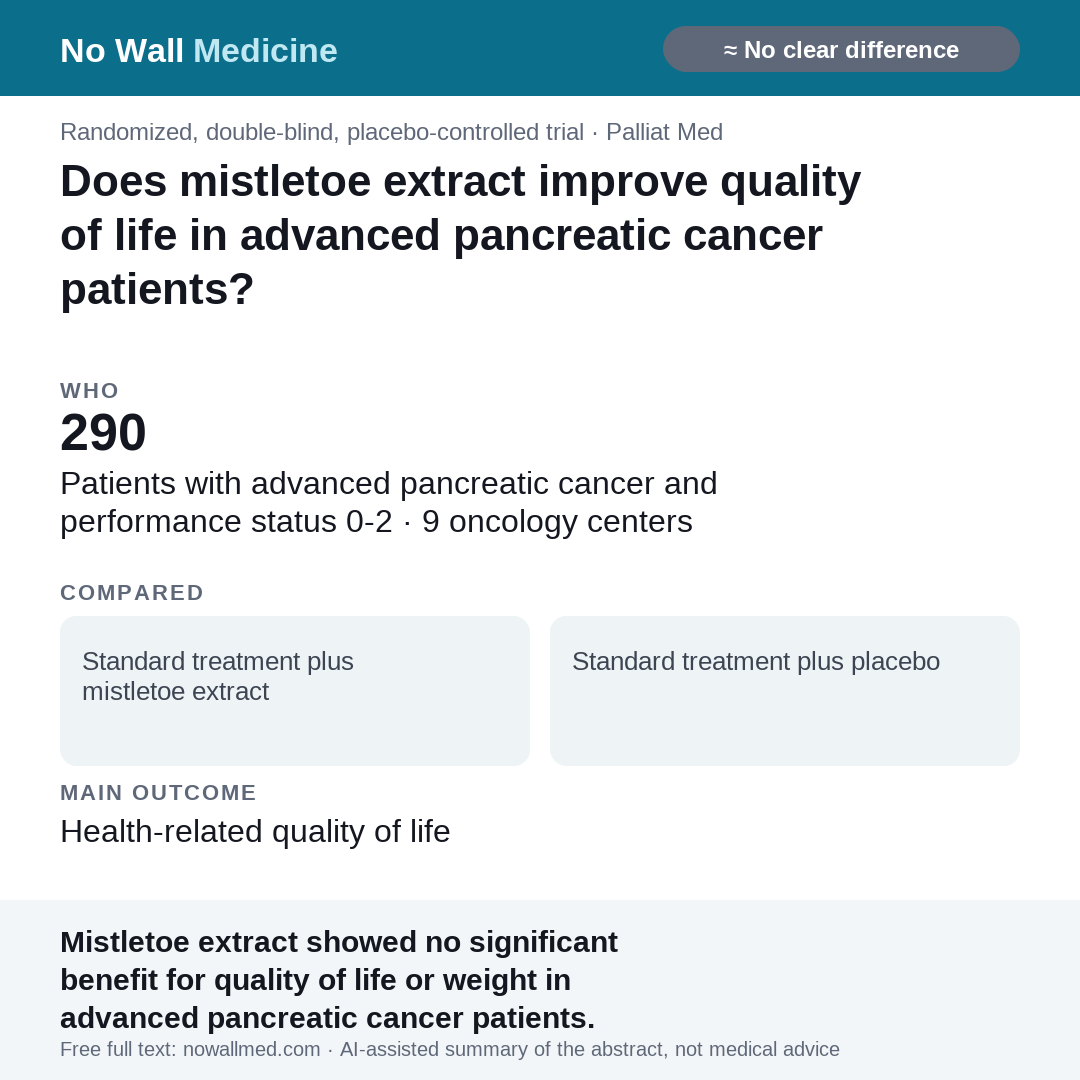
The Veterans Affairs' Whole Health Approach for Chronic Pain Management: The wHOPE Randomized Clinical Trial
Randomized clinical trialBenefit found
Is the whole health team intervention effective for chronic pain management?
Who
764
Patients with chronic pain receiving Veterans Affairs primary care · 6 Veterans Affairs health systems in the United States
Compared
4.9Whole health team intervention
5.5Cognitive behavioral therapy
5.7Usual care
Main outcome
Brief Pain Inventory interference subscale score
Result: mean difference -0.58 (97% CI -1.11 to -0.05) vs cognitive behavioral therapy
Bottom line: The whole health team approach provided a statistically significant but small improvement in pain interference compared to other treatments.
JAMA · 2026-04-29Download image
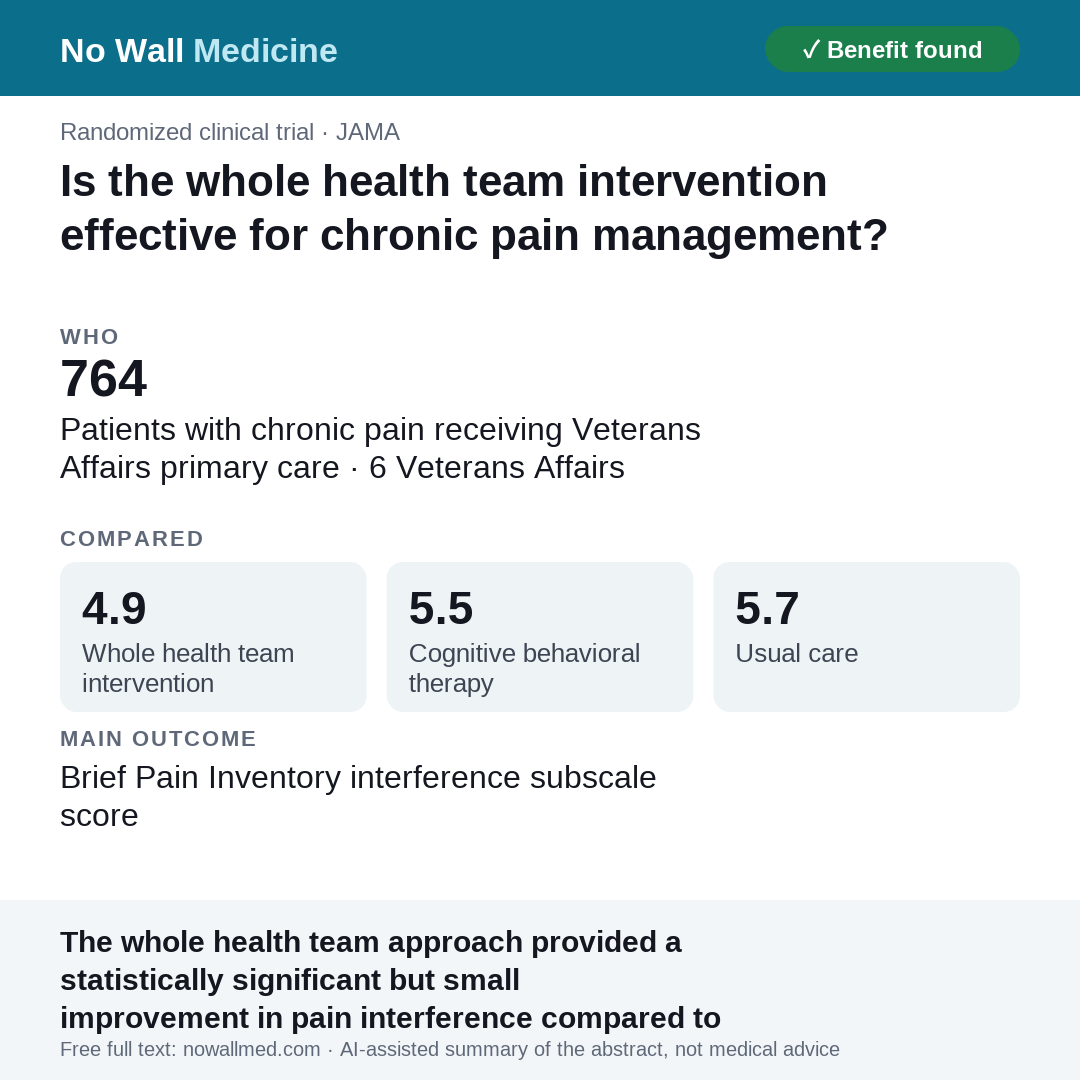
Accelerated continuous theta burst stimulation targeting left primary motor cortex for children with autism spectrum disorder: multicentre randomised sham controlled trial
Multicentre randomised sham controlled trialBenefit found
Does accelerated continuous theta burst stimulation improve social communication in children with autism?
Who
200
200 children aged 4-10 years with autism spectrum disorder · Three academic hospitals in China
Compared
-6.25active accelerated continuous theta burst stimulation (95% confidence interval -8.69 to -3.81)
sham
Main outcome
changes in social communication impairment using Social Responsiveness Scale
Result: -6.25 (95% confidence interval -8.69 to -3.81)
Bottom line: A five day accelerated continuous theta burst stimulation protocol significantly improved social communication in children with autism spectrum disorder.
BMJ · 2026-04-29Download image
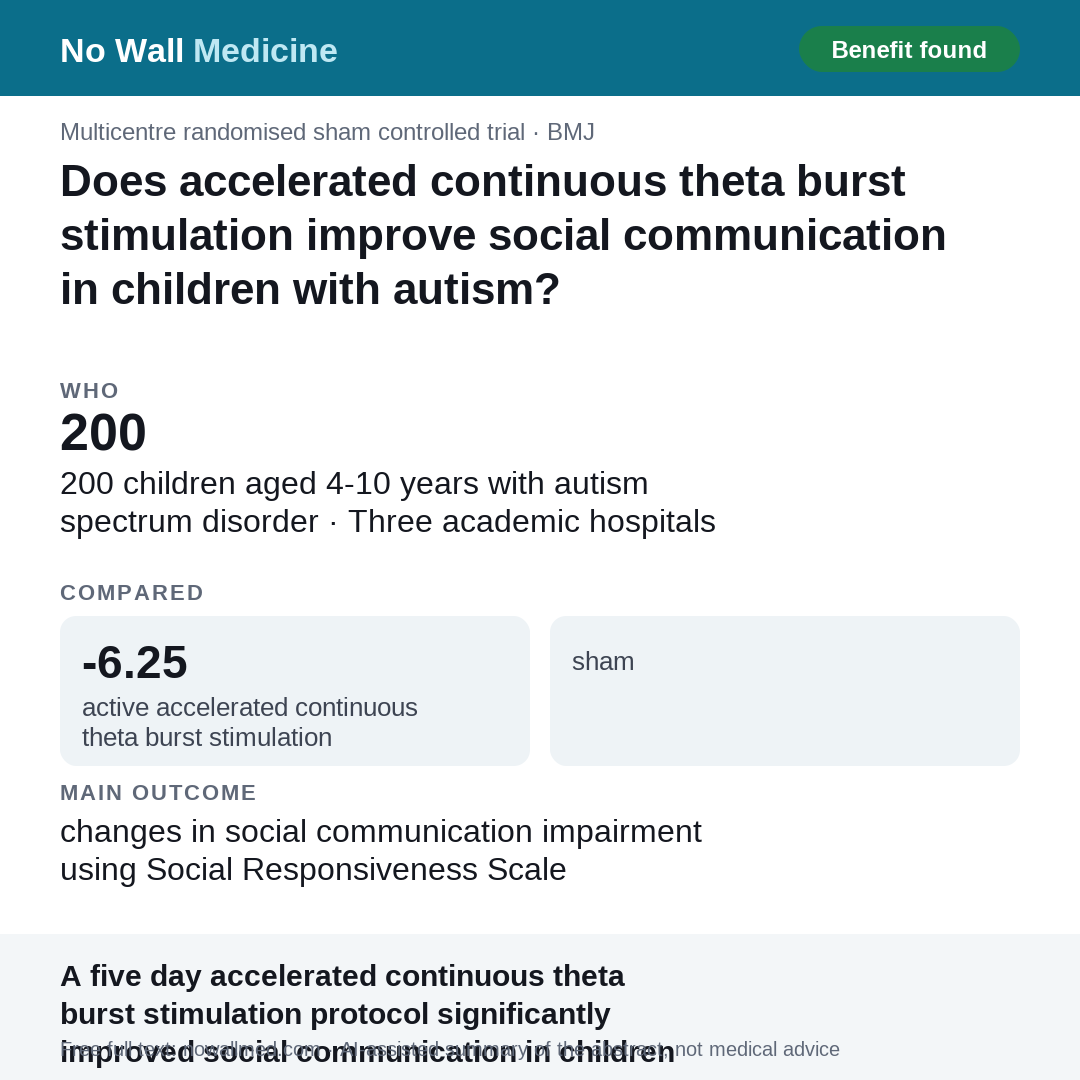
Efficacy and safety of cyclosporine plus luspatercept versus cyclosporine in newly diagnosed non-transfusion-dependent non-severe aplastic anemia: A prospective randomized trial
Prospective randomized trialBenefit found
Is cyclosporine plus luspatercept more effective than cyclosporine alone for non-severe aplastic anemia?
Who
58
Newly diagnosed non-transfusion-dependent non-severe aplastic anemia patients
Compared
cyclosporine plus luspatercept: 72.4% overall response rate at end of follow-up
cyclosporine monotherapy: 51.7% overall response rate at end of follow-up
Main outcome
overall response rates
Bottom line: Cyclosporine plus luspatercept resulted in higher response rates and shorter time to response than cyclosporine monotherapy.
Limitation: A post hoc subgroup analysis was performed based on age.
BMC Med · 2026-04-29Download image
Immunogenicity and Safety of the Adjuvanted Respiratory Syncytial Virus Prefusion F Protein-Based Vaccine When Co-administered With the Adjuvanted Recombinant Herpes Zoster Subunit Vaccine in Adults ≥ 50 Years of Age
Phase III, open-label, randomized trialBenefit found
Is co-administration of RSV and herpes zoster vaccines safe and immunogenic in adults?
Who
530
Adults 50 years of age or older
Compared
Co-administered: RSV-A GMT ratio 1.1 (95% CI 1.0-1.4)
Sequential: RSV-A GMT ratio 1.1 (95% CI 1.0-1.4)
Main outcome
Humoral immune responses and safety
Result: RSV-A GMT ratio 1.1 (95% CI 1.0-1.4)
Bottom line: Co-administration of the adjuvanted respiratory syncytial virus vaccine and recombinant herpes zoster subunit vaccine is non-inferior and safe.
Clin Infect Dis · 2026-04-29Download image

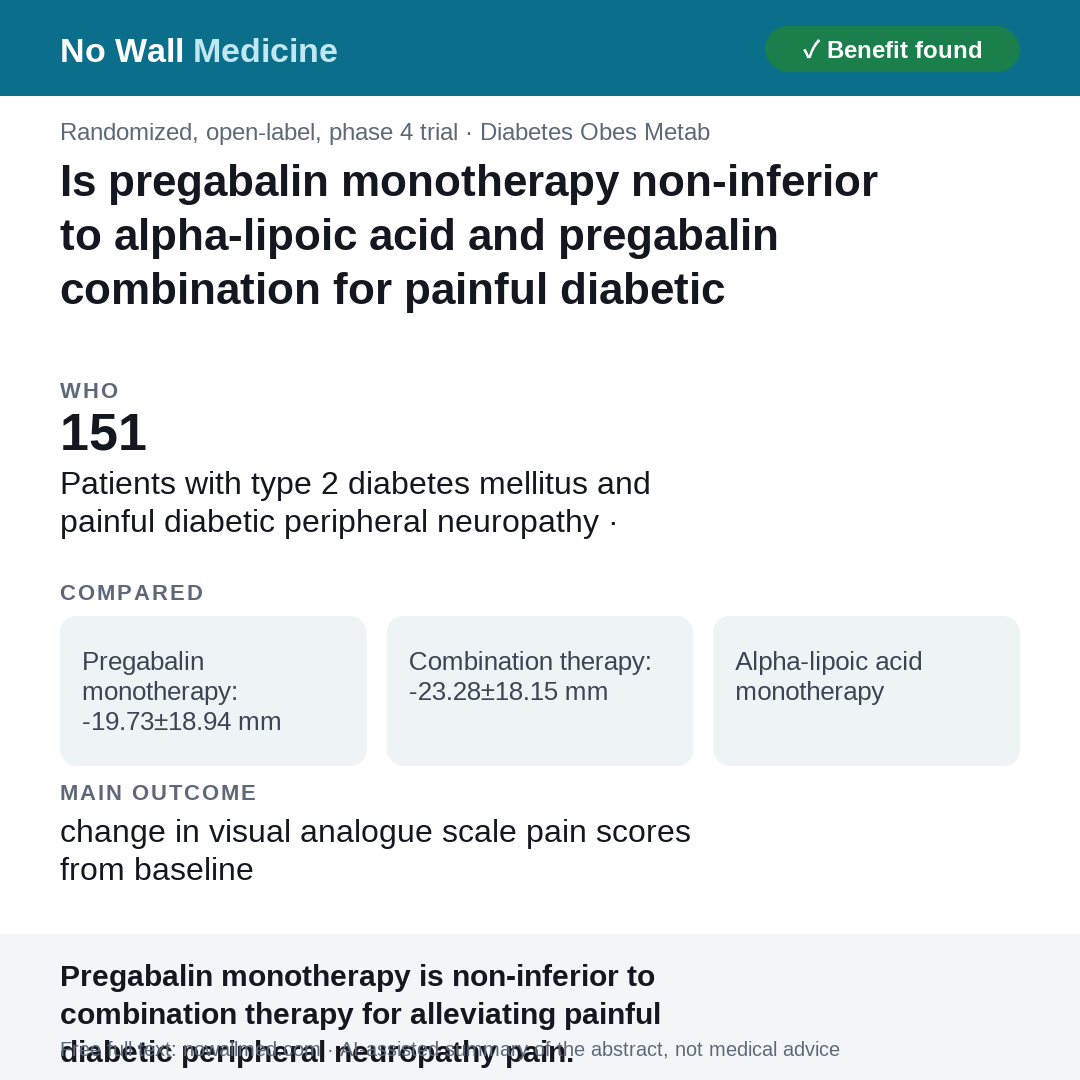
Efficacy and Safety of Pregabalin and Alpha-Lipoic Acid Combination in Patients With Painful Diabetic Peripheral Neuropathy: A Randomized, Open-Label, Non-Inferiority, Phase IV Clinical Trial and Subgroup Analysis (OPTIMUM Study)
Randomized, open-label, phase 4 trialBenefit found
Is pregabalin monotherapy non-inferior to alpha-lipoic acid and pregabalin combination for painful diabetic peripheral neuropathy?
Who
151
Patients with type 2 diabetes mellitus and painful diabetic peripheral neuropathy · multicentre trial
Compared
Pregabalin monotherapy: -19.73±18.94 mm
Combination therapy: -23.28±18.15 mm
Alpha-lipoic acid monotherapy
Main outcome
change in visual analogue scale pain scores from baseline
Result: least square mean difference 3.46 mm (95% CI: [-4.94, 11.87])
Bottom line: Pregabalin monotherapy is non-inferior to combination therapy for alleviating painful diabetic peripheral neuropathy pain.
Diabetes Obes Metab · 2026-04-29Download image
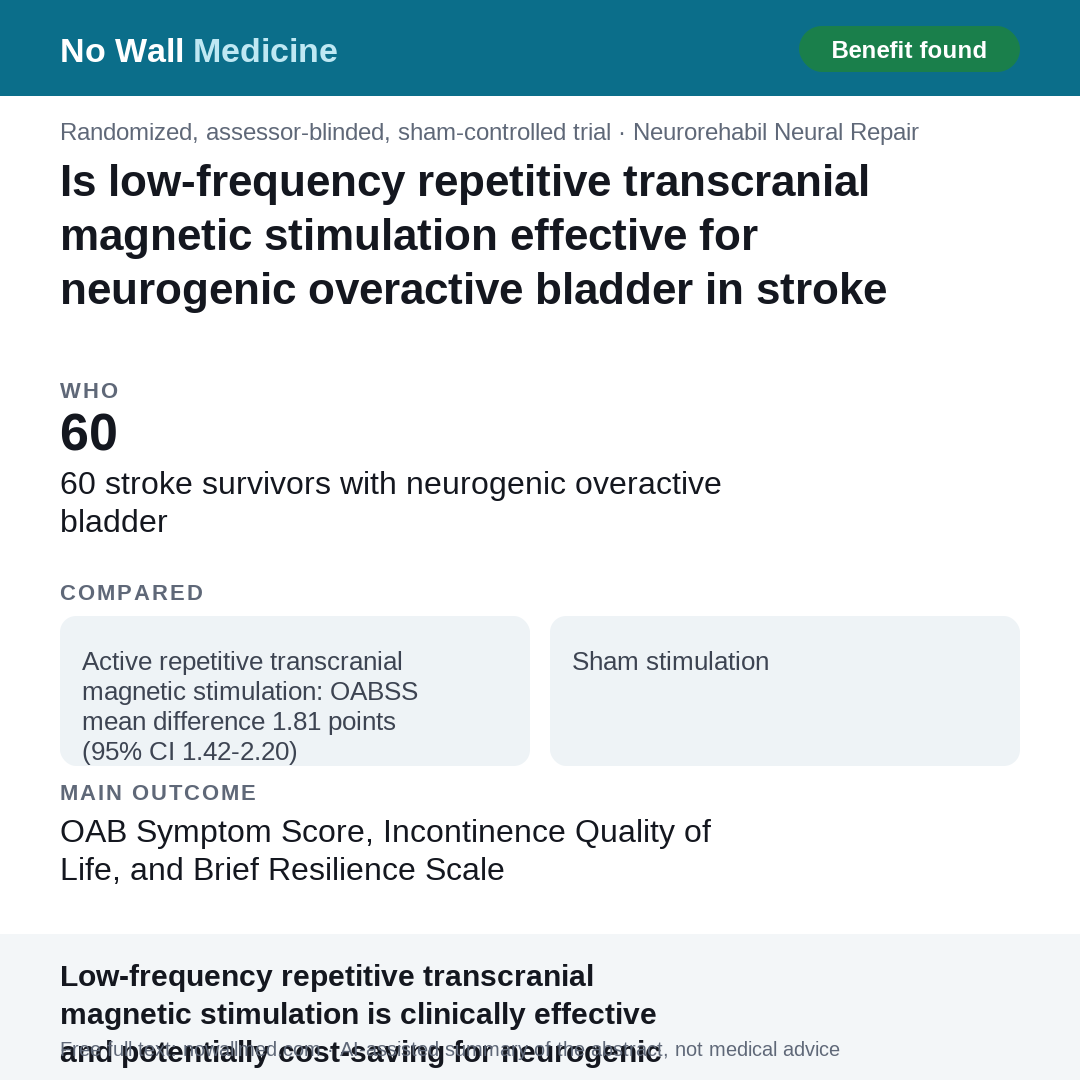
Clinical Efficacy and Preliminary Cost-Utility of Low-Frequency Repetitive Transcranial Magnetic Stimulation Versus Sham Stimulation for Neurogenic Overactive Bladder in Stroke Survivors: A Randomized Controlled Trial
Randomized, assessor-blinded, sham-controlled trialBenefit found
Is low-frequency repetitive transcranial magnetic stimulation effective for neurogenic overactive bladder in stroke survivors?
Who
60
60 stroke survivors with neurogenic overactive bladder
Compared
Active repetitive transcranial magnetic stimulation: OABSS mean difference 1.81 points (95% CI 1.42-2.20)
Sham stimulation
Main outcome
OAB Symptom Score, Incontinence Quality of Life, and Brief Resilience Scale
Result: mean difference 1.81 points (95% CI 1.42-2.20) for OABSS
Bottom line: Low-frequency repetitive transcranial magnetic stimulation is clinically effective and potentially cost-saving for neurogenic overactive bladder in stroke survivors.
Neurorehabil Neural Repair · 2026-04-29Download image
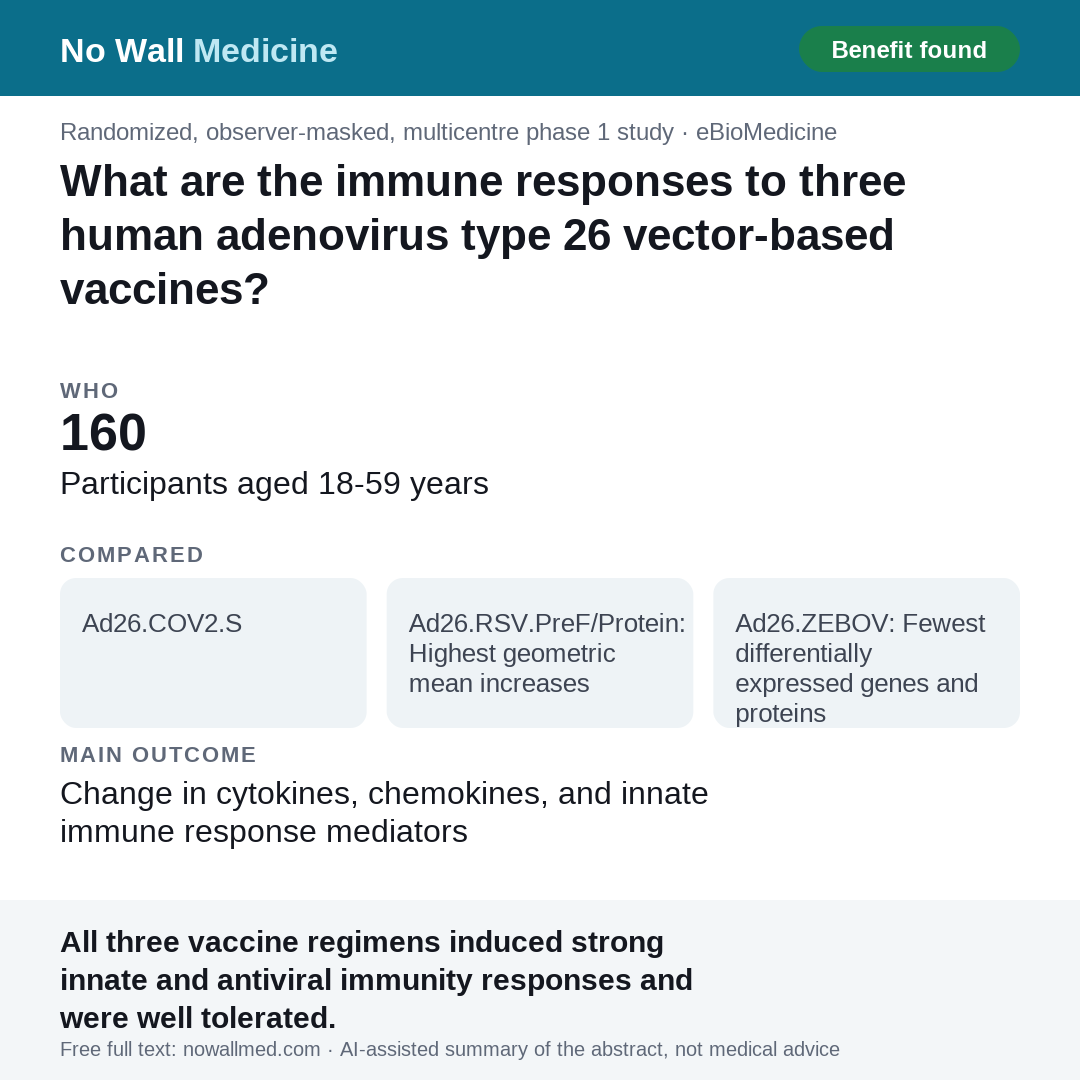
A randomized, observer-blind, phase 1 study of immune responses to three human adenovirus type 26 vector-based vaccines
Randomized, observer-masked, multicentre phase 1 studyBenefit found
What are the immune responses to three human adenovirus type 26 vector-based vaccines?
Who
160
Participants aged 18-59 years
Compared
Ad26.COV2.S
Ad26.RSV.PreF/Protein: Highest geometric mean increases
Ad26.ZEBOV: Fewest differentially expressed genes and proteins
Main outcome
Change in cytokines, chemokines, and innate immune response mediators
Bottom line: All three vaccine regimens induced strong innate and antiviral immunity responses and were well tolerated.
Funded by: Johnson & Johnson
eBioMedicine · 2026-04-29Download image
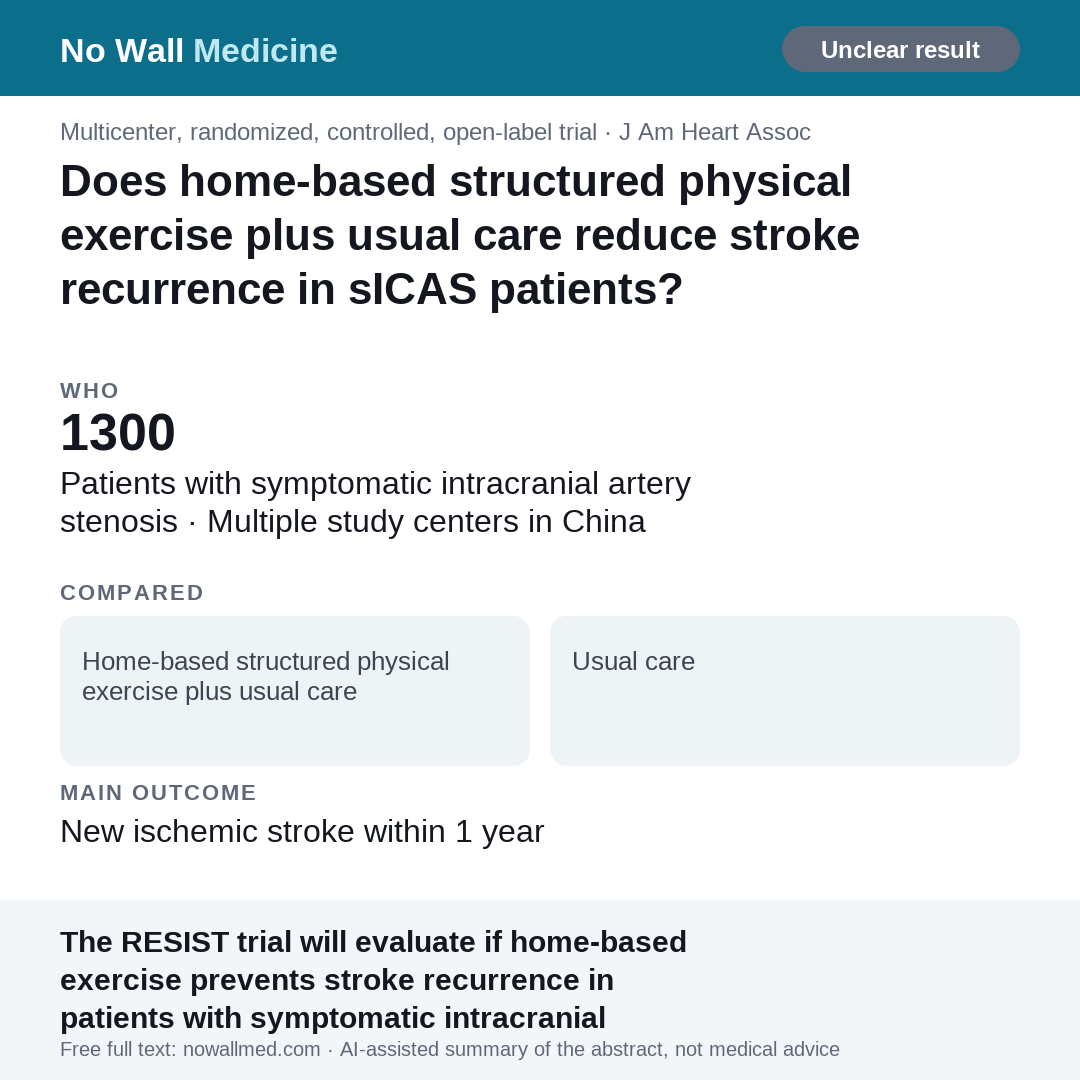
Home-Based RESIST: Rationale and Design of a Multicenter Randomized Controlled Trial
Multicenter, randomized, controlled, open-label trialUnclear result
Does home-based structured physical exercise plus usual care reduce stroke recurrence in sICAS patients?
Who
1300
Patients with symptomatic intracranial artery stenosis · Multiple study centers in China
Compared
Home-based structured physical exercise plus usual care
Usual care
Main outcome
New ischemic stroke within 1 year
Bottom line: The RESIST trial will evaluate if home-based exercise prevents stroke recurrence in patients with symptomatic intracranial artery stenosis.
J Am Heart Assoc · 2026-04-29Download image
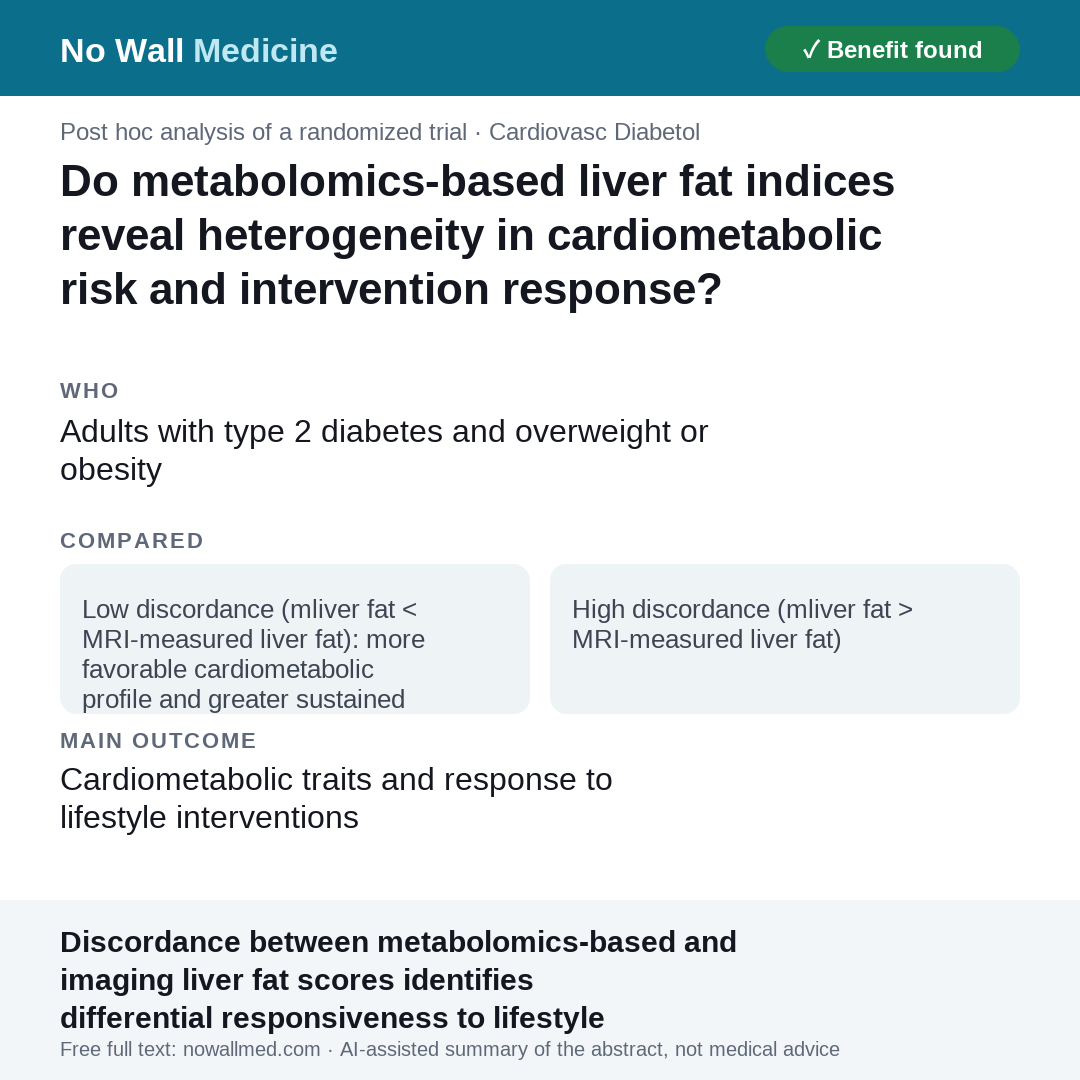
Metabolomic signatures of hepatic steatosis reveal heterogeneity in cardiometabolic risk and responses to lifestyle interventions in type 2 diabetes: a post hoc analysis
Post hoc analysis of a randomized trialBenefit found
Do metabolomics-based liver fat indices reveal heterogeneity in cardiometabolic risk and intervention response?
Who
Adults with type 2 diabetes and overweight or obesity
Compared
Low discordance (mliver fat < MRI-measured liver fat): more favorable cardiometabolic profile and greater sustained benefits
High discordance (mliver fat > MRI-measured liver fat)
Main outcome
Cardiometabolic traits and response to lifestyle interventions
Bottom line: Discordance between metabolomics-based and imaging liver fat scores identifies differential responsiveness to lifestyle interventions in type 2 diabetes.
Cardiovasc Diabetol · 2026-04-29Download image
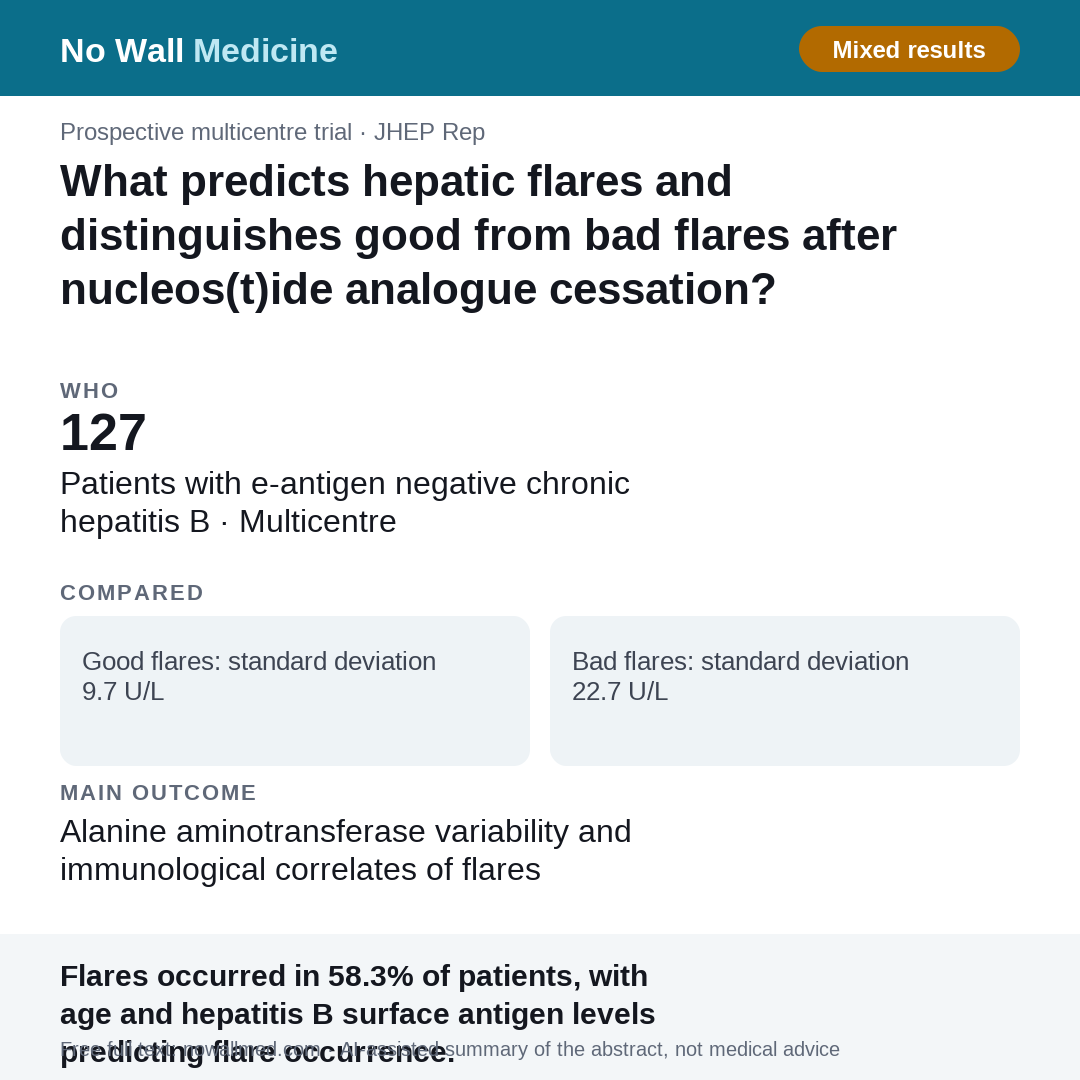
Hepatic flares, their immune signatures, and ALT variability after nucleos(t)ide analogue cessation in HBeAg-negative hepatitis B
Prospective multicentre trialMixed results
What predicts hepatic flares and distinguishes good from bad flares after nucleos(t)ide analogue cessation?
Who
127
Patients with e-antigen negative chronic hepatitis B · Multicentre
Compared
Good flares: standard deviation 9.7 U/L
Bad flares: standard deviation 22.7 U/L
Main outcome
Alanine aminotransferase variability and immunological correlates of flares
Bottom line: Flares occurred in 58.3% of patients, with age and hepatitis B surface antigen levels predicting flare occurrence.
JHEP Rep · 2026-04-29Download image
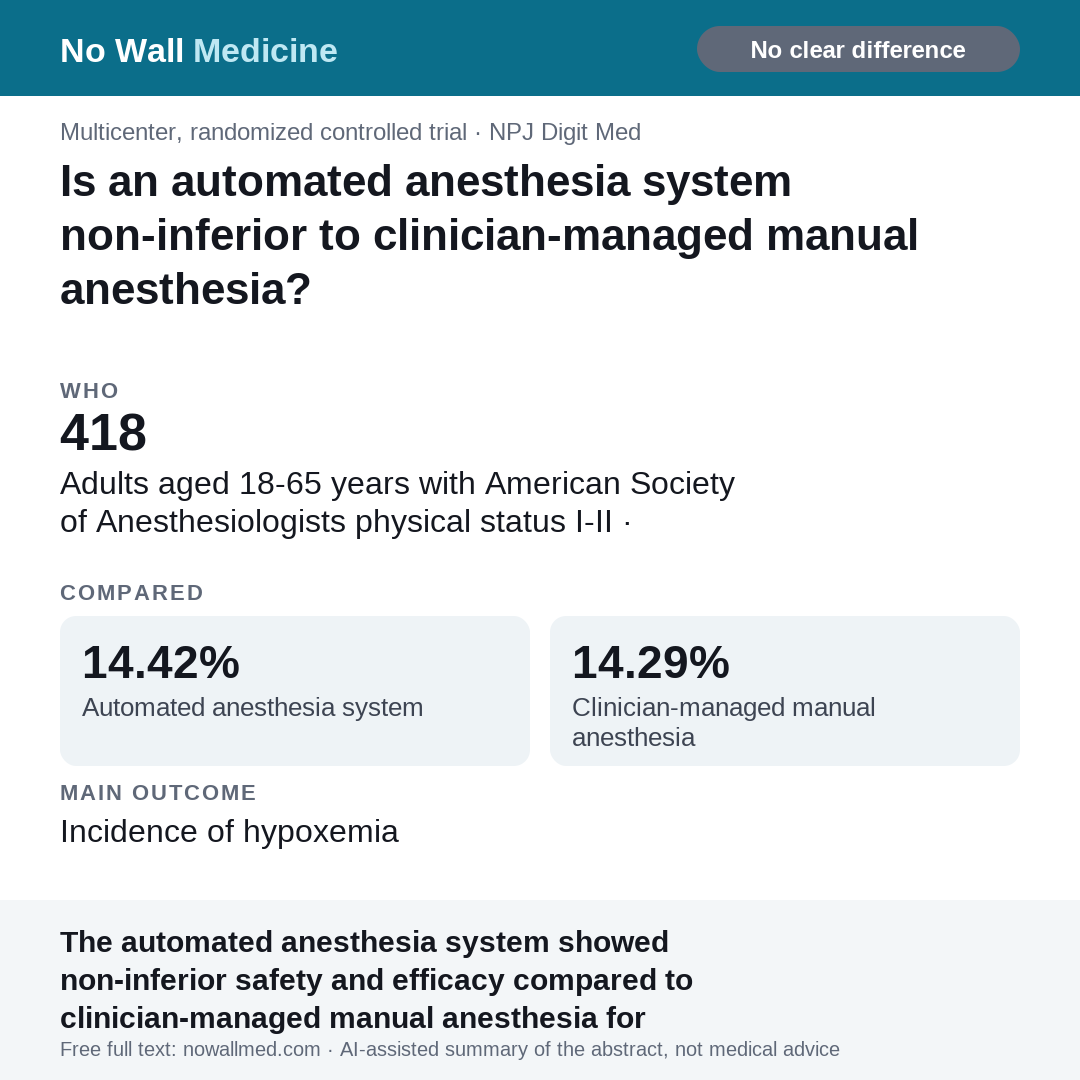
Reinforcement learning based automated anesthesia system for gastrointestinal endoscopy with a multicenter randomized trial
Multicenter, randomized controlled trialNo clear difference
Is an automated anesthesia system non-inferior to clinician-managed manual anesthesia?
Who
418
Adults aged 18-65 years with American Society of Anesthesiologists physical status I-II · Four centers in China
Compared
14.42%Automated anesthesia system
14.29%Clinician-managed manual anesthesia
Main outcome
Incidence of hypoxemia
Result: odds ratio 1.01 (95% CI 0.59-1.75)
Bottom line: The automated anesthesia system showed non-inferior safety and efficacy compared to clinician-managed manual anesthesia for gastrointestinal endoscopy.
Limitation: Intraoperative body movement was more frequent in the automated group.
NPJ Digit Med · 2026-04-29Download image
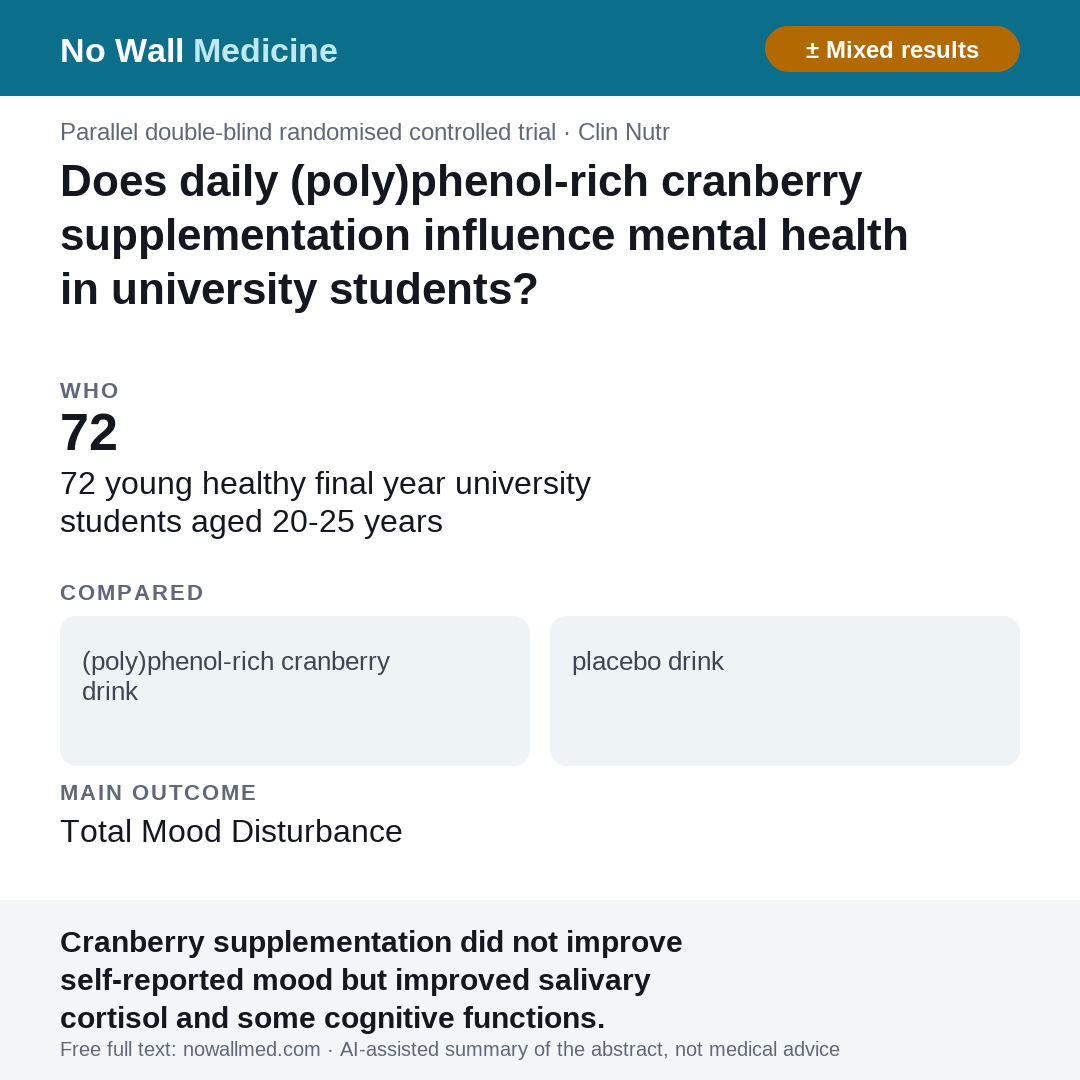
Effects of (poly)phenol-rich cranberry on mental health in university students: The CRANMOOD randomised controlled trial
Parallel double-blind randomised controlled trialMixed results
Does daily (poly)phenol-rich cranberry supplementation influence mental health in university students?
Who
72
72 young healthy final year university students aged 20-25 years
Compared
(poly)phenol-rich cranberry drink
placebo drink
Main outcome
Total Mood Disturbance
Bottom line: Cranberry supplementation did not improve self-reported mood but improved salivary cortisol and some cognitive functions.
Clin Nutr · 2026-04-28Download image