Visual abstracts
New randomized trials and meta-analyses from leading journals at a glance: who was studied, what was compared, and what was found. Every paper is free to read in full.
All specialtiesCardiology 4763Oncology 4043Gastroenterology & Hepatology 1903Infectious Disease 3756Neurology 1872Psychiatry & Mental Health 2216Pulmonology 2044Critical Care 1319Endocrinology & Diabetes 2544Pediatrics 2889Surgery 2480Orthopedics & Sports Medicine 917Neurosurgery 525Cardiothoracic & Vascular Surgery 656Plastic & Reconstructive Surgery 574Nephrology 1107Rheumatology 810Hematology 1090Dermatology 611Ophthalmology 532Obstetrics & Gynecology 1645Public & Global Health 1037Radiology & Imaging 619Anesthesiology 958Urology 745ENT (Otolaryngology) 494Emergency Medicine 481Allergy & Immunology 309Geriatrics 972Family Medicine & Primary Care 534Medical Genetics & Genomics 659Pathology & Laboratory Medicine 156Physical Medicine & Rehabilitation 734Palliative Care 421Nutrition 1560Digital Health & AI 2137General Medicine 318
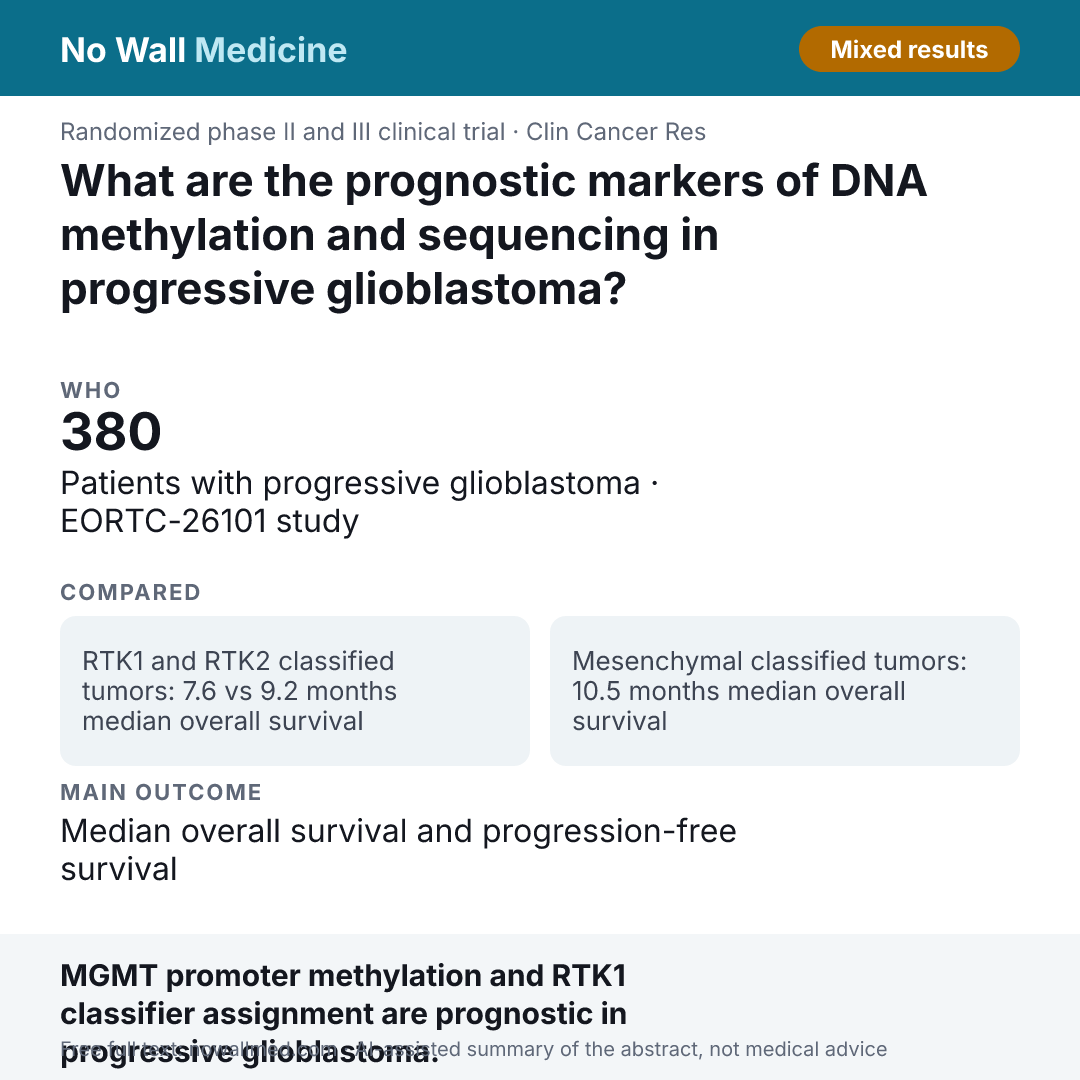
Prognostic Markers of DNA Methylation and Next-Generation Sequencing in Progressive Glioblastoma from the EORTC-26101 Trial
Randomized phase II and III clinical trialMixed results
What are the prognostic markers of DNA methylation and sequencing in progressive glioblastoma?
Who
380
Patients with progressive glioblastoma · EORTC-26101 study
Compared
RTK1 and RTK2 classified tumors: 7.6 vs 9.2 months median overall survival
Mesenchymal classified tumors: 10.5 months median overall survival
Main outcome
Median overall survival and progression-free survival
Bottom line: MGMT promoter methylation and RTK1 classifier assignment are prognostic in progressive glioblastoma.
Clin Cancer Res · 2023-07-26 · Save PNG
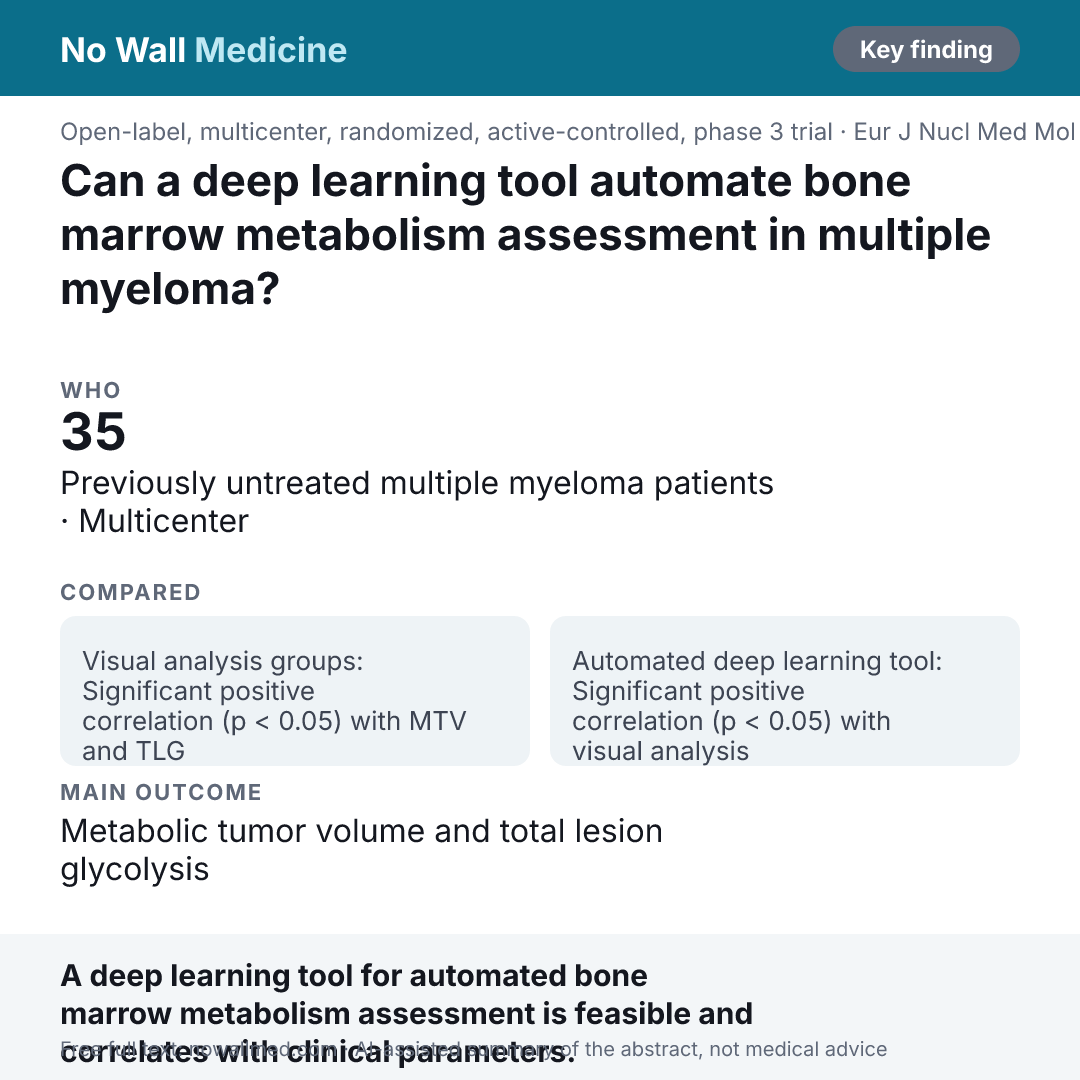
Application of an artificial intelligence-based tool in [18F]FDG PET/CT for the assessment of bone marrow involvement in multiple myeloma
Open-label, multicenter, randomized, active-controlled, phase 3 trialKey finding
Can a deep learning tool automate bone marrow metabolism assessment in multiple myeloma?
Who
35
Previously untreated multiple myeloma patients · Multicenter
Compared
Visual analysis groups: Significant positive correlation (p < 0.05) with MTV and TLG
Automated deep learning tool: Significant positive correlation (p < 0.05) with visual analysis
Main outcome
Metabolic tumor volume and total lesion glycolysis
Bottom line: A deep learning tool for automated bone marrow metabolism assessment is feasible and correlates with clinical parameters.
Eur J Nucl Med Mol Imaging · 2023-07-26 · Save PNG
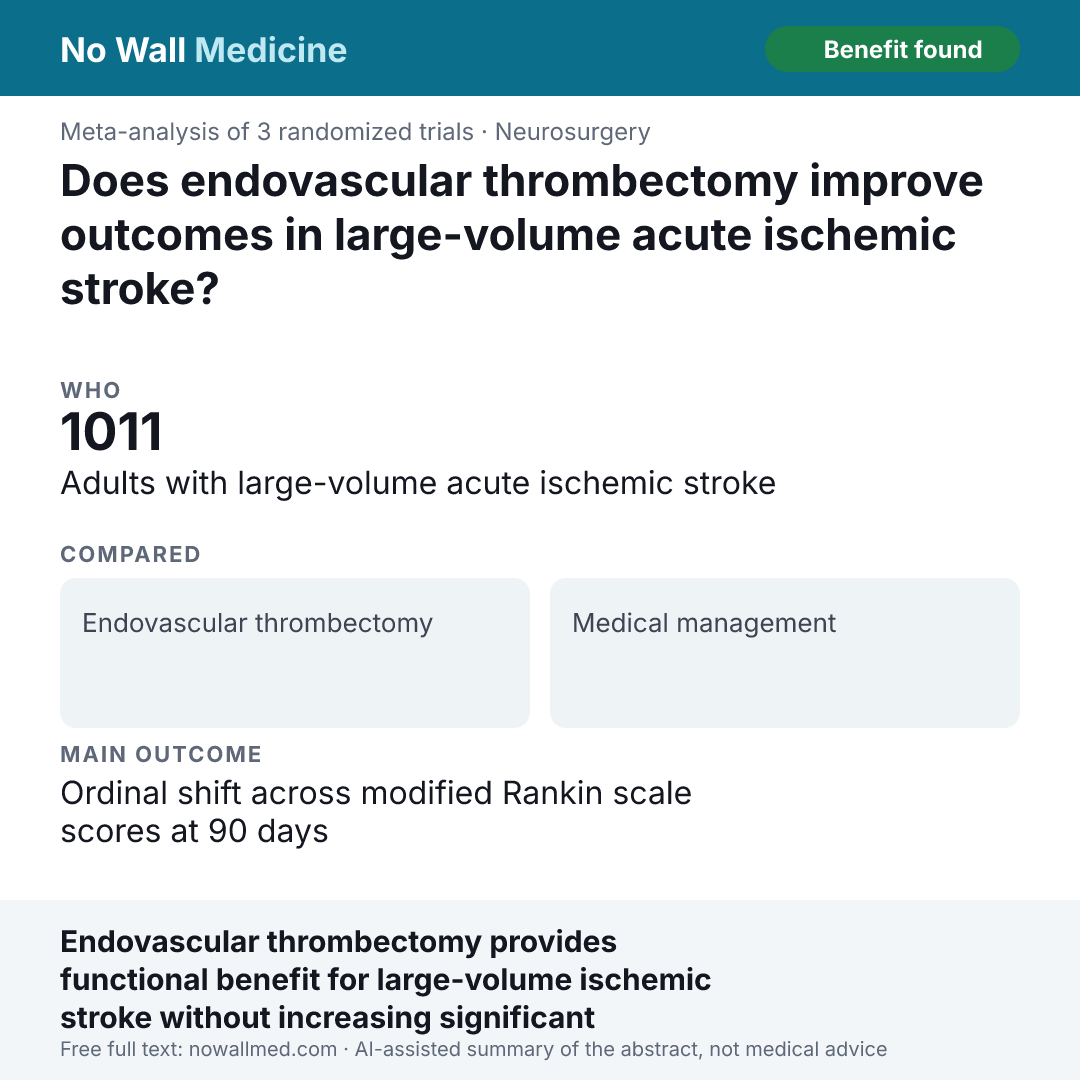
Endovascular Thrombectomy for the Treatment of Large Ischemic Stroke: A Systematic Review and Meta-Analysis of Randomized Control Trials
Meta-analysis of 3 randomized trialsBenefit found
Does endovascular thrombectomy improve outcomes in large-volume acute ischemic stroke?
Who
1011
Adults with large-volume acute ischemic stroke
Compared
Endovascular thrombectomy
Medical management
Main outcome
Ordinal shift across modified Rankin scale scores at 90 days
Result: generalized odds ratio 1.55 (95% CI 1.25-1.91)
Bottom line: Endovascular thrombectomy provides functional benefit for large-volume ischemic stroke without increasing significant complication risks.
Neurosurgery · 2023-07-26 · Save PNG
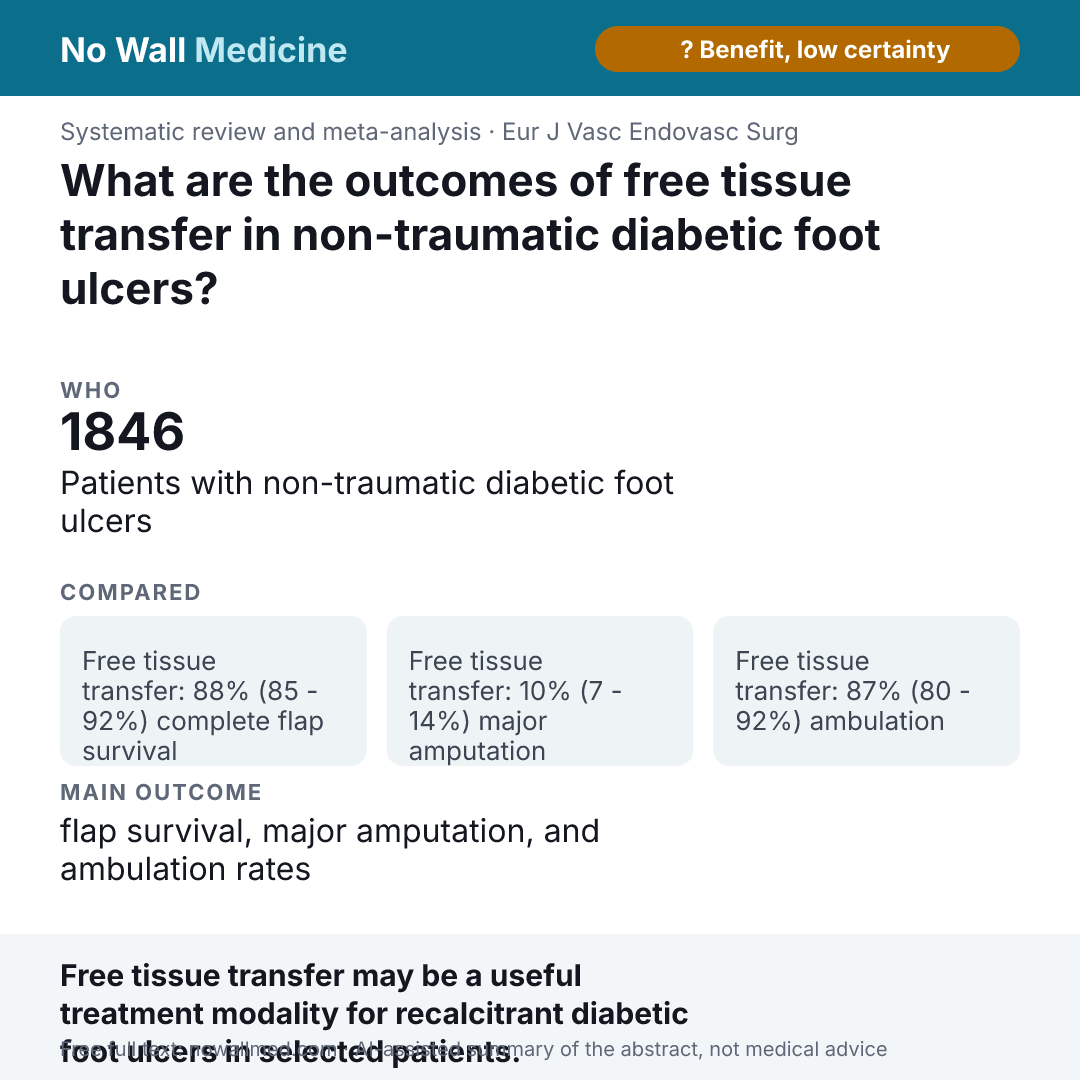
Free Tissue Transfer in Diabetic Foot Ulcers: A Systematic Review and Meta-Analysis
Systematic review and meta-analysisBenefit, low certainty
What are the outcomes of free tissue transfer in non-traumatic diabetic foot ulcers?
Who
1846
Patients with non-traumatic diabetic foot ulcers
Compared
Free tissue transfer: 88% (85 - 92%) complete flap survival
Free tissue transfer: 10% (7 - 14%) major amputation
Free tissue transfer: 87% (80 - 92%) ambulation
Main outcome
flap survival, major amputation, and ambulation rates
Bottom line: Free tissue transfer may be a useful treatment modality for recalcitrant diabetic foot ulcers in selected patients.
Limitation: The overall certainty of evidence was very low and most studies had serious risk of bias.
Eur J Vasc Endovasc Surg · 2023-07-26 · Save PNG
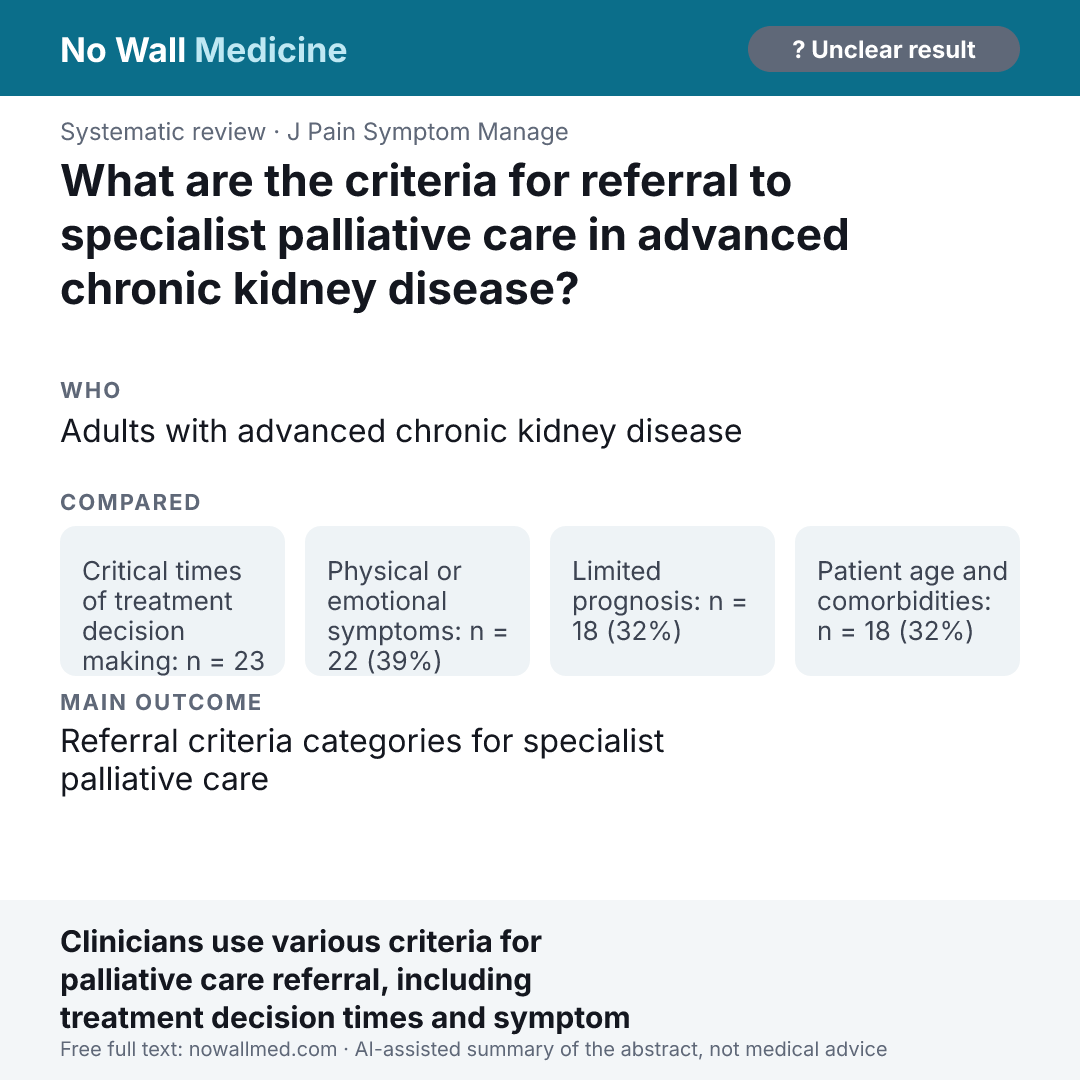
Referral Criteria to Specialist Palliative Care for People with Advanced Chronic Kidney Disease: A Systematic Review
Systematic reviewUnclear result
What are the criteria for referral to specialist palliative care in advanced chronic kidney disease?
Who
Adults with advanced chronic kidney disease
Compared
Critical times of treatment decision making: n = 23 (41%)
Physical or emotional symptoms: n = 22 (39%)
Limited prognosis: n = 18 (32%)
Patient age and comorbidities: n = 18 (32%)
Main outcome
Referral criteria categories for specialist palliative care
Bottom line: Clinicians use various criteria for palliative care referral, including treatment decision times and symptom management.
J Pain Symptom Manage · 2023-07-26 · Save PNG
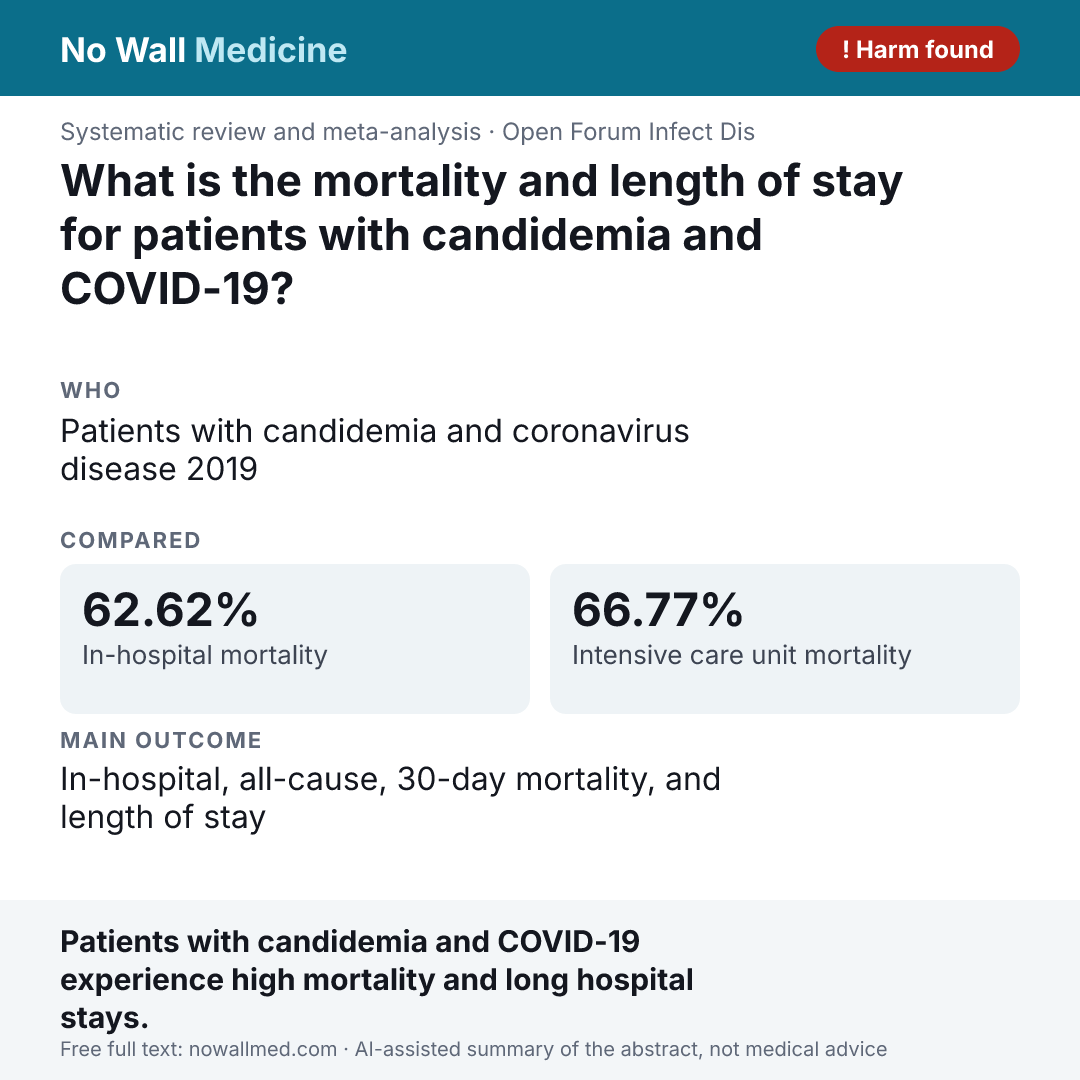
Mortality of Patients With Candidemia and COVID-19: A Systematic Review With Meta-analysis
Systematic review and meta-analysisHarm found
What is the mortality and length of stay for patients with candidemia and COVID-19?
Who
Patients with candidemia and coronavirus disease 2019
Compared
62.62%In-hospital mortality (95% CI, 54.77% to 69.86%)
66.77%Intensive care unit mortality (95% CI, 57.70% to 74.75%)
Main outcome
In-hospital, all-cause, 30-day mortality, and length of stay
Bottom line: Patients with candidemia and COVID-19 experience high mortality and long hospital stays.
Open Forum Infect Dis · 2023-07-26 · Save PNG
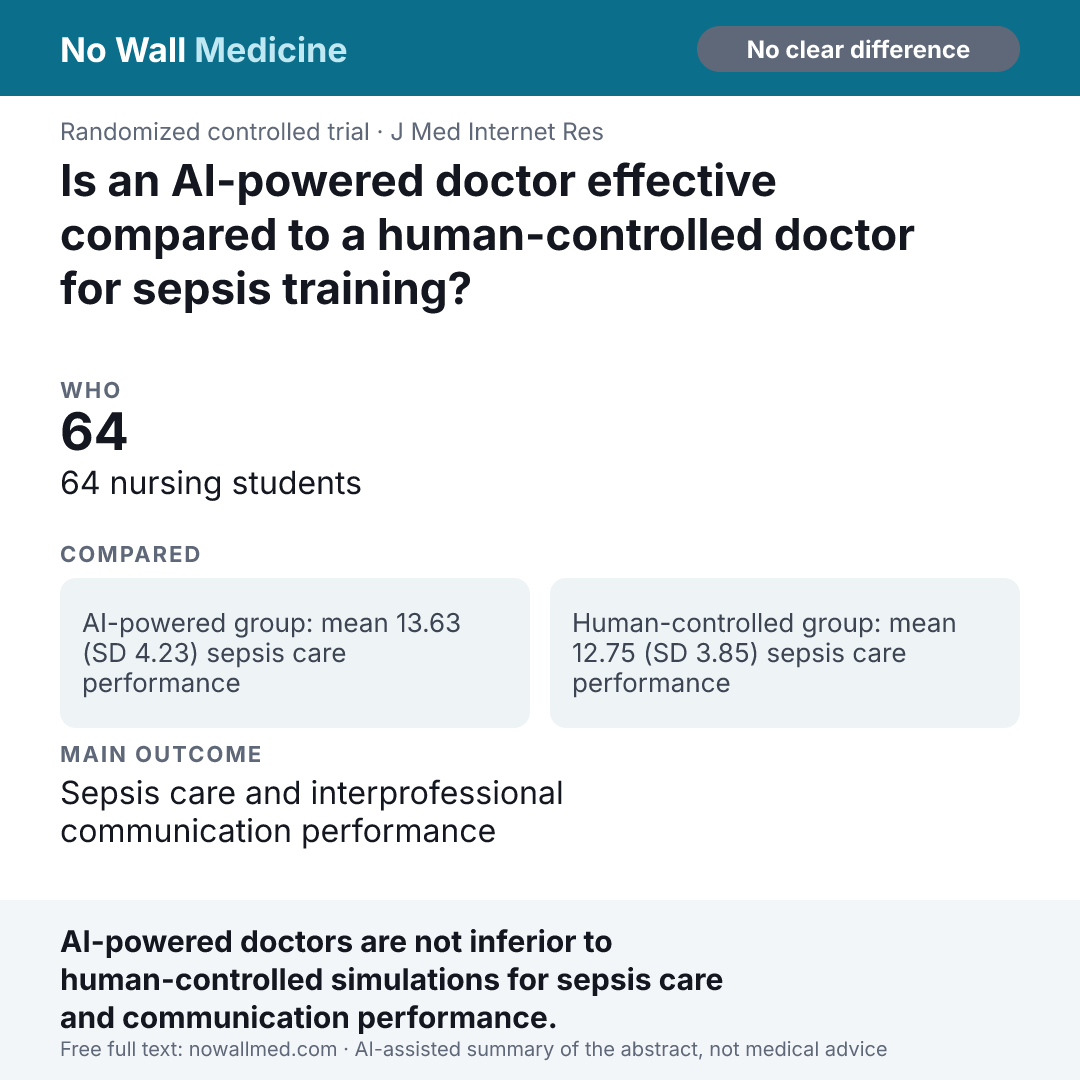
Artificial Intelligence Versus Human-Controlled Doctor in Virtual Reality Simulation for Sepsis Team Training: Randomized Controlled Study
Randomized controlled trialNo clear difference
Is an AI-powered doctor effective compared to a human-controlled doctor for sepsis training?
Who
64
64 nursing students
Compared
AI-powered group: mean 13.63 (SD 4.23) sepsis care performance
Human-controlled group: mean 12.75 (SD 3.85) sepsis care performance
Main outcome
Sepsis care and interprofessional communication performance
Bottom line: AI-powered doctors are not inferior to human-controlled simulations for sepsis care and communication performance.
Limitation: Future studies should examine how to best blend AI-powered training with human-controlled simulation.
J Med Internet Res · 2023-07-26 · Save PNG
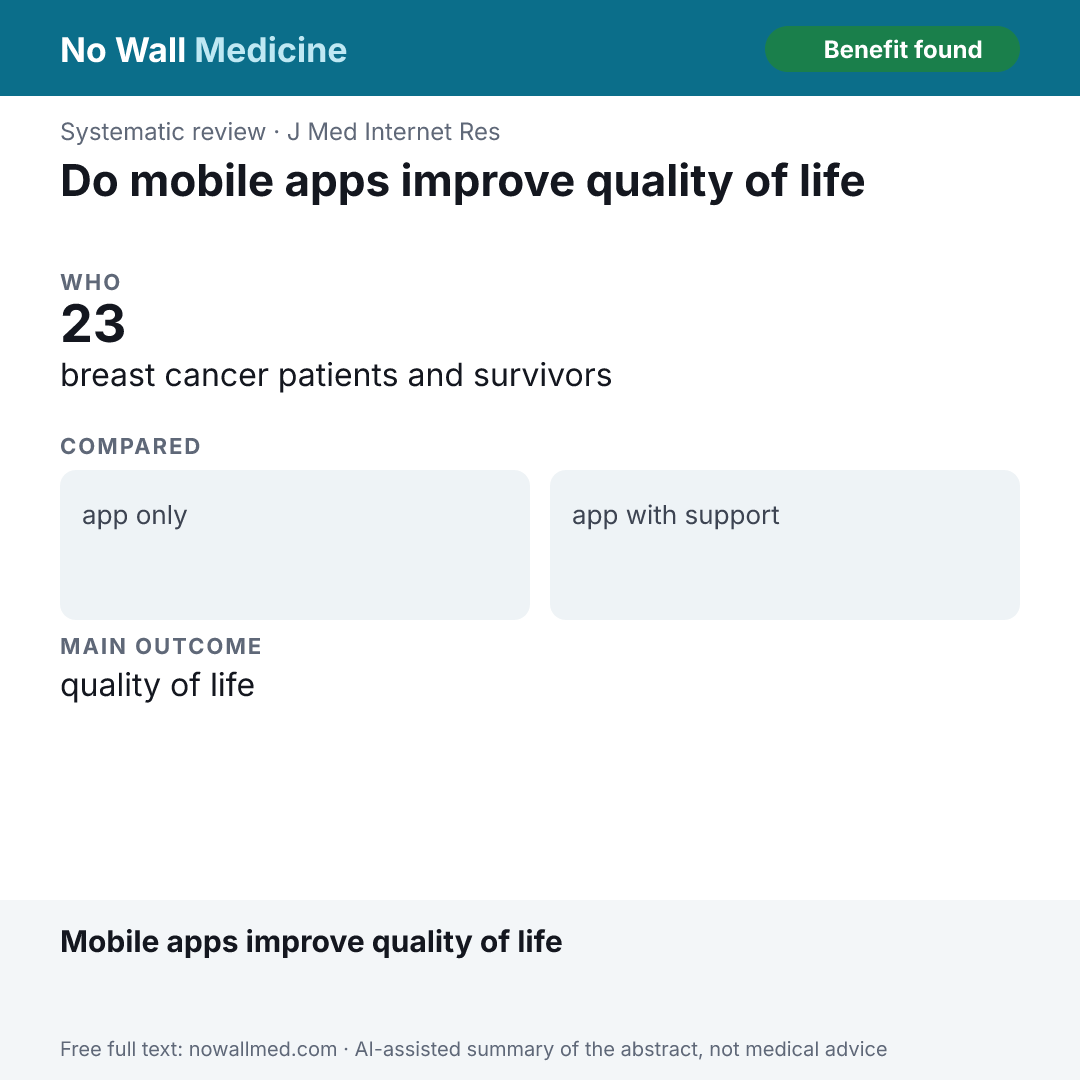
Mobile Apps and Quality of Life in Patients With Breast Cancer and Survivors: Systematic Literature Review
Systematic reviewBenefit found
Do mobile apps improve quality of life
Who
23
breast cancer patients and survivors
Compared
app only
app with support
Main outcome
quality of life
Bottom line: Mobile apps improve quality of life
Limitation: further research needed
J Med Internet Res · 2023-07-26 · Save PNG
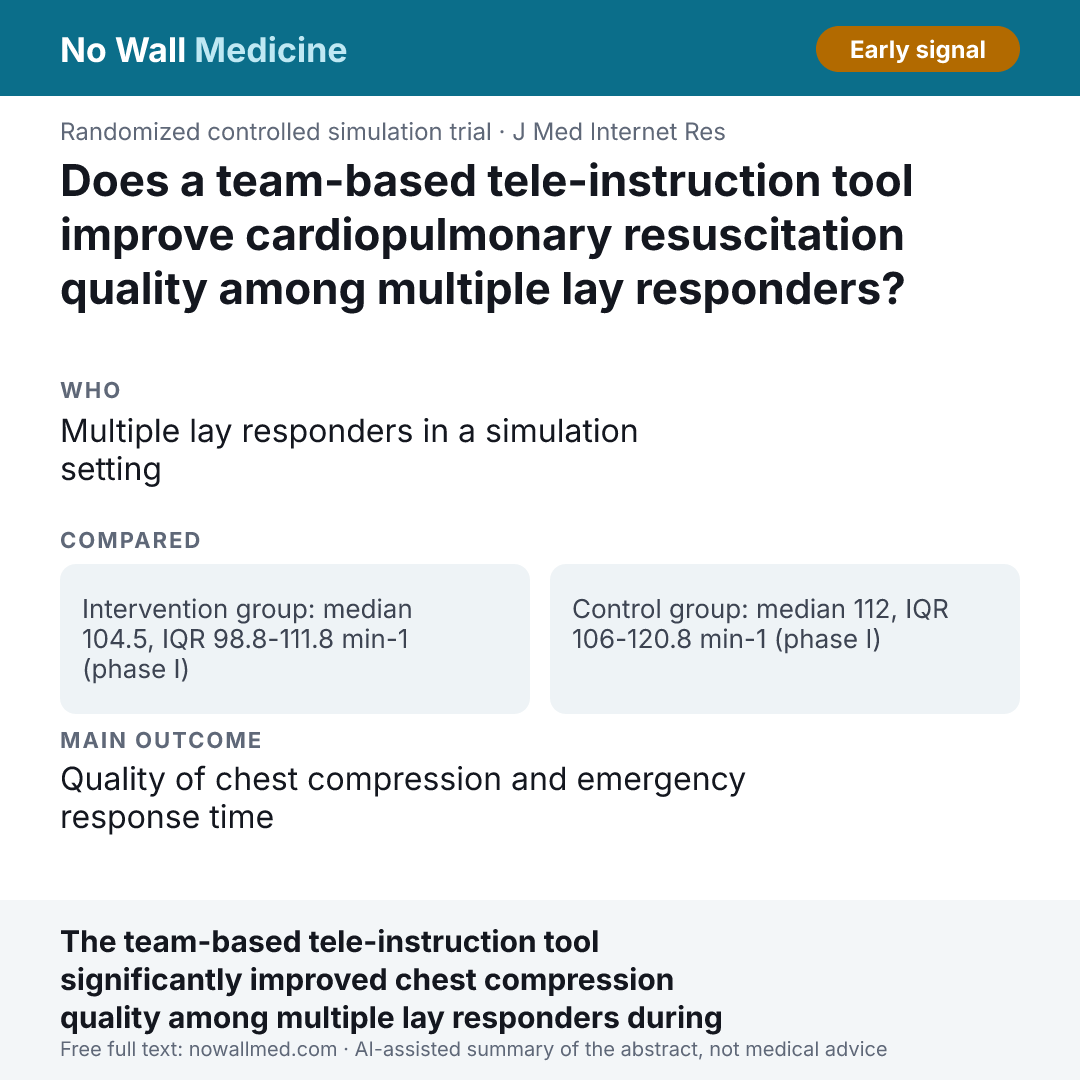
Tele-Instruction Tool for Multiple Lay Responders Providing Cardiopulmonary Resuscitation in Telehealth Emergency Dispatch Services: Mixed Methods Study
Randomized controlled simulation trialEarly signal
Does a team-based tele-instruction tool improve cardiopulmonary resuscitation quality among multiple lay responders?
Who
Multiple lay responders in a simulation setting
Compared
Intervention group: median 104.5, IQR 98.8-111.8 min-1 (phase I)
Control group: median 112, IQR 106-120.8 min-1 (phase I)
Main outcome
Quality of chest compression and emergency response time
Bottom line: The team-based tele-instruction tool significantly improved chest compression quality among multiple lay responders during resuscitation.
Limitation: Further assessment in real-life rescue scenarios is warranted.
J Med Internet Res · 2023-07-26 · Save PNG
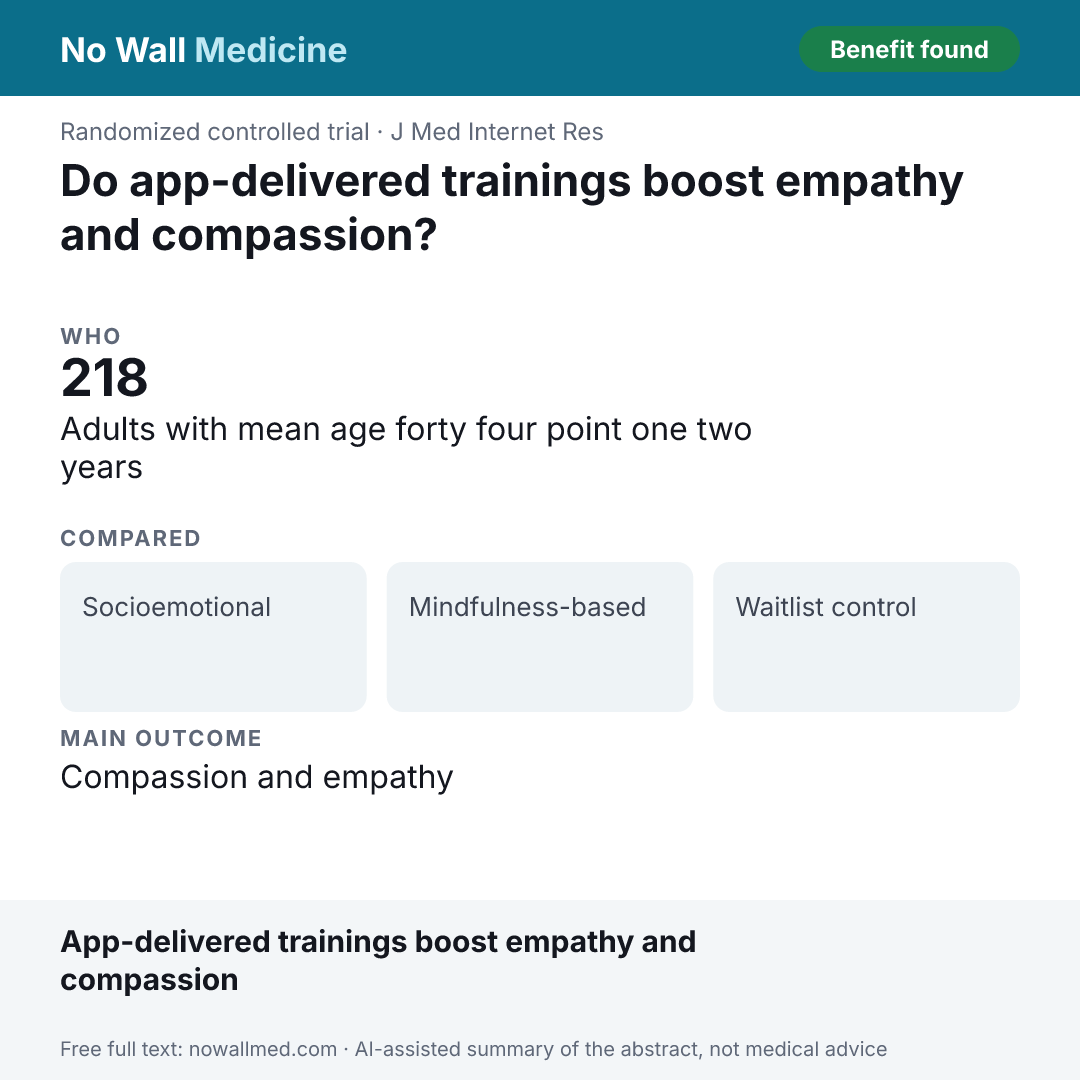
Boosting Empathy and Compassion Through Mindfulness-Based and Socioemotional Dyadic Practice: Randomized Controlled Trial With App-Delivered Trainings
Randomized controlled trialBenefit found
Do app-delivered trainings boost empathy and compassion?
Who
218
Adults with mean age forty four point one two years
Compared
Socioemotional
Mindfulness-based
Waitlist control
Main outcome
Compassion and empathy
Bottom line: App-delivered trainings boost empathy and compassion
J Med Internet Res · 2023-07-26 · Save PNG
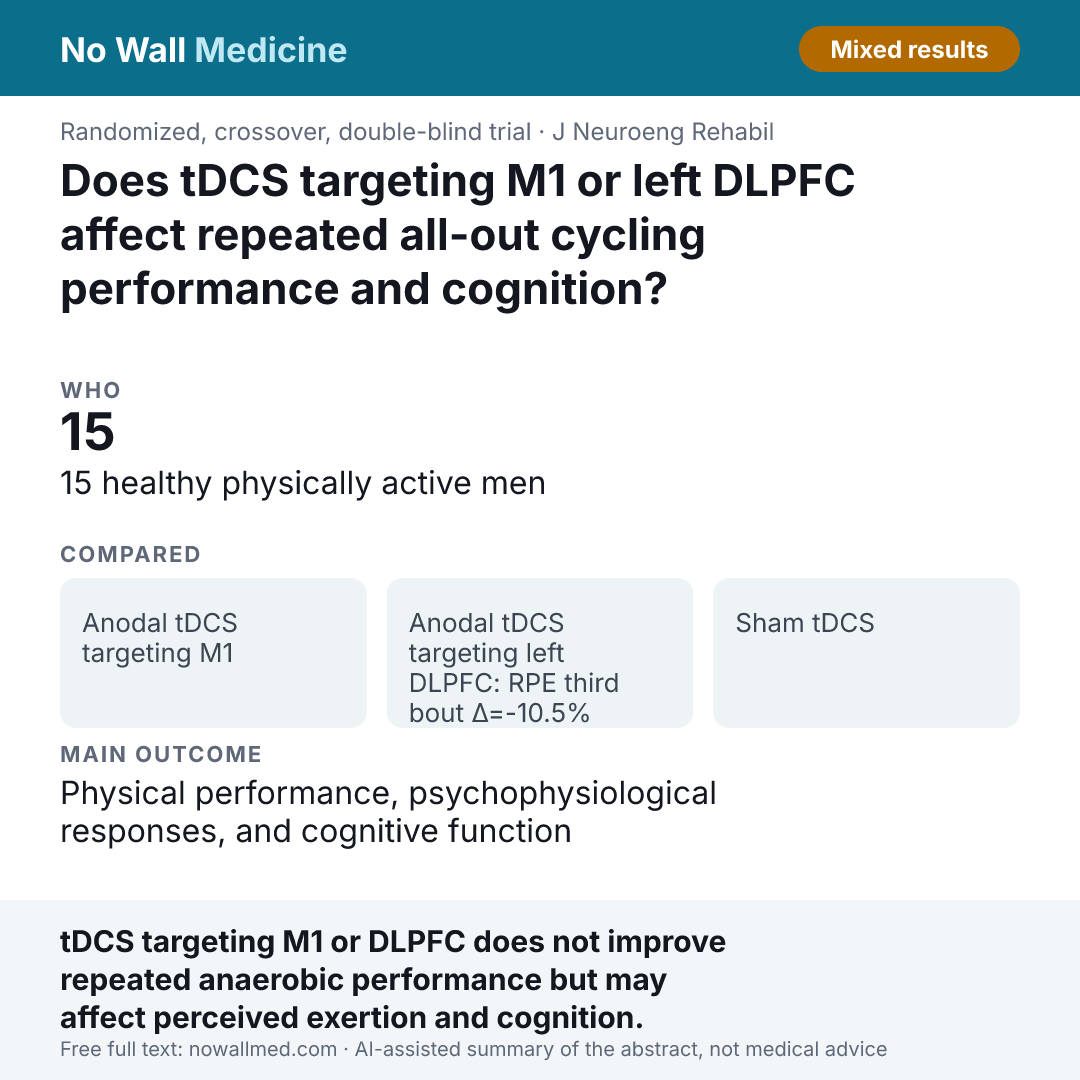
Effect of tDCS targeting the M1 or left DLPFC on physical performance, psychophysiological responses, and cognitive function in repeated all-out cycling: a randomized controlled trial
Randomized, crossover, double-blind trialMixed results
Does tDCS targeting M1 or left DLPFC affect repeated all-out cycling performance and cognition?
Who
15
15 healthy physically active men
Compared
Anodal tDCS targeting M1
Anodal tDCS targeting left DLPFC: RPE third bout Δ=-10.5% compared to sham
Sham tDCS
Main outcome
Physical performance, psychophysiological responses, and cognitive function
Bottom line: tDCS targeting M1 or DLPFC does not improve repeated anaerobic performance but may affect perceived exertion and cognition.
J Neuroeng Rehabil · 2023-07-26 · Save PNG
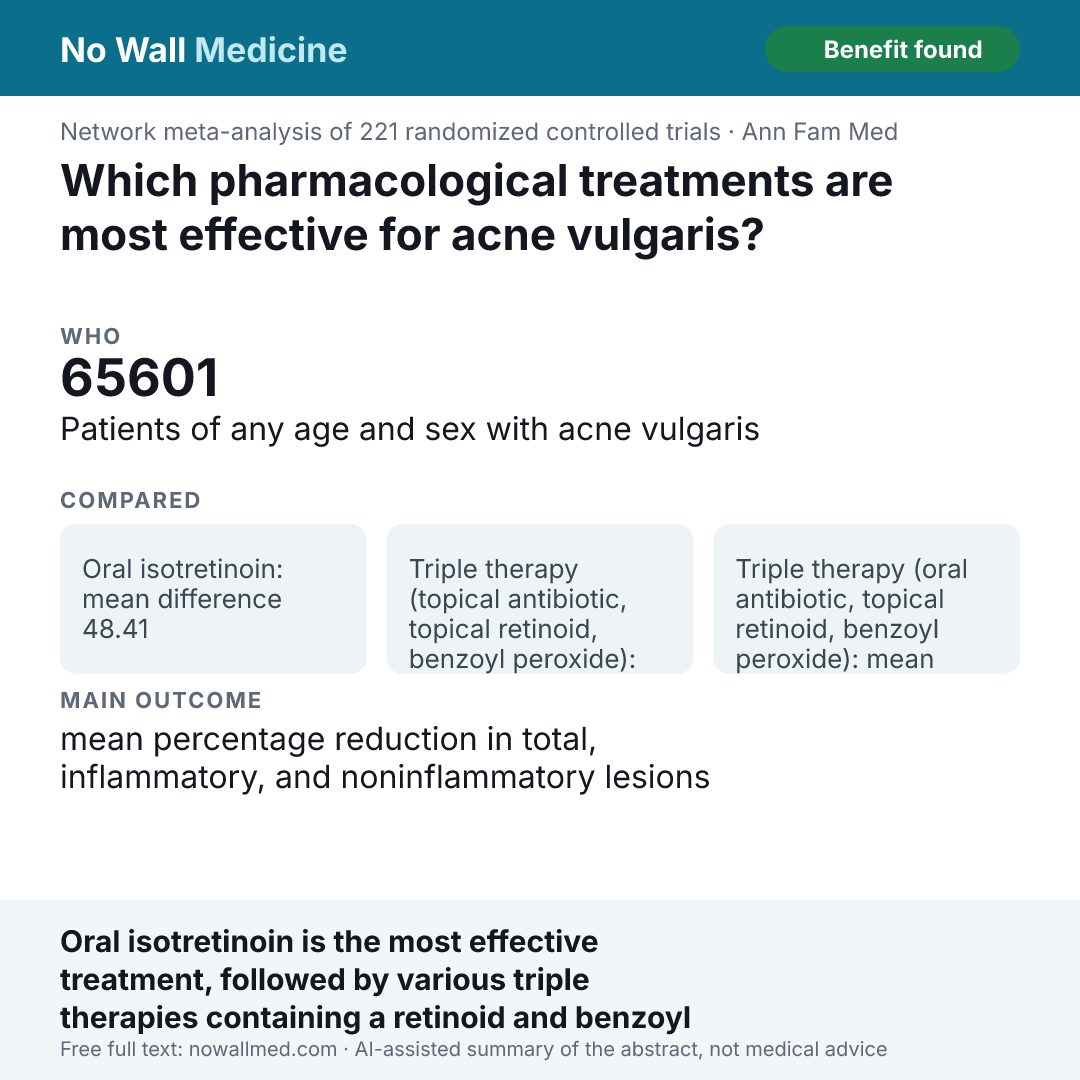
Comparison of drugs for active eosinophilic oesophagitis: systematic review and network meta-analysis
Network meta-analysisBenefit found
Best drug for eosinophilic oesophagitis
Who
1813
adults and adolescents with active eosinophilic oesophagitis
Compared
lirentelimab
budesonide
Main outcome
histological remission
Bottom line: Most drugs are better than placebo
Gut · 2023-07-25 · Save PNG
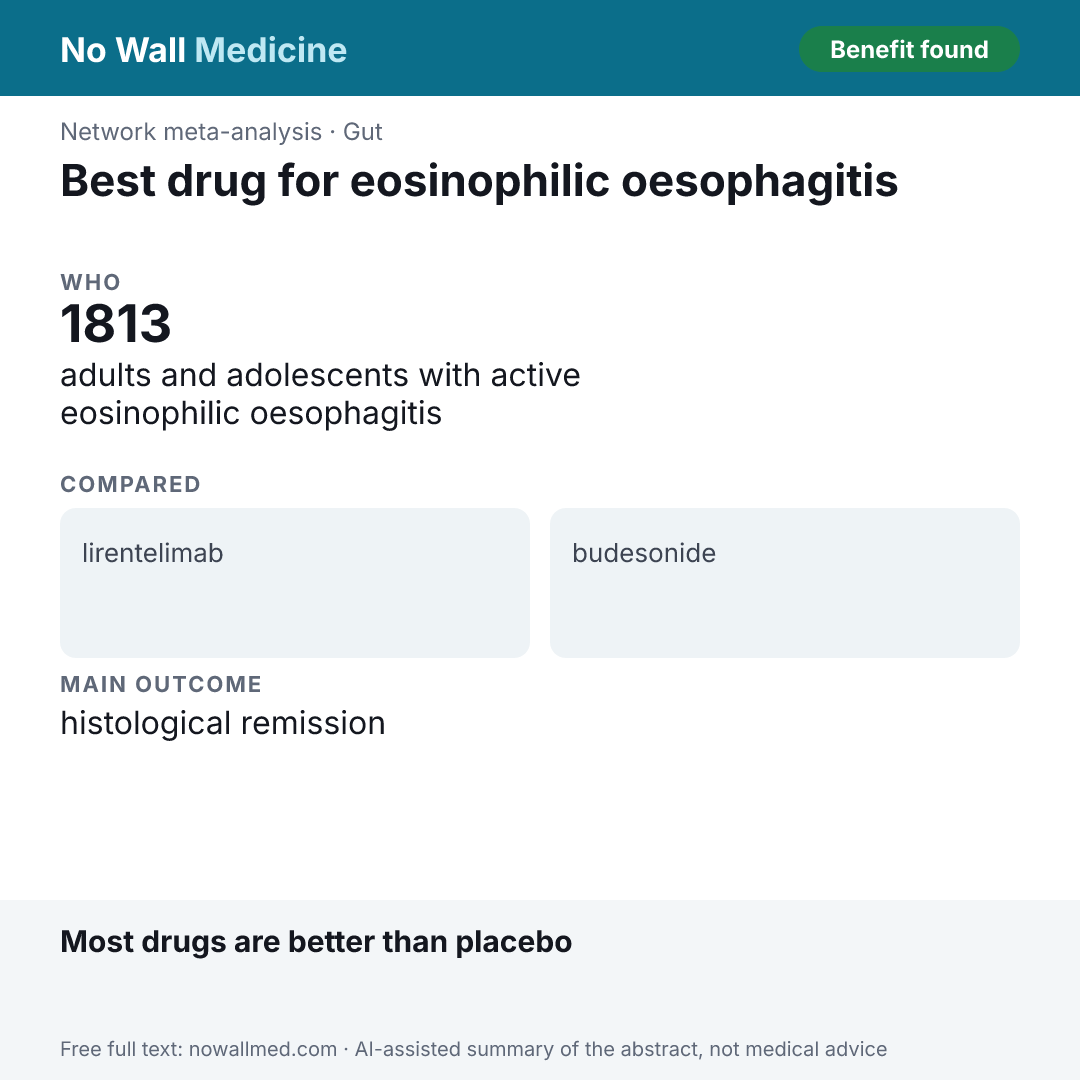
Synthesis and Meta-analysis of 3 Randomized Trials Conducted in Burkina Faso, Ghana, and Uganda Comparing the Effects of Point-of-Care Tests and Diagnostic Algorithms Versus Routine Care on Antibiotic Prescriptions and Clinical Outcomes in Ambulatory Patients <18 Years of Age With Acute Febrile Illness
Meta-analysis of 3 trialsUnclear result
Point-of-care tests vs routine care
Who
ambulatory patients under eighteen years · sub-Saharan Africa
Compared
point-of-care tests
routine care
Main outcome
antibiotic prescriptions and clinical outcomes
Bottom line: Compared point-of-care tests to routine care
Clin Infect Dis · 2023-07-25 · Save PNG
All-cause and cause-specific mortality among people with bipolar disorder: a large-scale systematic review and meta-analysis
Systematic review and meta-analysisHarm found
What are the all-cause and cause-specific mortality risks in people with bipolar disorder?
Who
678353
People with bipolar disorder
Compared
Bipolar disorder
General population
Main outcome
All-cause mortality
Result: relative risk 2.02 (95% CI 1.89-2.16)
Bottom line: People with bipolar disorder face increased all-cause mortality, especially from suicide, unnatural causes, and various physical conditions.
Limitation: Analysis of infectious causes was limited by the inclusion of few studies.
Mol Psychiatry · 2023-07-25 · Save PNG

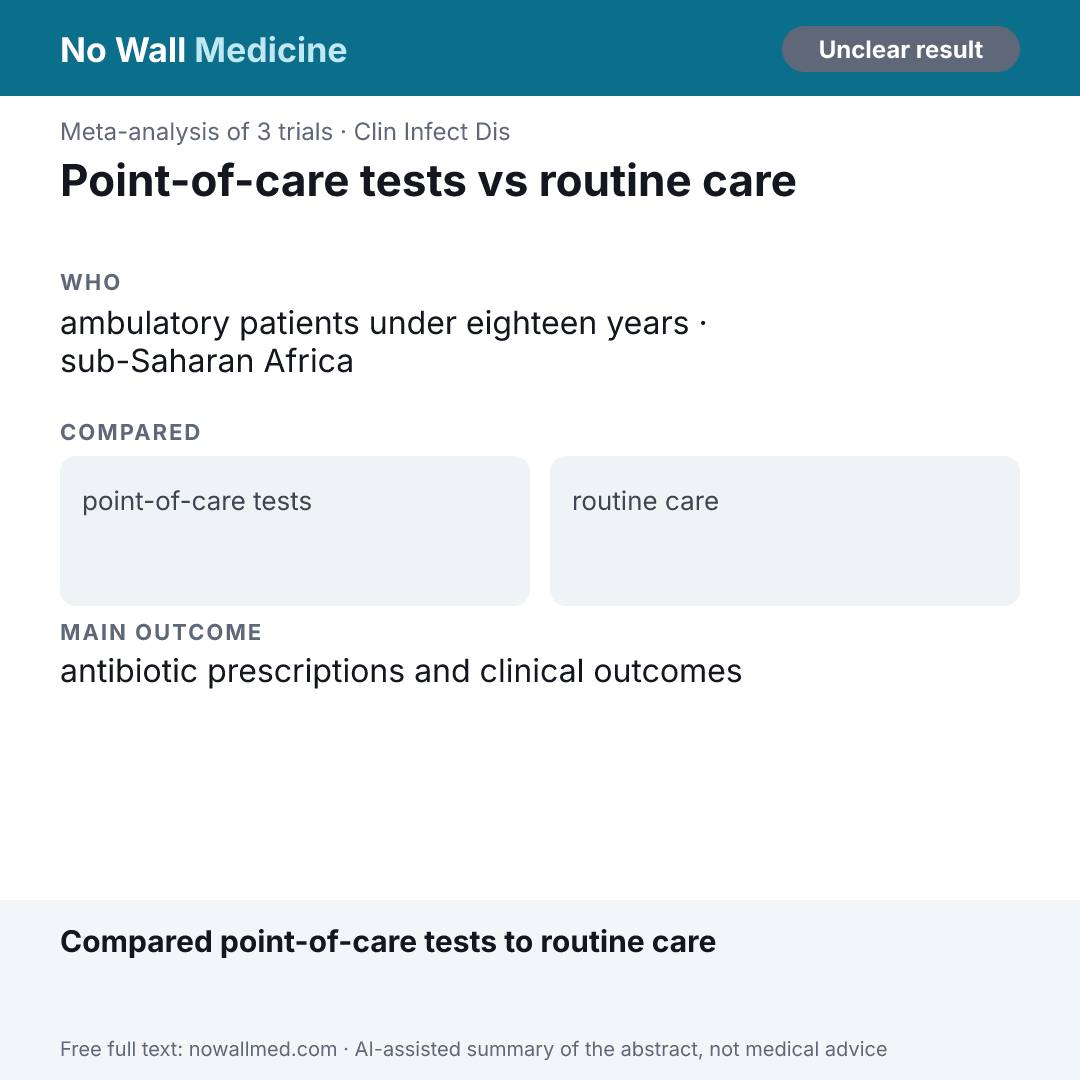
Distress, burden, and wellbeing in siblings of people with mental illness: a mixed studies systematic review and meta-analysis
Mixed studies systematic review and meta-analysisMixed results
What are the distress, burden, and wellbeing experiences of siblings of people with mental illness?
Who
3744
Siblings of people with mental illness
Compared
15.71Depressive symptoms (95% CI 12.99-18.43)
22.45Anxiety symptoms (95% CI 17.09-27.80)
Main outcome
Depression, anxiety, burden, and wellbeing
Bottom line: Siblings experience mild depressive symptoms and minimal anxiety symptoms, with increased distress during illness onset or relapse.
Psychol Med · 2023-07-25 · Save PNG
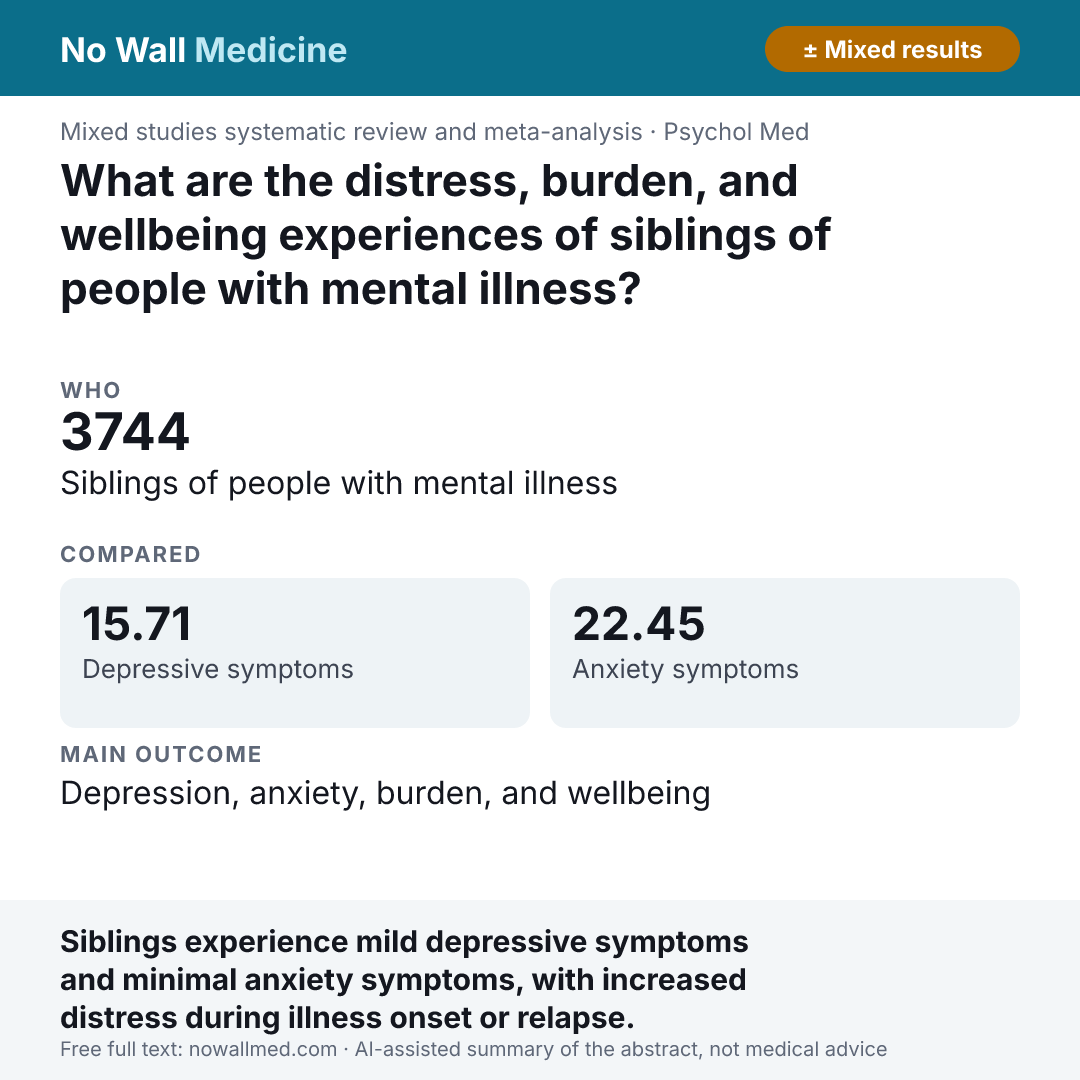
Comparative Efficacy of Pharmacological Treatments for Acne Vulgaris: A Network Meta-Analysis of 221 Randomized Controlled Trials
Network meta-analysis of 221 randomized controlled trialsBenefit found
Which pharmacological treatments are most effective for acne vulgaris?
Who
65601
Patients of any age and sex with acne vulgaris
Compared
Oral isotretinoin: mean difference 48.41
Triple therapy (topical antibiotic, topical retinoid, benzoyl peroxide): mean difference 38.15
Triple therapy (oral antibiotic, topical retinoid, benzoyl peroxide): mean difference 34.83
Main outcome
mean percentage reduction in total, inflammatory, and noninflammatory lesions
Bottom line: Oral isotretinoin is the most effective treatment, followed by various triple therapies containing a retinoid and benzoyl peroxide.
Ann Fam Med · 2023-07-25 · Save PNG
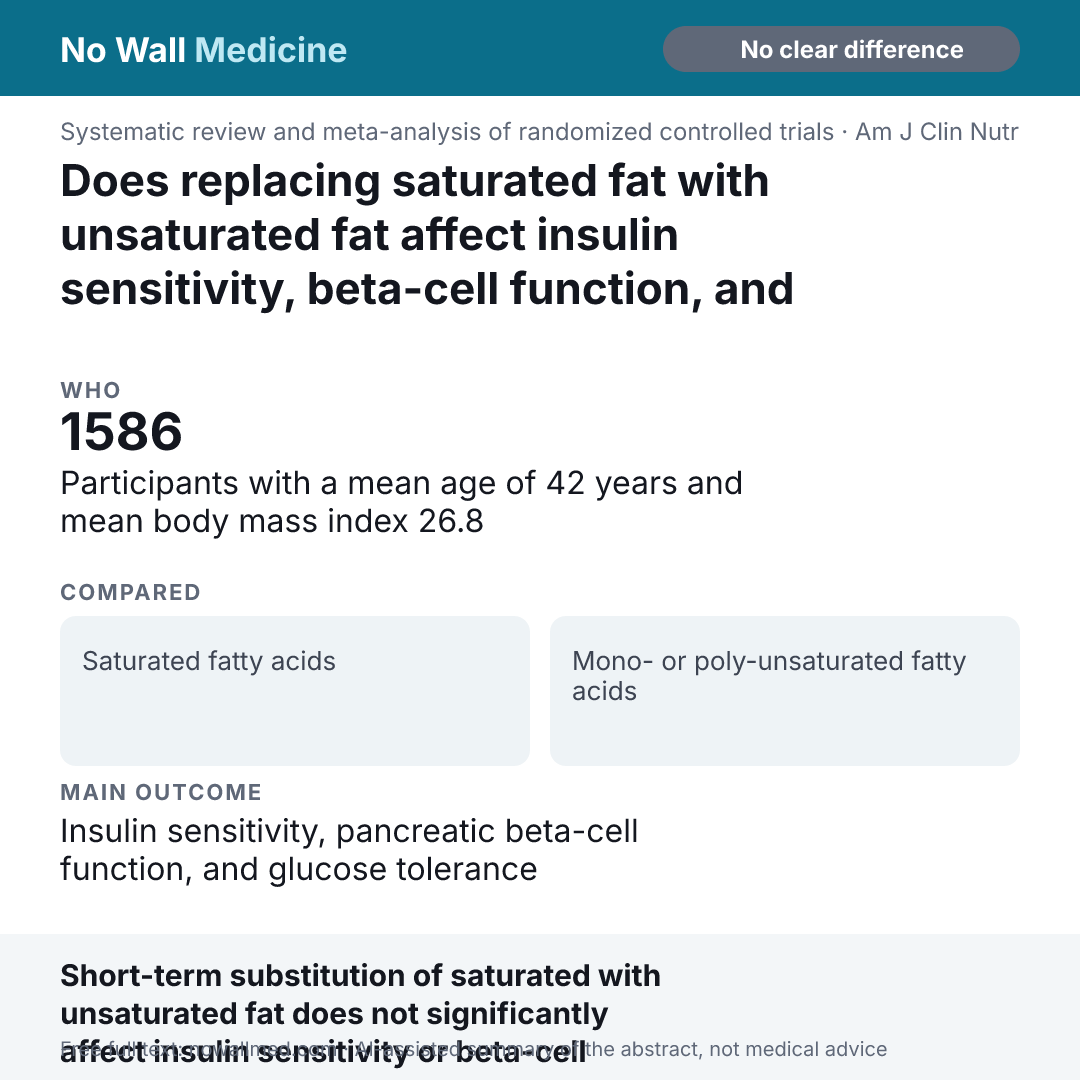
Impact of saturated compared with unsaturated dietary fat on insulin sensitivity, pancreatic β-cell function and glucose tolerance: a systematic review and meta-analysis of randomized, controlled trials
Systematic review and meta-analysis of randomized controlled trialsNo clear difference
Does replacing saturated fat with unsaturated fat affect insulin sensitivity, beta-cell function, and glucose tolerance?
Who
1586
Participants with a mean age of 42 years and mean body mass index 26.8
Compared
Saturated fatty acids
Mono- or poly-unsaturated fatty acids
Main outcome
Insulin sensitivity, pancreatic beta-cell function, and glucose tolerance
Result: standardized mean difference 0.01 (95% CI -0.06 to 0.09)
Bottom line: Short-term substitution of saturated with unsaturated fat does not significantly affect insulin sensitivity or beta-cell function.
Am J Clin Nutr · 2023-07-25 · Save PNG
Global Coverage of Mandatory Large-Scale Food Fortification Programs: A Systematic Review and Meta-Analysis
Systematic review and meta-analysisMixed results
What is the global coverage of mandatory large-scale food fortification programs?
Who
Households and individuals in countries with mandatory fortification legislation · Global
Compared
Salt coverage: 94.4% households consumed salt
Wheat flour coverage: 77.4% households consumed wheat flour
Vegetable oil coverage: 87.0% households consumed vegetable oil
Main outcome
Proportion of households consuming fortified and adequately fortified foods
Bottom line: Coverage varies significantly by food type, with major data gaps existing for most foods except salt.
Limitation: Data on adequately fortified wheat flour, vegetable oil, maize, rice, and sugar were limited.
Adv Nutr · 2023-07-25 · Save PNG

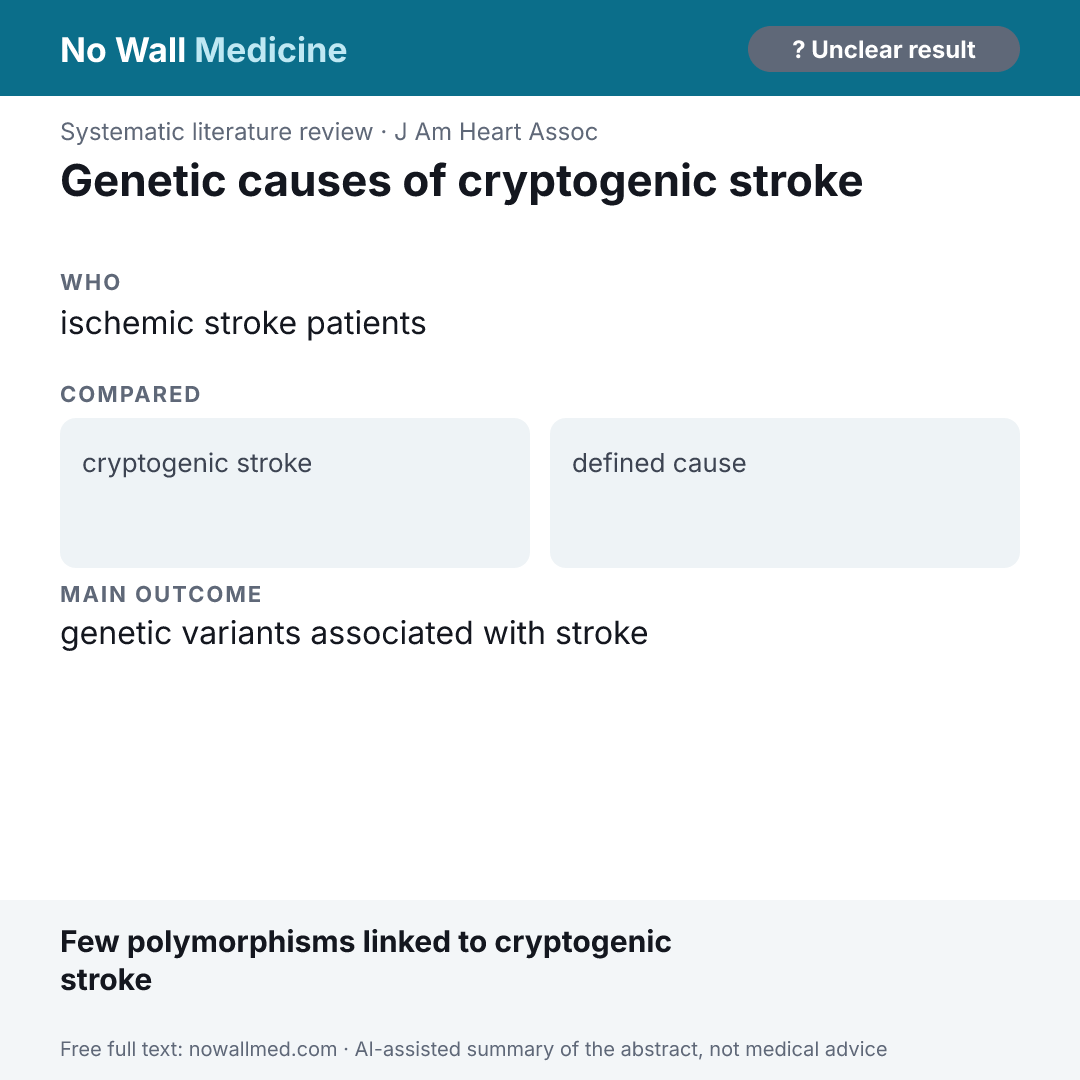
Unraveling Mechanisms of Cryptogenic Stroke at the Genetic Level: A Systematic Literature Review
Systematic literature reviewUnclear result
Genetic causes of cryptogenic stroke
Who
ischemic stroke patients
Compared
cryptogenic stroke
defined cause
Main outcome
genetic variants associated with stroke
Bottom line: Few polymorphisms linked to cryptogenic stroke
Limitation: low granularity of clinical data
J Am Heart Assoc · 2023-07-25 · Save PNG
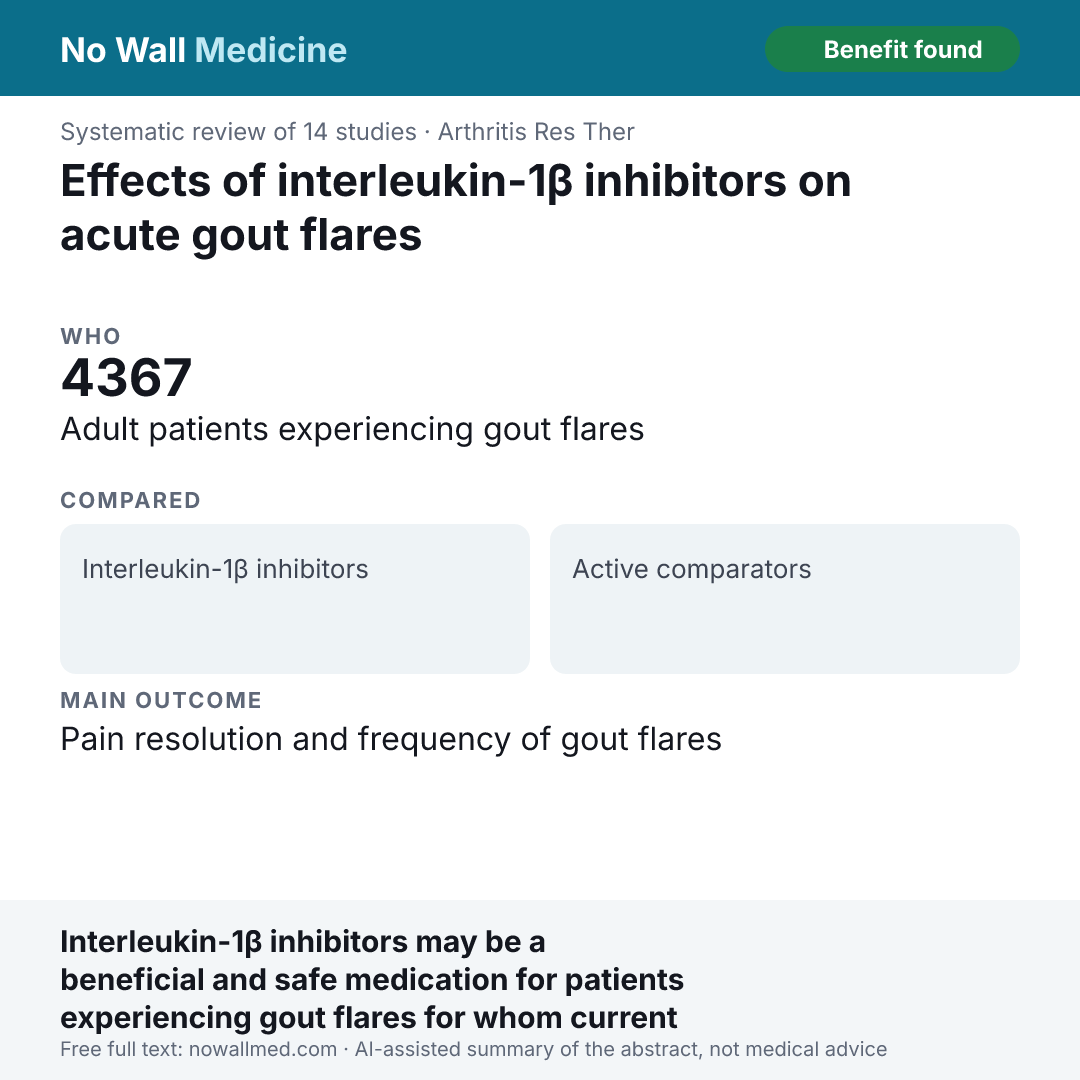
Interleukin-1β inhibitors for the management of acute gout flares: a systematic literature review
Systematic review of 14 studiesBenefit found
Effects of interleukin-1β inhibitors on acute gout flares
Who
4367
Adult patients experiencing gout flares
Compared
Interleukin-1β inhibitors
Active comparators
Main outcome
Pain resolution and frequency of gout flares
Bottom line: Interleukin-1β inhibitors may be a beneficial and safe medication for patients experiencing gout flares for whom current standard therapies are unsuitable.
Arthritis Res Ther · 2023-07-25 · Save PNG