Visual abstracts
New randomized trials and meta-analyses from leading journals at a glance: who was studied, what was compared, and what was found. Every paper is free to read in full.
All specialtiesCardiology 4763Oncology 4042Gastroenterology & Hepatology 1902Infectious Disease 3756Neurology 1872Psychiatry & Mental Health 2214Pulmonology 2042Critical Care 1319Endocrinology & Diabetes 2544Pediatrics 2889Surgery 2479Orthopedics & Sports Medicine 917Neurosurgery 525Cardiothoracic & Vascular Surgery 656Plastic & Reconstructive Surgery 574Nephrology 1107Rheumatology 810Hematology 1090Dermatology 611Ophthalmology 532Obstetrics & Gynecology 1645Public & Global Health 1037Radiology & Imaging 617Anesthesiology 957Urology 745ENT (Otolaryngology) 494Emergency Medicine 481Allergy & Immunology 309Geriatrics 972Family Medicine & Primary Care 533Medical Genetics & Genomics 659Pathology & Laboratory Medicine 156Physical Medicine & Rehabilitation 734Palliative Care 421Nutrition 1560Digital Health & AI 2133General Medicine 318
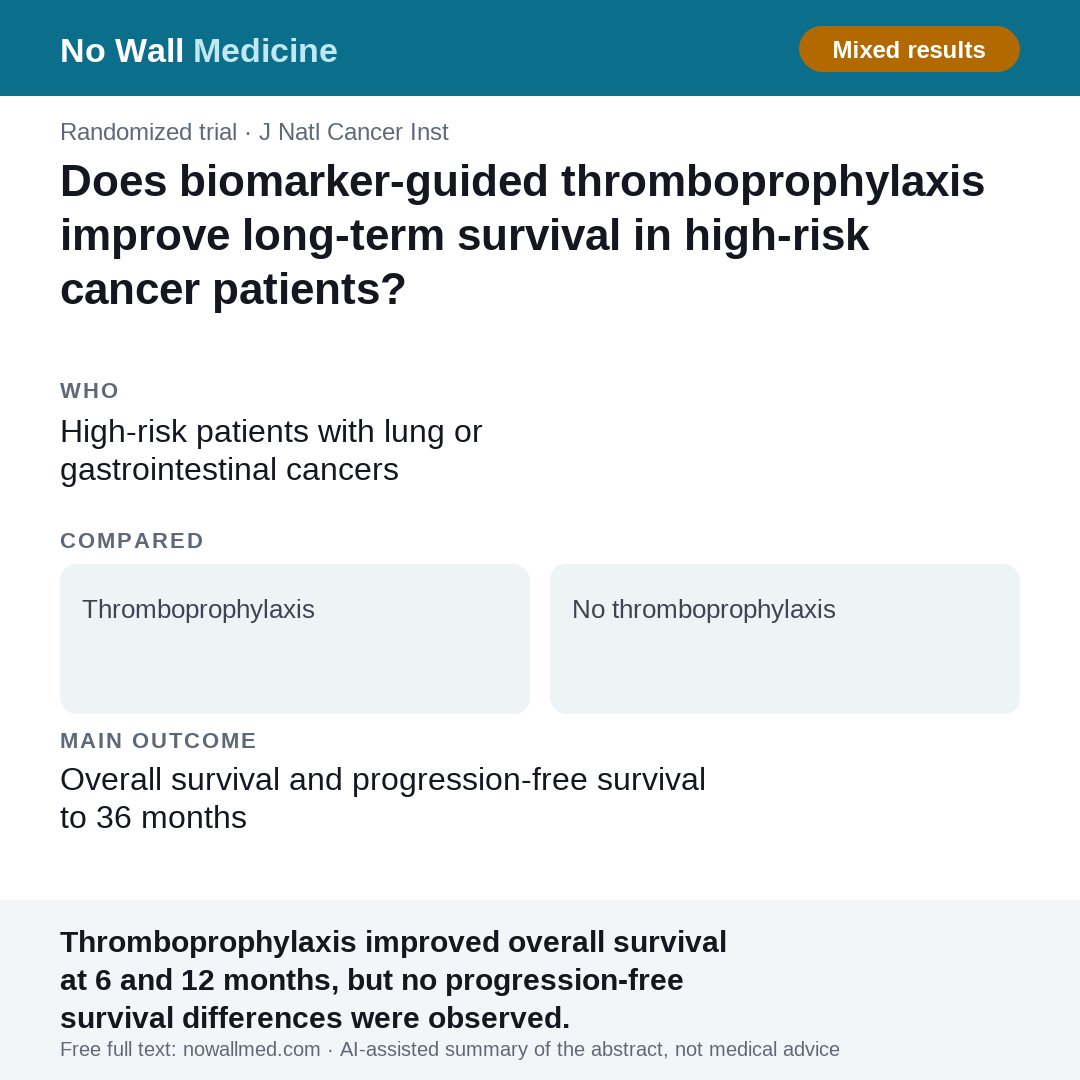
Long-term survival outcomes after biomarker-guided thromboprophylaxis in cancer: extended follow-up of the TARGET-TP randomised trial
Randomized trialMixed results
Does biomarker-guided thromboprophylaxis improve long-term survival in high-risk cancer patients?
Who
High-risk patients with lung or gastrointestinal cancers
Compared
Thromboprophylaxis
No thromboprophylaxis
Main outcome
Overall survival and progression-free survival to 36 months
Bottom line: Thromboprophylaxis improved overall survival at 6 and 12 months, but no progression-free survival differences were observed.
J Natl Cancer Inst · 2026-03-07Download image
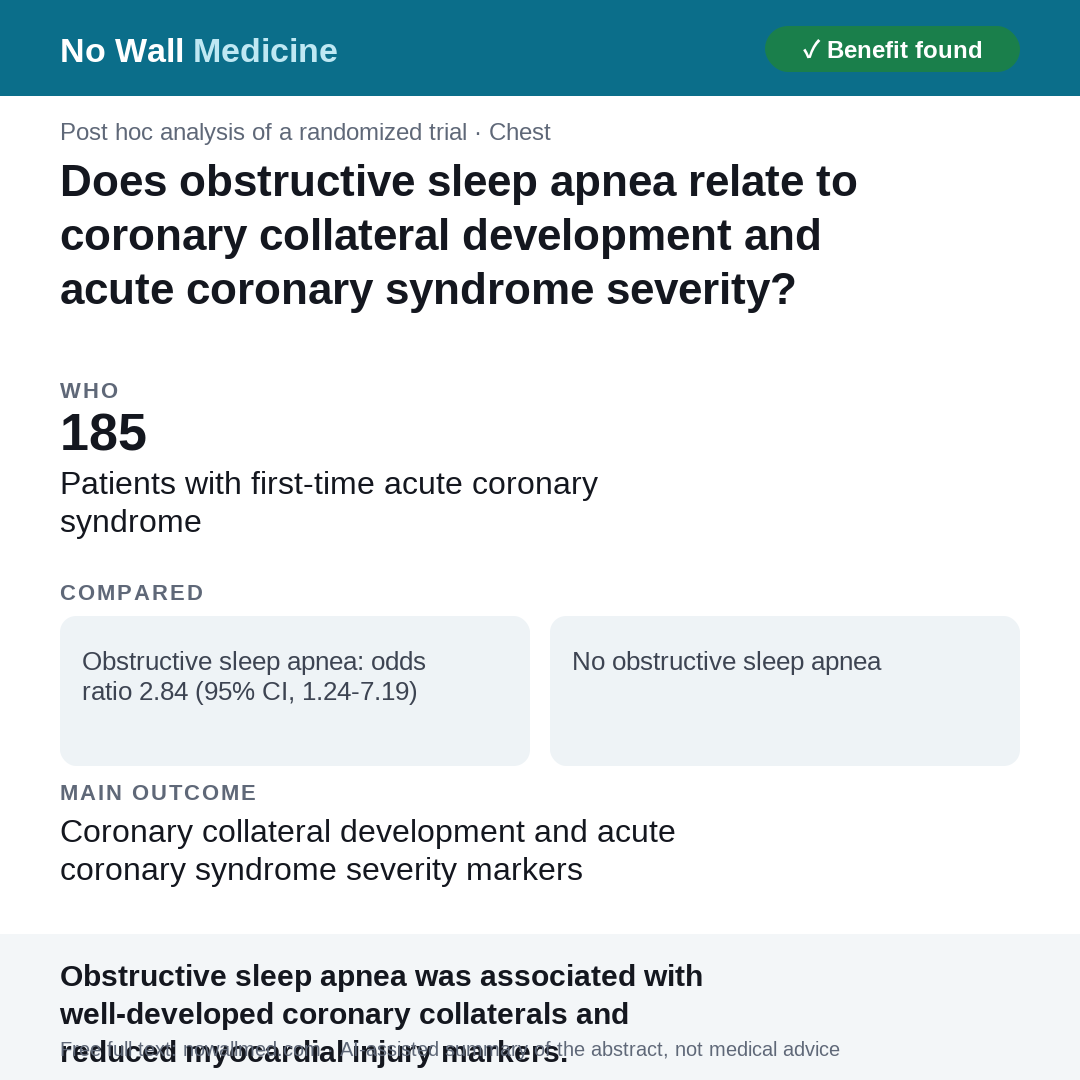
OSA and Acute Coronary Syndrome Severity: The Potential Role of Coronary Collateral Circulation
Post hoc analysis of a randomized trialBenefit found
Does obstructive sleep apnea relate to coronary collateral development and acute coronary syndrome severity?
Who
185
Patients with first-time acute coronary syndrome
Compared
Obstructive sleep apnea: odds ratio 2.84 (95% CI, 1.24-7.19)
No obstructive sleep apnea
Main outcome
Coronary collateral development and acute coronary syndrome severity markers
Result: odds ratio 2.84 (95% CI, 1.24-7.19)
Bottom line: Obstructive sleep apnea was associated with well-developed coronary collaterals and reduced myocardial injury markers.
Chest · 2026-03-07Download image
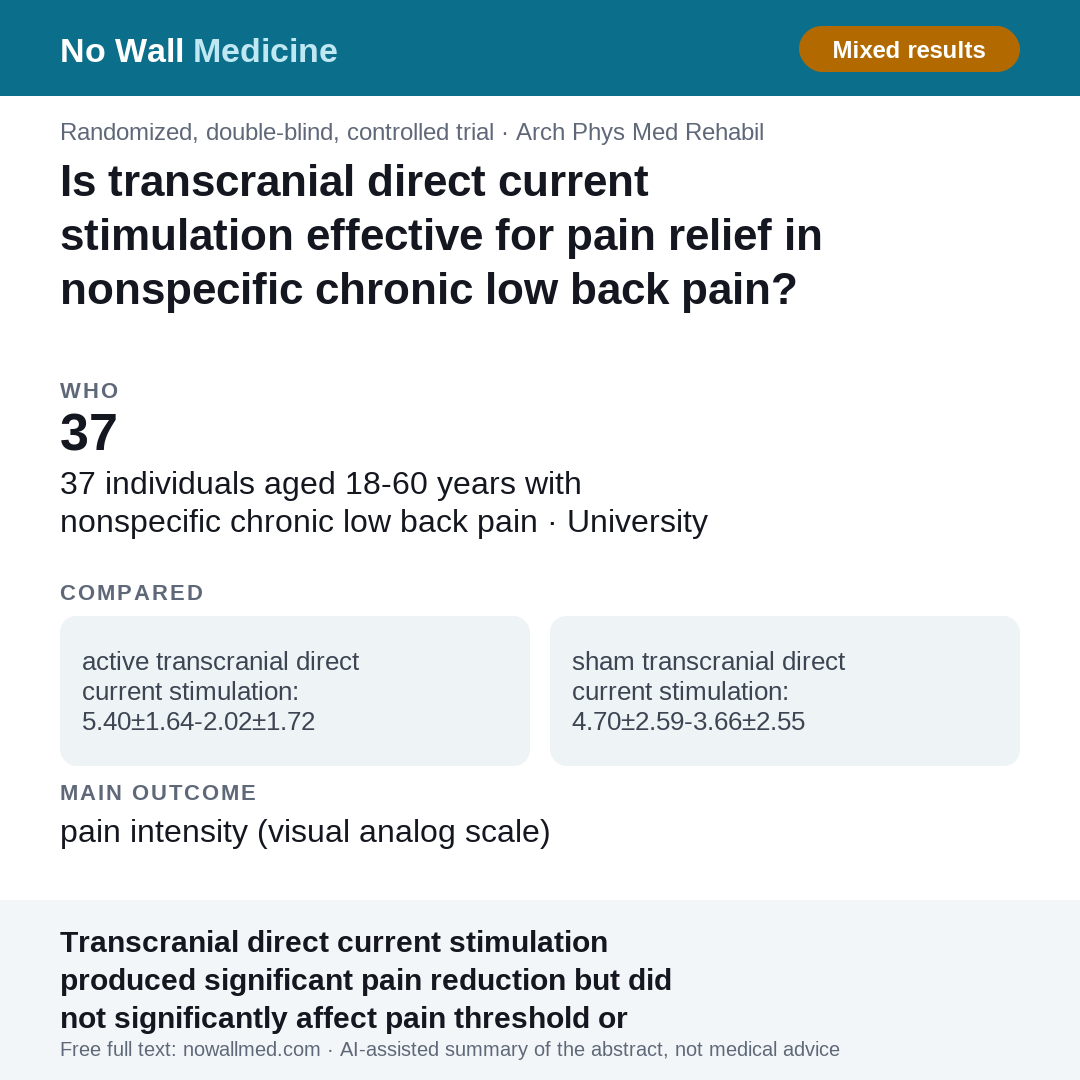
Transcranial Direct Current Stimulation Is Effective for Pain Relief of Individuals With Nonspecific Chronic Low Back Pain: A Double-Blind Randomized Clinical Trial
Randomized, double-blind, controlled trialMixed results
Is transcranial direct current stimulation effective for pain relief in nonspecific chronic low back pain?
Who
37
37 individuals aged 18-60 years with nonspecific chronic low back pain · University laboratory
Compared
active transcranial direct current stimulation: 5.40±1.64-2.02±1.72
sham transcranial direct current stimulation: 4.70±2.59-3.66±2.55
Main outcome
pain intensity (visual analog scale)
Bottom line: Transcranial direct current stimulation produced significant pain reduction but did not significantly affect pain threshold or disability levels.
Limitation: Further studies with larger sample sizes, varied stimulation parameters, and combined interventions are needed.
Arch Phys Med Rehabil · 2026-03-07Download image
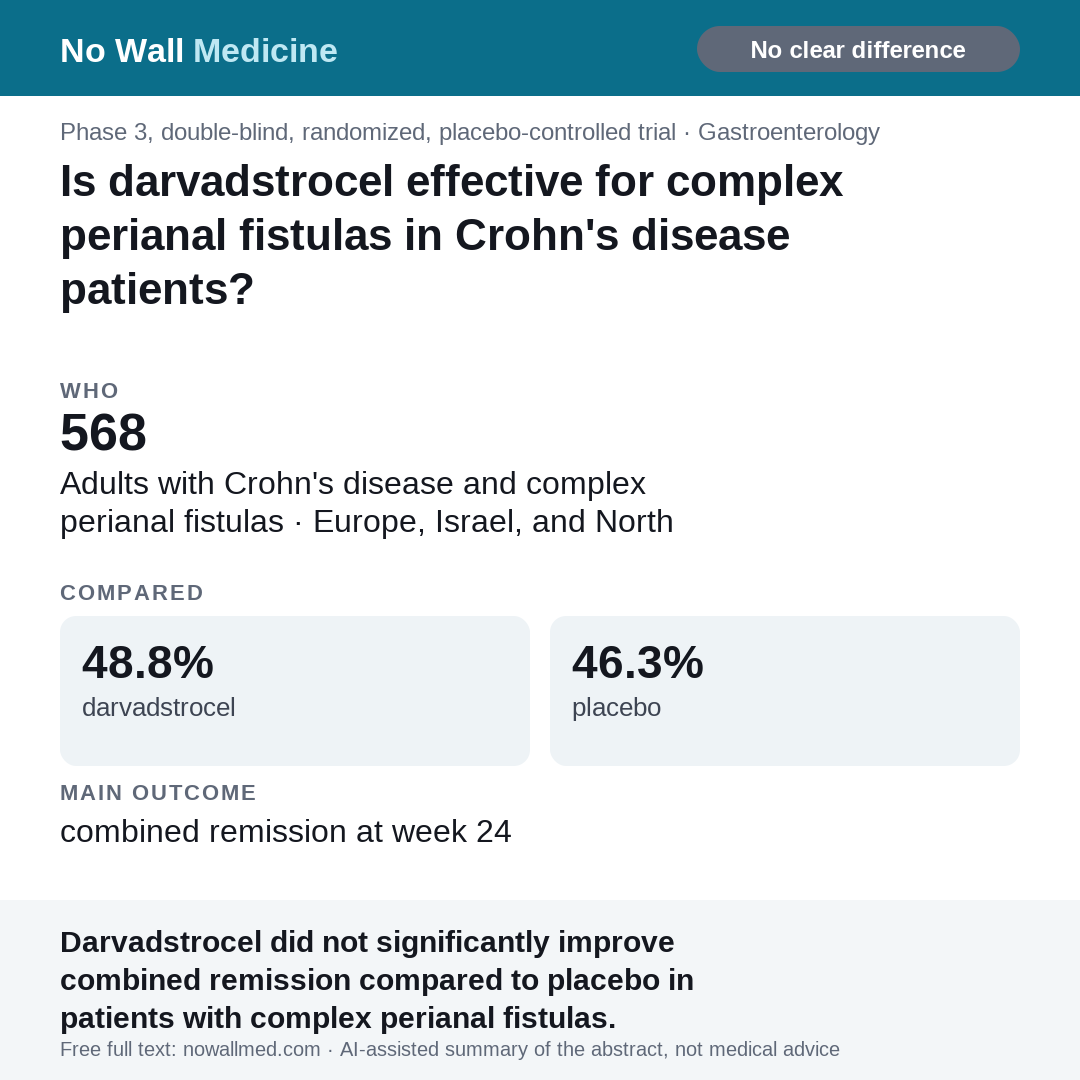
Darvadstrocel in Patients With Crohn's Disease With Complex Perianal Fistulas: The ADMIRE CD II Phase 3 Randomized Trial
Phase 3, double-blind, randomized, placebo-controlled trialNo clear difference
Is darvadstrocel effective for complex perianal fistulas in Crohn's disease patients?
Who
568
Adults with Crohn's disease and complex perianal fistulas · Europe, Israel, and North America
Compared
48.8%darvadstrocel
46.3%placebo
Main outcome
combined remission at week 24
Result: estimated treatment difference: 2.4% (95% CI, -5.8 to 10.6)
Bottom line: Darvadstrocel did not significantly improve combined remission compared to placebo in patients with complex perianal fistulas.
Gastroenterology · 2026-03-06Download image
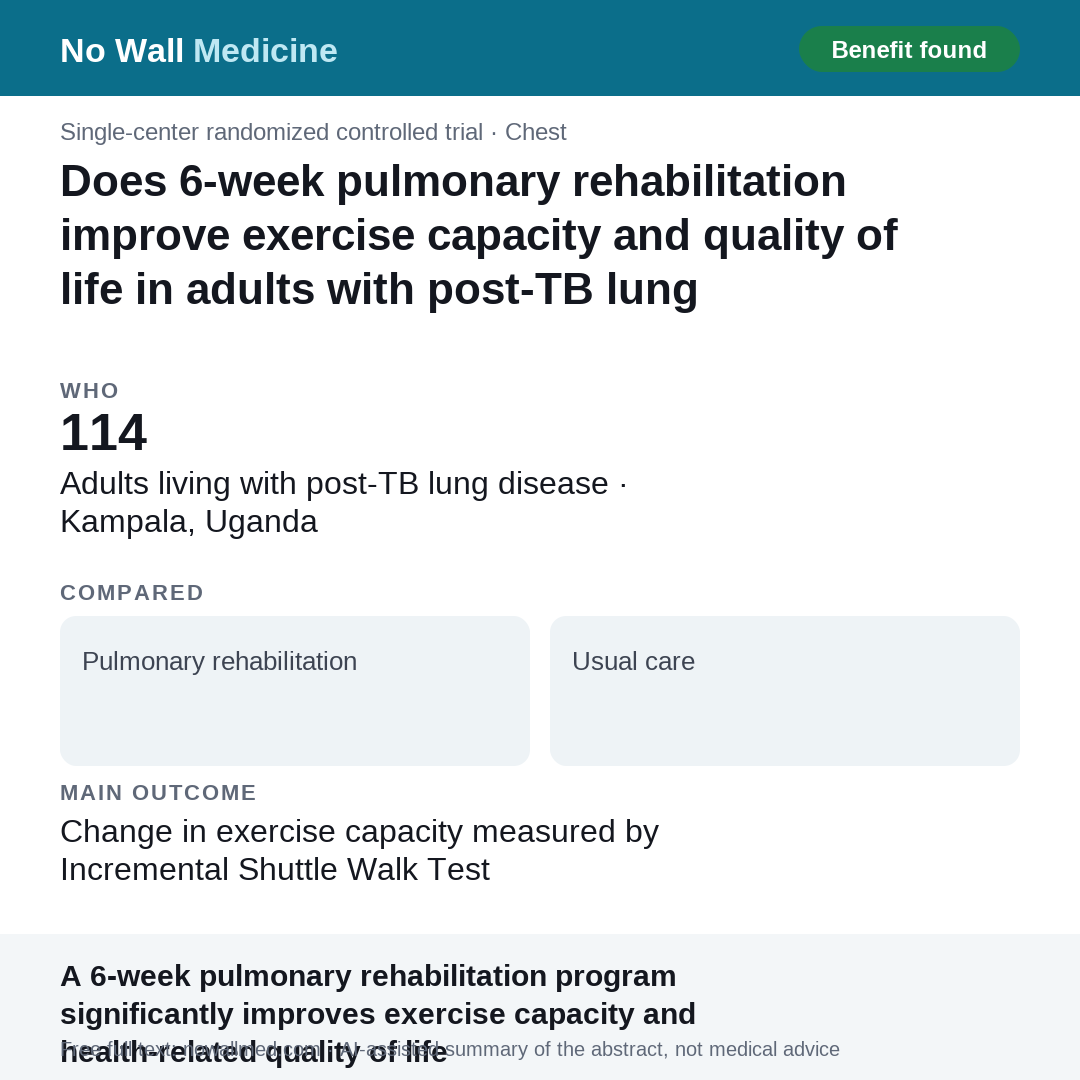
Clinical Effectiveness and Cost-Effectiveness of Pulmonary Rehabilitation for People in Uganda With Post-TB Lung Disease: A Randomized Controlled Trial
Single-center randomized controlled trialBenefit found
Does 6-week pulmonary rehabilitation improve exercise capacity and quality of life in adults with post-TB lung disease?
Who
114
Adults living with post-TB lung disease · Kampala, Uganda
Compared
Pulmonary rehabilitation
Usual care
Main outcome
Change in exercise capacity measured by Incremental Shuttle Walk Test
Result: 54.36 m (95% CI, 17.22-91.51 m)
Bottom line: A 6-week pulmonary rehabilitation program significantly improves exercise capacity and health-related quality of life cost-effectively in adults with post-TB lung disease.
Chest · 2026-03-06Download image
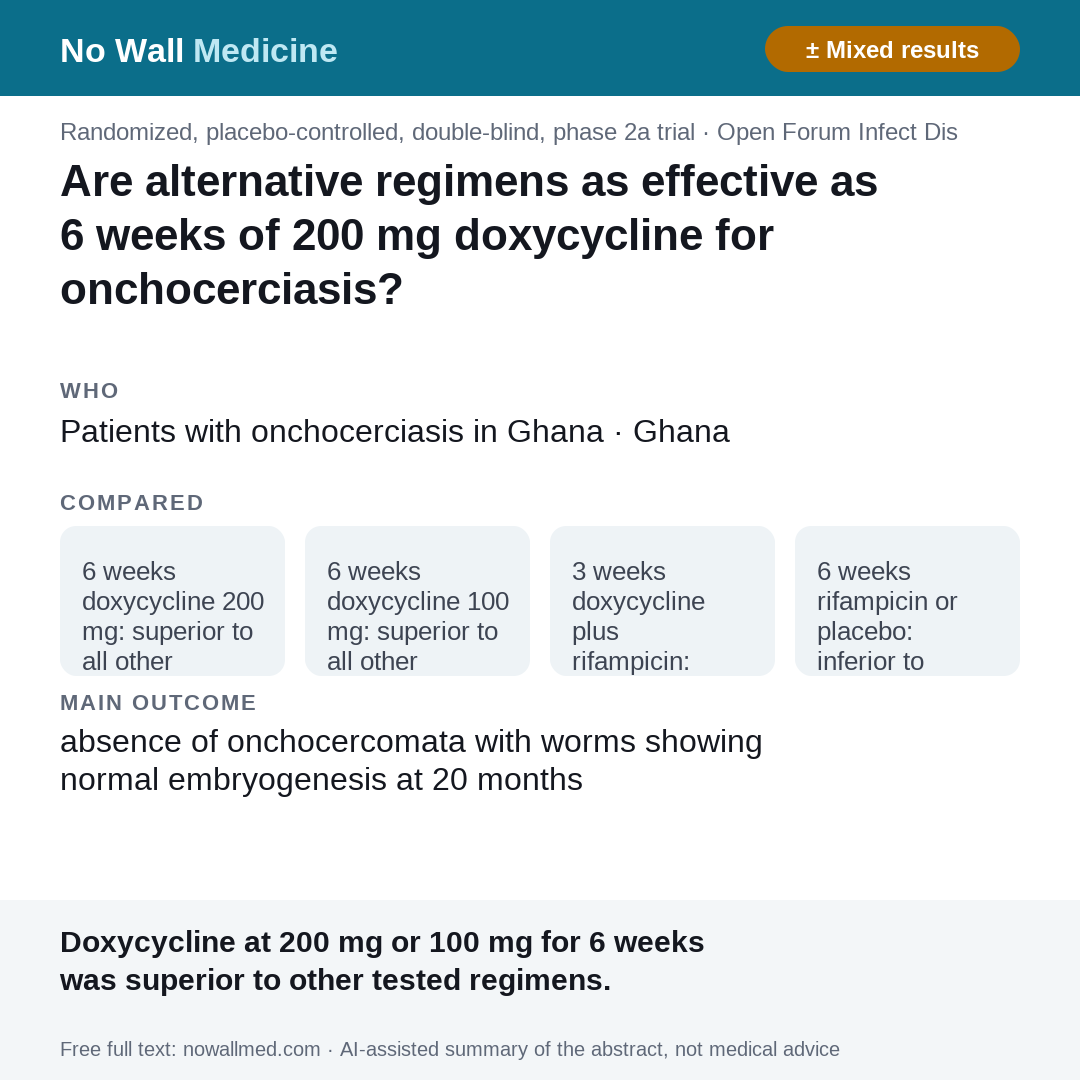
Comparison of 6-Week Doxycycline vs 6-Week Rifampicin or 3 Weeks of Doxycycline Plus Rifampicin in the Treatment of Onchocerciasis: A Randomized, Placebo-Controlled, Double-Blind, Phase 2 Trial
Randomized, placebo-controlled, double-blind, phase 2a trialMixed results
Are alternative regimens as effective as 6 weeks of 200 mg doxycycline for onchocerciasis?
Who
Patients with onchocerciasis in Ghana · Ghana
Compared
6 weeks doxycycline 200 mg: superior to all other interventions
6 weeks doxycycline 100 mg: superior to all other interventions
3 weeks doxycycline plus rifampicin: less effective than doxycycline 200 mg or 100 mg
6 weeks rifampicin or placebo: inferior to doxycycline regimens
Main outcome
absence of onchocercomata with worms showing normal embryogenesis at 20 months
Bottom line: Doxycycline at 200 mg or 100 mg for 6 weeks was superior to other tested regimens.
Open Forum Infect Dis · 2026-03-06Download image
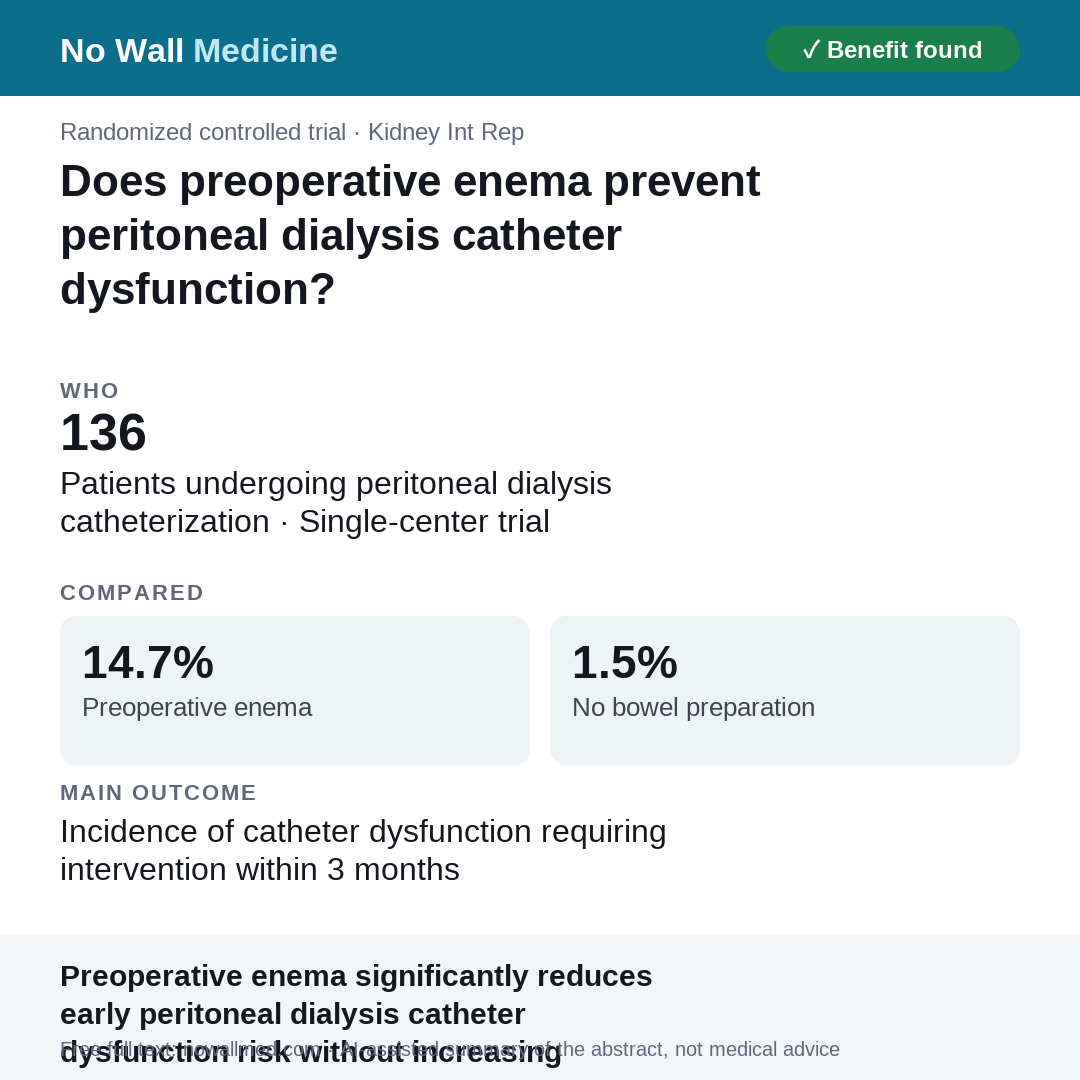
Randomized Clinical Trial on the Efficacy and Safety of Preoperative Enema in the Prevention of Peritoneal Dialysis Catheter Dysfunction
Randomized controlled trialBenefit found
Does preoperative enema prevent peritoneal dialysis catheter dysfunction?
Who
136
Patients undergoing peritoneal dialysis catheterization · Single-center trial
Compared
14.7%Preoperative enema (10/68)
1.5%No bowel preparation (1/68)
Main outcome
Incidence of catheter dysfunction requiring intervention within 3 months
Result: unadjusted risk ratio 0.297 (95% CI 0.129-0.682)
Bottom line: Preoperative enema significantly reduces early peritoneal dialysis catheter dysfunction risk without increasing complication rates.
Kidney Int Rep · 2026-03-06Download image
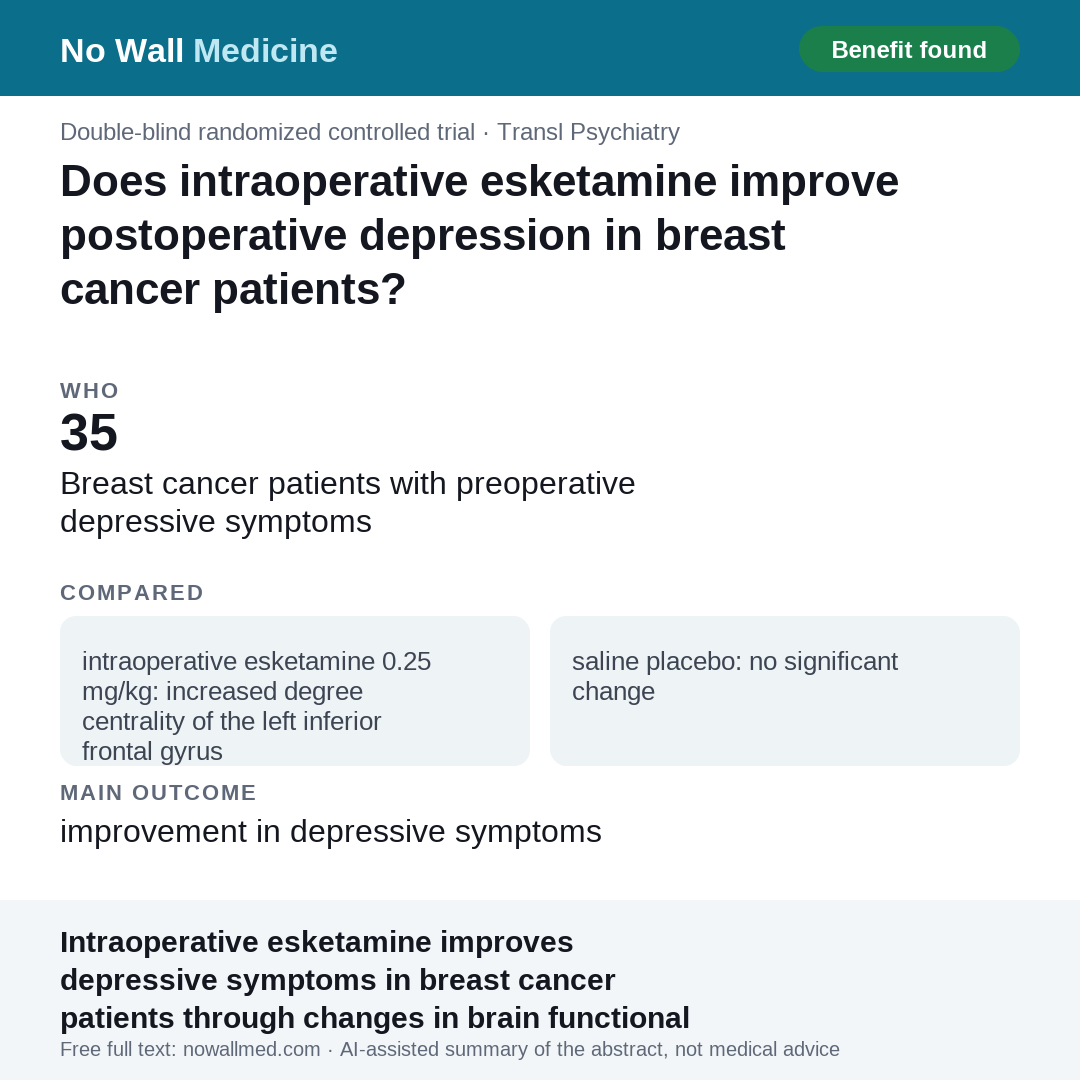
Brain functional network correlates and predictors of the perioperative antidepressant effect of esketamine in breast cancer patients: a double-blind randomized controlled trial using resting-state fMRI and graph theory
Double-blind randomized controlled trialBenefit found
Does intraoperative esketamine improve postoperative depression in breast cancer patients?
Who
35
Breast cancer patients with preoperative depressive symptoms
Compared
intraoperative esketamine 0.25 mg/kg: increased degree centrality of the left inferior frontal gyrus
saline placebo: no significant change
Main outcome
improvement in depressive symptoms
Bottom line: Intraoperative esketamine improves depressive symptoms in breast cancer patients through changes in brain functional network measures.
Transl Psychiatry · 2026-03-06Download image
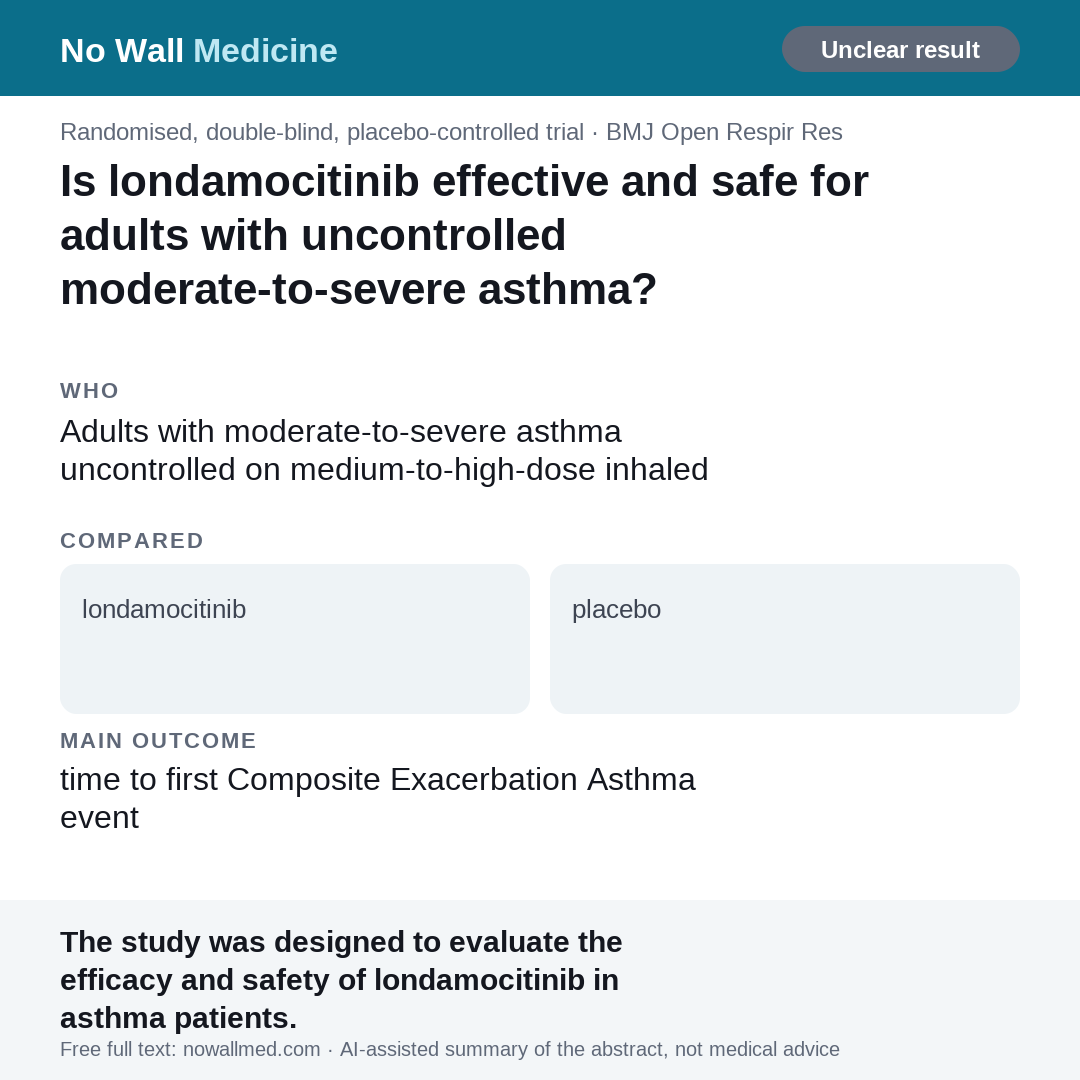
Phase 2a randomised, double-blind, placebo-controlled study to evaluate the efficacy and safety of londamocitinib (AZD4604) two times per day for 12 weeks in adult patients with moderate-to-severe asthma uncontrolled on medium-high-dose ICS-LABA
Randomised, double-blind, placebo-controlled trialUnclear result
Is londamocitinib effective and safe for adults with uncontrolled moderate-to-severe asthma?
Who
Adults with moderate-to-severe asthma uncontrolled on medium-to-high-dose inhaled corticosteroid/long-acting beta2-agonist
Compared
londamocitinib
placebo
Main outcome
time to first Composite Exacerbation Asthma event
Bottom line: The study was designed to evaluate the efficacy and safety of londamocitinib in asthma patients.
BMJ Open Respir Res · 2026-03-06Download image
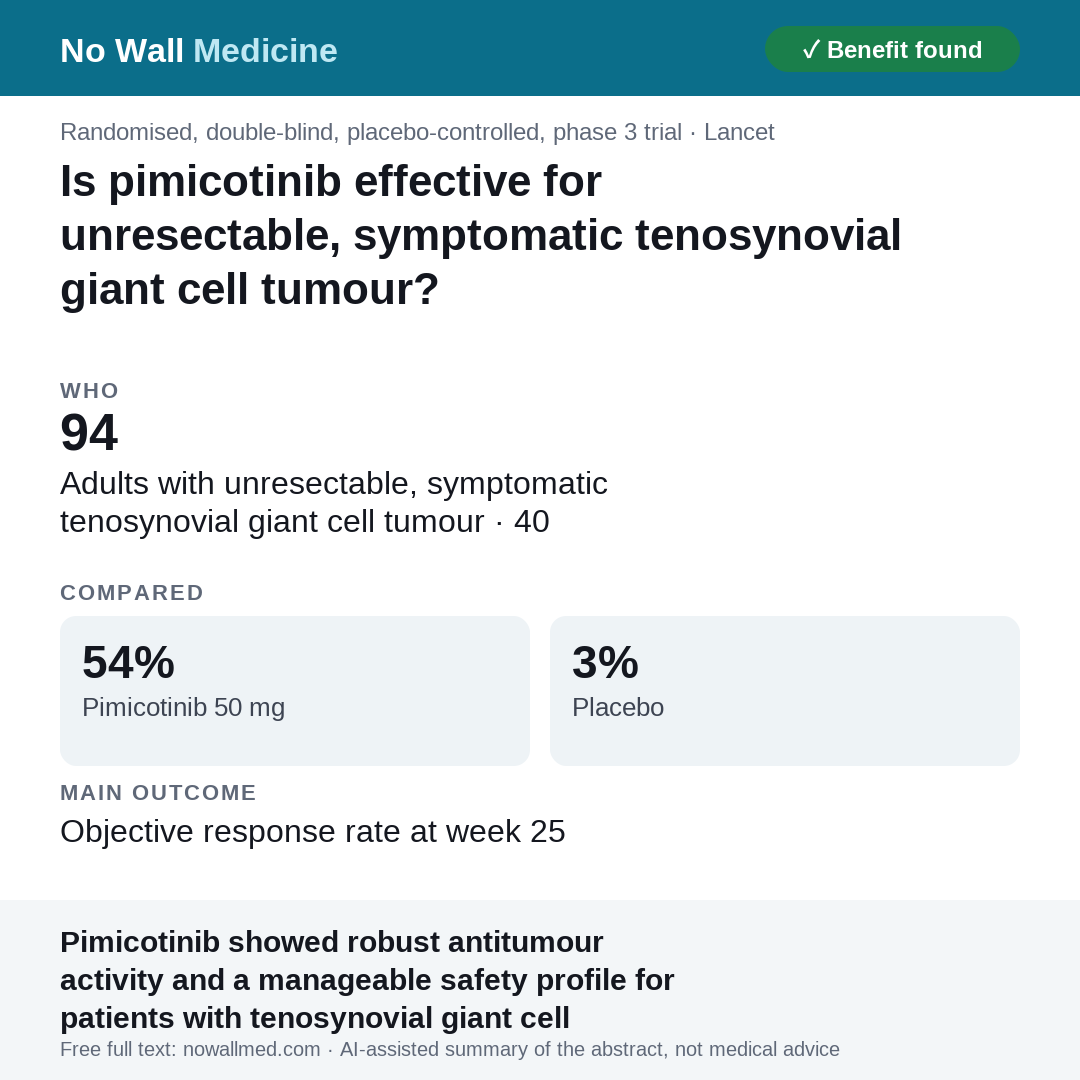
Pimicotinib versus placebo for tenosynovial giant cell tumour (MANEUVER): an international, randomised, placebo-controlled, phase 3 trial
Randomised, double-blind, placebo-controlled, phase 3 trialBenefit found
Is pimicotinib effective for unresectable, symptomatic tenosynovial giant cell tumour?
Who
94
Adults with unresectable, symptomatic tenosynovial giant cell tumour · 40 specialised hospitals in Asia, Europe, and North America
Compared
54%Pimicotinib 50 mg (34 of 63)
3%Placebo (one of 31)
Main outcome
Objective response rate at week 25
Result: absolute difference 51% (95% CI 33-63)
Bottom line: Pimicotinib showed robust antitumour activity and a manageable safety profile for patients with tenosynovial giant cell tumour.
Limitation: Missing data were not imputed and only observed data were analysed.
Funded by: Abbisko Therapeutics
Lancet · 2026-03-05Download image
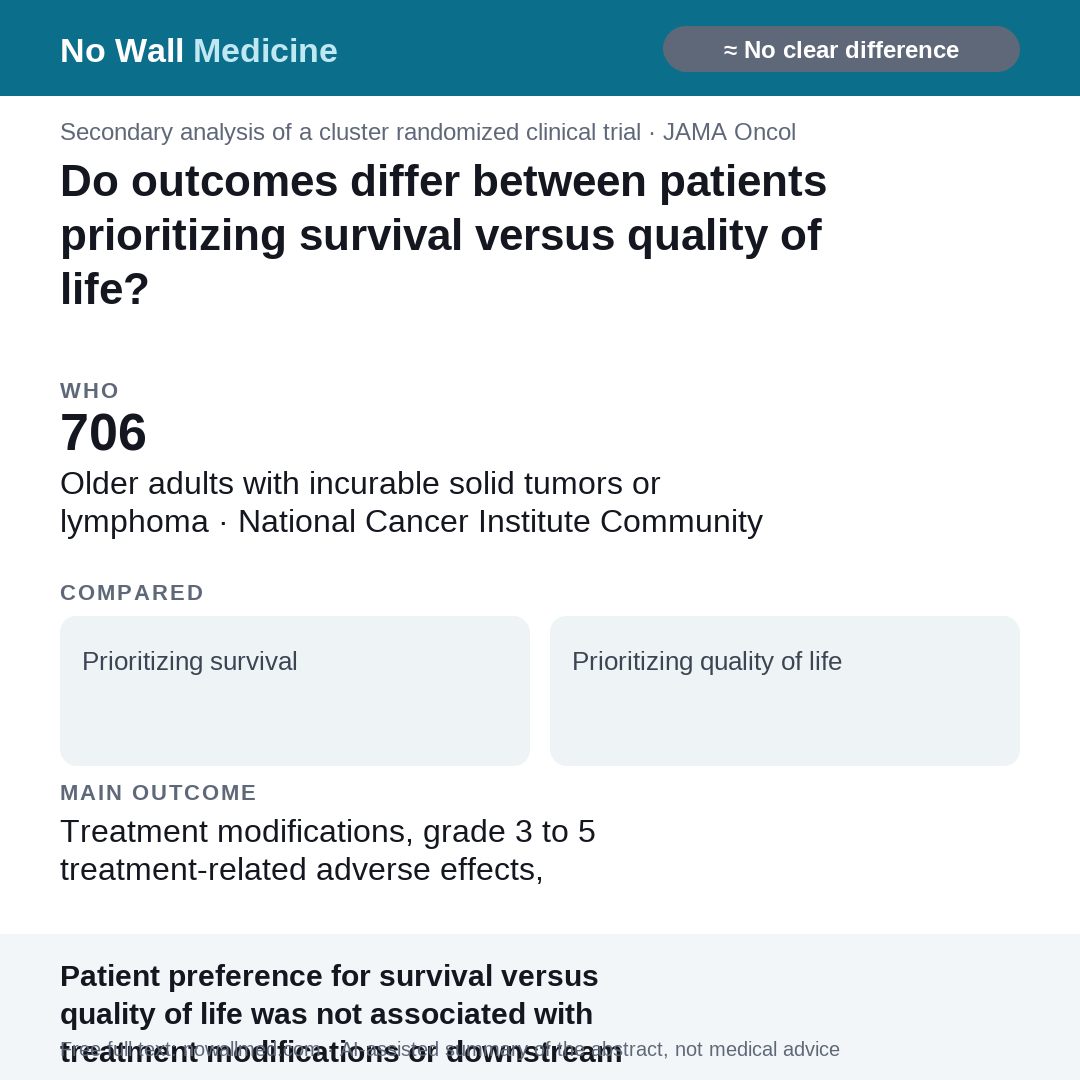
Outcomes of Older Adults With Advanced Cancer Who Prefer Quality of Life vs Prolonging Survival: A Secondary Analysis of the GAP70+ Cluster Randomized Clinical Trial
Secondary analysis of a cluster randomized clinical trialNo clear difference
Do outcomes differ between patients prioritizing survival versus quality of life?
Who
706
Older adults with incurable solid tumors or lymphoma · National Cancer Institute Community Oncology Research Program centers
Compared
Prioritizing survival
Prioritizing quality of life
Main outcome
Treatment modifications, grade 3 to 5 treatment-related adverse effects, hospitalization, and survival
Result: no significant associations identified
Bottom line: Patient preference for survival versus quality of life was not associated with treatment modifications or downstream clinical outcomes.
JAMA Oncol · 2026-03-05Download image
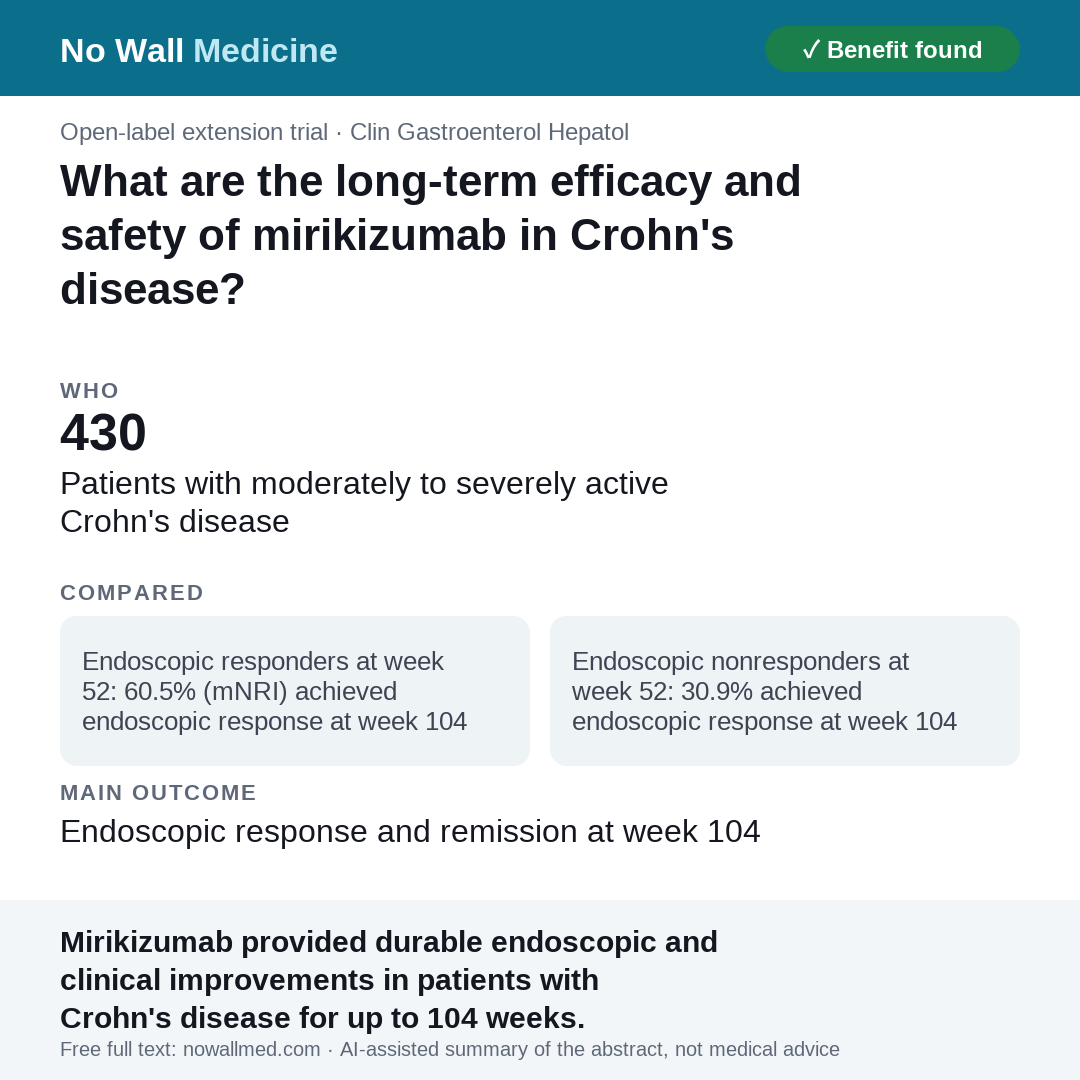
Mirikizumab Long-Term Efficacy and Safety in Patients With Crohn's Disease: Results From the VIVID-2 Open-Label Extension Trial
Open-label extension trialBenefit found
What are the long-term efficacy and safety of mirikizumab in Crohn's disease?
Who
430
Patients with moderately to severely active Crohn's disease
Compared
Endoscopic responders at week 52: 60.5% (mNRI) achieved endoscopic response at week 104
Endoscopic nonresponders at week 52: 30.9% achieved endoscopic response at week 104
Main outcome
Endoscopic response and remission at week 104
Bottom line: Mirikizumab provided durable endoscopic and clinical improvements in patients with Crohn's disease for up to 104 weeks.
Clin Gastroenterol Hepatol · 2026-03-05Download image
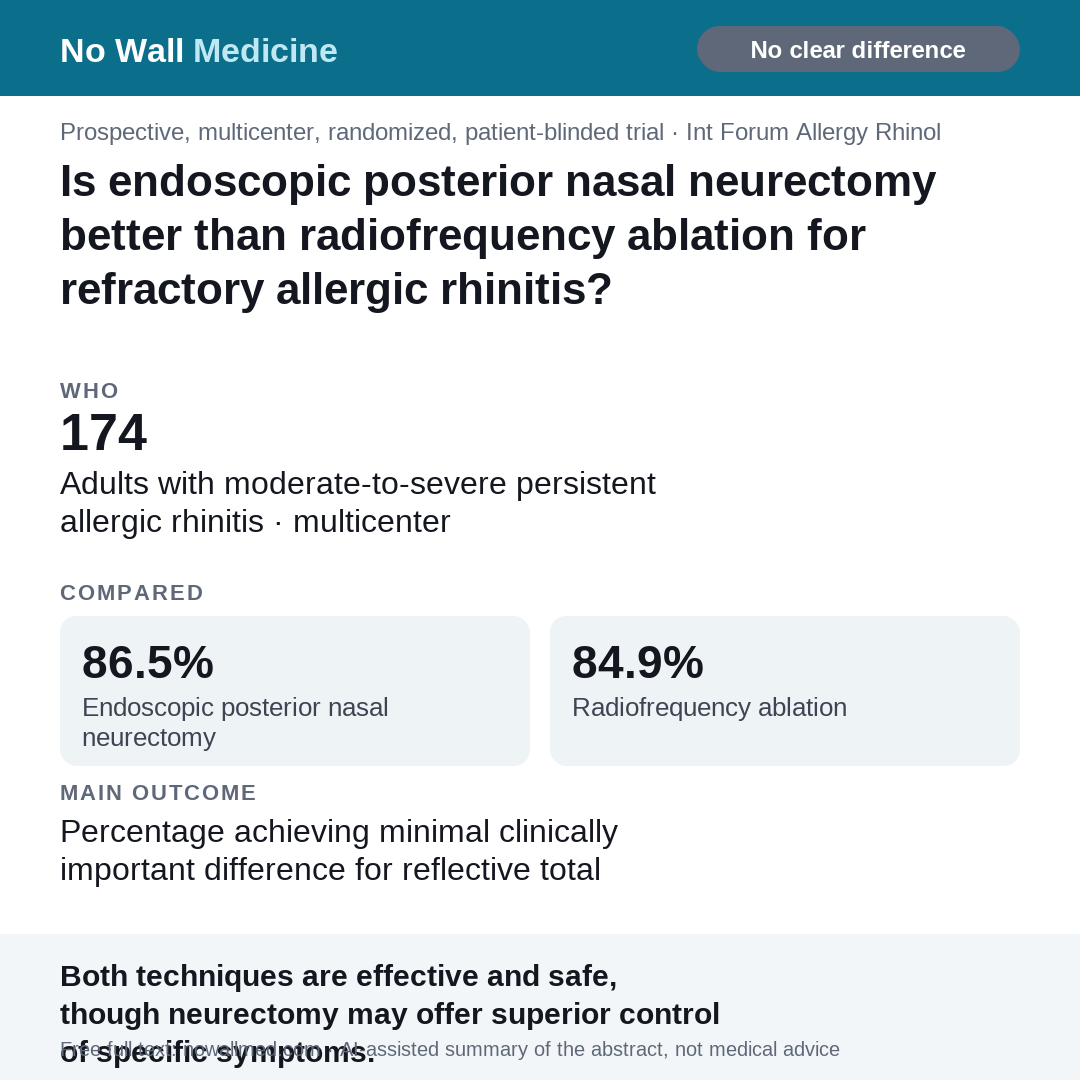
Endoscopic Posterior Nasal Neurectomy Versus Radiofrequency Ablation in Refractory Allergic Rhinitis: A 2-Year Randomized Controlled Trial of Clinical Outcomes and Immunomodulatory Responses
Prospective, multicenter, randomized, patient-blinded trialNo clear difference
Is endoscopic posterior nasal neurectomy better than radiofrequency ablation for refractory allergic rhinitis?
Who
174
Adults with moderate-to-severe persistent allergic rhinitis · multicenter
Compared
86.5%Endoscopic posterior nasal neurectomy (95% CI, 80.0-95.0%)
84.9%Radiofrequency ablation (95% CI, 78.0-94.0%)
Main outcome
Percentage achieving minimal clinically important difference for reflective total nasal symptom score
Bottom line: Both techniques are effective and safe, though neurectomy may offer superior control of specific symptoms.
Int Forum Allergy Rhinol · 2026-03-05Download image
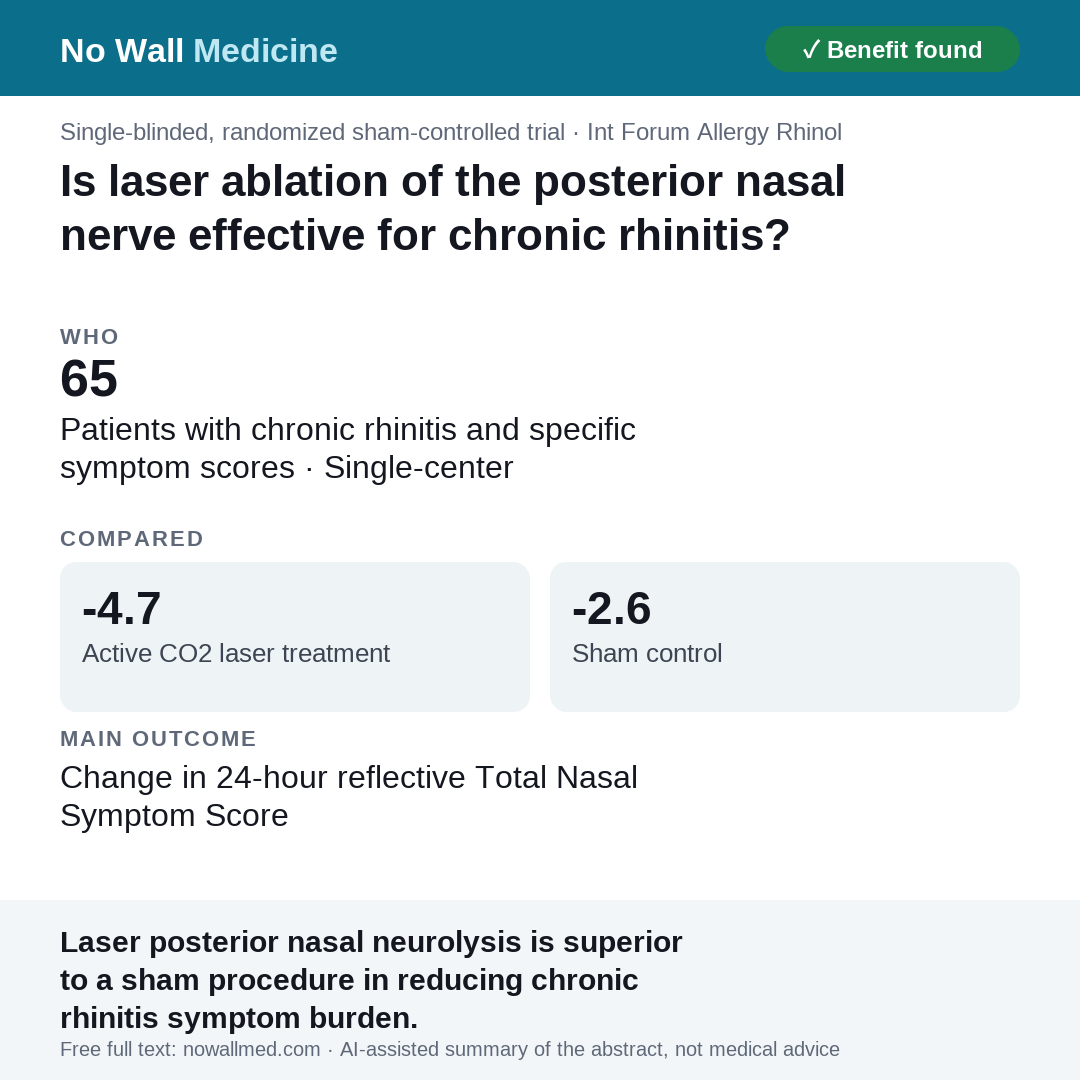
Effect of Laser Posterior Nasal Neurolysis for the Treatment of Chronic Rhinitis: A Randomized Controlled Trial
Single-blinded, randomized sham-controlled trialBenefit found
Is laser ablation of the posterior nasal nerve effective for chronic rhinitis?
Who
65
Patients with chronic rhinitis and specific symptom scores · Single-center
Compared
-4.7Active CO2 laser treatment (95% CI, -5.5 to -3.9)
-2.6Sham control (95% CI, -3.4 to -1.8)
Main outcome
Change in 24-hour reflective Total Nasal Symptom Score
Bottom line: Laser posterior nasal neurolysis is superior to a sham procedure in reducing chronic rhinitis symptom burden.
Int Forum Allergy Rhinol · 2026-03-05Download image
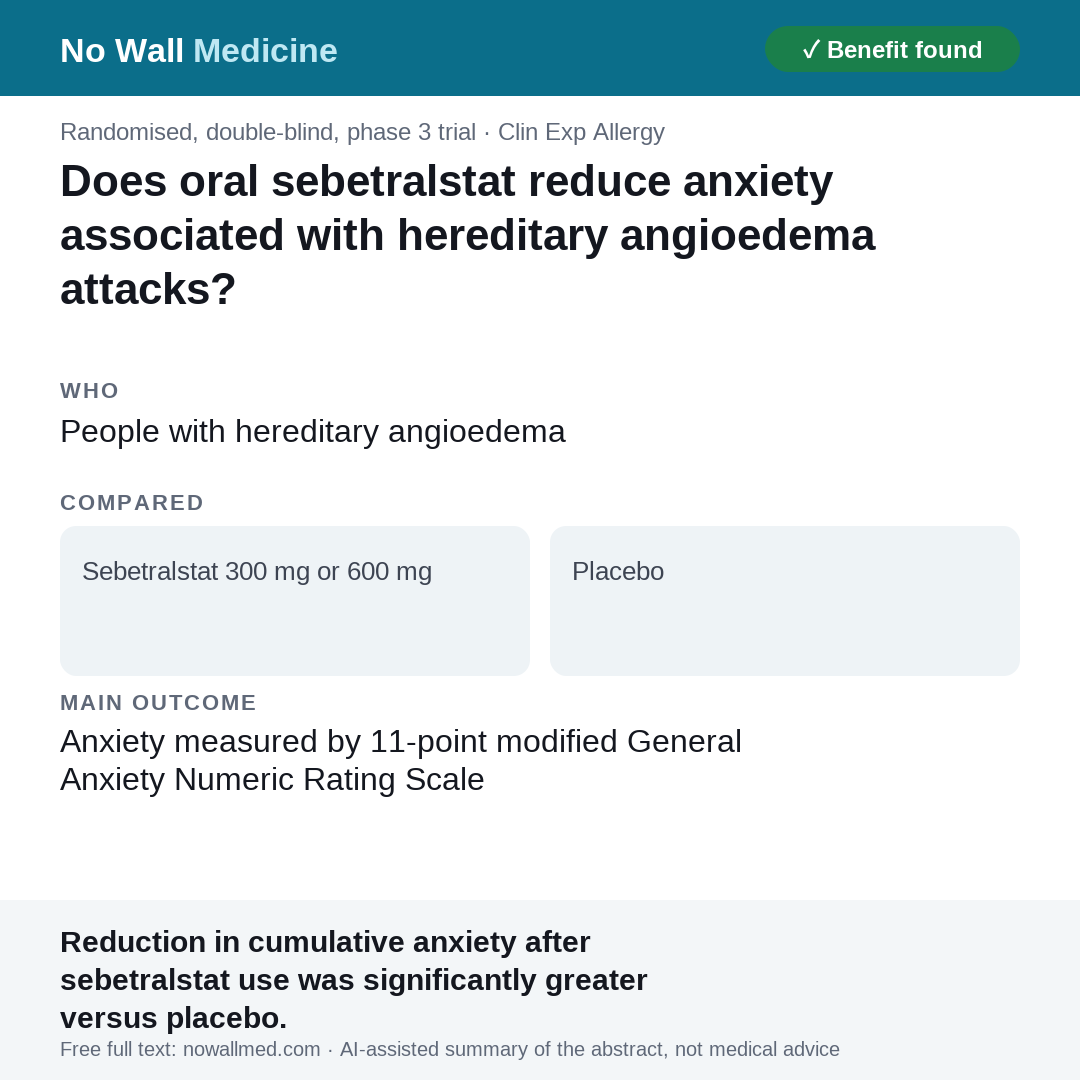
Impact of Oral Sebetralstat on Anxiety Associated With Hereditary Angioedema Attacks
Randomised, double-blind, phase 3 trialBenefit found
Does oral sebetralstat reduce anxiety associated with hereditary angioedema attacks?
Who
People with hereditary angioedema
Compared
Sebetralstat 300 mg or 600 mg
Placebo
Main outcome
Anxiety measured by 11-point modified General Anxiety Numeric Rating Scale
Bottom line: Reduction in cumulative anxiety after sebetralstat use was significantly greater versus placebo.
Funded by: KalVista Pharmaceuticals
Clin Exp Allergy · 2026-03-05Download image
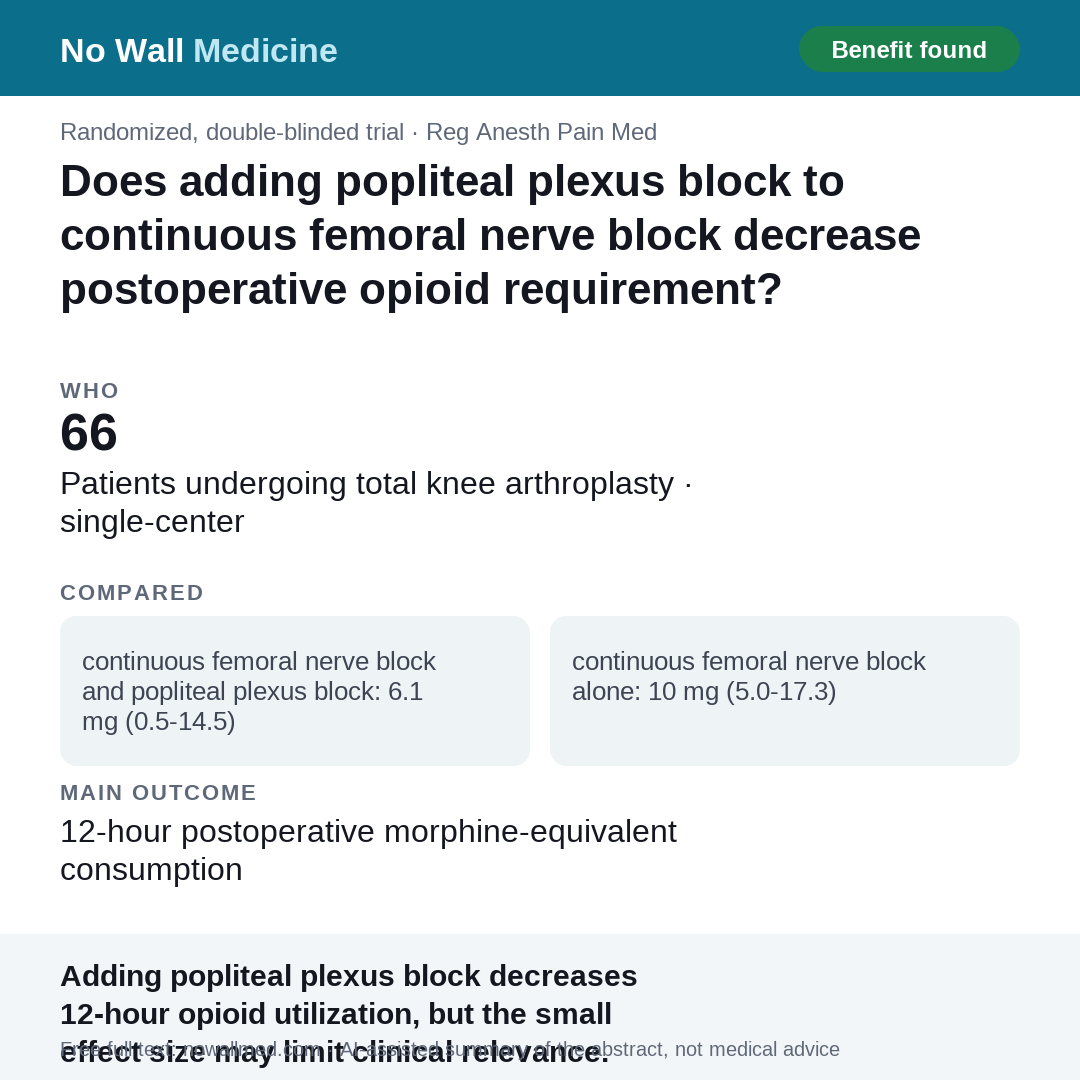
Popliteal plexus block in total knee arthroplasty: a single-center randomized controlled double-blinded trial
Randomized, double-blinded trialBenefit found
Does adding popliteal plexus block to continuous femoral nerve block decrease postoperative opioid requirement?
Who
66
Patients undergoing total knee arthroplasty · single-center
Compared
continuous femoral nerve block and popliteal plexus block: 6.1 mg (0.5-14.5)
continuous femoral nerve block alone: 10 mg (5.0-17.3)
Main outcome
12-hour postoperative morphine-equivalent consumption
Bottom line: Adding popliteal plexus block decreases 12-hour opioid utilization, but the small effect size may limit clinical relevance.
Reg Anesth Pain Med · 2026-03-05Download image
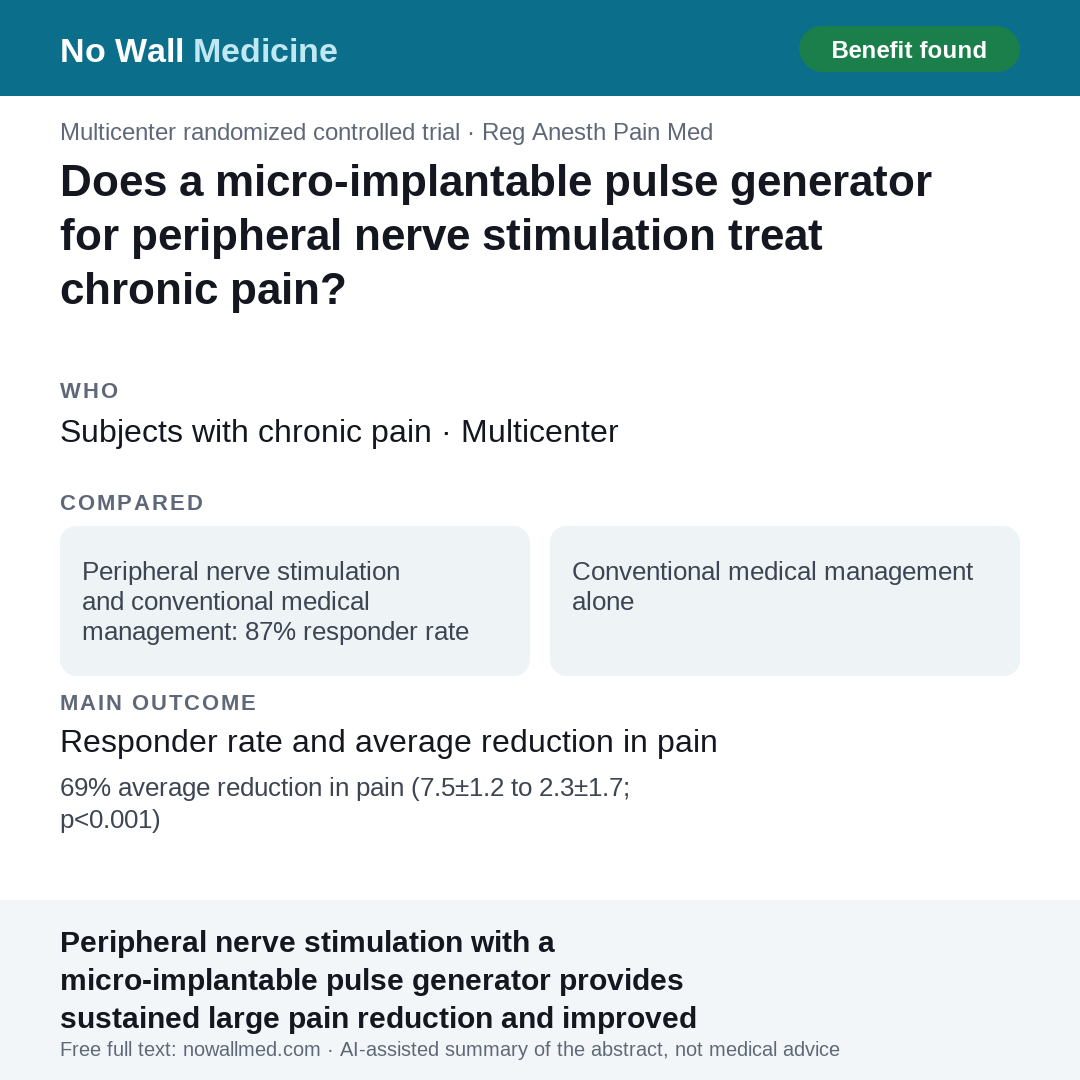
Clinical study of a micro-implantable pulse generator for the treatment of peripheral neuropathic pain: 12-month results from the COMFORT-randomized controlled trial
Multicenter randomized controlled trialBenefit found
Does a micro-implantable pulse generator for peripheral nerve stimulation treat chronic pain?
Who
Subjects with chronic pain · Multicenter
Compared
Peripheral nerve stimulation and conventional medical management: 87% responder rate
Conventional medical management alone
Main outcome
Responder rate and average reduction in pain
Result: 69% average reduction in pain (7.5±1.2 to 2.3±1.7; p<0.001)
Bottom line: Peripheral nerve stimulation with a micro-implantable pulse generator provides sustained large pain reduction and improved patient-reported outcomes.
Reg Anesth Pain Med · 2026-03-05Download image
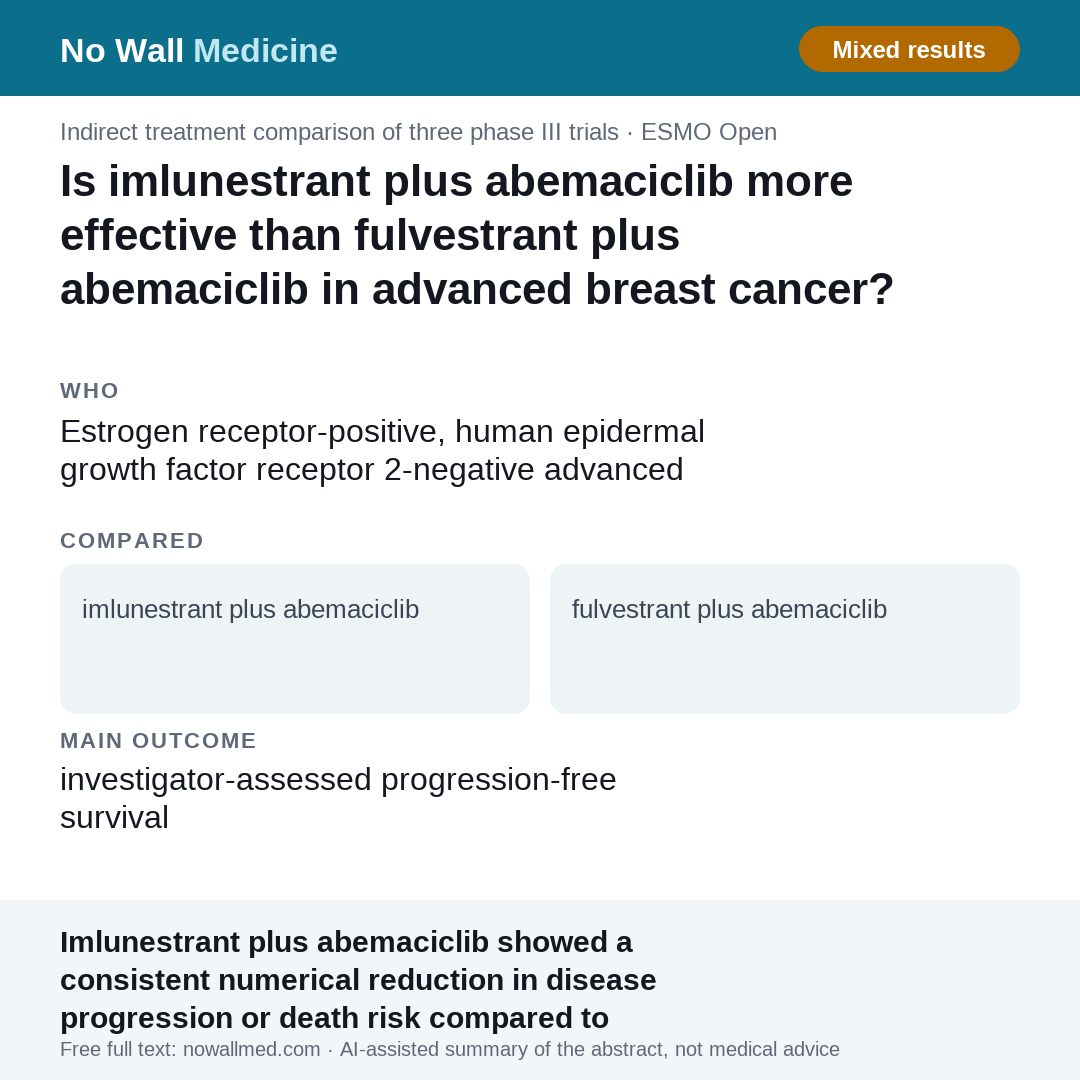
Imlunestrant plus abemaciclib versus fulvestrant plus abemaciclib in ER-positive, HER2-negative advanced breast cancer: an indirect treatment comparison of three phase III trials
Indirect treatment comparison of three phase III trialsMixed results
Is imlunestrant plus abemaciclib more effective than fulvestrant plus abemaciclib in advanced breast cancer?
Who
Estrogen receptor-positive, human epidermal growth factor receptor 2-negative advanced breast cancer patients
Compared
imlunestrant plus abemaciclib
fulvestrant plus abemaciclib
Main outcome
investigator-assessed progression-free survival
Result: hazard ratio 0.77 (95% CI 0.58-1.04), 0.77 (95% CI 0.55-1.06), and 0.83 (95% CI 0.56-1.22)
Bottom line: Imlunestrant plus abemaciclib showed a consistent numerical reduction in disease progression or death risk compared to fulvestrant plus abemaciclib.
ESMO Open · 2026-03-05Download image
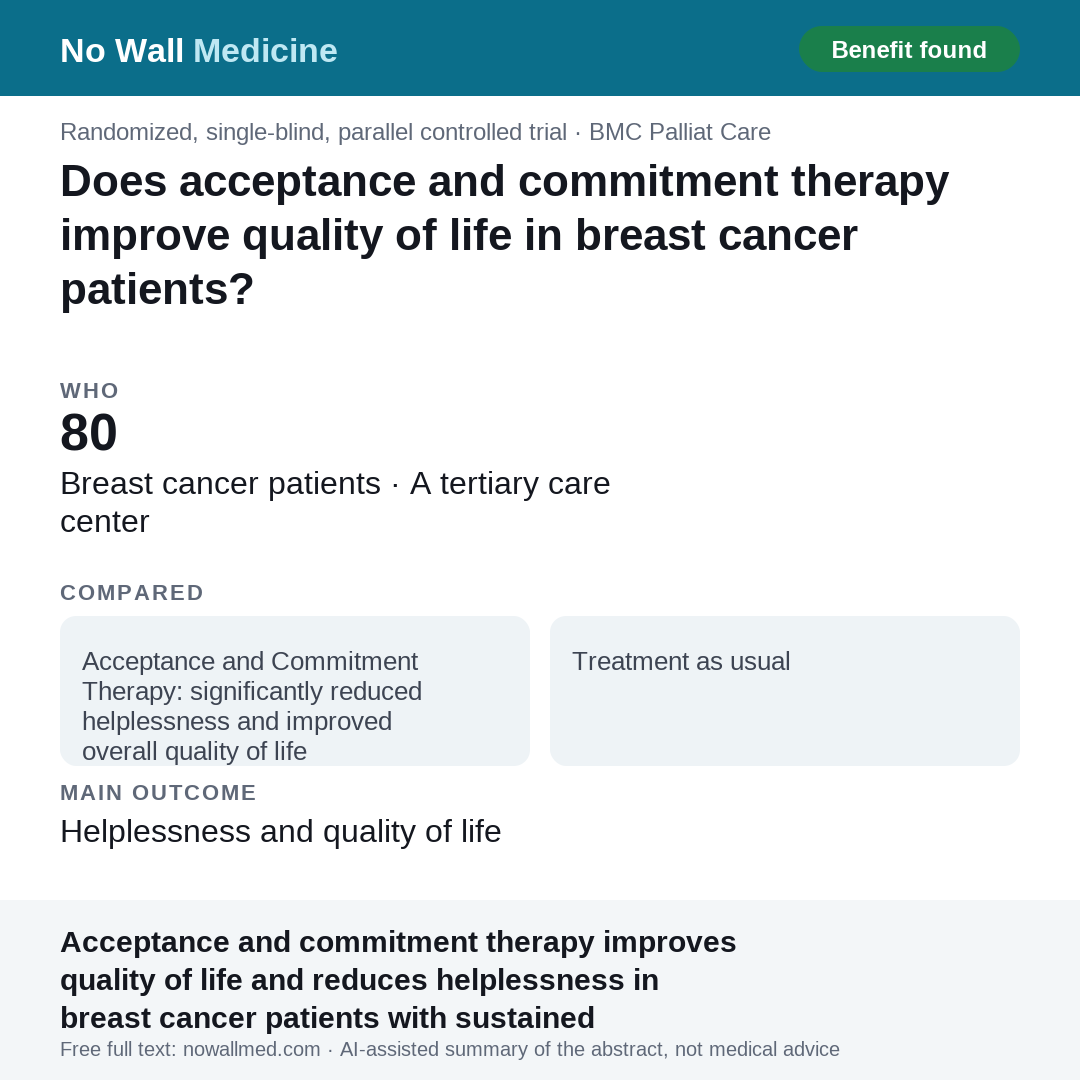
Acceptance and commitment therapy improves the quality of life of breast cancer patients by reducing helplessness: a randomized controlled trial
Randomized, single-blind, parallel controlled trialBenefit found
Does acceptance and commitment therapy improve quality of life in breast cancer patients?
Who
80
Breast cancer patients · A tertiary care center
Compared
Acceptance and Commitment Therapy: significantly reduced helplessness and improved overall quality of life
Treatment as usual
Main outcome
Helplessness and quality of life
Bottom line: Acceptance and commitment therapy improves quality of life and reduces helplessness in breast cancer patients with sustained effects.
BMC Palliat Care · 2026-03-05Download image
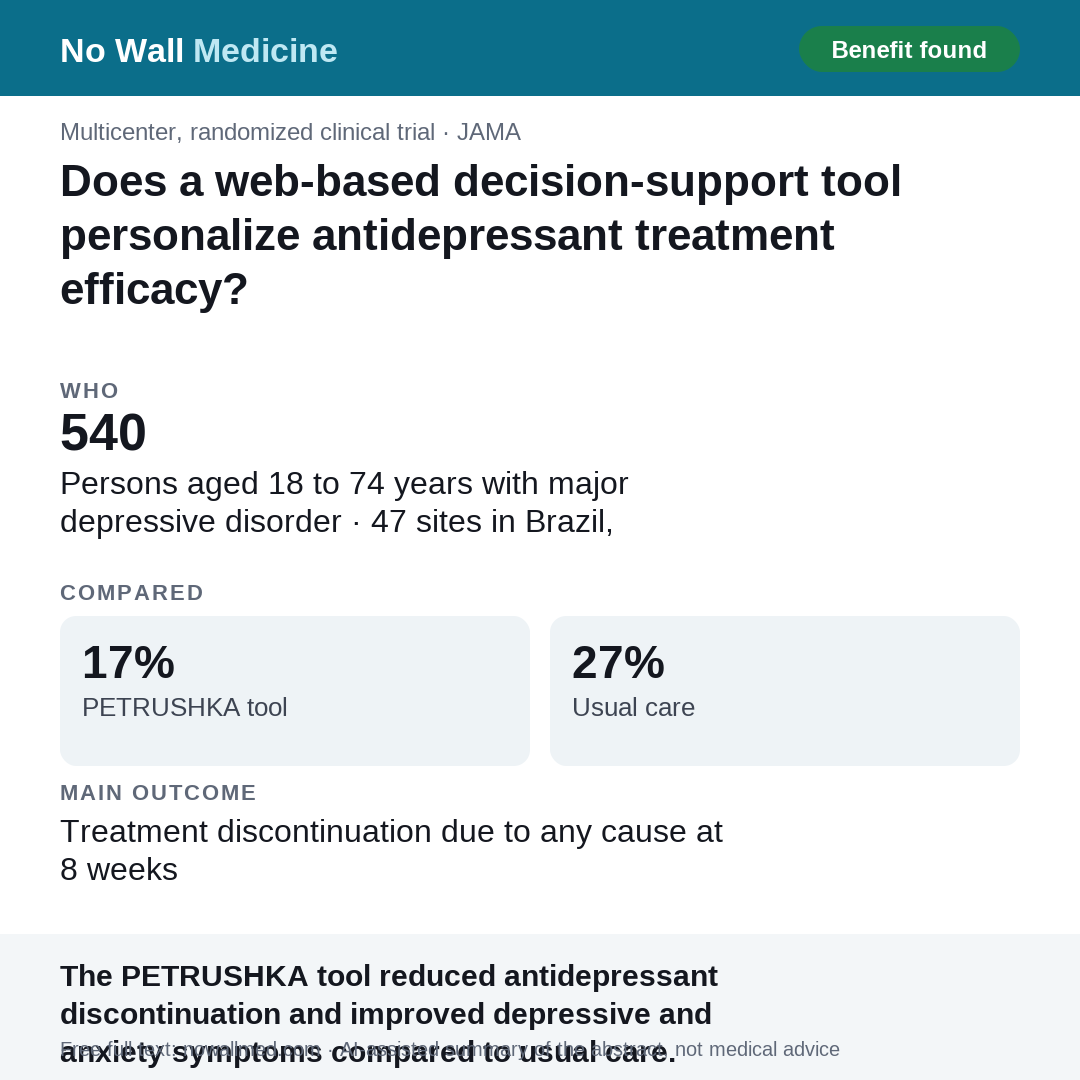
A Decision-Support System to Personalize Antidepressant Treatment in Major Depressive Disorder: A Randomized Clinical Trial
Multicenter, randomized clinical trialBenefit found
Does a web-based decision-support tool personalize antidepressant treatment efficacy?
Who
540
Persons aged 18 to 74 years with major depressive disorder · 47 sites in Brazil, Canada, and the UK
Compared
17%PETRUSHKA tool (41/241)
27%Usual care (69/252)
Main outcome
Treatment discontinuation due to any cause at 8 weeks
Result: adjusted relative risk 0.62 (95% CI 0.44 to 0.88)
Bottom line: The PETRUSHKA tool reduced antidepressant discontinuation and improved depressive and anxiety symptoms compared to usual care.
Limitation: Lack of a double-blind design and the large amount of missing data
JAMA · 2026-03-04Download image