Visual abstracts
New randomized trials and meta-analyses from leading journals at a glance: who was studied, what was compared, and what was found. Every paper is free to read in full.
All specialtiesCardiology 4763Oncology 4042Gastroenterology & Hepatology 1902Infectious Disease 3756Neurology 1872Psychiatry & Mental Health 2214Pulmonology 2042Critical Care 1319Endocrinology & Diabetes 2544Pediatrics 2889Surgery 2479Orthopedics & Sports Medicine 917Neurosurgery 525Cardiothoracic & Vascular Surgery 656Plastic & Reconstructive Surgery 574Nephrology 1107Rheumatology 810Hematology 1090Dermatology 611Ophthalmology 532Obstetrics & Gynecology 1645Public & Global Health 1037Radiology & Imaging 617Anesthesiology 957Urology 745ENT (Otolaryngology) 494Emergency Medicine 481Allergy & Immunology 309Geriatrics 972Family Medicine & Primary Care 533Medical Genetics & Genomics 659Pathology & Laboratory Medicine 156Physical Medicine & Rehabilitation 734Palliative Care 421Nutrition 1560Digital Health & AI 2133General Medicine 318
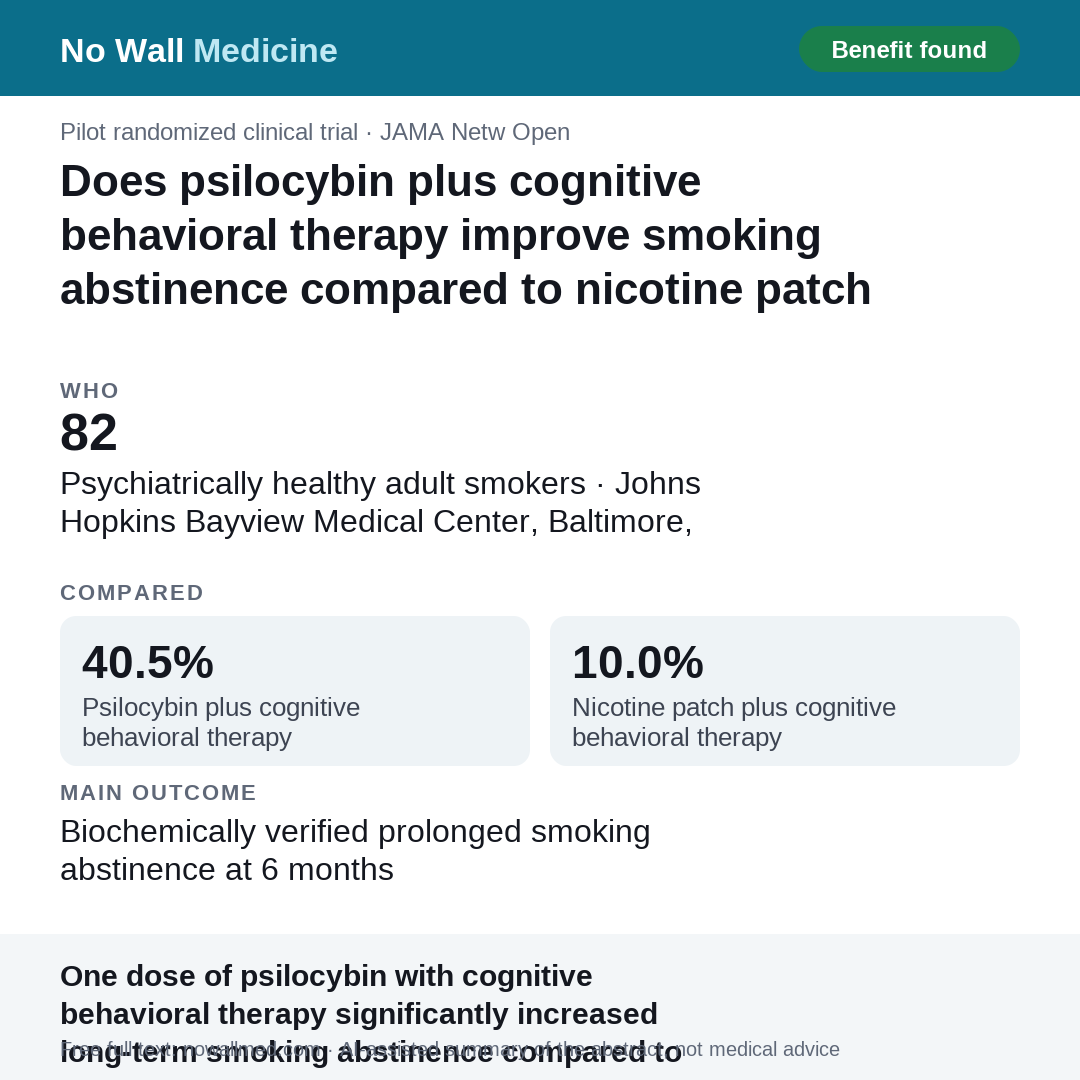
Psilocybin or Nicotine Patch for Smoking Cessation: A Pilot Randomized Clinical Trial
Pilot randomized clinical trialBenefit found
Does psilocybin plus cognitive behavioral therapy improve smoking abstinence compared to nicotine patch plus cognitive behavioral therapy?
Who
82
Psychiatrically healthy adult smokers · Johns Hopkins Bayview Medical Center, Baltimore, Maryland
Compared
40.5%Psilocybin plus cognitive behavioral therapy
10.0%Nicotine patch plus cognitive behavioral therapy
Main outcome
Biochemically verified prolonged smoking abstinence at 6 months
Result: odds ratio 6.12 (95% CI 1.99-23.26)
Bottom line: One dose of psilocybin with cognitive behavioral therapy significantly increased long-term smoking abstinence compared to nicotine patch treatment.
JAMA Netw Open · 2026-03-02Download image
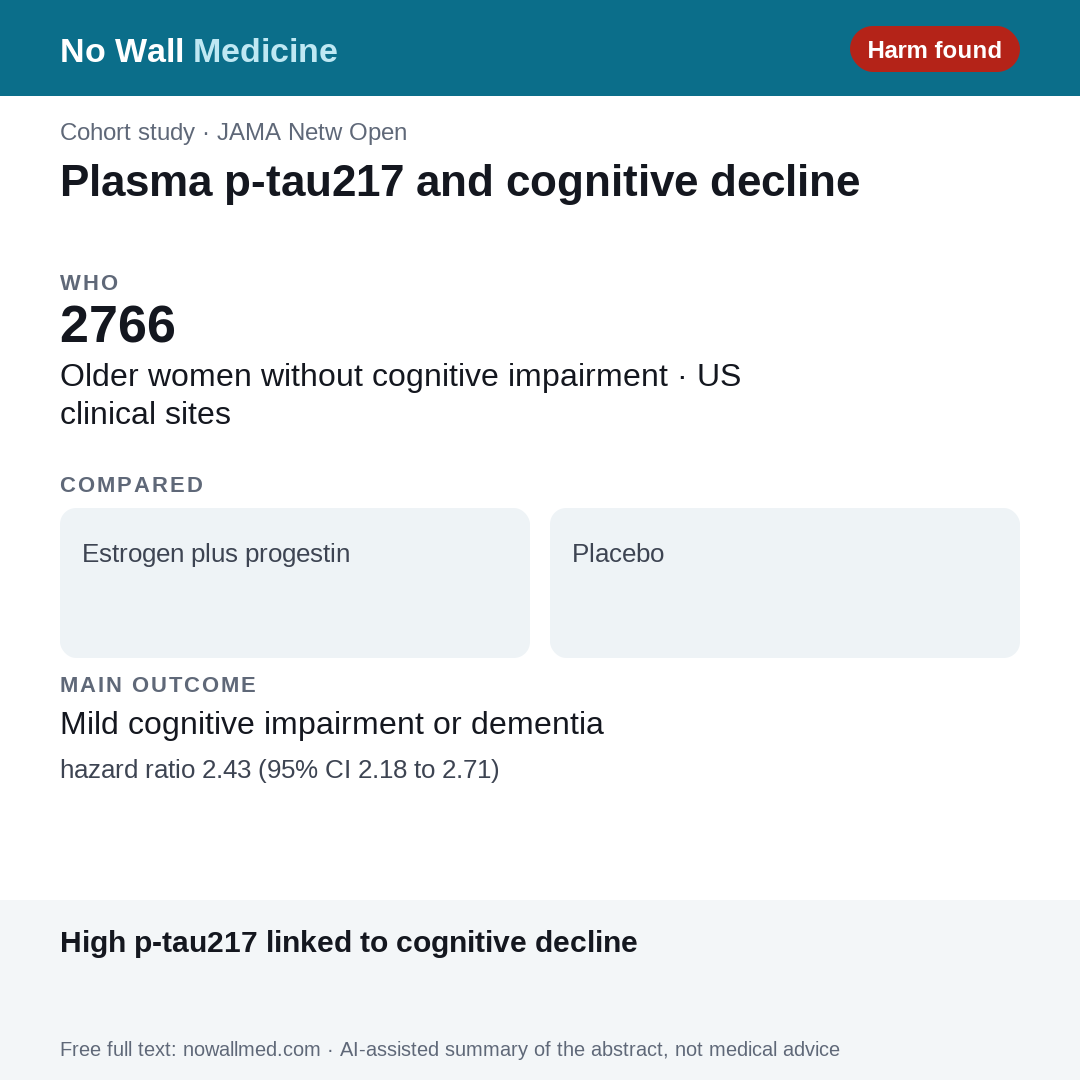
Plasma Phosphorylated Tau 217 and Incident Mild Cognitive Impairment and Dementia in Older Women
Cohort studyKey finding
Plasma p-tau217 and cognitive decline
Who
2766
Older women without cognitive impairment · US clinical sites
Compared
Estrogen plus progestin
Placebo
Main outcome
Mild cognitive impairment or dementia
Result: hazard ratio 2.43 (95% CI 2.18 to 2.71)
Bottom line: High p-tau217 linked to cognitive decline
Limitation: None mentioned
JAMA Netw Open · 2026-03-02Download image
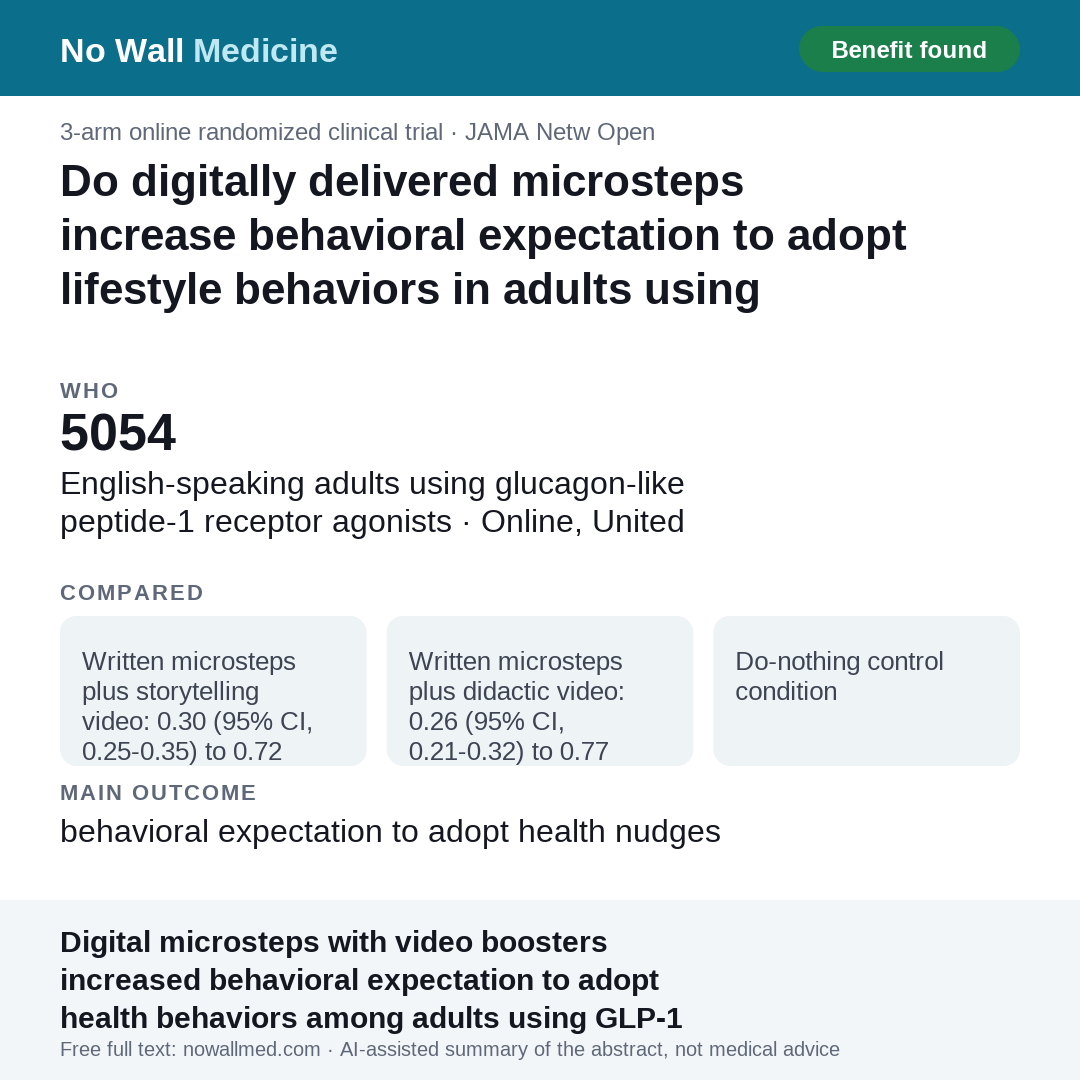
Digital Microsteps as Scalable Adjuncts for Adults Using GLP-1 Receptor Agonists: A Randomized Clinical Trial
3-arm online randomized clinical trialBenefit found
Do digitally delivered microsteps increase behavioral expectation to adopt lifestyle behaviors in adults using GLP-1 receptor agonists?
Who
5054
English-speaking adults using glucagon-like peptide-1 receptor agonists · Online, United States, United Kingdom, and other countries
Compared
Written microsteps plus storytelling video: 0.30 (95% CI, 0.25-0.35) to 0.72 (95% CI, 0.68-0.77)
Written microsteps plus didactic video: 0.26 (95% CI, 0.21-0.32) to 0.77 (95% CI, 0.72-0.81)
Do-nothing control condition
Main outcome
behavioral expectation to adopt health nudges
Bottom line: Digital microsteps with video boosters increased behavioral expectation to adopt health behaviors among adults using GLP-1 receptor agonists.
JAMA Netw Open · 2026-03-02Download image
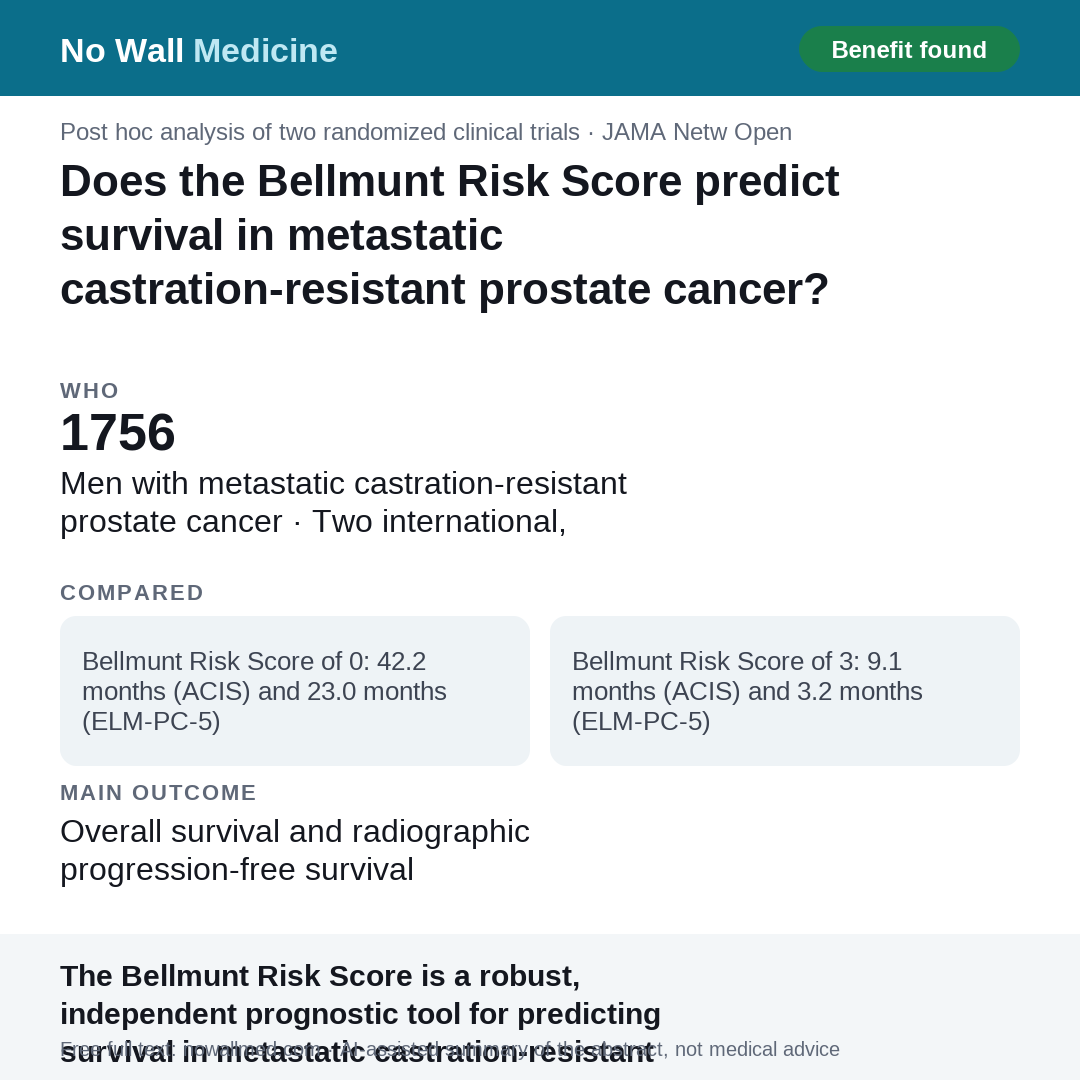
Bellmunt Risk Score as a Prognostic Tool in Metastatic Castration-Resistant Prostate Cancer Survival
Post hoc analysis of two randomized clinical trialsKey finding
Does the Bellmunt Risk Score predict survival in metastatic castration-resistant prostate cancer?
Who
1756
Men with metastatic castration-resistant prostate cancer · Two international, multicenter sites
Compared
Bellmunt Risk Score of 0: 42.2 months (ACIS) and 23.0 months (ELM-PC-5)
Bellmunt Risk Score of 3: 9.1 months (ACIS) and 3.2 months (ELM-PC-5)
Main outcome
Overall survival and radiographic progression-free survival
Result: AHR 8.29 (95% CI 2.57-26.78) for BRS 3 vs 0 in ACIS
Bottom line: The Bellmunt Risk Score is a robust, independent prognostic tool for predicting survival in metastatic castration-resistant prostate cancer.
JAMA Netw Open · 2026-03-02Download image
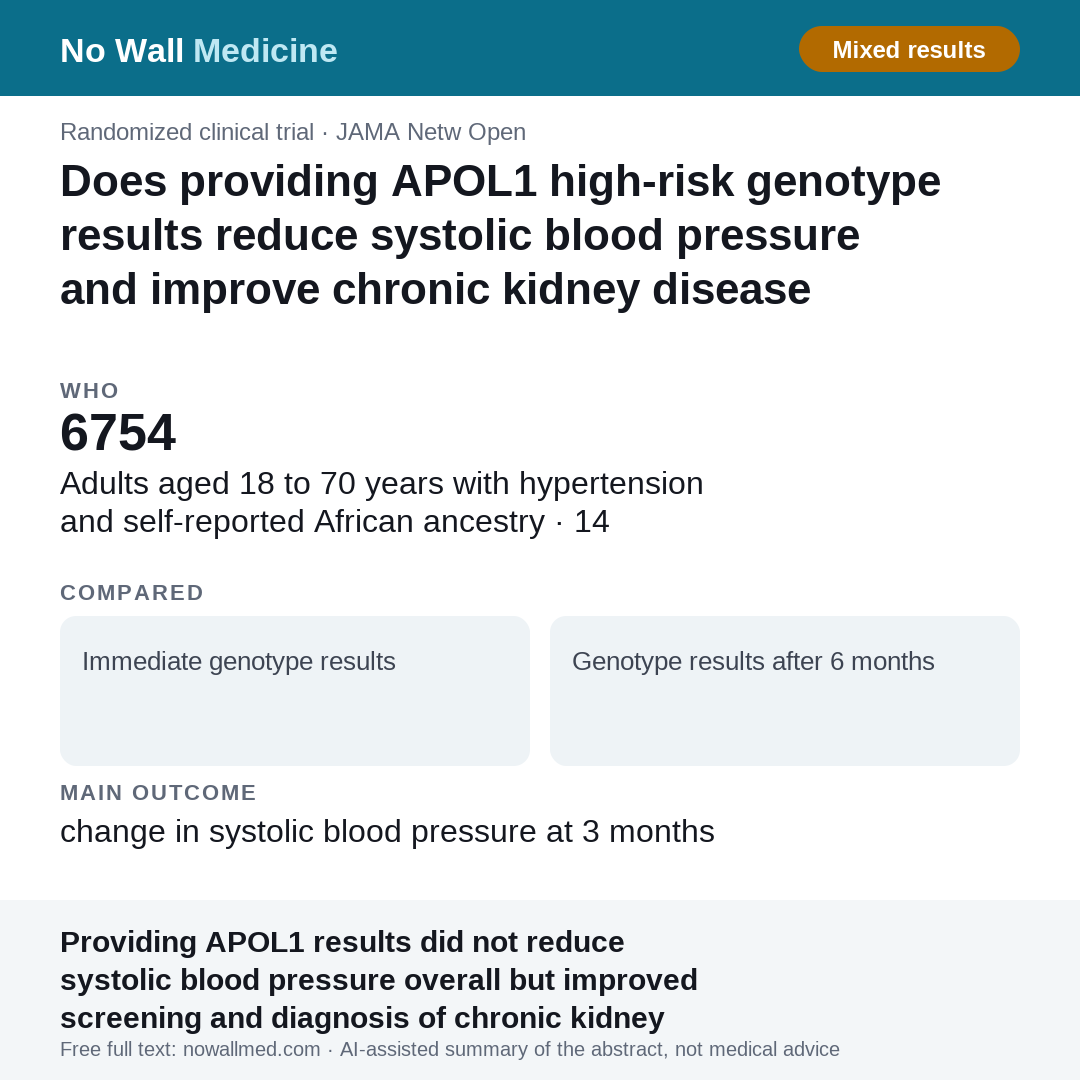
Genetic Testing for APOL1 in Adults With Hypertension: The GUARDD-US Randomized Clinical Trial
Randomized clinical trialMixed results
Does providing APOL1 high-risk genotype results reduce systolic blood pressure and improve chronic kidney disease screening?
Who
6754
Adults aged 18 to 70 years with hypertension and self-reported African ancestry · 14 institutions and 54 clinical sites across the US
Compared
Immediate genotype results
Genotype results after 6 months
Main outcome
change in systolic blood pressure at 3 months
Result: between-group difference, -0.3 mm Hg (95% CI, -2.7 to 2.1 mm Hg)
Bottom line: Providing APOL1 results did not reduce systolic blood pressure overall but improved screening and diagnosis of chronic kidney disease.
JAMA Netw Open · 2026-03-02Download image
Assessment of antibody responses to Anopheles SG6-P1 and Aedes N-term 34 kDa salivary peptides: a randomised human-challenge trial of controlled exposures to vector bites
Randomised, open-label, exploratory factorial trialMixed results
How do antibody responses to mosquito salivary peptides change after controlled vector bites?
Who
210
Healthy volunteers aged 18-60 years · Single-centre, Mae Sot, Thailand
Compared
305 Anopheles minimus bites: 1.14-fold (95% CI 1.03-1.26) increase during exposure
Other mosquito bite groups: minimal or no boosting observed
Main outcome
total IgG antibodies against Anopheles SG6-P1 peptides
Result: 1.14-fold (95% CI 1.03-1.26)
Bottom line: Antibodies were boosted by 305 Anopheles minimus bites, but the magnitude was small and decay was slow.
BMC Med · 2026-03-02Download image

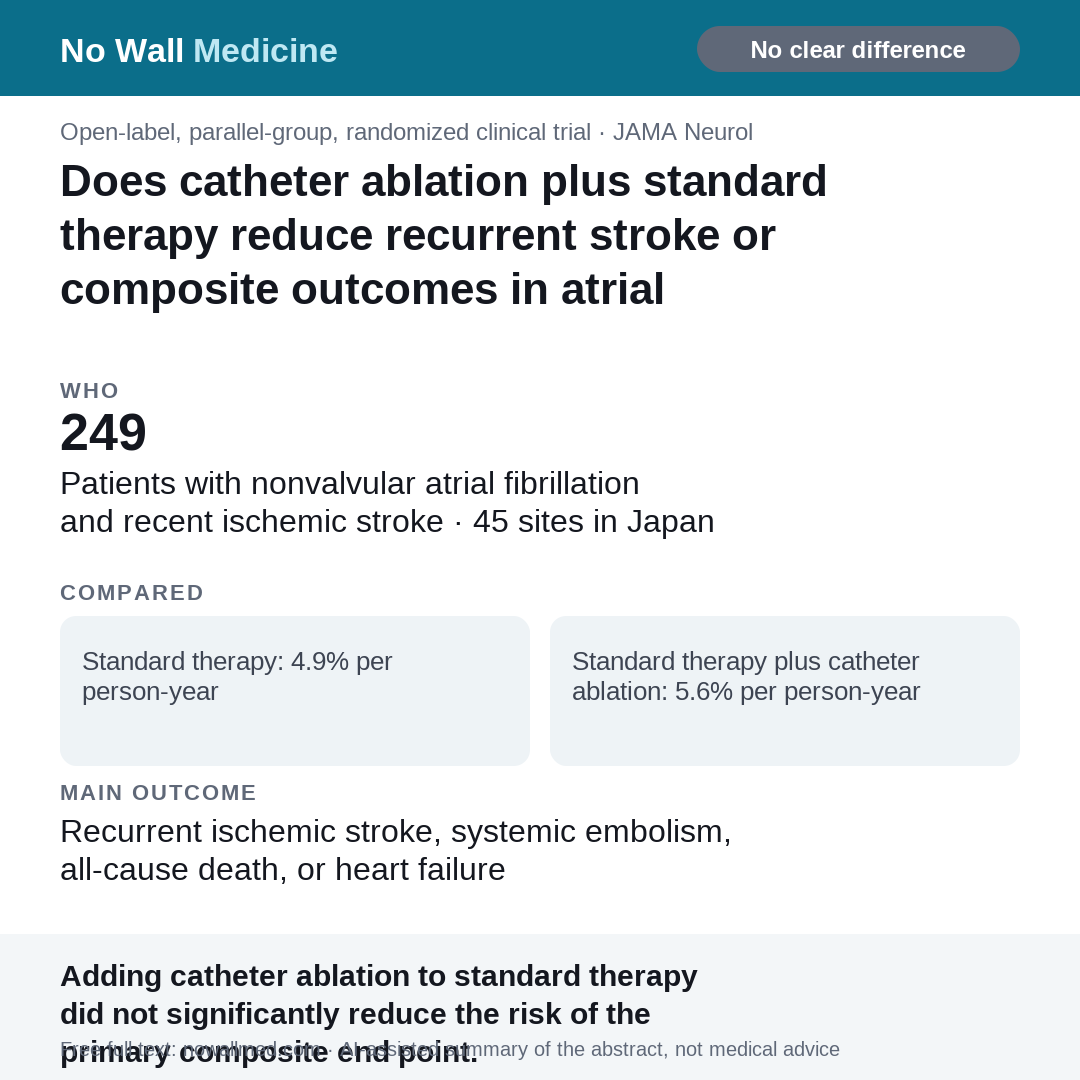
Catheter Ablation and Oral Anticoagulation for Secondary Stroke Prevention in Atrial Fibrillation: The STABLED Randomized Clinical Trial
Open-label, parallel-group, randomized clinical trialNo clear difference
Does catheter ablation plus standard therapy reduce recurrent stroke or composite outcomes in atrial fibrillation?
Who
249
Patients with nonvalvular atrial fibrillation and recent ischemic stroke · 45 sites in Japan
Compared
Standard therapy: 4.9% per person-year
Standard therapy plus catheter ablation: 5.6% per person-year
Main outcome
Recurrent ischemic stroke, systemic embolism, all-cause death, or heart failure hospitalization
Result: hazard ratio 1.11 (95% CI 0.62-2.01)
Bottom line: Adding catheter ablation to standard therapy did not significantly reduce the risk of the primary composite end point.
JAMA Neurol · 2026-03-02Download image
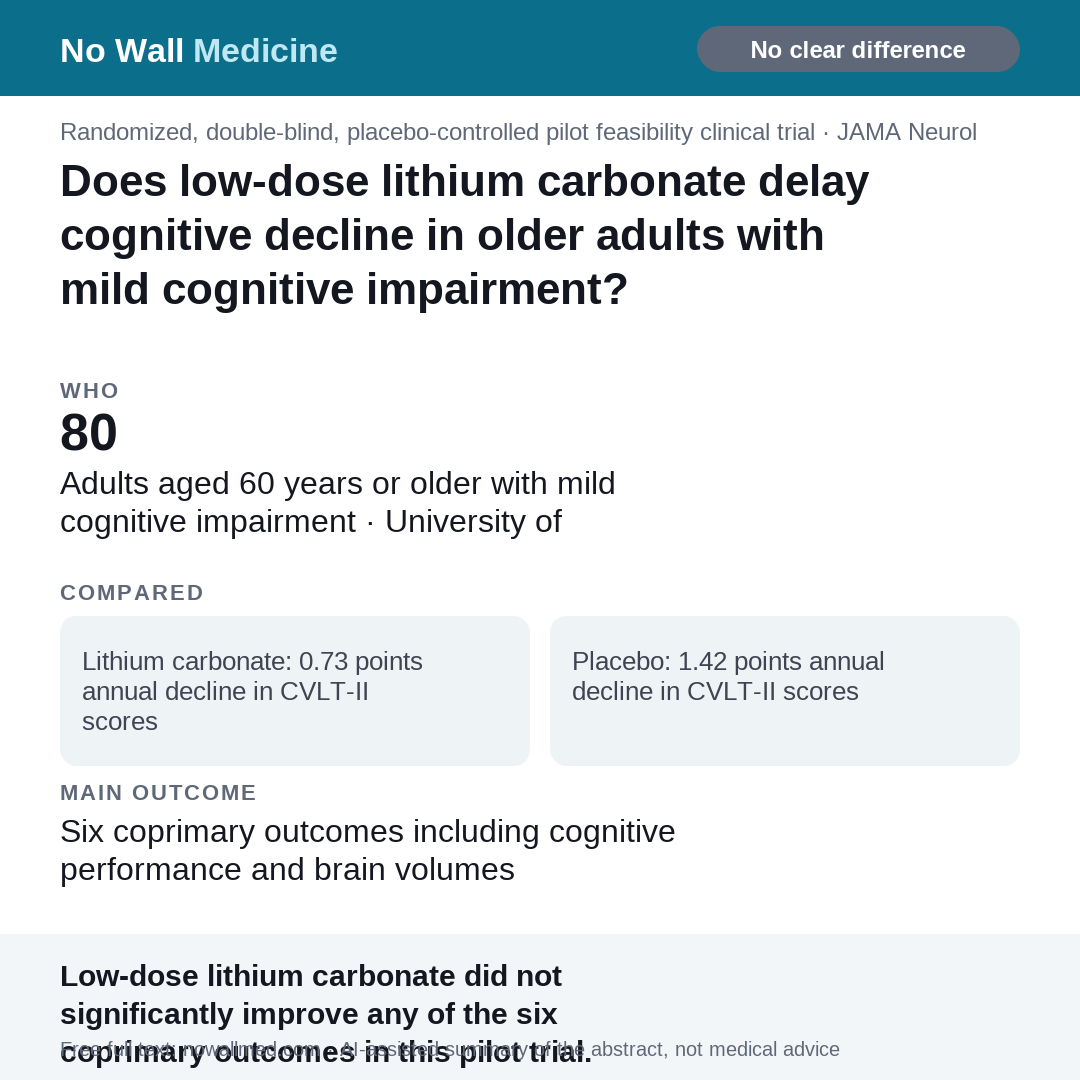
Low-Dose Lithium for Mild Cognitive Impairment: A Pilot Randomized Clinical Trial
Randomized, double-blind, placebo-controlled pilot feasibility clinical trialNo clear difference
Does low-dose lithium carbonate delay cognitive decline in older adults with mild cognitive impairment?
Who
80
Adults aged 60 years or older with mild cognitive impairment · University of Pittsburgh School of Medicine
Compared
Lithium carbonate: 0.73 points annual decline in CVLT-II scores
Placebo: 1.42 points annual decline in CVLT-II scores
Main outcome
Six coprimary outcomes including cognitive performance and brain volumes
Result: difference, 0.69 points per year; 95% CI, 0.01-1.37
Bottom line: Low-dose lithium carbonate did not significantly improve any of the six coprimary outcomes in this pilot trial.
JAMA Neurol · 2026-03-02Download image
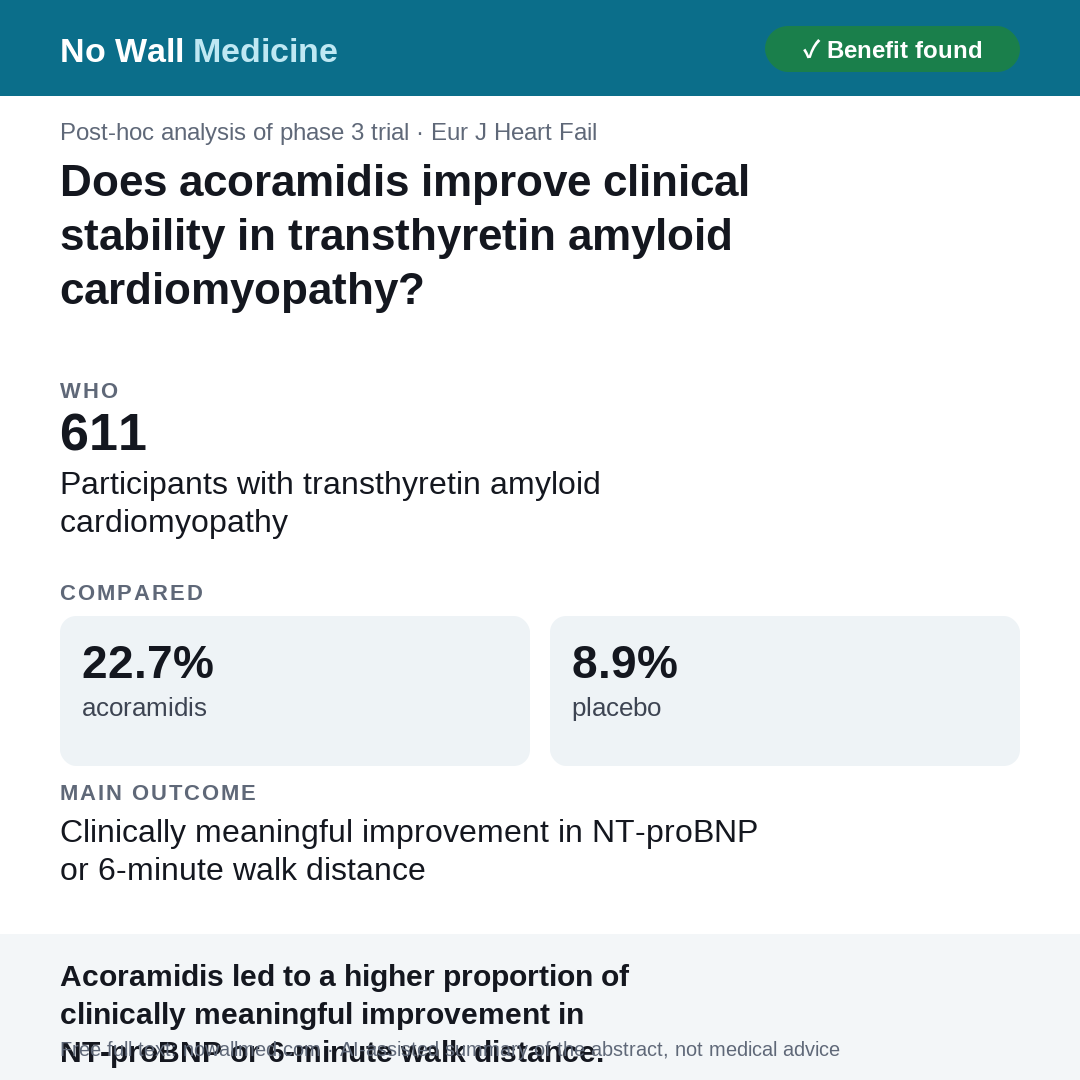
Impact of acoramidis on clinical stability in transthyretin amyloid cardiomyopathy: observations from ATTRibute-CM
Post-hoc analysis of phase 3 trialBenefit found
Does acoramidis improve clinical stability in transthyretin amyloid cardiomyopathy?
Who
611
Participants with transthyretin amyloid cardiomyopathy
Compared
22.7%acoramidis
8.9%placebo
Main outcome
Clinically meaningful improvement in NT-proBNP or 6-minute walk distance
Result: odds ratio 3.0 (95% CI 1.8-5.1)
Bottom line: Acoramidis led to a higher proportion of clinically meaningful improvement in NT-proBNP or 6-minute walk distance.
Eur J Heart Fail · 2026-03-02Download image
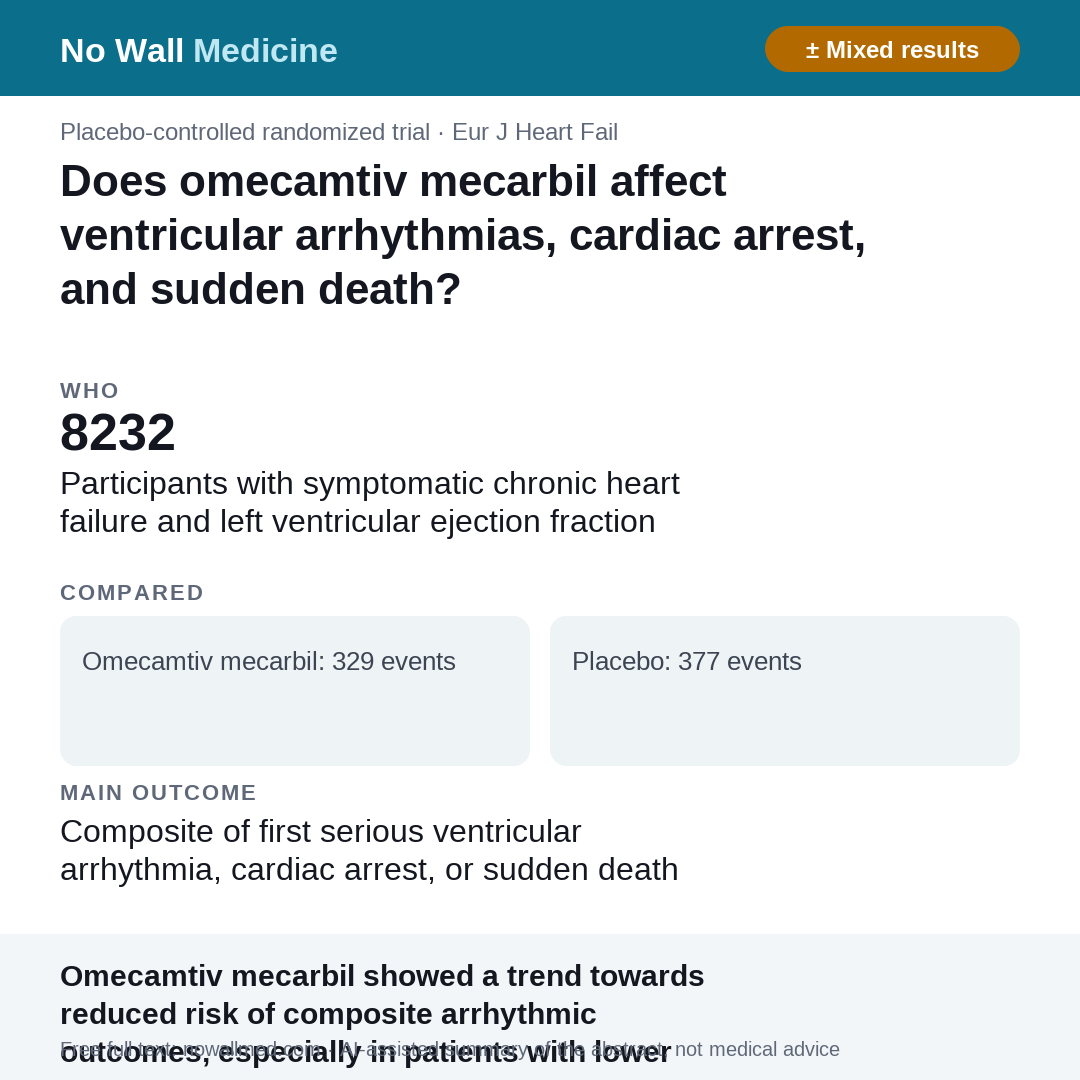
Effect of the cardiac myosin activator omecamtiv mecarbil on ventricular arrhythmias, cardiac arrest, and sudden death in heart failure with reduced ejection fraction: the GALACTIC-HF trial
Placebo-controlled randomized trialMixed results
Does omecamtiv mecarbil affect ventricular arrhythmias, cardiac arrest, and sudden death?
Who
8232
Participants with symptomatic chronic heart failure and left ventricular ejection fraction ≤35%
Compared
Omecamtiv mecarbil: 329 events
Placebo: 377 events
Main outcome
Composite of first serious ventricular arrhythmia, cardiac arrest, or sudden death
Result: hazard ratio 0.86 (95% CI 0.75 to 1.00)
Bottom line: Omecamtiv mecarbil showed a trend towards reduced risk of composite arrhythmic outcomes, especially in patients with lower ejection fraction.
Limitation: This was a post hoc analysis requiring prospective validation.
Eur J Heart Fail · 2026-03-02Download image
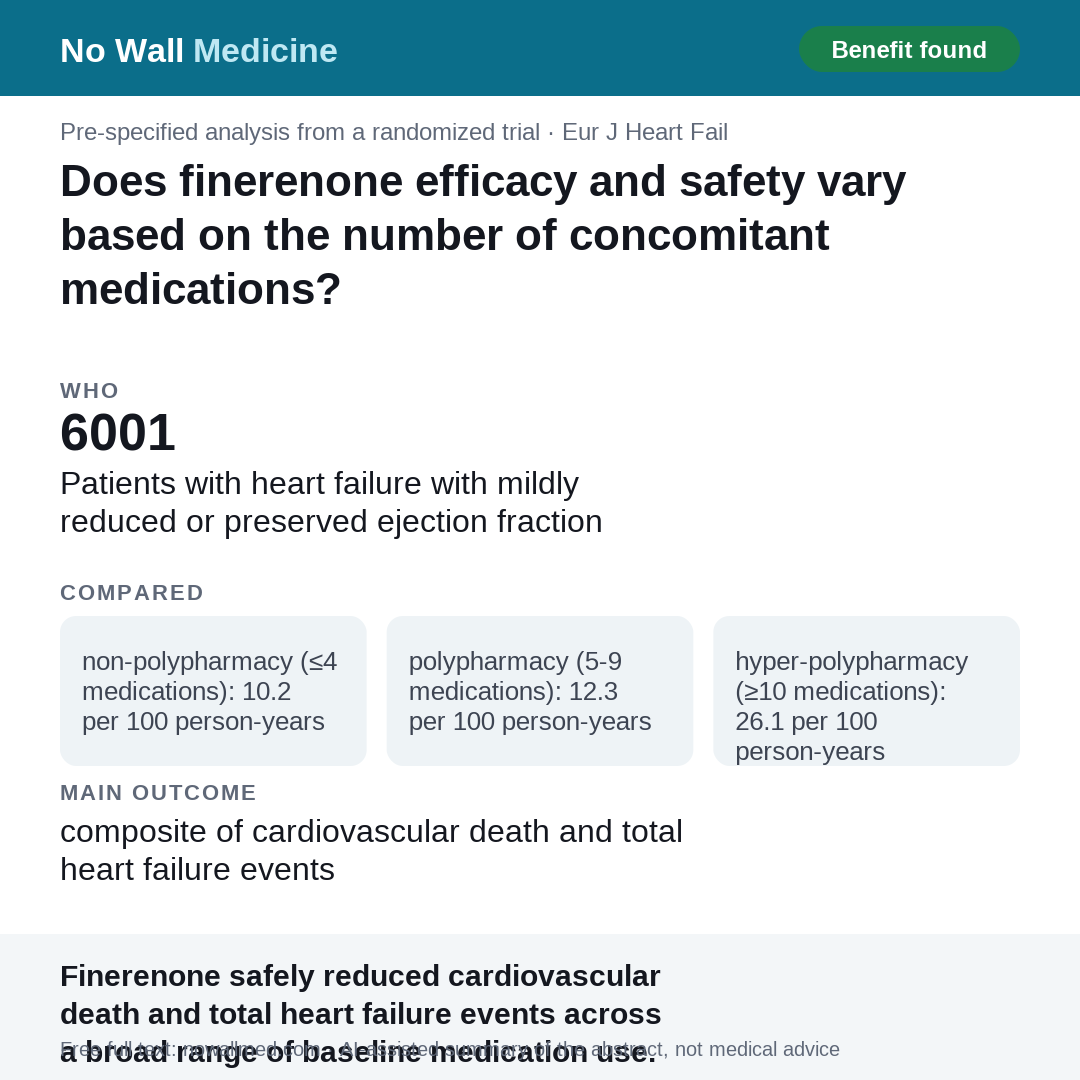
Finerenone, polypharmacy, and clinical outcomes in heart failure: pre-specified analysis from the FINEARTS-HF trial
Pre-specified analysis from a randomized trialBenefit found
Does finerenone efficacy and safety vary based on the number of concomitant medications?
Who
6001
Patients with heart failure with mildly reduced or preserved ejection fraction
Compared
non-polypharmacy (≤4 medications): 10.2 per 100 person-years
polypharmacy (5-9 medications): 12.3 per 100 person-years
hyper-polypharmacy (≥10 medications): 26.1 per 100 person-years
Main outcome
composite of cardiovascular death and total heart failure events
Bottom line: Finerenone safely reduced cardiovascular death and total heart failure events across a broad range of baseline medication use.
Eur J Heart Fail · 2026-03-02Download image
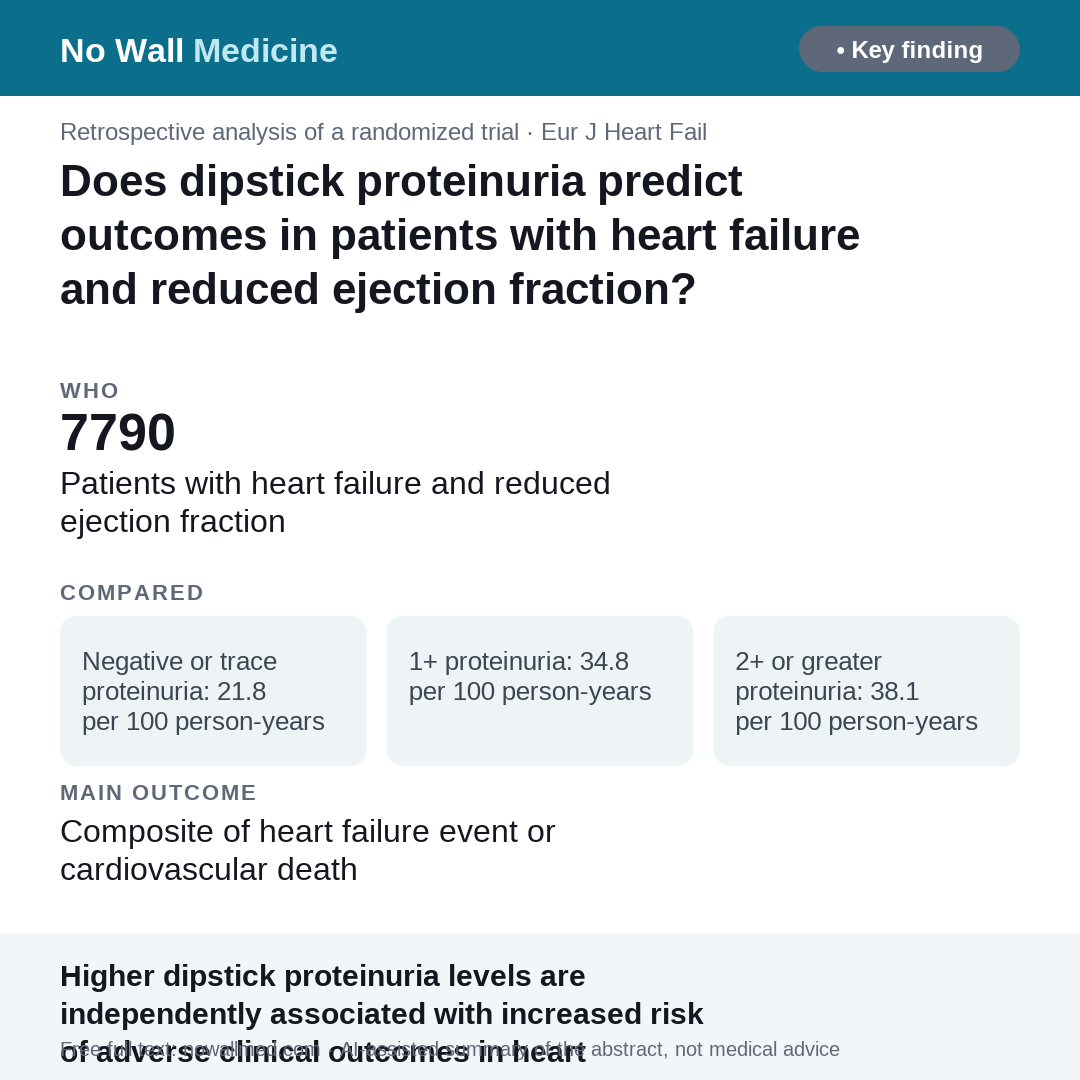
Dipstick proteinuria and outcomes in patients with heart failure and reduced ejection fraction: insights from GALACTIC-HF
Retrospective analysis of a randomized trialKey finding
Does dipstick proteinuria predict outcomes in patients with heart failure and reduced ejection fraction?
Who
7790
Patients with heart failure and reduced ejection fraction
Compared
Negative or trace proteinuria: 21.8 per 100 person-years
1+ proteinuria: 34.8 per 100 person-years
2+ or greater proteinuria: 38.1 per 100 person-years
Main outcome
Composite of heart failure event or cardiovascular death
Bottom line: Higher dipstick proteinuria levels are independently associated with increased risk of adverse clinical outcomes in heart failure patients.
Eur J Heart Fail · 2026-03-02Download image
Efficacy of finerenone in patients with heart failure and mildly reduced or preserved ejection fraction: a prespecified analysis of heart rate and heart rhythm in the FINEARTS-HF trial
Prespecified analysis of a randomized trialBenefit found
Does finerenone affect clinical outcomes across different heart rates and rhythms in heart failure?
Who
Patients with heart failure and mildly reduced or preserved ejection fraction
Compared
Finerenone
Placebo
Main outcome
Composite of cardiovascular death and total heart failure events
Bottom line: Finerenone's effect on clinical outcomes was consistent across the heart rate spectrum regardless of rhythm.
Eur J Heart Fail · 2026-03-02Download image
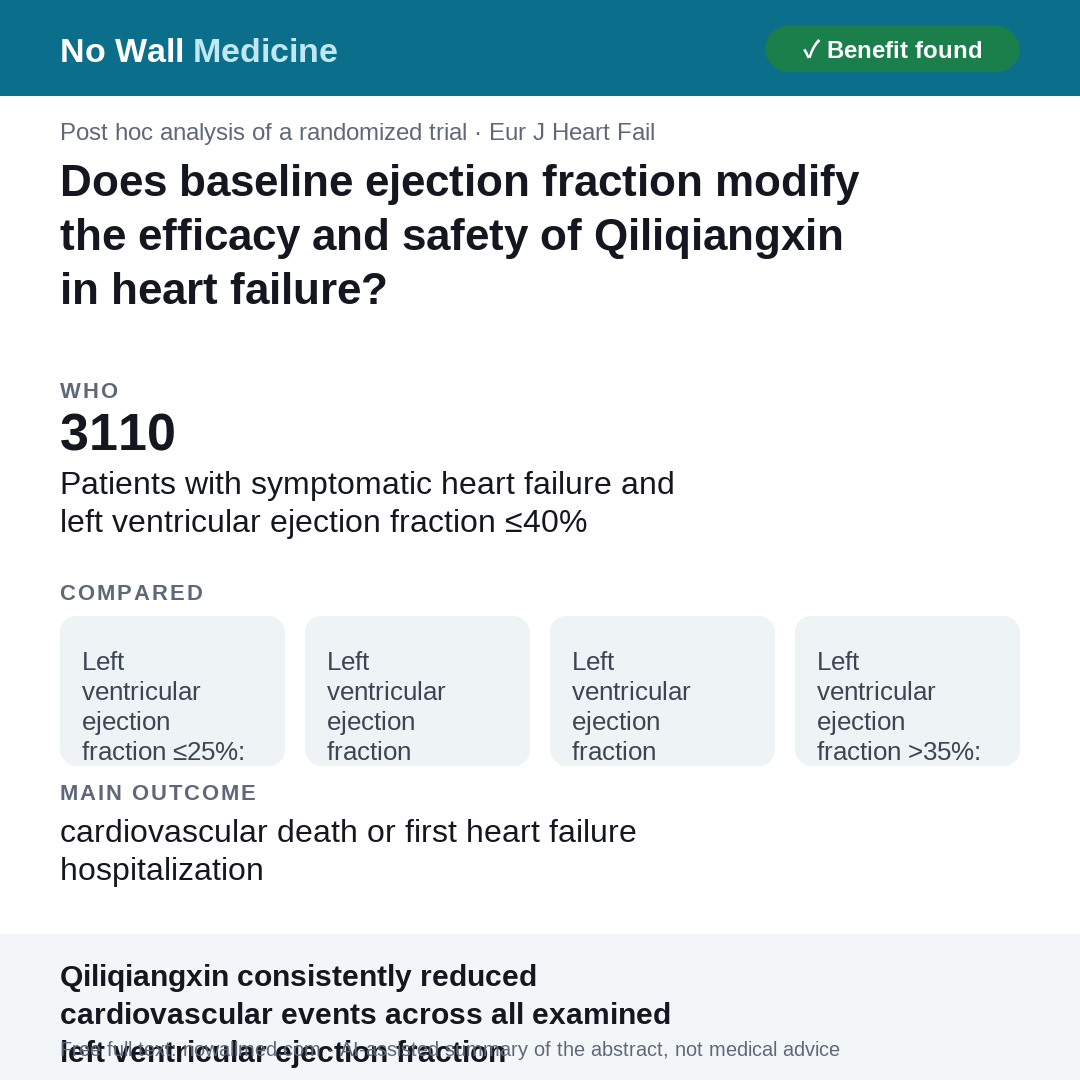
The efficacy and safety of qiliqiangxin according to baseline ejection fraction in patients with heart failure and reduced ejection fraction in QUEST
Post hoc analysis of a randomized trialBenefit found
Does baseline ejection fraction modify the efficacy and safety of Qiliqiangxin in heart failure?
Who
3110
Patients with symptomatic heart failure and left ventricular ejection fraction ≤40%
Compared
Left ventricular ejection fraction ≤25%: hazard ratio 0.91 (95% CI 0.64-1.30)
Left ventricular ejection fraction >25-30%: hazard ratio 0.65 (95% CI 0.47-0.89)
Left ventricular ejection fraction >30-35%: hazard ratio 0.94 (95% CI 0.71-1.26)
Left ventricular ejection fraction >35%: hazard ratio 0.71 (95% CI 0.55-0.91)
Main outcome
cardiovascular death or first heart failure hospitalization
Result: Pinteraction = .28
Bottom line: Qiliqiangxin consistently reduced cardiovascular events across all examined left ventricular ejection fraction categories in heart failure patients.
Limitation: limited use of sodium-glucose co-transporter 2 inhibitors
Eur J Heart Fail · 2026-03-02Download image
Mitral regurgitation in patients with heart failure and reduced ejection fraction: insights from GALACTIC-HF
Randomized trialHarm found
Does mitral regurgitation affect outcomes in patients with heart failure and reduced ejection fraction?
Who
8232
Patients with heart failure and reduced ejection fraction
Compared
No mitral regurgitation
Moderate mitral regurgitation
Main outcome
First heart failure event or cardiovascular death
Result: adjusted hazard ratio 1.11 (95% CI 1.01-1.23)
Bottom line: Moderate mitral regurgitation was associated with a higher risk of heart failure or cardiovascular death.
Eur J Heart Fail · 2026-03-02Download image
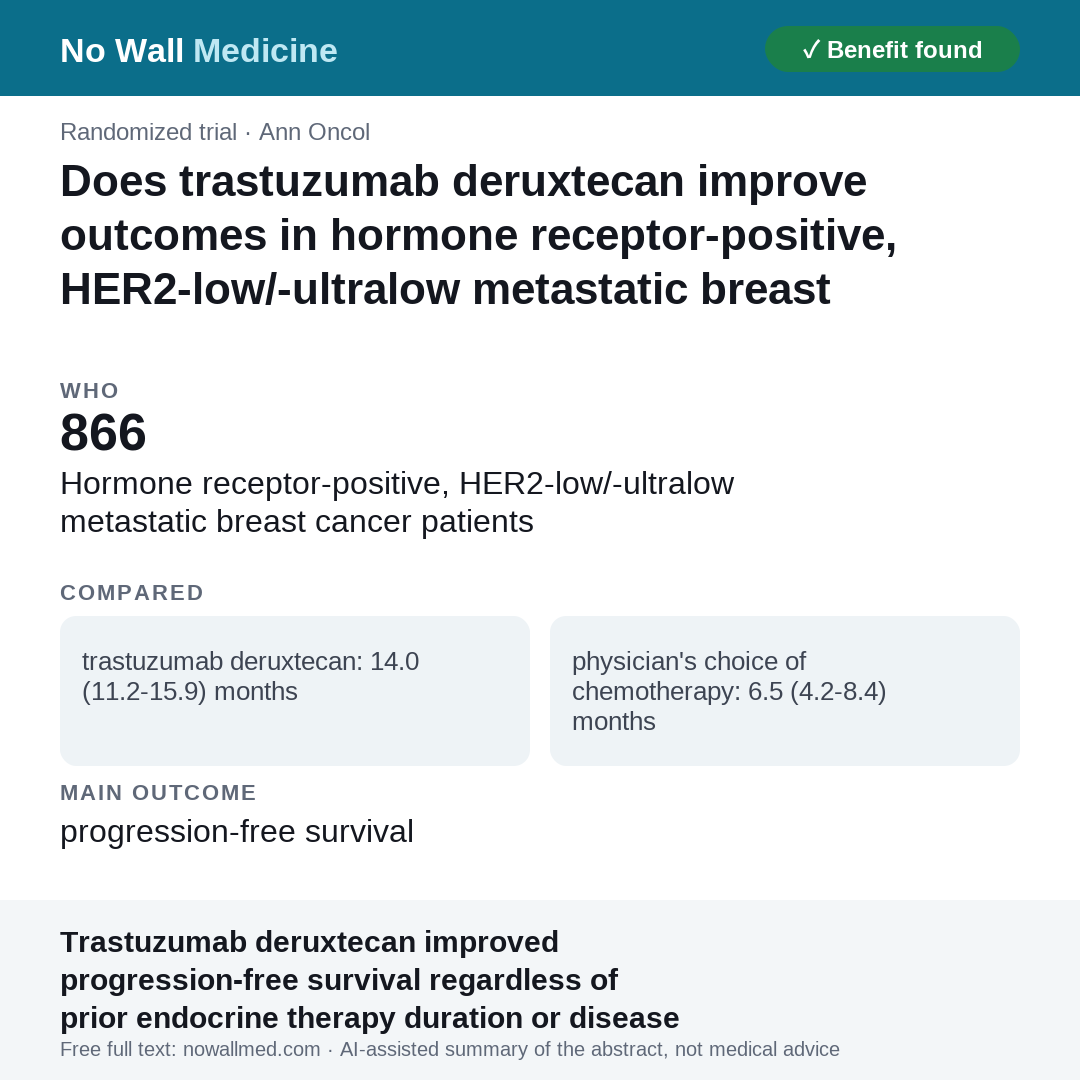
Trastuzumab deruxtecan in hormone receptor-positive, HER2-low/-ultralow metastatic breast cancer (DESTINY-Breast06): outcome analyses by time to progression on prior first-line endocrine therapy with CDK4/6 inhibitor and baseline burden of disease
Randomized trialBenefit found
Does trastuzumab deruxtecan improve outcomes in hormone receptor-positive, HER2-low/-ultralow metastatic breast cancer?
Who
866
Hormone receptor-positive, HER2-low/-ultralow metastatic breast cancer patients
Compared
trastuzumab deruxtecan: 14.0 (11.2-15.9) months
physician's choice of chemotherapy: 6.5 (4.2-8.4) months
Main outcome
progression-free survival
Result: median progression-free survival favored trastuzumab deruxtecan versus physician's choice of chemotherapy
Bottom line: Trastuzumab deruxtecan improved progression-free survival regardless of prior endocrine therapy duration or disease burden.
Ann Oncol · 2026-03-02Download image
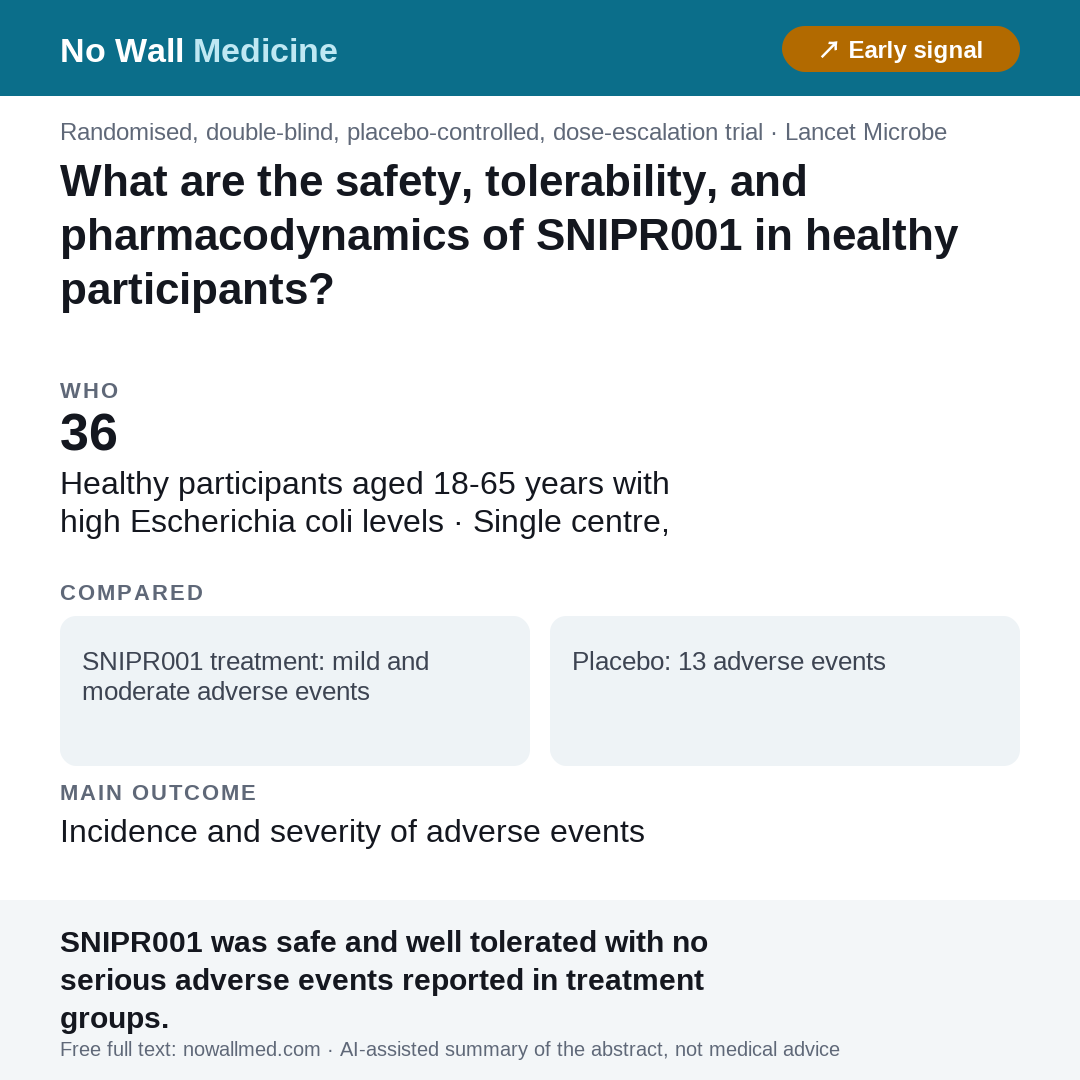
Safety, recovery, and pharmacodynamics of CRISPR-Cas therapeutic SNIPR001: a phase 1, randomised, double-blind, first-in-human, dose-escalation study
Randomised, double-blind, placebo-controlled, dose-escalation trialEarly signal
What are the safety, tolerability, and pharmacodynamics of SNIPR001 in healthy participants?
Who
36
Healthy participants aged 18-65 years with high Escherichia coli levels · Single centre, Cincinnati, OH, USA
Compared
SNIPR001 treatment: mild and moderate adverse events
Placebo: 13 adverse events
Main outcome
Incidence and severity of adverse events
Bottom line: SNIPR001 was safe and well tolerated with no serious adverse events reported in treatment groups.
Lancet Microbe · 2026-03-02Download image
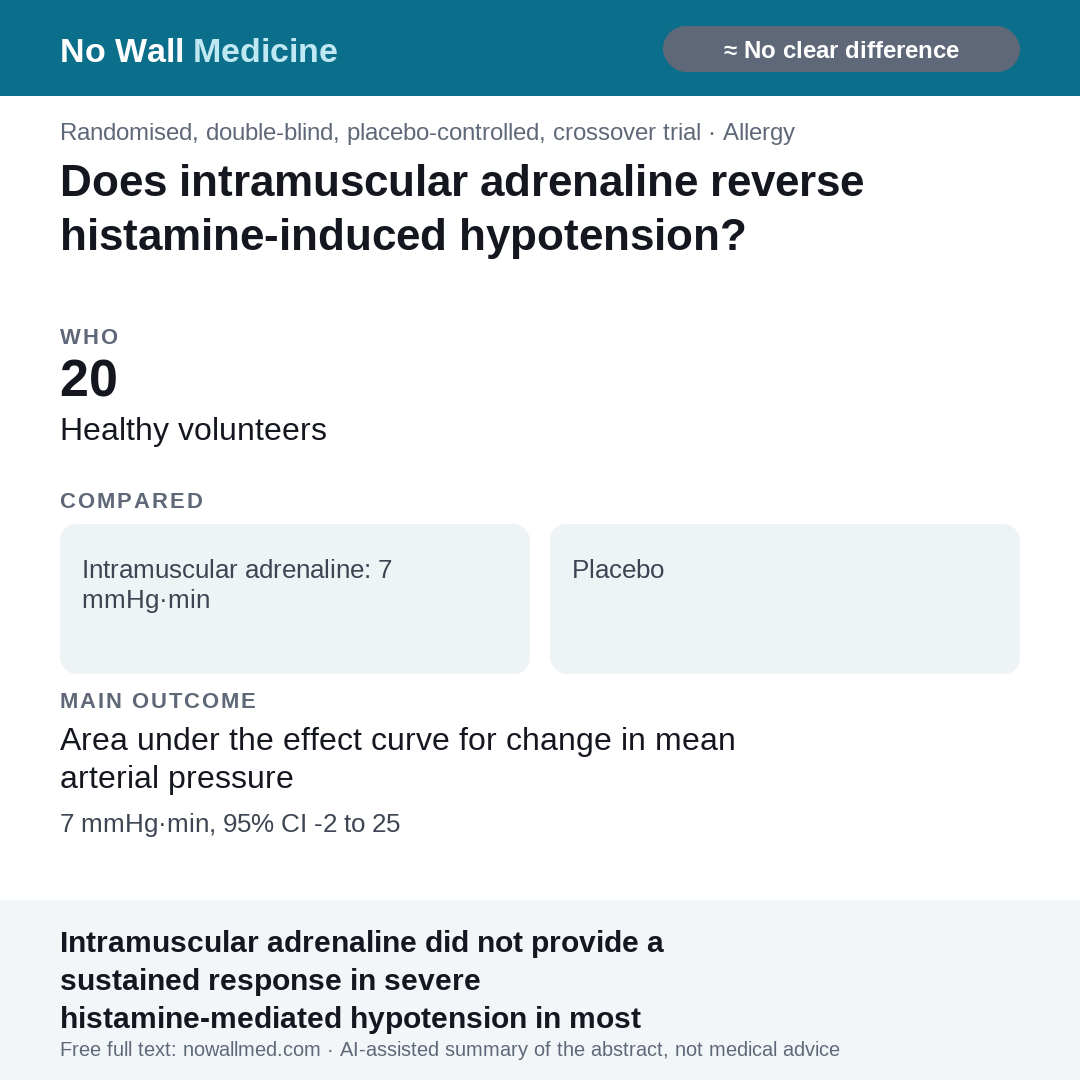
Effect of Intramuscular Adrenaline on Histamine-Induced Hypotension: A Randomised Placebo-Controlled Pilot Trial
Randomised, double-blind, placebo-controlled, crossover trialNo clear difference
Does intramuscular adrenaline reverse histamine-induced hypotension?
Who
20
Healthy volunteers
Compared
Intramuscular adrenaline: 7 mmHg·min
Placebo
Main outcome
Area under the effect curve for change in mean arterial pressure
Result: 7 mmHg·min, 95% CI -2 to 25
Bottom line: Intramuscular adrenaline did not provide a sustained response in severe histamine-mediated hypotension in most recipients.
Limitation: Limited number of healthy human subjects
Allergy · 2026-03-02Download image
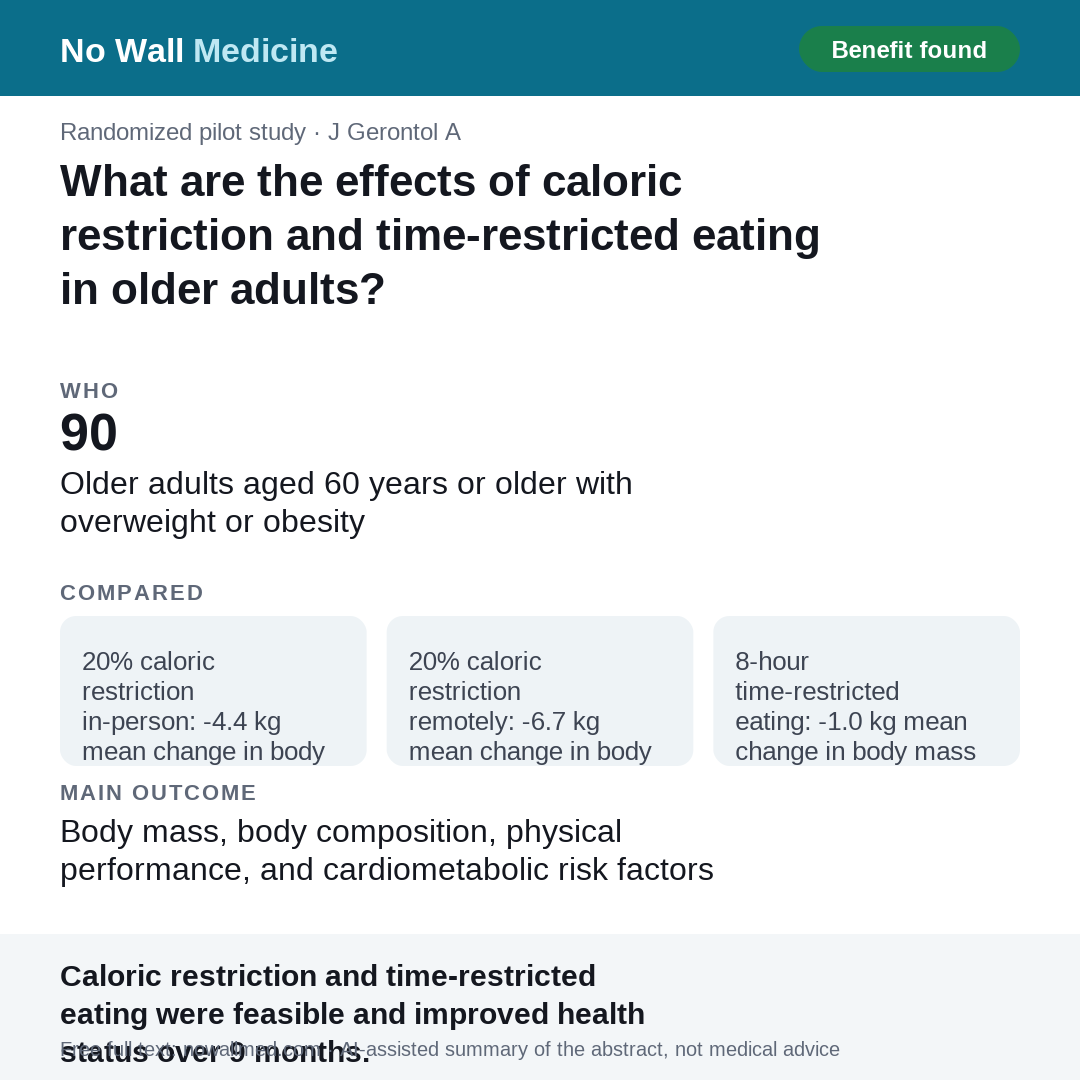
Caloric restriction and time-restricted eating in older adults with overweight or obesity: The Health, Aging, and Later-Life Outcomes Pilot Study
Randomized pilot studyBenefit found
What are the effects of caloric restriction and time-restricted eating in older adults?
Who
90
Older adults aged 60 years or older with overweight or obesity
Compared
20% caloric restriction in-person: -4.4 kg mean change in body mass
20% caloric restriction remotely: -6.7 kg mean change in body mass
8-hour time-restricted eating: -1.0 kg mean change in body mass
Main outcome
Body mass, body composition, physical performance, and cardiometabolic risk factors
Bottom line: Caloric restriction and time-restricted eating were feasible and improved health status over 9 months.
Limitation: Interventions did not achieve the target caloric restriction.
J Gerontol A · 2026-03-02Download image
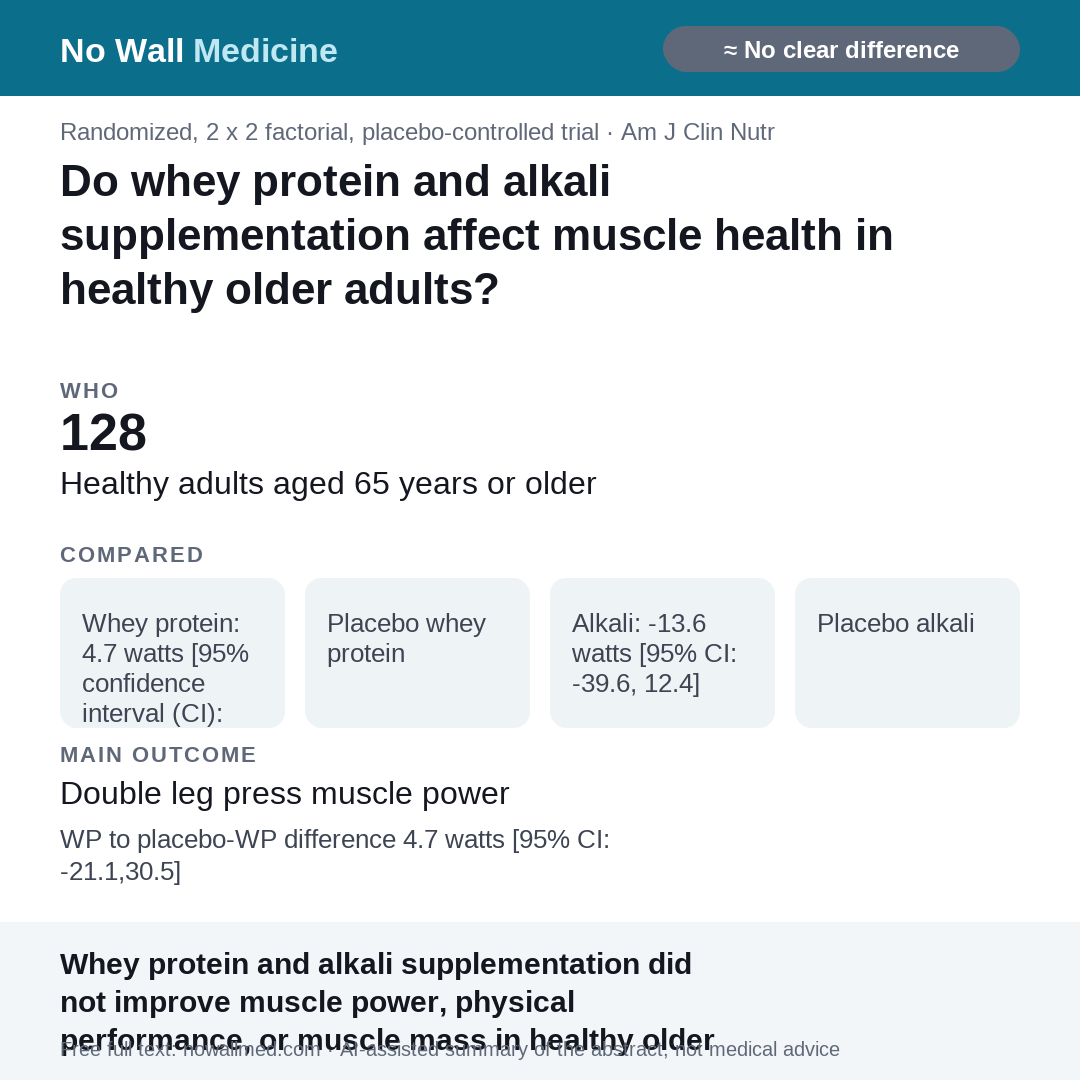
Independent effects of whey protein and alkali supplementation on muscle health in healthy older adults: factorial randomized controlled trial
Randomized, 2 x 2 factorial, placebo-controlled trialNo clear difference
Do whey protein and alkali supplementation affect muscle health in healthy older adults?
Who
128
Healthy adults aged 65 years or older
Compared
Whey protein: 4.7 watts [95% confidence interval (CI): -21.1,30.5]
Placebo whey protein
Alkali: -13.6 watts [95% CI: -39.6, 12.4]
Placebo alkali
Main outcome
Double leg press muscle power
Result: WP to placebo-WP difference 4.7 watts [95% CI: -21.1,30.5]
Bottom line: Whey protein and alkali supplementation did not improve muscle power, physical performance, or muscle mass in healthy older adults.
Am J Clin Nutr · 2026-03-02Download image