Visual abstracts
New randomized trials and meta-analyses from leading journals at a glance: who was studied, what was compared, and what was found. Every paper is free to read in full.
All specialtiesCardiology 4763Oncology 4043Gastroenterology & Hepatology 1903Infectious Disease 3756Neurology 1872Psychiatry & Mental Health 2216Pulmonology 2044Critical Care 1319Endocrinology & Diabetes 2544Pediatrics 2889Surgery 2480Orthopedics & Sports Medicine 917Neurosurgery 525Cardiothoracic & Vascular Surgery 656Plastic & Reconstructive Surgery 574Nephrology 1107Rheumatology 810Hematology 1090Dermatology 611Ophthalmology 532Obstetrics & Gynecology 1645Public & Global Health 1037Radiology & Imaging 619Anesthesiology 958Urology 745ENT (Otolaryngology) 494Emergency Medicine 481Allergy & Immunology 309Geriatrics 972Family Medicine & Primary Care 534Medical Genetics & Genomics 659Pathology & Laboratory Medicine 156Physical Medicine & Rehabilitation 734Palliative Care 421Nutrition 1560Digital Health & AI 2137General Medicine 318
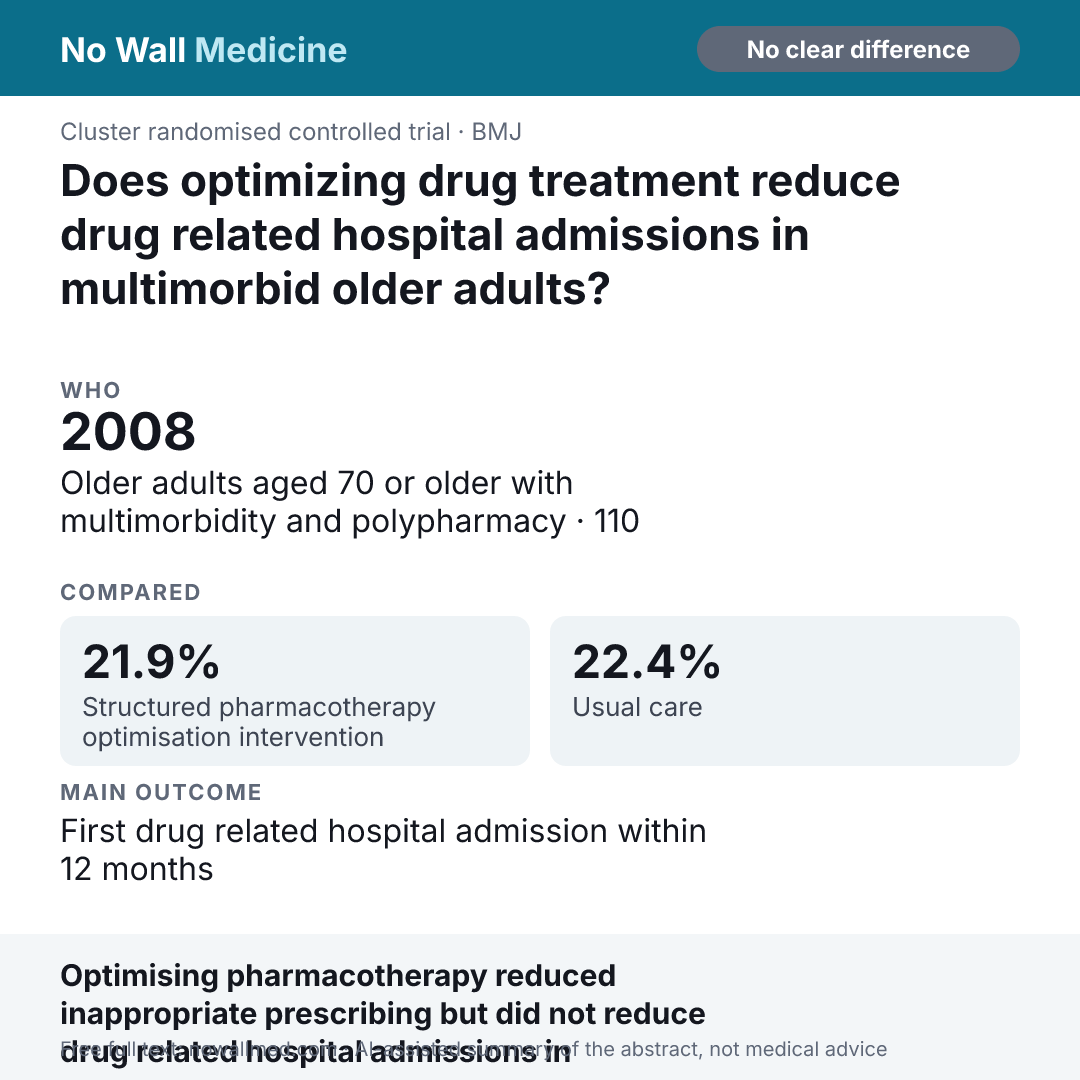
Optimizing Therapy to Prevent Avoidable Hospital Admissions in Multimorbid Older Adults (OPERAM): cluster randomised controlled trial
Cluster randomised controlled trialNo clear difference
Does optimizing drug treatment reduce drug related hospital admissions in multimorbid older adults?
Who
2008
Older adults aged 70 or older with multimorbidity and polypharmacy · 110 inpatient wards in four European countries
Compared
21.9%Structured pharmacotherapy optimisation intervention
22.4%Usual care
Main outcome
First drug related hospital admission within 12 months
Result: hazard ratio 0.95 (95% confidence interval 0.77 to 1.17)
Bottom line: Optimising pharmacotherapy reduced inappropriate prescribing but did not reduce drug related hospital admissions in multimorbid older adults.
BMJ · 2021-07-13 · Save PNG
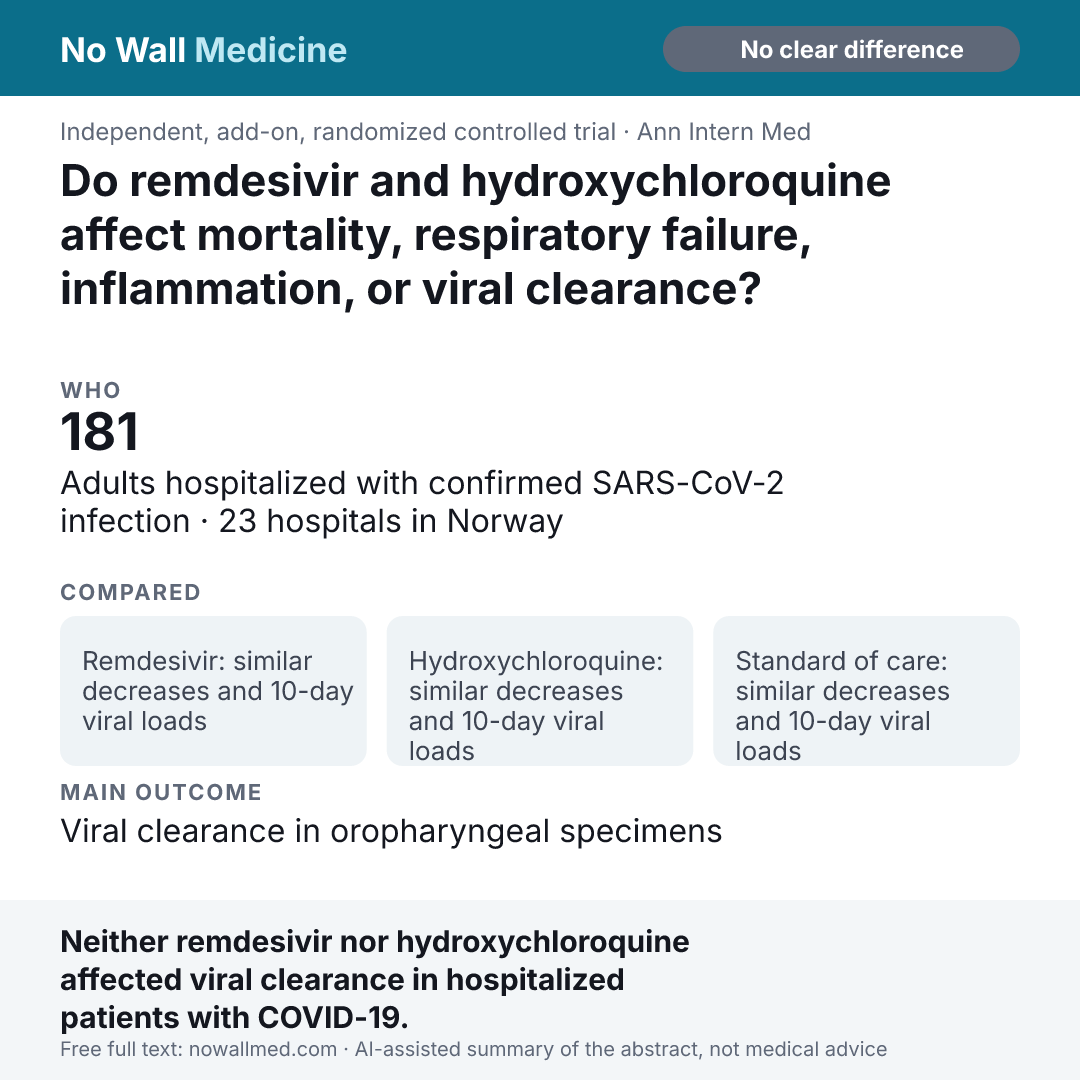
Evaluation of the Effects of Remdesivir and Hydroxychloroquine on Viral Clearance in COVID-19 : A Randomized Trial
Independent, add-on, randomized controlled trialNo clear difference
Do remdesivir and hydroxychloroquine affect mortality, respiratory failure, inflammation, or viral clearance?
Who
181
Adults hospitalized with confirmed SARS-CoV-2 infection · 23 hospitals in Norway
Compared
Remdesivir: similar decreases and 10-day viral loads
Hydroxychloroquine: similar decreases and 10-day viral loads
Standard of care: similar decreases and 10-day viral loads
Main outcome
Viral clearance in oropharyngeal specimens
Bottom line: Neither remdesivir nor hydroxychloroquine affected viral clearance in hospitalized patients with COVID-19.
Limitation: The trial had no placebo group.
Funded by: National Clinical Therapy Research in the Specialist Health Services, Norway
Ann Intern Med · 2021-07-13 · Save PNG
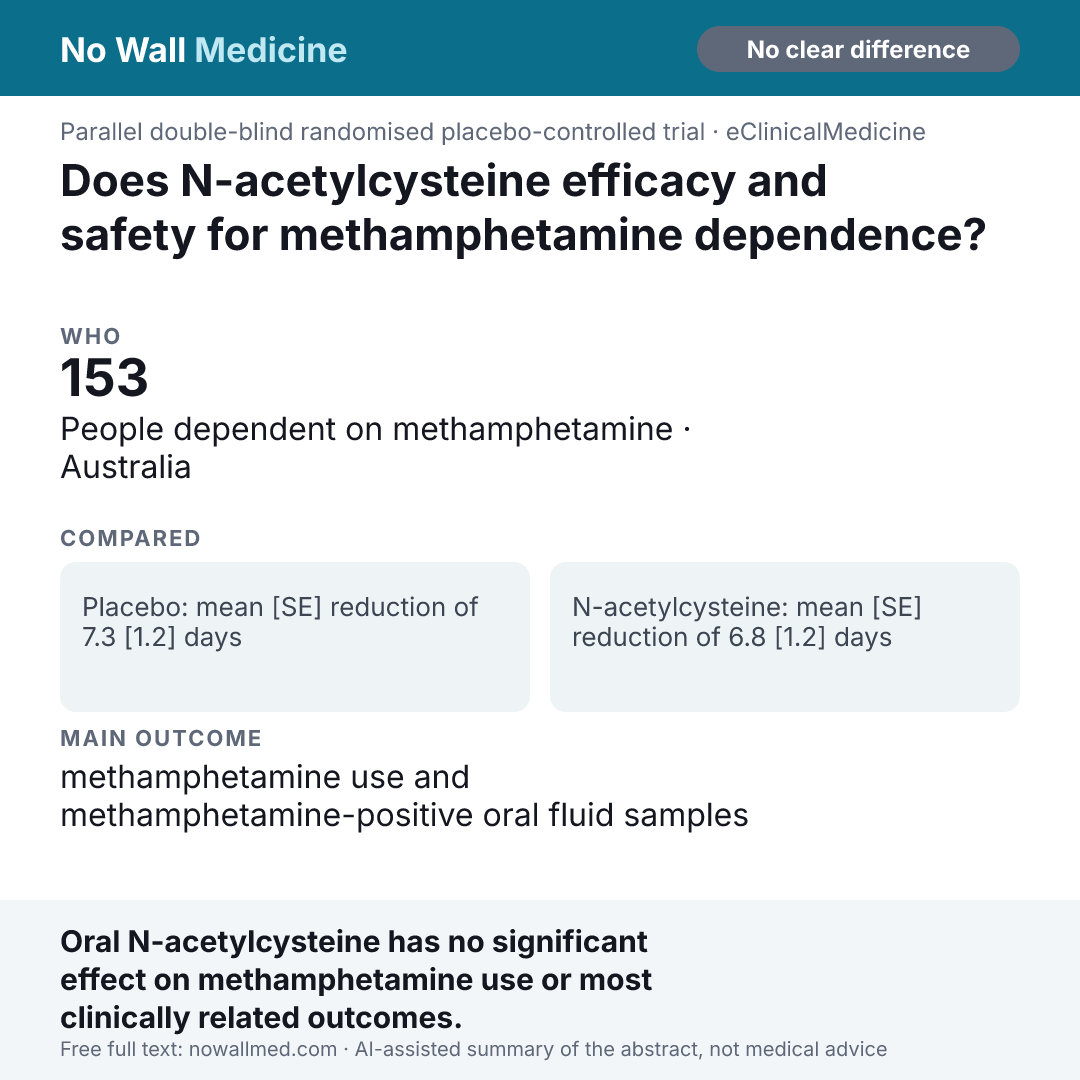
N-acetylcysteine (NAC) for methamphetamine dependence: A randomised controlled trial
Parallel double-blind randomised placebo-controlled trialNo clear difference
Does N-acetylcysteine efficacy and safety for methamphetamine dependence?
Who
153
People dependent on methamphetamine · Australia
Compared
Placebo: mean [SE] reduction of 7.3 [1.2] days
N-acetylcysteine: mean [SE] reduction of 6.8 [1.2] days
Main outcome
methamphetamine use and methamphetamine-positive oral fluid samples
Result: group difference of 0.5 days, 97.5% CI -3.4-4.3
Bottom line: Oral N-acetylcysteine has no significant effect on methamphetamine use or most clinically related outcomes.
eClinicalMedicine · 2021-07-13 · Save PNG
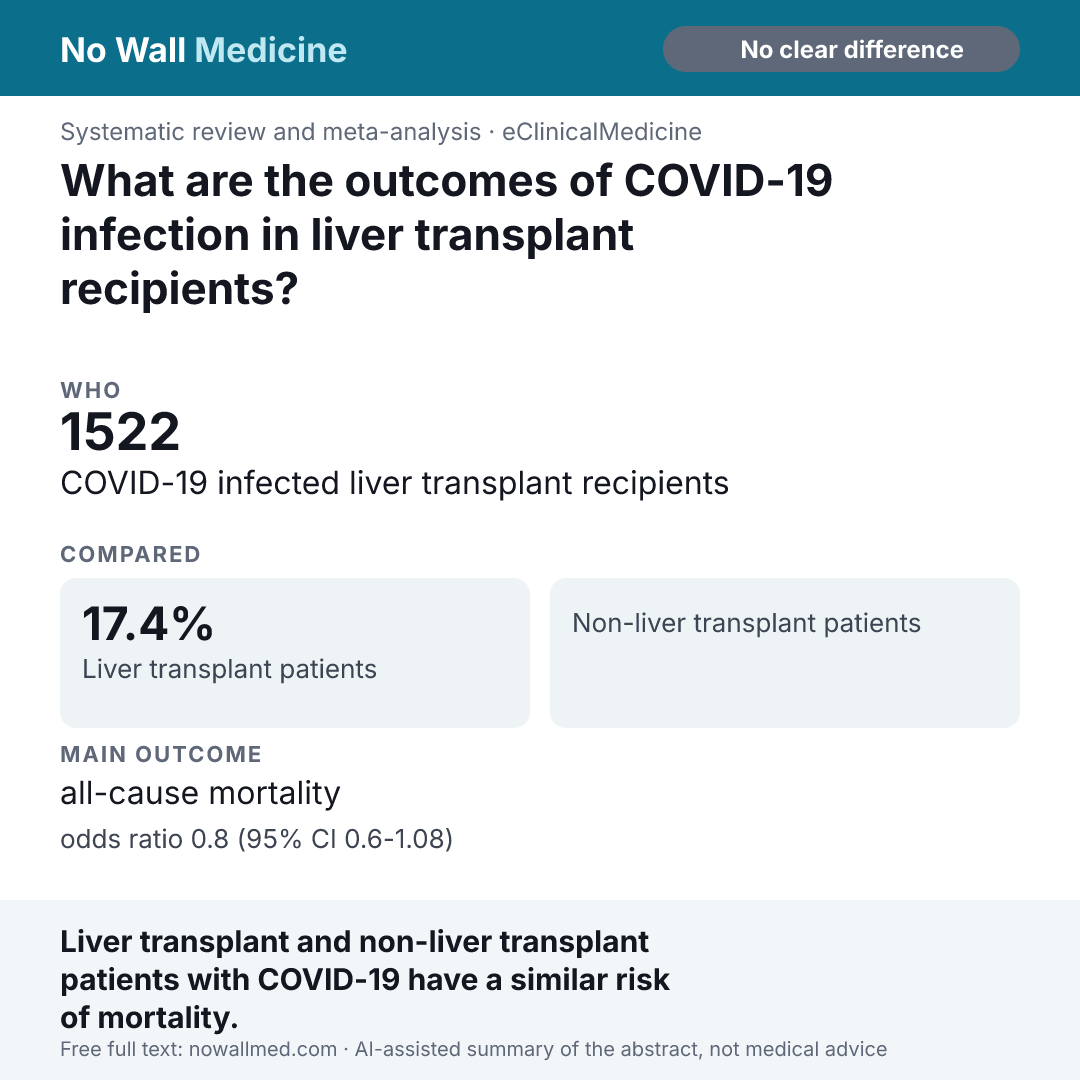
Impact of COVID-19 on liver transplant recipients-A systematic review and meta-analysis
Systematic review and meta-analysisNo clear difference
What are the outcomes of COVID-19 infection in liver transplant recipients?
Who
1522
COVID-19 infected liver transplant recipients
Compared
17.4%Liver transplant patients (95% confidence interval, 15.4-19.6)
Non-liver transplant patients
Main outcome
all-cause mortality
Result: odds ratio 0.8 (95% CI 0.6-1.08)
Bottom line: Liver transplant and non-liver transplant patients with COVID-19 have a similar risk of mortality.
eClinicalMedicine · 2021-07-13 · Save PNG
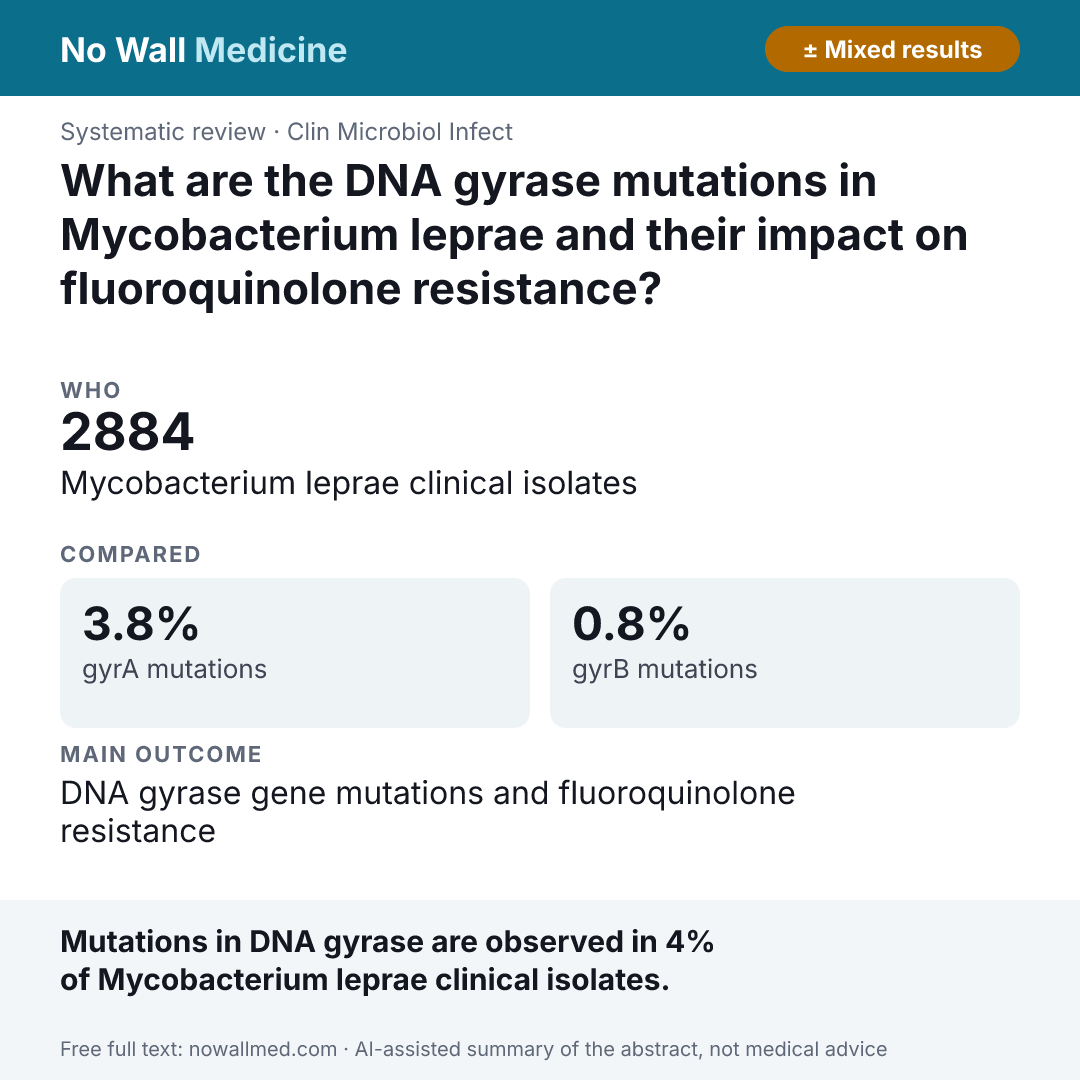
A systematic review of Mycobacterium leprae DNA gyrase mutations and their impact on fluoroquinolone resistance
Systematic reviewMixed results
What are the DNA gyrase mutations in Mycobacterium leprae and their impact on fluoroquinolone resistance?
Who
2884
Mycobacterium leprae clinical isolates
Compared
3.8%gyrA mutations (n = 110)
0.8%gyrB mutations (n = 6)
Main outcome
DNA gyrase gene mutations and fluoroquinolone resistance
Bottom line: Mutations in DNA gyrase are observed in 4% of Mycobacterium leprae clinical isolates.
Clin Microbiol Infect · 2021-07-13 · Save PNG
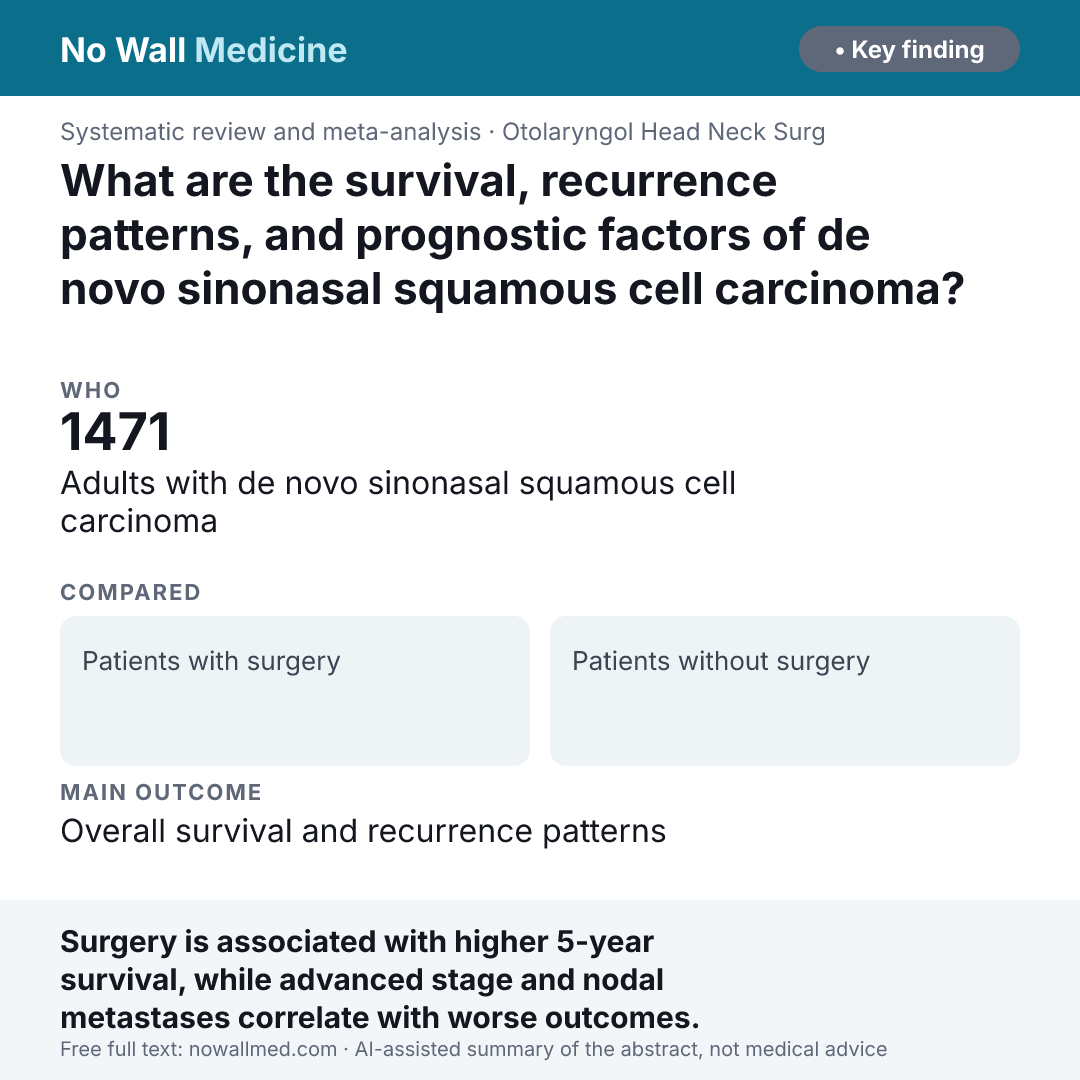
Prognostic Factors and Outcomes of De Novo Sinonasal Squamous Cell Carcinoma: A Systematic Review and Meta-analysis
Systematic review and meta-analysisKey finding
What are the survival, recurrence patterns, and prognostic factors of de novo sinonasal squamous cell carcinoma?
Who
1471
Adults with de novo sinonasal squamous cell carcinoma
Compared
Patients with surgery
Patients without surgery
Main outcome
Overall survival and recurrence patterns
Result: odds ratio 2.26 (95% CI 1.48-3.47)
Bottom line: Surgery is associated with higher 5-year survival, while advanced stage and nodal metastases correlate with worse outcomes.
Otolaryngol Head Neck Surg · 2021-07-13 · Save PNG
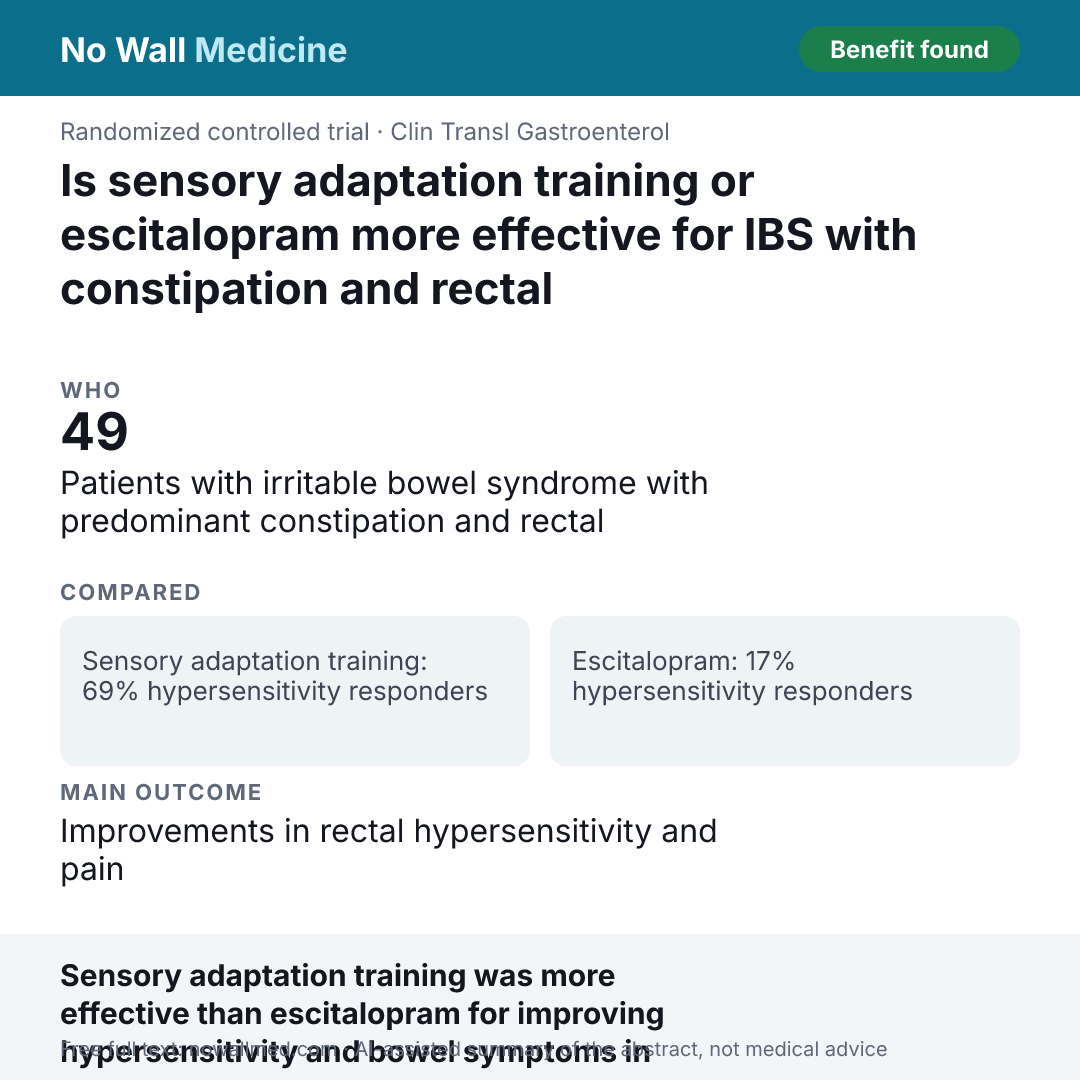
Sensory Adaptation Training or Escitalopram for IBS With Constipation and Rectal Hypersensitivity: A Randomized Controlled Trial
Randomized controlled trialBenefit found
Is sensory adaptation training or escitalopram more effective for IBS with constipation and rectal hypersensitivity?
Who
49
Patients with irritable bowel syndrome with predominant constipation and rectal hypersensitivity
Compared
Sensory adaptation training: 69% hypersensitivity responders
Escitalopram: 17% hypersensitivity responders
Main outcome
Improvements in rectal hypersensitivity and pain
Bottom line: Sensory adaptation training was more effective than escitalopram for improving hypersensitivity and bowel symptoms in patients.
Clin Transl Gastroenterol · 2021-07-13 · Save PNG
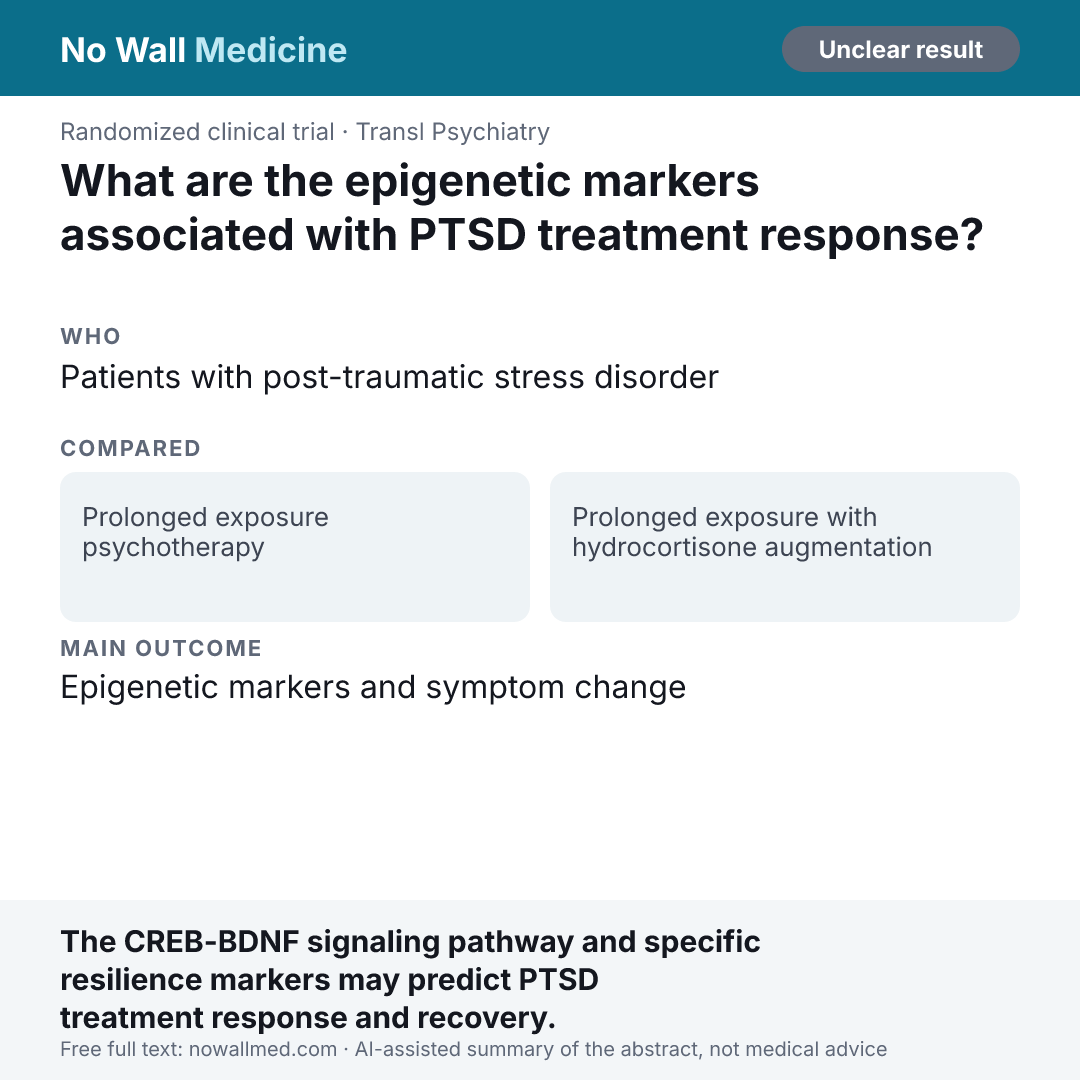
Longitudinal genome-wide methylation study of PTSD treatment using prolonged exposure and hydrocortisone
Randomized clinical trialUnclear result
What are the epigenetic markers associated with PTSD treatment response?
Who
Patients with post-traumatic stress disorder
Compared
Prolonged exposure psychotherapy
Prolonged exposure with hydrocortisone augmentation
Main outcome
Epigenetic markers and symptom change
Bottom line: The CREB-BDNF signaling pathway and specific resilience markers may predict PTSD treatment response and recovery.
Transl Psychiatry · 2021-07-13 · Save PNG
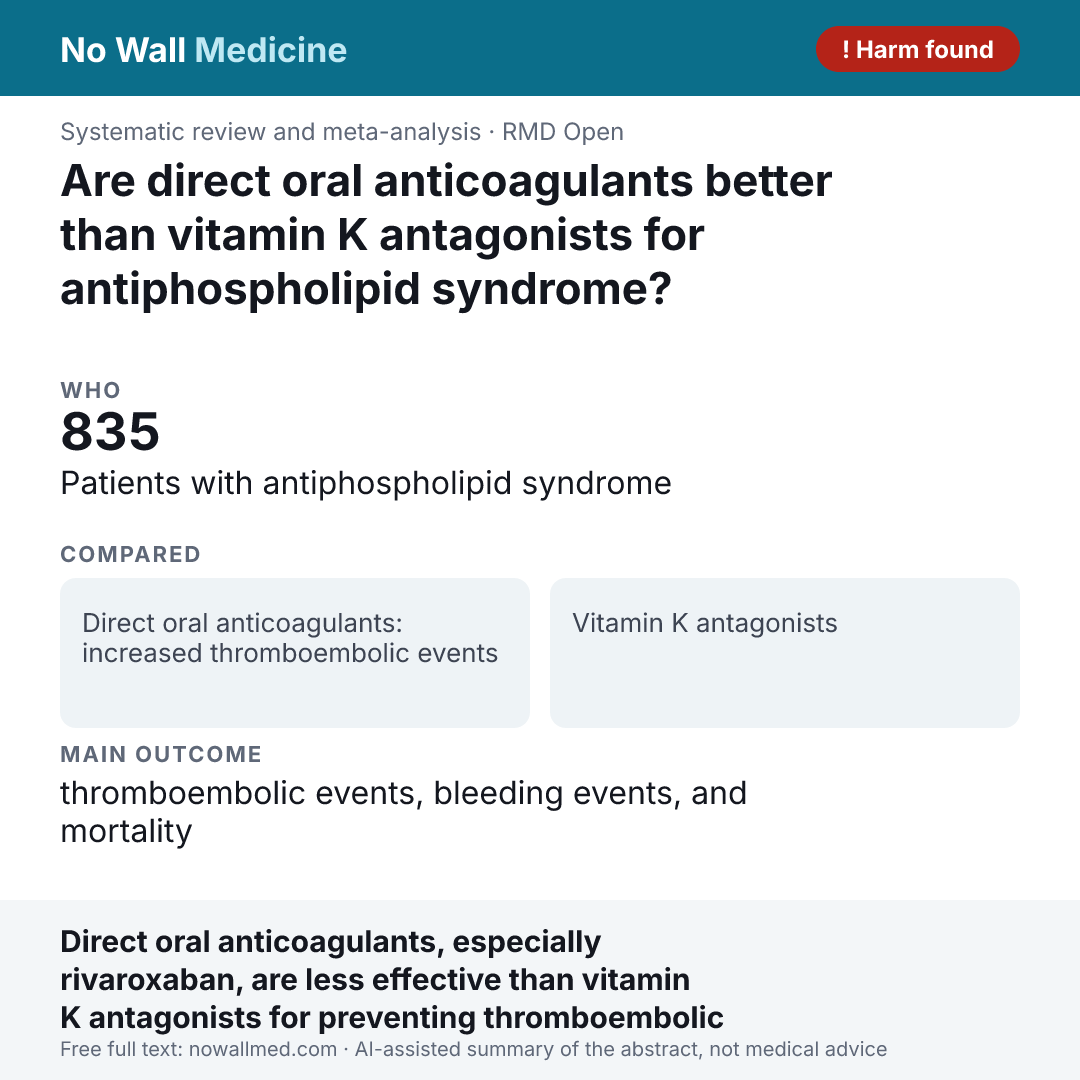
Direct oral anticoagulants versus vitamin K antagonists in patients with antiphospholipid syndrome: systematic review and meta-analysis
Systematic review and meta-analysisHarm found
Are direct oral anticoagulants better than vitamin K antagonists for antiphospholipid syndrome?
Who
835
Patients with antiphospholipid syndrome
Compared
Direct oral anticoagulants: increased thromboembolic events
Vitamin K antagonists
Main outcome
thromboembolic events, bleeding events, and mortality
Result: risk ratio 1.69 (95% CI 1.09 to 2.62)
Bottom line: Direct oral anticoagulants, especially rivaroxaban, are less effective than vitamin K antagonists for preventing thromboembolic events in antiphospholipid syndrome.
RMD Open · 2021-07-13 · Save PNG
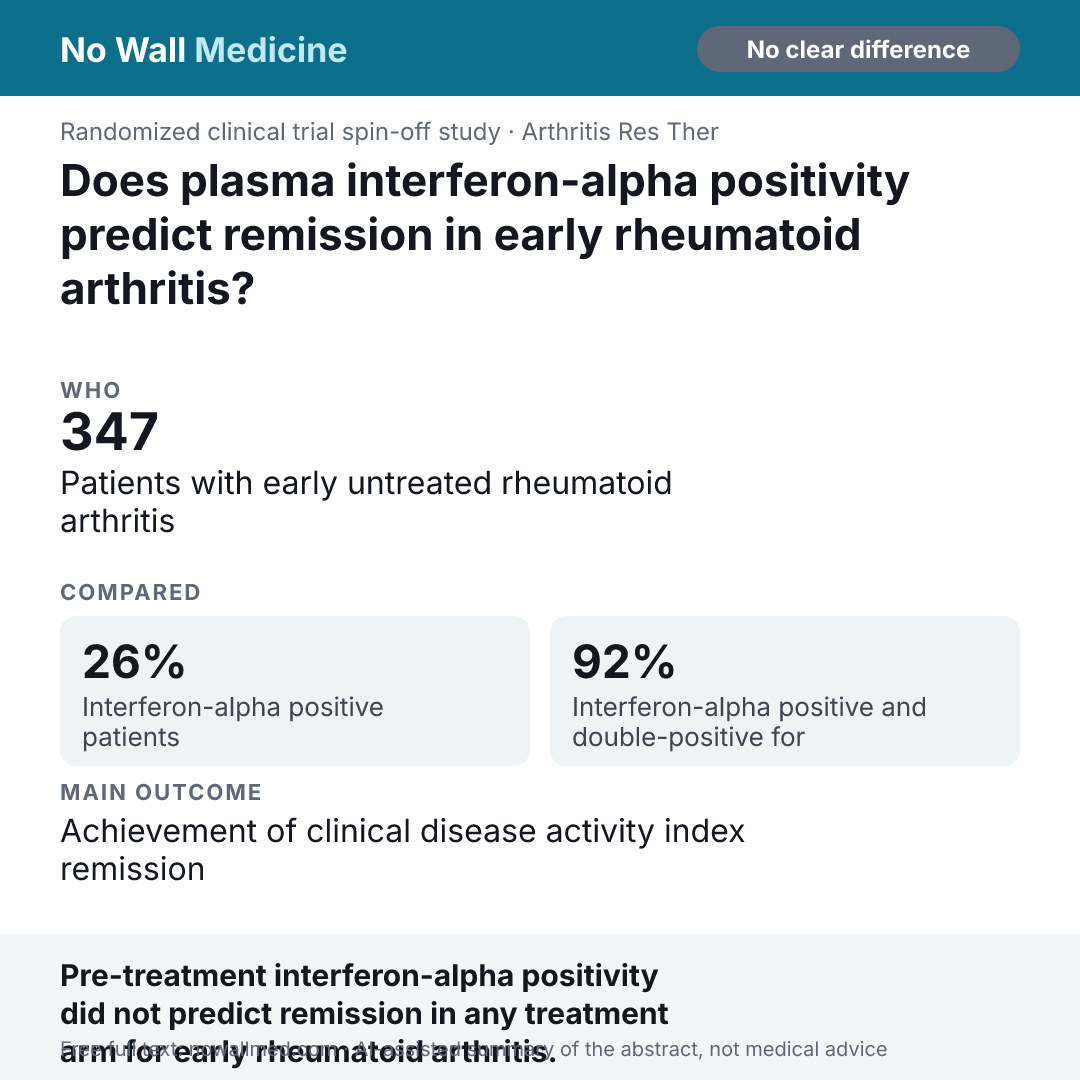
Plasma interferon-alpha is associated with double-positivity for autoantibodies but is not a predictor of remission in early rheumatoid arthritis-a spin-off study of the NORD-STAR randomized clinical trial
Randomized clinical trial spin-off studyNo clear difference
Does plasma interferon-alpha positivity predict remission in early rheumatoid arthritis?
Who
347
Patients with early untreated rheumatoid arthritis
Compared
26%Interferon-alpha positive patients
92%Interferon-alpha positive and double-positive for autoantibodies
Main outcome
Achievement of clinical disease activity index remission
Bottom line: Pre-treatment interferon-alpha positivity did not predict remission in any treatment arm for early rheumatoid arthritis.
Arthritis Res Ther · 2021-07-13 · Save PNG
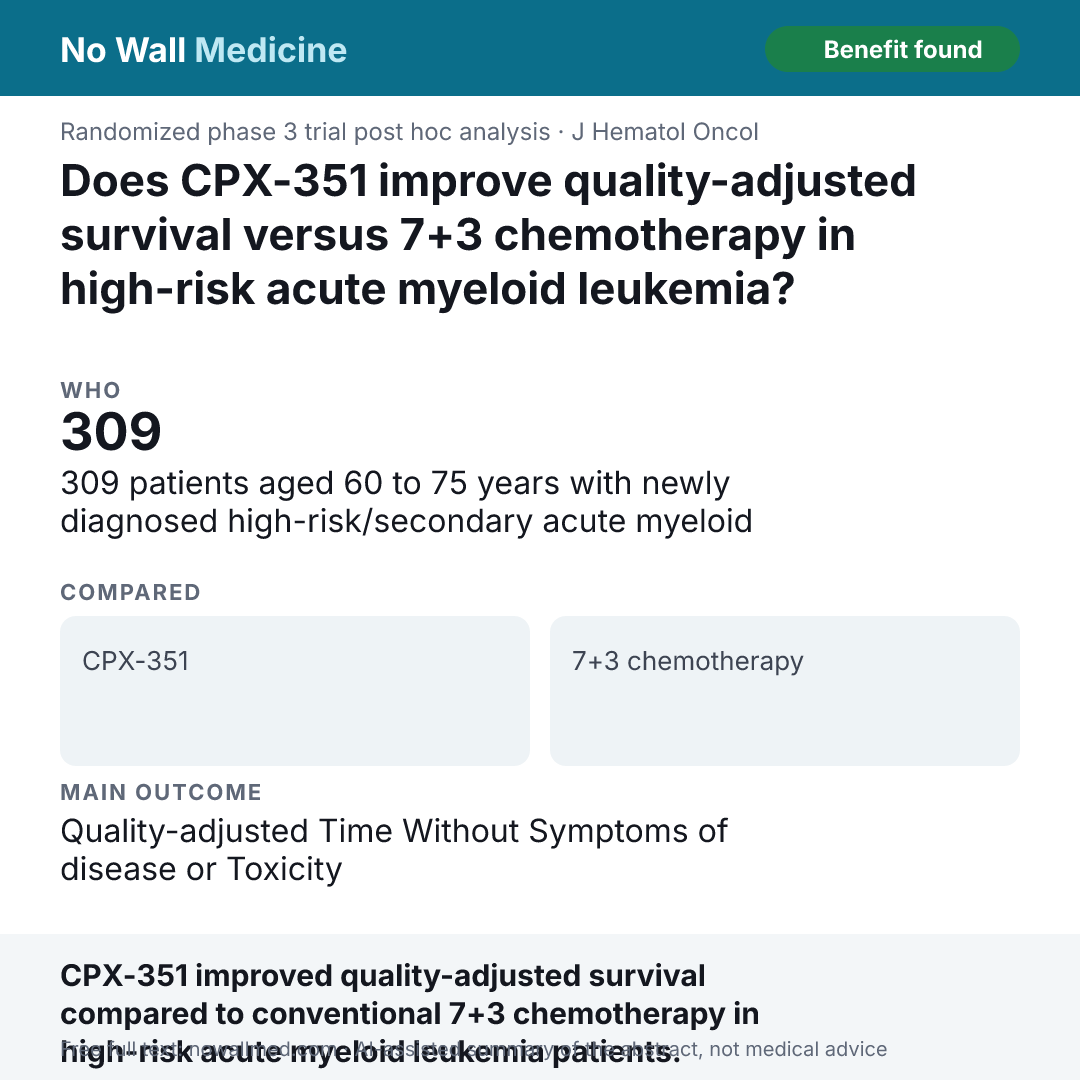
Quality-adjusted Time Without Symptoms of disease or Toxicity (Q-TWiST) analysis of CPX-351 versus 7 + 3 in older adults with newly diagnosed high-risk/secondary AML
Randomized phase 3 trial post hoc analysisBenefit found
Does CPX-351 improve quality-adjusted survival versus 7+3 chemotherapy in high-risk acute myeloid leukemia?
Who
309
309 patients aged 60 to 75 years with newly diagnosed high-risk/secondary acute myeloid leukemia
Compared
CPX-351
7+3 chemotherapy
Main outcome
Quality-adjusted Time Without Symptoms of disease or Toxicity
Result: relative Q-TWiST gain of 53.6% in the base case scenario
Bottom line: CPX-351 improved quality-adjusted survival compared to conventional 7+3 chemotherapy in high-risk acute myeloid leukemia patients.
J Hematol Oncol · 2021-07-13 · Save PNG
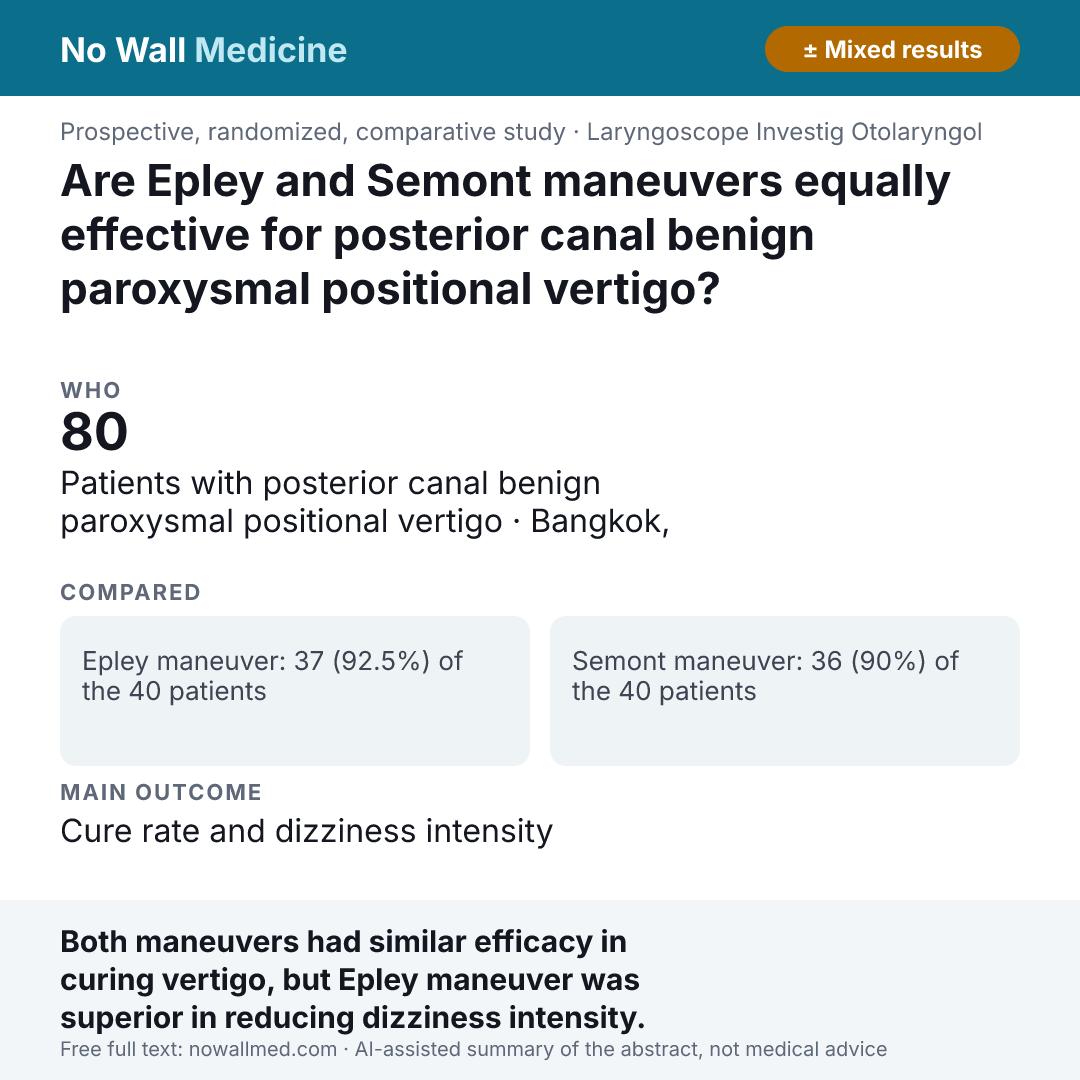
Comparison of outcomes of the Epley and Semont maneuvers in posterior canal BPPV: A randomized controlled trial
Prospective, randomized, comparative studyMixed results
Are Epley and Semont maneuvers equally effective for posterior canal benign paroxysmal positional vertigo?
Who
80
Patients with posterior canal benign paroxysmal positional vertigo · Bangkok, Thailand
Compared
Epley maneuver: 37 (92.5%) of the 40 patients
Semont maneuver: 36 (90%) of the 40 patients
Main outcome
Cure rate and dizziness intensity
Bottom line: Both maneuvers had similar efficacy in curing vertigo, but Epley maneuver was superior in reducing dizziness intensity.
Laryngoscope Investig Otolaryngol · 2021-07-13 · Save PNG
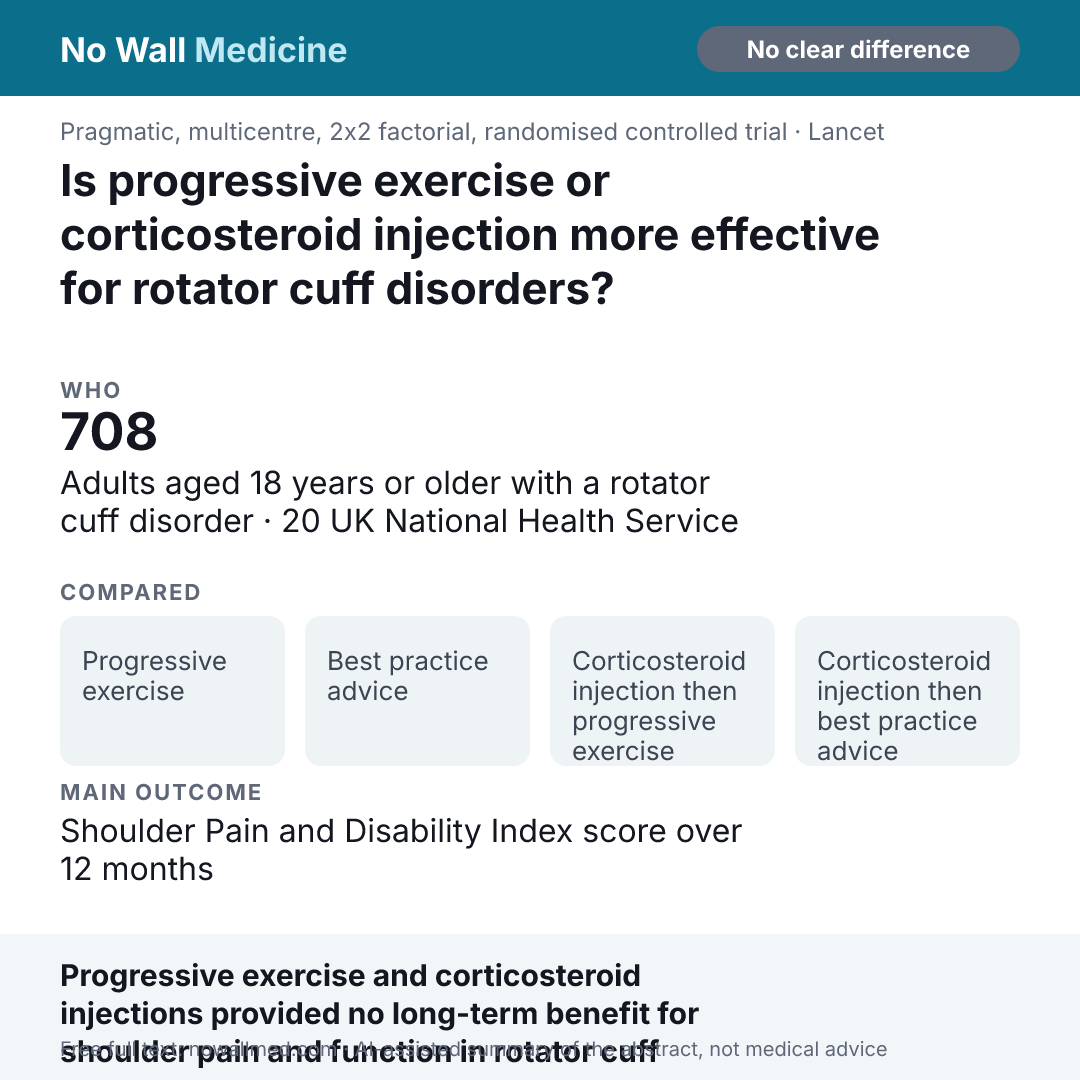
Progressive exercise compared with best practice advice, with or without corticosteroid injection, for the treatment of patients with rotator cuff disorders (GRASP): a multicentre, pragmatic, 2 × 2 factorial, randomised controlled trial
Pragmatic, multicentre, 2x2 factorial, randomised controlled trialNo clear difference
Is progressive exercise or corticosteroid injection more effective for rotator cuff disorders?
Who
708
Adults aged 18 years or older with a rotator cuff disorder · 20 UK National Health Service trusts
Compared
Progressive exercise
Best practice advice
Corticosteroid injection then progressive exercise
Corticosteroid injection then best practice advice
Main outcome
Shoulder Pain and Disability Index score over 12 months
Result: adjusted mean difference -0·66 (99% CI -4·52 to 3·20)
Bottom line: Progressive exercise and corticosteroid injections provided no long-term benefit for shoulder pain and function in rotator cuff disorders.
Funded by: UK National Institute for Health Research Technology Assessment Programme
Lancet · 2021-07-12 · Save PNG
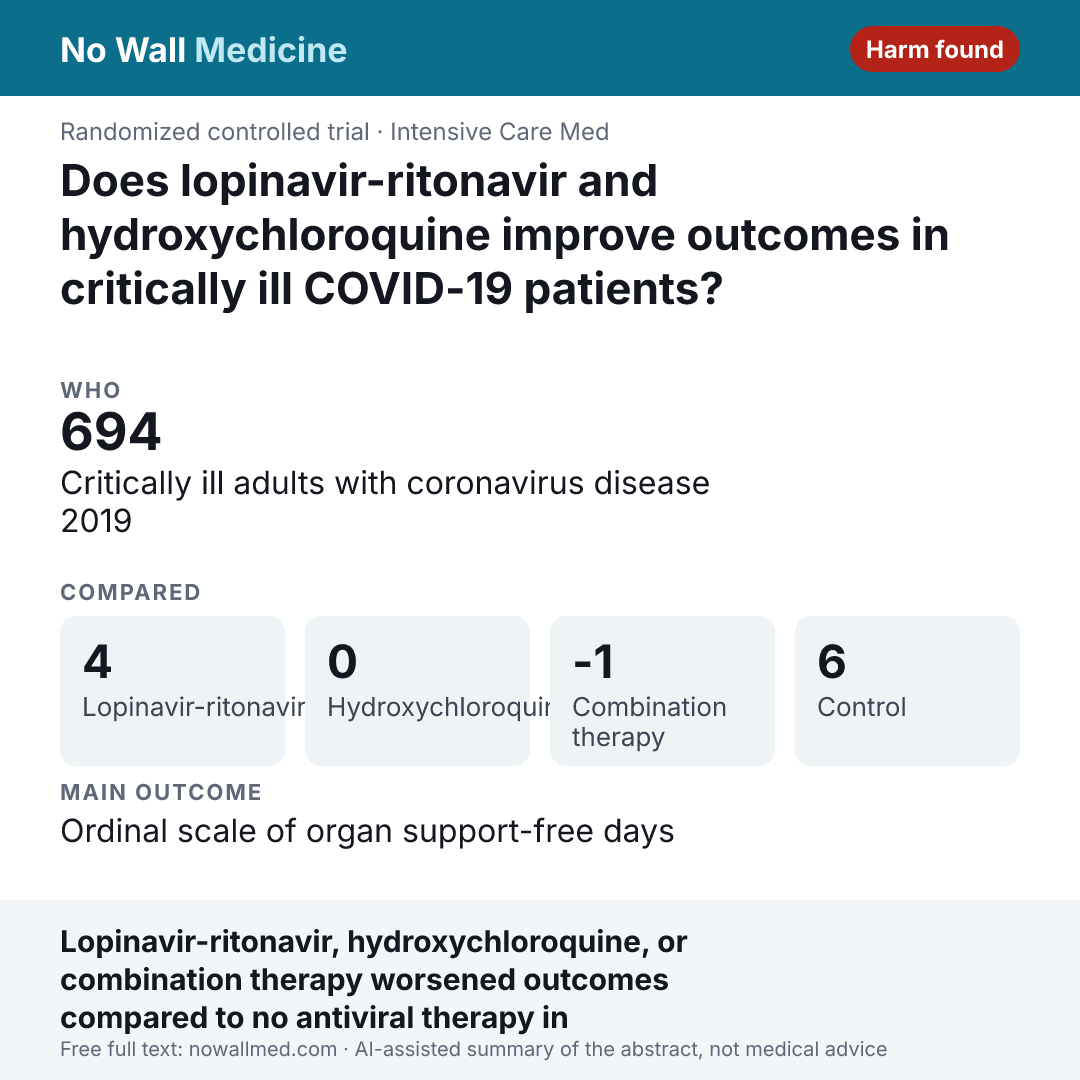
Lopinavir-ritonavir and hydroxychloroquine for critically ill patients with COVID-19: REMAP-CAP randomized controlled trial
Randomized controlled trialHarm found
Does lopinavir-ritonavir and hydroxychloroquine improve outcomes in critically ill COVID-19 patients?
Who
694
Critically ill adults with coronavirus disease 2019
Compared
4Lopinavir-ritonavir (- 1 to 15)
0Hydroxychloroquine (- 1 to 9)
-1Combination therapy (- 1 to 7)
6Control (- 1 to 16)
Main outcome
Ordinal scale of organ support-free days
Result: OR 0.73 (95% credible interval: 0.55 to 0.99), 0.57 (0.35 to 0.83), 0.41 (0.24 to 0.72)
Bottom line: Lopinavir-ritonavir, hydroxychloroquine, or combination therapy worsened outcomes compared to no antiviral therapy in critically ill patients.
Intensive Care Med · 2021-07-12 · Save PNG
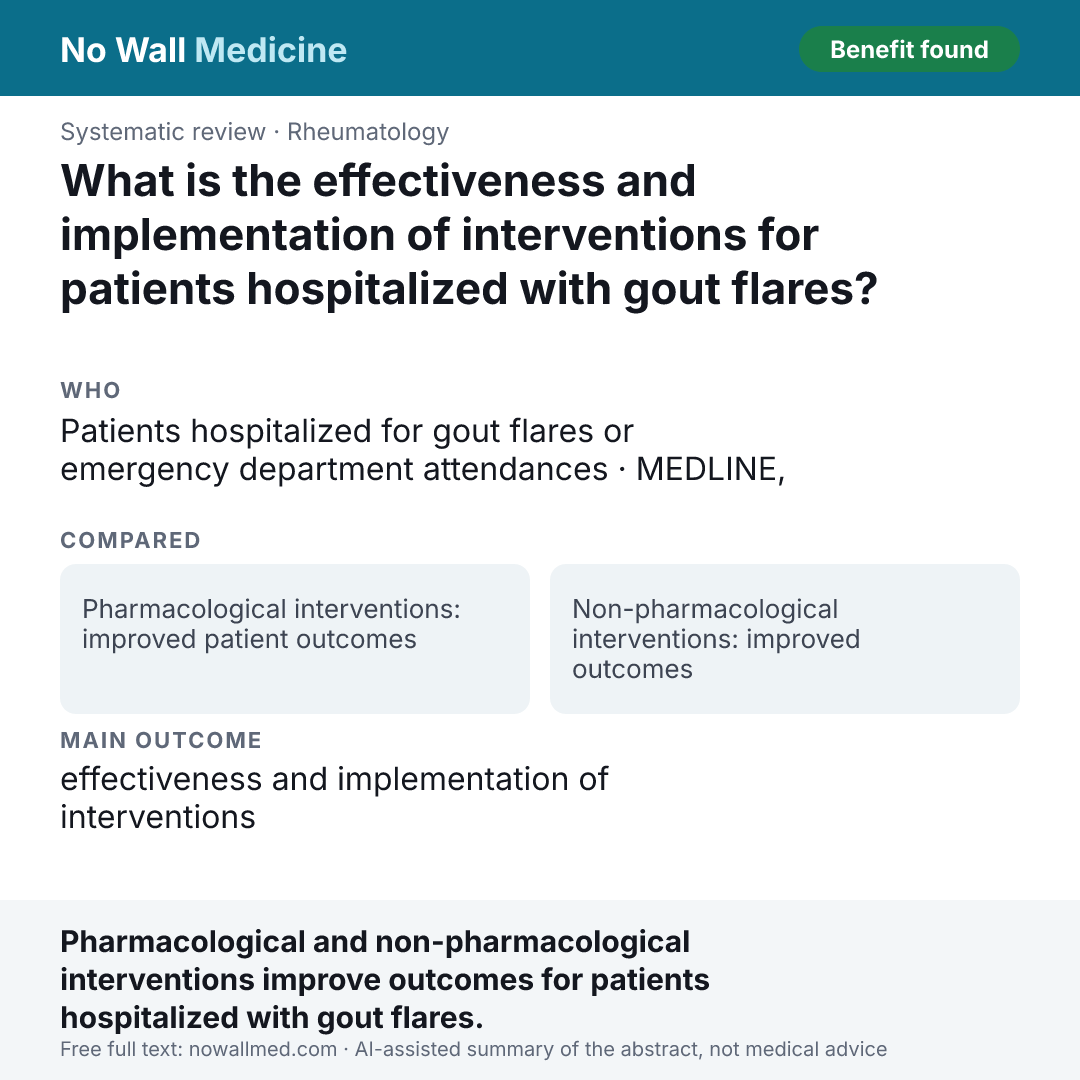
Improving outcomes for patients hospitalized with gout: a systematic review
Systematic reviewBenefit found
What is the effectiveness and implementation of interventions for patients hospitalized with gout flares?
Who
Patients hospitalized for gout flares or emergency department attendances · MEDLINE, Embase and the Cochrane library
Compared
Pharmacological interventions: improved patient outcomes
Non-pharmacological interventions: improved outcomes
Main outcome
effectiveness and implementation of interventions
Bottom line: Pharmacological and non-pharmacological interventions improve outcomes for patients hospitalized with gout flares.
Limitation: Most studies were small, retrospective analyses performed in single centres, with concerns for bias.
Rheumatology · 2021-07-12 · Save PNG
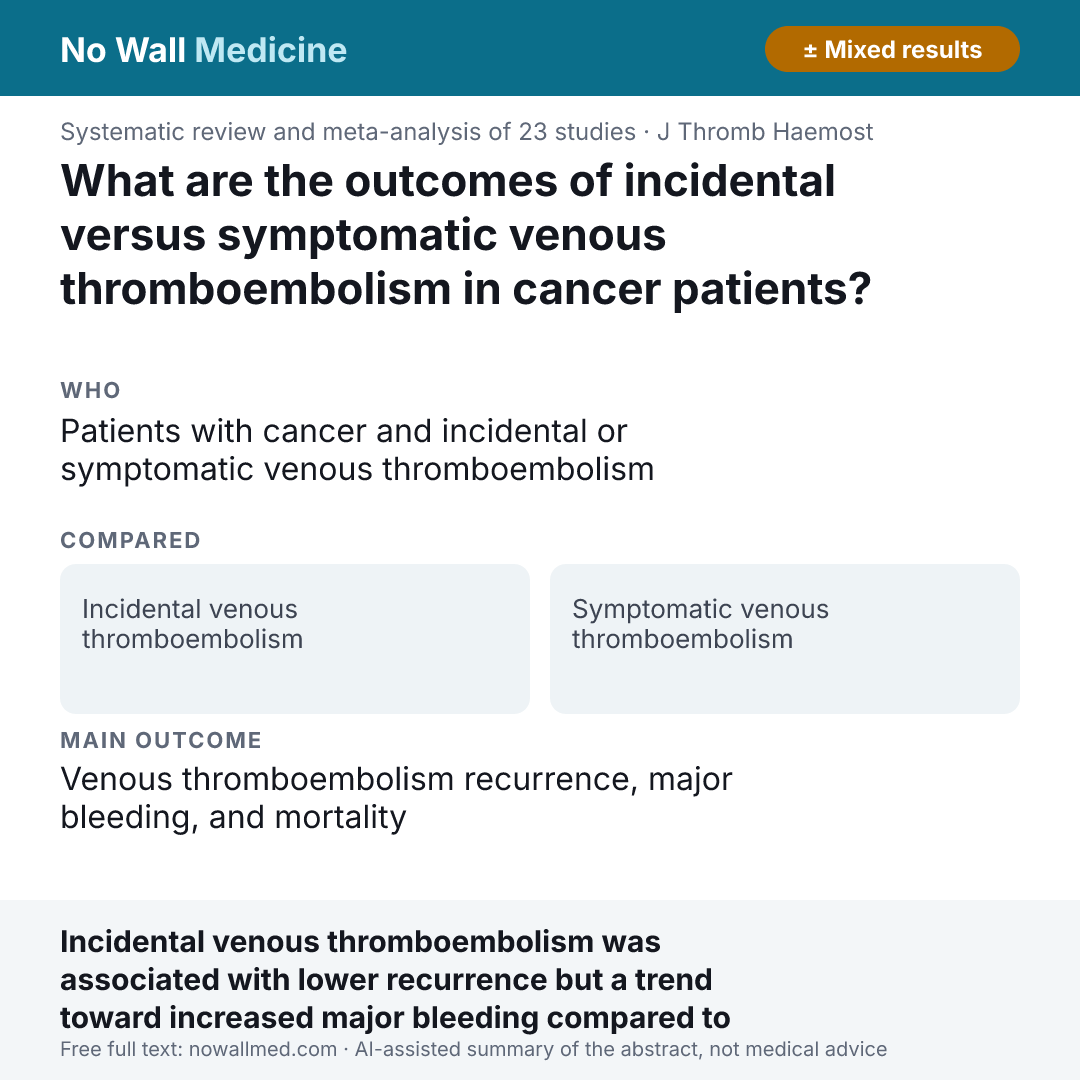
Outcomes among patients with cancer and incidental or symptomatic venous thromboembolism: A systematic review and meta-analysis
Systematic review and meta-analysis of 23 studiesMixed results
What are the outcomes of incidental versus symptomatic venous thromboembolism in cancer patients?
Who
Patients with cancer and incidental or symptomatic venous thromboembolism
Compared
Incidental venous thromboembolism
Symptomatic venous thromboembolism
Main outcome
Venous thromboembolism recurrence, major bleeding, and mortality
Result: relative risk 0.62 (95% confidence interval 0.44-0.87) for recurrence
Bottom line: Incidental venous thromboembolism was associated with lower recurrence but a trend toward increased major bleeding compared to symptomatic events.
J Thromb Haemost · 2021-07-12 · Save PNG
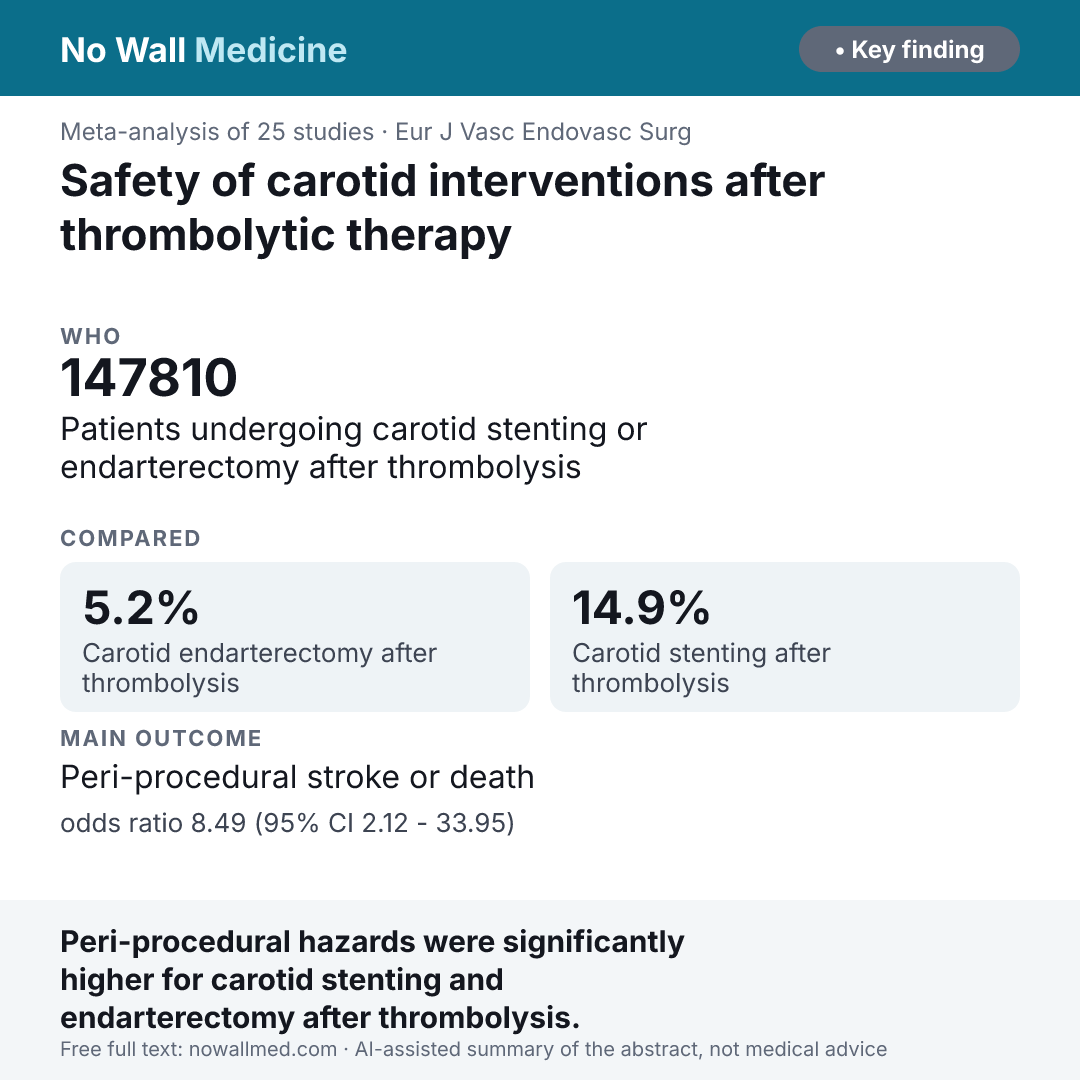
A Systematic Review and Meta-analysis of Peri-Procedural Outcomes in Patients Undergoing Carotid Interventions Following Thrombolysis
Meta-analysis of 25 studiesKey finding
Safety of carotid interventions after thrombolytic therapy
Who
147810
Patients undergoing carotid stenting or endarterectomy after thrombolysis
Compared
5.2%Carotid endarterectomy after thrombolysis (95% CI 3.3 - 7.5)
14.9%Carotid stenting after thrombolysis (95% CI 11.9 - 18.2)
Main outcome
Peri-procedural stroke or death
Result: odds ratio 8.49 (95% CI 2.12 - 33.95)
Bottom line: Peri-procedural hazards were significantly higher for carotid stenting and endarterectomy after thrombolysis.
Eur J Vasc Endovasc Surg · 2021-07-12 · Save PNG
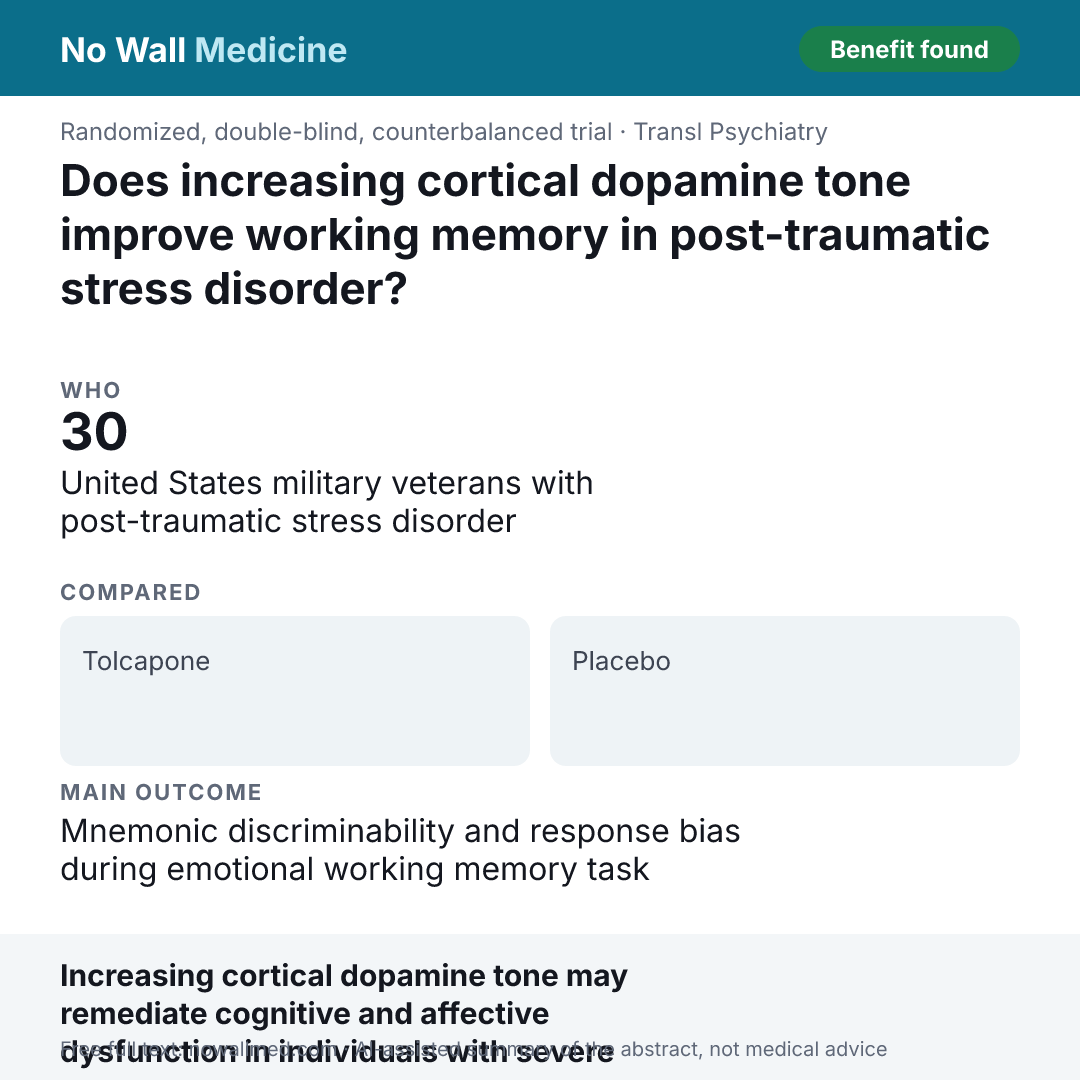
Working memory, cortical dopamine tone, and frontoparietal brain recruitment in post-traumatic stress disorder: a randomized controlled trial
Randomized, double-blind, counterbalanced trialBenefit found
Does increasing cortical dopamine tone improve working memory in post-traumatic stress disorder?
Who
30
United States military veterans with post-traumatic stress disorder
Compared
Tolcapone
Placebo
Main outcome
Mnemonic discriminability and response bias during emotional working memory task
Bottom line: Increasing cortical dopamine tone may remediate cognitive and affective dysfunction in individuals with severe post-traumatic stress disorder.
Transl Psychiatry · 2021-07-12 · Save PNG
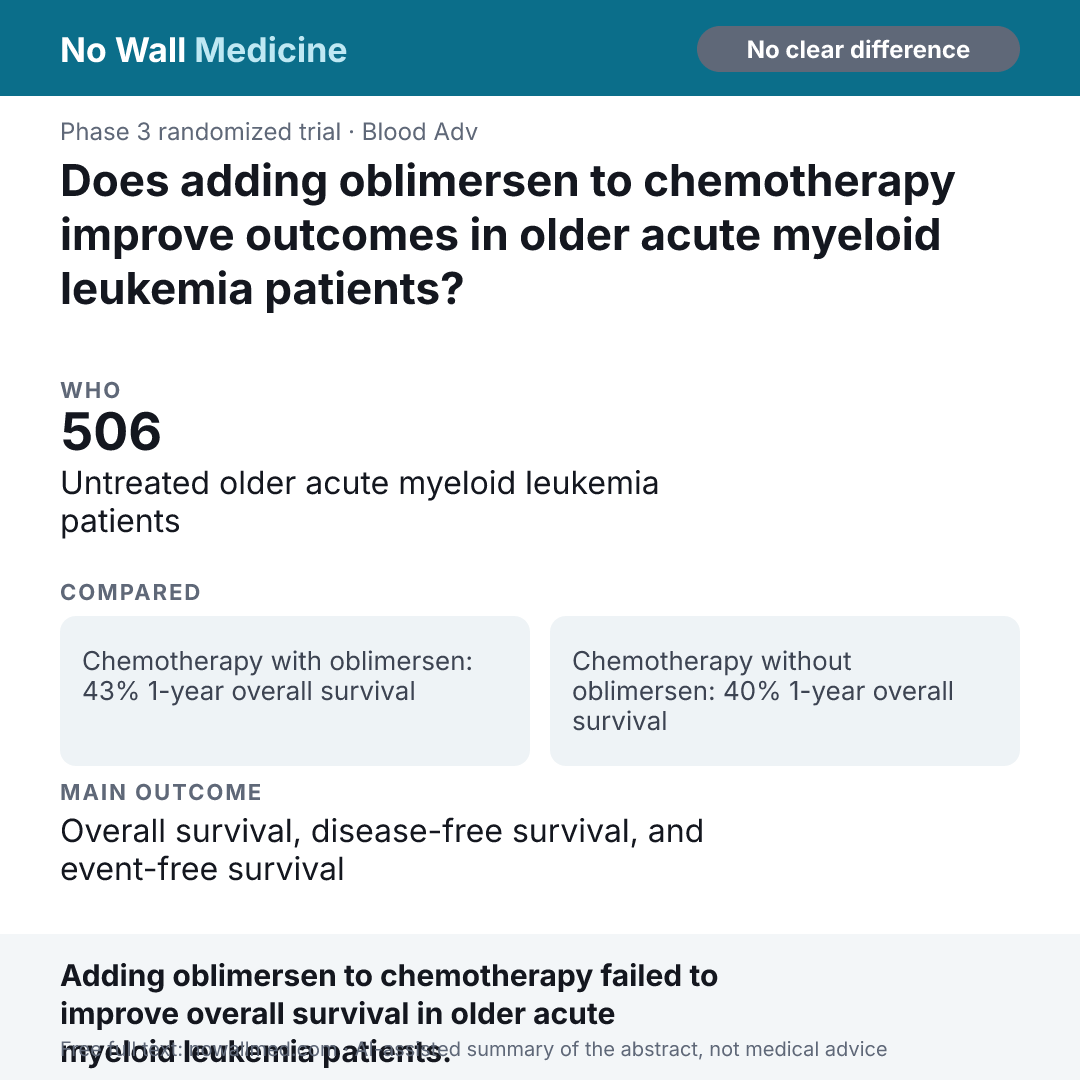
Phase 3 randomized trial of chemotherapy with or without oblimersen in older AML patients: CALGB 10201 (Alliance)
Phase 3 randomized trialNo clear difference
Does adding oblimersen to chemotherapy improve outcomes in older acute myeloid leukemia patients?
Who
506
Untreated older acute myeloid leukemia patients
Compared
Chemotherapy with oblimersen: 43% 1-year overall survival
Chemotherapy without oblimersen: 40% 1-year overall survival
Main outcome
Overall survival, disease-free survival, and event-free survival
Bottom line: Adding oblimersen to chemotherapy failed to improve overall survival in older acute myeloid leukemia patients.
Blood Adv · 2021-07-12 · Save PNG
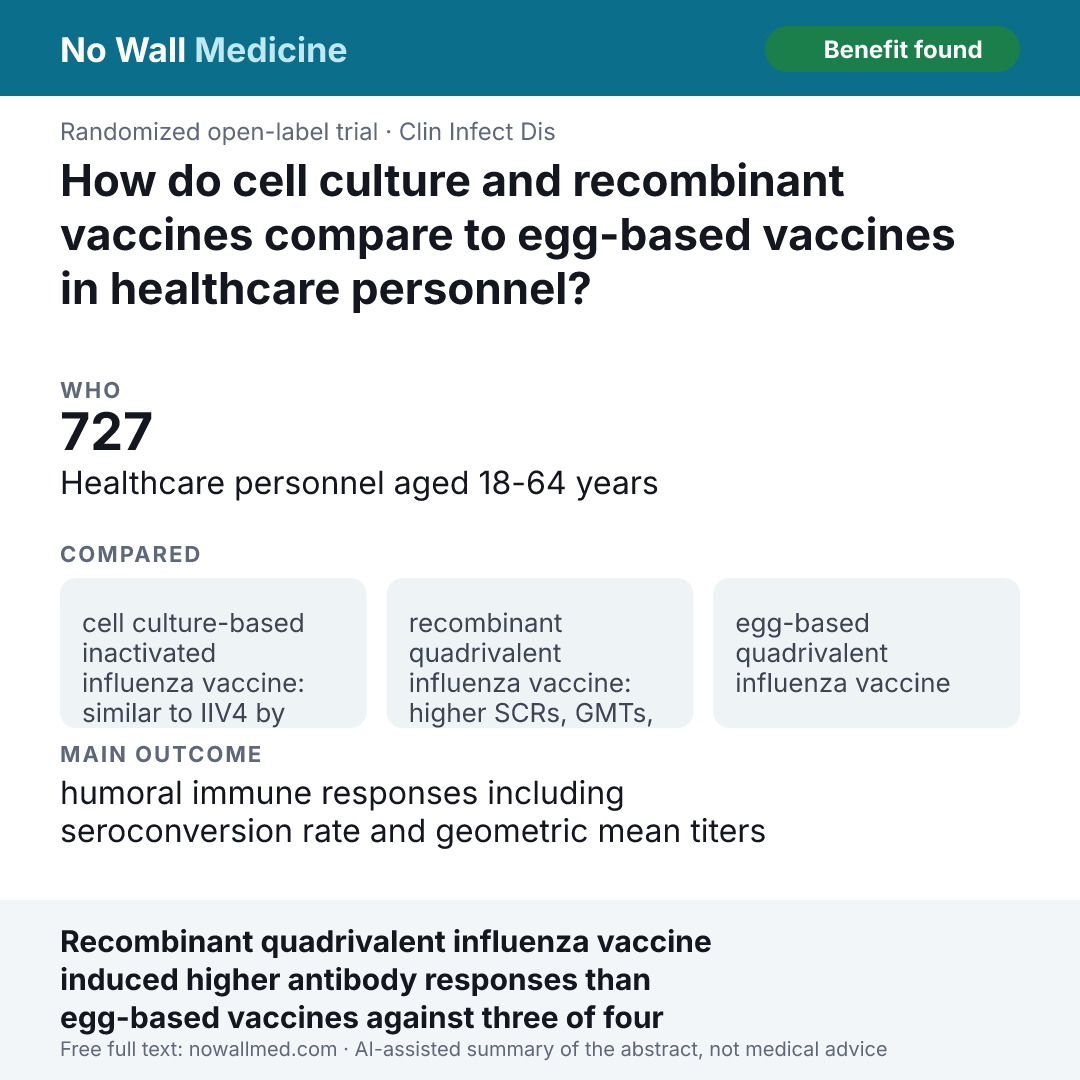
Comparison of the Immunogenicity of Cell Culture-Based and Recombinant Quadrivalent Influenza Vaccines to Conventional Egg-Based Quadrivalent Influenza Vaccines Among Healthcare Personnel Aged 18-64 Years: A Randomized Open-Label Trial
Randomized open-label trialBenefit found
How do cell culture and recombinant vaccines compare to egg-based vaccines in healthcare personnel?
Who
727
Healthcare personnel aged 18-64 years
Compared
cell culture-based inactivated influenza vaccine: similar to IIV4 by SCR, GMT, GMT ratio, and MFR
recombinant quadrivalent influenza vaccine: higher SCRs, GMTs, and MFRs than IIV4 against A/H1N1, A/H3N2, and B/Yamagata
egg-based quadrivalent influenza vaccine
Main outcome
humoral immune responses including seroconversion rate and geometric mean titers
Result: GMT ratio of RIV4 to egg-based vaccines was 1.5 (95% CI 1.2-1.9) for A/H1N1
Bottom line: Recombinant quadrivalent influenza vaccine induced higher antibody responses than egg-based vaccines against three of four tested strains.
Clin Infect Dis · 2021-07-11 · Save PNG