Higher extravascular lung water levels were associated with increased mortality in critically ill patients
Extravascular lung water levels are associated with mortality: a systematic review and meta-analysis
Systematic review and meta-analysisBenefit found
Is extravascular lung water measured by transpulmonary thermodilution associated with mortality in critically ill patients?
Who
1296
Critically ill patients
Compared
Non-survivors: 680 survivors vs. 566 non-survivors
Survivors: 680 survivors vs. 566 non-survivors
Main outcome
Mortality
Result: odds ratio 1.69 (95% CI 1.22 to 2.34)
Bottom line: Higher extravascular lung water measured by transpulmonary thermodilution is associated with increased mortality in critically ill patients.
Limitation: High risk of bias in many studies and low certainty of evidence.
Crit Care · 2022-07-06Download image
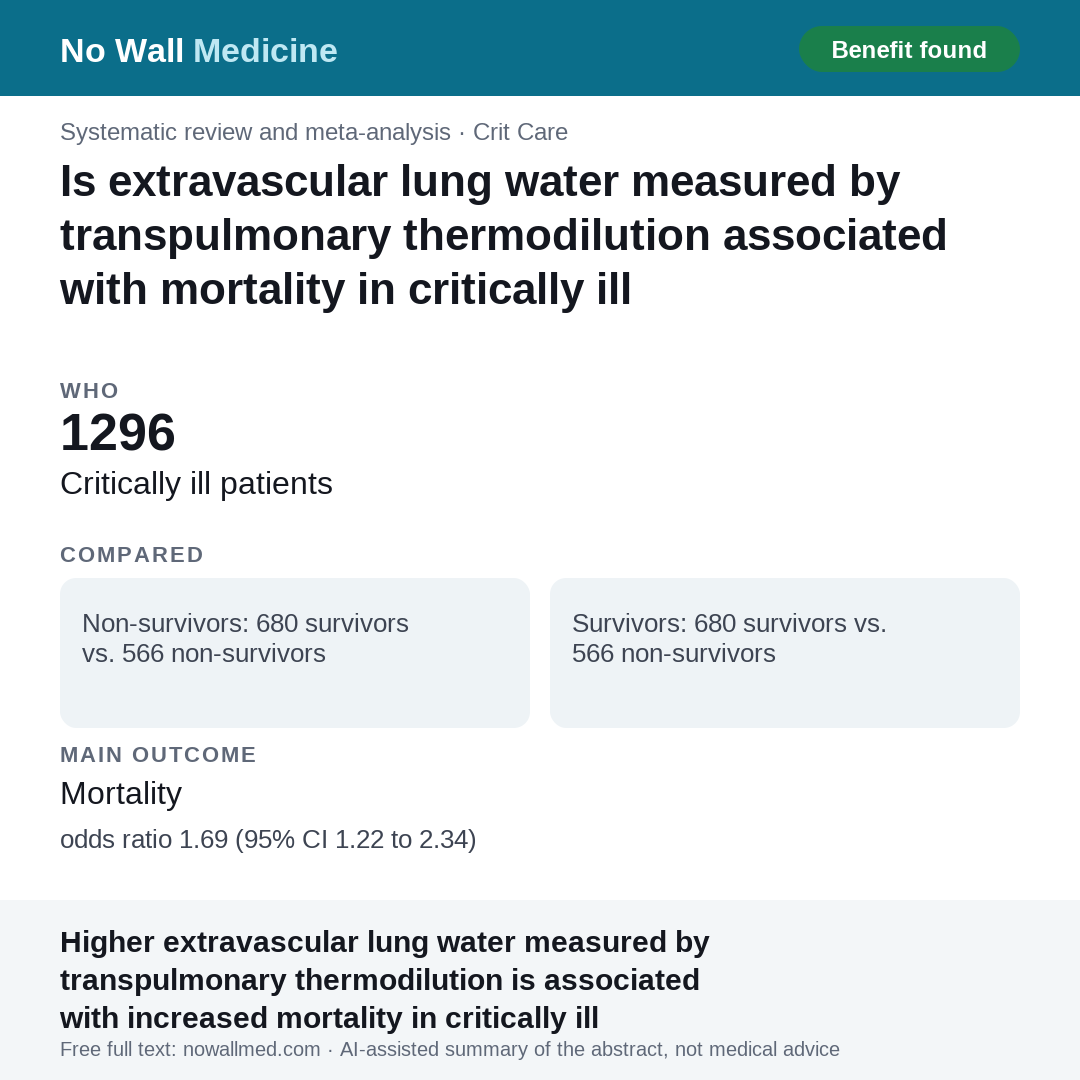
Clinical question: Is extravascular lung water measured by transpulmonary thermodilution associated with mortality in critically ill patients?
Why it matters: The prognostic value of measuring extravascular lung water using transpulmonary thermodilution in critically ill patients is debated.
Key points
- Researchers analyzed 18 studies involving 1296 patients to assess how extravascular lung water, or fluid outside the blood vessels in the lungs, relates to death.
- Higher levels of extravascular lung water were associated with an odds ratio for mortality of 1.69 (95% CI [1.22; 2.34], p < 0.0015).
- The mean difference in extravascular lung water between survivors and non-survivors was -4.97 mL/kg (95% CI [-6.54; -3.41], p < 0.001).
Limitation the authors note: The authors state that many included studies had a high risk of bias and the certainty of evidence was rated as low.
Headline and key points written with AI from the paper’s abstract, with every number checked against it. Read the paper before relying on them.
Was this summary helpful?
Subject terms
Cite this article
Gavelli F, Shi R, Teboul JL, Azzolina D, Mercado P, Jozwiak M. Extravascular lung water levels are associated with mortality: a systematic review and meta-analysis. Crit Care. 2022. doi:10.1186/s13054-022-04061-6
Spotted a mistake? Suggest a correction
Top studies every Monday
The week’s key trials and guidelines in your specialties, plus any topics you follow. By email, free.
Get the weekly digest