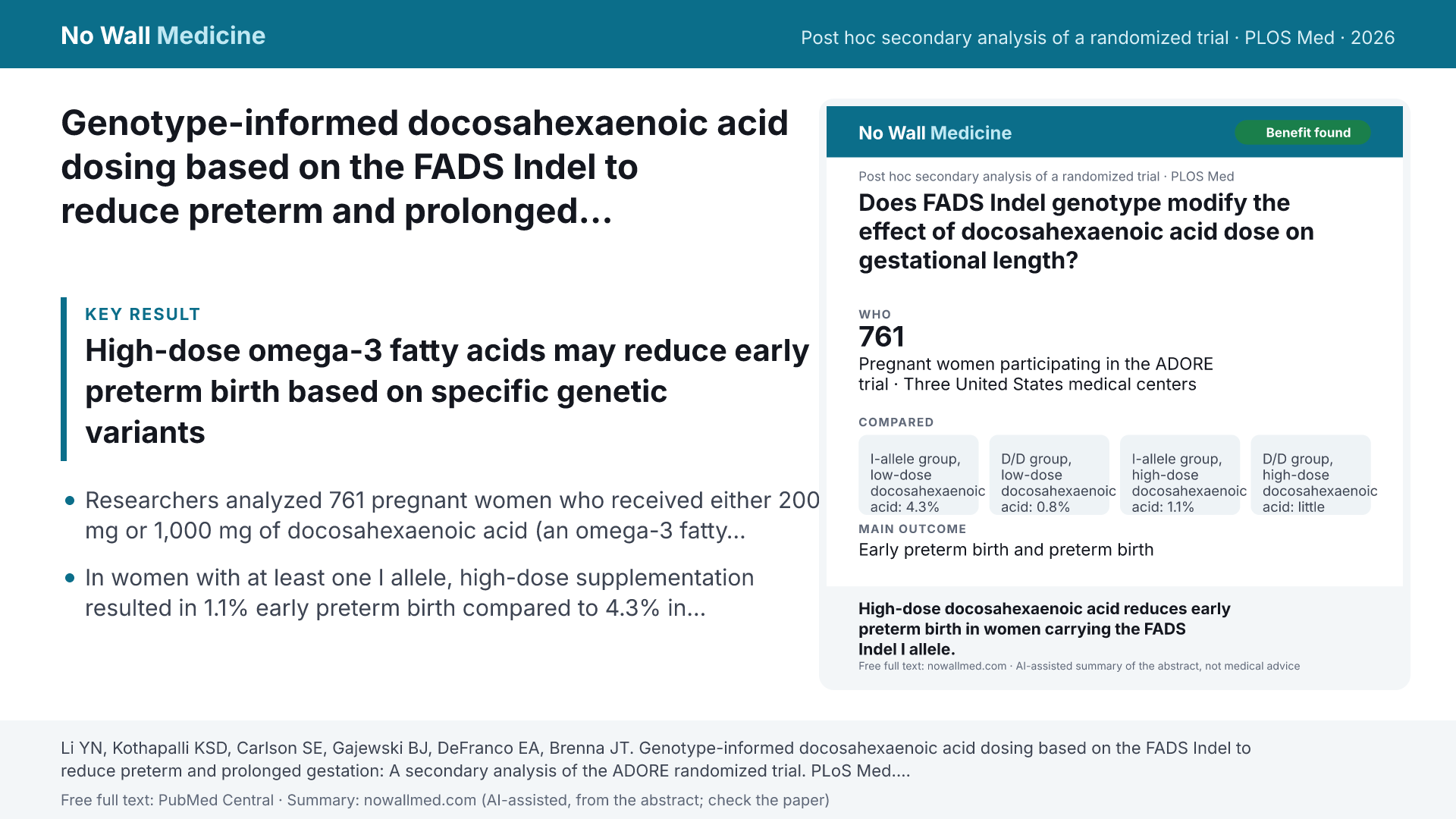
High-dose omega-3 fatty acids may reduce early preterm birth based on specific genetic variants
Genotype-informed docosahexaenoic acid dosing based on the FADS Indel to reduce preterm and prolonged gestation: A secondary analysis of the ADORE randomized trial
Post hoc secondary analysis of a randomized trialBenefit found
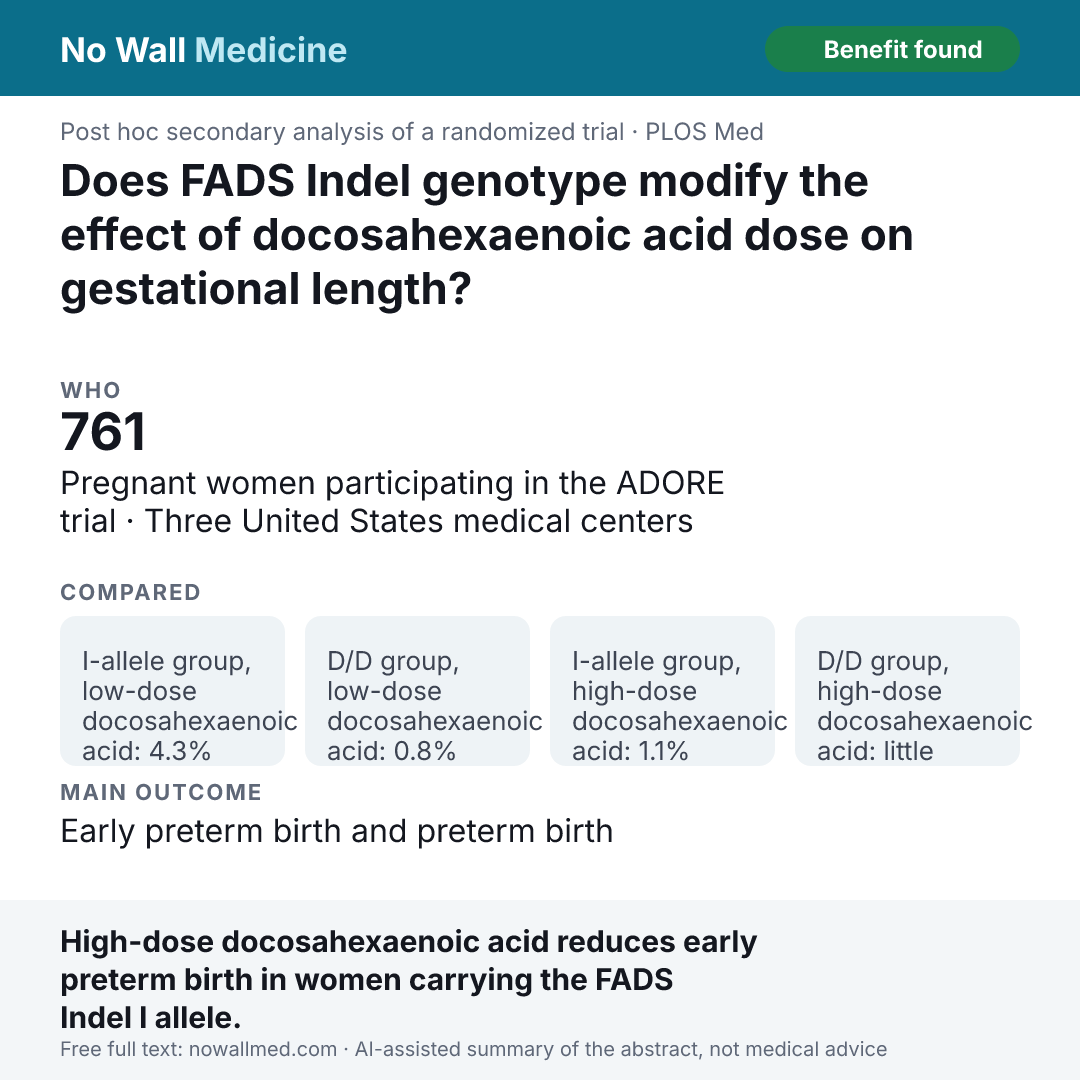
Does FADS Indel genotype modify the effect of docosahexaenoic acid dose on gestational length?
Who
761
Pregnant women participating in the ADORE trial · Three United States medical centers
Compared
I-allele group, low-dose docosahexaenoic acid: 4.3% (9/214) early preterm birth
D/D group, low-dose docosahexaenoic acid: 0.8% (1/151) early preterm birth
I-allele group, high-dose docosahexaenoic acid: 1.1% (2/205) early preterm birth
D/D group, high-dose docosahexaenoic acid: little effect
Main outcome
Early preterm birth and preterm birth
Result: genotype x dose interaction posterior probability 0.99 for early preterm birth
Bottom line: High-dose docosahexaenoic acid reduces early preterm birth in women carrying the FADS Indel I allele.
Limitation: This was a post hoc analysis and not a prespecified trial aim.
PLOS Med · 2026-10-08 · Save PNG
Same trial (NCT02626299)
Papers we list that report this registered trial, oldest first. Read a secondary analysis alongside the main results.
- Main results Mixed results
Higher daily docosahexaenoic acid doses were not proven superior for preventing early preterm birth eClinicalMedicine 2021-05 - Related analysis
High dose docosahexaenoic acid adherence was associated with lower rates of early preterm birth Clin Nutr 2023-01 - Related analysis Benefit found
DHA supplementation was associated with lower preterm birth risk and higher birth weight in a clinical trial Clin Nutr 2023-09 - Secondary analysis Benefit found
This paper PLOS Med 2026-10
Clinical question: Does FADS Indel genotype modify the effect of docosahexaenoic acid dose on gestational length?
Key points
- Researchers analyzed 761 pregnant women who received either 200 mg or 1,000 mg of docosahexaenoic acid (an omega-3 fatty acid) daily.
- In women with at least one I allele, high-dose supplementation resulted in 1.1% early preterm birth compared to 4.3% in the low-dose group.
- High-dose supplementation was associated with more frequent births at 40 weeks or more in the D/D genotype group.
Limitation the authors note: This was a post hoc secondary analysis and the genotype-by-dose comparison was not a prespecified trial aim.
Headline and key points written with AI from the paper’s abstract, with every number checked against it. Read the paper before relying on them.
Was this summary helpful?
Subject terms
Headline, design, result, key points, caveat and citation as plain text.
Cite this article
Li YN, Kothapalli KSD, Carlson SE, Gajewski BJ, DeFranco EA, Brenna JT. Genotype-informed docosahexaenoic acid dosing based on the FADS Indel to reduce preterm and prolonged gestation: A secondary analysis of the ADORE randomized trial. PLoS Med. 2026;23(10):e1005274. doi:10.1371/journal.pmed.1005274
Spotted a mistake? Suggest a correction