Universal videolaryngoscopy was associated with higher rates of easy tracheal intubation in operating theatres
Universal videolaryngoscopy for tracheal intubation in the operating theatre: A prospective non-randomised clinical trial
Prospective, multicentre, quasi-experimental studyBenefit found
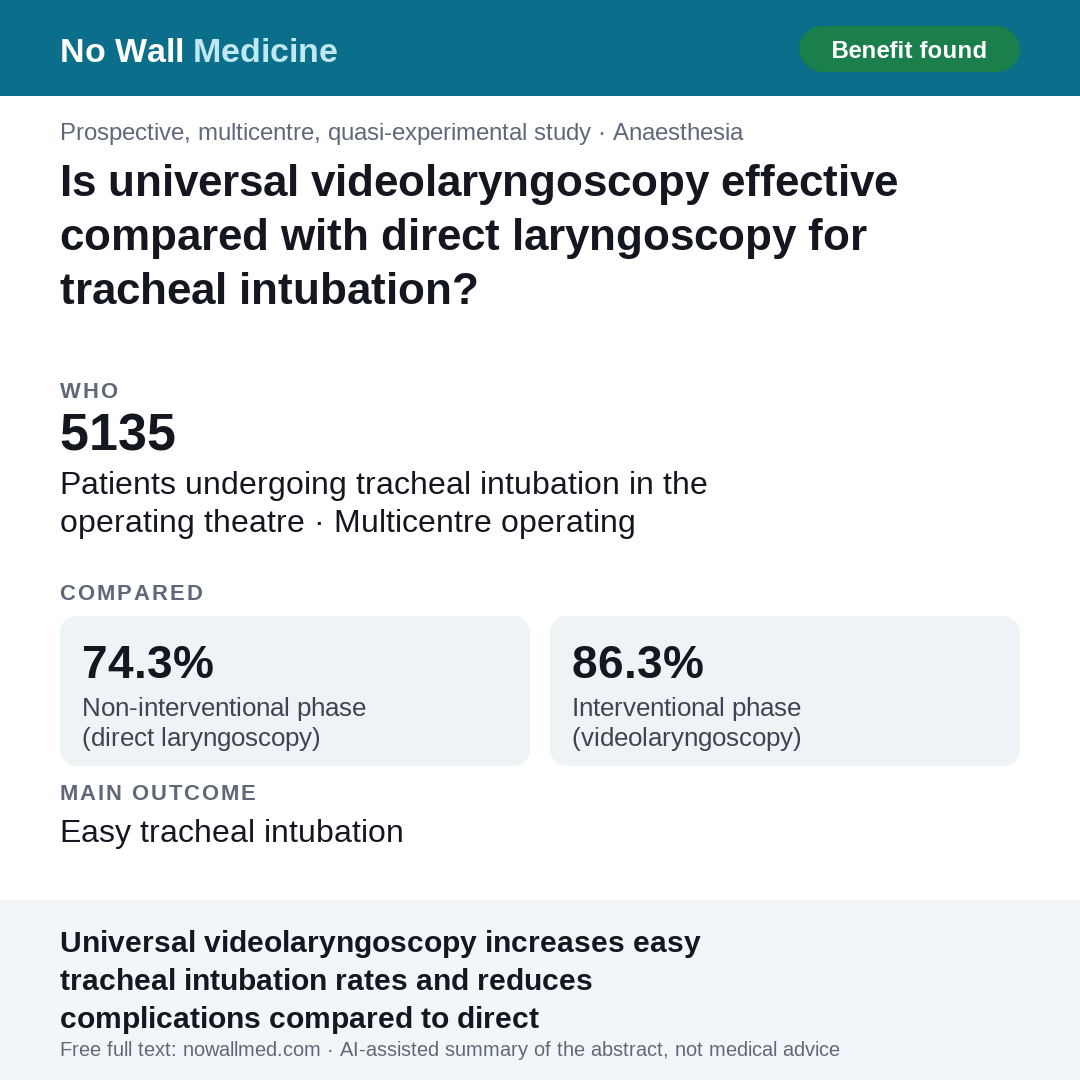
Is universal videolaryngoscopy effective compared with direct laryngoscopy for tracheal intubation?
Who
5135
Patients undergoing tracheal intubation in the operating theatre · Multicentre operating theatre settings
Compared
74.3%Non-interventional phase (direct laryngoscopy)
86.3%Interventional phase (videolaryngoscopy)
Main outcome
Easy tracheal intubation
Result: absolute difference 12%, 95%CI 9.8-14.1
Bottom line: Universal videolaryngoscopy increases easy tracheal intubation rates and reduces complications compared to direct laryngoscopy in operating theatres.
Limitation: Prospective non-randomised clinical trial
Anaesthesia · 2025-05-25Download image
Clinical question: Is universal videolaryngoscopy effective compared with direct laryngoscopy for tracheal intubation?
Why it matters: The effectiveness of using videolaryngoscopy as the standard first-choice device for all patients in real-world operating theatre settings remains uncertain.
Key points
- Researchers studied 5135 patients to compare using a Macintosh laryngoscope against using a videolaryngoscope, which uses a camera to view the airway, as the primary tool.
- Easy tracheal intubation occurred in 74.3% of patients during the Macintosh phase compared to 86.3% during the videolaryngoscope phase.
- The use of videolaryngoscopy was associated with higher rates of successful first-attempt intubation and a lower need for adjunct airway devices.
Headline and key points written with AI from the paper’s abstract, with every number checked against it. Read the paper before relying on them.
Was this summary helpful?
Subject terms
Cite this article
Taboada M, Fernández J, Bermúdez M, Estany-Gestal A, Molins N, de Los Ángeles Orallo M. Universal videolaryngoscopy for tracheal intubation in the operating theatre: A prospective non-randomised clinical trial. Anaesthesia. 2025. doi:10.1111/anae.16643
Spotted a mistake? Suggest a correction
Top studies every Monday
The week’s key trials and guidelines in your specialties, plus any topics you follow. By email, free.
Get the weekly digest