Visual abstracts
New randomized trials and meta-analyses from leading journals at a glance: who was studied, what was compared, and what was found. Every paper is free to read in full.
All specialtiesCardiology 4877Oncology 4138Gastroenterology & Hepatology 1942Infectious Disease 3837Neurology 1905Psychiatry & Mental Health 2273Pulmonology 2143Critical Care 1365Endocrinology & Diabetes 2580Pediatrics 2980Surgery 2559Orthopedics & Sports Medicine 931Neurosurgery 537Cardiothoracic & Vascular Surgery 674Plastic & Reconstructive Surgery 591Nephrology 1133Rheumatology 823Hematology 1109Dermatology 621Ophthalmology 543Obstetrics & Gynecology 1686Public & Global Health 1058Radiology & Imaging 648Anesthesiology 986Urology 764ENT (Otolaryngology) 503Emergency Medicine 511Allergy & Immunology 313Geriatrics 981Family Medicine & Primary Care 562Medical Genetics & Genomics 676Pathology & Laboratory Medicine 159Physical Medicine & Rehabilitation 757Palliative Care 444Nutrition 1588Digital Health & AI 2201General Medicine 321
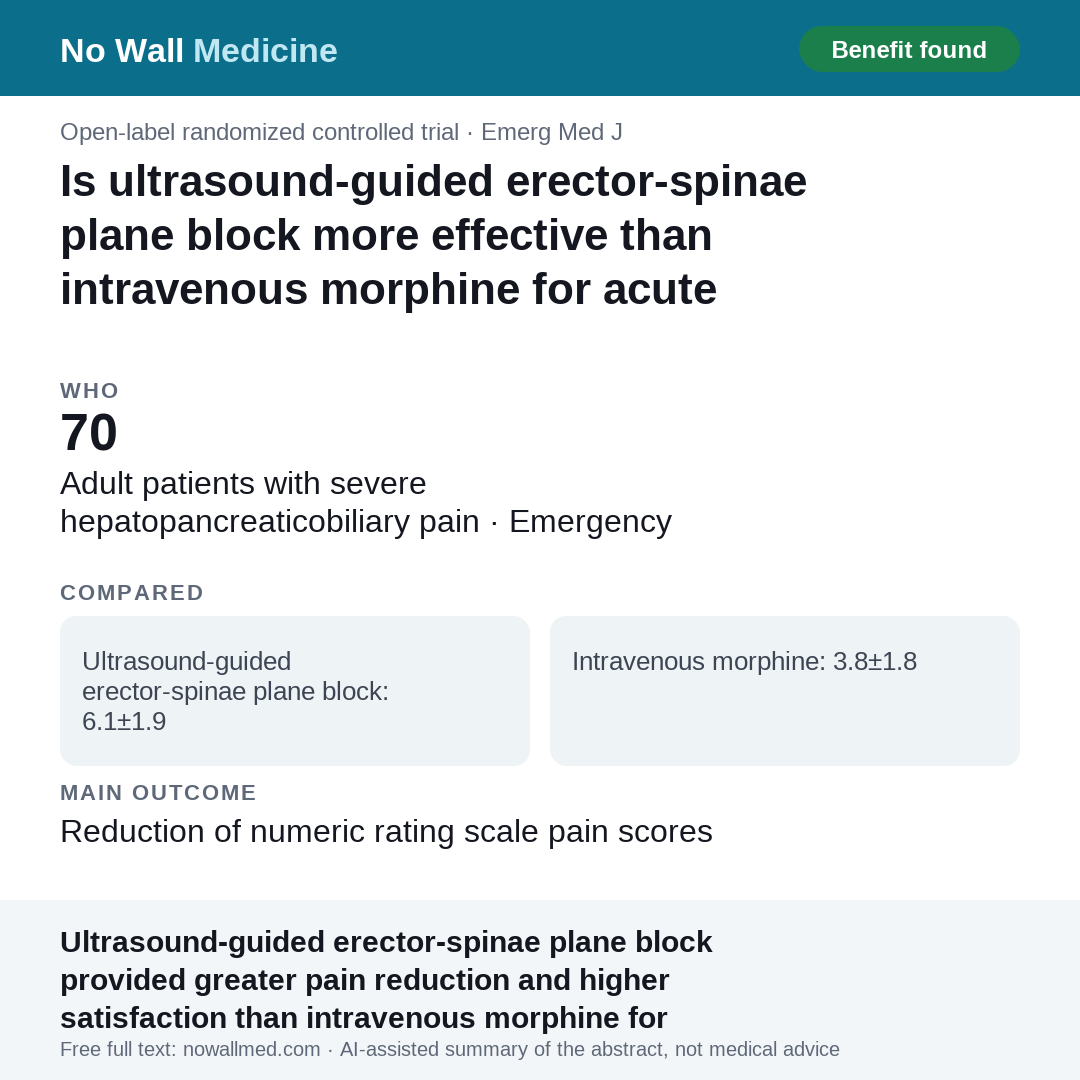
EASIER trial (Erector-spinAe analgeSia for hepatopancreaticobiliary pain In the Emergency Room): a single-centre open-label cohort-based randomised controlled trial analysing the efficacy of the ultrasound-guided erector-spinae plane block compared with intravenous morphine in the treatment of acute hepatopancreaticobiliary pain in the emergency department
Open-label randomized controlled trialBenefit found
Is ultrasound-guided erector-spinae plane block more effective than intravenous morphine for acute hepatopancreaticobiliary pain?
Who
70
Adult patients with severe hepatopancreaticobiliary pain · Emergency department of a tertiary-care hospital
Compared
Ultrasound-guided erector-spinae plane block: 6.1±1.9
Intravenous morphine: 3.8±1.8
Main outcome
Reduction of numeric rating scale pain scores
Bottom line: Ultrasound-guided erector-spinae plane block provided greater pain reduction and higher satisfaction than intravenous morphine for hepatopancreaticobiliary pain.
Emerg Med J · 2024-09-25Download image
Pasteurella Infections in South Korea and Systematic Review and Meta-analysis of Pasteurella Bacteremia
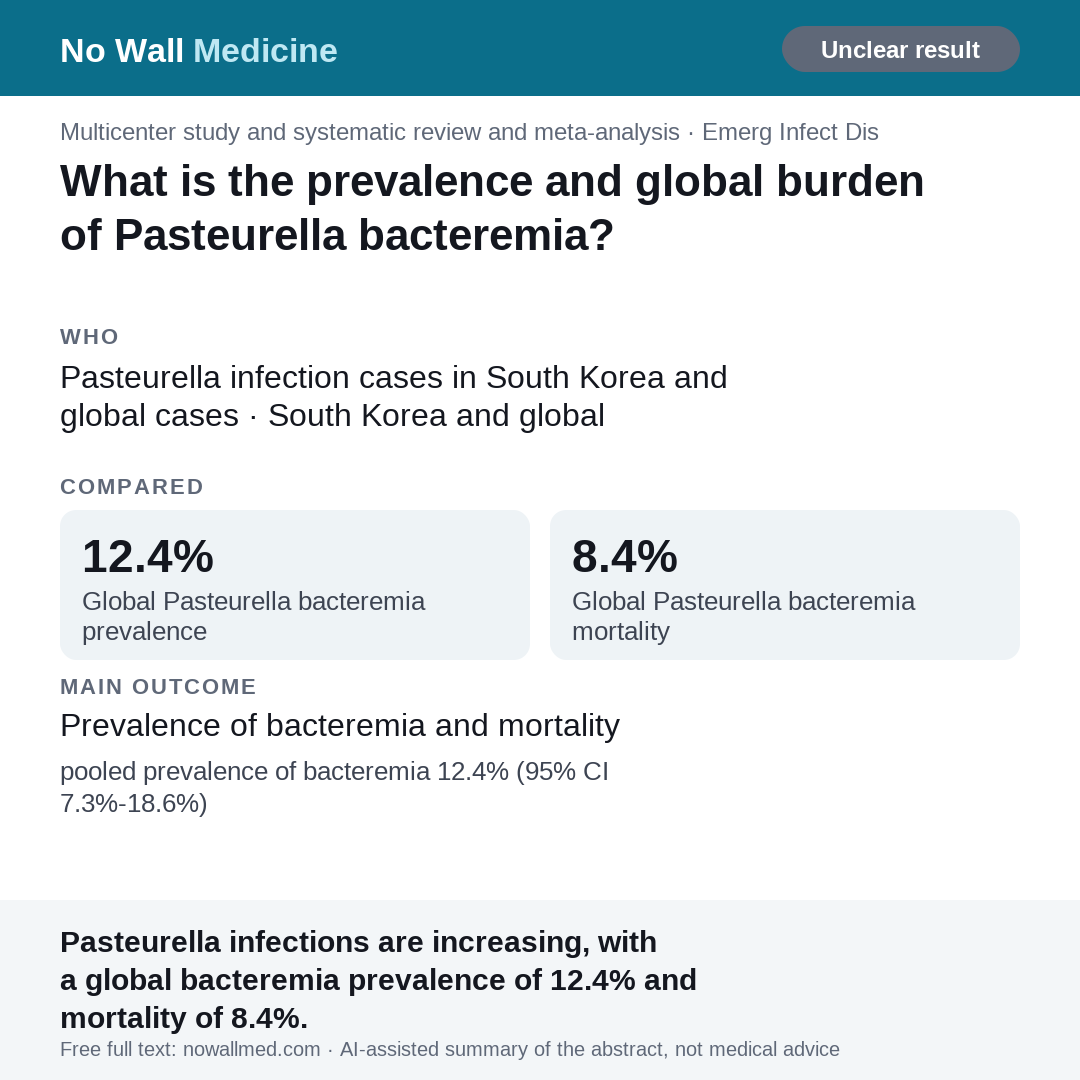
Multicenter study and systematic review and meta-analysisUnclear result
What is the prevalence and global burden of Pasteurella bacteremia?
Who
2012
Pasteurella infection cases in South Korea and global cases · South Korea and global
Compared
12.4%Global Pasteurella bacteremia prevalence (95% CI 7.3%-18.6%)
8.4%Global Pasteurella bacteremia mortality (95% CI 2.7%-16.5%)
Main outcome
Prevalence of bacteremia and mortality
Result: pooled prevalence of bacteremia 12.4% (95% CI 7.3%-18.6%)
Bottom line: Pasteurella infections are increasing, with a global bacteremia prevalence of 12.4% and mortality of 8.4%.
Emerg Infect Dis · 2024-09-25Download image
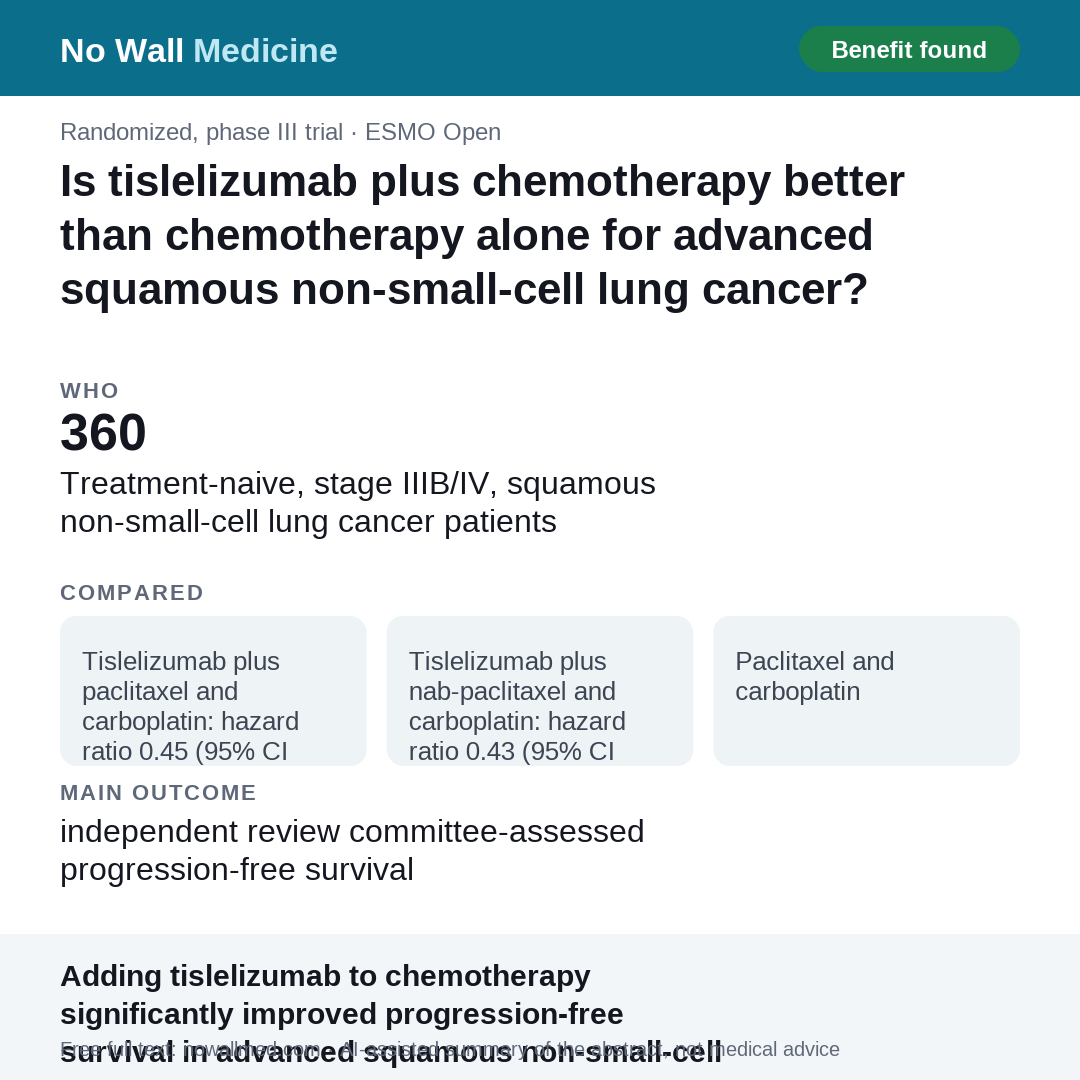
Tislelizumab plus chemotherapy versus chemotherapy alone as first-line treatment for advanced squamous non-small-cell lung cancer: final analysis of the randomized, phase III RATIONALE-307 trial
Randomized, phase III trialBenefit found
Is tislelizumab plus chemotherapy better than chemotherapy alone for advanced squamous non-small-cell lung cancer?
Who
360
Treatment-naive, stage IIIB/IV, squamous non-small-cell lung cancer patients
Compared
Tislelizumab plus paclitaxel and carboplatin: hazard ratio 0.45 (95% CI 0.33-0.62)
Tislelizumab plus nab-paclitaxel and carboplatin: hazard ratio 0.43 (95% CI 0.31-0.60)
Paclitaxel and carboplatin
Main outcome
independent review committee-assessed progression-free survival
Result: hazard ratio 0.45 (95% CI 0.33-0.62) and 0.43 (95% CI 0.31-0.60)
Bottom line: Adding tislelizumab to chemotherapy significantly improved progression-free survival in advanced squamous non-small-cell lung cancer.
ESMO Open · 2024-09-25Download image
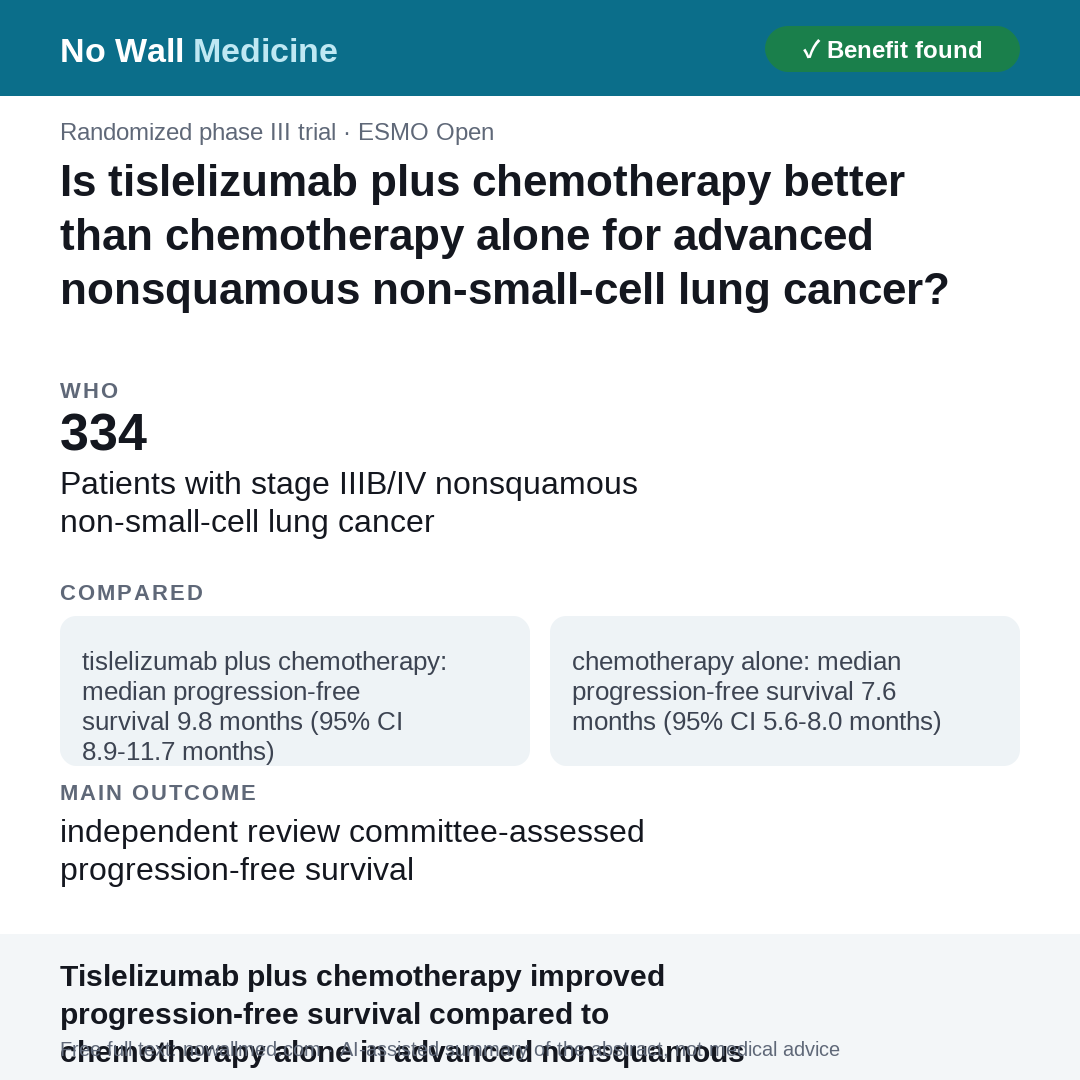
Tislelizumab plus chemotherapy as first-line treatment of locally advanced or metastatic nonsquamous non-small-cell lung cancer (final analysis of RATIONALE-304: a randomized phase III trial)
Randomized phase III trialBenefit found
Is tislelizumab plus chemotherapy better than chemotherapy alone for advanced nonsquamous non-small-cell lung cancer?
Who
334
Patients with stage IIIB/IV nonsquamous non-small-cell lung cancer
Compared
tislelizumab plus chemotherapy: median progression-free survival 9.8 months (95% CI 8.9-11.7 months)
chemotherapy alone: median progression-free survival 7.6 months (95% CI 5.6-8.0 months)
Main outcome
independent review committee-assessed progression-free survival
Result: hazard ratio 0.63 (95% CI 0.47-0.86)
Bottom line: Tislelizumab plus chemotherapy improved progression-free survival compared to chemotherapy alone in advanced nonsquamous non-small-cell lung cancer.
ESMO Open · 2024-09-25Download image
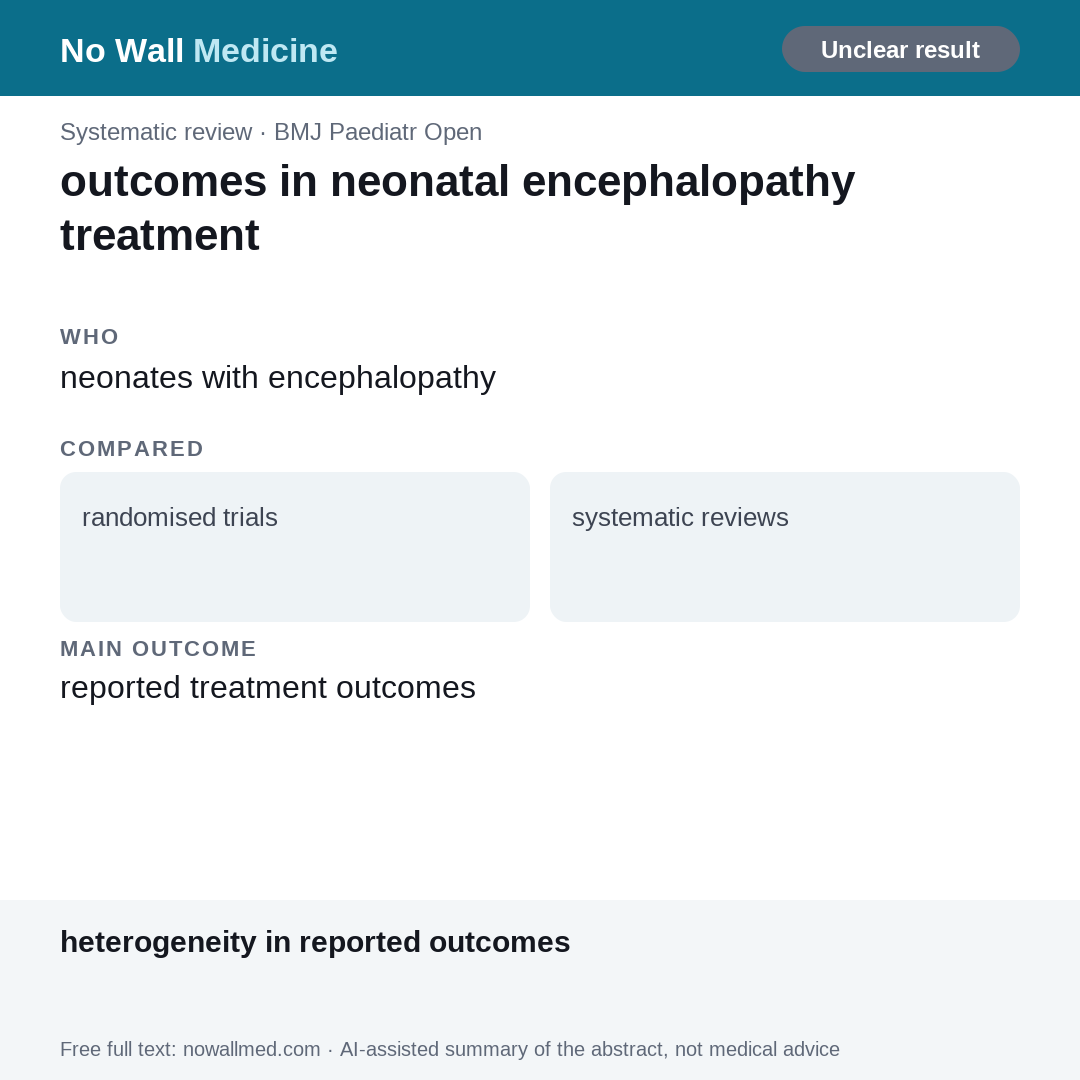
Neonatal encephalopathy: a systematic review of reported treatment outcomes
Systematic reviewUnclear result
outcomes in neonatal encephalopathy treatment
Who
neonates with encephalopathy
Compared
randomised trials
systematic reviews
Main outcome
reported treatment outcomes
Bottom line: heterogeneity in reported outcomes
Limitation: heterogeneity in outcomes
BMJ Paediatr Open · 2024-09-25Download image
Outcomes in children with provoked venous thrombosis and antiphospholipid antibodies: findings from the Kids-DOTT trial
Randomized trialHarm found
What are the outcomes in children with provoked venous thromboembolism and antiphospholipid antibodies?
Who
524
Children aged <21 years with first-episode acute provoked venous thromboembolism
Compared
Antiphospholipid antibody syndrome: 18% symptomatic recurrent venous thromboembolism
Transient or low-titer antiphospholipid antibodies: 1% symptomatic recurrent venous thromboembolism
Main outcome
Symptomatic recurrent venous thromboembolism and anticoagulant-related bleeding
Result: odds ratio 12.2 (95% confidence interval 1.4-108)
Bottom line: Patients with antiphospholipid antibody syndrome have increased risk of recurrent venous thromboembolism compared to transient or low-titer groups.
Blood Adv · 2024-09-25Download image

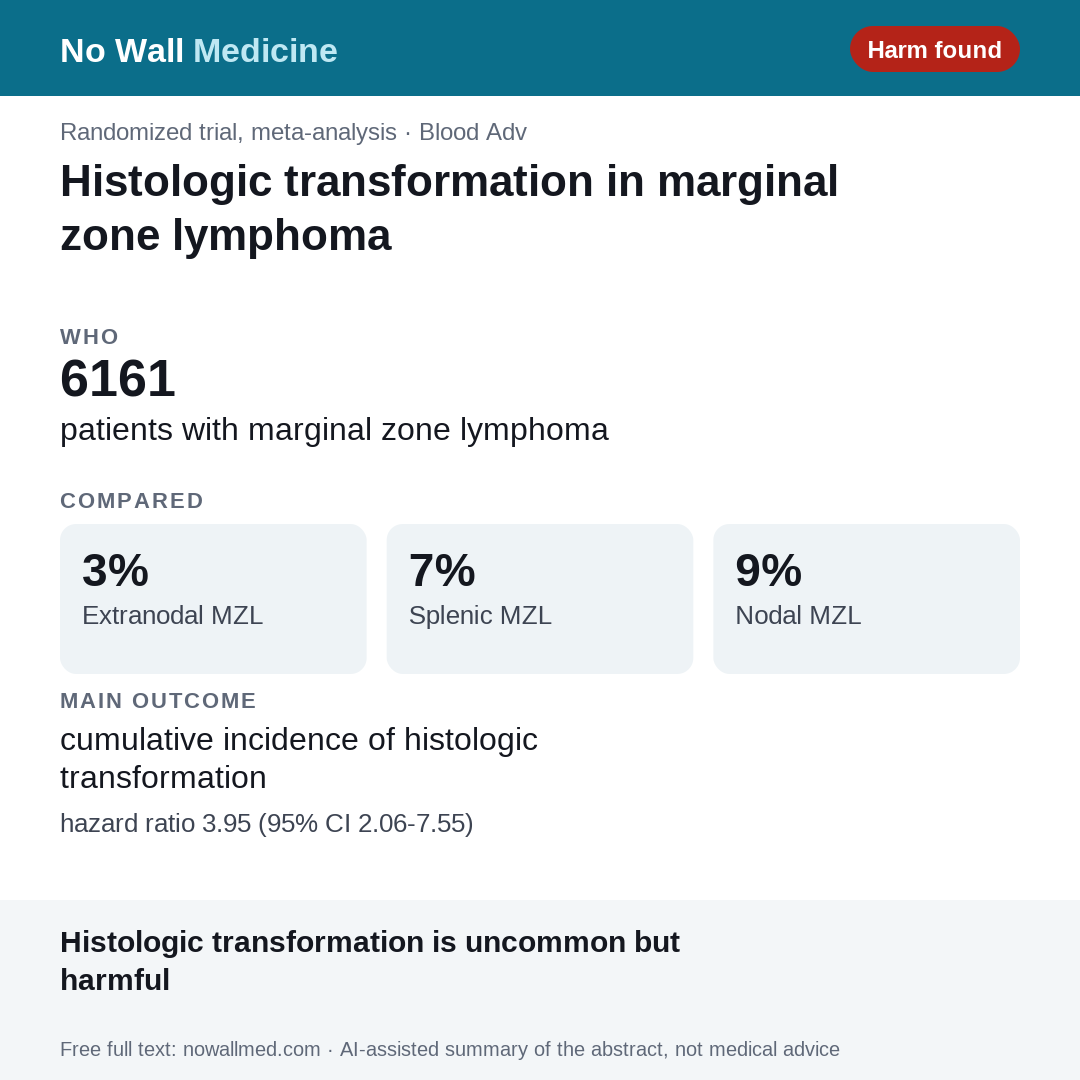
Transformation in marginal zone lymphoma: results from a prospective cohort and a meta-analysis of the literature
Randomized trial, meta-analysisHarm found
Histologic transformation in marginal zone lymphoma
Who
6161
patients with marginal zone lymphoma
Compared
3%Extranodal MZL
7%Splenic MZL
9%Nodal MZL
Main outcome
cumulative incidence of histologic transformation
Result: hazard ratio 3.95 (95% CI 2.06-7.55)
Bottom line: Histologic transformation is uncommon but harmful
Blood Adv · 2024-09-25Download image
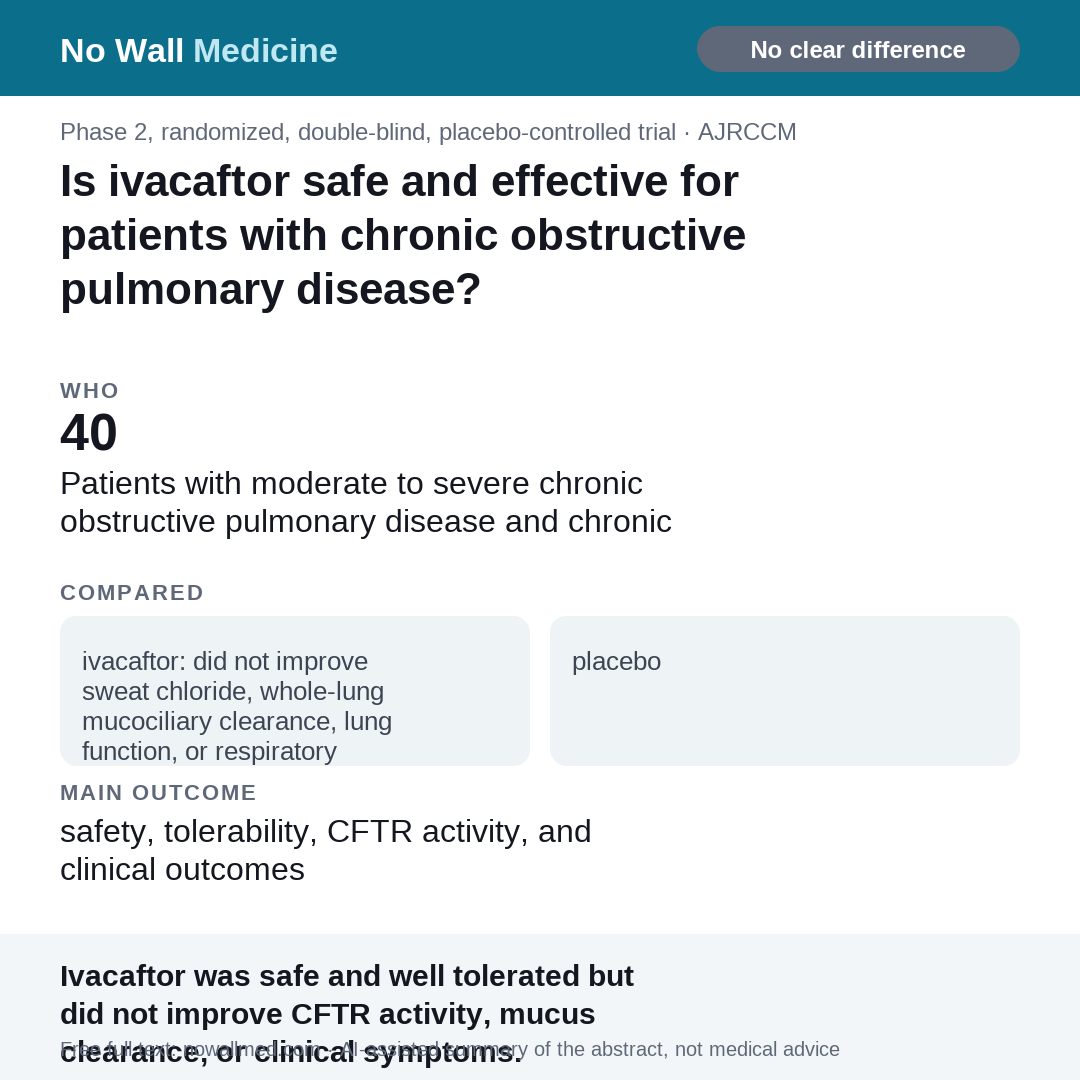
Ivacaftor for Chronic Obstructive Pulmonary Disease: Results from a Phase 2, Randomized Controlled Trial
Phase 2, randomized, double-blind, placebo-controlled trialNo clear difference
Is ivacaftor safe and effective for patients with chronic obstructive pulmonary disease?
Who
40
Patients with moderate to severe chronic obstructive pulmonary disease and chronic bronchitis
Compared
ivacaftor: did not improve sweat chloride, whole-lung mucociliary clearance, lung function, or respiratory symptoms
placebo
Main outcome
safety, tolerability, CFTR activity, and clinical outcomes
Bottom line: Ivacaftor was safe and well tolerated but did not improve CFTR activity, mucus clearance, or clinical symptoms.
AJRCCM · 2024-09-24Download image
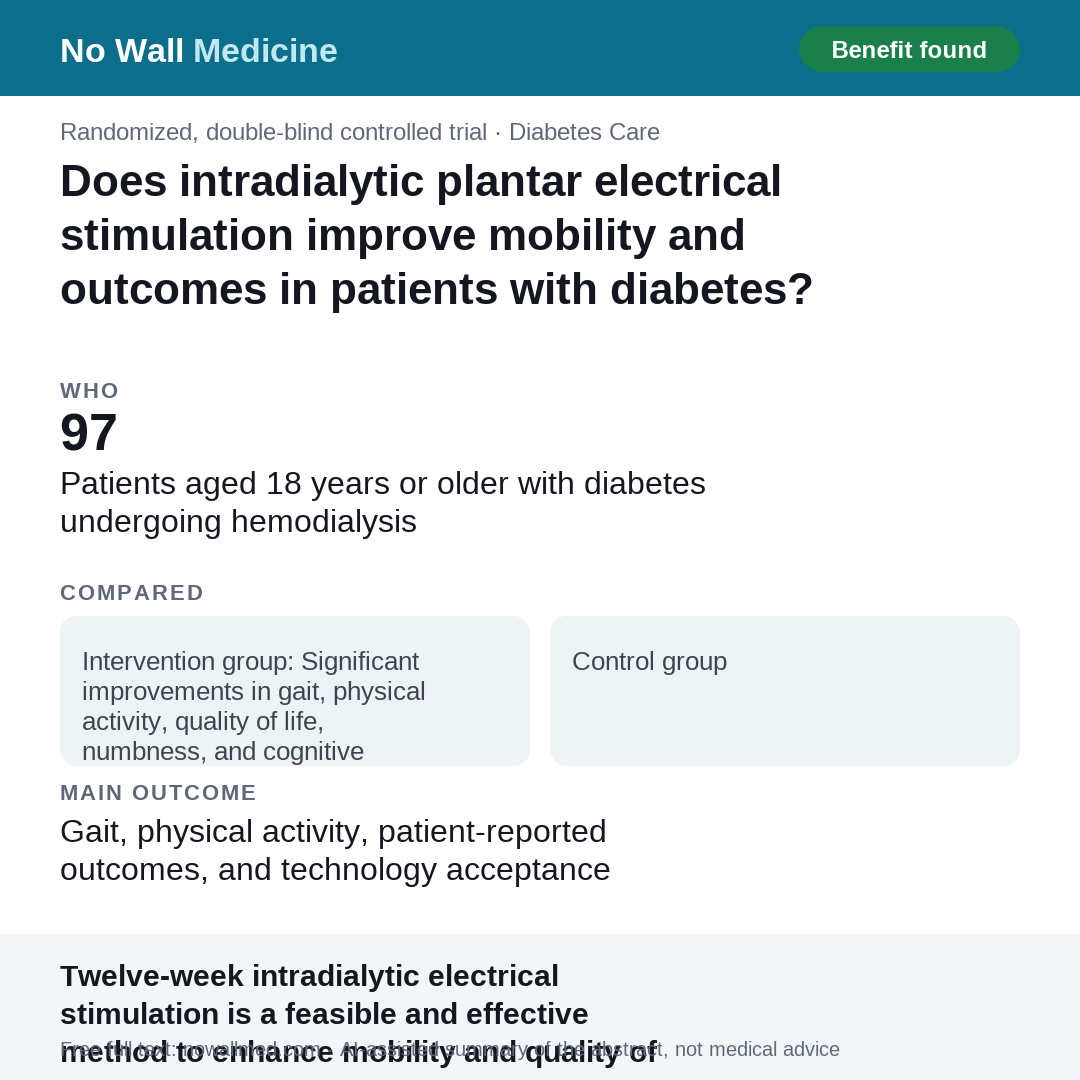
Efficacy and Feasibility of Intradialytic Plantar Electrical Stimulation in Patients With Diabetes: A Randomized Double-Blind Controlled Trial
Randomized, double-blind controlled trialBenefit found
Does intradialytic plantar electrical stimulation improve mobility and outcomes in patients with diabetes?
Who
97
Patients aged 18 years or older with diabetes undergoing hemodialysis
Compared
Intervention group: Significant improvements in gait, physical activity, quality of life, numbness, and cognitive function
Control group
Main outcome
Gait, physical activity, patient-reported outcomes, and technology acceptance
Bottom line: Twelve-week intradialytic electrical stimulation is a feasible and effective method to enhance mobility and quality of life.
Diabetes Care · 2024-09-24Download image
Haemophilus influenzae Type b Vaccine Immunogenicity in American Indian/Alaska Native Infants
Phase IV randomized, open-label, noninferiority trialBenefit found
Is Vaxelis noninferior to PedvaxHIB for postdose 1 immunogenicity in American Indian/Alaska Native infants?
Who
327
American Indian and Alaska Native infants
Compared
Vaxelis: 0.41 µg/mL (95% CI 0.33-0.52)
PedvaxHIB: 0.39 µg/mL (95% CI 0.31-0.50)
Main outcome
postdose 1 anti-Haemophilus influenzae type b immunoglobulin G geometric mean concentration
Result: geometric mean concentration ratio 1.03 (95% CI 0.76-1.39)
Bottom line: Vaxelis is noninferior to PedvaxHIB for postdose 1 immunogenicity in American Indian and Alaska Native infants.
Pediatrics · 2024-09-24Download image

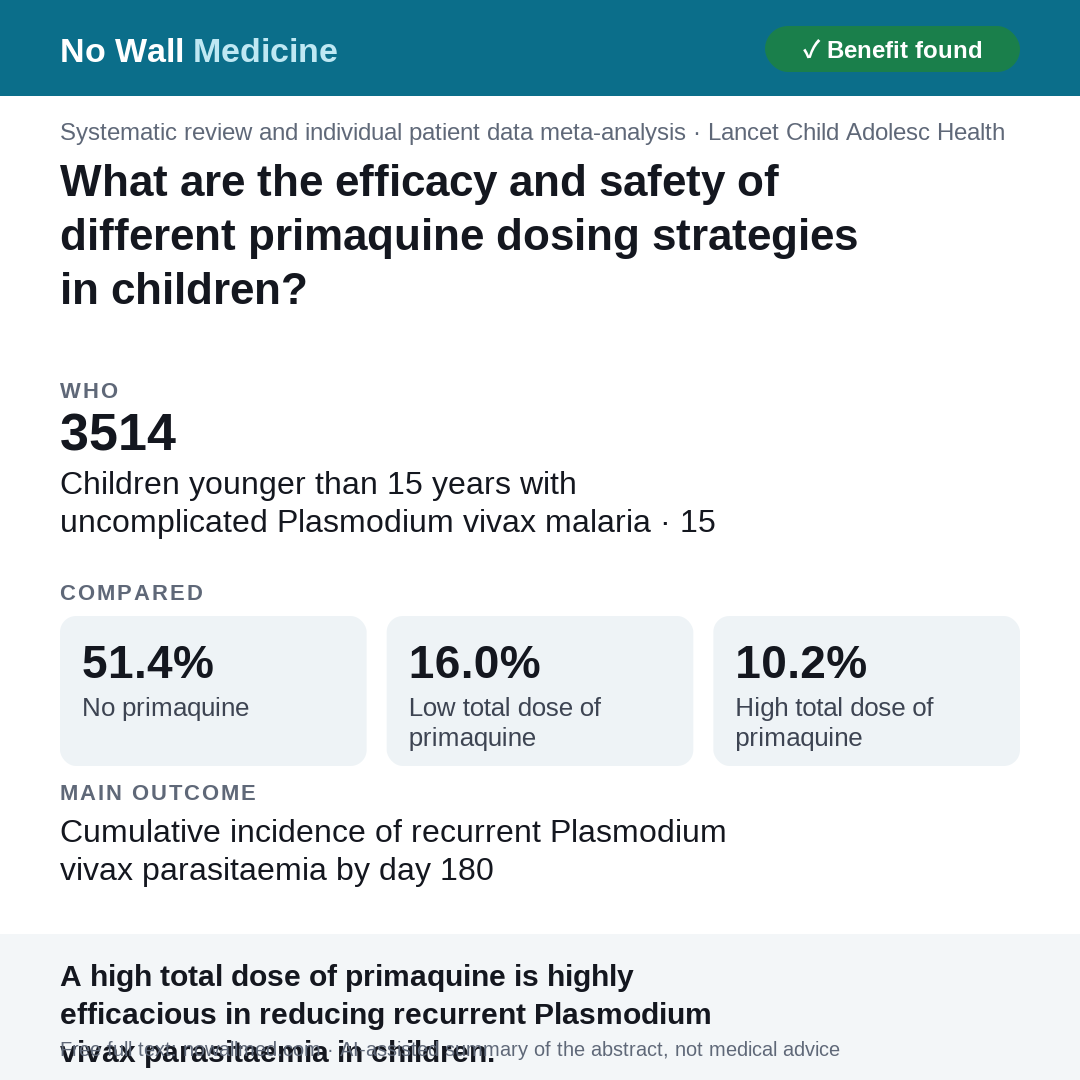
Primaquine for uncomplicated Plasmodium vivax malaria in children younger than 15 years: a systematic review and individual patient data meta-analysis
Systematic review and individual patient data meta-analysisBenefit found
What are the efficacy and safety of different primaquine dosing strategies in children?
Who
3514
Children younger than 15 years with uncomplicated Plasmodium vivax malaria · 15 countries
Compared
51.4%No primaquine (95% CI 47.0-55.9)
16.0%Low total dose of primaquine (12.4-20.3)
10.2%High total dose of primaquine (8.4-12.3)
Main outcome
Cumulative incidence of recurrent Plasmodium vivax parasitaemia by day 180
Result: adjusted hazard ratio 0.09 (95% CI 0.07-0.12) for high total dose
Bottom line: A high total dose of primaquine is highly efficacious in reducing recurrent Plasmodium vivax parasitaemia in children.
Lancet Child Adolesc Health · 2024-09-24Download image
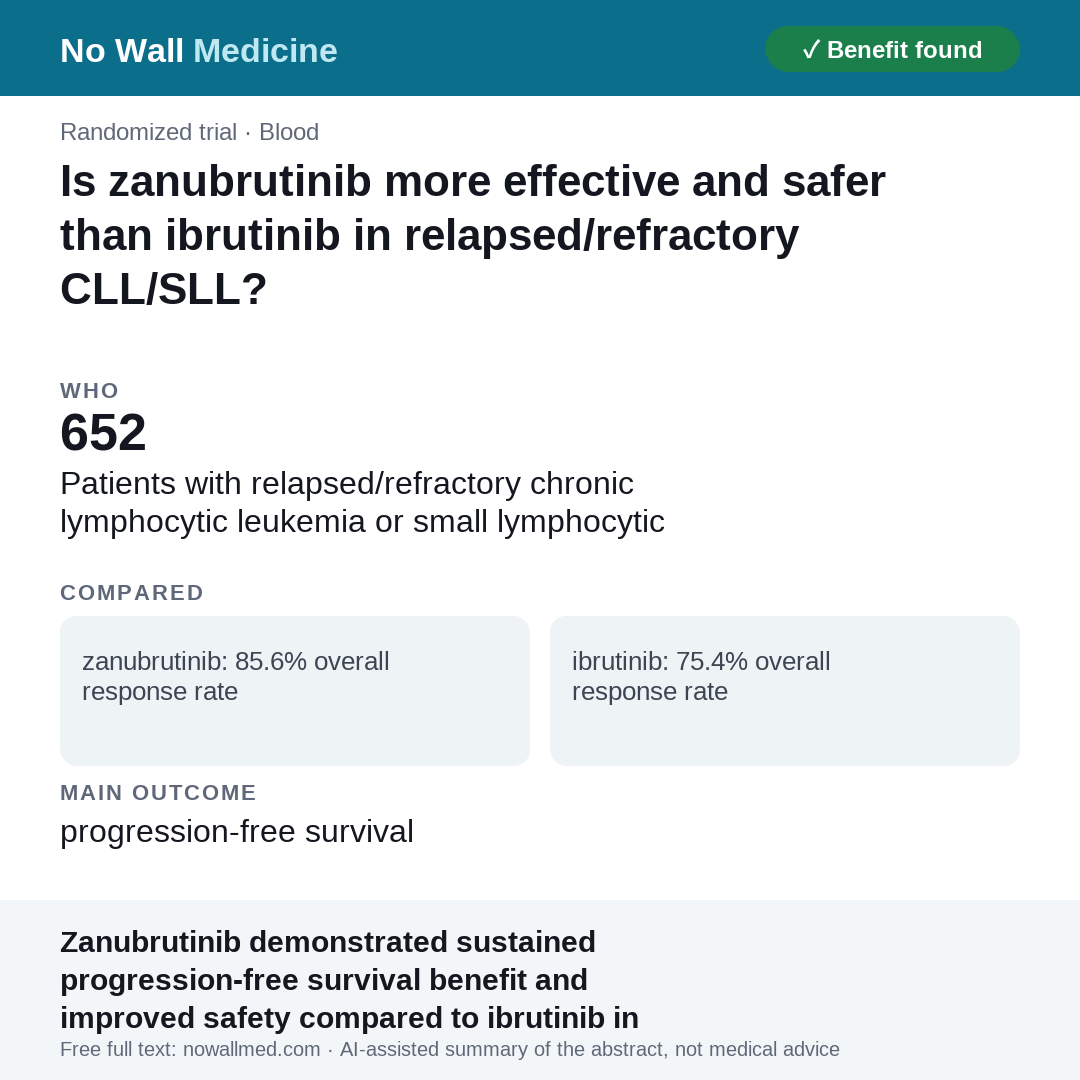
Sustained benefit of zanubrutinib vs ibrutinib in patients with R/R CLL/SLL: final comparative analysis of ALPINE
Randomized trialBenefit found
Is zanubrutinib more effective and safer than ibrutinib in relapsed/refractory CLL/SLL?
Who
652
Patients with relapsed/refractory chronic lymphocytic leukemia or small lymphocytic lymphoma
Compared
zanubrutinib: 85.6% overall response rate
ibrutinib: 75.4% overall response rate
Main outcome
progression-free survival
Result: hazard ratio 0.68 (95% CI 0.54-0.84)
Bottom line: Zanubrutinib demonstrated sustained progression-free survival benefit and improved safety compared to ibrutinib in patients with relapsed/refractory CLL/SLL.
Blood · 2024-09-24Download image
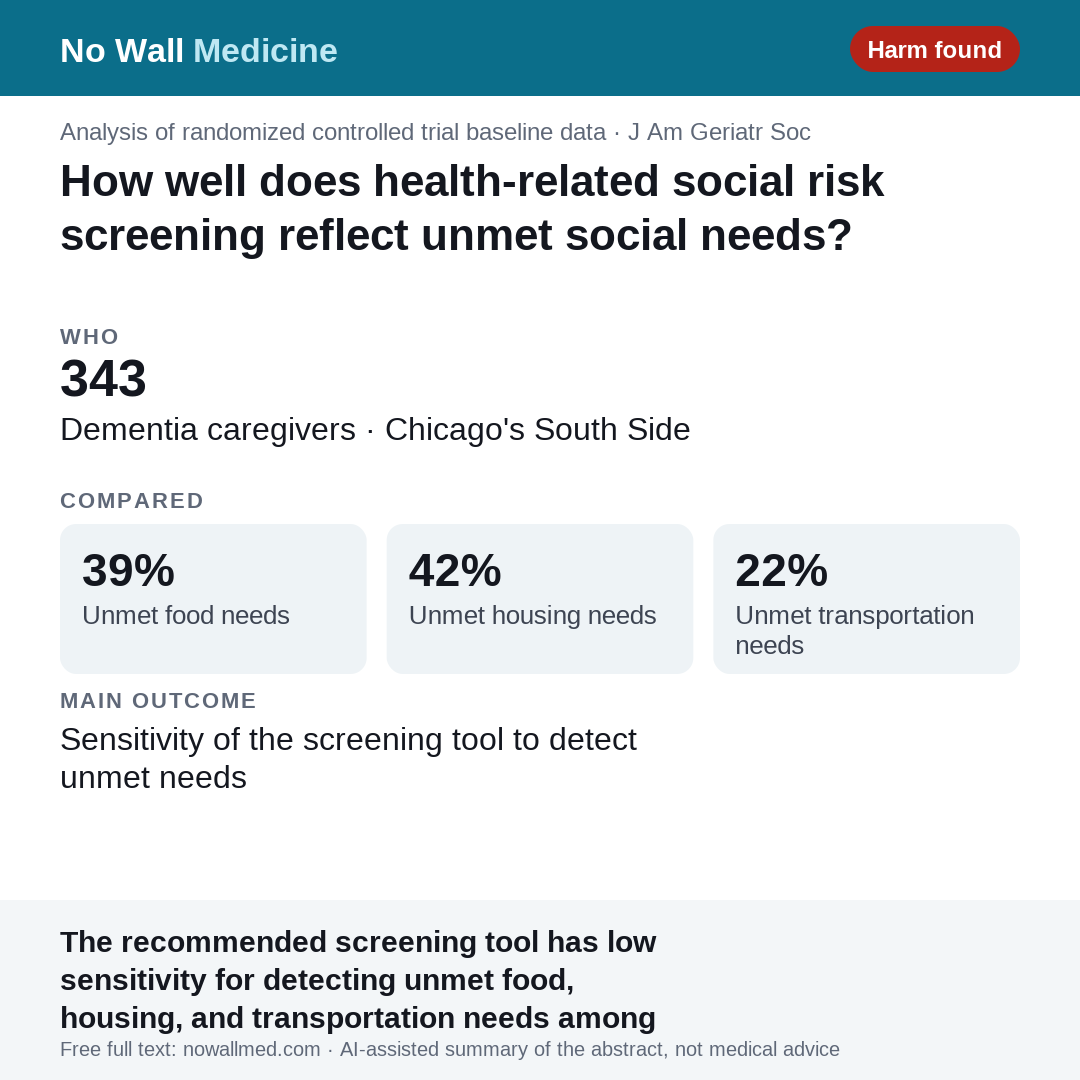
Caring for dementia caregivers: How well does social risk screening reflect unmet needs?
Analysis of randomized controlled trial baseline dataHarm found
How well does health-related social risk screening reflect unmet social needs?
Who
343
Dementia caregivers · Chicago's South Side
Compared
39%Unmet food needs (95% confidence interval 27%-53%)
42%Unmet housing needs (95% CI 31%-53%)
22%Unmet transportation needs (95% CI 14%-31%)
Main outcome
Sensitivity of the screening tool to detect unmet needs
Bottom line: The recommended screening tool has low sensitivity for detecting unmet food, housing, and transportation needs among dementia caregivers.
J Am Geriatr Soc · 2024-09-24Download image
Sex differences in cardiac structure and function following acute myocardial infarction: Insights from the PARADISE-MI echocardiographic substudy
Randomized trial echocardiographic substudyNo clear difference
Are there sex differences in cardiac structure and function following acute myocardial infarction?
Who
544
Patients with high-risk myocardial infarction
Compared
Women: higher left ventricular ejection fraction, lower left ventricular end-diastolic volume index
Men
Main outcome
changes in echocardiographic parameters and primary composite outcome
Bottom line: Women had different baseline cardiac measures, but sex did not modify echocardiographic parameter changes or clinical outcomes.
Eur J Heart Fail · 2024-09-24Download image

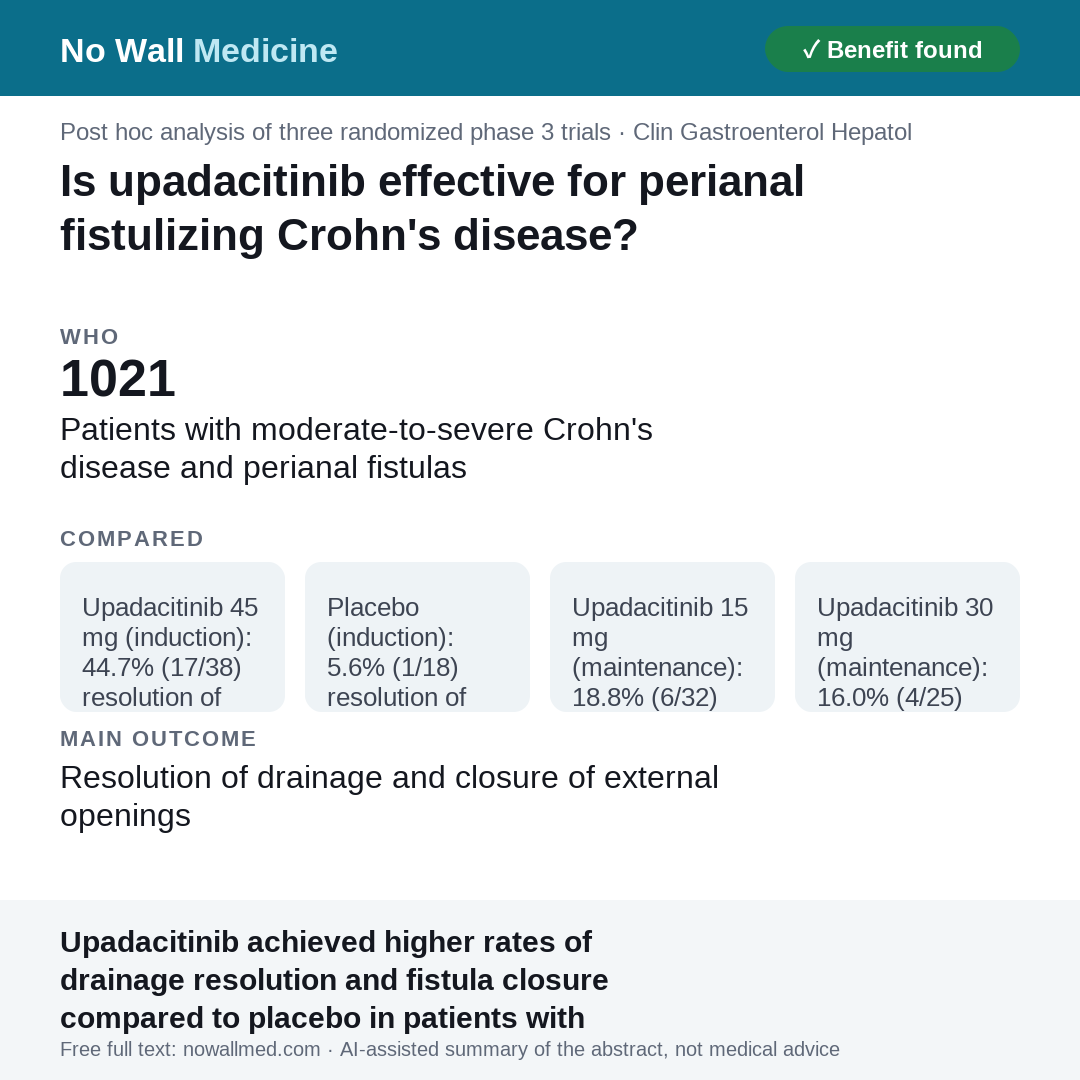
Efficacy and Safety of Upadacitinib for Perianal Fistulizing Crohn's Disease: A Post Hoc Analysis of 3 Phase 3 Trials
Post hoc analysis of three randomized phase 3 trialsBenefit found
Is upadacitinib effective for perianal fistulizing Crohn's disease?
Who
1021
Patients with moderate-to-severe Crohn's disease and perianal fistulas
Compared
Upadacitinib 45 mg (induction): 44.7% (17/38) resolution of drainage
Placebo (induction): 5.6% (1/18) resolution of drainage
Upadacitinib 15 mg (maintenance): 18.8% (6/32) closure of external openings
Upadacitinib 30 mg (maintenance): 16.0% (4/25) closure of external openings
Main outcome
Resolution of drainage and closure of external openings
Bottom line: Upadacitinib achieved higher rates of drainage resolution and fistula closure compared to placebo in patients with perianal fistulizing disease.
Clin Gastroenterol Hepatol · 2024-09-24Download image
Global age-stratified seroprevalence of enterovirus D68: a systematic literature review
Systematic literature reviewMixed results
What is the global age-stratified seroprevalence of enterovirus D68?
Who
Global populations across different age groups · Six countries
Compared
Age under 20 years: roughly 100%
Adulthood: no sign of decline
Main outcome
Age-stratified seroprevalence of enterovirus D68
Bottom line: Enterovirus D68 seroprevalence increases with age, reaching approximately 100% by age 20 with increasing global transmission.
Lancet Microbe · 2024-09-24Download image

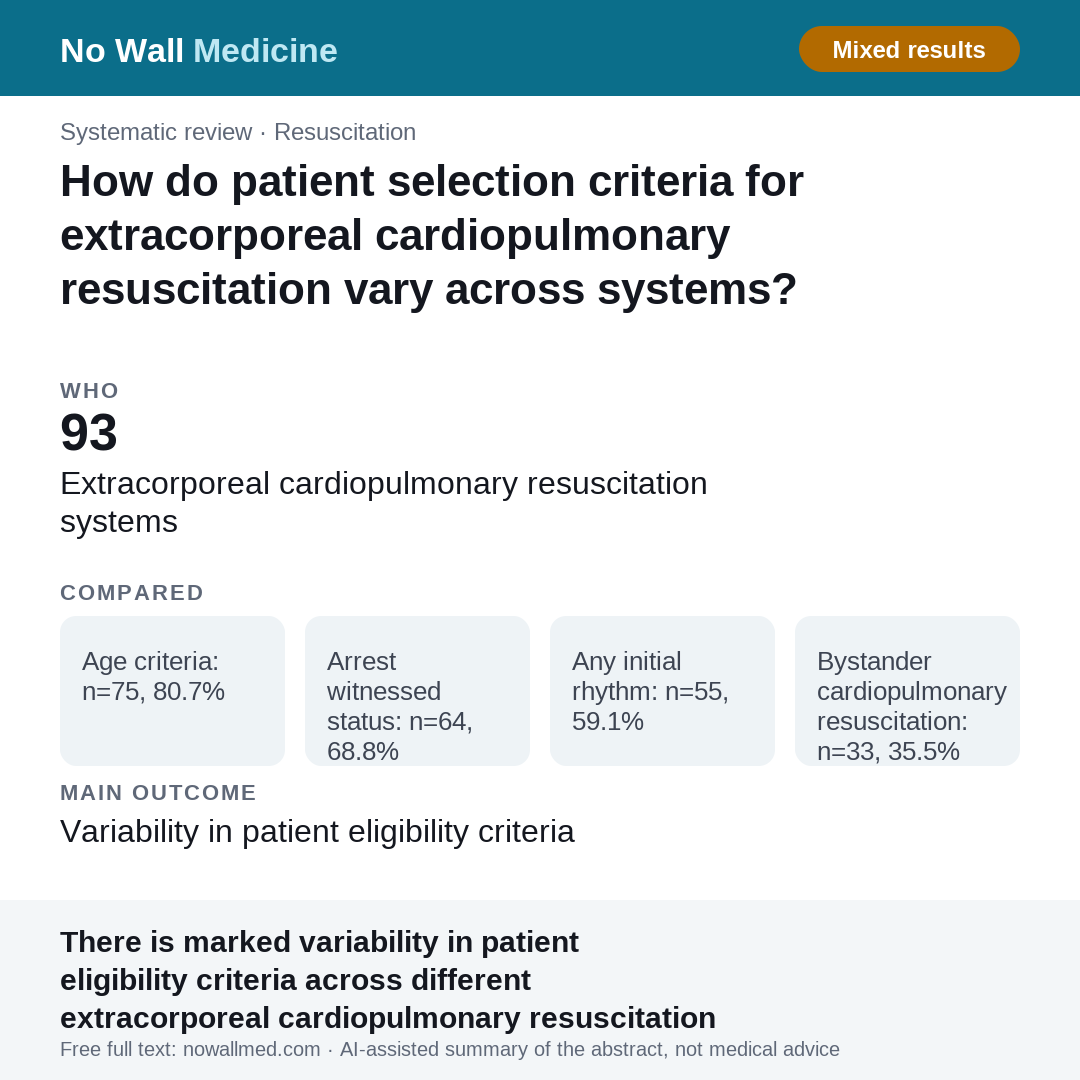
Variability in patient selection criteria across extracorporeal cardiopulmonary resuscitation (ECPR) systems: A systematic review
Systematic reviewMixed results
How do patient selection criteria for extracorporeal cardiopulmonary resuscitation vary across systems?
Who
93
Extracorporeal cardiopulmonary resuscitation systems
Compared
Age criteria: n=75, 80.7%
Arrest witnessed status: n=64, 68.8%
Any initial rhythm: n=55, 59.1%
Bystander cardiopulmonary resuscitation: n=33, 35.5%
Main outcome
Variability in patient eligibility criteria
Bottom line: There is marked variability in patient eligibility criteria across different extracorporeal cardiopulmonary resuscitation systems.
Resuscitation · 2024-09-24Download image
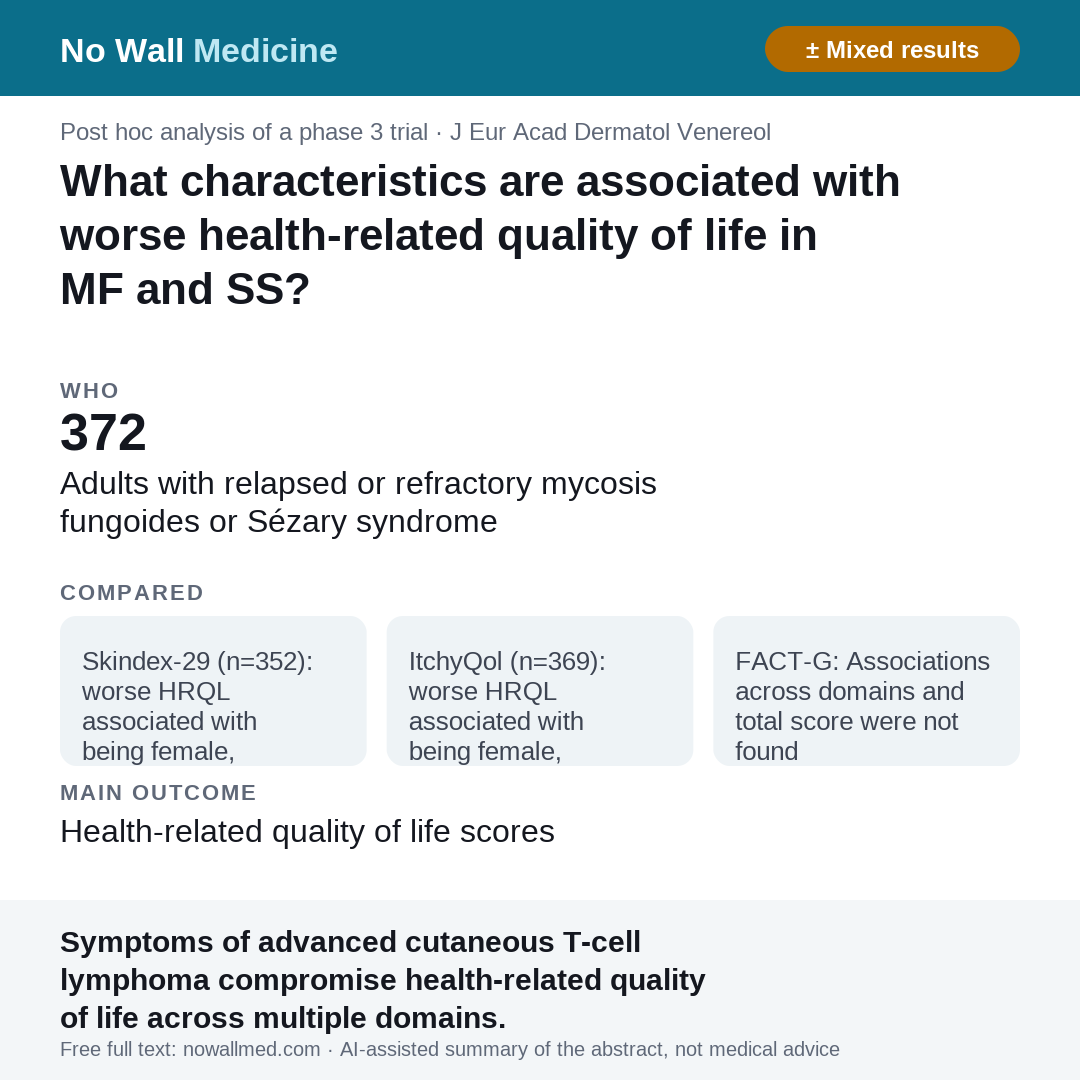
Health-related quality of life in cutaneous T-cell lymphoma: A post hoc analysis of a phase 3 trial in mycosis fungoides and Sézary syndrome
Post hoc analysis of a phase 3 trialMixed results
What characteristics are associated with worse health-related quality of life in MF and SS?
Who
372
Adults with relapsed or refractory mycosis fungoides or Sézary syndrome
Compared
Skindex-29 (n=352): worse HRQL associated with being female, younger, worse mSWAT, and worse itch
ItchyQol (n=369): worse HRQL associated with being female, younger, Black/African American, worse performance status, and worse itch
FACT-G: Associations across domains and total score were not found
Main outcome
Health-related quality of life scores
Bottom line: Symptoms of advanced cutaneous T-cell lymphoma compromise health-related quality of life across multiple domains.
J Eur Acad Dermatol Venereol · 2024-09-24Download image
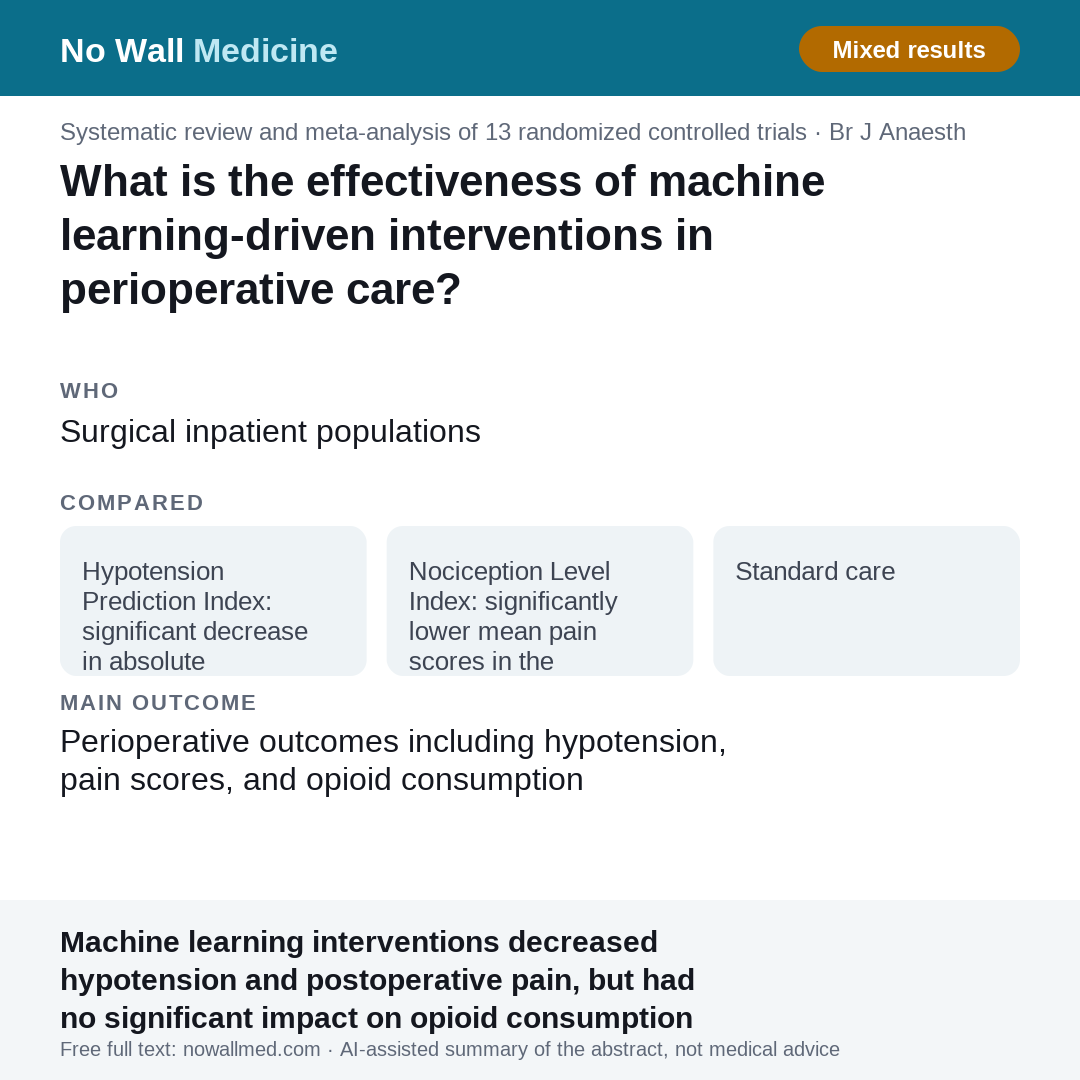
Machine learning-augmented interventions in perioperative care: a systematic review and meta-analysis
Systematic review and meta-analysis of 13 randomized controlled trialsMixed results
What is the effectiveness of machine learning-driven interventions in perioperative care?
Who
Surgical inpatient populations
Compared
Hypotension Prediction Index: significant decrease in absolute hypotension (n=421, P=0.003, I2=75%) and relative hypotension (n=208, P<0.0001, I2=0%)
Nociception Level Index: significantly lower mean pain scores in the post-anaesthesia care unit (n=191, P=0.004, I2=19%)
Standard care
Main outcome
Perioperative outcomes including hypotension, pain scores, and opioid consumption
Bottom line: Machine learning interventions decreased hypotension and postoperative pain, but had no significant impact on opioid consumption or hospital stay.
Br J Anaesth · 2024-09-24Download image
Augmented Reality-Guided Mastoidectomy Simulation: A Randomized Controlled Trial Assessing Surgical Proficiency
Randomized controlled trialBenefit found
Does augmented reality guidance improve mastoidectomy surgical proficiency in medical students?
Who
21
21 medical students in their clinical clerkship
Compared
Augmented reality group: mean overall drilling score of 19.5 out of 25
Control group: score of 12
Main outcome
surgical proficiency assessed on a modified Welling scale
Bottom line: Augmented reality simulation improved mastoidectomy proficiency in novice surgeons compared with traditional training methods.
Laryngoscope · 2024-09-24Download image